


Sports
USF’s Michael Kelly hosts panel to spotlight the history behind Tampa Bay’s rise as a sports destination


TAMPA, Fla. (May 20, 2025) – Michael Kelly, USF’s vice president for athletics, has enjoyed a Forrest Gump-like career in sports, working with premier events such as the Super Bowl, the NCAA Men’s Basketball Final Four and the College Football Playoff.
Last Thursday at USF’s Muma College of Business, Kelly was reunited with three of the men who helped to shape his lifetime of big-ticket sports experiences.
Kelly moderated an AMP (Academic Meets Practice) panel discussion — “Mega-Events and the Making of a Sports Destination: Leadership, Community, and the Business of Hosting” — that included who he described as “three of the true pioneers and icons of the sports event business.”
- Jim Steeg, the former NFL senior vice president of special events who oversaw the Super Bowl for 26 years. Kelly worked as president of the Super Bowl host committees in Tampa, Jacksonville and Miami.
- Bill Hancock, the first full-time director of the Final Four who became executive director of college football’s Bowl Championship Series, then the College Football Playoff. Kelly was executive director of the Tampa Bay organizing committee for the 1999 Final Four at Tropicana Field. Then he became Hancock’s first CFP hire, working as chief operating officer from 2012-18 before joining USF.
- Rob Higgins, executive director of the Tampa Bay Sports Commission. Kelly was a USF associate athletic director in 2001-02, when Higgins worked in event management. Kelly continues to work closely with Higgins because USF is the host institution for many events the TBSC brings to Tampa Bay, such as the NCAA Women’s Final Four, the NCAA Volleyball Championships and the NCAA Men’s Basketball Tournament.
“These three gentlemen can give us a true picture of how major sports events began in Tampa Bay, where they are today and how USF has contributed to that growth … and the whole thing is quite a fascinating story,” Kelly said.

Tampa Bay: Ideal For Big Events
Hancock said sports-event organizers generally need excellence in four key areas — airport, stadium/arena, hotels and a convention center — and the Tampa Bay area checks all those boxes.
“There’s a fifth one that’s so important and it’s so hard to gauge,” Hancock said. “It’s the heart and soul of the city willing to put on the event. And the heart and soul is sitting right here (Higgins). But even more, you are a big old small town, where people show up, roll up their sleeves and get things done.”
“It’s about the people, what they bring to it, and how they care,” Steeg said. “You have a lot of people here who have lived here their whole lives and they’re ingrained in the community. It’s important to them to see the community grow. It’s a can-do attitude. Tampa is a place where, if you need to get something done, you can walk in and talk to the mayor or the police chief. And it will get done.”
Booming Business: Sports Tourism
Higgins said when he joined the TBSC some 21 years ago, there were approximately 100 sports commissions. Now there are 650 … and counting.
“Communities everywhere have seen the return on investment when it comes to the impact of sporting events,” Higgins said. “You think about economic impact, hotel visitation, director visitor spending. But it’s also the social impact, how these events galvanize the community as well as the stage that these events put your community on.
“When we evaluate events, we always look at those three buckets — economic impact, social impact, plus marketing and visibility that the community will receive.”
From November through early May, Higgins pointed to the diversity of sporting events hosted in Tampa Bay.
In November, the Red Bull Flugtag attracted nearly 100,000 people (and millions of YouTube views) to the Tampa Convention Center. In February, it was the largest crowd (42,017) to witness a soccer match at Raymond James Stadium, when Lionel Messi appeared. In March, back at Ray-Jay, it was the Savannah Bananas attracting 65,000 fans. In April at Amalie Arena, it was the NCAA Women’s Final Four and more sellout crowds. Most recently, more than 20,000 cheerleaders descended upon downtown Tampa for the Varsity Spirit competition.
“It has been a great run,” Higgins said. “And it all really started with these guys (Steeg and Hancock) believing in our community and giving us this first chance that allowed us to build up the credibility to all these different events.”
Higgins said the TBSC has been affiliated with 99 different events over the last 12 months that created more than 232,000 hotel room nights.
“It means our 60,000 tourism and hospitality employees remain employed and we continue to refuel the engine,” Higgins said. “And it also probably means that we don’t have to pay a state income tax because we’re able to lean on tourism the way that we do to generate revenue for our community.”
Tampa’s First Super Bowl
Super Bowl XVII — Raiders 38, Redskins 9 — was held at Tampa Stadium in 1984. The event has returned four times (including the last three at Ray-Jay).
But the first one?
It actually dates back to 1974, when the NFL awarded a franchise (which became the Tampa Bay Buccaneers) to Tampa.
“Leonard Levy (Tampa’s primary civic activist) had the vision,” Steeg said. “The franchise had literally just been awarded in New York and Leonard said, ‘OK, when do we get a Super Bowl?’ That’s when Don Weiss, executive director of the NFL, told Leonard, ‘As soon as you get a hotel room.’
“So in 1981, they broke ground on the Downtown Hyatt, which was really the city’s first big hotel. That meant a Super Bowl was feasible. But there weren’t many hotels. People stayed on Clearwater Beach, St. Pete Beach, even over in Orlando.
“As I walk around downtown (Tampa), I keep looking around and saying, ‘Oh my God, I can’t believe the things that exist now.’ A lot has changed. The Bucs helped to put Tampa on the map. When the Super Bowl came, the Corporate Hospitality Village and the NFL Experience really started here. Nowadays, you don’t see any event of consequence without those elements. We started doing concerts in Tampa and we had Frank Sinatra (at the USF Sun Dome).
“Tampa’s Host Committee entertained all of the CEOs and put out the red carpet, trying to get their business. Within the next 30 months of Tampa’s first Super Bowl, more than 6,500 hotel rooms were added to Tampa. So it really helped to develop the place.”
Final Four At The Trop
Tropicana Field, the (under-repair) home of the Tampa Bay Rays, hosted the 1999 NCAA Men’s Basketball Final Four.
It really happened.
“And it was great,” Hancock said. “We had a great event over there. The weather was fantastic and everyone had a good time.”
It became a learning experience for the NCAA.
The 1998 South Regional was also held at the Trop, which was being frantically renovated to accommodate the first-year Rays expansion team, and heavy rains caused flooding in some of the building’s ancillary areas, including the media interview room.
“We had to adjust … but no one got electrocuted,” Hancock said with a laugh.
Nerves were frayed, but the 1999 USF-hosted event went off without a hitch, although it had a non-traditional approach with coaches and media staying in Tampa, then being transported to St. Petersburg.
Higgins, then at USF, was the practice-court coordinator, making sure the teams didn’t get on the courts even one second too early (at Hancock’s behest) and he remembers the 1999 Final Four as “the event that really got me hooked on this industry.”
It was a big event — in a big venue.
“The big growth of the Final Four was taking it away from a conventional arena and moving it into a stadium (first in 1982 with the Louisiana Superdome in New Orleans),” Hancock said. “It’s pretty easy to do in a football stadium, but moving a basketball court and seating for the fans into a baseball stadium was a phenomenal undertaking. But we built seating around the court and it was all fine.
“I also have great memories of all the events we had in the Tampa Bay area around that Final Four. Back when I started in the business, you just unlocked the stadium, people went in and watched the game, then they went home. We were so silly. Now you have fan festivals and concerts. Tampa Bay was right in the middle of all those changes, which are so standard now.”
Birth Of The CFP
Hancock jumped from the Final Four to the BCS, which matched No. 1 vs. No. 2 in college football, but it always seemed to create controversy. Then came a major milestone: College football officials voted to stage an annual four-team championship playoff.
“I was the only employee when it started,” Hancock said. “And my bosses said, ‘Well, you need to get a staff. You need an office. You need a selection committee.’ So the first person we hired to join the staff was a guy named Michael Kelly, who was the best in the business and who I wanted from day one.
“Michael joined me in putting all that together. We hired marketing people to help us select the name of the event. There was all kinds of speculation what the name might be. Maybe the College Super Bowl? Well, they sent me to a news conference in Pasadena so I could announce the name of the event. All these writers and TV people were there. I said, ‘Ladies and gentlemen, the name of the new event is going to be … the College Football Playoff.’ And the reporter from San Antonio tweeted immediately, ‘If Bill Hancock had a dog, its name would be … ‘Dog.”’
Tampa was awarded the third CFP Championship Game, but that was partially due to a relentless pursuit of the first game (which went to heavily favored Dallas). Higgins said the request for proposal was 250 pages. Tampa’s response was 8,000 pages … and it was hand-delivered to CFP headquarters. Higgins said he learned about that level of commitment — and selling your community through relationships — from Levy.
“But when the bids were opened for the second and third game — and everybody was ready to throw their hat in the ring — we already had a head start on paper,” Higgins said. “We made it closer than expected (for the first-game bid, won by Dallas).
“Leonard always taught us that, no matter what, you tell your story. You tell your story, then you tell your story and when you get tired of telling your story, you tell it again. We were fortunate to be blessed with the opportunity (of hosting the 2017 CFP title game). It was the debut of our Riverwalk. It created a fan experience that was linear throughout the parks. It showcased our waterway and how much our community had transformed.”
When Things Go Wrong
Tampa’s 1991 Super Bowl XXV, staged as the Gulf War broke out, had complications and security concerns. But everything played out perfectly, security was tight, and Whitney Houston delivered a National Anthem for the ages.
What almost no one say: One day before the game, the NFL had concerns. At Tampa Stadium, the NFL logo in the middle of the field was coming up in everyone’s cleats because none of the grass seed had properly grown following the Hall of Fame Bowl held on Jan. 1.
George Toma, the NFL’s groundskeeping consultant, told Steeg he had to replace the middle-field turf … about 26 hours before kickoff.
Steeg couldn’t believe it. “How?” he said.
“Don’t worry,” Toma said. “I’ll get it done.”
Sure enough, on game day, the field had been redone. It was perfect. There were no problems.
Steeg had to ask: Where did you get that turf?
Toma just smiled. “Well, if you were the athletic director at the University of Tampa, you probably woke up on Monday morning and wondered where your soccer field went.”
That story reminded Higgins of 2003, when Tampa hosted the NCAA Men’s Basketball Tournament early rounds in downtown Tampa. The first game — Auburn vs. Saint Joseph’s — was about to go live throughout the nation.
Fifteen minutes out, the sideline reporters started flicking away water. It was raining inside. The roof had sprung a leak and the court was taking on some water.
The facility manager told a panicked Higgins that a lightning rod had likely been struck, causing the leak.
“This has to be fixed right now,” Higgins said with the CBS cameras already poised. “There isn’t an option.”
When CBS went live, the court was dry. The leak had stopped. Everything was fine. He saw the facility manager, gave him a hug and asked what happened.
“Tri-polymer catch basin … look up,” he said.
Higgins looked to the roof. And there, hanging by a rope from the catwalk, was a plastic bucket, catching the dripping leak.
“You can either be part of the problem or part of the solution … and he chose to be part of the solution,” Higgins said. “Sometimes in this business, you’ve got to be creative.”
Epilogue
Afterward, Kelly could only marvel at the experience and pedigree of the panel that visited USF.
“The stories could go on forever,” Kelly said. “At USF, we’re honored to be part of it. It’s a long, distinguished history of hosting big sporting events to benefit this community. That’s part of our legacy and part of our future.”
Continue Reading

TYLER –The Russell-Tyler-Ruthton school board voted not to approve Daynica Brown’s return as the RTR head volleyball coach at its monthly board meeting on Wednesday. The 5-2 vote to let Brown go came despite superintendent David Marlette and activities director Darren Baartman both recommending Brown.
Wednesday’s vote comes in the wake of volleyball parents Dan Ellefson and Shallyn Dybdahl, as well as RTR volleyball alumnus Janel Peterson, voicing concerns at the October board meeting about the culture Brown fostered with the volleyball team. They alleged that Brown curated a toxic environment for the athletes and that favoritism played a heavy role in team dynamics.
For Brown’s part, she said at Wednesday’s meeting that she believes her actions in the public eye spoke volumes to the positive culture of the team, and that the team’s success this season wouldn’t have been possible if she had not actively worked to create a positive environment.
Seven stakeholders had voiced concerns about the state of the RTR volleyball program since the end of the 2024 season, Marlette said.
Marlette added that he felt that any issues in the program could potentially have been fixed earlier had they been followed proper chain of command policy by being brought to Brown or Baartman, but recommended that Brown be given another year as head coach with a Plan of Assistance in place wherein specific items and corrective actions are identified before the start of the season. While he did not specify the items in need of correction, he said that they were all small issues that could be quickly corrected.
A replacement candidate for Brown is yet to be named.
Ted Kern was also approved by a 7-0 vote to return as football head coach at the meeting, as well as a unanimous approval for Sandy Carpenter as the head cheerleading coach. No candidate was presented for the RTR cross country coaching vacancy.
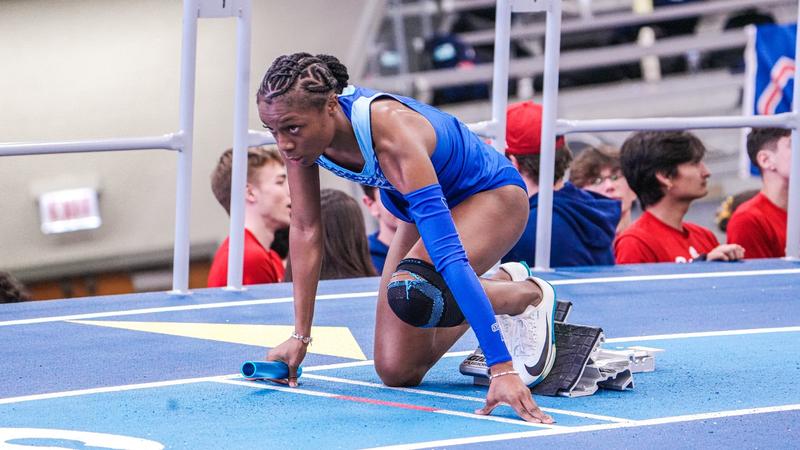
TERRE HAUTE, Ind. – Indiana State track and field begins its 2025-26 indoor campaign Friday and Saturday, as the Sycamores play host to the John Gartland Invitational inside the Indoor Track and Field Facility.
Friday’s proceedings begin at 4:50 p.m., while Saturday’s first event starts at 11 a.m.
The Dynasty
Indiana State’s sweep of the 2025 MVC Outdoor Championships gave the Sycamores 50 conference titles between the cross country, indoor track and outdoor track programs. Since the start of the 2021-22 season, Indiana State has won 12 MVC Championships between indoor and outdoor track and field.
Indiana State has swept the last two MVC Outdoor Championships, while the Sycamore women have also won the last two MVC Indoor Championships.
Back For More
Indiana State returned nearly all of its 2025 individual indoor conference champions, with throwers Noah Bolt and Wyatt Puff being the only departures among the Sycamores’ first-place finishers at Gately Park last season.
The Sycamores’ returning indoor conference champions from last season are Casey Hood Jr. (60m and 200m), Rachel Mehringer (60m hurdles), Janiya Bowman (long jump), Jahnel Bowman (triple jump) and Niesha Anderson (weight throw).
Hood Jr. was a Second Team All-American during the 2025 indoor season, while Mehringer was a Second Team All-American during the 2025 outdoor season.
Top-Tier Trees
Indiana State’s 2025 indoor season was a story of depth, as the Sycamores finished the season with the top-ranked athlete in eight different events. Casey Hood Jr. (60m and 200m), Rachel Mehringer (60m hurdles), Will Staggs (pole vault), Brooklyn Pfaff (pole vault), Jahnel Bowman (triple jump), Noah Bolt (weight throw) and Niesha Anderson (weight throw) all recorded the top mark in the MVC in their respective events last year.
Half of those top-ranked marks came from athletes who are back in the fold for the Blue and White for the 2025-26 campaign (Hood Jr., Mehringer, Bowman and Anderson).
Strength In Numbers
Indiana State has taken pride in its overall depth, as the Sycamores earned 22 all-conference honors at the 2025 MVC Indoor Championships and followed that with 29 all-conference accolades as part of their 2025 MVC Outdoor Championship sweep.
The vast majority of those all-conference honors came from returning athletes, as the Sycamores return 14 indoor all-conference and 24 outdoor all-conference honorees. Every event discipline is represented by multiple returning all-conference accolades for the 2025-26 campaign.
The Namesake
Now in his 37th season on the staff at Indiana State, John Gartland is one of the most decorated coaches in Missouri Valley Conference history. He served as the women’s head cross country coach from 1988-2014 and the head women’s track & field coach from 1988-2010 before handing over the reins to his former pupil and current director of the cross country and track and field programs, Angela Martin. Although he officially retired in 2015, Gartland has remained on staff as an assistant, focusing on the high jumpers.
Gartland is one of only 11 coaches in the Missouri Valley Conference to be named to the league’s track and field All-Centennial Team. The veteran women’s head coach joins John McNichols on the list to form the only coaching tandem in the league on the all-time list. His teams won 12 conference titles and have finished in the top-10 at the NCAA Championships three times, including a fifth-place finish at the 1993 NCAA Indoor Championship and a sixth-place finish at the 1994 NCAA Outdoor Championships.
As a head coach, Gartland coached 11 NCAA Champions, six NCAA runners-up, 50 All-Americans, 88 NCAA qualifiers, 200 MVC individual champions and 212 MVC Scholar-Athletes. He has been named the Conference Coach of the Year 10 times and the NCAA District V Coach of the Year four times (indoor track & field and outdoor track & field in both 1993 and 1994). Gartland was inducted into the Indiana State Athletics Hall of Fame in January 2025.
Up Next
Indiana State’s next meet comes after the calendar turns to 2026, as the Sycamores face longtime rival Illinois State for the annual Coughlan-Malloy Cup dual meet January 17 inside the Indoor Track and Field Facility.
Follow the Sycamores
For the latest information on the Sycamore Track & Field and Cross Country teams, make sure to check out GoSycamores.com. You can also find the team on social media including Facebook and Twitter. Fans can also receive updates on Sycamore Athletics by downloading the March On App from the both the App Store and the Google Play Store.
– #MarchOn –
The Nevada volleyball team’s season ended Nov. 22 with a 3-0 loss to Utah State. At the conclusion of the year for each Nevada sport, we will offer a final report card. Here is that report card for Wolf Pack volleyball.
Nevada volleyball
Preseason expectations: The Wolf Pack finished 10th out of 11 teams in the Mountain West in 2024, which was coach Shannon Wyckoff-McNeal’s debut season, and the team then lost three key players (Gabby McLaughlin, Tehya Maeva, McKenna Dressel) to Power 4 schools via transfer. In this year’s preseason poll, Nevada was picked to finish 10th out of 12 schools (Grand Canyon was added to the league), so outside expectations were limited entering Wyckoff-McNeal’s second season.
Final record: 8-20 overall, 4-14 Mountain West (11th out of 12 schools)
Player of the year: Haylee Brown — The Wolf Pack added three Division I transfers last offseason in Brown (George Washington), Jess Walkenhorst (Miami-Ohio) and Ceren Sert (Idaho) who were expected to be impact players. Brown played that part, leading Nevada in kills (351) and points (374) while adding 36 blocks. Brown was named All-MW honorable mention for the Wolf Pack but has hit the transfer portal again this offseason with the expectation she will leave Nevada after just one year.
Stat to note: 17 — Nevada won only 17 sets in 18 MW matches, showing how far the Wolf Pack was from being competitive in league. Of Nevada’s 14 MW losses, eight were 3-0 sweeps and the other six were 3-1 defeats. Nevada was swept in 13 of its 28 matches.
Best win: Beat Wyoming, 3-2, on Oct. 16 — Nevada won four matches in non-league, topping Southern Utah (3-21), Eastern Washington (3-25), Pacific (8-21) and Montana State (13-15). It followed that with league victories over Fresno State (7-22, twice), Air Force (15-15) and Wyoming (17-13). That means Nevada beat one team with a winning record, that being Wyoming, which was third in the MW at 13-5. One of those losses came to Nevada in a match the Wolf Pack won 15-13 in the fifth set. Brown had 21 kills in the win. That loss dropped Wyoming to 8-10 before the Cowgirls won nine of their final 11 regular-season contests to finish 99th in RPI.
Season in short: Nevada began the season 4-5 with two of those losses to Power 4 schools (NC State and Kansas State), so it was a solid enough start before things turned sour when MW play began. The MW is a strong volleyball league with five top-100 RPI teams, including No. 29 Utah State, which advanced to the second round of the NCAA Tournament. Nevada was unable to navigate league play with much success, being dominated in most MW matches. Nevada lost its first five matches of MW play before back-to-back wins over Fresno State and Wyoming in mid-October. But the Wolf Pack stumbled to losses in seven of its final eight matches, including five sweeps.
Final grade: D — Nevada finished second-to-last in the MW but was bottom of the league in RPI at 274 out of 348 Division I teams. That was a step back from 2023 and 2024 when the Wolf Pack was 245th in RPI. This year, Nevada won just 17 sets in MW play while losing 45. The year prior, it won 26 sets in league while losing 42. That margin went from minus-16 to minus-28 with Nevada being swept in almost half its overall matches (46.4 percent). After making five NCAA Tournament berths from 1998-2005, Nevada has posted a winning record in just three of the last 20 seasons (2007, 2016 and 2019). This program has been in a rut for a while that Wyckoff-McNeal is tasked with digging the Wolf Pack out. While the MW’s top-three teams this year — Utah State, Colorado State, Boise State — will be in the Pac-12 in 2026, additions UTEP (16th in RPI) and UC Davis (48th) were elite this year with Hawaii (161st) historically great. Things aren’t going to get much easier, plus Nevada has already lost three of its best players to the transfer portal (Brown, Audrey Jensen and Kinsley Singleton).
Sports columnist Chris Murray provides insight on Northern Nevada sports. Contact him at crmurray@sbgtv.com or follow him on Twitter @ByChrisMurray.
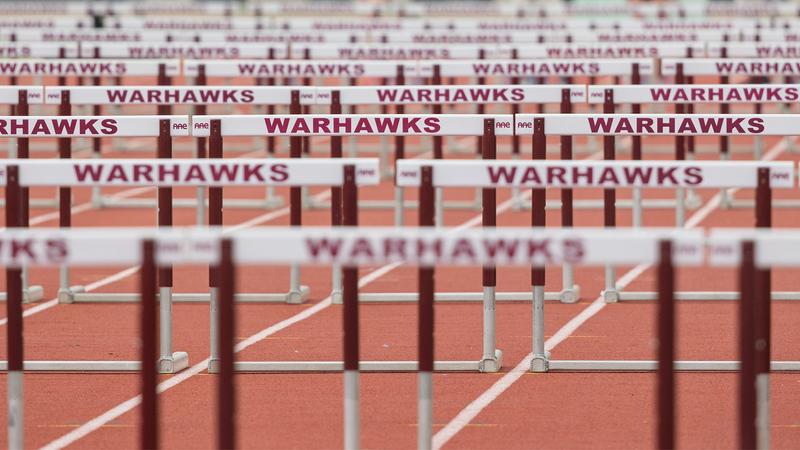
MONROE, La. – The 2026 ULM track and field schedule has been announced and features five indoor and 11 outdoor meets, not including the NCAA Prelims or Championships.
The Warhawks start indoor season with two back-to-back meets in Baton Rouge at the LSU Purple Tiger on Jan. 16 and the LSU Bayou Bengal on Jan. 23. They then travel two states east to Birmingham, Ala., for the UAB Green and Gold Invite.
ULM makes its trip to Nashville at a later date compared to 2025, with the Vanderbilt Music City Challenge taking place from Feb. 13-14. The team will make its way back to Birmingham for the Sun Belt Indoor Championships from Feb. 23-24. The NCAA Indoor Championships take place on Mar. 13-14 in Fayetteville, Ark.
Outdoor competition begins on the same weekend at the McNeese Cowboy Relays in Lake Charles before heading east the Baton Rouge to compete in the LSU Opener. The Warhawks then start their three-meet Texas road trip with the Clyde Hart Classic in Waco from Mar. 27-28. The next weekend, the team competes in two meets, with the Texas Relays from Apr. 1-4 in Austin, and the Bobcat Invitational from Apr. 2-4 in San Marcos. The one-state slate ends on Apr. 10-11 in College Station at the Texas A&M 44 farms Team Invitational
ULM has another double-meet weekend with the Wake Forest Invitational from Thursday, Apr. 16, through Friday, Apr. 17, and the Jim Mize Invitational on Saturday, Apr. 18 in Ruston. The team then goes back to Baton Rouge for the LSU Alumni Gold on Apr. 25.
From May 1-2, the Warhawks will host their annual meet with the Warhawk Classic at Brown Stadium. They then travel to Mobile, Ala., for the Sun Belt Outdoor Championships hosted by South Alabama from May 14-16.
The NCAA Prelims – East will be held from May 27-30 in Lexington, Ky., and the NCAA Outdoor Championships are from June 10-13 in Eugene, Ore.
The full 2026 ULM Track and Field schedule is below:
Indoor
Jan. 16 | LSU Purple Tiger
Jan. 23 | LSU Bayou Bengal
Feb. 6 | UAB Green and Gold Invite
Feb. 13-14 | Vanderbilt Music City Challenge
Feb. 23-24 | Sun Belt Indoor Championships
Mar. 13-14 | NCAA Indoor Championships
Outdoor
Mar. 13-14 | McNeese Cowboy Relays
Mar. 21 | LSU Opener
Mar. 27-28 | Clyde Hart Classic
Apr. 1-4 | Texas Relays
Apr. 2-4 | Bobcat Invitational
Apr. 10-11 | Texas A&M 44 Farms Team Invitational
Apr. 16-17 | Wake Forest Invitational
Apr. 18 | Jim Mize Relays
Apr. 25 | LSU Alumni Gold
May 1-2 | Warhawk Classic
May 14-16 | Sun Belt Outdoor Championships
May 27-30 | NCAA Prelims – East
June 10-13 | NCAA Outdoor Championships
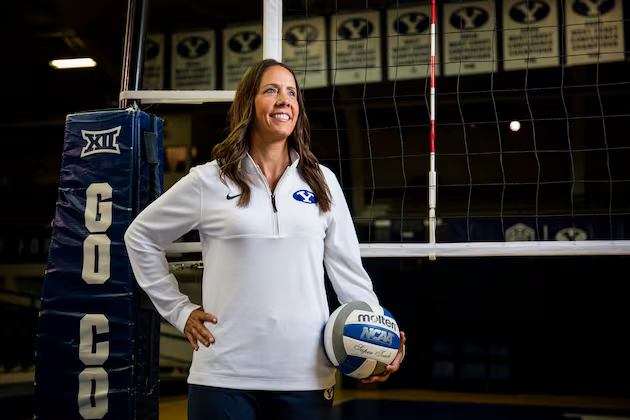
One of the most successful coaches in the history of BYU athletics is leaving the school to “pursue new professional avenues.”
Women’s volleyball coach Heather Olmstead announced Thursday that she is moving on after 11 seasons at the helm. Associate head coach David Hyte will serve as interim head coach.
Olmstead took over in the 2015 season. She amassed a record of 279-55 and was the fastest coach to reach 200 Division I wins, doing so in just 225 matches. She was also the third-fastest coach all time to reach 100 Division I wins, doing so in just 111 matches.
“Coaching at BYU has been an incredible chapter — one filled with championships, NCAA tournament runs and record-setting seasons,” Olmstead said in a school news release. “But the true highlight has always been the people. I’m grateful for every athlete who let me be part of her journey and for the chance to help shape strong leaders, teammates and women who go on to make a difference long after their playing days.
“As I move into this next chapter, I do so with deep gratitude for the BYU community, for the players who trusted me with their development and for the staff who stood beside me through every challenge,” Olmstead continued. “I wish this program continued success, and I’m excited for what’s next.”
BYU director of athletics Brian Santiago said Olmstead will be remembered as one of the best coaches in program history. He said the school will begin a “national search” for a new coach immediately.
“I want to thank Heather for everything she has done to make BYU women’s volleyball great,” said Santiago. “She poured her heart and soul into this program and guided incredible teams that have had consistent national relevance and success and represented BYU well.
“Her student-athletes have gone on to do remarkable things. We wish Heather all the best as she pursues new opportunities, and we will open a national search for a new women’s volleyball head coach immediately.”
The 2018 AVCA National Coach of the Year, Olmstead and her staff’s development of players has led to 14 different All-Americans, 23 different All-Region honorees, nine different All-Big 12 honorees and 22 different All-WCC honorees in addition to a national player of the year candidate, the 2018 AVCA National Freshman of the Year and multiple West Coast Conference awardees.
Olmstead led the 2018 team to one of the greatest seasons in program history, ranking No. 1 for 11-consecutive weeks as they won their first 27 matches, including against then-No. 1 Stanford. BYU was awarded its highest-ever NCAA Tournament seed at No. 4, then reeled off wins against Stony Brook, Utah, Florida and Texas in front of standing-room-only crowds at the Smith Fieldhouse to advance to the Final Four before falling to eventual champion Stanford in the national semifinals.
Olmstead led BYU to Sweet 16 appearances six times as well as six WCC titles. The Cougars have won at least 19 matches each year (17 during COVID-19) during her time as head coach.
Olmstead has also contributed internationally, including serving as head coach of the U.S. Women’s U21 National Team that won gold at both the 2025 NORCECA Pan American Cup and the 2024 NORCECA Women’s Continental Championship, the U.S. Collegiate National Team in Japan in May 2019 and as the assistant coach on the U.S. team that won gold at the 2015 Pan American Games.

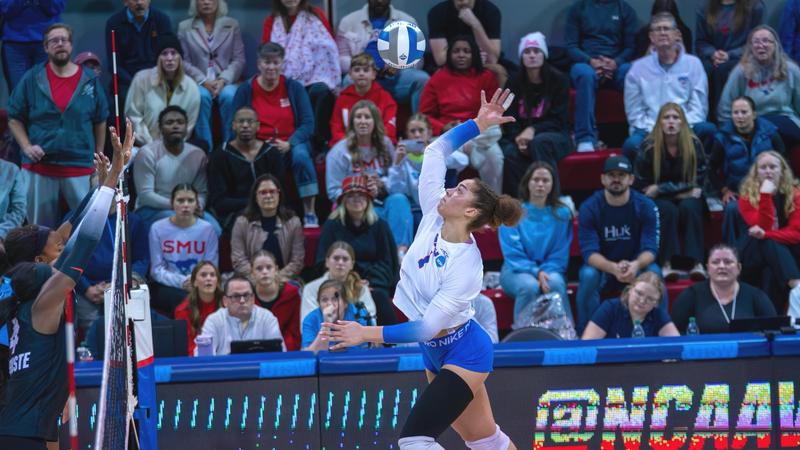
Even though the SMU volleyball team is in uncharted territory, the Mustangs are acting like they’ve been here before because it’s where they expect to be.
The past two seasons ended in the second round, but with victories against Central Arkansas and Florida, second-seeded SMU reached the third round of the NCAA tournament for the first time in program history. The Mustangs celebrated the accomplishment when it was achieved, but it’s back to business as they will face third-seeded Purdue in the Sweet 16 on Thursday night in Pittsburgh.
“We are so excited to be here, just had a great practice, and are ready to compete,” SMU head coach Sam Erger said on Wednesday. “I think having that big hurdle of getting past the second round, we’re not going to be happy with just that. We honestly haven’t really talked about that much, just that it was the first for our program because the expectation is that we’re going to keep competing.”
Even though there is a lot of new when it comes to this round of the tournament, there is some familiarity. SMU and Purdue played back on September 14. The Mustangs also played in Pitt’s Petersen Events Center earlier this season, at the start of ACC play at the end of September.
While Purdue got the better of the Mustangs 3-1 (23-25, 25-22, 27-25, 25-18) during the regular season, it was a long time ago. SMU has played 24 matches since then.
“That feels like a world ago,” Erger said. “We’ve gone through quite a bit of adversity. The silver lining to that is we’ve had players get to shine in a way that maybe they wouldn’t have been able to, and we’ve been able to test our depth, and we’ve been able to see some freshmen have breakout seasons, and we’ve addressed where we were lacking defensively. … We’ve grown a ton, and I’m just happy and hopeful that we’ll keep getting to grow.”
The Mustangs also know Purdue will be a different team than the one they faced nearly four months ago. Even though the Boilermakers haven’t had some of the lineup changes SMU has, there has been time to develop and take the next steps as a team.
“I don’t think they’ve gotten any crazy new personnel in the way that we have,” Erger said. “Like Kennedi Rogers didn’t even play the first time, I believe. So that’s exciting on our end. I don’t think Maggie Croft played. That’s exciting on our end. For them, they’ve just gotten better, and they’re so good tactically. So I would assume that their game plan will, maybe, be a little different. I think that they have just been able to perform at a high level very consistently across their season. … The game probably should look different (Thursday). We’re both better.”
One area the Mustangs have improved is defensively. It was something Erger and her staff challenged the team with, and the team has responded.
“We’ve addressed where we were lacking defensively,” Erger said. “It was an area we needed to really grow early on in the season. And both of these two (Averi Carlson and Malaya Jones) have grown a ton defensively.”
Libero Jordyn Schilling leads the team with 349 digs, with Carlson (249) and Jones (247) second and third, respectively.
But the other key piece to SMU’s defense has been Favor Anyanwu at the net. She had six blocks in the second-round win against Florida and now has 175 for the season, 14 blocks shy of the SMU single-season record. Croft had a career-high nine blocks in the match, helping give the Mustangs double-digit blocks 17 times in 32 matches this season.
Jones (94) and Carlson (85) are also second and third on the team in blocks.
“Of course, we want to block every ball ever hit,” Jones said. “But a huge part of it is (assistant coach) Trent (Sorensen). He helps us so much with our eye work and getting low and over to the baseline. Sam says that every single day, trying to ingrain that into our brains. And then also, Favor is just one of the most insane blockers in the country. She sets a standard for how we need to be every single practice and how we need to be in games. She just keeps encouraging us to be the best blockers and have the best eye sequence. She has constant feedback for us all the time.”
When it comes to playing in their first Sweet 16 match, the players aren’t making the game any bigger than it is, either. Jones noted she goes into every match being her ‘biggest, baddest self,’ making this one no different.
And ultimately, it’s volleyball.
“Just treating it like a normal game, not really hyping it up too much because it’s still the same game that we’ve been playing for so long,” Carlson said. “At the same time, just really knowing the game plan and just doing our best to be the best players that we can be.”

Technology2 minutes ago
SA Gaming confirms presence at ICE Barcelona 2026 with showcase of premium live casino solutions
NIL4 minutes ago
Inside the college football carousel with UCLA, Stanford recruits

Sports6 minutes ago
RTR board votes against Brown’s renewal as volleyball HC | News, Sports, Jobs

Sports9 minutes ago
Trees open 2025-26 indoor season with John Gartland Invitational

Motorsports10 minutes ago
Nataas inks with PowerDrive Motorsport Futures to drive career prospects

Motorsports14 minutes ago
NASCAR Agrees To Permanent Team Charters

Rec Sports15 minutes ago
IOC advises sports bodies to let Russians compete in youth events again with flag and anthem :: WRAL.com

Sports22 minutes ago
Nevada volleyball continues to be stuck in a deep rut

Sports26 minutes ago
ULM Track and Field Announces 2026 Schedule

Motorsports27 minutes ago
Hendrick Motorsports’ 2026 NASCAR Cup Series paint schemes

Motorsports30 minutes ago
‘Evergreen charters’ explained after major NASCAR settlement – Motorsport – Sports

Rec Sports31 minutes ago
Scheels Sports Complex hosting free event

Sports37 minutes ago
BYU women’s volleyball and coach Heather Olmstead parting ways – Deseret News

Rec Sports39 minutes ago
Van Ho expands community ski programs for season | News, Sports, Jobs

Motorsports43 minutes ago
600-acre motorsports park planned in Nassau County

Rec Sports2 weeks ago
First Tee Winter Registration is open

Rec Sports2 weeks ago
Fargo girl, 13, dies after collapsing during school basketball game – Grand Forks Herald

Motorsports2 weeks ago
CPG Brands Like Allegra Are Betting on F1 for the First Time

Sports3 weeks ago
Volleyball Recaps – November 18

Motorsports2 weeks ago
F1 Las Vegas: Verstappen win, Norris and Piastri DQ tighten 2025 title fight

Sports2 weeks ago
Two Pro Volleyball Leagues Serve Up Plans for Minnesota Teams

Sports2 weeks ago
Utah State Announces 2025-26 Indoor Track & Field Schedule

Sports2 weeks ago
Sycamores unveil 2026 track and field schedule

Motorsports2 weeks ago
Redemption Means First Pro Stock World Championship for Dallas Glenn

Motorsports2 weeks ago
Jo Shimoda Undergoes Back Surgery

Sports2 weeks ago
Texas volleyball vs Kentucky game score: Live SEC tournament updates

Rec Sports2 weeks ago
Robert “Bobby” Lewis Hardin, 56

NIL2 weeks ago
Bowl Projections: ESPN predicts 12-team College Football Playoff bracket, full bowl slate after Week 14

Rec Sports2 weeks ago
How this startup (and a KC sports icon) turned young players into card-carrying legends overnight

NIL2 weeks ago
Indiana’s rapid ascent and its impact across college football

 Why a rising mid-major power with an NCAA Tournament team opted out of revenue-sharing — and advertised it
 NBA Legend Michael Jordan to Join NBC Sports as Special Contributor
 Falcons mailbag
 Portal Update – Basketball and Gymnastics Take Hits
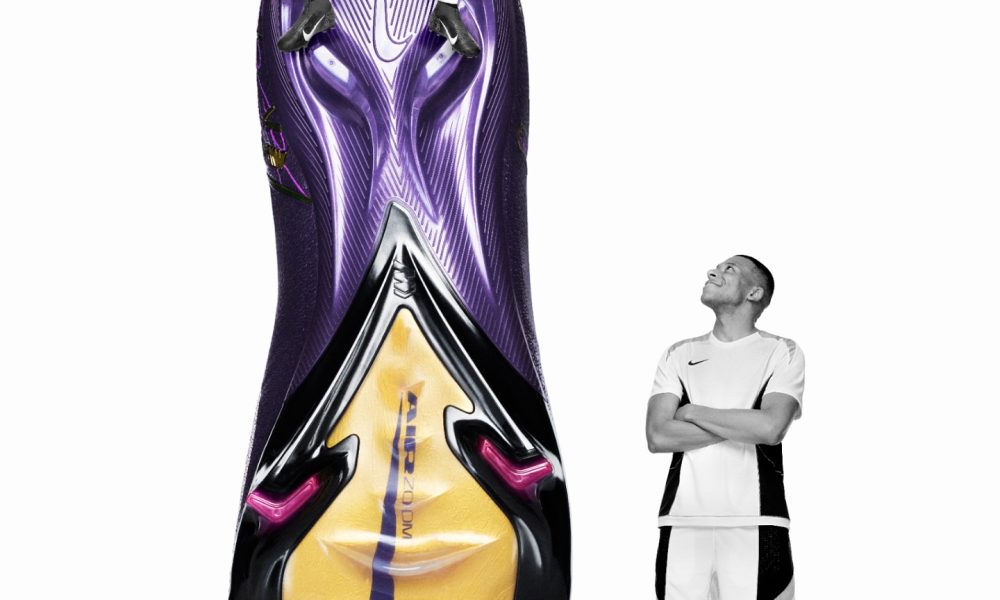 has always dreamed in Mercurial. Now his initials are on the boots.
The new Kyl…
has always dreamed in Mercurial. Now his initials are on the boots.
The new Kyl…
-
 Rec Sports2 weeks ago
First Tee Winter Registration is open
-
 Rec Sports2 weeks ago
Fargo girl, 13, dies after collapsing during school basketball game – Grand Forks Herald
-
 Motorsports2 weeks ago
CPG Brands Like Allegra Are Betting on F1 for the First Time
-
 Motorsports2 weeks ago
F1 Las Vegas: Verstappen win, Norris and Piastri DQ tighten 2025 title fight
-
 Sports2 weeks ago
Two Pro Volleyball Leagues Serve Up Plans for Minnesota Teams
-
 Sports2 weeks ago
Utah State Announces 2025-26 Indoor Track & Field Schedule
-
 Sports2 weeks ago
Sycamores unveil 2026 track and field schedule
-
 Motorsports2 weeks ago
Redemption Means First Pro Stock World Championship for Dallas Glenn
-
 Motorsports2 weeks ago
Jo Shimoda Undergoes Back Surgery
-
 Sports2 weeks ago
Texas volleyball vs Kentucky game score: Live SEC tournament updates