


Former NC State RB Hollywood Smothers’ commitment to Alabama did not last long. He’s flipped to Texas.
NIL
Brentford kit deal sees Joma make Premier League return

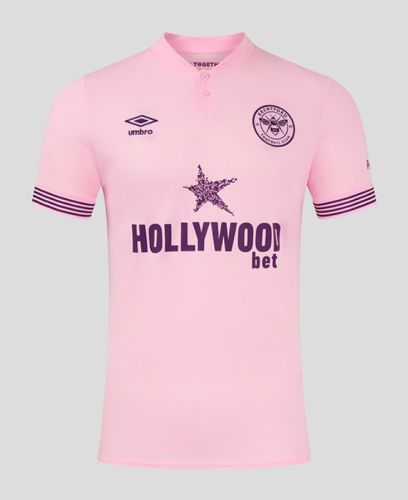

English top-flight soccer club Brentford have announced Spanish sportswear brand Joma as their new kit supplier from next season.
Contract:
- Brentford and Joma ink multi-year deal
- Brand to provide performance wear for the club’s men’s first team, B team, academy and women’s teams, as well as coaching staff and Brentford FC Community Sports Trust
- Kits in 2025 will include a celebratory home shirt that commemorates 100 years of the club wearing red and white stripes
- New range will be made from recycled polyester and other ecological fabrics to reduce environmental impact
Context:
Joma replaces Umbro as Brentford’s kit supplier. The British brand has partnered with the Bees since the 2019/20 campaign, with its most recent deal valued at a reported UK£1.5 million (US$2 million) per season.
The new agreement means Brentford have opted not to enlist Castore as their new kit supplier. Castore signed a deal last year that gave it the right to work with Umbro’s roster of sports teams.
Brentford are set to be the only Premier League team next season to wear kit supplied by Joma, which returns to the English top flight having provided kit for Norwich City (who are now in the second tier) during 2021/22. Prior to that, the brand made kit for the likes of Swansea City and Charlton Athletic when they were last in the Premier League.
Spanish top-tier clubs Villarreal, Getafe and Leganés currently wear Joma kits. Outside its home market, Joma has deals with Hellas Verona, Torino and Atalanta in Italy’s Serie A, as well as Anderlecht in the Belgium Pro League, Hoffenheim in Germany’s Bundesliga and Le Havre in France’s Ligue 1.
Comment:
“We are delighted to welcome Joma as our new official kit partner,” said Fran Jones, Brentford’s commercial director. “From our very first conversation, there was a clear alignment between us.
“Joma share Brentford’s commitment to community, innovation and performance. Their bespoke approach to design was also a key part of their proposal, enabling us to have kits, training wear and leisure wear that reflect who we are as a club, our rich history and heritage and our exciting future.
“We’re looking forward to presenting these ranges to our fans in July.”
Marina López, managing director of Joma Sport, added: “At Joma we continue working to offer the best product with constant technological evolution and a daily commitment to providing the best to those who give their all in their sport.
“That’s why we are delighted to collaborate with Brentford Football Club and are excited to support them in their journey in the Premier League.
“This collaboration represents a fundamental step for Joma Sport in the English football scene, and we are honoured to be the club’s official kit partner.
“A commitment to excellence and an ambition to offer the best are fundamental characteristics of Joma’s philosophy, which we share with Brentford.”
Coming next:
Brentford and Joma’s new deal kicks in from July 2025. The Bees, who are ninth in the Premier League, sign off their season with an away trip to face Wolverhampton Wanderers on 25th May.

Get access to richer content, exclusive reports, unparalleled business intelligence, and community benefits to help you navigate the next frontier of sport and make more informed decisions with a SportsPro+ Premium membership. Discover more here.
Continue Reading

Frequently these days, we’re reminded that the Alabama Crimson Tide is no longer, in fact, the biggest, baddest recruiting powerhouse in the country. Not with rev-share and NIL essentially serving as a salary cap-less spending spree.
Rev-share has a cap, but NIL doesn’t. Schools can only offer $20.5 million as part of the sport’s rev-share agreement that went into effect at the start of the 2025-2026 academic calendar. NIL is the supplemental cash that big-time boosters, like Cody Campbell with the Texas Tech Red Raiders and Larry Ellison with the Michigan Wolverines, pay beyond that. How every team’s payroll shakes out each season isn’t as transparent. It’s unclear what comes from the school and how much comes from the boosters. Much of it is via taxpayers, who pick up the slack in states across the South because of tax-free NIL payments to players that exist because of these states’ laws.
To that end, the Texas Longhorns have multiple high-spending boosters that can help UT win any bidding war. The Crimson Tide does not.
On3’s Shannon Terry reminded the College Football world of that in the aftermath of former NC State Wolf Pack and Oklahoma Sooners running back Hollywood Smothers flipping his commitment from Alabama to Texas on Sunday.
“Another NIL-driven move. Texas is loading up and has the resources to do it. Alabama has resources, but not at this level. ‘FU money’ is driving the game — just the facts,” Terry wrote.
The Longhorns’ booster network is powered by its top donor, TRT Holdings, the parent company of Omni Hotels and Gold’s Gym, and its owner, Robert Rowling.
Who is Alabama’s top booster?
The Crimson Tide, like Terry, said, isn’t broke. C.T. and Kelly Fitzpatrick, the founders of Vulcan Value Partners, a Birmingham-based investment firm, are financially invested in the program. Yea Alabama, the Tide’s official NIL collective, also chips in for the cause.
UAT AD Greg Byrne has gotten on Yea Alabama’s case for not doing enough spending. We’ll see if the fanbase has enough Bama in them to donate the Tide back into contention with deep-pocketed Texas schools.

Three elite college football programs are battling for one of the most productive quarterbacks in the transfer portal. A redshirt freshman signal-caller has emerged as a primary target for several major schools as the offseason quarterback carousel continues to spin.
The 6-foot, 186-pound dual-threat passer is coming off a breakout season at the FCS level and is now looking to make a jump to the Power Four, according to reporting from On3’s Pete Nakos and Steve Wiltfong.
One SEC head coach quickly pivoted to this rising talent after a previous target from Washington opted to remain in Seattle for the 2026 season. The program has been aggressive in its pursuit, hosting the quarterback for a visit that began on Wednesday and concludes this weekend.
The Radford, Virginia native also visited a Big Ten contender earlier in the week, creating a high-stakes recruiting battle between two heavy hitters.
The decision comes at a critical time for all schools involved as they look to solidify their rosters for the 2026 campaign. The prospect brings a dynamic skill set that has clearly intrigued coaches at the highest level. He accounted for nearly 3,000 yards of total offense last season, proving he can stress defenses with both his arm and his legs.
Landen Clark transfer news updates, visit schedule
Elon quarterback Landen Clark’s production suggests he is ready for a bigger stage. The redshirt freshman threw for 2,321 yards and 18 touchdowns while adding another 614 yards and 11 scores on the ground. His ability to create plays was on full display against Western Carolina, when he passed for 305 yards and two touchdowns.
Those traits appeal to offensive-minded coaches like LSU’s Lane Kiffin, who is looking to add explosive playmakers to his quarterback room.
It wouldn’t be the first time Kiffin plucked a big-time quarterback talent from a little-known school, just as he did ahead of this season when landing Trinidad Chambliss from Division II Ferris State.

Michigan is also making a strong push under new leadership. The Wolverines are looking to stabilize their offense following the departure of Sherrone Moore and the arrival of Kyle Whittingham.
Clark’s visit to Ann Arbor gave him a chance to see how he would fit into their revamped system. Meanwhile, James Madison remains in the mix as a program that can offer immediate playing time closer to home.
Named a Third Team Freshman All-American by Phil Steele, Clark is expected to announce his decision by Sunday evening.
Read more on College Football HQ

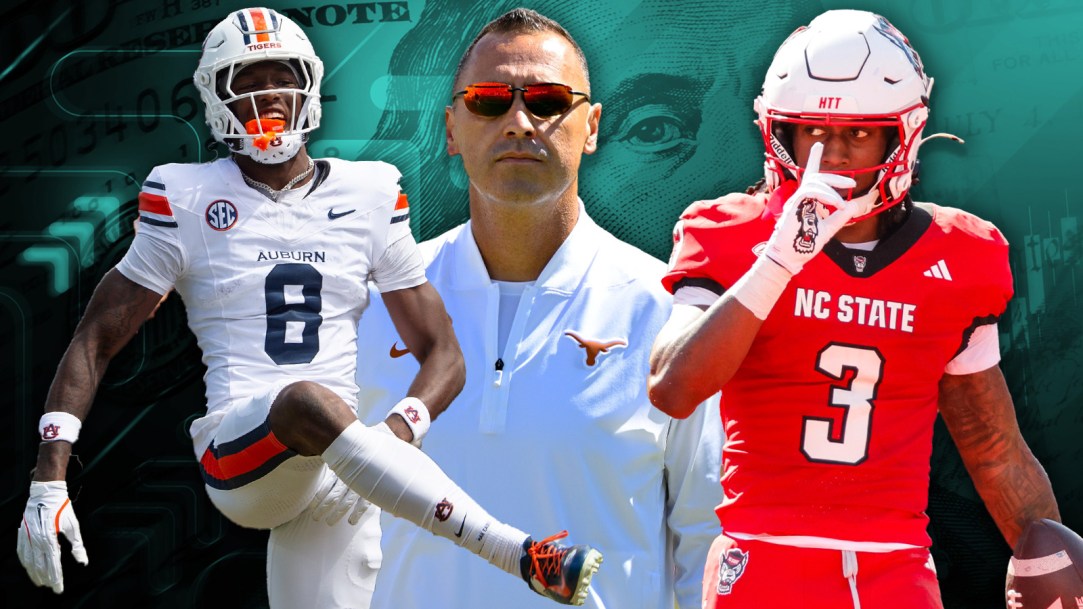
Texas has the financial resources to sign any college football player it wants. The Longhorns are making a statement by spending millions of dollars in NIL money to help build the roster around Arch Manning.
It also proves they are not broke.
Two of the biggest moves in the transfer portal directly contradict a recent narrative surrounding the college football program in Austin. There is plenty of cash!
Texas will not overpay for unproven contributors.
The University of Texas have seen 23 outgoing players enter the transfer portal this cycle. That is a little bit less than 25% of the 105-player roster.
NIL money is the driving force behind a large number of these departures.
Many Longhorns players are going to the financial administrators with requests for a pay raise, or threatening to enter the transfer portal based on their projected roles rather than proven on-field performance. Players and agents view the program as flush with cash so they want their piece of the pie. That initially created a lot of tension because Steve Sarkisian and his staff are unwilling to overpay for backups and/or unproven contributors. Their demands are unrealistic.
Some fans of college football, especially those who root for rival programs, learned of this targeted approach by Texas and used it as a reason to point and laugh. They thought the Longhorns didn’t have enough money to pay their players after flaunting their money for recruits with a fleet of Lamborghinis.
That is far from the truth, as we learned on Sunday.
Alabama didn’t offer enough NIL money for Cam Coleman or Hollywood Smothers.
This whole narrative about Texas being broke largely stemmed from Christian Clark. The rising sophomore running back initially announced his decision to enter the transfer portal after getting 55 carries for the Longhorns in 2025. He may or may not return to Austin.
Either way, Texas will now split the bulk of carries between Raleek Brown and Hollywood Smothers. Clark is an afterthought. If he decides to leave, good riddance.
Smothers was the top-ranked running back in the transfer portal. The former four-star recruit ran for 939 yards and six touchdowns on 160 carries at N.C. State last season.
Smothers initially committed to Alabama last week. He later flipped to Texas on Sunday.
The Longhorns shoved the Crimson Tide into a locker. They offered him more money.
Smothers’ decision was announced just a few minutes after Cam Coleman. Coleman was the second-ranked wide receiver in the recruiting Class of 2024 as a five-star prospect. He caught 93 passes for 1,306 yards and 13 touchdowns in two years at Auburn. He committed to Texas on Sunday.
Coleman initially chose Auburn over Alabama out of high school. The Crimson Tide felt good about its chances of getting him in the boat the second time around. And then the Longhorns shoved them into a locker. It was a huge get for Arch Manning.
All of this goes to say that, no, Texas is not broke. Steve Sarkisian is choosing to spend his money on proven talent instead of guys that have not yet seen the field.
It actually sounds like Alabama is the one that doesn’t want to spend big money…

Jan. 10, 2026, 2:40 p.m. PT
D’Anton Lynn and Ikaika Malloe added another familiar face to the Penn State defense by signing veteran defensive tackle Siale Taupaki on Thursday. It’s the second UCLA Bruin defender Penn State has added on their defensive line, along with Keanu Williams.
Taupaki has seen the college football game evolve, as he pre-dates the NIL era. Taupaki got to UCLA in 2019, starting as a defensive lineman, converting to the offensive line, and now has returned to the defensive side of the ball.
Lynn and Malloe have both coached the UCLA defense in recent years, now the two coaches are joining forces again at Penn State under head coach Matt Campbell. With adding the pair of experienced defenders in Taupaki and Williams, gives the Nittany Lions some built-in experience under Lynn’s defensive philosophy.
Over his seven seasons and 40 games (seven as an offensive lineman) as a UCLA Bruin, Taupaki recorded 38 tackles, two sacks and recovered one fumble. Nittany Lion Wire writer Christopher Sheppard has more on Taupaki and his fit with UCLA.
“Taupaki may have one of the craziest stories in all of college football, starting his career in 2019 as a redshirt. 2020 saw him play seven games, meaning an extra year of eligibility earned due to COVID. However, the next two years saw him only appear in two games, both in 2022. That earned him yet another redshirt season, although it is unclear when he received it,” Sheppard wrote. “Taupaki is now the 27th addition to a loaded Penn State transfer portal class and is now the sixth non-former Iowa State signee. He joins a group of D-line transfers that includes former teammate Keanu Williams, Oklahoma State transfer Armstrong Nnodim, Iowa State transfer Alijah Carnell, and just recently, Utah defensive tackle Dallas Vakalahi.”
If 2026 does end up being Taupaki’s final college season, it’ll take a postseason matchup for him to face UCLA as an opponent for the first time, with Penn State not on UCLA’s 2026 regular season schedule.
NIL
Transfer portal tracker: Former Auburn WR Cam Coleman commits to Texas; QB Dylan Raiola set to visit Oregon

The college football transfer portal has now entered its second week.
On Sunday, former Auburn wide receiver Cam Coleman — the top-ranked receiver in the portal — committed to transfer to Texas, choosing the Longhorns over Texas Tech and Texas A&M.
Advertisement
Many quarterbacks across the country have already expressed their intentions to enter the transfer portal or announced they will be looking for a new school.
That includes Nebraska QB Dylan Raiola, who is set to visit Oregon, according to On3. Raiola’s recruitment has played out slowly and quietly so far, but could ramp up with the Ducks out of the College Football Playoff.
Oregon QB Dante Moore hasn’t made his NFL Draft decision yet. It’s plausible that Raiola could even redshirt a seasons behind Moore if he decides to go to Oregon and Moore returns to to school. Raiola has two seasons of eligibility remaining.
If Moore goes to the NFL Draft, Raiola would presumably be Oregon’s starting QB in 2026.
Advertisement
Former Florida QB DJ Lagway, is reportedly still talking to other schools, according to ESPN’s Pete Thamel, even after verbally committing to Baylor on Thursday. Ole Miss is one of the schools with reported interest.
There’s more clarity with Washington QB Demond Williams, who announced he’s returning to the school two days after trying to enter the transfer portal. His return to UW ended a drama-filled couple of days.
Like Raiola, Arizona State QB Sam Leavitt is yet to make a decision. He’s visiting Miami over the weekend.
We’ll be keeping track of all the notable names who are changing schools in the space below as college football prepares for its biggest transfer frenzy yet. The transfer portal will close on Jan. 16.
-
Nick Bromberg
-
Yahoo Sports Staff
Former Auburn wide receiver Cam Coleman announced he has committed to transfer to the Texas Longhorns.
Coleman was the top player in On3’s transfer portal rankings and was courted by Texas Tech, Texas A&M and Alabama, in addition to the Longhorns. He caught 56 passes for 708 yards and five touchdowns with Auburn last season.
Coleman will give Texas quarterback Arch Manning another top weapon next season alongside receiver Ryan Wingo.
-
Nick Bromberg
Knight is a former five-star recruit and was the No. 25 player in the class of 2025.
-
Andy Backstrom
Former Nebraska quarterback Dylan Raiola is expected to visit Oregon, according to On3’s Pete Nakos.
Current Ducks quarterback Dante Moore told reporters after a Peach Bowl College Football Playoff semifinal loss Friday night that he’s still deciding between returning to Oregon and declaring for the NFL Draft.
Moore has been projected as a top-two quarterback in this year’s draft.
-
Yahoo Sports Staff
Offensive tackle Lance Heard is headed to Kentucky, which will be his third difference SEC team after he previously played for LSU and Tennessee.
Heard is the No. 2 tackle in On3’s transfer portal rankings and No. 20 player overall. He’s entering his senior season after starting 23 total games at left tackle for the Vols across the last two seasons.
-
Yahoo Sports Staff
Tennessee has reportedly landed former Penn State edge rusher Chaz Coleman, who is the No. 3 player on On3’s transfer portal rankings and No. 1 edge rusher.
It’s a big get for the Vols, who are getting Coleman coming off a strong freshman season in which he tallied eight tackles, three TFL, one sack, one forced fumble, and two fumble recoveries in nine games.
-
Nick Bromberg
-
Nick Bromberg
Johnson will play his seventh season of college football in 2026. He appeared in just five games across two seasons at North Carolina after suffering a severe leg injury in Week 1 of the 2024 season. He played in 18 games across two seasons at LSU before transferring to Texas A&M and playing in 12 games across two seasons with the Aggies.
-
Nick Bromberg
Tuggle is heading back to the SEC after just one year at Purdue. He transferred to the Boilermakers after his freshman season at Georgia and was a bright spot on an otherwise abysmal Purdue team. He had 34 catches for 500 yards and four scores as a sophomore in 2025.
Now he’ll team with LaNorris Sellers after the Gamecocks QB said that he would return in 2026.
-
Nick Bromberg
According to On3, Lane Kiffin flew to Knoxville on Friday night in an attempt to woo Sam Leavitt.
The former Arizona State quarterback was there on a visit to Tennessee. He left the state to visit Miami this weekend.
LSU is still looking for a transfer portal quarterback after Cincinnati’s Brendan Sorsby committed to Texas Tech and Washington’s Demond Williams Jr. said he was staying in Seattle.
-
Andy Backstrom
Now that Ole Miss quarterback Trinidad Chambliss has been denied a sixth year of eligibility by the NCAA, there could be an opening under center for the Rebels.
Former Florida quarterback DJ Lagway is taking a visit to Oxford this weekend, according to On3’s Pete Nakos and Hayes Fawcett.
Lagway was previously reported to be committed to Baylor, but he hasn’t signed a deal yet and is still weighing his options, per ESPN’s Pete Thamel, who also reported Lagway’s upcoming visit to Ole Miss.
-
Tarohn Finley
Alabama quarterback Austin Mack will return to the Crimson Tide next season the school’s NIL collective announced.
Mack has spent the last three seasons with head coach Kalen DeBoer and two with offensive coordinator Ryan Grubb, who was his offensive coordinator in 2023 at Washington and in 2025 at Alabama.
With Ty Simpson declaring for the draft, Mack is expected to compete with freshman quarterback Keelon Russell for the starting job next season. Russell’s return to the Tide was announced on Friday too.
Mack came in for an injured Simpson in the Rose Bowl and was 11-16 for 103 yards in Alabama’s blowout loss.
-
Yahoo Sports Staff
Former Florida QB DJ Lagway was reported to be committed to Baylor, but he hasn’t signed a deal yet and is planning to take more visits, per ESPN’s Pete Thamel.
Ole Miss is reported to be interested after Trinidad Chambliss was denied an extra year of eligibility with the Rebels.
-
Yahoo Sports Staff
The Buckeyes are reportedly hanging onto breakout star running back Bo Jackson, who was rumored to be mulling the transfer portal coming off a strong freshman season.
-
Yahoo Sports Staff
Cornerback DJ McKinney played two years for Colorado after spending the previous two seasons with Oklahoma State. He’s tallied 135 tackles, 18 pass breakups and 4 interception across his college career.
-
Tarohn Finley
Auburn transfer Cam Coleman might play for a different team in the Iron Bowl next season. Coleman is visiting Alabama on Friday, according to On3’s Pete Nakos.
Coleman had 56 catches for 708 yards and 5 touchdowns last season. Texas Tech, Texas, Texas A&M and Alabama are reportedly the strongest contenders for Coleman.
-
Tarohn Finley
Utah transfer defensive lineman Jonah Lea’ea will join head coach Kyle Whittingham and edge John Henry Daley at Michigan, according to On3’s Hayes Fawcett.
Last season, Lea’ea started all 12 regular-season games and finished with 38 tackles, 1 sack and 1 forced fumble.
-
Nick Bromberg
Auburn is now losing its top two receivers from 2025.
With Cam Coleman already looking for a new team, leading receiver Eric Singleton Jr. has now entered the transfer portal. Singleton had a team-high 58 catches for 534 yards and three touchdowns in 2025.
-
Yahoo Sports Staff
The Wolverines will reportedly be without one of their top running backs next season as Justice Haynes plans to enter the transfer portal.
The junior only spent one year in Ann Arbor, but averaged 7.1 yards per carry while running for 857 yards and 10 TDs in 2025. He had previously spent 2 seasons with Alabama.
-
Nick Bromberg
Vanderbilt’s Tre Richardson is heading north. He committed to Louisville, according to On3.
Louisville will be Richardson’s fourth school. He played a year of junior college football before spending a season in Division II before transferring to Vandy. He had 46 grabs for 806 yards and seven scores for the Commodores in 2025.

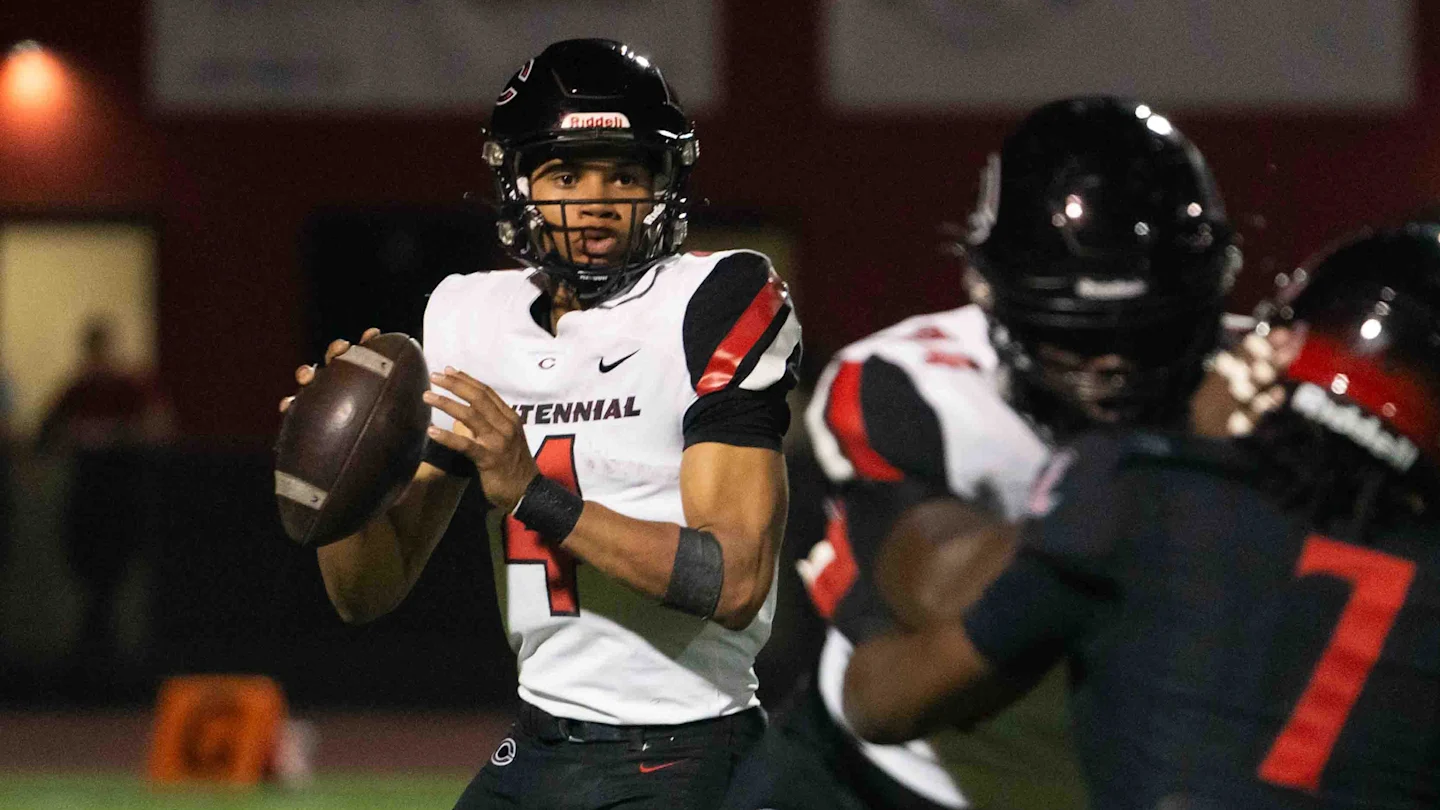
The college football offseason received a massive jolt of energy regarding a high-profile quarterback decision. A highly touted former five-star recruit officially placed his name into the transfer portal this week to spark an immediate recruiting battle. This move creates a significant shift in the landscape for several top-tier programs looking to upgrade their roster talent immediately.
He spent his freshman campaign serving as a backup for a prominent West Coast power before opting to explore other options. The decision comes after the incumbent starter announced plans to return for another season in Los Angeles. This talented passer possesses four years of eligibility and offers immediate upside for teams in need of a dynamic playmaker to lead their offense.
Elite programs are already lining up to secure his services for the upcoming campaign. Two major conference rivals have quickly emerged as the primary contenders for his commitment.
One suitor aims to get the prospect on campus immediately, while the other navigates its own complex quarterback room situation involving potential NFL departures.
Lane Kiffin and LSU battle Oregon for Husan Longstreet
Former USC quarterback Husan Longstreet is the player at the center of this developing saga. The Corona, California, native entered the portal Thursday after playing behind Jayden Maiava during his freshman season.
Maiava intends to return to the Trojans next year, which prompted the move. Longstreet finished his brief USC tenure with 103 passing yards and one touchdown across four appearances.
LSU appears to be the aggressor in this recruitment under new head coach Lane Kiffin. The Tigers are working to get Longstreet on campus before any other program. Kiffin has a clear need at center with Garrett Nussmeier ineligible and backup Michael Van Buren transferring to USF. The head coach also has a track record of developing transfers like Jaxson Dart and Trinidad Chambliss.

Longstreet has family roots in Louisiana, which could aid the Tigers. He was also intrigued by Kiffin during his high school recruitment when the coach was at Ole Miss. Kiffin has fully embraced a villain persona this offseason by attempting to flip Washington quarterback Demond Williams days after he signed a lucrative deal. That pursuit may have burned a bridge with fellow transfer target Sam Leavitt.
Oregon remains a major threat to land the talented passer despite the aggressive push from Baton Rouge. The Ducks join LSU as teams to watch closely, according to On3.

Head coach Dan Lanning is currently awaiting an NFL Draft decision from Dante Moore while also remaining in the mix for Dylan Raiola. Oregon has successfully used the portal to sign three consecutive starting quarterbacks, including Bo Nix and Dillon Gabriel.
The decision for Longstreet could hinge on immediate playing time and offensive fit. Oregon offensive coordinator Will Stein is departing to become the head coach at Kentucky which adds a variable to the Ducks’ pitch. USC will move forward with veteran Sam Huard as the primary backup to Maiava. Huard is playing for his fourth school in six years and recently threw a key pass on a fake punt against Northwestern.
Read more on College Football HQ
Sports21 minutes ago
Omaha Supernovas defeat Columbus Fury in pro volleyball

Rec Sports24 minutes ago
Tennessee basketball ‘not tough enough,’ loses big at Florida – The Daily Beacon

Rec Sports32 minutes ago
Youth Sports Rising Costs Ohio

Sports36 minutes ago
Men’s Volleyball Opens Season Against Top Competition in California | Sports

Motorsports46 minutes ago
Three-Time GRAMMY-Award Winning Country Music Superstar Miranda Lambert to Perform DAYTONA 500 Pre-Race Concert – Speedway Digest

NIL49 minutes ago
On3 CEO shares telling Alabama NIL statement after Hollywood Smothers flips to Texas

Sports52 minutes ago
85 volleyball teams come together for first-ever Topeka Throwdown Volleyball Tournament

Rec Sports2 hours ago
Ogden School District launches free strength and conditioning program for junior high students | News, Sports, Jobs

NIL2 hours ago
2,300-yard transfer QB strongly linked to three major college football programs

Rec Sports2 hours ago
Education important for new snowmobile riders – Brainerd Dispatch

NIL3 hours ago
Texas Proves It Is NOT NIL Broke By Shoving Alabama In A Locker

Sports3 hours ago
Athletics News: Men’s Track & Field Excels at 2026 Season Opener

Sports3 hours ago
Hooten rewrites 60m hurdles program record at Rod McCravy Memorial

Sports3 hours ago
No. 1 UCLA men’s volleyball to face No. 15 McKendree, Concordia in season opener

Rec Sports3 hours ago
Colorado Springs area nonprofit community fundraising events starting Jan. 11

Rec Sports4 weeks ago
Stempien to seek opening for Branch County Circuit Court Judge | WTVB | 1590 AM · 95.5 FM

Sports4 weeks ago
#11 Volleyball Practices, Then Meets Media Prior to #2 Kentucky Match

Motorsports4 weeks ago
Ross Brawn to receive Autosport Gold Medal Award at 2026 Autosport Awards, Honouring a Lifetime Shaping Modern F1

Sports4 weeks ago
Maine wraps up Fall Semester with a win in Black Bear Invitational

Motorsports4 weeks ago
Nascar legal saga ends as 23XI, Front Row secure settlement

NIL4 weeks ago
Downtown Athletic Club of Hawaiʻi gives $300K to Boost the ’Bows NIL fund

Rec Sports3 weeks ago
Princeton Area Community Foundation awards more than $1.3 million to 40 local nonprofits ⋆ Princeton, NJ local news %

Motorsports4 weeks ago
Sunoco to sponsor No. 8 Ganassi Honda IndyCar in multi-year deal

Rec Sports4 weeks ago
WNBA’s Caitlin Clark, Angel Reese and Paige Bueckers in NC, making debut for national team at USA camp at Duke

Sports3 weeks ago
Badgers news: Wisconsin lands 2nd commitment from transfer portal

NIL4 weeks ago
Nike Signs 10 LSU Athletes to NIL deals

Sports4 weeks ago
Three Clarkson Volleyball Players Named to CSC Academic All-District List

Rec Sports1 week ago
Five Youth Sports Trends We’re Watching in 2026

Sports3 weeks ago
Beach Volleyball Unveils 2026 Spring Schedule – University of South Carolina Athletics

NIL4 weeks ago
Kentucky AD explains NIL, JMI partnership and cap rules





-
 Sports3 weeks ago
Badgers news: Wisconsin lands 2nd commitment from transfer portal
-
 Rec Sports1 week ago
Five Youth Sports Trends We’re Watching in 2026
-
 Sports2 weeks ago
Kentucky VB adds an All-American honorable mention, loses Brooke Bultema to portal
-

 Motorsports3 weeks ago
Dr. Patrick Staropoli Lands Full-Time O’Reilly Ride with Big Machine Racing
-

 Motorsports2 weeks ago
BangShift.com IHRA Acquires Historic Memphis Motorsports Park In Millington Tennessee. Big Race Weekend’s Planned For 2026!
-
NIL2 weeks ago
Fifty years after IU’s undefeated champs … a Rose Bowl
-
 Sports2 weeks ago
Colorado volleyball poised to repeat success
-
 Sports2 weeks ago
2025 Volleyball Player of the Year: Witherow makes big impact on Central program | Nvdaily
-
 Sports2 weeks ago
H.S. INDOOR TRACK & FIELD: GLOW region athletes face off at Nazareth University | Sports
-

 Rec Sports3 weeks ago
Tennessee Developments: Rolling on the River