
Motorsports
Kyle Larson eyes ‘The Double’ with confident Carb Day performance – Speedway Digest

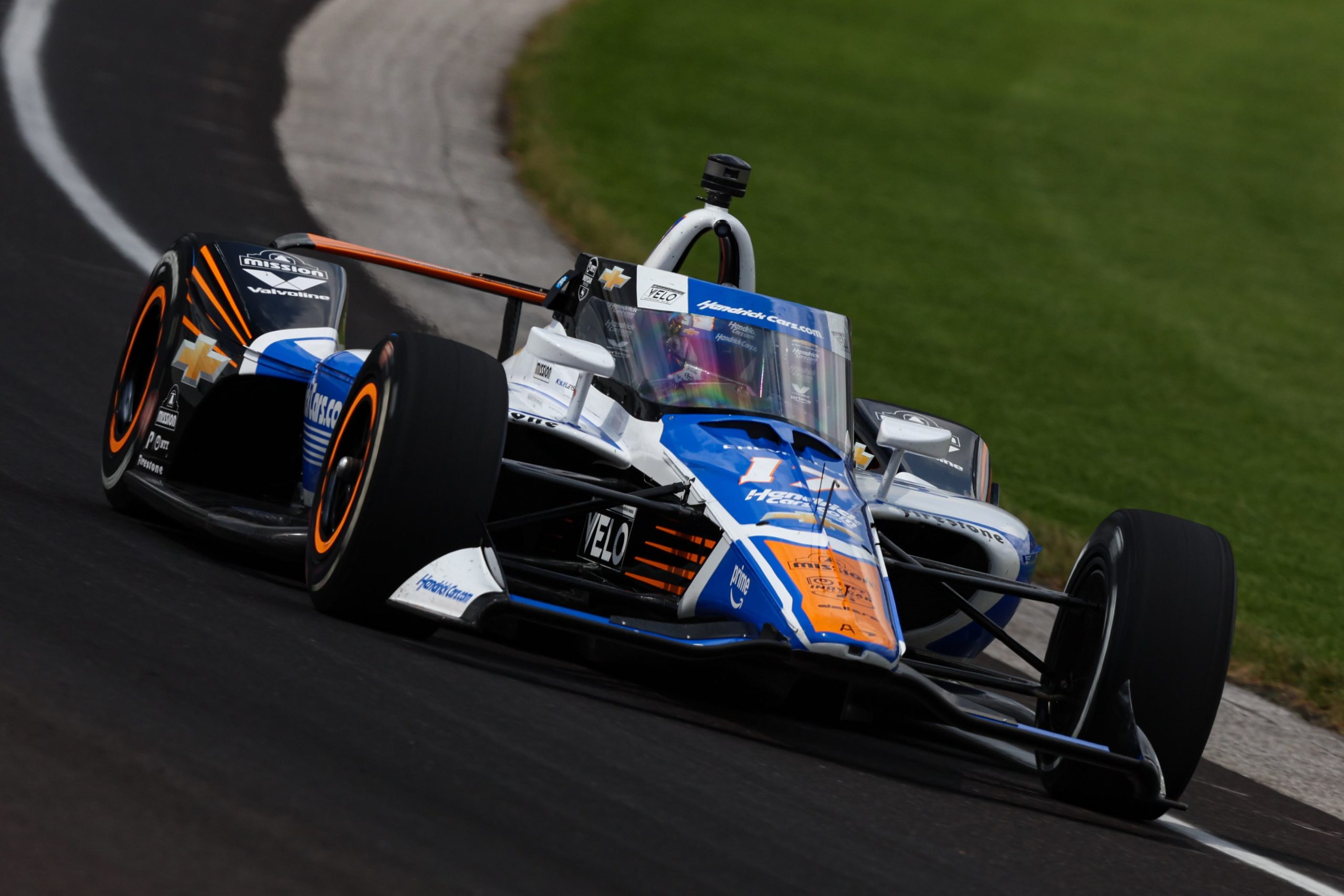
Under sunny skies and temperatures in the high-60s – the warmest it’s been this week – the 33-car Indianapolis 500 field made its final practice laps Friday in preparation for Sunday’s 109th Running of the Indianapolis 500.
Friday’s annual “Carb Day” two-hour practice session at Indianapolis Motor Speedway culminated a busy, news-making week at the track where two of the fastest cars were penalized for illegal modifications, a rookie making his first career oval start won pole position and NASCAR champion Kyle Larson is set to make his second attempt at Memorial Day’s famed “Double” – competing in both the Indianapolis 500 Sunday morning (noon ET on FOX) and then NASCAR’s Coca-Cola 600 that evening (6 p.m. ET on Amazon Prime, PRN, and SiriusXM NASCAR Radio).
The two Team Penske cars penalized during Fast 12 pole qualifying made a huge statement Friday with two-time defending Indy 500 winner Josef Newgarden turning the fastest lap in practice and his teammate Will Power – who will join Newgarden on the last row of the starting grid as a result of the penalties – sixth quickest.
They would also go on to face one another later in the day’s best-of-three championship round of the traditional Pit Stop Challenge with Newgarden winning his third crown in the event which pits 16 cars in eight rounds of head-to-head timed competition.
As for practice, Indy 500 pole-winner, Israeli driver Robert Shwartzman, 25, was 29th on the speed charts. And NASCAR Cup Series championship leader Kyle Larson was 26th on single lap speed, but among the top-six in both 10-lap and 20-lap runs.
The 2021 NASCAR champ Larson, who hosted his NASCAR Cup Series Hendrick Motorsports team trackside Friday, remained confident in his No. 17 McLaren Arrow Chevrolet, all-business as he climbed out for a practice debrief.
“I think it’s a little different than NASCAR with the drafting and not knowing what people’s objectives really were, but it doesn’t hurt [to be fast in multi-lap runs],” Larson said of his work Friday afternoon. “I feel good about my balance, so yeah, I feel like we’re pretty decent. There are a couple guys that are really good also, but I feel like things feel good.”
Larson acknowledged coming through the field from the seventh row to start the race Sunday definitely presents a different experience than he had last year starting fifth overall on the second row.
“I would prefer to start further forward, but I think you’ve just got to be smartly aggressive and patient all at the same time back when you start beyond the first few rows,” Larson said. “I think our car handles good in the pack so just got to be smart about it. You can’t be too aggressive because if you try to push too much and get tightness and have to lift then you’re going to give up a spot potentially. Just got to watch out when you make you moves.”
It was an unusually dramatic day for several of his competitors. Alexander Rossi, who won the 100th Indianapolis 500 in 2016, had problems with his Ed Carpenter Racing Chevrolet early, running only five laps before the team took it to the garage for repairs. The Rahal Letterman Lanigan team had to change engines in Graham Rahal’s No. 15 Honda after only 21 laps of practice.
Perennial crowd-favorite, Indianapolis-native Conor Daly also had a challenging day in his Junco Hollinger Racing Chevrolet, the team retiring to the garage early for a full once-over. Daly, who starts 11th, called the afternoon “nerve-wracking.” He still got in 59 laps of practice and posted the 10th best speed Friday.
Another former Indy winner, Ryan Hunter-Reay had the most dramatic exit from the practice when his No. 23 Dryer-Reinbold Chevy had to pull off track with the rear of his car on fire. He was concerned the issue may be with the new hybrid system the cars are running at Indy since his teammate also experienced a problem.
After practice, Carb Day activities finished up with the always-exciting “Pit Stop Challenge” and Saturday features the traditional Public Drivers Meeting and parade through downtown Indianapolis – the month finally culminating with Sunday’s Indianapolis 500 green flag at noon ET.

Motorsports
23XI, FRM attorney cites Kurt Busch in response to NASCAR Commissioner Steve Phelps touting Next Gen safety
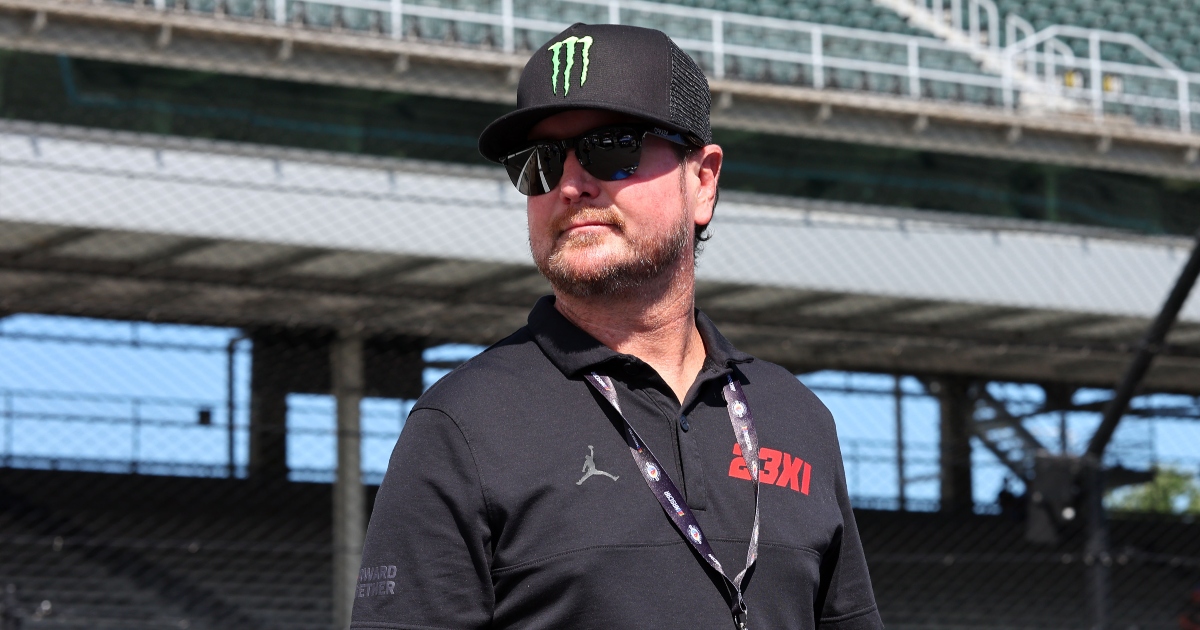
NASCAR commissioner Steve Phelps touted the safety of the Next Gen car during his Tuesday testimony in the 23XI Racing and Front Row Motorsports versus NASCAR antitrust lawsuit trial. Phelps testified that the Next Gen car is the “safest car in all of motorsports.”
Phelps’ statement drew “audible gasps” in the Charlotte courtroom, according to Jenna Fryer of The Associated Press. 23XI co-owners Michael Jordan and Denny Hamlin laughed. There was a reason for their laughter, as they recall the events of July 23, 2022. That afternoon at Pocono Raceway, then 23XI driver Kurt Busch crashed in qualifying. He suffered a severe concussion, one that forced him into retirement.
So, we go back to Phelps’ testimony that the Next Gen car is the “safest car in all of motorsports.” The plaintiffs’ attorney Jeffrey Kessler asked Phelps if he knew who Busch was and if the 2004 Cup Series champion retired due to a concussion. Phelps, per Adam Stern of Sports Business Journal, acknowledged that but noted the car was designed to prevent fatalities. He added that NASCAR later increased crumple zones.
NASCAR’s Steve Phelps makes big statement during testimony
Since the introduction of the Next Gen car in 2022, a number of drivers have suffered injuries while racing. Cody Ware was the most recent example in the Chicago Street Race. Erik Jones had a back injury in 2024. Noah Gragson missed a race in 2023 after a wreck. Alex Bowman missed a handful of races in 2022 after suffering a concussion in a wreck. Busch’s Hall of Fame career was cut short at Pocono.
Of course, there are examples of the Next Gen car holding up well in extreme wrecks. Ryan Preece and his flips show that the car can be safe and protect drivers in the worst situations.
Beyond safety, Phelps lauded the Next Gen car for improving the on-track product: “The racing is just better, so it has accomplished what I hoped it would accomplish.”
That’s a statement that might be controversial, as the superspeedway and short track product has been much criticized. That being said, intermediate races have largely been well-received by the NASCAR fanbase.
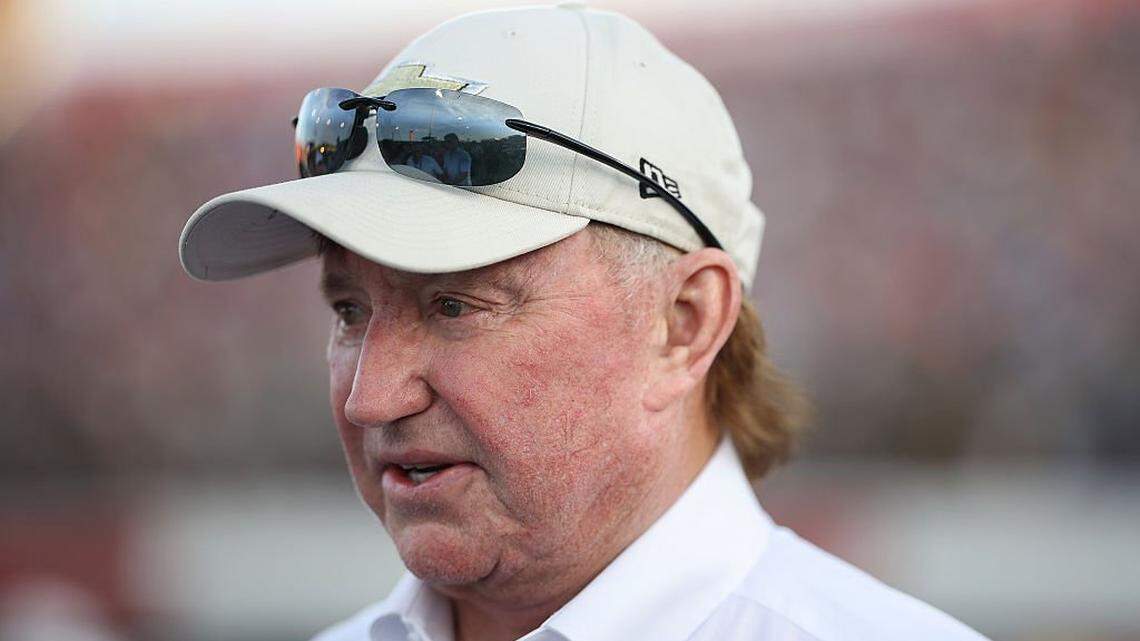

RCR team owner and NASCAR Hall of Famer, Richard Childress waits on the grid prior to the NASCAR Cup Series All-Star Race at North Wilkesboro Speedway on May 18, 2025 in North Wilkesboro, North Carolina.
Getty Images
Five witnesses testified Tuesday in the trial that has grabbed the stock car racing world’s attention — but it was someone not employed by NASCAR, 23XI Racing or Front Row Motorsports who was most revealing.
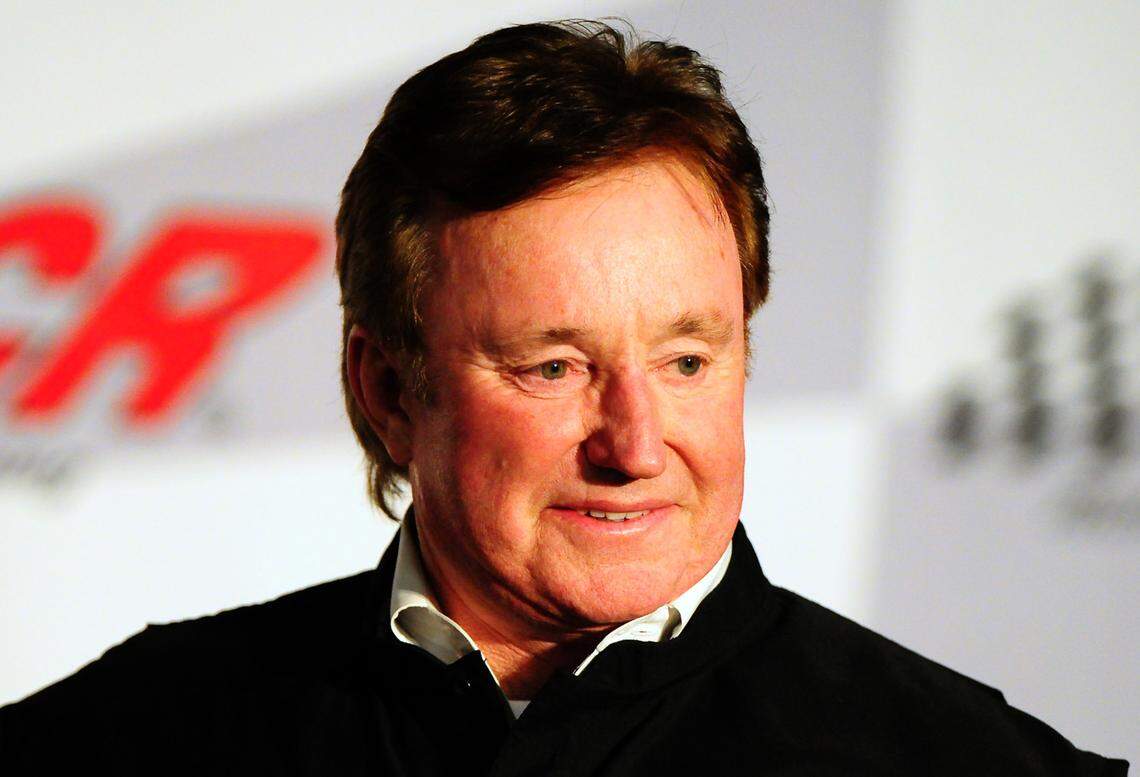
Longtime Cup Series owner Richard Childress confirmed during his testimony Tuesday that he had engaged in discussions to sell a portion of his 60% stake in Richard Childress Racing, the company he founded in 1969.
The six-time Cup Series champion owner, who famously owned the car that helped bring Dale Earnhardt and the sport of NASCAR into the nation’s consciousness in the 1980s and ‘90s, appeared confused when he was asked during cross-examination about what he thought were confidential discussions with a group that includes former NASCAR driver Bobby Hillin Jr.
“I don’t want to answer that,” Childress said at one point during this line of questioning, before District Judge Kenneth Bell reminded him he was under oath and obliged to answer to the best of his ability.
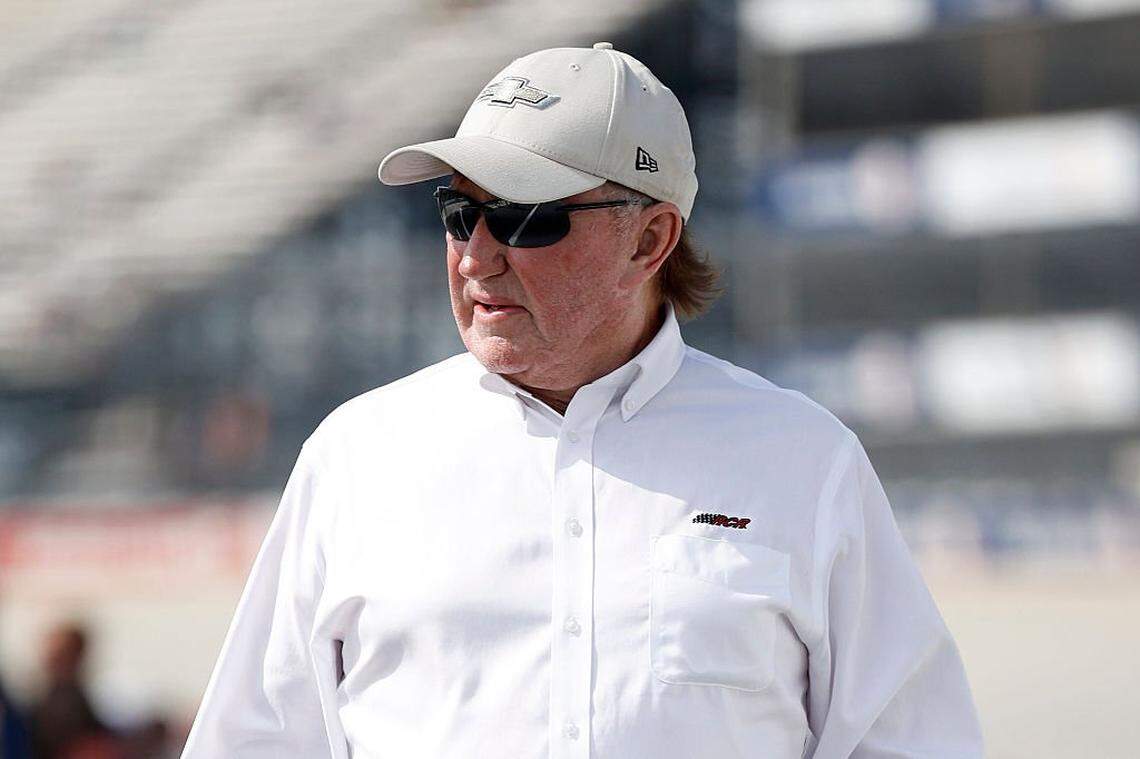
Childress said that he sent Hillin a termination letter earlier this year — “They don’t have the money,” Childress said — and that both parties signed a non-disclosure agreement pertaining to RCR’s finances. Childress also clarified that Hillin was mainly going to purchase the stake in the company owned by Chartwell Investments, which has wanted out of their ownership of RCR for the last “five or six years.” When asked directly, Childress admitted to considering selling part of his stake to Hillin, too.
Once the jury departed for the evening, plaintiffs counsel requested to Judge Bell that the defense turn over the documents they have concerning Hillin’s claims about Childress’s finances and to find the source who availed those documents to NASCAR. The two legal teams were told to discuss the matter Tuesday evening.
Still, the 80-year-old NASCAR Hall of Famer answered more than he wanted to, as was apparent in the Potter Courtroom in the U.S. District Court of the Western District of North Carolina in uptown Charlotte. The answers, though not at the center of the case, were ostensibly relevant, however.
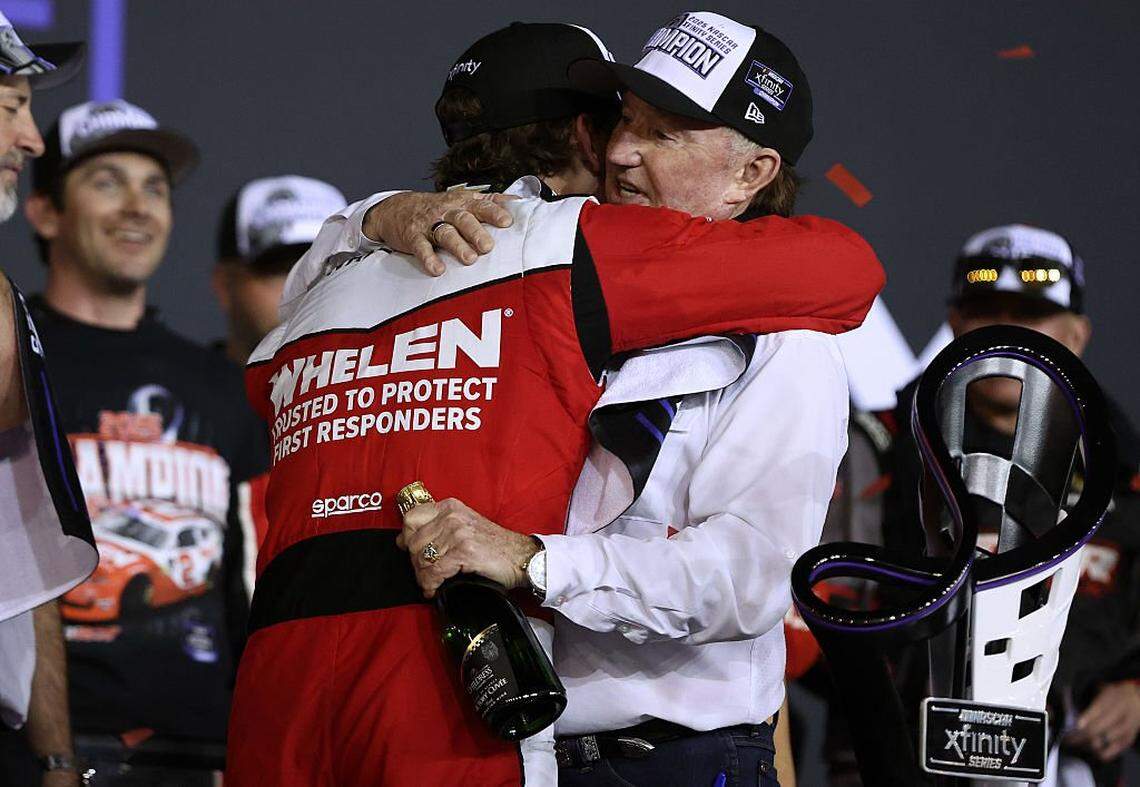
The fact that Childress is looking to sell a portion of his stake in RCR demonstrates that life in the Cup Series isn’t easy, something that he testified to at great length on Tuesday. Childress confirmed that his business affairs have yielded 55 straight years of EBITA — an economics term that shows a company’s operational profitability before interest, taxes and other processes — but he also clarified: “I have other businesses to pay our bills for NASCAR.”
“I’d be broke if I was just doing the Cup teams,” Childress said.
Those businesses include ECR Engines, a high-performance combustion engine development and production company, as well as RCR Manufacturing Solutions, which produces weapons and vehicles for the military. Both profitable businesses operate on the Richard Childress Racing campus in Welcome, North Carolina. Childress also owns a vineyard in Lexington.
Childress, despite being forced to disclose some aspects of his business, was not deterred by his primary point of being called as a plaintiff witness.
“That money should be going into my bank account (instead of) going to pay my NASCAR teams,” he said.

The point Childress was trying to make
Prior to his cross-examination, Childress was guided down a line of questioning from plaintiff attorney Danielle Williams and was direct in his frustrations with NASCAR and its current model of business.
His main gripe was with the 2025 charter agreement.
“We were negotiating a better contract for the charters,” said Childress, who owns two full-time Cup Series charters. “And then it just didn’t happen that way.”
Childress is referring to the document that was the catalyst to the lawsuit that has led us to this trial. The lawsuit was filed in October 2024 and involved Cup teams 23XI Racing and Front Row Motorsports asserting that the sanctioning body of NASCAR operated as an unlawful monopoly.
A quick refresher on the charter agreement: NASCAR established its charter system in 2016. A “charter” can be thought of like a franchise, similar to how the Chicago Bulls belong to the NBA. Cup teams that own one of the 36 charters have certain benefits; they have guaranteed entry into every race, for instance, and thus a guaranteed slice of each race weekend’s purse.
Team owners this week have testified that the 2016 deal was a good start but that come the expiration of that deal — in 2025 — the sport ought to improve the charter system. For the teams, that meant making the charters “evergreen,” or permanent.
Such a prospect would make it so teams wouldn’t have to forfeit their charters if they didn’t sign on to a new charter agreement, which, if trends persist, get renegotiated after seven-to-nine years. It would also foster a partner-to-partner relationship rather than a contractor-to-employer relationship, teams say — all teams want is an asset that can’t be taken away and that appreciates or depreciates as the sport fares over time.
“It wouldn’t cost NASCAR nothing to give us a (permanent) franchise,” Childress said. “All we want to do is be good partners.”
Childress also agreed with other owners who have testified and said that NASCAR offered the teams a “take-it-or-leave-it” ultimatum in September: In other words, if you don’t sign now, you lose your charters. Childress ultimately decided to be one of the 13 teams to sign onto the charter agreement.
The only two teams that didn’t sign the agreement are the ones who sued NASCAR and are the plaintiffs in this case: 23XI Racing (owned by Michael Jordan and Denny Hamlin) and Front Row Motorsports (owned by Bob Jenkins).
“We would’ve lost them,” Chidress said. “… Financially, I couldn’t lose our charters.”

Jim France takes the witness stand to little avail for teams
NASCAR board chairman and CEO Jim France took the witness stand Tuesday and was examined by plaintiff attorney Jeffrey Kessler. His testimony was largely uneventful; he mostly deflected Kessler’s questions, citing a faulty memory and relying on generalities.
For instance, when plaintiffs showed in evidence an email in which NASCAR president Steve O’Donnell wrote that “Jim’s overarching comment” in a charter negotiations meeting was a fiery one — “We are in a competition … we are going to win!” — France was steadfast.
“I’m not sure,” France said, when asked to recall his message to NASCAR leadership. He added, “That would be his interpretation.”
France had a similar response when he was shown a bevy of letters from NASCAR Cup Series owners during charter negotiations — leaders France referred to as friends, like Rick Hendrick and Roger Penske. He was asked about one line in particular from Hendrick, owner of Hendrick Motorsports: “HMS has won two Cup championships and lost $20 million (in the last five years). … To be asked to consider a lesser deal as your most recent proposal suggests is a slap in the face. I will not agree to it.”
France’s response when he was asked if he sees the letter: “I do see that.”
When asked if he remembers how the letter made him feel: “I do not recall.”
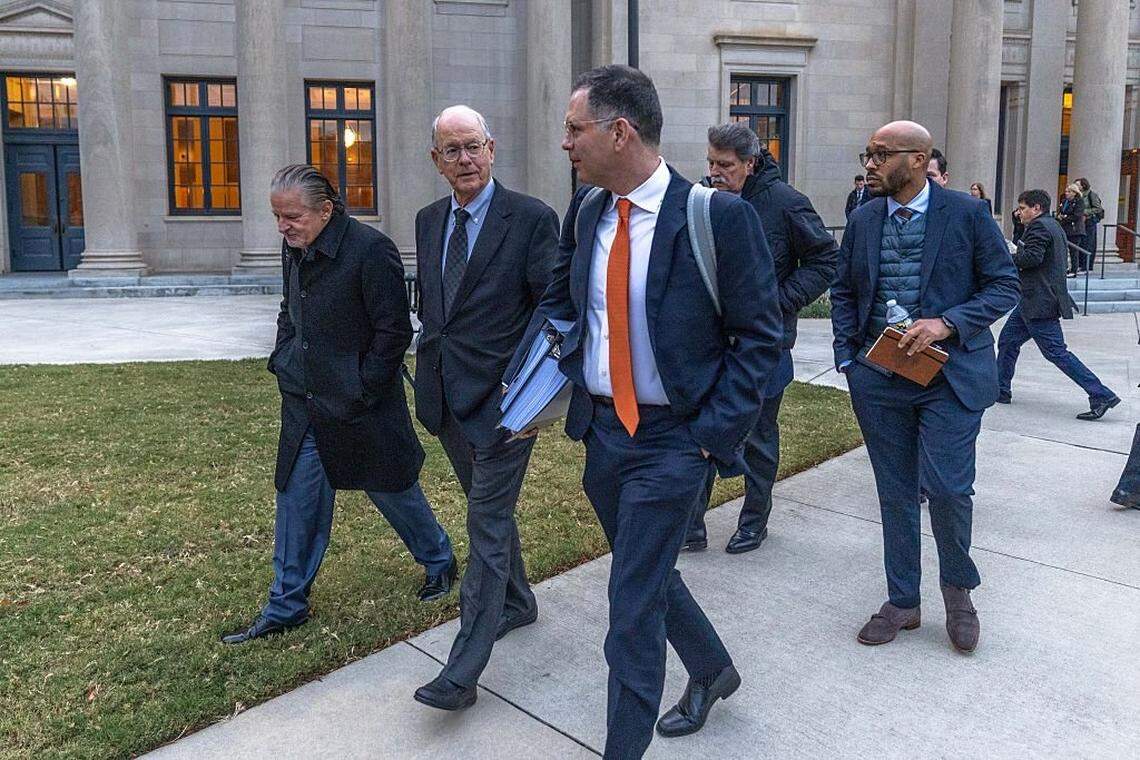
Other notes from NASCAR trial Day 7
—The five witnesses who testified Tuesday, in order: plaintiff expert economist Edward Snyder (who finished up from Monday), accountant Anthony Smith, NASCAR commissioner Steve Phelps, Childress and France.
—Phelps reiterated the company line, stating that the charter system was good for NASCAR and that he set out to strike a compromise with the teams knowing that NASCAR did not want permanent charters. He also added that the Next Gen car is the “safest car in motorsports”; when reexamined by plaintiff counsel and asked about the concussions that transpired in 2022 and even one that ended the career of Kurt Busch early, Phelps acknowledged those early bumps but also acknowledged the progress the car has made and clarified that this car is safest against “big hits” that could cause “fatalities.”

—France was the final witness called by the plaintiffs. His cross-examination will continue and conclude Wednesday. Defense attorney Chris Yates informed Judge Bell that it is his team’s goal to get through all their witnesses by the end of the week, meaning that closing arguments are possible for Monday.
“We will endeavor to be as efficient as possible,” Yates said.
Plaintiffs counsel appeared skeptical of this goal as the defense still has over 10 people on its potential witness list; Yates said he and his team will pare down the witness list Tuesday night.
This story was originally published December 9, 2025 at 8:14 PM.

Alex Zietlow
The Charlotte Observer
Motorsports
Kelley Earnhardt Miller, Dale Earnhardt Jr. voice disappointment surrounding NASCAR vs. 23XI, FRM lawsuit
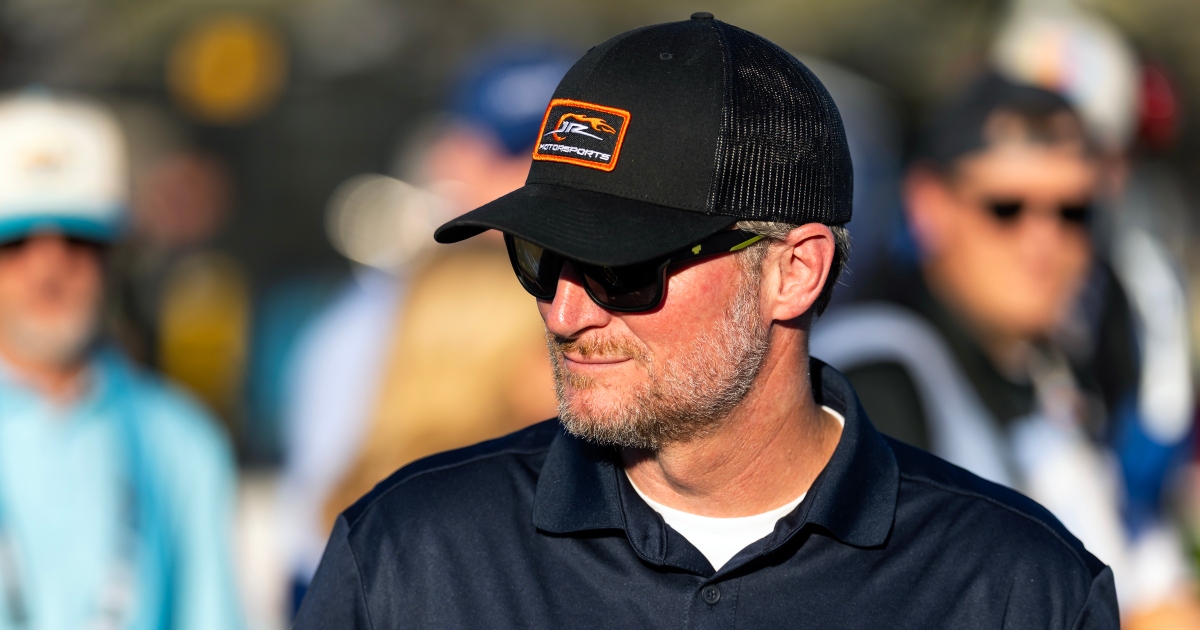
It is now Day 8 of the 23XI Racing and Front Row Motorsports versus NASCAR antitrust lawsuit trial. The trial is happening after 23XI and FRM filed an antitrust lawsuit against NASCAR in October 2024 alleging monopolistic practices; Dale Earnhardt Jr. and Kelly Earnhardt Miller feel it never should have gotten this far.
Speaking on Tuesday’s “Dale Jr. Download,” the JR Motorsports co-owners discussed the happenings of the trial up to this point. Dale Earnhardt Jr. said he’s “disappointed in both sides,” adding he’s skeptical any of this will help the sport.
“I’m very disappointed, I am. I’m very disappointed in both sides, honestly,” Dale Earnhardt Jr. said. “I will say that I’m extremely disappointed that we are in this position, and I don’t see how any of this is going to — is helping us as a sport. So, I’m kind of frustrated at both sides. But I also feel like I can agree with certain aspects of both sides’ argument.”
Dale Earnhardt Jr, Kelly Earnhardt Miller dive into NASCAR trial
After countless motions, failed settlement talks, etc., this case went to trial last Monday. Of the 15 Cup Series teams that hold the 36 available charters, 23XI and FRM were the only teams that did not sign the Charter Agreement in August 2024. Two months later, they filed a joint lawsuit against NASCAR and its CEO Jim France.
Multiple attempts at reaching a settlement before trial failed. Both sides believe they have a winning case. Judge Kenneth Bell, however, made it clear before the trial he doesn’t see a winner here.
“It’s hard to picture a winner if this goes to the mat — or to the flag — in this case,” Bell said in June. “It scares me to death to think about what all this is costing.”
Dale Earnhardt Jr. and Kelly Earnhardt Miller share the same opinion as Bell. The latter expressed her sadness of how damaging this has been to the sport.
“This is a big deal,” Kelley Earnhardt Miller said. “And to your point of it dominating your thoughts, I don’t know where I land on everything because every day something new comes out, some more interesting information. I know from the very beginning, I’m sad that this is the position the sport is in, and I’m sad for the sport and the fans and all the people that have supported NASCAR and been a fan all these years for us to get to this point. The things that have come out, I can’t believe that either side would want to come out if they knew all that.”


While most media outlets have been fixated on the Paramount-WBD-Netflix deal, Michael Jordan has spent the last week sitting in a Charlotte, North Carolina, courthouse, testifying in one of the most consequential antitrust trials this year.
Here’s what you need to know: Two racing teams, 23XI Racing and Front Row Motorsports, have sued NASCAR for monopolistic and anticompetitive practices.
Among other things, which we’ll get into, 23XI Racing and Front Row Motorsports claim that NASCAR has illegally used its monopoly power to control the sport’s financial structure, limiting team revenue and stifling competition through its charter system and other restrictive practices, such as controlling track access and car parts.
Court proceedings can sometimes feel like you are a teenager counting down the minutes for a high school class to end, but antitrust cases are different. The best way to learn how a business or industry really works is to pay attention to an antitrust trial.
Over the last week and a half alone, this trial has provided exclusive access to team and league financials, including annual profit-and-loss statements. For example, we now know how much money Michael Jordan has invested in 23XI Racing over the last five years ($40 million), the average expenses required to run a NASCAR Cup Series car each year ($20 million), how much money NASCAR lost on its three Chicago street races ($55 million), the total amount of money Front Row Motorsports owner Bob Jenkins has lost since entering the sport in 2005 ($100 million), and even how NASCAR strategically moves around its revenue to reduce its on-paper profits.
Plus, like any discovery process, some juicy emails and texts have emerged. NASCAR’s president once called team owner Richard Childress a “stupid redneck” who should be “taken out back and flogged,” while Michael Jordan laughed off the cost of signing a driver by telling his financial advisor, “I have lost that in a casino. Let’s do it.”

For those who aren’t up to speed on NASCAR, 23XI is a racing team owned by Michael Jordan and three-time Daytona 500 winner Denny Hamlin. The team began racing in 2021 and currently runs three cars, winning nine NASCAR Cup Series races.
Front Row Motorsports is another NASCAR Cup Series team. Owned by fast-food restaurant magnate Bob Jenkins, Front Row has fielded cars in the Cup Series since 2005. In total, Front Row has won four races over two decades, with the team’s most notable win coming when driver Michael McDowell won at the 2021 Daytona 500.
While rumors of legal fights have always existed beneath the surface, NASCAR teams have generally avoided confrontation for fear of retribution. At its core, NASCAR is a family business. Bill France founded NASCAR in 1948, and the France family still owns and runs it 77 years later, with four generations occupying leadership roles.
But while others were unwilling to risk the tens (if not hundreds) of millions of dollars that they had invested in the sport through cars, factories, drivers, equipment, and employees, Michael Jordan was uniquely positioned to take on the challenge.
Jordan has more money than he’ll ever need and is a lifelong NASCAR fan. He isn’t scared of what the France family will do because NASCAR isn’t his primary business.
So while every other team signed NASCAR’s 2024 charter agreement (more on that later), 23XI and Front Row refused to sign it. Instead, the two teams joined forces to file an antitrust lawsuit against NASCAR, hiring Jeffrey Kessler to represent them.
If you don’t know Jeffrey Kessler’s name, you have at least seen his work. The 70-year-old lawyer has worked on some of the most significant legal cases in sports history.
Kessler created the NFL, NBA, and NHL player associations. He represented Tom Brady during Deflategate and secured equal pay for the U.S. women’s national soccer team. Kessler also negotiated the free agency and salary cap systems in the NFL and NBA, and just won $2.8 billion in back pay for student-athletes from the NCAA.
Many people seem to believe that this trial will determine whether NASCAR is considered a monopoly, but that’s not accurate. Judge Kenneth Bell has already ruled pretrial that NASCAR holds monopoly power. The jury in this trial is now tasked with determining if NASCAR used that power to engage in anticompetitive conduct.
23XI and Front Row are upset about many things. They don’t like that NASCAR is unwilling to open its books to show teams how much money it is making. They don’t like competing with NASCAR for sponsors, and they also don’t like NASCAR owning roughly 50% of the tracks that the Cup Series races on each year. These tracks receive a percentage of the sport’s TV money, which ultimately winds up back in NASCAR’s hands, and even non-NASCAR-owned tracks are contractually prohibited from hosting non-NASCAR events, making it nearly impossible for a competitor to emerge.
But that’s just one piece of this trial; the bigger issue is NASCAR’s charter system.
Historically, NASCAR treated its teams like independent contractors. Team owners paid for everything, from the cars and drivers to the pit crew and motorhomes. Each team brought its cars to the racetrack, but was never guaranteed a starting spot. Every car had to qualify on speed. If you weren’t fast enough that weekend, you didn’t get to race. If you didn’t get to race, you spent a lot of money just to leave empty-handed.
This was a disastrous business model for teams. Without guaranteed revenue, team financials were unpredictable. There was no incentive to invest in facilities or hire engineering talent, as teams were going out of business just as quickly as they came in.
So, with audiences declining, sponsorships unsteady, and teams folding, NASCAR distributed 36 charters in 2016. As a charter holder, you are guaranteed a starting spot and a share of the prize money from every Cup Series race. Each team can own up to four charters, which can be sold, bought, or leased. If a new team wants to join NASCAR, it must purchase a charter from an existing team. If an existing NASCAR team wants to expand by adding another car, it must buy or lease another charter.
NASCAR distributed these charters to teams for free in 2016. Since then, the price to purchase a charter on the secondary market has increased from $6 million in 2018 to $40 million in 2023. But while NASCAR says its charter program is clear evidence of value creation for its teams, owners disagree. Charters were distributed based on a team’s success from the prior three seasons. So if you are losing millions of dollars every year, didn’t you technically pay for that charter by continuing to show up?
To be clear, team owners were initially happy with the charter program. It was a change they requested and felt provided a step in the right direction. The problem today is that these same owners believe the charter system hasn’t evolved enough.
During the last round of negotiations to extend charters, teams requested several changes. With NASCAR signing a new $7.7 billion media rights deal, teams wanted to receive more than $12.5 million in guaranteed revenue per car. Teams also requested that charters become permanent, providing them with equity value that extends beyond the current rolling 6-year term (and something that NASCAR can’t just take away because it feels like it). Outside of financials, teams also wanted periodic access to NASCAR’s books and a governance vote on business and competitive decisions.
These negotiations lasted more than two years. Based on the evidence presented in court so far, there were heated phone calls, meetings, and emails throughout the process. But when team owners were presented with the final document on a Friday night, NASCAR gave them just six hours to sign it or potentially lose their charter.
The final charter agreement included only a few tweaks from what NASCAR had previously presented. But still, a six-hour deadline on a Friday night meant that many teams couldn’t even have their lawyers review the final 112-page document before signing it, a particularly concerning outcome given the charter extension agreement included language prohibiting teams from filing antitrust lawsuits against NASCAR.
“There was a lot of passion, a lot of emotion, especially from Joe Gibbs; he felt like he had to sign it,” Front Row’s Bob Jenkins testified. “Joe Gibbs felt like he let me down by signing. Not a single owner said, ‘I was happy to sign it. Not a single one.’”
Several teams have since reiterated those comments. Even if they disagreed with the details, some owners had invested hundreds of millions of dollars in the sport and weren’t willing to risk their charter by fighting it. In the end, 13 of NASCAR’s 15 teams signed the agreement, while 23XI and Front Row chose to file a lawsuit instead.
NASCAR is a private business. That means it is not required to report attendance numbers or concession sales, much less its annual revenue or operating profit.
Outside of a few press releases each year or a leaked report, we typically get no insight into how the sport and its teams are performing financially year in and year out.
But that’s what’s so unique about this trial. The discovery process has given us an inside look at the financials — and let’s just say, it doesn’t look great for NASCAR.
According to 23XI’s annual profit and loss statement, the Michael Jordan and Denny Hamlin-owned team has consistently teetered on the edge of profitability. For instance, 23XI Racing reported a $300,000 loss in 2020, a $500,000 profit in 2021, a $2.5 million profit in 2022, a $3.5 million profit in 2023, and a $2.1 million loss in 2024.
Denny Hamlin told the jury this week that it costs $20 million to bring a single car to the track for all 38 races, excluding driver salaries and other expenses. Each chartered car now receives $12.5 million in annual revenue from NASCAR, up from $9 million during the last charter agreement. But that means teams have to make up the difference — $7.5 million per car, excluding driver salaries — through sponsorships.


The inability of 23XI Racing to consistently turn a profit is even more concerning when you consider that they have something no other team has: Michael Jordan.
Since joining NASCAR in 2021, 23XI Racing has leveraged Michael Jordan’s name, brand, and popularity to build one of the sport’s most impressive sponsorship portfolios. The team now generates $40 million annually from brands like Toyota, McDonald’s, Monster Energy, Xfinity, Columbia, Coca-Cola, and the Jordan Brand.
The ability to land sponsors is really the only thing keeping 23XI from losing money.
For example, if you compare 23XI Racing’s annual profit and loss statement to that of Front Row Motorsports, you’ll notice that Michael Jordan and Denny Hamlin’s team generates $30 million more in annual sponsorship revenue, with Front Row typically losing between $5 million and $10 million in a given year (excluding COVID). Add that up over 20 years, and Front Row says it has lost $100 million or more since 2005.


NASCAR’s response to these financials has always been that teams are spending too much and that if they want to consistently turn a profit, they need to cut expenses.
NASCAR’s lead attorney, Chris Yates from Latham & Watkins, has even explicitly called out Michael Jordan and Denny Hamlin during the trial for 1) building a brand new $35 million facility in Charlotte and then charging their own team $1 million in rent, and 2) spending $83,000 on a Christmas party for 23XI Racing employees in 2022.
I’ll let you decide whether those two expenses are egregious. However, the reality is that 23XI and Front Row aren’t the only teams struggling. According to a NASCAR-commissioned study that doesn’t include 23XI or Front Row due to litigation, as well as one other team, only 3 of NASCAR’s remaining 12 teams made a profit last year.
One NASCAR team finished the year with $3.08 million in profit, while the other two profitable teams brought in $130,951 and $143,890, respectively. As for the other nine teams that participated in the study, they collectively lost $33.4 million last year. If you add 23XI and Front Row’s losses to those numbers, at least 11 of NASCAR’s 15 teams lost money last year, with the average unprofitable team losing $4.1 million in 2024.

These financial losses have been a key argument for 23XI Racing and Front Row at trial. Jeffrey Kessler even read an email to the jury that Hendrick Motorsports owner Rick Hendrick sent to NASCAR CEO Jim France in 2024, stating that he had reached a “breaking point” and that, despite Hendrick Motorsports winning two NASCAR Cup Series championships over the past five seasons, the team still lost $20 million.
Of course, after proving that teams are struggling financially, 23XI and Front Row’s legal team was quick to point out that NASCAR generated more than $100 million in net income last year (not counting the profit they may have earned from their tracks).
NASCAR has been on its back foot for several months. Not only did Judge Kenneth Bell rule pretrial that NASCAR was a monopoly, but he also ruled that the relevant market was premier stock-car racing. That limited NASCAR’s ability to claim that teams could always race in other motorsports series, such as INDYCAR or Formula 1.
Antitrust cases are notoriously hard to predict. You just never know how a jury will respond. However, even the most neutral observer will tell you that the testimony and evidence presented over the last week and a half haven’t been good for NASCAR.
NASCAR executives have often said they don’t remember or can’t recall specific details. Michael Jordan has shown up to court every day as 23XI’s representative, a strategic move given his popularity. In fact, two jury members were dismissed for being Jordan fans, while another had to leave for saying, “NASCAR killed NASCAR.”
Judge Kenneth Bell warned both parties a year ago that they would be better off reaching a resolution before trial. While that might have sounded dramatic at the time, they should have listened to him. Now everyone’s dirty laundry is being aired out in public.
If NASCAR wins, 23XI Racing and Front Row Motorsports will likely shut down and leave the sport entirely. Having to go through this trial is bad enough. If the outcome leads to the country’s most popular athlete exiting NASCAR altogether, that’s worse.
However, if the jury finds that NASCAR has been using its monopoly power to limit race team finances and restrict competition, several other outcomes are possible.
Monetary damages could exceed $1 billion, as an economist testified during the trial that 23XI and Front Row are owed $364.7 million. The jury would decide if that is the correct number, but then a judge can triple the damages under U.S. antitrust law. If that happens, 23XI and Front Row would get paid but still likely leave NASCAR.
The judge would then determine how to break up NASCAR’s monopoly and limit anticompetitive practices. That could include forcing NASCAR to make charters permanent, share more revenue with teams, sell tracks, or dump exclusivity clauses.
But behind the scenes, many people seem to be rooting for a third option. Regardless of the trial’s outcome, NASCAR, 23XI Racing, and Front Row Motorsports can always negotiate a settlement before, during, or even after a verdict. Both parties will appeal if the trial doesn’t go their way, so there is still plenty of time to work out the details.
If you’re NASCAR, giving team owners some of what they want (permanent charters, voting rights, etc.) could end up saving you billions of dollars in the long run.
At this point though, it’s hard to see a clean ending for anyone. The evidence has exposed a business model that no longer works for most teams, and the longer this drags on, the more pressure NASCAR faces to rethink how the sport is structured.
Whether the jury rules for the teams or NASCAR eventually forces a negotiated peace, one thing is certain: this trial has already changed the sport by pulling back the curtain in a way that can’t be undone. And whatever comes next — a breakup, a settlement, or a complete redesign — will reshape stock-car racing for decades.
If you enjoyed today’s newsletter, please share it with your friends.

Unfortunately for Barcia, his time on the bike has been limited so far due to a broken collarbone. Re-injuring an already plated collarbone means this recovery has been longer than usual. He is hoping to get back on the bike around Christmas time, but either way, the #51 said he will be on the line at Anaheim 1.
Although only having about five days on the machine before the injury, Barcia said, “It revs extremely high, which is a good thing for me!”
We all know how good Barcia has been at the 450SX season opener the last half a dozen years. So, how will the roll out of the Ducati go in AMA Supercross?
And as far as the two being teammates, it seems their past run-ins are just that: in the past. It sounds like they have both had their differences but are willing to work together to exchange feedback and give directions to progress the bike forward.
“We had no problem talking or riding a little bit together on the track,” Ferrandis said. “But yeah, I mean, the problem with Justin is when it’s race time. I’ve heard he’s a very nice person when he doesn’t have his helmet, but when he puts the helmet on at the race, it’s a different guy. So, we see and we see how it goes at the race.”
“We’re fine,” Barcia said. “It’s no secret that me and Dylan have not had a great relationship racing. Am I buddies with anyone on the 450 line? Not really because it’s difficult to have that. But I feel like at least for me and Dylan as well, we’re grown ups and we can put that aside and the things we dealt with in the past and work together. Yeah, we had a good first week. Ziggy [Rick Zielfelder], busted my chops and told us he wants us to be like Step Brothers from the movie. I was like, ‘Yeah, I don’t know about all that!’ [Laughs] Maybe, you never know! But yeah, it was good. The great thing is, we’re extremely competitive so we can feed off each other. He wants to beat me, I want to beat him, so that’s a great thing. As long as we can put things aside and make the bike the best it can be, we will be good.”
Main image by Mitch Kendra
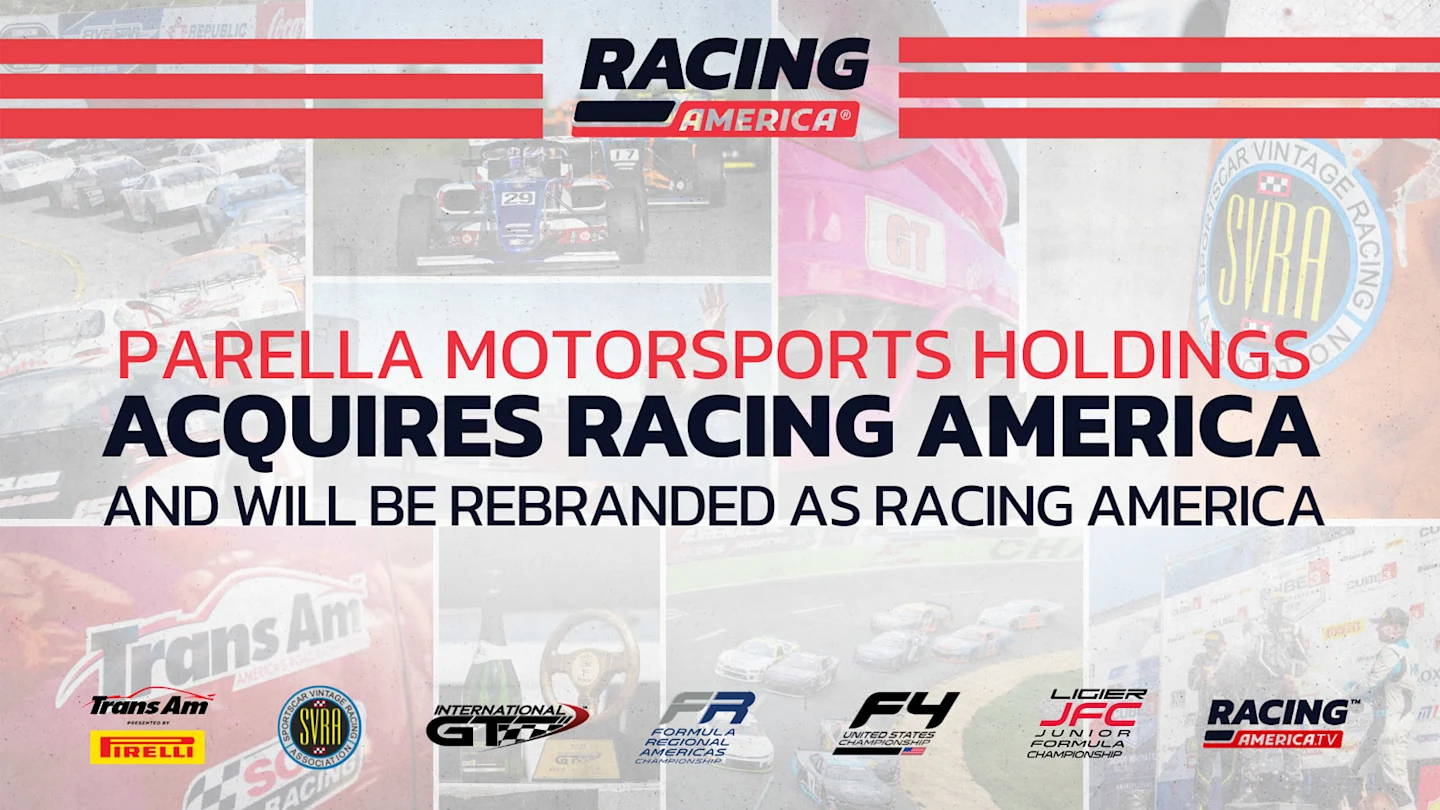
NEW YORK – December 10, 2025 — Parella Motorsports Holdings and SpeedTour™ (collectively, “the Company”), the leading owner and operator of grassroots motorsports events in the United States, today announced the acquisition of Racing America, a premier digital-first motorsports media platform delivering live streaming, original content, and year-round coverage of amateur and stock car-adjacent racing.
The acquisition unites one of the largest live-event portfolios in grassroots motorsports with the industry’s leading digital content and distribution platform — creating the most expansive, fully integrated motorsports media and events network in North America. The combined business will operate under the Racing America brand and will be headquartered in Charlotte, North Carolina. The combined company’s promotional video is available for viewing here.
Advancing a Unified Motorsports Platform
Velocity Capital Management, an operationally intensive private equity firm with deep expertise in sports, media, and entertainment, acquired the Company in December 2023. Under Velocity’s ownership, the Company has grown through strategic acquisitions, including MotorsportReg.com, the industry’s leading registration and fan-engagement platform, and International GT, a classic-car racing series for late-model Porsche and Ferrari vehicles. The Racing America acquisition marks the Company’s third strategic acquisition under Velocity’s ownership. Velocity’s strategic partner, the Texas Permanent School Fund Corporation, was instrumental in originating the opportunity to acquire Racing America through its long-standing relationship with its ownership group and continues to provide both capital and industry insight to accelerate the Company’s growth.
“This acquisition marks a defining moment in our evolution and the next chapter for grassroots racing in this country,” said Lee Giannone, CEO of the newly formed Racing America. “By combining our national live-events platform with Racing America’s digital capabilities, we’re creating the foundation for the future of motorsports — one that connects fans and competitors year-round, expands global reach, and positions Racing America as the definitive home for grassroots and professional racing alike.”
Delivering a Fully Integrated Fan Experience
With Racing America’s digital production and streaming capabilities layered onto the Company’s nationwide live-event footprint — including the Trans Am Series presented by Pirelli, Sportscar Vintage Racing Association, Formula Regional Americas Championship, Formula 4 United States Championship, Ligier Junior Formula Championship, and International GT — the combined organization becomes the industry’s largest single source of live racing, original content, and behind-the-scenes access.
“This marks a new era for Racing America as we expand from a digital media platform into a fully connected motorsports network,” said Colin Smith, President of Racing America. “With Velocity Capital Management’s support, we will broaden our content and technology offerings, stream more live events, and deliver the rich storylines that motorsports fans want to see.”
Accelerating Growth and Expanding Accessibility
“Racing America is uniquely positioned to accelerate fan interest and participation in grassroots and amateur motorsports,” said Erin Edwards, Partner at Velocity Capital Management. “Our goal is to make grassroots racing accessible to everyone while providing passionate fans with more ways to engage with the sport they already love.”
As part of the transaction, Jeffrey Wolf, Velocity Operating Partner and former media executive at E.W. Scripps and Sony Pictures, will become Chairman of the Board.
“Transforming the Company from an events business into a broader motorsports entertainment platform is central to our growth strategy,” Wolf said. “Today’s fans expect compelling storytelling, premium production, and behind-the-scenes access. With Racing America, we can deliver all of that — and more.”
What’s Next for Racing America
Following the acquisition, the Company will transition to operate exclusively under the Racing America brand. The unified platform will feature:
– Nationwide live racing events
– Best-in-class streaming and digital production
– Original and documentary-style content
– A growing direct-to-consumer subscription offering
– Expanded engagement opportunities for fans, partners, and series competitors
Terms of the transaction were not disclosed.
Racing America’s 2026 season kicks off at Sebring International Raceway on February 26, 2026.
About Parella Motorsports Holdings
Parella Motorsports Holdings (PMH) owns several major road racing series including Sportscar Vintage Racing Association (SVRA), the Trans Am Series presented by Pirelli, Formula Regional Americas (FR Americas), Formula 4 United States Championship (F4 U.S.), Ligier Junior Formula Championship (Ligier JFC), and International GT (IGT). PMH hosts SpeedTour™ motorsports festivals across legendary U.S. circuits including Indianapolis Motor Speedway, Circuit of the Americas, and WeatherTech Raceway Laguna Seca. More information is available at SpeedTour.net and MotorsportReg.com.
About Racing America
Racing America is a digital-centric motorsports media and services platform previously owned by Race Team Alliance member teams, the 16 charter-holding organizations that operate 36 NASCAR Cup Series teams. Racing America produces and distributes over 250 live racing events annually and serves as a central media hub for the NASCAR and grassroots community. The company also operates RacerJobs.com and maintains strategic partnerships with Racing America OnSI (Sports Illustrated), TobyChristie.com, and RacerTravel.com.
About Velocity Capital Management
Velocity Capital Management is an operationally intensive lower-middle-market private equity firm focused on the sports, media, and entertainment (“SME”) ecosystem. The firm’s focus spans various domains within the sports sector, including media rights, sports technology, location-based entertainment, and fan engagement platforms. Velocity’s leadership has nearly 90 years of institutional investment, C-suite, and ownership experience allowing them to leverage relationships and expertise to transform companies, and unlock growth, efficiency, and exceptional value across SME. Velocity’s current portfolio includes Elevate Sports Ventures, Unique Sports Group, Racing America, Videocites, X Games, and Camp. For more information, please visit www.velocitycm.com.
Recommended Articles:

Vanderbilt Football | Stowers Awarded 2025 William V. Campbell Trophy®

Purdue Fort Wayne coach and alumni reflect on death of former player and friend

23XI, FRM attorney cites Kurt Busch in response to NASCAR Commissioner Steve Phelps touting Next Gen safety

CCIW Announces First Men’s Indoor Track & Field Student-Athletes of the Week

Gutierrez Unveils 2026 Beach Volleyball Schedule

Richard Childress considered selling portion of NASCAR team

SMU Volleyball Sets Records, Makes History By Reaching Sweet 16

WVU’s Slaton Officially Inducted Into The College Football Hall of Fame

Kelley Earnhardt Miller, Dale Earnhardt Jr. voice disappointment surrounding NASCAR vs. 23XI, FRM lawsuit

Michael Jordan Hired The Best Sports Lawyer In The Country To Go After NASCAR

URochester students learn, work, and research across the globe

Dylan Ferrandis on the Ducati Desmo450 MX: “The best frame in two wheels motorsports”

Youth basketball coach indicted on predatory sex assault charges

Parella Motorsports Acquires Racing America

BURR, ZGONC NAMED AVCA ALL-REGION

First Tee Winter Registration is open

Fargo girl, 13, dies after collapsing during school basketball game – Grand Forks Herald

CPG Brands Like Allegra Are Betting on F1 for the First Time

Volleyball Recaps – November 18

F1 Las Vegas: Verstappen win, Norris and Piastri DQ tighten 2025 title fight

Two Pro Volleyball Leagues Serve Up Plans for Minnesota Teams

Sycamores unveil 2026 track and field schedule

Utah State Announces 2025-26 Indoor Track & Field Schedule

Redemption Means First Pro Stock World Championship for Dallas Glenn

Bowl Projections: ESPN predicts 12-team College Football Playoff bracket, full bowl slate after Week 14

Texas volleyball vs Kentucky game score: Live SEC tournament updates

How this startup (and a KC sports icon) turned young players into card-carrying legends overnight

Jo Shimoda Undergoes Back Surgery

Indiana’s rapid ascent and its impact across college football

Robert “Bobby” Lewis Hardin, 56

 Why a rising mid-major power with an NCAA Tournament team opted out of revenue-sharing — and advertised it
 NBA Legend Michael Jordan to Join NBC Sports as Special Contributor
 Falcons mailbag
 Portal Update – Basketball and Gymnastics Take Hits
 has always dreamed in Mercurial. Now his initials are on the boots.
The new Kyl…
has always dreamed in Mercurial. Now his initials are on the boots.
The new Kyl…
-
 Rec Sports2 weeks ago
First Tee Winter Registration is open
-
 Rec Sports2 weeks ago
Fargo girl, 13, dies after collapsing during school basketball game – Grand Forks Herald
-
 Motorsports2 weeks ago
CPG Brands Like Allegra Are Betting on F1 for the First Time
-
 Motorsports2 weeks ago
F1 Las Vegas: Verstappen win, Norris and Piastri DQ tighten 2025 title fight
-
 Sports2 weeks ago
Two Pro Volleyball Leagues Serve Up Plans for Minnesota Teams
-
 Sports2 weeks ago
Utah State Announces 2025-26 Indoor Track & Field Schedule
-
 Sports2 weeks ago
Sycamores unveil 2026 track and field schedule
-
 Motorsports2 weeks ago
Redemption Means First Pro Stock World Championship for Dallas Glenn
-
 NIL1 week ago
Bowl Projections: ESPN predicts 12-team College Football Playoff bracket, full bowl slate after Week 14
-
 Sports2 weeks ago
Texas volleyball vs Kentucky game score: Live SEC tournament updates