


Rec Sports
National Physical Fitness and Sports Month, 2025 – The White House

BY THE PRESIDENT OF THE UNITED STATES OF AMERICA
A PROCLAMATION
During National Physical Fitness and Sports Month, we celebrate the foundational role that physical fitness and sports play in helping us to live longer, healthier, and more fulfilling lives. Through sports, fitness routines, and staying active, we have the opportunity to improve our health, strengthen our communities, and build a brighter future for our country.
For far too long, our Nation has failed to prioritize the health and well-being of the American people. This negligence has come at a devastating cost. As a result, the United States lags behind other developed countries in life expectancy, chronic disease prevention, and overall public health outcomes.
This era of indifference ended when I took office. I was proud to appoint Robert F. Kennedy, Jr. as the Secretary of Health and Human Services to urgently confront and stop this crisis. I also established the Make America Healthy Again Commission, tasked with ensuring Americans have access to nutritious food choices, while addressing the root causes of childhood chronic diseases. With public health as a cornerstone of my Administration, we are forging a future where the American people are healthier and stronger than ever before.
Engagement and active participation in sports, especially among our youth, is vital to fostering a culture of health and physical fitness. My Administration is committed to ensuring that our sports and competitive spaces remain safe, free, and accessible for future generations of Americans. In my first term, I signed an Executive Order to nationally expand children’s participation in sports, promoting physical activity, fitness, and the academic and social benefits of healthy lifestyles. I was also proud to recently sign an Executive Order to keep biological men out of women’s sports, ensuring our female athletes are free to compete and excel on a level and fair playing field.
Together, we are building a healthier and more flourishing Nation, one that champions physical fitness and well-being, empowering every citizen to reach their full potential and excel in all aspects of life.
NOW, THEREFORE, I, DONALD J. TRUMP, President of the United States of America, by virtue of the authority vested in me by the Constitution and the laws of the United States, do hereby proclaim May 2025 as National Physical Fitness and Sports Month. I call upon the people of the United States to incorporate physical fitness and sports participation into their everyday lives.
IN WITNESS WHEREOF, I have hereunto set my hand this twenty-fourth day of May, in the year of our Lord two thousand twenty-five, and of the Independence of the United States of America the two hundred and forty-ninth.
DONALD J. TRUMP
Continue Reading
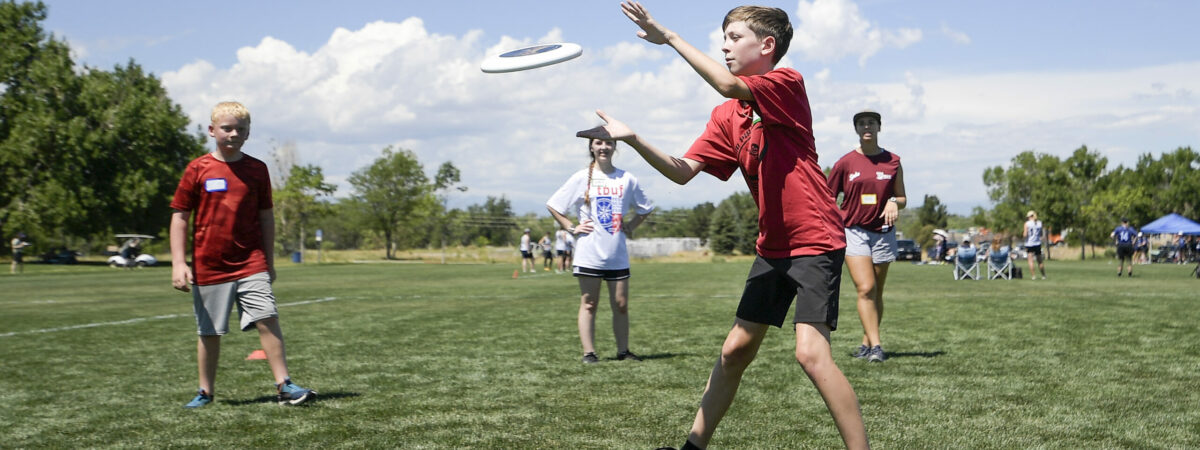
Colorado Springs, Colo. and Hartford, Conn. (December 19, 2025) — USA Ultimate, the national governing body for the sport of ultimate in the United States, and 2-4-1 Sports, a global nonprofit dedicated to making sports accessible through its award-winning sport sampling, announce a formal partnership aimed at bringing the sport of ultimate to thousands of young people across diverse communities.
Under a new partnership agreement, 2-4-1 Sports will integrate ultimate into its school-based and camp programming — introducing new players to the sport and creating pathways for continued engagement through USA Ultimate’s youth membership and collaboration with local disc organizations.
USA Ultimate will provide technical guidance, curriculum support, and promotional visibility, while endorsing 2-4-1’s model as a proven framework for long-term athlete development.
“Having recently testified before Congress on the state of youth sports in this country, it was reaffirming to see bipartisan acknowledgment that access, affordability, and where sports live matter just as much as competition,” said Steve Boyle, Executive Director of 2-4-1. “Our partnerships with national governing bodies like USA Fencing and now USA Ultimate validate the boots on the ground work we are doing every day in schools and communities. We love ultimate because it is incredibly accessible. Kids can play it almost anywhere, often with minimal equipment, and the sport naturally teaches problem solving, self regulation, and conflict resolution. It is one of the best entry points for helping kids fall in love with being active and connected through sport.”
The partnership also includes collaboration with the Ultimate Foundation, USA Ultimate’s philanthropic arm, to co-develop grant opportunities and expand access for underserved youth and girls nationwide.
“This partnership embodies our mission to grow the sport of ultimate and ensure that every child has the opportunity to play,” said Kevin Erlenbach, CEO of USA Ultimate. “2-4-1’s approach to sport sampling and social-emotional learning is a natural fit for ultimate’s emphasis on inclusivity, self-officiating, and community.”
Together, the organizations will identify pilot sites, co-host events, and create training resources that combine physical literacy, play, and ultimate to help children build lifelong healthy habits.
Rec Sports
GameChanger Chooses Pixellot to Provide Access to Pro-Quality Live Streaming at Rec Youth Baseball and Softball Fields Nationwide

GameChanger, a youth sports app for scorekeeping, live streaming, statistics, and team management, announces a new partnership with Pixellot to introduce a QR code-enabled, fixed-camera live streaming experience at recreational youth baseball and softball fields across the United States.
 The announcement follows a successful 2025 summer pilot across 32 recreational leagues, where team followership and live stream viewership on GameChanger more than doubled compared to pre-installation levels.
The new offering builds on GameChanger’s camera-agnostic ecosystem, which supports streaming from mobile devices and integrates with third-party cameras, including GoPro and Mevo. Pixellot’s SinglePlay camera adds a permanent, automated fixed-camera option that requires no setup and is designed specifically for recreational league environments. Fans at home can watch live streams after a parent or coach activates the camera by scanning the QR code at the field; games are streamed directly into the GameChanger app.
When paired with GameChanger’s scorekeeping platform, which underpins recreational baseball and softball games nationwide, the SinglePlay camera enables automatic highlight clips and postgame content delivered directly to families and coaches. The integration also lays the foundation for future personalized athlete- and team-level experiences within the GameChanger platform.
“Being able to watch loved ones play live, even when you can’t be at the field, is no longer a luxury; it’s an expectation at every level of youth sports,” says Sameer Ahuja, President of GameChanger and Senior Vice President at DICK’S Sporting Goods. “We believe that connection matters. When young athletes know their family and friends are watching, it helps keep them engaged and playing, and that belief is what drives our team to deliver solutions that make it possible to stream every game. This offering is an exciting step forward for GameChanger, and we’re excited for the opportunity to partner with Pixellot to make high-quality live streaming more accessible for families and leagues everywhere.”
“Pixellot is proud to embark on an important new partnership with GameChanger, bringing a professional-grade – yet easy to implement and access – streaming platform to community baseball fields nationwide,” says Doron Gerstel, CEO, Pixellot. “We are committed, as a company, to AI technologies that not only empower our partners to capture more games, but bring joy to players and families as only a little league comeback or homerun can do.”
During the pilot, leagues reported immediate increases in engagement from extended families and supporters.
“Those cameras were a total game changer for our league, pun intended,” says Rocky Bond, Technology Specialist for Coeburn Little League. “Interest skyrocketed overnight. Other leagues started calling us, and my phone hasn’t stopped buzzing. We’ve heard from grandparents, aunts, uncles, and families all over the country thanking us because they could finally watch their kids play. At one point, someone grabbed my arm and said, ‘This is the coolest thing ever. I feel like I’m watching MLB, and it’s my kid.’ Having a Pixellot SinglePlay with GameChanger is incredibly valuable. It’s been phenomenal for our community.”

Today’s guest columnist is Chris Russo, CEO of Fifth Generation Sports.
In the world of sports mergers and acquisitions, 2025 was the year of youth sports. What had long been a fragmented, passion-driven corner of the sports economy became one of the most active segments for investors and strategic acquirers.
Numerous acquisitions closed across software, events, media and facility operations. Many private equity firms, some of which had never made sports-related investments, “discovered” youth sports as a scalable, high growth opportunity.
The result was a surge of deal volume, valuations and heightened competition for quality assets. But the youth sports boom was not a one-year anomaly. It’s become one of the hottest M&A categories, driven by structural factors that continue to reshape the industry:
1. Scale of the market
Youth sports is now a $40+ billion economic engine, including registration fees, equipment and uniforms, travel and lodging, and lessons and instruction, among other expenditures charted by the Aspen Institute. These products and services are targeted to approximately 27 million kids aged 6-17 who play organized sports in the U.S. The sheer size of this total addressable market (TAM) makes it an attractive sector for acquirers.
2. Extreme fragmentation across verticals
Youth sports remains extraordinarily fragmented with thousands of independent clubs, hundreds of regional tournament operators, dozens of niche software or video-analysis providers, and event companies with highly localized or sports specific reach. But beyond simple fragmentation, many of these operators are historically “mom and pop” run without standardized operations or scalable infrastructure. For private equity, this represents a double opportunity, for roll-up synergies (shared services, procurement, marketing, cross-selling, branding) and professionalization upside (opportunity to enhance margins and performance once modern systems and management discipline are introduced). Buyers recognize that even modest consolidation may create meaningful value when replicated across dozens or hundreds of locations or events.
3. Parent spending and the emergence of NIL
Youth sports spending has long been resilient as families prioritize team fees, tournament travel, private coaching and club participation over many other expenses. But in recent years, the rise of NIL has raised the stakes and accelerated this trend, helping to drive a 46% increase in average family spending on each child’s primary sport since 2019, according to the Aspen Institute. The ability for college athletes to earn name, image and likeness (NIL) income has fundamentally changed the psychology of many parents. While only a small percentage of athletes will ever play in college, a much larger percentage of families believe they might, or at minimum, believe their child has a shot at scholarship or NIL-related opportunities. This belief system—whether realistic or aspirational—has driven even greater investment in club teams and travel tournaments, showcases, personal training, recruiting platforms and video analysis.
4. Development of new products and services
The past five years have seen an explosion in new monetizable products and services that have expanded the youth-sports wallet. COVID accelerated video streaming, enabling live event subscription, remote instruction and enhanced digital recruiting. Technology and AI are now transforming performance and training, including AI-driven highlights, player tracking, advanced analytics and data aggregation, and biometric tools. These tech and software innovations have also created new recurring-revenue business models that may scale more efficiently than clubs or facilities. Some investors see this as a structural tailwind that will last for years.
5. Entrance of respected investors and buyers
Perhaps the most important accelerant in 2025 was the entry of highly credible investors—PE firms, family offices, pro-team owners and sports-focused funds—who validated the category. This process had actually begun a few years earlier in 2022 when KKR invested in PlayOn. Then in 2024 and 2025, Josh Harris and David Blitzer—owners of the Philadelphia 76ers, New Jersey Devils and other pro sports properties—publicly and aggressively entered youth sports through the creation of Unrivaled Sports.
The Harris Blitzer initiative was featured in a widely circulated New York Times article published in July, a watershed moment for the industry. The piece validated youth sports as a legitimate, investable asset class, signaled that major sports owners were now committed to the sector, and inspired a wave of new entrants (family offices, PE and institutional capital).
As the youth sports investment wave matures, investors and operators will be focused on three defining questions:
1. Are there enough scaled assets?
The biggest constraint in youth sports has always been a lack of scaled properties to sustain deal momentum. Many clubs, events and platforms are sub-$5M EBITDA businesses, and a question remains as to whether there are enough $5M+ EBITDA assets to keep institutional buyers active.
2. Will robust valuations continue?
2025 saw elevated multiples for top-tier assets, driven in part by competition from first-time PE entrants. The sustainability of valuations in 2026 may hinge on supply/demand imbalances for quality companies, platform performance and integration success of recently completed deals, and overall economic factors (e.g. interest rate trends and the cost of debt).
3. Which sectors will attract the most investment and buyer interest?
Several youth sports verticals appear best positioned for 2026 activity, including facilities, events, video streaming and software products, especially for performance and training. However, there is also the possibility that other categories (e.g., e-commerce or traditional categories such as equipment and apparel) could emerge as high growth opportunities over the next 12 months.
This much is clear. The youth sports boom of 2025 was not a temporary spike—it was the formal institutionalization of an asset class long overlooked. Structural drivers remain intact, respected investors are now committed, and an emerging ecosystem of scaled operators is taking shape. The next year will test whether the sector can keep pace, but many indicators suggest youth sports could remain one of the most dynamic and investable categories within the sports economy for years to come.
Chris Russo is CEO of Fifth Generation Sports, a boutique advisory firm focused on middle market sports transactions. He advised SportsRecruits and Big Teams on the deals listed above. Previously, Russo served as a managing director at Houlihan Lokey, and before his tenure in investment banking, he managed the NFL’s digital media group. Russo holds a B.A. from Northwestern University and an MBA from the Harvard Business School.
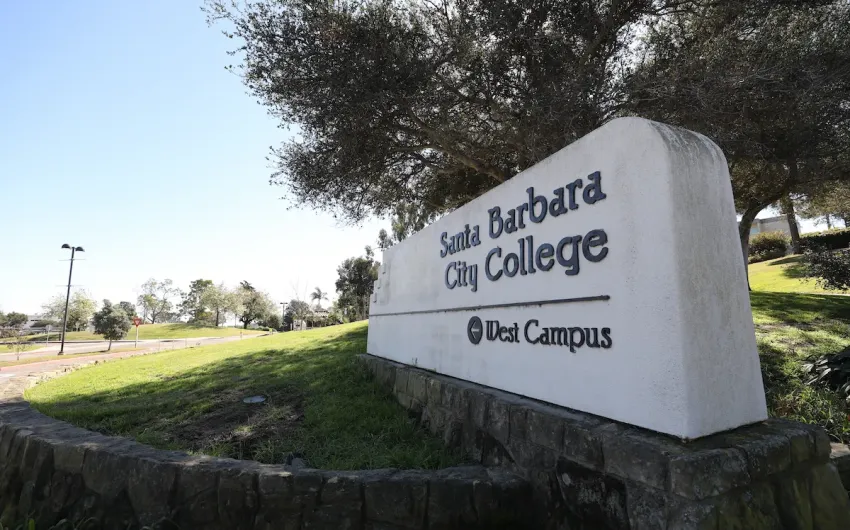
Santa Barbara Volleyball Club announced plans for a dedicated youth sports facility and indoor gym, which is slated to be built on property leased from the County of Santa Barbara on Hollister Avenue.
The new gym is in the planning stages, following the approval of the lease by the County Board of Supervisors earlier this week. The project is intended to tackle a shortage of indoor space for youth sports and allow the Santa Barbara Volleyball and similar organizations to keep expanding access for youth sports activities.
“This is a wonderful example of how the county can partner with local organizations to expand opportunities for young people,” Supervisor Laura Capps said. “By investing in youth sports and creating spaces where kids can learn teamwork, confidence, and resilience, we’re strengthening the fabric of our community for years to come.”
Santa Barbara Volleyball Club Executive Director Matt Riley said the project represents “a major investment in the future of youth sports in Santa Barbara.” With the dedicated space, the club can increase programming, stop relying on outside facilities, and welcome other sports leagues to use the gym.
“Our goal is to create a safe, high-quality environment where young athletes can develop not only as volleyball players, but as teammates, leaders, and community members,” Riley said.
Riley said Santa Barbara Volleyball Club appreciated the county’s willingness to work in collaboration to make the project a reality. The county and the club will continue to work together to guide the project through planning review and permitting.
The property on Hollister Avenue is next door to another development, a 34-unit housing development made in another collaboration between the county and the Housing Authority. The housing project, dedicated to service formerly homeless tenants, broke ground just last week.
The new Santa Barbara Volleyball Club facility will be primarily funded through grants and private donations. More information will be provided on the club’s website (santabarbaravolleyballclub.com).

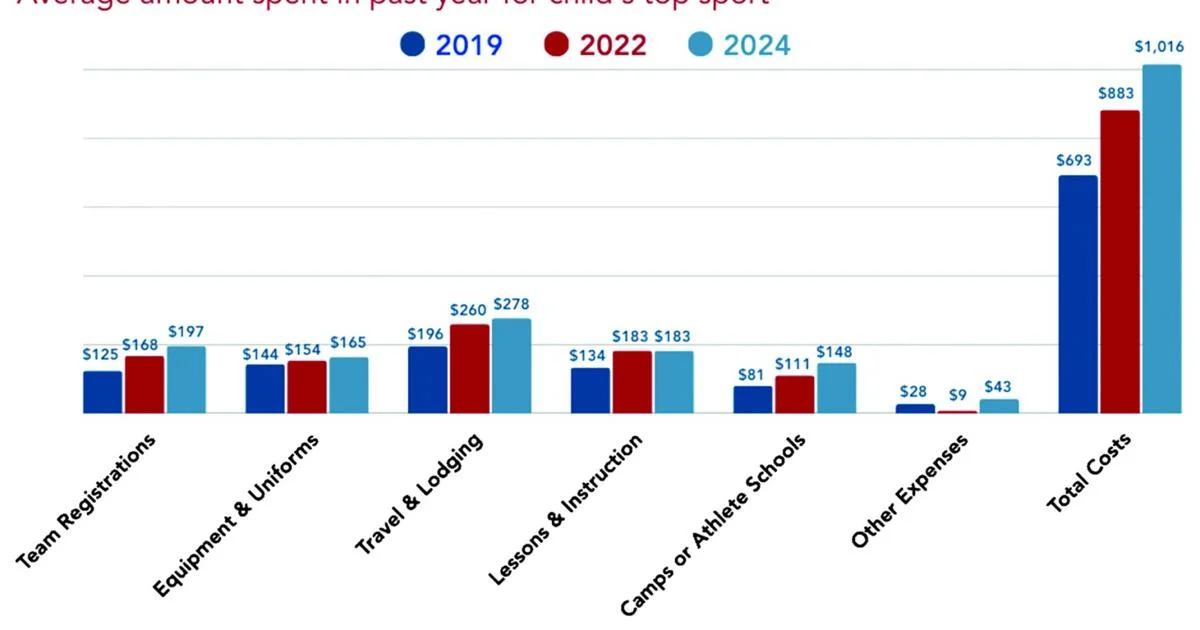
As the cost of youth sports continues to rise, families across Arizona are being priced out of participation.
From local clubs to travel teams, the expenses add up with equipment, uniforms, tournament fees and more totaling thousands of dollars annually, putting pressure on families and widening the gap between those who can afford to play and those who can’t.
The financial strain is reshaping who gets to participate, raising concerns among researchers, nonprofits and parents about long-term access and equity.
According to a 2023 study by the Aspen Institute’s Project Play, Arizona ranked second to last in the country for youth ages 6-17 who played on a team or took lessons.
Less than half of high school students reported playing on one or more sports teams during the past 12 months according to research done by the Arizona Department of Health Services Bureau of Nutrition and Physical Activity.
“Costs are rising and as a result of that we are seeing lower rates of participation, particularly in under-resourced, traditionally underrepresented communities,” said Eric Legg, assistant professor in Arizona State University’s School of Community Resources & Development.
“It’s a wrecked relationship,” he said. “Costs go up, participation goes down, and it most impacts underrepresented communities.”
Youth sports play a crucial role in children’s development, allowing for positive social, emotional and physical growth.
The U.S. Anti-Doping Agency (USADA) found that physical activity enhances self-perceptions of body, competence and self-worth and that playing a sport can even protect against suicide risk in youth.
At the Boys & Girls Club of the Valley (BGCAZ), the importance of youth development is embedded in their subsidized sports, fitness and recreation programs.
“Unfortunately, as kids have started to specialize in sports, they’re dropping out of sport at a younger and younger age,” said Josh Stine, BGCAZ vice president of external affairs.
“Our goal is to keep [them] playing sports longer. We want you to play for the health benefits, for the social recreation, for the communication skills you build.”

In the past year, the average amount AZ families spent on all their children’s sports programs was just short of $1500.
Rising costs for both families and organizations like BGCAZ affect equipment, staffing and facility rentals.
Project Play found that the average U.S. sports family spent $1,016 on a child’s primary sport in 2024. This is a 46% increase from 2019, twice the rate of price inflation in the U.S. economy during the same period.
Some companies and organizations are trying to fill the financial gaps for these families.
“Our corporate partners and our community partners are able to provide access to equipment and uniforms at a lower cost or donated so kids have access,” Stine said. “We don’t want a kid not playing or not signing up because they don’t have the proper shoes or the glove.
“It’s really trying to lean into our partners where we can to help cover the costs that were traditionally passed on to our students or players.”
Local government has been an option, but Legg said a major issue is the massive reduction in how much local governments invest in youth sports.
Legg said that youth sports programs were at one point primarily subsidized by tax dollars and community support. This practice has shifted as the more commonly used funding model is the “pay to play” model, where the program is supported by participant fees.
“Youth sports create healthy youth, healthy youth create healthy communities,” Legg said. “It’s actually a cost saver in the long term and investing more in those communities through tax dollar support.”
The “pay to play” model is just one of the effects of the rapid commercialization of youth sports. This commercialization is prominent in the increase in club sports, programs that are run by private associations and often have much higher fees than traditional school or nonprofit youth sports programs.
For many families, cost is often the most important factor when considering youth sports programs.
Nick Girard, father of two and current president of Recreation Association of Madison Meadows & Simis (RAMMS), said cost is something he and many other parents weigh thoroughly.
“From the parents’ standpoint, I see that [rising cost] when I pay the registration fees, in RAMMS recreational sports and club sports,” Girard said. “I have kids who do club sports so I see all aspects of this.”

Not surprisingly, the money parents pay for a child to participate in a primary sport and other sports along the way in one year varies with the child’s age.
RAMMS is a parent-run, volunteer-led nonprofit that provides recreational youth sports for children in North Central Phoenix. Like BGCAZ and similar nonprofits, it relies on registration fees and sponsorships to fund venues, uniforms, equipment and improvements to local schools.
RAMMS was created to provide recreational sport options for families who may be priced out of club or travel teams.
Another factor that often deters parents from club sports involves the number of costs involved. Unlike recreational sport programs that charge one upfront fee, club and travel teams come with add-ons parents may not have accounted for.
“In club sports, you’re typically paying a monthly fee for the club, you’re paying per event fees, you’re paying admission fees to get into those sports, you’re paying for the cost of uniforms separately oftentimes,” Girard said. :There’s a lot of different add-on pieces that add up.”
Even with the higher costs, parents often feel pressure to turn to club programs for many reasons, most notably when their child specializes in one sport.
Project Play found that the most common justifications for parents to enroll their children in club sports and specialize in one sport are that their child wants to play in high school, college or professionally.
The study also found that one in four parents felt societal pressure to have their child stick to one sport while parents of older children feel the most pressure from their child and school coaches to specialize.
Girard, who’s been involved in youth sports for over eight years, said he’s noticed more younger children being pushed into club sports out of fear of being left behind.
But the great fear these days may be one of being left out by costs.
“What worries me the most about where youth sports are headed is kids leaving,” Girard said. “If it’s too expensive to play and families can’t sign up then kids stop participating.”

NEED TO KNOW
- President Donald Trump announced plans for what a youth athletic competition he’s calling “Patriot Games”
- Trump said the games would take place in the U.S. capital and be part of a year-long celebration marking America’s 250th birthday
- The fall competition will feature one young man and one young woman from every state and territory in the country, he said
President Donald Trump announced plans for an athletic competition to help celebrate the nation’s 250th anniversary next year.
Trump, 79, announced his idea for the “Patriot Games” as part of “the most spectacular birthday party the world has ever seen” in a video shared by Freedom 250 on Thursday, Dec. 18.
“Already, we’ve had big celebrations to commemorate the 250th birthdays of the Army, the Navy and the United States Marines, but there is much, much more to come,” he said. “We’re going to have a good time.”
Trump said the Patriot Games would take place in the fall, describing the competition as “an unprecedented four-day athletic event featuring the greatest high school athletes, one young man and one young woman from each state and territory.”
He added, “But I promise there will be no men playing in women’s sports,” in a reference to his administration’s efforts to keep trans athletes from competing in sports corresponding to their gender. The president signed an executive order in February titled “Keeping Men Out of Women’s Sports” attempting to ban trans women from competing on women’s sports teams.
He added on Thursday, “You’re not gonna see that. You’ll see everything but that.”
The official Freedom 250 website did not share much additional information about the Patriot Games beyond what Trump said in the video. The site shared, “From opening heats to the live final day in front of a live audience, these competitors will light the torch for a new generation of Americans.”
The Patriot Games were not the only event Trump previewed on Thursday. He also announced plans for a state fair on the National Mall and “the largest fireworks display in the world,” as well as a “National Garden of American Heroes” that will feature “statues of all-time greatest Americans,” plus a “triumphal arc.”
Trump has previously teased his plans to host a UFC event at the White House as part of the country’s birthday celebrations, and gave a bit more detail about the fight on Thursday.
“It’ll be the greatest champion fighters in the world, all fighting that same night. The great Dana White is hosting, and it’s going to be something special,” he said.
ANDREW CABALLERO-REYNOLDS / AFP via Getty
Trump spoke about his plans for the nation’s milestone birthday while addressing a crowd at the Iowa State Fairgrounds on July 3. During his remarks, he announced that nationwide celebrations would take place “every one of our national parks, battlefields and historic sites.”
The celebration, he said, would include “special events,” including the UFC fight. Trump has a friendly relationship with UFC owner and CEO Dana White, who supported him at the 2024 Republican National Convention.
Never miss a story — sign up for PEOPLE’s free daily newsletter to stay up-to-date on the best of what PEOPLE has to offer, from celebrity news to compelling human interest stories.
“We’re going to build a little [octagon]. We’re not, Dana is going to do it. Dana is great, one of a kind,” Trump said at the time. “[There’s] going to be a UFC fight, championship fight, full fight, like 20,000 to 25,000 people, and we’re going to do that as part of ‘250’ also.”
Trump shared earlier this month that the event would take place on June 14, 2026, and would feature between eight and nine championship fights, according to USA Today.

NIL21 seconds ago
Texas QB asks for less NIL money to help boost roster

Sports1 minute ago
Texas A&M’s different take on NCAA volleyball tournament run

Rec Sports8 minutes ago
USA Ultimate and 2-4-1 Sports Join Forces to Bring Ultimate to Youth Nationwide

Sports10 minutes ago
Emmaus track and field’s McCartney, Walls headed to Division I colleges

Rec Sports16 minutes ago
GameChanger Chooses Pixellot to Provide Access to Pro-Quality Live Streaming at Rec Youth Baseball and Softball Fields Nationwide

Sports17 minutes ago
Emmaleigh Allen named SAC Volleyball Scholar Athlete of the Year

Rec Sports24 minutes ago
Youth Sports Was 2025’s Breakout M&A Theme. Here’s What’s Next

Sports25 minutes ago
18 Husker Grads Win in Competition, Classroom – University of Nebraska

Rec Sports32 minutes ago
Santa Barbara Volleyball Club to Build New Indoor Facility

Sports33 minutes ago
Wisconsin volleyball NCAA semifinal talking points

Rec Sports40 minutes ago
Arizona youth sports’ cost rises steadily for parents | Sports

Sports41 minutes ago
ONCE IN A LIFETIME – Baylor

Rec Sports48 minutes ago
Trump Announces ‘Patriot Games’ Showdown Involving 1 Man and Woman from Every State

Sports49 minutes ago
Fans Invited to Kentucky Volleyball Watch Party for National Championship Match in Historic Memorial Coliseum – UK Athletics

Technology54 minutes ago
Xpoint secures new growth funding supercharging RMG geolocation innovation – Casino & games

Rec Sports4 weeks ago
First Tee Winter Registration is open

Rec Sports3 weeks ago
Fargo girl, 13, dies after collapsing during school basketball game – Grand Forks Herald

Motorsports3 weeks ago
CPG Brands Like Allegra Are Betting on F1 for the First Time

Motorsports4 weeks ago
F1 Las Vegas: Verstappen win, Norris and Piastri DQ tighten 2025 title fight

Sports3 weeks ago
Sycamores unveil 2026 track and field schedule

Sports3 weeks ago
Two Pro Volleyball Leagues Serve Up Plans for Minnesota Teams

Sports3 weeks ago
Utah State Announces 2025-26 Indoor Track & Field Schedule

Motorsports1 week ago
SoundGear Named Entitlement Sponsor of Spears CARS Tour Southwest Opener

Motorsports3 weeks ago
Jo Shimoda Undergoes Back Surgery

Motorsports3 weeks ago
Redemption Means First Pro Stock World Championship for Dallas Glenn

Sports3 weeks ago
Texas volleyball vs Kentucky game score: Live SEC tournament updates

NIL3 weeks ago
Bowl Projections: ESPN predicts 12-team College Football Playoff bracket, full bowl slate after Week 14

Rec Sports3 weeks ago
How this startup (and a KC sports icon) turned young players into card-carrying legends overnight

Rec Sports3 weeks ago
Robert “Bobby” Lewis Hardin, 56
Sports3 weeks ago
Wisconsin volleyball sweeps Minnesota with ease in ranked rivalry win






-
 Motorsports1 week ago
SoundGear Named Entitlement Sponsor of Spears CARS Tour Southwest Opener
-
 NIL3 weeks ago
Bowl Projections: ESPN predicts 12-team College Football Playoff bracket, full bowl slate after Week 14
-
 Rec Sports3 weeks ago
Robert “Bobby” Lewis Hardin, 56
-
Sports3 weeks ago
Wisconsin volleyball sweeps Minnesota with ease in ranked rivalry win
-

 Motorsports2 weeks ago
Donny Schatz finds new home for 2026, inks full-time deal with CJB Motorsports – InForum
-

 Rec Sports2 weeks ago
How Donald Trump became FIFA’s ‘soccer president’ long before World Cup draw
-

 Motorsports3 weeks ago
Michael Jordan’s fight against NASCAR heads to court, could shake up motorsports
-

 Rec Sports2 weeks ago
Black Bear Revises Recording Policies After Rulebook Language Surfaces via Lever
-
 Sports3 weeks ago
Men’s and Women’s Track and Field Release 2026 Indoor Schedule with Opener Slated for December 6 at Home
-
 Rec Sports2 weeks ago
David Blitzer, Harris Blitzer Sports & Entertainment