
NIL
Xavier, UConn NCAA Tournament Snubs Create Confusion For Mid


Image credit:
UConn coach Jim Penders (Getty Images)
All the emotions you’d expect came rushing in at once—disappointment, anger, heartbreak for players who may never get another shot at the NCAA Tournament. Confusion. Sadness.
There’s no consolation prize for Billy O’Conner. If one exists, he doesn’t want it.
Instead, the eighth-year Xavier coach is searching for answers from this year’s selection committee about what more his team could have done. The Musketeers produced the No. 33 overall strength of schedule, the No. 4 non-conference strength of schedule, and finished the season ranked No. 39 in RPI, the highest of any team left out of the field of 64.
O’Conner wants to understand the message not just from this year’s committee, but from the ones to come.
What more must his program, and mid-majors like it, do to avoid this kind of heartbreak again?
“Perfection is not attainable in this sport,” O’Conner told Baseball America just a few hours after the selection show. “So it’s like, I think that some of the frustration stems from like, ‘What is it?’ What goes into it? Because it feels like a moving target.”
The Musketeers had all the résumé markers typically associated with selection: 16 combined Quad I and II wins—more than Kentucky (12), which made the field comfortably, and Southeastern Louisiana (eight), which didn’t make the tournament but was still listed ahead of Xavier on the “First Four Out.” That inclusion was especially puzzling given Jay Artigues’ dual role as committee chair and Southeastern Louisiana’s athletic director.
Neither O’Conner nor UConn coach Jim Penders spent a second criticizing Southeastern or Kentucky or any other team that did or didn’t make it. Their argument wasn’t rooted in another program’s credentials. It was rooted in confusion over their own.
“Our season was not perfect this year, right?” O’Conner asked rhetorically. “We didn’t go 56-0. We didn’t win every game on our schedule. But I feel that we did what the committee has historically asked a program like ours to do to give themselves a chance to be in the mix for an at-large berth. And I think we did it fairly well.”
Penders echoed the sentiment.
“You look at the schedule that we play and we crisscross the country and try to build up the RPI as much as possible, knowing that we’re going to have some drags on it later on that are unavoidable,” Penders said. “I felt like we did all that we could do, and we were penalized.”
| Kentucky | Xavier | Connecticut | Southeastern Louisiana | |
| RPI | 38 | 39 | 41 | 54 |
| SOS | 8 | 33 | 80 | 130 |
| Non-con SOS | 191 | 4 | 48 | 251 |
| Q1 record | 8-19 | 5-12 | 7-11 | 0-3 |
| Q2 record | 4-1 | 11-12 | 5-4 | 8-3 |
| Q3 record | 7-3 | 5-2 | 9-6 | 18-8 |
| Q4 record | 10-1 | 11-1 | 17-0 | 11-2 |
Artigues, speaking on behalf of the committee, said Xavier and UConn were left out due to their conference schedules, which included just one Quadrant I series for Xavier and two for the Huskies.
“If you look at UConn, the Big East after the top three, it doesn’t have another team in the top 100 (of RPI), and that kind of hurts them,” Artigues said. “UConn started out 13-7, then they won 25 of the last 29, but only seven of those games were against top 100 RPI teams… and UConn was 3-6 against the top teams in that conference.
“There was a lot of talk about Xavier, and they challenged themselves, and non-conference strength of schedule is very important. But you do have to win those games, some of those games at least. If you look at Xavier, in one trip they played, I think it was Tennessee, LSU, Southeastern Louisiana and Vanderbilt. They went 0-6 and they got outscored nine to 63 or 68, so it was really lopsided, not even competitive in that. So if you (have) the non-conference strength of schedule, which is really important, you do have to win some of them.”
Ask O’Conner, Penders or Big East assistant commissioner James Greene, though, and they’ll all tell you that Artigues’ argument falls flat.
And they’re right to question the logic. The conference schedule is unavoidable—a fixed set of matchups dictated by league membership, not by choice. That’s precisely why both UConn and Xavier scheduled so aggressively outside the league.
They knew the Big East’s lower half would drag on their metrics come April. So they front-loaded their resumes with high-end opponents—SEC powers, ranked road trips, top-50 RPI matchups—to insulate themselves from the very argument the committee seemingly invoked to keep them out.
“I think it’s a little bit of a wake up call,” Greene said. “We all felt pretty good that had Creighton not wound up winning the tournament, and had Xavier or UConn done it, that Creighton would have been in that conversation. But based on the way the field came out, I’m not sure that would have been the case.”
That’s the part that stings: even doing things “the right way” wasn’t enough. Penders, in his 22nd season at UConn, built a schedule full of road gauntlets and resume-boosters from a one-off game against now-national No. 1-seed Vanderbilt (a contest the Huskies won) to a series against Miami. He just thought there’d be a reward for surviving it.
“Ultimately, I don’t want to just get into the tournament, I want to win a national championship,” Penders said. “So if I want to win a national championship, you kind of have to continue to schedule tough.”
O’Conner, whose team faced the fourth-hardest non-conference schedule in the nation by the metrics, also spoke to the value of intense match-making.
“My goal as a coach is I want to put the opportunities in front of our players,” O’Conner said. “We got to go win games. We got to go beat Vanderbilt. We got to go beat Stanford. We got to go beat LSU or Tennessee or Oregon State or whoever it is. But those opportunities are there.”
Now, though, O’Conner and Penders are left to wonder if that method is actually worth it. It’s hard to know what matters, they said without knowledge of each other’s comments. RPI? Strength of schedule? Quad-I wins? Head-to-heads?
Xavier and UConn posted better RPIs than three at-large teams (Oklahoma State, USC and Arizona State). Xavier’s overall strength of schedule exceeded those of 31 teams that made the field, including five of the 16 hosts. Connecticut’s 7-11 Q-I record was better than fellow bubble teams. Xavier actually beat Kentucky head-to-head.
“RPI matters until it doesn’t,” Greene said. “Where’s that line? From year to year, that line seems to switch or move.”
“It just felt like the committee was overlooking us,” he added. “That really sticks out to me.”
The Big East’s plight is one faced by every mid-major league in an increasingly top-heavy college baseball landscape that this year saw 30 of the 35 at-large bids go to teams from the SEC (12), ACC (eight), Big 12 (seven) and Big Ten (three). Independent Oregon State also locked up an at-large berth, leaving just four for mid-majors, including the Sun Belt, the fewest since the NCAA adopted the 64-team super regional format in 1999.
As such, it’s clearer than ever that programs like Xavier and UConn don’t have margin for error. And this year, the lesson they learned is even harsher: do everything right, and it still might not matter.
“If we are encouraging good teams to play good teams, that is great for the game of baseball,” O’Conner said. “If we are telling teams to just accumulate wins by any means necessary, that’s really bad for college baseball. That’s a bad product people are going to watch.”
Penders agreed, but highlighted the difficulties.
“Most of [the SEC teams] won’t play us,” he said. “They don’t want to play us and I don’t blame them. I mean, you don’t want to have a series loss to Connecticut on your resume. But what are we going to do? We got to keep marching on and try to find people that will play I think.”
That’s why this cuts so deeply. It’s not just about a tournament snub—it’s about how it feels to pour everything into the system and still walk away empty-handed and with far more questions than answers.
“There’s never going to be somebody that’s looking out for Xavier,” O’Conner said. “We’ve got to make it to a point where they can’t ignore us.”
Until then, he’ll keep scheduling the SEC powers. He’ll keep building the hardest possible non-conference gauntlets. He’ll keep believing that merit matters—even when the results suggest otherwise.
“We’re going to go down the same pathway again,” O’Conner said. “And we’ve got to get better. We’ve got to execute at a higher level. We’ve got to be ready for the challenges that are coming our way.”
Because there’s no other option. Not for Xavier, UConn or the rest of the mid-majors trying to do it the hard way and still hoping that it will be enough.
“It’s very difficult to look your guys in the eye and say, ‘We’re going to run through that brick wall, and then we’re going to do it again and again and again, and I promise you it’s going to work out,’” Penders said. “And then days like today make me feel a little bit like a liar.”

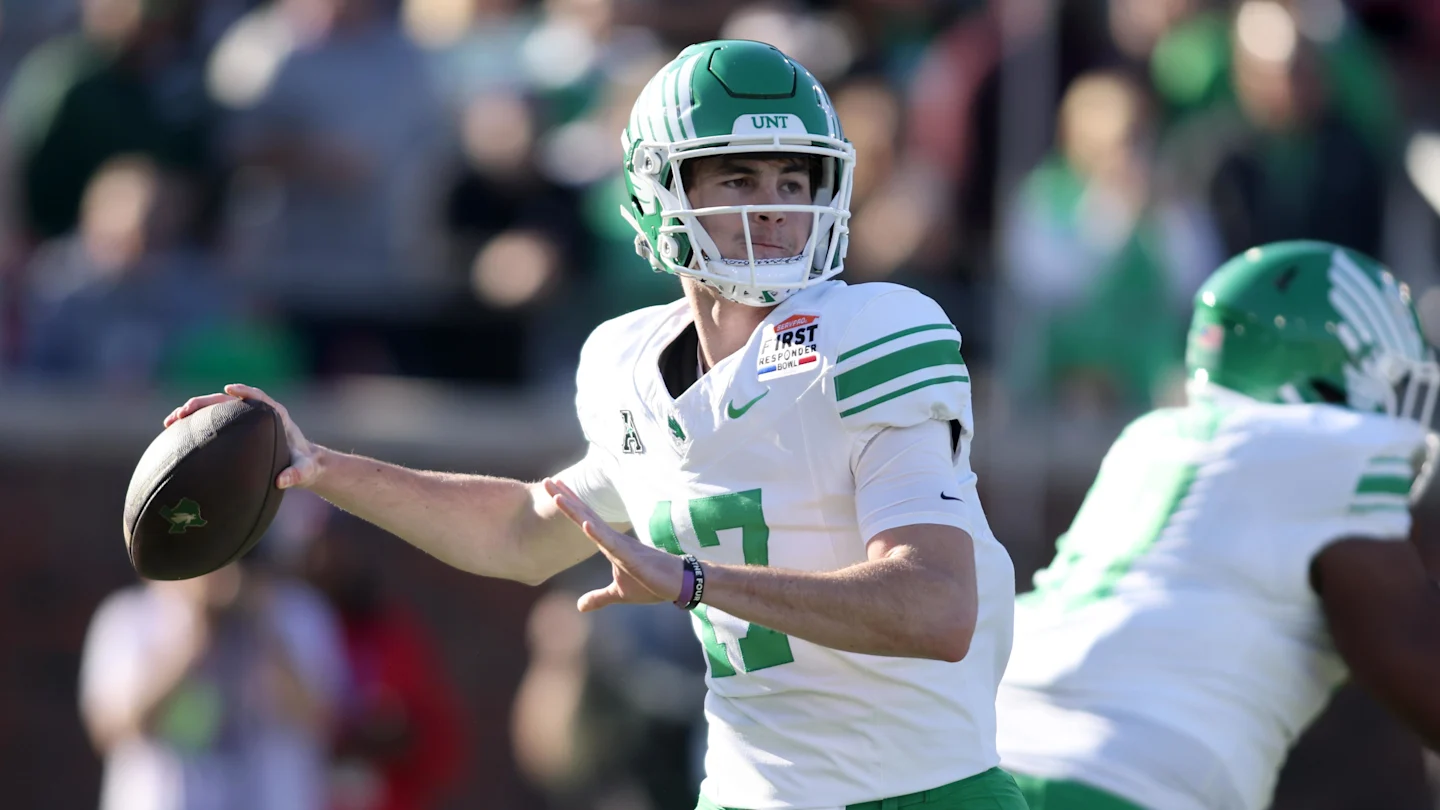
North Texas posted a school-record 12-win season in 2025 behind a high-octane offense led by redshirt freshman quarterback Drew Mestemaker, who finished the year as the nation’s leading passer.
The Mean Green advanced to the American Conference championship game, lost to College Football Playoff participant Tulane, and capped the season with a 49-47 New Mexico Bowl win over San Diego State.
North Texas led FBS in scoring (45.1 points per game) and total offense (512.4 yards per game), operating one of the country’s most prolific attacks under head coach Eric Morris.
However, shortly after the Mean Green’s season came to an end, Mestemaker announced he will enter the NCAA transfer portal when it opens, placing one of college football’s most productive quarterbacks on the market.
On Wednesday, On3’s J.D. PicKell specifically named Oklahoma State, where Mestemaker’s former head coach at North Texas, Eric Morris, is now the head coach, and Miami, whose desire for a passer who can stretch the field aligns with Mestemaker’s skill set.
“If I’m making a prediction, I would tell you Drew Mestemaker is following his head coach, Eric Morris, from North Texas to Oklahoma State. That’s my prediction,” PicKell said. “That’s not this segment. This segment is where’s the best fit for Drew Mestemaker. I think Miami’s the best fit for Mestemaker.”
“He fits exactly who I believe Miami wants to be offensively. Like, Miami and Shannon Dawson, what do they want to do? Spin the freaking rock, push the ball down the field, have vertical shot plays, score points, spread you out.”
“Yes, they still want to run the football, they still want to stay true to the Mario Cristobal genes of being an offensive linemen-driven program, but at the same time, I think they want to air it out and score a lot of points in the process.”
“Think more of what you saw from Cam Ward his year there than what you’ve seen this year with Carson Beck,” PicKell added.

Mestemaker, a 6-4, 211-lb redshirt freshman and former walk-on, finished 2025 as the FBS passing leader with 4,379 passing yards, 34 passing touchdowns, nine interceptions, and a 68.9% completion rate over 14 games.
He also earned first-team All-American honors, was named The American Offensive Player of the Year, and won the Burlsworth Trophy, now entering the portal with three years of eligibility remaining.
Morris was hired as Oklahoma State’s head coach following the 2025 season, and he previously coached Mestemaker while rebuilding North Texas’ offense, creating a clear path to immediate continuity in Stillwater.
Miami also makes sense stylistically, as offensive coordinator Shannon Dawson’s system emphasizes spacing, vertical shots, and tempo; traits that align with Mestemaker’s accuracy and downfield passing ability.
Mestemaker is set to enter the transfer portal when the early January window opens on Friday, at which point Power Four programs can contact him unless he applies a no-contact tag.
Read More at College Football HQ
- First-team All-Conference college football starter enters transfer portal
- All-Conference WR enters college football transfer portal after breakout season
- No. 1 college football team linked to underrated prospect in transfer portal
- College football program loses 16 starters to transfer portal
The financial landscape of college football has shifted dramatically as teams navigate the first full cycle under new revenue-sharing models. General managers and talent evaluators initially expected a spending downturn at the quarterback position due to these caps, but the market has reacted in the opposite direction.
Programs are now finding creative ways to structure contracts that exceed revenue-share limits, often using marketing deals to bridge the gap for high-profile talent.
This aggressive spending surge has established a new price tier for the sport’s most valuable position, according to CBS Sports reporting from Chris Hummer and John Talty. The top quarterbacks in the transfer portal are now expected to command annual salaries exceeding $3.5 million, a figure that mirrors the NFL salary cap allocation for starting quarterbacks relative to total roster spending.
One ACC general manager noted that just six weeks ago, such numbers seemed impossible, but schools have since found ways to combine multiple deals to meet the $4 million threshold.
A specific veteran signal-caller has emerged as the primary beneficiary of this market explosion following a standout season and a surprising entry into the portal. This player brings a proven track record, including a playoff berth and extensive experience, making him an immediate upgrade for rosters across the country. His availability has triggered a bidding war among powerhouse programs desperate to secure a proven leader who can navigate the complexities of modern college offenses.
Quarterbacks commanding larger NIL deals
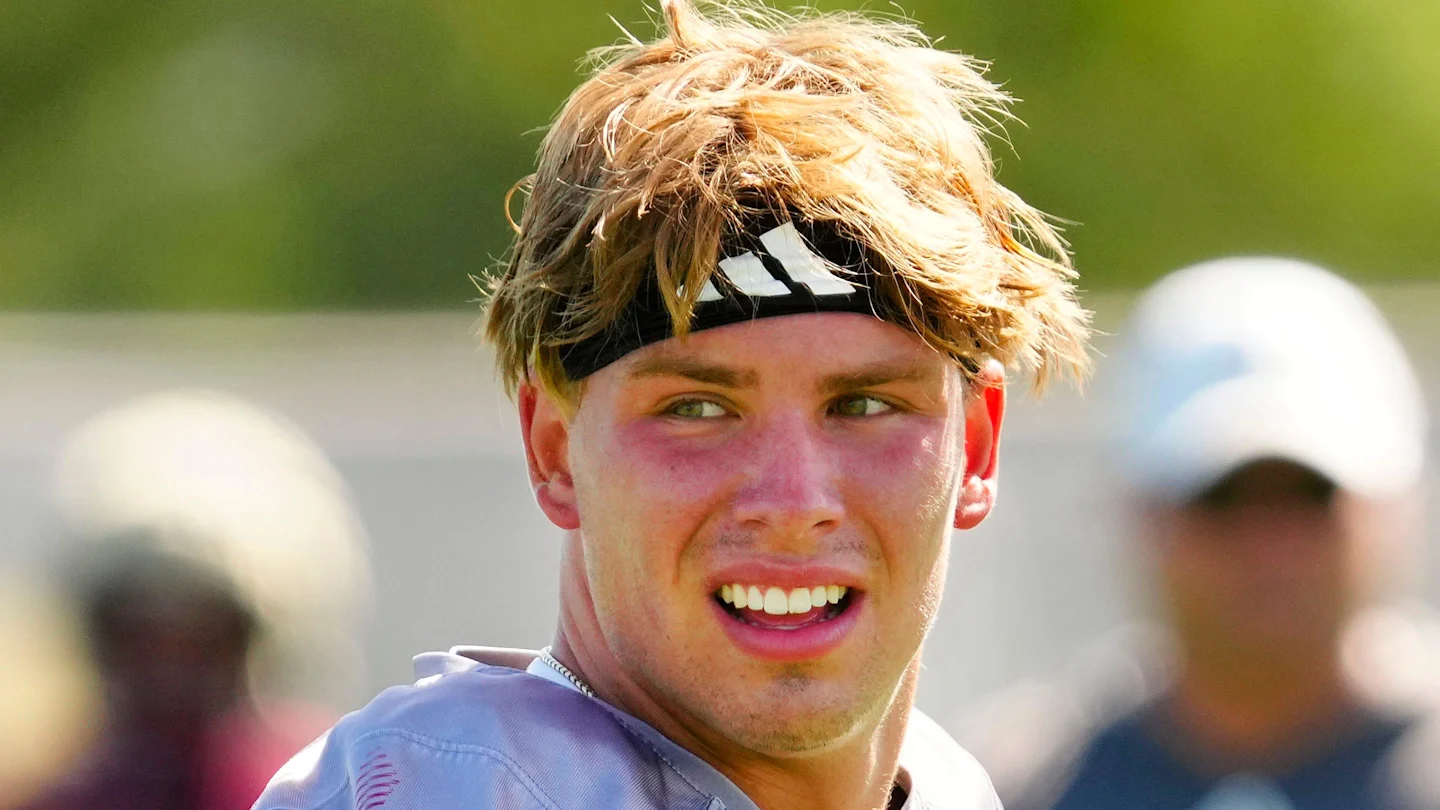
Arizona State Sun Devils quarterback Sam Leavitt has officially entered the transfer portal and is expected to command a salary that reflects the new market reality.
High-end transfer quarterbacks like Leavitt, along with Brendan Sorsby from the Cincinnati Bearcats and Josh Hoover from the TCU Horned Frogs, are now valued at more than $3.5 million annually. This contradicts earlier assumptions that revenue-sharing caps would depress player wages.

General managers are discovering that the demand for quality passing requires ignoring previous budget constraints. An ACC executive explained that programs are constructing contracts that consist of up to 15 separate deals to reach the $4 million mark. This strategy allows schools to technically adhere to revenue-sharing limits while still paying market rates for top talent.
The willingness to spend such a large percentage of the cap is a matter of intense debate among front-office personnel. A Big Ten general manager questioned whether it is prudent to allocate 20 percent of a program’s resources to a single player.

The executive warned that unless a quarterback performs at an elite level, the heavy investment could prove detrimental to the overall roster construction.
Prices for mid-tier options have also seen a significant increase. Quality starters who previously cost in the high six figures are now commanding between $1.5 million and $2.5 million. Even unproven backups with high upside are requesting salaries near the $2 million mark as the market resets.
Read more on College Football HQ

Arizona State finished the 2025 season 8–5 (6–3 Big 12) and closed with a narrow 42–39 Sun Bowl loss to Duke, capping a year that followed the program’s breakthrough 2024 run, which included an 11–3 finish and a College Football Playoff appearance.
Head coach Kenny Dillingham returned an offense built around quarterback Sam Leavitt, who appeared in just seven games before a lingering foot/leg injury required season-ending surgery on October 31, abruptly ending his second season in Tempe.
Through those seven games, he completed 145-of-239 passes (60.7%) for 1,628 passing yards, 10 TDs, and three INTs (129.2 passer rating) and added 73 rushes for 306 yards and five rushing TDs.
Leavitt originally committed to Michigan State in 2023 as a four-star prospect and the No. 21 quarterback in the 2023 class per the 247Sports Composite, spending one season with the Spartans before transferring to Arizona State ahead of the 2024 campaign.
He quickly established himself as the Sun Devils’ starter, throwing for 2,885 yards with 24 touchdowns and six interceptions during his first full season in 2024, adding 443 rushing yards and five rushing scores.
However, Leavitt informed Arizona State of his intention to enter the transfer portal on December 15 and is widely viewed as the top quarterback expected to hit the market when the window opens, classified as a redshirt sophomore with two seasons of eligibility remaining.
On Wednesday, On3 analyst J.D. PicKell identified Oregon and LSU as the two programs generating the most “buzz” around Leavitt, framing the decision as a balance between a homecoming and scheme fit at Oregon and an SEC, development-first opportunity under Lane Kiffin at LSU.
“The intel from Pete Nakos is pointing to two horses being in the race for Sam Leavitt right now, and that’s Oregon and LSU… I personally am under the belief that Dante Moore will go back to Oregon for another season, which then points to Sam Leavitt ending up at LSU. That to me makes the most sense from a fit perspective.”
“He (Leavitt) thrived in an RPO offense at Arizona State. You don’t need to reinvent the wheel. You don’t need to go prove something drastically different and go seek out an NFL offense. Just go play against better competition in the SEC. Go play for a guy in Lane Kiffin who has specialized in bringing in transfer players and elevating them at a really high level.”
“If I’m Lane Kiffin, this is my number one guy. I am calling him as soon as the transfer portal opens for business,” PicKell added.

Leavitt is an Oregon native and would be returning to a program that runs a high-tempo, RPO/shot-yardage offense that can incorporate his dual-threat skillset, though uncertainty surrounding Dante Moore clouds an immediate starting opportunity.
Meanwhile, at LSU, Lane Kiffin has a proven track record of maximizing transfer quarterbacks, most notably Ole Miss’ Trinidad Chambliss and current NFL QB Jaxson Dart, while consistently producing pro-level film against elite SEC competition, an appealing path for Leavitt as he returns from injury seeking development and exposure.
LSU also presents a clear roster need: starter Garrett Nussmeier is expected to depart after five seasons in the program, and backup Michael Van Buren Jr. has limited game experience, creating an immediate starting opportunity for Leavitt.
As the process unfolds, Leavitt’s decision is shaping up to be a choice between immediate SEC exposure and an opportunity at LSU, or a regional and schematic fit at Oregon that could offer greater continuity.
The transfer portal window opens Friday and runs through January 16, with Leavitt rumored to command up to $5 million in NIL compensation, a valuation that would rank among the highest in college football.
Read More at College Football HQ
- College football’s leading passer linked to two programs in transfer portal
- First-team All-Conference college football starter enters transfer portal
- All-Conference WR enters college football transfer portal after breakout season
- No. 1 college football team linked to underrated prospect in transfer portal

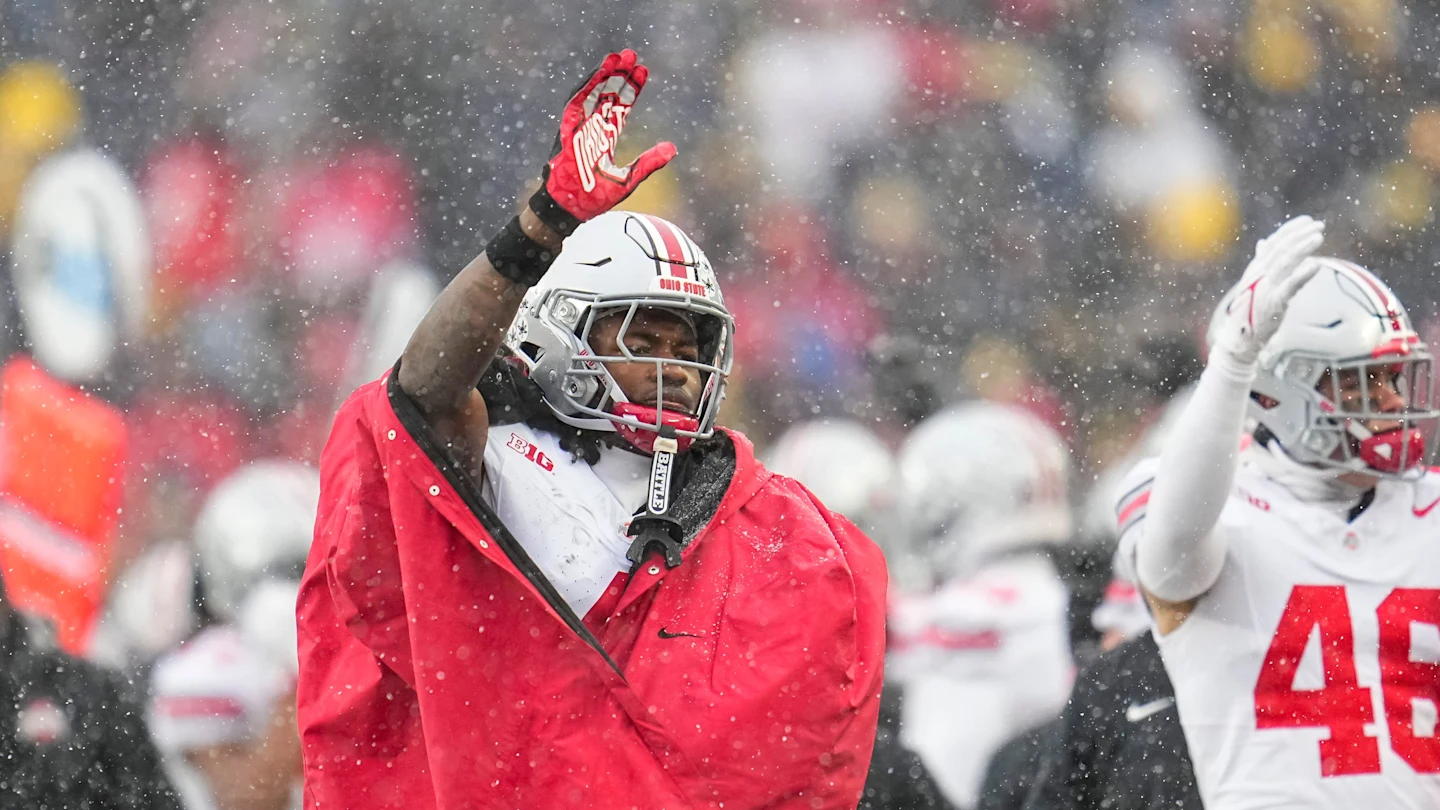
The finances of the transfer portal are constantly shifting and adjusting. Before the institution of the revenue sharing cap, some massive numbers circulated: Darian Mensah’s $4 million per year deal at Duke was one of the more notable deals. But even in the current portal cycle, there are potential game changers.
A pair of CBS Sports writers, Chris Hummer and John Talty, surveyed the portal world and tried to define the financial grind of acquiring new players. While Hummer and Talty ultimately defined the wide receiver position, one of the higher priced groups, at a high end value of $1 million to $2 million for a top player, they did not include one potential contingency.
Ohio State star Jeremiah Smith is widely considered the top player in college football heading into the 2026 season. For that matter, Smith was arguably the best player in 2025. Hummer and Talty spoke with one Big Ten general manager who said that Smith, were he in the portal, “could command up to $4 million for one year of his services should he transfer.”
Before any Buckeye backers lose sanity, Hummer and Talty were careful to note that the issue is hypothetical– there has been no indication that Smith is even considering entering the portal. The writers noted that the gap of approximately $2 million between Smith and the top value for a portal receiver (at this point, Auburn transfer Cam Coleman). “Smith is a cut above the rest of the sport,” they wrote.
Even in CFP defeat to Miami, Smith was indeed standing alone atop college football. After a brilliant 2024 season as a freshman, he ends 2025 with 87 receptions for 1,243 yards and 12 touchdowns. He finished the year with his sixth 100+ yard game, with a season-best 157 yards on seven catches. He will likely finish re-writing the Ohio State record book in 2026.
On3Sports ranks Smith third in college sports with a $4.2 million estimated NIL valuation. That’s more than $1 million ahead of fourth-place Carson Beck (the two players ahead of Smith are Texas QB Arch Manning and college hoops star AJ Dybantsa). On3 ranks Cam Coleman as the second-leading wide receiver in its valuation rankings at $1.8 million.
Among the massive entities that Smith has NIL deals with are Nintendo, adidas, American Eagle, and 7-Eleven. He would likely be the projected top pick in the 2026 NFL Draft, but he’s still a year young to be able to enter the Draft. Accordingly, he’s the presumptive 2027 top pick and will have a banner NIL year in college– although perhaps not as big of a year as he might have on the open market as the potential biggest transfer star ever.
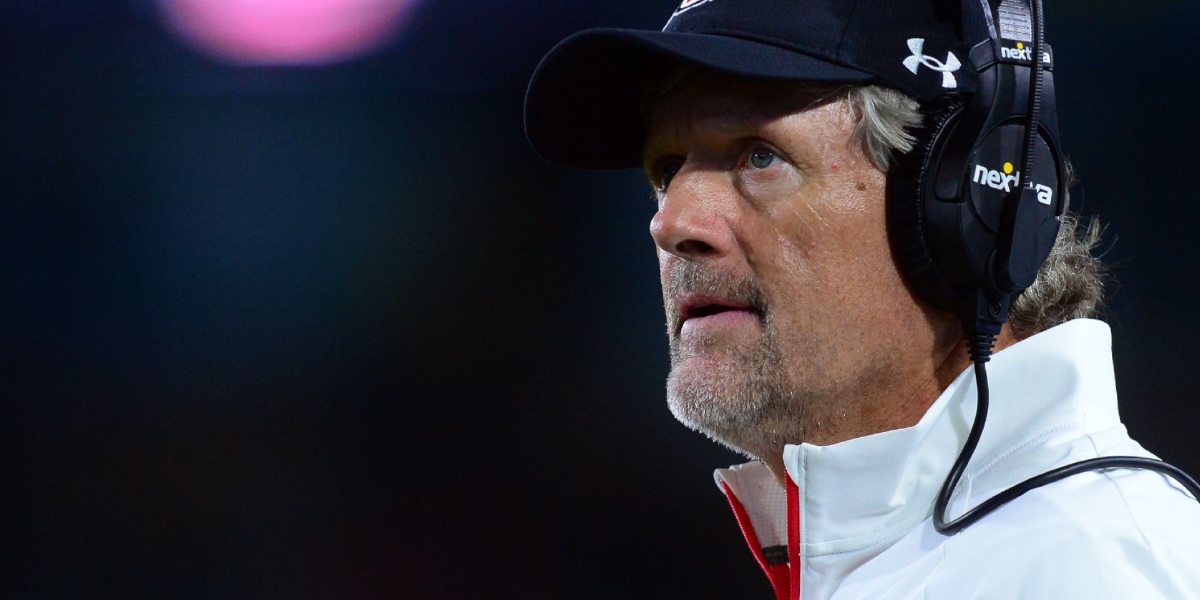
FOX analyst Joel Klatt admitted the hiring of Kyle Whittingham by Michigan caught even the most plugged-in voices in college football by surprise. Still, he believes it may ultimately prove to be a program-defining move.
Speaking on The Joel Klatt Show, Klatt described the hire as both unexpected and masterful. He credited Michigan athletic director Warde Manuel for keeping the process quiet during a turbulent stretch for the program.
“This was massive, and I got to tell you, a little bit out of left field,” Klatt said. “I had not heard his name. It was very quiet. It was below the surface. Give Warde Manuel a lot of credit on this one.”
Alas, Michigan moved quickly after firing Sherrone Moore earlier this month following an investigation into an inappropriate relationship with a staff member. In Whittingham, the Wolverines landed one of the most respected and stable figures in the sport after a coaching search that came with significant challenges.
Klatt made it clear his enthusiasm for the hire goes beyond Whittingham’s on-field résumé: “I love this hire not just because I’m very fond of Kyle Whittingham and his style of coaching,” Klatt added. “But because of what Michigan was facing in this entire ordeal. There were many challenges.”
Moreover, Whittingham spent 22 seasons at Utah, becoming one of the longest-tenured head coaches in college football. Many assumed his resignation signaled retirement, but instead, he opted for a new challenge in Ann Arbor. Now, he’ll be stepping into a program just two years removed from a national championship in 2023.
Continuing, Klatt repeatedly emphasized Whittingham’s integrity and player-first approach, offering perhaps the highest praise a coach can receive: “My highest compliment that I can ever repay is that I would love my sons, if they ever played college football, to go play for Kyle Whittingham,” Klatt explained. “He’s a winner. He’s going to go to the Hall of Fame.”
At Utah, Whittingham compiled a 177–88 record, won two Pac-12 championships, posted eight double-digit win seasons and famously went 13–0 in 2008, capped by a Sugar Bowl victory over Alabama. His teams were defined by physicality, discipline and consistency. Those are traits Michigan is eager to restore.
Now, with Big Ten resources, elite recruiting infrastructure and a roster still stocked with high-level talent, Whittingham views Michigan as more than a late-career stop: “He looks at this as an opportunity to actually go out there and compete for a national championship,” Klatt concluded.
After weeks of uncertainty, Michigan found exactly what it needed, hiring a proven winner, a steady hand and a coach capable of restoring trust. All while keeping the Wolverines firmly in the national title conversation.

College football’s leading passer linked to two programs in transfer portal

No. 1 ranked transfer portal QB expected to make $3.5 million annually

Xfinity clears the air surrounding NASCAR involvement amid shift to O’Reilly Auto Parts Series

Local facility offers training for young ballplayers | Patterson Irrigator
Celebrate Texas Tech’s season for the ages with our commemorative book

No. 2 Hawai‘i men’s volleyball hits the ground running ahead of 2026 opener

NASCAR star Kyle Larson makes bold ‘best racetrack’ claim – Motorsport – Sports

No. 1 transfer portal QB clearly linked to two major college football programs

Blum outside hitter takes top honor on Texas 1A all-state volleyball team | Associated Press

BangShift.com IHRA Acquires Heartland Motorsports Park In A Move To Resurrect Yet Another Abandoned Race Track!

Philippine Star – WELCOME TO UBE NATION! 💜 Professional…

Experts say NASCAR likely settled lawsuit for millions

Blum outside hitter takes top honor on Texas 1A all-state volleyball team | Sports

Jeff Gordon reflects on 2025 NASCAR championship, looks to 2026: ‘I’m incredibly optimistic’

Belmont Student-Athletes Have Another Impressive Semester in the Classroom

SoundGear Named Entitlement Sponsor of Spears CARS Tour Southwest Opener

Donny Schatz finds new home for 2026, inks full-time deal with CJB Motorsports – InForum

Black Bear Revises Recording Policies After Rulebook Language Surfaces via Lever

David Blitzer, Harris Blitzer Sports & Entertainment

How Donald Trump became FIFA’s ‘soccer president’ long before World Cup draw

DeSantis Talks College Football, Calls for Reforms to NIL and Transfer Portal · The Floridian
Elliot and Thuotte Highlight Men’s Indoor Track and Field Season Opener

Rick Ware Racing switching to Chevrolet for 2026

JR Motorsports Confirms Death Of NASCAR Veteran Michael Annett At Age 39

#11 Volleyball Practices, Then Meets Media Prior to #2 Kentucky Match

Colleges ponying up in support of football coaches, programs

23 عاما من الفضائح السياسية والجنسية منذ انقلاب حمد بن خليفة.. استغلال الفتيات الصغيرات في الدعارة.. ضبط ابنة رئيس وزراء قطر خلال ممارستها لجنس الجماعي.. ملامح الحكم تتخبط بين المنفي وتدخلات النساء

Nascar legal saga ends as 23XI, Front Row secure settlement
West Fargo volleyball coach Kelsey Titus resigns after four seasons – InForum

Sunoco to sponsor No. 8 Ganassi Honda IndyCar in multi-year deal





-
 Sports3 weeks ago
#11 Volleyball Practices, Then Meets Media Prior to #2 Kentucky Match
-
 Motorsports3 weeks ago
Nascar legal saga ends as 23XI, Front Row secure settlement
-
 Motorsports3 weeks ago
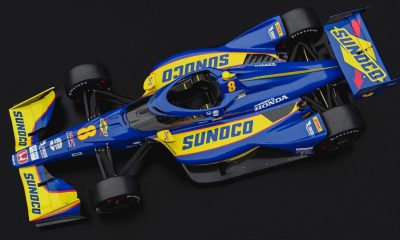
Sunoco to sponsor No. 8 Ganassi Honda IndyCar in multi-year deal
-
 Sports3 weeks ago
Maine wraps up Fall Semester with a win in Black Bear Invitational
-

 Motorsports2 weeks ago
Ross Brawn to receive Autosport Gold Medal Award at 2026 Autosport Awards, Honouring a Lifetime Shaping Modern F1
-
 Rec Sports3 weeks ago
WNBA’s Caitlin Clark, Angel Reese and Paige Bueckers in NC, making debut for national team at USA camp at Duke
-

 Motorsports3 weeks ago
Rick Hendrick comments after the NASCAR lawsuit settlement
-

 Rec Sports2 weeks ago
Stempien to seek opening for Branch County Circuit Court Judge | WTVB | 1590 AM · 95.5 FM
-

 NIL3 weeks ago
Nike Signs 10 LSU Athletes to NIL deals
-
NIL3 weeks ago
Georgia football’s Dontrell Glover, Bo Walker arrested for shoplifting