










STAMFORD — Kevin Nizolek and his son, Justin Nizolek, who played multiple sports during his years in Stamford, spent a lot of time in the car driving to Justin’s sporting events.
Rec Sports
A new look at football in Missouri and Illinois

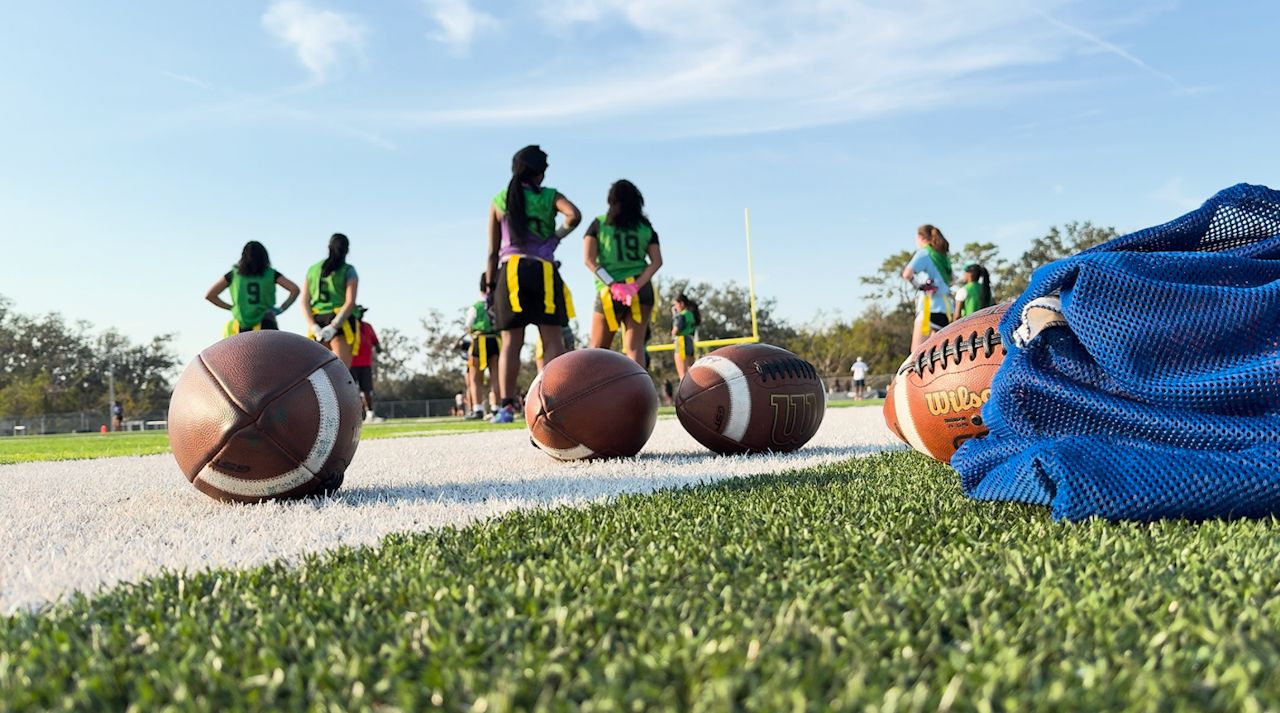
ST. LOUIS—Girls Flag Football is becoming more popular on both sides of the Mississippi River.
Illinois enjoyed an inaugural season last year with 40 teams and Missouri is working towards its first season which the Missouri State High School Activities Association (MSHSAA) believes could begin next Spring.
Missouri
73% of MSHSAA’s members voted in April to make girls flag football an “emerging sport.” As of Tuesday, 14 teams already signed up including Cardinal Ritter College Prep High school in St. Louis.
“The schools, they’re in charge of everything MSHSAA does. The member schools tell us what to do,” said Andrew Kauffman, Director of Communications for MSHSAA. “As an emerging sport, you can do whatever season you want. You pretty much do your own thing. It gives us an idea, though.”
He added when teams register, it adds towards the threshold for a sport to be fully interscholastic. Schools may register whenever they feel like so Kauffman anticipates the number of involved schools will pick up quite a bit by Spring. An emerging sport needs 50 or more schools registered, with at least three of the eight board districts for two consecutive years for MSHSAA to put the sport on their Spring ballot to vote whether or not to make it fully interscholastic.
If that happens, MSHSAA will establish a season and championship dates, but the show-me state needs to show out for two years first.
Illinois
The second season in Illinois is underway with over 60 new teams and a new rulebook the Illinois High School Association (IHSA) issued from the National Federation of State High School Associations (NFHS). Last season, IHSA wrote its own rulebook to govern competition but opted for the NFHS book as the sport’s popularity grew.
“Many of the 2024 IHSA rules directly align with the new NFHS rulebook, but there are differences, some subtle and some more significant,” said Tracie Henry, IHSA Associate Executive Director, who administered the sport in 2024. “We had many coaches and players who were new to the sport last year, so we recognize that it isn’t ideal to have them learn a rulebook in year one and then have to adapt in year two. Ultimately though, this will have an overall positive impact on the sport, as unifying the rules at the high school level will strengthen the sport around the country.”
Notable rule changes
Teams will play four 12-minute quarters and see more clock stoppages than last season.
NFHS’s rulebook does not include a ‘No Run Zone’ which means teams may attempt short yardage runs even near the goal line.
Blitzers may come from as close as one yard off the neutral zone and they do not have to declare themselves as a blitzer. This is six yards closer than where blitzers had to start from last season.
Strategist will love the new opportunities when making formations because the NFHS only mandates the center/snapper is required to start the play on the line of scrimmage.
For more information, check out the links below.
IHSA Girls Flag Football Best Practices
IHSA Girls Flag Football Press Box Management

Dec. 5, 2025, 9:03 a.m. PT

The dorm room was silent and dim, shades pulled tight, door sealed shut.
In the center of it sat Jacki Gemelos, alone with her thoughts.
It was April 12, 2012 — WNBA Draft Day. Six years at USC and a storied run at St. Mary’s High School in Stockton had built toward this single moment.

She couldn’t, however, bear an audience. The fear of her name not being called felt heavier than she could share. If the silence from the draft stretched too long, she believed it might break her for good.
So, she hid from it.
The television wasn’t on the draft but on anything else she could find, her thumb moving restlessly as she flipped channel after channel, desperate to drown out the creeping sense of hopelessness and the thought that this might be the end.
Then her phone lit up — buzzing nonstop. Jacki froze. Instead of answering, she finally turned to the draft.
“With the 31st pick in the 2012 WNBA Draft, the Minnesota Lynx select Jacki Gemelos from the University of Southern California.”

The door flew open, and in rushed teammate Briana Gilbreath — who, moments later, would hear her own name called just four picks after Gemelos.
She wrapped Jacki in an embrace, bracing for tears, but found something else entirely: stunned disbelief.
“I didn’t think there was anyone crazy enough to draft me — someone who had five ACL tears,” Jacki said. “That was all I needed, just something to hold on to. That’s all I needed to keep going.”

Fast-forward through five ACL tears in college and a decade spent playing across the WNBA and overseas, and now Jacki is back in Stockton — not to stay, but to give back.
Partnering with Adam Gotelli, owner of The Barn and Gotelli Training, she’s set to host her third annual Jacki Gemelos Shooting Clinic on Dec. 11. The coed clinic, open to third- through eighth-graders, runs from 5:30 to 7:30 p.m. at 9189 N. Ashley Lane. Early registration is $90, and late registration is $105.
“We just want to make it so the kids have so much fun and learn so much that they leave wanting to play more basketball,” Gotelli said. “The hope is to spark a fire and a love for the game. We just want them to develop a passion — to see they can work hard, have fun and maybe make something of it one day, like Jacki did. And maybe it’s not basketball for some kids, but if they bring that same fire to something else, they can’t be stopped.”
Jacki added, “I’ll never forget the impact certain camps had on me and what they taught me at a young age. But I never had a former professional athlete in those camps who had played at the highest level. For me, I want to be a good example. I want to be a good role model for these young kids and share my experience with them, so they can actually see it and believe it too.
“I love Stockton, I love the community, and I love giving back to the youth. I just want to help kids believe that if I can make it from Stockton, they can too.”

‘Stockton is in my DNA’
Sixth grade marked the true beginning.
Jacki, already glued to a basketball since she was seven, walked into an AAU tryout alongside her older sister Johnna — a team run by none other than Stockton coaching legend Tom Gonsalves.
Johnna earned a spot right away. Jacki, meanwhile, required a little lobbying from her father, Steve, who played at Tracy High School and later at Weber State.
“I’m still shocked that my dad talked him into putting me on that team,” she said. “Back then, I really wasn’t that good.”
Years later, the connection came full circle.

Jacki starred for Gonsalves at St. Mary’s, finishing her high school career with a staggering 3,162 points. As a senior, she averaged 39.2 points, 8.9 assists, 6.5 rebounds and 2.7 steals per game.
And the accolades piled up: four-time Stockton Record Player of the Year, 2006 McDonald’s All-American, 2006 MaxPreps Player of the Year, USA Today First Team selection, Miss Basketball of California and a place on ESPN’s Second-Team All-Decade girls basketball list.
“I remember being really young and going to her games,” Gotelli said. “She was averaging 40 a night, and the wildest part is how unselfishly she did it. She could have scored even more if she wanted to. But let me remind you — she was one of the best in the country.
“There were only a couple players like her. When they showed up, I glued myself to them. I was a sponge — every bit of advice, every detail, I soaked it up, because talents like that didn’t come through Stockton often. So being able to show kids, ‘Here’s what you want to do, here’s what it takes, and yes, it can be done,’ is what makes this camp special.”

‘What I was about to face all over again’
At just 15 years old, Jacki originally committed to UConn before flipping her commitment to USC to stay closer to home. It felt like the next step toward everything she had ever wanted.
Instead, the years ahead unraveled in heartbreak.
Three full seasons lost. Four ACL tears. Nothing but setbacks.

So, when Feb. 4, 2010, rolled around, what should’ve been her senior year turned into her long-awaited debut. At Cal, in her first game action since 2005, she delivered eight points, five rebounds and five assists. She went on to appear in 11 games, averaging 7.6 points, 3.6 rebounds, 1.4 assists and 0.8 steals.
“I felt like basketball was what I was put on this earth to do,” Jacki said. “I wanted to be the best women’s basketball player to ever live. I knew I couldn’t reach that status without being in the league. I kept believing I’d get back to the most elite level.”
Fueled by equal parts stubbornness and passion, for the first time in her USC career, Jacki entered the 2010-11 season fully healthy. She went on to play in every game for the Trojans, earned All-Pac-10 honorable mention, led the conference in 3-point percentage at 42.4% and averaged 12.4 points per game.

With everything trending upward, Jacki entered her final season with sky-high expectations. She opened the year on the Naismith Award Early-Season Watch List — a distinction reserved for the best player in college basketball — and it felt like she was finally stepping into the player she was meant to become.
Dec. 19, 2011. A road game at Texas A&M. A showdown with future top-five pick Kelsey Bone. It was the perfect stage for Jacki to show who she truly was.
And suddenly gym fell silent in an instant. The only sound was Jacki’s screams echoing off the floor.
“I knew exactly what had happened the moment it happened,” she said. “And all I could think about was what I was about to face all over again.”

‘It kept me going’
What kept her going were the sacrifices she’d seen up close.
Her mom, Linda, working the snack bar and pulling weeds at St. Mary’s. Her dad grinding at Frito-Lay, Dreyer’s and any side job he could pick up.
Every bit of it was so Jacki and her sister could get to practice, pay for clinics and keep enough gas in the car to chase basketball from gym to gym.
“They scraped and clawed to give my sister and me everything they could,” she said. “So much of my why comes from that. Any time I felt like quitting, I thought about their sacrifices, and it kept me going.”

Drafted in 2013, Jacki spent two full years overseas before finally getting her moment. On June 19, 2015, against the Atlanta Dream, she stepped onto a WNBA court for the first time with the Chicago Sky. She played 17 games that season, averaging 1.1 points, 0.5 rebounds and 0.4 assists.
She spent the next five years overseas, with a brief stint with the Las Vegas Aces that ended when she was cut before final rosters were set.
Then came the 2020 bubble. She inked a deal with the Connecticut Sun, was waived after six games and landed with Washington. Across 18 games between the two teams, she averaged 2.7 points and had her best game on Sept. 2, 2020 — dropping 10 against former St. Mary’s and Seattle Storm guard Chelsea Gray.
One final trip overseas saw her officially retire in 2021.
“What makes Jacki so special is her pure fire and competitiveness,” Gotelli said. “Training others has shown me you need a different level of will to win. It’s rare for someone as nice as she is to have that same fire. It takes a special kind of person, because it’s not always easy to turn that off when you’re interacting with people off the floor. She’s got a gift in her ability to connect with people. So, when she asked me to help her, it was an easy yes.”

‘I am a hooper and…’
Through every trial, every setback and every stop along the way, she never questioned whether she could play.
But each challenge peeled back another layer, revealing something deeper — a purpose far bigger than basketball.

This year, she’s sharing that lesson in a new way. When each camper checks in and gets their shirt, they’ll have one thing to do before they pull it on.
Across the back reads, “I am a hooper and,” with a blank line waiting for them to write their own ending.
“I think a lot of times as athletes, we get put into a box, and that becomes the only thing we think about or focus on,” Jacki said. “What I want to tell these kids is to really lean into what else makes them happy, so they understand there’s always something outside of their sport.”
So if it were her shirt, what would Jacki write across the back?
“I am a hooper and a giver,” she said.

A giver, no doubt.
But why Stockton? After all her stops, all her miles, what is it about this place that keeps pulling her back?
“I just have a deep appreciation for Stockton because it’s where I started,” she said. “It really shaped my character, and without everything it taught me, I wouldn’t be where I am today. Being from Stockton isn’t just about where I’m from — it’s the fire in me. It’s the reason I walk into every room truly knowing that I belong.
“And I hope these kids see my story and embrace how special this place is.”
Her toughness was forged at the old 24 Hour Fitness on Benjamin Holt, stepping into all-men runs and busting their butt — and yes, she used a much spicier word.
Her resiliency came from watching her mom take on breast cancer and win.
Her fire sparked from years of chasing her sister.
Her game was shaped by Tom Gonsalves, Jason Hitt, Anthony Matthews, Mark Payne and a long list of Stockton locals.
All of it — her character, her identity, her “DNA,” as she calls it — was molded in Stockton. She carries it with her, literally, with “209” inked on her arm.

Stockton isn’t perfect. It’s not all sunshine and rainbows. It can be a mean and nasty place when it wants to be.
Yet that same realness, that authenticity, that family-like community found in the 209 — that’s what keeps pulling her home, and what keeps her wanting to give back.
“Stockton means community, it means love,” Jacki said. “These are the people who’ve supported me since day one, who helped shape every part of my journey. I’ll always want to give back to this place and these people. That’s what my heart tells me to do.
“If these kids walk away with something they’ll carry for life, the same way Stockton poured into me, that’s everything.”
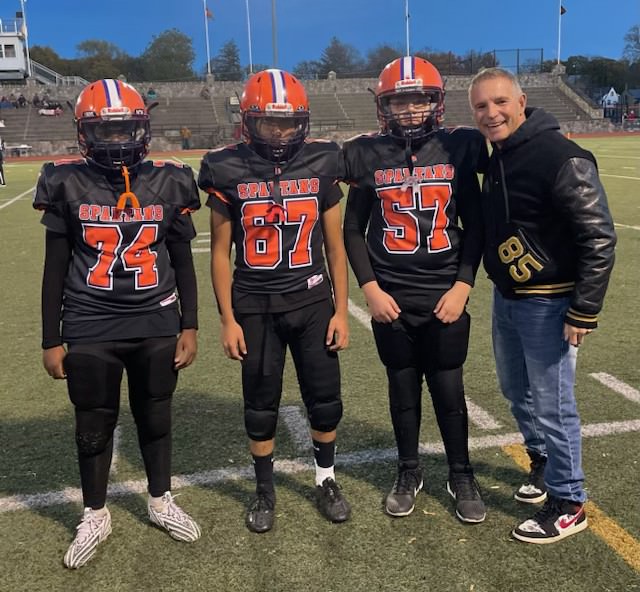

Kevin Nizolek (right) poses with players of the Stamford Spartans Youth Football team during a game Nov. 1, 2025 in Boyle Stadium in Stamford, CT.

The two talked about professional sports, the highs and lows of Justin’s games and how to improve going forward. Kevin Nizolek said his son was a workaholic when it came to sports. That attitude paid off. His dad said Justin was frequently the victim of multiple intentional walks during baseball games, as pitchers were too scared to let him hit a ball.
Article continues below this ad
“He never got frustrated,” Kevin Nizolek said. “He just handled it as part of the game.”
Justin Nizolek played hockey and baseball in Stamford before he went to Indiana University, where he graduated with an economics degree. He then worked as an accountant for multiple firms in Stamford.
“Once Justin graduated Indiana University, Justin did struggle with substance and alcohol issues, and sadly, it led to his passing,” in January 2024, Kevin Nizolek said. Kevin said he wanted the details around his son’s death to remain private.
Article continues below this ad
Losing a child, Kevin Nizolek said, “changes you forever.” He said he goes through his life with a cloud over his head.
“But at the same time, I’m determined to forge forward because I truly believe that’s what Justin would want from me,” Nizolek said. “To find happiness and move ahead.”
So, Nizolek moved forward and created The Justin Nizolek Memorial Athletic Foundation and Scholarship in December 2024. The foundation makes financial and material donations to the youth sports league in Stamford “to ensure that financial barriers do not prevent talented athletes from pursuing their dreams,” according to the foundation’s website.
Article continues below this ad
“I’m doing something constructive in the name of my son,” Kevin Nizolek said.
He said his son, an “exceptional pitcher and hitter,” made a name for himself in Stamford sports, so much so that eventually Kevin was simply known as Justin Nizolek’s dad.
The two had a strong connection through Justin’s experience in sports.
“Justin’s life, and that includes mine as well, revolved around sports and we just overlapped one season to the next and it really bonded us,” Kevin Nizolek said.
He also said he can now keep Justin’s spirit alive by “opening doors for young athletes” and supporting local athletics programs.
Article continues below this ad
When he first created the fund, Kevin said he was overwhelmed with the donations the foundation received. He was getting donations between $20 and $1,000 from people in and outside of Stamford.
Though Kevin Nizolek declined to say how much the fund raised in its first year, he said the foundation has already contributed to local organizations, including five scholarships, a lineman chute and lineman blocking sled for the Stamford Spartans Youth Football program, a private 501(c)3.
“I want fathers and sons and daughters to have the same experience I had with my son,” Nizolek said.
That equipment allowed Nizolek to do that for Paul Smyth and his son. Smyth is the eighth grade football coach for the Spartans, which his son is a part of.
Article continues below this ad
Smyth, also the Head of Fundraising and Public Relations for the Spartans, said he reached out to Nizolek on a whim to talk about partnerships and the two immediately bonded as fathers.
“That was an immediate connection, putting everything to the side, even if there was no financial donation,” Smyth said.
The coach was only hoping to ask for one or two player scholarships at most. Kevin Nizolek proposed the five scholarships, alongside the lineman chute and blocking sled.
The Spartans have been unable to buy additional equipment because money that could be used for that is instead used for scholarships. More than 20% of the team’s kids are on full scholarships, Smyth said. The chute and sled, he said, will be used for years.
Article continues below this ad
The support allows Smyth to coach football, a sport he loves, which he said can also teach kids important life lessons and how to create support groups of people to support players during tough times.
Smyth said he recently saw a player he hadn’t seen in more than 10 years who hugged him and told him “you were always there for me.”
Kevin Nizolek, meanwhile, said he feels a sense of pride that he can give back to the community he grew up and lives in.
Article continues below this ad
“It keeps my son’s name and face alive,” Nizolek said. “That’s very important to me.”

This story is part of the WHYY News Climate Desk, bringing you news and solutions for our changing region.
From the Poconos to the Jersey Shore to the mouth of the Delaware Bay, what do you want to know about climate change? What would you like us to cover? Get in touch.
There’s a shortage of foster parents across the U.S., leaving hundreds of thousands of kids without permanent homes. Many kids age out of the foster system, and don’t have the necessary resources to find a home on their own.
Child placing agencies in New Jersey and Delaware, where the number of licensed foster homes are on the decline, are urging residents to help a child or teen in need of a home. WHYY News organized events in Cherry Hill, New Jersey and Wilmington this week to provide resources for potential foster parents as part of “Caring for Kids,” a civic news project covering foster care and adoption.
Close to 3,000 kids were in New Jersey’s foster care system as of 2023. Brandi Harding, of the state’s Division of Child Protection and Permanency, said that fewer people are fostering children in the state, partly because there are more resources available to keep kids with their families.
Though the state’s priority is helping children remain with their biological families, more foster parents are needed when that’s not an option. Harding said residents don’t need to be “superheroes” to apply to become a foster parent.
“The secret is resource parents are just everyday people, just like you and me,” she said. “The only difference is they took that first step and then the next step until they were able to open their hearts and their homes to a child in need.”
There’s also a shortage of foster parents in Delaware, where about 500 kids are involved in the foster care system each year. Joseph Balinsky, of the Division of Family Services, said many people have misconceptions about the money and skills needed to be a foster parent.
“One of the most important things is that you can do it,” he said. “There’s so many people that doubt themselves, but every child deserves some love, respect and a decent place to lay their head at night. And if a parent can provide that, then we’re willing to work with you.”
Rec Sports
‘I just gambled our entire savings away’: Young adults in Mass. are hooked on online sports betting
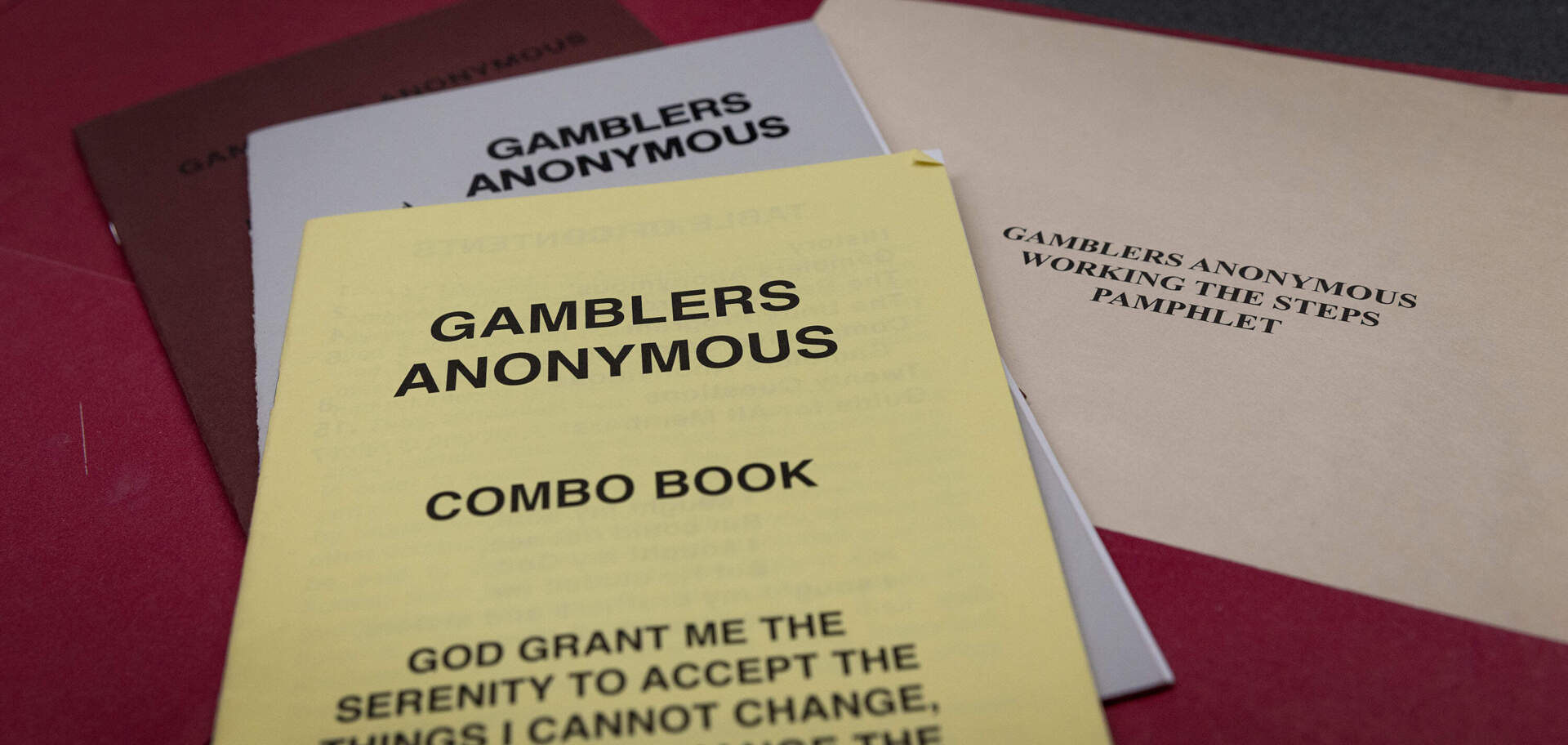
On a recent Tuesday night at an Episcopal church in Canton, the final words of The Serenity Prayer hung in the air as the weekly Gamblers Anonymous meeting broke up.
Michael, who runs the meeting, lingered behind. He said the recovery group has been growing — and getting younger.
“We’ve had 17 new members, I think, in the last five months,” he said. “And I’d say at least two-thirds of them are in their 20s or 30s.”
They had come for help, Michael said, because of online sports betting.
Massachusetts legalized online sports betting in 2023, joining a wave of states chasing new tax revenue. Residents could now bet on almost any game, at any hour, from their phones.
“Take one of the most addictive behaviors in mankind and then combine it with one of the most addicting devices of all time,” Michael said. “It’s obviously going to be a disaster.”
(WBUR agreed not to use the full names of people in recovery for this story due to their concerns about the stigma of addiction.)
The rise in new attendees — or “kids,” as some of the older members of the 12-step program call them — can feel like a double-edged sword.
“You’re like, ‘Awesome, these guys are tackling their problems early in life,’ ” Michael said. “But the flip side is, for every kid we’re seeing, there’s probably 20 to 100 that aren’t coming in.”
‘Trapped in my phone’
WBUR spoke with addiction specialists across Massachusetts and interviewed young people in recovery, including several from a Gamblers Anonymous group in Canton.
One of those men is 26-year-old Jason, who has been in recovery for about six months.
He said he started betting on sports in college with bookies on campus.
“I always had a love and a passion for sports,” he said. “At first it was, it was something that was fun.”
That changed nearly three years ago, after Massachusetts legalized sports betting for people 21 and older. Suddenly, he could bet on nearly anything — including games overseas. At the height of his addiction, Jason estimated, he was placing up to 50 wagers a day.
“I was just trapped in my phone, watching the gambling lines or watching this European basketball game,” he recalled.
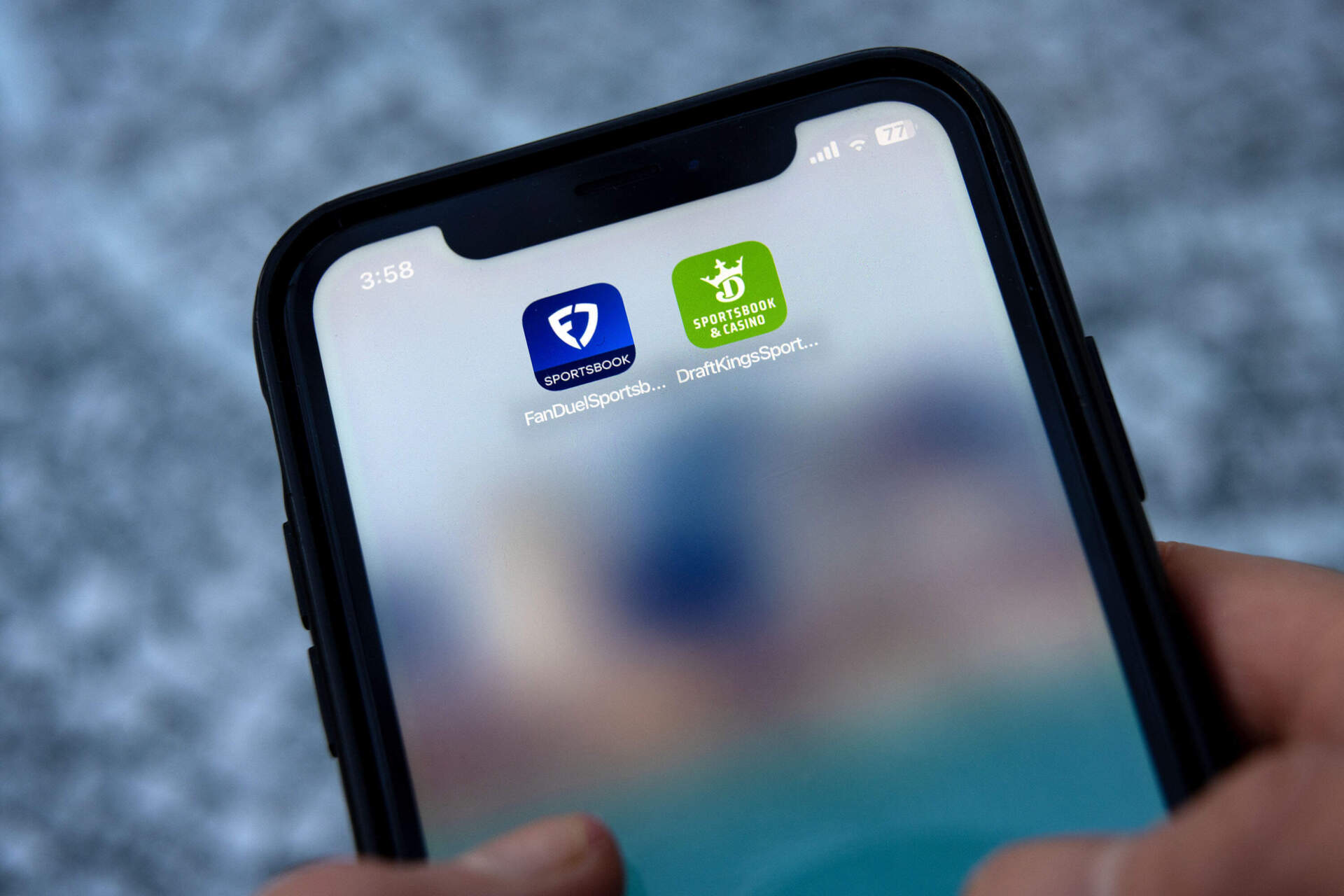
And the advertisements on TV and social media from the big national brands — DraftKings, which is headquartered in Boston, and its rival FanDuel — drew him in more.
“Their whole goal is to flood you with it so that you feel kind of suffocated and you’re constantly thinking about it,” he said.
Beyond the financial losses, gambling addiction caused him to lose the trust of people close to him, like his parents.
“It destroys relationships because then you’re lying to people about what you need money for,” he said. “It’s a hard thing.”
Since getting help, Jason said he has repaired those relationships.
He still watches games on TV — but the deluge of sports betting ads bother him.
“Why are we not educated on the dangers that gambling presents?” he asked.
The advertising blitz
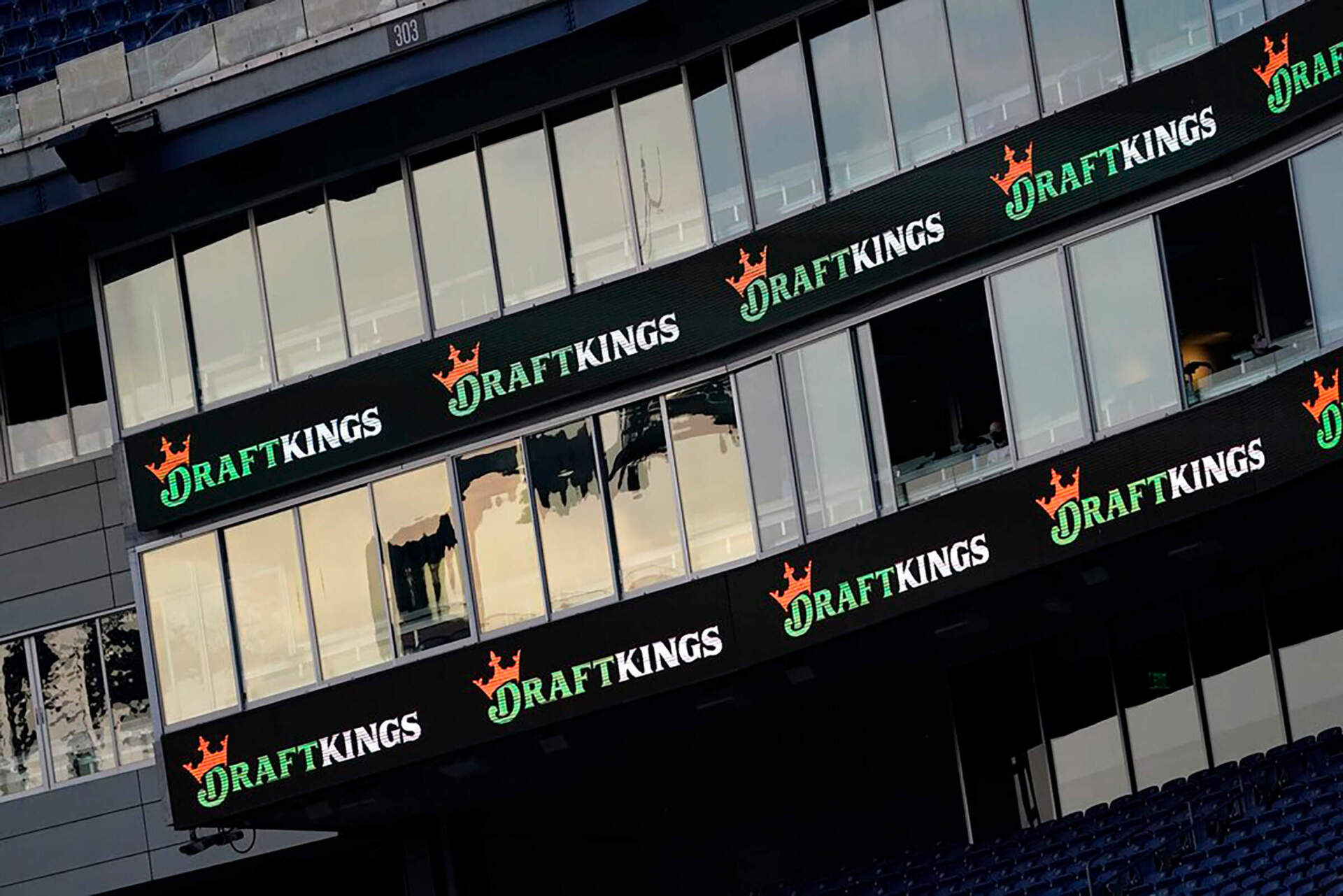
After the U.S. Supreme Court paved the way for states to legalize sports betting in 2018, companies like DraftKings and FanDuel poured hundreds of millions of dollars into marketing.
They offered sign up bonuses and hired celebrities like comedian Kevin Hart and big-name athletes like former Patriots star Rob Gronkowski for flashy commercials.
“There was just this blitz of advertisements that particularly appealed to younger people,” said Lia Nower, who directs the Center for Gambling Studies at Rutgers University.

She said the current moment reminds her of another era.
“Gambling is where cigarettes were in the ’40s, when we had the Marlboro Man and every actress with a cigarette on one of those extenders,” Nower said. “Right now it’s glamorized. People are not understanding that this is an addiction like any other.”
But for the companies — and for Massachusetts — the marketing paid off.
In October, the state set a new monthly record for sports wagering. People in Massachusetts bet $892 million on sports, according to the state’s gaming commission, a 20% jump compared to the same month last year. Nearly all of it was wagered online.
Massachusetts grabs a cut of the action.
Online sports betting revenue is taxed at 20%. Since legalization, the state has collected $350 million from the seven companies licensed to operate.
A surge in calls for help
Unlike other addictions, the number of people who engage in problem gambling is not tracked by the federal government’s public health agencies. Massachusetts doesn’t keep a count either.
But there are signs that as sports betting has exploded in Massachusetts, so have gambling problems among young adults.
The number of Massachusetts residents in their 20s and 30s who contacted the state’s gambling hotline and were referred to treatment more than doubled after legal sports betting went live three years ago, according to Department of Public Health data obtained through a public records request.
The hotline, which is listed at the end of commercials and on sports betting apps, connects people to counselors and treatment programs.
“Any evidence that shows that we have an increase in addiction is concerning for the commission,” said Eileen O’Brien, a member of the Massachusetts Gaming Commission, which regulates sports betting.
The hotline data includes all types of gambling, not just sports betting. But addiction treatment clinicians who spoke to WBUR said online sports betting was driving nearly all the cases involving young adults.
Kyle Faust, a clinical psychologist who directs Massachusetts General Hospital’s Digital Addiction and Gambling Treatment Program, said he’s seen a rise in young patients struggling with gambling.
“It can be extremely severe,” Faust said. “Somebody’s going to be more susceptible to depression, different types of anxiety disorders. And if somebody is significantly in debt, they are gonna feel trapped and helpless and feel like there’s no way out.”
Before betting apps, he said, gambling required more effort: a drive to a casino or a trip to Las Vegas.
“The easier you make it to place bets,” Faust said, “the more people are going to be struggling with this.”
‘I just gambled our entire savings away’
Adam, 33, said he tried to limit his betting at first. He was living in Connecticut in 2021 when the state legalized sports betting. He later moved to Massachusetts.
“I had sort of convinced myself that I could do it responsibly,” he said. “So that meant a $10 bet here or there.”
But, he said, “what happens with this addiction, or any others, is that’s sort of not enough.”
With the DraftKings and FanDuel apps on his phone, Adam could bet on multiple games at once. Over time, his wagers got more frequent and riskier as he tried to win the money back.
When he was out with his girlfriend, he’d repeatedly excuse himself — sometimes to a restroom — to go use his phone.
“What I was doing was checking scores and putting in more bets, things of that sort,” said Adam. “I would be up at all hours of the night — betting on this sport, that sport, sports in other countries that I knew nothing about.”
One night in February 2024, as the gambling losses piled up, he decided to put everything he had left on a single Bruins game.
“I walked into our bedroom where she was sleeping and I woke her up,” he said.
Boston had lost.
“I said, ‘I have something to tell you — I just gambled our entire savings away.’ “
Adam told WBUR that it “was the worst night of my life, having to reveal all of that that I’d been hiding for so long.” With the support of his then-girlfriend, now wife, Adam entered treatment and now attends Gamblers Anonymous meetings every week.
“But looking back on it, that was one of the biggest turning points of my life,” he said.
Adam said the shame surrounding gambling addiction was part of the problem.
“If I knew that I would have had such a supportive wife and family, I would’ve asked for help earlier,” Adam said.
Setting limits
Sports betting companies offer tools intended to protect people from developing gambling problems. Their apps let users set limits on deposits. Customers also can sign up for “cooling-off” periods and self-exclusion programs to ban themselves from wagering.
DraftKings offered an interview with Lori Kalani, its chief responsible gaming officer. Asked how the company viewed a rise in gambling disorders among young people, she emphasized the company’s efforts at promoting its “responsible gaming” tools.
“The vast majority of people who bet on sports do it responsibly as a form of entertainment,” Kalani said. “Although we do appreciate and recognize that it poses a problem for some people. Placing a bet is fine, but everybody should do so within a limit they set for themselves.”
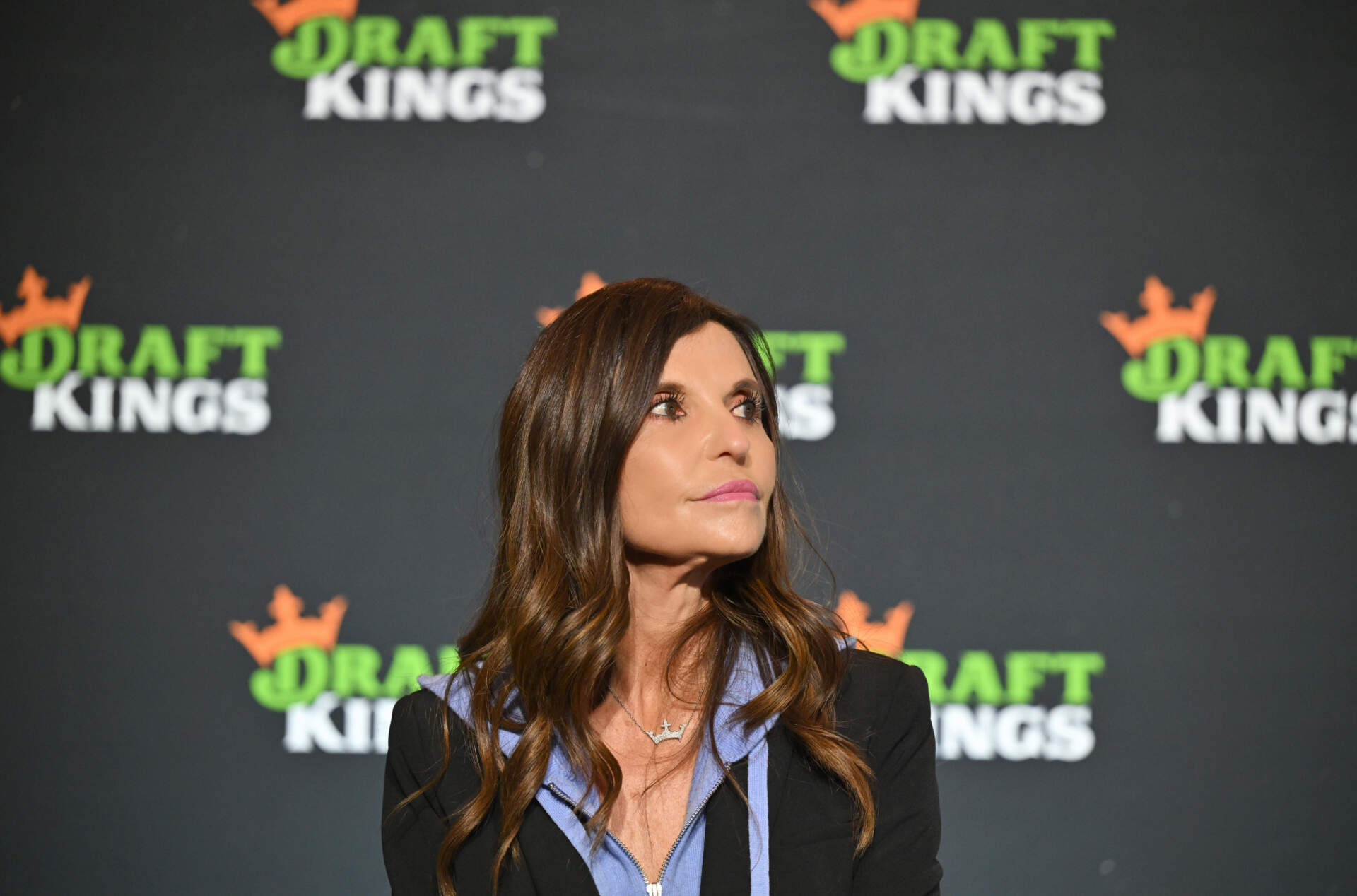
She added that DraftKings has the ability to flag customers when it notices unusual activity, like betting for hours in the middle of the night.
“They will get a message alerting them and saying, ‘Hey, you’ve been on the app for several hours. Would you like to set some limits around the time that you can spend?’ ” Kalani said.
Kalani said every sports betting commercial lists a hotline as required by state law.
FanDuel said in a statement they “recognize that there are customers who may be at-risk of gambling harm and we work to quickly connect those customers to resources,” including a free mental health assessment. The company said it views increased use of resources like gambling hotlines as a sign of more awareness for available support.
Public health experts said tools like betting limits and self-exclusion programs can help some customers, but are not enough — particularly for younger people whose brains are still developing and learning to manage risk and money.
Nower of Rutgers University said her research on sports betting in New Jersey found that a very small proportion of bettors in their early 20s use those safety features.
“What we know from all of our years of research is: the earlier you’re introduced to gambling, the more frequently you gamble, the more activities you gamble on, the higher your risk,” Nower said.
And in Massachusetts, the problem isn’t limited to young adults. There’s evidence that sports betting is reaching kids who aren’t old enough to legally gamble.
At a State House hearing on gambling legislation last month, Andrea Freeman of the Public Health Institute of Western Massachusetts, presented startling findings from a youth behavior survey in Springfield.
“In 2024, almost 30% of eighth graders surveyed reported that they’d participated in sports gambling in the past year,” she told lawmakers.
“Take one of the most addictive behaviors in mankind and then combine it with one of the most addicting devices of all time. It’s obviously going to be a disaster.”
Michael
The survey’s definition was broad, including fantasy sports and bets with friends with and without money. But Freeman called it a “notable” increase from 2019, before sports betting was launched in the state.
Some lawmakers said they regretted what online sports betting had unleashed on residents.
“When I voted to legalize sports betting, I never thought it would become what it is,” said state Sen. John Keenan at the November hearing.
Keenan, a Quincy Democrat who previously supported sports betting, has introduced legislation that would tighten restrictions over sports betting and how it’s marketed — including a proposed ban on sports betting ads during televised games. The bill could come up for a vote next year.
At the hearing, he was remorseful.
“I want to apologize to those who find themselves in the dark spaces of betting addiction and to those working through recovery.”
Our employees bring passion and purpose to their work to support our mission of improving the lives of people every day. Their commitment extends to their communities and neighbors in need, as well. This holiday season, we’re proud to celebrate the ways our employees have supported their communities through hands-on volunteering and charitable giving.
Volunteers of the year
Volunteerism is woven throughout our culture, and, in fiscal year 2025, employees collectively logged more than 63,000 hours of volunteer service.
“The stories we hear from employees about why and how they serve and who they are helping is truly inspiring,” said Jessie Cannon, president of the Cardinal Health Foundation. “On behalf of Cardinal Health and the Cardinal Health Foundation, thank you to all our volunteers. We are grateful for your commitment to serving the communities where we live and work.”
The Foundation recognizes several top volunteers, including (pictured above from left to right) Dusty Dumas, Senior Clinical Consultant, GMPD, Stonewall, Louisiana; Craig Vollmar, Senior Infrastructure Engineer, Cincinnati, Ohio; Diego Armendariz, Director of Strategic Sourcing, Innovative Delivery Solutions, Katy, Texas; Cassandra Sorrell, Quality Assurance Supervisor, Nuclear Manufacturing Services, Parker, Colorado; and Shannon McIntyre, Maintenance Technician, Global Medical Products & Distribution (GMPD), Jacksonville, Texas.
Here, Diego Armendariz shares some highlights of his volunteering experience.
“I began volunteering in my community as a teenager; 30 years later, I’m still at it, supporting a variety of nonprofits in the Houston area.”
Armendariz’s volunteer activities range from coaching youth sports and fostering character development with teenagers to supporting critical disaster recovery efforts. “Through my church and another local nonprofit, I help provide donated supplies and coordinate other volunteers to support disaster relief,” he said. “One particularly meaningful experience I had involved a disaster recovery mission where a team of others and I delivered critical supplies to a flood-isolated hospital (and Cardinal Health customer) that was inaccessible to our product delivery vehicles during a natural disaster.”
Armendariz stated, “I didn’t realize the full extent of my volunteerism until I began to track all the hours. But these consistent service activities can really add up and make a meaningful difference.”
Every volunteer can make a significant impact, and when we consider the collective impact of our employees’ 63,000 volunteer hours, the effect is considerable. The monetary value is nearly $2.2 million, according to Independent Sector, which values every volunteer hour at $34.79.
Team volunteerism
In addition to our individual volunteers, the Foundation also recognizes the teams at five Cardinal Health locations for their outstanding group volunteering efforts in fiscal year 2025:
- Rayong, Thailand
- Kansas City, Missouri
- Singapore, Singapore
- Tokyo, Japan
- Mansfield, Massachusetts

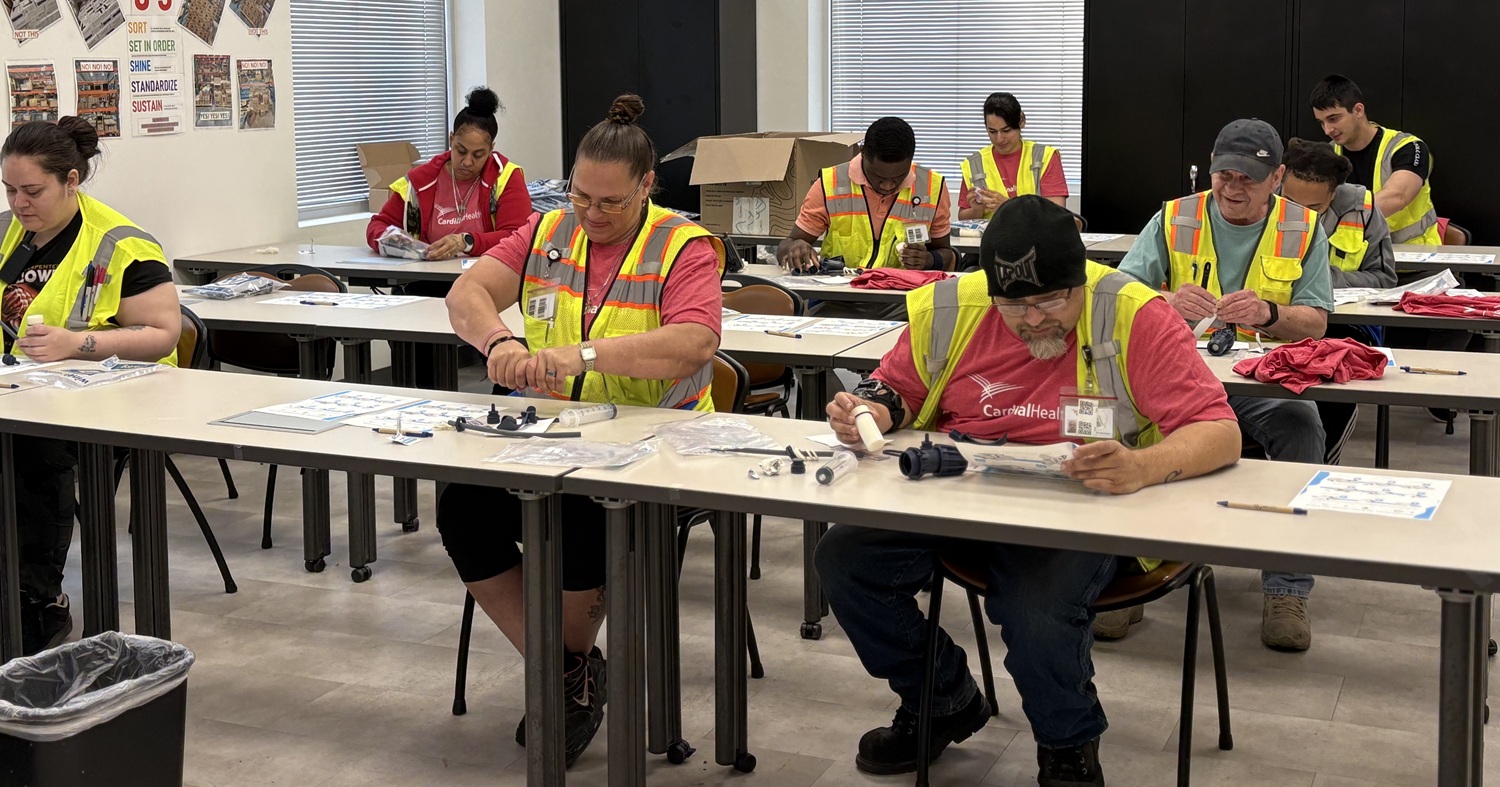
Above: Our employees in our Kansas City, Missouri, distribution center build water filters to donate to communities with little or no access to clean water.
Over the past year, teams volunteered together in a variety of activities, such as building water filters for communities with little or no access to clean water, cleaning up local beaches, participating in the meal program at Ronald McDonald House, stuffing backpacks with STEM school supplies for children in need, and so much more.
GivingTuesday: A successful internal campaign
Our employees’ generosity also extends to financial support for numerous nonprofit organizations, helping to make the communities where we live and work stronger. For this week’s GivingTuesday, we honored our employees’ spirit of giving by doubling their donations to charitable organizations and tripling their donations to the Cardinal Health Employee Assistance Fund, designed to aid qualified employees in need of immediate financial assistance following an unforeseen disaster or personal hardship.
Together, our employees’ and Foundation’s single-day impact to nonprofit organizations and the Employee Assistance Fund amounted to more than $410,000.
“Our culture of giving is woven into everything we do,” said Cannon. “Whether it’s donating to a local nonprofit, supporting their colleagues after an unexpected crisis, or championing causes they care deeply about through volunteer service, our employees genuinely embody the values that guide us at Cardinal Health.”
Rec Sports
SUBARU: GEAR FOR GOOD INITIATIVE NAMES FIVE YOUTH SOCCER PROGRAM BENEFICIARIES TO HELP GROW THE GAME IN 2026
Subaru of America, Inc. today announced five local beneficiary organizations for its Subaru: Gear for Good initiative, which is dedicated to expanding access to and growing the game of soccer. Coinciding with the draw day announcement ahead of the soccer excitement coming to Philadelphia in 2026, the initiative will provide new and gently used equipment to youth in the local Philadelphia and Camden communities, underscoring Subaru and its retailers’ longstanding commitment to community and youth empowerment.
The selected organizations are:
- Capitolo Youth Soccer Club (CYSC) – CYSC uses soccer as a vehicle to instill universal values of fitness, fun, sportsmanship, respect, community, access, and equality. CYSC has a unique approach and philosophy to teaching soccer, nurturing players’ passion by providing an atmosphere in which they are free to experiment, create, and fail, without fear of judgment, resulting in truly fine players and ambassadors of the Beautiful Game.
- Dr. Henry H. Davis School – The Dr. Henry H. Davis School in East Camden is named after a Camden physician, school board member, Camden’s first medical inspector, and first chief medical inspector. His work in the areas of school health and nutrition saved countless children’s lives in Camden City. Currently, the school houses Pre-Kindergarten through 8th grade for approximately 475 students of various learning modalities.
- Project Primacy – Project Primacy Foundation is a non-profit organization focused on youth soccer, particularly for Black and Brown children in inner-city Philadelphia. They aim to provide access to sports, mentorship, and other opportunities to support their development. The foundation has been involved in various initiatives, including free soccer clinics, and fundraising events like their “Dribble & Carry” Broad Street RUNdraiser.
- Safe-Hub Philly – Safe-Hub provides a physically and emotionally safe space for young people to access opportunities and support through soccer-based out-of-school-time programs that focus on personal development, health, education, and employment. Their goal is to bring high-quality sports programming and supportive services to families, providing a one-stop-shop for families to receive support through the stigma-free circumstances of coming to soccer practice.
- Youth Development United provides children from under-served communities with extracurricular opportunities, inspiring them to excel. Specifically, YDU provides children and their families with memorable after-school and weekend opportunities that increase their access to mentorship, wellness, and personal development through various sports and recreational opportunities.
Alan Bethke, Senior Vice President of Marketing, Subaru of America: “At Subaru, we believe in showing up for our communities in ways that truly matter. These organizations are already doing powerful work to support kids through the game of soccer, and we’re proud that Subaru: Gear for Good will help deepen that impact, especially as we head into 2026. Every piece of equipment collected and donated brings us closer to breaking down barriers and making the game more accessible for all.”
Each beneficiary was selected for its mission to support local youth through soccer, sports, and development programs. These organizations will receive brand-new gear from Subaru tailored to their specific programs and needs. Through partnerships with Major League Soccer’s Philadelphia Union and the youth sports nonprofit Leveling the Playing Field, Subaru is also collecting soccer equipment via its donation bin network, which includes 17 Subaru retailers and Subaru Park, the Union’s home stadium in Chester, PA. This gear will be distributed to more than 100 youth programs on an ongoing basis in coordination with Leveling the Playing Field and Philadelphia Parks & Recreation. Collection will continue through April 3, 2026, as Subaru works toward its goal of distributing at least 2,026 pieces of new and gently used equipment.
Susan Slawson, Commissioner, Philadelphia Parks & Recreation: “Philadelphia Parks & Recreation is proud to stand alongside Subaru, the Philadelphia Union, and Leveling the Playing Field in a partnership that puts our young people first. Every day, we see how access to sports can open doors—building confidence, community, and dreams for the future. As we prepare for the world stage in 2026, this initiative underscores Philadelphia’s commitment to giving every young person a chance to truly see themselves in the game.”
As part of the collection initiative, community members throughout Philadelphia and Southern New Jersey can donate new or gently used soccer gear, including cleats, goalie gloves, shin guards, soccer balls, and more, through April 3, 2026, for a chance to win a range of prizes, including a trip to the 2026 MLS All-Star Weekend. The Subaru: Gear for Good Sweepstakes (official rules) is open to legal U.S. residents at least 18 years of age who live within a 75-mile radius of Subaru Park.
Kaitlin Brennan, Chief Operating Officer, Leveling the Playing Field: “Partnering with Subaru in celebration of the global soccer heading to Philadelphia greatly amplifies our mission – to expand access and equity within the realm of youth sports. This effort provides children with the opportunity to get involved with sports at a young age, granting the chance to experience the holistic benefits of youth sports on their physical, mental, and emotional health.”
Charlie Slonaker, Chief Revenue Officer, Philadelphia Union: “At the Union, we’re committed to making the game accessible to every child who wants to play. The Subaru: Gear for Good initiative helps remove equipment barriers, so access is determined by passion, not resources. With the excitement of 2026 coming to Philadelphia, we’re proud to work with Subaru of America and Leveling the Playing Field to expand opportunities for youth across the area and help continue to grow the game.”
The Subaru: Gear for Good initiative will give even more kids access to the gear they need to join teams, stay active, and enjoy the game. Any surplus donated items will be shared with additional youth organizations throughout the collection period. For more information, including donation locations, eligibility details, and official rules, visit philadelphiaunion.com/SubaruGearforGood.
About Subaru of America, Inc.
Subaru of America, Inc. (SOA) is an indirect wholly owned subsidiary of Subaru Corporation of Japan. Headquartered in Camden, N.J., the company markets and distributes Subaru vehicles, parts, and accessories through a network of about 640 retailers across the United States. All Subaru products are manufactured in zero-landfill plants, including Subaru of Indiana Automotive, Inc., the only U.S. automobile manufacturing plant designated a backyard wildlife habitat by the National Wildlife Federation. SOA is guided by the Subaru Love Promise®, which is the company’s vision to show love and respect to everyone and to support its communities and customers nationwide. Over the past 20 years, SOA and the SOA Foundation have donated more than $340 million to causes the Subaru family cares about, and its employees have logged over 115,000 volunteer hours. Subaru is dedicated to being More Than a Car Company® and to making the world a better place. For additional information, visit media.subaru.com. Follow us on Facebook, Instagram, LinkedIn, TikTok, and YouTube.
About Philadelphia Union
The Philadelphia Union is an innovative, forward-thinking professional soccer club competing in Major League Soccer (MLS) and one of Philadelphia’s five major league sports teams. Driven by unprecedented fan support, MLS awarded the Philadelphia expansion franchise rights to Jay Sugarman in 2008 and the Union kicked off its inaugural season in 2010. The club has reached the finals of the Lamar Hunt U.S. Open Cup in 2014, 2015 and 2018, and has appeared in the MLS Cup Playoffs in 2011, 2016, 2018, 2019, 2020, 2021, 2022, and 2023. In 2020, the Union were awarded the club’s first Supporters’ Shield after finishing with the best regular season record in MLS. In 2022, the Union reached the MLS Cup Final for the first time in club history. In 2023, the Union reached the Eastern Conference semifinals, becoming the only Eastern Conference team to reach the semifinals in four of the last five seasons.
The Philadelphia Union is part of parent company Union Sports and Entertainment LLC, which also operates Philadelphia Union II, the Philadelphia Union Academy, Philadelphia Union Foundation and Philadelphia Union Youth Programs. With a commitment to developing youth, the Union has signed 25 academy prospects to homegrown player contracts.
The Union play at Subaru Park in Chester, PA on the banks of the Delaware River. The custom-built stadium is part of the Union’s unique waterfront campus, featuring a historic power plant rebuilt into a 400,000 sq. ft. creative office building, a state-of-the-art Training Complex, over seven acres of professional-grade practice pitches, and the newly announced WSFS Bank Sportsplex, a world-class, 365-day-a-year sports and recreation complex featuring indoor fieldhouse and seven outdoor fields. For more information about the Philadelphia Union, visit www.philadelphiaunion.com and follow @PhilaUnion on Twitter or Instagram.
About Leveling the Playing Field
Leveling the Playing Field (LPF) is a nonprofit organization committed to expanding access and equity in youth sports by redistributing new and gently-used sports equipment to under-resourced communities. Founded in 2013, LPF addresses the growing gap between those who can afford to participate in sports and those who cannot, recognizing the high cost of sporting goods as a major barrier.
Through a network of community donations and volunteers, LPF collects and sorts sports and recreational equipment, then supplies it to schools, community programs, and youth organizations across several regions. This philanthropic model not only provides gear but also empowers organizations to redirect limited budgets toward transportation, nutrition, staffing, and program expansion—making youth sports more inclusive and accessible for all.
With LPF’s support, youth programs are able to stretch their resources further. By removing the barrier of equipment cost, LPF helps create more inclusive and enriching opportunities for young athletes. Together, we’re building a future where every child has the chance to play, grow, and thrive through sports.
For more information, visit levelingtheplayingfield.org and follow us @lpfsports on Instagram.
Philadelphia Parks & Recreation
Philadelphia Parks & Recreation (PPR) advances the prosperity of the city and the progress of its people through stewardship of nearly 10,200 acres of public land and waterways, and management of 500 recreation buildings, 166 miles of trail, and 250 playgrounds. PPR offers safe, enjoyable recreation, environmental and cultural programs and events throughout Philadelphia’s parks and recreation system. PPR promotes the well-being and growth of the city’s residents by connecting them to the natural world, to each other, and to fun, physical, and social opportunities. More than 3,000 full-time and seasonal employees proudly serve Philly residents every day, ensuring the department remains a modern, equitable and exceptional parks and recreation system. Visit www.phila.gov/parksandrec and follow @philaparkandrec on Facebook or Instagram.

Sports3 minutes ago
Men’s & Women’s Track & Field set to open indoor season this weekend at Bison Opener

NIL12 minutes ago
2026 football schedule change announced

Sports19 minutes ago
Men’s Lacrosse and Track & Field Add New Staff
Rec Sports21 minutes ago
Retired WNBA player Jacki Gemelos returns to home town for youth camp

Sports35 minutes ago
PBC Indoor Track & Field Season Preview

Sports51 minutes ago
Track & Field Open Indoor Season At Bison Opener

Motorsports56 minutes ago
Rajah Caruth Set for a 10-Race Slate for Jordan Anderson Racing Bommarito Autosport in 2026 – Speedway Digest

NIL1 hour ago
Major college football program jumps 96 spots in updated recruiting rankings

Sports1 hour ago
Track Season Begins Saturday – Syracuse University Athletics

Sports1 hour ago
No. 4 Gophers Host Fairfield to Open NCAA Tournament

Motorsports1 hour ago
Jason Harris Leads The Way in Thursday Pro Mod Qualifying at Snowbird Outlaw Nationals

Rec Sports1 hour ago
Stamford father starts fund to support athletes and honor late son

Sports1 hour ago
Creighton volleyball defeats Northern Colorado

Sports2 hours ago
Watch Nebraska volleyball vs Long Island: TV channel, time, streaming

Motorsports2 hours ago
Rajah Caruth Secures 10-Race Slate in Jordan Anderson Racing No. 32

Rec Sports2 weeks ago
First Tee Winter Registration is open

Rec Sports1 week ago
Fargo girl, 13, dies after collapsing during school basketball game – Grand Forks Herald

Motorsports1 week ago
CPG Brands Like Allegra Are Betting on F1 for the First Time

Sports2 weeks ago
Volleyball Recaps – November 18

Motorsports2 weeks ago
F1 Las Vegas: Verstappen win, Norris and Piastri DQ tighten 2025 title fight

Sports1 week ago
Two Pro Volleyball Leagues Serve Up Plans for Minnesota Teams

Sports1 week ago
Utah State Announces 2025-26 Indoor Track & Field Schedule

Sports1 week ago
Sycamores unveil 2026 track and field schedule

Sports1 week ago
Texas volleyball vs Kentucky game score: Live SEC tournament updates

NIL5 days ago
Bowl Projections: ESPN predicts 12-team College Football Playoff bracket, full bowl slate after Week 14

Motorsports1 week ago
Redemption Means First Pro Stock World Championship for Dallas Glenn

Motorsports7 days ago
Pohlman admits ‘there might be some spats’ as he pushes to get Kyle Busch winning again

NIL1 week ago
Indiana’s rapid ascent and its impact across college football

Rec Sports2 weeks ago
Troy Football Need to Know; Gameday at The Vet — Georgia State Game

Rec Sports7 days ago
How this startup (and a KC sports icon) turned young players into card-carrying legends overnight

 Why a rising mid-major power with an NCAA Tournament team opted out of revenue-sharing — and advertised it
 NBA Legend Michael Jordan to Join NBC Sports as Special Contributor
 Falcons mailbag
 Portal Update – Basketball and Gymnastics Take Hits
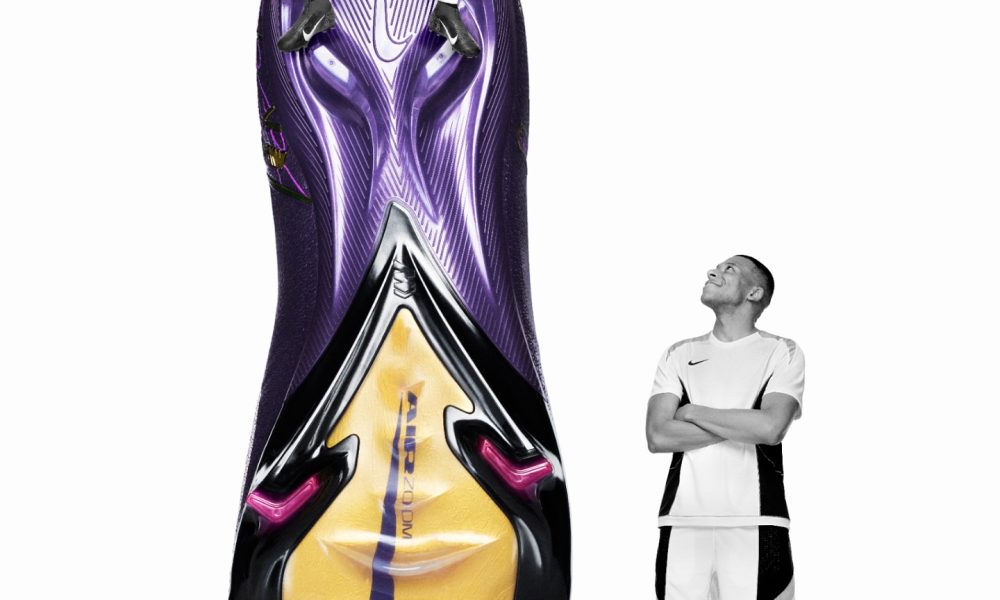 has always dreamed in Mercurial. Now his initials are on the boots.
The new Kyl…
has always dreamed in Mercurial. Now his initials are on the boots.
The new Kyl…
-
 Rec Sports2 weeks ago
First Tee Winter Registration is open
-
 Rec Sports1 week ago
Fargo girl, 13, dies after collapsing during school basketball game – Grand Forks Herald
-
 Motorsports1 week ago
CPG Brands Like Allegra Are Betting on F1 for the First Time
-
 Sports2 weeks ago
Volleyball Recaps – November 18
-
 Motorsports2 weeks ago
F1 Las Vegas: Verstappen win, Norris and Piastri DQ tighten 2025 title fight
-
 Sports1 week ago
Two Pro Volleyball Leagues Serve Up Plans for Minnesota Teams
-
 Sports1 week ago
Utah State Announces 2025-26 Indoor Track & Field Schedule
-
 Sports1 week ago
Sycamores unveil 2026 track and field schedule
-
 Sports1 week ago
Texas volleyball vs Kentucky game score: Live SEC tournament updates
-
 NIL5 days ago
Bowl Projections: ESPN predicts 12-team College Football Playoff bracket, full bowl slate after Week 14