NEWS AT SIX STARTS NOW. AND THANKS SO MUCH FOR JOINING US HERE AT 6:00. I’M BRITTANY DECKER I’M GUY RAWLINGS TONIGHT. THE CONVERSATION AROUND NAME, IMAGE AND LIKENESS CONTINUES AS COLLEGES ACROSS THE COUNTRY STRUGGLE TO RETAIN STUDENT ATHLETES. THE UNIVERSITY OF ALABAMA RE-EMPHASIZING THEIR YEE ALABAMA PROGRAM, WHERE FANS CAN MAKE A ONE TIME CONTRIBUTION OR SEND IN MONEY ONCE A MONTH TO GET EXCLUSIVE MERCHANDISE AND ACCESS TO EVENTS. ALL THE MONEY WOULD GO TO THE SCHOOL’S NIL FUND. THE UNIVERSITY HOPES TO GET MORE PEOPLE TO JOIN THE PROGRAM. OUR WVTM 13 ZOE BLAIR SPOKE TO FANS TODAY WHO SUPPORT YEE ALABAMA, BUT STILL HAVE SOME FRUSTRATIONS. NAME, IMAGE AND LIKENESS. NIL HAS CHANGED THE WORLD OF COLLEGE ATHLETICS. I THINK IT’S GREAT FOR THE STUDENT ATHLETE. I THINK IT’S GREAT FOR THE UNIVERSITY. LONGTIME ALABAMA FAN TODD LOGAN SUPPORTS THE NEW SYSTEM FOR THE MOST PART. TO ME, IT SEEMS LIKE THERE’S MORE RESTRICTIONS IN THE NFL THAN THERE IS IN COLLEGE, AND THAT’S WHAT’S A JOKE TO ME. HE’S TALKING ABOUT THE TRANSFER PORTAL. LOGAN SAYS IF ATHLETES ARE GOING TO GET PAID, THEN THERE SHOULD BE STRICTER RULES. I DON’T KNOW A TON ABOUT IT, BUT I DO THINK THAT THAT’S THE ONE THAT NEEDS TO BE CONTROLLED. WHETHER IT’S A LIMIT ON HOW MANY TRANSFERS YOU CAN DO OR, YOU KNOW, I DON’T WANT TO SAY A SALARY CAP, BUT IT’S JUST A LOT, A LOT INVOLVED TO TO MAKE IT ALL WORK. RIGHT. BUT IT’S NOT ALL BAD. HE SAYS HE’S A FAN OF THE SYSTEM THE CRIMSON TIDE HAS IN PLACE. I THINK ALABAMA HAS A GREAT NIL PROGRAM WITH YEE, ALABAMA. IT’S VERY WELL RUN. THE UNIVERSITY IS HOPING MORE PEOPLE JOIN THAT PROGRAM. ATHLETIC DIRECTOR GREG BYRNE PUT THIS STATEMENT OUT ON SOCIAL MEDIA ON WEDNESDAY, EXPLAINING WHY THEY NEED FAN SUPPORT TO CONTINUE TO BE COMPETITIVE ACROSS THE BOARD. BYRNE SAYS IN PART, A SUBSCRIPTION TO YEE ALABAMA ISN’T ABOUT THE NAIL, IT’S ABOUT THE FUTURE. IT’S ABOUT ROSTER RETENTION FOR FUTURE SEASONS. LOGAN AGREES, SAYING IT’S IMPORTANT TO INVEST IN EVERY SPORT, NOT JUST FOOTBALL. WE’RE SEASON TICKET HOLDERS FOR BASKETBALL AND I THINK THAT’S VERY IMPORTANT. ALSO, EVERYBODY THINKS ABOUT FOOTBALL, BUT YOU KNOW, YOUR BASKETBALL, YOUR BASEBALL, EVERYTHING ELSE GYMNASTICS. I MEAN IT’S ALL AFFECTED. IT’S NOT JUST YOUR FOOTBALL PLAYERS. LOGAN ISN’T THE ONLY ONE VOICING CONCERNS. EARLIER THIS YEAR, FORMER CRIMSON TIDE HEAD COACH NICK SABAN SPOKE TO LAWMAKERS ABOUT HIS CONCERNS WI
Advertisement
Local attorney, former UA athlete weigh in on NCAA, power conference’s potential NIL settlement
Updated: 11:38 PM CDT Apr 7, 2025
Video above: University of Alabama seeking support for NIL collective A U.S. district judge in California is conducting a hearing Monday to hear arguments about a proposed settlement that would end a five-year lawsuit against the NCAA and five power conferences. If approved, it would allow colleges and universities to pay athletes. That’s beyond the money student-athletes are already allowed to make from name, image and likeness.Birmingham sports attorney Rick Davis played for Bear Bryant at the University of Alabama and then went on to play in the NFL. He has paid attention to the huge changes college sports have gone through in recent years since players have been allowed to profit from their names, images and likenesses. He said, “It’s changed the whole game. It’s becoming more of a professional, you know, than it is going to school to play for the school and get your education.” The settlement that a U.S. district court judge will soon make a ruling on could mean even more changes. Referred to as the “House” settlement, it would allow colleges and universities to pay players directly. Davis wants it to include some restrictions as well that would keep players from making so many transfers. He said, “The restrictions that used to be in place are no longer in place. And that’s what hopefully this will address that and make it to where you can’t have a merry-go-round every year of players, or it’s a revolving door for guys to come here for one year, and then they’ll go somewhere else in the next year.”It’s expected that this settlement will give the NCAA, along with the SEC, ACC, Big 10, Big 12 and Pac-12, more name, image and likeness oversight. But Davis doesn’t think it will end the lawsuits. He added, “There’ll be other lawsuits even once this settlement is done. There’ll be people that they’re not, they’re not a part of it.”
BIRMINGHAM, Ala. —
Video above: University of Alabama seeking support for NIL collective
A U.S. district judge in California is conducting a hearing Monday to hear arguments about a proposed settlement that would end a five-year lawsuit against the NCAA and five power conferences.
Advertisement
If approved, it would allow colleges and universities to pay athletes. That’s beyond the money student-athletes are already allowed to make from name, image and likeness.
Birmingham sports attorney Rick Davis played for Bear Bryant at the University of Alabama and then went on to play in the NFL. He has paid attention to the huge changes college sports have gone through in recent years since players have been allowed to profit from their names, images and likenesses. He said, “It’s changed the whole game. It’s becoming more of a professional, you know, than it is going to school to play for the school and get your education.”
The settlement that a U.S. district court judge will soon make a ruling on could mean even more changes. Referred to as the “House” settlement, it would allow colleges and universities to pay players directly. Davis wants it to include some restrictions as well that would keep players from making so many transfers. He said, “The restrictions that used to be in place are no longer in place. And that’s what hopefully this will address that and make it to where you can’t have a merry-go-round every year of players, or it’s a revolving door for guys to come here for one year, and then they’ll go somewhere else in the next year.”
It’s expected that this settlement will give the NCAA, along with the SEC, ACC, Big 10, Big 12 and Pac-12, more name, image and likeness oversight. But Davis doesn’t think it will end the lawsuits. He added, “There’ll be other lawsuits even once this settlement is done. There’ll be people that they’re not, they’re not a part of it.”
As the college football calendar winds down, Texas’ quarterback situation has become a national story.
Arch Manning finished the 2025 regular season with 2,942 passing yards, 24 touchdowns and seven interceptions, while rushing for 244 yards, eight rushing TDs and posting a 145.8 passer rating.
These numbers helped Texas reach a 9-3 regular-season mark (6-2 SEC) and a No. 13 ranking going into bowl season.
Manning’s sustained performance has positioned him as a credible 2026 NFL draft candidate, even as doubts persist about his readiness.
Monday’s PFF 2026 mock draft, in a writeup projecting the Pittsburgh Steelers at No. 19, explicitly assumed a scenario where “it’s feeling increasingly likely that Arch Manning … return[s] to school,” which pushed that mock to address other positional needs instead of quarterback.
That framing echoes multiple recent takes suggesting Manning is as likely to stay in Austin for 2026 as he is to jump to the NFL.
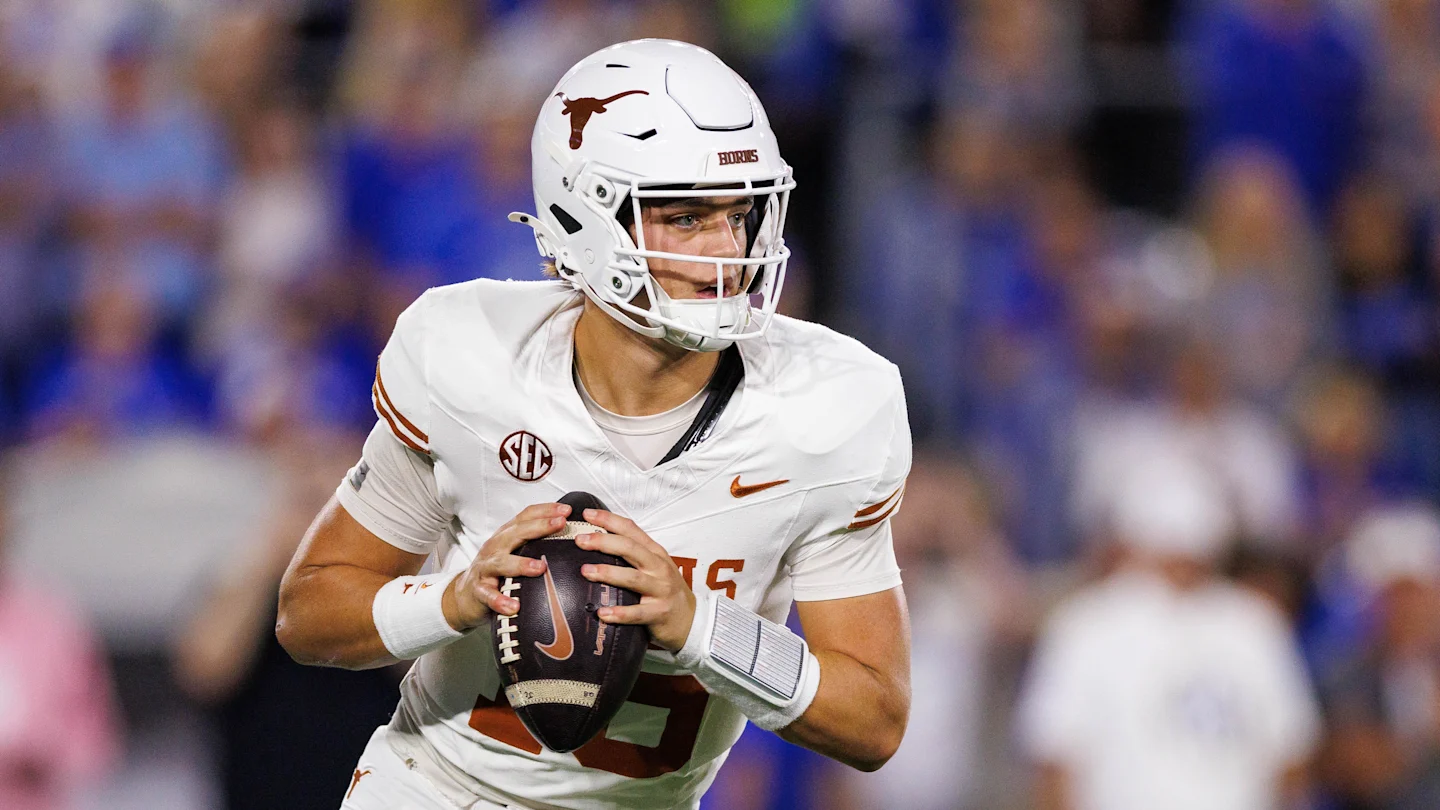
Austin, Texas, USA; Texas Longhorns quarterback Arch Manning throws a pass during the first half against the Texas A&M Aggies at Darrell K Royal-Texas Memorial Stadium. | Scott Wachter-Imagn Images
Manning arrived at Texas as one of the most hyped recruits in recent history: a five-star, consensus No. 1 quarterback in the 2023 class out of Isidore Newman (New Orleans) with five-star ratings across the major services.
He carried a pedigree and a polished high school resume (over 9,700 total yards and 140 total TDs) that fueled early NFL and media projections long before he even logged a college start.
2025 was Manning’s first extended turn as Texas’ starter, and while he showed growth, he also displayed some inconsistency against top defenses.
Still, he remains the highest‑paid athlete in college sports, with an NIL valuation of $5.3 million, fueling debate over whether that lessens his motivation to leave school early.
Underclassmen are generally required to apply for special eligibility for the NFL Draft by mid‑January, with the league setting Jan. 15 as the standard deadline and allowing slight adjustments for players from earlier‑finished seasons or championship teams.
That timeline gives Manning and Texas several weeks after bowl play to consult agents, advisers and the NFL’s College Advisory Committee before a final call.
Read More at College Football HQ
SEC quarterback enters transfer portal after college football season
Star SEC running back enters transfer portal after College Football Playoff snub
7,000-yard college football quarterback enters transfer portal
Major college football program declines bowl game after College Football Playoff snub
ANN ARBOR – National signing day has always been an opportunity for college coaches to celebrate a new wave of players entering their program.
But in the current name, image and likeness-driven landscape of NCAA football, signing day also is one of the most stressful days of the year for coaches.
This signing day was no different, with dozens of prospects in the 2026 class having a late change of heart about their college choices just before putting pen to paper to make their verbal commitments official.
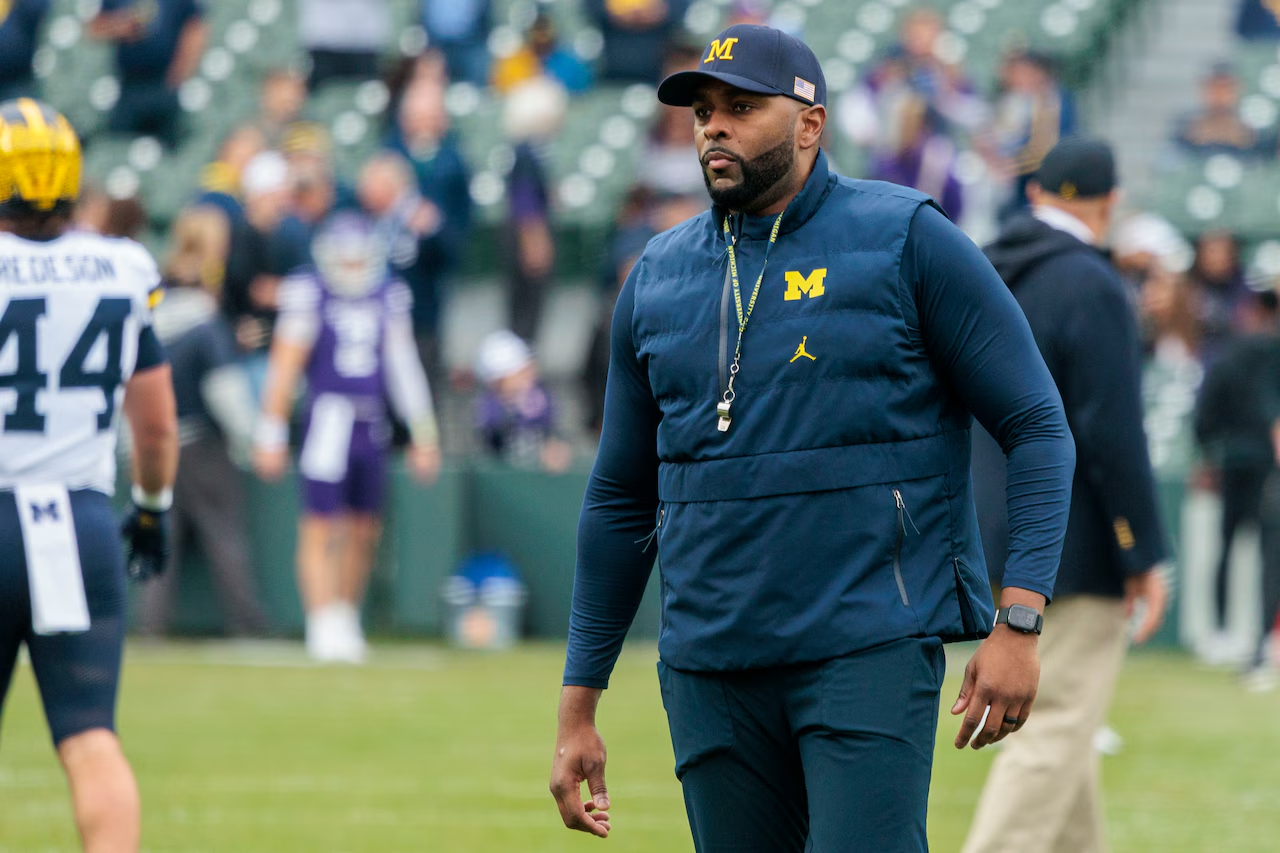
Michigan and head coach Sherrone Moore weren’t immune to this year’s signing day chaos. The Wolverines had 28 commits entering last Wednesday, the start of the early signing window, but only signed 27 recruits after some late reshuffling in the class.
The drama began Wednesday morning when Mansfield (Texas) four-star receiver pledge Zion Robinson announced he was “postponing signing until further notice.”
According to 247Sports’ Mike Roach, Stanford made an aggressive NIL play for Robinson. The school, which has had five straight losing seasons, successfully flipped the top-200 prospect on Thursday.
Meanwhile, Mineral (Va.) Louisa County five-star running back Savion Hiter, the crown jewel of Michigan’s class, didn’t sign on Wednesday. The delay sparked intense speculation on fan message boards about Hiter’s status, but Michigan was able to seal the deal Thursday morning.
According to Rivals’ Steve Wiltfong, Hiter, the top-ranked running back in the country per the 247Sports Composite, didn’t sign Wednesday because of “minor contractual details.”
The signing period fireworks didn’t end there. Michigan also lost Irmo (S.C.) Dutch Fork four-star edge Julian Walker to South Carolina on Thursday as the top-100 recruit chose to play for his hometown school where his father is on staff, but Moore’s program countered with a major move of its own.
It flipped Cartersville (Ga.) four-star receiver Brady Marchese from Georgia, adding a new top-150 wideout to its 2026 recruiting haul.
Moore was asked during a news conference Monday how much NIL has impacted late flips on signing day.
“It’s definitely out there,” Moore said. “It’s definitely a thing. It’s something you can’t ignore and you have to have a plan for it, and you have to adapt to it, because, yeah, that’s part of it. You think you got somebody signed, and then somebody shoots out something (other schools offering more in the NIL space), or does something, and you’ve got it cemented of what you’ve all agreed to, and all those other things, all those other pieces that are part of college football now, but that’s just college football now. You’ve got to adjust and you’ve got to adapt.”
More than ever before, roster construction in college football is driven by NIL funding. Not only is it prevalent in recruiting high school prospects, but also players in the transfer portal and retaining players on the current roster.
The biggest difference between high school recruiting and the portal is the timelines. Prep prospects can commit to a school at any time, but that verbal pledge doesn’t become binding until the player signs with the school. For example, Robinson and Walker were both committed to Michigan since last summer before flipping. Marchese was pledged to Georgia since March.
The portal is a more condensed timeline. The two-week window opens Jan. 2, and prospects usually try and find a new home quickly so they can enroll at their new schools in time for the start of a fresh semester.
Moore said Michigan is prepared.
“The big thing about the portal is not only getting the right fit, but the relationship,” he said. “Obviously, the right player, but people that fit the program, the people that fit the culture, the people that fit involved in the program. You’ve got to be ready. We’re on it. We’ve been on it. You’ve got to stay on it.
“You’ve got to have lists ready to go. Obviously, you can’t talk to the kids until they get in it. So, we’ve got to do everything we can to be prepared for that. From a financial basis, all that is a piece of it, right? We’ve got to make sure we’ve got a plan for all of it, and we do.”
2025 was a disappoint season for the Minnesota Gophers. P.J. Fleck was starting a redshirt freshman quarterback, but heading into the season there was legitimate hope this team could win nine or ten games.
Not only did they win just seven, but Fleck got embarrassed by Iowa in his ninth season on the job, and they didn’t perform well against Northwestern, either. Minnesota is headed to the Rate Bowl against New Mexico in Phoenix, but the page needs to be flipped to 2026.
If the Gophers are going to be better next year, it will be because Drake Lindsey, Koi Perich, and Darius Taylor contribute in a big way. They aren’t going to be cheap to keep around, either, as the transfer portal will soon heat up.
MN Gophers spending big on key roster talent
The college sports landscape has changed amidst the introduction of NIL spending. Roster creating, especially in revenue generating sports, is not simply a byproduct of recruiting anymore. Dollars are attached to expectations, and Charley Walters revealed the substantial amount Minnesota will need to pay their stars.
It is expected to cost the Gophers at least $1 million to retain redshirt QB Drake Lindsey for his sophomore season next year. That would make him and 2016 junior defensive back Koi Perich at least a $2 million duo. Add Darius Taylor and the cost could exceed $3 million for trio.
Charley Walters – Pioneer Press
Drake Lindsey hardly set the world on fire this season. He completed 63.2% of his passes, with 16 touchdowns and 6 interceptions. At times, he looked every bit of a redshirt freshman. However, he also showed off his special arm talent, and there’s clearly a path for development.
Needing to pay a guy like Lindsey seven figures to retain his services is indicative of what college football has become, way too expensive… Minnesota will likely pony up for the Arkansas native who has always had a soft spot in his heart for the home state Razorbacks. It’s also probably helpful that his mentor, Vikings QB Max Brosmer is still in town.
Perich earned a hefty jump in NIL funds after leading the Big Ten in interceptions as a true freshman. The Minnesota native was nowhere near as noticeable this year, but he did record his first pick six. It seems logical he’ll be back, but the number will only increase.
Of the trio, Darius Taylor would seem to be the most expendable. An extremely talented running back, but rarely can be counted upon to remain on the field. Taylor played in just nine games for the Gophers while nursing a hamstring injury, and someone else paying for him to be injured on their sideline wouldn’t be the worst outcome.
Attendance still an issue for Minnesota Gophers
P.J. Fleck has the best recruiting class in history for the Minnesota Gophers for 2026. He held onto that talent despite the 7-5 record, but he’ll need to do much better in order to generate additional interest in the program. Walters added this about attendance for the Gophers:
Meanwhile, Gophers football attendance has decreased for a second straight season, averaging 46,519 for its seven games this year in 50,085-capacity Huntington Bank Stadium.The Gophers’ highest attendance average in history was 62,954 in 1957 at Memorial Stadium. The Metrodome years topped out at 60,985 in 1985; and the Huntington Bank Stadium high is 52,355 in 2015.During Fleck’s nine seasons at Minnesota, home attendance — excluding the abbreviated COVID 2020 season — has averaged 45,257.
Pioneer Press
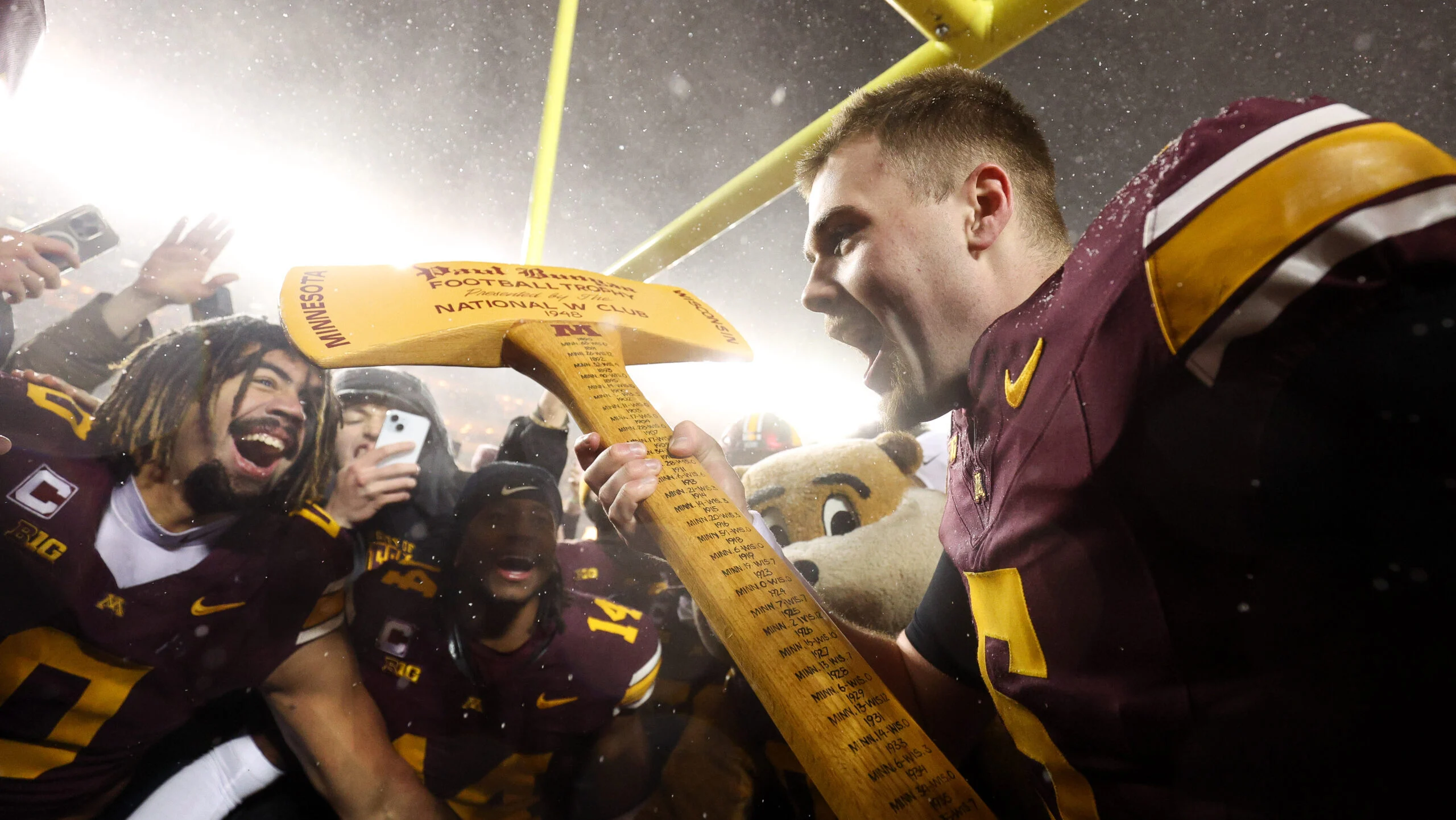
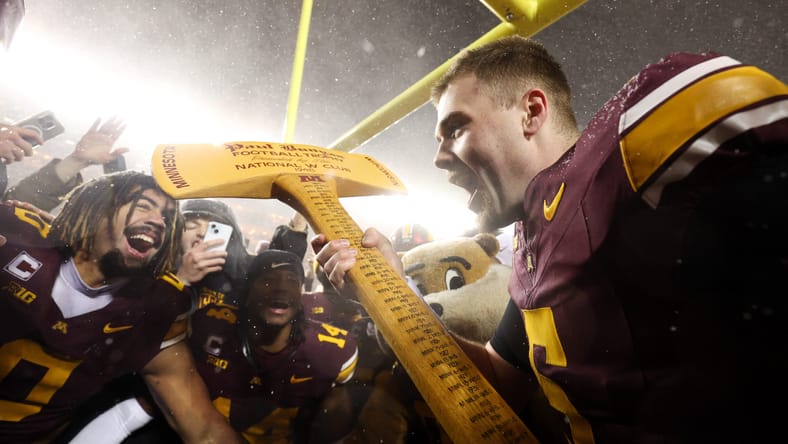
When things are good at Huntington Bank Stadium, they can be really good. The problem is that Fleck has largely failed to sustain consistency. It might have seemed odd to storm the field after beating Nebraska, but it could have held more weight if the season trended in a positive direction.
At some point Fleck needs to reach a new level. He is 6-0 in bowl games at Minnesota, but has won less than nine games each of the past three seasons. An outlier 11-2 season with Tanner Morgan in 2019 is the high-water mark, and he’s shown zero semblance of returning to those heights since.
Mentioned in this article: Darius Taylor Drake Lindsey Koi Perich
More About: Minnesota Gophers Football
Add MinnesotaSportsFan as a preferred source on Google.
The College Football Playoff selection committee delivered a stunning blow to a prominent 10-win program on Sunday by excluding the team from the 12-team field. In response to the snub, the university announced it would decline any bowl invitation and end its season immediately.
This unprecedented move by the athletic director and head coach has drawn sharp criticism from national media figures. The leadership group felt the playoff spot was stolen after weeks of being ranked safely inside the bracket, leading them to opt out rather than play in a consolation game.
Notre Dame was positioned at No. 11 in previous rankings but fell out of the bracket in favor of the Miami Hurricanes. The Fighting Irish subsequently withdrew from the postseason, a choice that has sparked a significant debate regarding the culture of the sport.
Joel Klatt Labels The Decision A Big Mistake
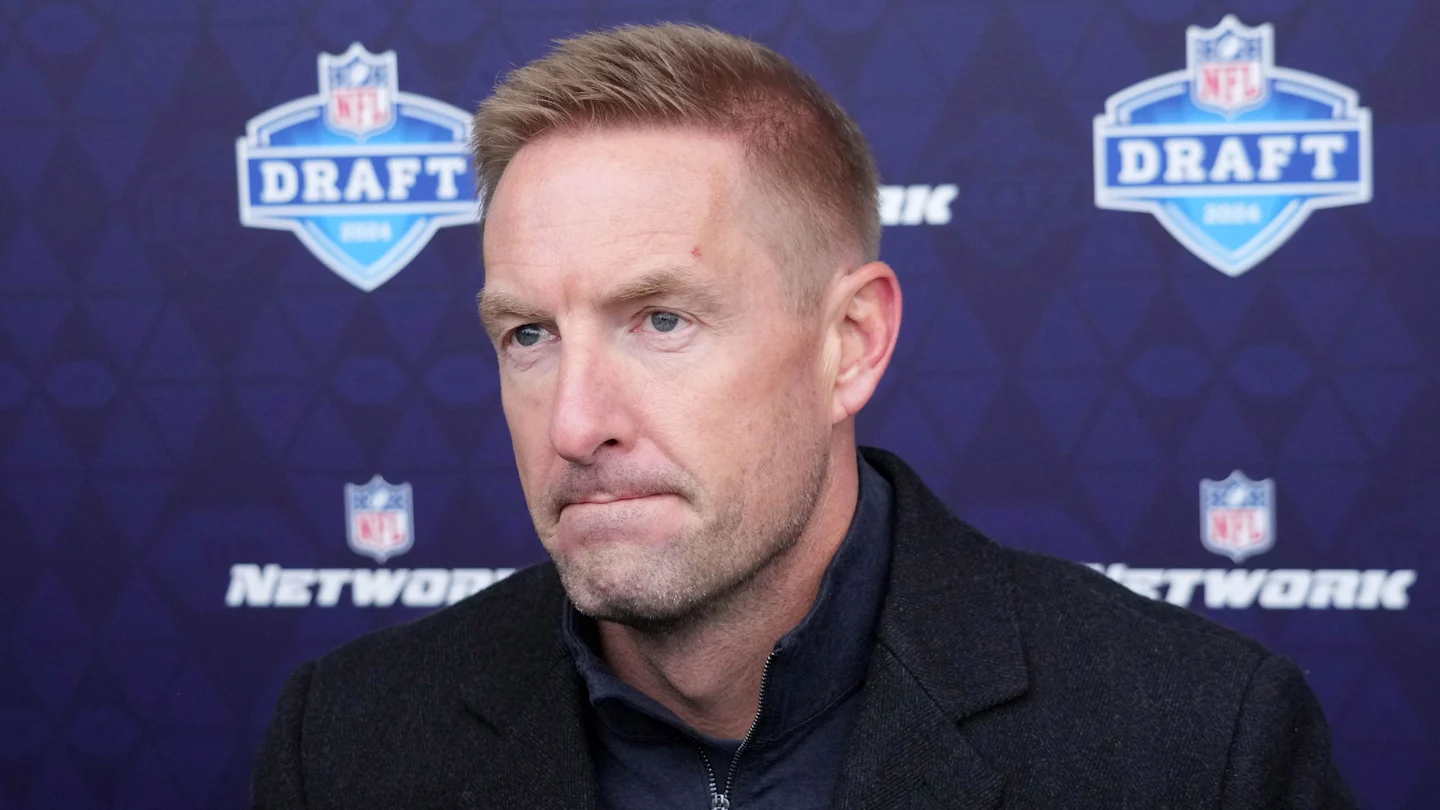
Fox Sports college football analyst Joel Klatt addressed the controversy on The Joel Klatt Show, labeling the decision a significant error in judgment. Klatt argued that bypassing the postseason is an emotional reaction that negatively impacts the roster’s development. While the frustration in South Bend is palpable following the committee’s decision, the analyst believes the historic program is mishandling the situation.
Klatt outlined three primary concerns regarding the choice to pack up for the year. His first point focused on competitive development. Bowl preparation typically offers teams 15 extra practices, which are crucial for younger players. Klatt questioned how forfeiting this time helps the team prepare for the 2026 campaign.
“Bowl practice is where you develop for the next season,” Klatt said. “So, I don’t understand how just saying like, ‘No, we’re done with that,’ helps you for next year.”
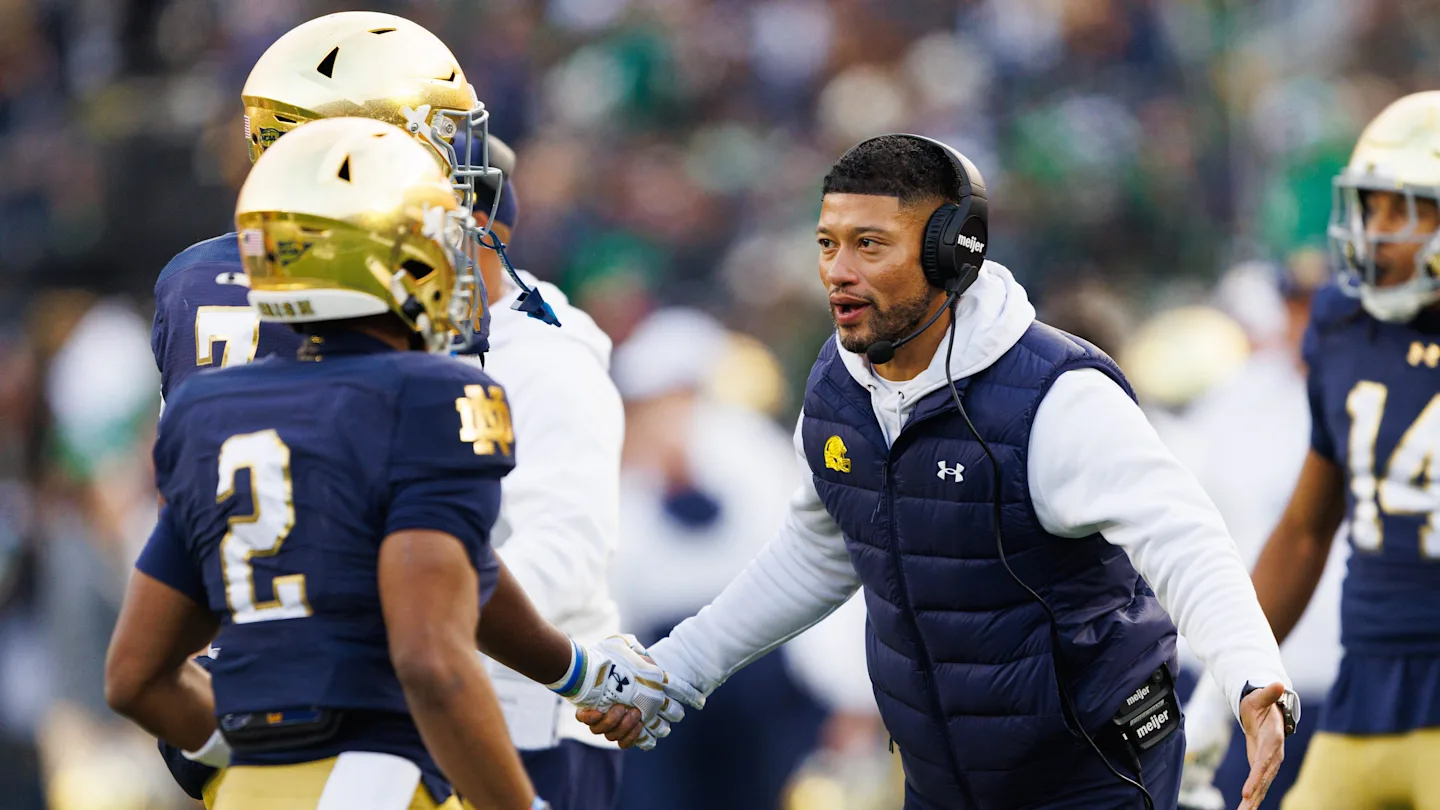
Notre Dame head coach Marcus Freeman and the Irish will not play another down of football until the start of the 2026 season. | MICHAEL CLUBB/SOUTH BEND TRIBUNE / USA TODAY NETWORK via Imagn Images
The analyst also suggested the move appeared rooted in bitterness toward the selection process and the network broadcasting the games. He noted that the decision feels “petty” if it is based on anger regarding the weekly rankings reveal. Klatt emphasized that a program with such high stature should rise above such feelings.
“I think that that decision was born out of an emotional reaction rather than a disciplined response,” Klatt said. “And those two things are very different.”
Finally, Klatt directed a message to the athletes who may have played their final down of football. He warned that players might look back on this choice with regret. He stressed that athletes have a finite number of opportunities to compete at the highest level and should not artificially create a finish line.
Notre Dame athletic director Pete Bevacqua announced on Sunday that the Irish would opt out of bowl consideration. | Michael Clubb / USA TODAY NETWORK via Imagn Images
Klatt also criticized the leadership strategy behind the choice. He compared the situation to parenting, noting that adults should intervene when young people react out of hurt feelings. He argued that leaders must prioritize logic over immediate emotional responses. ESPN analyst Paul Finebaum also took aim at the Irish fan base for their reaction to being left out of the playoff.
“I wouldn’t have asked the players what they wanted to do because they feel hurt,” Klatt said. “You don’t want to respond with your emotions. You want to respond with your reason and logic.”
One of the biggest storylines of this edition of the College Football Playoff is the inclusion of two champions from the Group of Five, with No. 11 Tulane in out of the American and No. 12 James Madison in out of the Sun Belt. That has caused quite a lot of questions and criticism, with a suggestion now made to potentially fix that by Josh Pate.
During his reaction show to the reveal of the playoff on Sunday, Pate touched on the topic of the inclusion of the G5. He wondered about that aspect of this model altogether, as he thinks better contenders aren’t making the field for teams who may have next to no chance in the CFP.
“I do think a lot of people have started to throw around one of the proposals that we’ve made on the show, and that is, if you’re going to make the playoff, shouldn’t you at least have a minimum baseline ranking? I don’t know what that ranking would be. Shouldn’t you have to be Top-15? Shouldn’t you have to be Top-20?” said Pate. “A lot of people are looking at the fact that we’ve got two G5 teams in here, and, of course, that’s a joke. That’s a complete joke. It’s an utter disgrace to the overall spirit of what this thing is supposed to be about, that I got a team like Notre Dame sitting at home. Notre Dame could legitimately make a run to win a national title. They have that maximum capability. They’re going to sit at home, so that we made room for a team to be a three-plus touchdown underdog in Eugene, Oregon. So, yes, even the most diehard of G5, Cinderella supporters out there understand, from a pure principle standpoint, this makes no sense. And so I do think something will be done to address that.”
Pate addressed those same points later on in the show. With respect to the seasons just had by Tulane and James Madison, the fact is that they will be massive underdogs respectively in their first-round games against Ole Miss and Oregon, with little chance of them winning even a game, let alone multiple, as part of the College Football Playoff. That is why he doesn’t understand their insertions, even if that’s how the bracket is built, as teams like this from the Group of Five are unlikely to compete with these level of teams from the Power Four.
“Now we have to get uncomfortable. Now we have to broach the subject everyone is talking about. So, we have two G5 teams in the playoff – Tulane-Ole Miss, JMU-Oregon…So, people have some really, really strong thoughts on this. I’ve had strong thoughts on this for a while. I’ve told you for a while. It makes no sense that college football is structured the way it is, for many reasons, but it makes no sense that college football pretends that 136 teams are playing the same sport. It’s so obvious they’re not,” said Pate. “You got to get some smart people in the room to understand we can restructure the playoff, or we can rebuild the playoff entirely actually, to where you don’t have G5 inclusion in the main playoff, and still have a very, very nice, revenue-producing product that is exclusive G5. You know, a world where JMU can actually win the title, or Tulane could actually win the title. Now, everybody, logically, watching this or listening to this knows Oregon is not playing the same sport at JMU. Everybody knows that Ole Miss is not playing the same sport as Tulane. Everybody knows that. But, for some reason, we’re still forced to pretend that they are when it comes playoff time. So, you can say what I just said without having disdain or hate in your heart for the G5. I feel the total opposite! I love G5 football. I’d like to build a world, I’d like to build an ecosystem where it thrives, not cutting it out of this system to watch it die. That’s not how that has to happen.”
“The mental gymnastics that proponents of G5 inclusion put themselves through are so mind-numbing that I just remove myself from the conversation. Because the way I look at it is no G5 team is ever going to win this national championship. Certainly, they’re not. So, like, it’s never like they’re going to make a run in the playoff. The worst that happens is it takes away and robs us of what would be far more premier first-round playoff games, and then JMU and Tulane will get disposed of in the first round because they’re far inferior teams and then we’ll move on about the playoff. So, it’s not like I’m going to get burned,” Pate continued. “The argument you’re making is a very bad faith argument, if you’re making this one – ‘Well, you know, upsets have happened before!’. It’s so far away from the point that it doesn’t even deserve a reply, but here’s the reply. I don’t care if JMU goes and beats Oregon. It doesn’t disprove my point. My point is they don’t deserve inclusion in this format…The point there is we’re not playing the same sport. We’re not looking at the same sport…My point is not even that it’s impossible for them to pull the upset if they get in the playoff. My point is they shouldn’t be in the playoff to begin with because the road that they took looks way different than the road these other teams have to take.”
This comes a year after, in the original expanded format, Boise State (12-1), out of the Mountain West, earned a bye into the quarterfinals of the CFP. Now, a season later, Tulane (11-2) is in as the highest-ranked of the non-power conference champions after winning the American, while James Madison (12-1), due to the low rating of Duke (8-5) as the winner of the ACC Championship, managed to get in as well after winning the Sun Belt.
That all may have sounded like a lot of negativity for the G5, but, from there, Pate offered suggestions to better include them in the process of college football. He did, to a lesser extent, suggest the idea of relegation, with poor power teams moving down to make space for deserving mid-majors. His biggest idea, though, was creating a playoff specifically for the Group of Five, which Pate knows they would be able to market and sell, instead of them playing as part of the CFP.
“With all this money floating around right now, people are insane if they don’t think a G5 Playoff would sell, and sell big. Do you understand how desperate other networks are for quality postseason college football inventory?…You don’t think, if we took a package of G5 playoff games, and put them on any network, that it wouldn’t sell? Of course it would,” said Pate. “Invest in a G5 Playoff. Everybody wins. I’m not trying to box you out, by the way…So, the money is there to figure this out.”
“The argument it always boils down to is a fundamental argument. No one really looks at JMU and Tulane in the playoff and thinks to themselves, yep, purely from a competitive standpoint, this makes sense to me. You don’t think that…You want to make it because you want to make it. I’m talking about removing that lens, and looking at it purely from a logic-based, competitive standpoint,” continued Pate. “No one looks at this and thinks it makes sense, so the argument doesn’t come to that. The argument comes to, if we’re not involved in the College Football Playoff, we can’t make enough money to survive. And, what I’m saying is there is plenty enough money floating around the world of college athletics to get it figured out. That’s my point on that whole thing, and it should have long ago gotten figured out but it still hasn’t.”
This has now absolutely been a major talking point through the first two years in the expansion of the CFP. However, because of that, one way or another, Pate expects that we could see a change in that process because of it, as the playoff could be better balanced.
“I do think that there are changes coming,” said Pate. “I do think that that committee, just like they did this past year? They had one round, and then they adjusted their terms. And now they’ve had another round, and I think they’re going to adjust their terms again.”
The 2025 College Football Playoff field was unveiled at noon EDT on Sunday.
Of the many difficult decisions made by the College Football Playoff committee, none was more notable than its decision to award bids to Miami (No. 10), Tulane (No. 11) and James Madison (No. 12) over Notre Dame, which sat at No. 11 in the final College Football Playoff rankings.
In response to the committee’s decision to exclude it from the College Football Playoff, Notre Dame declined any potential bowl bids as a form of protest.
“As a team, we’ve decided to withdraw our name from consideration from a bowl game following the 2025 season. We appreciate all the support from our families and fans, and we’re hoping to bring the 12th national title to South Bend in 2026.”
The decision sparked an online discourse about the potential precedent for future dismissal of bowl bids in college football. One proponent of Notre Dame’s decision was former Baylor and Heisman-winning quarterback and current FOX Sports college football analyst Robert Griffin III.
“I don’t blame Notre Dame one bit for deciding not to play in a Bowl Game when they should have been playing for a chance to win the National Championship in the College Football Playoff.”
Robert Griffin III (@RGIII on X)
I don’t blame Notre Dame one bit for deciding not to play in a Bowl Game when they should have been playing for a chance to win the National Championship in the College Football Playoff. pic.twitter.com/TgB0kAn85r
Declining a bowl bid was not the only step in Notre Dame’s efforts to secure a better future for the program. Ross Dellenger of Yahoo Sports and On3 reported that Notre Dame is guaranteed a College Football Playoff bid if it is ranked No. 12 or higher in the final poll beginning in 2026, per Notre Dame athletics director Pete Bevacqua.
“A newsy wrinkle from Bevacqua: As part of an MOU signed last spring, Notre Dame is assured of a CFP berth if it is ranked in the top 12 starting next year.”
Ross Dellenger (@RossDellenger on X)
A newsy wrinkle from Bevacqua: As part of an MOU signed last spring, Notre Dame is assured of a CFP berth if it is ranked in the top 12 starting next year.
If this year’s situation unfolds next year, the final at-large team (Miami) would have gotten bumped for No. 11 Notre Dame.
Notre Dame is one of three Power Four programs to decline a bowl bid in 2025. The other two are Iowa State (8-4) and Kansas State (6-6), both of which opted out of bowl bids in the wake of head coaching changes.
Nov 20, 2023; Kansas City, Missouri, USA; Monday Night Football commentator Robert Griffin III at the broadcast desk prior to a game between the Kansas City Chiefs and Philadelphia Eagles at GEHA Field at Arrowhead Stadium. Mandatory Credit: Denny Medley-Imagn Images | Denny Medley-Imagn Images