
NIL
Alex Morgan's first major business move started with a simple pink headband


When the San Diego Wave retires Alex Morgan’s iconic No. 13 jersey on Sunday, one chapter of her legacy will close. But her other trademark, the pink pre-wrap headband, will live on, worn by countless players who have mimicked her since 2012.
It was this signature look that started the two-time World Cup winner on a path that would guide her seamlessly into a successful post-playing career in business. Morgan has since earned record sponsorship deals, partnered with some of the world’s biggest brands, and capitalized on her image. And it all started with a simple, but essential way to keep her hair out of her eyes.
Advertisement
Like many girls playing high school and club soccer, Morgan wore colorful headbands in her hair growing up and electrical tape on her shin guards over top of her socks. At the University of California, Berkeley, she didn’t have a particular color that she favored.
“I would wear blue, red, pink, whatever. Then I met my now-husband, Servando, and his mom was going through chemotherapy for breast cancer. I thought wearing pink felt like a small way to support her, something I could carry into every game,” Morgan told The Athletic. “Over time, it just stuck.
‘That pink headband became my signature, something I’ve worn since I was 18 years old. Seventeen years later, it’s still part of who I am.”

(Marc Atkins / Getty Images)
Morgan’s improvisation not only became her go-to look on the pitch but also a fashion staple. Fans quickly copied her. Several U.S. women’s national team players also use pre-wrap as headbands, exploring a wide range of colors, but pink belongs to Morgan.
Her former co-captain, Lindsey Heaps, specifically chose red to avoid them matching while sharing the pitch.
“One of the first times I wore pink, someone said I’m trying to copy Alex Morgan,” Heaps told The New York Times in 2023.
Pre-wrap, also known as M-wrap, was developed by Mueller Sports Medicine in the basement of a Wisconsin pharmacy in the early 1970s, initially designed to prevent football players’ ankles from rolling. Its most unexpected product placement didn’t come on NFL or college football sidelines, where the foam underwrap was originally meant to sit beneath athletic tape, but on the heads of women athletes. When referees banned hard-plastic barrettes and other clips over injury concerns, players turned to pre-wrap as a soft, practical alternative.
On Morgan’s head, it became iconic. It also marked the beginning of her business ventures, which have followed her into the next phase of her career post-playing.

(Christian Petersen / Getty Images)
Morgan was in her early twenties, her first couple of years as a professional soccer player, and on her way to London for the Olympic Games. The pink pre-wrap was starting to gain popularity, even becoming part of people’s ‘Alex Morgan’ Halloween costumes. Morgan approached Mueller Sports, telling them she was a big supporter of its product, asking whether it wanted to explore a partnership moving forward, “because I was naturally supporting the brand, and it would be great to support each other on this journey. They were on board right away.”
Advertisement
“Alex actually came to Mueller,” John Cayer, the company’s current president, tells The Athletic. “She came to us and said, ‘I love this product. Could we work together?’ This was back in 2012. She wasn’t a superstar by any means yet. But she went on to become one of the top athletes in the world, men or women.”
Mueller quickly inked a deal with Morgan, placing her face on packaging that still lines the aisles of some stores’ sporting-goods sections.
“She wasn’t just an endorser; she set a trend, a trend that’s continued until now,” Cayer says. “We’ve seen it not just in soccer, but volleyball, really anywhere you need to hold the hair back.”
Other U.S. women’s national team stars, including Heaps, Julie Ertz, Rose Lavelle, Becky Sauerbrunn and Crystal Dunn picked up the pre-wrap, often in team colors. But only Morgan had a sponsorship deal. “One superstar is enough,” Cayer says, laughing.

(Marc Atkins / Getty Images)
Her partnership with Mueller made her one of the earliest athletes in women’s soccer to proactively build a brand partnership, well before name, image and likeness (NIL) deals reshaped the landscape. Their partnership continued until last year, when Morgan retired from professional soccer.
“I think my story with Mueller is a good one, because for most of my career, brands would come to me with their creative ideas about how they wanted to use me,” Morgan said. “With Mueller, it was the opposite. I was already using their product authentically, and I wanted to partner with them.
“That mindset really shaped how I approach my businesses today. Looking back, it was an important trial run 10 or 15 years ago, when I was starting out and learning how this whole world worked.”

(Friedemann Vogel / Getty Images)
Morgan is one of the most financially successful women’s soccer players in the world. In 2021 alone, she held 23 endorsement deals, according to a recent SponsorUnited report.
Advertisement
“Michael Jordan made Jordans. Same with Shaq. His business empire really took off post-basketball. The key is planting those seeds early,” 2017 U.S. Open women’s singles champion Sloane Stephens told The Athletic. Following her success in the U.S. Open, Stephens made partnership deals of her own with Dagne Dover, Lemon Perfect, Free People Movement and Kindbody among others.
“You can’t wait until the last whistle. You start building, so that when the transition comes (at the end of your playing career), it feels natural,” she said. “Alex Morgan did that brilliantly. Long before athlete partnerships were mainstream, she made the pink pre-wrap her signature. Kids copied it, and it became part of her brand identity.”
And while the UC Berkeley graduate often prioritized soccer, Morgan admits she was always interested in the business side of things.
“In soccer, over the last 15 to 17 years, I’ve sacrificed a lot and left plenty on the table to help this league (the NWSL) grow. Like many of my teammates, I often took less than I deserved,” said Morgan, who recently shared on the “Call Her Daddy” podcast that she made $300 per match in her first season, then 22 games long, in the NWSL.
“Now, the league is in a place where players are earning six figures, and soon, seven figures, which is incredible. But that wasn’t the case for me,” Morgan told The Athletic. “So moving forward, I made sure I got my true value. I took less for too many years, and I’m not doing that anymore.”
Beyond endorsements, over the past five years, Morgan has built a diversified business portfolio.
She is a co-founder of the women’s sports media and commerce company Togethxr, which she launched alongside snowboarder Chloe Kim, swimmer Simone Manuel and basketball’s Sue Bird, as well as Trybe Ventures, which she co-founded with her husband, former MLS player Servando Carrasco. She also holds minority stakes in both the Wave and the Unrivaled women’s basketball league.
Advertisement
Most recently, Togethxr announced that Michele Kang-owned London City Lionesses, the newly-promoted Women’s Super League (WSL) team, will feature ‘Everybody Watches Women’s Sports’ on the front of their kits in the season that begins this weekend as part of a new partnership. The slogan is part of Togethxr’s clothing line that generated $6 million in revenue, according to the company.
“She has led the way in thinking about how athletes engage with the brands they work with, and if it will feel real to the audience,” said Emily Sisson, senior vice president of sponsorships, athlete and partner marketing at OneTeam Partners. “When it comes to partnerships with women and women athletes, I do think that the most successful ones are the ones that are truly the most natural for the women to engage with daily. Alex wrote the playbook when it comes to that.”

Morgan with her daughter at a San Diego Wave game in September 2024 (Meg Oliphant / Getty Images)
On Sunday, the Wave is giving out 10,000 commemorative pink headbands at Snapdragon Stadium in honor of Morgan and her impact. The club said there is no commercial partnership with Mueller for the day. And while Morgan is not planning on doing another how-to video on Sunday, she does have a helpful and nostalgic TikTok pinned to her account for those wanting to wear pre-wrap the Morgan way.
These days, Morgan doesn’t reach for the pink pre-wrap as often, though rolls of it are still stashed in her garage and tucked away in closets. Her five-year-old daughter, Charlie, has a stash of her own, in every color, lining the bathroom.
“She wore it for a while. She loves headbands,” Morgan said.
Unlike Mom, Charlie’s favorite color is not pink, but she just might have the next big business idea.
Morgan said: “If I could find a pre-wrap that has sparkles in it (for her), I mean, game over.”
(Illustration: Kelsea Petersen / The Athletic; Carmen Mandato / Getty, Jamie McDonald / Getty)

Dec. 23, 2025, 5:35 a.m. ET
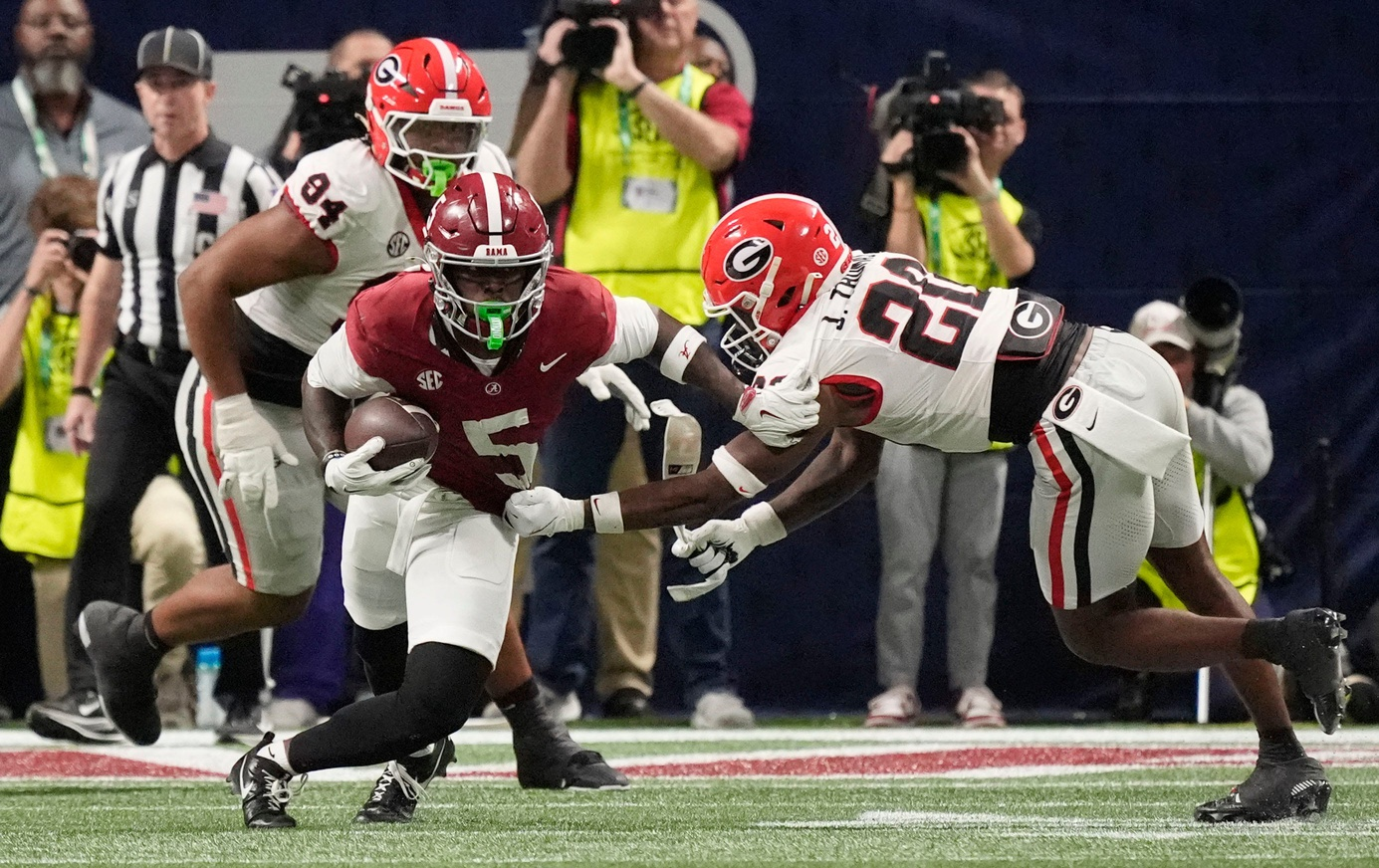
If you watched any part of Ole Miss’ 41-10 blowout of Tulane, the one common theme you felt was that the absence of former head coach Lane “Benedict” Kiffin was not acknowledged by the home fans; they even appeared to embrace it. It took a while for Rebel Nation to realize it but Kiffin simply was never “one of them” and, while he built the program, he did not measure up to the “Ole Miss family.” Most Rebel fans would probably tell you now they’d rather lose without him than win with him. Kiffin has now been fully exposed and St. Nick (Saban, now known as Mr. Hypocrite) and Pete Carroll, his self-proclaimed advisers, should be ashamed for their comments supporting the manner in which he tried to negotiate his way to both coaching one team and recruiting for another simultaneously. One is the GOAT who ran away from NIL and the transfer portal while the other is a recognized cheater by many. The best part is Kiffin’s LSU Tigers play at Mississippi next year. Good riddance!
Dec. 23, 2025, 6:07 a.m. ET
Arizona State football coach Kenny Dillingham says he was never offered the Michigan job. Never got to that point.
This, of course, isn’t the story nor the takeaway from Dillingham’s dalliance with the Wolverines.
The irony of the state of Arizona’s highest-paid public employee begging for private donations to compete at the highest level of college football is where this bizarre story begins.
“We live in Phoenix, Arizona. You’re telling me there’s not one person who could stroke a $20 million check right now?” Dillingham said after agreeing to a new contract worth more than $37 million over the next five years.
That’s right, the guy whose future could never be more secure, sees the immediate horizon line for the Arizona State football program. And frankly, it’s financially unstable at best — and a house of cards at worst.

It’s Arizona State today, but could be Kansas State or Colorado or North Carolina State or Virginia Tech or Boise State — or any of the other 100-plus Bowl Subdivision teams not protected by the golden parachute of the Big Ten and SEC.
Coaches at those 34 schools in the two big conferences — many of those institutions born on third base from long-term association with the leagues before the financial boom of television media rights — aren’t publicly calling out dignitaries and alums associated with their schools.
They’re not standing during a media availability and pleading for the next Cody Campbell to please step up. Or else.

Dillingham made it very clear that college football is about those who wish to spend money, and those who don’t. This isn’t about revenue sharing between schools and players, this is all about private NIL funding.
This is about the dirty underbelly of the sport that can’t be legally controlled. A growing vice that doubles and triples the obstacles faced by conferences chasing the Big Ten and SEC.
It’s bad enough that mega media rights deals give the Big Ten and SEC a huge competitive advantage over the rest of college football. It’s downright sinister that those same schools have deep pocket boosters willing to spend tens of millions in private NIL deals to eliminate all doubt.
Sam Leavitt led Arizona State to the Big 12 title and the College Football Playoff in 2024, and returned to Tempe this season for another run. A foot injury ended his season early, and now he’s headed to the transfer portal looking for a new home.
Not because he doesn’t think he can win big with the Sun Devils — he already proved that. He’s in the portal, like so many other players, to strike when its hot and score a deal before moving onto the NFL.
What are the odds he signs with a Big Ten or SEC school? A program which has boosters that can pay him an outrageous salary through a private NIL deal.
Do you really blame Leavitt?
Do you really blame Campbell, Texas Tech’s billionaire booster, who built a championship-level team with a $25 million roster — and the Red Raiders responded by winning the Big 12 and earning a first round bye in the CFP?
They’re just following the rules, and until a different set of rules is in place, they’ll take advantage of it.
That’s why Dillingham sounded like a panhandler last weekend, begging — literally begging someone, anyone, in The Valley to jump on board and throw money at the program. He even specifically called out school alums Phil Mickelson and Jon Rahm.
Hey, Kenny, while you’re at it, why not place a call to the sheiks in Saudi Arabia? See if their Public Investment Fund (PIF) is interested in sports washing with the second-most popular sport in America.
Because if you’re reaching out to Mickelson and Rahm, you’re reaching out to the Saudis — who own LIV Golf — by proxy. The only difference between the PIF and Utah’s new $500 million agreement with Otro Capital is one group of investors has a long line of human rights violations.
The other is a financial shark, whose only goal is to make money.
Any way they can.
“College football is absolutely chaotic right now,” Dillingham said. “You’ve got to be able to have a plan to be aggressive in this thing for three, four, five years down the road. If you don’t have that, you’re a ticking time bomb for failure.”
This nonsense isn’t going to end until players are considered employees, and players collectively bargain their best deal. Until FBS conferences go to market as one, and sell their games to make double or more than the current market value of $4 billion-plus annually.
That move will allow universities to restrict player movement through multi-year contracts, and find a fair and equitable postseason for all. One that doesn’t include charity for the Group of Five conferences, who have no business in a playoff unless invited based on merit (see: Boise State, 2024).
But that move also means players would go from earning about 20 percent of media rights revenue to likely 45-50 percent. NFL players currently make 48 percent of the media rights.
That’s why the Big Ten and SEC don’t want players collectively bargaining. It has nothing to do with the pollyanna idea sold by conference commissioners that players, “don’t want to be employees.”
If they’re going to earn 20 percent, who wants to deal with the headache of collectively bargaining? Move that number to 45-50 percent, and watch how many players say they’re all in.
Then maybe their coaches wouldn’t have to shamelessly beg for cash, mere hours after signing a new $37 million dollar contract. Or else.
Matt Hayes is the senior national college football writer for USA TODAY Sports. Follow him on X at @MattHayesCFB.

As Indiana prepares to host its first-ever College Football Playoff game as the No. 1 seed, the Hoosiers are quietly already planning for 2026.
Fernando Mendoza, a redshirt junior transfer who led the Hoosiers to a 13-0 regular season, won the 2025 Heisman Trophy after throwing 2,980 yards and a national-best 33 passing TDs and is widely seen as an early NFL first-round prospect.
Should Mendoza depart for the draft, Indiana would be tasked with replacing an elite, NFL-caliber starter, which explains why numerous quarterbacks expected to enter the transfer portal have been linked to the Hoosiers.
On a December 20 episode of “Hoosiers Football Tailgate,” host Coach Griff specifically named TCU quarterback Josh Hoover, who announced he will enter the transfer portal and skip the Alamo Bowl, as a name Indiana should watch.
“I like this guy as a definite target for Indiana,” Griff said. “So, Josh Hoover, keep an eye on him as a potential target… The one I think they’ll really try to get is Hoover.”

Hoover was a three-star recruit out of Rockwall-Heath (Texas) and initially committed to Indiana in 2021 before flipping to TCU after the school extended an offer.
He then redshirted in 2022 and became the starter in 2023, producing breakout numbers in 2024 with 3,949 passing yards, 27 passing touchdowns, and 11 interceptions with a 66.5% completion rate.
In 2025, Hoover threw for 3,472 yards and 29 TDs, with 13 INTs, and projects among the most productive returning QBs in 2026 on career totals of 9,629 passing yards, 80 total TDs, and a career passer rating of 147.8.
On3’s NIL valuations list also shows Hoover ranking among the most marketable college quarterbacks, with a valuation in the neighborhood of $2.1 million.
Hoover is an intriguing option for Indiana due to his proven production and Power Five experience, positioning him as a potential one-year, plug-and-play solution as Curt Cignetti prioritizes continuity.
There is also a “full-circle” aspect to his recruitment, as Hoover originally committed to Indiana before flipping to TCU in 2021.
Read More at College Football HQ
- Major college football program loses 15 players to transfer portal
- College Football Playoff team has ‘significant interest’ in 4,000-yard QB
- College football quarterback enters transfer portal after 4,000-yard season
- No. 1 ranked transfer portal player predicted to join College Football Playoff team
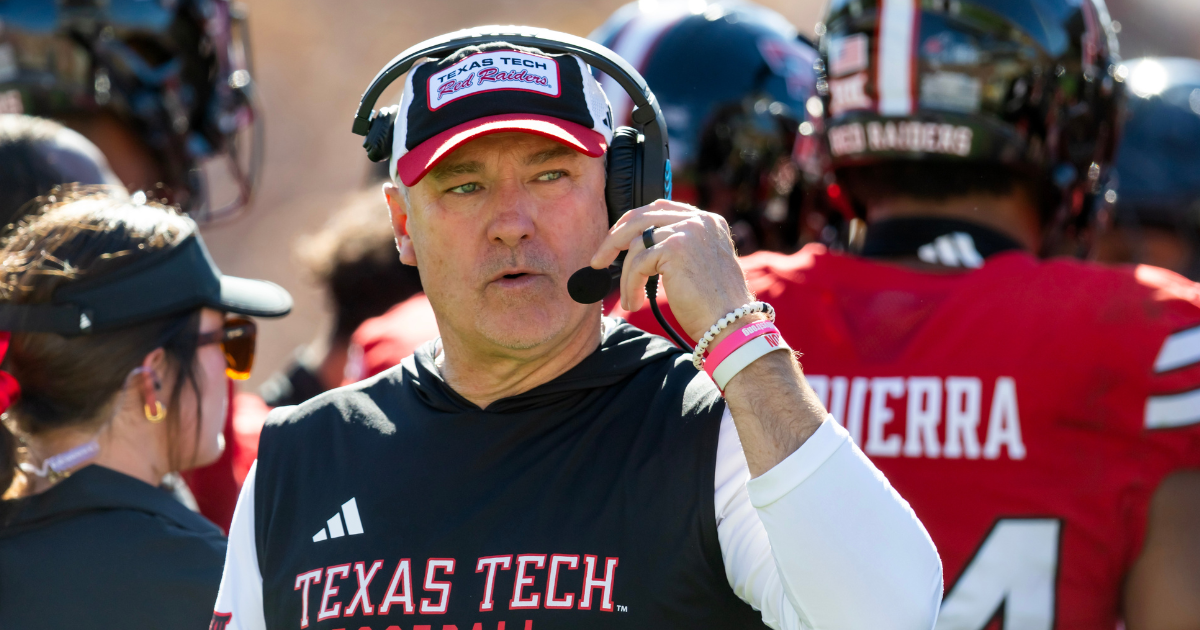
Two teams that have really embraced the NIL era are set to meet on New Year’s Day. Oregon‘s win over James Madison advanced them to the College Football Playoff quarterfinals, where Texas Tech was waiting on the other side. Now, it’s Dan Lanning vs. Joey McGuire in the Orange Bowl with a lot of resources put into rosters.
Oregon has been at the forefront of NIL since its inception, especially under Lanning. Texas Tech could be considered the new kid on the block after major investment from a few donors. Even so, McGuire sees some similarities between the two when it comes to winning at whatever cost.
SUBSCRIBE to the On3 NIL and Sports Business Newsletter
“They’ve got a great booster in Phil Knight that really said, ‘We’re going to go win at the highest level and there’s no excuse when it comes to finance.’ You turn around and I think that we’re showing that we’re doing that. I think we’re really comparable,” McGuire said.
“We’ve got guys that have stepped up and done a great job. I kind of call them the ‘Big Five’ whenever you talk about Cody and John, Mike, Dusty, and Gary. Those guys have, along with everybody else in Red Raider Nation, but those guys have really led the charge. So, we’re kind of comparable on and off the field in this team. They’ve just done it for a little bit longer. That’s what we’re trying to do.”
As he said, McGuire is looking to put together a run similar to Oregon. All four years since hiring Lanning have been a resounding success, finishing with double-digit wins in all of them. This is the program’s second College Football Playoff appearance in the 12-team format, just missing out in 2023 due to a Pac-12 Championship loss.
Oregon won the Big Ten in its inaugural season inside the conference. Texas Tech can check that box already though, winning the Big 12 for the first time in school history. Advancing in the CFP would be a sweet bonus.
No matter the result on Jan. 1, Texas Tech is positioning itself to be successful moving forward. The 2026 recruiting class ranked 20th in the country but No. 1 in the Big 12 per the Rivals Industry Team Rankings. This is all before raiding the NCAA transfer portal, something McGuire and his staff did so well with last offseason.

In the weeks leading up to the opening of the NCAA transfer portal, hundreds of college football players have announced their decisions to leave the schools they played for in 2025 for new horizons next season.
Some cases involve players transferring up from Group of Five or FCS programs to broaden their exposure. Others feature players following their coaches from one school to another due to the coaching carousel. In occasional instances, players are searching for the highest bidder on the portal.
Former Arizona State quarterback Sam Leavitt is a portal entry drawing the attention of high-bidding college football programs. He will enter the portal with two seasons of eligibility remaining.
On3 ranks Leavitt as the top available quarterback in the transfer portal. Chris Hummer of CBS Sports reported that schools are expected to offer Leavitt around $3 million.

“Sam Leavitt on the open market is going to command a significant amount of money,” Hummer said. “We’re talking $3 million plus most likely. Although, in all fairness, I think teams really do have questions about Sam Leavitt’s injury and what that means moving forward. It’s kind of like the Carson Beck situation a year ago.”
The 6-foot-2, 205-pounder began his college football career with Mel Tucker at Michigan State in 2023. He played in a maximum of four games that season to maintain his redshirt, throwing for 139 yards, two touchdowns, and a pair of interceptions.
Leavitt transferred to Arizona State in the 2024 offseason. The Sun Devils were 10-2 in the regular season and defeated Iowa State (45-19) en route to the program’s first-ever College Football Playoff appearance. Leavitt passed for 2,885 yards, 24 touchdowns and six interceptions and rushed for another 443 yards and five touchdowns.
Postseason honors for Leavitt included Big 12 Offensive Freshman of the Year and Second Team All-Big 12. His 2,885 passing yards are the most by a freshman quarterback in Arizona State history.
Leavitt’s season was cut short after the Sun Devils’ game against Houston due to a Lisfranc injury. He threw for 1,628 yards, 10 touchdowns and three interceptions while he ran for 306 yards and five touchdowns in seven games.
Arizona State will not start Leavitt in its bowl game. The Sun Devils (8-4, 6-3) will play ACC champion Duke (8-5, 6-2) in the Sun Bowl in El Paso, Texas (3 p.m. EST, CBS).
The NCAA transfer portal officially opens on Jan. 2, 2026, the final day of bowl games across the FBS ranks. It will remain open for the following two weeks.

Police Athletic League (PAL) reports engagement numbers are down, offers youth sports programs

Big Machine Racing Welcomes Retina Surgeon Dr. Patrick Staropoli to the O’Reilly Auto Parts Series for Full-Time Competition Beginning at Daytona – Speedway Digest

Youth Matters and the role of sport and physical activity

Female youth sports injuries on the rise in Michigan, doctors say

Volleyball Assistant Coach in Clinton, SC for Presbyterian College

Greenville land use ordinance addition moved to June town meeting -Piscataquis Observer

FIS encourages youth participation with Para Ski Nordic Action Day at Europa-Park

Baldwinsville’s 1st year boys basketball coach is working to build strong culture and pipeline

Wisconsin volleyball offseason off to crazy start

CLIMBING: How the All-Time Win List Looks After 2025 – Speedway Digest

PlayStation Market Accelerates Global Gaming Evolution:
Four takeaways from the first weekend of the College Football Playoff

Outside hitter Eva Travis signs with Wisconsin volleyball

How eSports Is Shaping Competitive Mindsets in Miami and Beyond – Five Reasons Sports Network

The Year Schools Paid Their Players

First Tee Winter Registration is open

Fargo girl, 13, dies after collapsing during school basketball game – Grand Forks Herald

CPG Brands Like Allegra Are Betting on F1 for the First Time

F1 Las Vegas: Verstappen win, Norris and Piastri DQ tighten 2025 title fight

Sycamores unveil 2026 track and field schedule

Two Pro Volleyball Leagues Serve Up Plans for Minnesota Teams

Utah State Announces 2025-26 Indoor Track & Field Schedule

SoundGear Named Entitlement Sponsor of Spears CARS Tour Southwest Opener

Jo Shimoda Undergoes Back Surgery

Redemption Means First Pro Stock World Championship for Dallas Glenn

Bowl Projections: ESPN predicts 12-team College Football Playoff bracket, full bowl slate after Week 14

Texas volleyball vs Kentucky game score: Live SEC tournament updates

Black Bear Revises Recording Policies After Rulebook Language Surfaces via Lever

How this startup (and a KC sports icon) turned young players into card-carrying legends overnight

Robert “Bobby” Lewis Hardin, 56





-
 Motorsports2 weeks ago
SoundGear Named Entitlement Sponsor of Spears CARS Tour Southwest Opener
-
 Rec Sports3 weeks ago
Black Bear Revises Recording Policies After Rulebook Language Surfaces via Lever
-
 Motorsports2 weeks ago
Donny Schatz finds new home for 2026, inks full-time deal with CJB Motorsports – InForum
-

 Rec Sports3 weeks ago
How Donald Trump became FIFA’s ‘soccer president’ long before World Cup draw
-
 Rec Sports2 weeks ago
David Blitzer, Harris Blitzer Sports & Entertainment
-
 Motorsports2 weeks ago
JR Motorsports Confirms Death Of NASCAR Veteran Michael Annett At Age 39
-
Sports2 weeks ago
Elliot and Thuotte Highlight Men’s Indoor Track and Field Season Opener
-
Sports2 weeks ago
West Fargo volleyball coach Kelsey Titus resigns after four seasons – InForum
-
 Motorsports2 weeks ago
Rick Ware Racing switching to Chevrolet for 2026
-
 Sports2 weeks ago
Temple Begins Indoor Track & Field Season at UPenn This Weekend