
Sports
An audience with Billy Beane


It’s pretty hard to stay grounded when a major film is made about your life, harder still when a two-time winner of the Sexiest Man Alive award is cast to play you.
But Billy Beane shows no signs of letting Brad Pitt and Moneyball go to his head. He carries himself with a relaxed humility, freely admitting that “my success has been driven by having really smart people around me”.
Advertisement
He’s joined in Belfast by one of those smart people: Luke Bornn, a scientific adviser for Teamworks and former Harvard statistics professor whose career spans Italian football side Roma, the NBA team Sacramento Kings, and a French football club, Toulouse FC, where he oversaw a data-driven rebuild.
When The Athletic spoke to the pair, they were eagerly awaiting The Open Championship at Royal Portrush, golf’s fourth and final major of 2025. But before soaking up Scottie Scheffler’s masterclass, they sat down for an hour for a wide-ranging conversation that touched on:
- The seismic impact of Moneyball
- Why football has struggled to follow baseball’s analytical revolution
- The evolving role of the manager and Beane’s admiration for Sir Alex Ferguson
- How data identified Mohamed Salah early
- The strengths and perils of signing younger players
- Why data has had “little to no impact” on tactics
With data now deeply embedded across modern sport, it’s easy to forget just how radical Billy Beane’s approach was as general manager at the Oakland Athletics. A former player, not a number-cruncher, he wasn’t the obvious figurehead for sport’s analytics revolution.
But it was precisely that background that gave his evidence-based approach credibility in a world still dominated by ex-pros. “When we were implementing data and doing things differently, they weren’t able to say, ‘Well, what do you know, you haven’t played’,” Beane said.
At the turn of the millennium, with Beane as general manager, the Oakland Athletics reached the playoffs in four consecutive years, and in 2002 became the first team in more than 100 years of American League baseball to win 20 games in a row.
Beane, now a senior adviser and minority owner at the Athletics, sees himself as the “Trojan horse” who smuggled more technically minded thinkers like Bornn through the boardroom gates.
In baseball, the cloak-and-dagger approach is no longer necessary, where data scientists now move freely through the corridors of power and are a vital part of top-level decision-making. Beane jokes that he “wouldn’t be able to apply for a job now because I’m not qualified” and says that he’s competing with top-tier companies such as Google, Goldman Sachs, and JP Morgan for data talent.
Advertisement
Bornn, a former co-founder of Zelus Analytics, says that the same shift in football is lagging further behind, with former players still clutching the reins tightly. “I think it is evolving, but much slower than public perception would have you believe.”
Beane’s success ushered in a top-down approach across sport, where data-hungry executives rather than managers hold sway. But for Beane, it was never about marginalising the coach, rather “redefining” their role.
“What we tried to do at Oakland,” he explains, “is we wanted the manager to manage the team, manage what was going on here in the game, and then give him the tools to be better at that. But to expect him to see every other game that’s going on in the rest of the league, that’s an impossible task.
“And quite frankly, what data has allowed you to do in some respect — not just in baseball, but in every sport — is it allows you to evaluate every game and everything that’s going on without having to see it.”
He has a special admiration for the way Sir Alex Ferguson ran Manchester United, a club where he spent 26 years as manager and won 38 major trophies.
“Most of them (managers) move on to bigger, better jobs and better compensation, but there are a few icons in each sport.
“And one reason I think they’re great — whether it be Sir Alex Ferguson, Bill Belichick (six Super Bowls with the New England Patriots during a 24-year spell), Nick Saban in Alabama (six national championships across a 16-year tenure) — is because they ran their club like they’re never going to leave, which is unusual, and the decisions they make are for the future.”

Ferguson holding the FA Cup and Premiership trophies after completing the Double with United in 1997 (John Peters/Manchester United via Getty Images)
He likens Ferguson’s long-term view to how Fenway Sports Group run Liverpool, led by Beane’s personal friends John W Henry and Tom Werner.
“They have resources, but they also deploy capital wisely and efficiently,” he says, later pointing to how they reinvested the £142million ($190.5m) received from Barcelona for Philippe Coutinho in January 2018 to build a title-winning team.
Advertisement
But Beane recognises the challenge of thinking along these long-term lines amid the constant pressure from fans to “win now”.
“We all want to run our sports teams like Warren Buffett runs his Berkshire Hathaway. It’s not always easy to do that… what separates clubs is their ability to execute and sort of fend off the noise.”
Since Ferguson’s departure, United have struggled to maintain this sustained vision, instead cycling through managers with varying tactical visions. Bornn warns against this.
“If there’s an evolution every six months, 12 months, 18 months, and every coach wants to do things slightly differently, wants a different type of player, that leads to a tremendous amount of inefficiency from the recruitment perspective.”
Both highlight the pitfalls of narrowly focusing on certain targets or positions in the transfer market. Beane argues that instead of reactively filling a weakness, teams should look at where the best value lies.
“Teams will say we need a left-back, so you just look at the left-backs… but maybe the better value is in strengthening a strength.
“Running a sports team is ultimately about maximising the dollars that you have in being efficient. And I think you get myopic sometimes — when you have a need, you look specifically for people who can fill that weakness as opposed to maybe getting better value and making a strength even stronger.”
Whereas data analysis in baseball has evolved to the point where every “baseball team has a pretty good idea how good a player is right now”, it still gives a major edge to those who use it in football. Structural differences between the sports play a part.
“Baseball is very closed. The one thing about football is it’s a world game. You’ve got different leagues, different cultures. In baseball, we have no relegation and just 30 teams. Systems that are successful are quickly adopted.”

Conor O’Neill speaking to Billy Beane and Luke Bornn (Teamworks)
Bornn is more sceptical about the cultural side of football’s slow uptake.
“We’re going to look back in 10 years and laugh at it. Because we’re the sport where a lot of teams hire data analytics folks because they don’t want to look like Luddites.
And they say publicly, ‘Yeah, we are data driven’, but yet internally they don’t actually use it. They don’t want to look like they’re old-fashioned, so they hire the people and put that public image out there, but then internally make the decisions traditionally.”
Advertisement
Beane agrees that this data window-dressing exists, but points to Brentford and Brighton as clubs that, in his view, “use data for all their decisions, not just now and again when it backs up their opinion”.
“The data’s out there for everyone, information’s out there for everyone. Really, executing on that data is the most important thing. And some teams do it better than others.”
With data uptake still patchy across football, there’s a clear edge for those who know how to use it properly. Beane explains that the top names flagged by the models typically align with who we instinctively consider the world’s best and that advanced models often incorporate the “wisdom of the crowd” when scanning for talent.
The real opportunity, he says, lies in spotting the lesser-known outliers hidden among the elite.
“What you want to do is when you see Lionel Messi, you see all the usual suspects up there, and then all of a sudden some kid named Jude Bellingham pops up as a 17-year-old playing at Birmingham, you realise, ‘Oh my gosh, there’s a 17-year old kid who’s playing at a level as one of the top 15 players’.”

Bellingham playing for Birmingham in 2019 (Nathan Stirk/Getty Images)
He later references Viktor Gyokeres’ spell at Coventry as another hidden gem who was playing in the Championship, English football’s second tier. Gyokeres has recently joined Arsenal from Sporting CP in a move worth an initial €63.5million (£54.8m; $74.2m) plus €10m in add-ons.
“That’s where it’s at, when you sort of find those guys the year before they go to that top four or five club. When Luis Suarez came over from Uruguay, he was playing in the Dutch league, right? That’s a great example. I’m pretty sure data was part of that decision-making process. And he turned into one of the best players in the world.”
This idea of using data to spot value early ties into football’s modern obsession with youth. “The reason that young players were valuable to the Oakland A’s wasn’t because they’re young, it was because they were cheap,” said Beane, adding that this approach drives profitable player trading because “you’ve got economic value at the end of the contract, too”.
Advertisement
The Chelsea co-owner and chairman Todd Boehly has closely followed Oakland’s blueprint, pouring considerable resources into young talent. Boehly also owns 20 per cent of the Los Angeles Dodgers, a team Beane holds in the highest regard.
“The Los Angeles Dodgers, to me, are really sort of the pinnacle of how sports teams should be run, particularly ones that have a lot of capital. I mean, not only do they have a lot of money, but they’re brilliant.
“They have brilliant staff. They’re efficient. They’re ruthless in their implementation of what they believe in. You can make the argument that they’re the most valuable sports team in the entire world. And the most efficient and the most successful… I have a lot of respect for what they do there.”
The Dodgers have won two of the past five World Series titles, including the latest in 2024, spearheaded by the remarkable Shohei Ohtani.

Ohtani signed a 10-year $700million contract with the Dodgers in 2024 (Alex Slitz/Getty Images)
But Bornn thinks that, in football, the youth-recruitment pendulum may have swung too far. “You look at what they’re spending on these players and think, is that the right choice?” he says. To only “recruit players under 22 or under 24 would be ridiculous because you want to get the best value you can, whether that’s a 35-year-old or an 18-year-old”.
And Bornn knows a thing or two about spotting value.
During his time at Roma, he was involved in the recruitment of Mohamed Salah, Antonio Rudiger and Alisson. On Salah, in particular, he’s unequivocal. “At the time, our models said he was one of the best players in the world. It’s like when I was at the Sacramento Kings when Luka Doncic was drafted and people said, ‘Oh did your models like Doncic?’ And I was like, ‘Anyone who looked at data for 10 seconds would have loved Doncic.’
Salah moved to Liverpool for around £37million in 2017 and will go down as one of the club’s greatest-ever players. He is their third-highest goalscorer of all time and has played pivotal roles in two Premier League title wins, a Champions League triumph, and reaching the final on two other occasions.
Advertisement
But while Bornn has used data to unearth elite talent, he still considers football analytics relatively rudimentary.
By modern standards, the use of statistics in Moneyball is also basic, focused largely on identifying undervalued players using metrics such as on-base percentage. Today, they use advanced machine learning models to paint a more complete picture of player performance. Beane believes that baseball has “significantly explored using AI for making player selections and player evaluations”.
Football, Bornn says, is “still kind of back in the on-base percentage days… but it’s growing very rapidly”. The advent of off-ball tracking data, in particular, has added a new layer of insight, allowing analysts to measure things like the value created by off-ball runs.
“It used to be like, ‘This player’s good because they have a lot of success dribbling or a lot of take-ons’. So basic counting stats. And now we can say things like, ‘This player is great because he makes these off-ball runs which open up space for passing lanes which increase the expected value because it opens up this passing or this through a ball’.”
But the sport still lags in assessing technical skill: “In soccer, we’re not quite measuring yet the quality of the first touch or the exact execution of the pass in terms of the projection of the ball.”
In comparison, Bornn sees baseball as a leader when it comes to pinning down the biomechanics that make the sport tick.
“Baseball is ahead of other sports in multiple areas. Biomechanics is definitely one of them. There are actually good reasons for that,” Bornn explains.
“Pitching mechanics — because they’re sort of on the mound and in one spot — are much easier to analyse than, let’s say, a striker’s shot, because of the movement, because of the distance of the cameras, all that kind of stuff.
“But they’re doing things now where they will have guys, you know, ‘Hey, if on your release, you get your elbow like a little bit more this way, we can deliver this many newton meters of force on the ball’. It’s just incredible what they’re able to do and, like, add meaningful velocity, meaningful spin to pitchers.”

Edwin Diaz pitching for the New York Mets earlier this month (Al Bello/Getty Images)
This forensic breakdown of player mechanics matters because it separates repeatable processes — like good passing technique or ball-striking in football, which translates across levels — from results-based metrics like goals and assists, which are more dependent on context.
For Beane, process is paramount. “People used to pay for goals, but then they saw expected goals (xG) have more of a process.” Bornn adds to this: “With expected goals, you’re just removing some randomness, and by removing that randomness, you’re essentially better at predicting the future.”
Despite breakthroughs, analytics has yet to make a meaningful impact on how the game is played. Bornn says, “The overall impact on tactics has been little to none.”
“I think there’s still a pretty big cultural gap. There are definitely isolated examples, especially for specific examples where the data is really clear, like certain set-piece tactics, where there’s no question that data has changed certain teams the way they do set pieces.
“In fact, even us at Toulouse, the year that we got promoted, we had just incredible set-piece numbers. Brentford, Midtjylland are known for this.”
Bornn is no longer involved with Toulouse but a year ago Zelus Analytics was acquired by Teamworks, for whom Beane is an investor. Teamworks is an operating system used by thousands of professional and collegiate sports teams across the globe, including all 32 NFL teams and 90 per cent of Premier League clubs.
Bornn has an advisory role for their data analytics arm, Teamworks Intelligence, which provides teams with their own data platform to use in their day-to-day operations.
Beane lightly ribs Bornn during the hour-long conversation, flashing a mischievous, knowing grin as he asks: “But how do you measure heart, Luke?”
Later, he jokes: “You’re basically trying to take all the romance out of sports, aren’t you? Oh yeah, come on. You really are. You really turned it into a math class, and none of us like math.”
Advertisement
Yet despite the teasing, the lasting legacy of Moneyball for Beane is that it has empowered brilliant minds such as Bornn’s to get involved in running sports teams.
“To me, that’s been the best thing about the data revolutions: all the brilliant people that are now a part of it,” he says. “You think of all the young kids growing up who didn’t play Major League Baseball, which basically represents 99.9 per cent of the population who didn’t play in the big leagues, but are Yankees fans or Dodgers fans. And they went to MIT and they now get a chance to work for the Dodgers or the Yankees.
“And think about football, they now get to work for Chelsea or Man United, or Liverpool. They’ve got mathematics degrees from university — 20 years ago, people wouldn’t even turn their resume.
“These are brilliant young men and women who now have the opportunity to work. To me, that’s the beauty of the data revolution is that the best and the brightest now get the opportunity to work in an industry that they’re passionate about.”
(Top photos: Teamworks)











Sports
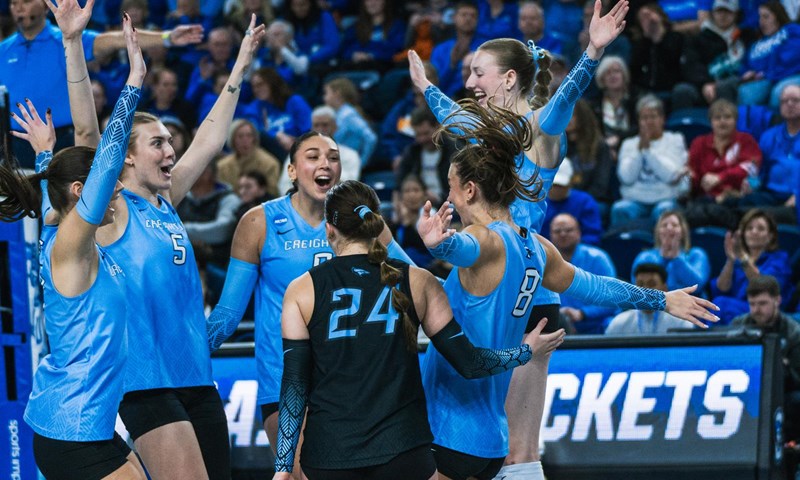
#11 Creighton Volleyball Outlasts Northern Colorado to Advance to Second Round of NCAA Tournament
Courtesy of Rob Anderson, Creighton Athletics
OMAHA, Neb. — No. 11 Creighton Volleyball was pushed to the brink but survived to win its 21st straight match on Thursday evening, opening up NCAA Tournament play with a 3-2 victory over Northern Colorado. Scores of the Bluejay triumph were 25-12, 23-25, 23-25, 25-17, 15-8.
Creighton earns itself a Second Round match-up against Northern Iowa (26-5) after the sixth-seeded Panthers finished off their first reverse sweep in the NCAA Tournament since 2022 with a 15-25, 21-25, 26-24, 25-20, 15-10 win over Utah. Creighton defeated the Panthers at D.J. Sokol Arena on Sept. 14 to close out play at the Bluejay Invitational.
Five women had multiple kills in the first set as Creighton powered past Northern Colorado, led by six kills from Ava Martin. Martin also had a pair of aces late in the set to solidify CU’s 25-12 victory. The Jays hit .438 and had 17 kills to UNC’s six kills on .000 hitting and never trailed in the frame.
UNC snapped Creighton’s 17-set win streak with a 25-23 victory in the second set, which featured nine ties and five lead changes. Isabel Bennett had go-ahead kills to make it 23-22 and 24-23 and Alayna Tessena put down the winner on set point. Northern Colorado had 15 kills and 18 digs in the second set and held the Bluejays to 11 kills and .200 hitting. Martin had seven kills for CU in the second set, while Sydney Breissinger added six digs.
The Bears won the first three points of the third set and moved in front 8-4 to force an early timeout from CU head coach Brian Rosen. The stoppage did little to improve the fortunes for the hosts, who called another timeout six points later after falling behind 12-6 to the Big Sky Tournament champions. The second timeout did the trick, as the Bluejays countered with an 8-2 burst to even the score at 14-all. Northern Colorado settled down, never surrendering the lead, and led 23-20 before one last push from the hosts. Martin pounded her 18th kill of the night, and Nora Wurtz followed with her 56th ace of the fall to cut CU’s deficit to 23-22 and lead UNC coach Lydnsey Oates to call timeout. Martin slammed a cross-court kill to tie the score at 23-all, but UNC answered with a Zoe Gibbs kill for a set point opportunity. The Bears won the set on a Bluejay attack error, 25-23.
The Bluejays got off to a 6-2 lead in the fourth set thanks in part to three early UNC hitting errors, then extended the advantage to 14-6. The Jays won the set 25-17, with freshman Abbey Hayes stepping up with a team-best four kills. CU had 4.5 blocks in the set, including one of set point from Reinhardt and Martin.
Creighton got off to a quick start in the fifth frame, scoring the first three points on two Martin kills and a UNC attack error. CU led 8-3 at the changeover
Martin was dominant with 30 kills on 65 swings, while Jaya Johnson finished with 12 kills. Reinhardt rounded out the Bluejays in double figure kills with 10. Annalea Maeder closed the match with a double-double, delivering 53 assists and 20 digs.
Tessena led Northern Colorado with 14 kills, while Brynn Reines finished with 11 kills
First serve of tomorrow’s Second Round match is at 6:30 p.m.
NOTES: Creighton improved to 18-14 all-time in 15 NCAA Tournament appearances, including a 12-3 mark in the First Round … Creighton has won 21 straight matches, its third-longest streak in program history … Creighton is now 8-4 in home matches in the NCAA Tournament, including five straight victories … Creighton has won its last 11 home matches this fall … Creighton is now 4-1 all-time against Northern Colorado … Creighton has won 68 straight matches over unranked foes and 56 non-televised matches in a row … Ava Martinmoved into third place in CU history in career service aces with 126 … Ava Martinhad her 25th straight match with 10 or more kills and 108th in a row with five or more kills … Ava Martin had her 13th career match with 20+ kills, and seventh this season.
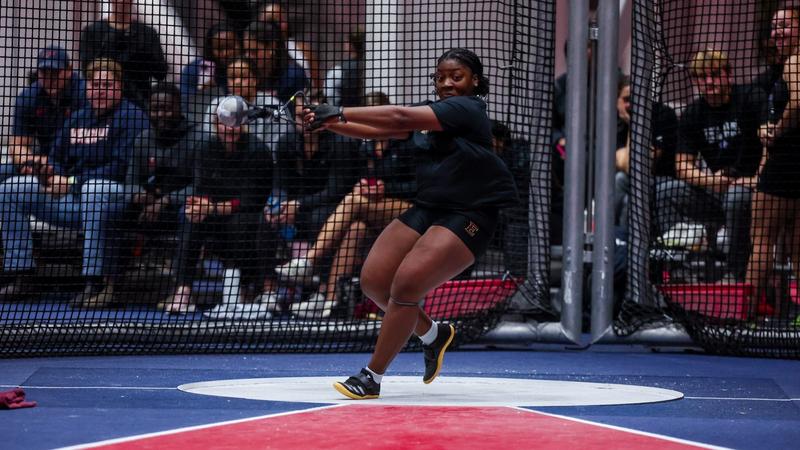
LYNCHBURG – Propelled by a pair of personal-best performances in the weight throw, the Elon University women’s track and field team opened its indoor season Thursday at the Liberty Kickoff inside the Liberty Indoor Complex.
In the women’s weight throw, the Phoenix placed two athletes inside the top four. Adriana Clarke claimed runner-up honors with a personal-best toss of 18.14m, moving into third on Elon’s all-time performance list. Isabella Johnson finished third overall at 17.33m, also marking a new PR for the sophomore.
Elon also featured three competitors in the pentathlon. Senior Lizzie Lopez was the top Phoenix finisher, placing seventh with 3,510 points. She highlighted the event by tying for first in the high jump with a clearance of 1.65m. Freshman Greta Urbonaviciute debuted with a tenth-place finish and 3,309 points, landing inside the program’s top-10 performance list. Classmate Carolina Frada scored 2,832 points to place 11th in her first collegiate pentathlon.
ON DECK
Elon continues action at the Liberty Kickoff on Friday, beginning with the women’s 5,000-meter run at 10 a.m.
— ELON —
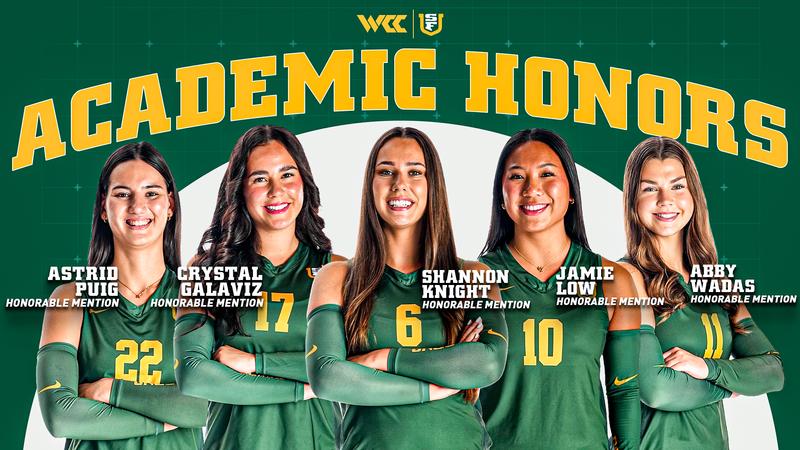
SAN BRUNO, Calif. – The West Coast Conference officially announced its Volleyball All-Academic team for the 2025 season on Thursday afternoon.
For San Francisco, Crystal Galaviz, Jamie Low, Shannon Knight, Astrid Puig, and Abby Wadas earned WCC All-Academic Honorable Mention honors.
At the conclusion of each athletic season, the West Coast Conference selects an all-academic squad for each conference-sponsored sport. To be considered, a student-athlete must maintain at least a 3.20 cumulative grade point average, while also being a significant contributor to her team and in at least their second year at their school.
The full 2025 West Coast Conference Volleyball All-Academic Team can be viewed below:
2025 WEST COAST CONFERENCE VOLLEYBALL ALL-ACADEMIC TEAM
| Name | School | Class | GPA | Major |
| Genevieve Bane | Saint Mary’s | Gr. | 3.70 | Busiiness Administration |
| Olivia Bennett | San Diego | Sr. | 3.54 | Behavioral Neuroscience |
| Lucie Blazkova | Washington State | So. | 3.92 | Psychology |
| Maddie Boerstra | LMU | Gr. | 3.82 | Sociology |
| Nevaeh Bray | Portland | Gr. | 4.00 | Sports Business |
| Lucia Busso | Portland | Sr. | 4.00 | Marketing |
| Alyson Cox | Pacific | So. | 4.00 | Computer Science |
| Alyssa Eimer | Santa Clara | Sr. | 3.94 | Marketing |
| Grace Flanagan | Santa Clara | Jr. | 4.00 | Studio Art |
| Kate Herrick | Gonzaga | So. | 3.91 | Biology |
| Emma McMahon | Pepperdine | Sr. | 3.83 | Psychology |
| Chloe Pravednikov | Pepperdine | So. | 3.63 | Pre-Business Administration |
| Maui Robins | Portland | Sr. | 4.00 | Marketing |
| Lauren Rumel | Oregon State | Sr. | 3.91 | Speech Communication |
| Cate Shanahan | Santa Clara | Jr. | 3.83 | English |
| Lexi Trapani | Santa Clara | Jr. | 3.88 | Business |
For more information and updates on the University of San Francisco volleyball program, follow the Dons on Twitter @USFDonsVB, @USFDonsVB on Instagram, and @USFDonsVball on Facebook.
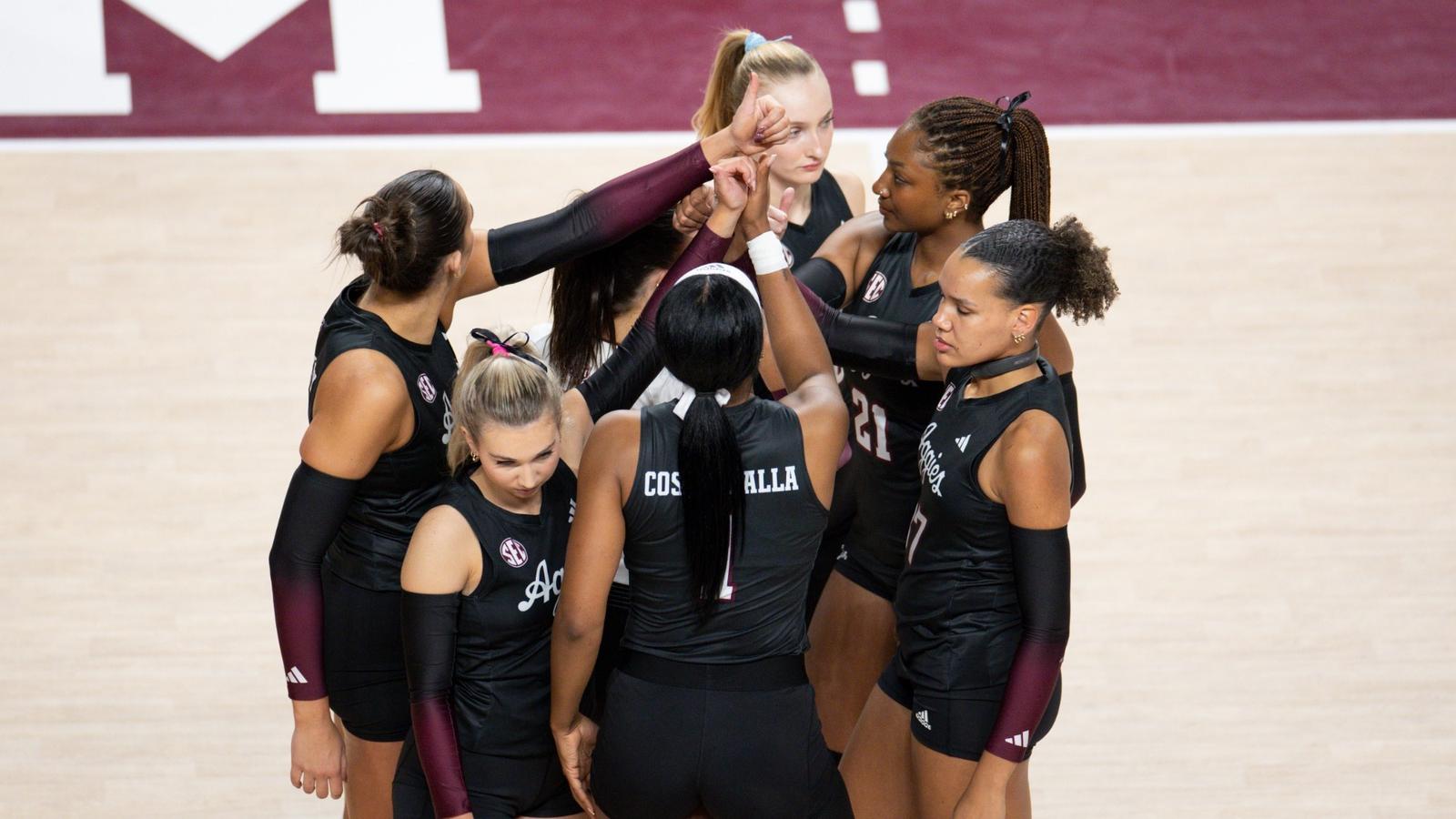
The Aggies ensured their third-straight tournament berth under the leadership of head coach Jamie Morrison, concluding the regular season and SEC Tournament with a 23-4 record. Their performance throughout the year earned them the highest AVCA ranking in program history of No. 6 and their first NCAA Tournament hosting opportunity since 2019.
Shining at home this season, the Maroon & White boast a 9-1 ledger at Reed Arena with its lone loss coming against then-No. 3 Kentucky (3-1). The 12th Man has been a force all year, as they helped break the program attendance record standing 9,801 strong versus Texas as well as accounting for another five top 10 attendances during the 2025 campaign.
Texas A&M’s depth of talent has been evident throughout the year and was rewarded during the SEC’s postseason honors, as a conference-high four Aggies were named to the All-SEC First Team including Logan Lednicky, Ifenna Cos-Okpalla, Maddie Waak and Kyndal Stowers. The honors didn’t stop there as Lednicky was named an AVCA Player of the Year Semifinalist, while the group accounted for 24 total accolades throughout the season.
The Matchups
Texas A&M enters its third NCAA Tournament with coach Morrison at the helm of the program, coming off a sweet 16 run during the 2024 season. The Maroon & White played the role of the hunter last season, downing No. 3 seed Arizona State in on their home court in the second round and came up just short in a five-set thriller against No. 2 seed Wisconsin.
The Aggies earned their highest seed since 2015 at No. 3 and welcome Campbell, TCU and SFA to Aggieland. They open their campaign versus the Camels who hold a 23-6 ledger and earned their second ever NCAA Tournament bid after winning the CAA Championship title in a five-set battle with Hofstra.
Friday’s meeting will be the first all-time between Texas A&M and Campbell. The Camels hold a strong 8-3 record when playing on the road but will come against the 12th Man and the Maroon & White’s 9-1 ledger in Reed Arena. On the stat sheet the Aggies hold the advantage in five of the seven team statical categories leading Campbell in kills per set, assists per set, hitting percentage, opponent hitting percentage and blocks per set, while the Camels have the upper hand in aces per set and digs per set.
Tracks and Trends
Logan Lednicky sits nine kills away from climbing to fourth in career kills at Texas A&M, she would pass three-time Olympian Stacy Sykora who has 1,586 kills.
Ifenna Cos-Okpalla has 159 blocks on the year and is three away from breaking her single season best of 161 and six from recording the most in a season since 1999 (165).
Streaming & Stats
Fans can watch the match on the ESPN+ and follow stats on 12thman.com.
Tickets
Fans can purchase their tickets to the opening round matches through 12thman.com/ncaatickets.
Students will be granted free admission to tomorrow’s game if they show their student ID’s at the north entry of Reed Arena.
Parking
Make plans to arrive early and exhibit patience for the expected traffic and parking congestion around Reed Arena. Multiple parking options are available for fans:
- General parking is available around the arena on gameday for $5 – cash AND card payments accepted.
- Fans with a valid TAMU parking pass can park for FREE in lots surrounding the arena. Make sure to have your pass barcode ready to show the lot attendant.
Follow the Aggies
Visit 12thMan.com for more information on Texas A&M volleyball. Fans can keep up to date with the A&M volleyball team on Facebook, Instagram and on Twitter by following @AggieVolleyball.
@#3 Wisconsin 3, Eastern Illinois 0
#3 WISCONSIN 3, EASTERN ILLINOIS 0
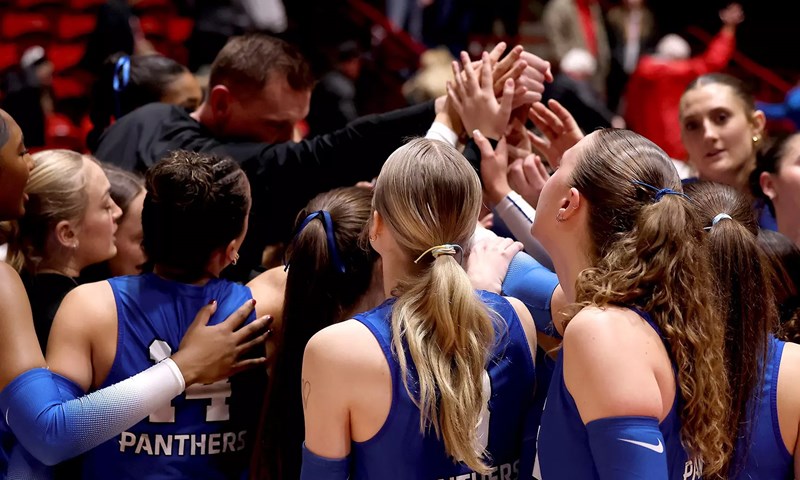
EIU dropped both sets one and two, struggling to find a rhythm early on. The Panthers trailed early in both of the first two sets right out of the gate and were unable to provide resistance. In set one, the Badgers hit 0.48% and 0.542% in set two. For the match, Wisconsin hit 0.435. EIU struggled connecting offensively, hitting 0% in set one and 0.022 overall. After the first two sets concluded, the Panthers looked for a spark, and Tori Mohesky answered the call with fireworks right from the jump. Mohesky earned a service ace to calm the Badgers crowd. EIU returned back-to-back points to hold their largest lead, fueled by Destiny Walker and a Wisconsin attack error. Shortly after, EIU trailed 15-9 heading into the media timeout. After the break in the action, both teams went back and forth trading points. Wisconsin reached set point 24-15. However, the Panthers found life and roared back into the match, scoring four straight unanswered points charged by a Katie Kopshever service ace and two blocks by Emma Schroeder and Sylvia Hasz. Unfortunately, the Badgers closed out the set 25-19.
By The Numbers: EIU records their third NCAA Tournament appearance in program history. Destiny Walker led the way offensively with 6 kills and 1 service ace. Sylvia Hasz collected 16 assists and 3 block assists. Defensively, Ariadne Pereles recorded 8 digs, while Emma Schroeder produced 5 block assists. Lilli Amettis and Katie Kopshever each collected a block assist.
The Panthers’ historic season comes to a close, finishing with a 24-8 (15-3 OVC) record. After being picked to finish 8th in the OVC preseason poll, EIU stormed through conference play, securing their second OVC title in three years. EIU also collected their fourth regular season title in the program’s history. The Panthers made their third NCAA Tournament appearance.
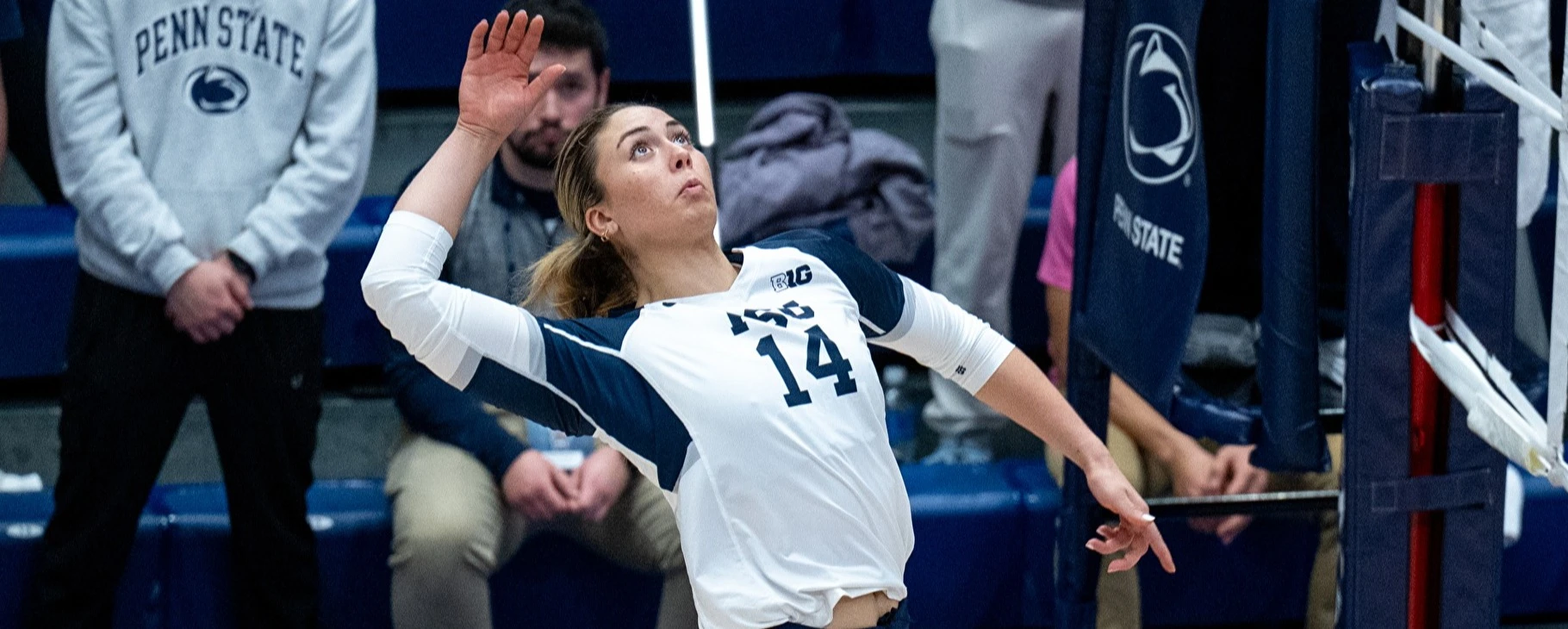
UNIVERSITY PARK, Pa.- No. 25 Penn State opens its 45th-straight appearance in the NCAA Tournament with a first-round match against USF on Friday at Texas’s Gregory Gymnasium. The match is scheduled for 5:30 p.m. ET and will stream on ESPN+.
The winner of Friday’s match advances to play the winner between Texas and Florida A&M in the second round on Saturday.
HOW TO FOLLOW
Friday, Dec. 5 | 5:30 p.m. ET
No. 25 Penn State (18-12, 12-8 B1G) vs. USF (17-12, 12-4 AAC) | Live Stats | ESPN+
OPENING NOTES
• Penn State is set to open its 45th appearance in the NCAA Tournament. It is the only program in the country to play in all 45 NCAA Division I Women’s Volleyball Tournaments since the inaugural event in 1981.
• The Nittany Lions received an eight seed in the Austin Region and will play the first and second rounds away from Rec Hall for just the first time since the tournament was expenaded to 64 teams in 1998.
• Friday marks Penn State’s fourth NCAA Tournament appearance and 13th postseason match under Katie Schumacher-Cawley, who is in her fourth season as Penn State head coach. They are 10-2 in the NCAA Tournament under Schumacher-Cawley after going 6-0 and winning the program’s eighth national title last season.
• The Nittany Lions made it to at least the NCAA Regional Semifinal in each of Schumacher-Cawley’s first three seasons as head coach.
NCAA TOURNAMENT HISTORY
• Penn State, which has won eight national titles, including the most recent in 2024, is 116-35 all-time in the NCAA Tournament.
• Penn State has made the National Semifinals 14 times and the National Championship match 11 times.
• USF and Penn State will meet for the first time in the NCAA Tournament, making the Bulls the 76th different postseason opponent for the Nittany Lions. Just eight of those teams have a winning record against Penn State in the NCAA Tournament.
PENN STATE IN ROUND OF 64
• Penn State is 26-0 in the NCAA Tournament round of 64 since the event expanded to 64 teams in 1998.
• The Lions are 78-3 in sets played during that stretch, dropping one set to Howard in 2017, one to Towson in 2021, and one to Yale last season.
• Rec Hall was the venue for 24 of the 26 matches.
• Penn State is 3-0 in the Round of 64 under Schumacher-Cawley, beating UMBC in 2022, Yale in 2023, and Delaware State in 2024.
HOW THEY GOT HERE – PENN STATE
• Penn State earned an at-large bid to the NCAA Tournament after going 18-12 overall and 12-8 in the Big Ten.
• The Nittany Lions are one of 14 teams in the nation with four wins over teams ranked in the top 25 of RPI, beating No. 6 Creighton, No. 11 Wisconsin, No. 13 USC, and No. 15 Kansas.
• The Nittany Lions helped secure their spot in the NCAA Tournament with four wins in their final five matches, beating Ohio State (3-2), Michigan State (3-0), Maryland (3-0), and Iowa (3-1).
HOW THEY GOT HERE – USF
• USF received an at-large bid to the NCAA Tournament after going 17-12 overall and 12-4 in the American Conference on its way to a second-place finish in the conference standings. The Bulls lost to Tulsa in the semifinal round of the American Conference Tournament.
• The Bulls will play in the NCAA Tournament for the first time since 2002. They beat Florida State in the first round that year before falling to Florida in the second round.
• USF’s highest RPI win came in conference play with a sweep over No. 36 Tulsa. The highest non-conference RPI win came in five sets over No. 47 Dayton. They also pushed Purdue to five sets before losing in their season opener.
• Senior outside hitter Maria Clara Andrade was named the American Conference Player of the Year for the second-straight season. She was joined on the all-conference team by sophomore setter Raegan Richardson (first team) and junior outside hitter Laila Ivey (second team).
SERIES HISTORY – USF
• Penn State is 3-0 in the all-time series with USF. The teams first played in 1986.
• The Nittany Lions swept all three matches, winning 3-0 in 1986, 1988, and 2015. All three matches were played in Tampa.
• Penn State and USF have never met in the NCAA Tournament.
• Kennedy Martin is the only player on the Penn State roster that has played against USF. She hit .449 with 27 kills, six blocks, and two aces in Florida’s 3-2 win over the Bulls in 2023.
PENN STATE VS. AMERICAN CONFERENCE
• Penn State is 32-4 all-time against current members of American Conference.
• The Nittany Lions have played eight of the 13 teams in the conference and have a winning record against all eight. They are unbeaten against UAB (1-0), Charlotte (1-0), East Caroline (3-0), Memphis (2-0), Rice (3-0), South Florida (3-0), and Wichita State (1-0).
TOURNAMENT EXPERIENCE
• Eight Penn State players have combined for 50 matches of NCAA Tournament experience.
• Penn State head coach Katie Schumacher-Cawley (1999) and assistant coach Megan Hodge Easy (2007, 2008, 2009) combined for four national titles as players at Penn State.
Catherine Burke – 1 match
Ava Falduto – 6 matches
Gillian Grimes – 12 matches
Jordan Hopp – 6 matches (2 Iowa State, 4 Penn State)
Caroline Jurevicius – 6 matches
Kennedy Martin – 5 matches (5 Florida)
Maggie Mendelson – 8 matches (2 Nebraska, 6 Penn State)
Jocelyn Nathan – 6 matches
The 2025 Penn State women’s volleyball season is presented by Musselman’s.

#11 Creighton Volleyball Outlasts Northern Colorado to Advance to Second Round of NCAA Tournament

Several NASCAR Drivers Headed to Pensacola for 58th Snowball Derby

‘I just gambled our entire savings away’: Young adults in Mass. are hooked on online sports betting

Celebrating a culture of giving back

SRX’s threat to NASCAR takes center stage in antitrust trial

SUBARU: GEAR FOR GOOD INITIATIVE NAMES FIVE YOUTH SOCCER PROGRAM BENEFICIARIES TO HELP GROW THE GAME IN 2026

NCMA Announces Board of Directors Officers for 2026 – Speedway Digest

Throwers Set Personal Bests At Liberty Kickoff

SEC Commissioner Greg Sankey calls for changes to college football calendar after Lane Kiffin split with Ole Miss for LSU

Five Dons Earn WCC All-Academic Honors

NASCAR chairman Jim France called ‘a brick wall’ in contentious revenue-sharing negotiations :: WRAL.com

Makers’ Market and Youth Biz Fair slated for weekend

No. 3 Volleyball Opens NCAA Tournament Versus Campbell – Texas A&M Athletics

PJUSD AWARDED GRANT TO EXPAND INCLUSIVE ATHLETIC OPPORTUNITIES | Patterson Irrigator

Roundup of news from Hull’s wide world of sports — The Hull Times

First Tee Winter Registration is open

Fargo girl, 13, dies after collapsing during school basketball game – Grand Forks Herald

CPG Brands Like Allegra Are Betting on F1 for the First Time

Volleyball Recaps – November 18

F1 Las Vegas: Verstappen win, Norris and Piastri DQ tighten 2025 title fight

Two Pro Volleyball Leagues Serve Up Plans for Minnesota Teams

Utah State Announces 2025-26 Indoor Track & Field Schedule

Sycamores unveil 2026 track and field schedule

Texas volleyball vs Kentucky game score: Live SEC tournament updates

Bowl Projections: ESPN predicts 12-team College Football Playoff bracket, full bowl slate after Week 14

Redemption Means First Pro Stock World Championship for Dallas Glenn

Pohlman admits ‘there might be some spats’ as he pushes to get Kyle Busch winning again

Indiana’s rapid ascent and its impact across college football

How this startup (and a KC sports icon) turned young players into card-carrying legends overnight

Troy Football Need to Know; Gameday at The Vet — Georgia State Game

 Why a rising mid-major power with an NCAA Tournament team opted out of revenue-sharing — and advertised it
 NBA Legend Michael Jordan to Join NBC Sports as Special Contributor
 Falcons mailbag
 Portal Update – Basketball and Gymnastics Take Hits
 has always dreamed in Mercurial. Now his initials are on the boots.
The new Kyl…
has always dreamed in Mercurial. Now his initials are on the boots.
The new Kyl…
-
 Rec Sports2 weeks ago
First Tee Winter Registration is open
-
 Rec Sports1 week ago
Fargo girl, 13, dies after collapsing during school basketball game – Grand Forks Herald
-
 Motorsports1 week ago
CPG Brands Like Allegra Are Betting on F1 for the First Time
-
 Sports2 weeks ago
Volleyball Recaps – November 18
-
 Motorsports2 weeks ago
F1 Las Vegas: Verstappen win, Norris and Piastri DQ tighten 2025 title fight
-
 Sports1 week ago
Two Pro Volleyball Leagues Serve Up Plans for Minnesota Teams
-
 Sports1 week ago
Sycamores unveil 2026 track and field schedule
-
 Sports1 week ago
Utah State Announces 2025-26 Indoor Track & Field Schedule
-
 Sports1 week ago
Texas volleyball vs Kentucky game score: Live SEC tournament updates
-
 NIL5 days ago
Bowl Projections: ESPN predicts 12-team College Football Playoff bracket, full bowl slate after Week 14