
Sports
An expert trainer says 'this is the best thing you can do with kettlebells'


If my work can persuade one person to train with kettlebells, I’ll consider that a job well done as a fitness writer. While I firmly believe there is no one piece of equipment that’s necessary to further your fitness, a kettlebell can help you move the dial forward in more areas than most.
Strength? Definitely. Muscle? Absolutely. You can also make significant improvements to your mobility, stability, coordination, cardiorespiratory fitness and more with the help of the humble kettlebell. And once you’re ready to expand your training horizons, you can simply add a second one into the equation.
In fact, pressing two of them overhead is the “best thing you can do with kettlebells”, according to leading strength coach and kettlebell expert Dan John. And that’s not the only benefit to dual-wielding.
“One of the big advantages of using doubles is that, while doubles are heavier, they’re actually easier for most people,” he tells me. “Outside of the two-handed swing and the goblet squat, generally two-handed work is easier because you don’t have those asymmetries to fight through.”
Below, John explains where to start when training with two kettlebells. He also discusses the many benefits this can bring, and his favourite double kettlebell workout to try.
The best double kettlebell workout: The Armour Building Complex
Using two equally weighted kettlebells, complete the sequence below without putting the weights down:
- Double kettlebell clean x2
- Double kettlebell press x1
- Double kettlebell front squat x3
This is the best, and arguably most versatile, double kettlebell workout in John’s armoury. You can use heavy kettlebells to target strength gains, pick up moderate kettlebells and complete the complex each minute for 10 minutes for more of a muscle-building hit, or set a 20-minute timer and complete as many rounds as you can with lighter weights to set your heart, lungs and muscles alight.
John created the workout for athletes, beta testing earlier versions on American football players in an attempt to replicate the rigours of game-day. The aim was to provide a test that developed solidity and strength throughout the entire body, and in the Armour Building Complex he found just that.
“You can call the area from your neck to your knees whatever you want,” John says. “Lots of people call it the core, but saying ‘the core’ is like saying ‘doing cardio’ – it’s an overused term.
“The three words I use for this area are armour, anaconda and arrow. Spine expert Dr Stuart McGill uses the word stone, so I sometimes like to think about these as ‘the three As of building the stone’.”
Armour involves packing on muscle, anaconda describes the development internal pressure for stability, and arrow refers to the ability to move powerfully. The first of these is what gives this workout its name, but the session will help you develop all three.

Benefits of training with double kettlebells
The first difference of double kettlebell training is that, unless you drop the weight of your kettlebells significantly, you’ll likely be lifting a heavier load. But this aside, John says the practice is easier than training with a single kettlebell because your movements are symmetrical.
“Some people say that singles are better, but the issue with asymmetrical work for a lot of people is that most of them, and certainly Americans, come in [to kettlebell training] pretty beat-up at a certain age.
“We have a lot of collision sports here, and we do a lot of throwing sports, so most of the people I work with walk into the gym with asymmetrical issues. Lower back problems, a dominant shoulder – it’s almost a given.”
For this reason, John says double kettlebell training is easier, and even safer, than chucking a single weight around for most people.
Read more: Top five Pilates exercises for building muscle, according to a physiotherapist

How to start double kettlebell training
While John says double kettlebell training tends to be easier and safer than a session with a single weight, there are still some fundamentals to wrap your head and hands around. Below, he explains how to get started, and dives into the three fundamental exercises you should learn first.
Starting position
Place the kettlebells a couple of feet in front of you and arrange them so the handles are angled inwards to form a V-shape.
“When the bells are on the ground, the V is to me,” John says. “By doing this, you allow your shoulders to move into a much more protected state.”
From here, you can hinge at the hips then, keeping your “eyes on the horizon”, pull the kettlebells back between your thighs to initiate a swing. The kettlebell swing marks the starting point of many other double kettlebell exercises such as the clean and snatch, so it’s worth perfecting this first.
Read more: This is how much exercise you should be doing per day, according to experts
Learning the double kettlebell clean
- Start with two kettlebells on the ground two feet in front of you, handles angled slightly towards you to form a V.
- Assume a stance slightly wider than shoulder width.
- With soft knees, hinge at the hips to bend over and grab a kettlebell in each hand with an overhand grip.
- Keeping your spine long, arms straight and eyes forward, pull the kettlebells back between your thighs.
- From here, squeeze your glutes to explosively drive your hips forward. As you do this, stand up straight and allow the momentum from your hip drive to arc the kettlebells up to the front rack position – elbows at your sides pointing down, thumbs against your chest, ‘bells between the fronts of your shoulders and forearms.
- Allow the kettlebells to fall away from your body, curving back between your thighs, then repeat.
The double kettlebell clean involves taking the kettlebell from a swing to a front rack position, where it’s nestled between the front of the shoulder and the forearm.
“Mastering the double kettlebell clean should be your first order of business,” John says. “The biggest issue is that most people drop the ‘bells straight down [from the front rack position], get into a minor traffic accident with every rep, then hike them back up.
“You don’t drop the weights, you swing into each and every rep. It should be a hinge, then a clean.”
John also says it’s important to create a good front rack position to catch the kettlebells at the shoulder.
“I like the thumbs to be on the chest and the elbows to be touching your sides as appropriate – obviously you will have some people who are naturally winging out.”
Keeping the elbows low, he says, will encourage you to transition into a swing for the next rep, rather than dropping the weight straight down.
Read more: The 30-minute exercise trick that works for weight loss and fitness levels
Learning the double kettlebell press
- Clean two kettlebells into the front rack position.
- Drive your fists to the sky until your arms are fully extended overhead, biceps by your ears. Your wrist will rotate inwards slightly as you do this, ending with your palm facing forward, and the kettlebells should follow a shallow J-shape when viewed head on.
- Control the weights back down to the front rack position then repeat.
“Once you’ve learned the kettlebell clean, you set the stage for what I think is the best thing kettlebells do: the double kettlebell press family,” John says. “There’s the double kettlebell press and its cousin the seesaw press [where you press each kettlebell overhead alternately, lowering one as you drive the other upwards].
I think these are the two best things you can do with kettlebells. It’s a whole body exercise, and it’s exhausting.”
With the press, when you have both kettlebells in the front rack position, John recommends taking a moment and “squeezing everything down to engage that anaconda strength”.
Learning the double kettlebell front squat
- Clean two kettlebells into the front rack position.
- Create tension throughout your body then, keeping your chest up, push your hips back slightly to initiate the squat.
- From here, bend your knees and lower your hips as far as you can while keeping your chest up.
- Drive through your feet to return to the starting position.
“When I’m working with athletes, I used to spend a lot more time with the barbell front squat, but now I spend more time with this exercise because the double kettlebell front squat feels more like sports,” John says. “There’s no rest on any rep in a double kettlebell front squat.”
In other words, even when you’re standing tall, your whole body has to hold enough tension to resist the pull of the kettlebells and keep you upright. Then, as you descend, you face the challenge of maintaining this tension while using your legs to lower the weight before driving it back upwards.
With a series of simple movements you can hit every area of your body and with a very affordable piece of kit too. Double kettlebell training offers a raft of benefits and with this guide, it’s easy to start nailing the movements, wherever you choose to train.











Dec. 13, 2025, 6:51 p.m. CT
AUSTIN, Texas – Wisconsin volleyball’s first weekend of the 2025 season featured a high-profile match against Texas.
Wisconsin’s either final or penultimate weekend of the season – depending on whether UW can advance – also features a high-profile match against Texas.
But both sides will caution against reading too much into Wisconsin’s Aug. 31 loss to Texas ahead of a rematch in the NCAA tournament regional finals as each team seeks a return to the Final Four.
Sports
Nunez, Schneider and Woelfel Win Events as St. Cloud State Track & Field Closes 2025 at The Opener in Duluth

Sophomore Lauren Woelfel (Becker, Minn.) won the pole vault after clearing 3.60m/11-9.75, which was new personal best height by 0.09m, freshman Brianna Schneider won the shot put after recording a huge personal best of 12.18m/39-11.50 and sophomore distance runner Abbygail Nunez (South St. Paul, Minn.) won the 800 meters (2:32.88). Nunez also ran a new personal best in the mile (5:33.08) to finish second.
The Huskies advanced four athletes to the 60 meters final – junior jumper/sprinter Myesha Thompson (Mount Horeb, Wis.), sophomore jumper/sprinter Zaria Stapleton (Nassau, Bahamas), graduate jumper Elena Martinez-Rodriguez (Madrid, Spain) and freshman Efe Ottah – while three recorded new personal bests – Thompson (7.91), freshman Aliyah Horton (8.47) and senior sprinter/jumper Ava Wilmanns (Cedarburg, Wis.) (8.57). In the finals, Thompson finished third, Stapleton tied her personal best from last week (8.00) to finish fifth and Martinez-Rodriguez tied her season best from the prelims (8.14) to finish sixth.
Thompson also finished second in the long jump, Stapleton was fourth after leaping a career best 5.16m/16-11.25, Horton was seventh after jumping a career best 4.93m/16-2.25 and Wilmanns jumped a season’s best 4.84m/15-10.50.
Martinez-Rodriguez tied her high jump personal best that she set last weekend (1.55m/5-1) to finish second. Horton (28.93) and junior hurdler/pole vaulter/jumper Olivia Witt (Delano, Minn.) (31.24) each set personal bests in the 200 meters. Witt also set a personal best in the 60 hurdles, after running 10.82. Freshman Addison Lauwagie cleared a personal best height in the pole fault (3.20m/10-6) to finish second.
Sophomore thrower Kim Feller (East Helena, Mont.) recorded a new personal best in the weight throw (14.15m/46-5.25). In the mile, freshman distance runner Jocie Wheeler (Annandale, Minn.) set a new personal best (5:53.85) and sophomore distance runner MerriAnna Johnson (Osceola, Wis.) set a new season best time (6:03.10).
The quartet of junior sprinter Jenna Marxhausen (Two Harbors, Minn.), Ottah, freshman Abby Kennedy and Lauwagie set a new season best time in the 4×400 relay (4:14.14).
St. Cloud State at The Opener (St. Scholastica)
Dec. 13, 2025 | Burns Wellness Commons | Duluth, Minn.
60 meters (prelims)
3. Myesha Thompson – 7.91Q PR
5. Zaria Stapleton – 8.08q
7. Elena Martinez-Rodriguez – 8.14q
8. Efe Ottah – 8.20q
13. Abby Kennedy – 8.32
18. Aliyah Horton – 8.47 = PR
19. Ava Wilmanns – 8.57 PR
60 meters (final)
3. Myesha Thompson – 7.94
5. Zaria Stapleton – 8.00 = PR
6. Elena Martinez-Rodriguez – 8.14 = SB
8. Efe Ottah – 8.31
200 meters
14. Aliyah Horton – 28.93 PR
17. Olivia Witt – 31.24 PR
400 meters
3. Jenna Marxhausen – 1:03.48
5. Abby Kennedy – 1:04.33
800 meters
1. Abbygail Nunez – 2:32.88
3. Jocie Wheeler – 2:47.32
Mile
2. Abbygail Nunez – 5:33.08 PR
10. Jocie Wheeler – 5:53.85 PR
13. MerriAnna Johnson – 6:03.10 SB
60 hurdles (prelims)
6. Olivia Witt – 10.82 PR
4×400 relay
3. Jenna Marxhausen/Efe Ottah/Abby Kennedy/Addison Lauwagie – 4:14.14 SB
High jump
2. Elena Martinez-Rodriguez – 1.55m/5-1 = PR
Pole vault
1. Lauren Woelfel – 3.60m/11-9.75 PR
2. Addison Lauwagie – 3.20m/10-6 PR
6. Olivia Witt – 2.45m/8-0.50
Long jump
2. Myesha Thompson – 5.40m/17-8.75
4. Zaria Stapleton – 5.16m/16-11.25 PR
7. Aliyah Horton – 4.93m/16-2.25 PR
8. Ava Wilmanns – 4.84m/15-10.5 SB
Shot put
1. Brianna Schneider – 12.18m/39-11.50 PR
11. Mackenzie McMahon – 10.47m/34-4.25
19. Shanya Collier-Phillips – 8.57m/28-1.50
Weight throw
8. Kim Feller – 14.15m/46-5.25 PR
11. Shanya Collier-Phillips – 13.14m/43-1.50
13. Mackenzie McMahon – 12.97m/42-6.75
17. Brianna Schneider – 11.84m/38-10.25
Team Scores:
No team scores
Results (Hero’s Timing)
Results (PDF)
UP NEXT
The Huskies are done competing until 2026. SCSU will begin the second semester with the Tommie Indoor Invitational on Friday, Jan. 16 hosted by St. Thomas at the Anderson Athletic and Recreation Complex (AARC) in St. Paul. Field events are scheduled to start at 1 p.m. with field events to follow at 4 p.m. Links to coverage options will be available on the SCSU Track & Field schedule page and the meet day central.
For all the latest on St. Cloud State Track & Field, stay tuned to SCSUHuskies.com and follow the team on Twitter, Facebook and Instagram.

AUGUSTA, Ga. – Augusta University track and field continued its inaugural indoor season on Friday night at the ‘Twas the Meet Before Christmas, hosted at JDL Fast Track, with strong performances across middle-distance and distance events against a strong field.
Jaynes Breaks PBC Indoor 3K Record
Senior Avery Jaynes delivered another record-setting performance, finishing eighth in the men’s 3,000 meters in 8:11.74 to break the Peach Belt Conference indoor record in the event. The time also met the NCAA Division II provisional standard, marking Jaynes’ second conference record of the indoor season.
Junior Nasrudin Mohamed added a solid showing in the 3,000 meters, placing 10th overall with a time of 8:23.50.
Eye, Shepherd Earn Podium Finishes in 800 Meters
Augusta placed two athletes on the podium in the men’s 800 meters, led by sophomore Seth Eye, who finished second in 1:52.37. Junior Noah Shepherd followed closely behind with a third-place finish in 1:55.36.
Thomas Leads Women in 3,000 Meters
On the women’s side, junior Madison Thomas paced Augusta with a sixth-place finish in the 3,000 meters, running 10:20.93.
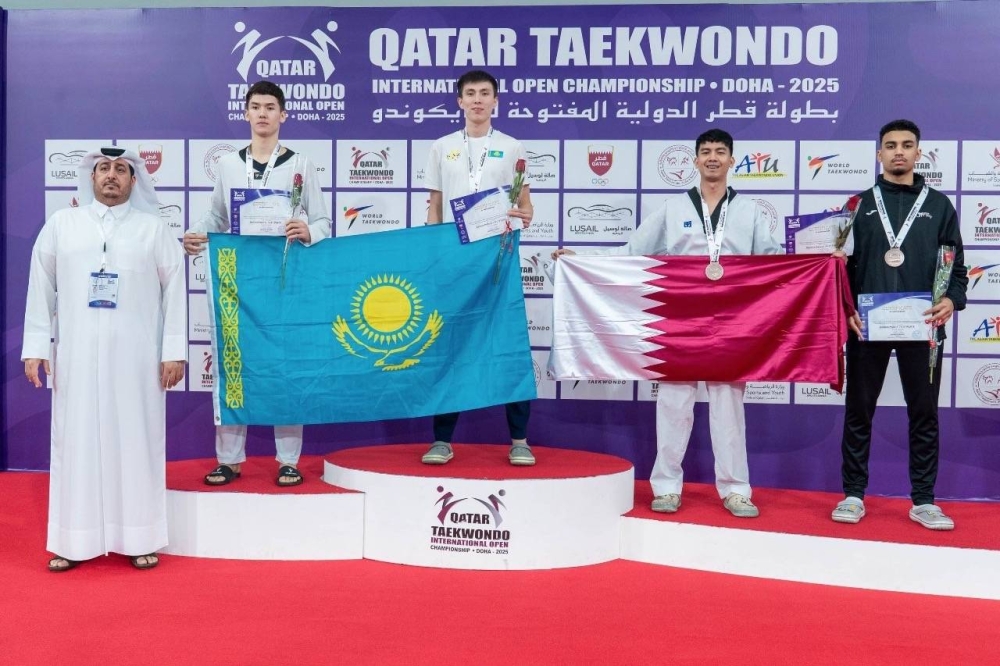
When Elijah Claravall from Isabela first stepped onto a Taekwondo mat as a young boy, he could not have imagined the journey that lay ahead. What began as a childhood hobby soon became a lifelong passion—one that would take him across borders, transform him into a mentor, and inspire the next generation of athletes in Qatar.
Today, known affectionately as Master Eli, he is both a decorated competitor and a cherished instructor within the country’s vibrant Taekwondo community. His recent Bronze Medal win at the 5th Taekwondo International Competition in Qatar is more than just a personal triumph; it is a testament to the perseverance, dedication, and passion that have defined his remarkable journey..
A Beginning Rooted in a
Mother’s Guidance
For Master Eli, Taekwondo wasn’t just an activity — it was woven into his upbringing. His mother, a Karate Black Belter and national athlete, introduced him to martial arts early, laying the foundation of discipline and resilience that would shape the course of his life.
“With my mom guiding me, Taekwondo felt natural,” he recalls. “All my sisters trained too, but only my youngest sister and I continued. She’s now a varsity athlete at UP Diliman.”
He earned his 2nd Dan black belt only after college as his mother had always reminded him that the belt was secondary. She instilled in him that his focus should not be on the belt but more on developing his skills and harnessing character with self-discipline and respect — values that would later become cornerstones of his own teaching philosophy.
Though he briefly explored basketball because of his height, the pull of Taekwondo proved stronger.
“I set Taekwondo aside to try basketball, but after four years, I realized that it was in the sport of Taekwondo where I truly belonged.”
The Leap of Faith That Led to Qatar
A defining moment arrived when he learned of an opportunity to teach Taekwondo in Qatar. It was a decision that required courage — a leap into the unknown — but it also presented the chance to share his craft with a new generation.
When he joined the Pinoy Taekwondo Center (PTC) in Qatar, he discovered more than a workplace.
He found a purpose and a home.
Over the years, Master Eli became a pillar of the center. Children gravitated toward his warmth and patience; parents admired his consistency and values; fellow instructors respected his humility and quiet confidence. In Qatar, he did not just train athletes—he nurtured character, resilience, and self-belief.
This was where he truly became Master Eli.
More Than Just a Medal
At the recent 5th Qatar International Taekwondo Competition, Master Eli fought with focus and heart — qualities he emphasizes daily in his classes. Winning bronze was a powerful moment, not merely for him but for the entire PTC
community.
“When I stepped onto the podium, I wasn’t just thinking about my performance,” he says. “I was thinking about my students. I wanted them to see that hard work matters. That effort counts.”
For his young athletes, watching their mentor earn an international medal turned inspiration into reality. It showed them that dreams are not abstract ideas—they are reachable goals shaped by discipline and determination.
Inside the Dojang:
Where Champions Are Made
Within the walls of the dojang, Master Eli is both firm and approachable—a coach who demands excellence but teaches with encouragement. His classes balance structure and motivation, creating an environment where students feel both challenged and supported.
“Kids don’t just need technique,” he explains. “They need confidence. They need someone who believes in them.”
Teaching a generation shaped by technology and constant change requires adaptability. As a Millennial guiding mostly Gen Z and Gen Alpha students, he takes time to understand their learning styles, interests, and motivations. The goal: to uphold the timeless standards of Taekwondo while making them meaningful to today’s young athletes.
Parents consistently speak of the transformation they see in their children—sharper focus, stronger discipline, and newfound self-assurance. For them, the secret lies in the atmosphere he creates: structured, inspiring, and deeply rooted in respect.
“I really enjoy teaching the kids,” he says with a smile. “Seeing them grow—not just in the sport but as individuals—makes everything worth it. When they carry the tenets of Taekwondo beyond the mats, that’s when I know I’m doing something right.”
Dreams, Goals, and the Road Ahead
Despite his growing accomplishments, Master Eli remains grounded. He aims to continue advancing his Dan level, return to international competitions, and help elevate PTC’s presence on bigger stages.
But above all, his greatest goal is simple and sincere: to build a legacy.
“I want my students to become strong athletes and strong individuals,” he shares. “Champions on the mat—and in life.”
From a determined young boy in the Philippines to a respected mentor in Qatar, his journey is proof of what happens when passion aligns with purpose. His story is far from over.
And for every child who bows before him in the dojang, and proudly calls him Master, it is a story worth watching — one kick, one lesson, one dream at a time.

GREENSBORO, N.C. – The UNC Greensboro (UNCG) women’s basketball team hit the century mark in a 119-35 dominating win over Bob Jones Saturday afternoon at Bodford Arena.
According to our records, the 84-point win marks the largest victory margin in the UNCG women basketball NCAA Division I era and is tied for second overall in program history. The record previously stood at 83 in a 104-21 victory over Greensboro College on Dec. 31, 2025. In addition, that was also the last time UNCG scored 100 points in a contest.
The Spartans’ 45 made field goals marks a new record for field goals made in the Division I era.
All 13 Spartans scored in the contest. Ella Pierre-Louis and Salimata Traore notched their first collegiate points of their career.
Five Spartans reached double-figures in the game. Jeni Levine notched her first career double-double after leading the contest with 19 points and adding a career-best 10 boards. Leyla Minor followed closely behind with a new career-best 15 points. Makiah Asidanya and Mia Simpson chipped in 14 points apiece, marking a new season-best for Simpson. Tasia Johnson rounded out the Spartans in double-figures after matching her season-best of 12 points.
HOW IT HAPPENED
Bob Jones’ Faith Hayward put the visiting team on the board first with a layup at 8:32, 2-0. Both teams traded three-pointers before UNCG recorded 19 unanswered points, taking the 22-5 advantage. The Spartans never allowed Bob Jones to regain the lead in the contest. The Bruins chipped in a layup at 3:20, 22-7, for their final basket of the first quarter. The Spartans knocked down 14-straight points to close out the first frame on top, 36-7. UNCG’s 36 points in the first quarter marks the most points scored in a quarter this season for the Spartans.
UNCG continued to dominate in the second quarter, outscoring Bob Jones, 25-6. The Spartans recorded a 9-0 run coming out of the break and never looked back. With 42 seconds remaining in the second quarter, Minor knocked down a triple to send the Spartans into the locker room with a 61-13 advantage. This marked the most points scored in a half this season (61) and the largest lead in a half (48).
The Spartans picked up the first four points coming out of the break. UNCG continued to control the tempo by notching 29 points to Bob Jones’ 10 in the stanza. The Blue & Gold posted six-straight points for a 90-22 lead with 29 seconds on the clock. Bob Jones’ Jenna Brooks went 1-for-2 at the charity stripe to close out the break with UNCG holding a 90-23 lead.
Despite Bob Jones scoring its most point in the final frame with 12, UNCG tallied on another 29 points in the stanza. After Traore and Pierre-Louis posted their first collegiate points back-to-back, the Bruins notched their final bucket of the game at 2:58, 113-35. Asidanya launched a triple at 2:40 before the Spartans tallied three consecutive free throws to walk away comfortably with the 119-35 victory.
BY THE NUMBERS
- Ciara Harris was one point shy of a double-double after reaching nine points and posting a career-best 10 rebounds.
- Levine and Jaila Lee led the game with four assists apiece.
- Levine and Harris led the way with five steals.
- Four Spartans recorded a block.
- UNCG led the way in just about every statistical category including: three-pointers (13-4), free throws (16-3), turnovers forced (33-10), points off turnovers (50-8), rebounds (50-21), second chance points (22-6), bench points (60-2), points in the paint (60-14), fast break points (31-0), blocks (4-0), steals (25-2) and assists (25-8).
RECORDS
UNCG: 6-5, 0-0 SoCon
BJU: 4-5, 1-0 NCCAA
PURCHASE UNCG GEAR
Click here for your one-stop shop for all of your official UNCG merchandise! From apparel to accessories, there is something for everyone!
UNCG WOMEN’S BASKETBALL TICKET INFORMATION
To secure your tickets for UNCG women’s basketball home games click HERE for options including single games, group discounts and full season ticket options. All (14) home games will be played on campus in Bodford Arena. UNCG faculty/staff and students are free with their ID. To learn more about upcoming ticket promotions or to purchase over the phone call the UNCG Ticket Office at 336-334-3250 or email admoore10@uncg.edu.
UP NEXT
The Spartans will host Triad foe Elon on Wednesday, Dec. 17 at 7:00 p.m. in Bodford Arena.

PREVIEW
• The top-ranked Nebraska volleyball team hosts an NCAA Regional Final for the third straight year at John Cook Arena at the Bob Devaney Sports Center on Sunday.
• No. 1 Nebraska will face No. 6 Texas A&M at 2 p.m. on ABC. Courtney Lyle and Holly McPeak will be on the call with Madison Fitzpatrick as the sideline reporter.
• Huskers Radio Network will broadcast all the action on their volleyball affiliate stations, on Huskers.com and on the Huskers App. John Baylor and Lauren Cook West will be on the call.
ABOUT THE HUSKERS
• Nebraska (33-0) finished the regular season unbeaten for the third time in school history (1994 and 2000), dropping only seven sets overall and one in Big Ten play.
• Nebraska’s 33 straight wins is the second-longest win streak in school history in the NCAA era. The Huskers have won at least 33 matches in three straight seasons.
• The Huskers also hold a nation-leading home court win streak of 63 matches, tied for the second-longest home win streak in program history. Nebraska has won 29 consecutive NCAA Tournament matches played in the Devaney Center, a school record.
• The Huskers won their third straight Big Ten title with a perfect 20-0 record in conference play. It was the Huskers’ first unbeaten conference season since 2004 in the Big 12.
• Nebraska has now won 37 conference titles all-time, including six in the Big Ten (2011, 2016, 2017, 2023, 2024, 2025).
• The Huskers have won three straight conference titles for the first time since 2004-08.
• Dani Busboom Kelly became the first volleyball coach in Big Ten history to win the conference title in their first year as head coach at the school. John Cook won a Big Ten title at Nebraska in his first year in the conference in 2011, but it was his 12th season as head coach at Nebraska at the time.
• Nebraska has hit over .400 nine times this season, a school record in the rally-scoring era.
• Nebraska is 95-0 this season in sets when reaching the red zone (20 points) first.
• The Huskers have won 48 consecutive sets at home, tied for the second-longest streak in school history, trailing only the 52 consecutive home sets won spanning the 2001-02 seasons.
• NU’s offense ranks first nationally with a .355 hitting percentage. The Huskers haven’t hit better than .300 in a season since 2007 (.327). The school record for hitting percentage in a season is .331 in 1986.
• The Huskers rank first nationally in opponent hitting percentage at .121. NU led the nation in opponent hitting percentage in 2022 and 2023 and was sixth in 2024.
• The gap between Nebraska’s hitting percentage and opponent hitting percentage is .234, by far the best in the nation. The next closest are American (.149), Pittsburgh (.145) and Wisconsin (.144).
• Nebraska ranks fourth nationally in kills per set at 14.69.
• The Huskers are seventh nationally in assists per set at 13.47.
• Nebraska ranks 16th nationally with 2.74 blocks per set.
• Over the last five seasons (2021-25), Dani Busboom Kelly has a 153-15 record for a .911 winning percentage, which is the best by any Division I head coach in that span.
• Nebraska is 13-0 against ranked opponents this season. The 13 victories against ranked opponents are tied for second in school history, one shy of the school record (14 in 1998).
• Nebraska played 24 sets in the month of October and went 24-0. In only two sets did an opponent reach 20 points (at Purdue – 23 in set one, and at Michigan State – 20 in set three).
• Nebraska swept 15 matches in a row and won 48 sets in a row from late September through mid-November. Both were the longest such streaks since the 2007 team swept 17 matches in a row and won 53 sets in a row.
NCAA TOURNAMENT NOTES
• With the win over Kansas, Nebraska advanced to an NCAA Regional Final for the 34th time in program history. The Huskers’ 34 regional final appearances are the most in NCAA history. Nebraska has made an NCAA Regional Final in 13 of the past 14 seasons.
• With the win, Nebraska improved to 137-38 all-time in the NCAA Tournament. The Huskers rank second in NCAA history in postseason wins and winning percentage (.783).
• Nebraska improved to 34-7 all-time in NCAA Regional Semifinal matches, including a 17-1 record in matches played in Lincoln.
• The Huskers improved to 90-7 all-time in home NCAA Tournament matches, including a 35-2 record at the Devaney Center.
• Nebraska has won 90 home matches in the NCAA Tournament while only four other schools have 90 or more total victories in the NCAA Tournament.
• Nebraska won the first two sets and is now 106-2 all-time in the NCAA Tournament when taking a 2-0 lead.
• The Huskers held Kansas to fewer than 15 points in all three sets. That marked the second time this season that Nebraska has held its opponents to fewer than 15 points in every set, with both occurrences coming against top-25 teams (also against No. 25 Penn State on Nov. 28).
ROTATION RUNDOWN
• Junior setter Bergen Reilly orchestrates the balanced Husker attack with 10.41 assists per set and is an AVCA Player of the Year Semifinalist. Reilly was named Big Ten Player of the Year and Big Ten Setter of the Year, as well as All-Big Ten First Team and AVCA All-Region for the third time.
• Behind Reilly’s setting, the Huskers are on pace for a single-season school record with a .355 team hitting percentage, which ranks first nationally and is the best hitting percentage by a Big Ten team since 2009 Penn State.
• Reilly has set Nebraska to a .400 or better hitting percentage nine times this season, a school record in the rally-scoring era.
• A standout defensive player, Reilly is a huge reason the Huskers rank first nationally in opponent hitting percentage (.121). She is second on the team in digs (2.70 per set) and has 64 blocks.
• Reilly has double-doubles in all five of the Husker matches that have gone longer than three sets, and she has four double-doubles in sweeps. She also has 67 kills on a .387 attack percentage and has 17 aces.
• Of Reilly’s top five attacking options, all five average at least 2.08 kills per set, and all five are having career-best years hitting at least .284 or better.
• A two-time Big Ten Setter of the Year and AVCA All-American, Reilly has been named Big Ten Setter of the Week four times this season and 13 times in her career.
• Reilly ranks No. 3 in school history in career assists in the rally-scoring era with 3,665.
• Reilly’s career assists per set average of 10.69 ranks No. 4 among active Division I players and No. 2 in school history in the rally-scoring era.
• Outside hitter Harper Murray is having a sensational junior season. The two-time AVCA All-American leads the balanced Huskers with career highs of 3.47 kills per set and a .297 hitting percentage. She earned All-Big Ten First Team and AVCA All-Region honors for the third time.
• Murray averages 2.18 digs per set and has a team-high 31 aces along with 62 blocks for a team-leading 4.14 points per set, and she is an AVCA Player of the Year Semifinalist.
• Murray is one of the best passers in the nation at her position, passing a 2.50 during the regular season.
• A Big Ten Player of the Week honoree this season, Murray has 1,156 career kills, which ranks 20th all-time at NU and 10th in the rally-scoring era.
• Murray is seventh in school history in the rally-scoring era in career aces with 106 and with two more can move into a tie for sixth.
• Junior middle blocker Andi Jackson is averaging 2.79 kills per set on .486 hitting with 1.16 blocks per set and is an AVCA Player of the Year Semifinalist. Jackson was chosen to the All-Big Ten First Team for the second time and AVCA All-Region Team for the third time.
• Jackson’s .486 hitting percentage leads the nation and ranks as the best single-season hitting percentage in school history.
• Only eight times has an NCAA Division I player hit better than .486 in a season in the rally-scoring era.
• In conference-only matches, Jackson hit .559 to break the Big Ten record for hitting percentage in conference-only matches in a season, which was .541 by Arielle Wilson from Penn State in 2008.
• The reigning AVCA All-American has a career hitting percentage of .443, which is the No. 1 mark in school history and the No. 1 mark among active Division I players.
• Jackson has 380 career blocks, cracking the top 10 in school history in the rally-scoring era after the Kansas match.
• Jackson earned Big Ten Player of the Week, Big Ten Defensive Player of the Week and AVCA First Serve Match MVP honors this season.
• Senior middle blocker Rebekah Allick is having the best season of her standout career with 2.54 kills per set on .449 hitting with a team-high 1.29 blocks per set. She earned All-Big Ten First Team accolades for the first time and AVCA All-Region for the third time.
• Allick’s .449 hitting percentage ranks as the No. 5 single-season mark in school history, as well as the No. 4 mark in the country this season.
• Allick ranks No. 5 in career blocks at Nebraska in the rally-scoring era with 539, which also ranks No. 4 among active Division I players.
• Allick has been named AVCA National Player of the Week, a two-time Big Ten Defensive Player of the Week, and to the AVCA All-First Serve Team.
• Allick was on the AVCA Player of the Year Watch List at the midway point of the season.
• Senior outside hitter Taylor Landfair averages 2.08 kills per set and is hitting a career-best .315 and was named to the All-Big Ten Second Team and received AVCA All-Region honorable mention.
• In Big Ten play, Landfair’s numbers were even better at 2.08 kills per set with a .355 hitting percentage.
• A 2022 AVCA All-American, Landfair has played in 152 career matches, the most by any active DI player.
• Landfair has 1,537 career kills, which ranks 19th among active Division I players.
• Junior libero Laney Choboy leads the Huskers in digs at 2.74 per set and was named to the All-Big Ten Second Team and AVCA All-Region Team.
• Choboy was named Big Ten Defensive Player of the Week on Nov. 10 after a career-high 20 digs against Illinois and 15 digs at Minnesota.
• Choboy was also on the AVCA All-First Serve Team in August after 16 digs against Pittsburgh.
• Freshman opposite hitter Virginia Adriano was chosen to the Big Ten All-Freshman Team, averaging 2.19 kills per set with a .284 hitting percentage in her first season playing volleyball in America.
• Adriano also contributes 0.67 blocks per set and has 15 service aces on the year.
• In Big Ten play, Adriano came on strong with 2.34 kills per set on .318 hitting.
• Adriano was a two-time Big Ten Freshman of the Week and received AVCA All-Region honorable mention.
• Sophomore libero Olivia Mauch ranks third on the team in digs per set at 2.56 and is second with 21 aces on 384 serve attempts, also second most on the team.
• Mauch recorded a career-high 16 digs with seven set assists and one ace in a 3-2 win at No. 18 Creighton.
• Mauch led Nebraska’s back row in passing during the regular season at 2.77.
SCOUTING TEXAS A&M
• No. 6 Texas A&M (26-4, 14-1 SEC) is back in Lincoln for an NCAA Regional for the second year in a row under third-year head coach Jamie Morrison. The Aggies were at the Devaney Center in 2024, falling in five sets to Wisconsin in the regional semifinal.
• A&M is led by senior opposite hitter Logan Lednicky’s 4.06 kills per set on .315 hitting. The reigning AVCA All-American is a four-time All-SEC honoree.
• Senior middle blocker Ifenna Cos-Okpalla is averaging 2.07 kills per set on .422 hitting with 1.70 blocks per set, which ranks third nationally. Cos-Okpalla received All-SEC First Team honors for the second straight season.
• Setter Maddie Waak leads the nation in assists at 11.37 per set and was an All-SEC honoree.
SERIES HISTORY
• Nebraska is 32-7 against Texas A&M but the last meeting was Nov. 27, 2010 when both teams were members of the Big 12. NU is has won three in a row in the series and 22 of the last 23.
REILLY, BUSBOOM KELLY HEADLINE REGION HONORS
• Nebraska junior setter Bergen Reilly was named AVCA West Region Player of the Year, and Head Coach Dani Busboom Kelly earned AVCA West Region Coach of the Year to highlight the AVCA All-Region awards.
• Reilly was one of five Huskers on the AVCA West All-Region Team. Joining her were Rebekah Allick, Laney Choboy, Andi Jackson and Harper Murray.
• Virginia Adriano and Taylor Landfair both received honorable mention.
• Reilly is the fourth Husker overall and third in a row to be named AVCA Region Player of the Year, joining Kelly Hunter (2017), Merritt Beason (2023) and Lexi Rodriguez (2024).
• Busboom Kelly earned her fifth career AVCA Region Coach of the Year accolade (2017, 2020, 2021, 2022 at Louisville). In her first year as head coach at Nebraska, Busboom Kelly made history with a 30-0 regular-season record and 20-0 mark in Big Ten play. She was voted Big Ten Coach of the Year after becoming the first coach to win a Big Ten volleyball conference title in the first year as head coach at the school.
• Jackson, Murray and Reilly have been named to the AVCA All-Region Team each of the past three years. Allick earned her third career selection, while Choboy was named to the team for the first time.
HUSKERS HAUL IN BIG TEN POSTSEASON HONORS
• After completing the Big Ten’s first 20-0 campaign since 2009, the Nebraska volleyball program was well represented in the Big Ten Volleyball Postseason Honors.
• Junior setter Bergen Reilly was named the Big Ten Player of the Year and Big Ten Setter of the Year. Head Coach Dani Busboom Kelly was voted Big Ten Coach of the Year by both the coaches and media.
• Reilly was joined on the All-Big Ten First Team by Rebekah Allick, Andi Jackson and Harper Murray. Jackson, Murray and Reilly were three of nine unanimous selections.
• Laney Choboy and Taylor Landfair were selected to the All-Big Ten Second Team. Virginia Adriano was named to the All-Freshman Team, and Maisie Boesiger earned a Big Ten Sportsmanship Award.
• Reilly became the first setter to win Big Ten Player of the Year since Samantha Seliger-Swenson in 2018. She is Nebraska’s second-ever Big Ten Player of the Year (Kelsey Robinson, 2013) and the first Husker setter to earn conference player of the year since Greichaly Cepero in 2002. Reilly also became the second player in Big Ten history to be named Big Ten Setter of the Year three times (Sydney Hilley, Wisconsin).
• In her first year as head coach at Nebraska, Busboom Kelly made history with a 30-0 regular-season record and 20-0 mark in Big Ten play. She was voted Big Ten Coach of the Year after becoming the first coach to win a Big Ten volleyball conference title in the first year as head coach at the school. Busboom Kelly has won four conference coach of the year honors in the last six years, as she was a three-time ACC Coach of the Year at Louisville (2020, 2021, 2022). Busboom Kelly has had two undefeated regular seasons in her nine-year coaching career (2021 at Louisville).
• Reilly and Murray are three-time All-Big Ten First Team selections. Jackson earned her third career All-Big Ten honor and second selection to the first team. Allick earned her third career All-Big Ten honor, but her first selection to the first team.
• Landfair is a four-time All-Big Ten honoree, while Choboy was named All-Big Ten for the first time in her career.
HOME SWEET HOME
• Nebraska has won 63 home matches in a row dating back to Dec. 1, 2022, which is the longest active streak in the nation. It is tied for the fifth-longest streak in NCAA history.
• The Huskers’ home court win streak is its longest since moving into the Devaney Center in 2013, and it’s the tied for the second-longest home court win streak in program history.
• Nebraska’s longest all-time home win streak was 90 matches from 2004-09. Nebraska also won 63 straight at home from 1999-2002.
• Penn State holds the all-time record of 94 from 2006-10.
• The Huskers went 22-0 at home in 2024, a school record for home wins in a season.
• Nebraska has won 29 consecutive NCAA Tournament matches played in the Devaney Center, a school record.
THREE HUSKERS ARE AVCA POTY SEMIFINALISTS
• Three Huskers are among the remaining 14 players eligible to be named AVCA Player of the Year. Andi Jackson, Harper Murray and Bergen Reilly were all named semifinalists.
• Jackson, a middle blocker, and Reilly, a setter, are the only players at their respective positions still in contention.
• Finalists will be announced on Dec. 15, and the Player of the Year Award will be presented in Kansas City at the AVCA Awards Banquet on Friday, Dec. 19.
BIG RED WINS BIG TEN DISCOVER CHALLENGE
• The Nebraska volleyball team collected the first-ever Big Ten Discover Challenge trophy in the month of October.
• Five selected matches for each Big Ten team played on Wednesdays, Thursdays and Fridays in October counted toward the challenge standings.
• Nebraska and Purdue both went 5-0, but the Huskers won the tiebreaker with a perfect 15-0 record in sets.
BUSBOOM KELLY DEBUTS AS NEW HEAD COACH
• Nebraska native Dani Busboom Kelly was named the fourth head coach in program history on Jan. 29, 2025 by Nebraska Director of Athletics Troy Dannen. Busboom Kelly succeeds her former coach and mentor, John Cook, who announced his retirement following the 2024 season after 25 seasons as Nebraska’s head volleyball coach.
• A Husker national champion player and assistant coach, Busboom Kelly spent eight years (2017-24) building Louisville into a national power. The Cardinals reached two NCAA Championship matches, three NCAA Semifinals, five regional finals and won four ACC titles.
• Busboom Kelly compiled a 203-44 (.822) record in her eight seasons at Louisville, including a 120-15 (.889) mark from 2021-24, which was the second-best winning percentage in the country during that span. In 2024, the Cardinals reached the NCAA Championship match for the second time in three seasons.
• Busboom Kelly was the starting libero on Nebraska’s 2006 national championship team, and she was an assistant coach when the Huskers won the 2015 national championship in Omaha. She took the helm at Louisville late in 2016 after being named AVCA National Assistant Coach of the Year in her final season as a Husker assistant, and she guided the Cardinals to heights the program had never experienced.
HUSKERS WELCOME EIGHT NEWCOMERS
• Eight of the 17 players on the 2025 roster are newcomers.
• Senior opposite hitter Allie Sczech is the lone transfer the Huskers brought in for 2025. Sczech was a two-time All-Big 12 Second Team performer at Baylor, averaging 2.44 kills per set with a .273 hitting percentage in 2024. Sczech posted a career-high 21 kills and hit .463 in Baylor’s NCAA Tournament second round defeat to Dayton last year. She totaled 754 kills in three seasons at Baylor.
• In addition to Sczech, seven freshmen have joined the fold. Campbell Flynn (6-3, Setter), Ryan Hunter (6-2, Opposite Hitter), Keri Leimbach (5-4, Libero) and Teraya Sigler (6-3, Outside Hitter) all enrolled at Nebraska in January. Virginia Adriano (6-5, Opposite Hitter), Kenna Cogill (6-4, Middle Blocker) and Manaia Ogbechie (6-3, Middle Blocker) joined the Huskers in June.
REGENTS APPROVE NAMING OF JOHN COOK ARENA
• The home of Nebraska Volleyball will now officially bear the name of one of the legendary coaches in the history of the sport, as the University of Nebraska Board of Regents approved the naming of John Cook Arena at the Bob Devaney Sports Center.
• Cook retired in January following a remarkable 25-year run as the Huskers’ head coach. He guided the Huskers to four national championships, 12 NCAA Semifinal appearances and 14 conference championships. Cook achieved a career record of 883-176 (.834), the fifth-best winning percentage all-time for a Division I volleyball coach. His record of 722-103 at Nebraska was the best winning percentage (.875) for any DI program from 2000-24.
• In addition to the naming of John Cook Arena at the Bob Devaney Sports Center, the project also includes a bronze statue honoring Cook on the north side of the Devaney Sports Center. Nationally recognized sculpture artist and Nebraska native George Lundeen was commissioned to produce the life-size tribute to Cook and his career.
• The court inside John Cook Arena will continue to hold the name of Terry Pettit Court to recognize Cook’s predecessor and fellow Hall of Famer. Additionally, the full athletics complex will continue to be named the Bob Devaney Sports Center in honor of Nebraska Hall of Fame football coach and long-time athletic director Bob Devaney.
Landfair, Sczech Selected in MLV Draft
• Nebraska volleyball seniors Taylor Landfair and Allie Sczech were selected in the 2025 Major League Volleyball Draft on Nov. 24.
• Landfair was the No. 28 overall pick by the Indy Ignite. One pick later at No. 29, Sczech was selected by the Omaha Supernovas.
HUSKERS SET FOR 23 TV BROADCASTS
• Nebraska volleyball airs on television 23 times this season. The Huskers have 18 national TV appearances on Big Ten Network, FOX, FS1, ABC and ESPN.
• Additionally, Nebraska Public Media was granted the rights to televise the Red-White Scrimmage (Aug. 9), the Alumni Match (Aug. 16), and three regular-season home matches: Grand Canyon (Sept. 13), Maryland (Sept. 27) and Northwestern (Oct. 24).
• All matches that are televised on Nebraska Public Media are also streamed on B1G+. All home matches and Big Ten road matches not selected for TV are streamed on B1G+.
• NU’s match at Lipscomb is available on ESPN+.
FOUR HUSKERS NAMED PRESEASON ALL-BIG TEN
• Four student-athletes from the Nebraska volleyball team were named to the Preseason All-Big Ten Team after a vote by the league’s 18 head coaches.
• Juniors Andi Jackson, Harper Murray and Bergen Reilly were three of just five unanimous selections to the Preseason All-Big Ten Team. They were joined on the 20-player team by senior Rebekah Allick.
• The coaches picked Nebraska as the top team in the preseason poll. The Huskers won their fifth Big Ten title in 2024 with a 19-1 conference record to share the crown with Penn State. Nebraska finished the season at 33-3 and reached the NCAA Semifinals. Penn State, Wisconsin, Minnesota and UCLA rounded out the top five.
• Jackson, a junior middle blocker, had a breakout year in 2024, earning AVCA All-America First Team and unanimous All-Big Ten First Team honors. Jackson averaged 2.62 kills per set with a .439 hitting percentage, which ranked sixth in the nation and fourth in school history. She also put up 1.18 blocks per set.
• Murray, a junior outside hitter, was an AVCA Second Team All-American last year after earning third-team honors as a freshman. Murray led the Huskers in 2024 with 3.40 kills per set and a team-high 39 service aces. She is a two-time All-Big Ten First Team selection. Murray was selected to the NCAA Championship All-Tournament Team last season and was the NCAA Lincoln Regional Most Outstanding Player.
• Reilly, a junior setter, is the first player in Big Ten history to win Big Ten Setter of the Year as both a freshman and sophomore, and she is coming off her second straight AVCA All-America Second Team honor. Reilly averaged 11.08 assists per set in 2024 while leading the Huskers to a .284 hitting percentage, their best since 2016.
• Allick, a senior middle blocker, recorded 1.82 kills per set in 2024 with a career-best .357 hitting percentage. She had a team-high 1.43 blocks per set, which ranked third among Big Ten players and 14th nationally. Allick ranks sixth in school history with 415 career blocks entering the 2025 season. She was an All-Big Ten Second Team selection in 2022 and 2023.
FLYNN NAMED GATORADE NATIONAL POTY
• Freshman Campbell Flynn was named the Gatorade National Player of the Year on Jan. 10.
• Flynn, a 6-3 setter from Oakland, Mich., was a two-time Gatorade Michigan Volleyball Player of the Year. She recorded 730 assists and 180 digs in her senior season for Mercy High School, leading the Marlins to a 31-3 record and the Division I regional semifinals in 2024. Flynn also compiled 131 kills, 52 blocks and 36 service aces while posting a .394 hitting percentage at net.
• Flynn was a member of the U.S. U21 Women’s National Team that won the gold medal at the NORCECA Championships in 2024 and was ranked as the nation’s No. 4 overall recruit and top setter recruit in the Class of 2025 by PrepDig.com. Flynn concluded her prep volleyball career, which included a state championship in 2023, with 1,973 assists and 737 kills. She also competed in the Under Armour All-America Game. Off the court, Flynn maintained a 3.94 GPA in the classroom.
• Flynn is the sixth Husker all-time to be named the Gatorade National Player of the Year. The others are Harper Murray (2022-23), Ally Batenhorst (2020-21), Lexi Sun (2016-17), Mikaela Foecke (2014-15) and Gina Mancuso (2008-09).
FLYNN, SIGLER EARN GATORADE PLAYER OF THE YEAR
• In addition to being named Gatorade National Player of the Year, Campbell Flynn was named the Gatorade Michigan Volleyball Player of the Year for the second straight year, while fellow Husker newcomer Teraya Sigler was named the Gatorade Arizona Volleyball Player of the Year for the second straight time.
• Sigler, a 6-2 outside hitter from Scottsdale, Ariz., led Horizon High School to a 25-5 record and a fourth straight Conference 5A state championship in 2024. Sigler amassed 619 kills and 354 digs, including 33 kills and 20 digs in the state championship match. She also had 65 service aces and 28 blocks while posting a .398 hitting percentage.
• Ranked as the No. 1 recruit in the Class of 2025 by PrepDig.com, Sigler was a member of the U.S. U21 Women’s National Team that won the gold medal at the NORCECA Championships in 2024. She concluded her prep volleyball career with 1,951 kills and 1,128 digs and competed in the Under Armour All-America Game.
2024 SEASON IN REVIEW
• Nebraska finished the 2024 season 33-3 overall and advanced to the NCAA Semifinals for the second year in a row and seventh time in the last 10 years.
• Nebraska won its 36th all-time conference title and fifth Big Ten title with a 19-1 record in Big Ten play last season. The Huskers went back-to-back as Big Ten champions for the second time, also accomplishing that feat in 2016 and 2017.
• The Huskers’ 29 regular-season wins last year tied the 1983 school record for most wins in a regular season in the NCAA era.
• The Huskers’ 33 wins last season were tied for the most victories by a Husker team since the 2000 national championship team went 34-0.
• The Huskers ranked 11th nationally with a team hitting percentage of .284 in 2024.
• The Huskers ranked sixth nationally and first in the Big Ten in opponent hitting percentage at .143 last season. NU led the nation in opponent hitting percentage in 2022 and 2023.
Can ‘completely different’ Wisconsin upset Texas in NCAA tournament?

Marshall & Foss Enjoy Two Title Season

Youth soccer costs are rising — and marginalized families are suffering the most

$29 million college football coach surges as favorite to replace Sherrone Moore at Michigan

Nunez, Schneider and Woelfel Win Events as St. Cloud State Track & Field Closes 2025 at The Opener in Duluth

AU Indoor Track & Field Wraps Up 2025 With PBC Record at ’Twas the Meet Before Christmas

Luzerne County Sports Hall of Fame donates to Special Olympics, YMCA – Wilkes-Barre Citizens’ Voice

With Florida’s top assistant gone to Texas, one portal domino hangs in the air

Analysis: Reshaped Third Circuit Raises Stakes of Second Amendment Legal Fights [Member Exclusive]

Five Unforgettable Things Revealed During the NASCAR Trial

What college football coaches say about recruiting, roster management means more in NIL, transfer portal era

Sport, Culture & Heritage Unite in Abu Dhabi

Cetilar makes it two for two in Sepang

The Rise of Master Eli: Inspiring Young Champions at Pinoy Taekwondo Center

Barranquilla Sets Its Sights on Hosting Colombia’s Formula 1 Grand Prix

First Tee Winter Registration is open

Fargo girl, 13, dies after collapsing during school basketball game – Grand Forks Herald

CPG Brands Like Allegra Are Betting on F1 for the First Time

Volleyball Recaps – November 18

F1 Las Vegas: Verstappen win, Norris and Piastri DQ tighten 2025 title fight

Two Pro Volleyball Leagues Serve Up Plans for Minnesota Teams

Utah State Announces 2025-26 Indoor Track & Field Schedule

Sycamores unveil 2026 track and field schedule

Jo Shimoda Undergoes Back Surgery

Redemption Means First Pro Stock World Championship for Dallas Glenn

Texas volleyball vs Kentucky game score: Live SEC tournament updates

Robert “Bobby” Lewis Hardin, 56

How this startup (and a KC sports icon) turned young players into card-carrying legends overnight

Bowl Projections: ESPN predicts 12-team College Football Playoff bracket, full bowl slate after Week 14

Pohlman admits ‘there might be some spats’ as he pushes to get Kyle Busch winning again

 NBA Legend Michael Jordan to Join NBC Sports as Special Contributor
 Why a rising mid-major power with an NCAA Tournament team opted out of revenue-sharing — and advertised it
 Falcons mailbag
 Portal Update – Basketball and Gymnastics Take Hits
 has always dreamed in Mercurial. Now his initials are on the boots.
The new Kyl…
has always dreamed in Mercurial. Now his initials are on the boots.
The new Kyl…
-
 Rec Sports3 weeks ago
Fargo girl, 13, dies after collapsing during school basketball game – Grand Forks Herald
-
 Motorsports3 weeks ago
CPG Brands Like Allegra Are Betting on F1 for the First Time
-
 Sports3 weeks ago
Two Pro Volleyball Leagues Serve Up Plans for Minnesota Teams
-
 Sports3 weeks ago
Sycamores unveil 2026 track and field schedule
-
 Sports3 weeks ago
Utah State Announces 2025-26 Indoor Track & Field Schedule
-
 Motorsports2 weeks ago
Redemption Means First Pro Stock World Championship for Dallas Glenn
-
 Motorsports2 weeks ago
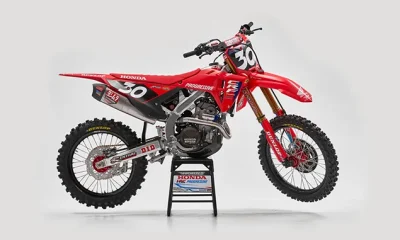
Jo Shimoda Undergoes Back Surgery
-
 Sports3 weeks ago
Texas volleyball vs Kentucky game score: Live SEC tournament updates
-
 Rec Sports2 weeks ago
Robert “Bobby” Lewis Hardin, 56
-
 Rec Sports2 weeks ago
How this startup (and a KC sports icon) turned young players into card-carrying legends overnight