By Matt Baker, Justin Williams and Stewart Mandel
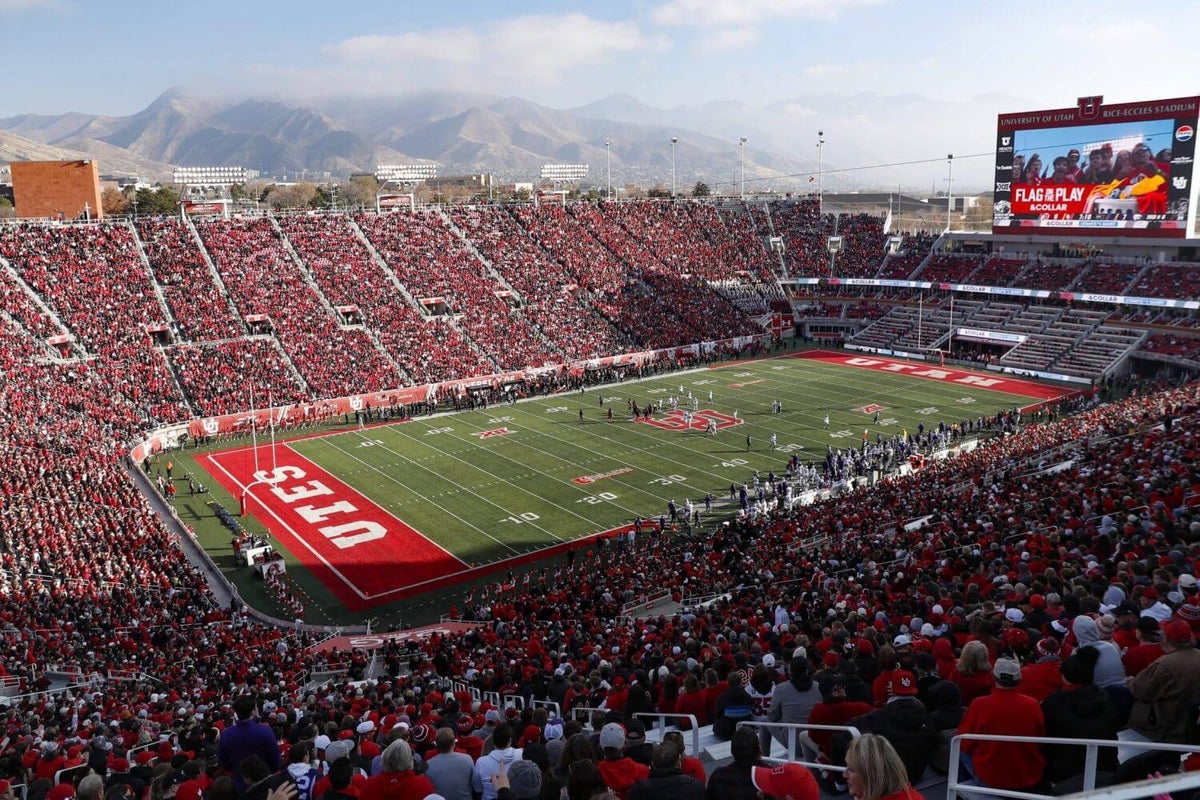
Utah took college sports’ biggest step into private equity yet Tuesday when it approved a plan to partner with a private investment firm, Otro Capital, which would have an ownership stake in a new, for-profit business to fund Utes athletics and increase revenue.
The first-of-its-kind partnership comes with risks, and the terms must still be finalized after receiving unanimous approval Tuesday from the university’s board of trustees. But Utah administrators billed it as a nine-figure venture that could stabilize the Utes in a period of nationwide college athletics upheaval. It’s also the clearest window yet into a complex model schools across the country have been assessing for more than two years, a model with dynamic risks and rewards that could transform the heart of major college athletics.
“The upside is the difference between surviving and thriving,” university CFO Anthony Wagner said.
Here’s how the private-equity partnership would work and how it fits into the national landscape:
How will this work?
The school started a new company called Utah Brands & Entertainment. The Utes will own most of this company, but Otro Capital will also own part of it. The new company will handle some things most athletic departments do (like ticketing, events, sponsorships and NIL) but try to do them even better to make more money for the school and the investment firm.
The Utes would remain in control of big decisions like hiring/firing coaches and scheduling. Although the company will distribute NIL payments to players, the Utes would still control who gets how much.
The company will be under the university’s foundation and chaired by the Utes’ athletic director. On a potential seven-person board, the athletic director and three other Utah foundation members would be joined by two members from Otro Capital and another university supporter/investor.
The company would submit audits to Utah’s trustees, and the university would have the ability to buy back its share of the company from Otro Capital.
During a panel discussion at the SBJ Intercollegiate Athletics Forum on Tuesday, NCAA president Charlie Baker called the deal “really well thought out and really well designed” because the school still controls athletics’ decision-making process. Yahoo! Sports reported Tuesday that the Utes cleared the proposal with the NCAA.
How much money is involved?
No specific dollar figures were mentioned during the board presentation and discussion, but school president Taylor Randall said the platform will allow the Utes to raise “hundreds of millions of dollars over time.”
“This is not a one-time transaction,” Randall said.
That said, the partnership is expected to include a significant initial transaction. Athletic director Mark Harlan called a “short-term solution” of capital something “that’s very important” for the program. Trustees discussed the possibility of a seven-year term to the partnership.
Why did Utah jump at this deal before any other school/league?
The Utes were caught between the rising costs of college sports and the growing gap between the SEC/Big Ten and everyone else. When schools were allowed to start paying players directly this year, that added a $20.5 million expense for Utah and every other team that wants to compete nationally. That expense is harder for schools in the Big 12 and ACC to fund because, as Harlan said, they’re “certainly tens of millions behind other conferences.”
Utah administrators said they did not want to raise student fees to fund athletics. They didn’t want to cut sports or cut academic/research programs, either. Because the status quo, Randall said, “jeopardized the future” of Utah as a powerful program, the Utes decided to become the first program to make this move.
“There’s equal risk of actually not doing anything,” Randall said.
What are the risks?
Because financial details are either not yet finalized or not public, we can’t fully assess them. But generally, private equity groups don’t get into partnerships to lose money. What happens if this venture doesn’t make as much as both sides expect?
Foundation CEO David Anderson acknowledged a “tension” between commercial success and the university’s mission. Utah administrators said in the presentation that the school would be able to veto a sponsorship opportunity that doesn’t align with its values, but how might that work in practice?
A rosier risk is that Utah undervalued itself because it’s the first program to make a deal like this. Anderson told the board that if the deal becomes below market value, Otro Capital will effectively have to match the new numbers.
Who is Otro Capital?
It describes itself as an “operator-led private equity firm with deep expertise” in sports, media and entertainment. The portfolio for the New York-based firm includes FlexWork Sports (a marketing/event group focused on youth camps) and a stake in the Formula One racing team BWT Alpine.
One of Otro’s co-founders, Alec Scheiner, was the Cleveland Browns’ president from 2012 to ’16. The other, Brent Stehlik, worked in pro sports with NFL, MLB and NHL franchises.
Is this the start of a trend?
Probably.
A few schools (like Kentucky and Clemson) have already formed companies to handle some of the business of college athletics. Utah simply took that idea a step further by adding an outside investor to the mix. The Utes aren’t the only program in these financial straits, so don’t be surprised if others follow to the same proposed solution.
What’s the broader relationship between private equity/capital and college sports?
Schools and conferences have been looking into outside money for a long time; Utah’s deal has been in the works for two years.
Florida State seriously explored a similar idea in 2023 but stopped short of executing anything. The Big 12 previously considered conference-wide private equity and capital deals in ’24 and early ’25 but never garnered enough support among its members. “We’re just not ready to jump in just yet,” Big 12 commissioner Brett Yormark told Front Office Sports this May.
The Big Ten spent more than a year exploring similar opportunities before a nontraditional investor emerged this summer: UC Investments, a non-profit public pension and arm of the UC system, offered Big Ten members $2.4 billion in capital in exchange for a 10 percent stake in a newly formed company that would hold the league’s media and sponsorship rights. That deal is now on hold due to public opposition from two members, Michigan and USC. Michigan board chairman Mark Bernstein has called the proposal akin to “a payday loan.”