
NIL
As college basketball enters its most uncertain era yet, few believe the new rules will stop the flow of money


NORTH AUGUSTA, S.C. — The coach of your favorite team has little idea about what’s coming next in college basketball and that reality is stirring insecurity throughout the sport.
From a recruiting outlook, the upcoming 6-10 months are especially hazy; most coaches are trying to grasp what will be the law of their lands in this next key phase of NCAA reconstruction.
The House v. NCAA lawsuit settlement, which was given final approval in June and took activation on July 1, was the culminating act that scotched a century-old amateurism model that is never coming back.
So now what?
Well, things have gotten confusing in the past week-plus. This confusion intersected with the July live recruiting period, giving coaches plenty of opportunity to gripe, ponder and predict — with media and with each other — about where things are and where they might go in the foreseeable future.
Dribble Handoff: USC, Virginia expected to be among college basketball’s most-improved teams for 2025-26
David Cobb
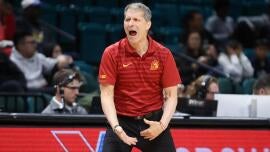
“I’m concerned. I don’t believe it yet, because until they start enforcing any rules, no rule is going to matter,” a coach with recent Final Four experience told CBS Sports. “I would suggest we should shut down our collective tomorrow if I knew that this new structure was going to work. … I’m skeptical over it, that things are going to get there.”
The event provoking this latest bout of anxiety came on July 10, when the College Sports Commission (CSC) published a reminder about its allowable payment models to college athletes. (A lot of this stuff can get cumbersome to follow, but as a refresher: It’s now the CSC, not the NCAA, that oversees all things NIL-related. This major shift in responsibility was part of the terms of the $2.8 billion House settlement and endorsed by the power conferences.)
The CSC reiterated that collectives are no longer acceptable means of payment to players, at least not with how they’d evolved in the past three years. For 90% (if not more) of the basketball and football athletes who made millions the past few portal cycles, their earning power was a function of collectives. And now the CSC is aiming to stamp them out, aided in no small part by a big stipulation with a small money figure attached. Per terms of the settlement, any NIL deal valued $600 or above is subject to review via a third-party arbiter, the accounting firm Deloitte, which is one of the largest companies of its kind in the world.
The Athletic put it succinctly last week: “Officials created those rules to prevent schools from utilizing booster-driven entities to funnel payments to recruits and transfers as a way to work around the $20.5 million revenue-sharing cap.” Moving forward, in order for a player to receive payment through a school’s collective, it has to clear discriminating parameters of having a “valid business purpose.” There are already stories circulating of some stuck in NIL limbo after having deals red-X’d by Deloitte and its NIL Go clearinghouse.
The CSC’s memo prompted pushback. Steve Berman and Jeffrey Kessler, the lawyers who represented the plaintiffs in the House case (and whose firms are set to earn north of $500 million (!!) for their efforts), may not be keen to let this guidance from the CSC stand. An entity called “The Collective Association” issued a statement that said, in part, the CSC’s stance on collectives is “not only misguided but deeply dismissive of the collective organizations and the tens of thousands of fans and donors who fuel them.”
There’s belief from many in the space that lawsuits challenging the CSC’s language on collectives are on the way. Nobody has any clue if those lawsuits would be successful, but they’re guaranteed to make headlines when they land.
So now college basketball is sitting, waiting, wondering what’s licit and what’s unlawful, what’s real vs. what’s not, and who’s going to be the first to truly challenge the new system.
As one high-profile coach put it to me: “Do you prepare like it’s going to be the way they said, or do you prepare like it’s going to be the way it’s always been?”
‘Moving forward, they won’t abide by the rules’
At this year’s Final Four in San Antonio, prominent player agent Daniel Poneman spoke at Silver Waves Media’s Global NIL Conference to a room filled with a variety of power players in the college sports space.
“I said it tongue-in-cheek, with a call to action: organized resistance,” Poneman told CBS Sports, “I said, ‘Guys, look around the room. If none of us follow these rules, then they can’t enforce them. What are they going to do about it? Really, what are they going to do about it?'”
Poneman runs WEAVE, a player agency that has quickly ascended over the past four years. He’s been a thorn in the NCAA’s side at times, but there’s no downplaying his agility in the NIL space. In April he knew the pending House settlement was a threat to his burgeoning business. Poneman saw that 2025’s portal cycle, by far the most lucrative yet, could be the last of its kind.
Now that the next phase is here, there’s hesitancy in college hoops about what’s going to hold. Poneman has his doubts about the legitimacy of the CSC’s rulebook.
“Some think we’re going to see a complete shift in college basketball, but it’s not going to happen,” Poneman said. “I don’t know how it’s not going to happen, but there are too many talented, powerful, motivated basketball coaches who have spent their whole life getting to this position to allow some arbitrary, nonsensical legislation totally impact their career in irreparable ways.”
Will collectives actually go away? As a result, will cheating heavily come back into style? What does “cheating” mean in 2025? What will the loopholes be? What will the punishments be? How far will agents or boosters or players or coaches go to keep funneling hundreds of millions of dollars into the sport?
Imagn Images
“The most pressing thing is, can it withstand the legal challenges?” one prominent SEC coach told CBS Sports. “Because if it loses to the legal challenge of being able to cap someone’s NIL, that’s gonna be the first lawsuit, and if that goes away then all we’ve done is say we have to pay the 20.5 plus what we’re already paying.”
Whether Congress can solve the problem remains unknowable. The Student Compensation and Opportunity through Rights and Endorsements (SCORE) Act is trying to get pushed through, to give the NCAA antitrust protection, but in reality it’s probably going to be the next piece of legislation to die on the House or Senate floor.
Michigan State coach Tom Izzo told me that, in his view “10 to 15%” of the sport was cheating 15 to 20 years ago. He thinks if strict restrictions are put in and they hold, the number will be closer to 40% because the money’s gotten too big to go all the way back.
“If they’re going to do what (Tony) Petitti and (Greg) Sankey are saying, they’re going to have to have some real enforcement,” Izzo said. “That means more to me than Deloitte.”
About three hours after Izzo said that, I sat next to a Big 12 coach as he scouted a player. He pointed to different people in the gym as he made this point.
“His administration, my administration, her administration, his administration are all hoping and believing that the guardrails are in place and this is how we will operate,” he said. “And you know what coaches are saying? Bull-f—ing-shit.”
Opendorse, a company that has been at the forefront of the NIL business, reported that collectives were responsible for 81.6% of all trackable and/or reported NIL deals for the 2024-25 cycle. Those deals totaled more than $1.6 billion. That’s a lot of money being taken off the table — with a portion probably slipping under it.
It’s why coaches are wired to be cynical about the alleged drastic change in college sports’ financial environment.
“I think collectives are going underground,” another SEC coach told me. “But they’re not going away.”
“Going underground” is code for cheating.
Until just a few years ago, paying for a player realistically meant anywhere from $20,000 to $100,000 in cash (maybe a little more in extreme cases, or so the stories go) in addition tangible items (like a car, setting up a loved one with a job or a residence) and discretely finding ways to deliver the money to a player or their family.
Those days are over; the money’s gotten too big.
Highly prized transfers have gone for more than $1 million the past two offseasons. It would be ambitious to suggest rule-breaking at that level will happen, because moving that amount of money — not to be traced, and thus not to be taxed — is asking for major trouble from law enforcement. Still, coaches think something is on the table if collectives dissolve.
“I think it goes over the rev share cap,” one Big Ten coach told me. “Moving forward, they won’t abide by the rules.”
Creative accounting will soon be the new rage. Coaches believe some of their competitors will be doing whatever it takes, either through loopholes or brazen cheating, to keep acquiring talent.
“I heard a school hired Deloitte to come up with an algorithm beat their algorithm,” another coach with Final Four experience told me, referring to Deloitte’s system that is determining what a “valid business purpose” is to clear NIL deals.
Some of these schemes are why Poneman doesn’t think the CSC’s current guidance will stand.
“I don’t think that’s going to fly, because all it takes is one coach to say go f— yourself,” Poneman said. “All it’s going to take is one school to say f— you, we’re going to keep our collective, we’re not submitting to NIL Go and what are you going to do? Who does it hurt if collective can spend money? Nobody! Who does it help? It helps coaches, who get better teams. Players, who get more money. Agents, who get more money. Players are waiting longer to enter the draft, they’re staying in school, the product is better.”
This is not so much a problem now as it will be a massive adjustment in 2026. That’s because any school that could afford to put up the majority — or all — of its NIL payments prior to July 1 (when the House settlement’s terms became official) did so.
One prominent coach told CBS Sports he was told by another school that it paid out well north of $20 million before July 1, meaning all those players have been fully taken care of for the upcoming year. That school will be comfortably north of $6 million in revenue sharing for next year’s portal cycle, putting it at an advantage against the field in rev-share capital.
“I just talked to one of the coaches, and they said they gave everyone on the team at least a million,” this coach said. “Schools have front-loaded two-year deals and paid them all up front. So, they get the kid, they front-load the two-year deal: $1.5 (million) in Year 1, $1.5 (million) in Year 2, they give them $3 million before June 30 because of the settlement. They do that with the entire team, except for three or four guys. They have to sign three guys next year, now they’ve got this year’s rev share plus next year’s rev share to go get those guys.”
For the very few schools that had the money on hand to do that, it put them ahead of the pack for next April, when funds are expected to be tighter sport-wide vs. 2025’s free-for-all levels. Poneman predicts a 10-20% drop in contracts next year.
“Some schools are going to go into it expecting to follow this new cap, and others go into it with workarounds,” Poneman said. “There will be this chaotic real-time transformation. I wonder if it happens in the portal or if it happens before that. These high school kids, is no one going to sign them?”
Word gets around. High school players graduating in 2026 are aware of the general figures five-star players in the 2025 and 2024 classes were getting. A handful of coaches I asked about this issue admitted they weren’t sure what to tell 17-year-old prospects. It explains the slow in commitments vs. the trends of the past few summers. (Only five of the top 50 prospects for 2026 have pledged to a school.)
“Coaches are going to offer numbers and try to figure it out later and it’s going to be a total shit show,” Poneman said.
Every coach I spoke with agrees with Poneman that the numbers for high school recruits and the portal players of next spring are going to drop. But by how much is the devilish detail. Based on my conversations this offseason with dozens of sources, the average high-major transfer this year made around $600,000. So for 2026, does that drop in price mean a reduction of $100,000 on average? Does it mean $400,000 less?
Maybe the most important aspect of the House settlement moving forward is that the schools who opt into the agreement cannot sue the CSC, NCAA or Deloitte. It’s the bond that holds the whole thing together. Without it, there wouldn’t be a settlement at all.
The catch: What is to stop a player from suing if an NIL deal through a collective, or a separate business, is shot down by Deloitte? Should collectives cease to exist the way the CSC has outlined, the lost earning potential in the years to come would be in the hundreds of millions.
“These new rules are bullshit,” Poneman said. “They benefit the NCAA and the administrators, the same stuffy white people who were trying to suppress these players in the first place, and now they’re trying to put the toothpaste back in the tube.”
So what do we have? Five hundred lawsuits from players waiting in the months to come?
That’s the next big wait-and-see. Are we going to look up around Thanksgiving and see an assembly line of legal challenges overrunning college sports? How long would those lawsuits take? Would injunctions enable them to be paid while still in school? If so, this new system is build on matchsticks.
“How does anybody determine what somebody’s market value is?” a coach with a national championship on his résumé told me. “They’re making it seem so casual that these deals won’t be accepted. And to be honest, I don’t see how they can’t be accepted.”
Imagn Images
Big East’s perceived advantages worries some coaches
The most common inquiry I got from coaches on the recruiting trail this month was: How much do you think Big East programs have to spend now?
It’s gripping the imaginations of many.
“Coaches in the league are worried about the Big East,” one SEC coach told me.
Most Big East schools don’t have football, and even the ones that do (UConn, Villanova), aren’t driven by it. This means they can’t reach $20.5 million in revenue sharing, but they also don’t have to allot $12 million-plus to football, which escalates their spending power.
This is the unintended consequence of having football interests dictate most of the decisions in college athletics. As things stand right now, Big East jobs have bumped in value. You can claim it’s “unfair,” or you can acknowledge that the history of college sports has always had trends and swells that benefitted certain programs over others; it’s never been an even playing field. It’s not the fault of St. John’s, Marquette, Creighton — or even A-10 powers like VCU and Dayton — that they’re free of football’s power grip on college sports.
They don’t get the benefit of everything that comes with housing a football team, but they’re also not saddled with the expenses either.
That’s the trade-off.
Per sources: One high-major, non-Big East job that came open earlier this year told prospective candidates that their budget up until June 30 would be well north of $7 million to build out a roster for 2025-26, then funding would be sliced in half for 2026 and beyond due to football eating up a lot of the rev-share cap.
The consternation stems from most SEC teams operating below $3 million in revenue sharing for the upcoming year, according to a variety of sources. One expected exception is basketball-crazed Kentucky, which is believed to be at a 45% rev share of its $20.5 million cap for 2025-26. There was talk of all SEC programs agreeing to an equal rev-share cap, but similar to the Big East situation, if Kentucky wants to put more emphasis on its basketball program (and sacrifice for less on the football side) than the likes of Alabama, Auburn or Tennessee, that’s Kentucky’s prerogative.
As one Big East coach put it to me: “If I’m at $6 million for my team this year and the University of Florida men’s basketball program has $3 million, how am I not an advantage? [SEC schools] are not going to cheat up to $3 million. That’s a lot of money. In the old days, cheating was like 50 grand. … I understand if an SEC assistant wanted 50 grand and went to some rogue booster. You would never go to a booster now and say, ‘Hey, I need $2 million for a player.’ That’s criminal activity.”
Besides, spending big money doesn’t assure anyone anything, as another Big Ten coach was quick to point out. This person estimated schools in his league will max out just north of $4 million in men’s basketball for the upcoming year, with the bottom being about $2.5 million.
“If everybody stays within that, it’ll tighten things up,” the veteran coach said. “You’re still gonna have to spend your money wisely. I don’t think the teams that spent the most money necessarily won last year. Florida, Houston, Auburn, I don’t think they were at the top.”
This unavoidable variety of money allotment across high-major athletics has gotten some to wonder: Should college basketball have its own cap eventually as well? It seems unlikely — and let’s be clear: would be blatantly hypocritical — but cynicism runs deep on this subject.
“Ohio State won’t let Xavier, Illinois won’t let DePaul, Virginia won’t let VCU beat them for players. That’s not happening,” another Big Ten coach told me. “How is it not going to happen? I don’t know.”
That clears things up.
Coaches condition themselves to think someone is always out to skirt the rules, if not outright break them, and they’re a bit paranoid at what they don’t know and who’s getting an edge on them. Relatedly, Izzo said he wants transparency on basketball spending when it comes to revenue sharing. Michigan State is at $3.5 million for the upcoming season, but that number will increase in a year. Why can’t the public know how each school is breaking down their budget? After all, the $20.5 number is public information.
“Why isn’t it transparent?” Izzo said. “You don’t have to say what these players are making, but why can’t we say Michigan State gets $4 million, Arkansas gets 5 million and so on?”
Inevitably, this conversation for most leads to an obvious conclusion.
“Just make them employees,” was the sentiment from plenty on the recruiting trail this month.
Five years ago, you’d be hard-pressed to find a gaggle of coaches endorsing a player’s union. It’s funny how a true free market can zip them into a headspace where they want collective bargaining. They want players to stay for more than one season. They want to pay them a fair share, have contracts and bring stability back to college basketball.
But that future isn’t coming soon.
So in the long interim, everyone’s bracing for the next era, with more money — on the line, up for grabs, changing hands — than at any point in the history of college sports.

Updated Dec. 22, 2025, 10:57 p.m. ET
Quarterback Nico Iamaleava is returning to UCLA football for a second season to play under new coach Bob Chesney, the team announced Dec. 22.
The former Tennessee quarterback had transferred to UCLA in April. The Bruins went 3-9 this past season, during which DeShaun Foster was fired after an 0-3 start.
Iamaleava completed 64.4% of his passes for 1,928 yards and 13 touchdowns, with seven interceptions in 11 games. He also rushed for 505 yards and four touchdowns. He did not play at Ohio State in November due to a concussion.
Nico Iamaleava spent two seasons with Tennessee football before exit
Iamaleava played 18 games in two seasons at Tennessee, and started all 13 games during UT’s College Football Playoff run in 2024.

The QB threw for 2,616 yards with 19 touchdowns and five interceptions in 2024, but was less efficient in SEC play. He threw nine touchdowns in eight conference games, but four of those were against Vanderbilt in the regular-season finale.
In his UT career, he completed 241 of 379 passes for 2,930 yards with 21 touchdowns and five interceptions. He redshirted in 2023 behind starter Joe Milton.
Why did Nico Iamaleava and Tennessee football split?
Tennessee coach Josh Heupel informed the Vols that Iamaleava was no longer a member of the team prior to the April 12 spring game, ending the relationship between UT and Iamaleava amid an apparent NIL dispute.
Iamaleava skipped the Vols’ final spring practice on April 11, the morning after On3’s Pete Nakos reported ongoing negotiations between Iamaleava and UT. His NIL deal reportedly paid him more than $2 million per year.
ESPN’s Chris Low, citing sources, reported that Iamaleava’s representatives wanted his NIL pay increased to $4 million per year. The family used the possibility of him entering the transfer portal as leverage.
Mike Wilson covers University of Tennessee athletics. Email him at michael.wilson@knoxnews.com and follow him on X @ByMikeWilson. If you enjoy Mike’s coverage, consider a digital subscription that will allow you access to all of it.
Dec. 23, 2025, 5:35 a.m. ET
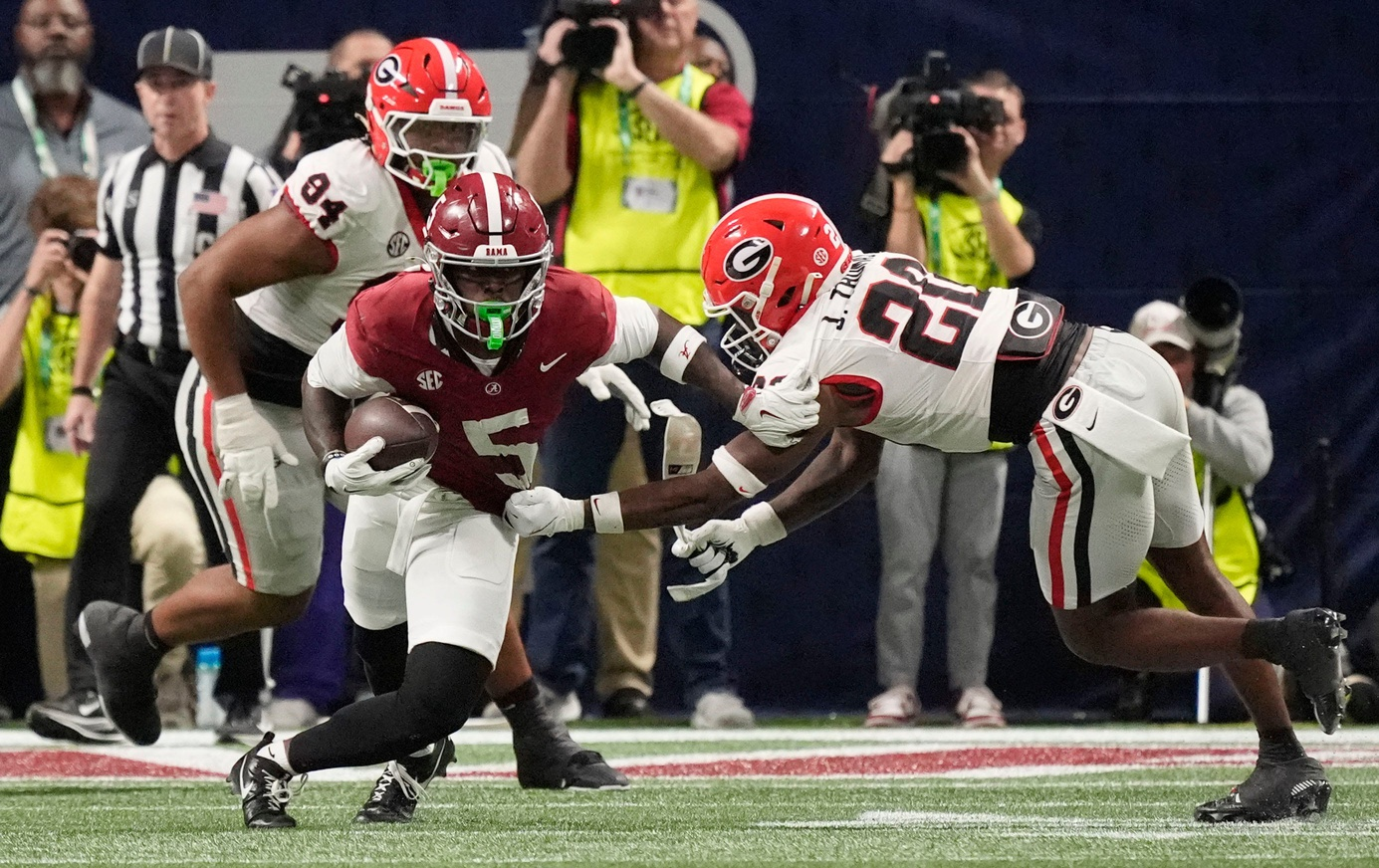
If you watched any part of Ole Miss’ 41-10 blowout of Tulane, the one common theme you felt was that the absence of former head coach Lane “Benedict” Kiffin was not acknowledged by the home fans; they even appeared to embrace it. It took a while for Rebel Nation to realize it but Kiffin simply was never “one of them” and, while he built the program, he did not measure up to the “Ole Miss family.” Most Rebel fans would probably tell you now they’d rather lose without him than win with him. Kiffin has now been fully exposed and St. Nick (Saban, now known as Mr. Hypocrite) and Pete Carroll, his self-proclaimed advisers, should be ashamed for their comments supporting the manner in which he tried to negotiate his way to both coaching one team and recruiting for another simultaneously. One is the GOAT who ran away from NIL and the transfer portal while the other is a recognized cheater by many. The best part is Kiffin’s LSU Tigers play at Mississippi next year. Good riddance!
Dec. 23, 2025, 6:07 a.m. ET
Arizona State football coach Kenny Dillingham says he was never offered the Michigan job. Never got to that point.
This, of course, isn’t the story nor the takeaway from Dillingham’s dalliance with the Wolverines.
The irony of the state of Arizona’s highest-paid public employee begging for private donations to compete at the highest level of college football is where this bizarre story begins.
“We live in Phoenix, Arizona. You’re telling me there’s not one person who could stroke a $20 million check right now?” Dillingham said after agreeing to a new contract worth more than $37 million over the next five years.
That’s right, the guy whose future could never be more secure, sees the immediate horizon line for the Arizona State football program. And frankly, it’s financially unstable at best — and a house of cards at worst.

It’s Arizona State today, but could be Kansas State or Colorado or North Carolina State or Virginia Tech or Boise State — or any of the other 100-plus Bowl Subdivision teams not protected by the golden parachute of the Big Ten and SEC.
Coaches at those 34 schools in the two big conferences — many of those institutions born on third base from long-term association with the leagues before the financial boom of television media rights — aren’t publicly calling out dignitaries and alums associated with their schools.
They’re not standing during a media availability and pleading for the next Cody Campbell to please step up. Or else.

Dillingham made it very clear that college football is about those who wish to spend money, and those who don’t. This isn’t about revenue sharing between schools and players, this is all about private NIL funding.
This is about the dirty underbelly of the sport that can’t be legally controlled. A growing vice that doubles and triples the obstacles faced by conferences chasing the Big Ten and SEC.
It’s bad enough that mega media rights deals give the Big Ten and SEC a huge competitive advantage over the rest of college football. It’s downright sinister that those same schools have deep pocket boosters willing to spend tens of millions in private NIL deals to eliminate all doubt.
Sam Leavitt led Arizona State to the Big 12 title and the College Football Playoff in 2024, and returned to Tempe this season for another run. A foot injury ended his season early, and now he’s headed to the transfer portal looking for a new home.
Not because he doesn’t think he can win big with the Sun Devils — he already proved that. He’s in the portal, like so many other players, to strike when its hot and score a deal before moving onto the NFL.
What are the odds he signs with a Big Ten or SEC school? A program which has boosters that can pay him an outrageous salary through a private NIL deal.
Do you really blame Leavitt?
Do you really blame Campbell, Texas Tech’s billionaire booster, who built a championship-level team with a $25 million roster — and the Red Raiders responded by winning the Big 12 and earning a first round bye in the CFP?
They’re just following the rules, and until a different set of rules is in place, they’ll take advantage of it.
That’s why Dillingham sounded like a panhandler last weekend, begging — literally begging someone, anyone, in The Valley to jump on board and throw money at the program. He even specifically called out school alums Phil Mickelson and Jon Rahm.
Hey, Kenny, while you’re at it, why not place a call to the sheiks in Saudi Arabia? See if their Public Investment Fund (PIF) is interested in sports washing with the second-most popular sport in America.
Because if you’re reaching out to Mickelson and Rahm, you’re reaching out to the Saudis — who own LIV Golf — by proxy. The only difference between the PIF and Utah’s new $500 million agreement with Otro Capital is one group of investors has a long line of human rights violations.
The other is a financial shark, whose only goal is to make money.
Any way they can.
“College football is absolutely chaotic right now,” Dillingham said. “You’ve got to be able to have a plan to be aggressive in this thing for three, four, five years down the road. If you don’t have that, you’re a ticking time bomb for failure.”
This nonsense isn’t going to end until players are considered employees, and players collectively bargain their best deal. Until FBS conferences go to market as one, and sell their games to make double or more than the current market value of $4 billion-plus annually.
That move will allow universities to restrict player movement through multi-year contracts, and find a fair and equitable postseason for all. One that doesn’t include charity for the Group of Five conferences, who have no business in a playoff unless invited based on merit (see: Boise State, 2024).
But that move also means players would go from earning about 20 percent of media rights revenue to likely 45-50 percent. NFL players currently make 48 percent of the media rights.
That’s why the Big Ten and SEC don’t want players collectively bargaining. It has nothing to do with the pollyanna idea sold by conference commissioners that players, “don’t want to be employees.”
If they’re going to earn 20 percent, who wants to deal with the headache of collectively bargaining? Move that number to 45-50 percent, and watch how many players say they’re all in.
Then maybe their coaches wouldn’t have to shamelessly beg for cash, mere hours after signing a new $37 million dollar contract. Or else.
Matt Hayes is the senior national college football writer for USA TODAY Sports. Follow him on X at @MattHayesCFB.

As Indiana prepares to host its first-ever College Football Playoff game as the No. 1 seed, the Hoosiers are quietly already planning for 2026.
Fernando Mendoza, a redshirt junior transfer who led the Hoosiers to a 13-0 regular season, won the 2025 Heisman Trophy after throwing 2,980 yards and a national-best 33 passing TDs and is widely seen as an early NFL first-round prospect.
Should Mendoza depart for the draft, Indiana would be tasked with replacing an elite, NFL-caliber starter, which explains why numerous quarterbacks expected to enter the transfer portal have been linked to the Hoosiers.
On a December 20 episode of “Hoosiers Football Tailgate,” host Coach Griff specifically named TCU quarterback Josh Hoover, who announced he will enter the transfer portal and skip the Alamo Bowl, as a name Indiana should watch.
“I like this guy as a definite target for Indiana,” Griff said. “So, Josh Hoover, keep an eye on him as a potential target… The one I think they’ll really try to get is Hoover.”

Hoover was a three-star recruit out of Rockwall-Heath (Texas) and initially committed to Indiana in 2021 before flipping to TCU after the school extended an offer.
He then redshirted in 2022 and became the starter in 2023, producing breakout numbers in 2024 with 3,949 passing yards, 27 passing touchdowns, and 11 interceptions with a 66.5% completion rate.
In 2025, Hoover threw for 3,472 yards and 29 TDs, with 13 INTs, and projects among the most productive returning QBs in 2026 on career totals of 9,629 passing yards, 80 total TDs, and a career passer rating of 147.8.
On3’s NIL valuations list also shows Hoover ranking among the most marketable college quarterbacks, with a valuation in the neighborhood of $2.1 million.
Hoover is an intriguing option for Indiana due to his proven production and Power Five experience, positioning him as a potential one-year, plug-and-play solution as Curt Cignetti prioritizes continuity.
There is also a “full-circle” aspect to his recruitment, as Hoover originally committed to Indiana before flipping to TCU in 2021.
Read More at College Football HQ
- Major college football program loses 15 players to transfer portal
- College Football Playoff team has ‘significant interest’ in 4,000-yard QB
- College football quarterback enters transfer portal after 4,000-yard season
- No. 1 ranked transfer portal player predicted to join College Football Playoff team
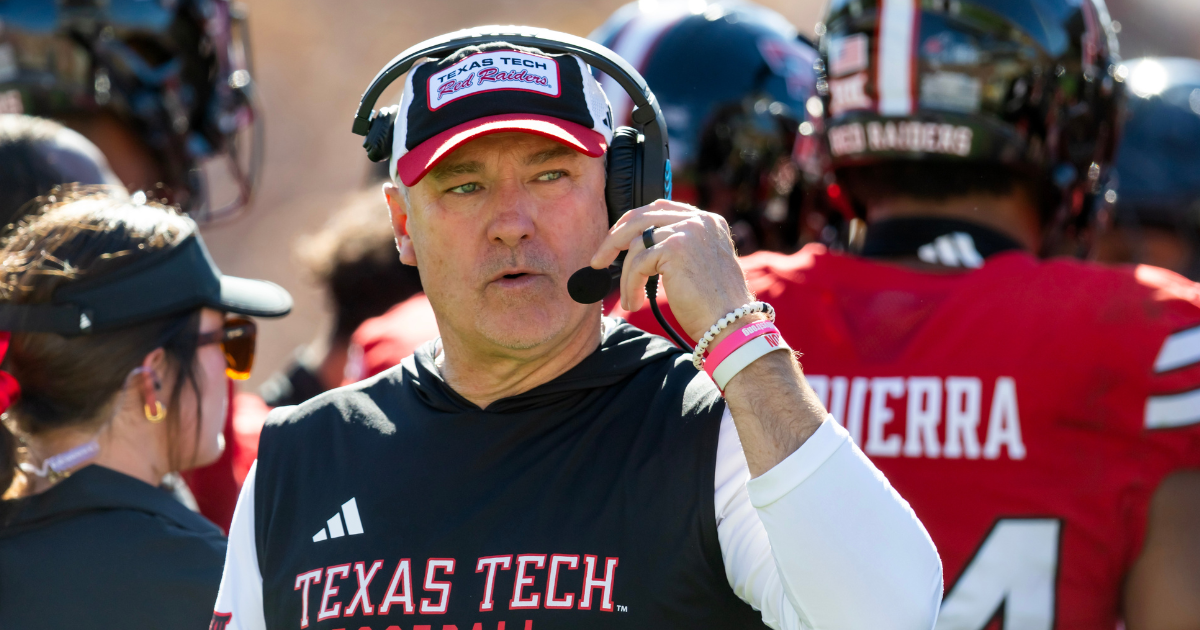
Two teams that have really embraced the NIL era are set to meet on New Year’s Day. Oregon‘s win over James Madison advanced them to the College Football Playoff quarterfinals, where Texas Tech was waiting on the other side. Now, it’s Dan Lanning vs. Joey McGuire in the Orange Bowl with a lot of resources put into rosters.
Oregon has been at the forefront of NIL since its inception, especially under Lanning. Texas Tech could be considered the new kid on the block after major investment from a few donors. Even so, McGuire sees some similarities between the two when it comes to winning at whatever cost.
SUBSCRIBE to the On3 NIL and Sports Business Newsletter
“They’ve got a great booster in Phil Knight that really said, ‘We’re going to go win at the highest level and there’s no excuse when it comes to finance.’ You turn around and I think that we’re showing that we’re doing that. I think we’re really comparable,” McGuire said.
“We’ve got guys that have stepped up and done a great job. I kind of call them the ‘Big Five’ whenever you talk about Cody and John, Mike, Dusty, and Gary. Those guys have, along with everybody else in Red Raider Nation, but those guys have really led the charge. So, we’re kind of comparable on and off the field in this team. They’ve just done it for a little bit longer. That’s what we’re trying to do.”
As he said, McGuire is looking to put together a run similar to Oregon. All four years since hiring Lanning have been a resounding success, finishing with double-digit wins in all of them. This is the program’s second College Football Playoff appearance in the 12-team format, just missing out in 2023 due to a Pac-12 Championship loss.
Oregon won the Big Ten in its inaugural season inside the conference. Texas Tech can check that box already though, winning the Big 12 for the first time in school history. Advancing in the CFP would be a sweet bonus.
No matter the result on Jan. 1, Texas Tech is positioning itself to be successful moving forward. The 2026 recruiting class ranked 20th in the country but No. 1 in the Big 12 per the Rivals Industry Team Rankings. This is all before raiding the NCAA transfer portal, something McGuire and his staff did so well with last offseason.
Abu Dhabi to Showcase Its Esports and Motorsports Excellence: Gran Turismo World Series 2026 Kicks Off in the UAE

Chase Elliott 2025 season in review: Two wins, Round of 8 appearance highlight big year for the 9 team
Former Tennessee QB Nico Iamaleava returning to UCLA for second season

Police Athletic League (PAL) reports engagement numbers are down, offers youth sports programs

Big Machine Racing Welcomes Retina Surgeon Dr. Patrick Staropoli to the O’Reilly Auto Parts Series for Full-Time Competition Beginning at Daytona – Speedway Digest

Youth Matters and the role of sport and physical activity

Female youth sports injuries on the rise in Michigan, doctors say

Volleyball Assistant Coach in Clinton, SC for Presbyterian College

Greenville land use ordinance addition moved to June town meeting -Piscataquis Observer

FIS encourages youth participation with Para Ski Nordic Action Day at Europa-Park

Baldwinsville’s 1st year boys basketball coach is working to build strong culture and pipeline

Wisconsin volleyball offseason off to crazy start

CLIMBING: How the All-Time Win List Looks After 2025 – Speedway Digest

PlayStation Market Accelerates Global Gaming Evolution:
Four takeaways from the first weekend of the College Football Playoff

First Tee Winter Registration is open

Fargo girl, 13, dies after collapsing during school basketball game – Grand Forks Herald

CPG Brands Like Allegra Are Betting on F1 for the First Time

F1 Las Vegas: Verstappen win, Norris and Piastri DQ tighten 2025 title fight

Sycamores unveil 2026 track and field schedule

Two Pro Volleyball Leagues Serve Up Plans for Minnesota Teams

Utah State Announces 2025-26 Indoor Track & Field Schedule

SoundGear Named Entitlement Sponsor of Spears CARS Tour Southwest Opener

Jo Shimoda Undergoes Back Surgery

Redemption Means First Pro Stock World Championship for Dallas Glenn

Texas volleyball vs Kentucky game score: Live SEC tournament updates

Bowl Projections: ESPN predicts 12-team College Football Playoff bracket, full bowl slate after Week 14

Black Bear Revises Recording Policies After Rulebook Language Surfaces via Lever

How this startup (and a KC sports icon) turned young players into card-carrying legends overnight

Robert “Bobby” Lewis Hardin, 56





-
 Motorsports2 weeks ago
SoundGear Named Entitlement Sponsor of Spears CARS Tour Southwest Opener
-
 Rec Sports3 weeks ago
Black Bear Revises Recording Policies After Rulebook Language Surfaces via Lever
-

 Motorsports2 weeks ago
Donny Schatz finds new home for 2026, inks full-time deal with CJB Motorsports – InForum
-

 Rec Sports3 weeks ago
How Donald Trump became FIFA’s ‘soccer president’ long before World Cup draw
-
 Rec Sports2 weeks ago
David Blitzer, Harris Blitzer Sports & Entertainment
-
 Motorsports2 weeks ago
JR Motorsports Confirms Death Of NASCAR Veteran Michael Annett At Age 39
-
Sports2 weeks ago
Elliot and Thuotte Highlight Men’s Indoor Track and Field Season Opener
-
Sports2 weeks ago
West Fargo volleyball coach Kelsey Titus resigns after four seasons – InForum
-
 Motorsports2 weeks ago
Rick Ware Racing switching to Chevrolet for 2026
-
 Sports2 weeks ago
Temple Begins Indoor Track & Field Season at UPenn This Weekend