
NIL
Assessing the 'fair market value' of affiliated NIL deals under the House settlement


On April 23, Judge Claudia Wilken tentatively found that she could grant final approval of the landmark settlement in the House litigation, with the exception of certain proposed roster-limit provisions. While the parties work to address the remaining roster-limit issues, universities, conferences and athletes are otherwise continuing to prepare for final approval of the settlement, including the much-discussed provisions that will permit schools for the first time to share revenue directly with student athletes up to a “cap,” initially set at $20.5 million per school, for the 2025-26 season. The settlement terms also include new rules that will govern NIL deals that college athletes may enter.
Specifically, under the proposed settlement, college athletes can continue entering NIL deals both with entities (or individuals) affiliated with their universities and with unaffiliated third parties. Any NIL deal worth more than $600 must be reported to a third-party clearinghouse, which Deloitte will operate. Further, under the settlement, any NIL deal with an affiliated entity must be “for a valid business purpose” with “compensation at rates and terms commensurate with compensation paid to similarly situated individuals with comparable NIL value.” If it is determined that an affiliated NIL deal does not comply with this standard (which some have referred to as the “fair-market-value test”), an athlete may challenge the determination in arbitration.
The purpose and intent behind the restrictions on affiliated NIL deals is clear: Universities cannot use NIL deals with affiliated entities to circumvent the new revenue-share cap. However, the proposed provisions beg a number of questions.
For instance:
- What makes two college athletes similarly situated? The sport they play? Their geographic location? The market reach of their athletic programs? Is a football player in Southern California similarly situated with a basketball player in Kentucky or a gymnast in Louisiana?
- Further, how will it be determined whether athletes have comparable NIL value? Does sport or market factor into that analysis? Is it dependent on how many social media followers an athlete has, or whether the athlete has prior NIL deals?
- And how does one determine whether NIL deals in different markets and with different terms are commensurate? Can you compare a non-exclusive deal with an exclusive deal, or a short-term deal with a longer-term deal? Can you compare NIL deals in different media markets or even different product markets? If you can make these sorts of comparisons, what adjustments, if any, need to be made to make the comparisons apples-to-apples?
The settlement does not answer any of these questions. And while the penalties for universities that violate the so-called “fair market value test” have not yet been announced, many expect the penalties to be severe to deter violations and ensure compliance with the cap. Given the potential consequences, it will be imperative for affiliated entities to ensure their deals will hold up if challenged.
Although the settlement provides little guidance on how the new test will be implemented, assessing the market value of an agreement’s terms is not a novel concept. Parties have litigated that issue for decades in a variety of contexts. When goods are homogeneous and sold frequently, like shares of a company’s common stock, it is often easy to determine market value. In such circumstances, there is a recognized market with readily identifiable terms reflecting the market price. The analysis becomes more difficult, however, when the good or service in question has unique characteristics, which is often the case when intellectual property is involved. In these cases, parties often look for relevant benchmarks or comparable transactions in the industry, if any, as a measure of market value. If there are no benchmark deals directly on point, the parties may use relevant benchmarks or market data they can find and make adjustments to the terms, as needed, for a more apples-to-apples comparison.
Based on the nature of NIL rights, NIL deals will likely fall into this latter category — athletes’ NIL rights are simply not homogeneous goods. And while the market for NIL rights will continue to mature, and certain market rates may generally develop for certain types of deals, there are bound to be differences in the terms and compensation of NIL deals based on the athletes involved, the rights granted, and the scope of the agreement.
The entertainment industry provides a potential window into how NIL agreements with affiliated entities may be evaluated. For years, participants in motion pictures and television series (e.g., writers, producers, actors or companies with a contractual right to share in certain defined proceeds) have challenged the terms of licenses studios have entered with affiliated entities. And, much like the proposed terms of the settlement here, many studios have standards addressing and defining how to evaluate affiliated transactions. While these provisions vary by studio, they often examine the terms of similar, unaffiliated transactions that the studio enters — i.e., the terms of an affiliated transaction may be compared to the terms of unaffiliated transactions that the studio enters. A studio thus can look at its own universe of unaffiliated agreements to help evaluate the terms of an affiliated transaction.
The settlement’s mandatory reporting requirement for any deal over $600 will help Deloitte build a repository to evaluate the terms of affiliated NIL deals. But it will be in the best interests of the schools and their athletes to track what is happening in the market to mitigate any risk of penalties for non-compliance with the so-called “fair market value test,” especially given recent reports that Deloitte has indicated that 70% of all prior NIL deals with affiliated entities would have been denied under the new standard. The more data and NIL deals schools and their affiliated entities have access to, the better. And if schools can point to similar deals their athletes have entered with unaffiliated parties, that may prove helpful in demonstrating the value of an affiliated NIL deal under the new test.
Tim Heafner is a litigation partner in the Entertainment, Sports, and Media group at O’Melveny & Myers, with significant experience in college athletics and other high-profile sports and entertainment disputes; Max Rothman is a litigation counsel and Ethan Hicks is a litigation associate with O’Melveny.

Continue Reading
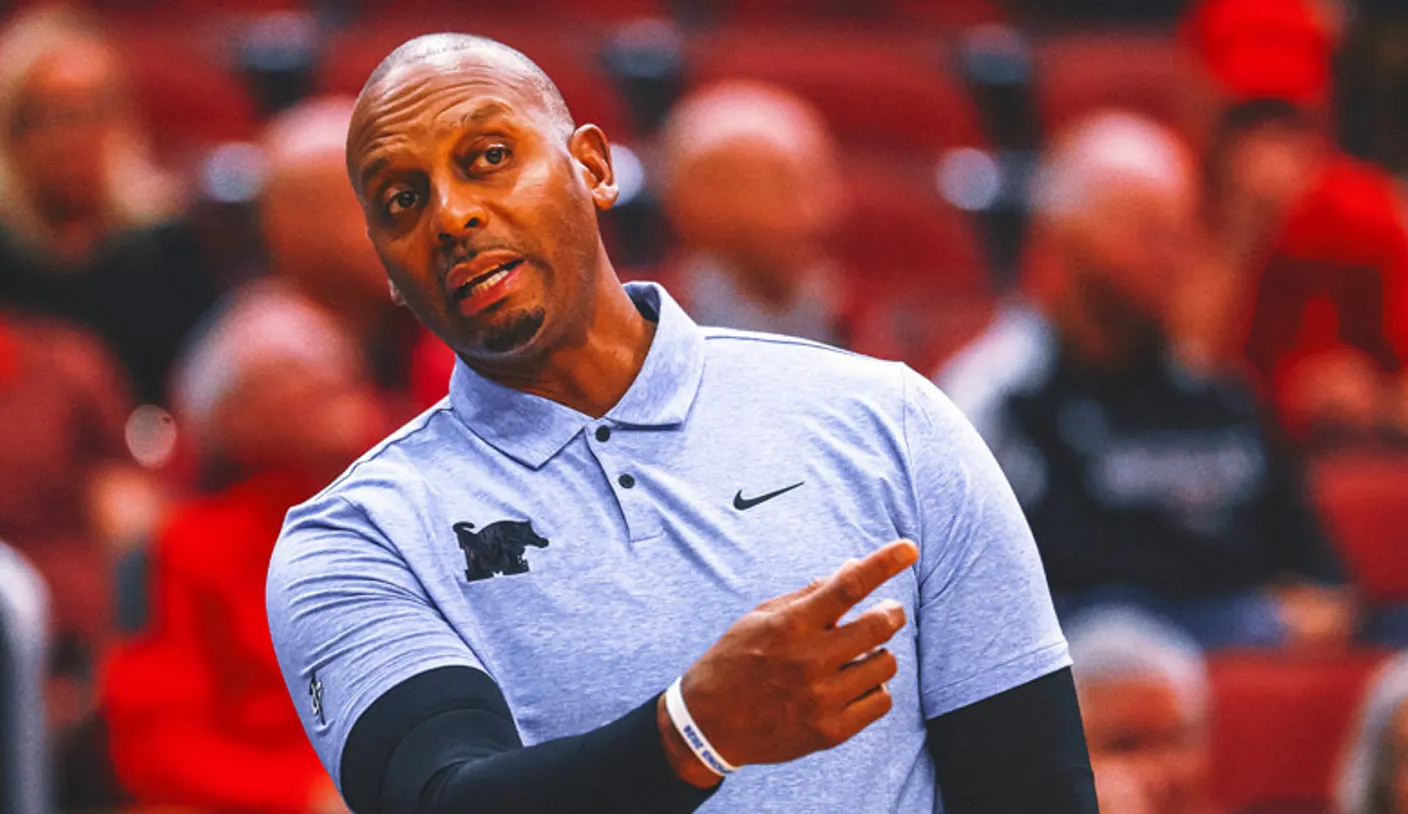
How do you get somebody’s attention? Well, one way to get a college basketball player’s attention is by taking away their NIL money, like Memphis Tigers head coach Penny Hardaway did with junior forward Aaron Bradshaw.
“Aaron Bradshaw has played for some great coaching staffs, but they haven’t figured out how to motivate him, so Penny Hardaway found a way to motivate Aaron Bradshaw. He started taking his NIL money away,” it was revealed on the broadcast of the Tigers’ Wednesday night loss to the Vanderbilt Commodores.
“He said, ‘I fined him for showing up late. I fined him for violating our dress code. Three grand here, three grand there. Guess who started to show up early? Guess who started to put the effort in?’ … He [Hardaway] takes that fine money and puts it back in the bucket and has some guys further down the roster reaping the cash benefit of those fines.”
Message received.
Memphis is the third stop for Bradshaw in his collegiate career, with the former five-star recruit spending his freshman season at Kentucky (2023-24) and sophomore season at Ohio State (2024-25). Through nine games this season, six of which he has started, Bradshaw is averaging a career-high 7.1 points and 2.9 rebounds in 15.4 minutes per game, while shooting 50.0% from the field.
Hardaway, who starred at Memphis for two seasons as a player (1991-92, 1992-93), is in his eighth season as the Tigers’ head coach, with Memphis a combined 166-74 under him since the 2018-19 season, highlighted by two American Tournament titles and three NCAA Tournament appearances. However, Memphis is off to a 4-6 start this season, with three of its six losses being against ranked opponents in Purdue, Louisville and Vanderbilt.
Maybe if Hardaway takes away the entire team’s NIL dough, Memphis will run the table in conference play?
MORE COLLEGE HOOPS: Last Night in College Basketball: No. 13 Vanderbilt Passed OT Test vs. Memphis
Want great stories delivered right to your inbox? Create or log in to your FOX Sports account, and follow leagues, teams and players to receive a personalized newsletter daily!
FOLLOW Follow your favorites to personalize your FOX Sports experience
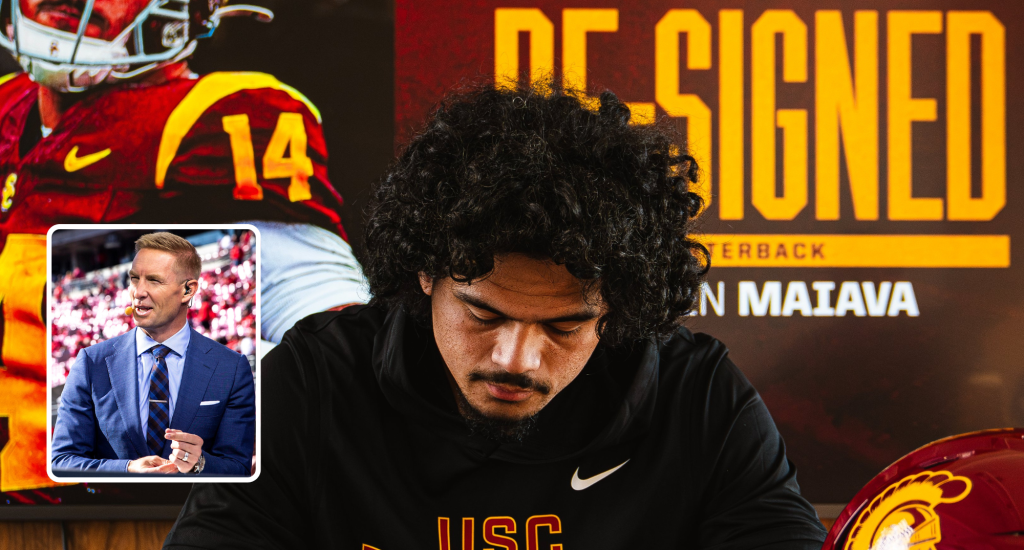
Joel Klatt has had it with college football’s latest social media phenomenon.
In the wake of USC quarterback Jayden Maiava’s re-signing announcement, racking up nearly five million impressions on X, Fox’s lead college football analyst didn’t hold back his frustration with what’s become a growing trend across the sport.
Jayden Maiava has re-signed with the USC Trojans. pic.twitter.com/jLI0S6hPKh
— USC Football ✌️ (@uscfb) December 16, 2025
“I can’t with the re-signing of players, I’m sorry,” Klatt said.
“I can’t with the re-signing of players, I’m sorry.”@joelklatt shares his thoughts on the issues in college football, specifically surrounding “re-signing” and player representation. Do you agree? pic.twitter.com/lCFw3FfMUW
— FOX College Football (@CFBONFOX) December 17, 2025
USC’s social media account posted Maiava’s re-signing announcement on Dec. 16, followed by a flurry of similar posts for other Trojans players. Tobias Raymond, Chasen Johnson, Romero Ison, Jahkeem Stewart, and Kendarius Reddick all got the graphic treatment announcing they were staying with the program.
Tobias Raymond has re-signed with the USC Trojans. pic.twitter.com/OYAWhIup4Y
— USC Football ✌️ (@uscfb) December 17, 2025
Chasen Johnson has re-signed with the USC Trojans. pic.twitter.com/J56Jb7ZpD9
— USC Football ✌️ (@uscfb) December 17, 2025
Romero Ison has re-signed with the USC Trojans. pic.twitter.com/pA11LlvOAx
— USC Football ✌️ (@uscfb) December 17, 2025
Jahkeem Stewart has re-signed with the USC Trojans. pic.twitter.com/nr76iwVxRj
— USC Football ✌️ (@uscfb) December 17, 2025
Kendarius Reddick has re-signed with the USC Trojans. pic.twitter.com/dc88qAVLsu
— USC Football ✌️ (@uscfb) December 17, 2025
But for Klatt, these announcements feel fundamentally different from how free agency works in professional sports.
“I started seeing some of these announcements on social media, guys would text me these announcements, and this is going to sound like I’m picking on guys,” Klatt said. “This is not their fault, but like Malik Washington, Waymond Jordan, LaNorris Sellers, there’s all these stories about like, ‘Oh, they’re re-signing. They’re working on a deal to stay.’ And I’m like, I don’t want to hear that. I don’t want to see it. You mean, wait, was he about to leave?”
Joel Klatt isn’t blaming the players. But in the NFL, fans know when a guy is a free agent and can walk. So when he re-signs, it makes sense. In college, a player is already on the team, already getting NIL money, and then announces he’s re-signing? It just makes fans wonder what they missed.
“This is so different than in the National Football League when your favorite team has a player that you love that you know is a free agent, and then they re-sign him, and you’re like, ‘Nice!’” Klatt contiuned. “That feels a lot different than like I’m a fan of a college team and I just think that this player who’s committed to this school, who’s at this school, who has more eligibility left, and is making a large sum of money through NIL, and then all of a sudden he’s like, ‘I’m re-signing.’ It’s like, ‘I didn’t know you thought about leaving.’”
But Klatt’s real issue isn’t the social media pageantry. It’s what’s happening behind the scenes.
“I don’t think that this is good for players, either, I really don’t. And let me tell you why: these contracts can be binding, and they can be loose, but it all depends on how they’re negotiated because there’s not a formality to the process,” Klatt explained. “So, the schools can kind of do whatever they want to do. They’re making their own rules, and then there’s some representation out there that is representing college players, and they want to play by their own rules.”
The lack of regulation in college athlete representation is a real problem. Unlike NFL players who are represented by NFLPA-certified agents, college athletes can hire essentially anyone to negotiate their NIL deals. There’s no registration requirement, no oversight, no baseline standard.
And according to Klatt, some of these representatives have no idea what they’re doing.
“And some of the representatives, by the way, are not very sophisticated. Guess why? Because they’re not representing a client that’s part of an association or a union, so they don’t have to register,” he added. “So the players can hire whomever. It can be like Uncle Eddie. We don’t know who these representatives are. That’s not to say that all of them are bad, but there are some that certainly don’t know what they’re doing. So, there are players because of that, that are signing contracts that they don’t even really know what they’re signing.”
Despite all his complaints about NIL representation and re-signing announcements, Joel Klatt still believes in college football.
“I remain very optimistic about our sport,” Klatt said. “I really do. I think college football’s in a great spot. I think that it can get better, but that doesn’t mean I’m blind to the problems.”
But his optimism won’t stop the re-signing trend. Schools will keep celebrating players who decide to stay, and fans will keep wondering if they were ever really thinking about leaving. It’s just part of college football now.
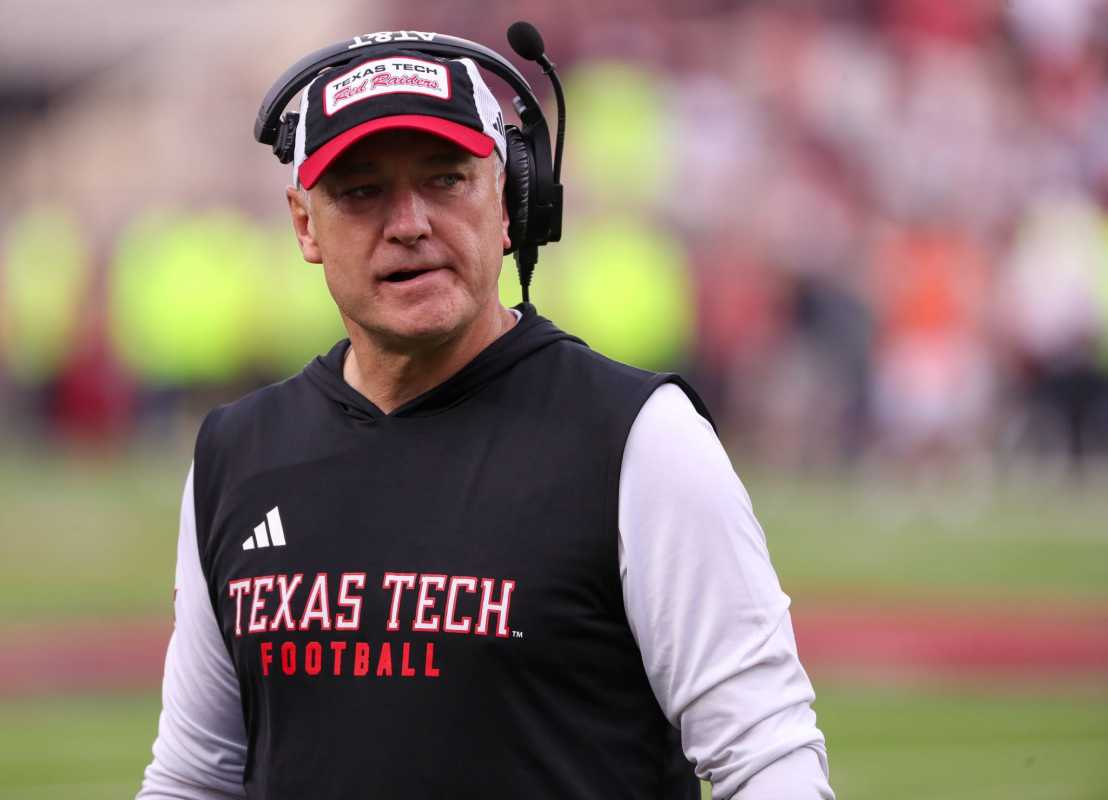
The Texas Tech Red Raiders defeated the BYU Cougars 34-7 in the Big 12 Championship Game. It secured them the No. 4 seed and a first-round bye in the College Football Playoff. They’ll play either the No. 12 seed James Madison Dukes or No. 5 seed Oregon Ducks in the Orange Bowl.
While Texas Tech strives for its first national championship in program history, it’s never too early to look into the future. The Red Raiders will face several major changes after the 2025 season, including from quarterback, Behren Morton. He’s using his final year of eligibility, while ESPN’s Matt Miller gives him a fifth-round grade in the 2026 NFL Draft.
Advertisement
The transfer portal doesn’t officially open until Jan. 2, but On3 reports that over 800 players are already set to enter. With Morton set to leave, Texas Tech could find his replacement in the portal.

Texas Tech Red Raiders head coach Joey McGuire.James Snook-Imagn Images
In an article, On3’s Pete Nakos, links the Red Raiders to Cincinnati Bearcats transfer quarterback Brendan Sorsby.
“Viewed as one of the most experienced quarterbacks in the transfer portal, Texas Tech is the school to watch early on for Brendan Sorsby,” Nakos wrote. “He’s also expected to evaluate the NFL draft, and Indiana and Tennessee are other schools to know.”
Advertisement
This season, Sorsby has completed 207 of 336 passes for 2,800 yards, 27 touchdowns, five interceptions and a 155.1 passer rating. He’s also rushed for 580 yards and nine touchdowns on 100 carries.
Sorsby is going to be highly sought after, with Rivals placing him as the third-ranked player in the transfer portal. His On3 NIL valuation of $2.4 million is tied for the 10th-highest in college football.
However, that may not be a problem for Texas Tech, which had the top-ranked transfer portal class in 2025. After bringing in 21 players, the Red Raiders had an adjusted NIL value of $7.6 million.
Advertisement
As the official transfer portal period approaches, Texas Tech’s quarterback situation will be one to watch. With Morton playing his final year of eligibility, the Red Raiders could already be exploring other options.
The Red Raiders will play in the Orange Bowl at noon ET Jan. 1 on ESPN and the ESPN app.
Related: Texas A&M QB Marcel Reed Shares NIL Update Before College Football Playoff
This story was originally published by Athlon Sports on Dec 18, 2025, where it first appeared in the College Football section. Add Athlon Sports as a Preferred Source by clicking here.
There’s always plenty of argument about who belongs and doesn’t belong in the College Football Playoff, and that was certainly the case this season, especially given the debates around that final spot coming between Notre Dame and Miami.
But looking over the 2025 bracket, it’s one of the most recognizable SEC programs that is getting the biggest criticism from those in the coaching business.
Asked to name the biggest fraud in this year’s College Football Playoff, it wasn’t one of the Group of Five teams that got the most attention, but none other than Ole Miss, which made the field on the back of a historic season.
Ole Miss, a fraud?
That’s according to one FBS coach, who doesn’t believe the Rebels have a good case.
“They’ve had so many distractions with Lane Kiffin leaving, and Oklahoma is probably their only good win this year,” an unnamed Group of Five head coach said of the Rebels heading into the College Football Playoff, according to The Athletic.
Whoever it was who said it, he apparently wasn’t alone. Far from it.
Taking a vote from more than two dozen anonymous coaches heading into the playoff, the publication found that to be, if not a consensus opinion, then something like it.
Ole Miss won out among the various playoff teams with 29 percent of respondents saying it was the most fraudulent team in the College Football Playoff this season.
A wild year for Ole Miss
Picking on the Rebels for not being playoff-worthy sounds counter-intuitive, given the unprecedentedly good season they’ve had on the field.
For the first time ever, Ole Miss completed an 11-win regular season and qualified for its first College Football Playoff berth.
Then came the drama. The head coach who brought them that success became the biggest name in what emerged as college football’s most hectic coaching carousel.
Lane Kiffin was named as the leading target for two other SEC programs and ultimately departed the Rebels for conference rival LSU after winning the Egg Bowl game.
Coach highlights Rebels’ schedule
The concern around Ole Miss’ perceived quality of schedule doesn’t seem like a concern at first glance.
It played three teams that made the College Football Playoff, beating both Oklahoma and Tulane, and losing a closely-fought matchup on the road against SEC champion Georgia.
Otherwise, the Rebels beat lesser SEC opponents like Kentucky, South Carolina, Florida, and Arkansas.
The win against then-No. 4 LSU doesn’t look as good as it did at the time, given the Tigers’ fall from grace that led to Brian Kelly’s ouster.
There was no universe in which an 11-1 Ole Miss was being left out of the College Football Playoff. Whether it truly belongs will be decided on the field, which can be said for any team in the bracket.
But the Rebels weren’t alone
Not far behind in the fraud poll were two surprising names. Big 12 champion Texas Tech and SEC runner-up Alabama were both decried as playoff frauds with 17 percent of the vote each.
Texas Tech being included is truly puzzling, given the quality of its defense, but those asked expressed concern for the offense, in particular quarterback Behren Morton.
In second place was “no answer,” as 21 percent of those asked didn’t provide any hints as to who they thought were frauds.
Group of Five selection James Madison received 8 percent of the vote as a perceived fraud, while Oregon and Oklahoma each got 4 percent.
Alabama not getting respect
One defensive coordinator from the SEC and a defensive assistant from the Big Ten took issue with the Crimson Tide being included among the dozen playoff teams this year.
“Alabama should have, like, five losses this year. They shouldn’t be there,” the SEC defensive coordinator said.
And the Big Ten coach added: “I’ve watched them. They’re not that good this year. I didn’t see enough from them to get this chance.”
(Athletic)
More college football from SI: Top 25 Rankings | Schedule | Teams
Follow College Football HQ: Bookmark | Rankings | Picks

There are hundreds of conversations happening behind closed doors of college football programs across the country right now. Between player-contract negotiations, coaching staff turnover and transfer portal decisions, the sport has transformed into the wild west.
Minnesota has already seen 13 of its own players announce their intentions to enter the transfer portal when it officially opens next month. They’ve also had notable players such as Drake Lindsey, Jalen Smith and Maverick Baranowski reveal their plans to return next season.
“I don’t think anything in elementary education taught you how to negotiate contracts in college. Even as you look at the past of you being a head football coach, everything you’ve gained experience on — and then you get into this world of new college athletics — and unless you’re a head coach that backs away and says, ‘Hey, I am just gonna coach football.’ You have to be so in line with your chief of staff, your GM, director of player personnel… You have to talk more than you ever have, and have meetings more than you ever had,” P.J. Fleck said.
“I don’t think the general public actually truly knows what college football truly looks like.”
Really insightful stuff from P.J. Fleck today on how the Gophers re-negotiate contracts. Worth the listen. 👇
— Tony Liebert (@TonyLiebert) December 17, 2025
Subscribe: Sign up to receive the free Gophers On SI newsletter
Minnesota has seen notable players like Bucky Irving, Phillip Daniels, and Athan Kaliakmanis enter the transfer portal over the years, but it’s routinely among the best programs in the country at retaining players. For example, past and present Gophers stars Justin Walley, Tyler Nubin, and Darius Taylor have turned down more lucrative offers to stay at Minnesota.
“It’s just a new era of college athletics, and we’ve embraced it. I think Gerrit Chernoff and his staff do an amazing job. Our retention rate, as of right now, is really, really high. Everybody does it on their own time frame. That’s one thing I’ve learned,” Fleck said.
“Everybody has representation. Everybody has their own view of not necessarily what they’re worth, and what they want to be able to get out of that, and what they value, and you respect that.”
Many fans and traditionalists are frustrated by what college sports have become, but it’s the new reality. It’s essentially one-year contracts for every player on your team, and they’re able to re-negotiate every offseason, with no salary cap or clear market. Fleck has historically had boundaries with the amount of information he shares about the inner workings of his Gophers’ program, but he shared a legitimate inside look on Wednesday.
The Gophers are currently in the stage of the offseason where they’re re-recruiting the entire roster. We likely won’t know the details or specifics of the contracts, but it was interesting to hear Fleck peel back the curtain.
Gophers news, rumors and analysis
KEY TAKEAWAYS:
- Tulane’s playoff appearance is generating millions in donations, NIL funding and local business revenue
- Athletic donations jumped 373% year over year, totaling $1.68 million in just over a month
- NIL collectives raised more than $1.1 million following the conference championship
- Uptown retailers report record merchandise sales tied to Green Wave success
After being the first Louisiana university (sorry, LSU fans) to qualify for the college football playoffs, Tulane University, its athletic program, NIL organizations, and surrounding Uptown New Orleans businesses are seeing a multi-million dollar economic impact. From surging athletic donations to increasing merchandise sales, the Green Wave’s success on the field is translating into a massive green influx off of it.
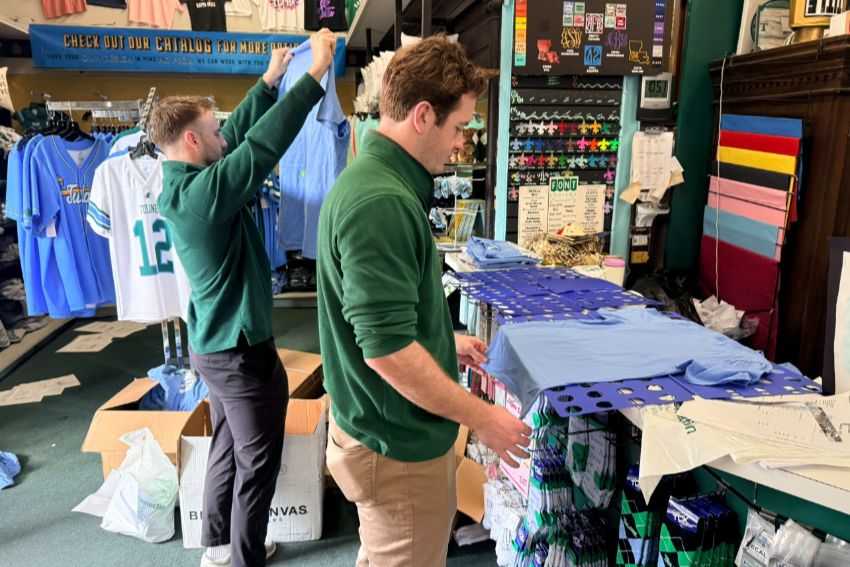
“Since last week, we’ve taken in about 1,000 orders on the website, sold over 2,000 hoodies and 1,000 shirts, and a lot of the playoff merchandise,” said David Cariello, owner of the Campus Connection, an off-campus Tulane merchandise retailer on Broadway Street. Cariello has worked there since college and has owned Campus Connection since 2008. “This is unlike anything I have ever seen. Halfway through December, we are already at where we would be in a really good month, and by the end of the month, we may be at three times our typical monthly revenue.”
Cariello added that Campus Connection still has Tulane playoff merchandise available for fans interested in purchasing swag before Saturday’s game.
The American Conference champion Tulane Green Wave will travel to Ole Miss on Saturday to play in the first round of the college football playoffs. The game is scheduled for 2:30 p.m., and the winner will take on Georgia on Jan. 1, 2026, at the Caesars Superdome in New Orleans.

Ole Miss athletic officials are projecting a $74 million economic impact in Oxford for the playoff game, but, at home, in New Orleans, the institution and surrounding business community also are witnessing a financial windfall that administrators and shop owners describe as “unprecedented and magical.”
Tulane University Director of Athletics David Harris announced that between Nov. 12 and Dec. 16, the department received $1.68 million in donations from 519 donors. The figures represent a staggering 373 percent increase in dollar amount and an 83 percent rise in the number of donors compared to the same period last year.
Sam Scelfo, owner of the iconic Gambino’s Bakery in Metairie, has donated to Tulane University since 1973 and recalls his first donation of $100. For 52 years, Scelfo has consistently donated to the university and the athletics program.
“It’s magical what Tulane football has done this season. This college football playoff run is not just good for the university; it’s beneficial to the city as a whole, and it kind of mirrors the energy of New Orleans when the Saints are successful,” said Scelfo, who will attend Saturday’s game. “Even my LSU friends have called this past week to congratulate me. This season will breed success across the entire university – national recognition of the athletics program and university, more investment dollars, donations, applications – it’s just a win, win, win across the board.”
The financial impact extends into the modern frontier of college sports: Name, Image, and Likeness (NIL). Michael Arata, co-founder of the Fear The Wave Collective, reports the collective has raised over $1.1 million in NIL donations since the conference championship game. Arata can recall the early days of the Fear the Wave Collective in 2021 when he and co-founder Jimmy Ordeneaux set a goal of raising $10,000 in one year.

Fear The Wave fundraises to enhance accessibility for selected Tulane student-athletes to NIL deals, empowering them to gain financial and business exposure while maintaining their commitment to academics and sports.
“It’s such an unprecedented time for everyone involved in Tulane University and Tulane athletics. It’s been so busy but so much fun as well,” said Arata, who projects that Fear The Wave Collective will almost double its NIL fundraising amount in 2025 compared to 2024. “It would have taken us several months to raise the kind of money we just did in one week. We went from asking people to help maintain where we are to getting incoming calls of people wanting to do more to continue to support a program that has grown so much over recent years.”
Sumrall arrived at Tulane in 2024 and coached the team to a 9-5 record and an appearance in the Union Home Mortgage Gasparilla Bowl. This season, Tulane finished 11-2 and won the American Conference championship with a 34-21 win over North Texas in front of a sold-out Yulman Stadium.
Sumrall has announced that he will be the new head coach of the Florida Gators next season, but he has been allowed to coach Tulane through its playoff run. In the last week, Sumrall and his family announced a $100,000 contribution to the Green Wave Talent Fund, the university’s primary NIL fund and a Tulane athletics initiative to expand NIL opportunities for Tulane student-athletes across football, men’s and women’s basketball, and baseball.
“Jon’s donation shows the type of character he has, to help position Tulane for success after his departure. He is investing in the future of the program he helped build and in the lives of the kids he has changed,” Scelfo said. “His family’s donation definitely stimulated more donors to jump on board and also invest in the future of Tulane.”
For example, Arata said a Tulane family donated $500,000 to Fear The Wave Collective and then added $100,000 more after seeing Sumrall’s announcement. His donation also encouraged another donator to send a significant amount, and more donations have continued to come in since Tuesday’s news.
“We feel like we are just getting started, and this momentum over the last month can be self-sustaining and powerful going into the future,” Arata said. “We hope this sets the stage for building a program that is a permanent fixture on the national stage. Tulane was in the first Sugar Bowl, so why not play in the next one? Can you imagine the energy of the city and economic impact the Sugar Bowl will have if Tulane plays Georgia on New Year’s Day?”

Sports4 minutes ago
Doris Lemngole Wins The Bowerman

Sports6 minutes ago
Pitt loses to Texas A&M in NCAA volleyball final four

Technology8 minutes ago
EAG Expo to Bring Together Three Interlinked Sectors of Entertainment and Gaming in a Single Venue

NIL9 minutes ago
Memphis HC Penny Hardaway: I ‘Fined’ Aaron Bradshaw NIL Money to Motivate Him

Sports21 minutes ago
The top moments from Bowerman winner Jordan Anthony’s 2025 season

Sports23 minutes ago
Shanley volleyball coach Taylor Preston steps down after 2 seasons – InForum

Sports40 minutes ago
Aggies sweep Pitt to reach NCAA title game

Rec Sports51 minutes ago
Visit Eau Claire and Sonnentag Center host 2026 Flag Football tournament

Sports56 minutes ago
Previewing Kentucky Volleyball vs. Wisconsin Badgers in the Final Four

Rec Sports59 minutes ago
Midweek Matinee A Celebration for Community’s Kids

Technology1 hour ago
Sultan Almasoud on the Top Trends in Technology and Esports in Saudi Arabia – Tech & Sourcing @ Morgan Lewis

NIL1 hour ago
Joel Klatt can’t stand NIL re-signing announcements

Rec Sports1 hour ago
More Than 550 Boys Volleyball Teams Gather in Los Angeles for SoCal Cup ‘Winter Formal’ Event and College Combine

Sports1 hour ago
From student-athlete to entrepreneur, Liberal Arts graduate charts next chapter

Technology2 hours ago
What to expect from Gaming Malta at ICE Barcelona

Rec Sports4 weeks ago
First Tee Winter Registration is open

Rec Sports3 weeks ago
Fargo girl, 13, dies after collapsing during school basketball game – Grand Forks Herald

Motorsports3 weeks ago
CPG Brands Like Allegra Are Betting on F1 for the First Time

Motorsports4 weeks ago
F1 Las Vegas: Verstappen win, Norris and Piastri DQ tighten 2025 title fight

Sports4 weeks ago
Volleyball Recaps – November 18

Sports3 weeks ago
Sycamores unveil 2026 track and field schedule

Sports3 weeks ago
Two Pro Volleyball Leagues Serve Up Plans for Minnesota Teams

Sports3 weeks ago
Utah State Announces 2025-26 Indoor Track & Field Schedule

Motorsports3 weeks ago
Redemption Means First Pro Stock World Championship for Dallas Glenn

Motorsports1 week ago
SoundGear Named Entitlement Sponsor of Spears CARS Tour Southwest Opener

Motorsports3 weeks ago
Jo Shimoda Undergoes Back Surgery

Sports3 weeks ago
Texas volleyball vs Kentucky game score: Live SEC tournament updates

NIL3 weeks ago
Bowl Projections: ESPN predicts 12-team College Football Playoff bracket, full bowl slate after Week 14

Rec Sports3 weeks ago
How this startup (and a KC sports icon) turned young players into card-carrying legends overnight

Rec Sports3 weeks ago
Robert “Bobby” Lewis Hardin, 56






-
 Motorsports1 week ago
SoundGear Named Entitlement Sponsor of Spears CARS Tour Southwest Opener
-
 Motorsports3 weeks ago
Jo Shimoda Undergoes Back Surgery
-
 NIL3 weeks ago
Bowl Projections: ESPN predicts 12-team College Football Playoff bracket, full bowl slate after Week 14
-
 Rec Sports3 weeks ago
How this startup (and a KC sports icon) turned young players into card-carrying legends overnight
-
 Rec Sports3 weeks ago
Robert “Bobby” Lewis Hardin, 56
-
Sports3 weeks ago
Wisconsin volleyball sweeps Minnesota with ease in ranked rivalry win
-

 Motorsports1 week ago
Donny Schatz finds new home for 2026, inks full-time deal with CJB Motorsports – InForum
-

 Motorsports3 weeks ago
Increased Purses, 19 Different Tracks Highlight 2026 Great Lakes Super Sprints Schedule – Speedway Digest
-

 Rec Sports2 weeks ago
How Donald Trump became FIFA’s ‘soccer president’ long before World Cup draw
-

 Motorsports3 weeks ago
Michael Jordan’s fight against NASCAR heads to court, could shake up motorsports