
Sports
At Jackie Robinson’s high school, Altadena rebuilds after fire


-

Alyssa Roenigk
ONE HUNDRED AND FORTY-NINE days after the fire, around 70 seniors from John Muir High School rise from their seats inside Pasadena’s historic Civic Auditorium. Like their 200 classmates seated around them, their dark blue gowns are draped with colorful ribbons and stoles. Blue-and-yellow tassels hang from their graduation caps.
“Give these students a round of applause for their perseverance, for staying focused and for overcoming adversity,” Muir’s principal, Dr. Lawton Gray, says as raucous cheers echo through the theater.
Five months ago, these 70-some seniors lost or were displaced from their homes when one of the most destructive fires in California history ripped through their town. Jasmine Collins, a three-sport standout, is one of them. Now, she glances around the auditorium, her eyes welling with tears. She’s surrounded by the most important people in her life. Her friends. Her family. Her coaches and teachers. She adjusts her graduation cap, which she’s lovingly decorated with a photo collage and the words, “To grow is to change.”
The moment is just like she’d imagined it would be ever since her mom, Brenda Sharpe, first told her about her own graduation from Muir nearly 30 years ago. But nothing her mom told her could have prepared her for the months leading up to this day.
Jasmine’s family has lived in Altadena for generations. They lost everything in the Eaton fire. Their homes. Old photographs. Their favorite places. On the way to the ceremony today, Brenda hugged nearly everyone who crossed her path. She knows this town and its people. They know her. Her father graduated from Muir, as did her two oldest daughters. She was classmates with so many parents and faculty gathered here today. Jasmine included many of them in the collage on her graduation cap: Dr. Gray, head water polo coach Micol Issa, athletic director Alfredo Resendiz.
They all came back to their hometown because they believe Altadena is special, a place where families put down roots and stayed. In the weeks and months after the fire, they tracked every student’s whereabouts, feeling keenly the loss of each family that left. For the students who made it here to graduation, and especially for the 70 or so who stand, today is a celebration. As they move their tassels from right to left and toss their caps into the air, they cry and hug and take in this moment of reprieve from living in hotel rooms, waiting in line at donation centers and sitting in unending uncertainty.
Their families stand and cheer the new graduates. Today is for them, too. They live with what was lost every day, not just in homes and possessions, but in the places and people that made their community what it was. Five months after the fire, a new reality is setting in. For each person, moving forward means answering impossible questions.
When so much has been lost, what reason do any of us have to stay? And if we stay, how do we hold on to all that was precious about Altadena before 6:30 pm on Jan. 7, when sparks from a transmission tower likely ignited a fire that decimated our beautiful town?
It is possible to rebuild houses, schools and churches. But is it possible to rebuild what’s been lost?
THE NIGHT OF the fire, Jasmine is at a friend’s house when she first sees the flames. She has a feeling this isn’t like other fires she’s heard about in the Angeles National Forest, although she’s too young to have experienced those. Another fire has been raging in Los Angeles since a little after 10 this morning, and the images on the news and social media are scary.
Jasmine calls her older sister, Janiya, to pick her up. At home, she pleads with her family to evacuate. “I kept saying to Jas, ‘We’re gonna be OK; the fire is gonna burn through the mountains like always,'” Brenda recalls.
“But she was afraid, and that fear is what we should have listened to earlier,” she says. “It wouldn’t have stopped the devastation, but at least she would have felt safe immediately.”
NINE DAYS AFTER the fire, Brenda and her three youngest are in a motel room near the freeway in Pasadena. The space is nothing like the three-bedroom house they were renting, but that home is uninhabitable. Each day, she asks herself, “How do I make this situation bearable for my kids?”
She blows up air mattresses and drapes them in multicolored quilts from donation centers. She helps Jasmine carve out a space that is just hers, where she can be quiet and crochet, draw or write poetry. “When her mind is racing, she needs to let her creative side flow out,” Brenda says.
Brenda has been back to her neighborhood only once since the fire. What wasn’t burned was sopping and moldy and smelled like smoke. But in one room, she saw two houseplants she had been watching for a housekeeping client. They were still alive. She poured a bit of water into the pots and carried them to her truck.
The family keeps what’s left of their belongings in that truck. They don’t have much. Jasmine was the only one who packed a bag when they evacuated. She stuffed a change of clothes, her swimsuit, goggles, swim cap, softball glove, schoolbooks, a crochet needle and yarn into her water polo bag, navy blue with the University of Michigan-style “M” for Muir on the side.
Jasmine has been withdrawn since the fire. She’s tired of adults telling her that it will all work out, that things will get better. Nine days feels like a lifetime ago. Back then, she was outgoing and joyful, known for showing up to school with a purple crew cut or wearing a unicorn onesie. Back then, she was looking forward to attending Cal State Northridge in the fall. The school is only 30 minutes from Altadena, but even that seemed too far away. Now, she’s not sure about anything. She’s barely slept. She hasn’t seen her friends. She doesn’t know where the family will go next.
Schools will reopen in a few weeks. Brenda wonders how she’ll manage the choreography of it all. It’s hard to plan for anything beyond today. She doesn’t know where or when she’ll find more work. All but two of her clients’ homes burned. But she sees no other choice than to stay. She is determined to give her kids the life she wants for them, the beautiful life she had here.
Brenda’s grandparents moved to the area in 1952, one of the first Black families to buy a house on tiny Glenrose Avenue, in a neighborhood that existed outside of the restrictive housing covenants that governed the rest of Pasadena at the time. Her parents purchased their home in northwest Altadena in the mid-1970s. By 1980, Altadena’s population was more than 40% Black, and generation after generation, Black families owned their homes at a far greater rate than the national average, passing the wealth held in those homes on to their children.
When she was a kid, Brenda and her brothers spent their summers swimming at Loma Alta Park, a short walk from their home. They played baseball there in the spring and hiked Chaney Trail, winding northeast from the park into the Angeles National Forest.
She graduated from Muir in 1996. She was a cheerleader, and when she talks about her high school years now, it’s like she’s back there again, singing the fight song, performing at pep rallies. “We drank out of the water hose. Always walking from one end of Altadena to the other, riding our bikes, eating honeysuckle and picking citrus and pomegranates off people’s trees,” she says. “Altadena was beautiful. The people were beautiful.”
IT’S BEEN ELEVEN days since the fire. For many Altadenans, dates are no longer defined by a calendar but instead by how much time has passed since that fateful Tuesday. There is only life before the fire and life after the fire.
Jasmine and her family are at a picnic organized by Micol Issa, the head water polo coach. The school was hit hard — one in four students lost their homes or were displaced — and the aquatics program was hit even harder. Twenty-one athletes lost everything. Most of them lived near Loma Alta Park and its pool, in the area that sustained the most damage.
This is the first time many of them have seen each other since. They cry, laugh and talk about the favorite places they’ve lost.
“Nearly every anchor these kids have ever known, the places where they felt safe and felt joy are gone,” Issa says. “I try to remind them that we can be devastated about the loss of a place like a park or a pool and remember how we felt at that park. But a lot of our memories center around people, and you still have those people.”
She looks around the picnic and sees the impact the pool has had on so many of her athletes. Jasmine didn’t know it when she tried out freshman year, but she was becoming part of a rich history of Black athletes who learned to swim at Loma Alta and played water polo at Muir. “People talk about wanting to diversify the sport and Muir has been doing it for decades,” Issa says.
Muir’s walls are lined with images of famous Black alumni. Jackie Robinson graduated in 1936, a year after his older brother Mack Robinson, who finished second behind Jesse Owens in the 200 meters at the Berlin Olympics. Science fiction author and 1995 MacArthur fellow Octavia Butler graduated in 1965, five years before a landmark federal court decision made Pasadena the first city on the West Coast ordered to desegregate its schools. Rodney King was in the class of 1984.
The school is still closed, but sports resume next week. The girls’ water polo team is having its best season in four years. A conference championship is within its grasp. Issa wants to give her athletes something positive to look forward to, but she wants the decision to be theirs. She and her assistant coach gather the players and ask if they want to finish out their season.
“We said, ‘We’re not asking you to win. Do you want to play?'” Issa says. Jasmine is quiet. Her teammates notice. The girls look at each other and a few offer opinions. They don’t know what to expect from themselves or how they’ll respond to the pressure once they get in the water. Issa tells them their competitors may not care what they’re going through. “In life, they might have empathy for what you’ve lost,” she says. “But in the pool, they might take advantage of your vulnerability.” She tells them the games will be hard, but worth playing.
“A big feeling in a loss this monumental is feeling like you’ve really lost everything,” Issa says. “But if they can continue playing, if they have this, then they have something. And they haven’t lost everything.”
FOURTEEN DAYS AFTER the fire, Alfredo Resendiz is driving through Altadena, surveying the damage. He’s been doing this nearly every day. He wants to see the devastation with his own eyes. During the fire, he spent all night hosing down his mom’s house. His ex-wife’s parents lost their home. So did his niece.
Like many of his peers at Muir, the athletic director left his hometown for college but returned to give back to the community he feels gave so much to him. It’s hard to process what’s happened to this place he holds so dear. As he drives north, the blocks seem almost blurry, like they’re passing by at high speed. He slows down, but the blur is still there. He knows these streets, knows their stories. But he barely recognizes them.
“This is where it began,” Resendiz says.
He parks near a sign for Eaton Canyon, a beloved nature preserve located at the base of the San Gabriel Mountains. The air still smells like fire. The canyon’s walls, green and lush with growth just two weeks ago, are brown and marred with the charred remains of chaparral, sage and wildflower bushes. “The Altadena apocalypse,” he says.
He drives on, past rows of blackened brick chimneys and concrete slabs reaching skyward from piles of twisted metal and ash, incomplete outlines of once familiar homes. He wonders when the clearing will begin. His phone rings constantly. A local sports reporter asks when Muir’s games will be rescheduled. Another school’s AD offers the use of her gym for a senior night celebration.
At a light on East Washington Boulevard, Resendiz notices one of his former students next to him. He rolls down his passenger window. “What’s going on?” he yells. “How are you?”
“Good.” she responds. “You? Did you lose?”
“I’m good,” he says. “Did your dad lose?”
She shakes her head no. Resendiz rolls up the window. He lets out a deep breath.
“That’s always the first question,” he says. “It’s heart-wrenching.”
Did you lose?
Those three words have become shorthand between neighbors. There is a knowing in this way of asking, an unspoken understanding that the loss in question approaches totality. A home. A business. A life. The full question is too much to ask of anyone.
SIXTEEN DAYS AFTER the fire, Jasmine and her teammates step off a bus and walk toward the pool to take on Burbank High School. Resendiz chartered the bus so the girls could ride to the game together as a team. He wanted to give his athletes a win before the first whistle.
From the moment Jasmine stepped onto the bus, she’s been quiet. Her eyes rarely lift from the pool deck. Her teammates and coaches try to buoy her spirits, but they know what she needs right now is time. “It’s hard to see her hurting like this,” Issa says. “She’s a big part of why our team wanted to be here today. They wanted to show up for her.”
Muir has only nine players tonight, not even enough to sub a full lineup when lungs start burning and legs get tight. Late in the first quarter, the Mustangs are up 2-1 and they’re playing smart. Issa was right. Burbank is doing everything they can to frustrate Muir’s players. But despite Burbank’s aggressive, physical game plan, the Stangs are keeping their calm.
Near the pool, Dr. Gray’s phone rings. He motions to Resendiz, and the AD drops his head. Another student’s parents have called to say they’ve moved away, this time across the country, and their daughter won’t be returning to Muir.
Dr. Gray leans over his laptop and makes a note in a color-coded spreadsheet. He’s tracking each student’s story: where they lived, how their home fared in the fire, where they are now, where they plan to be when school reopens. He’s received dozens of calls like this over the past two weeks. Each call feels like a monumental loss for the school and an even deeper cut to the community.
“When generations are lost like this, it breaks my heart,” Issa says. “They’re what makes this place unique. A lot of the Black families who came here found something special and continued to build and pour into this community. If those families don’t come back, then what?”
Jasmine scores on a penalty shot with two minutes left in the first half and Brenda leaps into the air. She hugs every parent around her. Muir wins 10-2.
After the game, the team changes out of their suits, then gathers around Issa in a semicircle. Jasmine sits in a chair next to her, her head down and her eyes cast toward the ground. Issa places her hand on Jasmine’s shoulder.
“We’re so super proud of you all,” Issa says. “How do you feel?” She gives Jasmine’s shoulder a light squeeze.
Jasmine looks up. “I …” She stops. Her eyes fill with tears. She smiles and forms a heart with her hands.
FORTY-EIGHT DAYS after the fire, Jasmine is wearing her new varsity letter jacket, with the Michigan-style “M” on the front and her last name on the back. A few days ago, her coaches surprised her with it. They pitched in to buy it for her. “She hasn’t taken it off since,” Brenda says.
The jacket represents so much to Jasmine. It comforts her to wear it, to wrap herself in a reminder that she hasn’t lost everything, which is important in what Issa calls “the hard stretch” of surviving this fire. “It’s real now,” she says. “Everyone is realizing, ‘This is our life.'”
Money from online fundraisers is drying up. Donation centers are packing up and closing. The rebuilding process is slow. But life and the news cycle roll on.
The people of Altadena know that while their loss feels singular, their pain is not unique. They’re every community facing impossible questions after a loss. They’re Asheville, North Carolina, after Hurricane Helene; Waverly, Tennessee, after devastating flooding; Uvalde, Texas, after another deadly school shooting; Paradise, California, after the Camp fire.
“I don’t know that we can hold on to what Altadena was,” Issa says. “But if we’re choosing to stay, then we’re going to have to embrace that it’s never going to be the same again.”
THE SUN IS rising as Brenda leaves to take her son Joshua to school, 50 days after the fire. Yesterday, she ran into the couple who owned the houseplants she rescued from her home. Their house burned, too. She told them their plants had survived. She smiles remembering what it felt like to tell them they hadn’t lost everything.
Now, as she and Joshua approach the truck, they see someone has broken in overnight. Everything inside is gone. Their clothes and shoes. Their blankets. Important paperwork.
Jasmine’s letter jacket.
When she tells her daughter her new jacket is gone, Jasmine is dumbstruck. She can’t imagine that someone would take all they had left. “They could clearly see we were homeless,” she says. “I walked around the block for a while crying.” At school, her friends try to comfort her. When she gets home, Brenda promises her they won’t live out of her truck forever.
“I can’t protect them from any of this,” she says. “That’s the hardest part as a mom.”
ONE HUNDRED DAYS after the fire, lots in Altadena are being cleared. Heavy machinery and demolition crews are everywhere. Issa passes many of the 9,000 destroyed structures on her drive to Muir each morning. Twelve houses burned on her street alone, and many of their remnants still wait to be carried away. Taken in total, the destruction is overwhelming. Each individual clearing brings a sense of optimism.
“There’s something hopeful about the clean slate of cleared lots that’s bringing people peace of mind,” she says. “We’re moving forward.”
In a little over a week, a crew will break ground on the first home to be rebuilt in Altadena. New construction will replace a 100-year-old cabin on West Palm Street, a half mile south of Loma Alta Park. “Altadena is changing,” Resendiz says. “It’s inevitable. Even before the fire, there were signs of loss and change as West Altadena started to gentrify. But that was a trickle. This was an avalanche.”
For weeks after the fire, Resendiz continued to drive around his community. But he can’t bring himself to take those drives anymore. “I’ve fluctuated in weight throughout my life,” Resendiz says. “When I’m heavier, I avoid looking in the mirror. That’s where I am right now with Altadena. I need to look away.”
ONE HUNDRED AND SIXTEEN days after the fire, Jasmine is dancing with her best friend Eva at senior prom. She’s wearing a chic white suit and her favorite hot pink Nikes. Halfway through the dance, she slips into a bathroom and changes into a strapless black dress. She received both outfits at charity events. She and Eva dance and pose in the bathroom mirror and post TikTok videos.
Her friends notice the change. They catch glimpses of the old Jasmine, the confident, funny girl who inspired other kids to join the water polo team just to be around her. She’s still finding her way back to herself, to the girl she was the day before the fire, but in this moment, in her outfit swap and hot pink Nikes, they see her again.
Since spring break, she’s been staying with Eva and her mom, Johanna, who went to Muir with Brenda and is now Jasmine’s golf coach there. With all the moving over the past two months, Jasmine has struggled to stay focused at school. “Jasmine has a hard time in the motels,” Brenda says.
ONE HUNDRED FORTY-NINE days since the fire, Jasmine is outside with her classmates, diplomas in hand, taking photos. She’s posing with Coach Issa and her water polo teammates, and with coach Matt Milton and her softball team. She’s hugging her grandparents and her siblings. Joshua graduated from eighth grade earlier in the day. Janiya can’t stop crying. “I’m just so proud of her,” she says. “We’ve been through a lot, and she’s gonna make it out.”
Jasmine turned down her acceptance to Cal State Northridge. For so long, she wanted nothing more than to stay close to home. But too many of the things that brought her comfort are no longer there.
“Everything here is gone,” Jasmine says. “I want to start new for myself. There’s not really anything to come back to. It’s a time for me to take the next step into life.”
She and Eva will attend Cal Poly Humboldt in Arcata, a 10-hour drive north of Altadena. She hears it’s beautiful. She’s excited to explore Redwood National Park and spend time at the beach. She’s thinking about trying out for softball her sophomore year.
Brenda is heartbroken that Jasmine will be so far away, but she understands. In the meantime, she’ll focus on rebuilding. She and two of her children are still living in the motel. She sees corporations and investment companies buying up the property where she once rode her bike and picked citrus and pomegranates off her neighbors’ trees, but she holds out hope she will find affordable housing. Loma Alta Park reopened last month, and she believes one day she and her family will return to swim in its pool and hike its trails.
On the days when it feels impossible to keep going, she looks at Joshua. She has one more Muir graduation ceremony to attend.
As the crowd outside the Pasadena Civic Auditorium thins, Dr. Gray finds Jasmine who, despite the June temperatures, is wearing a new varsity letter jacket over her gown. It’s not the original, but it has the same Michigan-style “M” on the front and her last name stitched onto the back.
A few weeks ago, Dr. Gray and Coach Issa called Jasmine out of class. “I thought I was in trouble,” Jasmine says. When she arrived, Dr. Gray told Jasmine they had a surprise for her. Tears streamed down his cheeks as he handed her the new jacket, which they ordered the day they learned the other one had been stolen.
She wrapped the jacket around her shoulders and headed back to class, betraying little emotion. When she got back to her classroom, “I started crying so hard,” she says.
Now, draped in her jacket outside the auditorium, she finishes saying her goodbyes. Brenda stands with her family and takes it all in. She doesn’t know when they will be together like this again. She watches as Jasmine and Dr. Gray hug and she’s thankful for everyone who helped them make it to this day.
“I hope to see you soon, Jazzy,” Dr. Gray says. He hopes that, like him, she finds a reason one day to return.
“I’ll see you soon,” Jasmine says, walking away. She stops and looks back at him. “I mean it. I can’t say it will be real soon, but I’ll be back.”
ESPN researcher John Mastroberardino contributed to this story.


INDIANAPOLIS — A viral video has led to criminal charges against an Indianapolis volleyball coach accused of sending sexually explicit images to someone he believed was a 14-year-old boy.
Marion County Prosecutor Ryan Mears announced that Levi Garrett, 34, of Danville, faces attempted dissemination of matter harmful to minors, a Level 6 felony, following an independent investigation by the prosecutor’s office.
According to the probable cause affidavit, the charges stem from allegations that on March 2, 2025, Garrett engaged in explicit conversations and sent sexually graphic photos on the dating app Grindr to someone he believed was a minor.
A member of a private online investigative organization used a fake Grindr profile titled “tryna have fun” with a photo portraying themselves as a 14-year-old male named “Josh.” The decoy allegedly engaged with Garrett’s profile, “Hmu & find out.”
During the conversation, court documents show the minor texted Garrett, “U mind if I’m young,” and Garrett replied, “No I don’t mind.” When the decoy told Garrett, “I’m 14 but I down for whatever,” Garrett allegedly “liked” the message and proceeded to send three sexually explicit images, including photos of male genitalia and sexual activity.
The messages also allegedly included language about meeting for sex, with Garrett asking whether the encounter would be “safe or bareback.”
Court records show Garrett initially agreed to meet at a location in Greencastle but later blocked the account.
The case gained widespread attention in August when YouTuber JiDion, who is affiliated with the private investigative group, posted a 26-minute video titled “Volleyball Coach Gets EXPOSED” that has been viewed over 1.2 million times.
In the video, JiDion confronts Garrett at The Academy Volleyball Club located on East 30th Street, showing him screenshots of the alleged text exchanges and explicit photos.
Notably, the video showed several Indianapolis Metropolitan Police officers at the scene during the confrontation. When JiDion urged them to arrest the coach, one officer stated, “I have run into this before. Our prosecutor will not touch this,” a response that was controversial to many of JiDion’s followers.
IMPD later responded to the backlash and clarified that the video lacked important context, noting that a police report was filed at the scene, Garrett was trespassed from the property, and detectives were informed about the allegations.
Following the viral incident, the Marion County Prosecutor’s Office opened a formal investigation into the allegations.
“There are no shortcuts in the investigative process,” Mears said in a statement Monday. “When it comes to crimes against children, justice demands that an independent investigation occur and evidence be properly obtained, so that a case is built that will hold offenders accountable in a court of law.”
According to the affidavit, body camera footage from the incident shows Garrett identifying himself by name and providing his date of birth and phone number to officers, information that matched the Grindr profile under investigation.
Garrett is scheduled to appear for a change of plea hearing on January 27, 2026, at 9 a.m. in Marion County Superior Court.
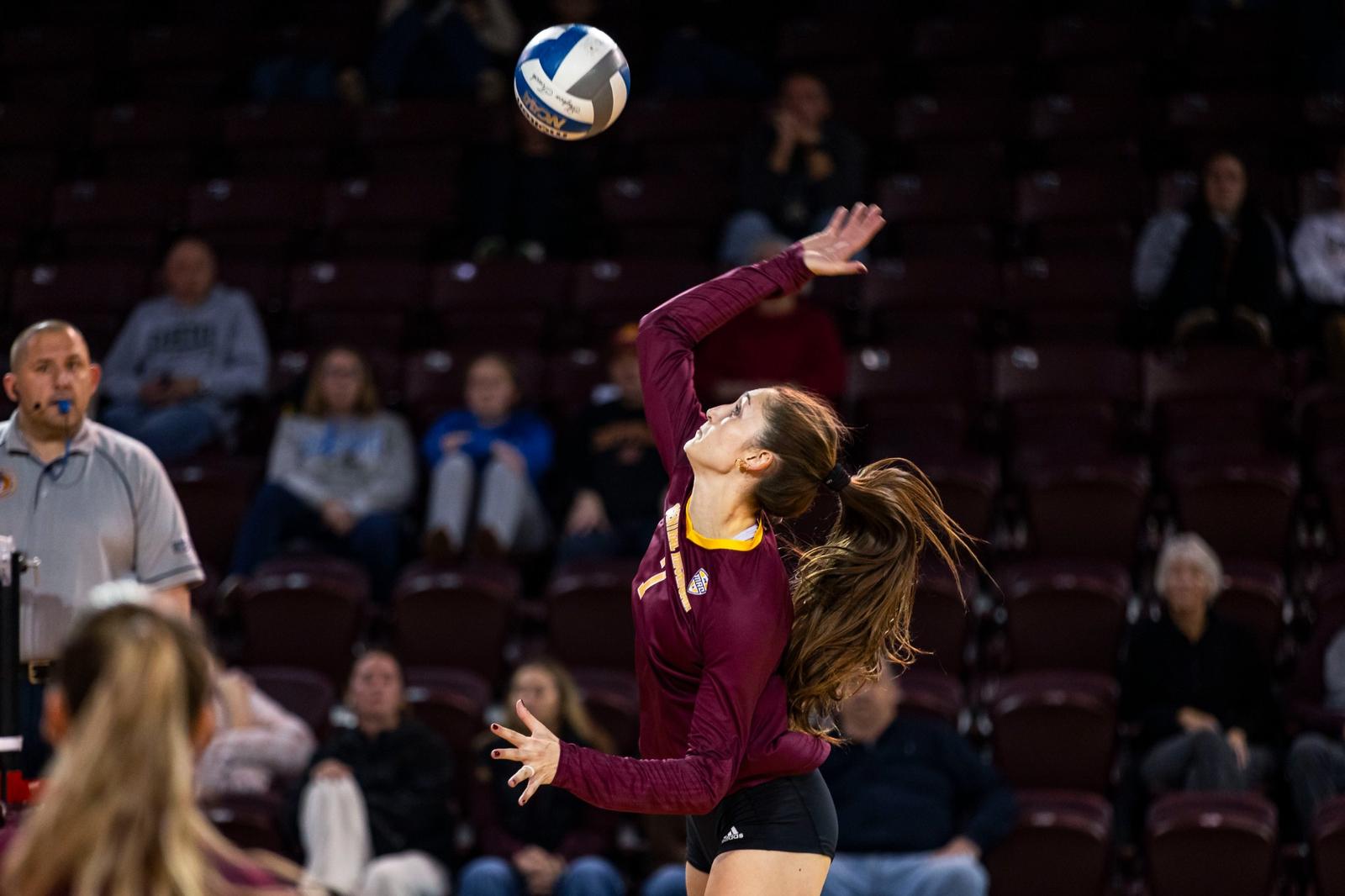
To qualify, a student-athlete must hold a cumulative grade-point average (GPA) of 3.50, across both undergraduate and graduate courses, if applicable. Athletically, volleyball student-athletes must have either competed in 90% of their team’s contests for the season or started at least 66% of contests.
The list of honorees is below:
Senior Alina Anderson (Rockford, Mich. / Rockford / Ferris State)
Senior Abby Olin (Coopersville, Mich. / Coopersville / Michigan State)
Sophomore Izzy Swiercz (Hudsonville, Mich. / Hudsonville)
Sophomore Grace Thomas (Dublin, Ohio / Dublin Coffman)
Both Anderson and Olin earned the honor for the 2024 season.
For the latest news and updates on CMU Volleyball, follow the team in X (@cmuvolleyball) and on Instagram (@cmuvolleyball).
Sports
Affidavit reveals AI-generated plan in alleged grooming case against Mesquite pastor’s son and volleyball coach
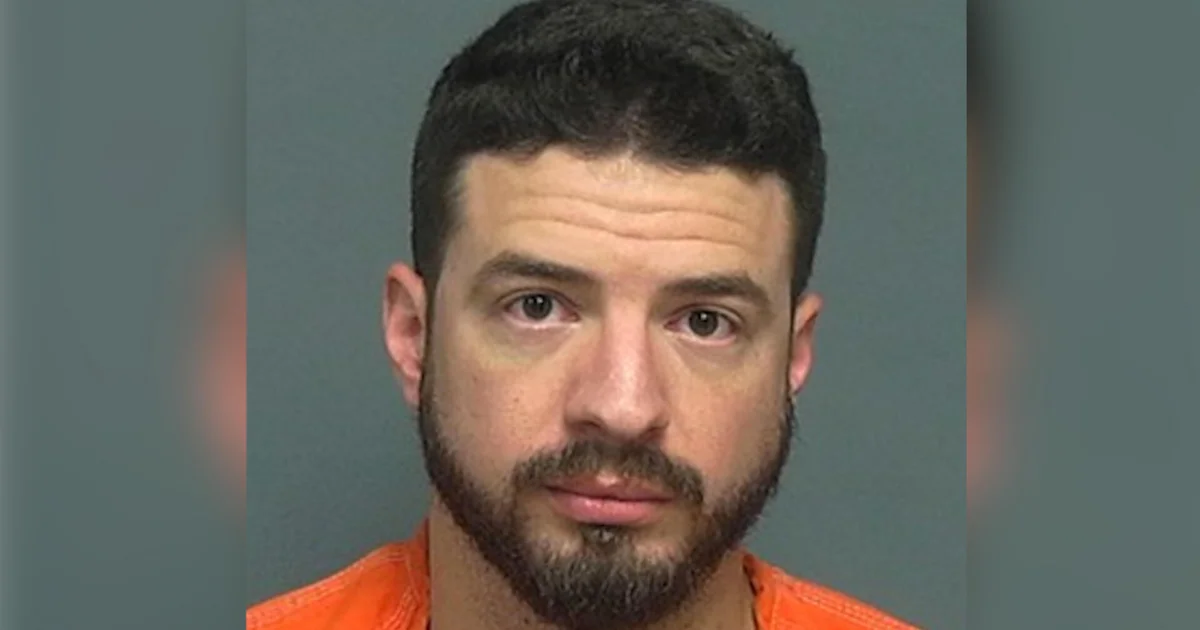
An arrest affidavit obtained by CBS News Texas reveals more details about what led up to the arrest of a teacher and volleyball coach accused of grooming a teenage girl to have a sexual relationship with her, including the discovery of an AI-generated document outlining manipulation tactics.
Matthan Lough, 32, was arrested on Dec. 10 on a charge of child grooming, a third-degree felony. His father, Kevin Lough, was the senior pastor of the Christian Center of Mesquite, where some of the alleged grooming took place.
The victim and her mother filed a report with Mesquite police about Lough on Oct. 2. According to police, the victim’s mother found out about the relationship earlier that week.
Mesquite police: Grooming began more than two years ago
The affidavit outlines how the case began with an interaction at a party in the spring of 2023.
According to the affidavit, the victim met Lough at her cousin’s graduation party when he approached her while she was playing volleyball. The victim recognized Lough from church, as his wife was the worship leader for their youth group. Lough asked her if she would be interested in joining a club volleyball team he wanted to start at the church.
It was not until the fall of 2024 that Lough held tryouts for the team, and the victim was given a spot, the affidavit said. The victim reported a series of unusual interactions with Lough over the following months in which he shared overly personal details about his life and marriage, then began to make flirty and inappropriate jokes, according to the report.
Lough’s inappropriate behavior escalated further over the summer of 2025, when he started sending the victim explicit messages and discussed committing murders, the affidavit said. Lough also repeatedly made sure the victim knew he was carrying a gun, making her fear for her safety.
In September, the affidavit describes the relationship turning physical. Lough allegedly kissed the victim at a church event. Later that month, he sexually assaulted her twice, the victim told police.
The relationship ended after the victim’s mother discovered the inappropriate messages on the victim’s devices. Her mother then contacted Lough’s wife.
Police said that after the victim filed the report, detectives obtained a search warrant and found an AI-generated document on Lough’s iPad titled “Hypothetical Counter-Influence Plan.” The document outlined phases such as “rebuild her autonomy” and “shift the power dynamic,” and provided guidance on how to achieve success.
Fallout from child grooming case
After the relationship was uncovered, police said Lough’s wife left Texas. Court records show she filed for divorce in October.
Lough’s father also resigned as senior pastor of the Christian Center of Mesquite. In a post on the church’s website, its board said the church would work to seek justice for the victim. It also said the church has “initiated an immediate internal review of all child protection policies, volunteer screening processes, and facility access logs to ensure the absolute safety of every child and youth within our care.”
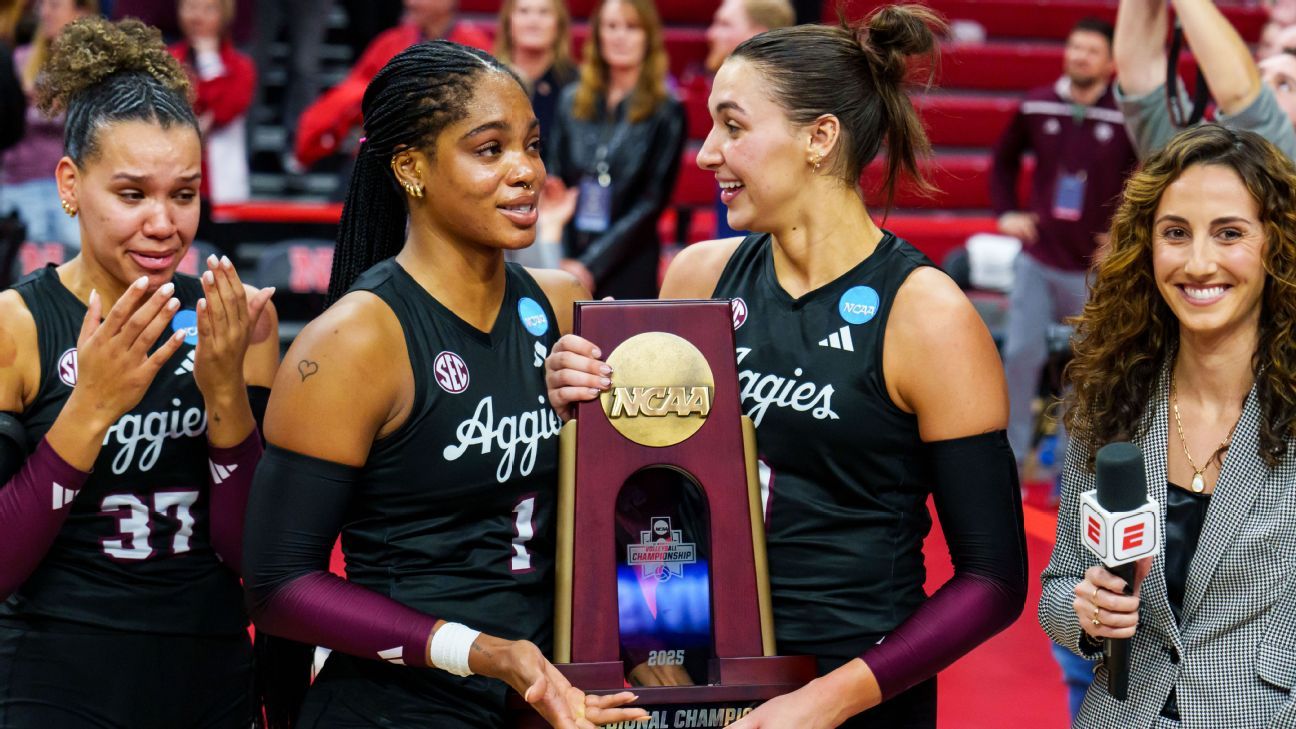
Texas A&M shook up the NCAA women’s volleyball tournament when the No. 3 Aggies upset top-ranked and previously unbeaten Nebraska in their regional final. Now, the Aggies are headed to their first Final Four in program history.
No. 3 Wisconsin, which ousted Texas, another No. 1 seed, on its home court, and No. 1 seeds Kentucky and Pittsburgh join Texas A&M in the national semifinals, which take place Thursday at T-Mobile Center in Kansas City, Missouri.
The Aggies will take on Pitt in one semifinal, while Wisconsin and Kentucky will face off in the other. Neither Texas A&M nor the Panthers have won a national championship, though Pitt will play in its fifth straight Final Four. Both Wisconsin (2021) and Kentucky (2020) have won one national title.
Here are key facts about the 2025 NCAA Division I women’s volleyball tournament:
What is the remaining schedule?
*All times Eastern
Thursday, Dec. 18
Semifinal: No. 3 Texas A&M vs. No. 1 Pittsburgh – 6:30 p.m. on ESPN
“NCAA Women’s Volleyball Studio Show” – 8:30 p.m. on ESPN
Semifinal: No. 3 Wisconsin vs. No. 1 Kentucky – 9 p.m. on ESPN
Sunday, Dec. 21
“NCAA Women’s Volleyball Preview Show” – 3 p.m. on ABC
Championship – 3:30 p.m. on ABC
How can fans watch?
Fans can catch all of the action in the ESPN App and in the NCAA women’s volleyball streaming hub.
How can fans access more college sports coverage from ESPN?
Check out the ESPN college sports hub page for the latest news, scores, rankings and more.
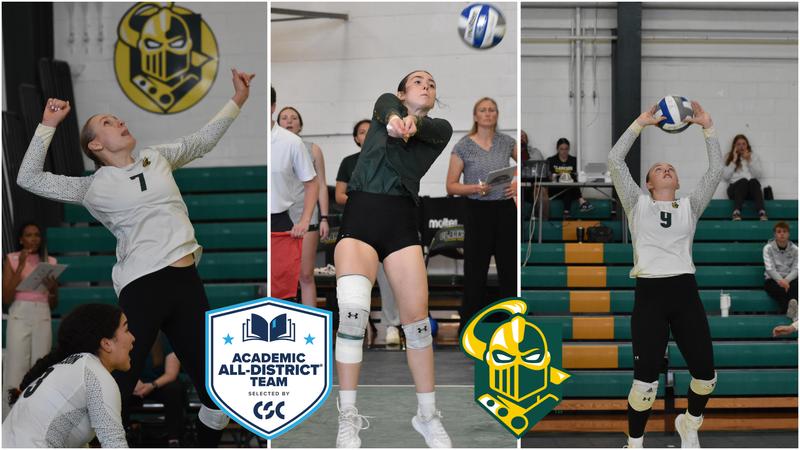
The 2025 Academic All-District® Volleyball teams, selected by College Sports Communicators, recognize the nation’s top student-athletes for their combined performances on the court and in the classroom. To be eligible, student-athletes need to be of sophomore standing both athletically and academically, hold a cumulative grade-point average of 3.50 or better, and have participated in 90% of sets or have started at least two-thirds of their respective team’s matches.
Baxter, a sophomore majoring in Chemical Engineering, was a Liberty League Second-Team All-Star thanks to her excellence in the back row. Baxter ranked 22nd nationally in digs per set (5.40 dps) and was 57th nationally in aces per set (0.63 aps).
Currier, a senior majoring in Mechanical Engineering, continued to be relied upon in a variety of roles for the Knights, averaging 7.09 assists, 0.95 kills, 2.50 digs, and 0.61 blocks per set. In a match against University of Rochester she nearly posted an incredibly rare feat, coming up just one kill short of a quadruple double (31 assists, 16 digs, 10 blocks, and 9 kills).
Hangliter, a senior majoring in Environmental Engineering, finished the season averaging 2.62 kills per set, which ranked second on the team. She also was second in the Liberty League in aces per set with 0.64, which placed her 49th nationally in that category.

This marks the first time in program history that three Lady Vols have been named to the Academic All-District Team. In Eve Rackham Watt‘s eight years as head coach, eight total players have earned Academic All-District honors. Tennessee has had two or more players selected to the All-District team now in three seasons, all coming under Rackham Watt.
CSC’s Academic All-America program recognizes the nation’s top student-athletes for their combined performances on the court and in the classroom. Both Kerr and Kubik earned spots on the CSC Academic All-America ballot, which will be announced on January 13, 2026.
Compiling a 3.87 GPA in the Sport Management program, Kerr garnered First Team All-SEC honors after leading the team with 945 assists. Kerr was a key force for a Tennessee attack that finished the season top 15 in both hitting percentage and kills per set. Kerr had 20 matches with 30 or more assists, including tying her career high with 57 against Florida on Oct. 15.
One of the top setters in Tennessee history, Kerr currently ranks sixth all-time in both assists (3,259) and assists per set (10.65). The two-time All-American setter has led the team in assists in each of the last three seasons, eclipsing the 1,000-assist mark in both 2023 & 2024.
Earning her bachelor’s degree in Communication Studies, Kubik had her best offensive season of her career in her final collegiate season. Kubik led the team in kills (390), kills per set (4.19), points (431.0), and points per set (4.63) this season. She had double-digit kills in 24 matches, reaching 20 or more on four occasions.
Kubik also ranked top ten in the conference in both kills per set and points per set in 2025. A stellar defender in the back row, Kubik finished third on the team with 209 digs. The First Team All-SEC selection had seven double-doubles on the campaign, all of which came against conference opponents.
Boasting a 4.00 GPA in Communication Studies, Güçtekin became an important piece to Tennessee’s defensive success. The senior libero led the team in 2025 with 408 digs. Güçtekin finished the season ranking top five in the SEC in both digs and digs per set. She recorded double figure digs in 23 matches, including having 20 or more in six. She set a career-high of 30 digs at Kentucky on Nov. 9, becoming the first Tennessee player to reach 30 or more digs since Yelianoz Torres had 30 against Arkansas on Oct. 20, 2023.
Güçtekin eclipsed 1,000 digs in her career this season, and finishes her collegiate career with 1,293 digs. An all-around player in college, Güçtekin also finished with 423 assists and 117 aces.

JR Motorsports, Dale Earnhardt Jr. Welcome Arby’s in Multi-Year Partnership

NASCAR Cup Series has six ‘new’ chartered cars for 2026

Top five roles on Motorsport Jobs this week

Earnhardt Jr.’s one way into NASCAR Cup after $150M regret – Motorsport – Sports

Youth Sports Dec. 17, 2025

Walla Walla area youth basketball team wins Tournament of Hoops title | Community
Congress addresses ‘The Crisis in American Youth Sports’

Street Soccer Park Opens to Expand Youth Athletic Opportunities
Search News Releases | American Heart Association

Las Vegas youth soccer coach arrested on child sex charges, Metro says | Sex Crimes

Gaming PC Market | Global Market Analysis Report
How three Taunton High athletes plan to lead through Hockomock LEAP

Woman trying to find ‘guardian angel’ who saved her life after she suddenly stopped breathing

Competition gathers dozens of area youth | News, Sports, Jobs
Woman trying to find ‘guardian angel’ who saved her life after she suddenly stopped breathing

First Tee Winter Registration is open

Fargo girl, 13, dies after collapsing during school basketball game – Grand Forks Herald

CPG Brands Like Allegra Are Betting on F1 for the First Time

F1 Las Vegas: Verstappen win, Norris and Piastri DQ tighten 2025 title fight

Volleyball Recaps – November 18

Two Pro Volleyball Leagues Serve Up Plans for Minnesota Teams

Sycamores unveil 2026 track and field schedule

Utah State Announces 2025-26 Indoor Track & Field Schedule

Redemption Means First Pro Stock World Championship for Dallas Glenn

Jo Shimoda Undergoes Back Surgery

Texas volleyball vs Kentucky game score: Live SEC tournament updates

Bowl Projections: ESPN predicts 12-team College Football Playoff bracket, full bowl slate after Week 14

SoundGear Named Entitlement Sponsor of Spears CARS Tour Southwest Opener

How this startup (and a KC sports icon) turned young players into card-carrying legends overnight

Robert “Bobby” Lewis Hardin, 56

 NBA Legend Michael Jordan to Join NBC Sports as Special Contributor
 Why a rising mid-major power with an NCAA Tournament team opted out of revenue-sharing — and advertised it
 Falcons mailbag
 Portal Update – Basketball and Gymnastics Take Hits
 has always dreamed in Mercurial. Now his initials are on the boots.
The new Kyl…
has always dreamed in Mercurial. Now his initials are on the boots.
The new Kyl…
-
 Motorsports3 weeks ago
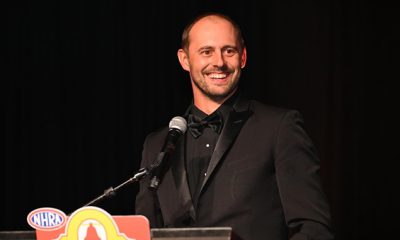
Redemption Means First Pro Stock World Championship for Dallas Glenn
-
 Motorsports3 weeks ago
Jo Shimoda Undergoes Back Surgery
-
 Motorsports7 days ago
SoundGear Named Entitlement Sponsor of Spears CARS Tour Southwest Opener
-
 NIL2 weeks ago
Bowl Projections: ESPN predicts 12-team College Football Playoff bracket, full bowl slate after Week 14
-
 Rec Sports3 weeks ago
How this startup (and a KC sports icon) turned young players into card-carrying legends overnight
-
 Rec Sports2 weeks ago
Robert “Bobby” Lewis Hardin, 56
-

 NIL3 weeks ago
Indiana’s rapid ascent and its impact across college football
-

 Motorsports3 weeks ago
Pohlman admits ‘there might be some spats’ as he pushes to get Kyle Busch winning again
-
Sports2 weeks ago
Wisconsin volleyball sweeps Minnesota with ease in ranked rivalry win
-

 Motorsports3 weeks ago
Increased Purses, 19 Different Tracks Highlight 2026 Great Lakes Super Sprints Schedule – Speedway Digest