


NIL
Athletes race the clock in court as NCAA eligibility battles drag on


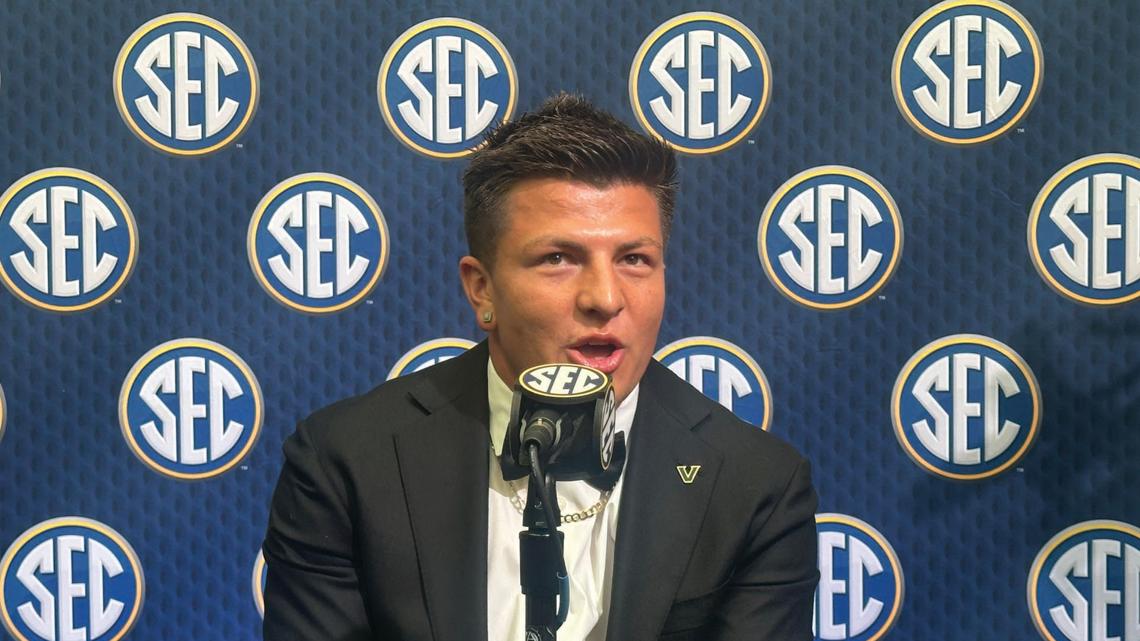
With fall football practice starting this week, players hoping for a judge’s approval to play may be left waiting.
WASHINGTON — The stream of lawsuits across the country from college athletes trying to grab another season of eligibility appears ready to fizzle out for a bit.
With fall football practice cranking up this week, players still hoping for a judge allowing them to take the field may be left waiting for a ruling that likely won’t help them compete again.
“We’re at a point in the summer where I think any athlete out there is going to know that it’s probably too late to file a case and be able to get relief on it,” said Sam Ehrlich, a professor of legal studies at Boise State studying the 2021 Alston ruling’s effect on college athletics.
Relief on a larger question surrounding eligibility may be a while coming, too: In cases from California to Wisconsin, judges have provided inconsistent results for players seeking legal help for another season, and it may very well be a topic settled for good by a higher court.
Vanderbilt quarterback Diego Pavia is perhaps the highest-profile athlete to win his court fight. The New Mexico State transfer sued the NCAA last fall, arguing that his junior college years should not count against his eligibility, citing the potential losses in earnings from name, image and likeness deals. U.S. District Judge William Campbell Jr. in Tennessee granted a preliminary injunction, ordering the NCAA to allow Pavia to play.
The NCAA is appealing Campbell’s decision but granted a blanket waiver that will allow an extra year of eligibility for Pavia and other athletes who played at non-NCAA Division I schools before enrollment if they were going to exhaust their eligibility this year.
Pavia won. Others, such as Wisconsin cornerback Nyzier Fourqurean, have lost or are in limbo.
Practice starts Wednesday for Southeastern Conference members Vanderbilt and Tennessee. Chris Bellamy and Targhee Lambson are among four football players waiting on the same federal judge who gave Pavia another season of football last December.
Some schools have helped by filing waivers. Others wait and hold a spot, letting the athlete fight the legal battle.
“They’re just kind of in limbo in the transfer portal because schools don’t really know whether they’re going to have eligibility,” Ehrlich said. “It’s a really weird situation right now.”
The NCAA would like Congress to grant limited liability protection to help address all the lawsuits over eligibility. NCAA President Charlie Baker noted in June that athletes had five years to play four seasons for about a century, a situation that changed recently. Baker told The Associated Press then that the NCAA has won more of these cases than the association lost.
“But the uncertainty it creates, the consequences of this for the next generation of young people if you play this thing out, are enormous,” Baker said. “Moving away from an academic calendar to sort of no calendar for college sports is hugely problematic.”
Duke coach Manny Diaz thought such eligibility issues would be addressed after the House settlement, which took effect July 1.
“All I have been told is once they got House out of the way they are going to double back on a lot of these oddities and make sure eligibility is tied into a college career,” Diaz said at ACC media days. “We don’t want nine-year guys playing the sport.”
Thanks to the extra season added to careers for the coronavirus pandemic, the college eligibility calendar has been scrambled a bit. Pavia will be playing his sixth season after starting with two at New Mexico Military Institute, a junior college, then two more at New Mexico State.
Fullback Hayden Large played three NAIA seasons at Dordt before transferring to Iowa, where he will be playing his sixth season this fall after being granted another year.
Iowa coach Kirk Ferentz sees a simple solution in giving players five years to play five seasons. He’s also in favor of players who start in junior college having an extra year, even as he sees the need for a limit even if he doesn’t know what that should be.
“If a guy during his first year ends up being able to play five or six games, why not let him play?” Ferentz said. “It’s all about creating opportunity, in my mind. I’ve never understood the rationale for not doing that.”
Ehrlich is attempting to track all lawsuits against the NCAA, ranging from the House settlement;name, image and likeness litigation; college athletes as employees; and Title IX lawsuits, along with other cases. Ehrlich has tracked more than a dozen lawsuits involving eligibility, and common factors are hard to come by.
He saw three very different rulings from judges appointed by President Donald Trump. Standards of evidence for a preliminary injunction also have varied from judge to judge. Three cases have been appealed, with other motions helping delay some waiver requests.
Ehrlich said there remains the chance a case lands before the U.S. Supreme Court.
“I don’t see these cases drying up anytime soon,” Ehrlich said.
AP National Writer Eddie Pells and AP Sports Writer Steve Reed contributed to this report. ___ Get poll alerts and updates on the AP Top 25 throughout the season. Sign up here. AP college football: https://apnews.com/hub/ap-top-25-college-football-poll and https://apnews.com/hub/college-football
Continue Reading

UCLA has landed a transfer who could hasten Bob Chesney’s rebuilding efforts.
Wayne Knight verbally committed to following Chesney from James Madison to Westwood on Wednesday, giving the new Bruins coach a high-quality running back to pair with quarterback Nico Iamaleava.
Showing what he could do on a national stage last month, Knight ran for 110 yards in 17 carries against Oregon in the College Football Playoff. It was the fifth 100-yard rushing game of the season for Knight on the way to being selected a first team All-Sun Belt Conference player.
Combining excellent speed with the toughness needed to break tackles, the 5-foot-6, 189-pound Knight led the conference with 1,357 rushing yards. He also made 40 catches for 397 yards and averaged 22.3 yards on kickoff returns and 9.5 yards on punt returns. His 2,039 all-purpose yards were a school record, helping him become an Associated Press second team All-American all-purpose player after ranking third nationally with 145.6 all-purpose yards per game.
Knight, who will be a redshirt senior next season in his final year of college eligibility, becomes the seventh player from James Madison to accompany Chesney to UCLA, joining wide receiver Landon Ellis, defensive back DJ Barksdale, tight end Josh Phifer, edge rusher Aiden Gobaira, right guard Riley Robell and offensive lineman JD Rayner.
UCLA also has received verbal commitments from Michigan wide receiver Semaj Morgan, Florida wide receiver Aidan Mizell, San Jose State wide receiver Leland Smith, Iowa State running back Dylan Lee, Boise State offensive tackle Hall Schmidt, Virginia Tech defensive back Dante Lovett, Iowa State defensive back Ta’Shawn James and California edge rusher Ryan McCulloch.
But no incoming player can match the production of Knight, whose highlights included a career-high 211 rushing yards — including a 73-yard touchdown — against Troy in the Sun Belt championship game, earning him most valuable player honors for the Dukes’ 31-14 victory.
Knight will join a group of running backs that includes senior Jaivian Thomas (294 yards rushing and one touchdown in 2025), redshirt senior Anthony Woods (294 yards rushing in 2025) and redshirt freshman Karson Cox (nine yards in two carries during his only appearance as a true freshman).
With Knight on board, the Bruins presumably have their starting running back in Year 1 under their new coach.

Former Cincinnati quarterback Brendan Sorsby took over the title as college football’s most-expensive player after reportedly inking a $5 million agreement with Texas Tech, according to On3’s Pete Nakos. Sorsby formally committed to the Red Raiders on Sunday night over heavy interest from LSU and new head coach Lane Kiffin.
According to Nakos, Sorsby’s deal with free-spending Texas Tech will make him one of the highest-paid quarterbacks in college football in 2026 after former Georgia QB Carson Beck signed a $3-3.5 million deal with Miami last offseason that could reach $5-6 million with incentives. Duke quarterback Darian Mensah earned $4 million this past season after transferring from Tulane.
SUBSCRIBE to the On3 NIL and Sports Business Newsletter
But before the oil money-backed Red Raiders raised the financial bar, LSU and Kiffin reportedly offered Sorsby a financial package much more in line with the Mensah deal last year, proposing a $3.5 million offer, according to documents obtained by Yahoo! Sports insider Ross Dellenger. LSU’s Sorsby offer included a third-party NIL marketing deal through the Tigers’ multi-media rights partner, Playfly Sports Properties, that would be exempt from counting against the school’s revenue-sharing cap, per Dellenger.
The 11-page NIL contract between Playfly and Sorsby, obtained by Dellenger, was never signed and is purely a proposed service agreement. Though it does provide an interesting look at how schools are utilizing outside NIL agreements to develop a compensation package without exceeding college football’s $20.5 million salary cap that stems from the House vs. NCAA settlement in June.
Dellenger also points out that the proposed contract would be, in theory, only a portion of Sorsby’s total compensation. The NIL deal even includes certain language suggesting LSU also planned to compensate Sorsby through direct revenue-share payments from the school, likely in the range of at least $1 million for a total figure that would be competitive with Texas Tech‘s $5 million package, per Dellenger.
The $3.5 million NIL deal is a marketing guarantee created by Playfly through NILSU MAX, an independent, self-sustaining collective formed in conjunction with LSU athletics and Playfly to “identify and secure NIL opportunities for Tiger student athletes,” according to the university’s website.
As Dellenger points out, the Sorsby contract obtained by Yahoo! Sports “shines a light on the method in which universities — not just LSU — are assembling financial packages for some athletes: with a portion of direct university revenue-share payments, plus a portion of NIL third-party guarantees that have been promised yet not cleared.”

How big did ESPN crash with its unfettered bias in promoting the SEC for postseason play?
Well, it’s hovering around a face plant.
The network’s favorite horses for college football’s greatest prize have mostly faltered.
Only one SEC team is left in the playoffs.
And what this all means is the SEC has been caught by the rest of college football. It is no longer, in a competitive sense, light years or even a bright blinking stop light, ahead of the rest of the Power Four conferences.
If the ACC’s Miami beats the SEC’s Mississippi Thursday night, ESPN and the CFP committee greasing of the SEC pathway was felonious piracy of playoff money.
When the SEC loses one of its biggest foghorns in Paul Finebaum, you know that storied, propped-up league is in the doldrums and exposed in the era of NIL, where everybody else can pay their players.
Finebaum, a longtime Alabama radio host and national TV personality, went on ESPN’s “First Take” on Tuesday and admitted, even he, voted by Awful Announcing.com as the most biased personality in college football, could not defend the SEC this season and its limitless hypothetical victories.
The CFP committee gave the SEC five of the 12 playoff berths. The SEC is 2-7 in bowl games this postseason.
No. 9 Alabama, gifted a berth after almost losing to two-win (SEC) Auburn got annihilated by No. 1 seed Indiana. No. 8 Oklahoma, No. 7 Texas A&M, No. 3 Georgia have all been eliminated. Only No. 6 Mississippi remains and plays No. 10 Miami Thursday night.
Here’s Finebaum’s admission.
“There’s no way to defend the SEC,” Finebaum told “First Take” with Stephen A Smith. “It’s been terrible.”
“I kept wrapping my arms around Alabama and saying, ‘Stephen A. remember what they did, they went through that gauntlet in the middle of the year,” said Finebaum.
“Well, a lot of those teams they beat really weren’t very good after all. They lost in bowl games, and they looked terrible. So it’s a rough year for the SEC. Ole Miss is it, regardless of the Lane Kiffin story, which I know we’re going to talk about. But if Ole Miss loses Thursday night and I’m sitting around having to defend this league to you, Stephen A. saying ‘No big deal that it’s three years without an SEC team in the national championship game’ there’s no defense. It’s been rough,” Finebaum admitted.
Writing for ESPN, longtime college football pundit Dan Wetzel put it this way:
“It’s not that the SEC isn’t still “good” or even capable of winning a national championship — Ole Miss might very well do it. Top to bottom, it might still be the best league, with the majority of schools all-in on football.
“That said, the days of complete domination, all-SEC national title games or deep, juggernaut teams are clearly gone, perhaps forever. This isn’t the same.”
What’s happened is both good and bad.
Good because college football television viewership is skyrocketing. It’s never been so popular to follow, watch and get involved in what’s going on between the sidelines.
It’s bad because of all the chaos, movement, gaudy money numbers and purchase of talent.
For the SEC, revenue sharing, NIL and the transfer portal has spread around talent to other programs and hurt the depth of their own teams.
Alabama used to be the king of talent. So was Georgia.
Now we’re seeing those storied programs get pushed around, ran past and chased down and tackled.
Illinois coach Bret Bielema told ESPN this week, “This is the most fun I’ve ever had in coaching because you know you’re on a more equal playing field. The introduction of the portal, NIL, and revenue sharing is the most game-changing development in my 32 years of coaching.
“It’s hard when you would do what you have to do as long as you possibly could and in the end, sometimes it just didn’t matter,” Bielema explained about recruiting back when he was at Arkansas and Wisconsin.
“Now you just come to work every day knowing that blue blood, red blood, orange blood, whatever, everybody’s got a chance, man.”
Before Texas Tech’s tires blew out against Oregon, we saw the Red Raiders purchase themselves a Big 12 championship and berth in the CFP.
We’ve seen Indiana, check that, Indiana, become the nation’s darling and No. 1 team in the country and favorite to win it all.
Ohio State is home. Oklahoma is home. Texas is watching from home with Georgia and Alabama and Penn State.
The door is open.
Yes, it’s all kind of a mess.
But recent chaos has become the game’s equalizer.
It has also exposed the raw brand worship and advancement of SEC teams by the media, especially ESPN, the owner of CFP television rights for all the games.
ESPN’s interest? Is it really determining a fair field? Or advancing its ratings by picking brands for increased revenue?
The fact the SEC gets an unfair advantage in preseason polls, then rides that with questionable scheduling and far too much credit for intra-conference wins, has been exposed.
It is a mess that’s taken the SEC off its high saddle ride and made the rest of the cowboys eligible to enjoy the roundup rodeo.
Jan. 8, 2026, 9:20 a.m. PT
ATLANTA — Ahead of the College Football Playoff semifinal matchup between No. 5 Oregon football and No. 1 Indiana, the sometimes prickly and often witty and snappy personalities of head coaches Dan Lanning and Curt Cignetti shined Jan 8 at the College Football Hall of Fame down the road from Mercedes-Benz Stadium.
The coaches traded barbs about friendly competitions throughout the week, like signing footballs before the press conference, and discussed the transfer portal, affairs surrounding collegiate athletics and the upcoming Peach Bowl Jan. 9 in Atlanta.

The college football transfer portal opened on Jan. 2, and things have already gone wild.
In fact, on the very first day of the transfer portal being open, over 4,500 Division I football players entered their names. This portal window will close by Jan. 16, so we’re not yet halfway home.
There have absolutely been winners and losers, though. Let’s start with the winners and go from there.
Winners so far in the college football transfer portal
Indiana Hoosiers
There’s a trend happening in college football among the programs that have seemingly figured out the NIL and transfer portal era: bringing in established quarterbacks for a one-year run.
That’s what the Indiana Hoosiers did with Fernando Mendoza, and now they’re doing the same thing with TCU transfer quarterback Josh Hoover, who threw for 3,472 yards and 29 touchdowns compared to 13 interceptions this season.
Michigan State’s top wide receiver, Nick Marsh, also transferred to Indiana, as did Turbo Richard, who was Boston College’s leading rusher this past season.
Curt Cignetti may be building a powerhouse for years to come.
Texas Tech Red Raiders
The Texas Tech Red Raiders are another college program that has embraced the NIL and transfer portal era, and they’re building yet another transfer class that could be considered among the best in the nation.
The top quarterback target this cycle was Cincinnati’s Brendan Sorsby, and the Red Raiders threw the bag at him to bring him in via the portal.
Sorsby threw for 2,800 yards and 27 touchdowns compared to five interceptions this past season for the Bearcats. The Red Raiders are hoping he can be the quarterback that puts them over the top.
Penn State Nittany Lions
The Penn State Nittany Lions have a new head coach in Matt Campbell, and it’s no surprise that the former Iowa State Cyclones head coach is bringing a ton of his old players with him to Happy Valley.
In fact, Penn State has already landed 23 players in the portal, 20 of whom have come from Iowa State.
That includes quarterback Rocco Becht, who threw for 2,584 yards and 16 touchdowns compared to nine interceptions.
Losers so far in the college football transfer portal
Iowa State Cyclones
If Penn State is a winner in the portal because the Nittany Lions poached a ton of players from Iowa State, then it stands to reason that the Cyclones are one of the losers worth mentioning
Again, 20 players followed Campbell out the door, but in all, new Iowa State head coach Jimmy Rogers is going to have to replace 50-plus players (and perhaps counting) who have bolted into the transfer portal.
North Texas Mean Green
The North Texas Mean Green finished 12-2 this season and played in the American Conference title game.
It was a banner year for North Texas, but the new reality for Group of Five schools is that good years will lead to a ton of poaching.
Head coach Eric Morris was tabbed as Mike Gundy’s replacement at Oklahoma State. Following him were star quarterback Drew Mestemaker, star running back Caleb Hawkins and star wide receiver Wyatt Young.
Mestemaker led college football with 4,379 passing yards this season, and he was tied for second place with 34 passing touchdowns. Hawkins rushed 231 times for 1,434 yards and 25 touchdowns. Young caught 70 passes for 1,264 yards and 10 touchdowns.
Losing those three players, in particular, will cripple North Texas in 2026.
Auburn Tigers
The Auburn Tigers have had a tough go of things, even after hiring Alex Golesh from USF to be the new head coach.
Many felt that freshman quarterback and former five-star Deuce Knight was the future of the program, but he entered the transfer portal and is now one of the top quarterbacks available.
The Tigers also lost sophomore wide receiver Cam Coleman to Texas, who caught 56 passes for 708 yards and five touchdowns this season.

College football’s version of the Final Four is here and there are no signs of Alabama, Ohio State, Georgia, Michigan, LSU, Texas, Penn State, Notre Dame or Oklahoma. Instead, the last group still standing consists of Ole Miss, Indiana, Oregon and Miami and three of the four teams didn’t even qualify for their conference championship games.
What’s going on here?
As it turns out, NIL and the transfer portal, that some contend are destroying the game, have only created more contenders. There is more parity than ever before. Programs without much of a football history are on the brink of making some.
Indiana is a renowned basketball school, but with access to the transfer portal and the ability to invest in players, the Hoosiers are winning in football. No. 1 Indiana not only beat No. 2 Ohio State to win its first outright Big Ten championship since 1945, but they also routed No. 9 Alabama in the Rose Bowl for their first bowl victory in 34 years. Quarterback Fernando Mendoza also became the first Hoosier in history to win the Heisman Trophy.
When have you ever heard of a top football target saying ‘No’ to Ohio State, Michigan and Penn State and ‘Yes’ to Indiana? It’s happening right before our eyes.
Ole Miss is still without an SEC title since 1963, but empowered by today’s new rules, the Rebels amassed enough talent to eliminate league heavyweight Georgia from the playoffs — even while their former head coach Lane Kiffin watched from his new job at LSU.
Oregon, with its rich banker — Phil Knight, founder of Nike, has never won a football national championship. Miami has won five national titles, but none since 2001 and they haven’t won a conference championship since 2003.
With rosters constructed around NIL and the transfer portal, all four programs are not only playing for a shot to be No. 1 this month, but they are fortified to hang around for a while. The blue bloods no longer have a monopoly on the nation’s best players.
For other examples of how the rule changes have leveled the playing field, just look at No. 4 Texas Tech, No. 14 Vanderbilt and No. 12 BYU. The Red Raiders may have bought their way out of obscurity, but in short time and with an excellent head coach, Texas Tech is likely to finish the season ranked higher than No. 13 Texas and No. 7 Texas A&M and begin next year the same way.
Vanderbilt lost its bowl game to Iowa, but before that, the Commodores (10-2) went to Knoxville and blew out Tennessee 45-24. They beat the Vols with better players — something unseen around the Volunteer State before NIL and the transfer portal. It’s not just football. Vandy is the only program in the nation that is still undefeated in both men’s and women’s basketball.
BYU was playing as a football independent when both the transfer portal (2018) and NIL (2021) were approved by the NCAA. At the time, the fear was whether the Cougars could or would even try to survive.
Two major developments followed. First, BYU was invited to join the Big 12 beginning in the 2023 season. Second, school leaders and its fan base committed to do what was necessary to be competitive, and the Board of Trustees concurred so long as athletics remained self-funded and true to the university’s core values.
How is that working out?
Men’s basketball is currently 13-1, ranked No. 9 in the country and showcasing freshman AJ Dybantsa — the projected top pick in next year’s NBA draft. Last season, BYU reached the Sweet 16 in the NCAA Tournament for the first time since 2011. To keep it going, the Cougars quickly extended head coach Kevin Young’s contract.
Football is a combined 22-4 over the last two seasons with victories over ranked P4 opponents in both the Alamo Bowl and Pop-Tarts Bowl. More people watched the Cougars on television in those two games than any previous BYU broadcast in the modern era.
The Cougars extended head coach Kalani Sitake’s contract to 10 years and the following day, Sitake signed the program’s highest-rated recruiting class in history.
Truth be told, NIL and the transfer portal aren’t stumbling blocks for BYU at all. In fact, they are just the opposite — more like fertilizer for what the Cougars are growing. The ability to attract talent to the embedded culture, with the resources to support them, gives every team on campus a chance to succeed.
BYU doesn’t get or keep every player or coach, but they get enough and their all-important investor — Cougar Nation is all-in. Wherever BYU goes, the loyal crowds follow.
NIL and the transfer portal don’t function perfectly and still need some national oversight, but when it comes to the Cougars, they are tailor-made to keep them competitive just as they have helped Indiana, Miami, Oregon and Ole Miss, who are about to give college football a refreshingly new national champion.

Dave McCann is a sportswriter and columnist for the Deseret News and is a play-by-play announcer and show host for BYUtv/ESPN+. He co-hosts “Y’s Guys” at ysguys.com and is the author of the children’s book “C is for Cougar,” available at deseretbook.com

Motorsports10 minutes ago
Mando Deodorant to Sponsor Josh Bilicki in Seven Races

Rec Sports15 minutes ago
Roundup of news from Hull’s wide world of sports — The Hull Times

Sports16 minutes ago
Vikings Begin ‘Process’, Open Indoor Season at Silver & Blue Invitational This Weekend

Motorsports26 minutes ago
An Insider’s Account of NASCAR’s Tabasco Fiasco

Sports32 minutes ago
Seremes named to The Bowerman watchlist

Motorsports37 minutes ago
CarBravo delivers affordability and confidence with new 12-month/12,000 mile warranty

Motorsports42 minutes ago
NASCAR star opens up on reality of sport – ‘I’ve had so many failures’ – Motorsport – Sports

Sports48 minutes ago
The 2026 Bowerman Watch List for men’s and women’s NCAA track and field

NIL50 minutes ago
UCLA lands a top transfer in James Madison running back Wayne Knight

Sports51 minutes ago
Gurnell Promoted to Director of Volleyball Operations – Purdue Boilermakers

Sports1 hour ago
‘Dons Open 2026 Season on Arnie Ball Court

Motorsports1 hour ago
Keselowski to miss Clash, LaJoie to fill in

Sports1 hour ago
John Cook interview ahead of Supernovas season opener

Motorsports1 hour ago
CJ Olivares Appointed Group CEO of RACER Media & MarketingPerformance Racing Industry

Sports2 hours ago
Blazers Back in Action at Birmingham Crossplex This Weekend

Motorsports4 weeks ago
SoundGear Named Entitlement Sponsor of Spears CARS Tour Southwest Opener

NIL4 weeks ago
DeSantis Talks College Football, Calls for Reforms to NIL and Transfer Portal · The Floridian

Sports4 weeks ago
#11 Volleyball Practices, Then Meets Media Prior to #2 Kentucky Match

Rec Sports3 weeks ago
Stempien to seek opening for Branch County Circuit Court Judge | WTVB | 1590 AM · 95.5 FM

Motorsports4 weeks ago
Nascar legal saga ends as 23XI, Front Row secure settlement

Sports4 weeks ago
Maine wraps up Fall Semester with a win in Black Bear Invitational

Rec Sports3 weeks ago
Princeton Area Community Foundation awards more than $1.3 million to 40 local nonprofits ⋆ Princeton, NJ local news %

Motorsports3 weeks ago
Ross Brawn to receive Autosport Gold Medal Award at 2026 Autosport Awards, Honouring a Lifetime Shaping Modern F1

NIL3 weeks ago
Downtown Athletic Club of Hawaiʻi gives $300K to Boost the ’Bows NIL fund

Motorsports4 weeks ago
Sunoco to sponsor No. 8 Ganassi Honda IndyCar in multi-year deal

Rec Sports4 weeks ago
WNBA’s Caitlin Clark, Angel Reese and Paige Bueckers in NC, making debut for national team at USA camp at Duke
Motorsports4 weeks ago
NASCAR, 23XI Racing, Front Row Motorsports announce settlement of US monopoly suit | MLex

Motorsports4 weeks ago
North Florida Motorsports Park led by Indy 500 Champion and motorsports legend Bobby Rahal Nassau County, FL

Sports4 weeks ago
Woods, Ogunribido Named CCIW Women’s Indoor Track & Field Student-Athletes of the Week

Sports4 weeks ago
Rock sending small group to Akron Friday night





-

 Sports2 weeks ago
Badgers news: Wisconsin lands 2nd commitment from transfer portal
-

 Rec Sports6 days ago
Five Youth Sports Trends We’re Watching in 2026
-

 Sports3 weeks ago
Is women’s volleyball the SEC’s next big sport? How Kentucky, Texas A&M broke through
-

 Rec Sports3 weeks ago
NBA, Global Basketball Community Unite for World Basketball Day Celebration
-
 Sports2 weeks ago
Kentucky VB adds an All-American honorable mention, loses Brooke Bultema to portal
-
Rec Sports3 weeks ago
Inside the NWSL’s first combine: Can the league create a more robust pathway for American talent development?
-

 Motorsports3 weeks ago
NASCAR, IndyCar, and F1 Share These Race Days in 2026
-
 NIL3 weeks ago
$2.1 million transfer portal QB predicted to join College Football Playoff team
-
 Sports2 weeks ago
Colorado volleyball poised to repeat success
-

 Motorsports2 weeks ago
Dr. Patrick Staropoli Lands Full-Time O’Reilly Ride with Big Machine Racing