Motorsports
Belmont Abbey College’s Motorsport Program Races Ahead| National Catholic Register

For nearly 150 years, the Benedictine values of hospitality, community and excellence have shaped Belmont Abbey College. Today, they’re also forming young professionals in a field few would associate with a small Catholic liberal-arts college: the motorsports industry.
At a campus better known for its monastery and Great Books academic core, students now study motorsport marketing, event management, and organizational theory. They learn the business of racing while being grounded in a Catholic vision of the human person, all within sight of Charlotte, North Carolina’s booming motorsports economy.
That unlikely blend didn’t happen by accident.
“It started around 70 years ago,” said Trey Cunningham, chair of the Sport and Motorsport Management Department. A local Belmont man, Howard Augustine “Humpy” Wheeler, was Belmont Abbey’s first lay employee and football coach. His son, also named Humpy Wheeler, later became a legendary NASCAR promoter and served on Belmont Abbey’s board of trustees.
According to Cunningham, Wheeler Jr. approached then-president William Thierfelder in the early 2000s with a simple concern: The industry needed people who understood both racing and business. “He was having trouble finding people who had business acumen as well as a passion for motorsports,” Cunningham said. This suggestion led to Belmont Abbey’s first “Racing Management” class in 2007, an unexpected campus hit.
The next year brought a business concentration. A few years after that, more classes were added. And roughly 12 years ago, Belmont Abbey launched one of the first undergraduate motorsport-management degrees in the country. Today, the program enrolls around 65 undergraduates and, as of this fall, 20 students in its new Master of Arts program.
Classroom and Track
For students like senior James Sicree of Pennsylvania, the program was a lifeline at a moment when his plans were faltering. Assuming he would never attend college, he had trained as an apprentice mechanic in high school, worked in a body shop and became involved in the drift scene.

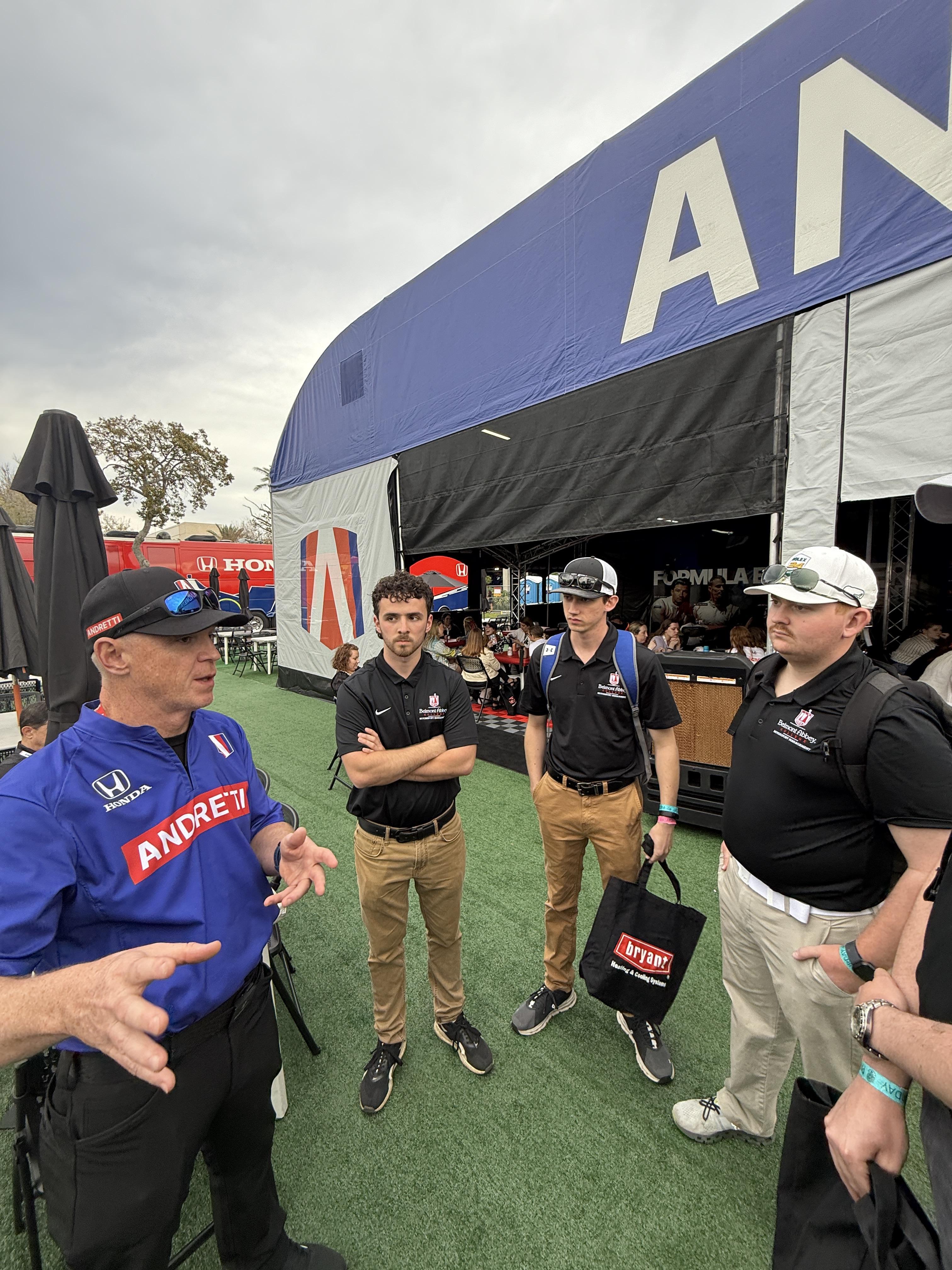
“I was kind of stuck in my hometown,” he recalled. His father, from a large Catholic family, mentioned Belmont Abbey’s program almost in passing. Sicree ignored it at first, then reconsidered during a difficult gap year.
“One day I thought, ‘I’ll give this a shot,’” he said. A campus visit and meeting with Quinn Beekwilder, assistant professor and coordinator for the program, sealed his decision. “I looked at the campus and really liked it. I thought I could make this work, and then it just grew on me.”
Senior Michael O’Brien’s path was quieter, but just as decisive. From North Carolina, he arrived intending to major in business management. “I saw that there was a motorsports management program and said, ‘Hey, that looks pretty cool,’” he remembered. Two introductory classes later, he was hooked. “I did not regret switching my major at all.”

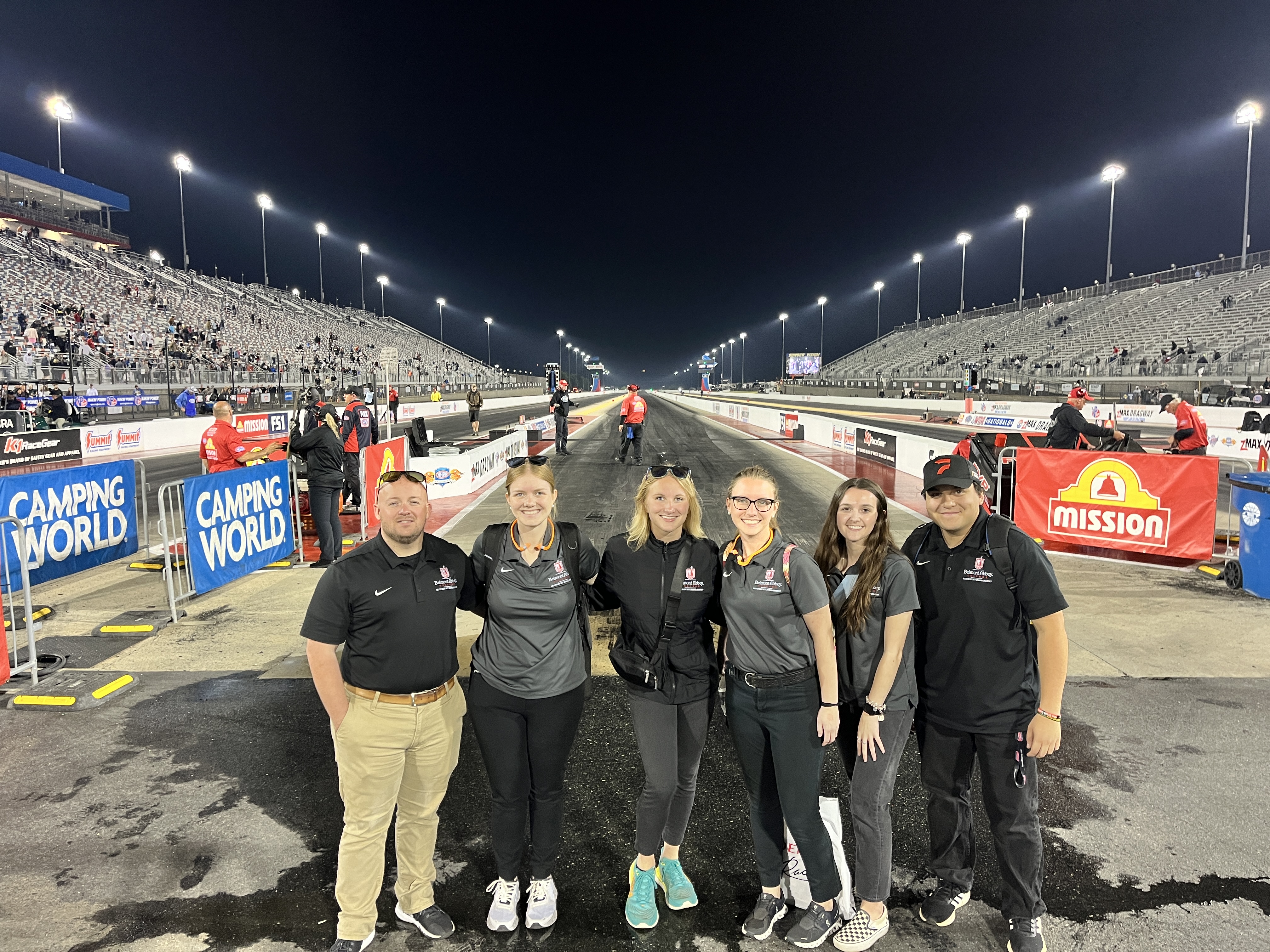
Both students told the Register that the program’s strength is its hands-on approach. They travel to major races in cities such as Daytona, Nashville, Tampa, St. Petersburg and Atlanta; volunteer at local events; and receive one-on-one professional feedback in small classroom settings. O’Brien’s senior seminar is taught by Mo Murray, CEO of Ligier Automotive North America. “He’ll take 20 minutes out of class to talk through what each of us could do better,” O’Brien shared. “It’s very helpful.”
These experiences are intentionally paired with conversations about professional ethics and Benedictine values, both in the classroom and on the road. “We have these discussions with students before we go out so that they live it and learn it in real time,” Cunningham said.
A Growing Network
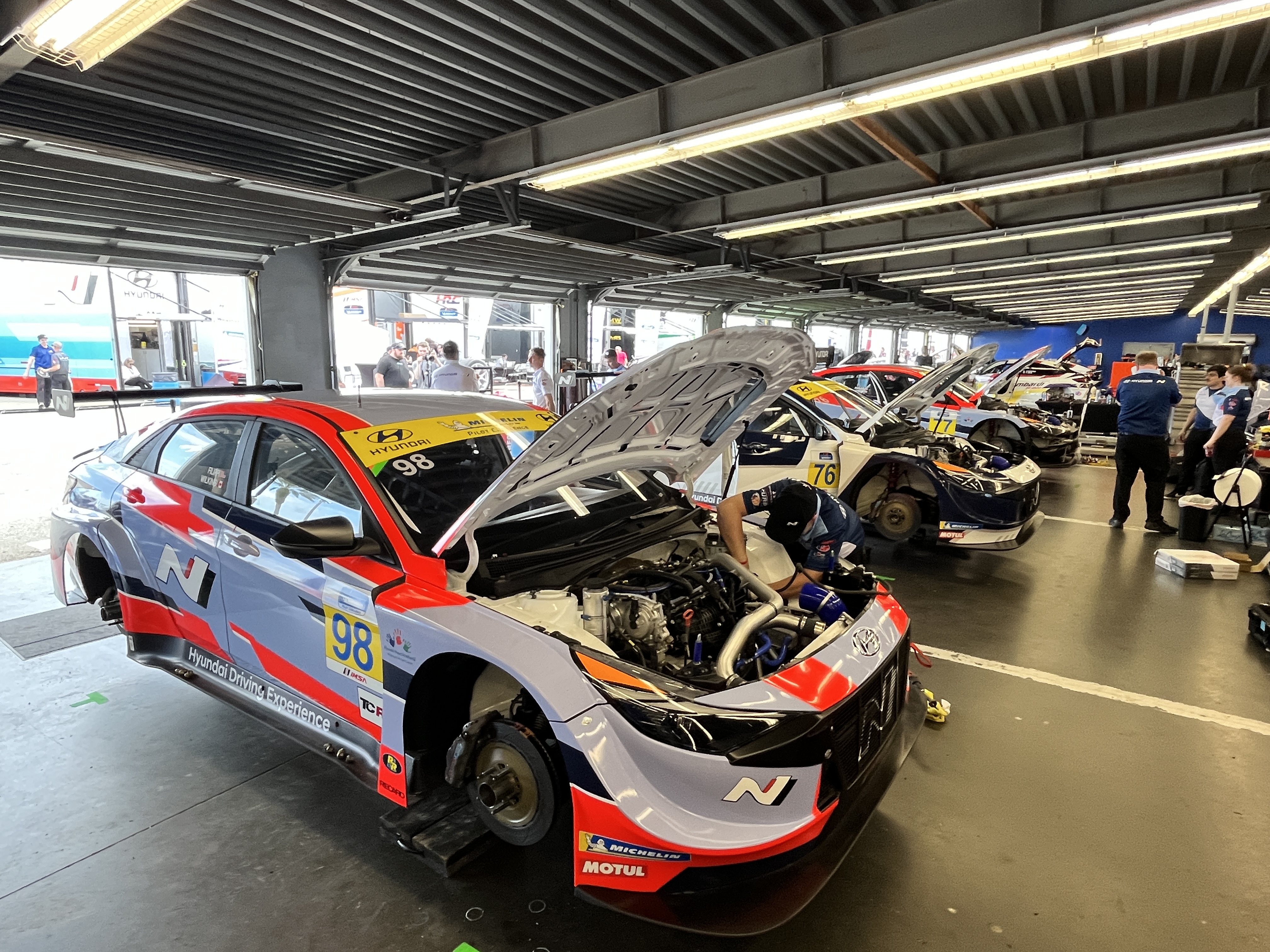
Because Belmont Abbey is merely minutes away from NASCAR teams, agencies and tracks, students and alumni have formed a visible presence across the industry.
Justin Swilling, a 2015 graduate, grew up attending NASCAR races in Georgia. He noticed early on that the sport required far more than drivers and mechanics. “I would go to the races and would just see how many different people it took to move the sport forward,” he told the Register.
Now in NASCAR’s marketing services department, Swilling manages relationships with race teams and drivers and serves as project lead for the 2026 NASCAR Clash exhibition event. He credits his college years for giving him the access and experience he needed.
“At any point you could be on campus and, within a 20-minute drive, be at a NASCAR racetrack or at the NASCAR Charlotte office or at a race team,” he said. According to Swilling, guest speakers, professors, internships and alumni connections “were really next to none.”
Belmont Abbey’s alumni network now stretches across the motorsports world. Students are encouraged to contact organizations directly, arrange meetings and volunteer at events. Swilling’s own department now hosts a summer internship and continues to welcome Belmont Abbey students for job-shadowing opportunities.
For alumnus Michael Laheta, the school’s influence extended far beyond professional ties. When he worked in Charlotte after graduation in 2012, he regularly saw Belmont Abbey alumni and professors at daily Mass in Uptown. “You would continue to have relationships with these people and meet up with them after work or for coffee,” he said. “That depth of relationships is obviously a testament to the college.”
In addition to working in brand partnerships for FloSports, Laheta now teaches “Revenue Generation in Motorsports” for Belmont Abbey’s online graduate program. His liberal-arts education, he said, gave him the adaptability his career demanded. “The world of business is changing so fast with technology and AI,” he noted. “More than learning any particular skill, it’s that ability to take whatever is coming next and put it through the filter that Belmont Abbey helps you build.”
He learned that lesson in an unexpected way. Though never drawn to theater, he enrolled in “Theater Appreciation” as a freshman to fulfill an arts credit. He now calls it the most “useful class” of his career. “I had to learn how to be comfortable with being uncomfortable,” he shared. “Now when I’m in a boardroom with a Fortune 500 executive, it’s not as uncomfortable as it may have been if I didn’t take that class.”
Faith in the Bible Belt
The cultural environment of the South also shapes the program’s students. Most races begin with prayer, typically led by a Protestant minister. For Sicree, that context sharpened his Catholic identity. “You have to kind of stand out as a Catholic,” he shared. “You can’t really be lukewarm. If you tell people you’re Catholic, you have to own up to it.”
He sees motorsports as a promising industry for a deeper Christian presence. Modern safety advances mean the sport is no longer the daredevil world it once was. “It consists more of being entertainers and using that entertainment to the glory of God,” he said.
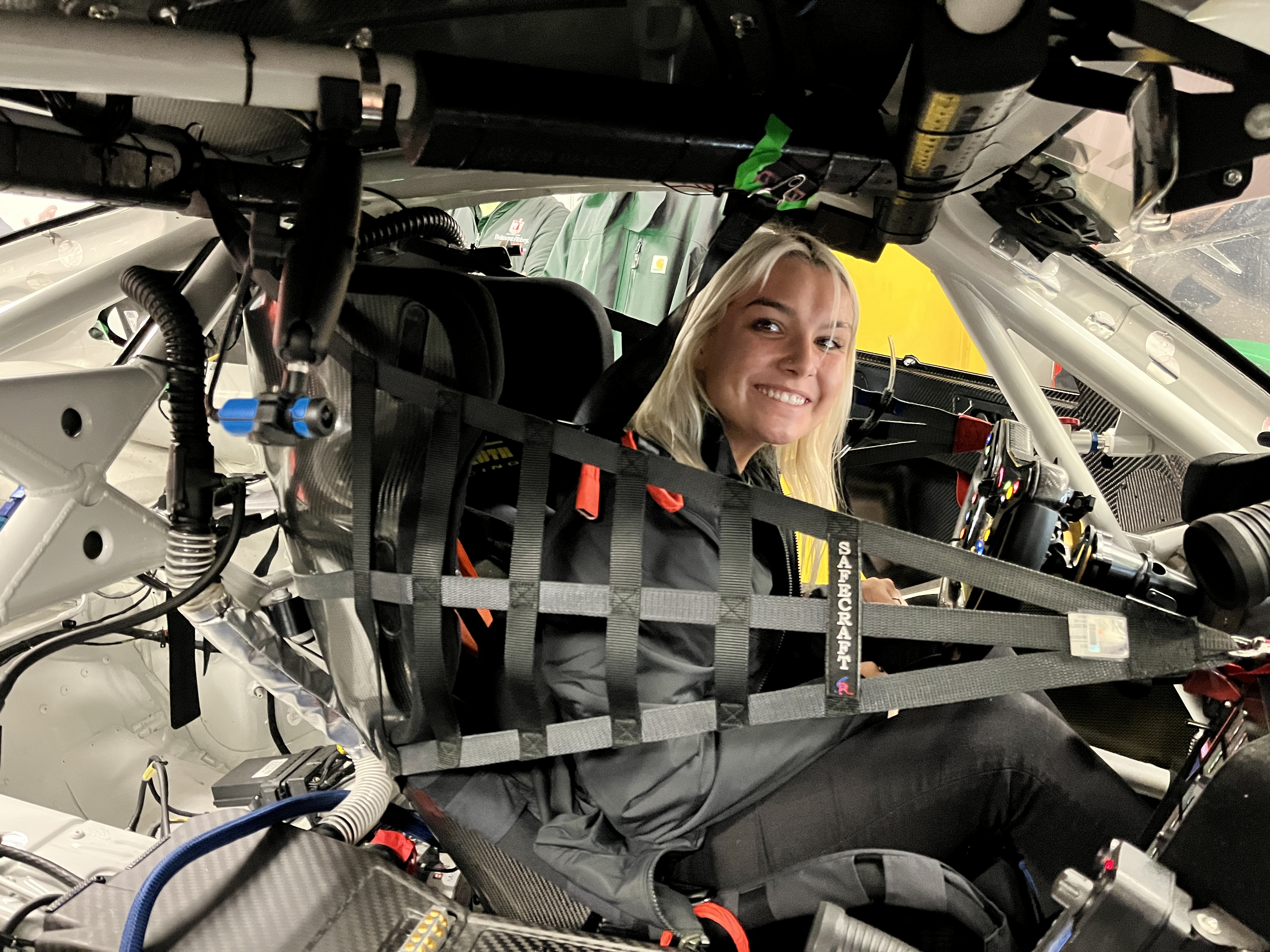
His own internship with NASCAR Racing Experience has already shown him how powerful the human element of the sport can be. He travels to tracks around the country, helping guests buckle into retired race cars. One ride-along participant left a lasting impression.
“He told me, ‘I’ve wanted to do this for a while. I have stage-four cancer, and it’s terminal,’” Sicree recalled. “It was something his kids bought him. It’s really cool to be part of something that helps people’s dreams come true like that.”
Shaping an Industry
The motorsports economy surrounding Charlotte is enormous. More than 90% of NASCAR teams are headquartered there, and its tracks and attractions draw millions. Laheta witnessed that impact firsthand while working at the NASCAR Hall of Fame, a major driver of tourism for both NASCAR enthusiasts and newcomers to the sport alike.

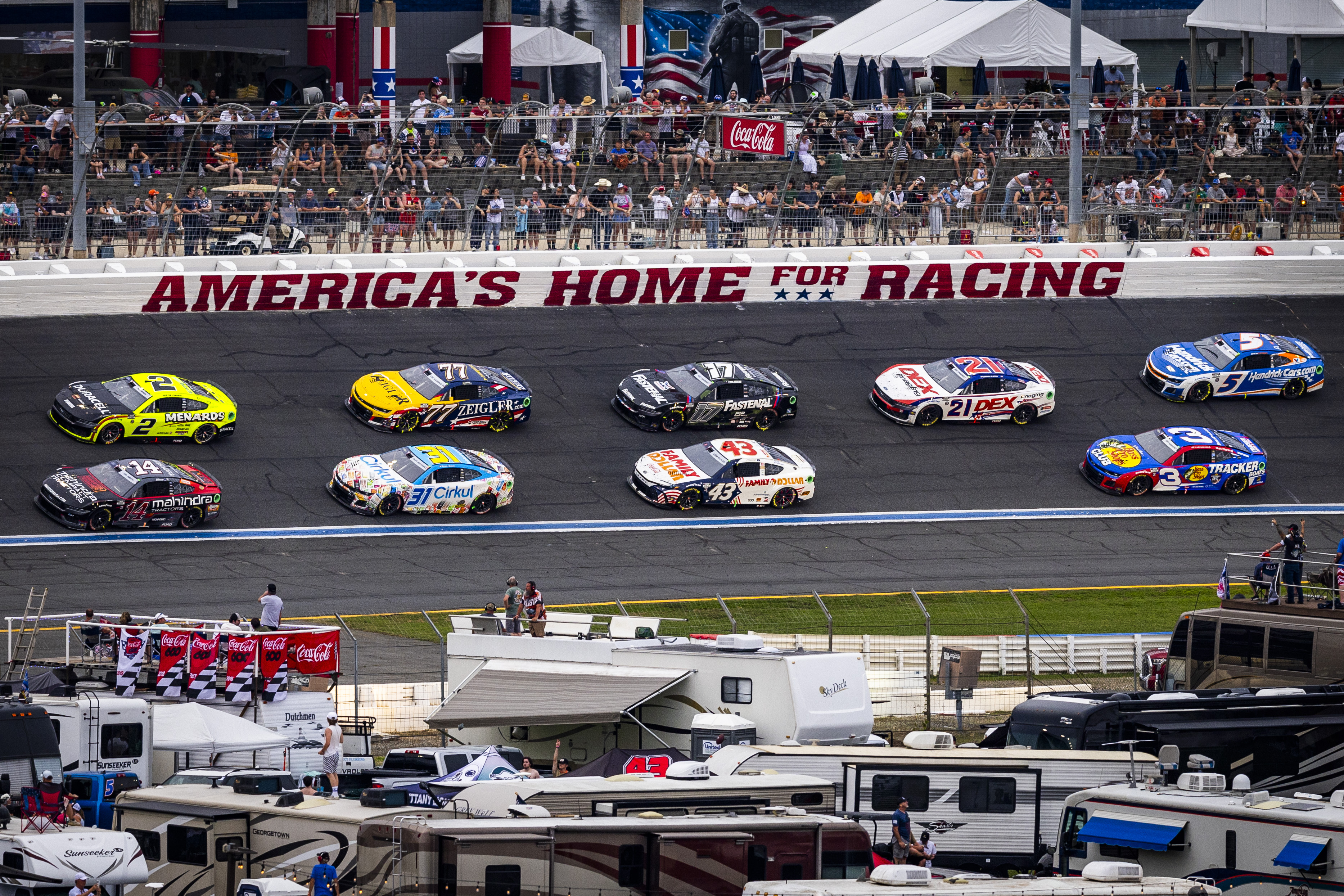
In 2025 alone, motorsports contributed $3.2 billion in total economic output to North Carolina, supporting nearly 19,800 jobs and generating $1.35 billion in wages and benefits, according to a recent study by Performance Racing Industry. PRI also found that the industry generated $707.02 million in total economic output and $267.05 million in wages and benefits in Mecklenburg County, where Charlotte is located. Graduates entering the field are stepping into a thriving industry where their skills and ethical grounding can make a tangible difference.
Belmont Abbey envisions its contribution’s growth. Students like O’Brien are interviewing for internships in supply-chain operations and administrative roles. Sicree hopes more Catholic colleges will notice what is possible. “The motorsports industry has a very limited amount of Christian presence in it,” he noted. “The fact that we’re a Catholic liberal-arts college with this whole major really stands out.”
For Cunningham, the program’s mission is simple: Help students find a path into a field they love and shape that field through their character. He sees Belmont Abbey as an example of how Catholic institutions can embrace new industries without losing their identity.
“We do a lot on top of the classroom,” he said. “It makes a huge impact on the development of the overall student.” And as the industry continues to grow, those students and graduates will bring not only skill and passion, but also the ethical and professional grounding their education instilled.