
NIL
Best college baseball players ever, sport’s best rivalry, biggest issue: Analysts roundtable

OMAHA, Neb. — The college baseball world has made its annual pilgrimage to Charles Schwab Field for the 75th College World Series. It’s a diverse field with six different conferences (plus one independent) represented — a refreshing change after last year’s CWS included four teams from both the ACC and SEC.
I asked some people who cover the sport for their thoughts on the state of the game, the best players they have ever seen, the best rivalry in the sport and the best game they have witnessed.
The panel:
- Chris Burke, ESPN
- Mike Ferrin, ESPN/Sirius XM
- Aaron Fitt, D1 Baseball
- Kyle Peterson, ESPN
- Mike Rooney, ESPN
Best position player you have seen in college baseball?
Burke: I’m going to say Wyatt Langford. I thought the two years (2022-23) he put together at Florida, … he was almost flawless in the outfield. He ran the bases as hard as anybody I ever covered, especially for a superstar. And you felt like he was going to hit an extra-base hit every at-bat. So I’ll just go in the era that I’ve been covering the sport.
(Vanderbilt’s) Dansby (Swanson) was fantastic. The game wasn’t quite as offensive when he played. There’s a little recency bias there (with picking Langford). Alex Bregman (LSU) was more spectacular to me on defense than he was on offense. Now he’s become a Hall of Fame hitter.
And then from my playing career, I would say probably Mark Teixeira (Georgia Tech). Mark Teixeira was probably the most gifted college player I was ever on a field with.

Wyatt Langford had a career 1.217 OPS at Florida. (Steven Branscombe / Imagn Images)
Ferrin: You know who was great? It was Trea Turner at NC State. There’s a good story here. They lost to UCLA (in Omaha) the year UCLA won the national championship (2013), and one of the things that (Turner) did postgame was explain exactly how Nick Vander Tuig, who was the Saturday starter for UCLA, was able to get guys out, because he was able to use his fastball at the top of the zone. He had one of those fastballs that had ride on it before we had the data to back it up, even though it was 92 mph.
Somebody relayed that to John Savage, the UCLA coach, in the press conference, and Savage’s jaw hit the table, and he was like, “Man, I thought that guy was good. I didn’t realize he had that kind of baseball IQ. That guy’s unbelievable.”
And Savage went on for, like, 45 seconds talking about how unique a player Trea Turner was, because in addition to having all of these incredible skills, he had this innate ability to understand the game. So that’s one that really stands out to me, even though he probably isn’t, like, the best of this era. But man, he had it at that moment. As a sophomore.
Fitt: I was living in Southern California for three years during the same three years that Kris Bryant was at San Diego, and just the fact that the guy hit more home runs as a junior (31 in 2013) than about two-thirds of the college baseball teams hit — he was a monster among boys or whatever you want to say. It felt like Babe Ruth, where he’s hitting more home runs than a bunch of teams hit. And he could do a lot of stuff. You could move him around a little bit. He was never known as a defensive whiz, but he played solid enough third baseman, right field, wherever, and he could run better than you thought. The power was just special. He got better and better year over year. Great personality, magnetic. And I think just because of the era that he dominated in and the degree to which he dominated, that would have to be my answer.
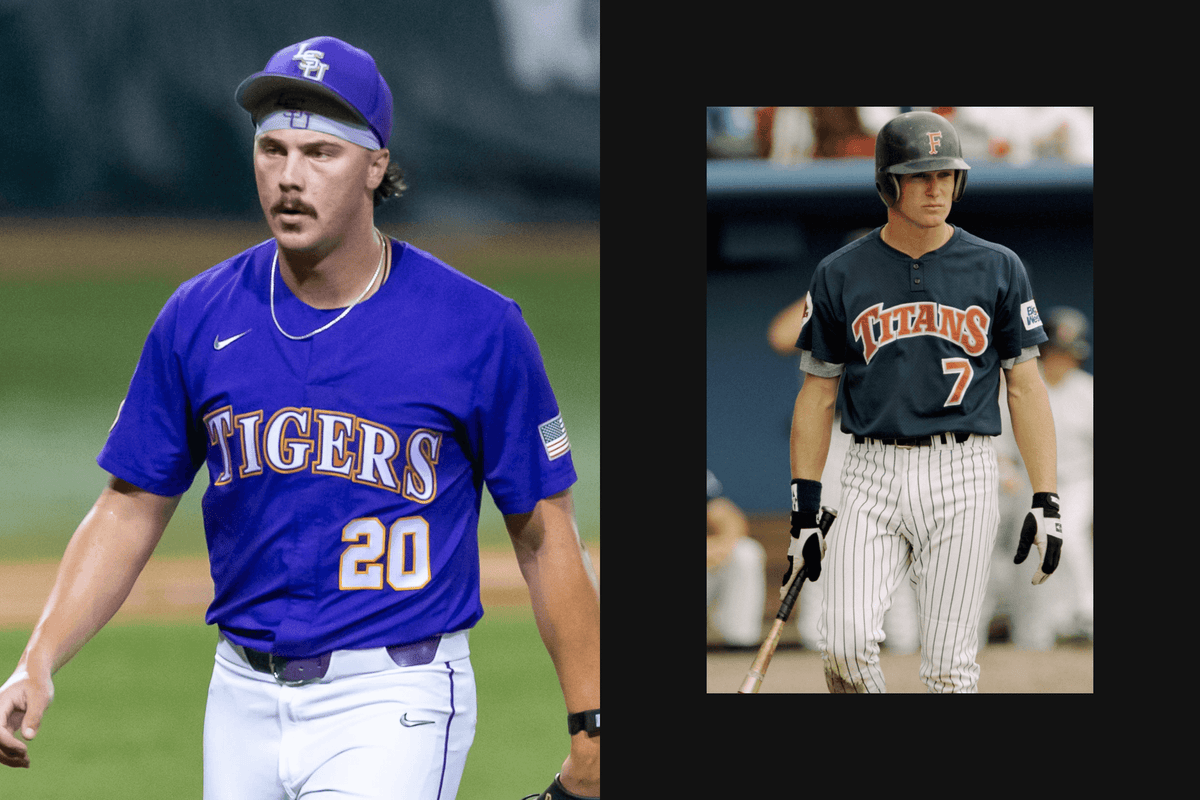
Peterson: Mark Kotsay (Fullerton State). I played against him (while at Stanford), so maybe that’s part of it. … We played him Game 1 of the College World Series (in 1995). Well, first of all, the first college game I ever played in was at Fullerton. And I knew who he was, but I didn’t know a lot about him. And about three pitches later, he had a line drive right off my quad that I could feel the entire year.
And then they beat us in Game 1 of the College World Series that year, and Kotsay had a couple hits and then trotted in from center field to close the game in the ninth inning. He was, for me, like the ultimate college baseball player. And obviously he had a great big-league career, and now he’s managing the big leagues. But that’s the best one for me.
Rooney: I want to say Dustin Pedroia, but I coached him (at Arizona State, 2002-04) and I saw him every day for three years. He was the national defensive player of the year and the only MVP of Arizona State baseball for three consecutive years. Not even Barry Bonds did that.
I want to give you two, since I coached Pedroia. I’m going to do this: I’m going to say Chris Burke (at Tennessee). He almost hit .500, 50 stolen bases, 20-plus home runs (.435, 49 stolen bases, 20 home runs in 2001) and ran their defense from the middle of the field. Like, just a do-everything player.
Who’s the best college pitcher you have ever seen?
Burke: Paul Skenes, end of statement. He had the aura of nobody else. The only pitcher I’ve ever been around that had his aura was Roger Clemens. And I was fortunate to play with him for parts of three seasons (in the major leagues). But there was just something very unique when you were around Paul Skenes. And then the pitchability, combined with just the pure stuff, was a combination that to me was like nothing I’d ever seen in a college game.
Ferrin: It’s either Skenes or (Stephen) Strasburg. Strasburg was incredible, too, but what Skenes was able to do … he didn’t have the best slider, he didn’t have the best fastball — (LSU teammate) Ty Floyd’s fastball, metrically, was better — it was just the fact that he knew how to pitch, his competitiveness, the way he continually improved, and the way that he carried himself. That guy was unreal. That’s one of the great college seasons of our time.
Fitt: So I would have said Stephen Strasburg for a long time until Skenes. But everyone’s gonna say Skenes, so I’m gonna give you Strasburg. He was insane. Even the first time I ever saw him, it was his freshman year (2007), and it was on a random day, it’s like a Tuesday game, I think. And people were kind of whispering, “You gotta see this kid. He is so big, he blocks out the sun.” It’s just a ridiculous, explosive fastball coming at you. Didn’t hear a lot about this kid coming out of high school. He was overweight and didn’t really work hard enough, and then he got to San Diego State and something clicked for him. The coaching staff, Tony Gwynn and (pitching coach) Rusty Filter, deserve a lot of credit, but so does Steven, of course.
By the time he was a junior, he was just a monster. It’s 96 to 100 with command in an era where you didn’t even see that kind of velocity very much. Ridiculous breaking ball with command. Plus-change up with command. And the ability to miss bats and throw quality stuff that was just so much better than everybody else’s stuff at that time. The stuff he did was absurd.
Peterson: Skenes. Before that, I probably would have said (Stephen) Strasburg, because I saw Strasburg in college when he was at San Diego State. But Skenes was as good as stuff as you would ever want to see, but then the control of Jamie Moyer or (Greg) Maddux or somebody like that. And I’ve never, in the college game, I’ve never seen the combination of as good a stuff as anybody in the country and as good a control as anybody in the country. And Skenes had that, and obviously, it continues to work out fairly well for him.
Rooney: Best one I coached against was Mark Prior (at USC). Best one I’ve seen is Paul Skenes. With Prior, it was Greg Maddux command with the best fastball in college baseball at the time. And Skenes, just like a ferocious competitor, generational arm talent.
Name a player who ended up being a much better pro than you thought
Burke: This is way back from my first year, second year broadcasting. It was Kyle Farmer, shortstop at Georgia (2010-13). Ended up being a really good major league shortstop for the Reds. I think he was an (eighth-rounder). I think he was a senior sign, and you look up, and he’s had a really nice career.
Ferrin: Pete Alonso (Florida, 2014-16). I thought he was sort of an Ivan Melendez (Texas) type, a big power guy, then he was going to get to pro ball and he was going to really struggle. What I didn’t understand was the guy really knew how to hit. I think even now, he still doesn’t get appreciated for how good of a hitter he is. He knows how to use the middle of the field. He knows the situations that call for him to drive in a run. That wasn’t readily apparent to me when he was at Florida.
He also wasn’t the biggest star on those teams. He was a little bit further down on the list. And he wasn’t the most dynamic presence. I had no idea he was going to be the player he is now. Testament to his work ethic and his intelligence. And he’s also got way better as a defender.
Fitt: I’ll just go back to my first year at Baseball America. Justin Turner was a nice kind of rugrat grinder from Cal State Fullerton (2003-06). “Red” Turner. He was a seventh-round pick or something, a senior sign. Never really hit for power. He was a great college player. I loved him as a college player. He would take a lot of walks. But I didn’t ever think that guy was gonna go be a plus-home run hitter in the major leagues and go to a bunch of All-Star games and be a vital part of championship teams. Especially after he got released. Who was it, the Mets, who released him? That’s a cool story. That guy just never struck me as anyone who would hit for power and be an impact big leaguer.
Peterson: Brandon Woodruff (Mississippi State, 2012-14) would be on that list. He’s had a hell of a run from a mound standpoint.
I played with a dude named Eric Bruntlett (Stanford, 1997-2000) that played in the big leagues for seven or eight years and won a ring or two, and I don’t know that he would have been the guy off our team that we would have picked to play the longest. But he played longer than anybody.
I can tell you this: I saw Aaron Judge (Fresno State, 2011-13) in the home run derby here, the college home run derby, and nobody would have thought … you thought the guy’s physical and talented and everything else, but he could go down as one of the greatest hitters ever by the time he gets done. So Judge is probably on that list. Not to say that people didn’t think he’d be good, but I don’t think anybody could have thought he’d be this good.
Rooney: Steven Kwan. He was on that 2018 Oregon State that won it all. Oregon State had four first-round picks. They had Cadyn Grenier, they had Nick Madrigal, they had Adley Rutschman, and they had Trevor Larnach, but they also had Steven Kwan (who was drafted in the fifth round). And I bet you Steven Kwan’s WAR this year, I’d have to look up Rutschman’s, but I bet you Steven Kwan’s WAR is better than any of those guys. (Note: Kwan’s WAR is 2.8. Rutschman’s is 1.1.)
What is the best rivalry in college baseball right now?
Burke: I would say probably Tennessee and LSU. Past two defending national champions, two coaching staffs, two athletic departments, two fan bases that are all in it. I think Arkansas, with that group, would be right there in it. Texas A&M is pretty good, too. I know I gave you a lot, but it feels like it’s hard to (pick one). Tennessee-Vanderbilt is pretty good, too. It feels like there’s a lot of budding SEC rivalries just because of the all-in nature. There are way more teams that are all-in.
Ferrin: The SEC versus the SEC. I think any time that you have those power conference teams — I hate to cop out with SEC versus SEC — but I think those are all pretty good. I think Texas A&M versus Texas right now is a little bit spicier because of (Jim Schlossnagle) leaving (Texas A&M for Texas) last year, so I think that’s a good one. You know, I think those are ones that really stand out to me, in that conference, just because the places are all packed and most of them are a little bit bigger than the other places. It just creates more energy that you expect out of a rivalry.
Fitt: I think you have to say Tennessee-Arkansas at the moment. It’s kind of the one that feels like it’s got the most juice. LSU-Arkansas also has a lot of juice. Those SEC deals, they just feel a little bit different. Traditionally, I still think Clemson-South Carolina, when those (teams) are both good, it’s awesome. But obviously, those programs are not where they were in 2010, when they were both in Omaha. That was something special. But at this particular stage, I think it’s shifted toward those SEC rivalries.
Peterson: Ole Miss-Mississippi State is always going to be there, just because of being within the state. The whole Florida component between Florida, Florida State, Miami is interesting, but they do it differently. (Florida) plays Miami on the weekend every year and they play Florida State in three midweek games, so that’s a little bit different. Tennessee-Arkansas has turned into a really good rivalry. I don’t know that there’s one.
Rooney: I would say Tennessee and Vanderbilt.
What is the college game you’ve ever seen?
Burke: I would say the Skenes vs. Lowder (LSU vs. Wake Forest in the 2023 CWS). Ends in a walk-off home run by superstar player Tommy White. Two major league All-Stars on the mound. And it was a night game. I think we had Roger Clemens on the broadcast, like, early in the broadcast. It was just a night you’ll never forget.
And there were a couple of legendary plays — Tre Morgan threw somebody off the plate on just an incredible defensive play. You know, there are just so many flash points within the game. But more than anything, you’re like, “We’re watching two major league All-Stars pitching in college.” And I know Lowder hasn’t made an All-Star team yet, but he sure feels like he’s going to. And Skenes is on his way to No. 2.
Ferrin: Skenes-Lowder, without a doubt. It’s so rare to see a pitching matchup that actually lives up to the expectations like that. And that game had everything. And then the coolest moment … so when Tommy White hits the walk-off homer and celebrates with his team, and Cam Minacci, who’s the pitcher for Wake, and Bennett Lee, who’s the catcher for Wake, were friends of his growing up. And what did he do? He went over to console them afterwards. That’s like one of the great moments of sportsmanship in NCAA history, and I hope everybody always remembers that. Because in the end, these guys love competing against each other, but because they’ve all grown up playing together, they all know each other, and a lot of times they’re friends, and those relationships matter more than the wins and losses. I thought that was really cool.
Fitt: There are only two answers here. It’s the Skenes-Lowder game or the last game of Rosenblatt (in 2010). It was awesome. The fact that the last game of that ballpark ended on a walk-off in the 10th inning, two great teams, it was the start of that South Carolina dynasty. You got Whit Merrifield and Scott Wingo in the middle of it. You got Trevor Bauer out of the bullpen warming up (for UCLA). Incredible game and just the whole feeling there. It was so bittersweet. All of us were heartbroken about leaving that ballpark, and it was just awesome that they could send it out with a thriller like that.
Peterson: The Wake Forest-LSU game a couple years ago was as good as I’ve ever seen here. I’ll never forget the last game at Rosenblatt when it was South Carolina-UCLA and (Whit) Merrifield got the hit down the right-field line. I think some of that was just because it was the last game at Rosenblatt, maybe. But yeah, the LSU-Wake, really that entire tournament. There were some games that year that were as good as we’ve ever seen here.
Rooney: I think everyone’s going to give you Skenes vs. Lowder. So I’m going to give you a different one. I got to call Kumar Rocker’s 19-strikeout no-hitter in 2019. People forget this, but Duke had already won Game 1 of that Super Regional. That Vandy team was one loss from their season ending, and Kumar Rocker, a true freshman, steps up and throws a historic game to completely flip the momentum of that Super Regional.
What is the best part of college baseball in 2025?
Burke: I think the exposure. The spotlight is much brighter than it’s ever been. Both with the digital networks, the conference network and then ESPN’s commitment to the sport. Combine that with a social media presence that all these teams do a really good job of, I just feel like these players are on a much bigger stage than they’ve ever been on.
Ferrin: I think it’s the atmosphere. To me, it’s these 3-, 4-, 6,000-seat stadiums that are on campuses in places that they really care about college baseball — which is growing too — and that you’re filling them with fans who have the same energy that you have for college basketball. Even in places like Manhattan, Kansas, like where they sell out. Being able to create those environments is really rewarding for the sport because you can’t not want to be a part of that if you get to experience it.
Fitt: I like the product, personally, better than Major League Baseball because of, and it’s gonna sound cliche, but it’s just the energy. It’s the energy of it. Especially the postseason, the on-campus sites. I don’t think there’s anything like it when you’ve got the home Regionals on-site and the Super Regionals. It’s just electrifying, and I think the drama, that part of the product, really holds up. I love the format of college baseball, all the way through the weekend series structure. I like the fact that it’s not 162 games. I think the season makes a lot of sense. It’s drawing in a lot more fans than it used to for a good reason. It’s not as polished a product as Major League Baseball on the field, obviously. That’s part of the fun of it. It leads to some unpredictability, and I think it’s just compelling theater.
Peterson: I love it because of the fan bases, and it’s college (athletics). When you go to some of these environments, Arkansas, LSU, Ole Miss, Mississippi State, Florida State, whatever — you can name a bunch of them, it’s like college athletics fans. And I just think there’s something really cool about that. From a player standpoint, I just think it would be really cool to play in those environments. So, for me, it’s the environments that these kids are surrounded by.
The level of play and everything else continues to get better, and we’ve seen that based on the draft. The draft is more college-based now than it’s ever been because Major League Baseball realizes that this is a really good way to develop players. So I’d say both of those. I love going to college baseball stadiums, environments, towns. That’s my happy place.
Rooney: I would say this (pointing to the field). We have an Omaha field that represents seven different conferences or non-conferences, depending on how we want to describe Oregon State. We knew we didn’t really have a super team like we’ve had the last four years, but this year, for this to play out the way it did, to go from a year where you only had two leagues in Omaha, to have seven different affiliations represented, is super cool and very encouraging.
What is the sport’s biggest issue?
Burke: Probably the roster uncertainty. How many spots are going to be available? How is that going to limit opportunities? I think it’s interesting. A decade ago, we were all clamoring for more scholarships, and now with NIL, the scholarship delta has kind of been fixed. In one regard, you want to be thankful that kids are, for the most part, going to have a lot more aid, if not full aid. But if it goes from 40 to 34 (roster spots), you’re talking about six players per 310 teams. That’s a lot of players that aren’t going to get opportunities to play Division I baseball. So I think figuring out what that is and what the new normal is going to be is probably what I would consider to be the biggest issue.
Ferrin: I want there to be more consistent parameters from the committee before the season starts on what’s gonna constitute the decisive factors (to get into the NCAA Tournament). So, like every year, we see a little bit of variation, but we never find out until after the fact that this was the year that nonconference strength of schedule mattered, or this was this, this was that. So I think that there’s something that can be done to try and better codify or balance out, or give coaches at least an idea of what’s gonna matter, especially since they’re having to schedule a couple of years out. I think that’s one that really stands out to me as being important, is that you wanna make sure that everybody is on even footing, at least in terms of what they understand.
Fitt: I think it’s just the issues facing college sports writ large. Where are we headed with NIL, the revenue-sharing stuff? Are we going to have too much of a gap between the haves and have-nots, when you’ve got schools funding 34 full scholarships and others are still down there at 11.7 or whatever? I think it’s going to be challenging to navigate.
There’s obviously a lot of upside potential for the sport, considering how long we were stuck at 11.7 and all we wanted was a few more scholarships, right? And now, all of a sudden, it’s just this whole new world right in front of us, and there are gonna be a lot of programs left behind. And I think the depth of college baseball is an important part of the sport. It’s nice that guys can have the experience of playing college baseball at 300-and-something schools.
You talk to the coaches at Central Connecticut State, and they go down to a big venue for a Regional at Georgia or Arkansas or whatever and just to see those guys soak in that experience, it’s magic. It’s part of what makes this sport special, and if we wind up in a situation where it’s just two big mega conferences and everybody else is just left behind, I think we’ll really lose an important part of the soul of college baseball.
Peterson: I would just say money in general. I don’t think anybody knows yet what this House settlement is going to be, and, ultimately, if that’s detrimental to the game at all. So I think the biggest challenge or potential issue right now is … the first thing is everybody’s got to know the rules. They don’t know them yet. So if the rules are what it sounds like they will be, they’ll continue to be a pretty significant financial gap. But that’s also the reality of the world.
So that would be my biggest concern, is whether or not that financial gap between those that can afford it and those that can’t creates way too many haves and way too many have-nots. But I think the field this year would indicate that that may not be the case.
Rooney: I would say our biggest issue is rosters. We have an unlimited fall roster, but then we’ll have this 34-man roster on Dec. 1 as part of the (House) settlement. And I think that both concepts are flawed, and somewhere in the middle would be a much better answer. So I’d say roster management is the biggest issue.
(Photos of Paul Skenes, Mark Kotsay: Scott Clause / USA Today Network via Imagn Images, Andy Lyons / Getty Images)

LARAMIE — When it comes to the controversial subject of Name, Image and Likeness in college sports, Tom Burman will be the first to tell you Wyoming has been playing catch up.
That doesn’t mean a solution isn’t on the horizon.
“We need to grow it quickly,” the school’s longtime athletics director admitted on Saturday night.

A report by the Cowboy State Daily earlier in the day stated the department is only allocating $1.4 million annually in NIL funds, $800,000 less per year than regional programs Montana and Montana State, which compete in the FCS.
While the latter dollar amount could not be substantiated, Burman said the initial figure for UW is now at $1.5 million, adding that number only illustrates the revenue sharing monies between the school’s two largest income generating programs, football and men’s basketball. An additional $200,000 is being divvied up between women’s basketball, volleyball and wrestling, he added.
“This does not include any third-party NIL dollars or Learfield NIL partnerships, which are likely another $500,000 total,” he continued. “This also does not include Alston Scholarship dollars, which is $1.1 million, and are included as revenue sharing as part of the House Settlement analysis.”
There are other future plans in place to bring in additional revenue, Burman said. including jersey patches, field and court logos and venue naming opportunities.
UNLV, one of the Cowboys’ current Mountain West foes, recently announced a 5-year, $11 million deal to promote a local Las Vegas company on its uniforms in football, men’s and women’s basketball and baseball. That is expected to be approved in August.
Burman said this will happen at UW, but added, “We’re not going to give it away.”
The same can be said for a permanent field sponsor inside War Memorial Stadium.
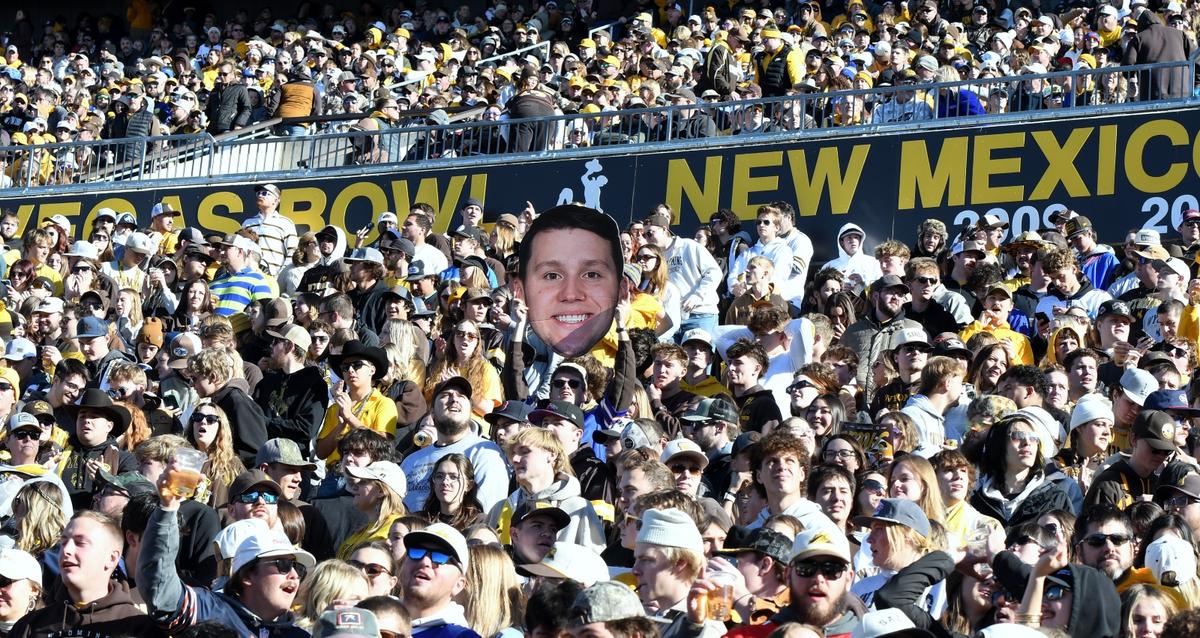
Ramos Law, a firm based out of Colorado, purchased that space for the Cowboys’ home finale last month against Nevada — the “Josh Allen game” — for a reported $90,000-plus. The company logo was placed at both 25 yards lines.
MORE UW FOOTBALL NEWS VIA 7220SPORTS:
* Burman, UW Athletics Seeking Additional Revenue Streams
* Recruiting, Portal Misses Have Lasting Impact in Laramie
* Injured Wyoming Running Back Says He’s Entering Portal
* Wyoming Inks 20 Freshmen in 2026 Recruiting Class
* Wyoming in the Market for New Offensive Coordinator
* PODCAST: Offseason ‘Rework’ Underway in Laramie
* Running Back Terron Kellman Again Looking for New Home
* Wyoming’s Leading Receiver Entering NCAA Transfer Portal
There are other potential avenues that could help Wyoming gain ground on the competition.
“If we get support from the state — and not a budget cut, also — and continued investment from the private sector, coupled with support from campus, we will be in a good place in short order,” Burman said.
The department earlier this month asked the joint appropriations committee of the Wyoming Legislature for an additional $3 million on top of the annual $11.2 it receives annually through the school’s block grant. The state will also match up to $5 million a year in private donations.
The grand total is just over $19 million.
Though the $3 million, annually, wouldn’t go directly to NIL and revenue sharing, Burman said, it will help UW to handle other escalating costs that have occurred due to inflation and additional costs related to the NCAA House settlement and Mountain West membership changes.
The university is now on the hook for reimbursements to former student-athletes. That number totals $2.8 billion in damages. Over the next 10 years, Burman added, Wyoming will lose funding to the tune of $550,000, annually.
The current media rights deal with the conference, which currently brings in $3.7 million a year, is also likely to take a hit.
San Diego State, Fresno State, Utah State, Boise State and the Cowboys’ Border War rival, Colorado State, are departing in July for the new-look Pac-12. The league is adding UTEP and Northern Illinois, the latter in football only. UC Davis and Grand Canyon have joined on the basketball side. Hawaii is also now a full member.
The department, though, could soon see an influx of cash once the legal battle between the Mountain West and Pac-12 is finalized. Poaching fees and exit fees are at the heart of the litigation. The next hearing in that case is set for Sept. 9.
Donations to the Cowboy Joe Club, the department’s lead fundraising arm, will also open up additional opportunities to retain and lure future student-athletes, Burman added.
“We are starting to see people donate,” he said. “That frees up money for revenue sharing through ticket sales, media rights, corporate dollars, television, etc.
“We are just getting started.”
University of Wyoming’s Top 50 Football Players
The rules are simple: What was the player’s impact while in Laramie? That means NFL stats, draft status or any other accolade earned outside of UW is irrelevant when it comes to this list.
This isn’t a one-man job. This task called for a panel of experts. Joining 7220’s Cody Tucker are Robert Gagliardi, Jared Newland, Ryan Thorburn, and Kevin McKinney.
We all compiled our own list of 50 and let computer averages do the work. Think BCS — only we hope this catalog is fairer.
Gallery Credit: 7220Sports.com
– University of Wyoming’s Top 50 Football Players
It’s getting hard for Clemson to ignore the downfall of Dabo Swinney.
Prior to the start of the 2025 season, Clemson was a trendy pick to make the national championship game. The program’s hopes of making a run in the College Football Playoff were destroyed once Swinney’s squad fell to 1-3 on Sept. 20. Although the Tigers finished the regular season with a 7-5 record, the reality is they underachieved this year.
Advertisement
As if this season wasn’t brutal enough for Clemson fans, they had to watch their team get dismantled by Penn State in the Bad Boy Mowers Pinstripe Bowl.
Clemson’s offense was neutralized by Penn State’s defense. On the flip side, the Nittany Lions received a sharp performance from quarterback Ethan Grunkemeyer.
Before Penn State even put the finishing touches on its bowl victory over Clemson, people voiced their complaints about Swinney online. Most of them believe he should be fired this offseason.
Advertisement

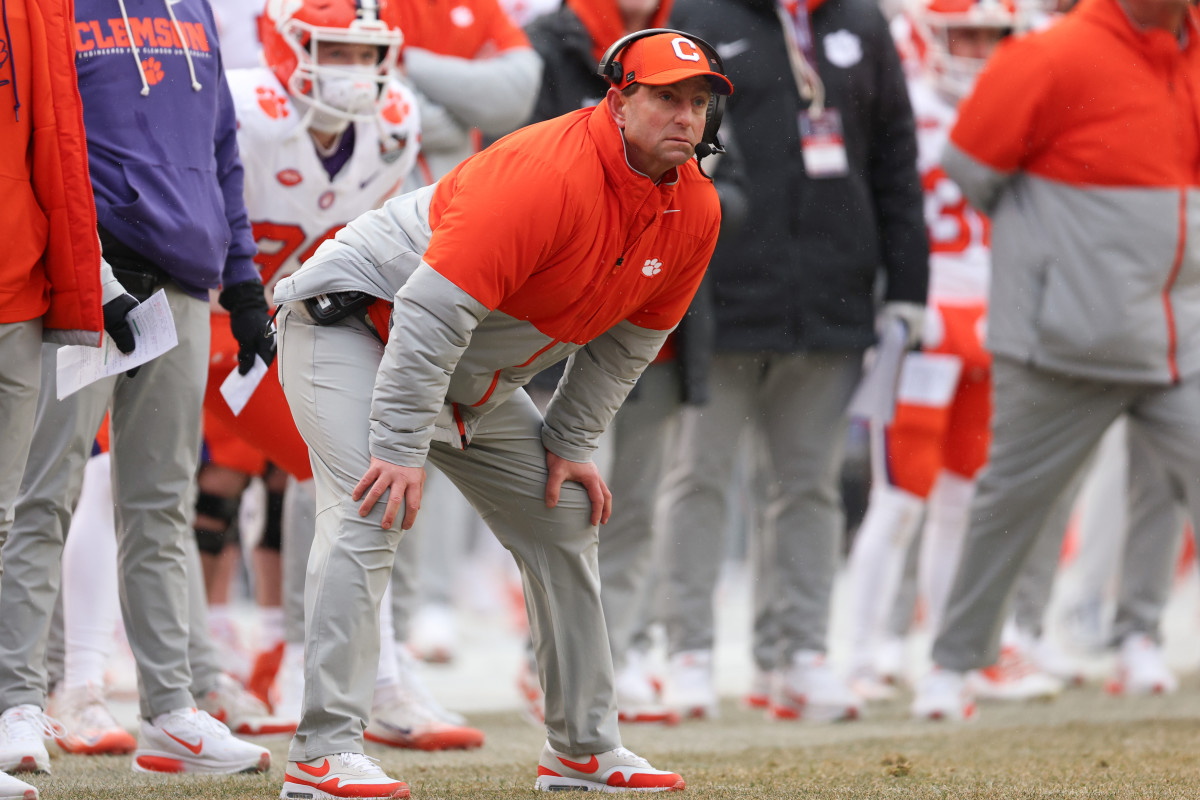
Nov 14, 2025; Louisville, Kentucky, USA; Clemson Tigers head coach Dabo Swinney talks with the officials during the first half against the Louisville Cardinals at L&N Federal Credit Union Stadium. Mandatory Credit: Jamie Rhodes-Imagn Images
Dabo on the hot seat.
“Fire Dabo, fire the whole staff, cut the entire team. Losing to a piss poor Penn State team is unacceptable,” one fan said.
“Please fire Dabo..it’s time,” a second fan wrote. “I’m sorry but it’s time.”
“Fire Dabo NOW,” a third fan commented.
“Dabo Swinney has stated numerous times that he’s against NIL If he can’t adapt then Clemson needs to fire him,” another fan argued. “I think he’s a great football coach and would have success in the NFL, but the college game is a lot different now.”
Advertisement
Swinney, a two-time national champion, has accomplished remarkable things at Clemson since taking over the program in 2009.
At the end of the day though, Swinney has struggled to adapt in the NIL era of college football.
Should Clemson fire Swinney this offseason?
This story was originally published by The Spun on Dec 27, 2025, where it first appeared in the College Football section. Add The Spun as a Preferred Source by clicking here.
Oregon redshirt sophomore quarterback Austin Novosad plans to enter the NCAA transfer portal, according to a report from ESPN’s Pete Thamel on Saturday afternoon.
Novosad, a native of Dripping Springs, Texas, spent three seasons at Oregon and appeared in seven games. During that span, he completed 12 of 15 passes for 99 yards with no touchdowns or interceptions.
Novosad waited his turn in Eugene throughout that time. He learned behind Bo Nix during his true freshman season in 2023 and Dillon Gabriel in 2024. Novosad remained with the program losing the spring quarterback competition to Dante Moore, and played very little during his third season with the program.
A member of the 2023 recruiting class, he was the No. 113 overall prospect and the No. 10 quarterback in the cycle, per the Rivals Industry Ranking, a proprietary algorithm that compiles ratings and rankings from all of the primary recruiting media services. He was the No. 21 player from the state of Texas that year.
Novosad is set to have have two years of eligibility at the next school he attends. He used a redshirt during his true freshman season.
As a high schooler, he completed 563-of-873 passes (64.5%) for 8,983 yards and 114 touchdowns compared to 18 interceptions during a three-year career at the varsity level. He had three games where he finished with seven touchdowns, as well as one six-touchdown game, and six separate games where he threw five touchdowns. Novosad was recruited by the likes of Ohio State, Texas A&M and Baylor, among others. A one-time Baylor commit, he flipped late to the Ducks before National Signing Day.
More on the NCAA Transfer Portal
Once the NCAA transfer portal opens on Jan. 2, players can officially enter their names in the NCAA transfer portal and go on to initiate contact with their preferred schools. The portal will be open for 15 days and close on Jan. 16.
Notably, players who are on teams competing in the national championship game are allowed five extra days to make their portal decision. The College Football Playoff championship game will be played on Jan. 19, so the players on those teams will be allowed until Jan. 24 to enter the portal and choose their next school.
To keep up with the latest players on the move, check out On3’s Transfer Portal wire. The On3 Transfer Portal Instagram account and Twitter account are excellent resources to stay up to date with the latest moves.
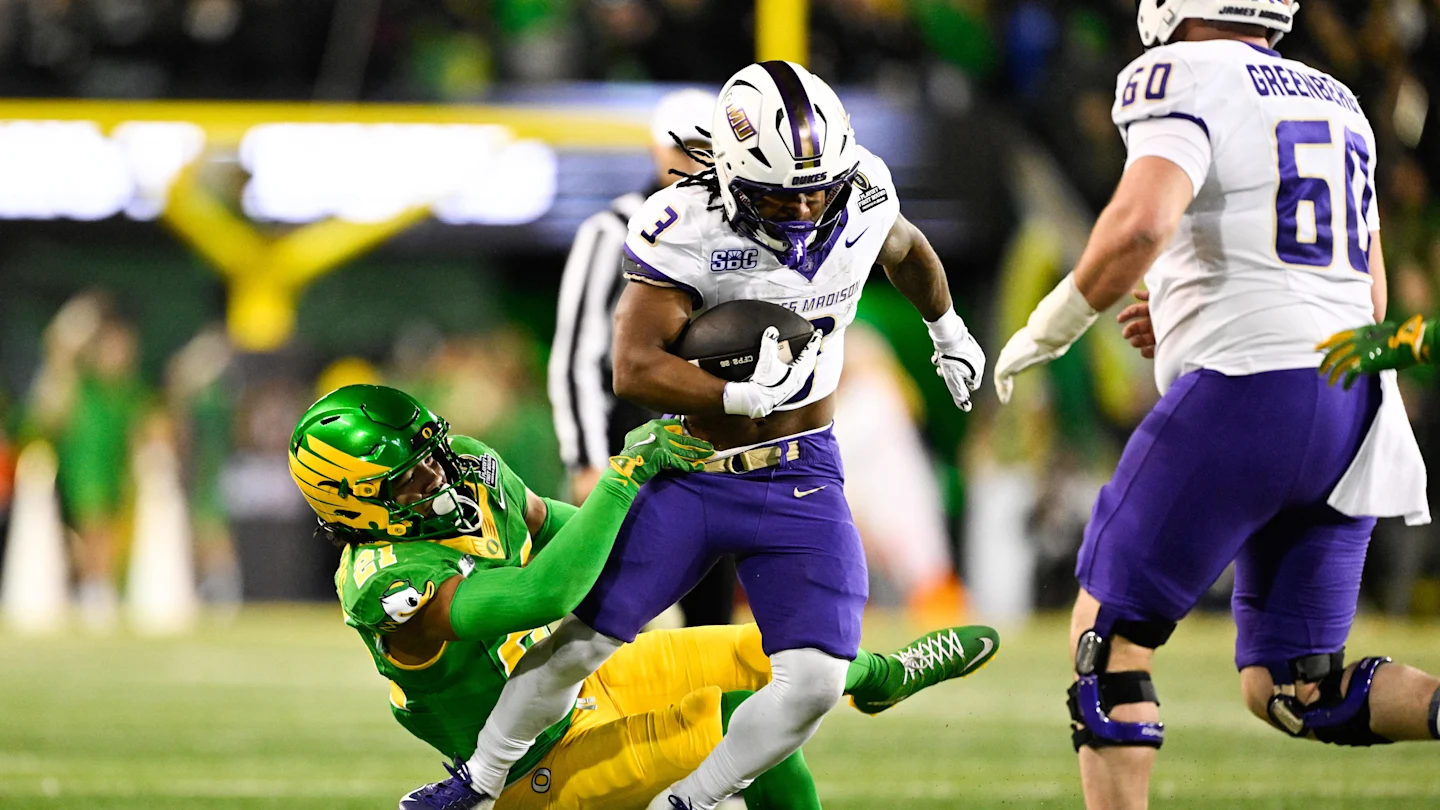
James Madison completed a historic 2025 campaign, capturing the Sun Belt title and earning the program’s first-ever College Football Playoff berth before a first-round loss to Oregon.
Even with the postseason loss, the Dukes finished ranked inside the top 25 and reinforced their status as one of the fastest-rising programs in the FBS after transitioning from the FCS in 2022.
The team’s biggest contributor was junior running back Wayne Knight.
Across the season, he totaled 1,373 rushing yards on 207 carries (6.6 yards per carry) with nine rushing touchdowns and added 40 receptions for 397 receiving yards, producing 1,770 all-purpose yards.
Knight posted multiple 100-yard rushing games, set a school record with 234 all-purpose yards in the Sun Belt championship (including a 212-yard rushing effort), became a Paul Hornung Award finalist, earned first-team All–Sun Belt honors, and garnered All-American recognition from select outlets.
However, on Saturday, Knight announced his intention to enter the NCAA transfer portal.
Early reporting has already linked him to several Power Five programs, with Yahoo Sports explicitly naming No. 1-ranked Indiana as a logical fit.

Knight redshirted in 2023 before establishing himself as James Madison’s primary back in 2024, totaling 449 rushing yards and two rushing touchdowns while adding 137 receiving yards and two receiving scores ahead of his breakout 2025 campaign.
Knight signed with James Madison in December 2021, choosing the Dukes over more than a dozen other scholarship offers, including Delaware, Navy, Brown, Howard, and Maine.
Hoosiers head coach Curt Cignetti is the central link in the Knight to Indiana storyline.
Before taking the Indiana job in 2024, Cignetti led James Madison to an 8–3 record in 2022 and an 11–1 finish in 2023, reaching as high as No. 18 in the AP poll.
Knight played under Cignetti during both seasons and was originally recruited to JMU by him.
For Cignetti and Indiana, adding a high-production, battle-tested running back would bolster depth and special teams for a program now competing at the highest level.
Read More at College Football HQ
- $2.4 million QB emerges as transfer portal candidate for SEC program
- Major college football program ‘expected to hire’ 66-year-old head coach
- College Football Playoff team loses player to transfer portal
- College Football Playoff team loses starting QB to transfer portal
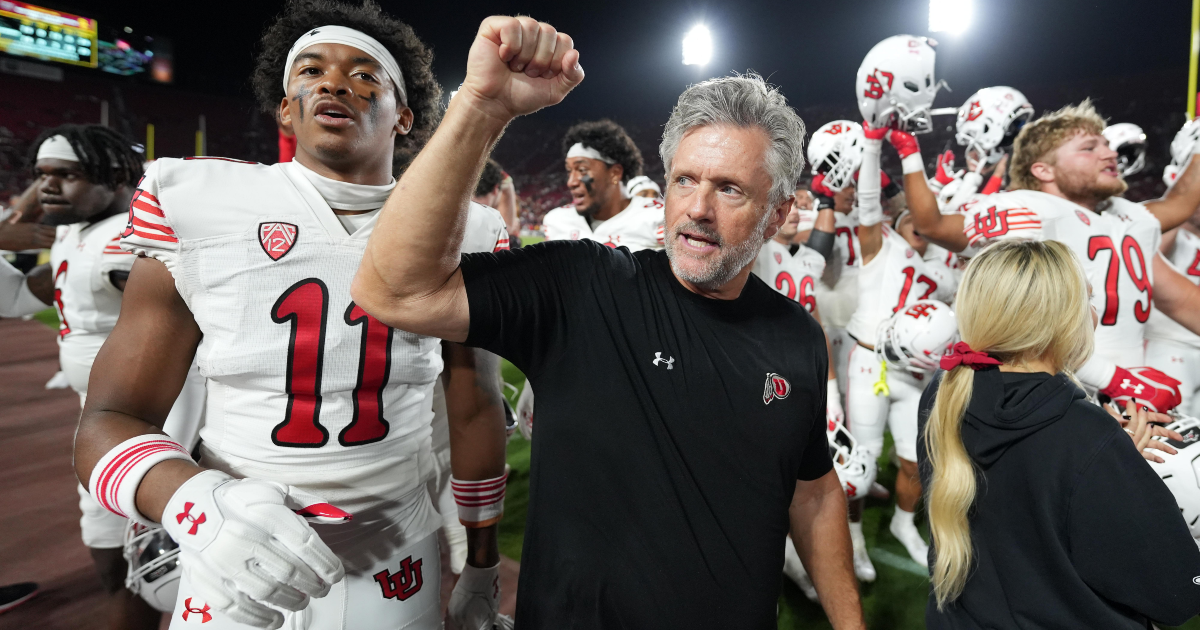
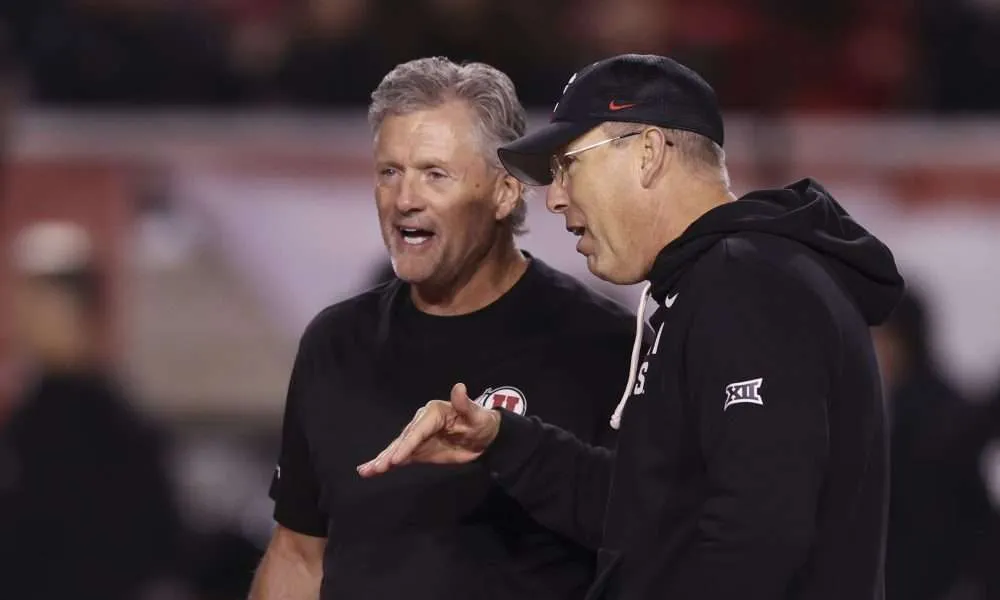
Late Friday night, Michigan made it official. Kyle Whittingham will take over as the next Wolverines head coach, and he released his first public statement.
News broke earlier Friday that Whittingham would replace Sherrone Moore as Michigan head coach. He previously announced his plans to step down as Utah head coach after a decorated run, becoming the winningest coach in program history. Michigan confirmed he is signing a five-year contract.
In Friday’s announcement, Whittingham and athletics director Warde Manuel released statements. Whittingham pointed to the tradition in Ann Arbor and high standard as he takes over the program.
“We are honored to lead the outstanding student-athletes, coaches, and staff who represent Michigan Football each day,” Whittingham said in a statement. “Michigan is synonymous with tradition and excellence – both on the field and beyond – and our entire program is committed to upholding those values while striving for greatness together.
“My family and I are thrilled to join the University of Michigan community, and we look forward to helping our players grow, develop, and reach their highest potential – on the gridiron, in the classroom, and as leaders. It’s a privilege to be part of something that inspires pride in every Wolverine fan. Go Blue!”
Whittingham replaced Urban Meyer as Utah head coach in 2005 and amassed a 177-88 overall record at the helm – the most wins in Utes history. He initially joined the program in 1994, starting out as defensive line coach ad becoming the Utes’ defensive coordinator in 1995. When Meyer left for Florida in 2005, Whittingham took over as head coach.
Although he announced he’d step down as Utah coach, Whittingham made it clear he wasn’t necessarily done coaching. Now, he’ll prepare to head to Ann Arbor and take over a Michigan team which underwent a major shakeup this month.
“Kyle Whittingham is a well-respected and highly successful head coach who is widely recognized as a leader of exceptional character and principled leadership,” Manuel said in a statement. “Throughout our search, he consistently demonstrated the qualities we value at Michigan: vision, resilience, and the ability to build and sustain championship-caliber teams.
“Kyle brings not only a proven track record of success, but also a commitment to creating a program rooted in toughness, physicality, discipline and respect – where student-athletes and coaches represent the university with distinction both on and off the field. We are excited to welcome Kyle to the University of Michigan family as he takes the helm of our football program.”
Dec. 27, 2025, 6:01 a.m. ET
D-O-Double G is back for his second year hosting a college football bowl game.
In what was one of the more distinct bowl experiences last season, Snoop Dogg’s eponymously named Snoop Dogg Arizona Bowl is set for its second edition on Saturday, Dec. 27 between the Miami (Ohio) RedHawks and Fresno State Bulldogs inside Arizona Stadium in Tucson, Arizona.
The Snoop Dogg Arizona Bowl is the second main sporting event that Snoop Dogg will be a part of this week, as he performed during halftime of Game 2 of the Netflix-NFL’s Christmas doubleheader between the Minnesota Vikings and Detroit Lions.
Here’s what to know on how Snoop Dogg came to have his own college football bowl game:
How did Snoop Dogg get his own college football bowl game?
Snoop Dogg signed a partnership deal with the Arizona Bowl — founded by the Arizona Sports and Entertainment Commission in 2015 — to be the bowl game’s title and presenting sponsor.
As part of his multi-year sponsorship deal, which was signed in May 2024, Snoop Dogg’s alcoholic beverage — Gin & Juice by Dre and Snoop — serve as the presenting sponsor of the bowl game as well.
“College football fans are exhausted by the talk around NIL, conference realignment, coach movement, transfer portal and super conferences. So it is time we get back to the roots of college football, when it was focused on the colleges, the players, the competition, the community, the fan experience, and the pageantry,” Snoop Dogg said in a video posted on his personal X (formerly Twitter) when he announced his partnership in 2024. “…It’s only fitting that I step up and help this thing right. I’m ready to bring the juice back to college football.”
Snoop Dogg isn’t the first celebrity to be a presenting sponsor of a college football bowl game. Comedian Jimmy Kimmel, host of ABC’s “Jimmy Kimmel Live,” used to be the sponsor of the LA Bowl.
Snoop Dogg was heavily involved with the game and corresponding events in last year’s inaugural bowl game, even interviewing Miami (Ohio) coach Chuck Martin at halftime live on The CW Network.
The 2025 Snoop Dogg Arizona Bowl marks the second consecutive trip for Miami (Ohio) to Tucson, Arizona for the bowl game.
“We couldn’t be more excited to go back to Arizona,” Martin said at a media availability on Monday, Dec. 8. “… Where do you get to go to a bowl (game) and you get to be around for five minutes (with) one of the biggest icons in the history of the world (in Snoop Dogg)?”
Added Martin: “We were dying to get back there and we can’t wait to get back there.”
Who is competing in the Snoop Dogg Arizona Bowl 2025?
Miami (Ohio) and Fresno State are competing in the 2025 Snoop Dogg Arizona Bowl. It’s the second consecutive season the RedHawks will play in the game.
Where is the Snoop Dogg Arizona Bowl?
- Location: Arizona Stadium (Tucson, Ariz.)
The Snoop Dogg Arizona Bowl will once again take place at Arizona Stadium, the home of the Big 12 Conference’s University of Arizona Wildcats, in Tucson, Arizona.
Snoop Dogg Arizona Bowl time today
- Date: Saturday, Dec. 27
- Time: 4:30 p.m. ET (2:30 p.m. MT)
Miami (Ohio) and Fresno State will kick off at 4:30 p.m. ET (2:30 p.m. local time) on Saturday, Dec. 27.

First-ever Cenla New Year’s Classic brings youth football tournament to Alexandria

Strong defensive effort lifts Servite past Tustin in Ringo Bossenmeyer Classic –

2025 youth recap: our Young Bulls’ year of successes

Farm show disbands youth horse club | News, Sports, Jobs

Michael Larson Obituary December 21, 2025

Top honours for national volleyball

Athletic Director Confident Wyoming is ‘Catching Up’ in NIL Game
Adriana Jeanpierre, Beachside, All-First Coast girls volleyball award

Assistant Director, Behavioral Health & Performance in New Orleans, LA for Tulane University

Prep Volleyball: Texas High earns multiple honors in District 10-5A awards

Clemson Fans Want Dabo Swinney Fired Immediately After Bowl Game

USA Volleyball Mourns the Passing of Hall of Fame Leader and Visionary Glen Lietzke

Kentucky Wildcats volleyball player transferring to Louisville

Kentucky Wildcats volleyball star Eva Hudson signs pro deal

Kentucky volleyball lands star but suffers rivalry blow in Transfer Portal whiplash

SoundGear Named Entitlement Sponsor of Spears CARS Tour Southwest Opener

Black Bear Revises Recording Policies After Rulebook Language Surfaces via Lever

Jo Shimoda Undergoes Back Surgery

Donny Schatz finds new home for 2026, inks full-time deal with CJB Motorsports – InForum

Bowl Projections: ESPN predicts 12-team College Football Playoff bracket, full bowl slate after Week 14

Robert “Bobby” Lewis Hardin, 56

How this startup (and a KC sports icon) turned young players into card-carrying legends overnight

How Donald Trump became FIFA’s ‘soccer president’ long before World Cup draw

Men’s and Women’s Track and Field Release 2026 Indoor Schedule with Opener Slated for December 6 at Home

David Blitzer, Harris Blitzer Sports & Entertainment
Wisconsin volleyball sweeps Minnesota with ease in ranked rivalry win

Michael Jordan’s fight against NASCAR heads to court, could shake up motorsports

Pohlman admits ‘there might be some spats’ as he pushes to get Kyle Busch winning again

JR Motorsports Confirms Death Of NASCAR Veteran Michael Annett At Age 39

Increased Purses, 19 Different Tracks Highlight 2026 Great Lakes Super Sprints Schedule – Speedway Digest





-
 Motorsports3 weeks ago
SoundGear Named Entitlement Sponsor of Spears CARS Tour Southwest Opener
-
 Motorsports3 weeks ago
Donny Schatz finds new home for 2026, inks full-time deal with CJB Motorsports – InForum
-
 Rec Sports3 weeks ago
David Blitzer, Harris Blitzer Sports & Entertainment
-
 Motorsports3 weeks ago
Rick Ware Racing switching to Chevrolet for 2026
-

 NIL2 weeks ago
DeSantis Talks College Football, Calls for Reforms to NIL and Transfer Portal · The Floridian
-
 Sports2 weeks ago
#11 Volleyball Practices, Then Meets Media Prior to #2 Kentucky Match
-
 Motorsports2 weeks ago
Sunoco to sponsor No. 8 Ganassi Honda IndyCar in multi-year deal
-
 Motorsports3 weeks ago
NASCAR owes $364.7M to teams in antitrust case
-
 Rec Sports3 weeks ago
Why the Texas Sport for Healing Fund Should Return – The Daily Texan
-
 Motorsports2 weeks ago
Nascar legal saga ends as 23XI, Front Row secure settlement