
NIL
Bobby Hurley faces toughest test as ASU men's basketball coach

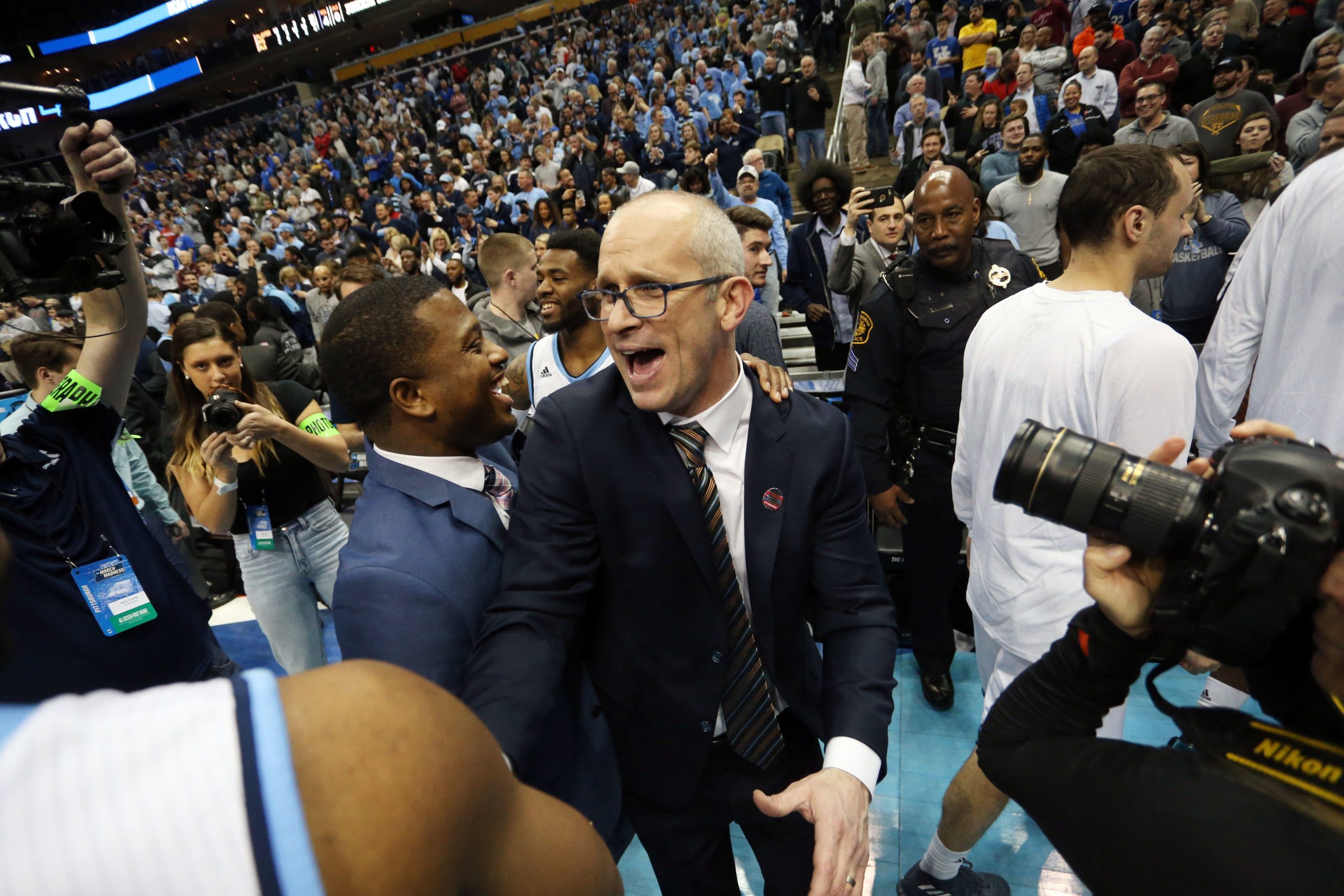


Arizona State men’s basketball coach speaks with the media following a summer workout at Tempe’s Weatherup Center on June 4, 2025. (Photo by Payne Moses/Cronkite News)
TEMPE – Amid the celebration of former ASU basketball legends Luguentz Dort and Jeff Ayres at Weatherup Center last Wednesday, Sun Devils coach Bobby Hurley mused on the state of the college basketball landscape and how it has influenced his approach to putting together a roster in the last year of his contract.
A long offseason still remains until the next iteration of the Sun Devils men’s basketball team first hits the floor at Desert Financial Arena – but it will be an important one as Hurley is expected to be shadowed by the simmering blaze cast by the proverbial hot seat all season long.
After patrolling the Sun Devils sidelines for 10 seasons with an overall record of 168-151, Hurley finds himself in a familiar position, fighting calls for him to be fired if his team again fails to make a dent in the postseason. Hurley seems used to the growing noise.
But he wasn’t always willing to acknowledge it.
Heading into the 2025-26 season after a disappointing 13-20 campaign last year in the Sun Devils’ first forway in the Big 12 Conference, Hurley is candid when he speaks to potential recruits about his situation.
“I just shifted my narrative and the vision that I was trying to portray to everybody – like, ‘My back’s against the wall,’” Hurley said. “I’ve loved my time here at Arizona State and I value that greatly. So, if you have one year and want to be with someone who’s all in and invested to win and have a great season, then (joining the team) might make sense for you.”
Hurley is still in the process of putting together a roster for next season – the roster construction process has perhaps been made longer in the wake of the most significant turnover Hurley has seen in his time at Arizona State.
Sophomore guard Trevor Best is currently the Sun Devils’ lone returning player.
Best didn’t enroll in the university until the middle of last season in January. His first game receiving significant minutes came during a Feb. 26 home loss to No. 25 BYU where he scored 18 points on 5-of-8 shooting from the floor.
Gone from last season’s roster is second-leading scorer BJ Freeman, who transferred in-conference to the University of Central Florida.
ASU’s electric guard Joson Sanon? He’s gone, too. He’ll help shore up Rick Pitinno’s backcourt at a resurgent St. John’s program next season.
Even former five-star prospect Jayden Quaintance, the youngest player in college basketball last season, has left. Quaintance will take his renowned length and defensive instincts to the Kentucky Wildcats next season, provided he recovers from a torn ACL suffered in a February game against Kansas State.
Losing significant contributors has become the way of the world in college basketball, as evidenced by an offseason that saw nearly 2,700 players enter their names into the portal when it officially closed on April 22.
Many in the college basketball world are still not keen on the freedom that the transfer portal allows, even those who were once players themselves.
Ayres, known as Jeff Pendergraph in his time at Arizona State from 2005 to 2009, ranks second on the school’s all-time career rebounding list. He sits in eighth place for career points. It was announced last Wednesday that he will be inducted into the Sun Devils Hall of Fame.
“Guys can kind of just change their mind whenever and move around,” Ayres said. “And that’s just not how life works. You’ve got to kind of find ways to survive and get through it, and it makes you stronger.”
Hurley used to get almost heartbroken when a player left, but after a couple years of the NCAA allowing players to transfer without having to sit out a year, he understands this is how things are.
“I expect there to be change every year,” Hurley said. “And now I’m just excited to get in the gym with the new guys that we have coming in and seeing what they look like.”
The “new guys” are still being assembled, but noticeably include less-heralded incoming prospects in comparison to past teams. Marcus Jackson, ranked 91st in the 2025 class according to 247Sports.com, is currently the only incoming four-star recruit for an Arizona State team that is ranked 69th overall in the composite rankings.
Last season’s Sun Devils class ranked ninth nationally, according to the same set of rankings, and included a total of three four and five-star players.
The ASU roster will appear to lean more on older players transferring in from the mid-major level – resembling a trend in college sports to rely on older, more experienced teams to win.
Guard Adante’ Holiman and forward Marcus Adams Jr. each averaged over 16 points per game in their previous stops at Georgia Southern and Cal State Northridge, respectively, and will both be upperclassmen for the Sun Devils.
Older international players with professional experience are also becoming a trend in college basketball recruiting because overseas clubs are struggling to compete with the amount of money that schools can offer players through NIL.
Next season, Hurley is bringing in Montenegrin forward Andrija Grbovic, who is 21 years old and has years of professional experience.
Hurley says these types of players are positively impacting the college game.
“Those guys are coming into the college game because the money is better,” Hurley said. “We’re actually getting a better product and college basketball is going to be better because of the infusion of these international players.”
Another wrinkle to this offseason that Hurley and staff have been preparing for is the House v. NCAA settlement that was approved Friday. The settlement is a landmark decision for college sports that will back pay $2.8 billion in damages to college athletes who competed at any time from 2016 through the present day. Universities can also start directly paying players with a cap set at $20.5 million starting next season.
While the settlement impacts college sports in various ways, one major hurdle Hurley faces next season is the newly instituted roster limits.
Previously set at 13 scholarship spots and a maximum of 17 total roster spots, the new settlement places the limit at 15 total spots.
Hurley has been planning to take advantage of this after an injury-riddled 2024-25 season.
“I’ve always avoided getting to my scholarship limit in the past,” Hurley said. “We’re going right to the limit this year.”
College basketball continues to change – and Hurley’s approach to recruiting seems to have, also. But his competitive spirit hasn’t dimmed, and that might help him keep his job.
He still has plenty of it, according to Molly Miller, ASU new women’s basketball coach.
“We’re wired the same way,” Miller said, “in that we want to win and see success for this school.”


And then there were two. The 2026 college football season has led to this: No. 1 Indiana and No. 10 Miami will meet in the College Football Playoff National Championship Game to decide the best team in the country.
In most years, the Hurricanes would be seen as an overwhelming favorite against Indiana. But Miami has gone on an underdog run of its own after making the playoff as the last at-large team.
Indiana, meanwhile, has bowled over opposing teams en route to a 15-0 record. The Hoosiers are 2025’s hegemon and it appears as if they aren’t going away anytime soon.
They handled their semifinal game against Oregon with ease, downing the Ducks 56-22. Miami, meanwhile, triumphed over Ole Miss in a 31-27 thriller that ranks as one of the best postseason games of the CFP era.
Those semifinal games, of course, provided plenty of material to overreact to as the 2025 season nears its conclusion.
Indiana is the best team of the CFP era
Yes, better than 2019 LSU. The Hoosiers may not have as much elite NFL talent — though quarterback Fernando Mendoza is a shoe-in to go first overall in the 2026 draft — and the offense isn’t quite as explosive, but they are a more complete team.
Indiana’s +473 point differential ranks first among schools in the playoff era (hat tip to my CBS Sports colleague Tom Fornelli). The Hoosiers have bludgeoned opposing teams by an average of 31.5 points per contest. Their last three wins against blue bloods Ohio State and Alabama and new blood Oregon have come by a combined score of 107-35.
Curt Cignetti’s squad has won all but one of its games against ranked opponents by at least 10 points. And Indiana is doing this in the Big Ten, one of the nation’s premier conferences.
The Hoosiers are also on the precipice of becoming the first college football program to ever go 16-0. Of course, they have the benefit of playing in the expanded playoff years, but an undefeated season in the modern era of college football, when parity is at an all-time high thanks to NIL, seems like an accomplishment that won’t be easily repeated.
After all, only four NFL teams have ever completed undefeated seasons and it only happened once after the league went to a 16-game schedule.
Indiana vs. Miami: Early preview, odds, picks as Hoosiers will meet Hurricanes in CFP National Championship
Chip Patterson

Miami’s discipline issues will doom it against Indiana
Miami was, somehow, able to overcome itself in the Fiesta Bowl against Ole Miss. The Hurricanes committed 10 penalties for a total of 74 yards, including a targeting foul that resulted in the ejection of cornerback Xavier Lucas. They dropped four potential interceptions.
Those fouls allowed Ole Miss to hang around and even take the lead at certain points. Ultimately, the Rebels made a few crucial mistakes of their own — and were pitiful on third down — which allowed the Hurricanes to outlast Ole Miss.
That won’t do against the well-oiled Indiana machine. The Hoosiers rank third nationally with just 3.57 penalties per game. They’re smart, they’re disciplined and — as was seen with D’Angelo Ponds’ pick six to open Indiana’s semifinal win over Oregon — they will pounce all over any mistakes the opponent makes.
Ultimately, discipline will make the difference in a battle between two teams that stack up fairly well otherwise.
Oregon is in trouble
You’ve certainly heard of a clutch gene if you’re a fan of sports. Oregon coach Dan Lanning has the opposite.
In their last three playoff games against Power Four opponents, the Ducks have been outscored 97-66. That includes a 23-0 romp against Big 12 champion Texas Tech this season.
Talent isn’t the issue with Oregon. The Phil Knight money certainly helps, but the Ducks have always recruited at a high clip. Coach Dan Lanning has done a good job at the high school level and in the portal.
But there’s plenty of reason to be concerned about the path that Oregon is walking with Lanning, especially given the recent postseason results. This will be a big offseason for him.
The Ducks are set to lose both of their bright young coordinators. Will Stein is headed to coach Kentucky while Tosh Lupoi will lead former Pac-12 foe California.
It is a good sign for a program’s health when assistants get head coaching jobs, and it’s a testament to what Lanning has built at the young age of 39. The next few months will be a huge test of his ability to keep the ship steady.
Ole Miss is bigger than Lane Kiffin
It was time to stop talking about Kiffin’s move to LSU once the playoff began, but the two will always be intrinsically linked given the time that Kiffin had in Oxford and the messy nature in which he departed. While Kiffin deserves his flowers for elevating the standard at Ole Miss, it’s clear that the Rebels have outgrown the need for him.
His departure didn’t do the program any favors or anything like that. Pete Golding has shown, in short order, that he can at least maintain the level of success that Kiffin established — if not exceed it. Golding, after all, has more playoff wins than Kiffin at this point, and he’s only been a head coach for three games.
Kiffin was certainly hoping that he’d be able to drag some of Ole Miss’ top stars with him, but his decision instead galvanized the Rebels. Top running back Kewan Lacy, top linebacker Suntarine Perkins and edge rusher Princewill Umanmielen, along with a bevy of other key players, have already committed to returning.
On top of that, Ole Miss is off to an incredible start in the transfer portal. The Rebels currently sit seventh in 247Sports’ Team Transfer Rankings. They’re one of just two schools in the top 10 with less than 10 commits thus far and their average prospect grade of 89.22 is first among top-15 transfer classes.
Four of Ole Miss’ nine transfer additions hold at least a four-star ranking. That includes LSU transfer Carius Curne, the No. 1 offensive tackle in the transfer portal, who spurned Kiffin for the Rebels.

Tickets for the Indiana-Miami College Football Playoff national championship game are available, but they come with a hefty price tag. After Indiana’s win over…
MIAMI GARDENS, Fla.(AP) — The good news: There are tickets out there for the Indiana-Miami matchup in the College Football Playoff national championship game.
The bad news: They’ll cost you. A lot. A whole lot.
In the moments after Indiana finished rolling past Oregon on Friday to win the Peach Bowl 56-22, clinching a spot in the CFP title game on Jan. 19 against Miami — on Miami’s home field, no less — ticket prices for the matchup soared.
The cheapest tickets available entering Friday on the secondary markets were around $2,800. After Friday’s game, those in-the-door prices soared to around $3,800 — and that was for seats in the final rows of the upper deck of Hard Rock Stadium.
By Saturday afternoon, TicketData — which tracks activity across a number of sites — said the lowest get-in price was just under $3,600 per ticket, including fees.
Some seats available on sites like StubHub, TickPick and Ticketmaster were offered for more than $10,000 on Saturday. Numbers like those will fluctuate considerably in the coming days, but it’s already clear that this matchup will be a pricey one. It’s a perfect formula for wild demand: Miami playing a home game and seeking its sixth national title (albeit as the “visiting” team, technically) against an Indiana team on this stage for the first time.
“To see Miami galvanizing like it is right now, it’s awesome,” Hurricanes coach Mario Cristobal said Friday after he and his team arrived home from Thursday night’s win in the Fiesta Bowl over Mississippi. “And we need everybody in that stadium going absolutely bananas.”
Miami sold more than 500,000 tickets this season for its eight home regular-season games, the most in program history. And Indiana fans showed once again in the Peach Bowl that they’ll travel to support their Hoosiers; the stadium in Atlanta was overwhelmingly crimson, swallowing up whatever Oregon green was in the crowd.
“There’s nothing like having a home semifinal game,” Indiana coach Curt Cignetti said in the on-field celebration on Friday night. “There are no fans like Indiana Hoosier fans.”
Not everyone at the game will have to pay the big, big, big prices. Indiana and Miami both receive an allotment of tickets that they can sell — at face value — to season-ticket holders, donors, students and others.
And it appeared Saturday, based on what was showing online, that most of the early sales were for tickets on the “visitor” sideline — because that’s where Miami will be for the game. The CFP predetermined that the Fiesta Bowl winner would be the road team and the Peach Bowl winner would be the home team, meaning Indiana will be on the sideline that the Hurricanes typically occupy.
Get poll alerts and updates on the AP Top 25 throughout the season. Sign up here. AP college football: https://apnews.com/hub/ap-top-25-college-football-poll and https://apnews.com/hub/college-football
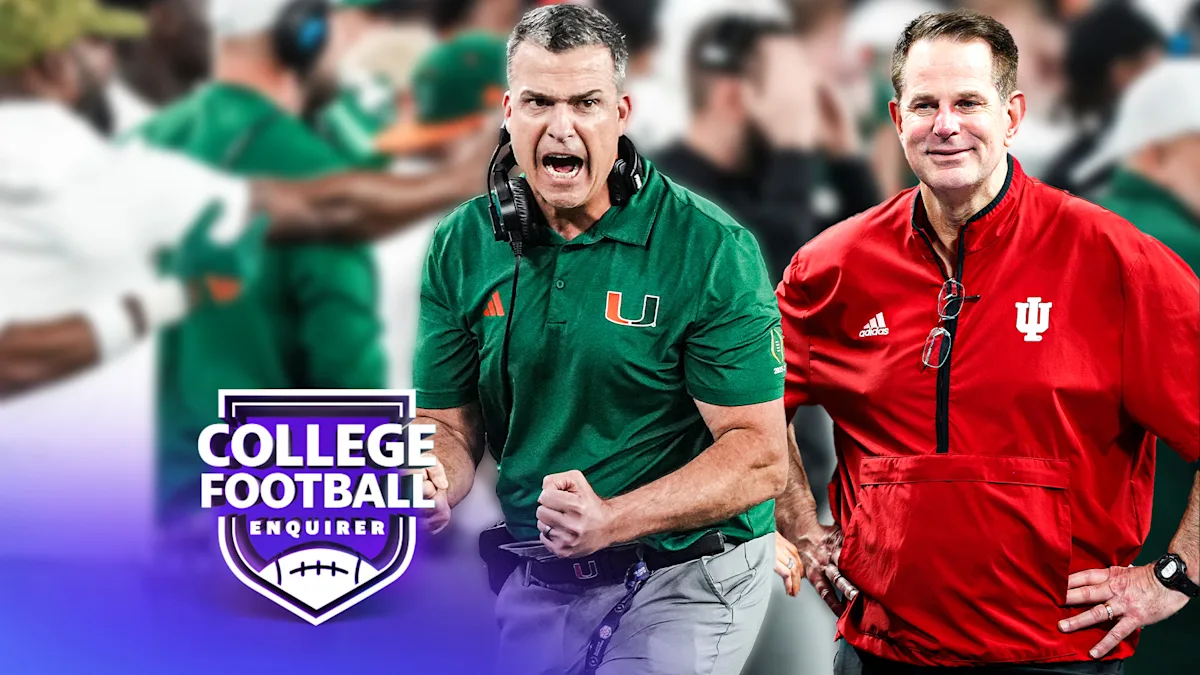
The National Championship Game is set! Andy Staples, Ross Dellenger and Steven Godfrey look ahead to the final matchup of the season by reacting to both semifinal matchups. They first talk about Indiana’s dominating performance over Oregon. Will the Hoosiers’ execution and talent win them a national title? How does Indiana stack up with the historically dominant national champions of the past? Then, they discuss the much more exciting semifinal matchup that saw Miami come out on top. How can Miami upset Indiana? What kind of advantage will playing in their home stadium create for the Hurricanes? Plus, will Oregon ever win a national championship?
Advertisement
Then, the guys look at some things happening off of the field in the college football world. After their loss to Miami, Ole Miss found out that Trinidad Chambliss’ request for another year of eligibility has been denied by the NCAA. However, this is not the end of the story as Chambliss will now sue the NCAA for damages spawning from the money he would make in NIL with that additional season. The guys discuss if Chambliss’ has a chance in this case, or if there is another motive behind the lawsuit.
Finally, the guys look at the madness of the transfer portal. First, they discuss the Demond Williams drama. After trying to enter the transfer portal, and Washington refusing to enter his name due his signed contract, Williams has now returned to the Huskies. Andy, Ross and Godfrey discuss what all happened in Seattle. Then, they look at the College Sports Commission’s investigation into how schools are writing NIL contracts. How will these contracts continue to evolve over time?
Get ready for the Natty with College Football Enquirer.
Miami and Indiana advance to Natty Photo by CFP/Getty Images Photo by Jeff Robinson/Icon Sportswire via Getty Images
(Photo by CFP/Getty Images Photo by Jeff Robinson/Icon Sportswire via Getty Images)
0:00:00 – Indiana dominates Oregon
Advertisement
14:37 – Miami advances over Ole Miss
24:51 – Will Oregon ever win a Natty?
29:46 – Trinidad Chambliss’ fight for a 6th year
40:49 – Demond Williams drama
52:12 – College Sports Commission investigation
Check out all the episodes of the College Football Enquirer and the rest of the Yahoo Sports podcast family at https://apple.co/3zEuTQj or at yahoosports.tv

Missouri finished the 2025 campaign as an interesting mix of promise and turnover under sixth-year head coach Eli Drinkwitz.
The Tigers posted an 8–4 regular-season record, going 4–4 in SEC play, and leaned heavily on a dominant run game led by sophomore running back Ahmad Hardy, who finished with 1,649 rushing yards (second most in college football) and 16 touchdowns on 256 carries (6.4 yards per carry).
However, the quarterback position quickly became a central offseason storyline when starter Beau Pribula re-entered the transfer portal.
On3’s Pete Nakos has tracked Pribula’s early January visit cycle, which included stops at Virginia Tech and Georgia Tech, followed by a visit to Washington as the Huskies navigated uncertainty surrounding Demond Williams.
On Friday, Nakos also reported that Pribula is expected to visit Tennessee, adding another SEC program to his growing list of suitors.
Pribula began his college career at Penn State, where he redshirted and served as a backup from 2022–24 before transferring to Missouri for the 2025 season.
In 2025, he completed 182 of 270 passes (67.4%) for 1,941 yards, 11 passing touchdowns, and nine interceptions across 10 games, while adding 297 rushing yards and six rushing scores on 95 carries, making him one of the more intriguing dual-threat quarterbacks available with both Big Ten and SEC experience.
That experience, paired with his production, has also made Pribula one of the more marketable players in the portal, with an NIL valuation reported in the neighborhood of $1.8 million as he navigates a crowded quarterback market this offseason.
A Central York (PA) product, Pribula was a three-star high school prospect and the No. 27 quarterback in the 2022 class per 247Sports, signing with Penn State over more than a dozen offers, including Nebraska, Northwestern, Rutgers, and Syracuse.

All four programs Pribula has been linked to make sense for different reasons.
Virginia Tech stands out as a logical reunion target, as James Franklin’s staff has been actively pursuing quarterbacks and has prior Penn State ties to Pribula, while Georgia Tech is looking to replace the expiring Haynes King era after losing depth when backup Aaron Philo transferred to Florida.
Washington, meanwhile, has hosted multiple quarterback visitors amid uncertainty surrounding Williams, as the Huskies look to stabilize the position within a program that offers Power-4 exposure and strong NIL opportunities.
At Tennessee, Josh Heupel’s offense has historically prioritized mobile playmakers, and ongoing quarterback turnover makes a veteran option like Pribula appealing, particularly with senior starter Joey Aguilar expected to move on.
Read More at College Football HQ
- Major college football programs lose transfer portal recruitment for $2 million QB
- College football program loses 34 players to transfer portal
- Stephen A. Smith deals $92 million college football coach blunt reality check
- Three major college football programs battling for former 5-star recruit

Over the past few years, the SEC’s reputation has not matched its on-field results. The conference’s reign atop college football has now officially come to an end. The debate over whether the SEC is still the most dominant conference in college football is over. The SEC’s failure to place a team in the national championship game for a third consecutive year has settled it.
For nearly two decades, the SEC ruled the sport under the conference mantra “It Just Means More.” The mantra was built by the conference’s superior talent and its unmatched level of passion. Their dominance was largely driven by the perceived recruiting advantage resulting from their geographical location. Proximity to recruiting hotspots in the South has enabled programs to consistently accumulate elite talent year after year.
That advantage led to an SEC team being crowned the national champion 13 of the last 19 years. However, the SEC’s dominance has slipped away over recent years. Why? July 1, 2021. The date the back door closed and the front door opened.
The SEC’s biggest advantage was never geographical location or its mantra of just meaning more. It was the SEC acceptance of if you’re not cheating you’re not trying. The understanding within the SEC that bending and sometimes breaking the rules was acceptable allowed the SEC to thrive for two decades. What most programs in other conferences frowned upon was overlooked in the SEC.
The instituting of Name, Image and Likeness (NIL) took away the SEC’s biggest advantage. Every school could now use monetary resources to get top talent to commit to their programs. And with it, the SEC’s ability to stockpile talent evaporated.
Recruiting Edge Lost With NIL
How does the SEC dominate for two decades with no end in sight, then tumble back to reality in just three years? Simply, they lost the paid-to-play advantage. There was a belief that the SEC was using NIL before NIL was something you could use. But no one could say for sure, that is, until former LSU coach Ed Orgeron let the cat out of the bag.
More Sports News
On an appearance of “Bussin’ With the Boys,” Taylor Lewan got the dirt from Orgeron.
“We all know that the SEC was NIL before NIL,” Lewan said. “We’re way past it. Can we now just admit it?”
“They say, ‘Hey, coach. You know, you’ve been out of coaching for a while. How are you going to adjust to NIL?’” Orgeron said. “‘Well, it’s a minor adjustment.’ They said, ‘What do you mean?’ I said, ‘Back then, we used to walk through the back door with the cash. Now, we just got to walk through the front door with the cash.’”
You can’t assume that every team was using the back door for recruiting. However, what else in the last four-and-a-half years could have changed the hierarchy of college football?
Trophies Define Conference Supremacy
There is no arguing that the SEC is the deepest conference in college football. But it’s not about being deep when arguing which conference is the best. To be considered the best, it’s putting trophies in the trophy case and playing for national championships. Something the SEC has not done in three years after Ole Miss was eliminated from the College Football Playoff. The only thing that matters is which teams are in the CFP.
Using meaningless losses in bowl games as a talking point that really has little to no impact on being the best conference. Bowl games are nothing more than spring games against other teams. Most teams bear little resemblance to what they were during the regular season. What really matters is how teams perform in the College Football Playoff against programs with equal or superior talent.
In the first nine years of the CFP, the SEC failed to have at least one team in the final. This year’s national championship will be the third straight year the SEC has failed to have a team advance to the final. The Big Ten, on the other hand, has had and will have a team playing in all three. The Big Ten has also won the last two national championships.
The SEC plays semantics in its effort to stay atop of college football. But the “best” means producing elite national championship contenders capable of winning it all and actually doing it. Something the Big Ten has accomplished each of the last two years, Michigan two years ago, Ohio State last season, and now Indiana has a chance to make it three straight for the Big Ten. The SEC is the deepest conference, considering five teams reached the College Football Playoff. What the SEC failed to do was to create a truly elite team that made it.
Moving forward, being a blue blood no longer matters. The only thing that matters now is being a “Green Blood.” A university with ultra-rich alumni willing to invest, with the only reward being wins. The days of “Bob’s Used Cars” putting cash in fast food bags are gone. Now it’s about billionaires and multi-millionaires like Mark Cuban or Nike founder Phil Knight handing over seven-figure checks, and there’s no conference with more than the Big Ten.
And if no rules exist, it is only a matter of time before the Big Ten becomes the deepest conference as well.
College football’s transfer portal season has taken some odd twists and turns this year. Now it’s entering … tax season?
In one of the latest oddities, schools in certain states began trading “no state income tax” social media posts as a way to entice players in the portal. Currently, nine states don’t levy income taxes: Alaska, Florida, Nevada, New Hampshire, South Dakota, Tennessee, Texas, Washington and Wyoming.
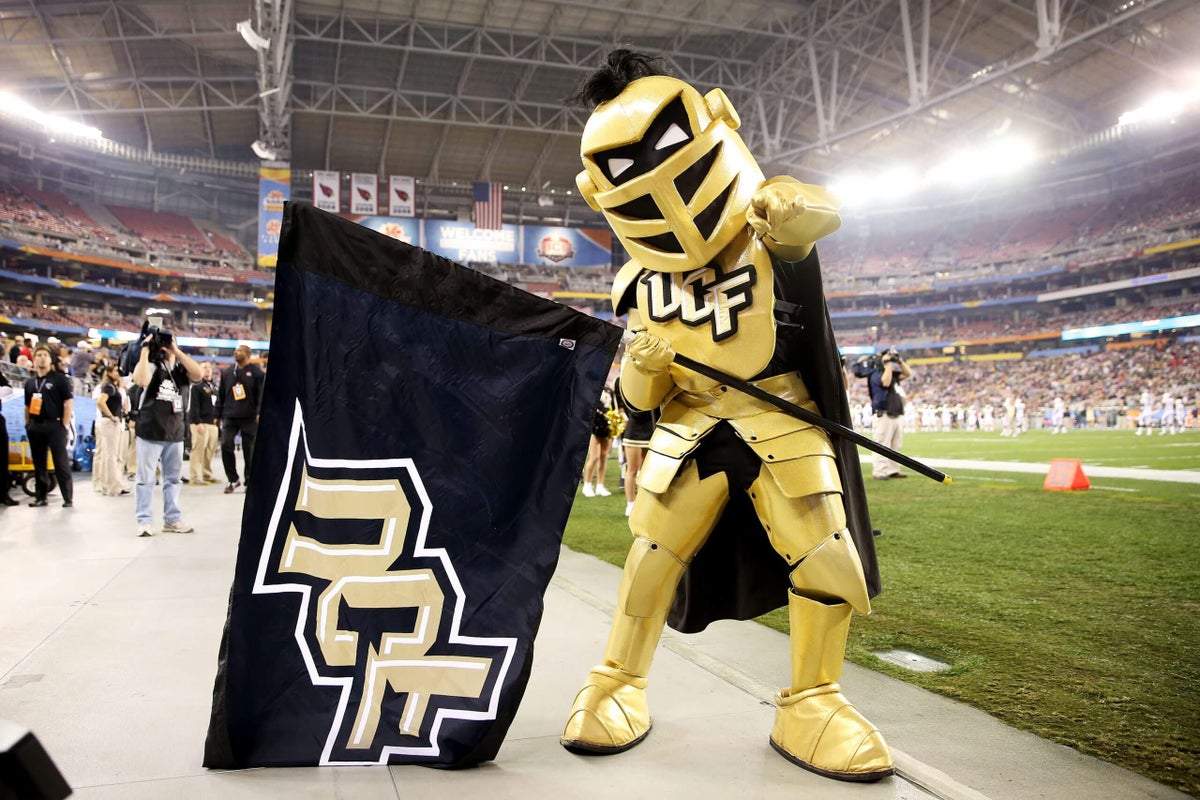
The Houston Cougars, UNLV Rebels and UCF Knights — all universities within one of those nine states — posted about their lack of state income taxes on X on Saturday, featuring an image of either a mascot or cheerleader lifting a comically large bag of cash above their heads.
UCF started the movement with a post on Saturday morning featuring its mascot, Knightro. Houston and UNLV soon followed suit, as did the UTEP Miners, FIU Panthers and North Texas Mean Green.
🤝 https://t.co/rqQdM0cpCQ pic.twitter.com/OgtMjGVhdx
— Houston Football (@UHCougarFB) January 10, 2026
How effective will that pitch be? UCF, Houston and UNLV were all outside the top 40 of 247Sports’ portal rankings as of Saturday night, so any little bit helps. Central Florida was the highest at No. 47 in the 247Sports rankings, followed by Houston at No. 49 and UNLV at No. 86. Texas Tech, Texas A&M and Houston were all in the top 10 of On3’s portal rankings.
College athletes are not only taxed on their NIL earnings, but also on anything they receive of value. If an athlete receives a new car, for example, they have to pay taxes on it in accordance with its value.
Arkansas has tweaked its tax code so that NIL income is tax-exempt as an incentive to induce athletes to sign at the University of Arkansas or other in-state schools.
There was no indication that income taxes were the reason behind another buzzy portal storyline earlier this week: Quarterback Demond Williams changing his mind about entering the portal and deciding to stay with the Washington Huskies. On Tuesday, Williams announced he was entering the portal — four days after signing with the Huskies, a Washington source close to the negotiations told The Athletic’s Bruce Feldman. On Thursday, he said he was “excited to announce that I will continue my football journey at the University of Washington.”
The Huskies were prepared to pursue legal action against Williams to enforce the contract, a source briefed on the situation told Feldman. Williams could have owed the school up to $4 million for transferring, according to Big Ten rules that state that if a player intends to transfer before the end of a payment period, he owes the remaining amount on his contract, unless the school agrees to accept a buyout from the player or the player’s next school.
Williams and his team ultimately decided to stay in Seattle — where he won’t have to pay state income taxes.

Damis, Bolaske Post Top 40 Division III Marks as Indoor Track Gets Back in Action

Live Updates: 2026 World Athletics Cross-Country Championships

O’Reilly Sets Canadian U23 600m Record at Wolverine Invitational

CFP overreactions: Miami discipline issues will prove costly vs. Indiana

WT&F | DeSouza 800m Win Highlights Gaels Performance at Silver and Blue Invitational

Nissan Unveils Aura NISMO RS Concept, Signals Future of High-Performance Hybrid Hot Hatches

Record Wins the 800 Meters to Lead Union at Middlebury

Hadjar impresses in desert challenge with Dakar veteran

Florida demolishes Tennessee basketball – The Daily Beacon

Mountaineers Tally Nine First-Place Finishes at UNC Asheville Collegiate Opener at Tryon International

IMS Museum Names New President – WRBI Radio

Ticket prices soar for Indiana-Miami College Football Playoff national championship game

Track and Field Earns Four Event Wins at Wolverine Invitational

Lang’s Shot Put Win Paces Garnet Chargers at Middlebury

Field Events Power DePaul at Gately Indoor

Stempien to seek opening for Branch County Circuit Court Judge | WTVB | 1590 AM · 95.5 FM

#11 Volleyball Practices, Then Meets Media Prior to #2 Kentucky Match

Ross Brawn to receive Autosport Gold Medal Award at 2026 Autosport Awards, Honouring a Lifetime Shaping Modern F1

Maine wraps up Fall Semester with a win in Black Bear Invitational

Nascar legal saga ends as 23XI, Front Row secure settlement

Princeton Area Community Foundation awards more than $1.3 million to 40 local nonprofits ⋆ Princeton, NJ local news %

Downtown Athletic Club of Hawaiʻi gives $300K to Boost the ’Bows NIL fund

Sunoco to sponsor No. 8 Ganassi Honda IndyCar in multi-year deal

WNBA’s Caitlin Clark, Angel Reese and Paige Bueckers in NC, making debut for national team at USA camp at Duke

Badgers news: Wisconsin lands 2nd commitment from transfer portal

Nike Signs 10 LSU Athletes to NIL deals

Five Youth Sports Trends We’re Watching in 2026

Three Clarkson Volleyball Players Named to CSC Academic All-District List

Beach Volleyball Unveils 2026 Spring Schedule – University of South Carolina Athletics

Kentucky AD explains NIL, JMI partnership and cap rules





-
 Sports3 weeks ago
Badgers news: Wisconsin lands 2nd commitment from transfer portal
-
 Rec Sports1 week ago
Five Youth Sports Trends We’re Watching in 2026
-
 Sports2 weeks ago
Kentucky VB adds an All-American honorable mention, loses Brooke Bultema to portal
-

 Motorsports3 weeks ago
Dr. Patrick Staropoli Lands Full-Time O’Reilly Ride with Big Machine Racing
-
NIL2 weeks ago
Fifty years after IU’s undefeated champs … a Rose Bowl
-

 Motorsports2 weeks ago
BangShift.com IHRA Acquires Historic Memphis Motorsports Park In Millington Tennessee. Big Race Weekend’s Planned For 2026!
-
 Sports2 weeks ago
2025 Volleyball Player of the Year: Witherow makes big impact on Central program | Nvdaily
-
 Sports2 weeks ago
H.S. INDOOR TRACK & FIELD: GLOW region athletes face off at Nazareth University | Sports
-
 Sports2 weeks ago
Colorado volleyball poised to repeat success
-

 Sports2 weeks ago
Texas A&M volleyball’s sweep of Kentucky attracts record viewership