
Rec Sports
Boys coach Linda Martindale has secret to being a college player

Updated Dec. 20, 2025, 7:45 a.m. ET
I am brave.
Linda Martindale wasn’t brave, at least she didn’t think she was after she had been hired as a varsity boys basketball coach.
“Once the game started, I was fine,” says Martindale, now in her sixth season leading Lincoln-Sudbury (MA), “but walking into the gym and people thinking I’m the scorekeeper or whatever, I had to sort of overcome this feeling of, ‘Do I belong in the gym?’ ”
She made the three words her mantra, and she convinced herself she was brave. You need to be as an athlete, or a coach, in today’s world of youth sports.
“I have fond memories of my athletic career, but I also know there was a lot of heartache and it was very difficult,” says Martindale, who played Division II basketball at Alaska-Anchorage and in the old Pac-10 at Arizona in the late 1980s and early 1990s. “But nowadays, it’s totally different. Your whole career is splashed all over social media.”
Martindale’s father devoted his life to coaching baseball and football, driving her and her three siblings to be punctual and polite. He was hard on them, she says, but led with love.
“If I had a bad game, the people in the stands knew and my parents knew, and that was it,” Martindale tells USA TODAY Sports. “You’d come home and your parents would say, ‘How did the game go?’ You could self-report that. Easy to deal with.
“My oldest son would literally get DMs from strangers that say horrible things if he missed a free throw in the clutch. The landscape is very different. And it obviously trickles down to youth.”
Martindale got certified as a mental fitness coach to help ease the pressure on her three sons and one daughter (all of them have played college sports) but also other young athletes.
She works with sports teams at Division I Holy Cross and D-III Curry College, as well as individual athletes. She says there’s a secret beyond the physical component to playing sports in college.

We offer 10 ways, through consultation with Martindale, for parents to help athletes get there.
YOUTH SPORTS SURVIVAL GUIDE: Pre-order Coach Steve’s upcoming book for young athletes and their parents
1. Develop the coach in your head: It’s the best one you’ll ever have
When Martindale walked into the gym feeling the male eyes on her, she felt she needed an inner coach.
Your coach on the court or field will tell you what to do but, Martindale says, the one in your head will kick you in the butt to help get you where you need to go.
Jenny Levy, who has won four national titles as North Carolina’s women’s lacrosse coach, believes so strongly in an inner coach she likes when her players form their own mantras.
“Confidence looks good on you,” she heard her players say to each other in 2013, the year they broke through.
“A lot of coaches will say, ‘This is our saying,’ ” Levy told Martindale on Martindale’s ‘Game Changers’ podcast. “And I think that’s fine – to each his own – but I actually let our team organically come up with their own little things. This is the team having a good time together.”
The inner voice tells you it doesn’t matter what anyone else thinks, only what you do.
Go for it.
This is my time.
This is where I belong.
To come up with your own mantra, Martindale says, ask yourself why you play a sport? Look for performance cues to grind that thought into you.
“It’s not fun to lose, but it’s still really fun to compete and to play,” Martindale says. “OK, good, let’s start with that. So at least you can say it’s not fun to lose, but it’s really fun to prepare for the game. We’ve now established that the majority of the time is fun. Now we can get through the parts that aren’t fun.”
Was that ‘fun’? How Coco Gauff’s tough US Open embodies what the word means
2. We can learn how to handle the hard
Kids respond to the truth. We don’t need to always sugarcoat it.
Instead of saying, “It’s not so hard,” acknowledge that something is.
Maybe you’re afraid that you might lose or you’re going to make a fool of yourself in front of everybody.
“I’m happy that you can articulate a fear,” Martindale might tell an athlete. “Now, let’s squash it. What are you really afraid of? Is it really embarrassing to lose, or is it embarrassing not to play at all?
“It would be embarrassing if you threw yourself on the floor and screamed and cried in the middle of the game. But nobody thinks it’s embarrassing that you sat on the bench, cheered on your team, and then fought another day to try to get some minutes.”

3. Teach your kid how to build resilience to meet challenges head on
A current role doesn’t mean an ultimate role. Martindale goes back to Tom Brady.
He was once buried deep on Michigan’s depth chart. But he focused on nailing reps he got in practice. He was at game speed when he found himself starting.
“As parents, we say, ‘I don’t think you should have to be the backup quarterback,’ ” Martindale says. “ ‘I think you should be the quarterback.’ This is not helping. What you need to do is crush being the backup. And then your time comes and you’re ready instead of spending so much time worrying that you don’t have the role that you want (and) you’re not ready for it.”
Another of her podcast guests, Luke Avdalovic, a former walk-on basketball player at Northern Arizona University, told her: “I had a teammate named JoJo Anderson and he told me, ‘If you want to find a role into this team, find one thing that you’re really good at. Make sure you’re head and shoulders better than every single other person on the team. Then they can’t take you off the floor.’ ”
Avdalovic became a top sharpshooter who rose to the NBA G-League.
4. ‘You can’t be a shooter if you can’t miss’
Avdalovic has shot so much over the years he feels he’s never really in a slump. Some days he shoots better than others, but that is just the law of averages.
“You can’t be a pitcher if you can’t pitch poorly,” Martindale says. “You can’t be a shooter if you can’t miss. It’s just not possible (to) be perfect. So what do you do when you’re imperfect?”
The next time your son or daughter has a bad game, ask them, “Did you compete hard?”
You don’t want them to lose or fail but they need to know how to do both. As parents, and as coaches, our best support can come out of struggles.
5. We can only get the ‘yips’ if we vocalize them
You know the term if you’re a baseball fan. Suddenly, Steve Sax or Chuck Knoblauch can’t make a routine throw from second to first base, or Rick Ankiel can’t throw a strike.
“Yips is not a real thing,” Martindale says.
Struggles come alive, she says, when we say them out loud. Instead, if you’re a parent or a coach, tell your athlete: “I really believe in you. Just keep throwing, you’ll get it back, you’ll find a rhythm.”
When kids feel deep-rooted support, they have more confidence in themselves.
6. We don’t have to be good at everything
Martindale says today’s world for young athletes is like taking the SATs while your score is being put on a scoreboard.
Sometimes, it seems, we expect our kids to be good at everything. Martindale asks the ones with whom she works, “What class are you good at?”
She doesn’t necessarily mean classes in which they have an “A,” but the ones they enjoy most.
Sometimes it takes looking at things through a less critical lens. We have an “A” in science, but we enjoy the challenge of English Lit, in which we have a B-, which energizes us to try and bring up the grade.
7. ‘It’s not your family’: Parents are the ultimate artery of support
Eugene Glisky, Martindale’s father, had his ashes buried on the field where he coached near Toronto. She suspects he changed the lives of many young men.
But she stops short of calling a team a family.
“When a coach says to a parent, ‘I’m gonna treat your son or daughter like my own,’ I want to say, ‘No, thank you. I don’t need you to treat my son like he’s your own,’ ” Martindale says. “He has a great father. What I really want you to do is treat him like a player and a human being.
“It’s a team, which is amazing and I love my kid being part of a team. But it’s not a family. Why? Because what happens when your family cuts you?”
There are times when we need to be Coach, and times when we need to be Mom or Dad. Martindale had to be Coach when Judson, her oldest who now plays basketball for Manchester Basketball Club in the United Kingdom, came out of a game when he was younger and looked at her like, “Why are you pulling me?
He threw his water bottle, and she turned and said: “You can take your sneakers off. You’re done.”
The same coach, though, drove him home from a different game, criticizing him for what he didn’t do while failing to realize he was sick.
“So many examples of total failure by me,” she says. “What kind of mother would be talking to their kid about some offensive set when clearly they needed a mother?”
8. ‘Your influence is not neutral, parents’; don’t disrupt a happy kid
Levy, North Carolina’s women’s lacrosse coach, does parent Zoom calls. Before the first one, she asked her players what they wanted her to tell them.
“They said, ‘We don’t want to talk about the game at the tailgate after,’ ” Levy told Martindale. “ ‘We don’t want any parent to have this sad conversation after the wins because their kid didn’t play. We want the parents to sit together. We want them to be positive on the sideline.’ ”
Levy says the players gave her a Letterman top 10 of parent no-no’s, which she shared on the Zoom.
“I think they were pretty shocked,” says Levy, who coaches her daughter, Kate, on the team. “Our kids were like, ‘Last year was not OK. This is what we want and this is what we need this year.’
“And then if we saw it, I had permission from our players to call the parent and say, ‘Hey, you’re at the tailgate and your behavior was below the line for our program.’
“What if I acted like that as a parent? What if I did that in the middle of a tailgate?”
Levy’s point: A kid could be completely happy but if the parent is unhappy with their role, then the kid’s unhappy. And if the parent isn’t feeling like their kid is getting a fair shake, or they’re being really negative toward coaches or teammates, the kid internalizes the feeling.
“Your influence is not neutral, parents,” Levy says.
9. We can use even a little bit of winning to fuel us
During a clip Martindale shared of her speaking to athletes, she says, “There has to be wins in there. Otherwise, you can’t go an entire season and be like, ‘If we don’t win a game, this whole season is a waste.’ ”
She is not necessarily talking about checks in the “W” column as much as what we perceive as personal wins. Maybe you tell a teammate you loved the way he blocked a punt or moved into position on defense. If we don’t have wins, even within losses, you don’t learn how to win.
Youth sports ‘crisis’: Congress addresses big business in youth sports. Can we fix it?
10. So what’s the secret sauce?
Martindale believes there are five pillars of mental fitness: 1. Staying in the moment; 2. Controlling the controllables; 3. Seeing mistakes as opportunities; 4. Not judging yourself (or others) too harshly and 5. Comparison (positively).
She says she was once a failure at all of them. Has she since learned a special ingredient we need to have to play college sports?
Martindale thinks Angela Duckworth, director of the Penn-Wharton Behavior Change for Good Initiative, said it best.
“It’s grit,” Martindale has said. “I’m obsessed with grit, because we know it’s a single defining characteristic of successful people.
“Can you get up after you get knocked down? The athletes who are successful at every level of college, I think, have this kind of dog mentality that is about grit. And of course, you have to be skilled and you have to be athletic but when we really look at who performs best when it counts, it’s people who have failed. Over and over and over. And then now they succeed.”
We can’t beat our kids up over mistakes. Let them hear the voice in their head that gives them the grace to move forward from them.
Then, as Martindale says: “Watch them fail and then watch what they do after they fail.”
Borelli, aka Coach Steve, has been an editor and writer with USA TODAY since 1999. He spent 10 years coaching his two sons’ baseball and basketball teams. He and his wife, Colleen, are now sports parents for two high schoolers. His Coach Steve column is posted weekly. For his past columns, click here.
Got a question for Coach Steve you want answered in a column? Email him at sborelli@usatoday.com


NEWBURGH HEIGHTS, Ohio (WOIO/Gray News) – Three children, ages 8, 11 and 12, stole a car and crashed it into a home after watching how-to videos on YouTube, according to police.
On Saturday, officers were in pursuit of a stolen car in Ohio when it crashed into a men’s recovery home, causing minor damage.
Officers caught the three children who tried to run away after crashing the car.
Thankfully, no one was injured.
Newburgh Heights police told WOIO the 11-year-old was driving the car.
The children allegedly told police that they watched YouTube videos on how to steal cars.
Police said the children were later released to their parents and charges will be filed in juvenile court.
Copyright 2025 WOIO via Gray Local Media, Inc. All rights reserved.
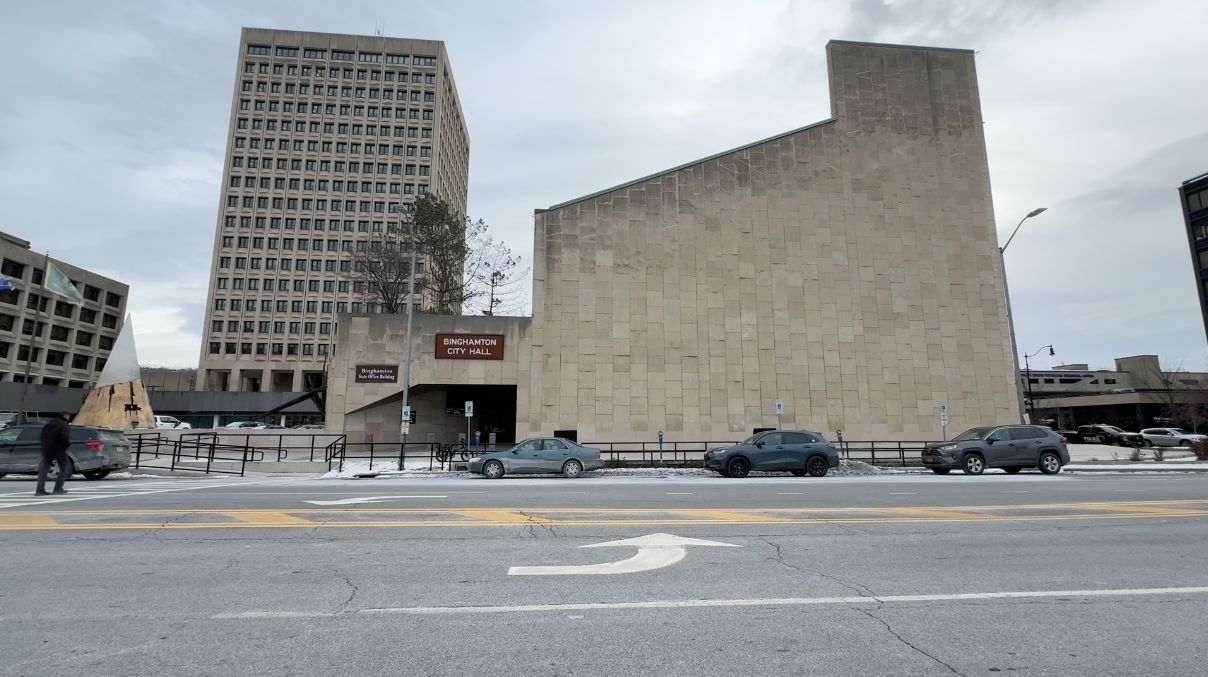
This week, JoDee Kenney sits down with Binghamton Mayor Jared Kraham.
Binghamton Mayor Jared Kraham takes the Spectrum News team on a walk-and-talk to various projects around the city. Mayor Kraham talks about the overseeing of significant developments in Dickinson, including the largest housing construction project, Town and Country apartments, with 256 units of affordable housing. He shares how the project is valued in tens of millions and features modern, energy-efficient units, and addresses past issues of crime and poor housing conditions. Mayor Kraham highlights how the city is also developing a new Recreation Center, repurposed from a local church, to serve as a hub for youth sports and community activities. He shares how the recreation center includes a full-size gym, classroom space, and a commercial kitchen. Mayor Kraham explains that these initiatives aim to enhance community life and provide permanent, affordable housing options.
Mayor Kraham also talks about community policing and emphasizes the need for increased staffing to allow officers to engage with the community effectively. He highlights the city’s low crime rate, attributing it to community policing, gun violence reduction initiatives funded by $1 million from the American Rescue Plan Act, and the use of advanced technology like license plate readers and street cameras. Mayor Kraham also details the revitalization of Clinton Street, a historic downtown area, through a $10 million state initiative to create a walkable, eclectic district that supports housing and regional tourism.
And finally, Mayor Kraham talks about being inspired by his father’s government service and his own interest in public communications. He discusses being a Syracuse University dual major in political science and broadcast journalism and emphasizes the importance of local politics and student engagement. He highlights his efforts to support small businesses, influenced by his experience working at his parents’ furniture store. Mayor Kraham also talks about his passion for local music, dining, and sports, and outlined his 2026 goals: revitalizing Clinton Street, enhancing public safety, and addressing affordable housing to foster neighborhood development.
You can watch the full interviews above. And be sure to tune in for a look inside the biggest issues impacting upstate New York, on In Focus with JoDee Kenney — every Sunday on Spectrum News 1.
Rec Sports
Power of basketball to connect people around the globe celebrated with World Basketball Day

Can basketball be a force that helps bring a divided nation, a divided world together?
That’s the dream of World Basketball Day. A day — designated by the United Nations to be commemorated every Dec. 21 — where we celebrate the power of basketball to unite communities and connect people around the world.
Advertisement
“There’s increasingly few spaces left where we humanize each other, where we actually spend time face-to-face, eye contact, wordlessly negotiating and sharing and creating space with and between each other — doing the kinds of intimate, continuous, fluid communication that the space of a basketball court fosters,” said David Hollander, an NYU professor who helped create World Basketball Day. “The game itself is an empathy lab. And so, yes, I believe it is one of the greatest exercises that people can engage in to begin to knit back together the social fabric.”
It’s a dream shared by the NBA and people who love basketball around the globe — and it’s a chance to give back to the community through the game.
“World Basketball Day is a chance to celebrate the game and impact it has on people everywhere,” the Celtics’ Jayson Tatum said. “Basketball has had such a positive influence on my life, and I hope I can pass along the joy and skills I’ve learned, both on- and-off the court, to the next generation.”
The NBA is doing this in part by announcing the extension of its longstanding relationship with the YMCA, collaborating on year-long youth basketball and community-focused programming that will reach 6 million youth in the next year. World Basketball Day also means events to connect with youth around the nation and around the globe.
Advertisement
“World Basketball Day takes on a special meaning this year as we commemorate the 175th anniversary of the YMCA, where the sport was first invented 134 years ago,” NBA Commissioner Adam Silver said. “We are thrilled to join our many friends in the basketball community to celebrate the game’s impact and influence around the world.”
What is World Basketball Day?
World Basketball Day is the brainchild of Hollander, an NYU professor with the Preston Robert Tisch Institute for Global Sport. Holland teaches a course at NYU called “How Basketball Can Save the World.”
“It’s a very popular elective that treats basketball like a philosophy,” Hollander said. “I created principles that I believe basketball stands for — the way you play basketball can be understood as a really good guide for how we can behave with each other. The way the game was intended to be structured can tell us a lot about how we ought to structure a society, and it’s a game intrinsically of hope.”
Advertisement
He eventually turned that course into a book, in which he drafted a UN resolution for World Basketball Day. That idea took off in a way he did not fully expect.
“Basketball was always intended to be stateless, borderless, global right from the very start,” Hollander said. “And as the world tries to solve the problems that only a whole world can solve, I suggested that we ought to start somewhere where the whole world is happy and the whole world comes together, and the whole world agrees. And, I said, that place is basketball, and it should have a day.
“That’s how it began.”
World Basketball Day was established in 2023 by the United Nations. Not coincidentally, World Basketball Day is observed each year on Dec. 21, the date in 1891 that Dr. James Naismith hung up the peach baskets and first introduced the game of basketball at the YMCA in Springfield, Mass.
Advertisement
Part of what World Basketball Day has become is a focus on the future and connecting people. For example, last week marked the third annual United Nations diplomats basketball game, in which more than 60 diplomats from 30 countries played pickup at the local YMCA.
“In other words, these peacemakers are actually doing the thing that I hope basketball on a grand scale achieves,” Hollander said.
It’s not just the NBA and the United States celebrating this, it is FIBA — the international governing body of basketball — and its coaching clinics and camps in Africa on this day. It’s local hoopers and content creators from Australia, Indonesia, Japan and the Philippines featuring World Basketball Day content across the NBA’s localized channels in those countries.
“Basketball has always been global,” Hollander said. “Dr James Naismith sent emissaries to teach basketball in 1895, as soon as he could right after he invented the game, to Europe to Australia, to China to South America. So it is no surprise to me that coming from all corners of the world are some of the most eloquent speakers of the language of basketball.”
Advertisement
That language of basketball and how it can be a unifying force deserves to be celebrated. And, much like Christmas, we could use more of that force and spirit all year-round.

ALBANY — The Saratoga Springs Youth Ballet brought its presentation of “The Nutcracker” to the UAlbany Performing Arts Center on Saturday.
A Christmas classic, the ballet is based on “The Nutcracker and the Mouse King,” an 1816 short story written by E. T. A. Hoffmann. The version performed by the youth ballet, choreographed and re-staged by Cristiane Santos and Joan Kilgore Anderson, featured more than 120 local dancers between the ages of 5 and 18, according to the nonprofit dance group’s website.
The show featured special guests such as Sarah MacGregor and Jethro Paine of Boulder Ballet and Andre Malo Robles as Herr Drosselmeyer.
Another performance is scheduled for Sunday at 2 p.m. That show is sold out, according to the event website.


Funeral services for Donny Wayne Stricklin, Jr., 54, of Bremen, AL will be 2 p.m. Sunday, December 21st at Hanceville Funeral Home Chapel. Burial will follow the service at Bethany Baptist Church. Bro. Brandon Stripling & Bro. Jay Washburn will officiate services. The family will welcome friends for visitation at Hanceville Funeral Home on Saturday, December 20th from 6 p.m. to 8 p.m.
Donny was a man whose life was defined by service, loyalty, and a deep love for people. Known for his big heart and even bigger sense of humor, Donny never met a stranger—only friends he hadn’t made yet.
A devoted and lifelong Alabama football fan, Donny proudly supported the Crimson Tide with passion that was impossible to miss even if it meant delaying an important event. To his grandchildren, he was lovingly known as “Pee Pee,” a title he cherished and lived up to every day through his constant presence, encouragement, and love. Donny worked for several years at Sansom Equipment, where his role went far beyond a job description. He treated his coworkers as family, always showing up for them—whether it was work-related or not. His loyalty and care for others were hallmarks of who he was.
A dedicated volunteer firefighter and EMT for many years, Donny selflessly served his community, willing to help in moments when others needed him most. His commitment extended to youth as well, as he devoted countless hours to Cold Springs Athletic youth sports, including Upwards Basketball, and proudly supported the RCBC Youth Council. He believed deeply in guiding and uplifting young people. Donny was truly a “friend’s friend”—someone who would stand by anyone, whether he knew them well or had just met them. His love for jokes and playful spirit were legendary, often expressed through perfectly timed—or hilariously inappropriately timed—music, guaranteeing laughter wherever he went.
Above all else, Donny loved his family. His loving wife, children and grandchildren were the center of his world, and he poured his heart into being present, supportive, and proud of each of them. Donny leaves behind a legacy of kindness, service, laughter, and love that will live on in the many lives he touched. He will be deeply missed and forever remembered.
Survivors include his loving wife, Lorrie Stricklin; children, Brennen (Allyson) Stricklin and Hannah Stricklin; grandchildren, Agustus Wayne Stricklin, Ivy Faye Stricklin and Omari Cooper Stricklin; father, Donald Wayne Stricklin Sr. (Rita); siblings, Danny Stricklin (Gloria), Devan Ponder (Brian), David Still (Kimberly) and James Still (Jennifer), step-brother, Tim Busbee (Rebecca); brother-in-law, Jamie Akin (Jan); grandfather, Leldon Stricklin; and a host of many nieces, nephews and cousins.
Mr. Stricklin was preceded in death by his mother, Modene Campbell Stricklin; grandparents, Mae Stricklin and Ogle & Oleta Campbell; step-sister, Tonya Busbee; niece, Rhianna Busbee; and mother and father-in-law, Gary and Linda Akin.
To celebrate his passion for Alabama football, the family asks that guests consider wearing causal Alabama football attire on Saturday or your favorite college football team.
Also, he was cared for beautifully by the liver transplant team, ABTX team, SICU team, and PCCU team at UAB.
Hanceville Funeral Home is honored to serve the Stricklin Family.
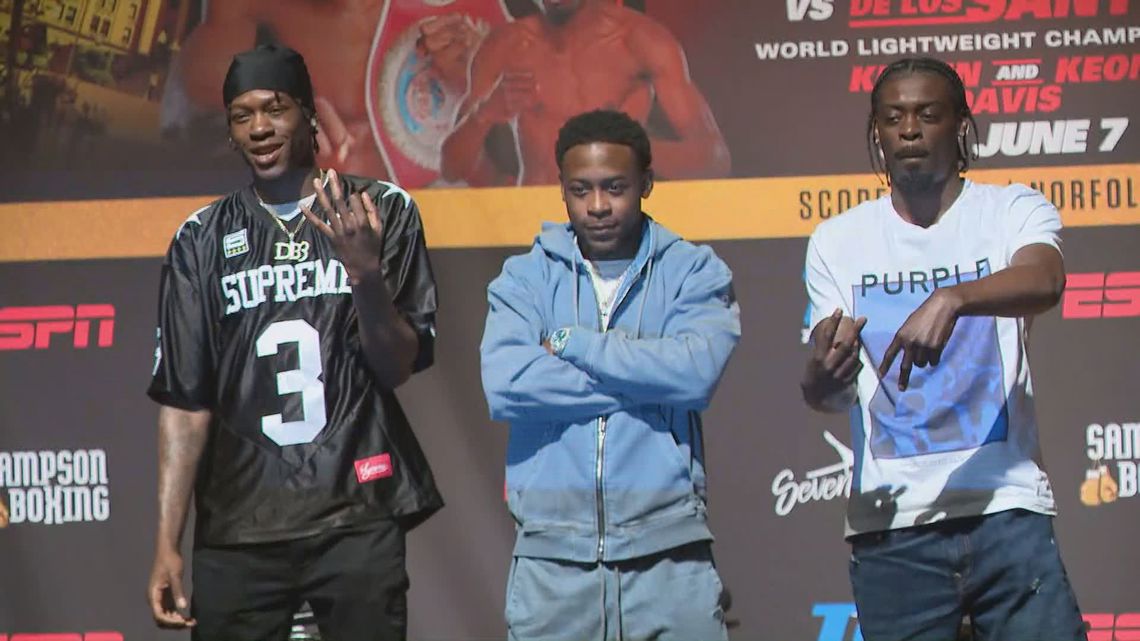
DB3 Boxing hosts a free community holiday event on Monday, Dec. 22, in Norfolk with gifts, games, youth activities, and family-friendly fun.
NORFOLK, Va. — DB3 Boxing, a nonprofit organization focused on youth development through athletics and mentorship, will host a free community holiday celebration on Monday, Dec. 22, at Lambert’s Point Community Center in Norfolk.
The event, titled DB3 Boxing Community Day: Home for the Holidays, is scheduled from noon to 6 p.m. and is open to the public. Organizers say the gathering is designed to bring families together while offering recreational activities and seasonal support at no cost to attendees.
DB3 Boxing was founded by the Davis family and emphasizes discipline, education, and positive engagement for young people through sports. According to the organization, the Community Day will feature gift giveaways, free haircuts and hairstyling, nail services, youth dance performances, basketball games, and family-friendly attractions such as a bounce house.
The event will take place at Lambert’s Point Community Center, located at 1251 West 42nd Street.
The three brothers, professional boxers Keyshawn Davis, Kelvin Davis, and Keon Davis who are from Norfolk, have represented the city at the national and international level and remain involved in community-based initiatives through DB3 Boxing.
In addition to the on-site activities, organizers said attendees will have an opportunity to learn about DB3 Boxing programs and a chance to connect with the organization during Super Bowl week events in San Jose, California.
Admission is free, but registration is available through Eventbrite for those seeking additional information or to reserve tickets. Organizers note that the event is intended as a community-wide holiday gathering and does not require prior involvement with DB3 Boxing to attend.

Stream Texas A&M vs. Kentucky 2025 NCAA women’s volleyball national championship for free today
Kentucky volleyball score, Texas A&M-UK NCAA Championship game today

Grimsley’s Faizon Brandon cemented his legacy in the best way possible: on the field

Street Fighters Club hosts winter health event

Texas A&M volleyball vs Kentucky game score: Live updates

NCAA title live updates, score, highlights

3 kids steal and crash car into home after watching YouTube tutorials, police say

Michigan urged to hire veteran college football coach amid coaching search

Kentucky Volleyball vs. Texas A&M preview, viewing info, and a prediction

Binghamton mayor talks housing, public safety

2025 CFP Odds: Lines, Spreads for Each Quarterfinal Game

Power of basketball to connect people around the globe celebrated with World Basketball Day

How to watch NCAA women’s volleyball finals for free: Channel, time for Texas A&M vs. Kentucky
Kentucky volleyball game time, Texas A&M-UK NCAA Championship channel

How to Watch Texas A&M vs Kentucky Volleyball Championship Online Free

First Tee Winter Registration is open

Fargo girl, 13, dies after collapsing during school basketball game – Grand Forks Herald

CPG Brands Like Allegra Are Betting on F1 for the First Time

F1 Las Vegas: Verstappen win, Norris and Piastri DQ tighten 2025 title fight

Sycamores unveil 2026 track and field schedule

Two Pro Volleyball Leagues Serve Up Plans for Minnesota Teams

Utah State Announces 2025-26 Indoor Track & Field Schedule

SoundGear Named Entitlement Sponsor of Spears CARS Tour Southwest Opener

Jo Shimoda Undergoes Back Surgery

Redemption Means First Pro Stock World Championship for Dallas Glenn

Bowl Projections: ESPN predicts 12-team College Football Playoff bracket, full bowl slate after Week 14

Texas volleyball vs Kentucky game score: Live SEC tournament updates

Robert “Bobby” Lewis Hardin, 56

How this startup (and a KC sports icon) turned young players into card-carrying legends overnight

Indiana’s rapid ascent and its impact across college football





-
 Motorsports2 weeks ago
SoundGear Named Entitlement Sponsor of Spears CARS Tour Southwest Opener
-

 Motorsports2 weeks ago
Donny Schatz finds new home for 2026, inks full-time deal with CJB Motorsports – InForum
-
 Sports3 weeks ago
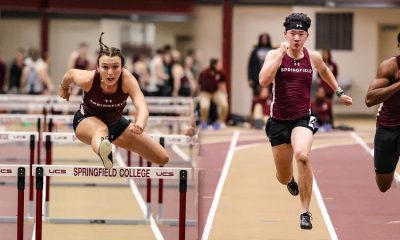
Men’s and Women’s Track and Field Release 2026 Indoor Schedule with Opener Slated for December 6 at Home
-
 Rec Sports2 weeks ago
Black Bear Revises Recording Policies After Rulebook Language Surfaces via Lever
-

 Rec Sports2 weeks ago
How Donald Trump became FIFA’s ‘soccer president’ long before World Cup draw
-
 Rec Sports2 weeks ago
David Blitzer, Harris Blitzer Sports & Entertainment
-
 Motorsports2 weeks ago
JR Motorsports Confirms Death Of NASCAR Veteran Michael Annett At Age 39
-

 Motorsports2 weeks ago
Rick Ware Racing switching to Chevrolet for 2026
-
Sports2 weeks ago
West Fargo volleyball coach Kelsey Titus resigns after four seasons – InForum
-
Sports2 weeks ago
Elliot and Thuotte Highlight Men’s Indoor Track and Field Season Opener