
Rec Sports
Boys sports declining? NBA Finals shines light on youth athletics


How do we get more boys to play sports and keep them involved?
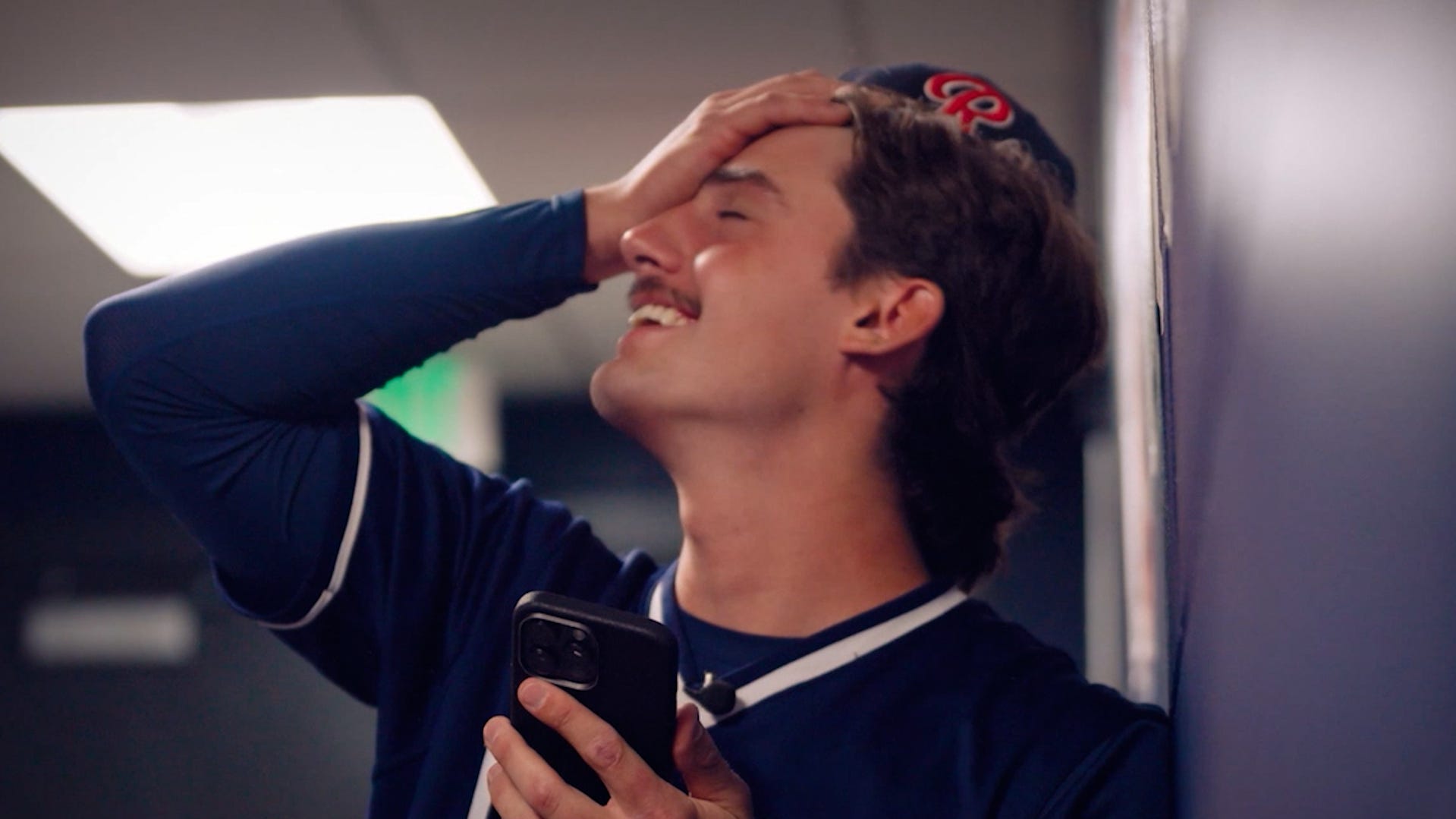

Seattle Mariners’ newest player shares promotion with family
Cole Young announces his move to the big leagues playing for Seattle Mariners during an emotional phone call with his family.
BERKELEY, CA – If you saw Antonio Davis on the court, you remember a fierce power forward and rebounder. As he played, he saw failure as something he couldn’t afford.
“If you would have taken sport away from me, where would I be today?” says Davis who helped lead the Indiana Pacers to four NBA Eastern Conference finals in the 1990s.
“That’s a scary feeling for me, and I don’t know what a 6-9 skinny kid would have been doing, but it wouldn’t have been pretty. Growing up here in Oakland, I could have done a lot of other things.”
We were at March’s Project Play Summit, asking him and two other successful men brought up in their own distinct ways through sports, about why they think the athletic participation rate among boys has crashed.
As the Pacers play the Oklahoma City Thunder in the NBA Finals, a trend you might find troubling lurks at the grass-roots levels. It underscores the thesis of Richard Reeves’ 2022 book, “Of Boys and Men: Why the Modern Male is Struggling, Why it Matters, and What to Do About it,” and a more recent brief undertaken by his institute about “The quiet decline of boys’ sports.”
According to the latest data from Sports & Fitness Industry Association, half of boys aged 6 to 17 participated regularly in sports in 2013. But only 41% did in 2023. The number has been at 41% or lower for eight straight years as the participation rate for girls (35.6% in 2023) has remained steady.
At the same time, according to Reeves’ research team, sports are the only extracurricular activity boys are more likely to do than girls.
“It’s not like on the average, boys are going to go to theater or math club – maybe they should,” Reeves tells USA TODAY Sports. “Participation in youth sports is a big issue in and of itself, but the stakes are even higher for boys than they are for girls, because they’re less likely to do other stuff and they need to move more.”
How do we get more boys to play sports, and keep the ones who are playing? We spoke with Reeves and sat in on his discussion with Davis and Larry Miller, the chairman of Nike’s Jordan Brand advisory board, to help find answers that could help you and your young athlete.
Another ‘way out’
Miller, who grew up in Philadelphia, says he was the teacher’s pet through elementary school. He was in junior high when he got distracted.
“The cool guys were doing the stuff that was in the street and I got pulled into that,” he told the crowd in Berkeley.
At 16, he killed another teenager he mistakenly believed was a rival, according to ESSENCE.com, and spent years in a juvenile correction center.
He rehabilitated himself first by taking college classes in jail, eventually matriculating at Temple University.
“Of all things, as a criminal I decided to get an accounting degree,” he said.
After revealing his dark background to a hiring manager cost him a job with Arthur Anderson, he kept the story to himself for 40 years. After Miller built his career at Nike, though, his eldest daughter, Laila, suggested it might inspire other people. They collaborated to write, “Jump: My Secret Journey from the Streets to the Boardroom.”
Michael Jordan and Phil Knight, the company’s chairman, supported his decision, and he meet with the family of the young man he shot to ask for their forgiveness. In February, Miller launched the Justice and Upward Mobility Project (JUMP) to provide opportunities to those affected by the justice system.
“Part of our goal is how can we provide more opportunity for people who have the talent but just don’t have the ability to utilize that talent?” he said.
Why not through sports?
“I think in the Black communities, brown communities, the sense of hope has kind of dissipated,” Miller says. “And I think that’s why boys in particular are saying, ‘Hey, there’s no reason for me to do this, because it’s not going to lead to anything.’
“In our community, people saw sports as a way out. And I think what happens as boys advance, (they) realize that, ‘I’m not gonna be able to play professionally, I’m not gonna to be able to get a college scholarship, so I’m just going to fall off and try to figure out a different way out. I’m gonna go do something else that can allow me to get paid.’ ”
A re-education starts, Davis suggests, with a change in perception of what it means to be a kid, and what it means to be a man.
‘Get back to the basics’: Normalize what success means for kids
Davis’ dad was killed when he was in high school. He remembers being singularly motivated to provide for his family. After he played for 13 years in the NBA and raised a son (A.J.) and daughter (Kaela) who both played high-level college basketball and professionally, he thinks more about the benefits he got from sports.
Today, youth coaches seem to link their self-worth with winning a game more than providing kids with an experience.
“All the pressure that’s being put on them by their team and their parents, I just think they’re opting to do all the other stuff that’s kind of pulling and tugging on them, whether it’s playing video games or just hanging out or doing other things,” Davis says. “I think they’re just being kind of turned off. And I feel we just have to get back to the basics of the importance of all the other life lessons that you’re going to learn from just playing sport. I’m a big advocate of just give kids space to move around and move their bodies and learn how to be in shape and to be healthy.
“And then as we go on, as I did with my kids, introduce all kinds of sport and whatever they gravitate towards, because that’ll be something that’ll be tugging at their heart and not forced into.”
Coach Steve: American kids get a D- in physical activity. What can we do about it?
Davis, who is also the CEO of the National Basketball Retired Players Association, says the No. 1 thing former players say they miss about the NBA is the camaraderie.
That’s a benefit from sports we all get.
“I’ve played almost every sport you can think of really badly, but I had a great time,” says Reeves, the British author, who played rugby at the University of Oxford. “The great thing about sport is that someone has to lose. I think one thing that should be zero-sum in sport is you have to lose. And by God, you can lose brutally sometimes. Some of my strongest memories were playing in subzero temperatures (against) these massive kids and losing like 67-0. So you lose. …
“And because I moved around from different sports, probably I would lose more. And I think that that sense of you can compete, you can lose, and that’s great, was actually an incredibly important life lesson for me because you lose in life all the time.”
Coach Steve: Have we lost the sportsmanship in high school sports?
What do we ‘call a man’? Boys need male role models
Reeves, who raised three boys who are now in their 20s, writes in “Of Boys and Men” about how girls consistently outperform boys in school, and about how men are struggling to fit into society and the workforce.
He founded the American Institute For Boys and Men (AIBM), which shares in its brief that while we don’t have definitive answers as to why boys might be playing sports less often, one hypothesis behind it is the decline in male teachers who serve as coaches, particularly at the high school level.
Meanwhile, according to AIMB research, men account for 23% of U.S. elementary and secondary school teachers, down from about 30% in 1988.
“Coaches of boys sports are mental health professionals in disguise, and part of it is because they do it shoulder to shoulder, which is a much more male friendly way of doing it,” Reeves tells USA TODAY Sports, “but the coach sitting next to the young man or the boy on the bench saying, ‘How you doing? You seem off today. How are things at home?’ … that may be one of the most important men in that boy’s life. That’s very interesting to me, coming from a different culture and raising my kids here, is the almost iconic position of coach in American culture.”
Davis was raised in Oakland by his mom. He says his grandmother told him what to avoid, and he had influential men around him who gave him sports opportunities and a safe space. Being a professional athlete, he says, doesn’t make you a role model. What does is taking accountability for yourself and what you make out of your life.
“I hate that if we play sport and we don’t make it, we feel like a failure,” Davis says. “Whether you are a young man or a growing man, we have to learn how to take this stance, that no matter what society says, no matter the outcome, I’m doing the things that I’m supposed to do: Being a contributor to my community, taking responsibility if I have kids,” Davis says. “And we have to find ways to let our kids know that it’s OK to hopefully graduate from high school, go off to college if he or she is lucky, and then go on to get a job.
“It’s not bad to just say, ‘Hey, I got a job. I’m making good money, I’m taking care of my kids, I got a ride that can get me from A to B.’ We don’t have to have the best car and the biggest house and a pocket full of money in order to be what we call a man.”
Ask your kids about what they get out of sports, and always be there to support them
Our life in sports doesn’t have to end when our career does. Reeves plays squash and tennis, “and I can still beat my kids at badminton,” he says.
Working for Jordan Brand, Miller has gotten to travel the world, where, he says, he can attend any sporting event he wants.
“I never even came close to being a professional athlete,” he says. “There are all these other incredible benefits that come from playing sports and I think we’ve gotten away from teaching that: The teamwork you learn, the working with others, the being able to be part of something that’s bigger than yourself.”
Basketball remains perhaps the most popular sports for boys and girls to play. According to the Aspen Institute’s State of Play 2024 report, more than 7 million kids between the ages of 6 and 17 played it regularly in 2023. However, the percentage of kids who play it has declined or remained the same since 2013.
“As I kind of move around and watch a lot of youth basketball, and coach youth basketball, I feel that there’s just kind of this pressure: If you’re not the best, if you’re not going to succeed, then why even try?” says Davis, 56. “And I think there’s a lot of layers to why that happens: Parents, the way that it is today with social media and I think a lot of our young men are getting turned off very early by I guess the system.”
He has a grandson who plays football.
“I ask him why is he playing,” Davis says. “Regardless of what’s going on outside of my house and all this other stuff that I can’t control, what I can control is his perception: ‘Did you learn something? I saw you get knocked on your butt. How did that feel?’ We have to fight against it by getting into the heads of your kids and the teams that you run.
“We can’t let it take away what we know to be true, which is, if our kids play sports, they’re eventually gonna be better off than not playing.”
His grandson is a 12-year-old lineman. When Davis watched him recently, though, he was allowed to play quarterback. He took the ball, went a couple of steps, and was tackled. Davis acted like he scored a touchdown.
“I’m not sure why I did it,” he said, “but I needed him to understand the fact that he did something should be celebrated: that he was out there and he was engaged and he got up and he was smiling and having fun. Like, make that the normal, not being a champion.”
Reeves said the anecdote reminded him of when he was 12, and he finally managed to break through that rugby line. As he ran to score, he saw someone tagging along with him on the sideline. It was his father.
“He was more excited than I was,” Reeves said.
Steve Borelli, aka Coach Steve, has been an editor and writer with USA TODAY since 1999. He spent 10 years coaching his two sons’ baseball and basketball teams. He and his wife, Colleen, are now sports parents for two high schoolers. His column is posted weekly. For his past columns, click here.
Got a question for Coach Steve you want answered in a column? Email him at sborelli@usatoday.com

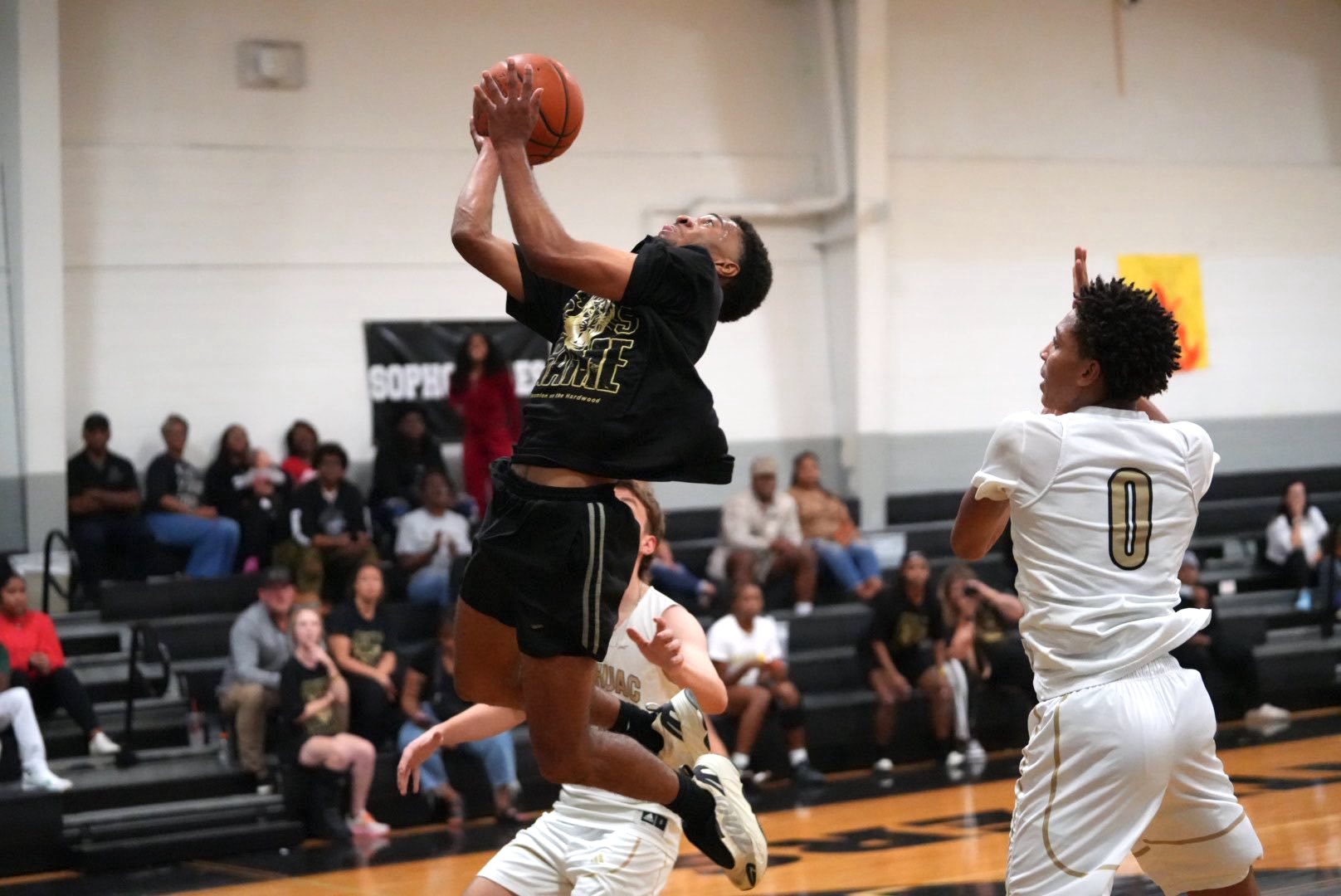
ANAHUAC— Dusting off old sneakers, Anahuac High School alums joined in a friendly game of basketball against the new generation of Panthers, taking a couple of wins while raising funds for a worthy cause.
The Anahuac High School Gym was packed on Saturday, Dec. 20, for the 2025 Anahuac Panther Alumni Basketball Game, hosted by the Anahuac Youth Sports Organization in partnership with the Anahuac Independent School District.
“We are so proud of how this event turned out,” AYSO Communications Officer Samantha Humphrey said. “There was so much joy in the Panther Den, and it was incredible to see multiple generations come together for such a special night.”
Generations of Panther basketball players and fans enjoyed a day of basketball, with nearly 300 in attendance, all gathered for some lighthearted competition that served as a fundraiser supporting local youth sports.
With graduating classes dating back to 1998, a total of 28 men and 10 women returned to the court to see if they still had their skills.
Two men’s alum teams, coached by Tristan Lewis and Deray Williams, played in the opening game, followed by the women’s alum team, coached by Samantha Humphrey and Tori Lewis.
As for the game results, the 4 p.m. game saw Williams Alumni defeat Lewis Alumni.
At 5 p.m., Women’s Alumni faced Girls Varsity, with the alum team taking the win. At 6 p.m., the Men’s Alumni took the victory over the Boys Varsity.
Fans also competed during some three-point contests throughout the evening.
Winners included Meagan Perry, Women’s Three-Point Contest; Zachary Childress, Men’s Three-Point Contest; and Cullen Cotton, Open Three-Point Contest.
Perry received a prize of $110, Childress earned $170, and Cotton was awarded $250.
The evening was full of energy and Panther pride as alumni, current students, families and friends came together to support a sport they hold dear.
AYSO wishes to share a special thanks to AISD, the alum players, coaches, volunteers, referees and the community for making the evening a great success.
For more information about upcoming events or to find out how to get involved with AYSO, contact AYSO, follow the organization on social media, or join the group on Facebook at Facebook.com/groups/AnahuacYouthSportsOrg.

By Canton Citizen
Check out this week’s issue of the Citizen for the latest in Canton news, sports, events, and more. Highlights from the January 8 edition include:
 * The Citizen’s annual Year in Review, featuring a look back at the top news and sports stories of 2025
* Notable deaths and retirements from the past year
* Highlights from the January 6 Select Board meeting
* Meet Canton’s new police chief (click here for excerpt)
* Canton High seniors organize bike giveaway
* Ponky Rink public skating photos
* Good News: “The Nose Knows” by Jane Eagles
* Beantown Buckaroos to perform at Open Book Coffeehouse
* Details on town of Canton’s Annual Census and more News Notes by Mike Berger
* Athlete of the Week and more winter sports coverage
Also, don’t forget to check out our many weekly features, including:
* Police & Fire News Notes
* Senior Corner and letters to the editor
* Cable Guide, Citizen Around Town, and much more
* House of the Week and more local real estate resources
Not a subscriber? Click here to order your subscription today, or check out our new digital edition, the e-Citizen.
Short URL: https://www.thecantoncitizen.com/?p=133147

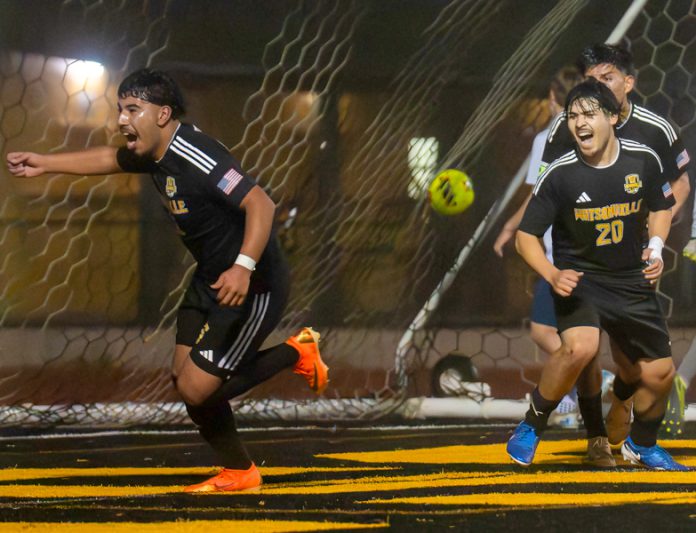
Watsonville junior Justin Alfaro recorded a hat trick to help lift the boys’ soccer team to a 4-1 victory over Salinas in the teams’ Pacific Coast Athletic League Mission Division opener Jan. 6.
Alfaro finished with a game-best three goals, while teammate junior Jesus Contreras-Barboza notched one goal for the Wildcatz, who are currently riding a three game win streak.
Damien Mora, Anthony Guido, Diego Guillen and Contreras-Baroboza each had one assist, while goalkeeper Adrian Fernandez tallied six saves in front of the net.
Watsonville (6-1-1, 1-0-0) plays at Seaside (2-6) in league play on Jan. 12 at 5:45pm.
At Monte Vista Christian 2, Pacific Collegiate 0: Enzo Owens and Ryan Noyes each notched one goal in the Mustangs’ shutout victory over the Pumas in PCAL Cypress Division action Tuesday afternoon.
Teammate Patrick Tracey finished with a pair of assists, while Sai Patel and Owens each had one assist for MVC (5-3-1, 1-0), which hosts Rancho San Juan in league play on Jan. 12 at 5:45pm.
Girls’ soccer
St. Ignatius 4, Aptos 3: Isabella Hartnett, Emilie Santigao and Aubrie Ford each notched one goal in the Mariners’ narrow loss to the Wildcats at the SoCal High School Classic in Oceanside on Dec. 31.
Teammate Maddie Redding and Hartnett each recorded one assist, while goalkeeper Tayanna Bonilla came up big with a pair of key saves to keep the Mariners within reach.
Aptos (4-4-1) will begin Santa Cruz Coast Athletic League play at Santa Cruz on Jan. 13 at 7pm.
At Pacific Collegiate 3, MVC 2: Ashley Drago and Tea Knowles-Osmeni each had one goal in the Mustangs’ loss to the Pumas in PCAL Mission Division play Tuesday.
Goalkeepers Charlotte Groves and Cloe Morrow had two and one saves, respectively, for MVC (3-4-2, 0-1-0), which plays at Watsonville in league play on Jan. 12 at 6:45pm.
Alvarez 2, at Pajaro Valley 1: Scarlet Gomez recorded the lone goal for the Grizzlies in Tuesday afternoon’s loss to the Eagles in PCAL Gabilan Division action.
Teammate goalkeeper Aniah Federico tallied six saves for Pajar Valley (2-3-1, 0-1-0), which plays hosts Soledad in league play on Jan. 14 at 3:30pm.
Boys’ basketball
At Watsonville 60, Aptos 36: Gabe Castillo had a team-best seven points in the Mariners’ loss to the Wildcatz in non-league play Jan. 2. Teammate Madoxx Diaz added six points, one rebound and one assist.
Levi Race, Diego Mejia and Sam Penera each contributed five points for Aptos (4-10), which begins SCCAL play at Santa Cruz on Jan. 9 at 7:30pm.
At MVC 60, King City 49: Matteo Vidal finished with a team-best 18 points in the Mustangs’ win over King City in PCAL Cypress Division play on Tuesday evening.
Vidal added eight rebounds and four assists, while teammate Jeremy Silver added 17 points, three rebounds and four assists. Go Kamishita contributed 10 points and six assists for MVC (7-3, 1-0), which plays at Harbor in non-league play on Jan. 10 at 2pm.
Alvarez 68, at St. Francis 62: Robert Gomez Jr. finished with a team-best 24 points in the Sharks’ loss to the Eagles in PCAL Mission Division play Tuesday evening.
Teammate Jacob Jimenez tallied 20 points, while Isiah Villalobos contributed 11 points for St. Francis (5-7, 0-1), which plays at Marina on Jan. 12 at 7pm.
At Watsonville 64, Salinas 53: Senior Max Aceves recorded a team-best 20 points in the ‘Catz’s victory over the Cowboys in PCAL Gabilan Division action Monday evening.
Teammate senior Yahir Cisneros contributed 15 points for Watsonville (5-6, 1-1), which hosts Carmel on Jan. 9 at 7pm.
Girls’ basketball
At Salinas 55, Watsonville 33: Stephanie Martinez finished with eight points five assists and three steals in the ‘Catz’s loss to the Cowboys in PCAL Gabilan Division play on Tuesday evening.
Teammate Leilani Yasin had seven points, four rebounds and six steals for Watsonville (5-6, 0-1), which plays at Hollister on Jan. 12 at 7pm.
Editor’s note: Coaches and athletic directors are encouraged to submit results and highlights to jr****@*****ys.com. Follow sports editor Juan Reyes (@jmreyes831) on X/Twitter for scores and news updates.

• The Hull High Boys Varsity Basketball team also split its last two matchups, losing a close game, 48-47, to Academy of the Pacific Rim Charter School in Boston on Friday, January 2, and defeating Falmouth Academy at home, 60-20, on Monday. Up next for the 3-2 team are a rematch with Academy of the Pacific Rim at home on Thursday, January 8 at 6:30 p.m. and a road game against Upper Cape Cod Regional Vocational Technical High School on Friday, January 9 at 6:30 p.m. The JV squad defeated the Academy of the Pacific Rim team, 54-35, on January 2 and will play the Dragons again on Thursday at 5 p.m. before the varsity game.
• The Girls Varsity Basketball team is 0-6 on the season after losses to Ursuline Academy in the Scituate Holiday Tournament, 40-19, on December 31, and a 44-37 loss on the road to New Heights Charter School in Brockton on Monday. Next up for the Pirates are a road game against Boston Latin Academy on Friday, January 9 at 6 p.m. and then home matchups against Excel Academy Charter School on Monday, January 12 at 6:30 p.m. and Abington High School on Wednesday, January 14 at 5:30 p.m.
• The Hingham-Hull Cooperative Gymnastics squad’s next competition will be held on Saturday, January 10 at 6 p.m. against Scituate High School at the South Shore YMCA Gymnastics Training Center.
• The next meet for the Boys and Girls Indoor Track teams will be against Mashpee on Monday, January 26 at 4 p.m. at the Reggie Lewis Center in Boston.
• For the full schedule for each Hull High team, visit www.arbiterlive.com/Teams?entityId=10611.
• Hull Pirates In-Town Youth Basketball begins this weekend. Programs include a skills and drills co-ed session for grades 1 and 2 from 8-9 a.m., a co-ed program for grades 3 and 4 from 9-10 a.m., as well as an open gym program (also co-ed) for grades 5-8 from 10-11:30 a.m., all at the Jacobs School gym. Some travel teams are on the road this weekend, but there are home games as well:
Saturday, January 10 at the Jacobs School: Girls Grade 6 vs. Hingham at 2 p.m.; Girls Grade 7 vs. Marshfield at 3 p.m.; Girls Grade 8 vs. Cohasset at 4 p.m.
Sunday, January 11 at the Jacobs School: Girls Grade 7 vs. Halifax at 12 p.m.
Sunday, January 11 at the Hull High: Boys Grade 8 vs. Hanover at 1 p.m.; Boys Grade 4 vs. Scituate at 2:15 p.m.; Boys Grade 3 vs. Norwell at 3:30 p.m.
For more information, visit http://hullbasketball.leagueapps.com/camps.
• A combined Girls 3/4 travel basketball team competes at the fourth-grade level and has a record of 1-3. Next games are against Kingston on Saturday, January 10 at 6 p.m. and against Sandwich on Sunday, January 11 at 2 p.m. All games are played at Indian Head Elementary School in Hanson, so fans have to travel to take in a game. The full schedule of game times and weekly opponents is at this link: www.oldcolonybasketball.org/team/hull/4/1.
• Registration is open for Hull Youth Lacrosse – two travel teams and the in-town programs – through January 22. For more information, visit www.hulllax.com or email hullyouthlax@gmail.com if you have any questions.
• Coaches, league organizers, and superfans – We need your help to report the scores and results of the latest events in Hull’s sports world! Please send local sports news and photos to sports@hulltimes.com. Deadline is Wednesday at noon. When providing details of the games or races, please be sure to include the sport/team, the players’ full names, and the final scores. When sending photos, names of those pictured are greatly appreciated, as well as who should get credit for taking the photo.
Thank you for your help!
Rec Sports
Century standout travels through Europe with Northern Lights Volleyball club team – Post Bulletin

The Northern Lights Volleyball 16-1 club team spent the holidays traveling through Europe and competing in two tournaments abroad Dec. 25-Jan. 5.
The team won the 18U Youth Alpen Tournament in Innsbruck, Austria and took third place in the 19U SV Dynamo International Youth Tournament in Apeldoorn, Netherlands.
The 16-1 team out of Burnsville, Minn., is made up of players from high schools around the state, including Rochester Century’s sophomore Laney Stellmaker. Other players on the roster attend Eagan, Prior Lake, St. Paul Academy, Lakeville North, East Ridge, Thomas Jefferson (Bloomington), Waconia and Chanhassen.
According to its website, the SV Dynamo tournament “guarantees three days of top-level volleyball with the best youth teams from the Netherlands and beyond. For many clubs, the youth tournament has been the ideal preparation for the Open Club (national championships for club teams). Foreign top youth teams see the tournament as a unique opportunity to measure their strength against European opponents.”
The NLV 16-2 team also traveled and competed in the tournaments, finishing third in Apeldoorn and sixth in Innsbruck.
Players from both teams documented their travels with
journals and videos.
Stellmaker, an All-Big Nine selection, recorded 493 set assists, 200 kills, 313 digs, 61 ace serves and 20 blocks during her sophomore campaign with the Panthers. She also reached 1,000 career set assists during the 2025 season.
Our newsroom occasionally reports stories under a byline of “staff.” Often, the “staff” byline is used when rewriting basic news briefs that originate from official sources, such as a city press release about a road closure, and which require little or no reporting. At times, this byline is used when a news story includes numerous authors or when the story is formed by aggregating previously reported news from various sources. If outside sources are used, it is noted within the story.
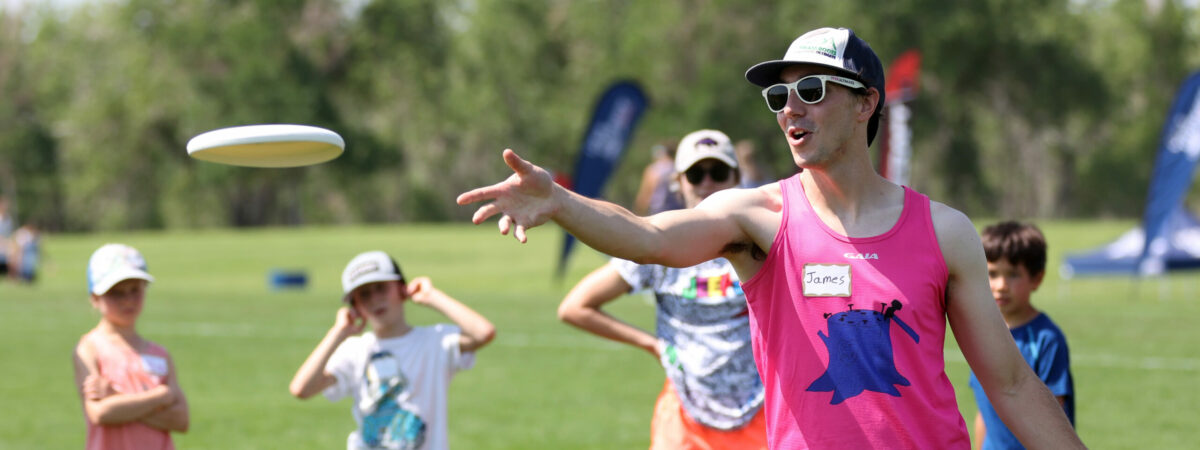
Colorado Springs, Colo. (January 8, 2026) – USA Ultimate has recently made available a new, free resource for adults teaching young, beginning ultimate players. This new program, titled Community Coach, offers a learning experience targeted to individuals who have an interest in coaching but limited experience with the sport of ultimate.
The effort — led by USA Ultimate’s Youth and Education Program Manager Sam Callan — was developed in collaboration with Youth Programs Director Dan Raabe and Grant Boyd of USA Ultimate Affiliate, California Ultimate, with input from others in the ultimate coaching community.
The program went live with a soft launch near the end of last year and is currently available through the USA Ultimate’s Mobile Coach website and app.
The course is aimed at those looking to start middle school programs and includes:
- An introduction to coaching, including advice from elite ultimate coach Matty Tsang.
- A module covering the basics of the game and how to facilitate a learning environment with videos covering how to teach skills, including throwing and catching.
- Videos featuring longtime ultimate coach Libby Cravens explaining how to teach offensive and defensive plays.
- Four introductory practice plans with equipment lists and advice for how to change things up to fit different groups and spaces.
- A kid-friendly rules introduction and additional resources.
“We are excited to introduce this new coaching program for adults who are newcomers to ultimate,” shared Callan. “Making ultimate accessible is an ongoing goal of USAU and getting parents and teachers involved is a great way to extend the availability of ultimate programming to youth who are exploring new sports.”

No. 11 CSUN Defeats Maryville in Season-Opening Four-Set Win

Washington QB Demond Williams Jr. Reverses Course, Returns to Huskies

Demond Williams Will Return to Washington Despite Contract Dispute

Transfer portal drama is overshadowing the actual College Football Playoff

Samuel, Kosgei Named to Bowerman Preseason Watch List – New Mexico Lobos

Air Force Track & Field Announces 2026 Coaching Staff

Miami vs. Ole Miss score, live updates: Trinidad Chambliss puts Rebels ahead with TD pass

Former Maryland AD Dick Dull Passes Away

#SVLeague 🇯🇵: ONE TO WATCH FOR WOLFDOGS 🐺 In his first season with Wolfdogs Nagoya 🐺, Aymen Bouguerra 🇹🇳 adds flexibility to the Wolfdogs’ system, with impact at the net and from the back row 💥. One to keep an eye on as they face Tokyo Greatbears 🐻 this weekend. 🗓️ Jan 10 & 11 📺 LIVE on VBTV: https://bit.ly/3Bjc3Ui 🏐 #Volleyball

Four Big 12 Track and Field Athletes Named to The Bowerman Preseason Watch List

Troy Aikman convinced Joe Buck not to fund Indiana football

Six Gators Featured on MLV Rosters for the 2026 Season

Men’s Volleyball Opens 2026 Season Against Spartans

Demond Williams announces he’ll return to Washington for junior season

No. 3 Beach Begin 2026 Campaign with Home Matches Against Lindenwood, No. 15 McKendree

SoundGear Named Entitlement Sponsor of Spears CARS Tour Southwest Opener

DeSantis Talks College Football, Calls for Reforms to NIL and Transfer Portal · The Floridian

#11 Volleyball Practices, Then Meets Media Prior to #2 Kentucky Match

Stempien to seek opening for Branch County Circuit Court Judge | WTVB | 1590 AM · 95.5 FM

Ross Brawn to receive Autosport Gold Medal Award at 2026 Autosport Awards, Honouring a Lifetime Shaping Modern F1

Nascar legal saga ends as 23XI, Front Row secure settlement

Maine wraps up Fall Semester with a win in Black Bear Invitational

Princeton Area Community Foundation awards more than $1.3 million to 40 local nonprofits ⋆ Princeton, NJ local news %

Sunoco to sponsor No. 8 Ganassi Honda IndyCar in multi-year deal

Downtown Athletic Club of Hawaiʻi gives $300K to Boost the ’Bows NIL fund

WNBA’s Caitlin Clark, Angel Reese and Paige Bueckers in NC, making debut for national team at USA camp at Duke
NASCAR, 23XI Racing, Front Row Motorsports announce settlement of US monopoly suit | MLex

Woods, Ogunribido Named CCIW Women’s Indoor Track & Field Student-Athletes of the Week

Hope College Tops MIAA Commissioner’s Cup Fall Update

Nike Signs 10 LSU Athletes to NIL deals





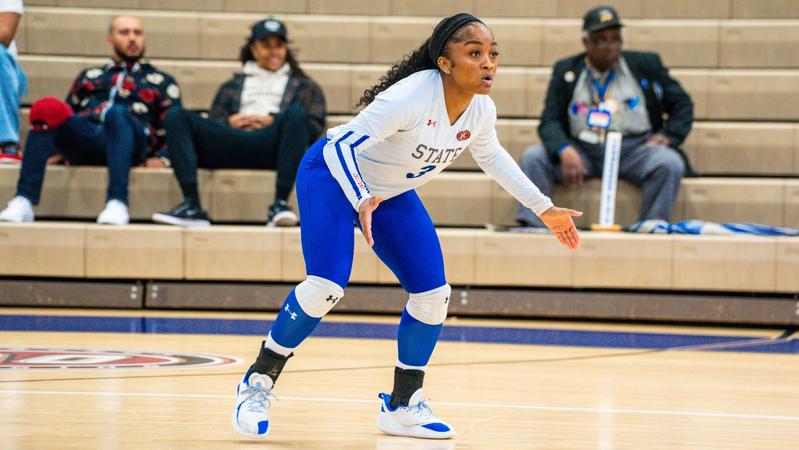
-

 Rec Sports6 days ago
Five Youth Sports Trends We’re Watching in 2026
-

 Sports2 weeks ago
Badgers news: Wisconsin lands 2nd commitment from transfer portal
-

 Sports3 weeks ago
Is women’s volleyball the SEC’s next big sport? How Kentucky, Texas A&M broke through
-
 Sports2 weeks ago
Kentucky VB adds an All-American honorable mention, loses Brooke Bultema to portal
-

 Rec Sports3 weeks ago
NBA, Global Basketball Community Unite for World Basketball Day Celebration
-
 NIL3 weeks ago
$2.1 million transfer portal QB predicted to join College Football Playoff team
-

 Motorsports2 weeks ago
BangShift.com IHRA Acquires Historic Memphis Motorsports Park In Millington Tennessee. Big Race Weekend’s Planned For 2026!
-

 Motorsports3 weeks ago
NASCAR, IndyCar, and F1 Share These Race Days in 2026
-
 NIL3 weeks ago
I’m deeply disturbed by what just happened with BYU’s football coach
-

 Sports2 weeks ago
Texas A&M volleyball’s sweep of Kentucky attracts record viewership