
Rec Sports
Bring the Winter Olympics to NYC and Lake Placid | News, Sports, Jobs


New York has always been a place where the world comes together to create, to compete and to dream. New York City is the global capital of culture and possibility. Five hours north, in the heart of the Adirondacks, lies Lake Placid, surrounded by peaks alive with Olympic history. One is vast and vertical; the other intimate and alpine. Together, they form an inspirational partnership: urban and rural, electric and serene, capable of showcasing the Olympic spirit to the world.
A New York City-Lake Placid Winter Olympic Games would welcome the world, showcasing our shared history and iconic venues. No city embodies diversity like New York. Home to communities from nearly every nation on the planet, every neighborhood is a world unto itself. Lake Placid, is the heart of America’s winter sports legacy — a village that welcomed the world in 1932 and again in 1980, and still nurtures the Olympic spirit. From hosting World Cup competitions to training athletes from 23 countries — ranging from traditional winter sports powerhouses to emerging programs in Ghana and Vietnam — the Adirondacks remain a place where athletes chase their dreams. Together, NYC and Lake Placid prove that communities thrive when they welcome the world as neighbors.
The future of the Olympic movement depends on sustainability. Past Games have been plagued by ballooning budgets, underused facilities and disruptions to local communities. New York already possesses the necessary world-class sports infrastructure and a proven record of hosting international events. By thoughtfully dividing events between NYC and Lake Placid, we can minimize disruption, maximize efficiency and set a new standard for responsible Olympic planning. With the nation’s largest media market, ideal time zone and established venues, an NYC-Lake Placid Games would deliver record attendance, viewership and revenue. But the legacy would not end with the Closing Ceremony. Investments in public transit, housing, accessibility and youth sport would serve generations to come. A legacy fund could expand access to skating, skiing and adaptive winter sport programs across the state, ensuring that every child, regardless of zip code or background, can experience the exhilaration of movement and the joy of belonging.
Imagine an Opening Ceremony that transforms Times Square into a winter celebration — where Broadway performers and world-class athletes gather at the Crossroads of the World. Amid falling ticker-tape snow and shimmering marquee lights, the Olympic flame ignites against the backdrop of the skyline. Streets and subways will be lined with flags and fans from every nation in the world as they converge on Madison Square Garden for ice hockey, the Barclays Center for figure skating and short-track speed skating and Yankee Stadium for the big air competition. In Lake Placid, legacy Olympic facilities will host alpine and sliding events. From skiing at Whiteface Mountain, which boasts the largest continuous vertical drop in the East, to bobsled at Mount Van Hoevenberg’s historic sliding center, to cross-county skiing through the forests of the Adirondacks, the crowds will be ready to witness new miracles. The true power of this vision lies not in spectacle, but in connection — between city and village. An NYC-Lake Placid Winter Olympic Games will invite every community, every school and every neighborhood to take part. Whether volunteering, hosting, teaching or simply cheering, millions could share in.
The upcoming Milan-Cortina Winter Olympic Games demonstrates how two regions, urban and alpine, modern and traditional, can unite to host a sustainable, multi-centered Games. New York City-Lake Placid can perfect that model. But time is of the essence. The International Olympic Committee now awards the Games more than a decade in advance. New York must begin engaging communities, building partnerships, and defining a shared vision that reflects the soul of our state and the ideals of the Olympics. New Yorkers from every background must create an exploratory committee to consider a joint NYC-Lake Placid Olympic Winter Games. This isn’t a commitment to host the Games, but a chance to decide together whether the dream is right.
If we embrace this dream, residents, athletes, businesses, educators and artists can unite to build a celebration that honors our history, inspires the world and bonds generations of New Yorkers to come. Our state motto, Excelsior, meaning “ever upward,” mirrors the Olympic motto, Citius, Altius, Fortius — Communiter: faster, higher, stronger, together. From the bright lights of NYC to the snowy peaks of Lake Placid, we will always rise ever upward. But by hosting the Winter Olympic Games, we can do it faster, higher, stronger and most importantly, together.
——
Carroll represents part of Brooklyn in the state Assembly. Jones previously represented Lake Placid in the Assembly from 2017 to 2025.

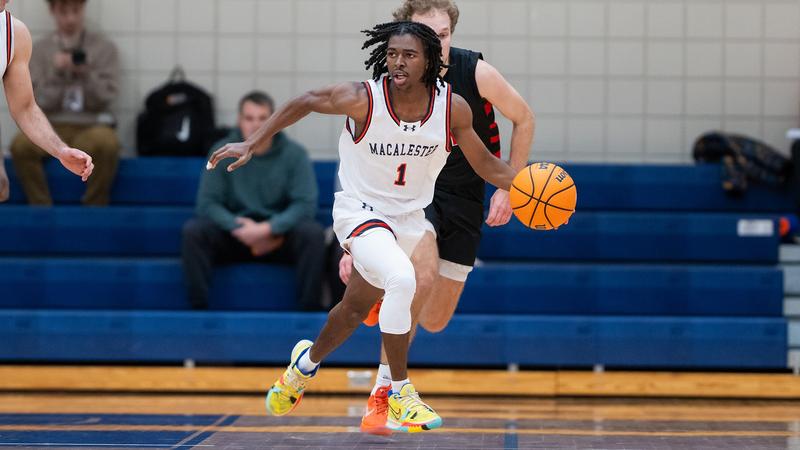
NORTHFIELD, Minn. – The Macalester College men’s basketball team held a narrow second-half lead but could not hold off Carleton College in an 86-78 defeat Wednesday evening at West Gym. The Scots are now 5-6 overall and 0-3 in the conference, while the Knights improve to 5-2, 3-0 MIAC. First year guard Jamal Randle (St. Paul, Minn./Great River School) came off the bench to provide a team-best 21 points in 19 minutes.
Carleton took control early by scoring the first 13 points over the first 3:50 before senior forward Noah Shannon (Northfield, Ill./New Trier) scored for Macalester. After a three from Sam Koelling pushed the lead to 16-2, a pair of three-pointers by Randle and baskets from Shannon and senior forward Ryan Brush (Bellevue, Wash./Bellevue) brought the Scots to within four, 16-12.
Another three from Randle followed two Knights’ free throws to make it a three-point game, 18-15 with 11:25 left in the half. Carleton increased its lead to as many as nine and led, 35-27 when a three from first year guard Noah Hamburge (Minneapolis, Minn./Minnehaha Academy) sparked a 15-4 run to close the half and give the Scots a 42-39 halftime lead. Randle, who hit three more threes in the run, finished the half with 18 points on 6-of-8 shooting from three-point range.
As they did at the beginning of the game, the Knights started the second half on fire with eight straight points to regain the lead, 47-42 three minutes into the half. Junior guard Kyle Jilla (Dallas, Texas/Plano West) tallied Macalester’s first points of the half, then answered a Carleton three with one of his own to make the score 50-47 Knights. Randle made a free throw to bring the Scots to within two, only to have Carleton stretch the lead to 51-57 with 12:43 remaining. Brush drained a pair of threes sandwiched around a Tobias Averill three to cut the deficit to three, 60-57. After George Norsman scored for the Knights, sophomore guard Joaquin Aguillon (San Rafael, Calif./The Branson School) hit another three for the Scots to make it a two-point game, 62-60 midway through the half.
Following two Carleton free throws, first year guard Lucas Myer (San Diego, Calif./The Bishop’s School) made a three and stole the ball that led to a layup by Shannon for a 65-64 advantage with nine minutes to play. Later in the half, a basket by Myer put the Scots up 68-66 at the 7:26 mark. The Knights regained the lead by scoring the next seven points, then first year guard Owen Walther (St. Louis, Mo./John Burroughs School) hit a three-pointer to make it a two-point game, 73-71 with 4:07 left. From that point, a 10-2 Carleton run gave the Knights an 83-73 edge, and Macalester never came closer than seven points the rest of the way.
Carleton outscored the Scots 44-22 in the paint and had a 38-28 rebounding advantage. Randle finished with a career-high 21 points on 6-of-9 shooting from deep to go with four steals in 19 minutes off the bench to help the Macalester bench take a 43-7 advantage in bench points. Shannon finished with 15 points, seven rebounds, five assists and two steals, while Walther had nine points in 20 minutes off the bench. Jilla matched Shannon with seven rebounds and added six points. Koelling tallied 21 points and 10 boards to pace Carleton.
Macalester returns to action after the new year, with a non-conference game at home against UW-Superior. The game starts at 4:00 p.m. in the Leonard Center.
box score
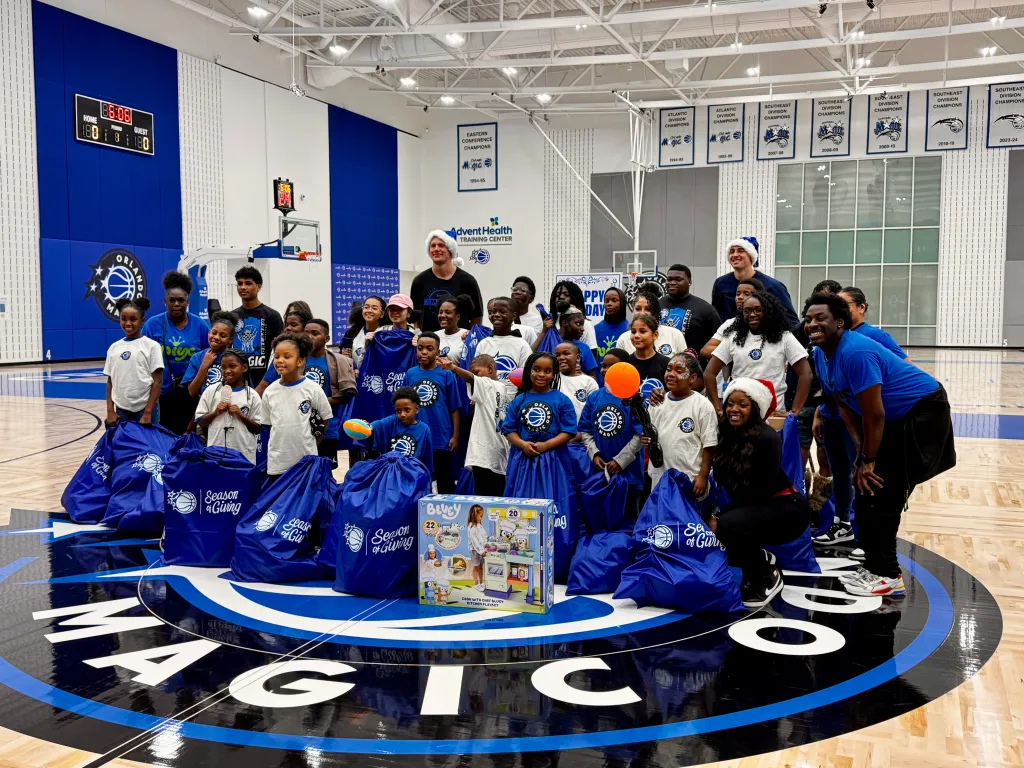
A left high ankle sprain and the continued rehab from a torn left ACL didn’t stop brothers Franz and Moe Wagner, respectively, from treating local youth to a holiday surprise Wednesday night inside the AdventHealth Training Center.
The Magic teammates granted holiday wishes for 30 local kids from the New Image Youth Center in Parramore when they spent time coloring, playing games and eating a meal together with Christmas music buzzing in the background.
Then came the big surprise.
As the youth made their way onto Orlando‘s practice court, it was hard not to spot a smile on their faces as they saw groups of gifts wrapped and tagged for each kid.
Some got new Hot Wheels cars, others pink plushy stuffed animals. Whether it was a shiny new bike or a “Chef Bluey” kitchen playset, none of the kids could believe their eyes.
“It’s really, really cool,” Franz Wagner said about having an opportunity to host such an event for the second year in a row. “Growing up, Christmas was our favorite holiday. So, it’s cool to provide these moments for these kids that are here, and just give back to the Orlando community.”
Added Moe Wagner: “It’s a huge part of what we considered childhood, our memories. We did it last year and it was so much fun to see the joy in their eyes. That’s fun for us to share that with them and it makes our Christmas cool, too.”
Franz Wagner received an early gift himself when an MRI on Monday confirmed he only suffered a left high ankle sprain during the first quarter of Sunday’s game at New York.
Although he’s expected to miss multiple weeks, it’s far from the initial concern the team had when Wagner landed awkwardly on his left leg, grabbed near his knee in immediate pain and needed help to the locker room.
Wagner, who had his left ankle in a boot and used crutches to walk around, described the outcome as “just a little bump in the road in the grand scheme of things.”
“Kind of mixed feelings,” Franz Wagner said about the moment he learned he avoided a major injury. “Super relieved, but at the same time, bummed that I’m going to be out for a couple weeks.
“Definitely caught a break there a little bit and I’m blessed that it’s just a high ankle sprain,” he added.

Jason Beede/Orlando Sentinel
Magic forward Franz Wagner, in a boot and crutches because of a left high ankle sprain, talks with a young girl from the New Image Youth Center in Parramore as she opens up presents during a special holiday event at the AdventHealth Training Center on Wednesday night. (Jason Beede/Orlando Sentinel)
While Franz Wagner expects to be back within a month’s time, his older brother is approaching the one-year anniversary of tearing the ACL in his left knee. Moe Wagner last played Dec. 21, 2024, against the Miami Heat and he continues to rehab.
“I’m doing really good,” Moe said about his recovery. “I’m feeling really good about where I’m at, finding the joy again of playing basketball and enjoying the process a little more.”
There was plenty of joy to go around Wednesday night in Orlando when the brothers tag-teamed for the holiday event.
“It feels so real,” Moe said about collaborating with his brother. “Because obviously we grew up together, sharing all of these moments together, and now it’s a family holiday. Our family is here. So being able to give back as a family to other families is really cool and authentic. It makes it so much more enjoyable.”
Added Franz Wagner: “It means a lot, especially for a holiday like this. We connect this holiday with spending time with family and loved ones, so it’s really cool now to be in this position together and share this moment with the kids.”
Jason Beede can be reached at jbeede@orlandosentinel.com

Jason Beede/Orlando Sentinel
Magic center Moe Wagner helps a child from the New Image Youth Center in Parramore open presents during a special holiday event Wednesday night at the AdventHealth Training Center. (Jason Beede/Orlando Sentinel)
Rec Sports
The Mentoring Partnership of SWPA turns 30! This story might just inspire you and your children to get involved.
What if every young person in the Pittsburgh region was lifted up by strong relationships with caring adults? Three decades ago, that’s the vision that gave rise to The Mentoring Partnership of Southwestern PA.
The Mentoring Partnership (TMP) helps make this vision a reality through their work with formal mentoring programs, community organizations, schools, youth sports leagues and more. Their goal? To create relationship-rich environments for young people.
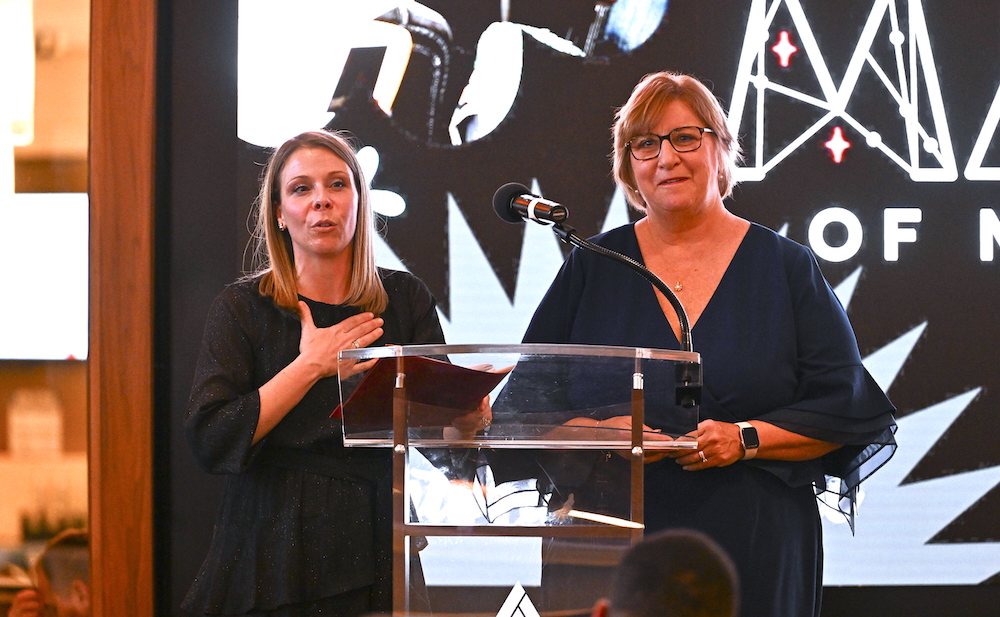
Recently, Kidsburgh sat down with two people at the heart of TMP — long-time executive director Colleen Fedor, who is retiring this month, and Kristan Allen, who has served as associate executive director for many years and will take over as executive director in the new year.
If you’ve ever wondered about helping out as a mentor or about adding mentorship to your child’s life, this conversation is for you:
Kidsburgh: Draw us a picture of what was happening in 1995 when TMP was created.
Colleen Fedor: “In 1995, the U.S. Attorney in Pittsburgh was Fred Thieman, who was concerned about crime prevention, as compared to remediating or dealing with things after crime. So he convened the Youth Crime Prevention Council with a group of community leaders who cared about the challenges that young people face and they asked: How might we address the needs of children before crime happens? That was the beginning of The Mentoring Partnership. Through discussion, they identified three areas for focus: After-school programming, youth employment and mentoring. MENTOR: The National Mentoring Partnership was celebrating its fifth year, and they were forming affiliates around the country. Thankfully, the Heinz Endowments and Grable Foundation staffers saw this as an opportunity to really help. There was already a loosely convening group of mentoring programs and they were asked if capacity-building support would be valuable to their program(s). They voted 100% that yes, The Mentoring Partnership would be helpful to us.”
Kidsburgh: As the organization and its work in Pittsburgh has grown over these 30 years, how have you seen mentoring change kids’ lives?
Colleen Fedor: “There are so many examples. They range from kids who learn to golf and now are enjoying life with a sport and a mentor they never would have otherwise met to young people in their first jobs through Summer Learn and Earn and to Reading Buddies in local elementary schools. At this year’s Magic of Mentoring, Dr. Armani Davis shared his experience as a mentee while he was a student in the Steel Valley School District. Armani talked about how many members of the community surrounded him — including one who provided him with a job and a place to stay. From there, he met Greg Spencer who got to know him and has served as a mentor ever since. Armani is an incredible young man with a doctorate degree and a wonderful career at Johnson & Johnson. He expressed his gratitude for the people who saw the potential in him, who stood beside him and opened the doors that helped him as he navigated college and adulthood. And there are so many examples like that, kids who didn’t know careers existed, and yet they found their spark, and that became the opportunity to help them look further. There are examples of other kids, who may have been on the wrong path, but thanks to local violence prevention diversion programs were matched with a mentor who is there with a listening ear, an offer of support and more — helping them see that making better choices is a much better idea. So there are endless examples, big and small. It’s a powerful thing when someone cares about you — someone who isn’t paid and isn’t family, but who has the open-mindedness to listen to a young person and help them.”
Kristan Allen: “As a young person, or even as an adult, how amazing is it when someone sees you and wants to support you, just because they know you’ll do great things and the world will be a better place for it? Sometimes our work can be very challenging, in that we’re playing the long game. It’s not ‘Hey, this kid had a mentor for a few months and things might have gone one way for them, but now everything is good.’ Mentors tell us, ‘I don’t think I’m doing anything special. I’m just showing up.’ But it’s that consistent presence, that intentionality that you bring to being with the young person. Mentoring isn’t just a preventative measure that keeps kids on the right track. Mentoring is for all kids. Every young person can benefit from having adults in their sphere, and also peers, who take an interest, who listen, who take the time to see them for themselves and guide and listen. and the work belongs to all of us too, right? It’s not just one person, it’s not even just one organization. This is the collective work of all of us.”

Kidsburgh: Tell us about Everyday Mentoring®, which is related to the idea that this is the collective work of all of us.
Colleen Fedor: “Everyday Mentoring® is about connection, which has a whole lot of benefits. In school, kids who feel connected show up, they work harder, they have better performance, they have fewer disruptive challenges. When there are problems at school and the adults step back to understand, often we see that the kids having problems are not connected. Many years ago, connection happened more naturally. People didn’t move as often. All the neighbors knew you and you knew all the neighbors. Your parents would know about something before you even got home. That’s different now. Parents are working very hard and even in the best of scenarios, kids get lost. So mentoring is about connection, whether that’s formal connection as a one-on-one mentor in a small group program, or it’s about everyday mentors. Maybe it’s the crossing guard who sees a kid every day, twice a day, for 10 years, and knows their name. Crossing guards are consistent. They see kids, and if they take that time, and a young person feels like ‘this person looks out for me,’ the kid knows that might be a person they can go to. It matters if you acknowledge kids. Now, not all kids will want to talk to me or to you, but maybe one kid will. And so my ability to be present, be thoughtful and be a good listener and supporter is important. Many adults express concern that they may not know how to respond to a kid for every single thing that they bring up. Kids sometimes share things we don’t expect. So The Mentoring Partnership is ready to support with trainings and resources on our website. We also know that time is your most precious commodity. But you can show up for kids in many ways other than a one-on-one mentoring program. We have more opportunities than we realize to be valuable in kids’ lives. We just need to notice. And if we do, we may discover how rewarding that can be.”
Kidsburgh: How have you seen this experience change the lives of mentors?
Colleen Fedor: “You know, I had the opportunity to be a mentor to a little third grade boy. We were in RIF’s Reading Buddies program. It was hard to get there at the time. Some days, I’m running down Centre Avenue to get to the school, so I’m not late. Each time, he was very excited to see me. I didn’t think he would be, and yet there he was, waiting and smiling as I got there. He’d pick up the books and we’d talk about ‘Captain Underpants’ or build a puzzle, or whatever. But it was just time — him and I with no phones out and no distractions. It’s that undivided attention that is mutually beneficial. He valued it, he showed up to school on those days. We see that all the time: Kids who are mentored in a school program, for the most part, are less absent on the days that their mentors are there. How about that? It’s even true with high school students. They say, ‘The mentors choose to be here. They don’t have to be here, and we want to be here when they’re here.’ It changes your life to know that it matters to these kids. And watching Greg Spencer be so proud of Armani Davis at the Magic of Mentoring event, you could see it: Mentoring didn’t just change Armani’s life. It definitely changed Greg’s life, too.”
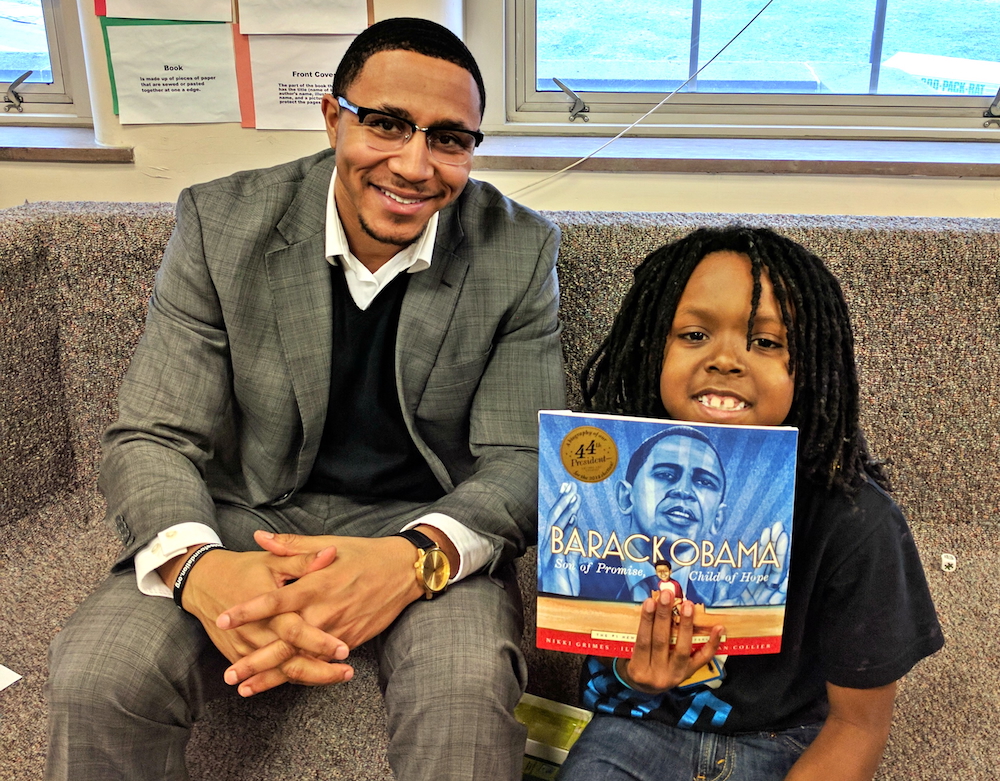
Kidsburgh: Be a Sixth-Grade Mentor, which became Be a Middle School Mentor, began in 2009. Tell us about why that was created and how it grew?
Colleen Fedor: Transitions for school districts are a challenge, no matter which grade or age. Middle school to high school is a transition challenge for many students so we see a number of schools choose to put a mentoring program in for that transition. But in this case, Pittsburgh Public said sixth grade was where they saw dramatic challenges in attendance and performance. So the district requested it and the mentoring providers in those buildings fully agreed that that was an area of need. But it was interesting: We started out calling the program Be a Sixth-Grade Mentor, but midway through that first year, we were like, ‘Well, what do we do next year?’ The mentors were saying, ‘Wait a minute, we want to stay connected.’ So we grew it to be all of middle school. We saw the desire of the mentors and mentees to remain connected. There was always that choice for adults and kids — you could bow out after your one year commitment, or you could stay committed. A greater percentage wanted to stay on than not. Many middle schools also offer peer mentoring. It’s a great thing, maximizing and utilizing the talent that you have already at your disposal, when high school kids mentor middle schoolers or your middle school kids mentor elementary. At some schools, the high school football players go down to the elementary school. Those are really valuable ways to harness the assets you have in the buildings and use them well. The importance is planning it out, training and preparing high school kids on how to do all of that. That’s where we help.”
Kidsburgh: Tell us how things have and haven’t changed over these 30 years. Are there similar challenges in kids’ lives and families’ lives? Where does mentoring fit in with that?
Colleen: “Adults may look at kids today and think, ‘I don’t know what to do with these kids today.’ But kids are kids. They want to feel needed and valued and heard and noticed and missed, just like we did at their age! At a time when we’re busier than ever, kids and adults, and because of our phones we don’t have to go to the library to get information or even go to the school building to ‘go to school,’ a kid can get lost. So that need for connection is, I think, actually greater than ever. But what all people need is no different. When we talk about the youth mental health crisis, we’re talking about loneliness and a sense of lack of purpose. Families need support and mentors — all kinds of mentors — provide that support. We all have a role to play.”
Photo at top of story from the 2025 Magic of Mentoring courtesy of The Mentoring Partnership of SWPA. (L to R: Kristan Allen and Colleen Fedor.)
Rec Sports
IOC advises sports bodies to let Russian youth teams, athletes compete again with flag and anthem

The IOC has taken a big step toward reintegrating Russia and Belarus into world sports. It’s advising governing bodies of Olympic sports to let youth teams and…
GENEVA(AP) — The IOC took a big step toward reintegrating Russia and Belarus into world sports Thursday by advising governing bodies to let the countries’ youth teams and athletes compete with their full identity of national flag and anthem.
Athletes have “a fundamental right to access sport across the world, and to compete free from political interference or pressure from governmental organizations,” the International Olympic Committee said in a statement.
That message in support of athletes will be welcomed in Russia and Israel, whose athletes have faced recent discrimination, and comes less than three years out from the 2028 Los Angeles Summer Games that risks facing political crosswinds in the United States.
The updated strategy on Russia was set at a so-called Olympic Summit — a meeting chaired by IOC president Kirsty Coventry that invites key stakeholders from the Olympic family.
“It was recognized that implementation by the stakeholders will take time,” the IOC said in a statement, adding that each sport’s governing body should decide how to define youth events.
Some sports bodies likely will face resistance from their national member federations, especially in Europe, to the updated IOC advice which repeats that Russia should still not be picked to host international events.
The IOC’s latest move to ease the sporting isolation of Russia can apply to its own Youth Olympic Games which are held next year in Dakar, Senegal, from Oct. 31 to Nov. 13. The Russian Olympic body is still formally suspended by the IOC and currently could not compete with its national identity.
“The above principles should apply to the Dakar 2026 Youth Olympic Games, and are recommended for adoption by all governing bodies and international sports event organizers for their own youth events,” the IOC said.
Russian teams have been fully excluded from international soccer, track and field and other sports since the full military invasion of Ukraine in February 2022, while Russian and Belarusian athletes in winter sports are now starting to return with neutral status ahead of the Milan Cortina Olympics in February.
A small group of Russian and Belarusian athletes competed as neutrals without their national identity at the Paris Summer Games last year, where those countries were banned from team sports.
A previous attempt to enable Russia’s potential return to youth sports was met with strong pushback by European soccer federations including Ukraine in September 2023.
European soccer body UEFA moved to reintegrate Russian Under-17 teams into its competitions but dropped its policy within weeks amid boycott threats by at least 12 of the 55 member federations.
AP Winter Olympics at https://apnews.com/hub/milan-cortina-2026-winter-olympics
Copyright 2025 Associated Press. All rights reserved. This material may not be published, broadcast, rewritten, or redistributed.

GENEVA — The International Olympic Committee took a big step toward reintegrating Russia and Belarus into world sports Thursday by advising governing bodies to let the countries’ youth teams and athletes compete with their full identity of national flag and anthem.
Athletes have “a fundamental right to access sport across the world, and to compete free from political interference or pressure from governmental organizations,” the IOC said in a statement.
That message in support of athletes will be welcomed in Russia and Israel, whose athletes have faced recent boycotts and discrimination, and comes less than three years out from the 2028 Los Angeles Summer Games that risks facing political crosswinds in the United States.
The updated strategy on Russia was set at a so-called Olympic Summit — a meeting chaired by IOC president Kirsty Coventry that invites key stakeholders from the Olympic family.
“It was recognized that implementation by the stakeholders will take time,” the IOC said in a statement, adding that each sport’s governing body should decide how to define youth events.
Some sports bodies likely will face resistance from their national member federations, especially in Europe, to the updated IOC advice reiterating that Russia should still not be picked to host international events.
The IOC’s latest move to ease the sporting isolation of Russia can apply to its own Youth Olympic Games which are held next year in Dakar, Senegal, from Oct. 31 to Nov. 13. The Russian Olympic body is still formally suspended by the IOC and currently could not compete with its national identity.
“The above principles should apply to the Dakar 2026 Youth Olympic Games, and are recommended for adoption by all governing bodies and international sports event organizers for their own youth events,” the IOC said.
Russian teams have been fully excluded from international soccer, track and field and other sports since the full military invasion of Ukraine in February 2022, while Russian and Belarusian athletes in winter sports are now starting to return with neutral status ahead of the Milan Cortina Olympics in February.
A small group of Russian and Belarusian athletes competed as neutrals without their national identity at the Paris Summer Games last year, where those countries were banned from team sports.
A previous attempt to enable Russia’s potential return to youth sports was met with strong pushback by European soccer federations including Ukraine in September 2023.
European soccer body UEFA moved to reintegrate Russian under-17 teams into its competitions but dropped its policy within weeks amid boycott threats by at least 12 of the 55 member federations.

There are moments in sports when a win is more than a number on a board — it becomes a quiet rebellion. That’s what the recent victories of our men’s and women’s football teams in the 2025 SEA Games felt like. Beating defending champions didn’t just shock pundits; it made many of us sit straighter and whisper the phrase we’ve whispered too often when Filipinos succeed against the odds — “Pwede pala.” These wins weren’t accidents born out of lucky kicks. They came from kids who learned the game barefoot, from parents who tucked muddy cleats in plastic bags, from small communities where dreams are louder than megaphones and politicians’ tarps. It came from faith — not the type that waits, but the type that builds, sweats, and hopes. That is why these wins must be seen as more than medals. They are reminders that football deserves serious and sustained investment, the same way we proudly support basketball and volleyball — and even the non-mainstream sports where we have a global fighting chance such as boxing, weightlifting, athletics, gymnastics, and even chess, where height is not a limitation and strategy, endurance, and heart bridge the gap talent alone cannot.

Men’s Basketball: Scots Fall at Carleton Despite Big Night from Randle

Every word as historic NASCAR trial settlement reached – Motorsport – Sports

After Historic Win, SMU Volleyball Remains Focused For Sweet 16, Purdue

Orlando Magic brothers Franz, Moe Wagner surprise local kids

Tencent Cloud Announces Strategic Partnership with MADFINGER Games

LSU Football Announces Major NIL News On Pair Of Elite Weapons, Ink Massive Deals

Michael Jordan prevails in settlement of antitrust lawsuit against NASCAR

The Mentoring Partnership of SWPA turns 30! This story might just inspire you and your children to get involved.

23XI Turns NASCAR’s Own Playbook Against It in Shocking Courtroom Twist

No. 4 Seeded ‘U’ Set for Sweet 16 at No. 1 Seeded Pitt

IOC advises sports bodies to let Russian youth teams, athletes compete again with flag and anthem

Nascar settles year-long legal feud with 23XI Racing and Front Row Motorsports

CRA Unveils New Series Title Sponsor: Turn One CRA Pro Series – Speedway Digest

IOC recommends Russian youths compete with flag, anthem

How to Watch No. 1 Nebraska Volleyball in NCAA Sweet 16, Elite Eight with Previews, Breakdowns, TV Channel

First Tee Winter Registration is open

Fargo girl, 13, dies after collapsing during school basketball game – Grand Forks Herald

CPG Brands Like Allegra Are Betting on F1 for the First Time

Volleyball Recaps – November 18

F1 Las Vegas: Verstappen win, Norris and Piastri DQ tighten 2025 title fight

Two Pro Volleyball Leagues Serve Up Plans for Minnesota Teams

Utah State Announces 2025-26 Indoor Track & Field Schedule

Sycamores unveil 2026 track and field schedule

Redemption Means First Pro Stock World Championship for Dallas Glenn

Jo Shimoda Undergoes Back Surgery

Texas volleyball vs Kentucky game score: Live SEC tournament updates

Bowl Projections: ESPN predicts 12-team College Football Playoff bracket, full bowl slate after Week 14

Robert “Bobby” Lewis Hardin, 56

How this startup (and a KC sports icon) turned young players into card-carrying legends overnight

Indiana’s rapid ascent and its impact across college football

 Why a rising mid-major power with an NCAA Tournament team opted out of revenue-sharing — and advertised it
 NBA Legend Michael Jordan to Join NBC Sports as Special Contributor
 Falcons mailbag
 Portal Update – Basketball and Gymnastics Take Hits
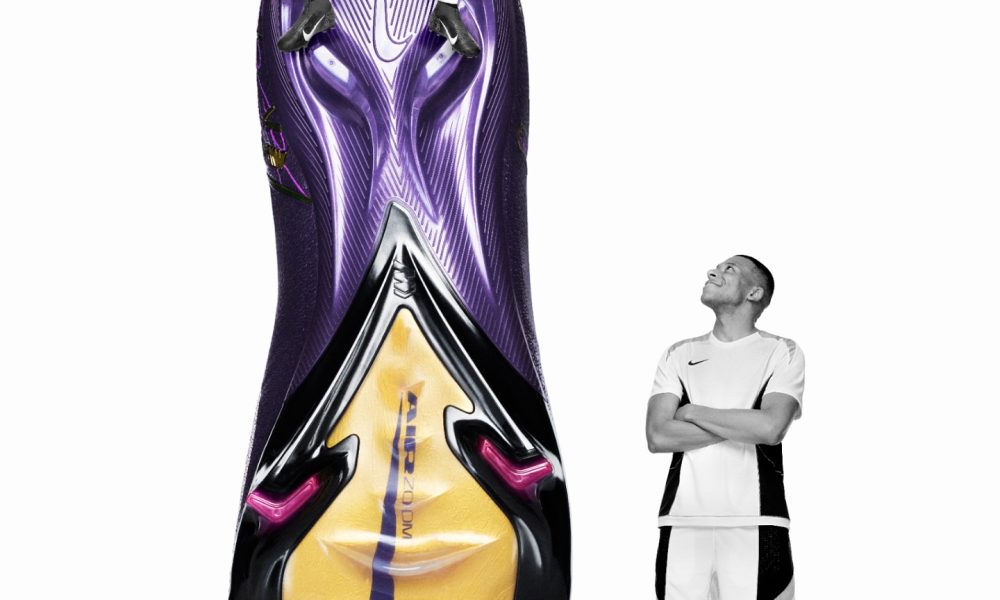 has always dreamed in Mercurial. Now his initials are on the boots.
The new Kyl…
has always dreamed in Mercurial. Now his initials are on the boots.
The new Kyl…
-
 Rec Sports2 weeks ago
First Tee Winter Registration is open
-
 Rec Sports2 weeks ago
Fargo girl, 13, dies after collapsing during school basketball game – Grand Forks Herald
-
 Motorsports2 weeks ago
CPG Brands Like Allegra Are Betting on F1 for the First Time
-
 Motorsports2 weeks ago
F1 Las Vegas: Verstappen win, Norris and Piastri DQ tighten 2025 title fight
-
 Sports2 weeks ago
Two Pro Volleyball Leagues Serve Up Plans for Minnesota Teams
-
 Sports2 weeks ago
Utah State Announces 2025-26 Indoor Track & Field Schedule
-
 Sports2 weeks ago
Sycamores unveil 2026 track and field schedule
-
 Motorsports2 weeks ago
Redemption Means First Pro Stock World Championship for Dallas Glenn
-
 Motorsports2 weeks ago
Jo Shimoda Undergoes Back Surgery
-
 Sports2 weeks ago
Texas volleyball vs Kentucky game score: Live SEC tournament updates