Connect with us
https://yoursportsnation.com/wp-content/uploads/2025/07/call-to-1.png

Technology

Businesses, Families Get Boost in Tax Bill: Winners and Losers

Published

on


Business, some workers, and parents would see tax breaks restored and credits boosted in the House Ways and Means Committee’s tax legislation that rolled out Monday.

Largely extending the 2017 tax law, which skewed benefits toward wealthy individuals and corporations, the legislation has many provisions that companies pushed hard for. It also includes some of the provisions President Donald Trump wanted, such as reducing income tax on overtime and tips. But it also has some new taxes—on university endowments and sports owners—and it cuts billions in energy credits.

While the House version of the tax bill is a long way from becoming law—the Senate hasn’t weighed in yet—it gives a first glimpse on what parts of tax policy are on surer footing and what’s in a more precarious spot.

Here’s who won and who lost in this first version of the tax bill:

Winners

Businesses: Tuesday’s tax bill calls for keeping corporate and international tax rates steady, restoring the expiring or expired trifecta of popular business breaks and a boost in the deduction for pass-through entities. The legislation represents a hard-fought victory for companies that pushed to return them to the 2017 tax law’s original levels.

Some workers and seniors: House Republicans took the first step to deliver on Trump’s campaign promises to ease the tax burden on some workers by eliminating tax on tipped and overtime wages. The legislation also includes a break for older Americans receiving Social Security benefits.

Parents and families: Tax writers proposed a $500 boost to the current $2,000 child tax credit and made more of the credit available to low-income families. They also called for raising the estate tax exemption to $15 million, making that a permanent floor, and floating it annually after 2025 with inflation..

Multinational Corporations: House Republicans’ bill preserved the tax rates on income US companies earn abroad. It’s a win for large companies with international presences that feared lawmakers would allow the rates to increase amid a search for revenue offsets. The legislation maintained a 10.5% effective tax rate on global intangible low-taxed income, a 13.1% rate on foreign-derived intangible income, and a 10% rate on the so-called base erosion and anti-abuse tax, or BEAT. Each of these rates would have increased in 2026 without congressional intervention.

Losers

Universities: House Republicans aim to increase the tax on large private university endowments, which presents a new threat to some of the wealthiest US schools. Republicans have aggressively pursued oversight on higher education for the past several years, and their proposal creates a tiered system that imposes larger taxes based on the size of their endowments. The top tax rate would grow to 21% in for institutions with student-adjusted endowments above $2 million.

Tax-and-climate law: Former President Joe Biden’s signature legislation known as the Inflation Reduction Act takes a serious hit in the House draft, as Republicans utilize some of its provisions for savings as they enact their tax law. The proposed legislation calls for clawing back hundreds of billions of dollars in energy credits by terminating a consumer credit for electric vehicles and credits for making homes more efficient. It also calls for phasing out and restricting energy production and investment credits, while modifying and extending biofuel production credits for four years.

Sports Team Owners: People who own sports franchises will only be able to write off half of the declining value of their franchises, a direct shot at Trump’s pledge to target “special tax breaks” for a corner of the billionaire class. The tax writers called for limiting Internal Revenue Code Section 197‘s amortization rules on intangible assets of franchises like football, basketball, baseball, hockey, and soccer to “50% of the adjusted basis.”

Direct File: If the proposed tax legislation were to become law, the free electronic filing program that allowed taxpayers to directly submit their federal return with the IRS would be dead within a month. Tuesday’s proposal calls on the Treasury Department to terminate the program within 30 days of enactment, and prescribes a task force to design a public-private partnership to replace the IRS’s existing free-filing options.

Headed to Overtime

State and Local Tax Deduction: One of the stickiest topics is the question of whether to lift the $10,000 federal cap on the state and local tax deduction, which has largely affected people living in high-tax states. The legislation proposes raising the SALT deduction ceiling to $30,000, but it would limit the write-off to taxpayers earning less than $400,000. While it’s triple the current cap, it’s not clear whether the blue-state Republicans pushing for a higher cap will accept it after some voiced their rejection of that figure after last week.


Link

Continue Reading
Click to comment

Leave a Reply

Your email address will not be published. Required fields are marked *

Technology

How Light & Wonder sets the bar with gaming innovation

Published

on


Kennedy Ntire, Gaming Manager at the Grand Palm Casino, has worked in iGaming for over 15 years so has a strong understanding of what makes players keep coming back for more.

In the video above, he explains why Light and Wonder are the leader of the pack in iGaming innovation and have a unique way of entertaining and captivating both new and experienced players.


Link

Continue Reading

Technology

Global Esports Market Size Forecast to USD 20.8 Billion by 2035

Published

on


Global Esports Market Size Outlook 2035

Global Esports Market Size Outlook 2035

Global Esports Market Size Outlook 2035

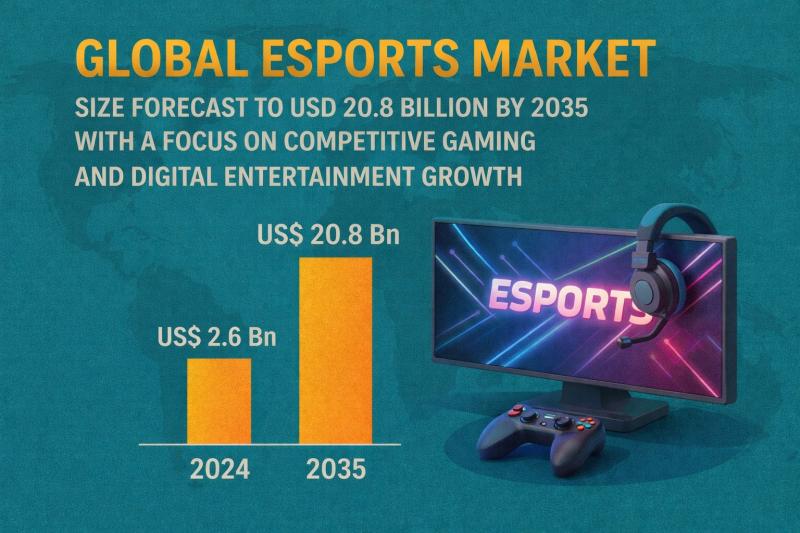
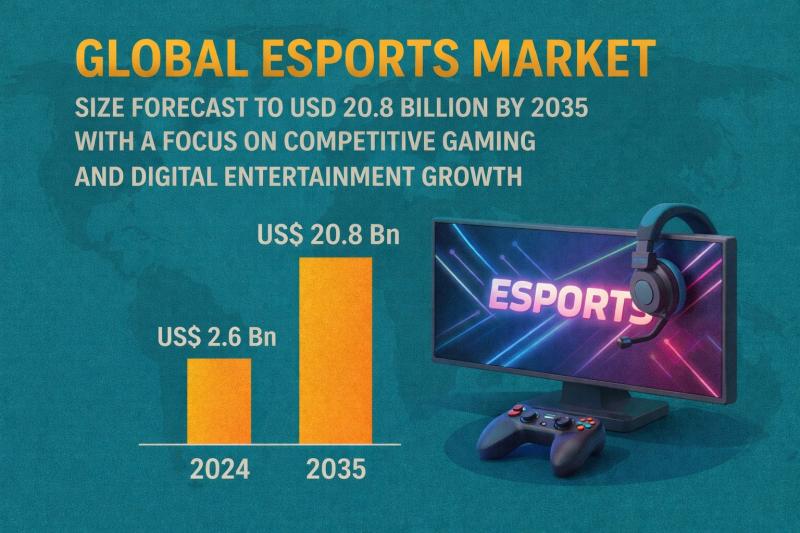
The global Esports market was valued at US$ 2.6 billion in 2024. It is projected to grow at a CAGR of 20.9% from 2025 to 2035, reaching US$ 20.8 billion by 2035. This rapid growth is driven by the surging popularity of competitive gaming, increasing digital connectivity, corporate sponsorships, and expanding live streaming platforms worldwide.

👉 Get your sample market research report copy today@ https://www.transparencymarketresearch.com/sample/sample.php?flag=S&rep_id=54564

Market Overview

Esports refers to competitive gaming at professional levels, where players compete individually or in teams in popular games like League of Legends, Dota 2, Fortnite, Call of Duty, and Overwatch. The market spans across tournaments, leagues, streaming platforms, sponsorships, advertising, and merchandise sales.

Factors contributing to market expansion include:

• Rising internet penetration and smartphone adoption, especially in Asia-Pacific

• Increased viewership via streaming platforms like Twitch, YouTube Gaming, and Facebook Gaming

• Growing corporate investments and sponsorships

• Expansion of Esports tournaments, leagues, and collegiate competitions

• Enhanced engagement through virtual reality (VR) and augmented reality (AR) gaming experiences

North America and Europe are leading markets due to mature gaming ecosystems, while Asia-Pacific is the fastest-growing region driven by a huge gamer population and strong tournament culture.

Key Market Growth Drivers

1. Rising Popularity of Competitive Gaming

Competitive gaming is attracting millions of fans globally, creating a robust ecosystem for tournaments, streaming, and merchandise sales.

2. Growth of Digital Streaming Platforms

Platforms like Twitch, YouTube Gaming, and Trovo are expanding the reach of Esports, enabling real-time engagement and monetization through subscriptions, ads, and donations.

3. Corporate Sponsorships and Advertising

Brands are increasingly investing in Esports teams, tournaments, and influencer marketing, enhancing revenue opportunities and market growth.

4. Technological Advancements

• VR/AR integration for immersive experiences

• Advanced graphics, AI, and game engines enhancing competitive gameplay

• Cloud gaming enabling accessibility without high-end hardware

5. Expanding Professional Leagues and Tournaments

Major tournaments like The International (Dota 2), League of Legends World Championship, and Fortnite World Cup are boosting Esports viewership and attracting global sponsorship.

Analysis of Key Players – Key Strategies

Leading Esports companies focus on technology innovation, strategic partnerships, player acquisition, and global expansion.

1. Player and Team Management

• Investment in professional teams, player training, and coaching

• Acquisition of top-tier players to enhance competitive performance

2. Strategic Partnerships and Sponsorships

• Collaboration with gaming hardware, software, and media companies

• Partnerships with brands for event sponsorships and advertising campaigns

3. Platform Expansion

• Enhancing streaming platforms with interactive features, chat, and monetization options

• Developing mobile apps and cloud-based gaming services

4. Regional Growth

• Expansion into Asia-Pacific and Latin America to capitalize on large gamer populations

• Increasing tournaments in emerging markets to boost fan engagement

Analysis of Key Players in the Esports Market

Leading companies in the global esports market are investing in technological innovations, strategic partnerships, and product diversification to strengthen their market presence and stay ahead in the rapidly evolving competitive gaming industry. Their initiatives aim to enhance gaming experiences, improve precision in competitive play, and expand audience engagement globally.

Key players in the esports market include

• Bandai Namco Entertainment

• Valve Corporation

• PGL

• Overwatch League

• NVIDIA

• Microsoft

• Faceit

• Tencent

• Riot Games

• Epic Games

• Sony Interactive Entertainment

• Take Two Interactive

• Activision Blizzard

• Electronic Arts

• Other Prominent Players.

These companies are profiled in the esports market research report based on company overview, financial performance, business strategies, product portfolio, business segments, and recent developments.

👉 Discuss Implications for Your Industry Request Sample Research Report PDF@ https://www.transparencymarketresearch.com/sample/sample.php?flag=S&rep_id=54564

Key Developments in the Esports Market

• April 2025: Nintendo showcased its esports initiatives during the Nintendo Switch 2 Direct event, introducing new IPs and enhancing Splatoon with esports features such as improved matchmaking and live streaming integration. These efforts aim to strengthen Nintendo’s position in the competitive gaming market through strategic partnerships and global audience engagement.

• March 2025: Gameloft launched a new mobile esports platform for Asphalt 9: Legends, focusing on community-driven tournaments and competitive play. The platform features regular in-app events, live streaming, and player rewards, designed to expand the mobile esports ecosystem and attract a larger audience.

Market Challenges & Opportunities

Challenges

1. High Competition and Saturation

The rapid growth of gaming content and tournaments increases competition for viewership and sponsorships.

2. Regulatory and Legal Issues

Issues like laws, online content regulations, and copyright concerns can affect market expansion.

3. Monetization Challenges

Smaller tournaments and emerging platforms may struggle with sustainable revenue generation.

4. Hardware and Connectivity Requirements

High-performance gaming requires advanced hardware and stable internet, limiting access in some regions.

Opportunities

1. Mobile Esports Expansion

Mobile gaming is driving Esports adoption in Asia-Pacific, Latin America, and the Middle East, creating new revenue streams.

2. Integration of VR/AR

Immersive experiences through VR/AR can attract more viewers and participants.

3. Corporate Sponsorship and Advertising

Expanding partnerships with non-endemic brands in fashion, automotive, and consumer goods sectors.

4. Collegiate and Amateur Esports

Development of school and college leagues can create future professionals and increase fanbase.

Investment Landscape and ROI Outlook

The Esports market offers high growth potential and attractive ROI due to its rapid adoption, global fanbase, and multi-stream revenue model.

Investment Strengths

• Expanding fanbase across platforms, regions, and age groups

• Diverse revenue streams from sponsorships, media rights, merchandising, and ticket sales

• Emerging opportunities in mobile Esports, VR/AR integration, and collegiate leagues

• Supportive infrastructure and increasing internet penetration worldwide

ROI Outlook

With a CAGR of 20.9% through 2035, investments in tournaments, streaming platforms, team ownership, and gaming technology are expected to yield high returns. Early entry into emerging markets and mobile Esports offers a competitive advantage.

Market Segmentations

By Game Genre

• MOBA (Multiplayer Online Battle Arena)

• FPS (First-Person Shooter)

• Battle Royale

• Sports Simulation

• Fighting and Others

By Platform

• PC

• Console

• Mobile

• Cloud Gaming

By Revenue Source

• Sponsorship and Advertising

• Media Rights

• Merchandising and Ticketing

• Streaming Platforms

• Publisher Fees

By Region

• North America

• Europe

• Asia-Pacific

• Latin America

• Middle East & Africa

👉 To buy this comprehensive market research report, click here to inquire@ https://www.transparencymarketresearch.com/checkout.php?rep_id=54564&ltype=S

Why Buy This Report?

✔ Detailed market forecast to 2035

✔ Comprehensive analysis of growth drivers, challenges, and opportunities

✔ Competitive landscape and key player strategies

✔ Segmentation by game genre, platform, revenue source, and region

✔ Insights into emerging trends such as mobile Esports, VR/AR, and collegiate leagues

✔ Strategic recommendations for investors, developers, and brands

FAQs

1. What is the projected Esports market size by 2035?

It is expected to reach US$ 20.8 billion by 2035.

2. What is the CAGR from 2025-2035?

The market is projected to grow at a CAGR of 20.9%.

3. Which region dominates the Esports market?

Asia-Pacific is emerging as the fastest-growing region due to high gamer population and mobile gaming adoption.

4. What are the main revenue sources?

Sponsorships, advertising, media rights, streaming subscriptions, merchandising, and ticket sales.

5. What are key market trends?

Growth in mobile Esports, VR/AR integration, streaming platforms, and collegiate leagues are shaping market trends.

More Trending Research Reports-

• Enterprise Connectivity and Networking Market – https://www.transparencymarketresearch.com/enterprise-connectivity-and-networking-market.html

• A2P SMS Market – https://www.transparencymarketresearch.com/global-a2p-sms-market.html

About Us Transparency Market Research

Transparency Market Research, a global market research company registered at Wilmington, Delaware, United States, provides custom research and consulting services. The firm scrutinizes factors shaping the dynamics of demand in various markets. The insights and perspectives on the markets evaluate opportunities in various segments. The opportunities in the segments based on source, application, demographics, sales channel, and end-use are analysed, which will determine growth in the markets over the next decade.

Our exclusive blend of quantitative forecasting and trends analysis provides forward-looking insights for thousands of decision-makers, made possible by experienced teams of Analysts, Researchers, and Consultants. The proprietary data sources and various tools & techniques we use always reflect the latest trends and information. With a broad research and analysis capability, Transparency Market Research employs rigorous primary and secondary research techniques in all of its business reports.

Contact Us

Transparency Market Research Inc.

CORPORATE HEADQUARTER DOWNTOWN,

1000 N. West Street,

Suite 1200, Wilmington, Delaware 19801 USA

Tel: +1-518-618-1030

USA – Canada Toll Free: 866-552-3453

Website: https://www.transparencymarketresearch.com

Blog: https://tmrblog.com

Email: sales@transparencymarketresearch.com

This release was published on openPR.



Link

Continue Reading

Technology

How eSports and Gaming Platforms Are Shaping Interactive Digital Communities

Published

on


The gaming and eSports industries have grown far beyond simple entertainment. Today, they represent a complex ecosystem where competition, social engagement, and technology intersect. Fans don’t just play—they spectate, strategize, and participate in online communities that feel immersive and dynamic.

Competitive gaming has influenced not only game design but also how digital platforms structure engagement. Leaderboards, progression systems, and interactive features once reserved for video games now appear across entertainment, social, and even educational platforms. This approach keeps users invested and encourages continuous interaction.

Platforms like spacehills.de are perfect examples of this trend. While focusing on gaming and eSports experiences, the platform integrates community-driven features, gamified interactions, and real-time engagement tools that resonate with pop-culture and tech-savvy audiences. Users find themselves drawn into a system that feels familiar yet innovative, combining the thrill of competition with interactive platform design.

The Mechanics Behind Engagement

Gamification remains one of the strongest drivers of user engagement in modern digital spaces. Borrowed from video games, these mechanics transform standard interactions into meaningful experiences. Users enjoy clear goals, rewards for skill or participation, and tangible progress that mirrors in-game achievements.

Core Gamification Elements

  • Achievement tracking – recognizing user milestones
  • Progression bars and levels – visually representing growth
  • Daily or weekly challenges – encouraging consistent engagement
  • Reward systems – motivating repeated interactions

By leveraging these mechanics, platforms create a sense of investment and personal growth, even outside traditional gaming contexts.

eSports Influence on Platform Design

The structure and intensity of eSports competitions have heavily influenced digital platform design. Just as tournaments require skill, strategy, and adaptability, interactive platforms aim to provide layered experiences that challenge and reward users in meaningful ways.

Key Design Features Inspired by eSports

  • Real-time updates – keeping users informed and engaged
  • Interactive dashboards – allowing immediate response and action
  • Community integration – fostering connection among players
  • Performance metrics – tracking progress and achievements

These elements ensure that users feel involved and motivated, replicating the engagement loop found in competitive gaming.

Social Interaction and Community Building

A defining feature of modern gaming and eSports culture is community. Whether it’s clan systems, guilds, or Discord channels, shared experiences amplify engagement. Digital platforms that integrate social features replicate this environment, creating a sense of belonging and collaboration.

Community-Driven Features

  • Forums and chat systems for discussion and collaboration
  • Leaderboards to encourage friendly competition
  • Collaborative challenges or events
  • Transparent systems that reward fair play

Strong communities increase retention and make platforms more attractive to both new and experienced users.

Strategy, Skill, and Decision-Making

Gaming and eSports emphasize strategy and skill, which naturally translate into interactive platforms. Users are drawn to experiences that reward decision-making, resource management, and tactical thinking. This dynamic creates depth and keeps users engaged over time.

Strategic Engagement Elements

  • Risk versus reward decisions
  • Progression-based challenges
  • In-game or in-platform resource management
  • Analytical decision-making feedback

By incorporating these elements, platforms encourage thoughtful participation rather than passive consumption.

Technology Driving Immersion

Technological advancements have enabled platforms to support high-performance, real-time interaction similar to competitive gaming environments. Cloud computing, low-latency servers, and responsive design ensure that users experience smooth, immersive engagement.

Tech Features Enhancing User Experience

  • Mobile-optimized and responsive interfaces
  • Low-latency real-time updates
  • Secure user accounts and transactions
  • Scalable architecture to handle peak traffic

These features make platforms feel modern, reliable, and aligned with user expectations shaped by gaming and eSports experiences.

Personalized Experiences and Adaptive Systems

Modern platforms increasingly rely on data to provide personalized experiences. By monitoring user behavior, preferences, and engagement patterns, platforms can dynamically adapt content, challenges, and rewards to each individual.

Benefits of Personalization

  • Tailored challenges and events
  • Customized interfaces and dashboards
  • Adaptive difficulty and content progression
  • Enhanced user satisfaction and retention

This approach mirrors personalized gameplay experiences in video games, where user choices and performance influence outcomes.

The intersection of eSports, gaming, and digital platform design demonstrates how interactive experiences are evolving. Platforms like spacehills.de illustrate how combining community, gamification, and technological innovation creates compelling environments for users, where engagement, strategy, and social interaction coexist seamlessly.


Link

Continue Reading

Technology

Superbet Group Becomes Super Technologies, Shaping the Future of Digital Entertainment Ecosystems

Published

on


Our website uses cookies, as almost all websites do, to help provide you with the best experience we can.

Cookies are small text files that are placed on your computer or mobile phone when you browse websites.

Our cookies help us:

– Make our website work as you’d expect

– Remember your settings during and between visits

– Offer you free services/content (thanks to advertising)

– Improve the speed/security of the site

– Allow you to share pages with social networks like Facebook

– Continuously improve our website for you

– Make our marketing more efficient (ultimately helping us to offer the service we do at the price we do)

We do not use cookies to:

– Collect any personally identifiable information (without your express permission)

– Collect any sensitive information (without your express permission)

– Pass personally identifiable data to third parties

– Pay sales commissions

{short version}This Privacy Policy discloses the privacy practices for EEGReport Magazine, EEGaming.org, GamblingIndustryB2B.com, iGamingRadio.com, GamblingAffiliateVoice.com and EuropeanGaming.eu, including subdomains, our email newsletters and other applications owned and operated by our company (collectively referred to as the “European Gaming Media and events” – formerly known as “EEGMedia“), and to any services that display this notice. The Privacy Policy also sets out the ways in which we may use your personal data.

{long detailed version} To read this in full, click on the Privacy Policy button found in this window.

{short version} These terms and conditions govern your use of the websites owned and operated by European Gaming Media and Events; by using our websites, you accept these terms and conditions in full and without reservation. If you disagree with these terms and conditions or any part of these terms and conditions, you must not use these websites.

You must be at least 18 [eighteen] years of age to use our websites. By using our websites and by agreeing to these terms and conditions, you warrant and represent that you are at least 18 years of age.

The list of the websites owned and operated by European Gaming Media and Events can be found here.

In other words,
You must be at least 18 years old to use our service and fully agree with everything stated on this page. Otherwise, sorry, guys, ours websites are not for you.

License to use our websites
Unless otherwise stated, European Gaming Media and Events and/or its licensors own the intellectual property rights published on our websites and materials used on the European Gaming Media and Evnts network. Subject to the license below, all these intellectual property rights are reserved.

You may view, download for caching purposes only, and print pages, files or other content from the websites for your own personal use, subject to the restrictions set out below and elsewhere in these terms and conditions.

You must not:

republish material from these websites in neither print nor digital media or documents (including republication on another website);
sell, rent or sub-license material from the websites;
show any material from the websites in public;
reproduce, duplicate, copy or otherwise exploit material from our websites for a commercial purpose;
edit or otherwise modify any material on these websites;
redistribute material from these websites – except for content specifically and expressly made available for redistribution; or
republish or reproduce any part of these websites through the use of iframes or screenscrapers.
Where content is specifically made available for redistribution, it may only be redistributed within your organisation.

In other words,
Everything on our websites belongs to us. You can read it, but you cannot republish it. Sounds fair, doesn’t it?

Acceptable use
You must not use these websites in any way that causes, or may cause, damage to the websites or impairment of the availability or accessibility of the European Gaming Media network or in any way which is unlawful, illegal, fraudulent or harmful, or in connection with any unlawful, illegal, fraudulent or harmful purpose or activity.

{long detailed version} To read this in full, click on the Terms of Service button found in this window.


Link

Continue Reading

Technology

Gaming Headset Market reaching an estimated USD 7 billion by 2034

Published

on


Gaming Headset

Gaming Headset

Pune, India – December 15, 2025 – Exactitude Consultancy, a global leader in market research and intelligence, today announced the publication of its Gaming Headset Market Report, delivering a detailed analysis of industry trends, segmentation, competitive landscape, and growth forecast through 2034. This report equips manufacturers, gaming peripheral brands, distributors, investors, and technology stakeholders with actionable insights into the evolving gaming audio accessory ecosystem.

Download Full PDF Sample Copy of Market Report @ https://exactitudeconsultancy.com/request-sample/70022

Market Overview

The global gaming headset market was valued at approximately USD 3.6 billion in 2024 and is projected to grow at a CAGR of 7.1 % over the forecast period (2025-2034), reaching an estimated USD 7 billion by 2034. Growth is driven by rising eSports participation, immersive gaming demand, and technological advancements in audio features.

Key Growth Drivers & Trends

• eSports & Online Gaming Boom: Global expansion of competitive gaming amplifies demand for high performance headsets that offer superior positional audio and communication clarity.

• Technological Innovation: Enhanced features such as noise cancellation, surround sound, wireless connectivity, and spatial audio are increasingly integrated, improving player immersion and comfort.

• Streaming & Content Creation: Growth in gaming streaming and content production influences headset demand, as creators seek high quality audio capture and playback.

• Casual & Mobile Gamers: A broadening gamer base – especially casual players – continues to drive headset adoption for both competitive play and entertainment.

Market Segmentation

The report segments the gaming headset market by:

• Product Type: Wired and wireless gaming headsets. Wired remains significant due to low latency, while wireless is rising with improved battery tech and convenience.

• Application: Gaming, music, virtual reality (VR), and streaming usage.

• End User: Casual gamers, professional gamers, and eSports athletes.

• Technology: Surround sound, noise cancellation, RGB lighting, built in microphones – key immersive and functional features driving differentiation.

• Distribution Channel: Online retail, offline retail stores, and direct manufacturer sales.

Explore Full Report here: https://exactitudeconsultancy.com/reports/70022/gaming-headset-market

Regional Insights

• North America remains the largest regional market, accounting for about 40 % of global revenue, buoyed by a strong gaming culture and high accessory spend.

• Asia Pacific is a dynamic growth region with an ~10 % CAGR, driven by expanding middle class gaming populations and significant eSports adoption in China, Japan, and SEA.

• Europe shows solid growth supported by widespread console and PC gaming infrastructure.

• Latin America and Middle East & Africa are among the fastest growing emerging regions with projected double digit regional CAGRs by 2034.

Competitive Landscape

The gaming headset market is highly competitive with both established brands and specialized gaming audio companies. Key players include:

• Logitech

• Razer

• Corsair

• SteelSeries

• HyperX

• ASUS

• Turtle Beach

• Sennheiser

• JBL

• Creative Labs

These companies continually innovate with features such as spatial audio, advanced noise suppression, enhanced wireless protocols, and ergonomic design to meet diverse gamer preferences.

Market Challenges

Challenges facing the market include price competition and saturation in certain product tiers, as well as evolving platform compatibility requirements across PC, console, mobile, and VR devices.

Strategic Importance

Gaming headsets have become essential peripherals for modern gaming ecosystems, influencing play experience, communication, and competitive performance. As the gaming sector – including casual, competitive, and VR gaming – continues to expand, high fidelity audio gear remains a key differentiator for brands and consumers alike.

This report is also available in the following languages : Japanese (ゲーミングヘッドセット市場), Korean (게이밍 헤드셋 시장), Chinese (游戏耳机市场), French (marché des casques de jeu), German (Markt für Gaming-Headsets), and Italian (Mercato delle cuffie da gioco), etc.

Request for a sample of this research report at (Use Corporate Mail ID for Quick Response) @ https://exactitudeconsultancy.com/request-sample/70022

Our More Reports:

Standalone Trackpad Market

https://exactitudeconsultancy.com/reports/33610/standalone-trackpad-market

Virtual Reality Devices Market

https://exactitudeconsultancy.com/reports/34652/virtual-reality-devices-market

Professional Monitors Market

https://exactitudeconsultancy.com/reports/35764/professional-monitors-market

About Us

Exactitude Consultancy is a market research & consulting services firm which helps its client to address their most pressing strategic and business challenges. Our market research helps clients to address critical business challenges and also helps make optimized business decisions with our fact-based research insights, market intelligence, and accurate data.

https://bulletin.exactitudeconsultancy.com/

https://www.thehealthanalytics.com/

https://www.analytica.global/

https://www.marketintelligencedata.com/

https://www.marketinsightsreports.com/

https://exactitudeconsultancy.com/

Connect Us:

Irfan Tamboli

PHONE NUMBER +1 (704) 266-3234

EMAIL ADDRESS: sales@exactitudeconsultancy.com

This release was published on openPR.


Link

Continue Reading

Technology

UM-Flint event sees Corunna, Davison win top esports honors | News

Published

on


Games including Rocket League, Marvel Rivals, Super Smash Bros, Mario Kart 8, and others.


FLINT, Mich. (WJRT) – The University of Michigan-Flint’s College of Innovation & Technology joined forces with the Michigan High School Esports Federation to host the fall 2025 state finals event.

More than 120 teams and 350 players from over 70 schools across the state participated in the event on Saturday.

Eleven champions were crowned in games such as Rocket League, Marvel Rivals, Super Smash Bros, and Mario Kart 8.

“It’s amazing. It’s my first time in a tournament or anything,” said Corunna esports player Jackson Donley.

“Especially in person, and the atmosphere is just amazing. You can tell it’s tense, especially when the matches are so close,” Donley said.

Corunna Middle School secured first place in the middle school division of the Team Super Smash Bros competition.

Davison High School claimed first place in the high school division.


Link

Continue Reading

Most Viewed Posts

Trending