Electric vehicles are no longer confined to city streets and commuter use. EV motorsports now operate as high-stakes laboratories where engineers push batteries, motors, and software to absolute limits under race conditions. These competitions are changing long-held assumptions about speed, endurance, and performance in professional racing.
As the electric racing future unfolds, EV performance metrics increasingly rival or exceed traditional combustion-based race cars. Instant torque, near-total energy efficiency, and rapid innovation cycles are forcing motorsport organizations and fans alike to rethink what competitive racing looks like in the coming decade.
Can EV Technology Compete in Motorsports?
EV motorsports already demonstrate that electric platforms can compete at elite levels of racing. Formula E cars accelerate from 0–60 mph in approximately 2.8 seconds, delivering up to 600 kW of peak power that rivals modern Formula 1 hybrid systems. This performance advantage comes from instant torque delivery, eliminating lag and gear-shift delays inherent in internal combustion drivetrains.
The electric racing future extends beyond paved circuits. Extreme E showcases electric SUVs climbing steep 250 kW off-road sections without thermal lag or mechanical stress from traditional engines. EV performance efficiency further strengthens competitiveness, converting roughly 99% of stored electrical energy into wheel motion, compared to combustion engines that waste most energy as heat through exhaust and cooling systems.
What Is Formula E and How Does It Work?
Formula E stands at the forefront of the electric racing future by enforcing strict efficiency and sustainability standards. Gen3 cars regenerate up to 40% of race energy through braking and aerodynamic downforce, surpassing traditional kinetic energy recovery systems. This regenerative focus rewards precision driving and strategic energy management rather than raw fuel consumption.
EV motorsports regulations also mandate sustainable tire compounds and tactical features like attack mode, which adds a 50 kW power boost at the cost of altered racing lines. EV performance remains consistent across 45-minute races thanks to dual-motor AWD systems, enabling lap times comparable to high-performance combustion sports cars while operating within tight thermal limits.
EV Performance Advantages and Challenges in the Electric Racing Future
Electric racing is no longer a simple comparison between electric and combustion engines. EV performance now sets new benchmarks in acceleration, efficiency, and thermal control, while also introducing fresh limitations tied to batteries and infrastructure. As the electric racing future evolves, strengths and constraints shape race strategy just as much as raw speed. Understanding both sides explains why EV motorsports are advancing rapidly but still face unique trade-offs.
Instant acceleration advantage: EV performance dominates launch and mid-corner exits due to instant torque and the absence of multi-gear transmissions, reducing mechanical losses and improving reliability.
Higher power density systems: Advanced axial-flux motors and silicon carbide inverters deliver superior power-to-weight ratios compared to many combustion race engines.
Thermal stability edge: Liquid-cooled battery packs maintain consistent output lap after lap, while combustion engines suffer efficiency loss from rising oil and piston temperatures.
Energy density limitation: Large battery packs add significant weight, reducing race duration flexibility compared to lightweight liquid fuel systems.
Strategic energy management: EV motorsports require lift-and-coast tactics and controlled pacing to balance speed with battery conservation.
Infrastructure and fan engagement challenges: High-output charging demands precise battery preconditioning, while the lack of engine sound drives experimentation with synthetic audio solutions.
From EV Motorsports Innovation to Road Car Impact
Technological breakthroughs in EV motorsports rarely stay on the track. Racing environments accelerate development cycles, stress-testing hardware and software far beyond road conditions. As innovations mature, they rapidly filter into consumer vehicles, reshaping everyday driving experiences. This tight feedback loop is a defining advantage of the electric racing future.
High-efficiency motor technology: Near-lossless electric motors developed in EV motorsports reduce driveline complexity and improve durability for road vehicles.
Next-generation battery research: Solid-state and advanced lithium battery designs tested in racing promise longer lifespans, higher safety margins, and improved thermal stability.
AI-driven vehicle control: Predictive traction control and regenerative braking algorithms enhance grip and efficiency, later improving stability systems in consumer EVs.
Wireless and rapid charging concepts: Experimental track-based charging systems influence future fast-charging standards for public infrastructure.
Race-proven hardware adoption: Inverters, steering-by-wire, and brake-by-wire systems transition directly from competition to high-performance road cars.
Software-first performance upgrades: Over-the-air updates enable continuous EV performance improvements, mirroring motorsport-style development cycles for consumers.
Conclusion
EV motorsports prove that electric racing future concepts are not theoretical but operational today. Superior EV performance in efficiency, torque delivery, and thermal stability positions electric platforms as genuine competitors rather than experimental alternatives. Racing environments accelerate innovation in ways traditional automotive development cannot replicate.
As technologies mature, lessons from electric racing will increasingly shape mass-market vehicles. The convergence of sustainability and speed ensures that EV motorsports remain central to the future of competitive racing and everyday transportation alike.
Frequently Asked Questions
1. Can EVs really outperform gasoline race cars?
Yes, EVs excel in acceleration due to instant torque and simplified drivetrains. They also convert energy far more efficiently than combustion engines. Over short and medium race distances, EV performance often surpasses gasoline counterparts. Endurance remains the main area where ICE still holds advantages.
2. Why is Formula E important to EV development?
Formula E serves as a controlled testing ground for batteries, motors, and energy management systems. Technologies proven in races are quickly adapted for consumer vehicles. This short feedback loop accelerates EV performance improvements. It also promotes sustainability-focused innovation.
3. What limits the electric racing future today?
Battery energy density and charging infrastructure remain the biggest constraints. Heavy battery packs affect vehicle weight and race length. Charging logistics add strategic complexity. However, ongoing research continues to reduce these limitations.
4. How does EV motorsports benefit everyday drivers?
Racing innovations improve battery durability, software control, and thermal management. These upgrades enhance range, reliability, and safety in consumer EVs. Motorsport testing also speeds up adoption of new technologies. As a result, road cars improve faster than through conventional development alone.
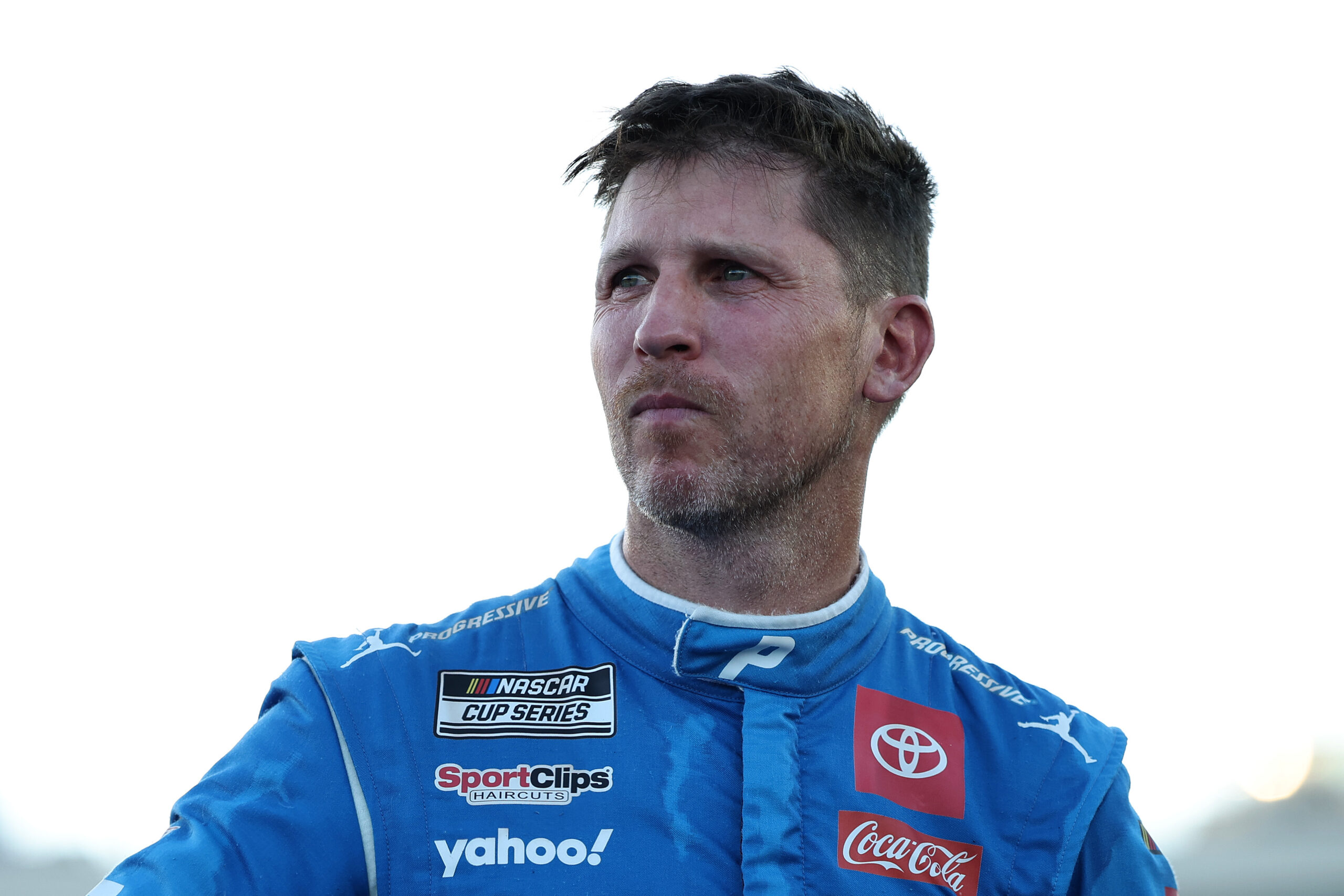
Dennis Hamlin, father of NASCAR Cup Series driver Denny Hamlin, died Sunday night at the age of 75 from injuries sustained in a house fire at the family’s home. Hamlin’s mother, Mary Lou, remains hospitalized in critical condition.
The Gaston County Office of Emergency Management and Fire Services issued a press release stating that first responders were dispatched to the home in the Stanley community at 6:19 p.m. ET. They arrived eight minutes later and found the residence engulfed in flames. There were two occupants discovered outside the home who were transported to a nearby hospital.
Dennis Hamlin later died at the hospital. Mary Lou Hamlin, 69, was transferred to Atrium Health Wake Forest Baptist Burn Center in Winston-Salem, where officials said she is “actively being treated.”
Denny Hamlin’s parents were instrumental in helping him pursue his career in NASCAR. In 2006, he signed with Joe Gibbs Racing and has claimed 60 Cup Series wins with the team.
He dedicated his victory at Las Vegas Motor Speedway to his father.
“He’s the one that got me into racing,” Hamlin said, “He just took me to a racetrack when I was 5 and then made all the sacrifices financially to keep me going. Sold everything they had. We almost lost our house a couple times, just tried to keep it all going. I’m glad he was able to see 60. That was super important to me.”
Due to extensive damage, the cause of the fire has not been determined as the investigation continues.
NASCAR issued the following statement on Dec. 30: “NASCAR extends its deepest condolences to Denny Hamlin and the entire Hamlin family. Dennis Hamlin instilled a love of racing in his son, and sacrificed greatly to develop Denny into a world-class talent in the sport. We also continue to offer our thoughts and prayers to Denny’s mother, Mary Lou, and hope for her full recovery.”
Natalie Decker and her husband, Derek Lemke, are embracing life as new parents, spending the holiday season between Christmas and New Year focused on family while keeping one eye firmly on the road back to NASCAR. Decker last took the green flag in August 2025 at Daytona, where she finished 22nd, marking her return to competition months after welcoming their son in February. While she is currently savoring motherhood and marriage, another long-held ambition remains front and center, one she shares with her husband and intends to chase down.
A year ago, during an interview with Frontstretch, Decker sat down with Wyatt Watson ahead of her second career start at Charlotte Motor Speedway and laid out several personal goals. She spoke about a dream partnership with Bikini Zone, highlighted the importance of promoting sponsorship alongside her family, reflected on married life, and opened up about a shared vision with Lemke, which is lining up against him on the racetrack.
As Decker put it, “That’s literally our goal and dream. We talk about that daily. So here’s the thing: Derek has never beaten me. We talk about that all the time.” She explained that the two have raced each other only a handful of times so far, but they plan to settle the score properly by competing head-to-head in either a NASCAR Craftsman Truck Series race or an Xfinity Series event in the near future.
The intention, she said, is “We have to make it happen, and then we can then determine who is better after that race.”
When discussing married life, Decker shared that very little has changed beyond the wedding bands now on their fingers. Their lives, she noted, had already been connected long before the ceremony. Once Lemke was fully committed to supporting her racing career, they immediately approached everything as a team.
Decker added that they have been together for more than eight years (now over nine), and married for some time, and she finds it deeply fulfilling. For the 28-year-old, one of the highlights of getting married was celebrating alongside friends and family, hosting a large gathering that turned into an unforgettable occasion.
In 2025, Decker also joined a select group of women who returned to NASCAR competition after becoming mothers.
Beyond Shawna Robinson, one of only 17 women to start a NASCAR Cup Series race, who had two children in the late 1990s before competing in 21 races across NASCAR’s three national divisions between 2001 and 2005, drivers such as Sara Christian, Jessica Friesen, Tina Gordon, Ethel Mobley, Alli Owens, and Kelly Sutton also raced after entering motherhood.
Backed by sponsorship from Wawa, Decker drove the #92 DGM Racing Chevy in the NASCAR Xfinity Series event at Daytona International Speedway, and might be ready to do that in 2026 as well.
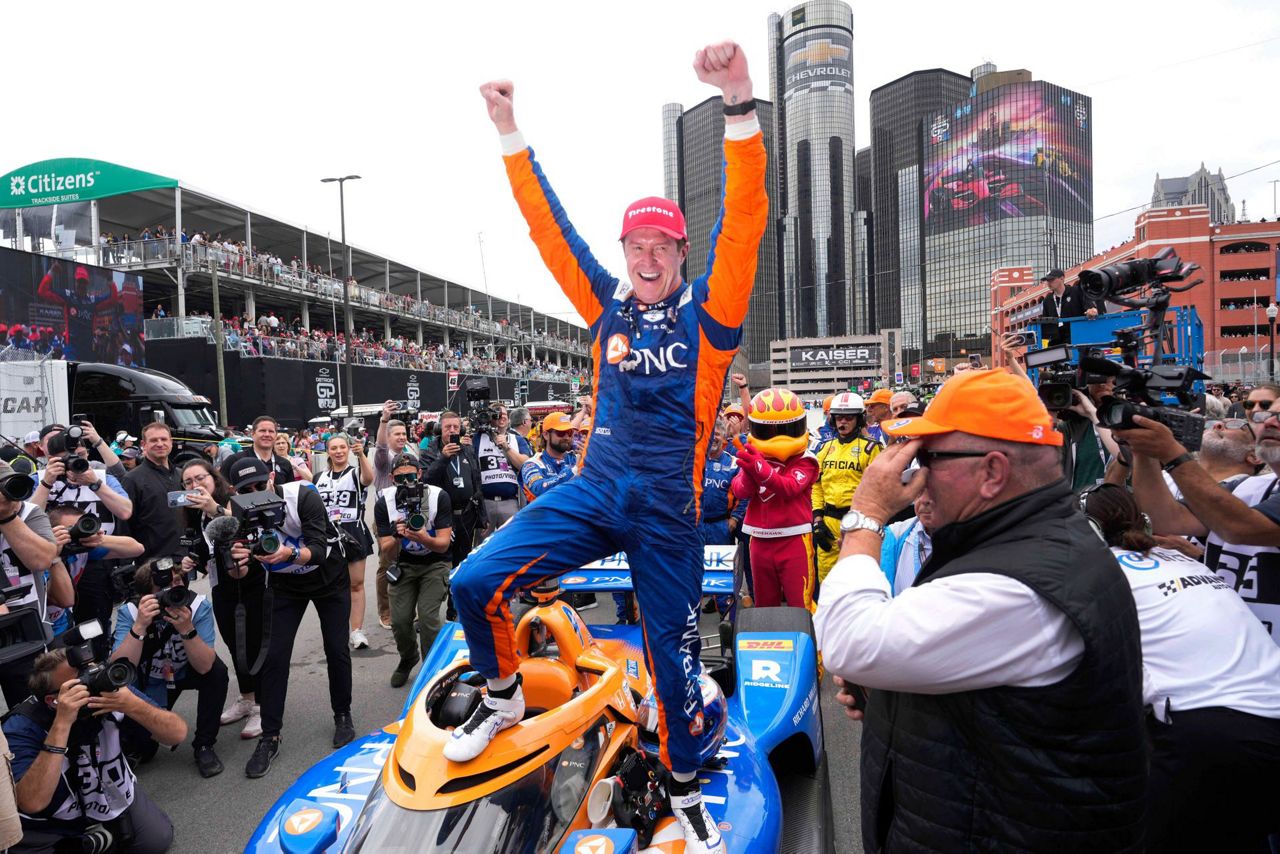
WELLINGTON, New Zealand (AP) — Six-time IndyCar champion Scott Dixon was awarded a knighthood Wednesday in New Zealand’s New Year honors list.
“I’ve been called a lot of things, but I never thought that ‘Sir’ was going to be one of them,” Dixon said. “That was kind of crazy. Totally out of the blue … You automatically go back to the start like the first time driving a go-kart and then all the rest of the memories happened at warp speed.”
Scott Ronald Glyndwr Dixon, now a Knight Commander of the New Zealand Order of Merit, was born in Australia to New Zealand-born parents who later returned to live in Auckland.
Dixon, who won the Indianapolis 500 in 2008, received the knighthood for services to motor sport. He was inducted into the Motorsports Hall of Fame of America in 2024.
“Sir Scott is a hero to young New Zealand motor sport fans and his work fundraising for children’s charities is invaluable,” New Zealand’s Prime Minister Christopher Luxon said.
Dixon won karting titles in Australia and New Zealand before heading to the United States where he raced in Indy Lights and CART series before moving to IndyCar in 2003.
Dixon has had 23 consecutive seasons for Chip Ganassi Racing in IndyCar with 58 wins and 142 podium finishes from 380 starts. He has started 32 times from pole position and won the championship in 2003, 2008, 2013, 2015, 2018 and 2020.
“It’s all about outside racing giving back to the community and the partnerships you make away from the track and causes you get involved in,” Dixon said.
___
AP auto racing: https://apnews.com/hub/auto-racing
Copyright 2025 The Associated Press. All rights reserved. This material may not be published, broadcast, rewritten or redistributed without permission.
One of the Southeast’s biggest early-season pavement events is taking shape, as SpeedFest 2026 at Cordele Motor Speedway announces that tickets are now on sale. Fans can secure their spot for the two-day racing festival at a discounted rate by purchasing in advance.
General Admission Tickets:
SpeedFest returns Friday–Saturday, January 23-24, 2026, featuring a powerful lineup headlined by the ASA Southern Super Series presented by Sunoco Super Late Models and the Southern Pro Series Pro Late Models. Also joining the weekend will be INEX Legends and Bandoleros, bringing a mix of national talent and rising young stars to Crisp Motorsports Park.
Friday, January 23 will include practice and qualifying for all four divisions, setting the stage for an action-packed Saturday afternoon. Feature racing begins at 1 PM on Saturday, January 24. Teams will also have the option to participate in an open test session Thursday, January 22 from 12:00–4:00 PM.
Online entries are now open for both Super Late Models and Pro Late Models, with early entries starting to come in.
Weekend Schedule Overview
Thursday – January 22, 2026 • Optional Open Test: 12:00 PM – 4:00 PM
Friday – January 23, 2026 • Practice & Qualifying for All Classes
Saturday – January 24, 2026 • Feature Events Begin at 1:00 PM
SpeedFest has long served as a season-opening measuring stick for short track racers, and the 2026 edition is shaping up to be no different. Fans can expect a blend of powerhouse Super Late Model talent, hungry Pro Late Model contenders, a strong regional and national presence, and the next generation of racers in Legends and Bandoleros.
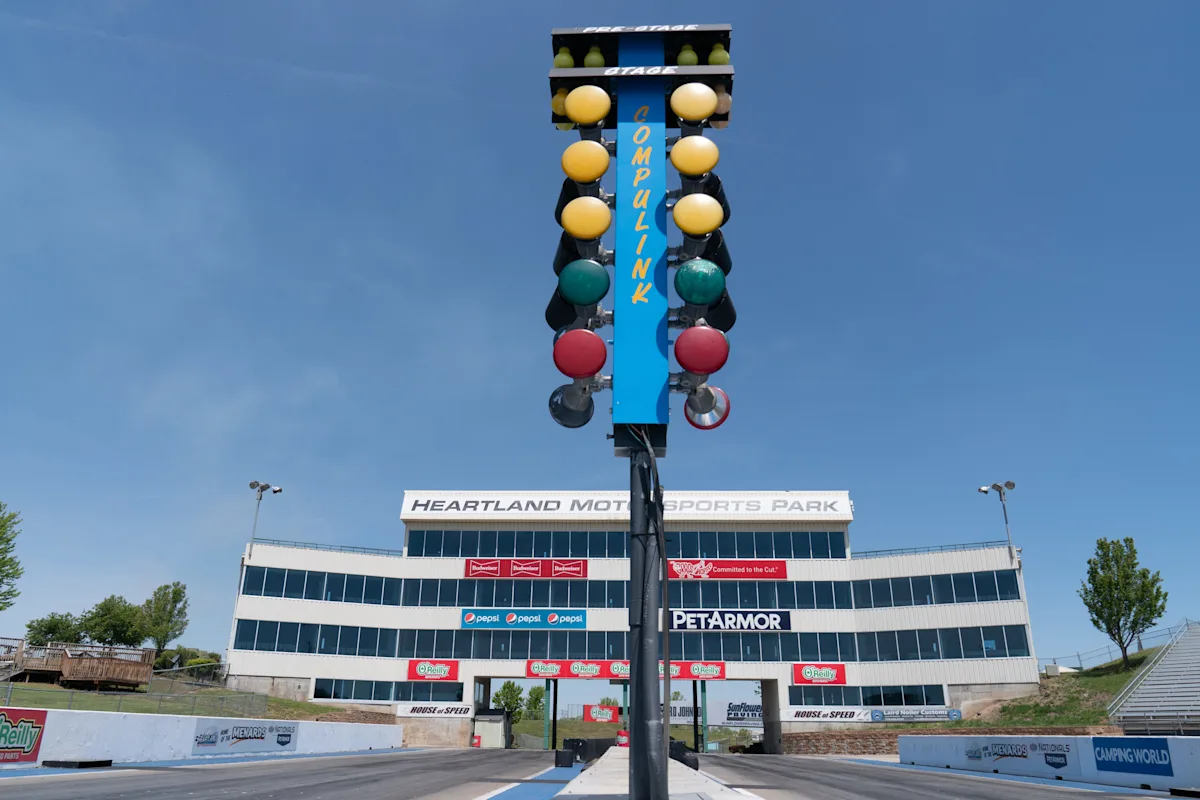
The International Hot Rod Association (IHRA) announced the acquisition of Heartland Motorsports Park on Dec. 29.
The acquisition aligns with IHRA’s broader racer-first philosophy, which includes direct investment in facilities and infrastructure that strengthen grassroots racing, elevate national competition and create sustainable motorsports ecosystems, said a IHRA news release.
Advertisement
With this acquisition, Heartland Motorsports Park enters a new chapter — one that honors its storied past while positioning the property as a modern destination entertainment complex, said the news release.
Owner of the International Hot Rod Association, Darryl Cuttell said Heartland Motorsports Park is one of those places that simply matters to racing.
“It has history, soul, and a footprint that allows us to think bigger than just a racetrack. Our goal is to restore this facility with respect for its legacy while building something that serves racers, fans, and the community for generations,” said Cuttell.
The dragstrip is seen at Heartland Motorsports Park on May 3, 2023.
What is IHRA’s vision for Heartland Motorsports Park?
The IHRA plans to restore Heartland Motorsports Park as a destination for racing, music and community. Those plans include redevelopment for year-round efforts that extend beyond competition weekends which involve the following:
Advertisement
Revitalized drag racing operations with improved racer and fan amenities.
Expanded motorsports and special event programming.
Live music, concerts, and festival experiences.
Enhanced hospitality, vendor and fan-experience areas.
Community-focused events designed to drive tourism and economic impact.
“Motorsports has to evolve to stay strong,” Cuttell said. “The future is about creating places where racing, music, entertainment, and community come together. Heartland has all the pieces to become one of the premier motorsports and entertainment destinations in the country.”
The International Hot Rod Association (IHRA) announced the acquisition of Heartland Motorsports Park on Dec. 29.
When will renovations begin?
Renovation planning will begin immediately, with additional announcements regarding redevelopment phases, event schedules and community partnerships expected in the coming months, said the news release.
Heartland previously owned by Kansas City Missouri company
A Kansas City, Missouri-based company called Topeka 77 LLC, had purchased in September the Topeka properties that formerly were the site of Heartland Motorsports Park.
Advertisement
The company registered a deed for those 28 parcels with Shawnee County while giving its mailing address as 2600 Grand Blvd., Suite 700. That is the same address as 145-year-old Kessinger, Hunter & Co., LC, the oldest commercial development company in Kansas City, Missouri, which says on its website that it operates $2 billion worth of real estate and has 200 associates, The Capital-Journal previously reported.
Topeka 77 paid Shawnee County — under protest — $3,402,313.05 in outstanding property taxes owed by the company that sold it the property, Chris Payne’s Raymore, Missouri-based Shelby Development, LLC, said former Shawnee County Treasurer Larry Mah.
This article originally appeared on Topeka Capital-Journal: International Hot Rod Association buys Topeka’s Heartland Motorsports
International Hot Rod Association (IHRA) has acquired Memphis International Raceway and Memphis Motorsports Park. The deal closed on December 23, 2025.
The track first opened in the 1980’s. The complex features a drag strip, 1.77-mile road course as well as a 0.75-mile tri-oval short track.
The IHRA recently announced a new short track racing series. Their season finale is scheduled at Memphis Motorsports Park.
IHRA announces short track series
The facility is set to become “a multi-use destination supporting drag racing, stock car competition, grassroots motorsports, and other large-scale events that engage the broader community and region.”
IHRA CEO Darryl Cuttell
“This is a special place in American motorsports,” said Darryl Cuttell, CEO of IHRA.
“This facility has a deep history in drag racing and stock car competition, and our goal is to honor that legacy while building a strong, sustainable future. We are committed to bringing meaningful racing back to this property while expanding its role as a destination for a wide range of events that serve racers, fans, and the surrounding community.”
IHRA President Leah Martin
“This acquisition represents more than reopening a racetrack,” said Leah Martin, President of IHRA.
“It is about restoring opportunity for racers, families, and the community. This facility aligns with IHRA’s racer-first vision and our commitment to grassroots motorsports, while also allowing the property to support diverse uses that strengthen its year-round impact.”
Daniel Horton Assistant Director of the IHRA Stock Car Series.
“Memphis Motorsports Park holds a special place in our hearts,” said Daniel Horton, Assistant Director of the IHRA Stock Car Series.
“Bobby Hamilton won the 2004 Craftsman Truck Series race here in a truck built by Tim and with Danny as the crew chief. With the facility now under the IHRA umbrella, we can give grassroots racers a chance to compete where legendary drivers such as Kevin Harvick, Randy LaJoie, and the late Greg Biffle have won.”
“We are extremely excited to bring stock car racing back to Memphis and continue the legacy of this iconic track.”
Memphis Mayor Paul Young
“This investment honors the legacy of Memphis Motorsports Park while positioning it for a strong future. IHRA’s acquisition reflects confidence in our region and creates new opportunities for tourism, local businesses, and fan experiences.” said Mayor Paul Young, City of Memphis.
Shelby County Commissioner Amber Mills
“As the Commissioner for District 1, I am thrilled about IHRA’s acquisition of Memphis Motorsports Park,” said Amber Mills, Shelby County Commissioner, District 1, Shelby County Government.
“This investment strengthens our local economy, puts world-class racing back on solid ground, and gives our families and young people a safe, exciting place to create memories for years to come. Having a national organization like IHRA committed to the long-term success of this historic facility is exactly the kind of partnership Shelby County needs.”
Chris Thomas, Executive Director, Millington Area Chamber of Commerce
“Memphis Motorsports Park has long contributed to tourism and economic activity in Millington and Shelby County, and IHRA’s acquisition represents a positive step forward for the facility and the community,” said Chris Thomas, Executive Director, Millington Area Chamber of Commerce.
“This investment supports the continued use of the track as a regional destination while creating opportunities for local businesses and future growth. The Millington Area Chamber of Commerce looks forward to working with IHRA as this next chapter takes shape.”