NIL
Can the House-NCAA settlement clean house on NIL? Don’t bet on it


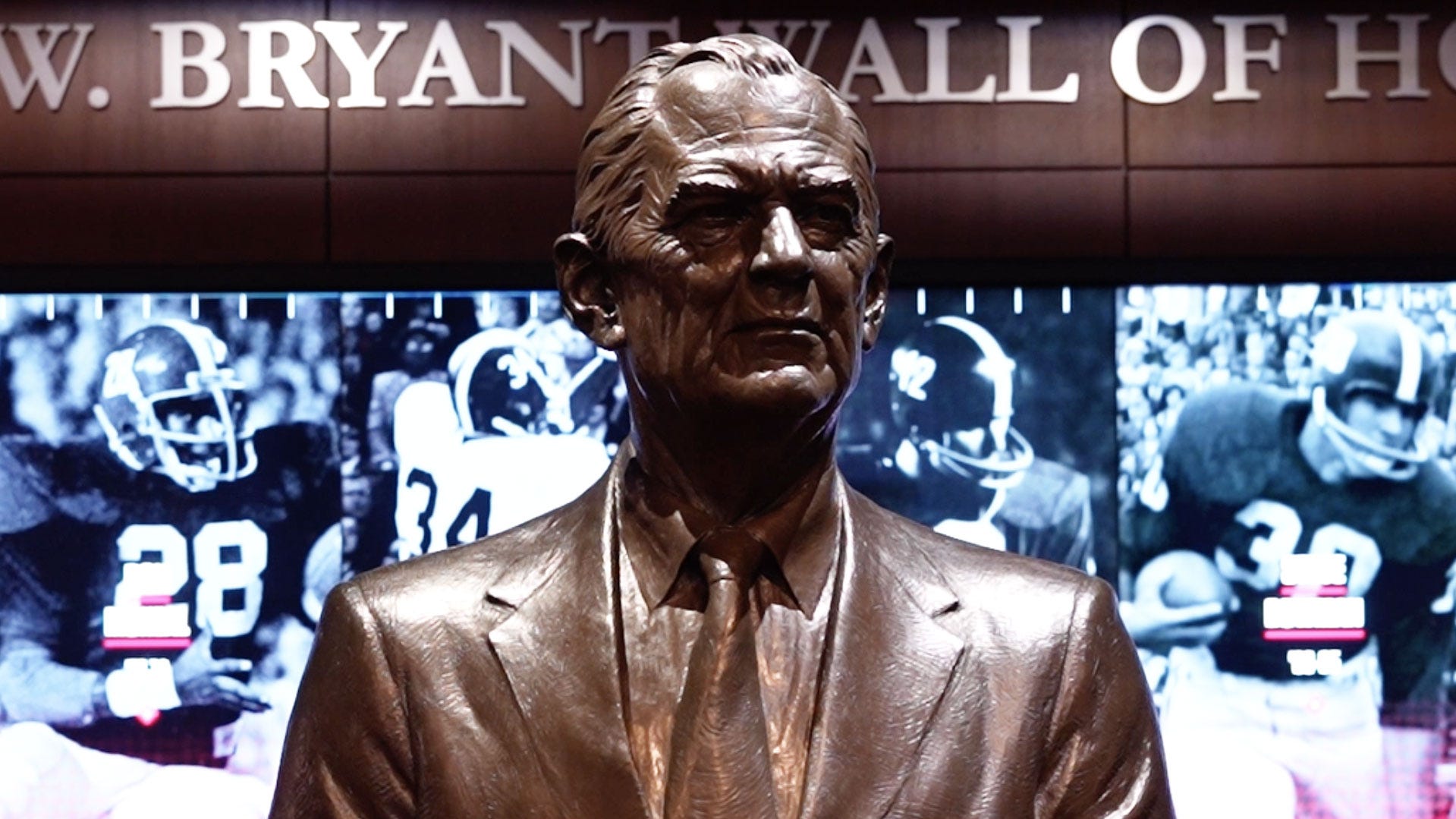


Paul W. Bryant Museum: Exploring Alabama football legacy
Discover the legacy of Alabama football through artifacts, memorabilia and state-of-the-art displays at the Paul W. Bryant Museum
Gary Cosby Jr. and Chase Goodbread
Athletic directors from the Power Four conferences have been pinching budgets for months in preparation for last week’s settlement of the House vs. NCAA lawsuit, which has ushered in revenue-sharing payments to athletes that have been estimated at $20.5 million beginning this year.
It’s a whopping sum on even the biggest of athletic department budgets, drawn from the average of Power Four revenues from things like TV contracts, ticket sales and sponsorships. It’s also not static; the figure will climb incrementally over the next decade and could easily reach $30 million by then. But as fat a number as that might look to the school accountant, it’s a pie that will be be cut into hundreds of slices from the athlete’s perspective.
And the math says it won’t be nearly enough to drown out the impact of third-party NIL deals.
Because football is the primary revenue driver in college athletics, football players are expected to get a lion’s share of the rev-share windfall. Texas Tech, for instance, has already made public its intention to commit more than 90% of its $20.5 million to football and men’s basketball. In time, legal challenges under Title IX are sure to test that logic. But for now, let’s call it $15 million for football. With 85 players on scholarship, that’s an average of $176,470.58 per player, per year. Compared to the cost-of-living stipend athletes got in the pre-NIL era, that’s an exponential boon. But compared to what third-party NIL deals were already delivering to top football players — $2-3 million or more for elite quarterbacks, for instance — it seems unlikely to disrupt third-party NIL as the engine of recruiting and transfer movement.
The House settlement, of course, includes provisions to curtail “pay for play” NIL deals that never reflected, nor were ever intended to reflect, a player’s true endorsement value. The accounting firm of Deloitte will operate an NIL Clearinghouse called NIL Go, with the task of accepting or rejecting third-party NIL deals with a newfangled algorithm that will help inform decisions on each athlete’s fair market value. The idea is to prevent boosters from paying both recruits and college athletes far more than what their name, image and likeness is worth; rather, pay-for-play rewards nothing but athletic prowess, which is an entirely different measure. But until NIL Go proves itself as a steady arbiter that can all but eliminate pay-for-play deals — the clearinghouse, to be sure, will be challenged in court as well — I’ll remain skeptical of its impact.
At the same time, the House settlement has unquestionably created a new era in college athletics. In three weeks, when revenue-sharing payments begin on July 1, the original NIL era will end with a lifespan of exactly four years. The floodgates first opened on July 1, 2021, and flood is certainly the right word for what followed. If the House settlement is ever going to mark the new beginning that the powerbrokers of college athletics are hoping for, it will have to deal a deathblow to pay-for-play.
But until further notice, third-party NIL is still the dog, and revenue-sharing is the tail.
Tuscaloosa News columnist Chase Goodbread is also the weekly co-host of Crimson Cover TV on WVUA-23. Reach him at cgoodbread@gannett.com. Follow on X.com @chasegoodbread.