
NIL
Can UW Sports Compete In Division I As Lower Divisions Offer More NIL Money?

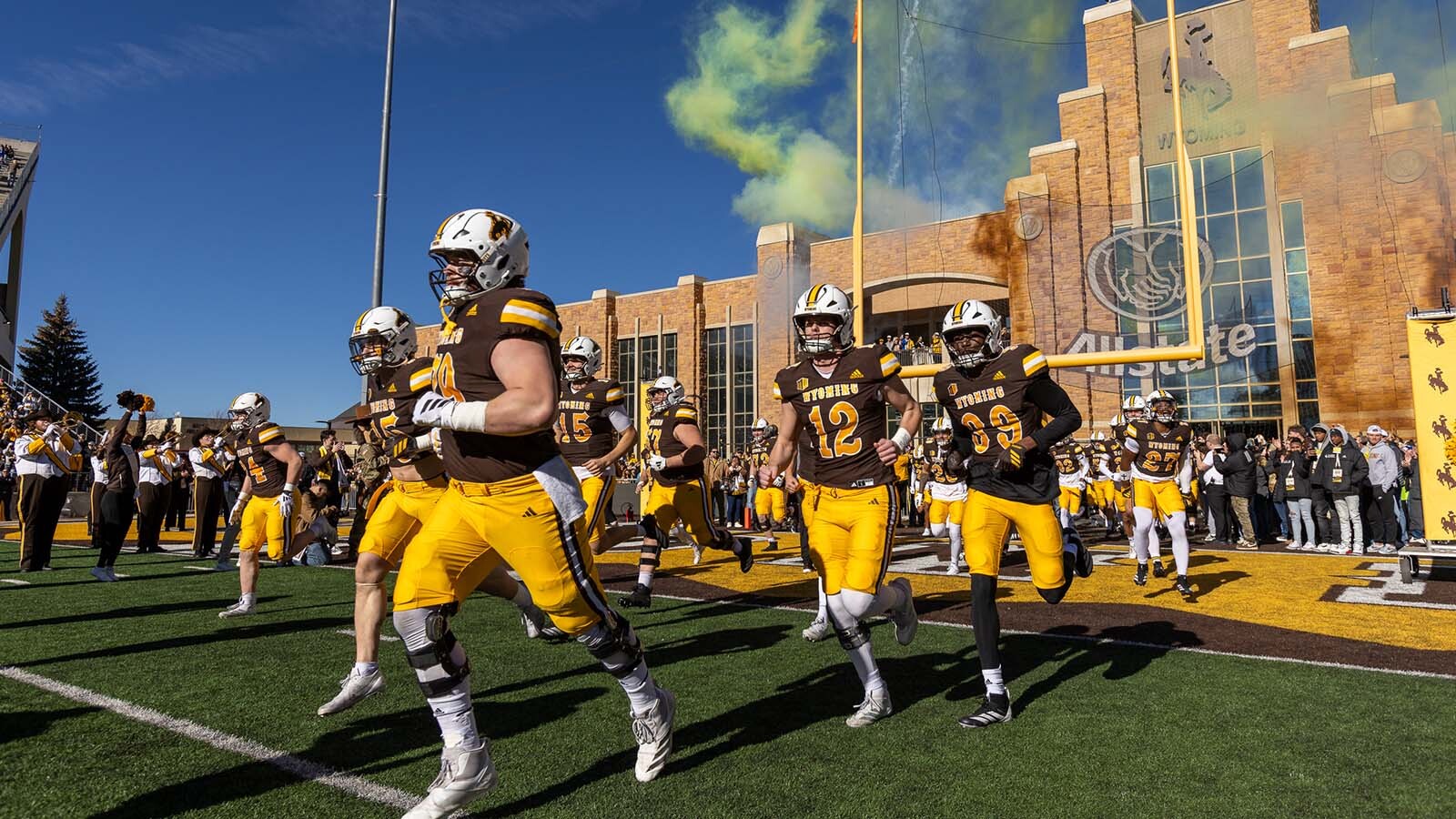
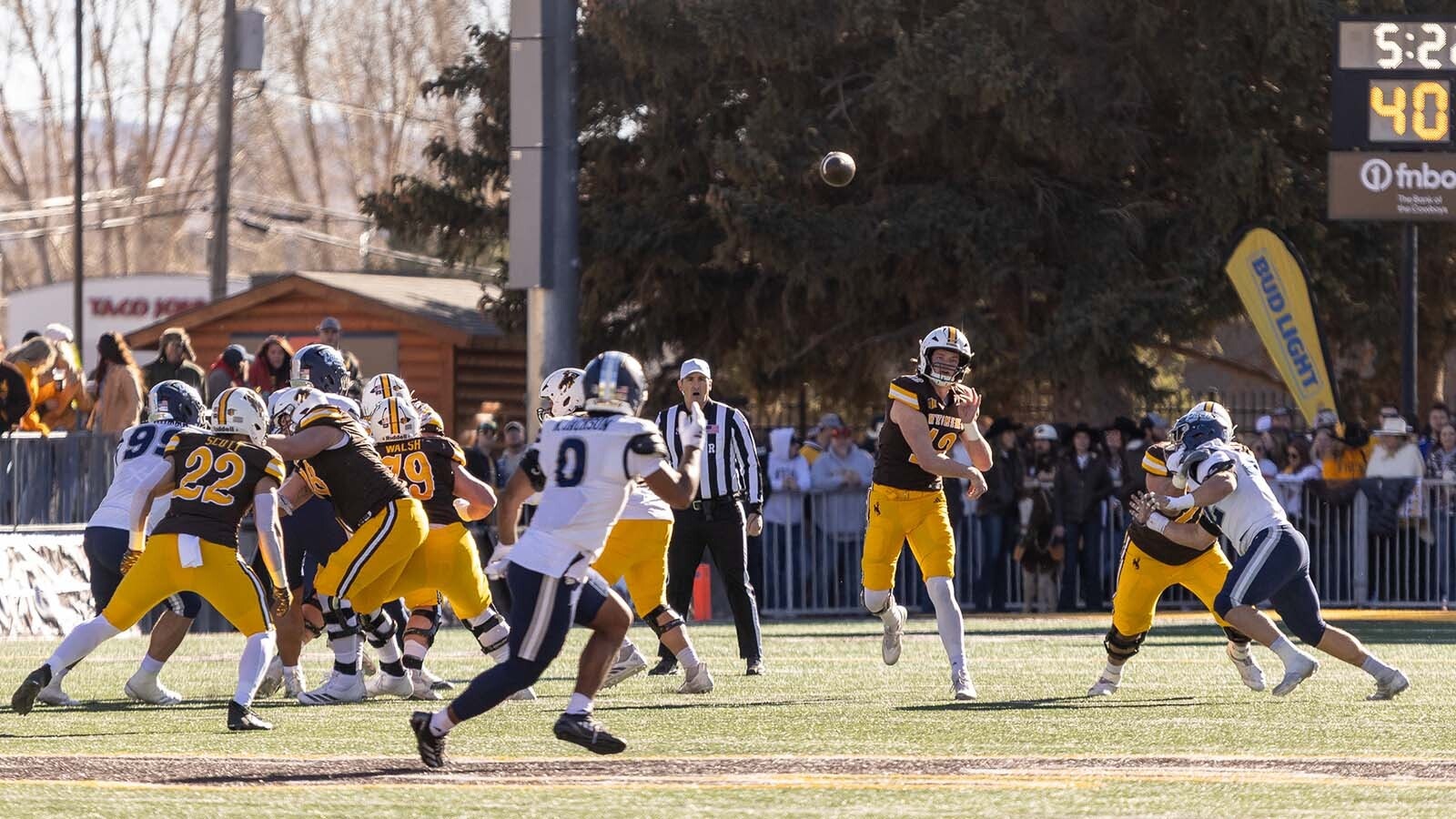
Scott Ortiz watched from the stands at War Memorial Stadium on Nov. 22 as the University of Wyoming Cowboys faced Nevada in what should have been a season-defining moment for the school’s football program.
The atmosphere was electric — one of the most charged Ortiz had experienced since star quarterback Josh Allen was slinging passes for the Brown and Gold.
The crowd roared.
The energy crackled through the crisp November air.
On the field, however, the Cowboys couldn’t convert when it mattered.
“You’re watching the game and you’re realizing that if we had money to spend at certain skill positions, we could easily convert these third downs, we could keep drives alive, and we just don’t,” Ortiz told Cowboy State Daily. “Our inability to move the ball to score in that electric atmosphere was just painful.”
The 13-7 loss to Nevada was only the beginning.
Wyoming went on to score just seven points total in its final four games — a stunning collapse that left the Cowboys out of bowl eligibility and left the Casper attorney and longtime UW booster convinced that without action, Wyoming athletics faces an existential crisis.
The Pokes’ dismal end to the 2025 season kept them out of a bowl game.
Now in the heart of football bowl season and the college football playoffs, sports fans around Wyoming will continue to debate how best to shape the future of UW football.
Should UW do all it can to pay for the best players in an effort to climb the totem pole of television ratings and one day contend for a playoff berth in big-time Division I competition?
Or should Wyoming go the way of Saint Francis University, one of a growing number of schools voluntarily dropping out of the rat race for TV revenue and voluntarily leaving the Division 1 ranks?
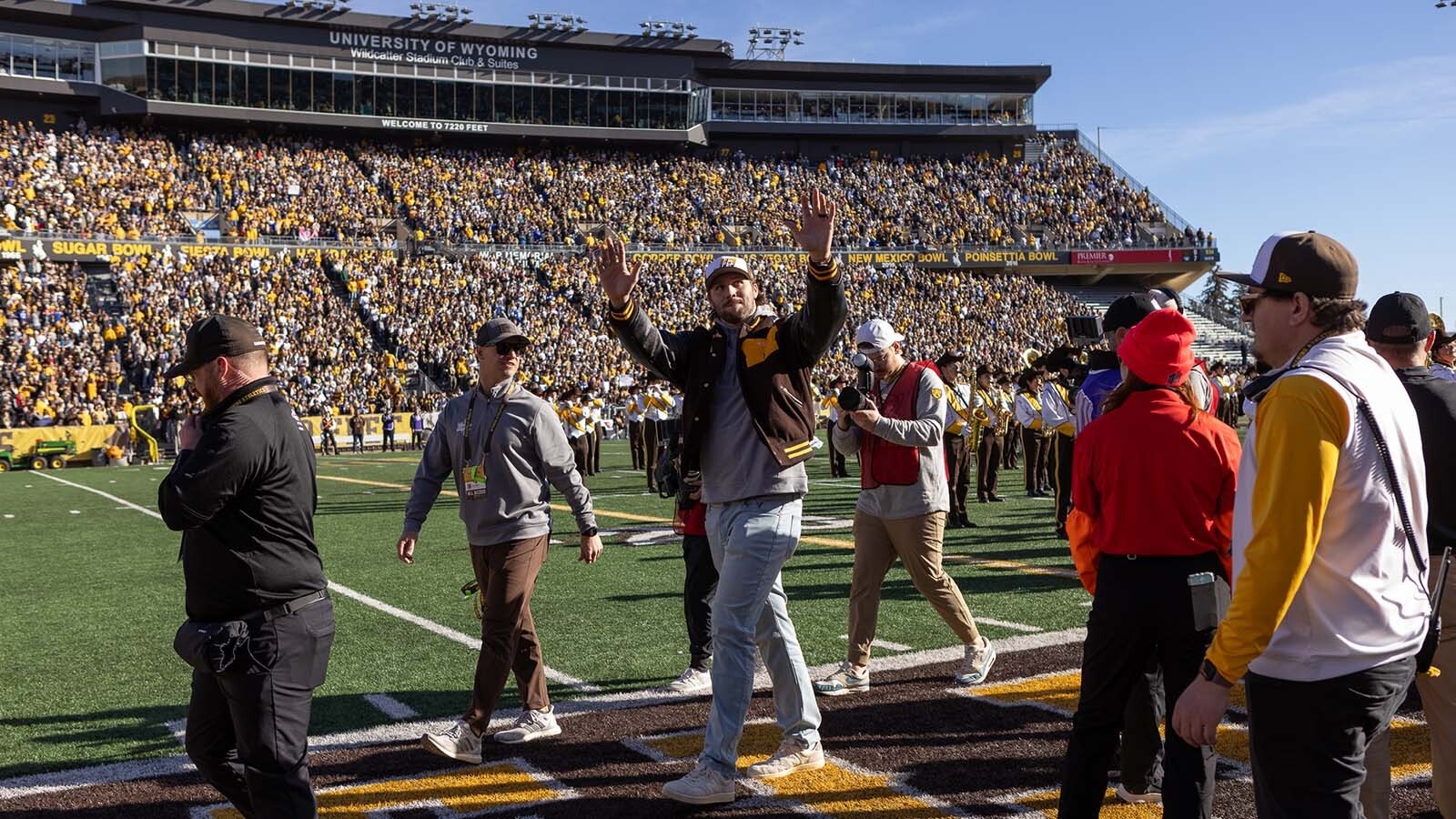
College Is Pro
Chase Horsley has watched college athletics transform from his perch at “The 5 Horsemen” podcast in Gillette, where he covers Wyoming sports for Horseman Broadcasting and Entertainment.
“Nothing is the same anymore,” Horsley told Cowboy State Daily. “It kind of feels like more of the NFL type of thing.”
The NIL era of paying players has created a new reality where talent flows toward money.
Horsley sees it affecting Wyoming’s ability to keep homegrown talent and recruit out-of-state prospects to choose UW. Then there’s the challenge of keeping talented players from being lured away by other universities with larger NIL war chests.
“The Wyoming kids aren’t really trying to go to the University of Wyoming,” Horsley said. “Some of them are going, some of them aren’t going.”
The lure is obvious.
“Would you not want to go play if you’re going to get paid, like, a million bucks or $500,000?” Horsley asked. “I mean, we’ve got college kids that are getting out of college and are millionaires.”
For Ortiz, the comparison to schools within Wyoming’s own competitive tier is damning.
Research shows that Montana and Montana State — schools competing in the Football Championship Subdivision, a tier below Wyoming’s Football Bowl Subdivision — are spending about $2.2 million on NIL, while Wyoming hovers around $1.4 million.
“Isn’t that shockingly embarrassing to think about?” Ortiz said. “Schools that don’t sit on the wealth of money we do are outspending us.”
Ortiz said he’s speaking with legislators about tapping into a tiny fraction of the state’s mineral-wealth rainy day fund to help back UW athletics.
He points to what he considers a wake-up call from neighboring Utah: Brigham Young University reportedly paying $7 million to one basketball player.
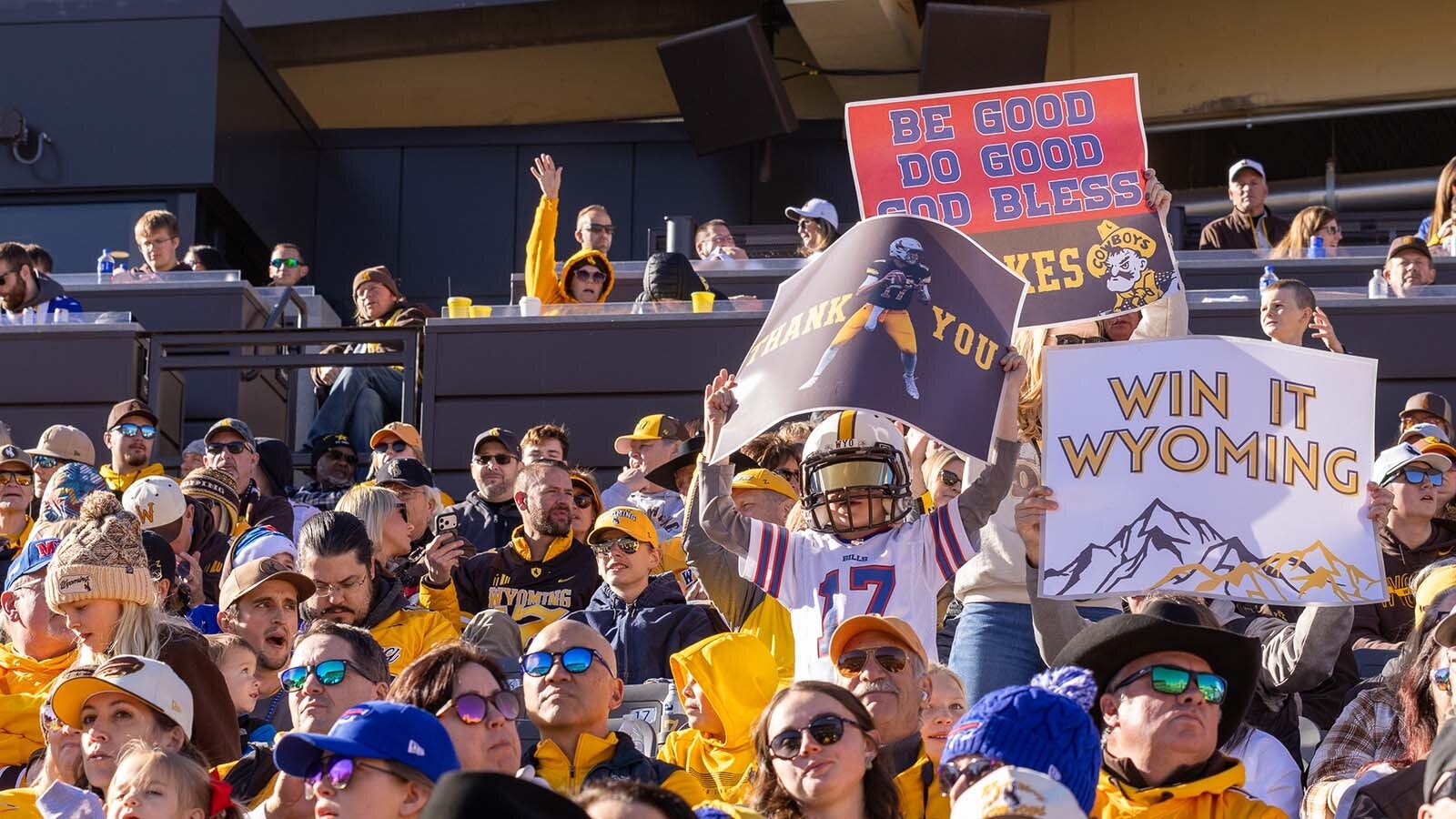
Left Behind
Not everyone in Wyoming is convinced the answer is more spending. Some voices have quietly suggested the Cowboys consider stepping down in the Division I ranks and from FBS competition entirely.
Alan Stuber, a Gillette Police Department patrol officer and lifelong Wyoming fan who wrestled collegiately at Dakota Wesleyan, has heard the arguments.
“There’s always been an argument of, ‘Well, why don’t we just go to the Big Sky (Conference) and kind of deal with the South Dakota States,'” Stuber told Cowboy State Daily. “Their football program is very successful year after year at making the (FCS) playoffs.”
But Stuber rejects that reasoning.
“In my mind, it’s still a step down,” he said. “Those are the schools that have the least amount of NIL money. So they’re going to be content where they’re at.”
Stuber points to the career trajectory of former Wyoming head coach Craig Bohl as evidence of Division I’s value.
“If it wasn’t such a big deal to be a D-1 college, why did Coach Bohl make the move from North Dakota State to Wyoming?” Stuber asked.
For Stuber, the choice is binary: “You either roll with the changes or get left behind. And I feel that Wyoming is kind of on that verge of getting left behind.”
Cautious Dissent
One Laramie resident who contacted Cowboy State Daily took the opposite view, arguing Wyoming should follow the lead of Saint Francis University in Pennsylvania, which announced in March it would transition from Division I to Division III.
“That is exactly what Wyoming should do,” the reader wrote, suggesting the university examine “the zero athletic scholarship Division III” model or even “club sports.”
The reader, who asked to remain anonymous, explained the reason for his reluctance to go public.
“I do not wish to stimulate even more harassment or other adverse actions from the university’s administration by being made part of this story,” he wrote.
Saint Francis is part of a small but growing list of schools reconsidering their Division I commitments. The University of Hartford completed its transition from D-I to D-III in September 2025.
Another St. Francis — St. Francis College in Brooklyn — eliminated all athletics programs entirely in 2023. Sonoma State University in California cut all 11 intercollegiate athletic programs in January 2025.
But such moves remain the exception.
Before 2025, only two schools in the previous quarter-century had voluntarily dropped from Division I to Division III: Centenary College in Louisiana (2009) and Birmingham-Southern College in Alabama (2006).
Begging To Get In
UW Athletic Director Tom Burman offered a pointed rebuttal to those suggesting Wyoming consider the FCS route.
“The better question is, why are Montana, Montana State begging to get into the Mountain West?” Burman told Cowboy State Daily. “I can tell you that the top tier of the FCS is willing to pay money to join the Mountain West.”
Horsley, despite his concerns about NIL pressures, agrees that dropping down would be a mistake.
“I think they would do well with the Big Sky,” Horsley said. “But I think revenue-wise and like booster clubs, things like that, I think they would want to just keep D-1 and in the FBS.”
The financial gap between the two levels remains substantial.
Mountain West schools receive about $3.5 million annually from the conference’s television deal with CBS and Fox — a six-year, $270 million agreement running through 2025-26, according to The Associated Press.
The Big Sky Conference’s ESPN deal, while recently extended through 2029-30, does not publicly disclose per-school distributions, though Big Sky Commissioner Tom Wistrcill has said the new contract includes a “very nice increase in dollars.”
New upstart members like Utah Tech have agreed to receive no media revenue until 2030-31, according to membership agreements obtained through public records requests by the sports website Hero Sports.
Total athletic department budgets tell a similar story.
Wyoming’s annual budget sits around $50 million, according to NCAA financial reports compiled by USA Today.
In the Big Sky, budgets range from Sacramento State’s $35.8 million down to Idaho State’s $12.1 million, with Montana and Idaho around $22-23 million, according to the USA Today database.
Yet on NIL specifically, the picture is more complicated.
Montana’s estimated $2.2 million in collective spending actually exceeds Wyoming’s, according to NIL tracking data compiled by nil-ncaa.com, placing it ahead of even some Big 12 teams in the NIL arms race.
“We struggled from the time NIL started really in ’22 until the end of June this past year,” Burman said. “We struggled getting people — Wyoming fans, alumni, donors — to invest in the collective.
“It’s just not something Wyoming people embraced.”

At A Crossroads
For Ortiz, the stakes extend beyond wins and losses. He sees Wyoming at a historical crossroads, comparing the current moment to the program’s darkest chapter.
“We are now at probably the biggest low point since the Black 14 in 1970,” Ortiz said.
The Black 14 incident actually happened in October 1969, when 14 Black players planned to wear black armbands during an upcoming game against Brigham Young University.
They sought to protest the LDS Church’s policy barring Black men from the priesthood, amid broader racial tensions that included racist taunts directed at Wyoming’s Black players during BYU games.
When the players approached head coach Lloyd Eaton for permission, he expelled them on the spot, citing team rules against demonstrations.
“It took Wyoming a decade to recover from that when they lost all those players,” Ortiz said. “And I see this as exponentially more dangerous.”
Without action, Ortiz fears a spiral that could fundamentally alter Wyoming’s place in college athletics.
“Once people say, ‘OK, you’re on a losing slide anyway, and you’re not an exciting team, and you’ve already been passed over to go to a better conference, and you don’t have any money to pay us anyway’ — I mean, we could become the doormat of the Mountain West,” he said. “Or worse.”
Does worse mean dropping down to the Big Sky Conference?
“Maybe the Big Sky doesn’t want us,” Ortiz said. “Maybe we’re in a league with Chadron State. From an enrollment standpoint, there’s a lot of Division II and Division III schools that have the same enrollment as Laramie does.”
He warns those calling for self-relegation that, “You literally might as well say, ‘Fine, we’ll just be a rodeo school and have a good science department.’”
Contact David Madison at david@cowboystatedaily.com
David Madison can be reached at david@cowboystatedaily.com.

Dec. 29, 2025, 4:07 a.m. CT
Take a breath, because we’re almost to the Orange Bowl.
A lot has happened in the last 13 months or so for the Texas Tech football team. The Red Raiders got new coordinators on offense and defense, completely changed the program’s perception through its use of the transfer portal and NIL war chest, sat through eight-plus months of hyperbole and lip service, and, finally, made it all worthwhile with the Big 12 Championship and a spot in the College Football Playoff.
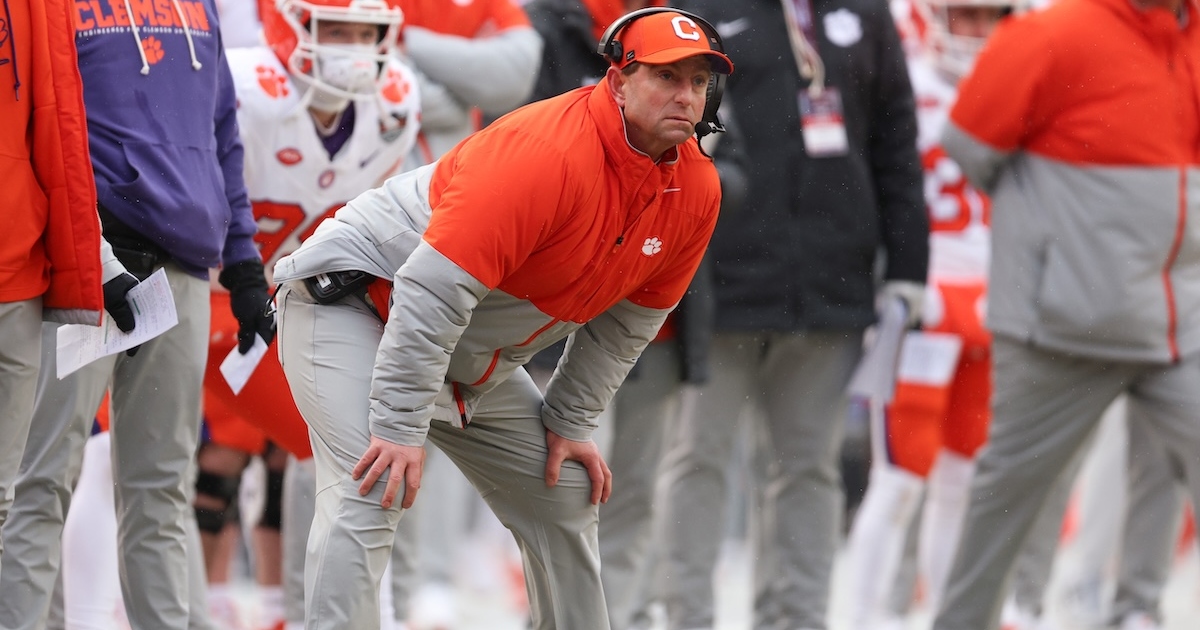
Dabo Swinney might have a long look in the mirror as Clemson hits the offseason. The Tigers lost 22-10 to Penn State in the Pinstripe Bowl to finish the year 7-6.
It was a year where, ironically both PSU and Clemson, were popular preseason national champion picks. Heck, some even predicted these two would square off for college football’s crown.
Swinney chalked these struggles up to big picture issues. If those can get rectified ahead of 2026 remains to be seen.
“It’s really more about just big picture of our issues from the season,” Swinney said postgame. “I know what’s real. I know what’s not. I don’t read what everybody else writes. I know what’s real. I have a good perspective when it comes to things that are in our control and what we’ve got to do better. We’ve got great people. I love all the people on my staff.
“But you evaluate everything. That’s just a part of our business, and it’s a part of the end of a season is you step back and — I don’t make emotional decisions, but first and foremost, it starts with what happened and how do we — is it personnel, is it scheme, is it bad calls, whatever. There’s a lot of things you evaluate as a coach.”
With the talent Clemson had back, such as QB Cade Klubnik and defensive linemen Peter Woods and T.J. Parker, there seemed to be a lot of NFL talent. But it just didn’t click as the Tigers found themselves 1-3 after four games, pretty much out of the CFP picture before even getting started.
Dabo Swinney promises to get it right for 2026
“Again, I know we’ve got seven wins, but we’re a lot closer than people think,” Swinney said. “That’s one of them things, boy, if you say that you get torn up on social media, people rip you I’m sure. But that’s the reality. I know what it is, and I know how close we are. It’s one more catch. It’s one more good throw. It’s a better call. It’s one stop. Next thing you know, you win a couple of those games that we lost early, and now you’ve got confidence and momentum and all those things matter. We just never got that.”
Swinney is 187-53 since 2008 with Clemson, winning nine ACC titles and two national championships. Heck, despite being 10-4 last year, the Tigers won the ACC and made it to the first round of the College Football Playoff.
To get back to that and beyond might take a philosophy or roster overhaul. But Swinney claims he knows what to do to get it right.
“It certainly affected us,” Swinney said. “But again, evaluate everything, make good decisions based on what my perspective is, and I’ll change what I need to change, stay the course on what I believe I need to stay the course on.
“Again, it’s never as good as you think, it’s never as bad as you think. I’ve done this a long time, and this is the second worst season we’ve had in 17 years. There will be something good come from it just like the last one we had in 2010. We had a lot of great things come from it. We’ll have a lot of great come from this one, as well.”
NIL
Kyle Whittingham admits he didn’t know if he was done coaching after stepping down at Utah before Michigan hire
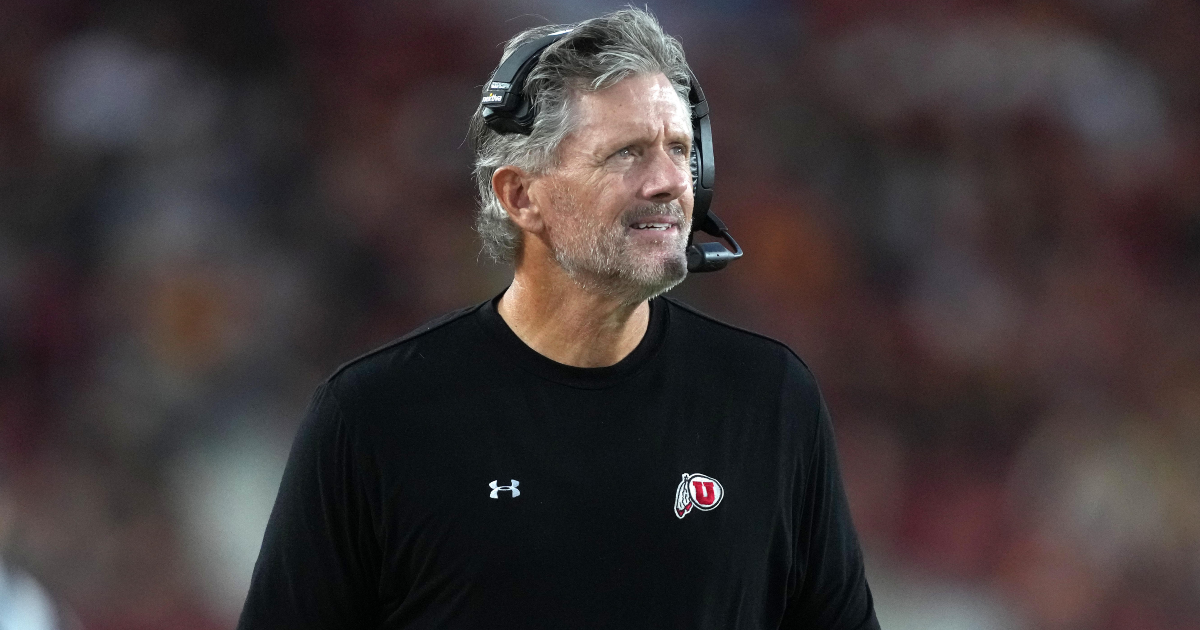
On Dec. 12, Kyle Whittingham announced he’d be stepping down from his position as head coach at Utah after spending 21 seasons at the helm of the program. At the same time, Michigan fired head coach Sherrone Moore after he was charged with felony third-degree home invasion and two misdemeanors.
Just two weeks later, Michigan hired Whittingham to be its next head coach. During his introductory press conference on Sunday, the 66-year-old HC admitted he wasn’t sure whether he’d ever coach again after he resigned from Utah.
“It’s an honor to be able to be in this position. Twenty-one years at Utah. Stepped down a couple weeks ago. Wasn’t sure if I was finished or not. I still have a lot left in the tank,” Whittingham said. “You can count on one hand, the amount of schools that if they called, I would listen and I would be receptive to what they had to say.
“Michigan was one of those schools, definitely a top five job in the country, without a doubt. So, when the ball started rolling, and the more I learned about Michigan, the more excited I got. And I’m just elated to be here.”
Whittingham signed a five-year contract with Michigan worth an average of $8.2 million per year. Whittingham’s contract is 75% guaranteed. His 2026 salary is expected to be $8 million.
While Whittingham is far older than many of the other coaches who were signed during this hiring cycle, he’s also far more experienced. Whittingham was the head coach at Utah from 2005-25.
During his impressive tenure, he guided the Utes to a 177-88 overall record and three conference championships. Despite his illustrious résumé, Kyle Whittingham said he didn’t expect to hear from Michigan about its job opening.
“I didn’t expect that. Ironically enough, the timing was almost exactly the same from when I stepped down and when this job became open,” Whittingham said. “It was within a day or so of each other. Like I said when I stepped down, I felt like one thing I didn’t want to be is that coach that just stayed too long at one place.
“I just felt that the time was right to exit Utah. But, like I said, I still got a lot of energy, and felt like, ‘Hey, if the right opportunity came, then I would be all in on that.’ So, that’s what Michigan afforded me.”
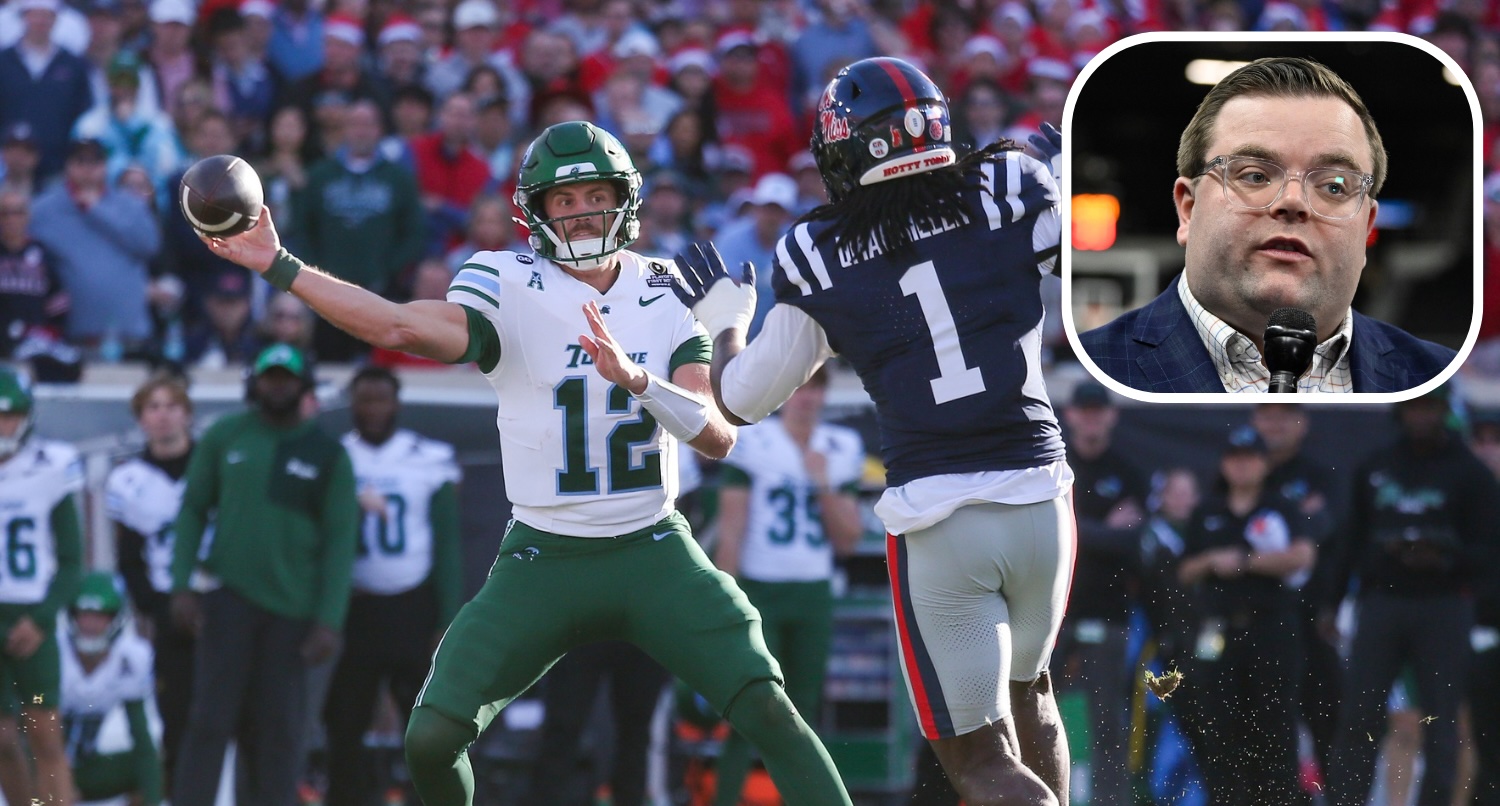
Everyone loves an underdog. That is, except everyone involved with college football.
As soon as two Group of Five schools qualified for the 2025 College Football Playoff, every college football talking head started falling all over themselves to explain why they didn’t deserve to be there, didn’t belong, and shouldn’t be allowed to compete there in the future.
The TV ratings for the first round of the CFP seemed to give pundits further ammunition, especially since most of their arguments had more to do with driving TV audiences than rewarding winners.
The war against college football Cinderellas has been intense, and you can add a somewhat surprising voice to the mix: NBC Sports college basketball announcer John Fanta.
As part of a wide-ranging interview with the New York Post’s Steve Serby, Fanta shared that while he enjoys seeing Cinderella teams compete in college basketball’s March Madness, it doesn’t work the same for college football.
“I would not have two Group of 5 teams in the Playoff,” said Fanta. “I am all for Cinderella. But Cinderella exists in college basketball.
“The opening weekend of the College Football Playoff was a dud. It’s not about picking Miami over Notre Dame. Miami beat Notre Dame. What doesn’t make any sense is the committee for weeks had Miami below Notre Dame, and then put Miami in over Notre Dame. So the committee has no rhyme or reason to what they are doing. That’s my issue with the Playoff. I think the Playoff is gonna deliver great games.”
Fanta’s argument is somewhat moot, as future editions of the CFP are highly unlikely to unfold as this year’s did, thanks in large part to Notre Dame’s revised MOU and likely changes to the ACC’s selection criteria.
Also, while the Tulane and JMU games were largely uncompetitive, plenty of Power 4 schools (and Notre Dame) have laid far worse eggs in CFP games.
If there’s a villain in this year’s CFP draw, it’s the Power 4 programs that didn’t do enough to justify their inclusion, rather than the G5 schools that earned the right under the current criteria.
NIL
Ed Orgeron on SEC paying players before NIL: ‘We used to walk through the back door with the cash’ – Tar Heel Times
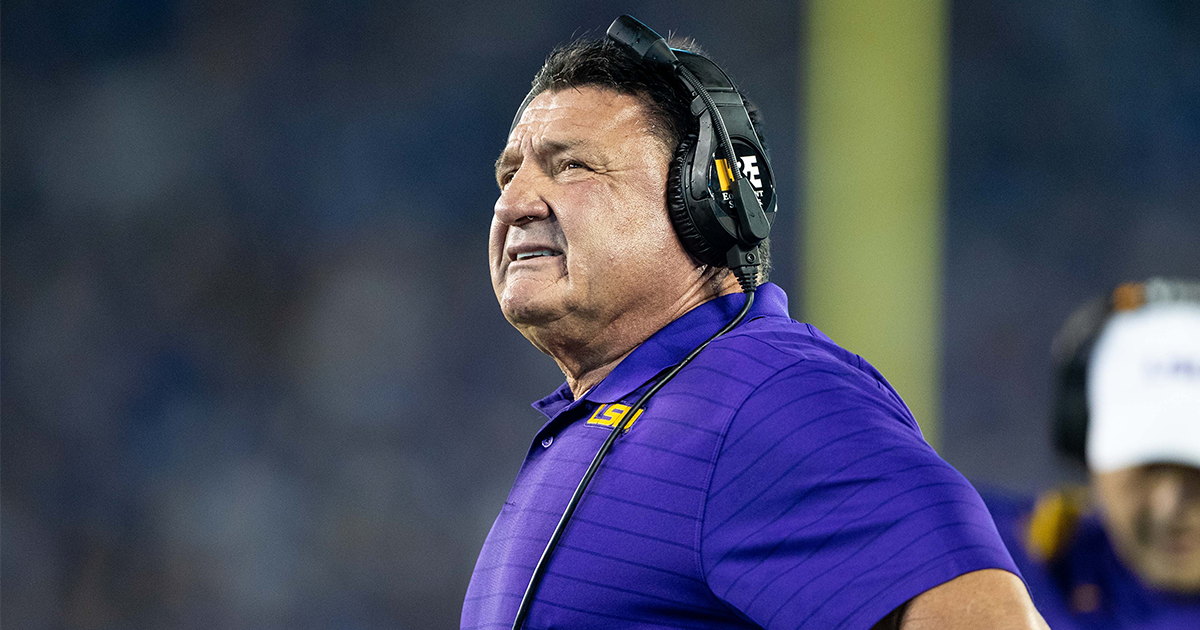
Posted Dec 28, 2025
Few recruiters in college football worked harder than Ed Orgeron. Orgeron did a great job bringing in some great talent. However, most of his work came in the pre-NIL era, meaning he could not, technically, use money in the process. So when talking about how he would adapt with NIL now legal, Orgeron hilariously said there would just be a slight difference.
(On3.com)
Related: Other News
Wetzel: Beware, college sports, private equity has arrived
Even as revenue goes up and up from richer media deals, expanded playoffs and modernized operations, costs continue to soar. Spending has to be addressed…
Sun Dec 28, 2025
Remembering Rodney Rogers, gone at 54 but impossible to forget
Rodney Rogers, a Sun from 1999 to 2002 and a one-of-one presence in franchise history, has passed away. He wore number 54 like nobody else,…
Sun Dec 28, 2025
The ACC aimed to restore its men’s basketball reputation. So far, it’s working
Four ACC basketball teams made the NCAA tournament in 2025. Five teams made it in each of the three years before that. The ACC has…
Sat Dec 27, 2025
Caleb Williams and Ben Johnson: The Quarterback–Coach Partnership Transforming the Bears
If you want to understand why the Chicago Bears feel different today, why their offense has matured week by week, why the franchise finally looks…
Sat Dec 27, 2025

While transfer portal details are rare and hard to verify, the overall trend is that defensive standouts might be the bargain play over a top offense. Quarterbacks have already made deals like Darrian Mensah’s $4 million reported payday a year ago, with some speculating the market might drive over $5 million now.
But when On3sports provided a recent peak behind the curtain at the values and costs of recruiting portal talent, it was clear that defense remains the value play. On3 provided a few fascinating details.
Defensive linemen can be relatively high priced. For instance, On3 cited the reported deal of David Bailey (which some have valued at over $3 million) as the potential high side of defensive paydays. Elite pass-rushers aren’t cheap, and the $1.5 million high end value quoted by On3 is clearly contemplating that possibility.
Penn State edge Chaz Coleman is one of the players already indicated to be entering the portal who might command the type of value On3 notes. With three years of eligibility, the 6’4″, nearly 250 pound Coleman is an elite prospect. Another name nearly on that level is Oklahoma State transfer Wendell Gregory.
But defensive tackles, despite the relative scarcity of players with the physical attributes to provide lane-clogging snaps, tend to lag a bit lower than pass rushers on the college football food chain. If pass-rushing ends are still a bargain compared to quarterbacks, then defensive tackies will generally land cheaper still, with few likely to break the $1 million barrier by On3’s projection. One name that could be in that company, though, is Wake Forest transfer Mateen Ibirogba.
The massive value of the entire recruiting world, as documented by On3, lies in the secondary. Ranking defensive backs lowest of all the position groups profiled, On3 noted that vast number of defensive backs who join the portal. On3 indicates that an elite safety is probably a slightly higher value than a cornerback.
At the moment, Iowa State’s Jontez Williams is a top corner transfer, while Tennessee’s Boo Carter leads a slightly underwhelming safety class.
But at a projected value of $300,000-$850,000, a school could afford an entire secondary cheaper than an elite quarterback, at least according to the valuation reported by On3. Whatever path to the Playoff the next portal-playing team chooses, defense is clearly the economic option.

Paul Lee Inducted Into SEMA MPMC Hall of Fame at 2025 PRI Show

Margaritas restaurant closed; Time Out Sports Bar to follow | News
How Texas Tech football assembled a Big 12 champion, CFP team

Highlights and top performers from the NEO Youth Elite Christmas Classic
2025 Lakeshore Elite volleyball team, Player of the Year

Two More Arrested In 2023 Macedon Motorsports Burglary – Finger Lakes Daily News

Faulkner leads Enquirer All-Area volleyball team

Two in hospital after fire at home owned by Denny Hamlin – Motorsport – Sports

Sports tourism is a top regional economic opportunity

French movie star Omar Sy named ambassador for Dakar 2026 Youth Olympic Games

Why I started The Breakaway – The Dickinson Press

Introducing CityPickle Kids: Youth Academy 01/06/26

Youth hockey players hit the ice at TD Garden for mini 1-on-1 tournament – Boston News, Weather, Sports

NFL Flag Football youth league coming to Amarillo this summer

Girls’ basketball: Brown, Hawks plunder Pirates to reach Berea final | Sports

SoundGear Named Entitlement Sponsor of Spears CARS Tour Southwest Opener

Donny Schatz finds new home for 2026, inks full-time deal with CJB Motorsports – InForum

Black Bear Revises Recording Policies After Rulebook Language Surfaces via Lever

Bowl Projections: ESPN predicts 12-team College Football Playoff bracket, full bowl slate after Week 14

Robert “Bobby” Lewis Hardin, 56

Men’s and Women’s Track and Field Release 2026 Indoor Schedule with Opener Slated for December 6 at Home

David Blitzer, Harris Blitzer Sports & Entertainment

How Donald Trump became FIFA’s ‘soccer president’ long before World Cup draw
Wisconsin volleyball sweeps Minnesota with ease in ranked rivalry win

Michael Jordan’s fight against NASCAR heads to court, could shake up motorsports

JR Motorsports Confirms Death Of NASCAR Veteran Michael Annett At Age 39

Rick Ware Racing switching to Chevrolet for 2026

DeSantis Talks College Football, Calls for Reforms to NIL and Transfer Portal · The Floridian
Elliot and Thuotte Highlight Men’s Indoor Track and Field Season Opener

Colleges ponying up in support of football coaches, programs






-
 Motorsports3 weeks ago
SoundGear Named Entitlement Sponsor of Spears CARS Tour Southwest Opener
-
 NIL3 weeks ago
DeSantis Talks College Football, Calls for Reforms to NIL and Transfer Portal · The Floridian
-
 Sports2 weeks ago
#11 Volleyball Practices, Then Meets Media Prior to #2 Kentucky Match
-
 Motorsports2 weeks ago
Sunoco to sponsor No. 8 Ganassi Honda IndyCar in multi-year deal
-
 Motorsports2 weeks ago
Nascar legal saga ends as 23XI, Front Row secure settlement
-

 Motorsports3 weeks ago
North Florida Motorsports Park led by Indy 500 Champion and motorsports legend Bobby Rahal Nassau County, FL
-

 Motorsports3 weeks ago
Accelerating Inclusion: Breaking Barriers in Motorsport
-
 Sports2 weeks ago
Maine wraps up Fall Semester with a win in Black Bear Invitational
-
Motorsports3 weeks ago
NASCAR, 23XI Racing, Front Row Motorsports announce settlement of US monopoly suit | MLex
-
 Rec Sports2 weeks ago
WNBA’s Caitlin Clark, Angel Reese and Paige Bueckers in NC, making debut for national team at USA camp at Duke