CASPER, Wyo. — The Casper College Athletics Department was recently honored during the NERD YMCA of Natrona County’s 11th annual Wall of Honor Celebration.
Paxton Stoneking, who just finished his freshman year at the college as a member of the Casper College Men’s Soccer team, accepted the award on behalf of athletics. According to head soccer coach Ben McArthur Paxton has a unique relationship with the Y.
“Paxton started soccer as a child through the Casper YMCA, which made him a great person to accept this recognition on behalf of the CC athletics department,” McArthur said.
Stoneking, a midfielder for the men’s soccer team, noted that it was at the Y when he was a small child that he put on a pair of soccer cleats for the very first time.
“I was just a little kid, running around with a jersey that nearly reached my ankles,” he said. “Fast forward to today, and the YMCA is still a major part of my life.”
“Watching Paxton mature has been really fun over the last few years. Last year, as a soccer team member, he showed growth and leadership skills. Having the chance to represent Casper College Athletics is a full circle moment for him with the YMCA recognition,” McArthur added.
Four businesses or individuals are recognized each year. In addition to Casper College, the True Companies, Amber and Pete Fazio, and Trudi Holthouse were recognized.
“We are honored to be included in this year’s list of honorees,” president Brandon Kosine said. “This recognition represents the hard work of our student-athletes who engaged with community children and youth in sports activities at the Y. We genuinely value Casper College’s partnership with the Y and look forward to our continued collaboration.”
“The partnership between the YMCA and Casper College Athletics has greatly enhanced our youth sports programming. The athletes are great mentors and role models to our young sports players and help them see what the love for a lifelong sport can look like,” added Stephanie Disburg, CEO of the YMCA of Natrona County.
(TNND) — Federal agencies are surging personnel to Minneapolis in the wake of a viral video, in which YouTube personality Nick Shirley alleges he visited Somali-run childcare centers pulling in big bucks from the government without actually serving children.
However, FBI Director Kash Patel said he surged personnel and investigative resources to Minnesota to dismantle large-scale fraud schemes even before Shirley’s video was posted late last week.
Patel said the FBI dismantled a $250 million fraud scheme that stole federal food aid meant for vulnerable children during the pandemic. Patel said that case led to 78 indictments and 57 convictions.
“The FBI believes this is just the tip of a very large iceberg,” Patel said via X. “We will continue to follow the money and protect children, and this investigation very much remains ongoing.”
Homeland Security agents are going to the suspected fraud sites in Minnesota, the agency said.
And a federal prosecutor said recently, while announcing new charges in the ongoing fraud schemes, that the state has flagged 14 high-risk Medicaid programs, suspended payments for those programs and ordered a third-party audit.
First Assistant U.S. Attorney Joe Thompson said those 14 programs in Minnesota have cost $18 billion since 2018, and he said there’s reason to believe that more than half of that amount was fraudulent.
“The fraud is not small. It isn’t isolated. The magnitude cannot be overstated,” Thompson said during a Dec. 18 news conference. “What we see in Minnesota is not a handful of bad actors committing crimes. It’s a staggering industrial-scale fraud. It’s swamping Minnesota and calling into question everything we know about our state.”
One of the newest defendants received $6 million in Medicaid funds based on fraudulent claims to a program meant to provide one-on-one therapy to children with autism, Thompson said.
Abdinajib Hassan Yussuf, 27, allegedly paid kickbacks to parents in the Somali community to have their children diagnosed with autism spectrum disorder and enroll in his program.
Two other defendants in a Housing Stabilization Services fraud scheme allegedly came from Philadelphia to pluck $3.5 million in fraudulent Medicaid payments from Minnesota because they heard it was “easy money,” Thompson said.
As for Shirley’s viral video, KARE TV in Minnesota reported that the state commissioner in charge of childcare centers sent inspectors to double-check the facilities.
Minnesota Department of Children, Youth, and Families Commissioner Tikki Brown reportedly said several of the centers have been under ongoing investigations, but none of the investigations uncovered findings of fraud. And she said a state inspector visited each of the day cares seen in Shirley’s video within the last six months. She said the inspectors found children present.
Chris Edwards, a federal budget expert at the Cato Institute, a libertarian-leaning think tank, said he’d be “a little cautious” with Shirley’s claims.
But Edwards, an advocate for smaller government, did say Minnesota has a big problem with fraud.
“It’s huge,” Edwards said. “I mean, Minnesota is not a big state, and this is a lot of money for a fairly small state.”
Federal aid programs run by states are vulnerable to fraud, because state administrators don’t have a strong incentive to be frugal with the taxpayer money, Edwards said.
“It’s federal money. It’s free. The money is free to the states,” he said.
The automated nature of the claims process and the massive size of federal programs also contribute to the fraud risk, Edwards said.
“There’s too many government programs, and the fact that the feds are providing so much of the funding, it’s just a recipe for this sort of trouble, combined with the fact that with computers now, the programs can be looted very quickly and rapidly, and it takes auditors years to sort of catch up,” he said.
Turning Medicaid into a block grant, giving states a fixed amount of money, might help, Edwards said.
But the best solution would be to leave it to states to fund the welfare programs, he said.
States, which must balance their budgets, would keep better track of their own dollars, he said.
“And so, the state policymaker, whether Republican or Democrat, knows that if spending is going up rapidly on some program, they’ve got to … trim other programs,” Edwards said. “So, there’s just a natural incentive for them to be more frugal with locally raised money.”
Edwards said the federal government should take what it’s learning in the ongoing Minnesota fraud investigation and apply it to the other 49 states, looking for some of the same sort of patterns of abuse.
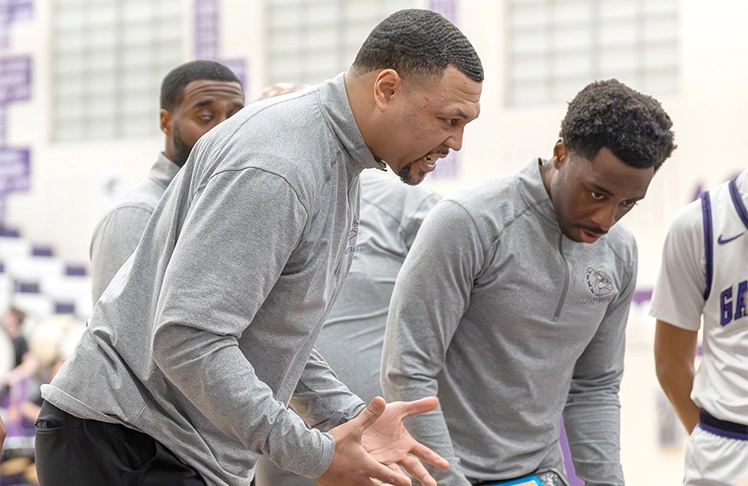
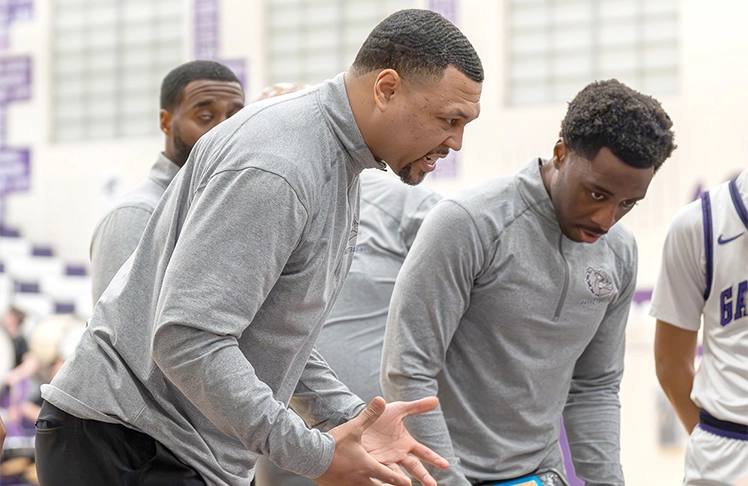
Seattle’s Black community is still looking for explanations as it relates to a series of recent events involving inner-city high school athletics, including the removal of Brandon Roy, center, as the boys basketball coach at Garfield High School. Seattle Medium file photo/Tyler Artis.
By Kiara Doyal, The Seattle Medium
Following a series of recent events in inner-city high school athletics, including the firings and resignations of long-time coaches, and most notably the Garfield junior varsity basketball team wearing Rainier Beach basketball jerseys during the annual “Hood Classic” rivalry game, growing concern has emerged about the current state of athletics within Seattle Public Schools, particularly in the predominantly and historically Black inner-city schools.
Keisha Credit, a Seattle native and Garfield High School graduate, said that she and her fiancé remain closely connected to the school and are deeply disheartened by the recent incidents within the local high school athletic community.
“The role that athletics plays [in the Black culture of Seattle] is deep,” said Credit. “Sometimes we have a toxic relationship with athletics, because a lot of our Black males are taught that athletics is a way for them to feel empowered and to ‘get out of the system.’ Seattle is not a poor place, so you have Black kids being taught that athletics is a way to get out of a city that is literally one of the richest cities in the nation, and we are being taught and indoctrinated into a culture that makes us believe that we are poor.”
Terrell Elmore, a proud Garfield alum who has been coaching basketball and football for at least 30 years, says that people in the community don’t know how to feel about the recent firings and resignations of Black coaches in the area because Seattle Public Schools nor the building leadership at Garfield has provided the community and or alums with a proper explanation.
“We really don’t know what the reason is, and we would love to know the reason, whether it is good or bad,” says Elmore. “With Corey (the former head football coach at Rainier Beach), he was three games [into the season before his departure]. Tavar (the former head basketball coach at Franklin) was a couple games [into the season], and then [the firing of the boys and girls basketball coaches at Garfield] was a couple weeks before the basketball season began,” said Elmore. “So, from that standpoint, I didn’t really care for it, and it was just like, ‘Where are all the Black coaches going?’”
RELATED ARTICLE:SPS’ Grinch Takes Holiday Cheer Out Of High School Athletics
For Lashaye Stanton-Phillips, a Seattle native, the news was devastating. She grew up and went to school alongside many of the aforementioned coaches and still maintains strong working relationships with them.
“It is devastating because they are doing something in the community that wasn’t done for us. They are making sure that kids have an opportunity or roadmap that we were not given, and the people behind it (the firings) won’t stand up,” Stanton-Phillips said. “Nobody has gotten up to say, hey, this is why we made this decision. For me, this goes all the way back to taking down the African American Academy school. So, within the Seattle School District, this is a history that they have. I feel like they found an outsider principal (at Garfield) to come in and to tear apart things that are going well.”
Rev. Demetrius Devers, a former Seattle high school sports star and co-captain of the 1995 University of Washington football team, believes that while rules and regulations exist and must be followed by those in leadership, public schools facing limited resources and funding often rely on every available connection to meet their needs, and in this case, prominent coaches in the community have helped to bring in resources and opportunities for the kids.
“Specifically with Seattle Public Schools, we know resources are limited compared to other school districts with greater funding to provide for their sports programs, and that have a greater funding source through their booster programs, so we utilize whatever connections and support systems that we can to make sure that our kids have that Deion Sanders mentality of look good, feel good, play good,” said Rev. Devers. “But I think it is unfortunate that good people are being let go of a job where they were able to bless the community and the kids that deserve it.”
In a recent game, the Garfield JV boys basketball team wore the jerseys of their cross-town rivals, Rainier Beach, because the team did not have its own uniforms available at the time of the game.
“When I saw the picture, I thought it was AI,” said Credit. “When I graduated in 2008, Seattle had a different makeup of beliefs and community, and there is no way that anybody from Garfield would wear a Rainier Beach jersey and have it not turn into a complete brawl.”
Credit believes it’s time to step back and consider what truly matters, winning a game or preserving the dignity of the children.
“These are children, and you put them in a clown suit, allowed them to go out there and masquerade around like fools. And then they lost by an amount that was so unbelievable, it just made it look like a mockery, and I was so worried about the mental health of those children,” said Credit. “How come our kids are not being taught that they can walk away from a situation where they are being embarrassed? It means nothing to forfeit that one game. Literally every excuse that was given was literally an excuse to make it OK to embarrass children.”
“All of these communities need to look themselves in the mirror and say, hey, who do we really care about? Is winning a game and playing a game so important that the dignity of the players has been lost?” continued Credit. “These are children. You’re teaching them how to feel about themselves as men. It’s sickening. It’s sickening. It’s sickening.”
According to Credit, the emphasis placed on sports and athletics within the Black community can sometimes overshadow the importance of morals and values. Over the years, she has seen many former pro players return to Seattle in an effort to give back to the students and communities they once belonged to. However, she says this has not always resulted in positive outcomes, and that emphasis should be placed on character and mentorship rather than profiles.
“Just because these coaches have these credentials in the NFL and NBA, believing they are great in all of these male-led industries, they then come in and believe that they are qualified to coach,” says Credit. “But let’s be real. Just because some people want to lead does not make them good or qualified. Just because they have their own experience being a good player does not mean that you’re a good coach. We all know many of y’all may not be the ones that need to be coaching our boys.”
“But it’s something that’s been taboo to talk about, because these are our greats, right? These are our NFL and NBA players to Black culture. They’re like icons. They’re like gods. But their ethics, morals and values are not of as much importance,” added Credit.
Credit said that unless meaningful changes are made and dignity is prioritized, she would not want her Black sons to attend Garfield High School, despite her deep love for the Bulldog community.
“I don’t know what can be done now. The damage has really already been done, and this is not a community that I feel like my Black sons are safe in,” said Credit. “I think the silence about it from like an actual entity that has the level of importance to make change is sickening. And it’s saying a lot.”
“Why don’t we as Black people feel empowered enough to use our voices? Why don’t we feel empowered enough that we can say something and we can do something in the moment and say, hey, this is not right? It’s like we’re a silent community that’s just onlookers of a downward slope,” continued Credit. “It has gone so far downhill in the athletic community in Seattle that people are now numb to the fact that it’s embarrassing, and that’s scary.”
Rev. Devers said above all, support for the kids at the inner-city schools is the most important.
“Because Garfield is a school with such a rich history and athletic success, not just in basketball, but in track and other programs, I think it is important to support that legacy,” said Rev. Devers. “The community comes together for the love of the school and to support the kids, and I think that the biggest thing that we need to remember with all that is going on is that the kids are the ones that still need the support.”
FILE – A man holds a lit cigarette while smoking in San Francisco, Wednesday, Dec. 2, 2020. (AP Photo/Jeff Chiu, File)
CHARLESTON — Gov. Patrick Morrisey has preached the need for healthier lifestyles for West Virginians since taking office last year, but a report released earlier this month by a state task force raised concerns about high usage of tobacco products.
The West Virginia Tobacco Use Prevention and Cessation Task Force released its 2025 Annual Legislative Report at the beginning of December, detailing the state’s struggle with high nicotine consumption rates and diminishing resources.
According to the report, West Virginia’s tobacco use constitutes a severe public health crisis, characterized by tobacco and nicotine use rates that are among the highest in the nation, particularly the alarming prevalence of e-cigarette use among youth.
“While the use of traditional tobacco products in the United States has declined in the past five decades, tobacco use levels in WV continue to rank among the highest in the nation,” according to the report. “Conversely, use of electronic vaping devices (e-cigarettes) has been rising.
“In (West Virginia), 10.1% of adults reported current use in 2023 compared to 9.3% in 2022,” the report continued. “Furthermore, e-cigarettes are the most commonly used tobacco product among youth. This plight accentuates the need for the public health initiatives outlined in this report.”
When it comes to youth tobacco use, 6.2% of high school students reported using smokeless tobacco products according to the West Virginia Department of Education’s 2023 Youth Risk Behavior Survey, 9.8% of high school students reported smoking cigarettes or cigars, and 27% reported using electronic vaping products with 48.8% of high school students reported trying a vape product at least once.
When it comes to adults, 20.4% are current smokers compared to the national rate of 12.1%. The use of smokeless tobacco products by adults in West Virginia was the second highest in the nation. And the percentage of adults using vape products was 10.1% compared to the national rate of 7.7%.
West Virginia’s high use of tobacco and nicotine products has real health consequences, with the state having the second highest rate of tobacco-associated cancers in the nation at 228.2 cancers per 100,000 people. The residential maternal smoking rate in the state was 153.4 per 1,000 births. This high tobacco usage inflicts a significant toll on the state, costing over $1 billion annually in direct health care expenses and placing a taxpayer burden of $1,587 per household.
A few months ago, the American Lung Association’s State of Tobacco Control report gave West Virginia an F for tobacco cessation and preventing funding, an F for tobacco taxes, a D for smokefree air regulations, a D for access to cessation services, and a F for restrictions on flavored tobacco products.
In November, the American Cancer Society held its 49th annual Great American Smokeout, calling on lawmakers and state officials to allocate $5 million towards tobacco prevention and cessation.
“For too long, West Virginia has allowed the tobacco industry to addict people to deadly, cancer-causing products. It’s time to say, enough is enough. West Virginians deserve better,” said Doug Hogan, government relations director for the American Cancer Society Cancer Action Network. “We know that well-funded tobacco prevention efforts and services that help people quit are so important to provide the support needed to help people quit, and to help prevent kids and young adults from starting to use tobacco.”
The Tobacco Use Prevention and Cessation Task Force was created by the Legislature in 2020 with the passage of House Bill 4494, tasked with “…recommending and monitoring the establishment and management of programs that are found to be effective in the reduction of tobacco…”
The task force reported to the Division of Tobacco Prevention (DTP) within the state Department of Health Bureau for Public Health’s Office of Community Health Systems and Health Promotion. DTP was funded in part through the CDC, most recently through a five-year program between April 2020 and April 2025.
DTP received $1.2 million from the CDC, with $1.1 million used for DTP salaries, program contracts and activities. Another $145,380 was used for the state’s Tobacco Quitline.
However, with no further federal funding anticipated beyond next April, the state dissolved DTP in September, with one employee retiring and others transferred to the Division of Health Promotion and Chronic Disease, with one staff member continuing to focus on tobacco cessation efforts. With DTP dissolved, several programs – including Raze and the peer-to-peer
youth prevention program – came to an end, with other programs offering only limited services.
State funding for tobacco prevention and cessation programming was also reduced in the current fiscal year general revenue budget, from $451,404 in fiscal year 2025 to $305,000 in fiscal year 2026.
In order to bring state tobacco cessation efforts up to full speed, the task force recommended the governor and lawmakers set aside $4.5 million in fiscal year 2027, including $1.5 million for the WV Tobacco Quitline; $1.5 million for youth community programs, such as the CATCH My Breath Program; $1 million for a comprehensive and independent evaluation of tobacco prevention and cessation program efficacy; and $500,000 for expanding the Certified Tobacco Treatment Program.
“Increased vaping rates, especially among WV youth, is of great concern with multiple partner organizations, stakeholders, educators, parents, and medical professionals raising the alarm,” the report’s authors wrote. “Task Force members are encouraged by the collaborative interest that has been generated over the last four years but also recognize efforts are limited by time and decrease in funding. As such, we hope that consideration and approval of the Task Force funding recommendations will be given.”
More than 100,000 Ohioans working for minimum wage can expect a raise on Thursday.
Kadie and Hudson Blevins hang out together at Ashley High School before a track meet.
KEN BLEVINS/STARNEWS
Kadie and Hudson are ready for game day on Dec. 7, 2010.
KEN BLEVINS/STARNEWS
Hudson gets an early start playing a little football Feb. 5, 2009.
KEN BLEVINS/STARNEWS
Kadie plays for her WOW team for the Hammerheads on Sept. 30, 2012.
KEN BLEVINS/STARNEWS
Hudson had a slow start today at first he didn’t even want to play but then after a bag of Cheetos Game On!.
KEN BLEVINS/STARNEWS
Kadie comes down the court as she plays Halo Hoops in 2012.
KEN BLEVINS/STARNEWS
Hudson makes a kick while getting ready to play a PISA game.
KEN BLEVINS/STARNEWS
Kadie representing Holly Tree and Quashon Thomas representing Mary C. Williams’ won the girls and boys 100m race today at UNCW’s Seahawk Invitational to become the “Fastest Kid in New Hanover County” in 2016.
KEN BLEVINS/STARNEWS
Hudson Blevins works on his punts during training with One-on-One Kicking in Birmingham, Alabama, in June 2025.
KEN BLEVINS/STARNEWS
Kadie Blevins is all smiles after playing flag football at Hoggard High School.
KEN BLEVINS/STARNEWS
Kadie and Pam Blevins run in the Cardinal Strut together in 2017.
KEN BLEVINS/STARNEWS
We survived Kadie Blevins’ slumber party on Jan. 17, 2015. I think all 17 girls had fun; and at time I wish I had had a decibel meter just to see how loud they really got.
KEN BLEVINS/STARNEWS
Hudson Blevins is helped up by his soccer coach after breaking his hip during a penalty kick while playing for PISA.
KEN BLEVINS/STARNEWS
Hudson Blevins comes around the track as athletes from Ashley, North Brunswick, Hoggard and Topsail high schools took part in a Mideastern Conference track meet on Thursday, Feb. 29, 2023, at Ashley High School in Wilmington, N.C.
KEN BLEVINS/STARNEWS
Kadie Blevins gets her team going after being named co-captain of the Roland-Grise Middle School volleyball team in March 2019.
KEN BLEVINS/STARNEWS
Kadie Blevins starts to break away as she plays at Hoggard High School.
KEN BLEVINS/STARNEWS
Hudson Blevins, seen with father, Ken, taking part in a few kicking camps this week in Tuscaloosa and Birmingham, Alabama, on June 9, 2024.
KEN BLEVINS/STARNEWS
Kadie Blevins is surrounded as she drives down the field for the RedStars.
KEN BLEVINS/STARNEWS
Hoggard’s Kadie Blevins won the 100-meter run as Topsail beat Hoggard during a Mideastern Conference track meet on Wednesday, April 28, 2021, in Hampstead, N.C.
KEN BLEVINS/STARNEWS
Kadie Blevins is all smiles as she finally takes to the pitch once again after months of physical therapy due to a car wreck.
KEN BLEVINS/STARNEWS
Hudson Blevins takes off his helmet after a game at Hoggard High School.
KEN BLEVINS/STARNEWS
Kadie Blevins smiles after the mile relay team broke the Hoggard High School record in 2021.
KEN BLEVINS/STARNEWS
Hoggard football coach Craig Underwood and Hudson Blevins celebrate after beating Millbrook in the third round of the 2024 NCHSAA 4A East playoffs 28-21 at Scott Braswell Stadium in Wilmington, N.C.
KEN BLEVINS/STARNEWS
Hoggard’s #2 Kadie Blevins hugs #24 Chaylin Hines after Hoggard lost to Cardinal Gibbons in the 4A East Regional final soccer game on Tuesday, May 31, 2022, at Hoggard High School 3-2.
KEN BLEVINS/STARNEWS
Hoggard’s #14 Hudson Blevins celebrates after his punt was stopped on the 1-yard-line as Hoggard took on Clayton Sept 5, 2025, at Scott Braswell Stadium in Wilmington, N.C. Hoggard beat Clayton 38-14.
KEN BLEVINS/STARNEWS
Kadie Blevins gets a hug from her teammates on the Red Stars on Aug. 27, 2022, after she scored her first goal, making a comeback from being in recovery from injuries sustained in a head-on collision involving a drunk driver along Oleander Drive in Wilmington, N.C.
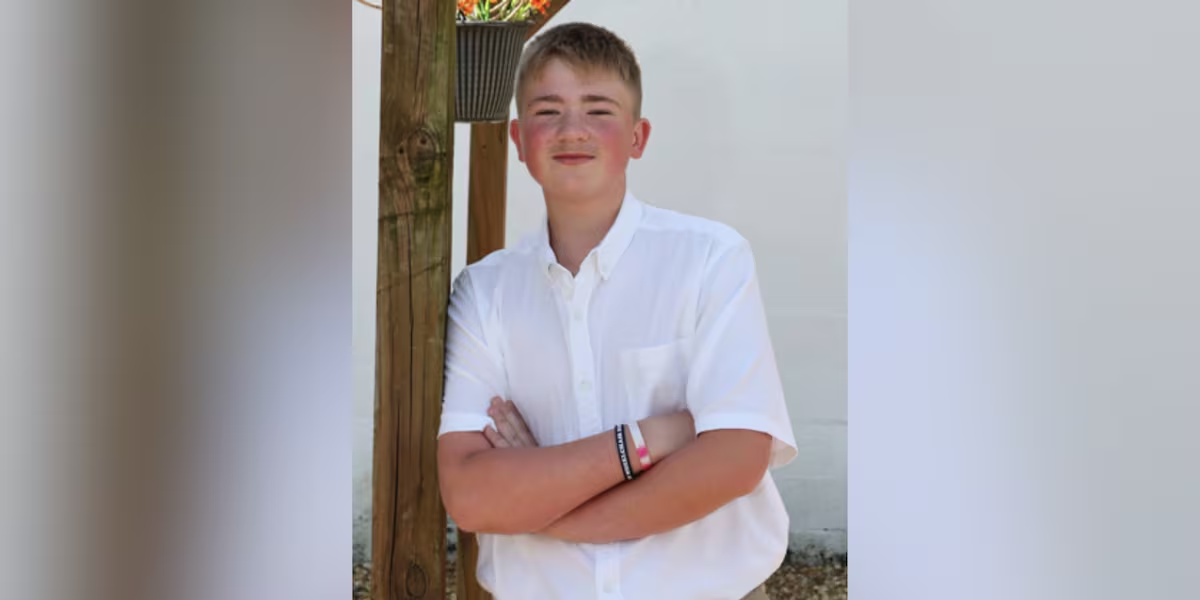
DEKALB COUNTY, Ala. (WAFF/Gray News) – An Alabama community is mourning the loss of a teenager who died due to reported complications from the flu.
Officials with the New Home Baptist Church in Pisgah announced the death of 14-year-old Noah Smothers on Monday. The church said he died after suffering complications related to influenza.
Noah was a freshman at Ider High School, an active member of the youth church group and described as a “kind young man.”
The 14-year-old was being treated at TC Thompson Children’s Hospital.
“It is with deepest regret that we share the passing of one of our beloved students,” Ider High School shared in a social media post. “Noah ‘Smo’ Smothers was an Ider Hornet through and through, exemplifying strength of character and a bright young mind.”
Henegar Junior High School officials also shared a statement on social media, paying tribute to the May graduate.
“He was loved by all who knew him. He had a special way of making everyone laugh and smile. Mischievous, a little shy, and incredibly kind, he left a lasting impression on everyone,” the junior high said. “He leaves behind a legacy of laughter, kindness, and fun.”
Officials from both schools also sent their condolences to the teen’s family and friends, calling his death a heartbreaking loss.
Funeral services will be held on Wednesday afternoon at Cornerstone Funeral Chapel. Burial will follow in Liberty Cemetery, according to Noah’s obituary.
Copyright 2025 WAFF via Gray Local Media, Inc. All rights reserved.
For nearly 20 years, I’ve watched Westfield struggle to define its modern identity and become a vibrant place for future generations. Until recently, it felt impossible.
But in 2025, Mayor Scott Willis unveiled ambitious redevelopment plans: an expanded Grand Park, downtown mixed-use projects with parking, and “village-like marketplaces” across the city. This vision excites those of us who have long championed growth — especially the roughly 40,000 newcomers who arrived hoping for a thriving community.
In that same period, a small group of longtime residents has resisted every step forward, mourning the loss of the small town they remember. I understand — it’s painful to watch cherished memories fade. That simpler Westfield began disappearing even when we moved here in 2005 and it isn’t coming back.
Today, I believe it’s time to reinvest our personal ties in the inevitable transformation. We don’t have to love every change, but we can try seeing it through the eyes of a young family,
a new restaurant owner, the Parks Department, or a company considering relocation.
Supporting the greater good matters. Consider Grand Park: I don’t know a single youth athlete who isn’t proud to play on world-class fields in the nation’s top youth sports facility. Grand Junction Plaza buzzes with kids and parents enjoying events and vendors most nights. Downtown businesses — many family-friendly — are working hard to build something relevant while supporting their staff.
We’ve lost the old soda shop and the local hardware store, but we’ve gained amenities that only progress brings.
I’m excited for what people will preserve 100 years from now and look forward to strolling downtown with my grandkids, enjoying what growth has made possible. As someone without deep roots elsewhere, I feel blessed to call Westfield home — and I want my kids to have real reasons to stay. #bestfield