
Podcast
Champions League 2024

On Saturday, the curtain fell on the 2024-25 Champions League. And if it feels like this iteration of European football’s premier club cup competition was more action-packed than ever, then there’s a good reason for that.
This was the first edition of Europe’ premier club competition with an expanded new format featuring a league phase rather than a traditional group stage and, without counting the qualifying rounds, the total number of matches played rose from 125 to 189.
Advertisement
Remembering even every crucial moment from Paris Saint-Germain’s 5-0 triumph over Inter in Munich during the weekend’s final is difficult enough. Nonetheless, we challenged five writers to reflect on their favourite moments and games from this season’s competition, nominate their goals and players of the tournament, and make a few far-too-early predictions for 2025-26.
Ahmed Walid, Seb Stafford-Bloor, Michael Cox, Mark Carey and Dermot Corrigan were up to the task.
What was your moment of the competition?
Walid: Julian Alvarez’s penalty in the shootout against Real Madrid in the round of 16.
It was a surreal moment as cameras kept replaying Alvarez’s penalty to check whether a double-touch had occurred. As referee Szymon Marciniak was speaking with the VAR, Madrid players held up two fingers to the official standing with the teams on the halfway line.
The penalty was ruled out and meant that Atletico Madrid went from being tied 2-2 in the spot-kicks that would decide the game to 3-1 down, and went on to lose. It seems that luck is rarely on Atletico’s side.
Stafford-Bloor: Francesco Acerbi’s equaliser against Barcelona in the semi-finals. Acerbi was so far forward and out of context that initially I didn’t recognise him. I thought he was some veteran Italian forward — a Marco Borriello regen, perhaps.
As a goal, it was also absurd. Somehow, with a lead so late in the game, Barcelona’s defenders were left four-on-five at the back, with the covering midfield not even in the frame. Great moments should always possess an inexplicable quality and this one had plenty of those. Maybe employ some rest defence next time, Hansi?
Cox: Declan Rice’s second free kick against Real Madrid. There’s something thrilling about watching an individual doing something spectacular, then shaping up to do the same thing again. It felt like watching a fast bowler steaming in for a hat-trick or a pole-vaulter being assured of victory on the day and trying to set a world record.

Arsenal’s Declan Rice blasts home his second goal against Real Madrid in April (Alex Burstow/Arsenal FC via Getty Images)
Carey: I am going to go for a strike that was almost the goal of the competition. Barely 90 seconds after Lamine Yamal curled in the outrageous effort into the far corner for Barcelona in their semi-final first leg with Inter Milan, he received the ball again for another wave of attack.
Squaring up Federico Dimarco, Yamal drove to the byline before chopping back — nearly sending Dimarco out of the stadium — taking a touch, and rifling the ball at goal from the tightest of angles. Somehow, Yann Sommer got fingertips on it to push the effort onto the bar. Had Yamal scored, it would have been one of the most memorable Champions League moments – for a teenager to have single-handedly dragged their team back into the game in the blink of an eye.
Advertisement
Corrigan: It has to be Inter centre-back Francesco Acerbi’s tremendous equaliser against Barcelona in the 95th minute of their semi-final second leg.
The goal was so brilliantly taken — a true top-class striker’s run and finish high past the keeper at the near post — that for a moment, as Acerbi whipped off his jersey to celebrate, it seemed impossible that it had actually been the veteran defender who had scored it.
Acerbi shouldn’t really have been up in the Barcelona penalty area at that moment but then, for a long time it did not seem he would ever be anywhere close to a Champions League final either, given he almost retired in his early twenties and then twice beat testicular cancer.

Francesco Acerbi’s 93rd-minute equaliser sent Inter-Barcelona into extra time (Dan Mullan/Getty Images)
What was the best game you remember watching?
Walid: There’s no competition here: it has to be Inter 4-3 Barcelona at San Siro. It’s a game that ebbed and flowed, and kept you on the edge of your seat.
The first half was all Inter as their transitional threat gave them a two-goal lead. In the second half, Hansi Flick’s side came back to life and did the most damage from the wide areas, with Yamal putting on another unstoppable performance.
Barcelona’s surprise hero, though, was left-back Gerard Martin who provided two assists to make it 2-2. After Acerbi’s dramatic equaliser, Simone Inzaghi’s substitutes made the difference in extra time: Mehdi Taremi proved to be an effective outlet for Sommer’s long balls, which, alongside Davide Frattesi’s runs into the penalty area, led to Inter’s eventual winner.
Stafford-Bloor: Well, Inter vs Barcelona, naturally. But for the sake of variety, I’ll say Borussia Dortmund vs Barcelona in the previous round. Truthfully, at 4-0 down after the first leg, Dortmund were dead and buried before they came back to the Westfalenstadion.
And yet strange things happened that night. Dortmund played with a relentless intensity, pummelling Barcelona and very, very nearly finding a way to come all the way back. BVB went out on their shield. And, after a difficult season, their fans really appreciated how much the team gave in pursuit of that lost cause.
Advertisement
Cox: It really has to be Inter 4-3 Barcelona — non-stop drama, twists and turns, and somehow even better than the first leg.
Carey: I think anyone who does not say Inter vs Barcelona would be lying, but Hansi Flick’s side have been in their fair share of thrillers in this year’s competition. I thoroughly enjoyed watching the near-comical scenes in Barcelona’s league phase game against Benfica in January, where a 96th-minute winner from Raphinha clinched the game, securing a 5-4 victory in the pouring rain.
Hilariously, Barcelona were 4-2 down after 75 minutes, but their comeback typified their season under Flick — a “we’ll score more than you” approach that makes for box-office viewing.

Raphinha’s 96th-minute winner gave Barcelona a 5-4 victory over Benfica in the league phase (Patricia de Melo Moreira/AFP via Getty Images)
Corrigan: Both Barcelona-Inter semi-final legs were fantastically exciting. But for all-round quality of performance, Paris Saint-Germain’s displays across their last-16 matches against Liverpool stick in the mind.
PSG were incredibly unlucky in the first leg, pummelling Liverpool with some brilliant and cohesive attacking football only to lose 1-0. Many assumed they had lost their chance of progressing, but Luis Enrique’s team showed super-impressive composure, organisation and talent in the return at Anfield.
Liverpool played a full part in the second leg and PSG goalkeeper Gianluigi Donnarumma was superb during the game as well as in the decisive penalty shootout. But for much of the tie, they reached a level that no other team in this year’s competition has been capable of.
Who is your player of the competition?
Walid: Vitinha. The Portuguese midfielder can do it all. And, in this Champions League campaign, he did.
Defensively, his positioning is impeccable, he is more than happy to go into duels and mops up second balls like Pac-Man on a mission. In addition, Vitinha is a crucial part of PSG’s pressing and counter-pressing alongside his midfield partners, Joao Neves and Fabian Ruiz.
Advertisement
On the ball, he dictates the tempo of PSG’s attack and pings passes through the opponent’s block, while participating in the fluid rotations in the final third, with his off-ball movement being vital.
Stafford-Bloor: The player I have most enjoyed watching? Maybe Denzel Dumfries. There are more obvious reasons as to why Inter reached the final, but Dumfries is such a spectacle of a player and such a force in games.
Cox: Raphinha. Most goals, most assists. What more do you want? I was in Barcelona to see their 4-1 thrashing of Bayern in the league phase and was amazed by how effective he was at running in behind. I liked him at Leeds but no one expected this.

PSG midfielder Vitinha – a popular pick from our writers for player of the tournament (Jose Breton/Pics Action/NurPhoto via Getty Images)
Carey: There is just something about watching a midfield technician utterly control the tempo of a game. Barcelona’s Pedri is an exceptional player to watch but, given PSG won the competition, I will go with Vitinha. No player attempted more passes in the whole competition this season — the 25-year-old dictates everything from the middle of the field. Give him the ball in any situation and he will look after possession as though his life depends on it. He has been a joy to watch this year.
Corrigan: Vitinha always just seems to be where PSG need him — available to take a pass from team-mates, then moving the ball on simply but effectively, and then being in the right place to intervene if his team loses it and the opposition counter-attack. It’s not flashy but it’s been absolutely crucial to how PSG have played.
The assist for PSG’s third goal in the final, with Vitinha involved four times before giving the final pass for Desire Doue, summed up his omnipresence through the tournament.
What was the goal of the competition?
Walid: The league stage had some incredible goals such as Malik Tillman’s 90th-minute strike in PSV’s 3-2 comeback against Shakhtar Donetsk, Michael Olise’s slaloming run for Bayern Munich against the same team or Wilfried Singo’s piledriver for Monaco against Red Star Belgrade, but knockout goals are more valuable.
Advertisement
That’s why I went with Ousmane Dembele’s strike against Arsenal in the first leg of the semi-finals. The France forward’s finish still looks nice despite it being hit with the shin, but it’s the build-up of the move that catches the eye.
PSG cut through Arsenal’s block with smart off-ball movement and Dembele dropping into midfield to attack the vacant space before combining with Khvicha Kvaratskhelia to score the winner.
WHAT A STRIKE FROM OUSMANE DEMBELE 💥
PSG go ahead quickly at the Emirates thanks to the Frenchman’s goal#UCLonPrime pic.twitter.com/hZe3vSLIhO
— Amazon Prime Video Sport (@primevideosport) April 29, 2025
Stafford-Bloor: Lamine Yamal vs Inter. Semi-final, first leg.
Cox: I really enjoyed Lautaro Martinez’s stabbed outside-of-the-foot finish against Bayern, from Marcus Thuram’s backheel into his path. You don’t see many strike partnerships these days. When you have two centre-forwards on the same wavelength, it’s beautiful.
Carey: Maybe this has an English bias to it but John Duran’s goal for Aston Villa against Bayern Munich was memorable for two reasons. The first point is that it was simply an impressive first-time effort from range, with Duran lofting the ball over a poorly-positioned Manuel Neuer after a direct ball upfield from Pau Torres.
The second is that the goal secured a 1-0 victory over Bayern, which was the same scoreline that saw them clinch the European Cup in 1982. Considering this was Villa’s first campaign back in the Champions League (or equivalent) for more than 40 years, it was a goal that had great importance within the wider history of the competition — even if there have been more aesthetically pleasing strikes this year.
WHAT HAVE WE JUST WITNESSED 🔥
Has Jhon Durán just delivered the moment of the night?! 😮💨
📺 Watch @tntsports and @discoveryplusUK pic.twitter.com/laAj5FwErX
— Football on TNT Sports (@footballontnt) October 2, 2024
Corrigan: Lamine Yamal’s goal to drag Barcelona back into the semi-final first leg against Inter was tremendous. But for pure take-your-breath-away skill level, I’ll go with Khvicha Kvaratskhelia’s stunner against Aston Villa in the quarter-final first leg.
Kvaratskhelia picked up the ball near halfway, out wide, and seemed to sense a special goal was on, driving forward with lethal intent. The mix of the slow-motion roll of the ball with the studs of his right boot to befuddle poor Axel Disasi and the thunderous power of the left-foot finish past the head of Villa goalkeeper Emiliano Martinez was pure poetry.
There’s no stopping Kvaratskhelia in that position 💨
What a goal 👏
📺 @tntsports & @discoveryplusUK pic.twitter.com/DclFlVijYf
— Football on TNT Sports (@footballontnt) April 9, 2025
Now that we’ve had a full season, is the Champions League’s new format an improvement or a downgrade on what came before?
Walid: I wasn’t really excited for this new format but I’m happy to say I was wrong. The league stage offered exciting match-ups compared to last season’s group stage and that’s without taking into account the jeopardy on the final matchday.
Aston Villa’s return to the Champions League featured a replay of the 1982 final against Bayern Munich, Inter faced Arsenal for only the third time ever, and many more fixtures that provided a breath of fresh air.
Advertisement
On top of that, we saw Liverpool beat Real Madrid 2-0, Barcelona’s thrilling 4-1 victory against Bayern and PSG’s incredible 4-2 comeback against Manchester City.
It’s fitting that the final was between two sides who have never faced each other before.
Stafford-Bloor: I still think it was a downgrade because the fatty middle of the group stage did feel inconsequential. For instance, PSG were largely poor through the first few rounds and yet winning one of their first five games carried little jeopardy.
That’s why the competition was reformatted — to ensure that none of the cash cow teams crashed out too early — so in that sense, it was a success for UEFA, but from a spectator’s point of view, I needed a bit more engagement.
Cox: I didn’t love it. I found it tougher than usual to follow the tournament. Individual matches didn’t seem to feel quite as important — in the traditional group stage, part of the value of a win is harming your opponent, which is less of a factor in one big league.
The final day wasn’t as exciting as everyone seemed to hope, and then the bracket part wasn’t quite as ‘fair’ as expected based upon the league placings, because there was a draw involved, which itself was a bit confusing. I also don’t really like some sides playing more matches than others because of the play-off round; I don’t think top-level footballers needed yet more fixtures. In fact, the more I think about it, the less I liked it.
Carey: The fact that Liverpool topped the entire league phase before being drawn against PSG in the last 16 did make a mockery of the new format, in truth. At this level of elite football, there are no easy teams, but it did suggest that there is no huge incentive to finish as high as possible to guarantee an easier draw in the knockout phase.
Aside from that, it was a positive that we saw more heavyweight clashes in the league phase but I did find it trickier to keep track of some of the best games when many of them were on simultaneously. Ultimately, six of last year’s quarter-finalists reached the last eight again this year, so the cream always rises to the top, no matter what format you have.
Advertisement
Corrigan: There was some novelty to the league format last autumn and some extra excitement, with PSG, Real Madrid and Manchester City struggling to qualify. They all did make it through, though.
Football’s biggest problem remains that there are just too many games to fit into the calendar at the moment. Given the new format added more — two in the group stages and then an added knockout round in January — it just has to be a step in the wrong direction for the game in general.
Apart from the format, who or what surprised you the most this year?
Walid: By matchday six, PSG were lingering in 25th place with four points after losing to Arsenal, Atletico and Bayern, and in no way playing like the tournament’s winners.
Three impressive victories against Red Bull Salzburg, City and Stuttgart ensured their qualification to the play-off round. Their upturn in form coincided with Luis Enrique altering Dembele’s role from right winger to centre-forward, with the Frenchman operating as a false nine.
Dembele’s role was crucial in the 1-0 victories away to Liverpool and Arsenal in the knockout stages, where the French side got past another Premier League team in Villa.
PSG’s transformation during the competition from a team on the edge of being knocked out of the league phase to a deserving first-time Champions League winner wasn’t on the agenda.
Stafford-Bloor: Bayer Leverkusen. They were not good at all. A humbling 4-0 defeat at Anfield in November was probably the low point — possibly that awful 2-1 loss to Atletico Madrid in Spain in January – but much of the campaign was tinged with a “they’re better than this” wistfulness.
There were injuries, most crucially to Florian Wirtz in the first leg against Bayern, but they never showed their power or much of what had made them such a worthy German champion the year before. It was a meagre effort full of naivety.

Bayer Leverkusen, managed by Xabi Alonso, were thrashed 5-0 on aggregate by Bayern Munich in the last 16 (Lars Baron/Getty Images)
Cox: We take this for granted now but Manchester City were the bookmakers’ favourites to win the competition. They slumped to 22nd and then were absolutely thrashed by a Real Madrid side who were actually quite mediocre this season.
Carey: Just how incredible Inter Milan’s defensive unit has been this season. In their route to the final, Simone Inzaghi’s side have been in a losing position for just 16 minutes — just one per cent of their total time on the pitch.
Advertisement
When considering they have played against Arsenal, Manchester City, Bayer Leverkusen, Bayern Munich, and Barcelona (both across two legs), that is a remarkable feat that would be hard for any side to replicate — let alone when you factor in the extra two games in this year’s format.
Corrigan: It was surprising to see just how awfully Girona’s first-ever appearance in the competition was managed — from start to finish.
First, many of the best players who achieved the qualification were immediately moved on, and then not adequately replaced by the ownership (in which City Football Group has the biggest share).
Coach Michel and the team did their best in the circumstances. They had a tough draw and were dreadfully unlucky in early defeats to PSG and Feyenoord, but seven defeats in eight games meant it was depressing by the end. Local fans were also upset at how ticketing was organised, with empty seats in temporary stands at their Montilivi ground for most games.
It all should bring further questioning of the viability of multi-club ownership in top club football, although it almost certainly won’t.
Can you give us a far-too-early prediction for who will win it next year?
Walid: It’s summer 2025 and it’s quite impossible to name a winner. However, just for fun, I am going with Barcelona.
In the 2024-25 edition, they could have easily been in the final if not for Sommer’s heroics and a matter of inches here or there.
Their risky style of play makes matches entertaining and their talented squad is a pleasure to watch. Yamal will only get better next season, Pedri will still be there, Pau Cubarsi will gain more experience and Marc Casado will be available after missing the quarter and semi-finals because of injury. Hansi Flick’s side have been brilliant this season, and there’s room to build on that.
Advertisement
Stafford-Bloor: Liverpool. Battled-hardened and confident from winning the Premier League, and on the verge of a ludicrously successful transfer window.
Cox: Barcelona came very close to making the final with a very young squad — the two Poles at either end of the pitch excepted — and you’d expect them to improve next season.
Carey: Real Madrid don’t take too kindly to being knocked out of Europe, so you would imagine that Xabi Alonso’s No 1 remit will be to get them back on their European perch at the first time of asking. That answer doesn’t necessarily follow too much logic based on how things might look on the field. But when have Madrid and logic ever gone hand-in-hand in European competition?
Corrigan: It is far too early, but Real Madrid jumped into my head. They were an awful mess this season but Carlo Ancelotti was also really unlucky with injuries, especially in defence.
Xabi Alonso’s arrival as coach has really changed the mood at the Bernabeu. If he can persuade Madrid’s hierarchy to sign a new deep midfielder, in the mould of a young Alonso himself, then they should be right back in the reckoning next season.
(Top photo: PSG’s Achraf Hakimi with the Champions League trophy; Justin Setterfield/Getty Images)



As the clock wound down in a recent contest, the Golden State Valkyries’ Veronica Burton and Kaila Charles swarmed Paige Bueckers on the perimeter to deny the Dallas Wings rookie from even getting off a shot. The 3.2 remaining seconds ticked away, and the ball remained in Bueckers’ hands as the buzzer sounded.
Advertisement
That type of attention has become common for Bueckers in her debut WNBA season, especially as the firepower in the Wings rotation has thinned because of injury — eight of 12 players on the opening-night roster have missed seven or more games — putting more offensive burden on her. Bueckers has also proven increasingly capable of dissecting single coverage and has demanded star-level defense.
“She lets the game come to her, and she takes what the defense is giving her all over the floor,” Wings coach Chris Koclanes said. “She doesn’t get sped up, and it’s really impressive for a rookie in this league to be able to maintain her own speed and tempo.”
But the game was already in hand when the Valkyries corralled Bueckers at the 3-point line. Golden State led by nine and the heightened defense wasn’t because the game was in balance; it was because Bueckers needed one more point to reach double digits, as she had done in every prior game of her rookie year.
With Dallas long since removed from postseason contention and playing out the string over the second half of the season, these are the stakes for Bueckers. She hasn’t been put in position to chase wins; she can only pursue individual accolades while the Wings build for the future. Nevertheless, despite a constantly changing supporting cast, Bueckers has thrived, putting herself in conversation for one of the best debuts in league history.
Bueckers has been the leading rookie scorer every month of the 2025 season, and her average of 18.9 points is seventh in WNBA history among rookies. With three games left, a late surge could move Bueckers past her teammate Arike Ogunbowale, who is sixth on the list at 19.1.
Paige Bueckers in August:
🪽 20.3 PPG | 3.7 RPG | 5.0 APG
🪽 44-point performance: highest by any W player this season
🪽 @Kia Rookie of the Month#KiaROTM | #WelcometotheW pic.twitter.com/Cx09czcFhi— WNBA (@WNBA) September 3, 2025
As was the case during her college career that culminated in a national championship at UConn, Bueckers has been efficient in the process of scoring at a high volume. Among rookies who have averaged at least 17 points per game, Bueckers is sixth in field-goal percentage at 46.7. The only two guards in front of her are Chennedy Carter, whose first season came in the friendly offensive environment of the WNBA bubble, and Cynthia Cooper-Dyke, who was a 34-year-old rookie during the league’s inaugural season.
Bueckers has been an elite playmaker as well. She is on pace to finish the season as one of 12 rookies to ever average five assists per game, and one of two to pair that with 15 points, joining Indiana Fever star Caitlin Clark.
Advertisement
Clark became the standard-bearer for rookie guards during her historic 2024 season, and her production is the only realistic point of comparison for Bueckers. Sue Bird and Diana Taurasi were also first-year All-Stars, but neither displayed the same combination of elite scoring and creation as Clark and Bueckers. The new generation of rookies has the advantage of playing in a more offensive-minded league. Still, their numbers relative to the rest of the league stand out.
The last two No. 1 picks both delivered individual historic moments. Bueckers tied a rookie record last month with 44 points against the Los Angeles Sparks, on a night when she started alongside two players who were signed midseason to hardship contracts. Clark set the single-game assist record of 19 about midway through last season.
But Bueckers trails Clark in most of the counting stats: 18.9 to 19.2 in points, 3.7 to 5.7 in rebounds, and 5.3 to 8.4 in assists. Other than points, those differences cannot be explained by the extra two minutes Clark averaged as a rookie. The major advantage Bueckers possesses is in turnovers, where her 2.1 per game is significantly better than Clark’s 2.8.
Bueckers has a better overall field-goal percentage, but since so many of Clark’s shots came from 3-point range, the Fever guard’s effective field-goal percentage (which weights the point value of each field goal) of 52.2 percent bests Bueckers’ mark of 50.4. Clark also shot better from 3-point range (34.4 percent to 33 percent) despite attempting them three times as frequently.
Those box-score numbers don’t fully account for the surrounding situation of each rookie. Clark’s assists, for example, were easier to come by with All-Star Aliyah Boston in the middle of the floor; the 2023 No. 1 pick was the recipient of 105 of Clark’s helpers, or 2.6 per game. Both Clark and Bueckers had an All-Star guard sharing the backcourt in Kelsey Mitchell and Ogunbowale and a relatively similar level of talent on the rest of the roster, at least to start the season, but Dallas didn’t have anyone resembling Boston.
Another feat for PB5 🙌
Paige Bueckers joins Caitlin Clark as the second rookie in WNBA history to record 500+ PTS, 150+ AST, 100+ REB, and 50+ STL in a season. #WelcometotheW pic.twitter.com/G1rooMRgLo
— WNBA (@WNBA) August 23, 2025
Although Bueckers had a worse net rating than Clark (minus-5.0 compared to minus-2.4), her on-off differential has been better in her rookie season. The Wings are 8.1 points per 100 possessions better with Bueckers on the court, demonstrating her impact, even if it hasn’t translated to victories. Win shares favor Bueckers as well, and she can build on her 3.5-3.0 lead in the final three games.
Advertisement
However one chooses to assess the statistical impact of Bueckers and Clark in their first years, there is one point of comparison that works in Clark’s favor. Bueckers’ production has come in the context of a largely meaningless season, as Dallas hasn’t even spent one day in playoff position. Clark and the Fever, on the other hand, rallied from a 2-9 start to pursue a postseason berth.
That is the next frontier for Bueckers: not be a spoiler, but to play in games of real consequence. Clark’s rookie season ended with a big chasing her on the perimeter as she launched a 3-pointer because a playoff win was on the line. Bueckers’ rookie season could be lost to history if Dallas doesn’t put her in that position sooner than later.
(Photo of Paige Bueckers: Ron Jenkins / Getty Images)
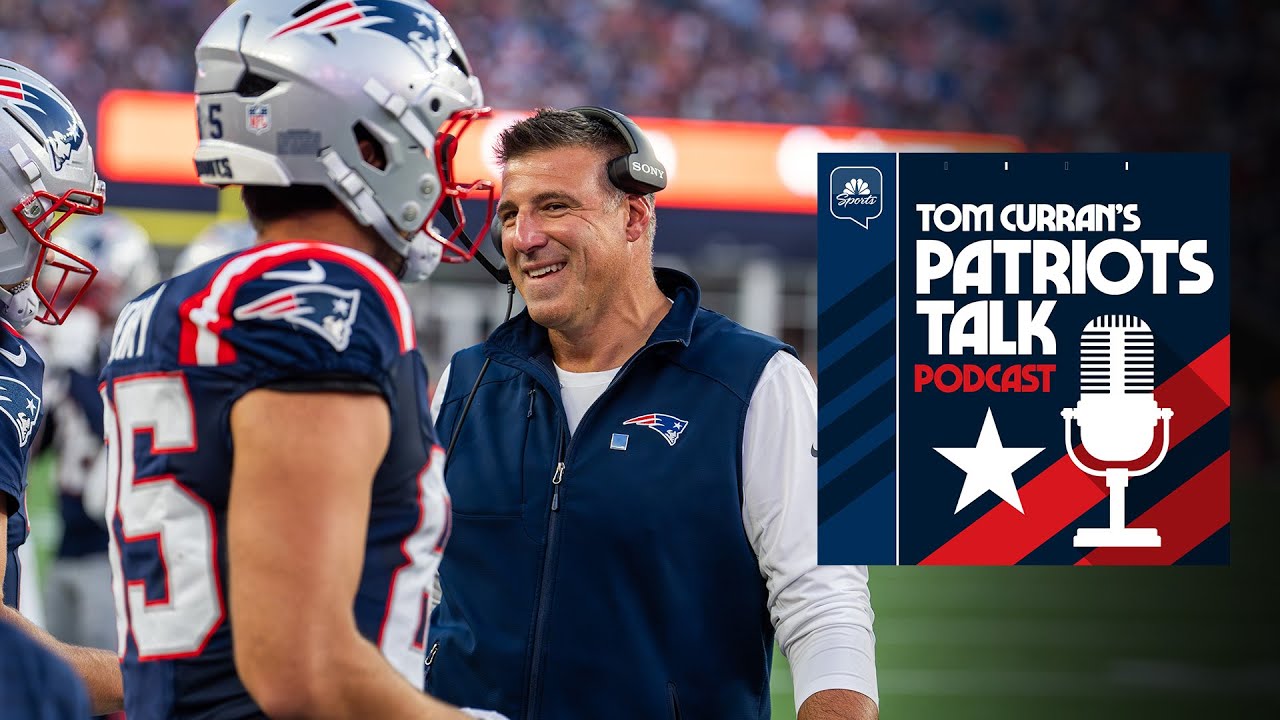
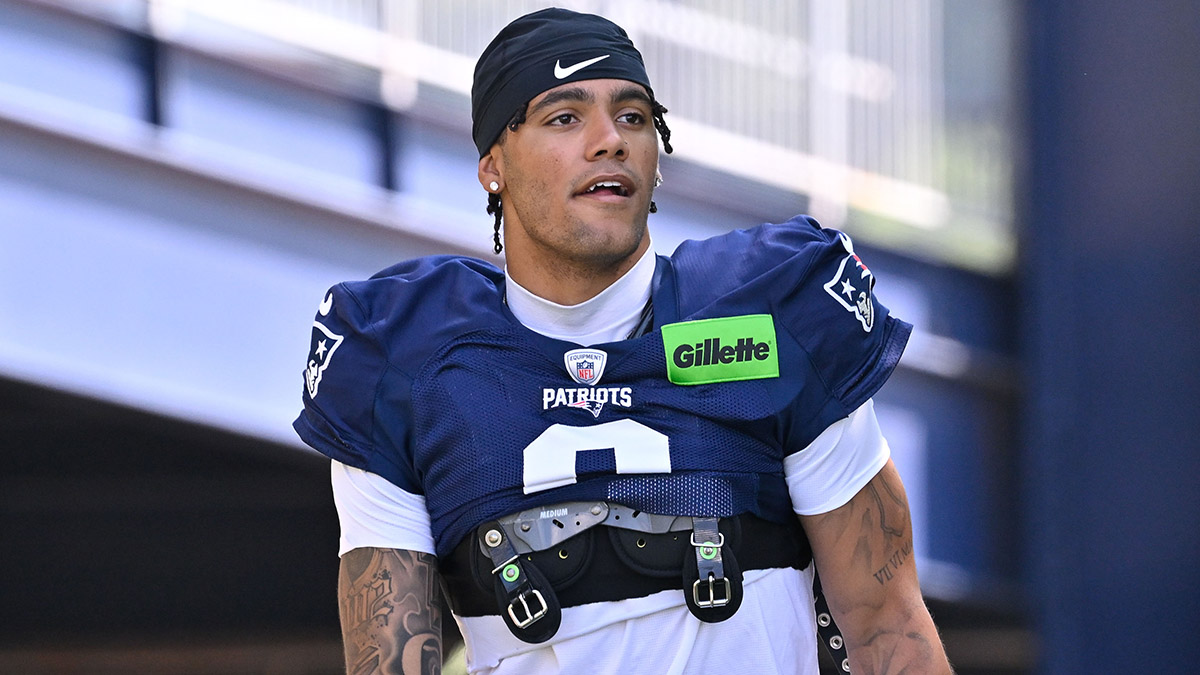
FOXBORO — Christian Gonzalez quietly folded and put away some of the clothing in his locker at Gillette Stadium.
While his Patriots teammates prepared for a fully-padded practice just four days before their season opener, the third-year corner did not. He understood the plan for him on Wednesday was to do some conditioning work on the side and not much more.
“I’m working,” he said softly.
Gonzalez is inarguably his team’s best player. He was named a Second-Team All-Pro last season after routinely matching up with and shutting down opposing No. 1 receivers. He was expected to be one of the linchpins of Mike Vrabel’s defense in 2025, allowing for extensive man-to-man looks and aggressive calls for pressure because of his lock-down coverage skills.
But after Gonzalez missed Wednesday’s practice, his status for Sunday’s game is in doubt, despite Vrabel not ruling him out. Gonzalez hasn’t practiced since injuring his hamstring on July 28.
“He’s continuing to work,” Vrabel said prior to the practice, “and he’ll do some stuff on the side, but I’m not going to rule anybody out. … We’ll continue to work and treat and make sure that we’re doing everything that we can to help him, and he’s doing everything he can to get back out on the field. That’s the only update I have right now.”
Gonzalez rode a stationary air bike on the upper fields behind Gillette Stadium while his teammates practiced on the lower field. He pedaled under the watchful eye of assistant strength and conditioning coach Brian McDonough before pausing and watching the action on the fields below.
“I mean, I do like where he’s at from an engagement standpoint,” Vrabel said. “We’ve been through this with other players, and I like where he’s at from that standpoint. In the meetings, locked in, following along at practice, which is difficult. To think that a player that’s not in there can follow along, I’ve been through that as a player and a coach, and I think he’s done a nice job of being able to do that.”
While Vrabel surely would like to have Gonzalez for Week 1 against a Raiders offense that features second-year standout tight end Brock Bowers and former Patriots wideout Jakobi Meyers, he didn’t indicate that he would be rushing Gonzalez back onto the field, either.
When asked if it was important for him to allow players to get back to “100 percent” before returning to the field, Vrabel shed some light on his thought process.
“I mean, I don’t use percentages,” Vrabel said, “but, again, I’ll remind you what we talked about as far as, when I try to make decisions about players and returning, one, can they make it worse? Can they, two, protect themselves?
“We can all say what we want about this game, but it’s violent, and can you protect yourself? And can you do your job up to the standard that we expect and that the player is used to? So, those are the things that I’ve tried to use when making decisions. Maybe I’ll add some to that, but that’s what I’ve tried to use in my other experience in this position.”



- Loading stock data…


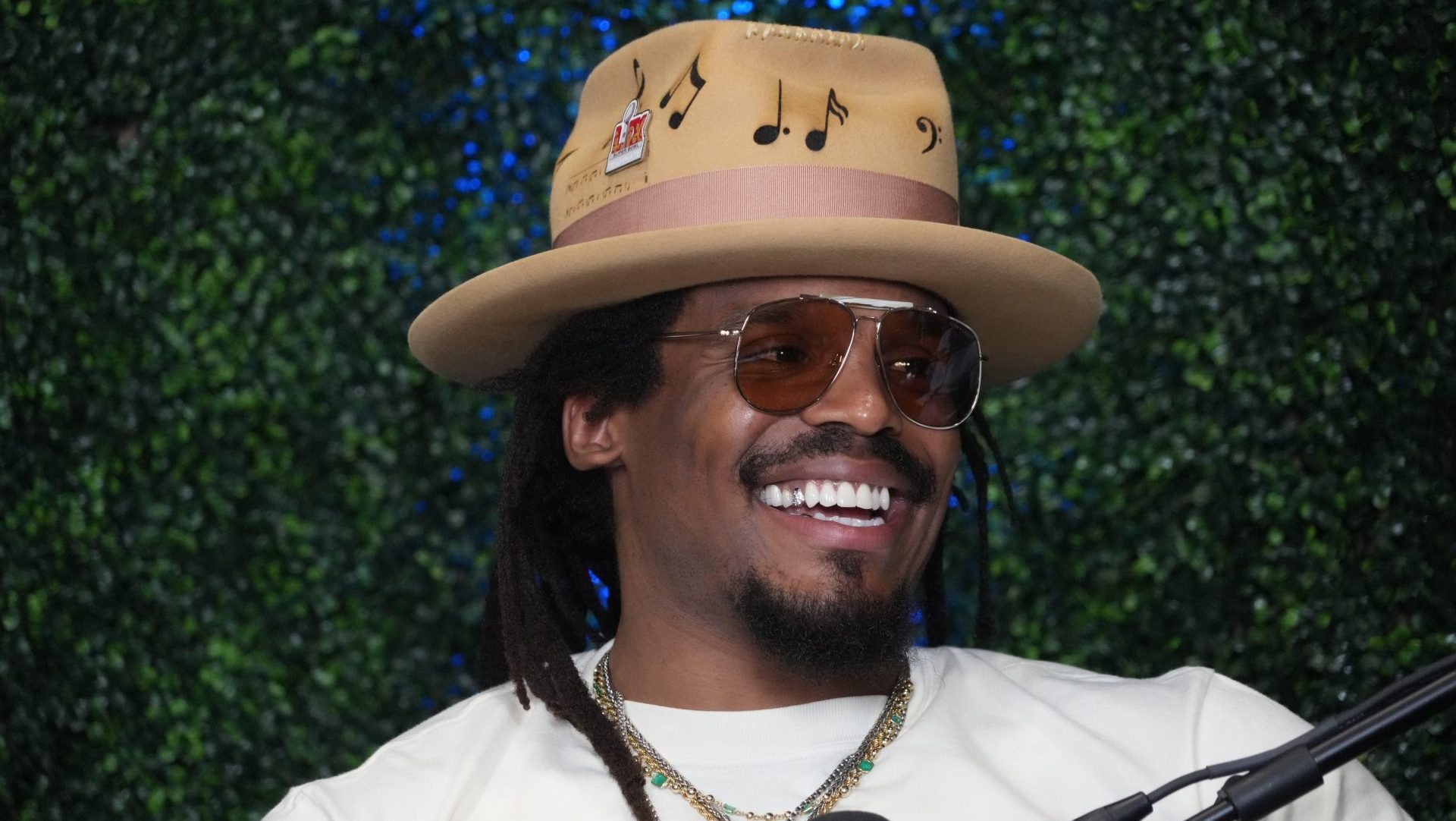
Andy Roddick’s journey back to tennis began during the COVID-19 pandemic, when Tennis Channel asked him to remotely appear on studio programming while the sports world was shut down.
“I didn’t really play. I would come [to the U.S. Open] to do corporate work once a year, and that was it,” Roddick recently told Sports Business Journal. “Tennis Channel was great because I could do it from home. My one thing was, I never wanted the game to control my geography ever again.”
Five years later — and 13 after announcing his retirement from play on his 30th birthday — Roddick has established a pillar of the tennis media ecosystem on his own terms with his “Served” podcast.
Launched in January 2024 with veteran producer Mike Hayden and journalist Jon Wertheim, the show began with ambitions as simple as “a fun side project that I thought no one would listen to,” in Roddick’s words. But since its debut, the show has garnered more than 150,000 YouTube subscribers, 185,000 social media followers and 3.5 million audio downloads while attracting marquee sponsors such as Amazon Prime (2025 French Open, U.S. Open), Mercury Financial (2025 Wimbledon) and ServiceNow (live shows at the upcoming Laver Cup) for events. It also joined Vox Media’s network of sports podcasts last year.
As it’s grown, “Served” has earned bona fides with tennis diehards for long-form interviews with Rafael Nadal and Andre Agassi; laid-back but incisive analysis of tennis’ entire calendar of events (not just the Grand Slams); and the versatility to dig deep into topics such as, in an early sitdown with longtime IMG Tennis agent/executive Max Eisenbud, the economics of tennis player development.
“What makes him special, specific to his podcast, is his ability to transcend the deep tennis insiders, but also the casual tennis fans,” said Eric Butorac, a former doubles player on the ATP Tour and the USTA’s senior director of player relations and business development.
“He’s [Roddick] exactly like he was on tour. You walk into the locker room, and you just hope he’s sitting there, because he’s going to be jabbering away, super engaged, super competitive. … It’s the same way when I turn on ‘Served.’”
Served Media — the media company atop “Served” co-founded by Roddick and Hayden — is now a seven-figure revenue business. Since the debut of its eponymous podcast, it has launched a women’s tennis-focused show hosted by Kim Clijsters, daily recap program hosted by Hayden, active social and newsletter channels, and a merchandise line, with yet-to-be disclosed plans for further content expansion.
“We thought there would be a lane for it for, like, super nerds,” Roddick said. “But I don’t know that we thought it would grow like this.”


RALEIGH, N.C. — NC State needed a fourth-down stop in the red zone to survive, but came away with a 24-17 win over ECU to start the season. The Wolfpack (1-0) finished with 423 total yards behind CJ Bailey’s 318 yards passing with one touchdown through the air and one on the ground.
Cory Smith and Michael Clark share their thoughts after the game, including Bailey’s performance, Wesley Grimes’ career night, Hollywood Smothers’ solid outing, and the defense’s up-and-down night. Get all of that and more on the latest Postgame Podcast.
CLICK HERE TO TRY THE 75% OFF TRIAL TODAY!
Listen to the full podcast below and subscribe on iTunes, the Google Play Store or find us on Spotify by searching for “Pack Pride Podcast” under the podcasts section.
Not a VIP subscriber to Pack Pride? Sign up now to get access to everything R. Cory Smith, Michael Clark and the entire Pack Pride team have to offer on all things NC State and access to the No. 1 site covering the Wolfpack.
Sign up for FREE text alerts to get breaking news on commitments, decommitments, transfers, injuries, coaching changes and much more with our NEW text alert system available to all registered users and VIP subscribers. Click Here to become a FREE registered user and Click Here if you are already a VIP subscriber.
Want the latest news on NC State delivered right to your email? Subscribe to the Pack Pride newsletter here. It is free and a great way to get daily updates on NC State football, basketball, baseball, recruiting and more delivered straight to your inbox.



- Loading stock data…

IHRA purchases Rockingham Speedway, plans long-term vision for ‘The Rock’

Football Transfer Portal Chaos Continues Despite New Rules

Jeff Gordon Feels That Hendrick Motorsports’ Car Is Now on a Level-Playing Field With Rivals

Verstappen maintains regular communication with Horner

Roger Penske pens special statement as Team Penske enters landmark season – Motorsport – Sports

Former Grand Canyon star finds new home with Rainbow Warriors

Ross Chastain Explains How He Landed Sponsorship From $125 Billion Worth Beverage Giant

‘Truly humbling’: inside the centre where UK medics are helping Ukrainian amputees | Ukraine
Indiana football destroys Alabama at Rose Bowl to advance to Peach Bowl

Having A Ball: Chautauqua Lake Central School Hosts Alumni Volleyball Tournament | News, Sports, Jobs

Texas Tech’s College Football Playoff reality check just made a transfer QB rich

The Transfer Portal market is exploding for college football

Emerald Acres Youth Wrestling | MyRadioLink.com

Curt Cignetti contract clause takes effect after Indiana’s College Football Playoff semifinal berth

Short on starters, Nets lean on youth in 120-96 loss to Rockets | Nba

SoundGear Named Entitlement Sponsor of Spears CARS Tour Southwest Opener

Donny Schatz finds new home for 2026, inks full-time deal with CJB Motorsports – InForum

Black Bear Revises Recording Policies After Rulebook Language Surfaces via Lever

David Blitzer, Harris Blitzer Sports & Entertainment

How Donald Trump became FIFA’s ‘soccer president’ long before World Cup draw

DeSantis Talks College Football, Calls for Reforms to NIL and Transfer Portal · The Floridian
Elliot and Thuotte Highlight Men’s Indoor Track and Field Season Opener

Rick Ware Racing switching to Chevrolet for 2026

JR Motorsports Confirms Death Of NASCAR Veteran Michael Annett At Age 39

#11 Volleyball Practices, Then Meets Media Prior to #2 Kentucky Match

Colleges ponying up in support of football coaches, programs

Nascar legal saga ends as 23XI, Front Row secure settlement
West Fargo volleyball coach Kelsey Titus resigns after four seasons – InForum

Temple Begins Indoor Track & Field Season at UPenn This Weekend

Maine wraps up Fall Semester with a win in Black Bear Invitational





-
 Sports3 weeks ago
Maine wraps up Fall Semester with a win in Black Bear Invitational
-

 Motorsports2 weeks ago
Ross Brawn to receive Autosport Gold Medal Award at 2026 Autosport Awards, Honouring a Lifetime Shaping Modern F1
-

 NIL3 weeks ago
Nike Signs 10 LSU Athletes to NIL deals
-

 Rec Sports2 weeks ago
Stempien to seek opening for Branch County Circuit Court Judge | WTVB | 1590 AM · 95.5 FM
-

 Rec Sports2 weeks ago
Princeton Area Community Foundation awards more than $1.3 million to 40 local nonprofits ⋆ Princeton, NJ local news %
-
 NIL2 weeks ago
Downtown Athletic Club of Hawaiʻi gives $300K to Boost the ’Bows NIL fund
-

 NIL3 weeks ago
Meet The Two Oregon Freshmen Ready To Make Ducks History Under Dan Lanning
-

 NIL2 weeks ago
Kentucky AD explains NIL, JMI partnership and cap rules
-
 NIL3 weeks ago
Rece Davis names former Pac-12 coach who should be top candidate for Michigan head coaching job
-

 Motorsports3 weeks ago
PRI Show revs through Indy, sets tone for 2026 racing season