Connect with us
https://yoursportsnation.com/wp-content/uploads/2025/07/call-to-1.png

NIL

College athletes defend free, frequent movement in transfer-heavy era

Published

on


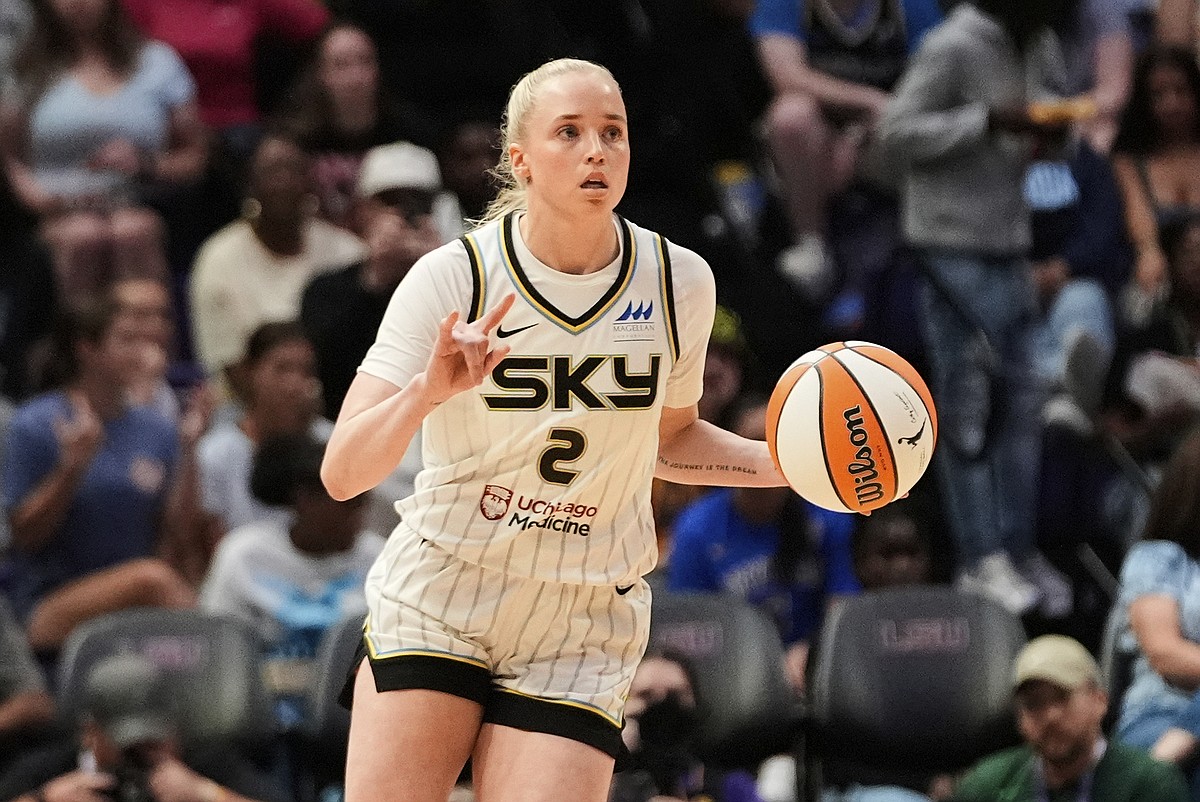
Hailey Van Lith was one year away from tying a bow on a traditional college basketball career at Louisville and being cemented as one of the most decorated four-year starters in Cardinals history.

She had just led the Atlantic Coast Conference program to its third straight appearance in the NCAA Division I tournament’s Elite Eight and put up career-high numbers, including 19.7 points per game.

However, the 5-foot-9 point guard from Wenatchee, Washington, had other plans. With WNBA aspirations on her mind, Van Lith swapped Louisville red and black for LSU purple and gold and embarked on a new journey with the Southeastern Conference’s Tigers in Baton Rouge, Louisiana. Her lone season included another run to the Elite Eight, and it was back to the transfer portal.

Coach Mark Campbell’s pro-style offense caught her eye, and she decided her fifth and final year of eligibility would be spent at TCU. There, she helped the Horned Frogs win the Big 12 regular-season and tournament titles, followed by Van Lith’s final Elite Eight run, this time in purple and white.

College sports was once rooted in tradition, school pride and loyalty, but those expectations are changing — if not fading — in a landscape where athletes have won the ability to transfer season to season, year to year. Some are painted as disloyal or selfish, but Van Lith and others don’t see it that way.

“Whenever you transfer, you always expect pushback,” Van Lith — now with the Chicago Sky after being taken No. 11 overall in the WNBA draft in April — told The Associated Press. “I can’t tell you how many podcasts I’ve seen on people discussing my choices to go to this school and that school, and the theories that are thrown out there are all wrong. But it’s just, you learn to live in harmony with that, and at the end of the day, I just decided I’m no longer going to let false assumptions disrupt my peace.”

One of the biggest misconceptions, Van Lith said, is that her transfer decisions were guided by NIL compensation. She was able to look past accusations of being a “money chaser” or a “trophy chaser” and find solace knowing onlookers didn’t have the full picture.

“Multiple of the schools that I went to, I actually never got a check from,” she said. “I think that in transfer culture now, a lot of people automatically assume that it has to do with the collective money, or now I guess it’s revenue share. But it just depends on the person, and for me, it was all basketball decisions.”

Ann Skeet, the senior director of Leadership Ethics at Santa Clara’s Markkula Center for Applied Ethics, said all parties should be held to the same standards. Coaches and athletic directors take new jobs, navigating buyouts and ill will along the way.

“I do think one of the realities of sport in this day and age is that people are making changes more often than they used to,” Skeet said. “How they communicate what their decision is, how much time they give people, how frequently they’re changing teams, all of those things should be considered, and I think it’s fair to hold the coaches and players to equal standards.”

Skeet acknowledged the pressure on athletes navigating a new, professional-like industry at a young age. Millions of dollars in name, image and likeness compensation is already flowing even before schools start cutting revenue-sharing checks after July 1 under the House v. NCAA antitrust lawsuit settlement.

“The reality is, NIL is bringing market pressures to college sports in a way that we haven’t experienced before, and so players are having to trade off and think about what serves their own personal interests versus what serves the team interests in ways that they haven’t had to consider in the past,” she said.
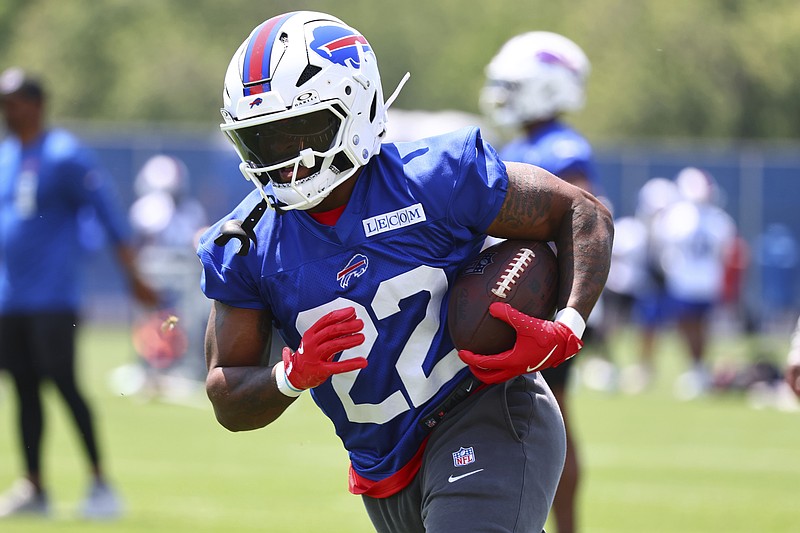
AP photo by Jeffrey T. Barnes / Buffalo Bills running back Ray Davis goes through a drill during a practice at the team's minicamp on June 10 in Orchard Park, N.Y. Davis played at Kentucky, Temple and Vanderbilt before being selected by the Bills in the fourth round of the 2024 NFL draft.
AP photo by Jeffrey T. Barnes / Buffalo Bills running back Ray Davis goes through a drill during a practice at the team’s minicamp on June 10 in Orchard Park, N.Y. Davis played at Kentucky, Temple and Vanderbilt before being selected by the Bills in the fourth round of the 2024 NFL draft.

While Van Lith was deciding her future, running back Ray Davis was awaiting his. In his sole season at Kentucky, Davis rushed for 1,129 yards on 199 carries and led the SEC with 21 touchdowns from scrimmage. His production was enough to garner interest from NFL scouts.

Similar to Van Lith, Davis’s winding road to the pros involved several stops. Before Kentucky, he had two-year stints at American Athletic Conference member Temple (2019-2021) and Vanderbilt (2021-2023), another SEC program. Transferring to Kentucky meant Davis would suit up for his third team in five years, and he knew moving from one league school to the next could stir the pot.

The decision wasn’t an easy one.

“It was super difficult,” Davis said. “It took days, literally almost weeks to just really make a decision. And when I made the decision, I just had to live with it. I couldn’t think twice about it. I had to be confident.”

The move paid off. Davis gained national attention and was selected by the Buffalo Bills in the fourth round of the 2024 draft. While his draft stock soared, though, the backlash from transferring a second time took a toll.

“Mentally it sucks because, you know, as a kid when you’re 18, 19 or whatever, you’re being told, ‘Hey he’s leaving because he’s disloyal,’ and that’s not what it is,” Davis said.

He focused on what he could control.

“I think it’s really about how you handle it yourself, how you internalize it yourself, and how you go about walking in the building each and every day. If you be like, ‘Ah, people are looking at me like I’m not an honest and disloyal person,’ then that’s going to hurt you mentally. But if you walk into a place where you’re confident in who you are, then I think you’ll succeed,” Davis told AP.

Transfer decisions, regardless of the underlying factor, can lead to unfavorable public perceptions — or worse. A 2024 study found a cross-section of abusive content directed toward college athletes on social media.

“It certainly is their right to transfer, but then they will also develop whatever reputation they develop as a result of the choices they make. So people who transfer multiple times are going to be identified in that way,” Skeet said. “It goes with the territory, as they say.”

Davis and Van Lith both noted the irony in receiving blowback when team personnel can seek new ventures without repercussions.

“Coaches leave. Directors leave. Everybody has the opportunity to leave. So for players, we’ve got to have that opportunity too,” Davis said.

Added Van Lith: “A lot of times, the loyalty is placed on the responsibility of the players, but you see coaches leave all the time to better their financial situation, to make more money, to do better for their family. When people talk about loyalty, I really challenge them to put into perspective, if they would feel the same if a coach left.”


Link

Continue Reading
Click to comment

Leave a Reply

Your email address will not be published. Required fields are marked *

NIL

JMU Coach Bob Chesney Doesn’t Hold Back On Dan Lanning And Dante Moore

Published

on


The No. 5 Oregon Ducks (11-1, 8-1 Big Ten) and the Sun Belt Conference champions, No. 12 James Madison Dukes (12-1, 8-0 Sun Belt), are nearing their first-round matchup in the College Football Playoff in Eugene, Oregon, at Autzen Stadium.

Dukes coach Bob Chesney is going into unfamiliar territory, with their best win on the 2025 season coming against the Troy Trojans on Dec. 5 in the Sun Belt title game at home inside Bridgeforth Stadium in Harrisburg, Virginia, 31-14. Their lone loss at the Atlantic Coast Conference’s Louisville Cardinals near the start of the season on Sept. 5, 28-14.

James Madison Dukes head coach Bob Chesney argues a call with an official during the first half

Sep 5, 2025; Louisville, Kentucky, USA; James Madison Dukes head coach Bob Chesney argues a call with an official during the first half against the Louisville Cardinals at L&N Federal Credit Union Stadium. Mandatory Credit: Jamie Rhodes-Imagn Images | Jamie Rhodes-Imagn Images

Bob Chesney Doesn’t Hold Back On Dan Lanning And Dante Moore

Regarding redshirt sophomore quarterback Dante Moore, Chesney knows he’s the most dangerous player on the field for the Ducks, due to his ability to impact the offensive game in any facet under center. He touched on the leader when speaking to the media before the Saturday, Dec. 20, matchup.

“To me, it’s the willingness of the quarterback to throw into coverage. He understands tight windows and trusts his arm. He could be one of the top draft picks in this draft. There’s a lot in there. He has confidence and trust. He’s mobile. He does a really good job of getting the ball out,” Chesney stated.

When Chesney touched on matching up with Oregon coach Dan Lanning, the future UCLA Bruins head coach spoke on Lanning’s success in taking over a new program back in 2022 and making it his own, to what the college football world sees today.

Oregon head coach Dan Lanning walks the sideline as the Oregon Ducks take on the Washington Huskies

Oregon head coach Dan Lanning walks the sideline as the Oregon Ducks take on the Washington Huskies on Nov. 29, 2025, at Husky Stadium in Seattle, Washington. | Ben Lonergan/The Register-Guard / USA TODAY NETWORK via Imagn Images

“They’re extremely well coached. They are just really good at understanding protections and trying to break those protections. When they get to their one-on-one matchups or if they get on a running back, they do a really good job of keeping their pad level down.”

Chesney continued, “They do not quit as they are pursuing the quarterback. A lot of the big plays that have happened against them have been quarterbacks being able to evade some sort of rush and get their feet set and find something downfield.”

MORE: Oregon Ducks Face Escalating Flood Risk as Playoff Game Approaches

MORE: Bo Nix and Justin Herbert Push Toward NFL Playoffs as Former Ducks Thrive

MORE: JMU Quarterback Doesn’t Hold Back On Oregon, Flashy Uniforms, Autzen Stadium 

SIGN UP FOR OUR NEWSLETTER HERE!

Preparing for Autzen Stadium Atmosphere

In front of a sold-out crowd of 54,000+ in Eugene on Saturday, Chesney understands that the loud atmosphere will play a major factor for his units on both sides of the ball when trying to hear play-calling from the James Madison sideline.

That’s without the full Ducks’ student body present, being on Christmas break.

“We want to try and make it to where we can’t even hear each other on both sides of the ball, knowing that it will affect the offense and the special teams more than it will the defense, but that is definitely what we’re jumping into,” Chesney said. “We have all their songs, all the things they do, their band, everything we could gather is what we’re putting on display out there for our guys, so that’s something that they’ve heard before.”

 James Madison Dukes head coach Bob Chesney on the sidelines in the second quarter at Kenan Memorial Stadium.

Sep 21, 2024; Chapel Hill, North Carolina, USA; James Madison Dukes head coach Bob Chesney on the sidelines in the second quarter at Kenan Memorial Stadium. Mandatory Credit: Bob Donnan-Imagn Images | Bob Donnan-Imagn Images

Oregon vs. James Madison NIL Disparity

Chesney pointed out that James Madison’s Name, Image, and Likeness or NIL for the 2025 season was around $1 million. As for Oregon’s football program and NIL, it’s considered to be the top in the sport. This is due to the university’s long-time partnership with Nike and co-founder Phil Knight.

In fact, the Dukes and Ducks are so far from each other financially that Oregon’s defensive coordinator, Tosh Lupoi (earned $2 million in 2025), makes more than James Madison’s head coach and his 2025 roster combined. Chesney was owed a $833,495 salary for the 2025 season.


Link

Continue Reading

NIL

College football program set to lose 15 players to NCAA transfer portal

Published

on


It was a fairly successful first season for Wake Forest under new head coach Jake Dickert.

The Demon Deacons finished the regular season 8-4 overall (4-4 ACC), qualifying for a bowl game for the first time since 2022.

After a shaky 2-2 start, the Demon Deacons won six of their last eight games, marking a major in-season turnaround. They notched quality wins over No. 14 Virginia and SMU, but fell to Duke in their final game of the season.

It was a remarkable turnaround for Dickert, who took over the program after back-to-back 4-8 seasons under Dave Clawson. Dickert accepted the position after four seasons at Washington State, where he compiled a 23-20 overall record.

The Demon Deacons have one final game left against Mississippi State in the Duke’s Mayo Bowl, but that hasn’t deterred multiple players from announcing their intentions to enter the transfer portal.

According to 247Sports, the Demon Deacons have had 15 players enter the transfer portal as of Dec. 18. Most recently, freshman quarterback Elijiah Oehlke announced he will be entering the portal when it opens on Jan. 2, joining a host of other former Demon Deacons.

Wake Forest head coach Jake Dickert

Wake Forest Demon Deacons head coach Jake Dickert | Craig Strobeck-Imagn Images

One of the most notable losses for the Demon Deacons was freshman wide receiver Chris Barnes, who announced his transfer decision on Dec. 14. Barnes led Wake Forest with 39 receptions for 547 receiving yards and three touchdowns. He was named an All-ACC honorable mention as a wide receiver, while earning third-team honors as a return specialist.

Only two days later, sophomore wide receiver Micah Mays also announced his intentions to enter the transfer portal. He finished the year with 18 catches for 302 receiving yards and two scores, averaging 16.8 yards per reception. Both Barnes and Mays were promising young offensive stars, making both major losses for the program.

Another key loss was defensive tackle Mateen Ibirogba, who transferred from Georgetown to Wake Forest before the 2023 season. He stepped into a bigger role this season, totaling 21 tackles, 3.5 tackles for loss, and two sacks for the Demon Deacons.

Along with the names above, tight end Harry Lodge, safety Jacob Cosby-Mosley, defensive lineman Ka’Shawn Thomas, wide receiver EJ Reid, offensive lineman Derrell Johnson II, and offensive tackle Nathan Pahanich are some other players who have announced their decision to enter the transfer portal.

It’s important to note that the NCAA transfer portal does not open until Jan. 2, 2026. All players can do right now is announce their plans to enter the portal; once it opens, they can officially enter their names and contact their preferred schools. The transfer period will close on Jan. 16 after 15 days.

Wake Forest will face Mississippi State in the Duke’s Mayo Bowl on Jan. 2, 2026, in Charlotte, North Carolina. Kickoff is scheduled for 7 p.m. CT on ESPN.


Link

Continue Reading

NIL

Mitch Barnhart addresses retirement rumors, Kentucky’s deal with JMI in new interview

Published

on


Is Mitch Barnhart’s tenure as the University of Kentucky’s athletic director coming to an end next year? Barnhart addressed the retirement rumors in a new interview with the Herald-Leader, telling Jon Hale that he’s still “invigorated” by his work, but when the moment comes that he’s not, he’ll sit down with his family and discuss the future and what’s best for them and the university.

The questions are timely. In 2023, Barnhart signed a contract extension through the 2027-28 school year that would allow him to transition to a special assistant to the president role starting July 1, 2026. To do that, he must give six months’ notice, making the earliest deadline December 31, 2025, two weeks from today.

“Two things. I love competing. You know that. You know I love this place with all my heart. We came here in 2002 and planned on saying six to eight years and stayed a lot longer. I know there’s people that get frustrated because I’ve been here a long time, and that’s OK. I sense that. An old boss of mine told me one time, every time you make a 50-50 decision, you lose 50% of your friends. He’s probably not wrong, but we love Kentucky. I get up invigorated about what we’re doing at work. I love watching our kids compete. When that day comes — and don’t know — I’ll sit down with my family, and we’ll talk and determine what’s best for our family and for me, but most importantly, what’s best for Kentucky.

“I’ve got a couple, two-and-a-half years left on my contract. The ambassador clause is out there. It can go anytime after December 31, and if that’s something that’s best for this university, then we’ll have that conversation. If it’s something that we want to continue to work at it, I would like to win some more things. I like winning. The volleyball run has been a blast. I’d like to win at some more things and see what we got. And I love our coaches. We’ve got good people and fun to work with.”

The interview comes one week after Kentucky Sports Radio’s Jacob Polacheck and Jack Pilgrim published an article on Kentucky Basketball’s struggles on the recruiting trail, which cited anonymous sources that said UK’s partnership with JMI for NIL management has played a part, specifically the highly structured brand partnership with UK’s official partners. Sources told KSR that JMI was requiring recruits to sign away NIL rights that would normally be untouched at any other school.

Before Kentucky’s game vs. Indiana, Barnhart addressed the JMI concerns in an interview with Tom Leach, defending the partnership and insisting that UK student-athletes are free to sign third-party deals while acknowledging that the university encourages them to work with its official partners. He does the same in this interview with Jon Hale, although the issue of what prospective student-athletes (recruits) are asked to agree to as part of their deals to come to Kentucky is still unclear.

HL: When an athlete accepts revenue sharing money from UK, do they automatically get tied into the JMI deal, or do they opt into that separately?

Barnhart: “There’s some things that they’re opting into. OK, there’s some things they opt into, and obviously that’s a part of that process. And then there’s some things that we say, ‘Hey, does this fit you? Does this fit you? Do you want us to go out and find you (a deal)? Is there some things that make sense in a marketing piece, a partnership piece, so to speak, or a sponsorship piece?’ And if it doesn’t, you’ve got your own thing; you’re not prohibited from doing your own thing. We’ve shown that on many cases with student-athletes in our program. We’ve got student-athletes in our program that have got deals that are outside our partners, that they’ve gone and had an opportunity to go access and do those themselves. They just can’t use our IP marks in that process. Part of the ability to use the Kentucky marks, which we think is super valuable, is that relationship with JMI. So yes, that is part of that process. But to go do your own thing, you can certainly do that.”

When asked, Barnhart said he was not aware of any UK athletes being denied a deal because it was with a competitor. He talks a lot more about the JMI deal, collectives, transparency about revenue-sharing figures, and the roles of general managers in the NIL era in the interview. Check it out at the Herald-Leader. Matt Jones has reached out to Barnhart for an interview on KSR and has not received a response.

[Q&A: Kentucky AD Mitch Barnhart responds to criticism of JMI deal, NIL setup]


Link

Continue Reading

NIL

College football players are earning millions – wealth managers are helping them keep it

Published

on


Name, image and likeness (NIL) rights were created to finally allow college athletes to profit from their talent. That’s led to formerly unpaid amateur players becoming instant millionaires, using their newfound wealth to save and invest, help out family, or even share the money with their teammates.

But handing that much money to teenagers is also risky. Grown professional athletes have blown through millions of dollars in the past, and while the stories of “going broke” are more infrequent today, there’s still a risk.

In steps NIL financial advisors, whose sole focus is making money earned from college stretch further than the one to five years an athlete is in school. They advise clients on the benefits of saving, investing, budgeting, taxes, and saying “no.”

In the past 10 years, there has been a massive shift in player compensation. Former and current players across different sports have successfully challenged and sued for greater equity in college sports revenue, including increases in stipends (2015), the right to profit from their NIL (2021), and the right to receive direct compensation from their university (2025).

According to Opendorse, a company that facilitates NIL endorsements for athletes, it’s estimated that college football players alone earned $1 billion from NIL payments in 2024. The company estimates that total will nearly double ($1.9 billion) by the end of 2025 after the introduction of revenue sharing on July 1.

Didier Occident is a wealth management advisor at Milwaukee-based financial services firm Northwestern Mutual. He also runs a financial literacy program, Secure the Bag. It is for college and professional athletes.

Secure the Bag is a 60-minute presentation in which Occident discusses budgeting, personal credit, taxes, and other money matters. It puts the audience through an interactive budgeting game that requires them to make financial decisions based on real-world examples from the four years of NIL’s existence.

For example, there’s an athlete Occident represented who made an expensive, beyond-his-means purchase that got him down to almost no money — $75 to be exact. To get the player’s money back, he posted the item on Instagram for sale.

“There’s always that ‘Keeping up with the Joneses’ feeling, but now these guys gotta keep up with IG,” he said.

Occident began working with college athletes around 2018 when conferences began increasing some player stipends by about $2,000. He stressed to athletes at the time to view the stipend as a salary so that they know how to manage any kind of money.

“If you can’t manage $1,000,” Occident would tell the players, “you can’t manage $1 million.”

He’s presented at TCU, Florida State, Michigan, Oregon, Alabama, Tennessee, Oregon State and a few other football programs. He’s also presented with eight NFL teams, including the Los Angeles Chargers and San Francisco 49ers. 

When Occident first talks with teams or meets with prospective clients, he asks them, “What do you want to achieve with your money?” The more specific the goal — to travel the world or one day open a food truck — the more faith Occident has in his ability to show them the steps to reaching it.

“Because they have something that is in their mind that is going to keep them walking that straight line,” Occident said.

There’s a widely held assumption that rich people will eventually lose all their money. Whenever the lottery gets to a certain amount, it’s been said that 70% of lottery winners eventually declare bankruptcy, even though that likely isn’t true. Much of the interest in the various gambling scandals plaguing the sports world stems from interest in rich athletes risking millions on sports betting.

But these are adults we’re talking about. What happens when a bunch of teenagers are handed millions of dollars? It’s easy to assume they’ll blow their riches just as quickly.

Pat Brown of Financial Literacy for Student Athletes
Pat Brown is the founder of “Financial Literacy for Student Athletes.”

Financial Literacy For Student Athletes

Where college athletes spend their money isn’t all that shocking.

“Unfortunately, stereoptical things: the cars, clothes, the jewelry,” said Pat Brown, a wealth manager at Lawrence, Kansas-based financial services firm Creative Planning and the founder of “Financial Literacy for Student Athletes,” which specializes in money management programming for college athletes.

Brown was an all-conference linebacker at Kansas from 1994 to 1999, back when players received $600 monthly stipends compared to the estimated $5 million Texas quarterback Arch Manning is bringing in today.

“That was big money right there. Shoot,” Brown recalled.

During his final season, Brown took a class that introduced college athletes to basic financial literacy tools, such as investing and life insurance. Though Brown grew up middle class in the Ohio suburbs, he didn’t know anything about money management.

“Being Black, we just don’t talk about that stuff,” said Brown, author of the book, Financial Literacy for the Culture: Teaching What Wasn’t Taught-Credit, Budgeting, Investing, and Legacy for the Culture.

It is why Brown sees it as his purpose to teach today’s athletes how to earn, maintain and increase their wealth. He launched “Financial Literacy for Student Athletes” around 2021 and has presented at Kansas, West Virginia and Ohio.

Brown goes over opening bank accounts, the importance of credit scores/reports, and the various types of investment devices (traditional, Roth IRA, stocks, etc.). Through Creative Planning, which counts more than 500 college and professional athletes as individual clients, Brown helps his clients set up taxable and retirement accounts, establish limited liability companies, and review NIL contracts.

“I wasn’t exposed to this stuff until my senior year [at Kansas],” Brown said.

While working toward wealth for all college football players is the goal, it’s especially important for Black players, who make up nearly 45% of the sport.

Black people live within a system that legally held them back until about 60 years ago, creating a wealth gap that persists to this day: Median white net worth in America is almost six times that of Black net worth.

According to popular media such as ESPN’s “Broke” documentary, Black athletes are almost expected to blow all their money: Former NFL receiver Odell Beckham Jr. recently asked, “Can you make that last?” in reference to signing a $100 million contract.

But, young rich Black athletes aren’t any more irresponsible with their money than anyone else: Americans owe $1.23 trillion in credit card debt.

There is no group, Occident said, that has more opportunity to narrow that wealth gap than Black athletes.

“It is my mission to help them do what they can to erase the systemic part of what we’ve dealt with for 400-plus years,” he said.

Occident and Brown believe athletes are uniquely suited to handle money. The discipline to stick to a financial plan is no different than the discipline needed to play at a high level in college. Starring at the NCAA Division I level is almost impossible without being accountable and consistent.

“You don’t get that without being consistent and doing what you need to do,” Occident said.

Baltimore Ravens defensive back Malaki Starks neither had much money growing up nor did he know how to save it.

“It was like get money, spend money,” he said.

But after Occident’s presentation to the Georgia football team while Starks was on the roster, it eased Starks’ mind about managing his $160,000 in NIL deals.

Starks said he now has at least four investment accounts he manages. After getting his first NIL check his sophomore year at Georgia, Starks said he saved some, gave some to his parents, and the rest …

“I kept enough to get gas for the next month and go out to eat, like, twice,” he said.

Martenzie Johnson is a senior writer for Andscape. His favorite cinematic moment is when Django said, “Y’all want to see somethin?”


Link

Continue Reading

NIL

Three Phoenix Named All-Americans – Elon University Athletics

Published

on


Elon Football All-Americans


Football


Elon Athletics


Jeff Yurk Voted First Team All-American Twice


ELON – Elon redshirt senior punter Jeff Yurk highlighted three Phoenix who collected FCS All-American honors from four different organizations this week. 


Yurk was selected twice as a first-team All-American and four times overall. Sophomore defensive lineman Kahmari Brown was listed as a second team All-American by three different outlets, while sophomore kicker Luke Barnes was named an All-American Honorable Mention by the Associated Press.  


  • First Team All-American (FCS Football Central)  

  • First Team All-American (Stats Perform FCS)  

  • Second Team All-American (Associated Press)  

  • Second Team All-American (American Football Coaches Association)  


Yurk finished his fourth season with the Phoenix as Elon’s all-time leading punter. As a senior this fall, Yurk ranked second in the FCS and third in all of college football in punting average (48.3 yards). He tallied 17 punts inside the 20-yard line and 24 punts of greater than 50 or more yards. Yurk dominated his CAA competition during his senior season, averaging more than five yards per punt greater than any other punter in the league. He concludes his Phoenix career as Elon’s all-time leader in career punting average and has the top three seasons by punting average in program history.  


  • Second Team All-American (FCS Football Central)  

  • Second Team All-American (Stats Perform FCS)  

  • Second Team All-American (Associated Press)  


Brown became the first Elon player ever with double-digit sacks in a season (12.0) during his standout sophomore campaign this fall. Brown broke Elon’s single-season FCS sacks record and tied the program’s FCS career sacks record (16.5) in just two years. He led the CAA in sacks by 2.5 and was the only CAA player with double-digit sacks. Brown ranked top-15 nationally in forced fumbles, sacks, and tackles for loss. The Jacksonville native was twice named CAA Defensive Player of the Week in 2025.  


  • Honorable Mention All-American (Associated Press) 


Barnes was chosen as an Associated Press Honorable Mention All-American following his first full season as Elon’s starting kicker. The sophomore finished 15-for-18 on field goals and missed just one attempt inside 50 yards. He was a perfect 40-for-40 on PATs, the most in the CAA without a miss. His 85 points were the second most in the CAA among kickers and first on the team. On kickoff duty, he recorded 20 touchbacks on 49 kickoffs.  


SUPPORT THE PHOENIX 


STAY POSTED 

For further coverage of Elon Football, follow the Phoenix on X (@ElonFootball) and Instagram (@ElonFB). 


-ElonPhoenix.com- 


Link

Continue Reading

NIL

Big Ten Coach Exposes Fake NIL Offers Ahead of Bowl Game

Published

on


The Minnesota Golden Gophers are 7-5 this season following a season-ending home win over the Wisconsin Badgers with one final matchup left on Friday, Dec. 26 (4:30 p.m.) at Chase Field in Phoenix against the New Mexico Lobos in the Rate Bowl.

The Golden Gophers are led by charismatic head coach P.J. Fleck, known for his motivational slogans (‘Row the Boat’) and history of getting maximum effort and performance out of his oftentimes overmatched teams.

Advertisement

Fleck coaches in a brave new world of college football including NIL (Name, Image and Likeness) payments for college football players that are often set up by universities, granting lucrative opportunities for student athletes to earn off of sponsorship deals.

On Wednesday, Fleck spoke at a press conference during which he detailed the head spinning world of NIL payments and negotiations while stating that some offers used as bargaining chips by players are not real in his personal estimation.

Fleck’s Stunning NIL Admission

Fleck’s story on NIL was shared by Tony Liebert of ‘Bring Me the News,’ a media company based in Minneapolis.

Advertisement

“I don’t think the general public actually truly knows what college football truly looks like,” Fleck said.

He painted the picture of a complex process of negotiating contracts that lacks the structure of the National Football League’s professional contracts.

“I think that everybody has representation now,” Fleck said, with the goal of “getting the most money they possibly can.”

He spoke about the complex roles college coaches play in the process.

“The roles we’re in is like, you’re the head coach, you’re the president, you’re the owner, you’re the GM, you’re the director of player personnel, and you’ve almost got to be a negotiator as well of what you have in your budget…And you’re doing that without the systems that the NFL has in place,” Fleck added.

Advertisement

Fake NIL Offers Cloud Negotiation Process, Fleck Says

A media member commented on the lack of a salary cap in the sport, musing that it must be difficult for Fleck and other coaches to know how much each player is being offered by other schools before writing, proposing, offering and negotiating contracts.

“Sometimes those offers are real, sometimes those offers aren’t real,” Fleck added.

“It is a very unique environment to work in,” Fleck added.

“I truly believe…You could put a camera on somebody’s shoulder…You (could) do a reality show of what’s going on right now,” the Golden Gophers coach added, gesturing that it’s a wild, unpredictable situation.

Advertisement

“I don’t think the general public truly knows what college football looks like when you peel back the onion.”

Related: Penn State Fans Blast Nick Saban For Comments on New HC Matt Campbell

Related: Michigan’s Kenny Dillingham Chances Get Update From ESPN Reporter

This story was originally published by Athlon Sports on Dec 18, 2025, where it first appeared in the College section. Add Athlon Sports as a Preferred Source by clicking here.


Link

Continue Reading

Most Viewed Posts

Trending