


NIL
College Athletics Enters Revenue-Sharing Era As Judge Approves House Settlement


College athletics has officially entered a new era.
On Friday, U.S. District Court Judge Claudia Wilken issued a long-awaited final approval of a settlement in the landmark House v. NCAA antitrust case that paves the way for direct sharing of revenue between schools and thousands of athletes while upending decades worth of tightly held college amateurism rules.
“Despite some compromises, the settlement agreement nevertheless will result in extraordinary relief for members of the settlement classes. If approved, it would permit levels and types of student-athlete compensation that have never been permitted in the history of college sports, while also very generously compensating Division I student-athletes who suffered past harms,” Wilken wrote in her order, which was posted slightly after 9 p.m. ET. “The reaction of settlement class members has been very favorable, as only a very small fraction of them have opted out or objected. The Court will, therefore, grant final approval of the settlement agreement.”
The $2.8 billion class-action settlement was first approved by the NCAA and Power 5 conferences in May 2024 before slowly making its way through the Northern District of California court in a process that was anything but expedient and straightforward. At a final in-person hearing that took place on the day of the Division I men’s basketball national championship game this April, several objectors raised enough issues around thorny subjects, such as proposed roster limits, that caused Judge Wilken to threaten to send the case to trial if changes were not made.
Both parties quickly reworked select parts of the agreement in recent weeks that were later submitted to the court and subsequently had much of the college athletics world waiting for Friday’s final go-ahead for new rules to come into effect on July 1.
“Many looked to April’s hearing about the House settlement as a culmination of sorts, but the court’s final approval of the settlement in fact marks a new beginning for Division I student-athletes and for the NCAA,” NCAA president Charlie Baker said in a statement. “Approving the agreement reached by the NCAA, the defendant conferences and student-athletes in the settlement opens a pathway to begin stabilizing college sports. This new framework that enables schools to provide direct financial benefits to student-athletes and establishes clear and specific rules to regulate third-party NIL agreements marks a huge step forward for college sports.”
The end result is a significant change to the entire college athletics ecosystem. The settlement actually wraps up three antitrust cases against the association and its member schools. In addition to the namesake House v. NCAA lawsuit that was originally filed in 2020 by Arizona State Sun Devils swimmer Grant House and then-Oregon Ducks women’s basketball player Sedona Prince, the deal also addresses issues raised in the Hubbard v. NCAA (focusing on academic awards) and Carter v. NCAA (challenging rules against performance pay) cases.
While the top-line $2.8 billion figure is certainly an eyebrow raiser, the NCAA and its fellow defendants were on the hook for upward of $20 billion had the case gone to trial and lost. The total amount is set to be paid over the course of the next 10 years, with the tab being split 60–40 by the Power 5 conferences and the remainder covered by the NCAA and the rest of Division I in the form of reduced distributions for the next decade. Players who participated in college athletics going back to 2016 will receive most of that—save for hundreds of millions in attorneys fees—with the bulk directed toward football and men’s and women’s basketball players whose lost NIL opportunities were at the heart of the case.
The forward-looking sums are nothing to overlook as schools across Division I will now be able to “opt in” to the settlement on a yearly basis and share revenue directly with their athletes up to a predetermined cap. For the upcoming 2025–26 school year, that mark is set at $20.5 million and all Power 5 conference schools will be required to opt in, though plans for how that money is distributed will vary in terms of the total amount and how much athletes get depends on campus priorities.
In addition to the back damages and pending revenue sharing, there are two other notable tenants of the settlement that are set to change the nature of college sports.
The most controversial from a legal perspective concerned new roster limits for every Division I–sponsored sport. In the past, teams were mostly limited by the number of scholarships they could hand out, such as the longtime cap of 85 in FBS football or the dozen in women’s volleyball. Moving forward, programs will face a hard cap in terms of the number of players—football is moving to 105, for example—but can offer full scholarships to everybody on the roster.
This is expected to greatly increase the number of athletes getting a full ride to their respective school, but will come at the expense of some players’ spots on a team in so-called equivalency sports like rowing or swimming (where overall numbers greatly exceed the number of scholarships handed out). This was perhaps the most contentious part of the settlement over the course of the spring, with objectors raising enough concern over the issue to ultimately force Judge Wilken to withhold final approval until things were amended to include such roster limits already in place over the next few years for those currently on a team or set to be enrolled as freshmen this fall.
On a day-to-day perspective, most athletes and administrators will have to come to grips with another key aspect of the settlement concerning name, image and likeness deals. While there has always been a bit of a Wild West element to the burgeoning NIL space, the settlement attempts to rein things in significantly, particularly with regard to payments coming from booster collectives.
Moving forward, all deals with athletes over $600 will now have to be submitted to a new clearinghouse—dubbed “NIL Go”—that is being run by accounting firm Deloitte and will attempt to determine if such agreements are market value. For those deemed to be above such a benchmark, the deals can either be sent to a neutral arbitrator for review or can be turned down by the athlete. Players who still accept such deals, and even the schools themselves, could face punishment for a new enforcement apparatus that is separate from the NCAA which is set to police such aspects of the settlement and will have penalties ranging from fines to withholding eligibility.
To support all this foundational change, the NCAA’s Division I Board of Directors approved changes to nearly 150 rules in the organization’s byzantine rulebook in April that were contingent on the approval given by the court this week.
Another unprecedented aspect of the settlement is the impact it will have on enforcement of both existing NCAA rules and those terms mandated over the next 10 years as part of the injunctive relief approved by the court. The power conferences incorporated a separate limited liability corporation this spring called the College Sports Commission, which is tasked with overseeing the cap on revenue sharing and empowered with enforcing rules surrounding NIL moving forward—taking the latter away from the NCAA’s existing group overseeing such cases. A source confirmed to Sports Illustrated that Bryan Seeley, MLB executive vice president of legal and operations, is set to become the organization’s CEO and will soon become responsible for adjudicating many aspects of the settlement with schools, players and possibly even boosters.
While the final settlement in the House case is set to upend the status quo in college sports virtually overnight, the changes the larger enterprise is set to undergo will not stop with Wilken’s signature. NCAA leadership has been active on Capitol Hill the past few years lobbying for an antitrust exemption from Congress and has even drawn the attention of the current administration with talk of a presidential commission—fronted in part by former Alabama Crimson Tide head coach Nick Saban—being floated in recent weeks.
Meanwhile, the courts will continue to soak up their share of billable hours. The settlement is expected by many in the legal community to draw additional lawsuits challenging parts, or all, of the issues it addresses and there remain several other notable class-action suits already making their way through the system. Fontenot v. NCAA, which challenges direct compensation on the basis of athletic performance, is one notable example and there are dozens of other pending cases involving athlete eligibility that have been filed in numerous states across the country.
Such concerns will be saved for another day, however, as the furious amount of planning that has gone on in recent months at athletic departments across the country will finally go into overtime in order to hit next month’s start date that, finally, became official on Friday.
More College Sports on Sports Illustrated
Continue Reading
By ANDREW DESTIN and TERESA WALKER
Associated Press
A quarterback reportedly reneging on a lucrative deal to hit the transfer portal, only to return to his original school. Another starting QB, this one in the College Football Playoff, awaiting approval from the NCAA to play next season, an expensive NIL deal apparently hanging in the balance. A defensive star, sued by his former school after transferring, filing a lawsuit of his own.
It is easy to see why many observers say things are a mess in college football even amid a highly compelling postseason.
“It gets crazier and crazier. It really, really does,” said Sam Ehrlich, a Boise State legal studies professor who tracks litigation against the NCAA. He said he might have to add a new section for litigation against the NCAA stemming just from transfer portal issues.
“I think a guy signing a contract and then immediately deciding he wants to go to another school, that’s a kind of a new thing,” he said. “Not new kind of historically when you think about all the contract jumping that was going on in the ’60s and ’70s with the NBA. But it’s a new thing for college sports, that’s for sure.”
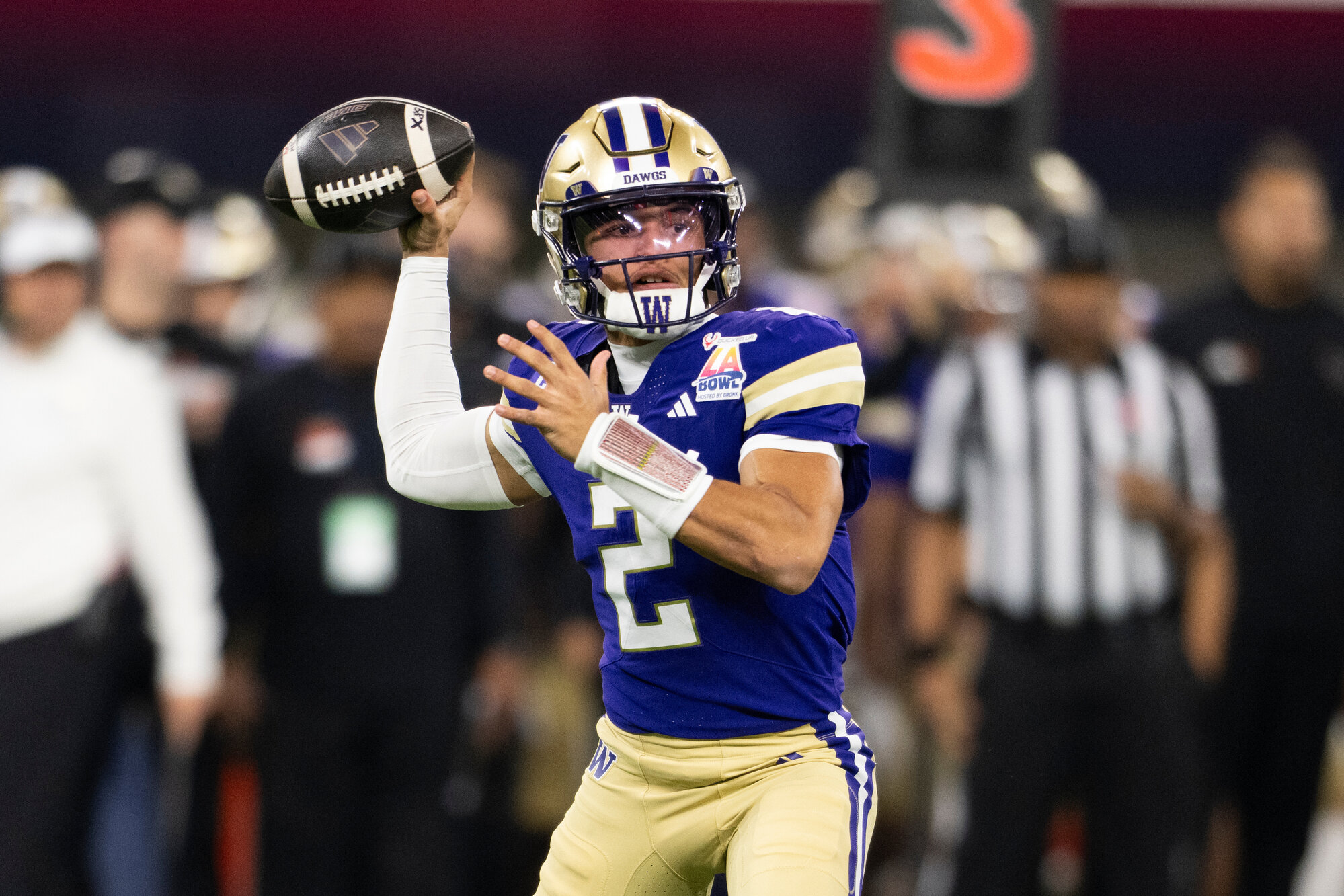
Washington quarterback Demond Williams Jr. said late Thursday he will return to school for the 2026 season rather than enter the transfer portal, avoiding a potentially messy dispute amid reports the Huskers were prepared to pursue legal options to enforce Williams’ name, image and likeness contract.
Edge rusher Damon Wilson is looking to transfer after one season at Missouri, having been sued for damages by Georgia over his decision to leave the Bulldogs. He has countersued.
Then there is Ole Miss quarterback Trinidad Chambliss, who reportedly has a new NIL deal signed but is awaiting an NCAA waiver allowing him to play another season as he and the Rebels played Thursday night’s Collge Football Playoff semifinal against Miami. On the Hurricanes roster: Defensive back Xavier Lucas, whose transfer from Wisconsin led to a lawsuit against the Hurricanes last year with the Badgers claiming he was improperly lured by NIL money. Lucas has played all season for Miami. The case is pending.
What to do?
Court rulings have favored athletes of late, winning them not just millions in compensation but the ability to play immediately after transferring rather than have to sit out a year as once was the case. They can also discuss specific NIL compensation with schools and boosters before enrolling and current court battles include players seeking to play longer without lower-college seasons counting against their eligibility and ability to land NIL money while doing it.
Ehrlich compared the situation to the labor upheaval professional leagues went through before finally settling on collective bargaining, which has been looked at as a potential solution by some in college sports over the past year. Athletes.org, a players association for college athletes, recently offered a 38-page proposal of what a labor deal could look like.
“I think NCAA is concerned, and rightfully so, that anything they try to do to tamp down this on their end is going to get shut down,” Ehrlich said. “Which is why really the only two solutions at this point are an act of Congress, which feels like an act of God at this point, or potentially collective bargaining, which has its own major, major challenges and roadblocks.”
The NCAA has been lobbying for years for limited antitrust protection to keep some kind of control over the new landscape – and to avoid more crippling lawsuits – but bills have gone nowhere in Congress.
Collective bargaining is complicated and universities have long balked at the idea that their athletes are employees in some way. Schools would become responsible for paying wages, benefits, and workers’ compensation. And while private institutions fall under the National Labor Relations Board, public universities must follow labor laws that vary from state to state; virtually every state in the South has “right to work” laws that present challenges for unions.
Ehrlich noted the short careers for college athletes and wondered whether a union for collective bargaining is even possible.
A harder look at contracts
To sports attorney Mit Winter, employment contracts may be the simplest solution.
“This isn’t something that’s novel to college sports,” said Winter, a former college basketball player who is now a sports attorney with Kennyhertz Perry. “Employment contracts are a huge part of college sports, it’s just novel for the athletes.”
Employment contracts for players could be written like those for coaches, he suggested, which would offer buyouts and prevent players from using the portal as a revolving door.
“The contracts that schools are entering into with athletes now, they can be enforced, but they cannot keep an athlete out of school because they’re not signing employment contracts where the school is getting the right to have the athlete play football for their school or basketball or whatever sport it is,” Winter said. “They’re just acquiring the right to be able to use the athlete’s NIL rights in various ways. So, a NIL agreement is not going to stop an athlete from transferring or going to play whatever sport it is that he or she plays at another school.”
There are challenges here, too, of course: Should all college athletes be treated as employees or just those in revenue-producing sports? Can all injured athletes seek workers’ compensation and insurance protection? Could states start taxing athlete NIL earnings?
Winter noted a pending federal case against the NCAA could allow for athletes to be treated as employees more than they currently are.
“What’s going on in college athletics now is trying to create this new novel system where the athletes are basically treated like employees, look like employees, but we don’t want to call them employees,” Winter said. “We want to call them something else and say they’re not being paid for athletic services. They’re being paid for use of their NIL. So, then it creates new legal issues that have to be hashed out and addressed, which results in a bumpy and chaotic system when you’re trying to kind of create it from scratch.”
He said employment contracts would allow for uniform rules, including how many schools an athlete can go to or if the athlete can go to another school when the deal is up. That could also lead to the need for collective bargaining.
“If the goal is to keep someone at a school for a certain defined period of time, it’s got to be employment contracts,” Winter said.

In November, Ole Miss quarterback Trinidad Chambliss filed a waiver petition to receive a sixth year of eligibility. He transferred to Ole Miss ahead of the 2025 season after spending four years at Division II program Ferris State.
Following the Rebels’ stellar 13-2 season and appearance in the College Football Playoff Semifinals, the ruling on Chambliss’ eligibility has finally been handed down from the NCAA.
The Grand Rapids native’s waiver has officially been denied, dealing a massive blow to Pete Golding and the Ole Miss Rebels. Chambliss will now head to the NFL Draft, where he sits at No. 4 on Mel Kiper Jr.’s quarterback rankings. He is slotted behind Oregon‘s Dante Moore, Indiana‘s Fernando Mendoza, and Alabama‘s Ty Simpson.
Chambliss opened the season as Austin Simmons‘ backup, but assumed starting duties once Simmons suffered an injury in the Rebels’ 30-23 victory over Kentucky on Sept. 6. Not only did Chambliss serviceably fill in for Simmons, but he evolved into one of the best quarterbacks in the sport. He passed for 3,937 yards and 22 touchdowns with just three interceptions this season, along with rushing for 527 yards and eight more scores.
Ole Miss‘ starting quarterback passed for at least 300 yards in eight games and finished eighth in Heisman Trophy voting. He cemented himself as a program legend thanks to his performance in the Rebels’ 39-34 win over No. 3 Georgia in the Sugar Bowl, where he pulled off multiple spectacular plays to clinch the historic victory.
NCAA’s Full Statement on Trinidad Chambliss:
“In November, Ole Miss filed a waiver request for football student-athlete Trinidad Chambliss, seeking to extend his five-year Division I eligibility clock, citing an incapacitating illness or injury. Approval requires schools to submit medical documentation provided by a treating physician at the time of a student’s incapacitating injury or illness, which was not provided. The documents provided by Ole Miss and the student’s prior school include a physician’s note from a December 2022 visit, which stated the student-athlete was “doing very well” since he was seen in August 2022.”
“Additionally, the student-athlete’s prior school indicated it had no documentation on medical treatment, injury reports or medical conditions involving the student-athlete during that time frame and cited “developmental needs and our team’s competitive circumstances” as its reason the student-athlete did not play in the 2022-23 season. The waiver request was denied. This decision aligns with consistent application of NCAA rules. So far this academic year, the NCAA has received 784 clock extension requests (438 in football). Of those, 25 cases cited an incapacitating injury (nine in football). The NCAA approved 15 of those (six in football), and all 15 provided medical documentation from the time of the injury. Conversely, all 10 that were denied (three in football) did not provide the required medical documentation.”
“To receive a clock extension, a student-athlete must have been denied two seasons of competition for reasons beyond the student’s or school’s control, and a “redshirt” year can be used only once. One of the rules being cited publicly (Bylaw 12.6.4.2.2) is not the correct rule for the type of waiver requested by the school. Ole Miss applied for the waiver in November, and the NCAA first provided a verbal denial Dec. 8.”
Chambliss will now head off to the NFL, while Pete Golding and Ole Miss scramble to find a replacement at the position. Austin Simmons, who Chambliss replaced, announced his transfer to Missouri on Jan. 6.

While chaos has blanketed college football in the state and more than 30% of college players are in the transfer portal, BYU coach Kalani Sitake’s regime has, well, kind of escaped.
As of Friday afternoon, not one starter from the 2025 team has left for the transfer portal.
Sitake lost his defensive coordinator, Jay Hill, who took his cornerback coach, Jernaro Gilford, with him. But nobody followed them. Not one player.
Knock on wood.
That’s the roster heading into this weekend.
Why?
Well, one could preach culture or momentum, all that stuff. But it boils down to one single huge factor that clearly stands out since the Cougars defeated Georgia Tech in the Pop-Tarts Bowl in Orlando.
BYU has become a player-driven team.
Like 100%.
And that is a huge factor heading into winter workouts, spring practice, acceptance of returning players from church missions, and a sprinkling of transfer portal players expected to be announced in the coming days.
Hill’s replacement, Kelly Poppinga, told a BYUtv audience Friday that the retention effort began the day after the bowl game. He described coaches taking to the phones for 12 hours a day to re-recruit their stars.
But that was matched or even surpassed by player-driven emotions wanting to keep it rolling, to come back.
Now, nobody’s naive enough to think this wasn’t done without BYU’s collectives and revenue-sharing program having a lot to do with shoring up NIL contracts.
That’s reality today.
But it was done, starting with some of the most prized players, like honorable mention All-America safety Faletau Satuala, whom many believed would be targeted by Hill and Michigan.
But, somewhat surprisingly, Satuala announced his return quickly. So did tackle Keanu Tanuvasa, Isaiah Glasker, Siale Esera and other defenders.
The offense followed, capped by Big 12 offensive player of the year running back LJ Martin.
Poppinga said he expects the late news on corner Evan Johnson, BYU’s best cover athlete, is soon to come out in BYU’s favor.
That is quite remarkable.
On Friday, USC tight end Walker Lyons, older brother of QB commit Ryder Lyons, announced he was transferring to BYU to compete for departing Ryan Carsen’s job.
On the day Hill announced he would follow his friend Kyle Whittingham to Michigan, it became a full three days of working the phones, said Poppinga.
“Ultimately, I just think the players love Kalani. And a lot of those guys, all of them, came to play for him. Hill would say the same thing. Jay is a humble guy, and he sees things, he knows that no one person or player is bigger than them.”
Poppinga said BYU players ran this team with a feeling of retention and continuity.
“Obviously, us coaches, you’ve got to put them in the right positions and make sure that we’re making the right adjustments and doing the right things. But when you have great players and great leadership, I think everything else takes care of itself.”
Corner Tre Alexander began his own campaign to maintain the roster on TV right after Jay Hill announced he was going to Michigan. He then texted Poppinga, saying, “Coach, just so you know. I ain’t going anywhere.”
“And he’s like, ‘And I’m going to call everybody right now. I’m going to help you out to keep everybody here.’
“He’s the best,” said Poppinga.
“He’s like, ‘Coach, I’m rallying the troops.’
“And then a couple of hours later, he’s like, ‘Coach, nobody’s leaving.’”
Poppinga: “There are so many pieces to this thing. And it’s just not one player, one coach. I think it’s just the collective unit that we have. It’s been special. And it all starts with Kalani and his leadership and just this culture he has here.”
Sitake, said Poppinga, was the biggest portal guy when Penn State came calling.
“He went in the portal and stayed.”
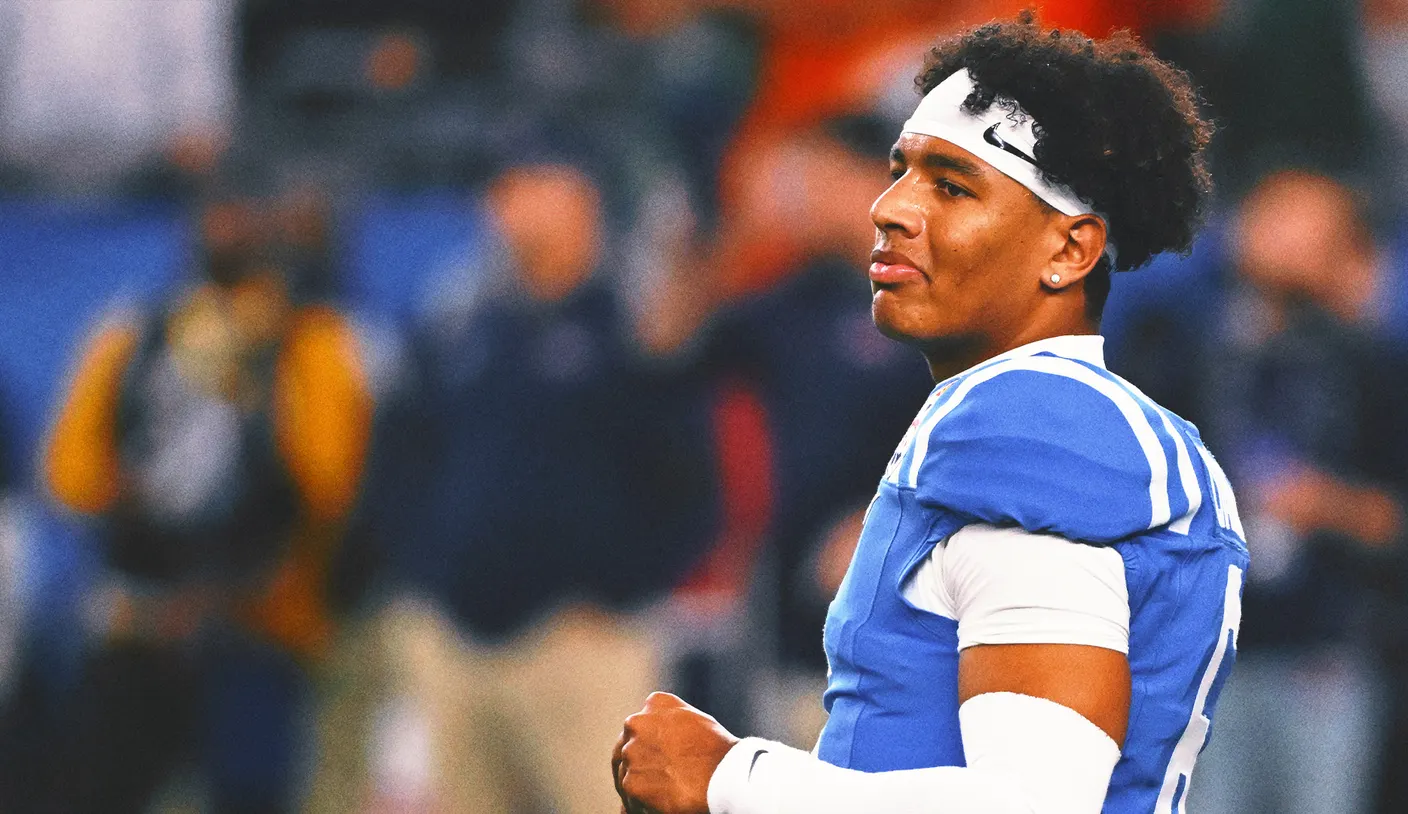
Ole Miss quarterback Trinidad Chambliss saw his season end on Thursday night, and on Friday, potentially his college career. The NCAA formally rejected a request for a sixth year of eligibility, with which he would have been able to return to the Rebels as their starting QB once more.
Instead, Chambliss has two options in front of him. Ole Miss can still appeal the NCAA’s ruling in an attempt to retain Chambliss and have him play out the deal he had agreed to for 2026 that was pending NCAA granting additional eligibility, or Chambliss can enter the NFL Draft to continue his football career in the pros, instead. Given the NCAA’s reasoning for their refusal to grant the additional year of eligibility, an appeal doesn’t guarantee any kind of success.
Ole Miss athletic director Keith Carter said his school will appeal the ruling.
“We are disappointed with today’s announcement by the NCAA and plan to appeal the decision to the Committee level,” Carter said in a social media post, in which he included the flag of Trinidad and Tobago. “Additionally, we will continue to work in conjunction with Trinidad’s representatives in other avenues of support.”
Tom Mars, who is an attorney for Chambliss, said he was disappointed but not surprised by the NCAA’s decision. “The last time I checked, however, the only score that matters is the one at the end of the fourth quarter,” Mars said.
“I understand that Ole Miss will file an appeal with the NCAA. However, there’s now an opportunity to move this case to a level playing field where Trinidad’s rights will be determined by the Mississippi judiciary instead of some bureaucrats in Indianapolis who couldn’t care less about the law or doing the right thing,” Mars said. “Whether to pursue that course of action is a decision only Trinidad and his parents can make.”
[Beck? Kiffin? 4 Takeaways From Miami’s CFP Semifinal Win Over Ole Miss]
In its own statement, the NCAA explained the reason for the rejection by giving background to how the process works in general, how it worked for Chambliss and what was lacking for the decision to go in his and Ole Miss’ favor.
“In November, Ole Miss filed a waiver request for football student-athlete Trinidad Chambliss, seeking to extend his five-year Division I eligibility clock, citing an incapacitating illness or injury. Approval requires schools to submit medical documentation provided by a treating physician at the time of a student’s incapacitating injury or illness, which was not provided. The documents provided by Ole Miss and the student’s prior school include a physician’s note from a December 2022 visit, which stated the student-athlete was “doing very well” since he was seen in August 2022. Additionally, the student-athlete’s prior school indicated it had no documentation on medical treatment, injury reports or medical conditions involving the student-athlete during that time frame and cited “developmental needs and our team’s competitive circumstances” as its reason the student-athlete did not play in the 2022-23 season. The waiver request was denied.”
The “prior school” mentioned by the NCAA is Division II Ferris State, at which Chambliss was a redshirt freshman in 2021 before moving into a backup role and then becoming a national champion as its starter in 2024.
The NCAA elaborated that, “To receive a clock extension, a student-athlete must have been denied two seasons of competition for reasons beyond the student’s or school’s control, and a “redshirt” year can be used only once. One of the rules being cited publicly (Bylaw 12.6.4.2.2) is not the correct rule for the type of waiver requested by the school. Ole Miss applied for the waiver in November, and the NCAA first provided a verbal denial Dec. 8.”
Chambliss led the SEC in passing yards in 2025 with 3,937 while throwing 22 touchdowns against just 3 interceptions. He finished eighth in the Heisman voting overall and fifth among quarterbacks, behind Georgia’s Gunner Stockton, Ohio State’s Julian Sayin, Vanderbilt’s Diego Pavia and the winner of the 2025 Heisman, Indiana’s Fernando Mendoza. Chambliss led Ole Miss to the College Football Player for the first time, and the Rebels’ 13 wins are a school record.
The Associated Press contributed to this report.
Want great stories delivered right to your inbox? Create or log in to your FOX Sports account, and follow leagues, teams and players to receive a personalized newsletter daily!
FOLLOW Follow your favorites to personalize your FOX Sports experience
NIL
College enforcement group voices ‘serious concerns’ with spiraling transfer portal – Las Vegas Sun News

Published Friday, Jan. 9, 2026 | 4:39 p.m.
Updated Friday, Jan. 9, 2026 | 4:39 p.m.
A
transfer portal
spiraling out of control prompted the new regulatory body for college sports to issue a memo to athletic directors Friday night saying it has “serious concerns” about some of the multimillion-dollar contracts being offered to players.
The “reminder” from the College Sports Commission came out about an hour before kickoff of the semifinal between
Indiana and Oregon in a College Football Playoff
that has shared headlines with news of players signing seven-figure deals to move or, in some cases, stay where they are.
The CSC reminded the ADs that, according to the rules, third-party deals to use players’ name, image and likeness “are evaluated at the time of entry in NIL Go, not before, and each deal is evaluated on its own merits.”
“Without prejudging any particular deal, the CSC has serious concerns about some of the deal terms being contemplated and the consequences of those deals for the parties involved,” the memo said.
Under terms of the House settlement that dictated the rules for NIL payments, schools can share revenue with their players directly from a pool of $20.5 million. Third-party deals, often arranged by businesses created to back the schools, are being used as workarounds this so-called salary cap.
The CSC, through its NIL Go portal, is supposed to evaluate those deals to make sure they are for a valid business purpose and fall within a fair range of compensation for the services being provided.
The CSC did not list examples of unapproved contracts, but college football has seen its share of seven-figure deals luring players to new schools since the transfer portal opened on Jan. 2.
One high-profile case involved
Washington quarterback Demond Williams Jr.,
who initially sought to enter the transfer portal and turn his back on a reported deal worth $4 million with the Huskies. Legal threats ensued and Williams changed course and stayed at Washington.
“Making promises of third-party NIL money now and figuring out how to honor those promises later leaves student-athletes vulnerable to deals not being cleared, promises not being able to be kept, and eligibility being placed at risk,” the CSC letter said.
The commission listed two rules about contracts it evaluates, some of which have been termed “agency agreement” or “services agreement” in what look like attempts to bypass the rules.
—”The label on the contract does not change the analysis; if an entity is agreeing to pay a student-athlete for their NIL, the agreement must be reported to NIL Go within the reporting deadline.”
—”An NIL agreement or payment with an associated entity or individual … must include direct activation of the student-athlete’s NIL rights.” This is a reference to the practice of “warehousing” NIL rights by paying first, then deciding how to use them later.
___
Get poll alerts and updates on the AP Top 25 throughout the season. Sign up
here
and
here
(AP News mobile app). AP college football:
https://apnews.com/hub/ap-top-25-college-football-poll
and
https://apnews.com/hub/college-football

News – AP-National
A transfer portal spiraling out of control prompted the new regulatory body for college sports to issue a memo to athletic directors saying it has “serious concerns” about some of the multimillion-dollar contracts being offered to players.
By EDDIE PELLSAP National Writer
A transfer portal spiraling out of control prompted the new regulatory body for college sports to issue a memo to athletic directors Friday night saying it has “serious concerns” about some of the multimillion-dollar contracts being offered to players.
The “reminder” from the College Sports Commission came out about an hour before kickoff of the semifinal between Indiana and Oregon in a College Football Playoff that has shared headlines with news of players signing seven-figure deals to move or, in some cases, stay where they are.
The CSC reminded the ADs that, according to the rules, third-party deals to use players’ name, image and likeness “are evaluated at the time of entry in NIL Go, not before, and each deal is evaluated on its own merits.”
“Without prejudging any particular deal, the CSC has serious concerns about some of the deal terms being contemplated and the consequences of those deals for the parties involved,” the memo said.
Under terms of the House settlement that dictated the rules for NIL payments, schools can share revenue with their players directly from a pool of $20.5 million. Third-party deals, often arranged by businesses created to back the schools, are being used as workarounds this so-called salary cap.
The CSC, through its NIL Go portal, is supposed to evaluate those deals to make sure they are for a valid business purpose and fall within a fair range of compensation for the services being provided.
The CSC did not list examples of unapproved contracts, but college football has seen its share of seven-figure deals luring players to new schools since the transfer portal opened on Jan. 2.
One high-profile case involved Washington quarterback Demond Williams Jr., who initially sought to enter the transfer portal and turn his back on a reported deal worth $4 million with the Huskies. Legal threats ensued and Williams changed course and stayed at Washington.
“Making promises of third-party NIL money now and figuring out how to honor those promises later leaves student-athletes vulnerable to deals not being cleared, promises not being able to be kept, and eligibility being placed at risk,” the CSC letter said.
The commission listed two rules about contracts it evaluates, some of which have been termed “agency agreement” or “services agreement” in what look like attempts to bypass the rules.
—”The label on the contract does not change the analysis; if an entity is agreeing to pay a student-athlete for their NIL, the agreement must be reported to NIL Go within the reporting deadline.”
—”An NIL agreement or payment with an associated entity or individual … must include direct activation of the student-athlete’s NIL rights.” This is a reference to the practice of “warehousing” NIL rights by paying first, then deciding how to use them later.
Copyright 2026 The Associated Press. All rights reserved. This material may not be published, broadcast, rewritten or redistributed without permission.

Sports4 minutes ago
No. 8 Cougars take down Red Flash in season opener with 3-0 sweep – BYU Athletics – Official Athletics Website
Rec Sports10 minutes ago
Schuyler County shows interest in upstate nuclear power development
Rec Sports18 minutes ago
MLK Basketball Classic turns Knoxville rivalry into King Week tradition

Sports19 minutes ago
Deb Thill, Kernels’ only volleyball coach in program history, set to retire – Mitchell Republic

Motorsports23 minutes ago
American Communications Construction and Aloha Beauty Lounge Extend Primary Sponsorship With NHRA Top Fuel Driver Tony Schumacher Through 2032

Sports36 minutes ago
Wesleyan Christian’s Nejari Crooks named Gatorade NC Volleyball Player of the Year

Motorsports38 minutes ago
SCC Atlanta gives $100k to help local kids in need – Speedway Digest

Rec Sports42 minutes ago
Girls’ ice hockey gets a boost from Newton South

Rec Sports50 minutes ago
James Richard Spangler

Motorsports55 minutes ago
USCS Sprint Cars Added to Bakersfield Speedway Schedule on May 30 and Sept 12 – Speedway Digest

Rec Sports58 minutes ago
Westside sixth-grader Lumi Oniyide appears on ‘Abbott Elementary’

Rec Sports1 hour ago
Page Not Found | Northwest Arkansas Democrat-Gazette

Rec Sports1 hour ago
MSP district honors three with Employee of the Year Awards | News, Sports, Jobs

Rec Sports1 hour ago
As a star departs, a boy asks, ‘When did Trae Young stop being the best?’

Motorsports3 hours ago
Byron and Phorm Energy Boosts NASCAR Sponsorship

Sports4 weeks ago
#11 Volleyball Practices, Then Meets Media Prior to #2 Kentucky Match

Rec Sports4 weeks ago
Stempien to seek opening for Branch County Circuit Court Judge | WTVB | 1590 AM · 95.5 FM

Motorsports3 weeks ago
Ross Brawn to receive Autosport Gold Medal Award at 2026 Autosport Awards, Honouring a Lifetime Shaping Modern F1

Sports4 weeks ago
Maine wraps up Fall Semester with a win in Black Bear Invitational

Motorsports4 weeks ago
Nascar legal saga ends as 23XI, Front Row secure settlement

Rec Sports3 weeks ago
Princeton Area Community Foundation awards more than $1.3 million to 40 local nonprofits ⋆ Princeton, NJ local news %

NIL4 weeks ago
Downtown Athletic Club of Hawaiʻi gives $300K to Boost the ’Bows NIL fund

Motorsports4 weeks ago
Sunoco to sponsor No. 8 Ganassi Honda IndyCar in multi-year deal

Rec Sports4 weeks ago
WNBA’s Caitlin Clark, Angel Reese and Paige Bueckers in NC, making debut for national team at USA camp at Duke
Motorsports4 weeks ago
NASCAR, 23XI Racing, Front Row Motorsports announce settlement of US monopoly suit | MLex

Sports4 weeks ago
Hope College Tops MIAA Commissioner’s Cup Fall Update

NIL4 weeks ago
Nike Signs 10 LSU Athletes to NIL deals

Sports3 weeks ago
Badgers news: Wisconsin lands 2nd commitment from transfer portal

Sports4 weeks ago
Three Clarkson Volleyball Players Named to CSC Academic All-District List

Rec Sports1 week ago
Five Youth Sports Trends We’re Watching in 2026





-
 Sports3 weeks ago
Badgers news: Wisconsin lands 2nd commitment from transfer portal
-
 Rec Sports1 week ago
Five Youth Sports Trends We’re Watching in 2026
-

 Sports3 weeks ago
Is women’s volleyball the SEC’s next big sport? How Kentucky, Texas A&M broke through
-
 Sports2 weeks ago
Kentucky VB adds an All-American honorable mention, loses Brooke Bultema to portal
-

 Rec Sports3 weeks ago
NBA, Global Basketball Community Unite for World Basketball Day Celebration
-

 Motorsports3 weeks ago
Dr. Patrick Staropoli Lands Full-Time O’Reilly Ride with Big Machine Racing
-

 Motorsports3 weeks ago
NASCAR, IndyCar, and F1 Share These Race Days in 2026
-

 Motorsports3 weeks ago
BigRock Motorsports Retains Its Championship Title At ISRL Season 2 Grand Finale In Calicut
-
 Sports2 weeks ago
2025 Volleyball Player of the Year: Witherow makes big impact on Central program | Nvdaily
-

 Motorsports2 weeks ago
BangShift.com IHRA Acquires Historic Memphis Motorsports Park In Millington Tennessee. Big Race Weekend’s Planned For 2026!