
NIL
College basketball steals the crown back from NBA

Remember when college basketball felt like a stepping stone that elite prospects couldn’t wait to skip? Those days are officially over, and the shift has been more dramatic than watching your favorite streaming service suddenly become unwatchable after they raised their prices for the third time this year.
The numbers don’t lie, and they’re telling a fascinating story about how college hoops clawed its way back to the top of the NBA development food chain. We’re talking about a complete reversal of fortune that has international players flying halfway around the world to play in places like Provo, Utah, instead of staying in prestigious European leagues.
Egor Demin’s journey perfectly captures this seismic shift. Picture this: A talented 19-year-old guard from Moscow deciding to leave Real Madrid – one of Europe’s most prestigious basketball organizations – to play for BYU, a school he’d never even visited. That’s like turning down a guaranteed spot at a five-star restaurant to try a food truck you heard about on social media. Crazy? Maybe. But it’s working.
The numbers tell an incredible comeback story
Let’s break down what’s really happening here, because the statistics are absolutely mind-blowing. Between 2015 and 2022, college basketball was cruising along with an average of 12 players from the top 14 lottery picks. Nothing too crazy there – college was doing its job as the primary pipeline to the NBA.
But then something weird happened. The past two drafts combined featured only 17 college players in the entire lottery. That’s not a slight dip – that’s a cliff dive. International leagues, Overtime Elite, and the G League Ignite were suddenly eating college basketball’s lunch, and it looked like the traditional college route might become obsolete.
This year changes everything. ESPN projects 12 college basketball players will get picked in the lottery, which would tie for the second-most since 2015. That’s not just a recovery – it’s a complete resurrection of college basketball’s dominance in NBA development.
What makes this comeback even more impressive is the diversity of talent flowing through college programs. You’ve got Duke’s Cooper Flagg representing the classic one-and-done route, Colorado State’s Nique Clifford as a fifth-year senior proving experience matters, and BYU’s Demin showing how international players can thrive in the college environment.
NIL money changed the entire game
Here’s where things get really interesting: Name, Image, and Likeness deals didn’t just give college players some spending money – they completely revolutionized the entire development landscape. When programs started offering million-dollar packages to elite prospects, suddenly college basketball wasn’t just competing with international leagues; it was outbidding them.
Demin’s situation is the perfect example. BYU didn’t just offer him great coaching and development – they backed it up with a seven-figure NIL package that made the financial decision easy. When you can get paid like a professional while still experiencing March Madness and building your draft stock, why would you choose anything else?
The ripple effects have been enormous. The G League Ignite program? Gone. Overtime Elite? They’ve shifted focus to high school players because they can’t compete with college NIL deals. International teams are watching their best young prospects get poached by American universities offering better money and clearer paths to the NBA.
One NBA agent summed it up perfectly: Most kids would prefer to go to college and play in March Madness if all things are equal financially. Well, guess what? Things are now more than equal – college programs are often offering more money than alternative development paths.
Programs are becoming NBA laboratories
The real genius behind college basketball’s resurgence isn’t just the money – it’s how smart programs have completely transformed their operations to mirror professional franchises. BYU’s Kevin Young didn’t just hire a bunch of assistants; he created an entire ecosystem designed to prepare players for the NBA.
We’re talking about everything from nutrition programs and analytics staffs to workout regimens and film study sessions that replicate what players will experience in the pros. Young brought his brother on as general manager, hired multiple assistants with NBA or G League experience, and built a support system that gives players a legitimate head start on their professional careers.
Illinois has become another fascinating case study. Coach Brad Underwood has sent every type of prospect to the NBA – from international players like Kasparas Jakucionis to transfers like Terrence Shannon Jr. to homegrown talents like Ayo Dosunmu. The common thread? They all bought into a professional culture that prepared them for the next level.
The attention to detail has become incredible. Tennessee’s Rick Barnes talks about teaching players where to stand during timeouts because NBA scouts are watching their body language and engagement. That’s the kind of comprehensive development that alternative programs simply can’t match.
International players are choosing American campuses
Perhaps the most shocking development is how college basketball has become attractive to elite international prospects who previously would have stayed in European leagues. Jakucionis left FC Barcelona for Illinois. Demin abandoned Real Madrid for BYU. These aren’t small programs poaching unknown players – these are major European clubs losing their best young talents to American universities.
The adjustment period is real, though. Demin talked about adapting to American basketball’s physicality and pace, which is significantly different from the European style. But that’s exactly why college has become so valuable – it’s the perfect bridge between international basketball and the NBA.
Programs have also figured out ways to work around NIL complications for international players. While the rules are more complex for foreign students, creative athletic departments have found loopholes that allow them to offer competitive packages. When you combine that financial incentive with superior development resources and March Madness exposure, the choice becomes obvious.
Veterans are getting respect again
One of the most interesting aspects of college basketball’s resurgence is how NBA teams are rediscovering the value of experienced, mature players. During the height of the one-and-done era, being 22 years old as a draft prospect was considered ancient. Now it’s seen as an advantage.
The new collective bargaining agreement has created financial incentives for teams to draft older, more polished players who can contribute immediately rather than expensive young prospects who need years of development. Second-round picks can now be signed to deals that make them attractive options for teams looking to add depth without breaking the bank.
Darrion Williams from NC State represents this trend perfectly. He could have declared for the draft last year but chose to return to college for another season of development. His reasoning? He wanted to work with coaches who had NBA experience and could help him address specific weaknesses that scouts had identified.
The blue bloods are losing their monopoly
Here’s where the story gets really fascinating: The traditional powerhouse programs aren’t dominating this resurgence. Kansas, Kentucky, North Carolina, and UCLA might not have a single first-round pick for the first time since 2004. That’s absolutely stunning when you consider how these schools used to monopolize top-tier talent.
Instead, prospects are choosing programs based on fit, development resources, and coaching staff experience rather than brand recognition. Players want to know they’ll get playing time, work with coaches who understand the NBA, and have access to the same kind of training and analytics that professional teams use.
This shift has created opportunities for programs that might not have the traditional prestige but can offer superior development environments. BYU, Illinois, NC State, and other schools are landing elite prospects because they’ve invested in the infrastructure needed to prepare players for professional basketball.
Looking ahead at the new landscape
The transformation of college basketball into the premier NBA development option represents more than just a cyclical change – it’s a fundamental shift in how elite prospects approach their careers. When you can earn significant money, play in front of massive audiences, and receive professional-level training all while getting a college education, the value proposition becomes irresistible.
Programs that embrace this new reality and continue investing in NBA-level infrastructure will continue attracting the best talent. Those that try to operate the old way will find themselves left behind as prospects choose schools that offer comprehensive professional development rather than just traditional college experiences.
The G League and international alternatives will still exist, but they’ll be fighting for scraps rather than competing for the top prospects. College basketball has reclaimed its throne, and it’s not giving it up anytime soon. The combination of NIL money, professional-level development, and March Madness exposure has created a package that alternative paths simply can’t match.
For players like Demin, who took a massive gamble by leaving Real Madrid for BYU, the payoff has been everything he hoped for and more. His journey from Moscow to Provo to potentially the NBA lottery represents the new reality of basketball development – one where college campuses have become the most attractive destinations for prospects with professional dreams.

NIL
Big 12’s Brett Yormark says college athletics needs legislation that’s stalled in Congress :: WRAL.com

ARLINGTON, Texas (AP) — Big 12 Commissioner Brett Yormark says legislation currently stalled in Congress is needed to regulate college athletics and put a stop to what he essentially calls uncapped spending for name, image and likeness in football.
“Let me be clear about this,” Yormark said Saturday before the Big 12 championship game between No. 5 Texas Tech and 11th-ranked BYU at the home of the Dallas Cowboys. “The House of Representatives must do what is right for over 500,000 student-athletes and pass the SCORE Act. We must protect their future, their well-being and their fair treatment. They deserve action and not excuses.”
An effort backed by the NCAA, the U.S. Olympic organization and the White House faltered in Congress this past week, with opponents raising concerns over the wide-reaching power it gives the governing body of college sports and its most powerful programs.
The NCAA and Division I conferences portray the legislation as codifying the rules created by the multibillion-dollar lawsuit settlement that allows college players to be paid, providing clarity that supporters say is long-needed.
House Republican leaders had planned to push the bill to a final vote this past week. But those plans were abruptly scrapped after a procedural vote to advance the bill nearly failed.
Yormark said he supports the revenue-sharing model that is part of the settlement and agrees with those who believe NIL spending on top of the $20.5 million could be destabilizing for college sports.
UCF coach Scott Frost said on national signing day this week he thinks college football is “broken” because of unregulated spending on players.
In 2017, Frost led the Golden Knights to a 13-0 record without a bid in the College Football Playoff, which included four teams at the time, before getting fired in the middle of a fifth unsuccessful season at Nebraska, his alma mater. UCF, which was in the American Conference for Frost’s first stint but has since joined the Big 12, went 5-7 in his return this year.
“I will be spending time with the commissioners next week on some of the challenges and issues that face collegiate athletics, and we’re working through them,” Yormark said. “But I want you to understand that nothing’s broken in this system. And I respect Scott. But nothing’s broken. It’s all about progress, not perfection. There is no perfection in any industry, but there is progress, and we’re making great progress.”
Yormark is ready for 16-team playoff
Yormark said he believes in the playoff model with five automatic bids, even if it might cost the Big 12 a second team this season. That scenario also fits his opinion that the CFP needs to be 16 teams — with 11 at-large bids — instead of the current 12.
“I believe that on a percentage basis, when there’s 136 FBS (bowl subdivision) schools, the number 12 is too low,” Yormark said. “We need more access for all the right reasons. And I’m very consistent about that.”
Yormark indicated he doesn’t think the playoff will expand for 2026, even with an extra eight weeks to try to reach an agreement. The new deadline is Jan. 23.
“I can tell you we’re working on it, but we can’t rush it,” Yormark said. “A lot goes into it. It’s not just about picking a number. You also have to look through a filter and say what are the unintended consequences of those decisions, which is what the commissioners and myself are working on. I’m not overly optimistic we’re going to be able to change anything for next year. But we’re in the lab.”
___
Get poll alerts and updates on the AP Top 25 throughout the season. Sign up here and here (AP News mobile app). AP college football: https://apnews.com/hub/ap-top-25-college-football-poll and https://apnews.com/hub/college-football
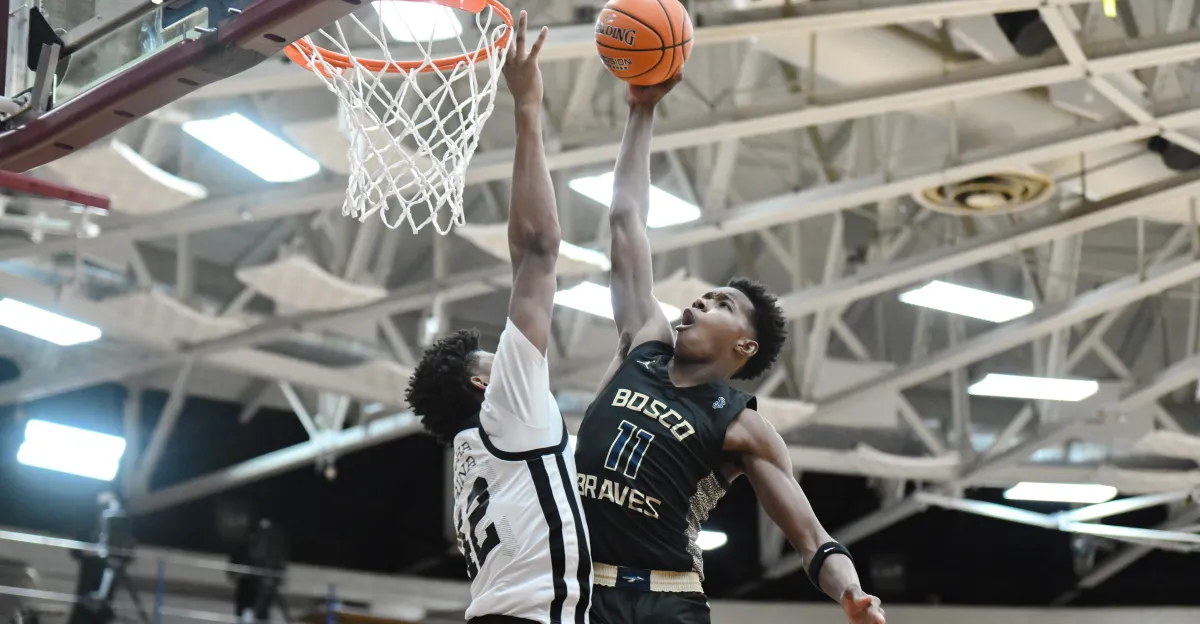
Collins, a 6-foot-8, 200-pound forward from Bellflower, California, is widely regarded as one of the premier frontcourt prospects in the country. His blend of athleticism, scoring ability, and defensive versatility made him a major priority for Kentucky head coach Mark Pope and his staff as they work to build future recruiting classes.
According to Jacob Polacheck of KSR, Collins’ recruitment is being heavily influenced by NIL structure and contract details, a growing trend at the top of the recruiting landscape. That reality was addressed publicly earlier this month by Kentucky athletic director Mitch Barnhart during Will Stein’s introductory press conference as the Wildcats’ new football head coach.
Barnhart pushed back strongly against the perception that Kentucky is at an NIL disadvantage, saying, “Enough about ‘have we got enough?’ We’ve got enough.” He also emphasized that Kentucky will not compromise its standards to land recruits. “We’ve got to do it the right way,” Barnhart said. “We’re not going to break the rules. That’s flat-out.”
While Kentucky no longer holds a crystal ball prediction for Collins, the Wildcats are not out of the race. However, his recruitment now appears far more fluid, underscoring the increasingly complex balance between elite talent, NIL expectations, and long-term program philosophy in modern college basketball.
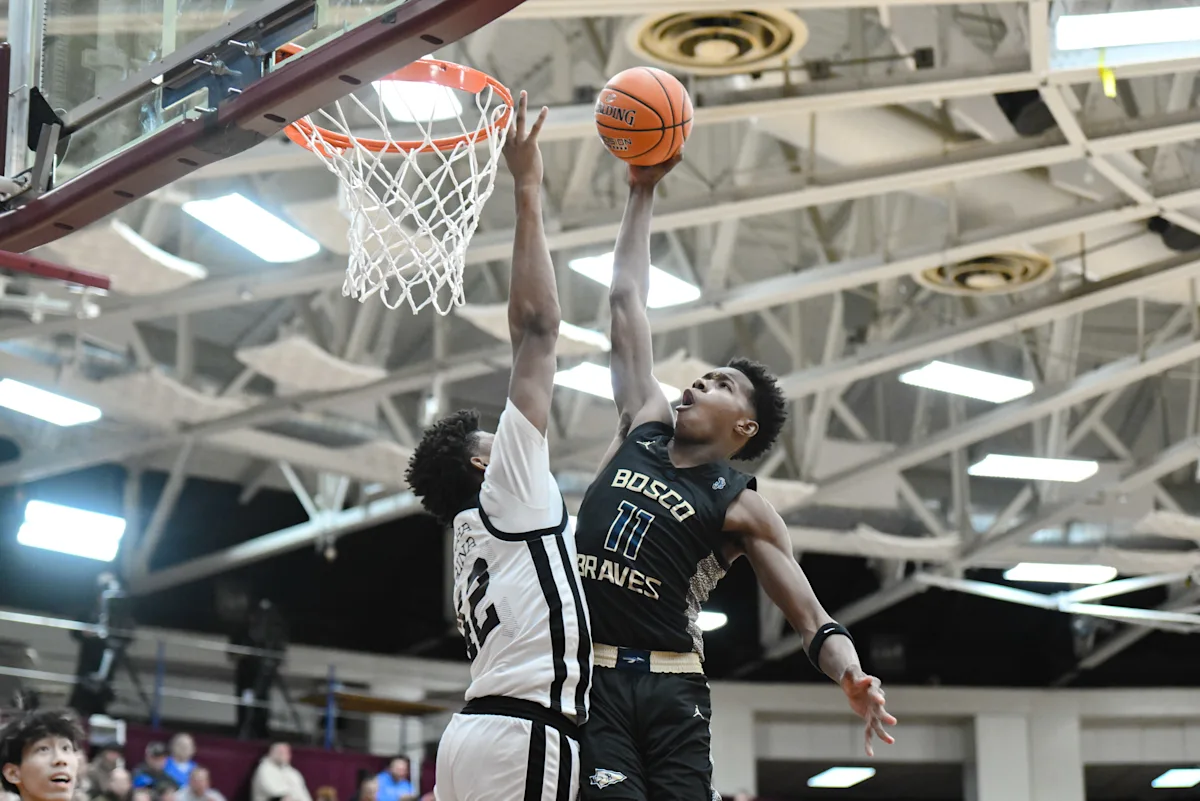
Kentucky Basketball suffered a notable recruiting setback this week as 247 Sports national analyst Travis Branham removed his crystal ball prediction for the Wildcats to land class of 2026 5-star power forward Christian Collins. Branham originally placed the prediction in early November, fueling optimism that Collins could commit to Kentucky as the early national signing period approached. That announcement never came, and momentum has since cooled.
Collins, a 6-foot-8, 200-pound forward from Bellflower, California, is widely regarded as one of the premier frontcourt prospects in the country. His blend of athleticism, scoring ability, and defensive versatility made him a major priority for Kentucky head coach Mark Pope and his staff as they work to build future recruiting classes.
Advertisement
According to Jacob Polacheck of KSR, Collins’ recruitment is being heavily influenced by NIL structure and contract details, a growing trend at the top of the recruiting landscape. That reality was addressed publicly earlier this month by Kentucky athletic director Mitch Barnhart during Will Stein’s introductory press conference as the Wildcats’ new football head coach.
Barnhart pushed back strongly against the perception that Kentucky is at an NIL disadvantage, saying, “Enough about ‘have we got enough?’ We’ve got enough.” He also emphasized that Kentucky will not compromise its standards to land recruits. “We’ve got to do it the right way,” Barnhart said. “We’re not going to break the rules. That’s flat-out.”
While Kentucky no longer holds a crystal ball prediction for Collins, the Wildcats are not out of the race. However, his recruitment now appears far more fluid, underscoring the increasingly complex balance between elite talent, NIL expectations, and long-term program philosophy in modern college basketball.

Less than two months after announcing his intention to run for lieutenant governor in Alabama, former three-time national champion Crimson Tide quarterback AJ McCarron has announced he will exit the race.
McCarron is seeking to rededicate himself to football, an effort that will require “100% of my focus, commitment, and attention that I was to give to the office of lieutenant governor, so it is time to end my campaign,” he said in a statement.
A historic career at Alabama
McCarron led the Crimson Tide to back-to-back BCS national championships in 2011 and 2012 and was part of the national title team as a redshirt player in 2009.
A native of Mobile, the quarterback became the first player at his position to win consecutive BCS titles and also received several of college football’s more prestigious awards, including the Maxwell, Johnny Unitas Golden Arm, and Kellen Moore Awards.
As a junior, McCarron established an Alabama record with 30 touchdown passes in a season, and broke Greg McElroy’s former record with 3,063 passing yards in a season during his senior campaign in 2013.
McCarron finished his Alabama career with a 36-4 overall record, completing almost 67 percent of his passes with 77 touchdowns and 15 interceptions.
McCarron in the NFL
The quarterback emerged as a fifth-round selection in the 2014 NFL Draft by the Cincinnati Bengals, playing as a backup for four years.
McCarron spent the next four seasons as a reserve first with the Oakland Raiders, followed by a stint with the Houston Texas, and finally the Atlanta Falcons.
From there, he played in the XFL with the St. Louis Battlehawks, a franchise that then moved to the United Football League.
McCarron’s political ambitions
The former quarterback star was running as a Republican for the second-highest office in his home state, a move he said was inspired by the murder of conservative political activist Charlie Kirk.
“Alabama’s conservative and cultural values are under attack from every direction,” McCarron said in his announcement for office.
“That’s why Charlie Kirk’s assassination affected so many of us so deeply. His example convinced me to get off of the sidelines, get into the game, and stand tall for our conservative beliefs.”
McCarron currently serves as a college football commentator as part of The Dynasty podcast, which he presents with fellow Alabama alum Trent Richardson and Crimson Tide broadcaster Chris Stewart.
More college football from SI: Top 25 Rankings | Schedule | Teams
Follow College Football HQ: Bookmark | Rankings | Picks
Dec. 17, 2025, 1:41 p.m. ET
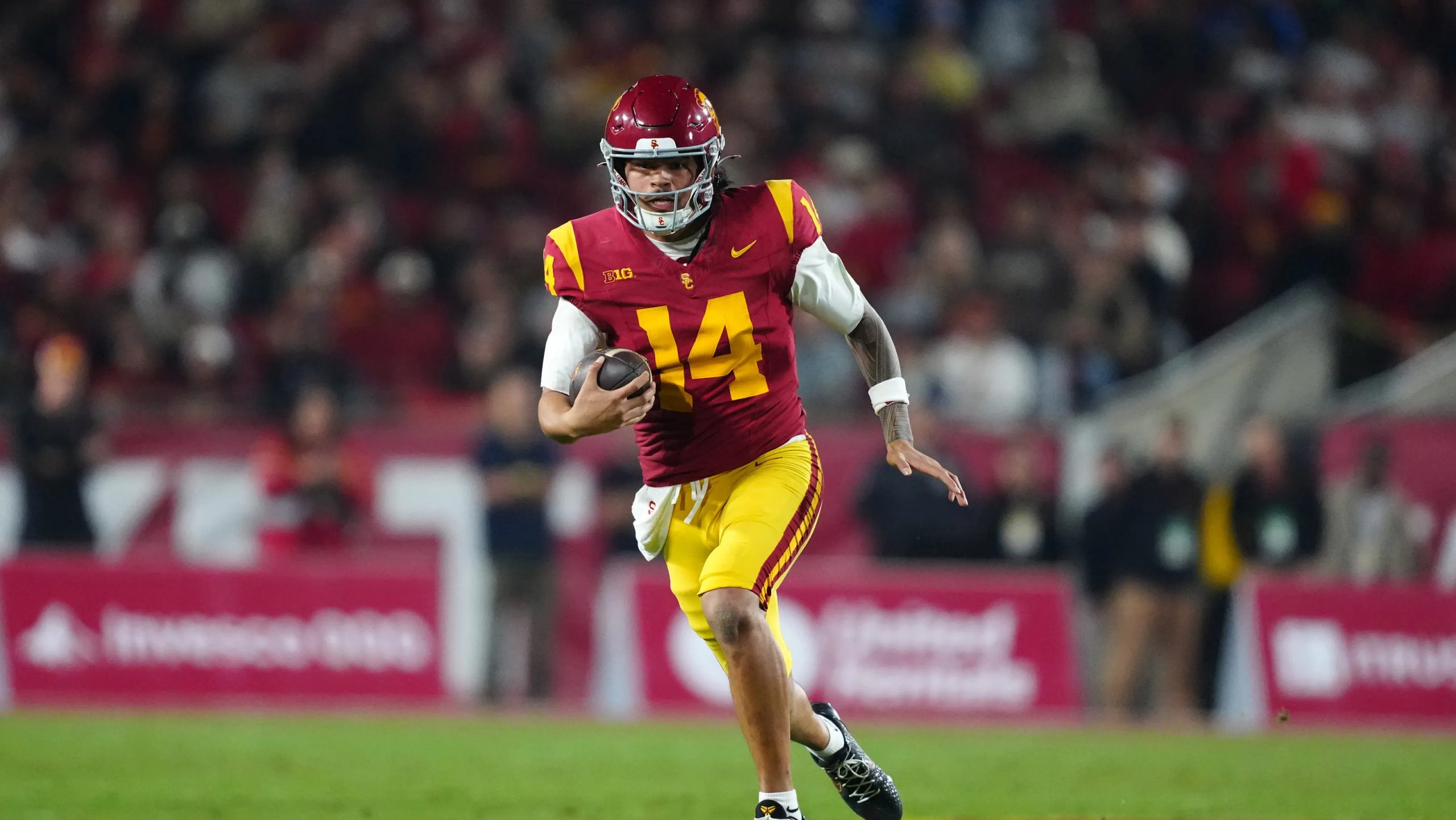
USC will get its starting signal-caller back in 2026.
On Tuesday, the program announced that quarterback Jayden Maiava has signed a new NIL deal to return to the Trojans next season. Maiava, who previously played at UNLV, would have had a significant transfer portal market and also ranked as a top-10 quarterback prospect in the 2026 NFL draft, per ESPN’s Mel Kiper.
Maiava started 11 games at UNLV in 2023 before transferring to USC, where he ultimately lost the starting job to Miller Moss ahead of the 2024 season. However, amid subpar play from Moss, coach Lincoln Riley made a change as he started the final four games.
Though his numbers during that stretch weren’t stellar, he did guide the Trojans to a 3-1 finish to the season.
Riley opted not to take a transfer quarterback this offseason and stuck with Maiava, who started all 12 games in a 9-3 season. He took a major leap, completing 66.2% of his passes for 3,431 yards, 23 touchdowns and eight interceptions.
Maiava also ran for six touchdowns this fall.
He became one of the Big Ten’s top quarterbacks this season, and for the first time since Riley’s second year at USC with Caleb Williams, the Trojans will have a proven, incumbent starting quarterback back in 2026.
Contact/Follow@College_Wire on X and@College_Wires on Threads. Like our page on Facebook to follow ongoing coverage of college sports news, notes, and opinions.

Created to fully-fund revenue share and to grow endorsement opportunities for Oklahoma State student-athletes, The Alliance pairs the POSSE Excellence Fund with Learfield’s Cowboy Sports Properties.
The POSSE Excellence Fund provides more than $31 million in scholarships and revenue share for student-athletes across all of OSU’s ticketed sports. Cowboy Sports Properties integrates NIL opportunities for student-athletes into OSU’s existing sponsorship, media and marketing ecosystem.
“The OSU NIL Alliance will streamline how our supporters can maximize new opportunities for our student-athletes and continue to position OSU for championship-level success.” Athletic Director Chad Weiberg said.
Weiberg appointed Brakston Brock to lead this next step in OSU’s NIL evolution. Brock has climbed the ranks during his six years in Stillwater and now elevates into the role of Senior Associate Athletic Director for NIL Strategy and Revenue Generation.
For more information on the OSU NIL Alliance, visit https://okstate.com/nil.
Women’s Basketball Battles In Front Of Youth Day Crowd

A First Look at the TLTC Innovation Hub

Big 12’s Brett Yormark says college athletics needs legislation that’s stalled in Congress :: WRAL.com

EXEC: Youth Sports Participation Challenged by Escalating Costs, Income Disparity

Four Members of Pack Volleyball Earn Academic All-District Honors

Republicans say sports could stem school, gun violence as Democrats push back

Catherine Burke Brings Depth at Middle Blocker for Demon Deacons Volleyball

Baylor’s Ezekiel one of three finalists for The Bowerman
Three-Time National Champion Sits Atop Women’s Volleyball Postseason Poll

KWHS senior Madyn Waring signs to Oregon State for track & field

NTDP/WNT Athletes Ready to Shine in 2025 NCAA Women’s Volleyball Semifinals

Kentucky Basketball loses recruiting prediction for Christian Collins as NIL looms large

Jimmie Johnson confirms Daytona 500 decision as schedule takes shape – Motorsport – Sports

Three Husker volleyball players make first-team All-America

Motorsports journalist Matt Weaver talks NASCAR lawsuit | Racing Report | Ep. 042

First Tee Winter Registration is open

Fargo girl, 13, dies after collapsing during school basketball game – Grand Forks Herald

CPG Brands Like Allegra Are Betting on F1 for the First Time

F1 Las Vegas: Verstappen win, Norris and Piastri DQ tighten 2025 title fight

Volleyball Recaps – November 18

Sycamores unveil 2026 track and field schedule

Two Pro Volleyball Leagues Serve Up Plans for Minnesota Teams

Utah State Announces 2025-26 Indoor Track & Field Schedule

Redemption Means First Pro Stock World Championship for Dallas Glenn

Jo Shimoda Undergoes Back Surgery

Texas volleyball vs Kentucky game score: Live SEC tournament updates

Bowl Projections: ESPN predicts 12-team College Football Playoff bracket, full bowl slate after Week 14

SoundGear Named Entitlement Sponsor of Spears CARS Tour Southwest Opener

How this startup (and a KC sports icon) turned young players into card-carrying legends overnight

Robert “Bobby” Lewis Hardin, 56

 NBA Legend Michael Jordan to Join NBC Sports as Special Contributor
 Why a rising mid-major power with an NCAA Tournament team opted out of revenue-sharing — and advertised it
 Falcons mailbag
 Portal Update – Basketball and Gymnastics Take Hits
 has always dreamed in Mercurial. Now his initials are on the boots.
The new Kyl…
has always dreamed in Mercurial. Now his initials are on the boots.
The new Kyl…
-
 Motorsports3 weeks ago
Jo Shimoda Undergoes Back Surgery
-
 NIL2 weeks ago
Bowl Projections: ESPN predicts 12-team College Football Playoff bracket, full bowl slate after Week 14
-
 Motorsports1 week ago
SoundGear Named Entitlement Sponsor of Spears CARS Tour Southwest Opener
-
 Rec Sports3 weeks ago
How this startup (and a KC sports icon) turned young players into card-carrying legends overnight
-
 Rec Sports3 weeks ago
Robert “Bobby” Lewis Hardin, 56
-
 NIL3 weeks ago
Indiana’s rapid ascent and its impact across college football
-

 Motorsports3 weeks ago
Pohlman admits ‘there might be some spats’ as he pushes to get Kyle Busch winning again
-
Sports3 weeks ago
Wisconsin volleyball sweeps Minnesota with ease in ranked rivalry win
-
 Motorsports1 week ago
Donny Schatz finds new home for 2026, inks full-time deal with CJB Motorsports – InForum
-

 Motorsports3 weeks ago
Increased Purses, 19 Different Tracks Highlight 2026 Great Lakes Super Sprints Schedule – Speedway Digest