
Sports
College Sports Commission Curbs NIL Collectives via Deloitte Review


The College Sports Commission (CSC) on Thursday issued additional guidance for the term “valid business purpose” and indicated NIL collectives whose sole focus is to pay athletes to attend or remain at a particular school will see their NIL deals rejected.
The clarification is arguably in line with the House settlement, the longstanding NCAA prohibition against pay-for-play and, more conceptually, the relationship between the right of publicity and NIL. But it could spark legal challenges.
As part of the House settlement, college athletes must report NIL deals that are worth at least $600. Those deals are subject to a clearinghouse review by NIL Go, which is spearheaded by Deloitte. The basic analysis is whether a proposed deal is consistent with the commercial use of the athlete’s NIL or better understood as an impermissible pay-for-play arrangement.
In this examination, NIL Go considers whether the payor of the NIL deal intends to use the athlete’s NIL for a valid business purpose, which CSC defines as a goal to “sell a good or service to the public for profit.” This examination also considers the range of compensation, and specifically whether the amount of money is commensurate with money paid for similar athletes in the same situation.
The term “valid business purpose” stems from NCAA Bylaw 22.1.3, which governs involvement of associated entities or individuals in NIL deals. The bylaw requires a valid business purpose “related to the promotion or endorsement of goods or services provided to the general public for profit, with compensation at rates and terms commensurate with compensation paid to similarly situated individuals with comparable [NIL] value who are not prospective student-athletes or student-athletes of the institution.”
The idea of a valid business purpose becomes less abstract when imagining an endorsement deal in pro sports.
Think of a pro athlete paid to appear in a TV commercial for a car, sneaker, weight loss program or some other product or service sold to the public. The athlete is paid to tell their followers and consumers that they should buy whatever the athlete is pitching. In this scenario, the payor is trying to make a profit by selling a good or service to the public. The payor is banking on the athlete’s endorsement boosting sales, otherwise the payor wouldn’t want to pay the athlete.
NIL deals are supposed to do the same thing.
NIL is a college sports twist on a longstanding legal principle, the right of publicity, which forbids misappropriation of the unique and marketable personal qualities of athletes (and entertainers, actors, musicians, artists, models and others who possess sellable traits). For a long time, the NCAA generally forbade college athletes from profiting from their NIL as a condition of eligibility. However, that prohibition was successfully challenged by Ed O’Bannon and, later, state NIL laws.
When an athlete is paid to attend a college, that is not NIL, even if the deal is superficially labeled or coined “NIL.” The athlete is compensated to matriculate to a school, much like someone is paid a signing bonus to join a company. Pay-for-play remains prohibited by the NCAA. State NIL laws also typically stipulate that NIL deals must mean NIL.
The CSC on Thursday elaborated on the need for a valid business purpose in NIL deals. It stated an entity with a business purpose of paying athletes or colleges “rather than providing goods or services to the general public for profit” would not satisfy Bylaw 22.1.3. This is true, CSC says, even if a particular NIL deal involves an athlete paid to make an appearance on behalf of the collective at a golf tournament, which is open to the public and charges an entrance fee. The problem with that deal is any money collected would be used to pay the athlete or other athletes and not sell a product or service (think cars, sneakers, weight loss programs etc.) to the public.
The CSC adds that if the payor and recipient of entrance fees is a golf course or an apparel company, there’s a good chance the deals would satisfy the valid business purpose. That’s because they have a broader purpose than paying athletes.
This is a logical arrangement given what NIL is supposed to mean, but it could nonetheless invite a bevy of legal challenges.
The arrangement suggests that collectives which operate simply as vehicles to pay athletes to attend a recruit will see their NIL deals rejected. NIL Go could thus reject deals that are already in place between collectives and recruits, who may have relied on them in picking a school. How those deals address termination of a contract before it is performed could lead to breach of contract litigation, though terms of the (then) proposed House settlement have been known since last summer and the NCAA has consistently forbade pay-for-play.
A legal challenge to CSC’s interpretation of “valid business purpose” from NCAA Bylaw 22.1.3 could arise if NIL Go rejects a deal and the athlete and/or collective challenges the decision as an illegal restraint on trade under antitrust law or as violating a state NIL law.
Such a challenge would face some headwinds.
Parties that submit NIL deals to NIL Go agree to an arbitration process that would preempt litigation until the arbitration is played out. And, as Sportico explained last month, the arbitration decision would be accorded high deference by a court in the event the losing party petitions the court to vacate the arbitration award.
Even if arbitration could be overcome, the athlete/collective would only advance in an antitrust claim if they prove the CSC’s interpretation causes more harm than good to economic competition. In February 2024, a federal judge in Tennessee restrained the NCAA from enforcing rules related to NIL collectives on antitrust grounds. But CSC would likely argue its interpretation is consistent with the House settlement (which wasn’t in place in February 2024), NCAA rules forbidding pay-for-play and NIL as a subset of the right of publicity.
Alternatively, the athlete/collective might argue the CSC’s interpretation violates one of the recent statutes and executive orders in Georgia, Virginia, Texas and other states that protect NIL rights in ways that might pose conflicts with the CSC. That type of dispute (discussed in depth here) could spark an opportunity for the CSC to raise U.S. constitutional arguments against the state law, particularly claims based on the Constitution’s Commerce Clause and Contract Clause. These clauses forbid a state from adopting laws that unduly interfere with other states’ economies and impairing contracts, be they membership agreements or settlements.
It’s also possible that some collectives might reorganize and expand their scope of operations to better comport with the CSC’s interpretation. Collectives that sell products or services to the general public for profit would appear more likely to meet the requirement.
In short, just when it seems there might be stability in college sports law, the industry has a way of raising new topics for debate.

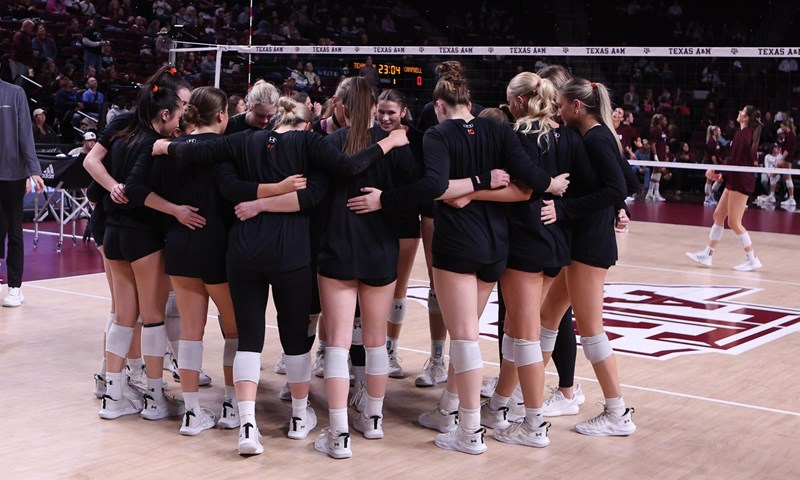
Campbell Falls to No. 3 Texas A&M in 2025 NCAA Volleyball Championship Opening Round

COLLEGE STATION, Texas – Despite a valiant defensive effort, the Campbell volleyball team saw its season come to an end after falling to No. 3 Texas A&M at the 2025 NCAA Volleyball Championship in straight sets (20-25, 10-25, 13-25) inside Reed Arena on Friday evening.
The Camels finished the season with a 23-7 record. Hannah Pattie and Bella Illig battled on the back line, each reaching double figures in digs with 11 and 10 apiece, respectively. Abbie Tuyo notched a team-best nine kills on Friday.
The CAA Champions kept pace with the Aggies (24-4) in the opening set, going point-for-point before taking an early 7-6 lead on a tandem block from Tuyo and Aley Clent. Texas A&M surged shortly after with a 9-2 run halted by a slam by Campbell’s Gwen Wolkow. The Camels did not go away quietly with an 8-1 stretch of their own, starting with a kill from Maja Daca and finishing with a Clent and Tuyo stuff on A&M’s Kyndal Stowers at the net to pull within three, 23-20. The Aggies went on to capture the first set two points later, 25-20.
Campbell’s Daca helped her team to a 3-3 tie to start the second frame after earning a kill and painting the end line for a service ace. The Aggies pulled away after seeing Logan Lednicky register four kills and a solo block on the team’s 10-1 run to close out the set, 25-10 win.
The Camels’ Illig fought off heavy swings from the Aggies’ attackers all evening, but her impressive defensive abilities were on full display to start the third set. The graduate libero saved a floater from hitting the floor and dug out two more attacks before setting up Tuyo for the kill, tying the score at two early in the third set. Texas A&M proved to be too much and secured a 25-13 win in set three.
Follow #CAAVB on Facebook, Twitter, and Instagram to get up-to-date information and learn more about CAA member institutions and their volleyball programs.
Dec. 5, 2025, 2:21 p.m. CT
The Wisconsin volleyball team took care of business in the first round of the 2025 NCAA tournament with an emphatic sweep.
Next on the agenda for Kelly Sheffield’s team is a second-round match against North Carolina, which pulled off a minor upset over sixth-seeded Texas El Paso in the first round.
UW, 25-4 and second in the Big Ten, and UNC, 22-8 and sixth in the ACC, meet with a regional semifinal berth on the line Friday, Dec. 5 at the UW Field House.
A victory will send Wisconsin to its 13th straight regional semifinal and its 23rd overall in 29 NCAA tournaments.
The Tar Heels are in the second round of the NCAA tournament for the second straight year and are eyeing their first regional semifinal in nine years.
Watch Wisconsin volleyball vs North Carolina on ESPN+
Wisconsin and UNC had three common opponents in 2025: Maryland, Florida and Georgia Tech. The Badgers and Tar Heels beat each of those opponents in three or four sets.
Now, it’s a Big Ten vs. ACC challenge, NCAA tournament volleyball edition.
Here’s how to watch the Wisconsin-North Carolina match:

What channel is Wisconsin volleyball vs North Carolina on tonight? TV, livestream

Wisconsin volleyball vs North Carolina time tonight
- Date: Friday, Dec. 5
- Time: 7 p.m.
Wisconsin plays North Carolina in an NCAA tournament second-round match at 7 p.m. Friday, Dec. 5, at the UW Field House. The Badgers have won their last 10 matches.

How can I listen to Wisconsin volleyball vs North Carolina on the radio?
Wisconsin volleyball score today
The Journal Sentinel will have live coverage from the NCAA tournament match with updates from reporter John Steppe at the UW Field House. Follow his live blog at jsonline.com/sports/badgers for the latest action.
You can also get live stats on the UW volleyball team website.
Wisconsin score NCAA tournament
The Badgers had no trouble dispatching Eastern Illinois in the NCAA tournament first round, sweeping the Panthers with ease, 25-11, 25-6 and 25-19.
Wisconsin NCAA volleyball tournament schedule
Here’s Wisconsin’s schedule for the NCAA volleyball tournament:
- Dec. 5: First-round and second-round matches at UW Field House, 7 p.m. CT
- Dec. 11-14: Regional semifinals and finals at highest-seeded teams, dates and times TBD
- Dec. 18: National semifinals at Kansas City, Missouri
- Dec. 21: National championship match at Kansas City, Missouri
Wisconsin volleyball bracket
First-round matches are taking place on Thursday, Dec. 4, and Friday, Dec. 5.
First round
- Texas (1) vs. Florida A&M, 7 p.m. Dec. 5
- Penn State (8) vs. South Florida, 4:30 p.m. Dec. 5
- Colorado (5) defeated American, 3-0, on Dec. 4
- Indiana (4) defeated Toledo, 3-0, on Dec. 4
- Wisconsin (3) defeated Eastern Illinois, 3-0, on Dec. 4
- North Carolina defeated UTEP (6), 3-1, on Dec. 4
- South Dakota State (7) vs. Arizona, 6:30 p.m. Dec. 5
- Stanford (2) vs. Utah Valley, 9 p.m. Dec. 5
Second round
Second-round matches take place on Friday, Dec. 5, and Saturday, Dec. 6.
- Texas (1)/Florida A&M vs. Penn State (8)/South Florida, 6:30 p.m. Saturday, Dec. 6
- Indiana (4) vs. Colorado (5), 5 p.m. Friday, Dec. 5
- Wisconsin (3) vs. North Carolina, 7 p.m. Friday, Dec. 5
- Stanford (2)/Utah Valley vs. South Dakota State (7)/Arizona, 8 p.m. Saturday, Dec. 6

2025 NCAA tournament volleyball bracket
Here are the top four seeds in the four regions of the 64-team bracket. Six of the top 16 teams are from the Big Ten. Penn State is the reigning national champion:
Nebraska region
- Nebraska
- Louisville
- Texas A&M
- Kansas
Pittsburgh region
- Pittsburgh
- SMU
- Purdue
- Minnesota
Kentucky region
- Kentucky
- Arizona State
- Creighton
- Southern California
Texas region
- Texas
- Stanford
- Wisconsin
- Indiana
Here’s the full bracket of the NCAA volleyball tournament

AUSTIN, Texas. — The No. 3 Texas Volleyball team improved to 42-0 in the NCAA First Round after sweeping Florida A&M (25-11, 25-8, 25-14). The Longhorns improved to 24-3 on the season behind Emma Halter’s historic night on defense.
Halter moved up to No. 8 on the all-time Texas digs list with 25 tonight, making it a 1,282 total. Halter also broke the Texas record in three-set matches with 25 digs. She’s now the fourth Longhorn to record 25, joining Dariam Acevedo (2006), Adrian Greenmail (2001) and Carrie Busch (1995).
Ayden Ames matched her career high with eight blocks, leading the Longhorns to tally nine total. Ramsey Gary also recorded a season high three aces for a match high. The Longhorns recorded 42 kills to the Rattlers 15, holding them to a -.027 – the lowest opponent hitting percentage of the season.
Set One: Texas dominated the opening set 25-11, limiting the Rattlers to a .000 attacking percentage while hitting .414 themselves. Torrey Stafford led the charge with five kills and a .455 hitting percentage. Swindle recorded nine assists and Halter registered 10 digs. The Texas defense totaled four and a half blocks in the first set.
Set Two: The Longhorns held the Rattlers to only eight points, tying their opponent season low in the second set. Stafford added six more kills out of her 13 total, while Texas put up four team blocks behind Ames’ four.
Set Three: The Longhorns saw Cari Spears add four kills and Whitney Lauenstein add one of her five kills in the third. Lauenstein also totaled four blocks on the night and hit for .571.
Up next Texas will face off against No. 25 Penn State in the Second Round of the NCAA Tournament on Saturday, Dec. 6 at 6:30 p.m. CT on ESPN+.

WINGATE, N.C. – Another successful Lenoir-Rhyne Volleyball season has come to an end. The Bears fell 3-1 to #3 seeded Anderson in the NCAA DII Tournament second round on Friday, closing their season at 23-8.
Emmaleigh Allen led the team with 13 kills while Emmie Modlin and Alicia Barbarito combined for 38 assists.
INSIDE THE MATCHUP
Final: Anderson 3, Lenoir-Rhyne 1 (29-27, 20-25, 25-9, 25-18)
Records: Anderson (23-7, 16-4 SAC), Lenoir-Rhyne (23-8, 14-4 SAC)
Location: Wingate, NC | Cuddy Arena
STORY OF THE MATCH:
- Down early on, the Bears went on a late 4-0 run to tie the score at 22 in the first set.
- Lenoir-Rhyne had set point at 26-25, but a 4-1 run from Anderson gave the Trojans the 29-27 set victory.
- Hadley Prince produced back-to-back service aces to help Lenoir-Rhyne win the second set 25-20.
- Anderson dominated the third set 25-9, finishing with a .317 hitting % and just four attack errors.
- Lenoir-Rhyne responded early in the fourth set, jumping ahead 6-3.
- The Trojans did not look back after tying the match at 7, keeping the Bears an arms length away the rest of the set.
STATS OF THE GAME:
- Anderson finished with an advantage in kills (59-to-46), hitting % (.276-to-.127), and assists (57-to-43).
- There were a combined 38 block assists and solo blocks between the two teams.
- Kayli Cleaver and Averie Dale combined for 11 total blocks
- Hadley Prince led the team with 19 digs while Addison Vary collected two service aces.
BEYOND THE BOXSCORE:
- This was the fourth meeting this season between the Bears and Trojans, with each team winning twice.
- Emmaleigh Allen generated her sixth double-double this season after finishing with 13 kills and 16 digs.
- Kayli Cleaver finished the season as the team leader in kills (363) and kills per set (3.36) for the second straight season.
- The 2025 Lenoir-Rhyne Volleyball Team finished with the second highest hitting % in school history at .235, just .05 away from the record held by the the 1998 squad.
- Averie Dale finished with a .399 hitting %, which ties the program’s individual season record held by Michelle Baity in 1999.
- The Bears produced their third straight season with 20 or more wins and set a new program record winning 13 matches at home.
- Nicole Barringer now holds an 87-35 record in four years as the Bears’ head coach.
- Barringer is the first coach in program history to lead the team to three consecutive NCAA Tournament appearances.
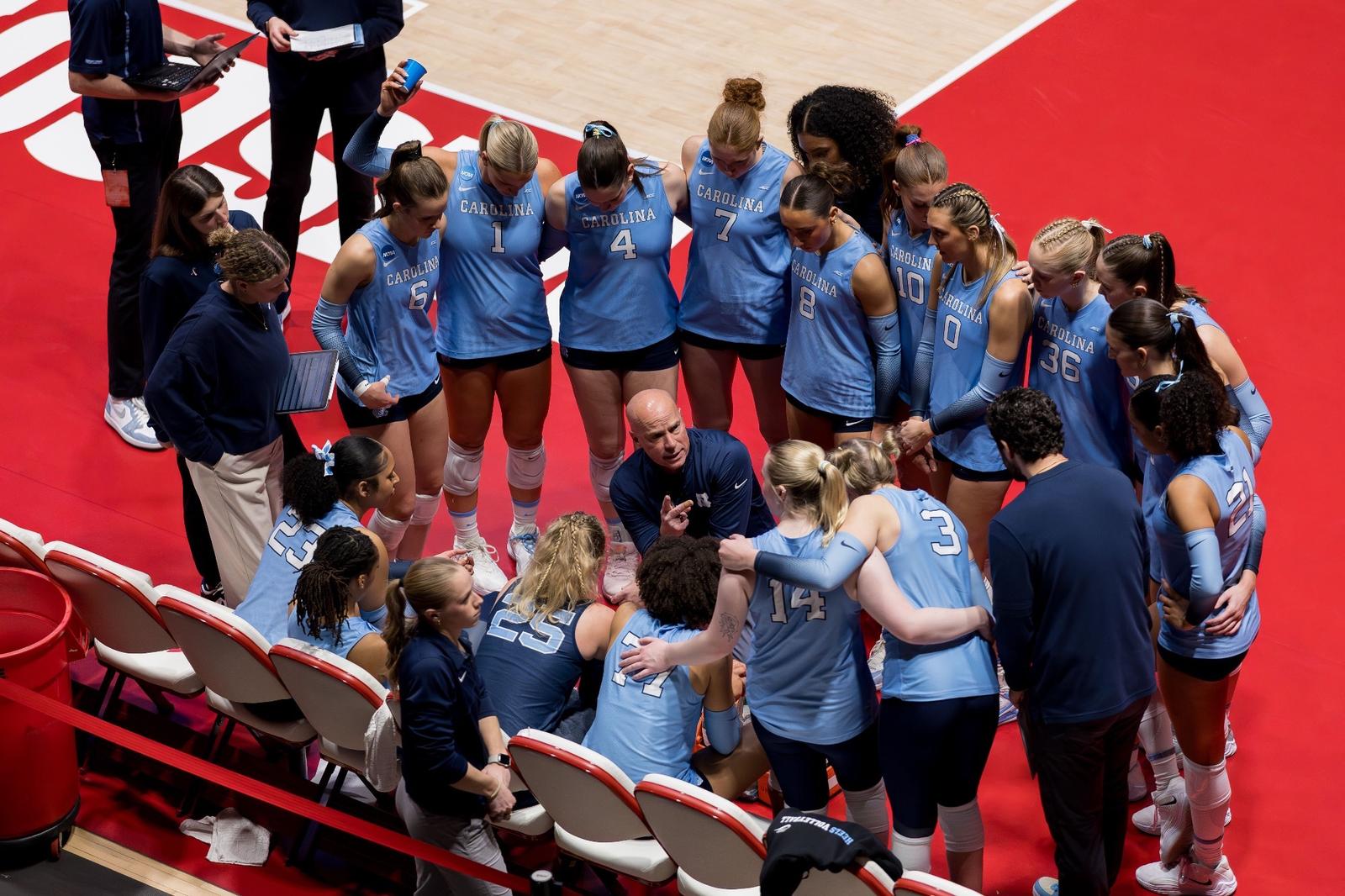
The Tar Heels improved after each set, raising their hitting percentage from .146 to .317. Laynie Smith led the way offensively as she hit .400 with seven kills on only 15 attacks.
Carolina dropped the first set 25-14, but Bridget Malone was the bright spot as she came off the bench and hit above .444 with four kills.
The Tar Heels had a much better second set, putting together an impressive 7-2 run in the middle of the match that brought the score to 17-18. The Tar Heels continued to fight back against the top-ranked Badgers.
The Tar Heels battled back in the third set as the final set was tied 19 times and there were ten lead changes.
Maddy May wrapped up her legendary Tar Heel career tonight. May played in every single set (445) of every single match (118) over her four-year career. May currently sits third all-time in program history with 1622 digs. The senior closed out her time in Chapel Hill on a high note, as she was named Second Team All-ACC for the first time in her career.
Dec. 5, 2025, 7:31 a.m. MT
- Arizona State volleyball swept Coppin State in the first round of the NCAA Tournament.
- ASU will now face Utah State in the second round for a chance to advance to the Sweet 16.
No. 2 seed Arizona State volleyball completed the first step in the NCAA Tournament, taking care of Coppin State on Thursday, Dec. 4, at Desert Financial Arena with a sweep, 25-11, 25-14, 25-12.
The Sun Devils, ranked eighth in the nation, earned the opportunity to host the first two rounds at home and were all business to start the match. ASU never surrendered a lead against the Eagles and even held them to a negative hitting percentage of -.082 for the night.
TaKenya Stafford led CSU with five kills.
“At the beginning, we talked about going into this game with a lot of energy and that carried over into the game and we could feel it, as well as the fans bringing that to the court as well,” outside hitter Tatum Parrott said.

The Sun Devils have been dominant at home this season, but have struggled with their starts in past games. The key to avoiding the mental lapses came from the service line.
ASU was aggressive with its serving to start the first set, getting a 4-0 advantage in service aces as the Eagles sided out only 36% of the time in that set. ASU also finished both the first and third sets with a 6-0 run.
“I was proud that they came out and did this because we’ve had some lapses this season, especially in the first set and we kind of take our foot off the gas,” coach JJ Van Niel said. “That was my message, everything we’re doing today is preparing us for tomorrow night (second round against Utah State), so we had high efforts today and we’ll have high efforts tomorrow.”
With ASU holding a lead over CSU throughout the match, Van Niel brought in several players who normally don’t see a lot of action. Even with ample rest, star opposite Noemie Glover had a sizable role in ASU’s victory with 14 kills while hitting a blistering .522.
“You never know what will happen. I’ve been in a spot where a key player goes down in the tournament and you got to be ready,” Van Niel said. “I want to get us all in there and get some reps just in case, so you just try a couple of things out and see what happens.”
CSU applied the pressure on ASU midway through the second set and scored two consecutive points to get within three.

But middle blocker Colby Neal responded for ASU with a kill on the next point, and then Parrott blocked CSU’s Ayanna Pharoah for a 16-11 lead.
ASU’s middle blockers were efficient as Neal provided steadiness whenever the Sun Devils would slip up against CSU and finished with five kills on .556 hitting. Ella Lomigora racked up two solo blocks and a team-high six block assists.
The Eagles didn’t go away, as Bailey Miller’s attack error gave them the point, but Neal once again delivered with a kill on the next point for a 17-12 lead for ASU.
Three consecutive errors from CSU gave ASU a 20-12 lead, which then led to the Sun Devils allowing only two more points from the Eagles to win the set.
ASU finished with a relatively clean game with seven errors, while forcing 26 from CSU. However, the second round is going to be much more difficult to get through. Even though there are a few holdovers from last year’s tournament team, the memories of the second-round loss to Texas A&M still linger.
Utah State, the winner of a thrilling five-set match against Tennessee, is a tough matchup. The teams meet in the second round on Friday, Dec. 5, at 6 p.m. MST at Desert Financial Arena. The winner advances to the Sweet 16.
“I still remember what happened last year,” Van Niel said. “But I don’t think my job is to remind them about it. It’s really (focusing on) we just need to come out and play our game of volleyball and see what happens.
“We can’t control our opponent. Utah State did a great job tonight, and I can’t control how well they play. All we can control is our effort and intensity.”
Reach the reporter at jenna.ortiz@arizonarepublic.com, as well as @jennarortiz on X.
Catch the best high school sports coverage in the state. Sign up forAzcentral Preps Now. And be sure to subscribe to ourdaily sports newsletters so you don’t miss a thing.

Campbell Falls to No. 3 Texas A&M in 2025 NCAA Volleyball Championship Opening Round
Watch Wisconsin volleyball in NCAA tournament tonight; time, TV

No. 3 Volleyball sweeps Florida A&M, 3-0, to advance in NCAA Tournament

Penn State reportedly putting huge investment into football program under next head coach Matt Campbell

Volleyball sees season end in NCAA DII Second Round

Volleyball’s Season Ends In Round Of 32 to No. 3 Wisconsin
Arizona State volleyball advances to NCAA Tournament second round
Why Georgia is in court to seek damages from Damon Wilson’s NIL deal
Purdue volleyball vs Baylor NCAA tournament final score, game result, next

Live updates, how to watch

Volleyball Falls at No.4 Pitt in NCAA Tournament

Buddie Defends Dykes as TCU Fans Fume Over 8–4 Season

Michigan Sweeps Xavier to Advance to NCAA Tournament Second Round

Men’s, women’s track & field unveil 2025-26 indoor schedule

Michael Annett, former NASCAR winner has passed at age 39

First Tee Winter Registration is open

Fargo girl, 13, dies after collapsing during school basketball game – Grand Forks Herald

CPG Brands Like Allegra Are Betting on F1 for the First Time

Volleyball Recaps – November 18

F1 Las Vegas: Verstappen win, Norris and Piastri DQ tighten 2025 title fight

Two Pro Volleyball Leagues Serve Up Plans for Minnesota Teams

Utah State Announces 2025-26 Indoor Track & Field Schedule

Sycamores unveil 2026 track and field schedule

Texas volleyball vs Kentucky game score: Live SEC tournament updates

Bowl Projections: ESPN predicts 12-team College Football Playoff bracket, full bowl slate after Week 14

Redemption Means First Pro Stock World Championship for Dallas Glenn

Pohlman admits ‘there might be some spats’ as he pushes to get Kyle Busch winning again

Indiana’s rapid ascent and its impact across college football

How this startup (and a KC sports icon) turned young players into card-carrying legends overnight

Troy Football Need to Know; Gameday at The Vet — Georgia State Game

 Why a rising mid-major power with an NCAA Tournament team opted out of revenue-sharing — and advertised it
 NBA Legend Michael Jordan to Join NBC Sports as Special Contributor
 Falcons mailbag
 Portal Update – Basketball and Gymnastics Take Hits
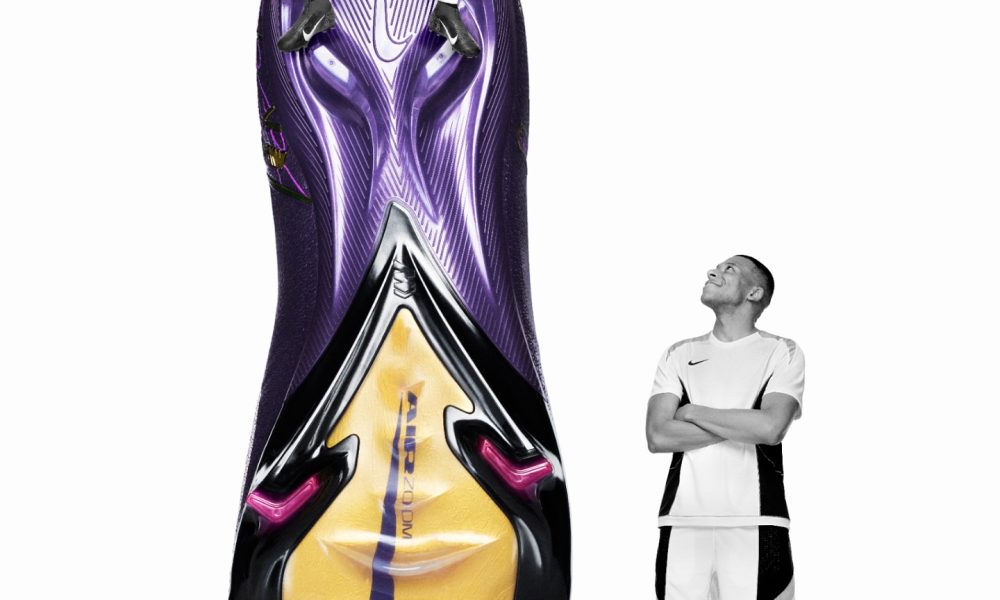 has always dreamed in Mercurial. Now his initials are on the boots.
The new Kyl…
has always dreamed in Mercurial. Now his initials are on the boots.
The new Kyl…
-
 Rec Sports2 weeks ago
First Tee Winter Registration is open
-
 Rec Sports1 week ago
Fargo girl, 13, dies after collapsing during school basketball game – Grand Forks Herald
-
 Motorsports2 weeks ago
CPG Brands Like Allegra Are Betting on F1 for the First Time
-
 Sports2 weeks ago
Volleyball Recaps – November 18
-
 Motorsports2 weeks ago
F1 Las Vegas: Verstappen win, Norris and Piastri DQ tighten 2025 title fight
-
 Sports2 weeks ago
Two Pro Volleyball Leagues Serve Up Plans for Minnesota Teams
-
 Sports1 week ago
Utah State Announces 2025-26 Indoor Track & Field Schedule
-
 Sports2 weeks ago
Sycamores unveil 2026 track and field schedule
-
 Sports1 week ago
Texas volleyball vs Kentucky game score: Live SEC tournament updates
-
 NIL5 days ago
Bowl Projections: ESPN predicts 12-team College Football Playoff bracket, full bowl slate after Week 14