


NIL
College sports enter new era with NIL deals


The NCAA has allowed student-athletes since 2021 to profit from their name, image and likeness
Kris Trinidad embraces NIL to build his brand
Virginia legislation allows schools to pay student-athletes
Coaches and programs adapt to shifting power dynamics in recruiting
Risks include financial literacy gaps and potential exploitation
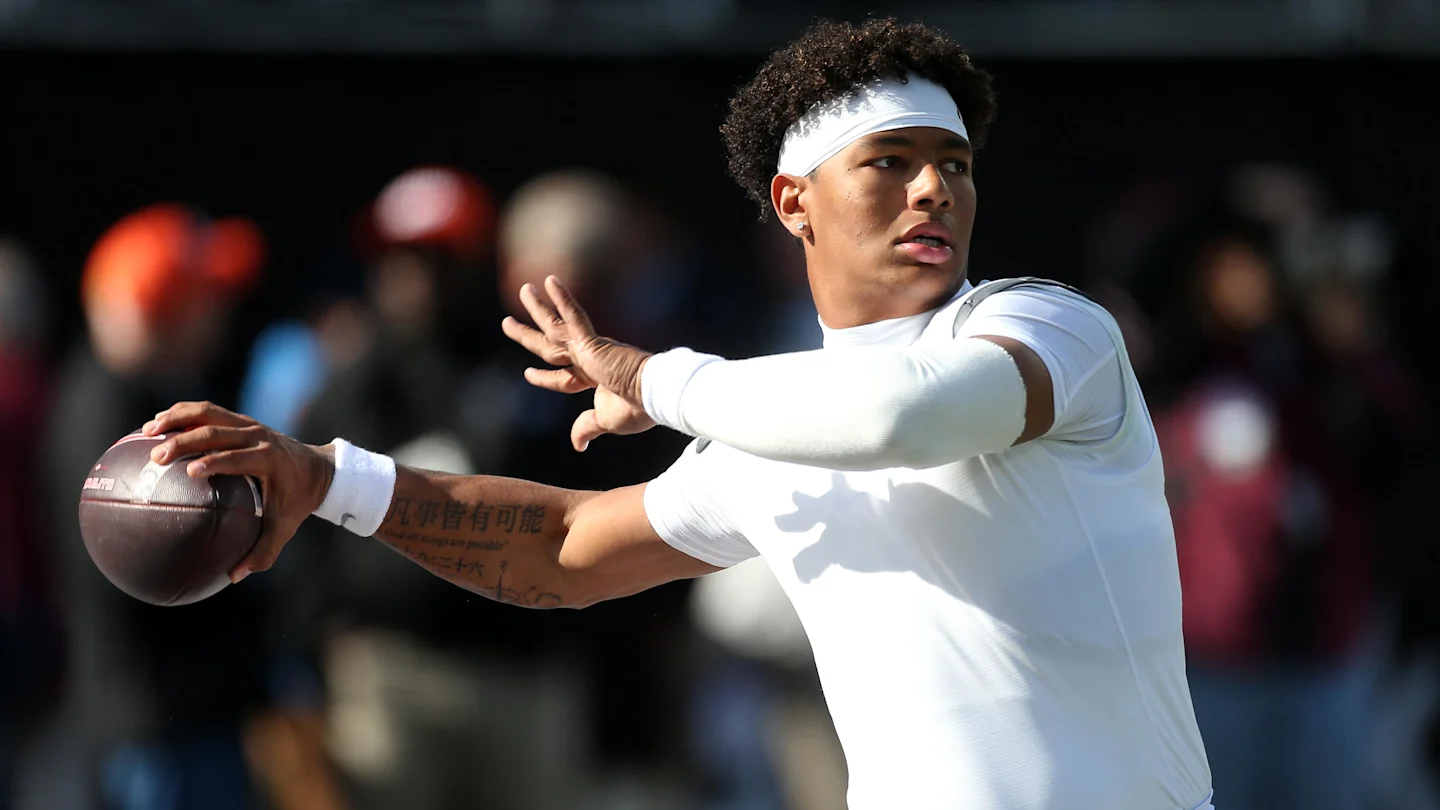
Kris Trinidad plays defensive end for Old Dominion University’s Division I football team, where he tallied 45 tackles and 5.5 sacks last season. He’s also building his brand thanks to new laws that allow student-athletes to ink endorsement deals and get paid by the university.
“I feel like it’s teaching young guys how to be more marketable and prepare themselves for their future,” Trinidad said. “It gives them opportunities to express their true selves amongst the community.”
Trinidad is part of the growing class of student-athletes learning to navigate a new world of college athletics, one where player statistics, social media presence and sponsorship potential increasingly all matter.
The Rise Of The Student Athlete
The NCAA has allowed student-athletes since 2021 to profit from their name, image and likeness, or NIL.
The financial shift and its impact on college athletics have been dramatic. College athletes went from landing full scholarships and cost-of-living expenses to earning an estimated $917 million in the first year NIL was enacted, according to Icon Source.
New legislation passed by the Virginia General Assembly in 2024 opened the door for direct payments from schools. This shift is backed by a legal settlement known as House v. NCAA, which will permit schools to allocate up to $20 million annually to pay student-athletes. The case argued current and even former student-athletes deserve a share of revenue generated by television deals, licensing agreements and even ticket sales. It recently received conditional approval from NCAA governance.
Virginia Commonwealth University student-athletes will be paid starting in the 2025-2026 year, with a projected $5 million allocation, according to CBS6 News.
The biggest NIL sums still go to marquee names. First-year Duke University power forward Cooper Flagg has a NIL valuation upwards of $4 million, according to 1075thefan sports website.
However, players of all levels can find opportunities to build their brands. Former Virginia State University running back Rayquan Smith was dubbed “King of NIL” for receiving over 100 NIL deals, according to The Virginia Statesman.
Not Amateurism Anymore
Brendan Dwyer, a professor at VCU‘s Center for Sports Leadership, said the current NIL model is not sustainable for athletic departments.
“If all of a sudden they have to go out and find money through NIL to pay their athletes, it comes at the expense of so many other things for the athletic department,” Dwyer said.
Dwyer thinks schools are heading toward a professional model, and schools and athletes should be prepared. Although it might create other issues, employing athletes could be a solution.
“If you take a step back and you watch what happens on a Saturday afternoon in Tuscaloosa, or you watch what happened last weekend in San Antonio, those aren’t amateur sports,” Dwyer said. “That’s professionalism.”
Community, Coaches And The Changing Game
Coaches are also evolving in the new era. VCU recently hired Phil Martelli Jr. as its new head coach and he is stepping into the role at a transformative time. Martelli led Bryant University to an America East title and its first NCAA Tournament appearance in March.
“The revenue sharing and NIL stuff is not going anywhere,” Martelli said. “It’s become a major part of this, the transfer portals become a major part of this for everybody, at every level.”
Coaches need resources to get recruits to campus. In most cases, athletes are straightforward in what they’re looking for when choosing which universities to attend, according to Martelli.
“Then it’s up to us to decide what that looks like,” Martelli said. “Is that worth it, is it not worth it?”
Martelli would like to see multi-year contracts for athletes. There would then be the potential for contract buyouts within college athletics, similar to professional sports. Both parties can negotiate the terms and lengths of the contracts and try to find common ground.
“But right now if you go year-to-year, to have guys jumping in the transfer portal and shopping around, it isn’t the best for everybody,” Martelli said.
Former University of Virginia basketball coach Tony Bennett unexpectedly retired in 2024, saying he no longer felt he was the best coach to lead the program in the current environment. Bennett, who guided UVA to the 2019 national championship, said NIL deals, along with the transfer portal, added aspects to his role that weren’t his strong suit.
“The game and college athletics is not in a healthy spot,” Bennett said. “There needs to be change.”
Community is also impacted when student-athletes solely chase money, said Ben Rekosh, a VCU broadcast student and sports commentator. College sports used to be built on the idea of student-athletes being integral to their community, by contributing to what makes their school and fan base great for three to four years.
“I think that it affects the community a lot,” Rekosh said. “There’s not really players anymore that people are able to to tie their hearts with and have a true connection with, if people are just jumping back and forth.”
Still, he understands why it could be in the best interest of athletes at their peak to move around and maximize their earnings.
One perk of NIL deals is that more college athletes are staying in school instead of going professional immediately, according to ESPN college basketball analyst Jay Bilas. They can continue their education while earning money, versus being pushed toward the pay-to-play professional route.
Top college players may earn more money and playing time than they would as rookies in the pros and would have more experience going into a draft.
New Kind Of Athlete
Athletes are not just a part of the university’s brand; they also have a personal business.
Thai Wilson, sports editor for VCU student-run paper The Commonwealth Times, said fans increasingly follow players, not just programs.
“You remember 2008 Florida winning the March Madness, or VCU making it to the Final Four in 2011,” Wilson said. “People don’t remember the players that played on those teams who made it all the way unless they were either a big name who made it to the NBA, or if it’s just a very memorable run.”
Wilson pointed to top recruit AJ Dybansta’s decision to go to Brigham Young University, a school not known for getting high-profile signees, as an example of how NIL has shifted power dynamics. That can benefit students and give them a better chance to negotiate for what they want.
“NIL’s landscape is starting to kind of open up doors for other programs to get higher recruits if they’re willing to pay for it,” Wilson said.
Risks And Reality
Student-athletes now have new opportunities, but with that comes risk. Especially for younger athletes still learning financial basics. For Trinidad, the key is using NIL to build the athlete experience.
Although NIL deals may give students more power, Trinidad worries some could be exploited by marketing agents or contract deals that they don’t understand.
“Because these guys—they’ll come in, make you a contract and take 10% of your money,” Trinidad said. “It’s something young guys need to be wary of.”
He thinks high school athletics should start talking about brand building, contract literacy and financial management.
NIL deals are relatively new, with many rules in place around compensation and endorsement. Virginia law restricts athletes from NIL compensation from alcohol, cannabis and sports gambling, to name a few.
If the laws change and there is less regulation, there is a chance athletes could be taken advantage of.
“It gives you power, but power in the wrong hands can be bad,” Trinidad said.
Capital News Service is a program of Virginia Commonwealth University’s Robertson School of Media and Culture.
s
NIL
Why Georgia is in court to seek damages from Damon Wilson’s NIL deal
Updated Dec. 5, 2025, 4:33 p.m. ET
The Georgia Athletic Association is seeking $390,000 from former Georgia football player Damon Wilson after he transferred to Missouri in January, weeks after agreeing to an NIL deal with the Classic City Collective.
The Classic City Collective, which shut down earlier this year, demanded that Wilson pay liquidated damages, based off the language of the contract. Wilson did not respond, according to online records in Superior Court of Athens-Clarke County.
The UGAAA then served a demand for arbitration on Wilson on Aug. 25, and he again did not respond, court records state. UGAAA holds all rights under agreements formerly held by the collective, Wilson was told in a letter sent to him by attorney Spence Johnson, representing UGAAA.
“When the University of Georgia Athletic Association enters binding agreements with student-athletes, we honor our commitments and expect student-athletes to do the same,” Georgia deputy athletic director Steven Drummond said Dec. 5 in a prepared statement given to the Athens Banner-Herald.
The application to compel arbitration was filed in court on Oct. 17. ESPN first reported about the dispute on Dec. 5.
Wilson and the Classic City Collective agreed to a contract worth $500,000, to run from Dec. 1, 2024 to Jan. 31, 2026. Wilson received the first monthly payment of $30,000 on Dec. 25, 2024, court records state.
Wilson was served a summons on Nov. 25 in Missouri and has 30 days to respond.
Wilson, a defensive end, is third in the SEC in sacks with 9 this season for the Tigers. Georgia, meanwhile, is last in the SEC this season with 17 sacks as a team.
Wilson played 26 games for Georgia in 2023 and 2024, registering 3.5 sacks and two caused fumbles. His departure was a blow for a defense that also lost eventual NFL first-rounders Mykel Williams and Jalon Walker after last season.
NIL
Buddie Defends Dykes as TCU Fans Fume Over 8–4 Season
TCU’s just-passed 8-4 regular season had many in the purple people masses as angry as a tourist who just paid $40 to park, and for many others as disappointed as when Junior brought home an F in civics.
Many have expressed themselves in much the same way of our old friend, the frontier prospector Gabby Johnson of “Blazing Saddles” fame: No sidewindin’, bushwackin’, hornswagglin’ cracker croaker is gonna rouin me bishen cutter!
TCU Athletic Director Mike Buddie gets it.
“I think there were 11 teams in our league this year whose fan bases wanted their coaches fired,” Buddie said on Friday morning at the FIFA World Cup Draw party at Billy Bob’s Texas, the world’s largest honky tonk. “That’s the culture that we live in. You can win [against a] ranked opponent, [next week against] ranked opponent, [a third straight win against a] ranked opponent, and then lose — they want you gone.
“It’s a new day and age.”
Like the mood of Paris in 1793 — cheers in the morning, pitchforks and the guillotine by dusk.
TCU finished in the middle of a congested Big 12 at 5-4. To put some perspective on its season, Texas finished 9-3. Of course, many UT fans think the Longhorns should win every game, too. No. 25 Missouri, like TCU, finished 8-4. So, too, did Tennessee and Iowa, two teams receiving votes in the AP poll. In the end, after 12 regular-season games, only two teams finished undefeated — Ohio State and Indiana. One of those teams will lose this weekend; they play each other.
North Carolina — guided by renowned football genius Bill Belichick — stumbled to 4–8, taking a season-opening black eye from TCU.
Just last year, Ohio State fans wanted coach Ryan Day on the nearest interstate out of town after the Buckeyes took the worst kind of a second loss of the season — to Michigan. That was on Nov. 30. By the end of January, they wanted to elect him governor after winning the national championship.
The Horned Frogs will learn their postseason bowl destination on Sunday.
Dykes has gone 35-17 over four seasons at TCU, including 13-2 and a berth in the College Football Playoff championship game in his first season. That campaign included a victory over No. 2 Michigan in the Fiesta Bowl CFP semifinals.
TCU slipped to 5-7 in 2023 but went 9-4 last year and could do the same in 2025 with one last victory.
“We need to be better,” Buddie said. “We’re committed to getting better. I’m excited because nobody realizes that more than Sonny Dykes.
“He’s committed to addressing some needs that I think we have and more than ever before, what I do and how we strategically fundraise and approach people financially has a direct impact on your football program. I think Texas Tech showed us all that if you can build the most talented roster and develop them, really good things happen.”
Texas Tech, which is playing in the Big 12 Championship Game on Saturday against BYU, spent, according to reports and speculation, as much as $28 million on its football roster this season. The Red Raiders are No. 4 in the most recent CFP rankings.
Spending that kind of money is the result of a completely transformed landscape in college football. Colleges can now spend as much as $20.5 million on payroll for athletes in its various programs. That mostly impacts football and men’s basketball — those sports that generate the most revenue, the “revenue sports.”
Before that, each Division I school had an adjacent collective designed to allow athletes to cash in on their name, image, and likeness. That quickly evolved — devolved? — into merely paying athletes by writing checks out of the collective’s pool. Now completely legal after a U.S. Supreme Court case permitting athletes to receive compensation beyond traditional scholarships. The collectives simply became the mechanism to funnel those payments.
Most, if not all, of the collectives have now been merged with universities’ traditional athletics fundraising arm. NIL endorsement deals are now supposed to be just exactly that — an athlete endorsing a product, for example. I’m not exactly sure how all that sorts out.
“The landscape has changed, but we still have a ton of advantages in facilities and where we’re located and historical success,” said Buddie, who added that TCU also is “thoughtful and strategic in how we employ people.”
“We’re not in the business of paying $50 million buyouts for people to go away. And when you believe you’ve got the right person who’s already proven that he can win in the College Football Playoff, it’s incumbent on me to provide him every resource that he needs to be successful.”
NIL
Penn State football AD Pat Kraft rips recruiting, NIL in audio leak
Updated Dec. 5, 2025, 5:27 p.m. ET
- Leaked audio allegedly captures Penn State athletic director Pat Kraft criticizing the program’s recruiting and NIL strategy.
- Kraft is heard taking shots at rival programs like Oregon, Ohio State, and Michigan in the profanity-laced recording.
- The athletic director also questioned the effectiveness of NIL spending under former head coach James Franklin.
Athletics director Pat Kraft ripped Penn State football recruiting and NIL procedures under former coach James Franklin in an alleged team meeting.
“We probably need to (expletive) change the way we recruit. Because Alabama ain’t around (expletive). Oregon? Have you all been to Oregon? Ain’t (expletive) going on, it’s a bunch of (expletive) weirdos,” Kraft can be heard saying in audio that became public.
Kraft’s profanity-laced discussion with players before the regular-season finale at Rutgers was part of a purported audio recording of a team meeting that was leaked this week to the Dead Air Sports podcast. Kraft’s passionate discourse touched on a wide-range of topics — from taking shots at Big Ten opponents and his own program’s recruiting, to interim head coach Terry Smith, how NIL is allocated and the future of the program.
The recording, which features unidentified players speaking, was edited and does not feature the entire meeting, according to Dead Air Sports.
Recording and leaking the meeting without proper consent could be a felony under Pennsylvania’s wiretap laws.
Penn State officials did not immediately respond to a request for comment.

Kraft began his recruiting talk in the meeting by commenting on the 11 players in Penn State’s 2026 recruiting class who eventually flipped to Virginia Tech, where Franklin is now the head coach. The Lions, then, stunningly signed only two high school prospects during Wednesday’s early national signing day.
“All the guys that (were) on visits to Virginia Tech, they’re not even top-500 (ranked) kids that can help us win. You need help,” Kraft said, speaking to the players in the room. “You needed a wide receiver, but we couldn’t get a (expletive) dog to help open things up. Am I wrong? Would you have taken (Ohio State’s) Carnell Tate?
“Those are the things we have to get addressed if we are going to actually win a national championship, which is what we will do here. That’s what Ohio State, Michigan, as it pains me to (expletive) say, and Georgia, Bama and Oregon right now, although I think they’re frauds … think they’re not tough. That’s our edge, is the toughness.”

Kraft also made clear that he did not approve of Penn State’s NIL payment plan to players under Franklin — despite increased university investment.
“This is one of the highest-paid rosters in the country. … This roster that’s on the field right now, probably top four (in the nation). Now, how the money is spent is a different story. … it’s the strategy behind it that matters,” he said.
An unidentified player then described what believes is the NIL issue at Penn State: “The NIL with (Franklin) was kind of more like feed everyone and obviously pay the bigger guy. But I think with Terry (Smith), how he’s straight on with us … he’s going to pay who he needs to pay and not be a players’ coach and just pay everybody.”
Frank Bodani covers Penn State football for the York Daily Record and USA Today Network. Contact him at fbodani@ydr.com and follow him on X, formerly known as Twitter, @YDRPennState.
NIL
Wall Street Journal Article on NIL and Phillip Bell
Article is about Phillip Bells High School experience and being shopped to different schools and 7 x 7 teams. Really sad situation.
A few quotes:
“Bell’s mother, who abused drugs, shopped him from school to school, demanding up to $72,000 a year, according to court filings, public records and interviews with relatives and others who knew the family. He also joined a club team that paid thousands of dollars a weekend.’
On his visit to OSU: “The hotel room where Bell’s mother and stepfather were staying was “trashed,” leaving an OSU coach with a bill for broken furniture, his high-school coach later told relatives. A Buckeyes coach subsequently informed Bell’s mother that the team wanted her son, but the “entourage” wasn’t welcome in Columbus, the high-school coach said.
OSU declined to comment.
Before they left Ohio, Barnes’ blood sugar spiked to life-threatening levels, she suffered a heart attack and was hospitalized for several days, according to public records.”
Hoping that with support from OSU that he can break the cycle and achieve great things!
This link is behind a paywall: https://www.wsj.com/us-news/football-high-school-nil-phillip-bell-81270bdf?mod=hp_lead_pos7
Definitely worth a read – there is definitely a downside to the money flowing to these athletes. Kinda makes me wonder about the Legend Bey situation.
NIL
Georgia sues Missouri edge rusher Damon Wilson for nearly $400K over NIL contract he signed with Bulldogs
Georgia is attempting to get edge rusher Damon Wilson to pony up after his transfer to Missouri.
The school’s athletic association has filed a lawsuit against Wilson saying he owes $390,000 from the NIL contract he signed with the school’s collective in December 2024 ahead of Georgia’s College Football Playoff loss to Notre Dame. Wilson transferred after the 2024 season to Missouri and received one payment of $30,000.
Advertisement
Wilson, a junior, led Missouri with nine sacks and 9.5 tackles for loss this season. He had three sacks and 5.5 tackles for loss as a sophomore for the Bulldogs in 2024.
Georgia is claiming Wilson owes the balance of the base pay the contract stipulated he’d be paid via a liquidated damages claim. According to ESPN, Wilson’s deal with Classic City Collective was for $500,000 spread out over 14 monthly payments with two post-transfer portal bonuses of $40,000 and that he’d owe what was still set to be paid out to him if he left the team.
From ESPN:
“When the University of Georgia Athletic Association enters binding agreements with student-athletes, we honor our commitments and expect student-athletes to do the same,” athletics spokesperson Steven Drummond said in a statement to ESPN.
Georgia is not the first school to file a suit over NIL payments to a player who transferred. But the hard-line tactic is noteworthy, and may ultimately not work out in Georgia’s favor.

Advertisement
Schools typically do not ask coaches to pay out the balance of their contracts when leaving for another job. For example, Lane Kiffin did not have to pay Ole Miss what the school was scheduled to pay him over the rest of his deal with the school when he left for LSU. Instead, LSU paid Ole Miss $3 million for Kiffin to get out of his contract.
That situation happens all the time when coaches leave for new jobs. Their buyouts to get out of their contracts are far smaller than the buyouts schools owe when a coach is fired without cause.
And coaches are employees. Schools have long resisted that players be classified as employees and continue to do so even as the revenue-sharing era begins. The NCAA and its member schools have long clung to amateurism and that antiquated idea is why it took so long for players to get paid in the first place.
NIL
Georgia seeks $390K in NIL contract damages from Missouri football DE
Dec. 5, 2025, 3:22 p.m. CT
Georgia athletics is taking Missouri football defensive end Damon Wilson II to court in a novel, nearly first-of-its-kind case over an NIL contract dispute.
The news was first reported by ESPN’s Dan Wilson on Friday, Dec. 5. The Tribune confirmed the news through a university source and court documents filed in Georgia by the Bulldogs.
UGA is attempting to take Wilson into arbitration and is seeking $390,000 in liquidated damages from the star edge rusher, who transferred to the Tigers in January 2025, over what the university views as an unfulfilled contract in Athens. The lawsuit is not against the University of Missouri, only Wilson.
According to the ESPN report, Georgia is arguing that Wilson signed a contract — a common practice in the NIL era — with what was then UGA’s main NIL and marketing arm, Classic City Collective, in December 2024.
That collective has since shut down, as UGA has partnered with Learfield to negotiate and facilitate NIL deals in the revenue-sharing era.
The report, citing documents attached to UGA’s legal filings, show that Wilson signed a 14-month deal worth $500,000 with the Bulldogs. He was set to earn monthly payments of $30,000 through the end of the contract, as well as two $40,000 bonus payments.
Before announcing his intention to transfer in January, he reportedly was paid $30,000.
The contract states that if Wilson left the team or transferred, which he ended up doing by transferring to Mizzou, then he would owe the collective issuing the payments a lump sum equal to the amount remaining on his deal.
The bonus payments seemingly were not included, which brings that total to the $390,000 that Georgia is now seeking in court.
Wilson, per the report, was only paid a fraction of that sum, but the university is arguing that he owes the full amount in damages. It’s unclear why Georgia is arguing it is owed the full amount in liquidated damages.
The Tribune has reached out to a Georgia athletics spokesperson for comment. At the time of publishing, UGA had not responded to the request for a statement.
According to documents viewed by the Tribune through the Georgia courts records system, UGA filed an “application to compel arbitration” on Oct. 17 in the Clarke County Superior Court, which includes Athens and the University of Georgia. Wilson was served with a summons to appear in court, according to documents, on Nov. 19, three days before the Tigers faced Oklahoma.
A similar case occurred at Arkansas last spring, when quarterback Madden Iamaleava transferred out of Fayetteville after spring camp. It’s unclear whether or not that case has been resolved.
Wilson spent his freshman and sophomore seasons at Georgia. He transferred to Mizzou ahead of spring camp in 2025 and has emerged as one of the top pass rushers in the SEC.
Per Pro Football Focus, Wilson generated 49 pressures on opposing quarterbacks this season, which was the second-most in the SEC behind only Colin Simmons at Texas. He’s listed at 6 foot 4, 250 pounds and could declare for the 2026 NFL Draft, where he would likely be a Day 1 or 2 pick.

The lawsuit raises a contentious point.
By suing Wilson for allegedly not fulfilling the terms of his contract, the school could be treading close to arguing that Wilson was paid to play. That’s not how NIL deals currently work. The deals and their payments are typically for an athletes’ likeness for brand deals and marketing. Think of it as advertising money, not salaries.
There’s a reason that’s the case. By paying players for play, there’s an argument that they are university employees. University and athletic department leaders are widely against making that distinction, because it would disrupt the amateurism model in place for college athletics.
Wilson’s contract likely includes “liquidated damages” language, which are intended to stop players from transferring.
Missouri currently has multiple players on two-year contracts. Part of that is in the hope that they do not move on after one season.
If Georgia’s arbitration case against Wilson is successful, that would be a groundbreaking ruling in college athletics that could give more weight to liquidated damages clauses in athlete contracts.
-
Rec Sports2 weeks agoFirst Tee Winter Registration is open
-
Rec Sports1 week agoFargo girl, 13, dies after collapsing during school basketball game – Grand Forks Herald
-
Motorsports2 weeks agoCPG Brands Like Allegra Are Betting on F1 for the First Time
-
Sports2 weeks agoVolleyball Recaps – November 18
-
Motorsports2 weeks agoF1 Las Vegas: Verstappen win, Norris and Piastri DQ tighten 2025 title fight
-
Sports2 weeks agoTwo Pro Volleyball Leagues Serve Up Plans for Minnesota Teams
-
Sports2 weeks agoSycamores unveil 2026 track and field schedule
-
Sports1 week agoUtah State Announces 2025-26 Indoor Track & Field Schedule
-
Sports1 week agoTexas volleyball vs Kentucky game score: Live SEC tournament updates
-
NIL5 days agoBowl Projections: ESPN predicts 12-team College Football Playoff bracket, full bowl slate after Week 14