
Sports
College Sports’ Financial Hurdles Go Way Beyond NCAA House Settlement

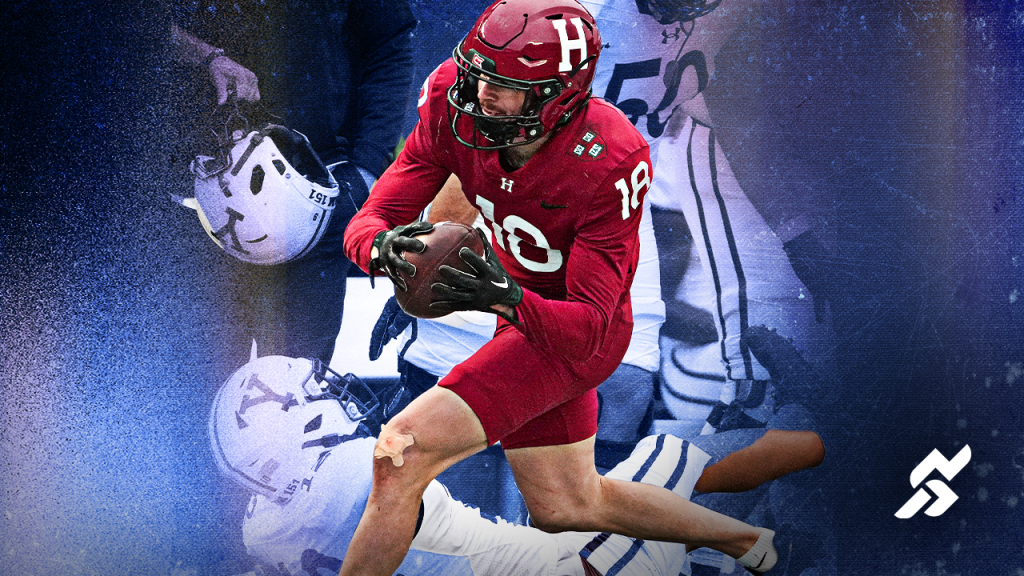
In the wake of U.S. District Judge Claudia Wilken granting final approval to the 10-year settlement between the NCAA, power conferences and current and former D-I athletes represented by the House, Carter and Hubbard antitrust litigations, some fear the settlement will encourage schools to cut Division I non-revenue and Olympic sports teams.
A popular narrative is setting in: It insists the House settlement will impose new costs on schools that make it harder to justify keeping teams that aren’t either money-makers or needed to comply with Title IX’s gender equity requirements. But while the settlement is impactful, don’t fall for the head fake that it is the only or most important factor in schools’ decisions to keep certain sports or cut sports altogether.
It’s true that sports like tennis, track and field, and swimming and diving are more vulnerable in the post-settlement world. American Volleyball Coaches Association CEO Jaime Gordon recently said that 32 Division I Olympic sports teams have been cut since the settlement’s announcement.
To be sure, the House settlement will place new costs on colleges and up the cost of college sports. Colleges can elect to directly pay athletes a share of up to 22% of the average power conference athletic media, ticket and sponsorship revenue, with $20.5 million pegged as the initial annual cap. Those payments are in addition to athletic scholarships, which cover tuition, housing, health resources and other benefits, and NIL deals athletes with third parties.
Division I schools that decline to share revenue with athletes will face new costs, too.
The settlement calls for qualified athletes who played as far back as 2016 to receive about $2.8 billion over the next decade. The money reflects forgone NIL opportunities, denied revenue from broadcasts and potential earnings from video games that were never made on account of NCAA rules.
Both revenue-sharing and non-revenue-sharing schools, including Houston Christian University, which challenged the back pay feature, will see funds withheld. HCU has argued it will essentially pay $300,000 a year over the next 10 years, for a total of $3 million, on account of a settlement that it insists it never approved. Wilken denied that argument, noting HCU is bound by virtue of its NCAA membership.
But it’s important to remember that House settlement-related costs are not occurring in an intercollegiate sports vacuum. They should be placed in the broader context of higher ed; universities face a multiple budget challenges that aren’t related to athletics but will make it harder to fund athletics.
As a starting point, colleges face the dreaded “enrollment cliff.” A decline in U.S. birthrates beginning in 2008 means that an accompanying drop in the population of U.S. college-age students will hit universities by next year. The drop is expected to be about 15% and last until around 2041.
This development will have profound impacts on many universities, especially those in states expected to endure the harshest reductions—Illinois, for example, is projected to see a 32% drop in high school graduates between 2023 and 2041. Fewer students will mean decreases in revenue from tuition, dormitory, meal plan and student fees. Universities could mitigate the financial hit by raising prices on students, but that would be unpopular and could undermine recruitment and retention efforts.
Universities will also need to compete aggressively for fewer students. This is likely good news for students, as schools dangle more competitive financial aid packages and bad news for schools as they receive less money. This is particularly worrisome for the numerous colleges that are “tuition-dependent,” meaning most of their operating budget isn’t funded by donors, endowments or grants but instead by tuition dollars.
The Trump administration’s hostility toward international students is also a key consideration. Trump has attempted—unsuccessfully thus far—to block Harvard University from admitting international students. Also, the State Department has directed embassies to determine if prospective international students of U.S. universities have “hostile attitudes” before student visas are issued.
While these efforts are legally problematic and substantively dubious—the U.S. is strengthened when talented international students study here and join the American workforce—they’ll encourage some international students to head for other countries’ universities. A drop in international students will have sizable economic ramifications. Those students typically pay full tuition.
As schools brace for smaller enrollments, they also face the prospect of fewer and downsized federal grants. The Trump Administration has targeted federal assistance to universities for budget cuts. Research grants and Pell grants (which help undergraduate students who have financial needs) have faced, or are expected to face, reductions and more eligibility limitations. As of last month, universities had lost about $11 billion in research grants. Some researchers might leave U.S. schools and head abroad.
Another lifeline for colleges, the federal student loan system, is also in lawmakers’ crosshairs. As part of the ongoing budget debate, Congress is weighing reforms designed to increase the government’s chances for repayment, but critics charge this would lead more borrowers into risk of default. Colleges worry they would be required to reimburse the federal government if their students fail to repay their loans.
In addition, university endowments are eyed by lawmakers as a source of revenue to offset business and income tax cuts and other reforms. Congress is weighing several concepts that would raise, in some instances by high degrees, the excise tax universities pay on their endowment income. Endowments are often portrayed as de facto savings accounts for colleges, but that depiction is off base. Endowment funds are usually restricted for specific purposes, such as a scholarship for a student who meets certain criteria. They can’t be used to address most operational needs.
Universities’ tax-exempt status on account of their educational missions is also under review. Trump has openly questioned the justification of the tax exemption, particularly for Harvard but more broadly as well. Bloomberg recently reported that the Treasury Department is considering a reform that could revoke a college’s tax-exempt status if the school considered “race in student admissions, scholarships and other areas.”
It’s not just the federal government that could take money away from colleges. Some states are expected to reduce support. For example, in New Hampshire—which is already last among the 50 states for state public education funding as a percentage of revenue receipts—legislators are debating substantial reductions in financial assistance aimed at higher ed and public education.
The challenging landscape that colleges face won’t necessarily be all bad. It could lead universities to innovate, especially as the scope and quality of online education degrees and offerings. Colleges could attract new types of students, including adults who worked for years after high school and are interested in pursuing college as older students.
Likewise, four-year colleges will be incentivized to identify more students from junior colleges as attractive candidates for enrollment. There is a sports hook to note. The NCAA requires that junior college students have a 2.5 GPA at their school to become Division I eligible at a four-year college, whereas the NCAA usually requires only a 2.0 GPA for an athlete to remain eligible after transferring from one Division I college to another. Some junior college students who are athletes might thus be discouraged from continuing their studies at four-year schools.
This is not an abstract concern. University of Nevada wide receiver Cortez Braham Jr., who is currently suing the NCAA to play another season, has noted he would have transferred to West Virginia University in 2021, but his 2.47 GPA was judged too low.
The NCAA has maintained the GPA policy is sensible given educational goals.
“Academic achievement remains a priority for Division I members,” an NCAA spokesperson told Sportico. “The NCAA continues to work to find new ways to support student-athletes as they work toward earning their degree.”
Jeff White, the chief legal officer and a senior vice president at the National Junior College Athletic Association, told Sportico the NCAA should modify the GPA requirement for JUCO-to-four-year-college transfers so that it matches that for transfers between four-year schools.
“That does not mean [the NCAA] should lower the GPA requirements for two-year students,” White said. “We believe raising the standard for four-year students is just as reasonable.”
White added: “Ironically enough, many NCAA members already offer guaranteed transfer opportunities to two-year students at participating two-year colleges. So participants can transfer and attend as a student, but the NCAA will not allow them to participate as a student-athlete. In the face of the enrollment cliff, the NCAA is forcing its members to turn away student-athletes that otherwise academically qualify. Make that make sense.”
This new era of higher ed could also force universities to face hard, but necessary, choices that they’ve punted on for years. Some will decide whether to close a school or program that has become less relevant in an economy that will be shaped by AI and demographic shifts. To that point, given that about 95% of colleges report losing money on athletics, perhaps some should rethink offering varsity athletics or at least certain teams.
One thing is for certain: The House settlement is merely one of many factors that will reshape the future of college sports in America. Don’t give it more credit or blame than it deserves.
McCann is a professor of law and associate dean at UNH Franklin Pierce School of Law and a visiting professor of law at Harvard Law School.


Jammu, Jan 05: Lieutenant Governor Manoj Sinha on Monday attended the grand opening ceremony of the 2nd edition of the ‘Khelo India Beach Games’ at the iconic Blue Flag certified Ghoghla Beach in Diu.
The ceremony was also graced by Praful Patel, Administrator, UT of Dadra and Nagar Haveli and Daman and Diu.
During the event, a special message from Prime Minister Narendra Modi was read out, extending his heartiest felicitations to the participating athletes and organizers.
Addressing the gathering, the Lieutenant Governor stated that under the leadership of Prime Minister Narendra Modi, India is witnessing a new revolution in sports.
“We are committed to empower youth through the power of sports. From Kashmir to Kanyakumari, India’s youth are redefining sports excellence and scripting a new history from playgrounds to podiums. The young sportspersons are not confined to traditional sports but they are conquering new grounds with sweat, dreams and victory,” the Lieutenant Governor said.
The Lieutenant Governor highlighted that the spectacular Khelo India Beach Games event reflects the Government of India’s commitment to nurture a strong sporting culture and India’s Youth Surge in Coastal Sports.
The Lieutenant Governor said that the Jammu & Kashmir is proud to be an active participant in this national sporting movement.
These games will build confidence and leadership that will spur rise of Gen Z athletes in global tournaments, he further said
The Lieutenant Governor called upon the athletes to act as brand ambassadors for ‘Ek Bharat Shreshtha Bharat’ and share the warm hospitality and priceless culture of Diu with their respective regions.
“Khelo India Beach Games are not just about winning medals; they are a platform to project India’s ‘soft power’ and showcase our coastal tourism potential to the world,” the Lieutenant Governor said.
He said the Beach Games also remind us of our shared responsibility towards environmental sustainability and the preservation of our coastal ecosystems.
“Sports unite people beyond caste, religion, and region. Let us make these games a success through the power of unity and work towards making India a world-class sporting power,” the Lieutenant Governor said.
The Lieutenant Governor congratulated Praful Patel, Administrator, UT of Dadra and Nagar Haveli and Daman and Diu, and the people of the Union Territory for successfully hosting the India’s first-ever multi-sport Beach Games in 2024 and the inaugural edition of the Khelo India Beach Games in 2025. He also extended his best wishes to all the athletes.
The 2026 edition follows the historic success of the inaugural games. Over the next five days, more than 1,300 athletes from 31 states and UTs will be participating in eight disciplines (6 competitive and 2 demonstration) including Beach Soccer, Beach Volleyball, Beach Sepak Takraw, Beach Kabaddi, Beach Pencak Silat, & Open water Swimming as Competitive and Beach Mallakhamb & Beach Tug of war as Demonstration.
Eminent sports personalities, senior officials, prominent citizens from different walks of life, sports enthusiasts and youth in large number attended the opening ceremony.
1/33
Swipe or click to see more
Hawaii libero Quintin Greenidge (22) celebrates with team mates after a dig against the NJIT Highlanders during the second set of a men’s NCAA volleyball game, Sunday, Jan. 4, 2026, in Honolulu.
2/33
Swipe or click to see more
Hawaii setter Tread Rosenthal (13) tries to keep the ball in play against the NJIT Highlanders during the second set of a men’s NCAA volleyball game, Sunday, Jan. 4, 2026, in Honolulu.
3/33
Swipe or click to see more
Hawaii outside hitter Adrien Roure (7) celebrates with team mates outside hitter Justin Todd (9), left, and outside hitter Louis Sakanoko (23) after a point against the NJIT Highlanders during the second set of a men’s NCAA volleyball game, Sunday, Jan. 4, 2026, in Honolulu.
4/33
Swipe or click to see more
Hawaii head coach Charlie Wade shakes hands with NJIT head coach Danny Goncalves between the first and second sets of a men’s NCAA volleyball game, Sunday, Jan. 4, 2026, in Honolulu.
5/33
Swipe or click to see more
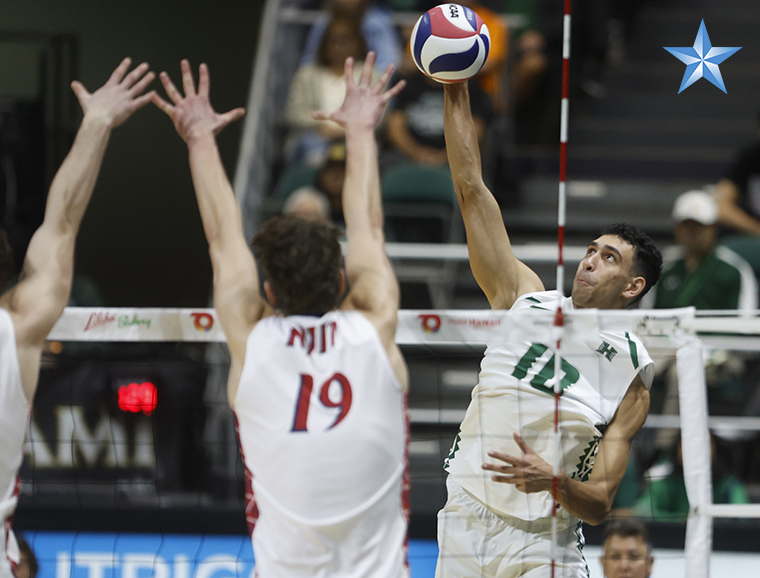
Hawaii opposite Kristian Titriyski (10) puts a kill past NJIT opposite Wiktor Nowak (19) during the first set of a men’s NCAA volleyball game, Sunday, Jan. 4, 2026, in Honolulu.
6/33
Swipe or click to see more
Hawaii outside hitter Justin Todd (9) and outside hitter Adrien Roure (7) go up to block NJIT outside hitter Andre Aleixo (2) during the first set of a men’s NCAA volleyball game, Sunday, Jan. 4, 2026, in Honolulu.
7/33
Swipe or click to see more
Hawaii setter Tread Rosenthal (13) serves the ball against the NJIT Highlanders during the first set of a men’s NCAA volleyball game, Sunday, Jan. 4, 2026, in Honolulu.
8/33
Swipe or click to see more
Hawaii middle blocker Trevell Jordan (20) puts down a kill against NJIT outside hitter Andre Aleixo (2) and middle blocker Andrew Fedmasu (20) during the first set of a men’s NCAA volleyball game, Sunday, Jan. 4, 2026, in Honolulu.
9/33
Swipe or click to see more
Hawaii head coach Charlie Wade looks on from the sideline during the first set of a men’s NCAA volleyball game against the NJIT Highlanders, Sunday, Jan. 4, 2026, in Honolulu.
10/33
Swipe or click to see more
Hawaii setter Tread Rosenthal (13) goes up to block NJIT middle blocker Andrew Fedmasu (20) during the first set of a men’s NCAA volleyball game, Sunday, Jan. 4, 2026, in Honolulu.
11/33
Swipe or click to see more
Hawaii setter Tread Rosenthal (13), middle blocker Trevell Jordan (20), and outside hitter Louis Sakanoko (23) combine on the triple block on NJIT outside hitter Parker Moorhead (8) during the first set of a men’s NCAA volleyball game, Sunday, Jan. 4, 2026, in Honolulu.
12/33
Swipe or click to see more
Hawaii opposite Kristian Titriyski (10) puts a kill past NJIT outside hitter Parker Moorhead (8) during the first set of a men’s NCAA volleyball game, Sunday, Jan. 4, 2026, in Honolulu.
13/33
Swipe or click to see more
Hawaii outside hitter Louis Sakanoko (23) and outside hitter Justin Todd (9) combine on the double block on NJIT opposite Wiktor Nowak (19) during the first set of a men’s NCAA volleyball game, Sunday, Jan. 4, 2026, in Honolulu.
14/33
Swipe or click to see more
Hawaii outside hitter Louis Sakanoko (23) keeps the ball in play against NJIT opposite Wiktor Nowak (19) during the first set of a men’s NCAA volleyball game, Sunday, Jan. 4, 2026, in Honolulu.
15/33
Swipe or click to see more
Hawaii setter Tread Rosenthal (13), top, opposite Kristian Titriyski (10), outside hitter Justin Todd (9), and outside hitter Louis Sakanoko (23) celebrate a point against the NJIT Highlanders during the first set of a men’s NCAA volleyball game, Sunday, Jan. 4, 2026, in Honolulu.
16/33
Swipe or click to see more
Hawaii setter Tread Rosenthal (13), top, outside hitter Justin Todd (9), and outside hitter Louis Sakanoko (23) celebrate a point against the NJIT Highlanders during the first set of a men’s NCAA volleyball game, Sunday, Jan. 4, 2026, in Honolulu.
17/33
Swipe or click to see more
Hawaii outside hitter Louis Sakanoko (23) soars for a kill over NJIT middle blocker Daniel Latkowski (5) during the first set of a men’s NCAA volleyball game, Sunday, Jan. 4, 2026, in Honolulu.
18/33
Swipe or click to see more
Hawaii outside hitter Louis Sakanoko (23) soars for a kill over NJIT middle blocker Daniel Latkowski (5) during the first set of a men’s NCAA volleyball game, Sunday, Jan. 4, 2026, in Honolulu.
19/33
Swipe or click to see more
Hawaii outside hitter Adrien Roure (7) goes for a dig against the NJIT Highlanders during the first set of a men’s NCAA volleyball game, Sunday, Jan. 4, 2026, in Honolulu.
20/33
Swipe or click to see more
Hawaii opposite Kristian Titriyski (10), left, outside hitter Justin Todd (9), and outside hitter Adrien Roure (7) go up to block NJIT opposite Wiktor Nowak (19) during the first set of a men’s NCAA volleyball game, Sunday, Jan. 4, 2026, in Honolulu.
21/33
Swipe or click to see more
Hawaii outside hitter Justin Todd (9) puts down a kill against NJIT middle blocker Daniel Latkowski (5) during the first set of a men’s NCAA volleyball game, Sunday, Jan. 4, 2026, in Honolulu.
22/33
Swipe or click to see more
Hawaii outside hitter Justin Todd (9) and outside hitter Adrien Roure (7) go up to block NJIT middle blocker Daniel Latkowski (5) during the first set of a men’s NCAA volleyball game, Sunday, Jan. 4, 2026, in Honolulu.
23/33
Swipe or click to see more
Hawaii outside hitter Adrien Roure (7) puts down a kill against NJIT middle blocker Daniel Latkowski (5) and setter Bruno Figueiredo (3) during the first set of a men’s NCAA volleyball game, Sunday, Jan. 4, 2026, in Honolulu.
24/33
Swipe or click to see more
NJIT outside hitter Andre Aleixo (2) has a kill attempt thwarted by Hawaii setter Tread Rosenthal (13) during the first set of a men’s NCAA volleyball game, Sunday, Jan. 4, 2026, in Honolulu.
25/33
Swipe or click to see more
Hawaii opposite Kristian Titriyski (10) puts down a kill against NJIT outside hitter Andre Aleixo (2) during the first set of a men’s NCAA volleyball game, Sunday, Jan. 4, 2026, in Honolulu.
26/33
Swipe or click to see more
Hawaii outside hitter Louis Sakanoko (23) puts a kill past NJIT setter Bruno Figueiredo (3), right, and middle blocker Andrew Fedmasu (20) during the first set of a men’s NCAA volleyball game, Sunday, Jan. 4, 2026, in Honolulu.
27/33
Swipe or click to see more
Hawaii libero Quintin Greenidge (22) keeps the ball in play against the NJIT Highlanders during the first set of a men’s NCAA volleyball game, Sunday, Jan. 4, 2026, in Honolulu.
28/33
Swipe or click to see more
Hawaii opposite Kristian Titriyski (10) serves the ball against the NJIT Highlanders during the first set of a men’s NCAA volleyball game, Sunday, Jan. 4, 2026, in Honolulu.
29/33
Swipe or click to see more
Hawaii opposite Kristian Titriyski (10) serves the ball against the NJIT Highlanders during the first set of a men’s NCAA volleyball game, Sunday, Jan. 4, 2026, in Honolulu.
30/33
Swipe or click to see more
Hawaii setter Tread Rosenthal (13) goes up to block NJIT outside hitter Parker Moorhead (8) during the first set of a men’s NCAA volleyball game, Sunday, Jan. 4, 2026, in Honolulu.
31/33
Swipe or click to see more
Hawaii opposite Kristian Titriyski (10) puts down a kill against NJIT outside hitter Parker Moorhead (8), left, during the first set of a men’s NCAA volleyball game, Sunday, Jan. 4, 2026, in Honolulu.
32/33
Swipe or click to see more
Hawaii opposite Kristian Titriyski (10), left, outside hitter Justin Todd (9), and outside hitter Louis Sakanoko (23) combine on the triple block on NJIT opposite Wiktor Nowak (19) during the first set of a men’s NCAA volleyball game, Sunday, Jan. 4, 2026, in Honolulu.
33/33
Swipe or click to see more
Hawaii outside hitter Adrien Roure (7) puts down a kill against NJIT middle blocker Daniel Latkowski (5) and opposite Wiktor Nowak (19) during the first set of a men’s NCAA volleyball game, Sunday, Jan. 4, 2026, in Honolulu.

By Jeremy Jacob, Sports Editor
Becca Erisman had a big life decision to make.
Erisman decided to sign for track and field with Columbia College and made her intentions clear during a ceremony on Dec. 4 in the Centralia High School gym. The senior has five state medals, including two during her freshman season when the Lady Panthers finished third for their first state trophy since 1985.
Erisman said he liked the academics at Columbia College as he plans to go into its nursing program. There was some other factor that made her comfortable with the destination.
“I love the track team,” Erisman said. “I know a lot about it because my brother and his girlfriend are on the track team. I’m really excited to experience a lot of what they’ve done and to see it for myself.”
Grant Erisman is a senior at Columbia College with multiple championships in the American Midwest Conference.
Becca Erisman was a district champion a season ago in the girls 4×800 relay. She also advanced to sectionals last season in the long jump. Centralia head coach Becca Erisman said it is “a welcome challenge” to determine in which events Erisman will be competing.
“She brings energy and enthusiasm to every practice and is a great leader for our younger athletes,” Sontheimer said. “Her two greatest strengths are her year-round commitment to track and field and her versatility as an athlete. As a coaching staff, we feel that Becca could help us in eight or nine different events.”
Erisman said she has had “amazing” coaches before and during high school that have made her the athlete she is today.
“They make great workouts for us,” Erisman said. “I have amazing teammates who push me every day in practice. Without them, I would not have the success that I’ve had.”
Erisman admitted that she wasn’t a great runner earlier in her life but now she has five state medals as part of various relay teams. She pointed out she had “a lot of growth” in long jump last season that ended with her just missing the cut for state by one spot in fifth place.
“Over time, I got better and I kept practicing,” Erisman said. “Definitely throughout high school, I have seen great improvements. I just barely didn’t make the cutoff for state (in long jump), but I am working towards that this year.”
Sontheimer said Erisman should do well in college after being a big contributor for the Lady Panthers one more season.
“Becca has been a tremendous asset to our track program the last three years,” Sontheimer said. “We are glad to have her for one more season before she begins competing at the college level.”
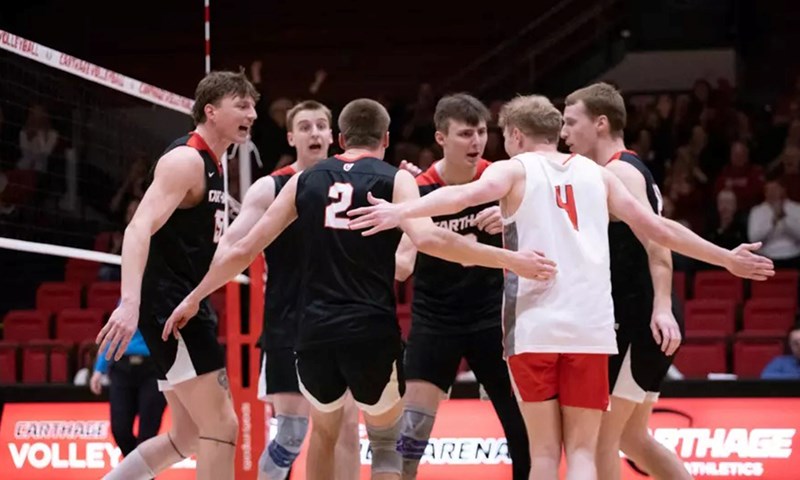
NAPERVILLE — Defending league champion Carthage was selected as the favorite in the 2026 College Conference of Illinois & Wisconsin (CCIW) Men’s Volleyball Preseason Coaches Poll, announced by the conference office on Monday. The Firebirds earned five of the six first-place votes and 25 total points.
2026 CCIW Men’s Volleyball Preseason Poll
| Team (First-place votes) | Points |
| 1. Carthage (5) | 25 |
| 2. Loras (1) | 20 |
| 3. North Central | 17 |
| 4. Augustana | 12 |
| 5. Illinois Wesleyan | 11 |
| 6. North Park | 5 |
Monday’s announcement marks the second consecutive season the Firebirds have been the top preseason pick and the fifth time overall.
Carthage enters the 2026 season following a standout 2025 campaign that included a 23-4 overall record and a 9-1 mark in league play. Under the direction of head coach JW Kieckhefer, a four-time CCIW Coach of the Year, the Firebirds have captured four conference championships since 2021.
Loras was slotted second in the poll with 20 points and the remaining first-place vote. The Duhawks shared the regular-season title with Carthage in 2024 and have advanced to the CCIW Tournament championship match in each of the past two seasons.
North Central was picked third with 17 points after claiming the CCIW title in 2023 and finishing as the national runner-up that same season. Augustana checked in fourth with 12 points, while Illinois Wesleyan followed closely in fifth with 11 points. North Park rounded out the poll with five points.
The 2026 season begins Tuesday, Jan. 13 when Carthage visits Lakeland at 6 p.m. League play begins Thursday, Feb. 19.
| CCIW on X | CCIW Instagram | CCIW Facebook |
The College Conference of Illinois & Wisconsin (CCIW) was founded in 1946 and currently services nine member institutions including Augustana College (Rock Island, Ill.), Carroll University (Waukesha, Wis.), Carthage College (Kenosha, Wis.), Elmhurst University (Elmhurst, Ill.), Illinois Wesleyan University (Bloomington, Ill.), Millikin University (Decatur, Ill.), North Central College (Naperville, Ill.), North Park University (Chicago, Ill.) and Wheaton College (Wheaton, Ill.).
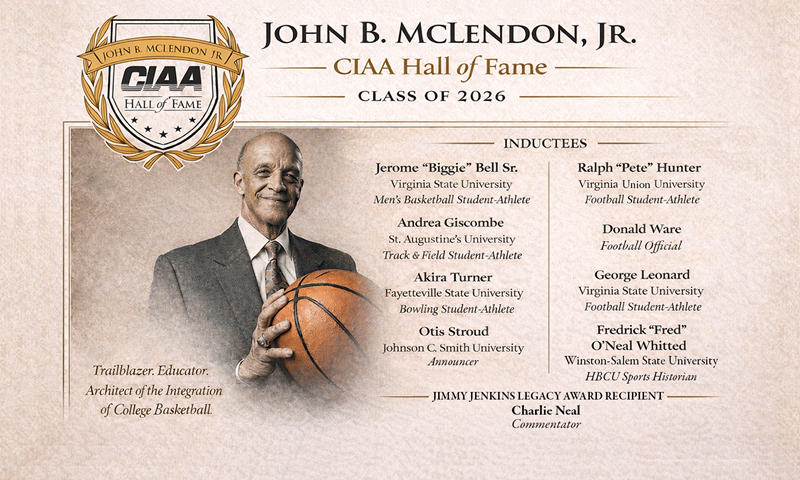
Charlotte, NC (January 5, 2026) — The Central Intercollegiate Athletic Association (CIAA), the nation’s oldest historically Black athletic conference, proudly announces its 2026 John B. McLendon Hall of Fame Class. This year’s inductees represent a legacy of competitive excellence, leadership, and service that has elevated the CIAA and its member institutions for generations.
The 2026 Hall of Fame Class includes:
- Jerome “Biggie” Bell Sr. (Virginia State University, Men’s Basketball Student-Athlete)
- Andrea Giscombe (St. Augustine’s University, Track & Field Student-Athlete)
- Akira Turner (Fayetteville State University, Bowling Student-Athlete)
- Otis Stroud (Johnson C. Smith University, Administrator/Supporter)
- Ralph “Pete” Hunter (Virginia Union University, Football Student-Athlete)
- Donald Ware (CIAA, Football | Official)
- George Leonard (Virginia State University, Football Student-Athlete)
- Fredrick “Fred” O’Neal Whitted (CIAA, HBCU Sports Historian)
The 2026 class will be formally inducted at the annual Hall of Fame Ceremony, Friday, February 27th during the 2026 CIAA Men’s and Women’s Basketball Tournament.
Jerome “Biggie” Bell Sr. – Virginia State University
Men’s Basketball | Student-Athlete
One of the most electrifying playmakers in CIAA history, Jerome “Biggie” Bell starred at Virginia State University from 1974–79, lettering four years and earning All-CIAA honors. Known as “The Magician,” Bell was celebrated for his exceptional court vision, creativity, and leadership as the catalyst of the famed “Showtime Trojans.”
A four-year starter, Bell earned Co-Rookie of the Year honors as a freshman and went on to become one of the most accomplished point guards in Virginia basketball history. He remains Virginia State’s all-time leader in career assists (791), single-season assists (329), and single-game assists (24), the latter set against Shaw in 1975. He also holds the CIAA Tournament single-game assist record and is the all-time assist leader in CIAA Tournament history.
Bell helped lead the Trojans to the 1975–76 CIAA Championship and guided Virginia State to its highest-ever national ranking of No. 3 in NCAA Division II. His accolades include All-VCAA, All-NAIA, All-CIAA, All-CIAA Tournament Team, and Honorable Mention All-American recognition. He also made history as the recipient of the inaugural CIAA Tournament Hustle Award.
Bell’s impact has been recognized with induction into the Virginia State University Hall of Fame and the John Marshall High School Hall of Fame. Remembered as one of the CIAA’s greatest passers and playmakers, Jerome “Biggie” Bell’s legacy remains a benchmark of excellence within the conference.
Andrea Giscombe – St. Augustine’s University
Track & Field | Student-Athlete & Coach
A transformational figure for St. Augustine’s Track & Field legacy, Andrea Giscombe dominated the CIAA and NCAA Division II from 1996–97, capturing five NCAA DII individual titles and six CIAA championships. She led the Lady Falcons to their first NCAA DII Outdoor Women’s National Championship in 1997 and earned CIAA Co-Most Valuable Women’s Track Athlete the same year.
Her individual championships include back-to-back titles in the 400m hurdles and long jump, and she contributed to the 1996 NCAA DII National Champion 4×400 relay.
Giscombe later served as an assistant coach for two decades, helping guide the Falcons to 21 NCAA national titles and 79 CIAA championships. She was inducted into the USTFCCCA NCAA Division II Athlete Hall of Fame in 2007.
Otis Stroud – Johnson C. Smith University
Football & Basketball | Announcer
Otis Stroud has been one of the most recognizable voices in the Central Intercollegiate Athletic Association for more than four decades. Although he began his announcing career at Johnson C. Smith University in 1977, where he served as the PA announcer for football and basketball, it is his work across the CIAA that has made him a conference icon.
A 1981 JCSU graduate, Stroud’s student-run opportunity grew into one of the longest and most celebrated announcing careers in the league. For over 30 years, he has been a defining presence at the CIAA Basketball Tournament, where his signature cadence, professionalism, and showmanship have shaped the atmosphere of one of the nation’s premier HBCU events.
Stroud’s voice has narrated generations of championship moments, energized crowds, and strengthened the conference’s culture. Regarded as one of the CIAA’s most enduring ambassadors, he has left a lasting imprint on the tradition and gameday experience of CIAA athletics.
Ralph “Pete” Hunter – Virginia Union University
Football | Student-Athlete
Ralph “Pete” Hunter is regarded as one of the most dominant defensive backs in CIAA and Division II history, known for his versatility, instincts, and game-changing playmaking. After beginning his collegiate career as a wide receiver, he excelled at multiple defensive positions, ultimately leading Virginia Union to the 2001 CIAA Championship. That season, Hunter recorded 11 interceptions, six blocked kicks, and earned Black College All-American, AFCA All-American, and NCAA Division II All-American honors, all achievements that highlighted his status among the nation’s elite defenders.
Hunter became the only CIAA and only Division II player drafted in the 2002 NFL Draft, launching a six-year professional career with the Dallas Cowboys, New York Jets, Cleveland Browns, and Seattle Seahawks, where he earned a starting role and delivered key playoff performances. He later played in the Arena Football League and CFL before transitioning into service and community roles. In recognition of his extraordinary impact, Hunter was inducted into the Virginia Union University Hall of Fame in 2021.
Donald Ware – CIAA
Football | Official
A respected leader in CIAA officiating, Donald Ware served as an on-field official for 31 years, officiating over 200 CIAA football games, including three CIAA Championships, six NCAA Division II playoff games, and the 2004 NCAA Division II National Championship. His professionalism, command of the game, and consistent excellence made him one of the CIAA’s most trusted officials for high-stakes assignments.
All-CIAA honors (1968–69) and later signed with the Washington Redskins. He also contributed to the sport as a coach and was inducted into the Howard University Hall of Fame in 2005. Beyond the whistle, Ware made a lasting impact on the CIAA through his mentorship of generations of officials. He was known for developing young talent, elevating officiating standards, and providing guidance that strengthened the conference’s reputation for fairness and integrity. His influence helped create a pipeline of well-prepared officials who continue to serve the CIAA and NCAA with distinction.
In 2022, the CIAA honored Ware for four decades of distinguished service as both an official and neutral observer.
George Leonard – Virginia State University
Football | Student-Athlete
One of the greatest running backs in Virginia State University history, George Leonard left an enduring mark on the Trojans’ football program through a career defined by consistency, power, and elite production. From 1976–79, Leonard rewrote the VSU rushing record book, showcasing a rare blend of speed, physicality, and vision that made him one of the most feared ball carriers in the CIAA.
He graduated as the program’s all-time rushing leader with 3,575 yards and 33 touchdowns, records that highlighted both his durability and dominance. Leonard also delivered one of the finest single seasons in school history, rushing for 1,003 yards and 12 touchdowns in 1977 — performances that earned him CIAA Player of the Year honors and cemented his status among the conference’s elite.
Leonard’s impact extended beyond the CIAA when he represented Virginia State in the 1979 Black College All-Star Game, competing alongside many of the nation’s top HBCU standouts. In recognition of his outstanding career, he was inducted into the Virginia State University Hall of Fame in 1991, forever preserving his legacy as one of the program’s foundational stars and one of the conference’s most exceptional running backs.
Fredrick “Fred” O’Neal Whitted – CIAA
HBCU Sports Historian
Fredrick “Fred” O’Neal Whitted was a passionate historian whose life’s work centered on honoring and preserving the legacy of Black college athletics. For more than 30 years, he dedicated himself to documenting the achievements, stories, and cultural impact of HBCU student-athletes and coaches, driven by a deep belief that these histories deserved to be celebrated and protected.
A 1975 graduate of Winston-Salem State University, Whitted founded Resources 2000 to ensure that HBCU athletics were recorded with integrity and respect. His landmark publications, including The Black College Sports Encyclopedia, The Black College Alumni Journal, and the Black College Alumni–American Role Models series, became essential references for journalists, historians, and educators. His work also produced The Rams’ House, a definitive history of WSSU basketball, and supported major projects such as ESPN’s Black Magic documentary.
Whitted’s passion extended far beyond writing. At CIAA tournaments and championship events, he chronicled moments others overlooked, connecting generations and reminding audiences of the conference’s role in shaping collegiate athletics. His collaboration with the late John B. McLendon in establishing the HBCU Heritage Museum and Hall of Fame further demonstrated his commitment to preserving Black sports history for future generations.
Nationally regarded as one of the leading experts on HBCU athletics, Whitted played a crucial role in ensuring that the stories of Black college sports remained visible, respected, and enduring. His passion, scholarship, and devotion to collegiate athletics continue to stand as a cornerstone of the CIAA’s heritage.
Charlie Neal
Jimmy Jenkins Legacy Award Recipient
For more than four decades, Charlie Neal has been a transformative voice in Black college athletics, elevating the visibility, integrity, and national presence of historically Black colleges and universities through groundbreaking sports broadcasting and leadership.
Neal began his career as a radio disc jockey before transitioning to television, working as a sportscaster in major media markets including Philadelphia, Washington, D.C., Detroit, and New York. In 1980, he made history by calling the first nationally televised regular-season CIAA Basketball game, becoming the television voice of Black college sports. His work with Black Entertainment Television (BET) provided an unprecedented national platform for CIAA and HBCU athletics at a time when such exposure was rare.
During his 24-year tenure at BET, Neal served as both lead play-by-play announcer and executive producer for sports, helping establish the network as a premier destination for Black College Athletics. His leadership expanded access, elevated institutional brands, and celebrated the excellence of HBCU student-athletes, coaches, and traditions. His legendary 23-year broadcast partnership with Lem Barney remains one of the longest in sports media history, covering iconic moments and Hall of Fame figures that helped shape the legacy of Black college athletics.
Beyond BET, Neal’s distinguished career includes broadcast roles with CBS Sports, Turner Sports, TNT, and ESPN, where he called the first-ever football game on ESPNU in 2005. He has remained deeply connected to HBCU athletics as a longtime fixture at the MEAC Basketball Tournament and currently serves as lead play-by-play announcer for HBCU GO TV Sports.
Neal’s commitment to the CIAA extends beyond broadcasting. He has supported the conference as an event emcee, All-Star game official, and trusted ambassador, consistently advancing the CIAA’s mission to support academic and athletic excellence, community engagement, and student-athlete development.
A member of the CIAA, MEAC, and Black College Football Halls of Fame, Charlie Neal’s legacy reflects the values embodied by the Jimmy Jenkins Legacy Award. Through vision, advocacy, and excellence, he has helped strengthen the foundation of the CIAA and ensured that its stories, institutions, and student-athletes continue to be recognized on the national stage.
Media Contact:
Anna M. Butzlaff | abutzlaff@theciaa.com
Associate Commissioner, Strategic Communications
Central Intercollegiate Athletic Association (CIAA)
About John B. McLendon Jr.
John B. McLendon Jr. was a trailblazer whose leadership and innovative vision reshaped collegiate athletics. His understanding of the game began early, having learned basketball principles from James Naismith, the inventor of the sport — an influence that guided his coaching philosophy throughout his career. In 1966, McLendon made history when he was hired by Cleveland State University as the first African American head basketball coach at a predominantly white institution, opening doors for generations of coaches and contributing to the more than 250 African American head coaches who now serve at PWIs.
Widely recognized as the architect of the integration of college basketball, McLendon led programs at several HBCUs and PWIs, including North Carolina Central College (1940–52), Hampton Institute (1952–54), Tennessee State University (1954–59), Kentucky State University (1963–66), and Cleveland State University (1966–69). Beyond coaching, he held numerous administrative roles, such as athletics director at North Carolina Central and leadership positions at Hampton and Tennessee State. In 1949, he founded the National Athletic Steering Committee, a major force in integrating basketball and expanding opportunities across sports. After leaving Cleveland State, McLendon returned in 1991 as an advisor and educator, teaching a course on the history and influence of minorities in sport until his passing in October 1999. He also broadened his global impact as director of international promotions for Converse Inc. from 1969 to 1989.
About Jimmy Jenkins
The Jimmy Jenkins Legacy Award is bestowed to an individual as approved by the Board who has provided an environment that supports athletic and academic excellence through educational opportunities and community involvement; focused always on the personal growth, mental wellness and development of the student-athlete and its members. The award is named after Dr. Jimmy Jenkins, who served as President of Livingstone College for 16 years before retiring in 2022. Before that, he made history by becoming the first alumnus of Elizabeth City State University (ECSU) to serve as chancellor.
About the CIAA
Founded in 1912, the Central Intercollegiate Athletic Association is the first, and longest running, African American athletic conference in the United States and one of the most recognized conferences in Division II. The CIAA conducts 14 championships attended by more than 150,000 fans from around the country. The Basketball Tournament has been honored as a 2019 Champion of Economic Impact in Sports Tourism by Sports Destination Management, the leading publication with the largest circulation of sports event planners and tournament directors in the sports tourism market, for both 2018 and 2019.
Headquartered in Charlotte, North Carolina, the CIAA is governed by the Presidents and Chancellors of its 12 member institutions: Bowie State University, Bluefield State University, Claflin University, Elizabeth City State University, Fayetteville State University, Johnson C. Smith University, Lincoln University of Pennsylvania, Livingstone College, Shaw University, Virginia State University, Virginia Union University, and Winston Salem State University. For more information on the CIAA, visit theciaa.com and follow us on Facebook, Instagram and TikTok.
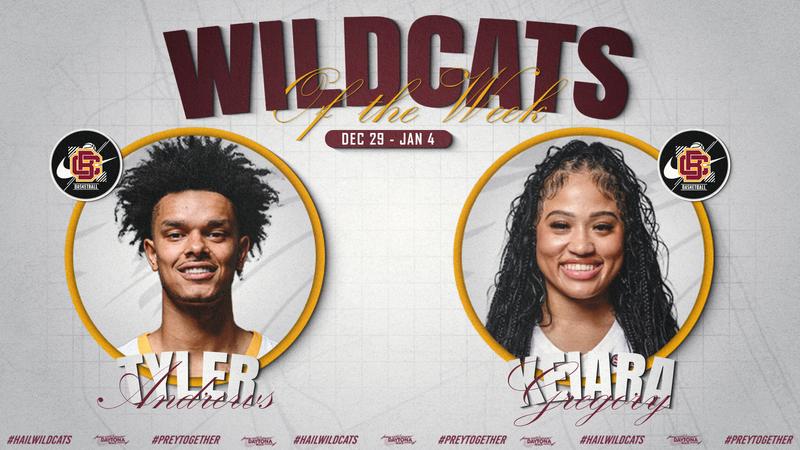
DAYTONA BEACH, Fla. – Keiara Gregory of B-CU Women’s Basketball and Tyler Andrews of B-CU Men’s Basketball have been named Wildcat of the Week for the week of December 29, 2025 through January 5, 2026.
Keiara Gregory was instrumental in the Wildcats thrilling SWAC-opening win over Florida A&M as part of a pair of games this week. She posted 20 points, four rebounds, a steal and four assists – none bigger than an assist on the eventual game-winner against the Rattlers.
Tyler Andrews was excellent for the Wildcats in two games to start the new year, including a SWAC-opening win over rival Florida A&M. In two games, he posted 35 points – 20 of them against FAMU), along with 12 rebounds, four assists, and a pair of steals.
Each week, The Bethune-Cookman Office of Athletic Communications recognizes one male and one female student-athlete through the Wildcats of the Week award.
This award recognizes student-athletes who have excelled in competition, in the classroom, and in the community over the past week, exemplifying the Championship Culture of Wildcat Athletics.
2025-26 Wildcats of the Week
December 29-January 4
W: Keiara Gregory, Women’s Basketball
M: Tyler Andrews, Men’s Basketball
December 22-28
W: N/A (No Women’s Competition This Week
M: Jordan Johnson, Men’s Basketball
December 15-21
W: Tyler Butler, Women’s Basketball
M: Jakobi Heady, Men’s Basketball
December 8-14
W: N/A (No Women’s Competition This Week
M: Jakobi Heady, Men’s Basketball
December 1-7
W: Daimoni Dorsey, Women’s Basketball
M: Sha’Nard Walker, Track & Field
November 24-30
W: Chanelle McDonald, Women’s Basketball
M: Jakobi Heady, Men’s Basketball
November 17-23
W: Jordan Brooks, Women’s Basketball
M: Timmy McClain, Football
November 10-16
W: Shayla Henry, Volleyball
M: Javon Ross, Football
November 3-9
W: Madison Molock, Tennis
M: Arterio Morris, Men’s Basketball
October 27-November 2
W: Amya Jennings, Volleyball
M: Andrew Kiplagat, Cross Country
October 20-26
W: Sthefany Carvalho, Volleyball
M: Jaylen Lewis, Football
October 13-19
W: Melissa Gonzalez, Volleyball
M: N/A (No Men’s Competition this Week)
October 6-12
W: Valencia Butler, Cross Country
M: Andrew Kiplagat, Cross Country
September 29-October 5
W: Amya Jennings, Volleyball
M: Ali Scott Jr., Football
September 22-28
W: Sierra Herndon, Volleyball
M: Javon Ross, Football
September 15-21
W: Zahara El-Zein
M: Maleek Huggins, Football
September 8-14
W: Nola Hemphill, Volleyball
M: Cam’Ron Ransom, Football
September 1-7
W: Reese Wilson, Women’s Golf
M: Stephen Sparrow Jr., Football
August 25 – 31
W: Kaleigh Williams, Volleyball
M: Andrew Kiplagat, Cross Country
For all the latest Bethune-Cookman Athletics news, follow us on Facebook (Bethune-Cookman Athletics), X (@BCUAthletics), Instagram (@BCU_Athletics) and BCUAthletics.com.

Committed to empower youth through power of sports: Lieutenant Governor

Hawaii men’s volleyball team sweeps New Jersey Institute of Technology

Frank Flud Moves To The Top Of The JST Motorsports Finish Following Post-Race Disqualification Of Yantis – Speedway Digest

Erisman going to familiar Columbia College for track

Firebirds Picked to Defend Title as 2026 CCIW Men’s Volleyball Favorite

Defending Champ Larson Getting Refreshed Valvoline Scheme for 2026

How 3 girls’ teams captured state championships in 2025 – AAPS District News

Texas Tech Lands Cincinnati Transfer QB Brendan Sorsby in Portal

CIAA ANNOUNCES 2026 JOHN B. MCLENDON HALL OF FAME CLASS

Wildcats of the Week: December 29-January 4

Four NASCAR stars on drivers council named as new appointment made – Motorsport – Sports

Registration Open for 2026 Duke Track & Field and Cross Country Camp

BRYANT VOLLEYBALL SIGNS KALIA ALVARADO TO CLASS OF 2030

NASCAR Hall of Famer recalls how boss wanted him to smoke cigarettes – Motorsport – Sports

India’s sports model is now athlete-centric: PM Modi

SoundGear Named Entitlement Sponsor of Spears CARS Tour Southwest Opener

Donny Schatz finds new home for 2026, inks full-time deal with CJB Motorsports – InForum

David Blitzer, Harris Blitzer Sports & Entertainment

DeSantis Talks College Football, Calls for Reforms to NIL and Transfer Portal · The Floridian
Elliot and Thuotte Highlight Men’s Indoor Track and Field Season Opener

JR Motorsports Confirms Death Of NASCAR Veteran Michael Annett At Age 39

#11 Volleyball Practices, Then Meets Media Prior to #2 Kentucky Match

Rick Ware Racing switching to Chevrolet for 2026

Colleges ponying up in support of football coaches, programs
West Fargo volleyball coach Kelsey Titus resigns after four seasons – InForum

Nascar legal saga ends as 23XI, Front Row secure settlement

Maine wraps up Fall Semester with a win in Black Bear Invitational

Ross Brawn to receive Autosport Gold Medal Award at 2026 Autosport Awards, Honouring a Lifetime Shaping Modern F1

Sunoco to sponsor No. 8 Ganassi Honda IndyCar in multi-year deal

Women’s track and field athletes win three events at Utica Holiday Classic





-
 Motorsports3 weeks ago
Ross Brawn to receive Autosport Gold Medal Award at 2026 Autosport Awards, Honouring a Lifetime Shaping Modern F1
-

 Rec Sports2 weeks ago
Princeton Area Community Foundation awards more than $1.3 million to 40 local nonprofits ⋆ Princeton, NJ local news %
-
 NIL3 weeks ago
Downtown Athletic Club of Hawaiʻi gives $300K to Boost the ’Bows NIL fund
-
 NIL3 weeks ago
Kentucky AD explains NIL, JMI partnership and cap rules
-
 Sports3 weeks ago
Three Clarkson Volleyball Players Named to CSC Academic All-District List
-
 Sports3 weeks ago
Young People Are Driving a Surge in Triathlon Sign-Ups
-

 Sports3 weeks ago
Beach Volleyball Unveils 2026 Spring Schedule – University of South Carolina Athletics
-
 NIL3 weeks ago
Why the NIL era will continue to force more QB transfers
-

 Sports2 weeks ago
Badgers news: Wisconsin lands 2nd commitment from transfer portal
-

 Sports2 weeks ago
Is women’s volleyball the SEC’s next big sport? How Kentucky, Texas A&M broke through