
We’re now in the top ten of the mid-season 2025 Purple Row Prospects (PuRPs) list. Previously we had PuRPs 30-26, 25-21, 20-16 and 15-11. As a reminder, in this edition of the PuRPs poll, 23 ballots were cast, with 30 points granted for a first place vote, 29 for second, etc.
Sports
Colorado Rockies prospect rankings, mid

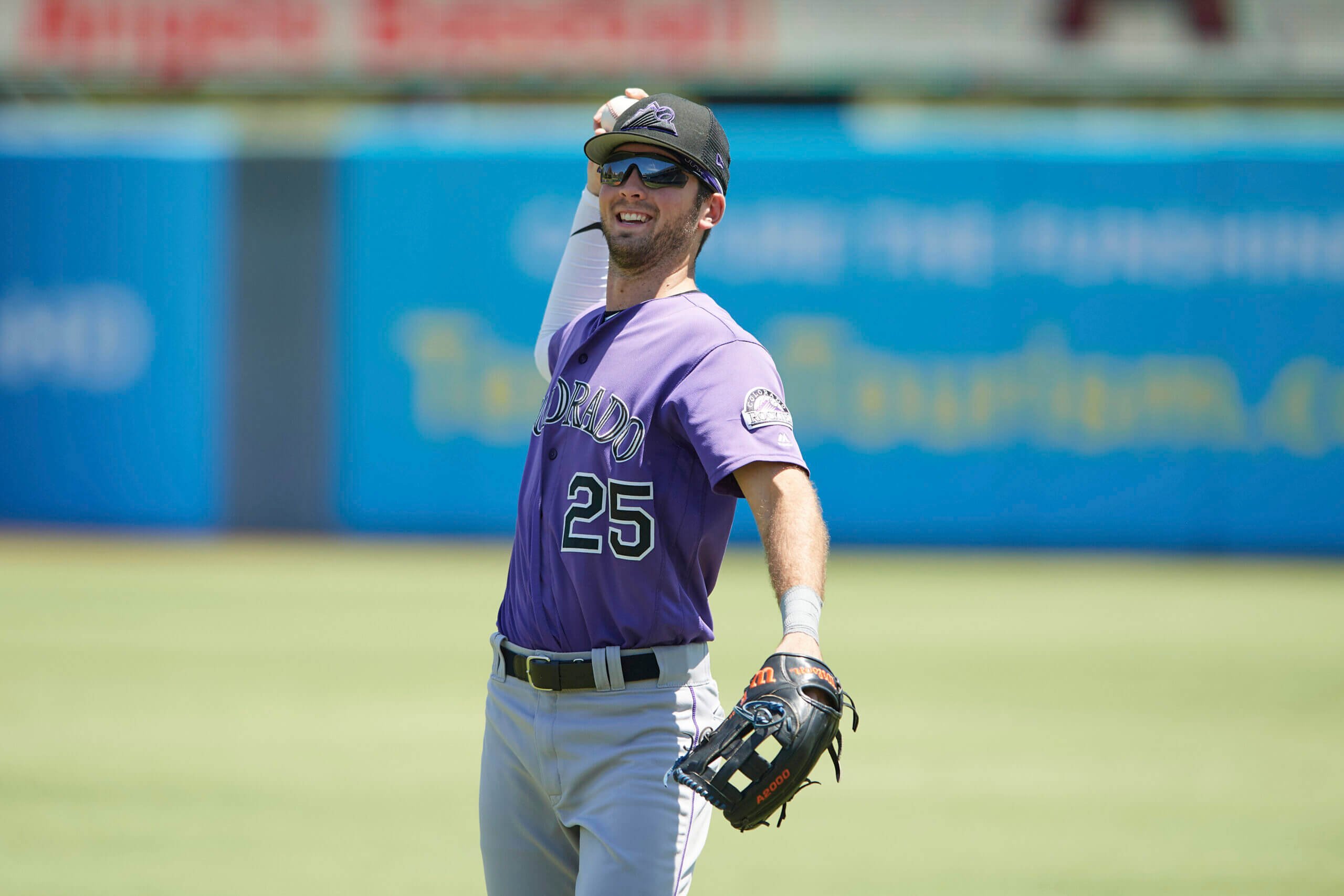


For each player on the PuRPs list, I’ll include a link to individual stats and contract status (via Baseball-Reference), PuRPs voting stats, a note on the 2025 season to date, and a scouting report from a national prospect writer where possible. I’ll also include where I put each player on my personal ballot. All ages are as of the date the article is posted.
10. Yanquiel Fernández (438 points, 22 ballots) — Preseason Ranking: 7 — High Ballot 5, Mode Ballot 8
How did he enter the organization?
2019 International Free Agent, Cuba
Why did he make the PuRPs list?
Fernández is another prospect who graduated from rookie (and PuRPs) eligibility this month, having served as a reserve outfielder for the Rockies since early July. The 6’2”, 22-year-old lefty outfielder (who signed for $295k in 2019 out of Cuba) is lauded for his plus power projection and good feel for hitting, though his below-average speed limits him to the corner outfield positions.
Fernández didn’t make his professional debut until 2021 due to the pandemic, but he made quick work of the minor league ladder once he did. He spent one year each in the Dominican Summer League and Low-A California League before splitting 2023 between High-A Spokane and Double-A Hartford, with a pit stop at the prestigious MLB Futures game as well (when he uncorked a 103 MPH throw from the outfield). After that breakout season, Fernández appeared on the back quarter of top 100 prospect lists.
In 2024 (after being added to the 40-man roster by the Rockies), Fernández headed back to Hartford, where he was still 2.6 years younger than league average. Fernández clearly was focused on sacrificing some power in exchange for contact, as he significantly cut his Double-A strikeout rate from 33% of PA to 19% while walking in 7.5% of PA. In 346 plate appearances with Hartford, Fernández hit .283/.339/.440 with ten homers among his 28 extra-base-hits, which equates to a 120 wRC+ against upper-minors pitching as a 21-year-old.
The Rockies promoted Fernández to Triple-A Albuquerque in early August — where, true to 2023’s pattern, he struggled to acclimate to more advanced pitching. In 138 PA with Albuquerque, Fernández scuffled to a .211/.268/.313 line with two homers and seven doubles, which in the hitter-friendly Pacific Coast League equated to a 34 wRC+. Again, the context matters here — in his age-21 season, Fernández faced a pitcher older than him in over 98% of his plate appearances.
This year, Fernández headed back to Albuquerque and he again learned with exposure to Triple-A pitching (which was 4.8 years older than him on average). In 271 plate appearances, Fernández hit .284/.347/.502 with 13 homers and 14 doubles while cutting his strikeouts to only 14% of plate appearances (and walking in 8.5% of them), which is good for a 96 wRC+. In the field, Fernández was the primary right fielder, committing two errors but throwing out five runners in 53 games.
Since his promotion to the Rockies on July 1st, Fernández has played in 27 games, starting in 19 of them. In 77 plate appearances, he has been limited to a .240/.260/.307 line with two doubles and one homer (a pinch-hit shot that helped fuel the nine run comeback against the Pirates earlier this month). He’s played 17 games in the outfield (mostly in right) and has made two errors but has also thrown two runners out. So far, Fernández has been a below replacement player (-0.6 rWAR) with a 42 wRC+.
Judging from his last couple years, Fernández just might need some reps to make some adjustments against more advanced pitching and get some of his considerable raw power into games. We’ll see if he gets them in a crowded Rockies outfield picture moving forward.
Here is a video of Fernández’s 2024 highlights, showing off his pole to pole power, his ability to make good contact on pitches out of the zone, and an awesome throw at the 8:20 mark:
What do the scouts say?
John Trupin of Baseball Prospectus ranked Fernández 8th before the season with a 50 OFP:
The authors of this list would’ve preferred a more resounding answer in our preparatory discussions than a shared shrug and grimace to the question of whether Fernandez can hit. Hitting is, after all, the primary characteristic that will define the young Cuban’s future, as he’s already playing right field exclusively, and has since day one. The divisive 22-year-old made a concerted effort to address the primary flaw in his breakout 2023 campaign, in which he mashed 25 taters in 521 plate appearances across three levels, primarily High-A and Double-A. That flaw was a hyper-aggressive, strikeout-laden style that spiked to just shy of a third of his plate appearances ending in punchouts with Hartford a year ago.
This year, those rates were shaved dramatically, with Fernandez sacrificing power for contact in a significant way, but struggling to synergize the best of both worlds. When the powerful lefty gets into a ball, it evaporates, but that is ultimately still mostly tied to dipping and ripping. The most visible adjustment for Fernandez year over year seems to be some added bend and flex in his swing, responding to where the ball is pitched in lieu of the more rigid, technical swing he displayed in 2023. The result is a loss in power, as Fernandez is swinging from a slightly less prepared position, but allows for far better plate coverage in terms of making contact at all. Impressively, despite cutting his strikeout rate nearly six percentage points, Fernandez walked barely one percent more. The strong-armed outfielder will live or die with his bat off his shoulder.
In two years, Fernandez has been two different types of fairly interesting lefty corner outfield bat. A happy medium of the two would push Fernandez back towards the back-end Top 101 designation he earned a year ago, but this variation of huge raw power that plays down in games sparks far less from an evaluative standpoint, and his brutal performance at Triple-A Albuquerque didn’t set an encouraging tone.
Eric Longenhagen of Fangraphs grades Fernández as a 45 FV prospect, fourth in the system with a 70 future raw power grade to go along with a 55 future game power and 60 arm grade:
Fernandez’s prodigious left-handed power and very exciting long-term frame projection made him a need-to-know prospect while he was still in rookie ball. But as he has accrued more and more pro reps and generated more data, a crack has emerged in his profile: a lack of plate discipline. Even as Fernandez has enjoyed sensational surface-level performance (148 wRC+ and 17 homers in the first half of 2023, 120 wRC+ as a 21-year-old at Double-A Hartford in 2024), he has some concerning underlying indicators in his chase rates (38% chase, 57% chase with two strikes) and a visible issue with high-and-away fastballs that could become more problematic against big league stuff. Fernandez’s swing generates some epic homers, but he’s vulnerable to both whiffs and weak contact when pitchers execute to the outer third of the zone against him. Because Fernandez is a heavy-footed corner guy, he needs to rake to be an impact player, but each of these issues is potentially a real problem for his future offensive output.
He is still just 22 and has rare left-handed power; he’s a good prospect but an incredibly risky one despite his precocious mid-minors success. He should get to enough power versus righties to be a good platoon guy.
Keith Law of the Athletic ranked Fernández 5th in the system before the season:
The Cuban-born outfielder has two plus tools, 60 raw power and at least a 70 arm, and depending on how you see it you might argue for an average hit tool because he does make a ton of contact, striking out just 19.1 percent of the time in Double A before a late-season bump to Triple-A Albuquerque, which might as well be the surface of the moon for how the ball flies there. Anyway, Fernandez’s swing decisions still leave a lot to be desired, so he doesn’t square the ball up nearly as often as he should. He hit .283/.339/.439 for Hartford, with a ridiculous number of pop-ups and weak flyballs. He should be better than this, but in the most honest test we’re likely to get of his hitting skills, he got a C or a C-. There’s no physical projection, either, so it’s all going to be skills development from here if he’s going to get back on track to be a regular.
MLB Pipeline ranked Fernández fourth in the system and 72nd in MLB as a 55 FV player during the 2024 season, highlighted by plus power and throwing grades:
There are still plenty of reasons to be bullish about Fernandez, starting with his easily plus raw power from the left side of the plate. Even with his struggles in Double-A, the Futures Gamer hit 25 homers in 2023, and he has the ability to drive the ball to all fields with ease. The jump in his strikeout rate to nearly 33 percent with Hartford is a cause for concern, as his miss and chase rates — especially against breaking stuff — skyrocketed. He’s always going to be a very aggressive hitter, but there’s confidence the 21-year-old will make adjustments because he did just that when initially fed a steady diet of soft stuff during his full-season debut in 2022.
A below-average runner, Fernandez has a plus arm that fits the right field profile well, though he’ll be an average defender at best. His run-production potential fits that profile, too, if he can refine his approach again and make better swing decisions while recognizing spin. If all goes his way, he has the chance to be a true middle-of-the-order threat in Colorado.
When’s he going to get to the Rockies and how good will he be once he’s there?
A player like Fernández with 40+ home run potential at Coors Field is clearly worth being patient with and he’s shown the ability to adjust to pitching through the Triple-A level. If he is able to get that power into games, he will do enough damage to be an impact player for the Rockies. More pressing for Fernandez is getting those consistent big league reps when he is competing with fellow PuRPs like Zac Veen, Sterlin Thompson, Jared Thomas, and Cole Carrigg — not to mention Jordan Beck, Tyler Freeman, Brenton Doyle, and Mickey Moniak at the big league level.
Fernández clearly a bat-first prospect with both plus power and decent bat-to-ball ability (and some glaring plate discipline issues). He has a cannon for an arm but he’ll need to be able to show he can stick in right field to maintain his limited defensive utility. Fernández’s impact offensive profile stands out even in a deeper Rockies system and is why I ranked him ninth on my list as a 45 FV player.
9. Sean Sullivan (493 points, 23 ballots) — Preseason Ranking: 8 — High Ballot 2, Mode Ballot 9, 11
How did he enter the organization?
2023 Second Round, Wake Forest University
Why did he make the PuRPs list?
Despite a professional career that has been marred by injuries and an accompanying loss in velocity, Sullivan keeps getting upper-minors hitters out, a lot of them via strikeout. The 6’4”, 23-year-old lefty pitcher was dominant at Wake Forest, pitching 69 2/3 innings with with a 2.45 ERA, 0.92 WHIP (fourth-best in Division 1), a 14.3 K/9 rate (second-best), and a 2.7 BB/9 rate as the Demon Deacons made it all the way to the College World Series semi-finals.
Sullivan (whose delivery reminded the Rockies of Kyle Freeland) rode those numbers to a $1.7 million bonus from the Rockies that was about $187k below slot. The 6’4” lefty relies mostly on his fastball which, despite velocity that is usually only in the 87-91 MPH range, is a plus pitch due to a low, wide release angle that gives it great carry up in the zone. He pairs that offering with a slider and change-up, but the fastball is the main separator.
In High-A Spokane in 2024, Sullivan threw 83 1⁄3 innings in 14 starts with a 2.16 ERA (2.79 xFIP), 0.84 WHIP, 10.9 K/9 rate, and a minuscule 0.9 BB/9 rate (including a nine-inning complete game). That was enough in the High-A Northwest League to receive their Pitcher of the Year award even though the Rockies promoted Sullivan in August to Double-A Hartford, where Sullivan was 3.5 years younger than league average.
Sullivan maintained his excellent run prevention against Eastern League hitters, throwing 32 innings across seven starts with a 1.97 ERA. Sullivan wasn’t nearly as dominant, striking out only less than a batter per inning (6.8 K/9) and walking a few more (2.0 BB/9) en route to a 4.37 xFIP. Still, a 1.09 WHIP with that ERA is a strong achievement for one of the younger pitchers in Double-A (the batter was older than him 80% of the time).
Recovery related an offseason surgery for a hip injury delayed Sullivan’s 2025 debut back at Hartford (where he’s still 2.8 years younger than average) to mid-May (after a scoreless rehab outing for both the ACL team and Low-A Fresno). In 14 starts and 80 2/3 innings with Hartford, Sullivan has posted a similar ERA to last year (2.34) and improved his peripherals (2.90 xFIP, 0.87 WHIP, 9.5 K/9 rate, 1.6 BB/9 rate) before heading to the IL last week for an unknown cause. Half of his Double-A starts have been quality starts, while Sullivan allowed just a .527 OPS to opposing hitters (with basically no platoon splits).
Here’s some video of Sullivan striking out a bunch of dudes in 2025, many of them swinging:
What do the scouts say?
John Trupin of Baseball Prospectus ranked Sullivan 10th in January with a 50 OFP:
While Sullivan did allow his first professional earned runs this year, a 2.11 ERA in 115 ?
? frames between High-A Spokane and Double-A Hartford is no mean feat. That’s all the truer given that Sullivan is scarcely topping out at 90 mph in most of his outings. Watching Sullivan, however, explains a great deal. The 6-foot-4 southpaw leans heavily to his arm side as he deals, releasing the ball beyond the mid-point of the left-handed batter’s box at a low 3/4ths angle that is more accurately a high sidearm. The VAA created is subsequently disorienting for hitters, and indeed batters were flummoxed by Sullivan all year, swinging under his four-seam despite its meager velocity. That set up Sullivan’s sweeping slider, a devastating pitch which plays up off Sullivan’s angle and his plus command. Though his changeup is more sparingly utilized, the fastball-slider combination is effective enough to efficiently carve through lineups before they can get too comfortable. The margin for error is so thin for a pitcher with such little velo, but Sullivan’s results continue to outpace the radar gun. His heater and slider are effective enough that a bullpen role will be quite reasonable if he does ultimately hit a wall against big-league bats. He’s close enough to make Albuquerque this year, and polished enough to get a crack in Denver if his schtick keeps playing.Many command and control arms with bat-missing stuff in the low minors can’t keep it up in the bigs. Sullivan already saw his swings and misses dip at Double-A, but he continued getting awkward swings and weak contact. This either works or it doesn’t, but Sullivan seems unlikely to change it up significantly.
Keith Law of the Athletic ranked Sullivan 7th in the system in February:
Sullivan comes from a lower slot and throws an invisiball, often just 90-93 but from such a low angle and with so much carry that hitters miss it — and they’ll chase it right out of the zone to an unusual extent. He turns over a 55 changeup despite the lower slot, while his slider is fringy, getting some boost because of the angle at which he releases it so it sweeps down and away from lefties. He threw 83 1/3 innings for High-A Spokane and walked eight; he was horribly wild in Double A, though, as in 32 innings there he walked … seven. Unacceptable, really. Double-A hitters did make more contact on his secondary stuff, which is one thing to watch. Another is his flyball rate, 44 percent in High A and then 51 percent in Double A, just because, you know, (whispers) Coors Field. I really like him, though, because he succeeds without huge velocity or some pitch cooked up in a lab from Sudafed, iodine crystals, and the bones of former Rockies pitchers.
Eric Longenhagen of Fangraphs is less of a believer due to the low fastball velocity, grading Sullivan as a 40 FV player (with a multi-inning relief role), 20th in the org, albeit with a 70 future command grade:
Sullivan is an ultra-deceptive cross-bodied lefty with 20-grade velocity. He’s done well in the mid-minors despite sitting 87 mph because of a mix of deception, command, and quality secondary stuff. Sullivan’s stride direction takes him toward the first base line at an extreme angle, and this, in concert with his low three-quarters slot, takes hitters a few looks to get comfortable with. Sullivan’s fastball averaged 90 mph in 2023 and 87 mph in 2024, but he still managed a 2.11 ERA, 125 strikeouts and just 15 walks across 115.1 innings, good for a microscopic 3.4% walk rate. In college, Sullivan’s repertoire was fastball-heavy in the extreme at about 75% usage. His usage is still really high (67% in 2024), but he’s been branching out in pro ball and his changeup generated huge rates of chase and miss last year. His slider plays by virtue of Sullivan’s odd release. It’s fair to be skeptical that this will actually work in a starting pitcher capacity — asking a guy who sits 87 to navigate a big league lineup three times feels like too much — but in short relief bursts where hitters have no time to adjust to Sullivan’s funk, he should be fine.
MLB Pipeline slots Sullivan 13th in the system as a 45 FV player thanks to a 60 control grade:
Sullivan uses a lower slot to come at hitters with a kind of upshoot fastball, getting huge carry up in the zone. Even though it only averaged around 88 mph in 2024, the lefty threw it a lot and got decent swing-and-miss on the pitch thanks to that life and his outstanding command of the pitch. There could be a little more velocity in the tank now that he’s had a hip labrum issue fixed, so he might be able to get to 93-94 mph more moving forward. His upper-70s changeup is his best pitch, one that has terrific movement and misses bats in and out of the zone. His sweeping slider can be effective, but he doesn’t locate it as well as his other two offerings.
The Rockies will be sure to bring Sullivan along slowly and manage his workload as he’s coming back from the hip issue, but he’s already defied expectations thanks to confidence in his pitch usage, his unusual mechanics and his extreme strike-throwing ways. He’ll be at the upper levels continuing to show that his unusual profile just might work in a big league rotation.
When’s he going to get to the Rockies and how good will he be once he’s there?
Between Chase Dollander, Sullivan, and Cole Carrigg, Colorado’s first three picks of the 2023 draft all look like big hits so far — not to mention Kyle Karros in the fifth round and Seth Halvorsen in the seventh. Sullivan’s college dominance with his fastball has carried over to the minor leagues in a big way, even up to Double-A. The decreased fastball velocity is obviously a concern, though the development of a decent changeup and slider to pair with the fastball are certainly helpful.
The Rockies could use Sullivan in the Major Leagues as soon as next year so long as his health cooperates and his fastball continues to bedevil advanced hitters. I ranked Sullivan 11th on my list as a 40+ FV player (down half a grade due to the fastball velocity decrease) because of the pedigree, statistical dominance, and because I want the Rockies to continue to think more out of the box with their pitching draftees.
8. Jared Thomas (511 points, 23 ballots) — Preseason Ranking: 14 — High Ballot 3, Mode Ballot 6, 7
How did he enter the organization?
2024 Second Round, University of Texas
Why did he make the PuRPs list?
Thomas went 42nd-overall to the Rockies as a draft-eligible sophomore, signing for an under-slot $2 million. He got that bonus due to excellent bat-to-ball skills, some emerging power, and above-average speed that gives him a high floor offensively. The 22-year-old, 6’2” lefty spent most of his time defensively at Texas (where he played alongside fellow PuRP Max Belyeu) playing first base, but he has split his time in center and left field as a professional.
After a freshman year at Texas where he hit a strong .321/.398/.484, Thomas traded some contact for power for his draft year. Though his strikeouts increased from 15% to 21% of his plate appearances, Thomas also saw his home runs quadruple from 4 to 16 — a part of an increase in slugging percentage of 151 points. His 2024 college line in 291 PA was .349/.435/.635 with 35 extra-base-hits, and he was a perfect 18/18 on steals.
A strong 2024 cameo in Low-A Fresno (146 wRC+) was cut to only eight games when Thomas went down with a quad injury, but the Rockies had seen enough that they bumped Thomas up to High-A Spokane to begin this year (he was 1.3 years younger than league average). In Spokane, Thomas absolutely raked, hitting .330/.427/.495 with 11 homers among his 25 extra-base hits and going 22/24 on steals in 342 plate appearances (138 wRC+). His batting average led the Northwest League, as did his slugging percentage, while his OBP was third.
The Rockies promoted Thomas on July 1st to Double-A Hartford, where he is 2.6 years younger than league average. Facing upper-minors pitching, Thomas has cooled down a bit, hitting a still respectable .261/.347/.398 with three homers and seven steals in 102 plate appearances, which is a 116 wRC+. Thomas has struck out in 32% of his Double-A PA and has a decently large platoon split, producing a .755 OPS against lefties vs. a .906 OPS against righties. In the field, Thomas committed all five of his errors in left field but has three of his five outfield assists from center field.
Here’s some video of Thomas at Fresno in 2024, including some slo-mo looks at the swing in the back half:
What do the scouts say?
MLB Pipeline, who ranked Thomas 60th in their draft rankings, slot Thomas 8th in the org as a 45 FV player with a 55 Hit, Run, and Arm grade:
Even in his short time with the Rockies, Thomas showed off what a good feel he has for his left-handed swing. He has the chance to really hit at the next level, routinely finding the barrel and not trying to do too much. There’s some sneaky pop in there, and as he showed during his sophomore year, he can sacrifice a little contact for pop without completely selling out for it.
Thomas is a pretty good athlete who runs better underway and has the ability to play multiple positions. He played more first than anywhere else with the Longhorns, but showed he could capably handle center field as a sophomore and the Rockies will likely work him at all three outfield spots during his first full year of pro ball. He’s already opened some eyes across the industry as the Rockies were getting calls about him from other teams.
Jeffrey Paternostro of Baseball Prospectus ranked Thomas 12th before the season:
[Thomas] had some model friendly traits (young for his class, year-over-year power gains and only two-years in college ball), but also fares well from a more traditional scouting approach. Thomas is an above-average runner with a pretty, gap-to-gap, line-drive swing. He should stick in center field and has shown above-average bat-to-ball skills with enough power to be a regular there. He may have some platoon issues and he isn’t a lock to stick in center, so there is some tweener risk, but he’s a high-probability major leaguer in some form.
Eric Longenhagen of FanGraphs had Thomas 48th among draft prospects and now ranks him 11th in the system as a 40+ FV player (up from 40 FV preseason) with a 60 future raw power grade:
Thomas has an ideal baseball frame at a super projectable 6-foot-2; he has above-average power to both gaps and is going to grow into more. His dynamic low-ball swing plays best when Thomas’ bat path is vertical; it tends to be too long when he has to flatten it out to catch fastballs away from him. His power can be neutered in the down-and-away part of the strike zone. Barring the shortening up of Thomas’ swing, what were average college contact rates will likely translate to below-average rates in pro ball, but he might grow into enough power for that to be alright. At Texas, Thomas played center field, left field, and first base. His reads in the outfield aren’t very good and unless they improve, his arm forces him to left. Thomas only has the two years of college experience, so it’s worth a shot to continue things in center for at least a little while, and the Rockies played him in left and center during his brief pro debut. Thomas’ realistic ceiling is as a power-over-hit 1B/LF platoon bat, and he requires a little more projection than is typical of a college hitter.
Keith Law of the Athletic ranked Thomas 80th before the draft and he placed Thomas 10th in the system in February:
Thomas had a breakout year as a draft-eligible sophomore at Texas after he lowered his hands — just as Condon did — and started making much more solid contact, hitting .349/.435/.635 for the Longhorns with 18 steals in 18 attempts. He had a solid debut in Low A before a quad injury ended his season after just eight games. He’s an above-average or better runner with 55 power, more of a hard line-drive guy than a big power guy, although in Coors he could be a 20/20 player with good defense in center. His one weakness in college was a tendency to chase pitches outside of the zone, and if he cuts that down to a manageable level, he’s a future regular with a 55 ceiling.
When’s he going to get to the Rockies and how good will he be once he’s there?
Thomas has progressed beyond my expectations for him in 2025, already producing at an above-average level in Double-A just a year after getting drafted. If that pace continues, he could be a big league factor as soon as next year if he can distinguish himself from the Rockies’ aforementioned outfield mob. Thomas’s ability to at least fake it in center field could be useful in setting him apart, but of course it’s going to be the bat that carries him to big league success. I was of course encouraged by how Thomas has performed as a pro and ranked him seventh on my list as a 45 FV player (along with three other outfielders).
7. Zac Veen (563 points, 23 ballots) — Preseason Ranking: 4 — High Ballot 1 (1), Mode Ballot 4
How did he enter the organization?
2020 First Round, Spruce Creek HS (FL)
Why did he make the PuRPs list?
Veen could become the favorite player for many Rockies fans young and old. A star ceiling was promised when the 23-year-old lefty-swinging, righty-throwing outfielder was made the ninth-overall pick in the 2020 draft and signed for a slightly above-slot value $5 million — but there are still some ifs before he gets there. If Veen can stay healthy, if he can manage the swing-and-miss in his profile, if he can translate more of his raw power into game power… Then Veen could be a star at the big league level and a fan favorite.
After three years in an injury-affected purgatory (primarily a left wrist issue, but also back and thumb injuries last year) at Double-A Hartford, Veen finally ascended to Triple-A Albuquerque in late 2024. Veen played in 21 games for Albuquerque down the stretch, hitting a slugging-heavy .220/.281/.476 with six homers and three doubles in 92 plate appearances.
That was good enough for Veen to be considered a strong candidate for the Opening Day roster this year. While that didn’t quite happen (despite a strong spring training), Veen was up with the Rockies on April 8th after a 5-for-5 game with Albuquerque that included a homer and two doubles. With the Rockies, Veen played consistently in a two week stint but just didn’t hit very well. In 37 plate appearances across 12 games with the Rockies, Veen had only four hits, though one of them was a homer, en route to a .118/.189/.235 line (4 wRC+, -0.3 rWAR).
Veen returned to Albuquerque in late April for a month, until in late May it was revealed that Veen had been nursing a spring training ankle injury that had hampered his performance thus far (he had hit for just a .481 OPS in May). That led to a three week absence and a stint on the ACL team to rehab the injury and refine his hitting mechanics to improve his ability to hit high fastballs. Upon his return from that assignment, Veen promptly had a 14-game hitting streak that included eight multi-hit and two four-hit games.
In total this year, including the ankle-impacted beginning of the season, Veen has recovered to hit .309/.371/.489 with seven homers, five triples, and 20 doubles with 14 steals for Albuquerque in 314 plate appearances — a slightly above average 104 wRC+. He has cut his strikeouts seven points to 19% of plate appearances while walking 9% of the time. For as long as he’s been in our prospect consciousness, it’s also important to remember that Veen is still only 23 and has only faced a younger pitcher than him in 7% of plate appearances (and half of those were during his ACL rehab stint). On defense, Veen has played all three outfield positions, with the plurality of playing time coming in left field. He has three errors and three outfield assists in 61 games.
Here are some of Veen’s 2024 highlights, which show off all-fields power:
What do the scouts say?
John Trupin of Baseball Prospectus ranked Veen sixth in the system before the season with a 55 OFP grade:
Veen flashed progression [in 2024] and showed signs of the explosiveness his injuries sapped for much of 2023. In Double-A Hartford, the outfielder showed off plus range and some of the foot speed he’d not been able to access a year ago. Veen plays hard—a double-edged sword—as his gazelle-like strides generate a gait at paces he cannot always easily alter. That can lead to electric defensive plays and swipes of third and home, as well as self-injurious plays that are unfortunately the purview of those who burn particularly bright. At the plate, Veen’s prominent uppercut swing generates loft, while his patience and power earn him respectful approaches from pitchers. It can get long through the zone, and doesn’t offer much room for adjustment when fooled. His struggles in Triple-A Albuquerque following his activation from the injured list are not yet of high concern, as his power and defense fit the bill, but a 28.3% whiff rate highlights the ceiling limiter for one of the best athletes in this system. Ahead of last year, we’d hoped to see Veen dominate and stay healthy. He came up a little short of both, but is nonetheless on the cusp of the big leagues.
When he makes contact, you can see a superstar’s framework in Veen’s powerful swings and strides. But not only has he struggled to maintain that performance, his body has not held up to the pace at which Veen plays. Injuries that continue to sap his athleticism would leave a thimble-wide passage for success, while lasting health will make him a Coors Field mainstay.
Eric Longenhagen of Fangraphs ranks Veen as a 40+ FV player, 14th in the system (despite a 70 run grade and 60 future grades on fielding and raw power):
Veen’s lefty swing is still vulnerable to inner-half velocity, and he remains in a liminal prospect space more than he is a slam dunk big league star.
This grade remains skeptical of Veen’s future ability to hit and access his raw power, but appreciates how impactful his speed will be in a part-time outfield role.
I’m excited by Veen for the same reasons anyone would be: He’s a ferocious rotator capable of hitting some epic home runs, and he’s built as if Maserati started making human beings. Veen has one of the more electric power/speed combos in the minors, but his levers and long, low-ball swing make it very difficult for him to be on time to the contact point, especially against fastballs, which has led to a good number of strikeouts and mediocre contact. Pitchers work him in on the hands, then get him to swing over the top of back-foot breaking balls once Veen starts to cheat on heaters in that spot. He’s best able to create power against bad breaking balls and pitches located down-and-away from him, when he can get his arms fully extended. When he does, it’s very beautiful and easy to see why so many folks (including your author) have been gaga for Veen at various points in his prospectdom. Still, as it’s currently constituted, he presents a below-average contact and game power look.
Veen brings other meaningful stuff to the table. He plays with an elite motor, moves from base to base with just a few gigantic strides, and commits to the next base with abandon in borderline situations. There are more opportunities for speed to impact the big league game now, which helps elevate Veen into a more impactful FV tier. On defense, his speed allows him to turn would-be doubles into singles by chasing them down before they can trickle into the gap or corner, but he doesn’t get good reads and looks uncomfortable at the catch point. Despite his wheels, the Rockies have basically never given Veen any kind of extended run in center field because his reads and routes aren’t good. It makes Veen feel like a turbo charged fifth outfielder on a good team rather than a true fourth or platoon guy.
Veen was slotted 13th in the system by Keith Law of the Athletic in February:
I was just wrong on Veen … I thought he’d be a power-hitting outfielder with 55 speed and 55 or better defense, maybe even sticking in center. The power isn’t there, and at this point I’m not sure it’s coming. He topped out at 105.6 mph in Triple A last year, commensurate with his exit velocities at lower levels — he just doesn’t have that kind of juice, and unfortunately he doesn’t have another plus tool or skill to make up for it. His best skill is his baserunning; he’s a 55 runner but really aggressive, with high success rates since he reached High A. He’s at least average on defense and could be a 55 too. With moderately high chase rates, though, he’s not going to post league-average OBPs, and he doesn’t have the power to play every day in right. I haven’t even mentioned how often he’s been hurt, playing 111 games total the last two years. He’s an extra outfielder, valuable as a pinch runner, a pinch hitter who actually has always hit lefties fine, capable of defending in either corner — I’d like to see him get some reps in center this year, just to boost his value. I thought he’d be a star, though, so I was way off.
Veen is ranked as a 45 Future Value player by MLB Pipeline, 12th in the system, including plus grades on his speed and arm with a 55 on fielding and a 50 on his hit tool:
The 23-year-old outfielder still offers plenty of projection in his 6-foot-3 frame and game, if he can stay on the field. His 2023 wrist injury definitely wreaked some havoc with his swing mechanics, but it was encouraging that he started to get to some of his power again in ‘24, albeit sporadically. He’ll have to be cognizant of not trying to get to too much loft, something that has happened in the past, also the reason why his strikeout rate is north of 25 percent at the upper levels. Earlier in his career, he offered better bat-to-ball skills.
A solid runner who squeezes every ounce of his speed by being aggressive with good instincts on the basepaths, Veen probably fits best in an outfield corner if he were to settle in as a regular. He’ll see time in all three outfield spots to provide options for when the need arises, but more than anything, he has to show that he can answer the bell over the course of a full, healthy season.
When’s he going to get to the Rockies and how good will he be once he’s there?
First of all, Veen needs to be more forthcoming about injuries that are impacting his ability to perform — this has now happened at least twice (with his wrist and now his ankle). Veen is a player that Purple Row has stayed higher on than the scouting consensus due to what he can be when he’s not playing through injuries or on the shelf. Maybe Veen won’t be able to adjust to some holes in his swing that big league pitching will exploit, but he’s shown the ability to adjust before.
Veen is an elite base-runner, a good outfielder, he has raw power to tap into, and he’s making better swing decisions. That makes him a good bet in my book and I ranked him fourth in the system as a 45+ FV player. He’ll be another young outfielder looking for Major League reps with the Rockies both down the stretch this year and next spring.
6. Cole Carrigg (577 points, 23 ballots) — Preseason Ranking: 10 — High Ballot 3, Mode Ballot 3
How did he enter the organization?
2023 Competitive Balance Round B, San Diego State University
Why did he make the PuRPs list?
The term “super-utility player” is often employed with hyperbole, but in the case of Carrigg, it fits like a glove (any kind of baseball glove, in Carrigg’s case). The 23-year-old has played literally every position (and played them well) in a college or pro game over the last few years — and he’s even a switch-hitter so he provides versatility there too. Colorado drafted the 6’2” Carrigg 65th overall in 2023 out of San Diego State as a catcher with a plus-plus arm (he threw 102 MPH from the outfield at the Draft Combine) — and signed him for a $1.3 million over-slot bonus (by $116k).
Carrigg tore up the complex league and Low-A during his draft year (while playing catcher, shortstop, and center field), then mostly stayed at High-A Spokane for 2024. In 510 plate appearances, Carrigg’s 16 homers and 11 triples led the Northwest League — and he added 15 doubles and 42 steals in 51 attempts for good measure — as part of a 132 wRC+ performance. Carrigg settled into a center field role more full time, where he threw out five runners and committed two errors in 92 games. He won the Northwest player of the week award three times — once each in June, July, and September — and was named the best defensive outfielder and most exciting player in the league by Baseball America en route to an All-Star berth and league championship.
This year, Carrigg headed to Double-A Hartford, where he is slightly below league-average age. He has brought his exciting brand of baseball to the Eastern League, swatting 15 homers, five triples, 14 doubles, and stealing 40 bases in 47 attempts (including stealing second, third, and home in one inning) while scoring a league leading 70 runs, though he also has the second most strikeouts in the league. In 457 plate appearances, Carrigg has a .238/.322/.407 batting line while striking out in over 27% of PA (walking in 9%), which is a 112 wRC+. Defensively, Carrigg already has 17 (!!!) outfield assists in 91 games, most of them in center field.
Here’s some video of Carrigg’s many 2024 highlight plays:
What do the scouts say?
Carrigg is ranked third in the system by MLB Pipeline as a 50 FV player with a 70 grade on the arm and 60 on the speed:
A super high-energy player who gets some “hair on fire” evaluations, Carrigg is a switch-hitter who makes a ton of contact from both sides of the plate. There was some concern about his aggressive nature and hit tool and how it would translate to this level, but the transition has gone well so far as Carrigg doesn’t strike out much and even drew a decent amount of walks. There’s more pop than many expected, with most of it coming from the left side of the plate to his pull side. He also can turn singles into extra-base hits and doubles into triples — he led the league in three-baggers, too — with his plus speed clearly an asset and giving him at least 20-30 potential.
With one of the best arms in baseball, there were some who wanted to see if catching would work at this level, but that’s been shelved. He’ll keep getting some reps on the dirt at shortstop to maintain some versatility, but it should surprise no one if he shows up to Coors Field as an every day center fielder.
John Trupin of Baseball Prospectus ranked Carrigg 5th in January with a 55 OFP grade:
In a fully healthy campaign [in 2024, Carrigg] swiped over 50 bags, while hitting for power and contact, maintaining his average rates at a higher level. Carrigg pokes his big flies more than crushes them, but his strength is sufficient to keep a pitcher honest, and a lot of his hardest contact comes in the air. Every action he takes on the field has a slight raw tinge still, with his athleticism covering some mechanical inconsistencies on both sides of the ball and an at times overexuberance for swinging outside the zone whilst at the plate. He may not be a superstar, but you only need to look at another multi-positional player, Tommy Edman, to see a beacon for what this sort of player is capable of.
Carrigg could be a shortstop and center fielder with 30-40 steals a year and 20+ home runs.. His relative rawness on both sides of the ball make his longer-term projection hazier, however, as he could end up an outfielder only without the game power to put the rest of his profile together.
Keith Law of the Athletic ranked Carrigg 8th in the system in February (as an OF/SS):
[Carrigg is] a plus runner with a hose for an arm and is athletic enough to play just about anywhere, with center field clearly his best position. He’s aggressive at the plate and even last year, when he was a little experienced to spend the entire year in High A, he showed some cracks in his pitch recognition, chasing more than he had in college and having difficulty picking up spin. He plays hard, almost too hard, and he ends up incurring a lot of fines as a result, so he’s certainly not everyone’s cup of tea. His positional versatility makes him a no-doubt big leaguer, barring injury; his chance to be a regular depends mostly on whether he can hit better quality pitching, which is in doubt right now.
Eric Longenhagen of Fangraphs grades Carrigg as a 40+ FV player, 9th in the system, with an 80 grade on the arm:
Carrigg is a unique multi-positional prospect, a fair switch-hitter with some low ball pop from the left side of the plate and an all-world arm. He slashed .283/.359/.491 with 17 homers in his first full pro season, spent mostly at High-A Spokane. Both visual scouting and a data-oriented assessment of Carrigg as a hitter have him more average (contact) or a shade below (raw power). Both of Carrigg’s swings are geared for pull and lift (he has a pretty classic low-ball stroke as a lefty), and he’ll be able to get to relevant (if modest) power.
The Rockies deployed Carrigg behind the plate a little bit right after he turned pro, but he spent most of 2024 in center field, with infrequent starts at shortstop. A long-striding runner, Carrigg has plus speed underway but takes a little while to get going. In a year and a half of pro ball, Carrigg has now played twice as many games in center field as he did throughout his three years of college. He was more comfortable out there late in 2024 than he was at the start and should be average there in time. Plus, he brings show-stopping arm strength to the table. The way Carrigg’s body unfurls on a max-effort outfield chuck is incredible, though he isn’t an accurate infield thrower at all, and it’s a big enough issue that he might just be an outfielder. The peak outcome for Carrigg would be a dynamic, Willi Castro-esque utilityman, though he’s trending more like a good part-time outfielder whose career might have a relevant second act on the mound.
When’s he going to get to the Rockies and how good will he be once he’s there?
Carrigg is just a really fun player to watch at the plate, on the base paths, and in the field. His tremendous defensive utility makes him very easy to fit into whatever fantasy future Rockies roster you may have in mind. He’s continued to hit for power against upper minors pitching this year in Hartford, making him more of a candidate to be a big league regular, though the strikeout spike is worrisome. Carrigg won’t be Rule 5 eligible until after the 2026 season, but I expect him at Coors Field some time next year in some capacity, even with the logjam of outfield prospects ahead of him.
If and when a MLB debut happens, Carrigg could be a valuable player all over the diamond, especially if his plate discipline doesn’t crater against big league pitchers and the power development sticks. I ranked Carrigg eighth in the system as a 45 FV player because I’m a little less sold that he’ll be a big league regular, but even a true super-utility player as exciting as Carrigg would be a win for Rockies fans.
Tomorrow, it’s time to enter the top five of the mid-season 2025 PuRPs list!

Continue Reading
Sports
Penn State women’s volleyball earns commitment from Texas transfer outside hitter Whitney Lauenstein | Penn State Volleyball News
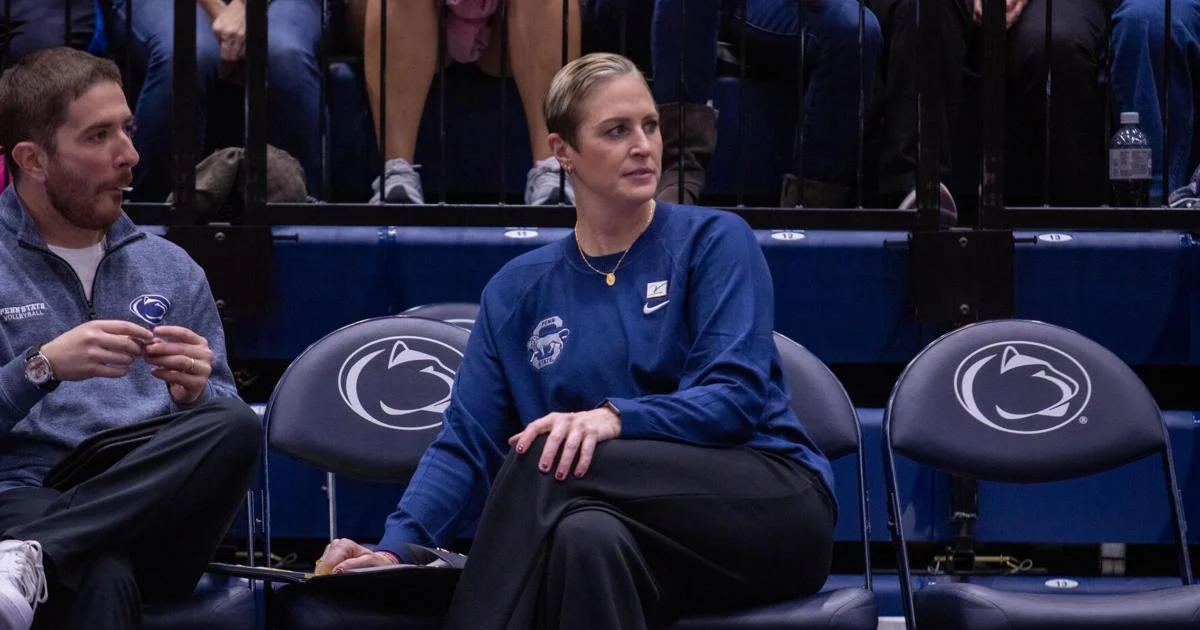
Penn State landed its second commitment in the transfer portal of the day.
The Nittany Lions earned a commitment from outside hitter Whitney Lauenstein.
Lauenstein was previously at Texas and Nebraska before transferring to her third school, Penn State.
Lauenstein adds depth to the right side and outside, which is already pretty deep for the blue and white.
The Waverly, Nebraska, native had her best season in 2022 with the Cornhuskers, totaling 297 kills, with 2.78 kills per set and a .238 hitting percentage. She added 28 aces as a premier server, which could be a major part of her role with the Nittany Lions.
She’ll make her way to Happy Valley as a graduate transfer with one year of eligibility.
MORE VOLLEYBALL COVERAGE
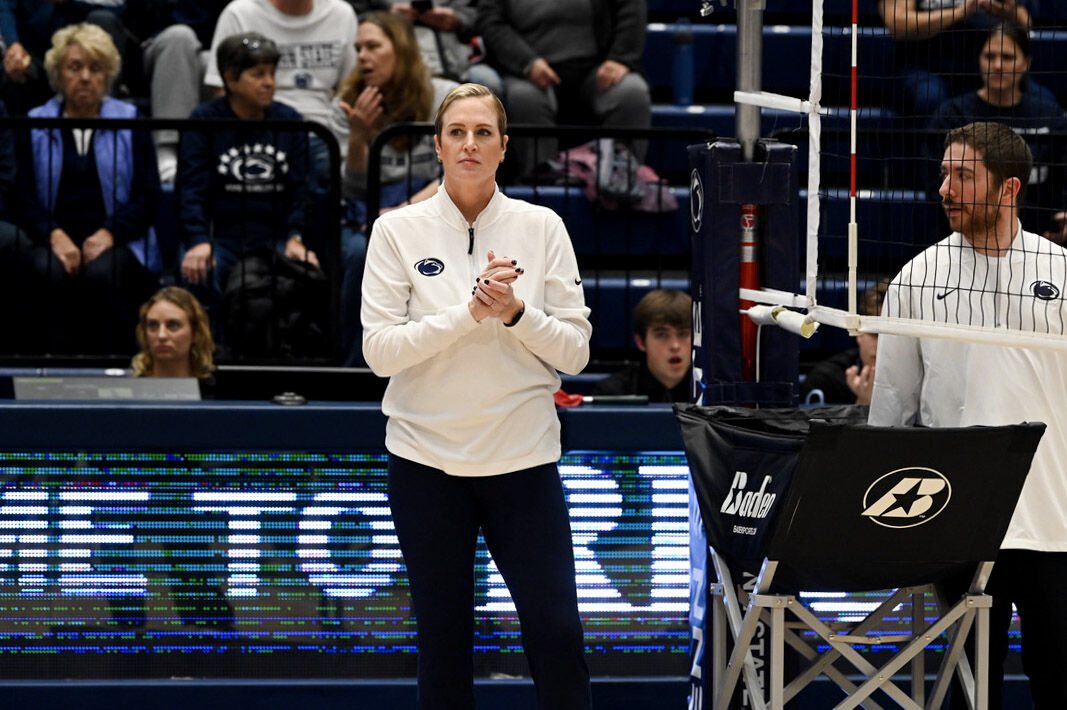
Penn State earned another commitment from the transfer portal.

Texas outside hitter Whitney Lauenstein announced her commitment to Penn State women’s volleyball out of the transfer portal on Wednesday. Lauenstein posted her decision to transfer to Happy Valley on her Instagram.
As a redshirt senior this past season, Lauenstein logged 33 kills, 11 digs, and 14 total blocks across 20 sets for the Longhorns.
Lauenstein began her NCAA journey with two seasons at Nebraska. As a sophomore, she led the Cornhuskers in total points, earning AVCA All-Region Team and Academic All-Big Ten honors.
After the 2022 season, the Waverly, Nebraska, native stepped away from the team to focus on her family. Lauenstein then transferred to Texas in December of 2023, where she spent the last two seasons.
Lauenstein now joins setter Alexis Stucky and middle blocker Ryla Jones as transfer players who have committed to the Nittany Lions this cycle.
Please choose an option below.
Sign up for our e-mail newsletter:
OR

Updated Dec. 24, 2025, 10:22 a.m. CT
- Marquette volleyball All-American Natalie Ring is transferring to Texas A&M for her final season.
- Ring, a third-team All-American, ranked 25th in the nation with 497 kills this past season.
- She is the second key player to leave Marquette, following freshman setter Isabela Haggard’s transfer to Baylor.
- Marquette has added Ball State’s Carson Tyler, the Mid-American Conference player of the year.
A Marquette volleyball All-American is joining the national champions.
The Golden Eagles’ Natalie Ring announced on social media on Dec. 23 that she will use her final season of NCAA eligibility at Texas A&M.
Ring, a former Madison Edgewood High School standout, was a third-team All-American this season. She ranked 25th in the nation in kills with 497. Ring has 754 kills in her career.
“We are excited to add Natalie to our Aggie family here in Aggieland,” Texas A&M coach Jamie Morrison said in a statement. “She brings a wealth of experience as a well-rounded outside hitter and is a relentless competitor who consistently raised her level against the best competition.”
Ring helped lead the Golden Eagles to the second round of the NCAA tournament under first-year coach Tom Mendoza. MU lost in five sets to host Louisville.
Texas A&M went on a magical run to the national title as a No. 3 seed, beating three of the tournament’s No. 1 seeds, culminating in a sweep of Kentucky in the title game.
Ring is the second key player to leave MU’s team. Freshman setter Isabela Haggard announced a transfer to Baylor after recording 997 assists and 257 digs.
Mendoza has added Ball State’s Carson Tyler, the Mid-American Conference player of the year who will have two seasons of eligibility. She registered 506 kills, which was 18th in the country.

Updated Dec. 24, 2025, 12:56 p.m. ET
Pitt volleyball’s fifth consecutive trip to the NCAA Tournament national semifinals ended with another heartbreak following an upset loss to the eventual champions, the Texas A&M Aggies. But the Panthers have reloaded for next season with one of the biggest names in the transfer portal.
The Panthers announced the signing of former Penn State setter Izzy Starck on Tuesday, pairing the 2024 AVCA National Freshman of the Year with Olivia Babcock, the two-time AVCA National Player of the Year.
“I’m so excited I cannot wait for next season to start,” Babcock wrote on Instagram. “WOOOOHHOOOO.”
Starck had a breakout freshman campaign at Penn State, recording 1,483 assists (10.89 per set), 342 digs, 112 kills and 99 blocks. The Big Ten Freshman of the Year led the Nittany Lions to a 35-2 overall record under head coach Katie Schumacher-Cawley and the program’s eighth national championship.
The 6-foot-1 setter appeared in four games for Penn State before stepping away for the season to prioritize her mental health. Starck said her hiatus wasn’t a “goodbye forever,” but her time at Penn State officially came to an end when she entered the transfer portal earlier this month.
“I am very excited to announce that I will be entering the transfer portal this December. I look forward to finding a new home where I can grow in the next chapter of my career,” said Starck, who has three years of eligibility remaining after redshirting her sophomore season. “I am beyond grateful for the endless support I’ve received over the past months.”
Starck joins a championship contender looking to finally get over the national semifinal hump. Pitt advanced to the 2025 NCAA volleyball Final Four for the fifth consecutive year, but the No. 1 seed Panthers were swept 29-27, 25-21, 25-20 by No. 3 seed Texas A&M. It marked the first time Pitt had been swept all year and the Panthers’ fifth straight time falling short of a national championship berth.
Pitt is in search of its first national championship appearance and first national title.

The USA TODAY app gets you to the heart of the news — fast. Download for award-winning coverage, crosswords, audio storytelling, the eNewspaper and more.
Dec. 24, 2025, 10:30 a.m. CT
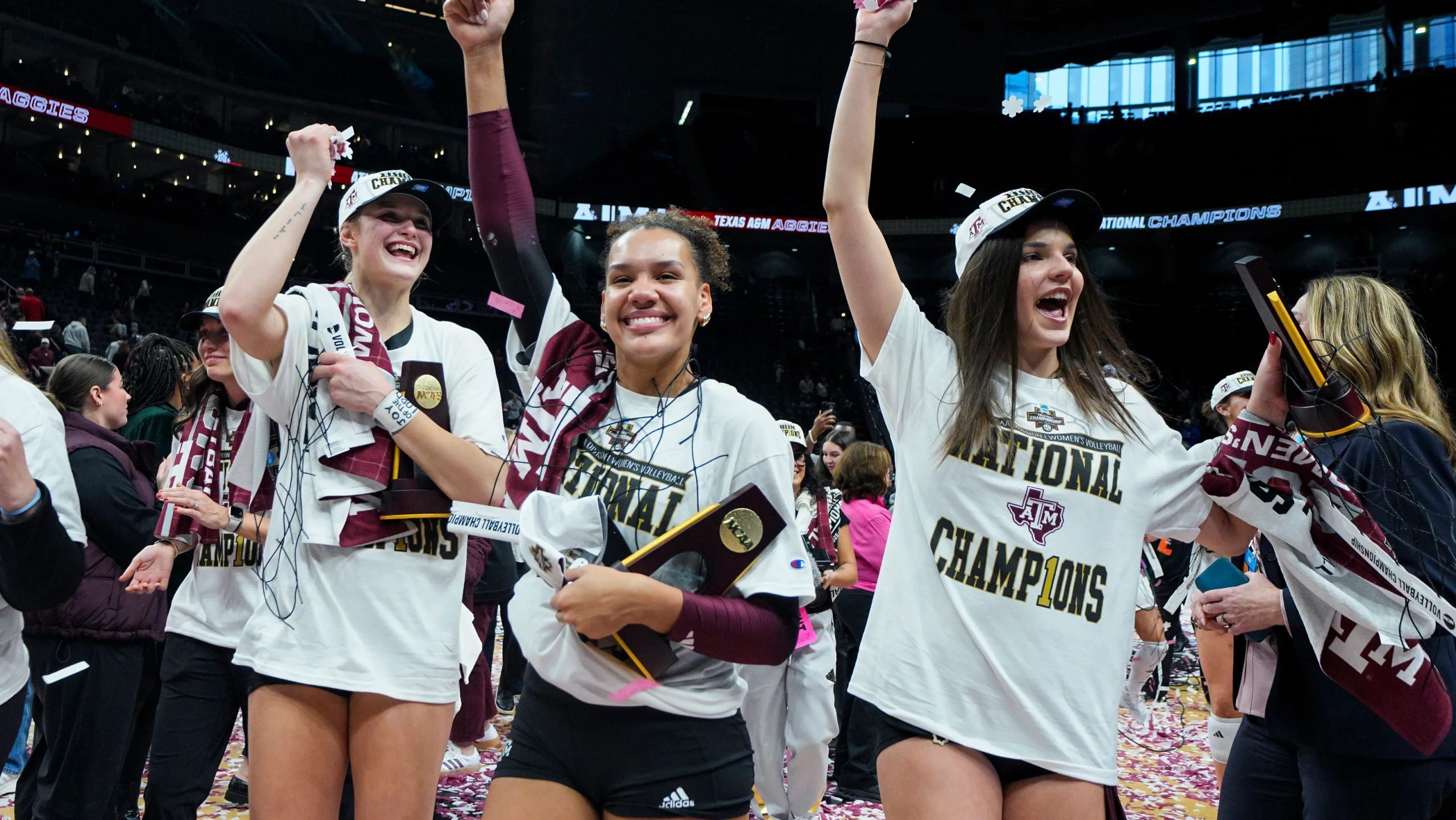
Texas A&M’s first-ever NCAA Championship win over the Kentucky Wildcats on Sunday was one of the most-watched title games in college volleyball history.
The 2025 campaign has featured many first-time achievements for Jamie Morrison’s squad in just his third year as head coach in Bryan-College Station, Texas, including a victory in the No. 2-most-watched NCAA title game ever. Texas A&M’s match against Kentucky attracted a peak of 1.7 million viewers, as part of the most-consumed NCAA Women’s Volleyball Tournament in the history of the sport.
The Aggies have much to be proud of following their historic run on the court this season. Still, the Maroon and White faithful have also played their own crucial roles in supporting the program as it ventured to some of the most hostile road environments in volleyball. One of those rowdy atmospheres occurred in the Lincoln Regional, where Morrison’s squad dethroned No. 1 seed Nebraska in an instant classic that advanced the Aggies to their first-ever appearance in the Final Four.
Texas A&M’s outstanding season, capped off by a sweep of the Wildcats in the NCAA Championship, played a massive role in etching their name into the viewership history books.
The wheels never stop turning, however. Morrison went straight to work and immediately made a splash in the transfer portal by landing commitments from Ohio State middle blocker Kaia Castle and Marquette outside hitter Natalie Ring. While it hasn’t even been one week since Texas A&M brought the national title to College Station, Morrison and company are already turning their heads to focus on building another stacked roster eager to make more history in 2026.
That approach to recruiting and rebuilding is a massive reason for the Aggies’ recent success on the court under Morrison’s watchful eye. The talented athletes like Logan Lednicky, Ifenna Cos-Okpalla and the NCAA MVP Kyndal Stowers have molded this winning culture, which the stars of the future in the Maroon and White will look to build upon and surpass moving forward.
Contact/Follow us @AggiesWire on X (formerly Twitter) and like our page on Facebook to follow ongoing coverage of Texas A&M news, notes and opinions. Follow Dylan on X: @dylanmflippo.
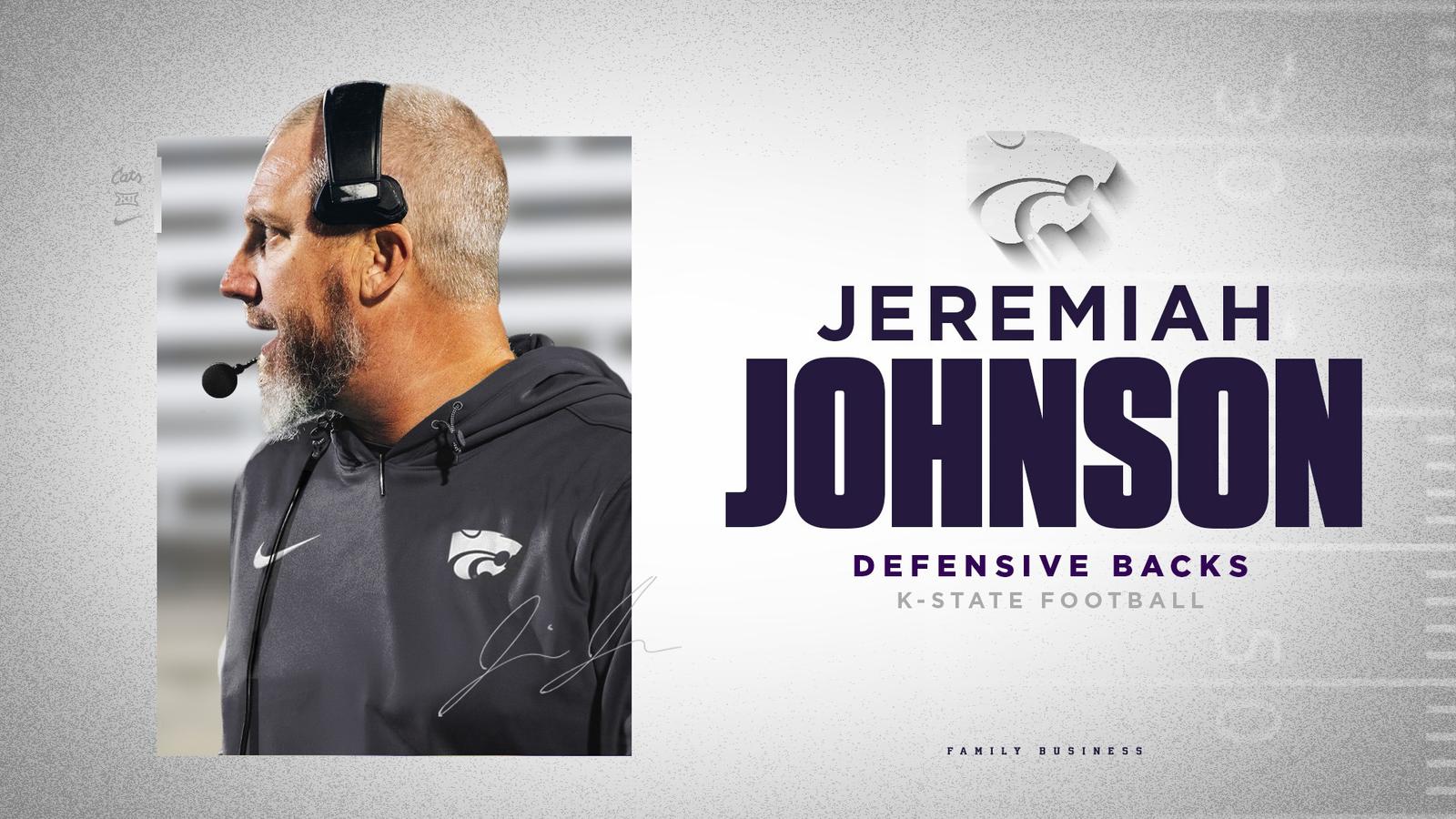
MANHATTAN, Kan. – A 24-year coaching veteran who has 13 years of coordinator experience, Jeremiah Johnson has been hired as a defensive backs coach at Kansas State, head coach Collin Klein announced Wednesday.
Johnson comes to Manhattan after serving one season as the defensive coordinator at Coastal Carolina in addition to being the Chanticleers’ interim head coach for the Independence Bowl against Louisiana Tech, which will be played next Tuesday.
“When Coach Klein called about joining his staff, it was a no brainer,” said Johnson, who worked with Klein during the 2016 season at Northern Iowa. “Having the opportunity to help him execute his vision for this program is exciting, and I am humbled and honored to work alongside one of the best coaches, leaders and humans in this business. It’s an added bonus that I am able to return to my home state. Nicki, Lane, Drew and I are so grateful to Collin and Shalin for bringing us on their journey and making us a part of their Wildcat Family. Team Johnson is fired up to get to Manhattan and get to work. Go Cats!”
Johnson has also served as a defensive coordinator at Northern Iowa (2014-2021, 2023), Kent State (2022) and Louisiana Tech (2024).
“Jeremiah is one of the best teachers of the game of football I have been around,” said Klein. “He is a relentless recruiter and a program builder. I am very excited to have him on our staff.”
This season, Johnson has helped Coastal advance to its sixth-straight bowl game as the Chanticleers rank 16th nationally and second in the Sun Belt in fourth down defense (40.0%) and 31st in fumble recoveries (8). He has helped Xamarion Gordon to a No. 2 national ranking in fumble recoveries (3) and a No. 5 ranking in the conference in interceptions (3). Myles Woods also had three interceptions on the year, while Johnson has coached Ezekiel Durham-Campbell to a No. 7 ranking in the conference in sacks (0.46 per game).
The Johnson-led Louisiana Tech defense in 2024 ranked 12th nationally in total defense, surrendering only 308.4 yards per game. It was a 98-spot improvement over where the Bulldogs finished in 2023, while his unit also produced a 91-place improvement in scoring defense (21.0 points per game) as they finished at No. 26. Additionally, Johnson led La Tech to an 88-place bump in rushing defense (135.5 yards per game) to rank 44th.
Outside of a one-year hiatus in which he served the 2022 season as Kent State’s defensive coordinator, Johnson coached for 16 seasons at Northern Iowa, spending the 2007 through 2021 seasons – in addition to the 2023 campaign – in Cedar Falls. While at UNI, Johnson coached Panther defenders to a combined 32 All-Missouri Valley Football Conference (MVFC) First Team honors, five MVFC Defensive Players of the Year, one Buck Buchanan Award winner, 15 Associated Press FCS All-America honors and seven American Football Coaches Association (AFCA) All-American accolades.
In 11 seasons as the UNI defensive coordinator, Johnson’s defenses ranked in the top 10 nationally in statistical categories 29 times, which included turnovers gained on six occasions (highest ranking of No. 2 in 2019 with 34), defensive touchdowns four times (highest ranking of No. 5 in 2016 and 2019 with 4) and scoring defense three times (best ranking of No. 6 at 15.3 points per game in the Spring of 2021). During his first run as defensive coordinator from 2014 through 2021, UNI ranked sixth in the FCS by allowing 19.9 points per game over a 99-game span. He was also named a finalist for the 2019 FootballScoop FCS Defensive Coordinator of the Year award.
The Panthers won four conference championships during Johnson’s time at UNI. Additionally, they made 10 FCS Playoff appearances and advanced past the first round in eight of 10 seasons, which included a semifinal showing in 2008 and quarterfinal appearances in 2015 and 2019.
Before being promoted to coordinator, Johnson coached the Northern Iowa defensive backs and served as the recruiting coordinator from 2009 through 2012. In 2007 and 2008, he was the video coordinator and assistant defensive backs coach.
Johnson went to UNI after working the 2003 through 2006 seasons at Loras College, serving on the same staff as former K-State head coach Chris Klieman. Johnson worked with the Duhawk defensive backs in 2003, 2004 and 2006, while he coached the wide receivers in 2005. Prior to his time at Loras, he was a graduate assistant and video coordinator at Wyoming in 2002.
A native of Scandia, Kansas, Johnson obtained his undergraduate degree in sports science from Kansas in 2000, while he earned a master’s degree in athletic administration from Loras in 2005.
Johnson and his five, Nicki, have a son, Lane, and a daughter, Drew.
THE JEREMIAH JOHNSON FILE
Hometown: Scandia, Kansas
College: Kansas – Bachelor’s degree in sports science (2000); Loras College – Master’s degree in athletic administration (2005)
Family: Wife: Nicki; Children: Lane, Drew
JEREMIAH JOHNSON’S COACHING CAREER
2002, Wyoming (Graduate Assistant/Video Coordinator)
2003-04, Loras College (Defensive Backs)
2005, Loras College (Wide Receivers)
2006, Loras College (Defensive Backs)
2007-08, Northern Iowa (Video Coordinator/Assistant Defensive Backs Coach)
2009-12, Northern Iowa (Defensive Backs/Recruiting Coordinator)
2013-16, Northern Iowa (Defensive Coordinator/Linebackers)
2017-21, Northern Iowa (Defensive Coordinator/Defensive Backs)
2022, Kent State (Defensive Coordinator)
2023, Northern Iowa (Defensive Coordinator)
2024, Louisiana Tech (Defensive Coordinator)
2025, Coastal Carolina (Defensive Coordinator/Interim Head Coach)
2026, K-State (Defensive Backs)
Johnson comes to Manhattan after serving one season as the defensive coordinator at Coastal Carolina in addition to being the Chanticleers’ interim head coach for the Independence Bowl against Louisiana Tech, which will be played next Tuesday.
“When Coach Klein called about joining his staff, it was a no brainer,” said Johnson, who worked with Klein during the 2016 season at Northern Iowa. “Having the opportunity to help him execute his vision for this program is exciting, and I am humbled and honored to work alongside one of the best coaches, leaders and humans in this business. It’s an added bonus that I am able to return to my home state. Nicki, Lane, Drew and I are so grateful to Collin and Shalin for bringing us on their journey and making us a part of their Wildcat Family. Team Johnson is fired up to get to Manhattan and get to work. Go Cats!”
Johnson has also served as a defensive coordinator at Northern Iowa (2014-2021, 2023), Kent State (2022) and Louisiana Tech (2024).
“Jeremiah is one of the best teachers of the game of football I have been around,” said Klein. “He is a relentless recruiter and a program builder. I am very excited to have him on our staff.”
This season, Johnson has helped Coastal advance to its sixth-straight bowl game as the Chanticleers rank 16th nationally and second in the Sun Belt in fourth down defense (40.0%) and 31st in fumble recoveries (8). He has helped Xamarion Gordon to a No. 2 national ranking in fumble recoveries (3) and a No. 5 ranking in the conference in interceptions (3). Myles Woods also had three interceptions on the year, while Johnson has coached Ezekiel Durham-Campbell to a No. 7 ranking in the conference in sacks (0.46 per game).
The Johnson-led Louisiana Tech defense in 2024 ranked 12th nationally in total defense, surrendering only 308.4 yards per game. It was a 98-spot improvement over where the Bulldogs finished in 2023, while his unit also produced a 91-place improvement in scoring defense (21.0 points per game) as they finished at No. 26. Additionally, Johnson led La Tech to an 88-place bump in rushing defense (135.5 yards per game) to rank 44th.
Outside of a one-year hiatus in which he served the 2022 season as Kent State’s defensive coordinator, Johnson coached for 16 seasons at Northern Iowa, spending the 2007 through 2021 seasons – in addition to the 2023 campaign – in Cedar Falls. While at UNI, Johnson coached Panther defenders to a combined 32 All-Missouri Valley Football Conference (MVFC) First Team honors, five MVFC Defensive Players of the Year, one Buck Buchanan Award winner, 15 Associated Press FCS All-America honors and seven American Football Coaches Association (AFCA) All-American accolades.
In 11 seasons as the UNI defensive coordinator, Johnson’s defenses ranked in the top 10 nationally in statistical categories 29 times, which included turnovers gained on six occasions (highest ranking of No. 2 in 2019 with 34), defensive touchdowns four times (highest ranking of No. 5 in 2016 and 2019 with 4) and scoring defense three times (best ranking of No. 6 at 15.3 points per game in the Spring of 2021). During his first run as defensive coordinator from 2014 through 2021, UNI ranked sixth in the FCS by allowing 19.9 points per game over a 99-game span. He was also named a finalist for the 2019 FootballScoop FCS Defensive Coordinator of the Year award.
The Panthers won four conference championships during Johnson’s time at UNI. Additionally, they made 10 FCS Playoff appearances and advanced past the first round in eight of 10 seasons, which included a semifinal showing in 2008 and quarterfinal appearances in 2015 and 2019.
Before being promoted to coordinator, Johnson coached the Northern Iowa defensive backs and served as the recruiting coordinator from 2009 through 2012. In 2007 and 2008, he was the video coordinator and assistant defensive backs coach.
Johnson went to UNI after working the 2003 through 2006 seasons at Loras College, serving on the same staff as former K-State head coach Chris Klieman. Johnson worked with the Duhawk defensive backs in 2003, 2004 and 2006, while he coached the wide receivers in 2005. Prior to his time at Loras, he was a graduate assistant and video coordinator at Wyoming in 2002.
A native of Scandia, Kansas, Johnson obtained his undergraduate degree in sports science from Kansas in 2000, while he earned a master’s degree in athletic administration from Loras in 2005.
Johnson and his five, Nicki, have a son, Lane, and a daughter, Drew.
THE JEREMIAH JOHNSON FILE
Hometown: Scandia, Kansas
College: Kansas – Bachelor’s degree in sports science (2000); Loras College – Master’s degree in athletic administration (2005)
Family: Wife: Nicki; Children: Lane, Drew
JEREMIAH JOHNSON’S COACHING CAREER
2002, Wyoming (Graduate Assistant/Video Coordinator)
2003-04, Loras College (Defensive Backs)
2005, Loras College (Wide Receivers)
2006, Loras College (Defensive Backs)
2007-08, Northern Iowa (Video Coordinator/Assistant Defensive Backs Coach)
2009-12, Northern Iowa (Defensive Backs/Recruiting Coordinator)
2013-16, Northern Iowa (Defensive Coordinator/Linebackers)
2017-21, Northern Iowa (Defensive Coordinator/Defensive Backs)
2022, Kent State (Defensive Coordinator)
2023, Northern Iowa (Defensive Coordinator)
2024, Louisiana Tech (Defensive Coordinator)
2025, Coastal Carolina (Defensive Coordinator/Interim Head Coach)
2026, K-State (Defensive Backs)

Motorsports2 hours ago
K1 Speed champions get new route into Porsche series

Motorsports2 hours ago
The Longest NASCAR Team Losing Streaks Entering the 2026 Season

Motorsports2 hours ago
Red Bull CEO certain Verstappen will end his F1 career with team

NIL3 hours ago
The College Football Playoff Is Mostly About Who Spent the Most

NIL4 hours ago
College Football Playoff team loses two-time All-American to transfer portal

Motorsports4 hours ago
IHRA has officially purchased Memphis International Raceway and Memphis Motorsports Park — The Capital Sports Report

Sports4 hours ago
Penn State women’s volleyball earns commitment from Texas transfer outside hitter Whitney Lauenstein | Penn State Volleyball News

NIL4 hours ago
Ole Miss Reportedly Offers Historic NIL Package to Bring Back Elite Offensive Weapon

Rec Sports5 hours ago
Moorhead Spuds win against Sartell Sabres – The Rink Live

NIL5 hours ago
Surprising List Of USC Trojans’ Biggest NIL Valuations

Rec Sports6 hours ago
Aleia Fenburg wins again as local wrestlers compete in Warrior Classic

Rec Sports6 hours ago
Child care funding methods ‘unsustainable’ for YSS | News, Sports, Jobs

NIL6 hours ago
College football program loses 22 players to transfer portal

Rec Sports6 hours ago
Valley Boys: The U12 team redefining the “win” for a 4-year-old fighter | News

Rec Sports7 hours ago
Monroe residents help throw a Christmas bash for children in Bridgeport’s East End

Rec Sports4 weeks ago
Fargo girl, 13, dies after collapsing during school basketball game – Grand Forks Herald

Sports4 weeks ago
Sycamores unveil 2026 track and field schedule

Sports4 weeks ago
Two Pro Volleyball Leagues Serve Up Plans for Minnesota Teams

Sports4 weeks ago
Utah State Announces 2025-26 Indoor Track & Field Schedule

Motorsports2 weeks ago
SoundGear Named Entitlement Sponsor of Spears CARS Tour Southwest Opener

Motorsports4 weeks ago
Jo Shimoda Undergoes Back Surgery

Motorsports4 weeks ago
Redemption Means First Pro Stock World Championship for Dallas Glenn

NIL4 weeks ago
Bowl Projections: ESPN predicts 12-team College Football Playoff bracket, full bowl slate after Week 14

Rec Sports3 weeks ago
Black Bear Revises Recording Policies After Rulebook Language Surfaces via Lever

Sports4 weeks ago
Texas volleyball vs Kentucky game score: Live SEC tournament updates

Rec Sports4 weeks ago
Robert “Bobby” Lewis Hardin, 56

Motorsports2 weeks ago
Donny Schatz finds new home for 2026, inks full-time deal with CJB Motorsports – InForum

Rec Sports4 weeks ago
How this startup (and a KC sports icon) turned young players into card-carrying legends overnight

Rec Sports3 weeks ago
How Donald Trump became FIFA’s ‘soccer president’ long before World Cup draw

NIL4 weeks ago
Indiana’s rapid ascent and its impact across college football






-
 Motorsports2 weeks ago
SoundGear Named Entitlement Sponsor of Spears CARS Tour Southwest Opener
-
 Motorsports2 weeks ago
Donny Schatz finds new home for 2026, inks full-time deal with CJB Motorsports – InForum
-
 Rec Sports3 weeks ago
How Donald Trump became FIFA’s ‘soccer president’ long before World Cup draw
-
 Rec Sports2 weeks ago
David Blitzer, Harris Blitzer Sports & Entertainment
-
 Motorsports3 weeks ago
JR Motorsports Confirms Death Of NASCAR Veteran Michael Annett At Age 39
-
Sports3 weeks ago
Elliot and Thuotte Highlight Men’s Indoor Track and Field Season Opener
-
Sports3 weeks ago
West Fargo volleyball coach Kelsey Titus resigns after four seasons – InForum
-
 Motorsports2 weeks ago
Rick Ware Racing switching to Chevrolet for 2026
-

 NIL2 weeks ago
DeSantis Talks College Football, Calls for Reforms to NIL and Transfer Portal · The Floridian
-
 Sports2 weeks ago
#11 Volleyball Practices, Then Meets Media Prior to #2 Kentucky Match