
NIL
Cowgirl Softball heads to Lawrence for final Big 12 road series

The Basics
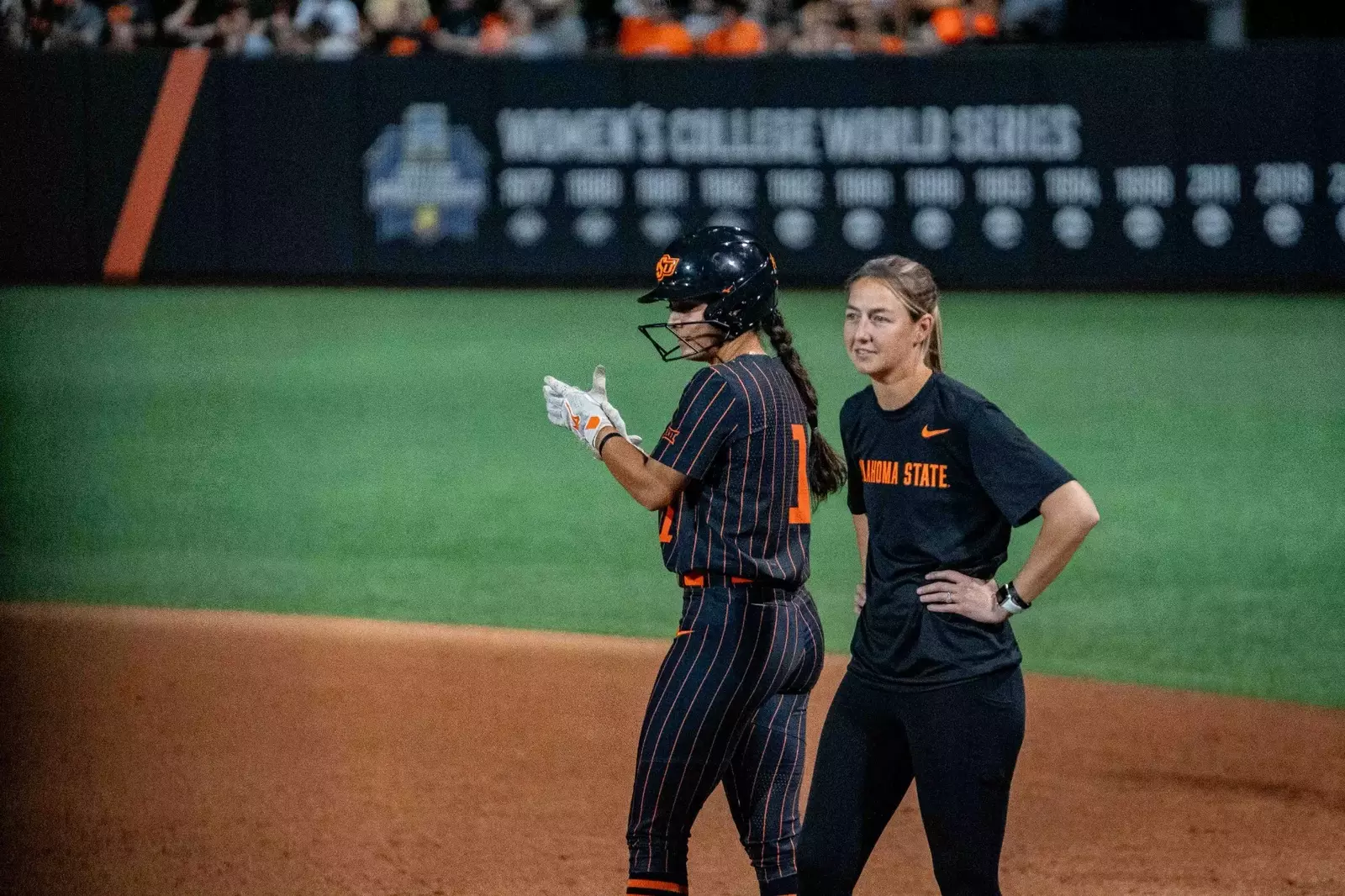
The No. 23/23 Oklahoma State softball team (27-16 overall, 8-8 Big 12) continues its 50th anniversary season with a trip to Kansas (20-22 overall, 5-13 Big 12) for the penultimate Big 12 series of the season. Friday’s series opener in Lawrence is set for 5 p.m. CT, followed by Saturday’s contest at 2 p.m. The series finale is slated for a noon first pitch on Sunday.
Watch, Listen, Follow
All of OSU’s games this week can be streamed on ESPN+.
All of OSU’s games this week can be heard live on KGFY-FM 105.5 and stillwaterradio.net and streamed on the Varsity Network app with Ryan Breeden on the call.
Live stats for all of OSU’s games are available online at okstate.statbroadcast.com.
Fans can follow @CowgirlSB on X all season for regular coverage, including a live scoreboard.
In The Rankings
Oklahoma State is No. 23 in the USA Today/NFCA Coaches poll and No. 23 in the ESPN.com/USA Softball poll. The Cowgirls are unranked in the D1Softball and Softball America polls.
In the NCAA Ratings Percentage Index, which looks at wins and strength of schedule, Oklahoma State is No. 18 and Kansas is No. 65.
Oklahoma State from a Distance
Sitting at 27-16 overall and 8-8 in Big 12 play entering this week, the Oklahoma State softball team is in search of momentum as it heads into the final weeks of the regular season.
The Cowgirls faced the nation’s toughest schedule for the first few weeks and came out of it with wins over No. 9 Florida State, No. 23 Kentucky, No. 5 Texas A&M and No. 12 Alabama, among others. An 11-game win streak highlighted by wins over No. 18 Nebraska and Missouri brought the Cowgirls’ record to 15-4 in early March. Since then, however, consistency has been elusive, and the Pokes have gone 10-10 in their last 20 contests.
Washington transfer Ruby Meylan, an All-American with the Huskies in 2023, has been outstanding in the circle and ranks in the top 20 nationally in wins, strikeouts, earned run average, shutouts and innings pitched. She is the Big 12 leader with five shutouts and 157.1 innings of work and ranks third with 17 wins. With 185 strikeouts entering this week, she’s already etched her name into OSU’s single-season top 25 and needs nine more to move into the top 20. Her 8.2 strikeouts per seven innings rank 13th on the Oklahoma State single-season chart.
Offensively, seven Cowgirl regulars bat .300 or better, with Tia Warsop leading the way at .374 with 18 stolen bases. Cal State Fullerton transfer Megan Delgadillo bats .341 and leads the Big 12 with 25 stolen bases and has already cracked into OSU’s single-season top 10. Delgadillo is the NCAA Division I active career leader in games played, hits, at bats and stolen bases. NC State transfer Amanda Hasler is OSU’s top power bat with 12 home runs and a .722 slugging percentage. Currently riding a 19-game on-base streak, Rosie Davis has emerged as one of the Big 12’s most complete players, as she bats .366 with seven home runs, a team-best 44 runs batted in and a .610 slugging percentage. Veterans Karli Godwin, Tallen Edwards and Megan Bloodworth have also been productive.
Notable Streaks and Trends
• OSU has 71 stolen bases this year, which already eclipses last season’s total of 45 and ranks No. 6 on the program’s single-season chart.
• OSU is outscoring its opposition, 71-21, from the sixth inning on.
• OSU has won 10 games in which it trailed by two runs or more.
• OSU is 18-1 when scoring more than four runs.
• OSU is 17-5 when scoring first.
• OSU is 26-6 when holding opponents to five runs or less.
• OSU has been ranked in the NFCA poll in each of its last 376 games, dating back to the start of the 2019 season.
• Dating to last season, Karli Godwin has started 104 consecutive games, the longest streak on the team.
Series History
OSU holds a 91-53 series advantage over Kansas that includes a 31-16 mark in Lawrence. Since Coach Gajewski’s arrival in 2016, the Cowgirls are 23-2 against the Jayhawks.

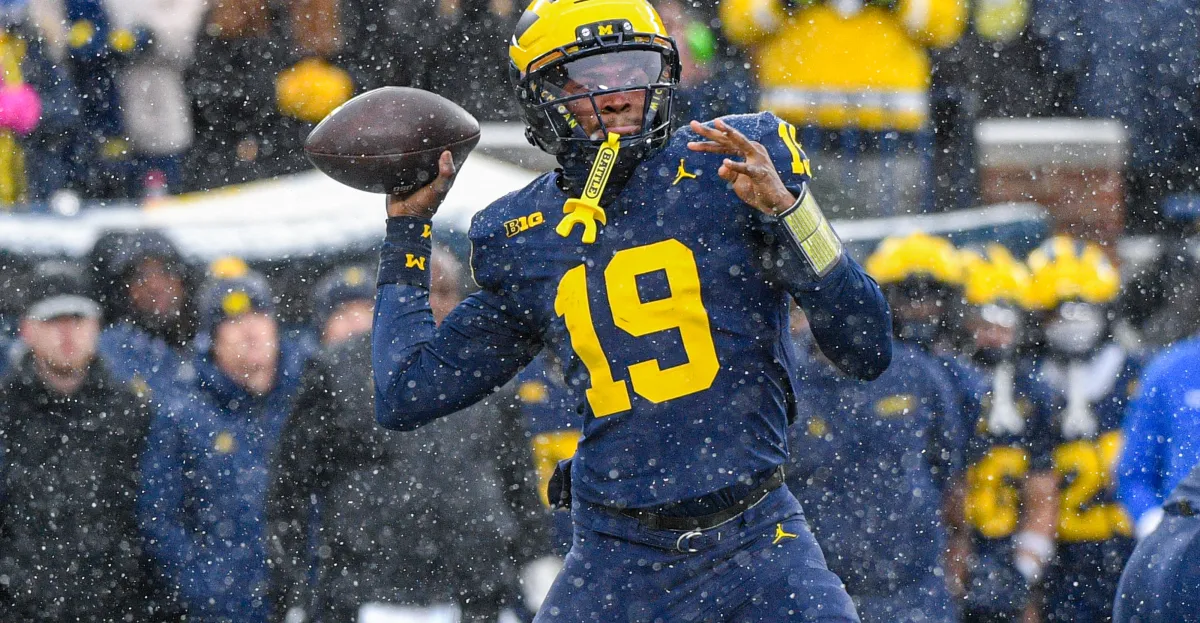
The state of the entire Michigan football program is in flux at the moment as it looks find a replacement for Sherrone Moore, who was fired on Wednesday afternoon after the university found him culpable in an inappropriate relationship with a staffer.
While many might think the Wolverines need to rush to find a new leader, it will be important for the athletic department to do its due diligence and make sure they have the right man for the job. The next head coach will be vital for retaining several key players on the roster, including quarterback Bryce Underwood.
According to a report from On3’s Pete Nakos ($) on Thursday, Underwood’s NIL contract he signed last year doesn’t include a buyout. That could drastically lower the financial commitment any school would need to make to pry the former five-star out of Ann Arbor.
Additionally, Nakos made it clear that Underwood and those around him will be keeping a close eye on the coaching search as they determine his next steps.
“(Sherrone) Moore’s firing and who the next (head coach) at Michigan will be will be critical to determining Bryce Underwood’s future in Ann Arbor, sources emphasized to On3,” Nakos wrote.
Of course, Underwood was committed to LSU for nearly a year before flipping to Michigan last November. The Tigers and new head coach Lane Kiffin would likely love to bring Underwood into the fold if they could, while countless other schools would certainly be interested in him as well if he opts to enter the portal.
One can’t expect the athletic department to fully cater specifically to what Underwood is looking for in a head coach, but it seems like this will be an important thing to consider.
Furthermore, whoever ends up taking the reigns of the program will have to do their part to make sure the Wolverines don’t lose the handful of young contributors from the 2025. They will also have to prevent any further attrition from the 2026 recruiting class after Michigan signee Matt Ludwig was granted release from his letter of intent on Thursday.
Changes and attrition are fast approaching for the program. Let’s see just how drastic they are in the days and weeks ahead.
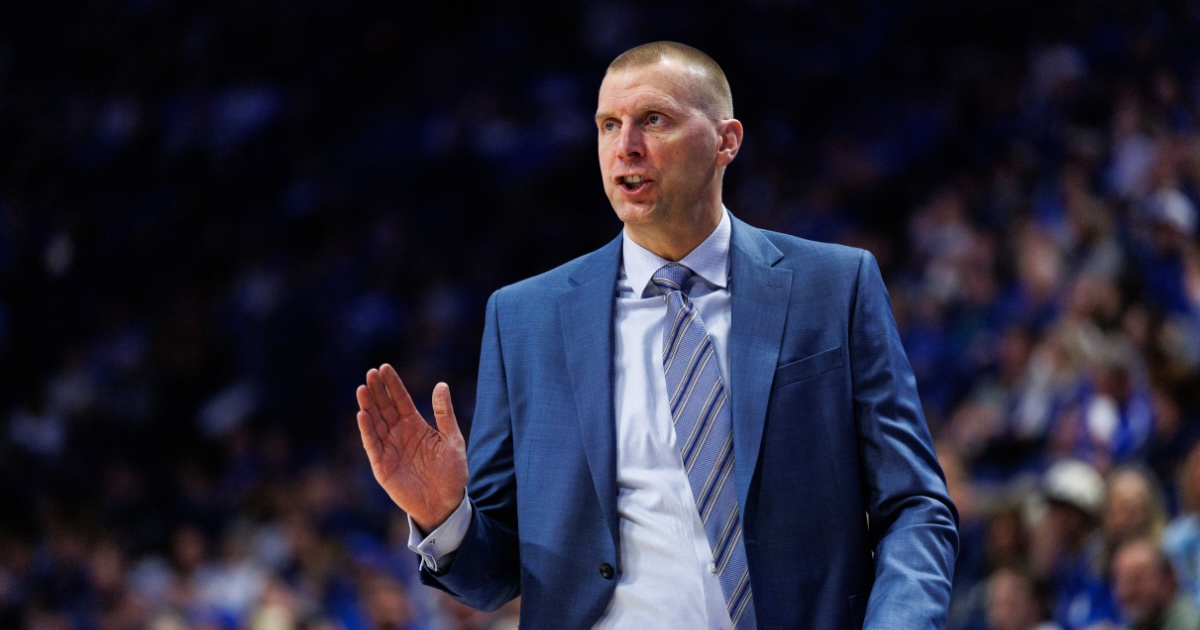
The relationship between Kentucky and its multimedia rights partner, JMI, has been all the talk in recent days. Two days after KSR’s story on Wednesday about Kentucky’s recruiting efforts, which touched on the topic, Mark Pope addressed the conversation for himself.
During Friday’s press conference, Pope was asked about Kentucky’s need for a general manager to be in charge of NIL and other matters. While answering that question, Pope went on to address the recent talk circulating about JMI, Kentucky’s media partner’s involvement with NIL, giving a lot of credit to Kentucky athletic director Mitch Barnhart.
Pope Says Kentucky is in ‘Such a Good Spot Right Now’
Mark Pope went into some detail on the JMI partnership and Mitch Barnhart’s involvement. He was entirely positive about the partnership.
“We’re in such a good spot right now, in the sense of, I’m telling you, and it’s like, this would probably be when someone needs to do like a super in depth New Yorker magazine 30-page article on Mitch, but his leadership in this space has been incredible, and I get to see it firsthand, where I have ADs from other major universities reach out and try to figure out, ‘How are you doing this?’” Pope said. “And how did you move ahead this way and this partnership with JMI? Paul [Archey] is incredible, and Kim [Shelton], who we work with day to day, is incredible.”
Pope further applauded his team’s involvement with JMI. He called his team “incredible in the dynamic times.”
“And when we get to write the book, there’s been a lot of late nights, tight deadlines, trying to get to winning spots and and so we have an incredible team in the dynamic times finding the landing on exactly the right spot is ultimately, that’s my job to get some space but the support that we’re getting is ridiculous, from managing the administration from JMI,” he said.
The Recruiting Relationship Between Kentucky and JMI
Kentucky is yet to land a commit in the 2026 class. KSR’s Jacob Polacheck and Jack Pilgrim shared the role of JMI in the recruiting struggles, among other topics, in a feature story on Wednesday night.
For context, the University of Kentucky and JMI reached an agreement in August to extend their partnership through 2040 for a multimedia rights agreement valued at $465 million. That agreement features the creation of JMI’s BBNIL Suite that serves as Kentucky’s in-house NIL collective. Through it, athletes can broker deals with UK’s 200+ official partners, or try to find their own third-party deals; however, Mitch Barnhart himself admitted the latter may be trickier than the former, as the university strives to protect the brand.
KSR reported on Wednesday that JMI, in conjunction with the UK basketball staff, is requiring prospective student-athletes to sign away NIL rights that would normally be untouched at any other school. A highly structured brand partnership agreement is something uncommon at other schools, but it is something Kentucky has pursued in accordance with JMI, making this arrangement unique to the current landscape of college basketball recruiting.
“I will say that Kentucky is the only school I’ve dealt with that even has anything remotely like this in their contracts,” one anonymous source said.
Subscribe to the KSR YouTube Channel for press conferences, interviews, original shows, fan features, and exclusive content.
NIL
Here’s how much money Heisman Trophy finalists Mendoza, Pavia and Love made from NIL deals this season
By Weston Blasi
The Heisman Trophy award may not come with a cash prize, but these finalists have already scored millions through their name, image and likeness deals
Fernando Mendoza of the Indiana Hoosiers celebrates after defeating the Ohio State Buckeyes in the Big Ten Championship Game on Dec. 6.
It pays to be the Heisman.
The final voting for the 2025 Heisman Trophy will take place on Saturday, as the top players in college football compete for the game’s highest individual honor.
The Heisman Trophy, given to the most outstanding player in college football, doesn’t come with any cash prizes – just prestige. But while the Heisman finalists may not be paid for winning, they’re still among the highest earners in college sports when it comes to name, image and likeness (NIL) deals.
College athletes have been allowed to leverage their influence and make money from NIL deals since 2021, after decades of having to avoid any form of payment that could compromise their amateur status and NCAA eligibility. Now, many of the top student-athletes earn millions of dollars each year from NIL arrangements.
The four finalists for the Heisman this year are Fernando Mendoza, Diego Pavia, Julian Sayin and Jeremiyah Love.
Here’s at look at what the 2025 Heisman finalists are estimated to have made from NIL deals this year, according to On3’s deal tracker.
Fernando Mendoza, QB, $2.6 million
Fernando Mendoza of the Indiana Hoosiers runs the ball in a game against the Oregon Ducks.
Indiana University quarterback Fernando Mendoza was not a highly rated Heisman contender headed into the season – but Mendoza had a great 2025 campaign, leading Indiana to its first Big Ten conference title since 1967, a 13-0 record and the No. 1 seed in the College Football Playoff.
Mendoza won a separate Associated Press player of the year award, and is the betting favorite to win Heisman, according to DraftKings (DKNG) odds.
Mendoza has an NIL deal with sports-apparel giant Adidas (XE:ADS) (ADDYY).
“At the beginning of the year, I saw the list of the top 10 Heisman contenders, and evidently [my name] wasn’t there,” he said about the award.
But that didn’t discourage Mendoza. “I was like, ‘Wow, I want to make a goal for myself.’ I prayed about, like, if I could make it to the ceremony, how cool that would be,” he said. “Now that it’s come to fruition, I’m able to share that moment with people who appreciate it. It’s such a cool moment.”
Related: A $100 million NFL contract isn’t enough money to last a lifetime, says former football star Odell Beckham Jr.
Diego Pavia, QB, $2.5 million
Quarterback Diego Pavia on the Vanderbilt Commodores celebrates after defeating the Auburn Tigers.
Vanderbilt University quarterback Diego Pavia threw 27 touchdowns this season, leading his team to the eighth-best scoring offense in the country.
Pavia, who has the second-best odds to win the Heisman, behind Mendoza, is expected to declare for April’s NFL draft.
Pavia has NIL deals with AutoPro, Raising Cane’s and the NIL Store.
He also recently joked on “The Pivot Podcast” that he would donate his 2025 NIL money if one of the lower-ranked teams like Tulane or James Madison won the College Football Playoff this year.
Julian Sayin, QB, $2.5 million
Quarterback Julian Sayin of the Ohio State Buckeyes enters Ohio Stadium prior to a game against the Minnesota Golden Gophers.
Ohio State University quarterback Julian Saying led his team to yet another College Football Playoff bid this year, in addition to his Heisman-hopeful season. It’s the fifth time in the last eight years that an Ohio State signal-caller has been a Heisman finalist.
Sayin threw 31 touchdown passes this season, which was third in the nation. He has NIL deals with The Foundation (Ohio State’s collective), Panini and EA Sports (EA).
Related: Why Michigan’s Sherrone Moore probably won’t get paid the millions left on his contract – unlike other recently fired college football coaches
Jeremiyah Love, RB, $1.6 million
Jeremiyah Love of the Notre Dame Fighting Irish celebrates after a touchdown.
University of Notre Dame running back Jeremiyah Love is the only non-quarterback among this year’s Hesiman finalists.
Love was fourth in the nation with 1,372 rushing yards, and led Notre Dame to a 10-2 record. Unfortunately for the Fighting Irish, they narrowly missed out on the College Football Playoff.
Love has NIL deals with Samsung (KR:005930), Celsius (CELH) and New Balance.
The 2025 Heisman winner will be announced at 7 p.m. Eastern time on Saturday, Dec. 13, on ABC.
From the archives: The number of millionaire college athletes has tripled
-Weston Blasi
This content was created by MarketWatch, which is operated by Dow Jones & Co. MarketWatch is published independently from Dow Jones Newswires and The Wall Street Journal.
(END) Dow Jones Newswires
12-12-25 1629ET
Copyright (c) 2025 Dow Jones & Company, Inc.
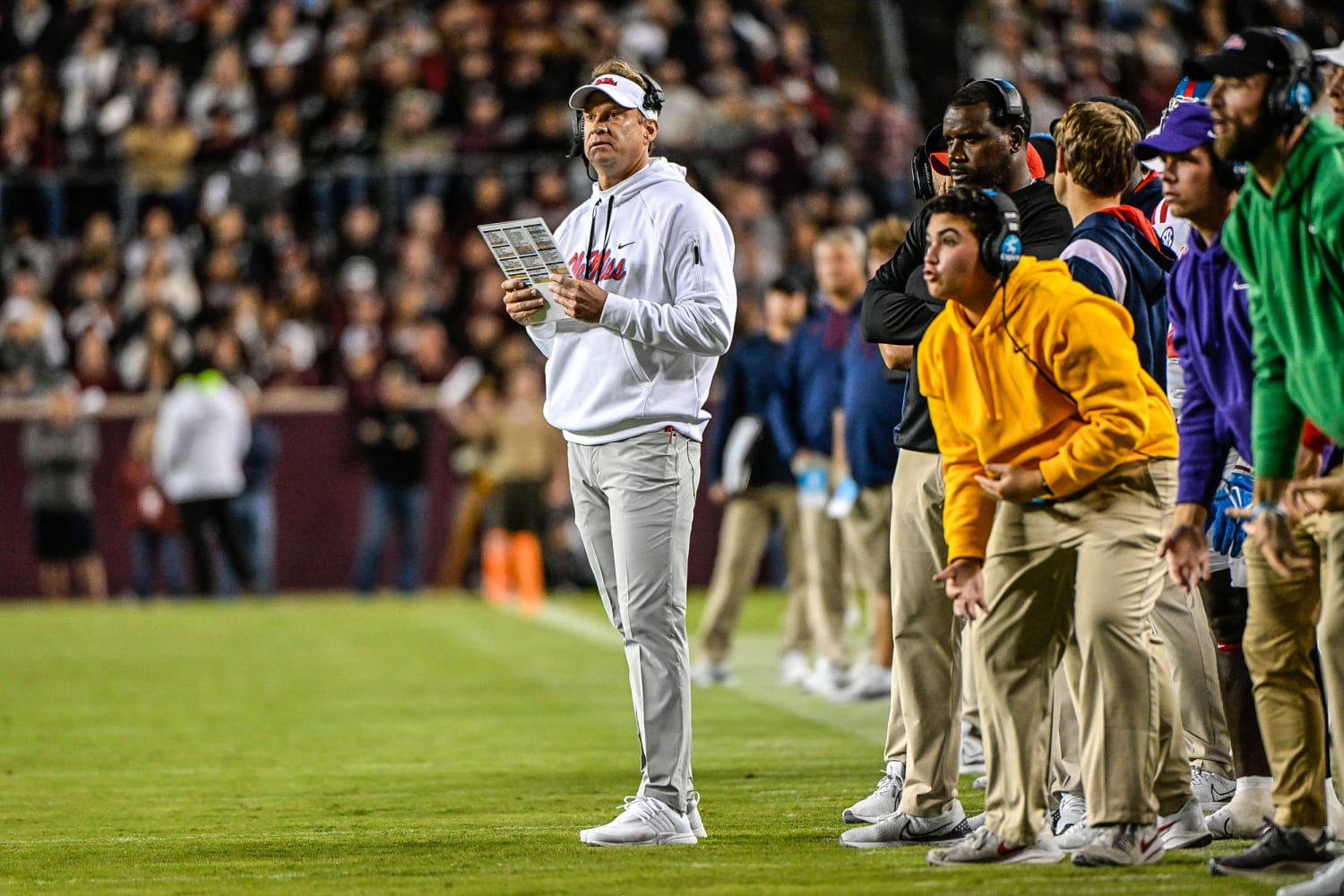
Lane Kiffin’s betrayal of the Ole Miss faithful to sign as the next head football coach at rival Louisiana State University is more significant than just the $91 million price tag. This situation exemplifies the current state of college sports in the American South, one that is dominated by the professionalization of coaches, athletes, and what it means for the states in which these colleges reside.
A coach earning $91 million over seven years, while the university also has to pay $54 million to buy out former coach Brian Kelly’s contract in October, is problematic for the flagship university of a state that ranks 50th in crime and economy, 48th in infrastructure, and 46th in education nationally. Kiffin’s contract and the surrounding controversies — his choice to leave the University of Mississippi before the upcoming College Football Playoff and his NIL and financial fund criticism of the university— expose the contradictions of football in the American South. It may be a deeply flawed system that doesn’t financially help any of the state’s residents other than the select few superstar players and coaches, but LSU and SEC football provide identity and joy for deep Southerners that external circumstances may not provide.
Kiffin’s contract at LSU is the second-highest annual salary for any college football coach, only marginally behind the University of Georgia’s head coach Kirby Smart. His previous contract still netted him $9 million annually, which left a foul taste in the mouths of Ole Miss fans when Kiffin decided not to coach Ole Miss for their run during the College Football Playoff. This behavior by Kiffin is irregular; both Tulane’s Jon Sumrall and James Madison’s Bob Chesney have accepted other head football coaching positions and are choosing to continue to coach their teams through their playoff runs. The increased professionalization of college football is the direct cause of this lack of loyalty; priorities are now more than ever focused on what is next and how much that contract pays.
With Mississippi and Louisiana constantly being ranked at the bottom nationally in income, education, infrastructure, healthcare, and overall opportunity, an interesting question arises: Should these publicly funded universities be spending tens of millions of dollars on football salaries? To understand this question, it is important to note that the money to pay these coaches comes directly from the respective universities’ athletics departments. The funding for these departments comes primarily through TV network deals, ticket sales, and wealthy alumni boosters who directly donate money to the programs. So, this situation is not directly stealing taxpayer dollars like estranged Green Bay Packers legend Brett Favre, who was involved in the welfare scandal in Mississippi that misallocated money toward a volleyball facility at Southern Mississippi University.
However, even if the money is not coming directly from the taxpayers, the university still has discretion over how to use the revenue brought in. Because of that, it is still valid to criticize how that money is being spent. It’s impossible to ignore the optics: Ole Miss and LSU are each ranked around the 92nd-best public colleges in the U.S., yet they choose to spend tens of millions of dollars on football coaches rather than to put that money back into their faculty and research, improvements that would increase the quality of education and expand opportunities for their residents.
At first glance, it seems obvious why a resident of Louisiana or Mississippi might not support such a high salary for a public employee when they are statistically more likely to be struggling financially themselves. Yet LSU fans were ecstatic when Kiffin was hired. An LSU fan site, Death Valley Voice, recently published an article titled “LSU fans are fired up for the future of this position group under Lane Kiffin.”
The truth is that this reaction stems from the unique role these SEC schools play in the Deep South. Outside of New Orleans, which has the Pelicans and the Saints, these states cannot financially support professional sports teams. As a result, SEC schools like the University of Alabama, the University of Arkansas, Auburn University, LSU, and Ole Miss are the de facto professional sports teams. They are often the only large-scale, shared cultural institutions for people in these places, so their success means far more to Southerners than it might to people in other parts of the country. This is also why the feeling of abandonment and disloyalty surrounding Kiffin’s departure was so exacerbated.
In today’s college sports environment, the “Power Four” designation is no longer accurate, because there is now a tier above the “Power Four.” Within the ACC, SEC, Big Ten, and Big 12, there are true “blue bloods” backed by the largest NIL funds. The NIL college economy has changed the game entirely. The ever-delayed and controversial SCORE Congressional Act and other legislative efforts are attempting to put guardrails on NIL, but for now, and the foreseeable future, it is the unregulated wild west of the sports world. Kiffin just happens to be someone who is taking advantage of that system.
When looking at the bigger picture, it is truly absurd how much college football coaches are making, especially in states with such major socioeconomic struggles. The truth is that, for many people in Mississippi and Louisiana, college football is one of the few reliable and communal sources of pride and entertainment. SEC football is the one of the biggest sources of Southern identity, and it is exactly why the Kiffin story is compelling. It shows how much people care about football success, but it also shows the inflection point that college football has reached, a point where the financial logic is drifting ever further from the communities that love it.

 Listen to this article
A few years ago, I wrote a piece about Name, Image, and Likeness earnings (NIL earnings) which had just become a thing for college athletes. It was a very interesting topic of conversation as the first of my kids was preparing to head off to college. Now a few years later, I have more than one in college and the financial implications for college athletes in major NCAA Division I sports have changed significantly again.
Earlier this year, the House vs NCAA settlement became reality. This decision made it possible for college athletes to receive pay directly from the university at which they attend and compete. The University of Oklahoma reported that they would share the maximum amount allowed to student athletes who play football, men’s and women’s basketball, women’s gymnastics, softball and baseball.
What these students also need to understand and plan for, along with their parents or guardians, are the tax obligations that will also be a part of that potential financial windfall for these athletes. NIL earnings are subject to self-employment tax and income tax. Since NIL payments are not directly from the universities, the student athlete needs to expect to save an appropriate amount to cover the tax for those earnings. These earnings could be from things like social media, advertising, even goods in exchange for the NIL deal. Goods could be a vehicle, clothing, or ownership in a business, and all these things could be considered taxable income.
With the House vs NCAA settlement, schools are now allowed to share revenue they receive with their student athletes. Currently, the environment indicates these payments will be reported as non-employee compensation, which would subject a student athlete to self-employment and income tax on those earnings. Putting the full tax burden of the income on the student.
This begs the question, what potential deductions could a student use to reduce their tax burden from this income. Do they have agent fees, advisor fees, are they creating their own brand that contracts with the school for their services and if so, are they doing this through an advanced tax structure?
These aren’t the only questions the changing environment has created. As these students are now being paid directly by the university they attend to play a sport, there is much talk about whether student athletes should be considered employees of the university they attend.
There are many questions that still need to be answered to determine if they should be, and if they are what are the questions that should be asked next. Will they organize like professional athletes do in their respective sports? Will schools have to provide benefits? Will NCAA athletes be pushed to sign multi-year contracts with a school which could slow down the transfer portal?
It isn’t very often we get to see new business models built in today’s day and age, but college athletics is in the process of trying to figure it out and it will be a very interesting journey.
Josh Mullins, CPA, is a partner at Arledge, the largest locally owned accounting firm in the Oklahoma City metropolitan area.

On December 9, 2025, the University of Utah, in what appears to be the first such deal of its kind, announced plans to partner with Otro Capital in a private equity arrangement. The deal is projected to generate approximately $500 million in capital for the university’s athletic programs.[i] Otro Capital is a New York-based firm that invests in sports teams and leagues.[ii]
Under NCAA rules, the university must retain decision-making authority over Utah Brands & Entertainment LLC, the entity created to participate in the partnership with Otro Capital. Utah’s president, Taylor Randall, and athletic director, Mark Harlan, will continue to make major decisions impacting the athletic department at Utah. Meanwhile, Otro Capital will receive a percentage of Utah Brands & Entertainment’s revenues while serving as a strategic partner for the university. The university also retains the right to purchase Otro Capital’s ownership stake in Utah Brands & Entertainment at any time. Certain athletic department responsibilities will be managed by the newly formed company.
Reports this fall indicated that the Big Ten has been exploring a $2 billion private equity deal for the power conference that would include an extension on the conference’s grant of rights.[iii] The structure reportedly under consideration for the Big Ten resembles what has been outlined for Utah: the university (or conference) would continue to oversee core personnel and operational decisions, while the private equity-backed entity would focus on business development and share in revenues.
At Utah, Utah Brands & Entertainment is expected to oversee functions such as corporate sponsorships, ticketing, trademarks, and licensing. Randall and Harlan were adamant that the university will retain control over all administrative matters for its athletic departments. A majority of the new entity’s board members will be appointed by the university, and the athletic director will serve as the chair of the board.
Although private equity has been circling college sports for months, Utah is the first university or conference to finalize such a deal.[iv] While several other universities already operate private, revenue-generating entities outside their athletic departments, those entities do not involve private equity partnerships.[v]
[i] https://www.cbssports.com/college-football/news/utah-college-athetics-football-basketball-private-equity/
[ii] https://otrocapital.com/portfolio/
[iii] https://bleacherreport.com/articles/25255101-big-ten-reportedly-discussing-2b-private-capital-deal-nothing-imminenthing ‘Imminent’
[iv] https://www.espn.com/college-football/story/_/id/47263084/utah-aims-boost-athletic-revenue-private-equity-deal
[v] https://www.sportsbusinessjournal.com/Articles/2025/12/09/report-univ-of-utah-nears-college-sports-first-private-equity-deal/

What You Don’t Know About the Two People Who Own NASCAR

Winston & Strawn Secures Landmark Settlement for 23XI Racing and Front Row Motorsports in NASCAR Antitrust Trial

‘U’ Falls in Sweet 16 to No. 4 Pittsburgh

‘Golden’ Tiara Bolden forges her own path to stardom at Oregon State

Next HC will be ‘critical’ for QB Bryce Underwood’s future at Michigan Football

Spire Motorsports names new NASCAR Cup competition director

Records Fall For Women’s Basketball In Kids Day Romp Over Coastal Georgia, 136-74

Nebraska Volleyball keeping practices light-hearted as they prep for NCAA Regional

Petaluma coach finds swastikas — police suspend case

Sander Racing Wheels Named Official Wheel Partner of Elite Motorsports

NHL Power Players youth advisory board announced for 7th season
Louisville vs Texas A&M channel, TV, UofL volleyball game time today

Long Beach Boys’ Basketball – The562.org

Spire Motorsports sets Crew Chief Lineup as NASCAR offseason news accelerates

City Agreement Ensures Oso Pony League Can Continue While Expanding Public Access to Sports Fields

First Tee Winter Registration is open

Fargo girl, 13, dies after collapsing during school basketball game – Grand Forks Herald

CPG Brands Like Allegra Are Betting on F1 for the First Time

Volleyball Recaps – November 18

F1 Las Vegas: Verstappen win, Norris and Piastri DQ tighten 2025 title fight

Two Pro Volleyball Leagues Serve Up Plans for Minnesota Teams

Utah State Announces 2025-26 Indoor Track & Field Schedule

Sycamores unveil 2026 track and field schedule

Redemption Means First Pro Stock World Championship for Dallas Glenn

Jo Shimoda Undergoes Back Surgery

Texas volleyball vs Kentucky game score: Live SEC tournament updates

Bowl Projections: ESPN predicts 12-team College Football Playoff bracket, full bowl slate after Week 14

How this startup (and a KC sports icon) turned young players into card-carrying legends overnight

Robert “Bobby” Lewis Hardin, 56

Indiana’s rapid ascent and its impact across college football

 NBA Legend Michael Jordan to Join NBC Sports as Special Contributor
 Why a rising mid-major power with an NCAA Tournament team opted out of revenue-sharing — and advertised it
 Falcons mailbag
 Portal Update – Basketball and Gymnastics Take Hits
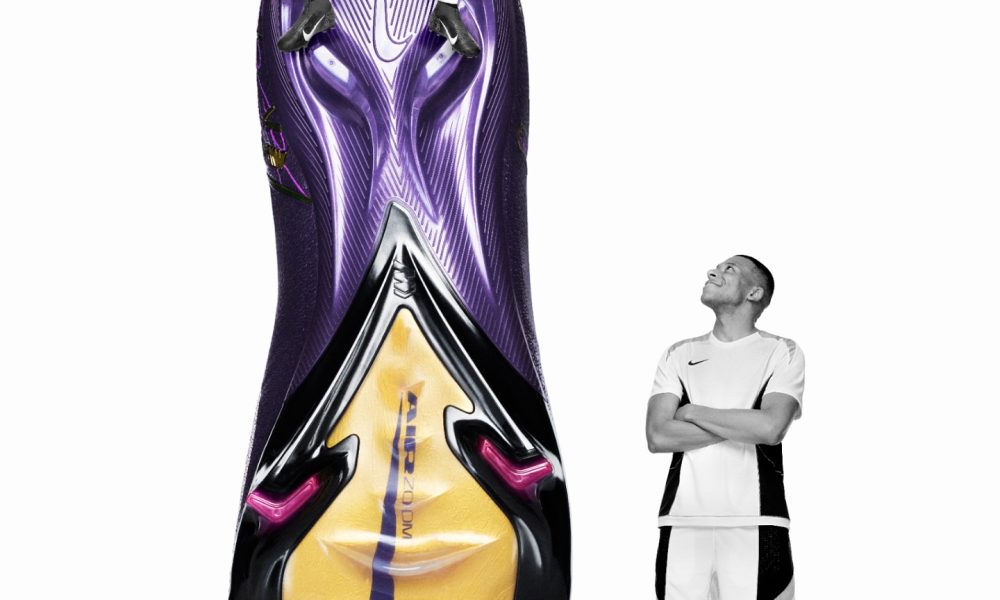 has always dreamed in Mercurial. Now his initials are on the boots.
The new Kyl…
has always dreamed in Mercurial. Now his initials are on the boots.
The new Kyl…
-
 Rec Sports3 weeks ago
First Tee Winter Registration is open
-
 Rec Sports2 weeks ago
Fargo girl, 13, dies after collapsing during school basketball game – Grand Forks Herald
-
 Motorsports2 weeks ago
CPG Brands Like Allegra Are Betting on F1 for the First Time
-
 Motorsports3 weeks ago
F1 Las Vegas: Verstappen win, Norris and Piastri DQ tighten 2025 title fight
-
 Sports2 weeks ago
Two Pro Volleyball Leagues Serve Up Plans for Minnesota Teams
-
 Sports2 weeks ago
Utah State Announces 2025-26 Indoor Track & Field Schedule
-
 Sports2 weeks ago
Sycamores unveil 2026 track and field schedule
-
 Motorsports2 weeks ago
Redemption Means First Pro Stock World Championship for Dallas Glenn
-
 Motorsports2 weeks ago
Jo Shimoda Undergoes Back Surgery
-
 Sports2 weeks ago
Texas volleyball vs Kentucky game score: Live SEC tournament updates