
Motorsports
Daytona Rounds Out NASCAR’s Roster of 16 Championship Contenders


Ryan Blaney’s win in Saturday night’s NASCAR Coke Zero Sugar 400—Daytona’s summer night race was easier to remember when it was just the Firecracker 400, but that name would leave Coke’s money on the table—was especially important to two people: Blaney, of course, and driver Alex Bowman, who finished 36th in the 40-car field.
Why Bowman? We’ll explain, but it’ll require a little scene-setting. Blaney, who had been running 12th with just three laps to go, rocketed to the front on the final lap, beating, in order, Daniel Suarez, Justin Haley, and, in fourth, Cole Custer, who was just 0.049 seconds behind Blaney, which suggests just how close this finish was. Of those four drivers, only Blaney had already won a race this season, which earned him a berth in the season championship Playoffs, to be decided among 16 drivers. Besides Blaney, 13 other drivers had won at least once, and were in. Had the winless Suarez, Haley, or Custer been first to the checkered flag, he would have been the 15th driver to advance to the Playoffs.
But since Blaney was already in the Playoffs, that left two spots open in the 16-driver roster to be filled by points. Fifteenth in points was Tyler Reddick, who advanced, despite a 21st-place finish in the 400. And 16th in points: Lucky Alex Bowman, who crashed out just 27 laps into the event’s 160, and thus spent the rest of the race biting his nails while he awaited his fate. Custer actually led the next-to-last lap, at which point it looked like Bowman would be the only Hendrick Motorsports driver to miss the Playoffs, as teammates Chase Elliott, William Byron, and Kyle Larson were already in. So now Bowman is in too, and he has Penske driver Ryan Blaney to thank for it.
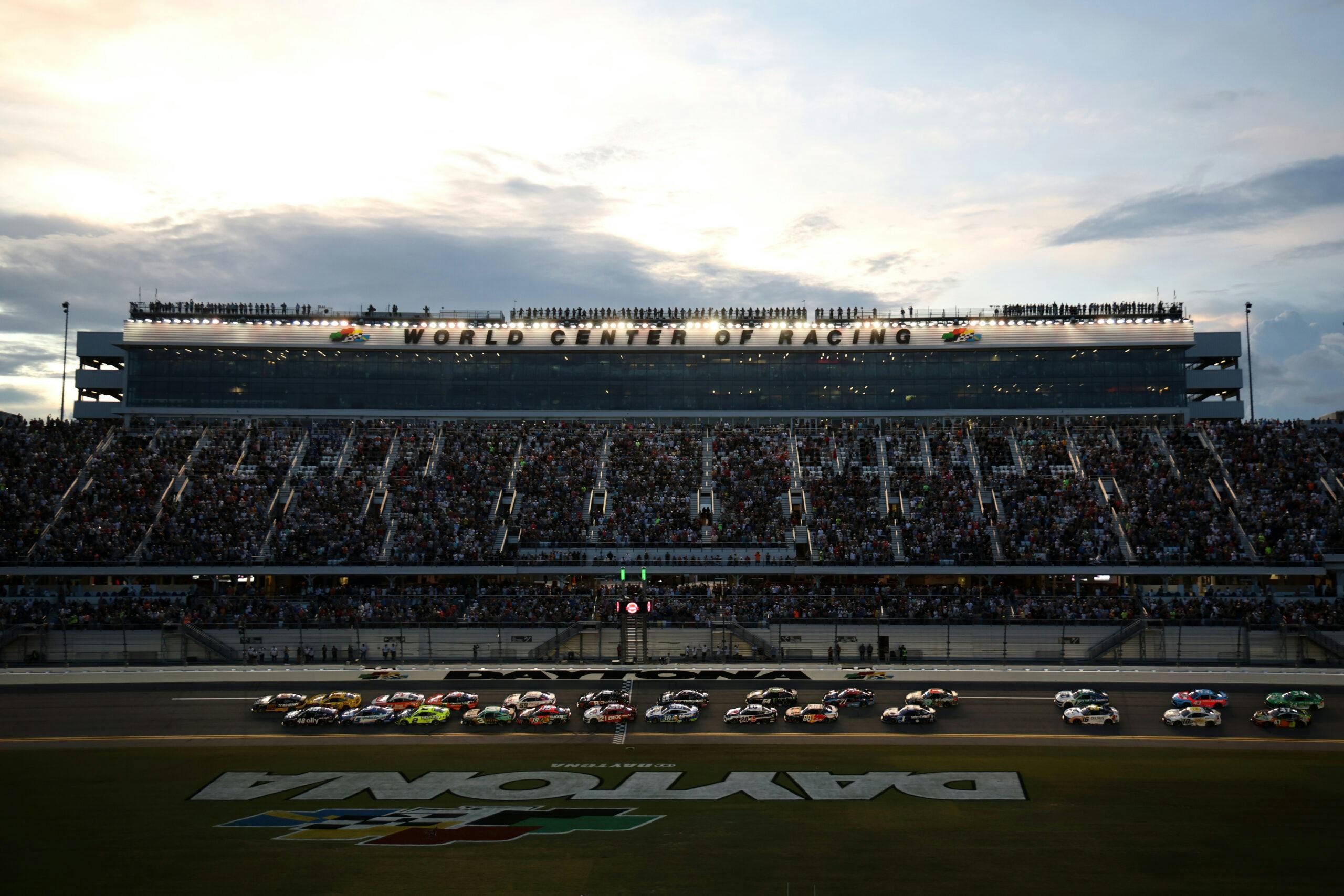
If all this sounds a little confusing, it is, notably the part I haven’t yet mentioned: That NASCAR invites drivers to gather playoff points during the regular season, which helps them remain in the Playoffs if they have a bad race. (Or two, or three.) Playoff points were earned through stage wins, overall wins, and regular-season performance. At Darlington’s race, NASCAR gives all the Playoffs drivers 2000 points, and they add the points they’ve accumulated in the regular season to those 2000. At the top: Teammates Kyle Larson and William Byron, tied with 2032 points each. At the bottom: Austin Dillon, with 2005 points, and then Bowman, with just 2002.
So what does that mean? It means that the bottom six drivers, none of whom has more than 2008 points, had better perform in the next three races (called the “Round of 16”), or risk being cut for the following three races, or the “Round of 12.” Then the field is trimmed to eight, then four for the Phoenix finale. It was undeniably simpler when racers would gather points at all 36 races, add them up, and the one with the highest score was the champion. But “simpler” doesn’t help TV ratings or ticket sales, so we have the Playoffs.
NASCAR’s Cup Playoff system, which used to be called the Chase for the Championship, began in 2004 to create—artificially, some veteran fans say—more excitement as the season draws to a close. NASCAR witnessed the majority of pro sports building excitement as the season progressed into a Super Bowl or World Series crescendo, and they wanted a piece of that. So NASCAR developed the current system where only 16 drivers are eligible to be the season champion, decided at the last race of the season, with the championship decided based on how those four drivers do in that race. Win the last race, and you’re the champ. Or finish 10th and you’re the champ, as long as the other three drivers come in worse than 10th.

Critics complain that a season championship should be based on the entire season, not just one race, and that’s how it was through 2003. The problem was that sometimes a hot driver locked up the championship well before the season was over—like Alex Palou winning his third straight IndyCar title 15 races into the series’ 17-race 2025 schedule, which undeniably makes promoting those final two races more of a challenge. The NHRA has gone to a playoff system, and IndyCar is looking hard at it.
NASCAR and its broadcast partners insist that the Playoff format is a substantial success, and have worked hard to guarantee that the season championship is a much bigger deal than it used to be. As that field of 16 drivers is whittled down to 12, then eight, then the final four over the last 10 races, television cameras typically spend much more time on those drivers than the rest of the field. So when it comes to pleasing sponsors and your car owner, it’s understandable that Alex Bowman was excited to make the Playoffs. “That was stressful, for sure,” he said. “I think almost the whole top 10 there at the end would’ve knocked us out.”
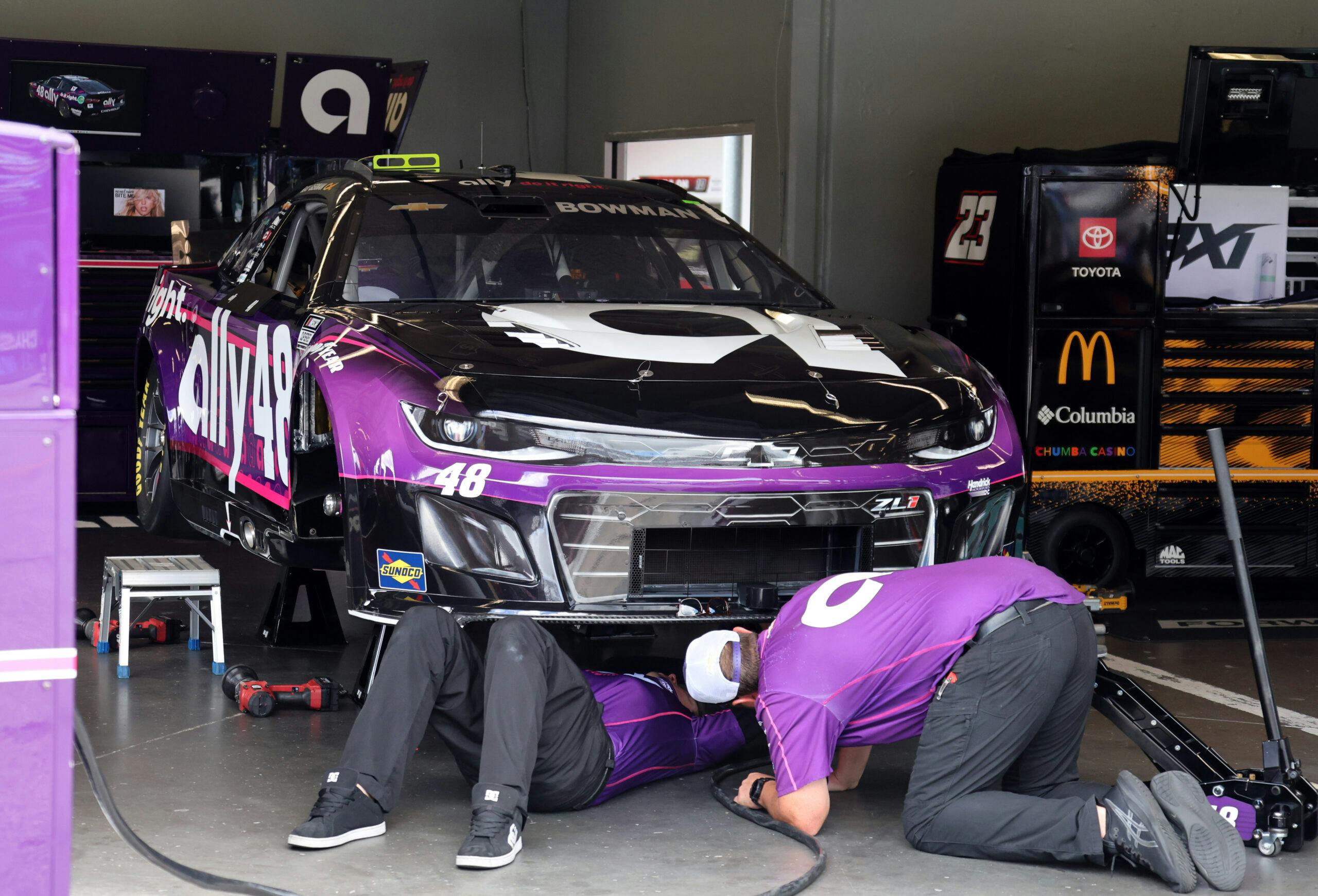
So when the Playoffs begin this weekend at Darlington Raceway’s Southern 500, the spotlight will be on the 16 Playoffs drivers, but it wasn’t always that way. Indeed, there was a time when the NASCAR season championship wasn’t particularly important to teams: The prize money was nothing special, and winning the championship typically required attending almost all the races.
And for years, there were a lot of races, peaking in 1964 at 62, with 23 of them still held on dirt tracks. That season began on November 10, 1963, and ended with the 62nd race on November 8, 1964. The 1964 champion, Richard Petty, raced in 61 of the 62 races, with 43 top-10 finishes. Petty will tell you that competing in 62 events in one year was incredibly grueling, both for the driver and the crew, which had to show up with a Plymouth that could win at every race, be it on a quarter-mile dirt or 2.5-mile asphalt oval, or on a road course in New York or California.
It was also expensive, factoring in travel costs and the inevitable mechanical failures and crashes. Some teams had no money, and possibly no interest, in traveling to Islip, New York, or New Oxford, Pennsylvania, both of which were on the 1964 schedule.
One of the most dominant drivers of that era, Fred Lorenzen, was well-known for cherry-picking the races he attended, based largely on the size of the purse. In 1964, he competed in only 16 races, but he won half of them. Some of those eight wins came at major tracks, like Atlanta, where Lorenzen won $18,000 from a $57,655 purse. By comparison, Marvin Panch won the very next race, at the long-gone Ashville-Weaverville Speedway in North Carolina, taking home $1150 from a $5040 purse. Another top driver, Junior Johnson, declined to chase a championship for a whole season and consequently never won one. In 1964, he entered fewer than half the races but still scored 15 top-10 finishes.

The number of NASCAR races slowly declined, but in 1971, there were still 48 on the schedule. That dropped to a more manageable (and affordable, for smaller teams) 31 races in 1972, and in 1973, just 28, the lowest number since 1950. It settled into the current average of 36 races a year in 2001. Some in NASCAR will tell you that even the current schedule is grueling: Easter weekend is the only scheduled “off” week for NASCAR Cup teams in 2025, beginning with the Daytona 500 on February 16, to the season-ender at Phoenix Raceway on November 2.
So, if you’re planning on keeping score, this is your 16-driver field competing in the 2025 Playoffs: Getting in on race wins, there’s Denny Hamlin (4 wins), Shane van Gisbergen (4 wins), Kyle Larson (3 wins), Christopher Bell (3 wins), William Byron (2 wins), Ryan Blaney (2 wins), and with one win each: Chase Briscoe, Bubba Wallace, Joey Logano (the 2024 champ), Ross Chastain, Austin Cindric, Josh Berry, and Austin Dillon. Getting in on points are Tyler Reddick and Alex Bowman.
There was also a little news made at the Daytona weekend: Ram was in town to announce the primary team that would take it to the NASCAR Craftsman Truck Series in 2026. To no one’s surprise, it is Kaulig Racing, which already has (Chevrolet) teams in NASCAR Cup and the Xfinity series. Kaulig Racing, we were told, was “founded a decade ago by Ohio-based entrepreneur, community leader and philanthropist Matt Kaulig.” Who, incidentally, has pledged to enter as many as five Dodge Rams beginning with the season opener at Daytona. The announcement was made at Daytona Dodge/Chrysler/Jeep/Ram, a dealership owned by Randy Dye, whose son Daniel competes in the NASCAR Xfinity series. For, of course, Kaulig Racing.

Also, it was announced that wunderkind driver Connor Zilisch, 19, will replace Daniel Suarez in a Trackhouse Racing NASCAR Cup entry in 2026. Zilisch has been nearly unbeatable on road courses, and two weeks ago he was celebrating his Xfinity series win at Watkins Glen by climbing onto his truck’s roof. As he was getting down, he put his foot on his lowered window net, which slipped, and Zilisch fell hard, breaking his collarbone. After surgery, he was cleared to start Friday night’s Xfinity race at Daytona, but got out during the first caution period, and relief driver and TV personality Parker Kligerman climbed in. Stunningly, Kilgerman, who had never won an Xfinity race, went out and won the Wawa 250, thanks in part to a very fast car from the Dale Earnhardt Jr.–owned JR Motorsports stable. But it will go down in the record books as a win for Zilisch, who also gets the points.
The Chase for the Championship—oops, that should be the Playoffs—will begin Sunday at the Southern 500 at the 75-year-old Darlington Raceway in South Carolina. Oops, again: It’s now the Cook Out Southern 500, since Cook Out, a North Carolina–based fast-food eatery with some 360 stores in the Southeastern U.S. (good burgers, excellent shakes), wrote NASCAR a big check. The race starts at 6 p.m. ET Sunday, on the USA Network.


Over the course of three years and 71 races together, Corey Heim and Scott Zipadelli amassed 21 wins and 45 top-5s with three final four appearances and the 2025 Truck Series championship.
It’s objectively a hard act to follow but Kaden Honeycutt isn’t allowing the pressure to exceed the privilege and intends to just put in the work in pursuit of the same results.
“From my end, I think it’s very important to wipe that slate clean and treat it like it didn’t happen,” Honeycutt told Motorsport.com on Wednesday. “I just want to try to be who I am, and definitely want to back up the success they’ve had the past three years, but also recognize that I’m my own person and need to figure out how to get there first.
“So there’s definitely some pressure, but I don’t feel much of it right now, because I’m just going to go out there and do the best I possibly can.”
And so far, Honeycutt’s best has methodically landed him in a position to get noticed by Toyota Racing Development and Tricon Garage’s No. 11.
“I feel like, being in that equipment, I’m going to be able to show what I can do,” Honeycatt added. “It’s going to be really fun. I want to enjoy every second of it and just try to go out there and win races, and give ourselves a title shot, whatever the format comes out to be.”
Honeycutt got to this point by being willing to do whatever it took to earn opportunities. He worked in the shop at OnPoint Motorsports and Niece Motorsports alongside the races he put the funding together for.
He won at the CARS Tour and ASA levels. He won the prestigious Snowball Derby in 2024. He made the playoffs last year for Niece and then advanced to the final four when signing with Tricon necessitated a move to Halmar Friesen Racing.
His story is very old school, conceptually.
“When I first moved to North Carolina, it was strictly as a working job,” Honeycutt said. “I was able to put together seven to eight races a year on the pavement Late Model side but was a full-time employee at whatever Truck Series shop I worked for.
“I worked really hard, and they knew I was a racer and wanted to drive, and eventually, when you work hard enough, opportunities will come and you need to be prepared to capitalize on it.”
So now, after working with successful crew chiefs like JC Umscheid and Phil Gould, Honeycutt’s journey has taken him to Zipadelli, the two-time champion and winner of 39 national touring series races atop the pit box.
“He doesn’t talk a lot but when he does, you listen to him, and take in what he’s saying because it’s really important and something you need to learn from,” Honeycutt said of Zipadelli. “He’s an extremely smart guy. He and David do a great job together and know what they need from their job.
“But from my experience, Scott is one of the quieter type guys and does his talking on the race track, and will talk afterwards once you’ve seen the hard work. I think that’s been awesome to see first hand.”
Honeycutt just met Zipadelli last year, once he signed with the team, but largely kept it casual as both of their teams chased the championship. But being able to make a playoff run last year with Toyota and HFR is what has Honeycutt most excited for this year.
He’s seen the tools and now he knows how to use them.
“Having that head start last year was huge for sure,” Honeycutt said. “Getting acclimated with the sim, how Toyota approaches races, working out of the performance center and being involved in, early, with everything we’re going to be doing this year helped a lot.
“I know my way around.
“I’ve been at the shop a lot since the off-season has started and the guys going back to work. Scott and I have a good relationship going. It’s basically their same team from last year, besides one, and that’s really important. So now we just have to go out and win races, try to repeat what they did the last years. We’re going to try and work towards that and I’m really optimistic about our chances.”
We want your opinion!
What would you like to see on Motorsport.com?
Take our 5 minute survey.
– The Motorsport.com Team
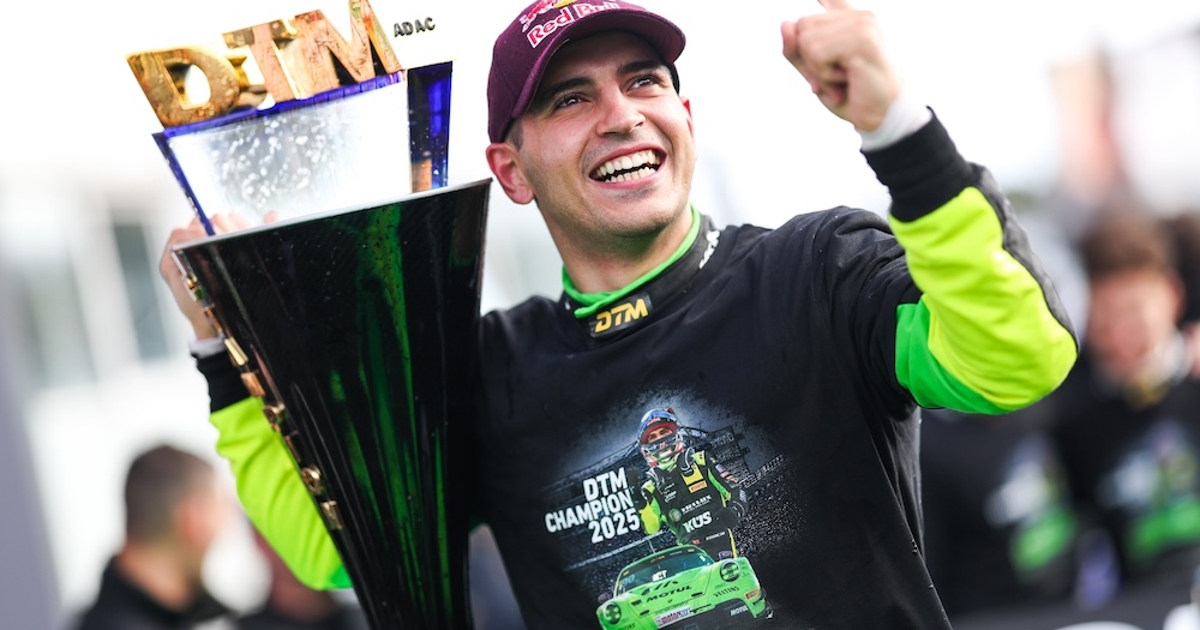
Porsche works driver Ayhancan Güven will drive Manthey’s No. 911 Porsche 911 GT3 R in this month’s Rolex 24 At Daytona.
Güven, the reigning DTM Champion who won the 2025 title with a memorable last-lap overtake in the season finale at Hockenheim, joins the already-announced GTD PRO trio of Klaus Bachler, Ricardo Feller, and Thomas Preining in the No. 911 Porsche.
The Turkish driver made his IMSA and Rolex 24 debut last year with Wright Motorsports. Alongside co-drivers Adam Adelson, Elliott Skeer, and Tom Sargent, Güven finished second in GTD behind the winning No. 13 AWA (now 13 Autosport) Chevrolet Corvette Z06 GT3.R.
Güven has already been confirmed as one of Manthey’s full-time pro drivers for the 2026 FIA World Endurance Championship, driving their No. 91 Porsche with James Cottingham and Timur Boguslavskiy. In the winter, Güven was promoted to a full-fledged works driver role at Porsche.
Ryan Hardwick, Riccardo Pera, Morris Schuring, and Richard Lietz will drive Manthey’s No. 912 Porsche in GTD, as announced last month.
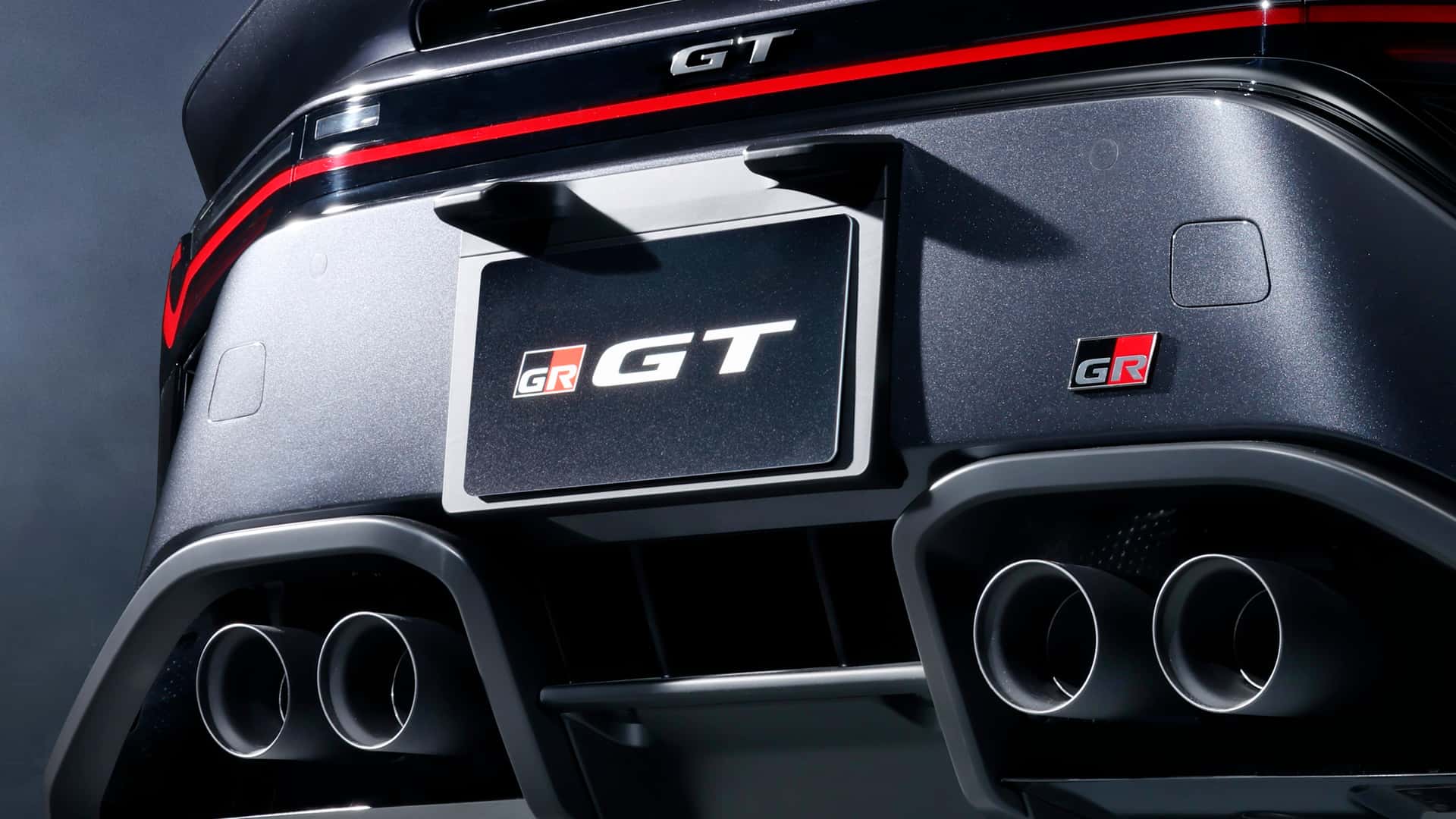
- Gazoo Racing becomes the fifth Toyota brand, joining Toyota, Lexus, Daihatsu, and Century.
- The GR GT doesn’t have any Toyota badges.
- Future performance models are also expected to only use GR badging.
Toyota’s already large corporate umbrella is expanding to make room for a fifth brand. Just months after Century was spun off as a standalone marque, Gazoo Racing is also becoming a distinct entity. The world’s largest carmaker has long hinted at a clearer separation between Toyota and GR models, and it’s now formalizing those plans.
Going forward, Toyota Gazoo Racing will be known simply as Gazoo Racing, reverting to a name that traces its roots back to 2007. Based on a previously outlined hierarchy, GR sits above the core Toyota brand and the entry-level Daihatsu but below Lexus and the newly founded Century. The latter is now its own entity as well, aspiring to take on Rolls-Royce and Bentley.
Even before the official announcement, we knew this day would come. When the GR GT debuted a month ago, there were no Toyota badges inside or out. Since then, we’ve learned the V8 supercar won’t even be sold at Toyota dealerships, instead being offered through select Lexus showrooms.

Photo by: Toyota
As you can imagine, Gazoo Racing won’t be limited to the GR GT. If the MR2 is indeed making a comeback, it’s also likely to forgo the Toyota badge. A new Supra, this time likely without BMW ties, has already been confirmed, and it, too, would fit perfectly within the GR lineup. It would make sense for a next-generation 86 to serve as Gazoo Racing’s entry-level model.
GR will continue to live up to the “Racing” part of its name by competing in top-tier motorsports, including WRC. Additionally, the newly formed brand will cater to “customer motorsports using production vehicles.” That statement gives us hope for homologation specials and performance cars in general.
While the new twin-turbo 4.0-liter V8 will be exclusive to the GR GT, lesser models are expected to use Toyota’s new four-cylinder engine. The turbocharged 2.0-liter unit, codenamed “G20E,” is rated at more than 400 horsepower. This four-pot could become the backbone of the GR division, as it won’t be limited to front-engine applications.
Photo by: Toyota
The GR Yaris M concept features a mid-mounted layout, fueling rumors of an MR2 revival. As if that weren’t exciting enough, U.S. dealers have allegedly received a sneak preview of a reborn Celica. Add the Yaris and Corolla hot hatches to the mix, and the GR portfolio could look mighty impressive before the decade’s end.
That’s not all. Remember the FT-Se concept with dual motors and all-wheel drive? The fully electric sports car could arrive after 2026, and it wouldn’t be the only electric performance vehicle within the Toyota empire. The LFA concept won’t have a combustion engine when it eventually arrives.
The GR GT’s interior lacks the Toyota badge on the steering wheel
Photo by: Toyota
Motor1’s Take:
Toyota’s decision to elevate the Gazoo Racing name makes sense when you consider the influx of highly anticipated models. With affordable sports cars becoming increasingly rare, Toyota appears intent on dominating the niche with its GR products. The GR GT will sit at the top as the flagship, easily commanding a six-figure price. In fact, some reports suggest it could cost more than $200,000.
It’ll be interesting to see how Toyota fleshes out the GR lineup in the coming years. It’s unrealistic to expect every rumor to materialize, though. Reviving the MR2, Celica, and Supra while also adding an EV may be overkill, as all would be low-volume products. Still, the GR GT is a tremendous start, even if it’s reserved for deep-pocketed buyers.
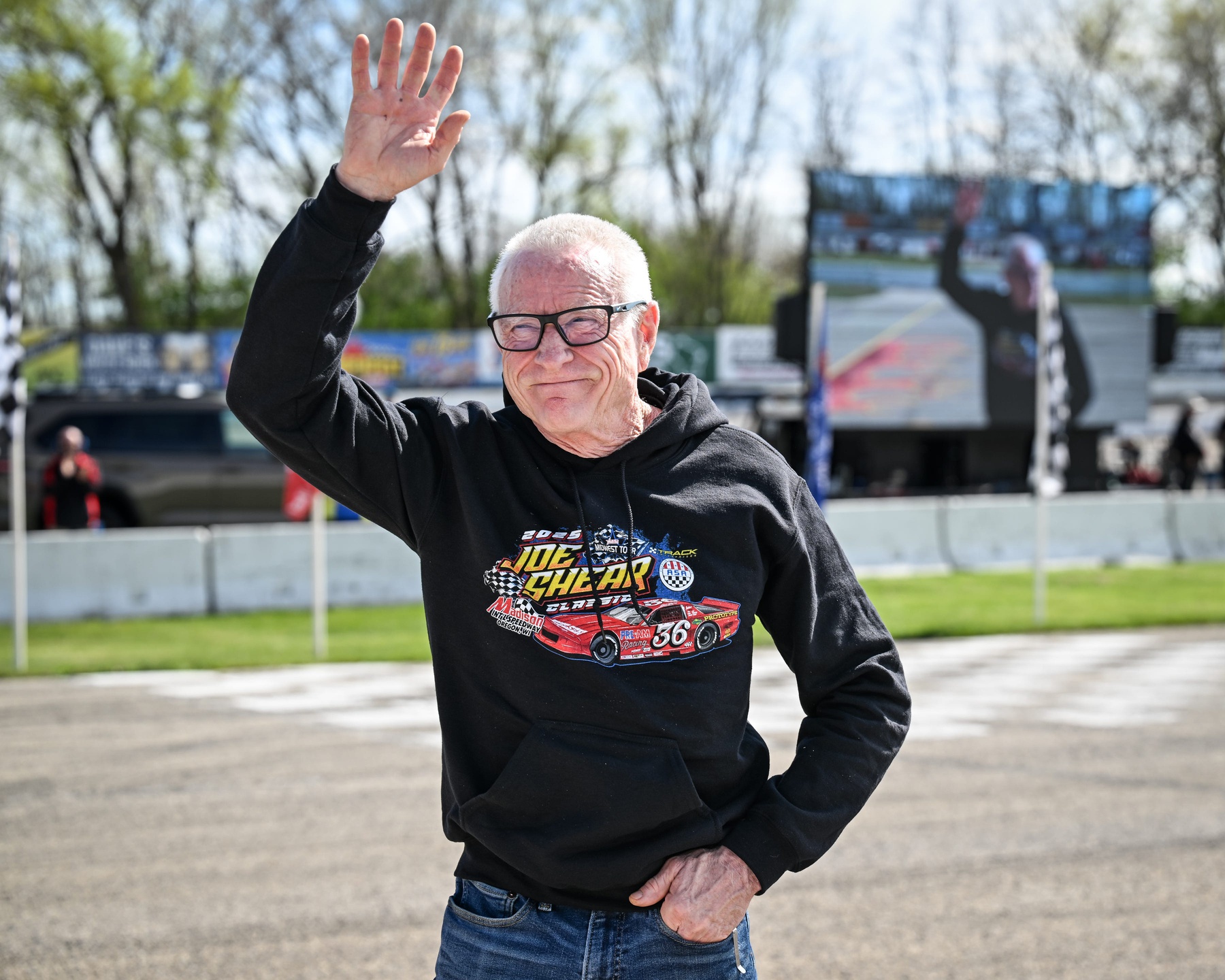
Mark Martin shared his reaction to Cummins returning as a NASCAR sponsor for Kaulig Racing’s No.12 RAM 1500 truck in 2026. The engineering giant used to be Martin’s sponsor during his Roush Racing era in the 1990s.
Cummins has been operating for over a century, and its partnership with Dodge RAM began in 1989, when the first Cummins-powered truck rolled off the block. Now that RAM has decided to re-enter NASCAR, the engine manufacturer has followed suit.
The season-long sponsorship features a red and yellow paint scheme for Brenden ‘Butterbean’ Queen’s Truck Series debut. Queen is the defending ARCA Menards champion who has five Truck Series starts to his name. Notably, he was also the first driver announced to Kaulig Racing’s lineup.
The Chesapeake, Virginia native addressed the collaboration and shared an X post, writing:
“Pumped to partner with @Cummins this season. Excited to go chase some wins in the Cummins Ram #12. 🤘🏼”
Elated by the news, Mark Martin welcomed his former sponsor and wrote,
“Proud that @Cummins is still here in @NASCAR supporting this sport 🏁”
Brett Merritt, Vice President and President, Engine Business, Cummins, had this to say about the partnership,
“Cummins has racing in its DNA. From Clessie Cummins’ winning the first Indianapolis 500 as a crew member to our leadership in commercial power, we’ve always pushed the limits of what’s possible. Brenden Queen represents that same spirit – talented, hardworking, and full of momentum. Partnering with both Kaulig Racing and Ram provides the opportunity for us to continue to write our motorsport legacy.”
Mark Martin has become a leading voice in the sport. The Hall of Famer has been vocal about his misgivings with the playoff format, which has drawn the support of drivers and fans alike. He believes the elimination-style format rewards one-off performances over season-long dominance, and has called for the return of the classic points system.
With the playoff races drawing lower viewership numbers, the sport appears to be moving away from the single-race title-decider. Although a full-season championship seems far-fetched at the moment, many believe a three or four-race finale is in order.
Mark Martin ‘impressed’ by NASCAR’s playoff turnaround
In a recent interview with Kenny Wallace Media, Mark Martin shared a rather positive take on NASCAR’s playoff committee. While he was also a part of the initiative, Martin noted that much of his complaints fell on deaf ears at the start.
“I’m not super optimistic about whether, I was involved in the committee and in the beginning, [I] was the only one that was, I was screaming about it. And I wasn’t doing it for me. I was screaming about it because they asked me to be on it and because everywhere I go and every fan I talk to hates playoffs,” Mark Martin said.
“I don’t think we’ll get it, but I am very impressed that it’s actually a consideration,” he added.
Martin also noted that it’s farcical to name the championship format ‘playoffs’ when there’s no playing involved. Since the playoffs were largely influenced by the NBA and NFL, the terminology was carried over.
Motorsports
23XI Racing Secures Major Vote of Confidence as Chumba Casino Expands Partnership for 2026

The previous season was one of the toughest years for Denny Hamlin and Michael Jordan’s 23XI Racing. The trial against NASCAR took a significant toll on the team, which was relatively new to the sport. However, it all paid off when NASCAR decided to settle the matter with 23XI Racing and FRM before the situation escalated any further.
Now, after a gruelling spell, the team is finally ready to move forward and is prepping for the upcoming season. In doing so, the squad recently announced that it is extending its partnership with a social casino giant for the second consecutive season.
Chumba Casino’s Partnership With 23XI Racing in 2025
Chumba Casino, a growing name in the online social casino space, announced its partnership with 23XI Racing for the first time in 2025. Virtual Gaming World, Chumba Casino’s parent company, which had already established a foothold in Formula 1 with Scuderia Ferrari, decided to foray into NASCAR as well, partnering with 23XI Racing.
The association that began in 2025 boasted the vibrant colors of the Chumba Casino on the team’s equipment, cars, and the firesuits of the drivers – Bubba Wallace, Tyler Reddick, and Riley Herbst in several competitions.
ALSO READ: Trackhouse Racing Faces 2026 Questions as Major Sponsor Disappears From Team Website
Even when Wallace, the team’s star driver, broke his lengthy win drought at Indianapolis last year, his No. 23 Toyota was draped in the colors of Chumba Casino.
Extended Sponsorship Deal for 23XI Racing
After a successful first year, the casino brand has decided to extend its relationship into 2026 as well. This time, the brand will sponsor Reddick and Wallace in different competitions throughout the calendar.
23XI Racing and Chuma Casino’s association will be on display from the very first race of the season, where Reddick is set to pilot his No. 45 Toyota in the popping colors of the latter. This will also mark the debut of a Chumba Casino car in the highly anticipated season opener at the Daytona International Speedway.
The association between both parties will also extend to Wallace for several races throughout the year, including the Brickyard 400 at Indianapolis.
Alongside sponsoring both drivers, the brand also has plans for fans, including giveaways and meet-and-greet opportunities with Reddick and Wallace. The brand’s colors will also feature on the drivers’ firesuits throughout the season.
Ben Whitford, the chief of marketing at Virtual Gaming World, commented on its extended association with 23XI Racing and said, “Our partnership with 23XI Racing had an incredible first year, highlighted by a historic Brickyard 400 win, and we’re excited to build on that momentum in 2026.”
He further added how the sponsorship was a way for the brand to connect with NASCAR fans: “Expanding our presence with Tyler and continuing our support of Bubba allows us to connect with NASCAR fans in bigger and more engaging ways, from on-track moments to unforgettable fan experiences and giveaways. We’re proud to be part of 23XI’s journey and look forward to another exciting season together.”
Steve Lauletta, the team president of 23XI, also briefly spoke about the partnership between the two. He said: “After an exciting first season that included a historic win at the Brickyard, we’re thrilled to expand our partnership with Chumba Casino to include more races with Tyler, along with the brand’s ongoing engagement with Bubba. Last year we had a great reception from both Chumba Casino and NASCAR fans, and we look forward to another impactful year of growth and success on and off the track.”
With strong support from the sponsors, both the drivers of 23XI Racing will certainly be eyeing to make a more substantial impact in the upcoming NASCAR season.
Motorsports
TOYOTA GAZOO Racing Reverting to “GAZOO Racing” to Pass on and Evolve the Making of Ever-better Cars and the Fostering of Talent | PRESS RELEASE

■The journey of GAZOO Racing
A challenge born of humiliation
TOYOTA GAZOO Racing has promoted the making of ever-better cars and the fostering of talent by taking on the challenge of competing in various motorsports categories both in Japan and abroad.
GAZOO Racing traces its origins back to 2007, when Akio Toyoda (then executive vice president) competed in the Nürburgring 24 Hours endurance race alongside driving mentor and Toyota Motor Corporation (TMC) Master Driver Hiromu Naruse and several other colleagues.
At the time, because competing in the race was not recognized by TMC as an official company activity, the team was not permitted to use “TOYOTA” in its name, and thus entered under the name “Team GAZOO”. Furthermore, as Toyoda’s intention to drive in the race was unable to gain much understanding, his only choice was to compete under the driver name “Morizo”. Although the team managed to finish the race, the achievement immediately came with a sense of humiliation. That was because, while many other, mainly European, competitors were putting under-development cars through their paces in the race, Toyota did not have such a car, let alone any sports cars in its sales lineup, and was on the verge of losing its ability to pass on its car-making skills and expertise. When overtaken on the track by other manufacturers’ development vehicles, Toyoda felt as if he could hear rivals say: “No way that you guys at Toyota could build a car like this!”, igniting a sense of humiliation that he still vividly recalls to this day.
The Shikinen Sengu of car-making sustained by conviction
Sports car development demands an approach to manufacturing that not only improves a car’s characteristics and fundamental performance by also strives to make a car failure-proof even in harsh environments. All such efforts also contribute to the development of mass-production cars. At the same time, the front lines of motorsports provide numerous opportunities to hone car-making skills and foster talent.
At Ise Shrine in Japan’s Mie Prefecture, traditions and skills are passed down through a ritual known as “Shikinen Sengu”, which entails all of the shrine’s structures being rebuilt every 20 years. Similarly, sports car manufacturing has traditions and skills that cannot be passed down once they are lost. Armed with a sense of crisis that TMC would become a company incapable of building sports cars, Toyoda initiated the development of the Lexus LFA, choosing the Nürburgring course as the car’s main development site.
Launched in 2010, the LFA was TMC’s first authentic sports car developed in-house in approximately 20 years. It was the result of a project that faced enormous difficulties, including a lack of wholehearted support within the company for car-making that was deemed by some to be unprofitable, as evidenced by the fact that development was permitted to proceed under the condition that only 500 units would be sold.
Just before the LFA’s release, the unthinkable happened: Naruse passed away in an accident near the Nürburgring. The calamity occurred not long after LFA development had concluded and Naruse, as master driver, had given his approval by saying, “Let’s go with this.” For Toyoda, suddenly being without his driving mentor and TMC’s master driver came with an immense sense of loss.
However, Toyoda, remaining steadfast in his conviction that cars and talent are honed on the front lines of motorsports, continued to pursue sports car development. Then came the revival of the 86 in 2012 and the GR Supra in 2019. However, the development of these models relied on Subaru and BMW, respectively, meaning that TMC was not able to achieve the complete in-house creation of a sports car.
The launch of TOYOTA GAZOO Racing
In April 2015, TMC decided to consolidate its in-house motorsports activities, including those under the banners of “TOYOTA Racing”, “LEXUS Racing”, and “GAZOO Racing”, under the unified “GAZOO” name, upon which it adopted the logo “TOYOTA GAZOO Racing”. It was a development that marked the moment when activities that could not use “TOYOTA” back in 2007 could finally bear the company’s name. However, even though those activities had officially come under the umbrella of a large corporation, the original sense of humiliation that had driven Toyoda and Naruse began to fade.
The never-ending pursuit of making ever-better cars
Toyoda, then as president, decided that TMC would return to the FIA World Rally Championship (WRC) to further evolve its activities to make ever-better cars. Returning to the WRC, in which competing vehicles are based on production vehicles, marked a major turning point in TMC’s motorsports activities.
Until then, TMC had developed its motorsports vehicles based on already completed production vehicles. However, after returning to the WRC, it began a new approach to car-making that reversed the conventional order by first creating a car capable of winning in the WRC and then turning that car into a production vehicle. This led to the launch in 2020 of the GR Yaris, a Toyota in-house-developed sports car, under the philosophy of making ever-better motorsports-bred cars.
The GR Yaris, which was unveiled at the Tokyo Auto Salon in January of that year and recorded its maiden victory in a Super Taikyu Series 24-hour race that September, began to be seen in action in motorsports events around the around, eventually leading to the development and launch of the GR Corolla. It was exactly this achievement that revived TMC’s in-house production of sports cars capable of winning in motorsports.
In 2025, Toyota returned to the Nürburgring 24 Hours race for the first time in six years, fielding a GR Yaris. While behind the wheel, Toyoda, who is TMC’s current master driver, says that he conversed with Naruse. Only TMC’s two master drivers know what they talked about.
For Toyoda, the next challenge was to conduct a true Shikinen Sengu in the form of TMC creating the ultimate in sports cars. As such, the GR GT, GR GT3, and LFA Concept premiered in 2025.
TGR’s journey of the motorsports-bred making of ever-better cars and the fostering of talent is without end. It will soon be 20 years since Team GAZOO came to be in 2007.
“No way that you guys at Toyota could build a car like this!” The humiliation felt by Hiromu Naruse and Akio Toyoda was the starting point of it all.
TGR would like to extend its sincere gratitude to everyone in the world of motorsports, its partners, and its fans for their unwavering commitment.
Together with all stakeholders, TGR—under the name “GAZOO Racing”—intends to continue making ever-better motorsports-bred cars and fostering the talents of drivers, engineers, and mechanics.
TGR looks forward to everyone’s continued support.
Furthermore, TMC’s research and development center in Cologne, Germany (TOYOTA GAZOO Racing Europe), under the new name “TOYOTA RACING”, is to specialize in motorsports activities through its advanced development technologies, promoting long-term technological development in engine development and other areas. The technologies that it develops are to continue to be introduced in various motorsports scenarios, including the world’s top on-track races as well as rallies, in the pursuit of further improvement.
■TGRR
TGRR (TOYOTA GAZOO ROOKIE Racing) is to continue its current activities. As an entity that bears in its name the “T” of TOYOTA Racing and the “G” of GAZOO Racing, it intends to serve as a bridge between the two, honing in motorsports as a racing team the products and technologies each develops, while also functioning as a practical training ground (dojo) that fosters talent.
Logo transition is planned for completion in stages by January 2027.

ESPN predicts outcomes of both College Football Playoff Semifinal games

NHL Winter Classic 2027 game will be held in Utah at Rice-Eccles Stadium

Capital University to upgrade its fieldhouse for fall
Is NIL and the transfer portal good for college football?

Calallen’s Aubrey Navarro signs to run D1 track at SFA

Three major college football programs battling for former 5-star recruit

Catch up with Trevor Johnson, AISD Press Conference and Iron Plains Youth Football League

Short-Handed Cougars Fall to Wildcats

Gaming brand ROG unveils a range of next-generation gaming innovative products at CES 2026! Wi-Fi 8 router that presents new value, innovative 240Hz AR glasses, and more!

What’s new at the Water Tower Recreation Center

$2.1 million QB turns down ‘lucrative NIL packages’ to enter transfer portal
Gaming brand ROG unveils a range of next-generation gaming innovative products at CES 2026! Wi-Fi 8 router that presents new value, innovative 240Hz AR glasses, and more!

Ole Miss turns into an unlikely college football powerhouse

No. 11 CSUN Opens 2026 Season With Three Matches at UCSB Asics Invitational

Jenna Ibieta named head coach of Loyola indoor, beach volleyball programs – Crescent City Sports

SoundGear Named Entitlement Sponsor of Spears CARS Tour Southwest Opener

DeSantis Talks College Football, Calls for Reforms to NIL and Transfer Portal · The Floridian

#11 Volleyball Practices, Then Meets Media Prior to #2 Kentucky Match

Stempien to seek opening for Branch County Circuit Court Judge | WTVB | 1590 AM · 95.5 FM

Maine wraps up Fall Semester with a win in Black Bear Invitational

Nascar legal saga ends as 23XI, Front Row secure settlement

Ross Brawn to receive Autosport Gold Medal Award at 2026 Autosport Awards, Honouring a Lifetime Shaping Modern F1

Princeton Area Community Foundation awards more than $1.3 million to 40 local nonprofits ⋆ Princeton, NJ local news %

Downtown Athletic Club of Hawaiʻi gives $300K to Boost the ’Bows NIL fund

Sunoco to sponsor No. 8 Ganassi Honda IndyCar in multi-year deal

North Florida Motorsports Park led by Indy 500 Champion and motorsports legend Bobby Rahal Nassau County, FL

WNBA’s Caitlin Clark, Angel Reese and Paige Bueckers in NC, making debut for national team at USA camp at Duke
NASCAR, 23XI Racing, Front Row Motorsports announce settlement of US monopoly suit | MLex

Hope College Tops MIAA Commissioner’s Cup Fall Update

Nike Signs 10 LSU Athletes to NIL deals





-
 Rec Sports3 weeks ago
Princeton Area Community Foundation awards more than $1.3 million to 40 local nonprofits ⋆ Princeton, NJ local news %
-

 Sports2 weeks ago
Badgers news: Wisconsin lands 2nd commitment from transfer portal
-

 Rec Sports6 days ago
Five Youth Sports Trends We’re Watching in 2026
-
 Sports3 weeks ago
Badgers news: Final Four Game Thread vs. No. 1 Kentucky Wildcats
-

 Sports3 weeks ago
Is women’s volleyball the SEC’s next big sport? How Kentucky, Texas A&M broke through
-

 Rec Sports2 weeks ago
NBA, Global Basketball Community Unite for World Basketball Day Celebration
-
 Rec Sports3 weeks ago
Youth Sports Business in 2025: The Year the Industry Grew Up
-
 Sports2 weeks ago
Kentucky VB adds an All-American honorable mention, loses Brooke Bultema to portal
-
Rec Sports3 weeks ago
Inside the NWSL’s first combine: Can the league create a more robust pathway for American talent development?
-
 Motorsports3 weeks ago
NASCAR, IndyCar, and F1 Share These Race Days in 2026