Josh Morris saw something in Niece Motorsports that reminded him of the company he and four friends started.
So it was no coincidence that Dearborn-based DQS Solutions and Staffing got involved in a joint venture to acquire the NASCAR Craftsman Truck Series team.
“It was kind of like looking in a mirror,” said Morris, the CEO of DQS.
DQS and J.F. Electric, an electrical contracting company based near St. Louis, announced in August that they purchased Niece Motorsports, which recently observed its 10th year in the truck series.
The transaction came after both DQS and J.F. Electric had been sponsors on Niece’s Chevrolet Silverados.
Sponsorship was a natural step for DQS, which handles tasks like trucking, security and warehousing for several original equipment manufacturers in the automobile industry.
“Our decision to jump into NASCAR was predicated on the fact that we service the automotive industry as a whole,” Morris said.
In Niece, Morris saw a self-made company like DQS.
“The folks at Niece reminded me of the folks at DQS,” Morris said. “They started with a whole lot of nothing and worked to build their company into what it is today. I put a lot of trust and belief in people who scratch their way to making a living, doing a lot of hard work, and that’s exactly what Niece does.”
Morris and co-founders will in October celebrate the sixth anniversary of DQS.
“We didn’t have a lot of money,” Morris said. “We didn’t have any major backing. We got whatever we had, put our houses up, did whatever we could.
“We started with one office.”
Since then, DQS, which now operates in multiple cities, including Wichita, Kan., Louisville and Toledo, has in consecutive years made Inc. 5000’s list of fastest growing companies.
“It’s very difficult to get on that list two years in a row,” Morris said. “It’s a testament to the people that work here. We’re definitely expanding at a rapid pace.”
The race team, Morris said, will continue to be known as Niece Motorsports and have its headquarters in Mooresville, N.C.
“Our day-to-day role will be to attract new sponsors to the team, helping with (human resources) and accounting – a lot of back office items.
“That will allow their staff to focus on their performance on the race track.”
Niece Motorsports, founded by Al Niece in 2016, sponsors the Nos. 41, 42, 44 and 45 trucks.
Current NASCAR Cup Series drivers Ross Chastain and Michigan native Carson Hocevar are among the Niece “alumni.”
Matt Mills, the team’s lone full-time driver, who pilots the No. 42, is 18th in points after 19 races.
Morris said Niece Motorsports was looking for an infusion of capital.
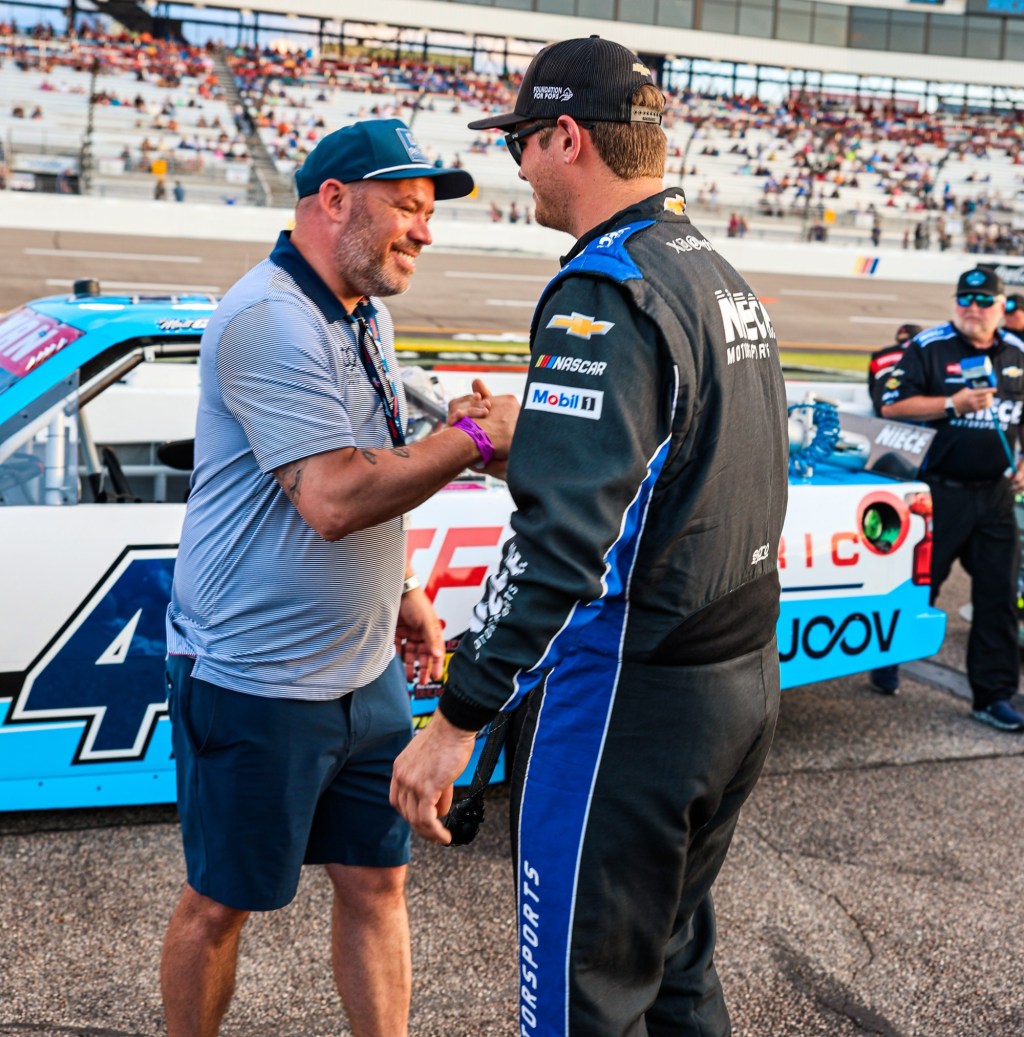
Josh Morris sits atop the Niece Motorsports pit box at Nashville Superspeedway. Morris is the CEO of DQS Solutions, a Dearborn company that in Aug. announced it had purched the NASCAR truck series team. (Photo courtesy of Josh Morris/Niece Motorsports)
“The sport is tough, NASCAR as a whole is tough, and there were some struggles there financially,” Morris said. “They reached out to me and asked if I’d be interested in coming in, either buying the company or coming in on a partnership.
“We believed the best path was to buy it as a whole.”
After DQS and Niece agreed on the sale, J.F. Electric partnered with DQS, Morris said.
“We want to help the race team continue to grow and thrive,” Morris said.
Niece, DQS and J.F. Electric look for ways to cross-promote one another and spark growth, Morris said.
J.F. Electric was a sponsor on the No. 91 NASCAR Xfinity Series car that Mills drove to a 19th-place finish at World Wide Technology Raceway near St. Louis last weekend.
Future plans, Morris added, might include the team having a presence at dirt tracks; running a late model stock car at a venue like Flat Rock Speedway, or getting involved in the Xfinity and Cup series.
Niece, Morris said, will continue to run Chevrolets in the truck series, which will see the return of Dodge in 2026.
“It’s great for NASCAR as a whole,” Morris said of the Dodge comeback. “The more OEMs the better. The more smart people there are in the room, the better the outcomes for everybody.”
Josh Morris, CEO of DQS Solutions and Staffing in Dearborn, stands next to the Niece Motorsports No. 44 Chevrolet Silverado. DQS and another company recently purchased the race team. (Photo courtesy of Josh Morris/Niece Motorsports)
One goal that manufacturers have for participation in NASCAR is to improve the performance of street cars, Morris said.
“A lot of people miss that piece,” Morris said. “NASCAR is a development arm for the cars that we drive every single day. You put these vehicles under extreme conditions for two to three hours, and what the OEMs learn helps with what they’re developing.”
In conjunction with the sale of Niece to DQS, the company announced that Cody Efaw would serve as president and CEO; Amanda Efaw as chief marketing officer and Phil Gould as director of competition.
Morris said the Niece expects to sponsor three truck teams in 2026.
“That’s, of course, depending on funding,” he said. “We’re always looking for sponsors.”
The driver lineup, Morris said, is not finalized.
“There’s a lot of moving pieces,” he added. “We think Niece is going to do a lot of great things.”
Joe Gibbs Racing and Hendrick Motorsports, the only teams in the Cup Series to field four entries, are also the most successful teams in NASCAR. In any given season, they are expected to get at least one of their drivers to the championship finale. But what are the chances that they get all four drivers there?
All four drivers of a team reaching the finale is unprecedented, no doubt, even for JGR and Hendrick Motorsports. Recently, Dave Alpern, the president of Joe Gibbs Racing, discussed this ‘perfect’ scenario in a video for his team media.
“There are only two organizations that could happen, and that’s Hendrick Motorsports or Joe Gibbs Racing,” said Alpern.
“Because we are the only ones with four. We are the only ones that have ever put three in. I can tell you one thing. It’s really stressful,” added Alpern, before explaining how dynamics and resources get stretched in the process.
Alpern likened it to having multiple children participating in the same competition, knowing that all except one is going to lose. As stressful as such a scenario would be, he recognizes that it would be an amazing problem to have.
“I would love to try it one year. I am sure our friends down the road will love that as well,” continued Alpern.
The logistics and the sheer workload that would go into such a setting would be massive, to say the least. Moreover, the current format will require three of the cars to each win a race in the playoffs’ Round of 8, while the final car will have to qualify on points for this to happen.
Yes, technically, it could happen. Alpern hopes it does happen. But the question is if it ever will.
“I hope it does happen. In some ways, it’d be great because you’d clinch the championship the week before. But it sounds like the playoff format might change. So, we may never get to find out,” said Alpern.
NASCAR is on the verge of announcing key changes to the existing playoff format. Word around town is that a multi-race championship round is on the cards instead of a single race.
However, speculations will have to wait until official word comes from Daytona. Until then, Joe Gibbs Racing fans can look back at the historic 2019 season, when the team put three drivers in the Championship 4.
Kyle Busch, Martin Truex Jr., and Denny Hamlin had competed for the title alongside Stewart-Haas Racing’s Kevin Harvick. Busch eventually won that year.
Connor Zilisch is preparing for his rookie NASCAR Cup Series campaign, and he’ll have veteran crew chief Randall Burnett on pit road after leaving Kyle Busch and Richard Childress Racing mid-way through 2025. Zilisch, 19, was confirmed by Trackhouse Racing mid-season, long before the Xfinity Series Championship 4 race in Phoenix, where he fell painfully short to Jesse Love despite dominating the competition year-long.
To support the teenager, Trackhouse made immediate moves to provide Zilisch with veteran experience in the Cup Series. And so, they hired Burnett to be Zilisch’s crew chief.
Burnett and Busch parted ways after underwhelming seasons and missed back-to-back playoff appearances. Zilisch is pleased to have Burnett in his corner, with the crew chief bringing a wealth of experience, having joined RCR in 2020. Before that, Burnett had several years of experience as a crew chief in the Xfinity series.
“He’s a great guy. He worked with a lot of younger guys. He was with Tyler and Xfinity and worked with him in Cup as well, and then he’s also worked with guys like, obviously, Kyle Bush, one of the most pronounced guys in our sport, and so he’s got a lot of experience,” Zilisch said.
Burnett isn’t a rookie when it comes to working with first-year drivers, either. “I think that experience is gonna help me, and the fact that he’s worked with a rookie before, he understands the growing pains. That way, I kinda know what to expect. I think that’s gonna be really helpful for me and him in our relationship,” Zilisch added.
Sign up to our NASCAR newsletter here.
Likewise, Burnett is looking forward to his “fresh start” with Zilisch. “I’m excited about my opportunity over there, and you know, obviously, something’s got to change on this 8 car,” Burnett told NASCAR.com. “We haven’t been performing the way we needed to.
“I think everybody needs a fresh start. I got a really good opportunity with where I’m going. Obviously, Connor’s a great young talent. I miss working with the younger guys. So, you know, just kind of all worked out.”
Before Zilisch’s Xfinity championship heartbreak, Burnett identified that the Cup Series won’t be plain sailing for the NASCAR phenom. “I think he’s going to have a lot to learn in the Cup Series,” Burnett said.
“Obviously, the races are longer. These cars definitely race a little different than what he’s used to on the Xfinity side right now, and the talent level over here is incredible, you know what I mean.
“I think he’ll have a pretty steep learning curve when he gets over here, but I want to help guide him with that and try to coach him up. Obviously, the kid’s got an immense amount of talent — there’s no question about that.
“So it’s just going to be taking that and harnessing it and trying to get the wins and the finishes he deserves over here, and we’re going to work hard on that this winter.”
The 2026 NASCAR Cup Series sees relatively few driver swaps compared to prior years, with the lineup largely stable and no open full-time chartered seats (barring any lawsuit outcomes). Key moves include one major driver switch, several crew chief shuffles, and some team alliances/manufacturer changes. Here’s a breakdown by category:
–by Mark Cipolloni–
NASCAR Cup Driver Changes
– Daniel Suárez: Leaves Trackhouse Racing (No. 99 Chevy) after mutual agreement and joins Spire Motorsports (No. 7 Chevy), replacing Justin Haley. – Connor Zilisch: Promoted from Xfinity (JR Motorsports No. 88) to full-time Cup with Trackhouse Racing (No. 88 Chevy, formerly van Gisbergen’s number). – Shane van Gisbergen: Stays with Trackhouse but switches car numbers from No. 88 to No. 97 Chevy. – Cody Ware: Returns full-time to Rick Ware Racing (No. 51 Chevy) for a second season. – No other full-time driver seats are changing hands; veterans like Kyle Busch, Denny Hamlin, and Chase Elliott are locked in with extensions.
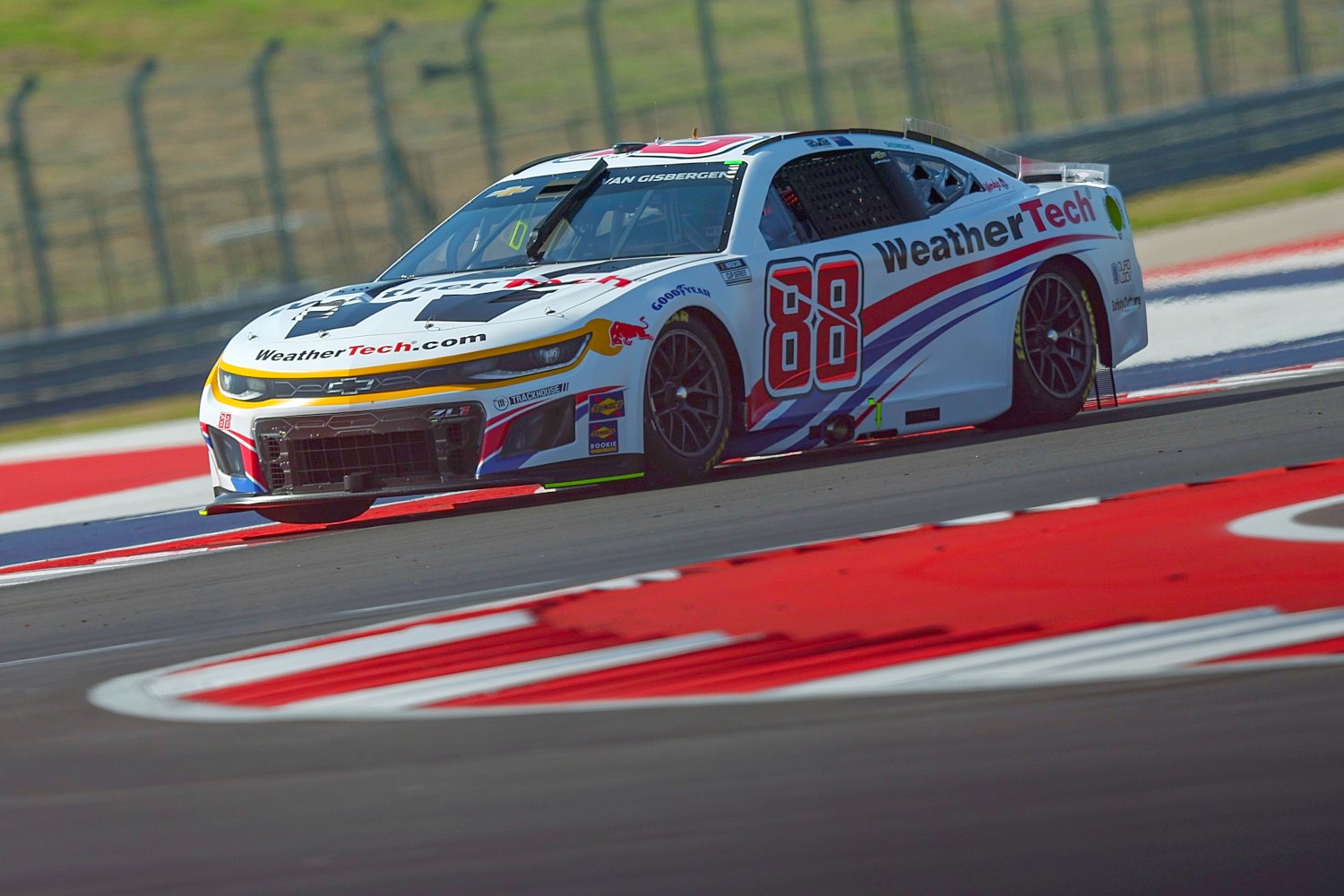
Shane Van Gisbergen, driver of the #88 WeatherTech Chevrolet, drives during practice for the NASCAR Cup Series EchoPark Automotive Grand Prix at Circuit of The Americas on March 01, 2025 in Austin, Texas. (Photo by Meg Oliphant/Getty Images)
NASCAR Crew Chief and Personnel Changes
– Ross Chastain (Trackhouse No. 1): New crew chief Brandon McSwain (formerly an engineer with Hendrick’s No. 24). Previous chief Phil Surgen moves to another role at Trackhouse. – Kyle Busch (RCR No. 8): New crew chief Jim Pohlman (from JR Motorsports Xfinity). Randall Burnett shifts to Trackhouse for Zilisch. – Connor Zilisch (Trackhouse No. 88): Crew chief Randall Burnett (from RCR No. 8). – Daniel Suárez (Spire No. 7): Retains Ryan Sparks as crew chief; Matt McCall promoted to competition director at Spire. – Erik Jones (Legacy No. 43): New crew chief Justin Alexander (RCR veteran); Ben Beshore moves to race engineering director. – Noah Gragson (Front Row No. 4): New crew chief Grant Hutchens; Drew Blickensderfer becomes competition director.
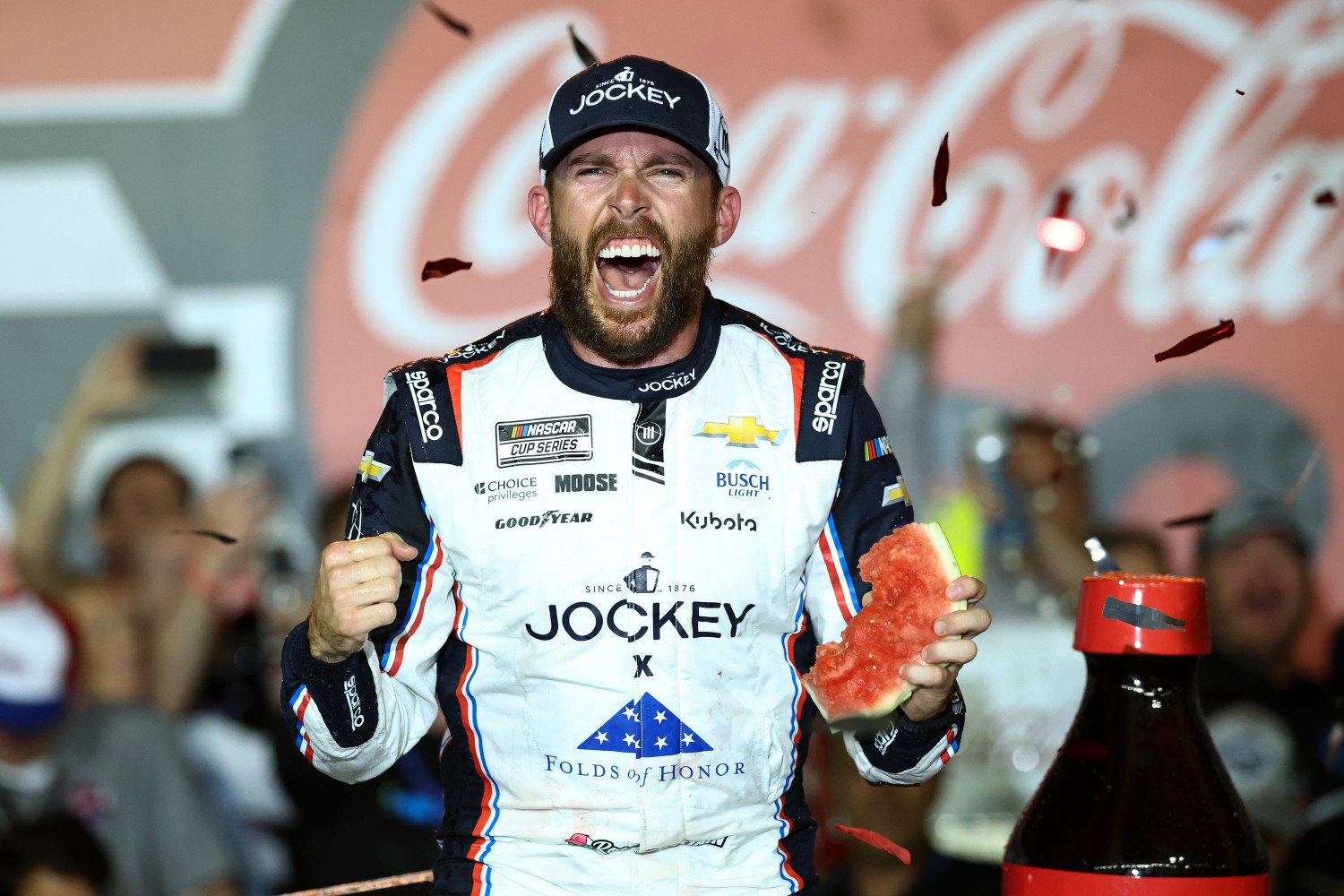
Ross Chastain, driver of the #1 Jockey x Folds of Honor Chevrolet, celebrates in victory lane after winning the NASCAR Cup Series Coca-Cola 600 at Charlotte Motor Speedway on May 25, 2025 in Concord, North Carolina. (Photo by Jared C. Tilton/Getty Images for NASCAR)
NASCAR Team and Manufacturer Changes
– Trackhouse Racing: Expands effectively with Zilisch’s promotion; car number swap (88 and 97); new Red Bull sponsorship for Zilisch and van Gisbergen (25 races total). – Haas Factory Team (No. 41): Switches from Ford to Chevrolet with Hendrick alliance; Cole Custer full-time. – Rick Ware Racing: Switches from Ford to Chevrolet with RCR alliance; ownership shift to T.J. Puchyr; Corey LaJoie runs partial schedule in No. 15. – Other Stables: Front Row, Hendrick, Joe Gibbs, Penske, Roush Fenway Keselowski, 23XI, Legacy, and Kaulig see no major team expansions or folds, but various sponsorship renewals (e.g., Dollar Tree/Family Dollar through 2028 for Legacy). – Technical Boost: NASCAR increases horsepower to ~750 on short ovals (<1.5 miles) and road courses (up from 670).
Changes in Other Series (Xfinity/O’Reilly Auto Parts Series and Trucks)
For completeness, here’s a high-level overview of notable shifts mentioned in broader silly season coverage: – O’Reilly Auto Parts Series (formerly Xfinity): Rebranded with new sponsorship. Key driver moves include Brent Crews to Joe Gibbs No. 19 (29 races), Rajah Caruth splitting JR Motorsports No. 88 and Jordan Anderson No. 32, Corey Day to Hendrick No. 17 full-time, and Harrison Burton to Sam Hunt No. 24. Teams like Viking Motorsports expand to two cars, Kaulig pauses operations, and RSS switches to Chevrolet. Age minimum lowered to 17 for certain tracks.
NASCAR OReilly Auto Parts Series Logo
– Craftsman Truck Series: Michael McDowell heads to Trucks (as noted in your article), Ross Chastain gets a new crew chief in some reports, and Justin Haley joins Kaulig full-time. Other moves: Rajah Caruth leaves Spire No. 71; expansions at Jordan Anderson and Young’s Motorsports. Additionally, RAM returns as a manufacturer for the first time since 2012, partnering with Kaulig Racing and Cummins; they’ve introduced a reality show (“Race for the Seat”) to select a driver for one of their entries.
2026 Schedule Highlights
Several tracks shift dates: Chicagoland returns (July doubleheader), North Wilkesboro hosts first Cup points race in 30 years, All-Star at Dover, In-Season Challenge back with new tracks ending at Indy. Trucks add St. Petersburg and San Diego; finale at Homestead.
Guven joins the already confirmed trio of Thomas Preining, Ricardo Feller and Klaus Bachler in the “Grello” liveried No. 911 entry.
In a post on social media, Manthey wrote: “A new season, a new chapter — and we’re rolling into Daytona with serious intent. Before we hit the High Banks, there’s one more update to our driver line-up for the first 24h race of the year: reigning DTM Champion Ayhancan Güven joins the No. 911 crew at Daytona. The No. 912 is fully prepped as well, ready to take on our IMSA debut season.”
Guven made his IMSA debut in the 2025 Rolex 24 At Daytona, finishing second in Grand Touring Daytona (GTD) with Wright Motorsports.
Meuspath “After the first IMSA test in Daytona in November, we are now looking forward to the official start of the season in January. We are particularly pleased to be able to count on a very strong driver line-up with close ties to Manthey: with Ryan, Riccardo, Morris and Richard as the fourth man for the 24-hour race, we are relying on absolute constants in the Manthey 1st Phorm car – we have gained a lot of experience and celebrated many successes with each of them. Well-known and proven faces will also be at the start for us at the wheel of the starting number 911. Alongside Thomas and Klaus, we are delighted to welcome on board Ricardo, who joins us with valuable IMSA experience. We are excited to see what we can achieve in the coming season,” says Patrick Arkenau, Director Racing at the Manthey Racing GmbH.
Nicolas Raeder, Managing Director of the Manthey Racing GmbH, adds: “With the start of the IMSA season, a new and exciting chapter will begin for us very soon. We can rely on experienced drivers, most of whom already know our team from the DTM, WEC and the Nürburgring, and we are proud that these seven will represent us in America next year. I am looking forward to laying the foundation for a successful season with this team at the first race in Daytona.”
After the official Daytona pre-test, known as ROAR, from 16 to 18 January, the IMSA season opener for Manthey is scheduled for 24 January 2026 with the 24 Hours of Daytona. This event will be followed by four more endurance races in Florida, New York, Wisconsin and Georgia, each lasting between six and twelve hours.
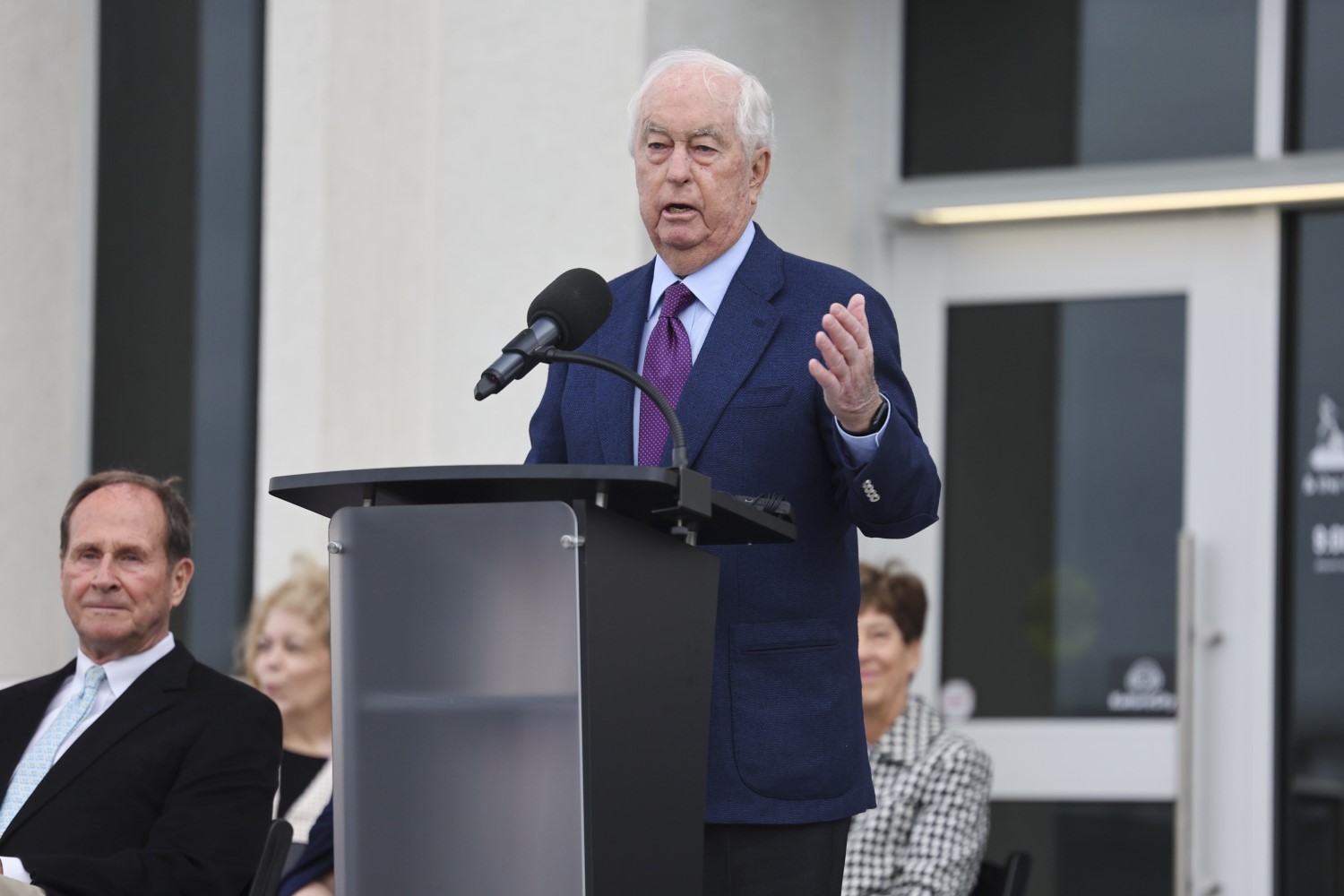
In a major boost for team finances, head of Penske Entertainment, Roger Penske, has committed an additional $11 million to the IndyCar Leaders Circle program over the 2026, 2027, and 2028 seasons. This increase effectively adds $500,000 per qualifying contract annually, providing critical support as teams prepare for the significant costs of introducing the all-new ‘spec’ Dallara IR-28 chassis in 2028.
–by Mark Cipolloni–
The Leaders Circle program, established in the early 2000s, delivers guaranteed prize money to the top 22 finishers in the annual entrants’ championship. These payouts reward full-season participation and help offset the high costs of competing in the NTT IndyCar Series. The program is exclusive to the series’ 25 charter entries, which compete for the 22 available contracts.
In 2025, Penske Entertainment allocated $31.9 million for the Leaders Circle, with each contract valued at approximately $1.145 million. Starting in 2026, the per-contract amount rises to $1.645 million — an increase of $500,000 per team. This marks the largest single-year jump in the program’s history since its inception in 2002 and will apply through 2028.
IndyCar President Doug Boles highlighted the significance of the move, stating: “Roger [Penske] made a pretty big commitment to the charter teams and the Leaders Circle by increasing the Leaders Circle by $11 million in ’26, ’27, and 28 from where it was in ’25. That was just Roger doing the right thing to help IndyCar teams, his partner teams, be more successful and have a little more cash to move forward.”
Roger Penske – IMS Museum Celebrates Grand Reopening – Photo By Chris Owens/Penske Entertainment
The timing of this financial enhancement is particularly strategic. Teams currently face annual operating budgets ranging from $8-10 million (and up to $11-12 million for top programs) per entry, driven by factors like engine leases, hybrid technology (introduced in 2024), and general inflation in racing costs. The $500,000 boost represents roughly 17-20% of a typical team’s budget, offering meaningful relief.
More crucially, the increase aligns with preparations for the 2028 chassis transition. The current Dallara DW12 chassis, in service since 2012 (with updates like the aeroscreen and hybrid integration), will be replaced by the new IR-28. Teams are expected to budget upwards of $1 million per car for the switch to the updated Dallara model. The IR-28 promises a lighter overall weight (targeting an 85-100 lb reduction, including a 25-lb lighter gearbox), a more powerful 2.4-liter twin-turbo V6 engine (up from the current 2.2-liter), and continued hybrid evolution — all aimed at enhancing performance, safety, and fan appeal.
On-track testing for the new chassis is slated to begin in early 2026, with prototypes potentially ready by late 2025 and manufacturer testing targeted for mid-2026. The full rollout in 2028 will mark the first clean-sheet chassis redesign in over 16 years, addressing accumulated modifications and setting the stage for future competition.
This Leaders Circle enhancement follows smaller adjustments in recent years, including a $100,000 increase for 2025 (bringing contracts to $1.2 million) and prior fluctuations tied to hybrid upgrades and economic factors. With the series benefiting from a recent 33% stake sale to Fox Corporation and ongoing growth efforts, the commitment underscores Penske Entertainment’s focus on team stability and long-term competitiveness.
As IndyCar continues its upward trajectory—highlighted by competitive ‘spec series’ racing, the iconic Indianapolis 500, and expanding visibility — this financial support positions charter teams to invest more effectively in development, talent, and operations ahead of the exciting 2028 era. Stay tuned to AutoRacing1.com for further updates on the IR-28 rollout, engine developments, and the 2026 season.
Four changes have already been made to the 2026 NASCAR Cup Series playoffs ahead of Monday’s announcement of the championship format. NASCAR is set for a potentially landscape-changing week, with the governing body poised to announce changes to its championship format following sustained discontent from fans, as well as past and present drivers.
Pressure on NASCAR to change its championship format increased following last November’s finale in Phoenix, Arizona, which saw Denny Hamlin fall painfully short of being crowned Cup Series champion to Kyle Larson. The Joe Gibbs Racing star dominated proceedings and was a few laps away from the checkered flag when a caution threw his victory into doubt.
Hamlin’s No. 11 was then undercut by Kyle Larson on pit road, with the Hendrick Motorsports star taking two tires instead of four. Larson finished ahead of Hamlin, therefore being crowned Cup Series champion for a second time. The finish sparked outrage over Hamlin’s heartbreak, as the race was his last chance to be crowned champion before his father, Dennis, passed away. Dennis was seriously ill last year, but died last month on Dec. 28, following a devastating house fire that also left his mom hospitalized.
Hamlin was one of many critics of NASCAR’s playoff format and had long called for changes to be made. It was speculated shortly after that changes would be made to NASCAR’s championship format.
Still, official confirmation won’t come until Monday, which also follows last month’s bitter antitrust lawsuit between Hamlin and Michael Jordan’s 23XI Racing/Front Row Motorsports against the governing body, which was eventually settled.
Sign up to our NASCAR newsletter here.
However, before Monday’s format announcement, four changes have already been made to NASCAR’s playoffs. Homestead-Miami will replace Phoenix as the host of NASCAR’s championship races in 2026. Phoenix will be pushed back to the Round of 8.
Phoenix Raceway is taking over as the opening race of the Round of 8 (Race 33), replacing Las Vegas Motor Speedway. Talladega Superspeedway and Martinsville Speedway remain unchanged and will continue to close out the semifinal round as Races 34 and 35.
Las Vegas is still part of the postseason, but its role has been pushed back to the Round of 12, filling the spot vacated by New Hampshire Motor Speedway.
New Hampshire had long been in a traditional position as the round opener, but Las Vegas will instead host the middle race (Race 31). Kansas Speedway will open the Round of 12 (Race 30), while the Charlotte Motor Speedway Roval will once again serve as the cutoff race (Race 32) in that stage.
The Round of 16 remains untouched, with Darlington Raceway opening the playoffs (Race 27), followed by stops at World Wide Technology Raceway at Gateway (Race 28) and Bristol Motor Speedway (Race 29).
New Hampshire is the lone race on the 2025 playoff schedule that will not carry over into the 2026 postseason.