



STAMFORD — Kevin Nizolek and his son, Justin Nizolek, who played multiple sports during his years in Stamford, spent a lot of time in the car driving to Justin’s sporting events.
Rec Sports
Delaware, New Jersey face foster care shortage


This story is part of the WHYY News Climate Desk, bringing you news and solutions for our changing region.
From the Poconos to the Jersey Shore to the mouth of the Delaware Bay, what do you want to know about climate change? What would you like us to cover? Get in touch.
There’s a shortage of foster parents across the U.S., leaving hundreds of thousands of kids without permanent homes. Many kids age out of the foster system, and don’t have the necessary resources to find a home on their own.
Child placing agencies in New Jersey and Delaware, where the number of licensed foster homes are on the decline, are urging residents to help a child or teen in need of a home. WHYY News organized events in Cherry Hill, New Jersey and Wilmington this week to provide resources for potential foster parents as part of “Caring for Kids,” a civic news project covering foster care and adoption.
Close to 3,000 kids were in New Jersey’s foster care system as of 2023. Brandi Harding, of the state’s Division of Child Protection and Permanency, said that fewer people are fostering children in the state, partly because there are more resources available to keep kids with their families.
Though the state’s priority is helping children remain with their biological families, more foster parents are needed when that’s not an option. Harding said residents don’t need to be “superheroes” to apply to become a foster parent.
“The secret is resource parents are just everyday people, just like you and me,” she said. “The only difference is they took that first step and then the next step until they were able to open their hearts and their homes to a child in need.”
There’s also a shortage of foster parents in Delaware, where about 500 kids are involved in the foster care system each year. Joseph Balinsky, of the Division of Family Services, said many people have misconceptions about the money and skills needed to be a foster parent.
“One of the most important things is that you can do it,” he said. “There’s so many people that doubt themselves, but every child deserves some love, respect and a decent place to lay their head at night. And if a parent can provide that, then we’re willing to work with you.”
Continue Reading
Dec. 5, 2025, 10:36 a.m. ET
A woman and her ex-boyfriend convicted of defrauding the state of unemployment benefits have been sentenced, federal officials said.
Timeka Johnson, 44, and Ray Anthony Eddington, 45, were sentenced Thursday in U.S. District Court in Detroit, Jerome Gorgon, U.S. Attorney for the Eastern District of Michigan, said in a statement.
Johnson, a former Michigan Unemployment Insurance Agency employee, was given 3.5 years in prison by a judge for aggravated identity theft and conspiring to engage in wire fraud, according to Gorgon.
Eddington was sentenced to three years for conspiring to engage in wire fraud, he said.
They were also ordered to pay $250,001 in restitution as part of their sentence, the U.S. Attorney General said.
“It is one thing to steal if you are hungry and can’t find a job,” Gorgon said. “But it is despicable to abuse your position of trust so that you can steal from a program needed to help the unemployed.”
Jason Palmer, director of the Michigan Unemployment Insurance Agency, said he was proud of investigators’ success in “bringing bad actors to justice, especially those who worked for the agency.”
“Timeka Johnson’s actions prove once again that crime doesn’t pay,” he said in a statement. “The UIA aggressively goes after anyone who thinks they can get away with stealing taxpayer money.”
Attorneys representing Johnson and Eddington were not immediately available for comment on Friday.
However, Johnson’s attorney, Ben Gonek, wrote in his sentencing memorandum to the court on her behalf that she has never denied responsibility for her actions.
He also said the single mother is a first-time offender with no criminal history and struggles with marijuana abuse.
“She is a lifelong caregiver, community mentor, and volunteer,” Gonek wrote in the memo. “Her record of service, which includes feeding the homeless, coaching youth sports, leading health and fitness programs, volunteering at church, assisting the elderly, and helping families in crisis, is not sporadic but continuous. She is alsothe sole emotional and financial anchor for her daughter, whose stability and development depend on her mother’s presence.”
Johnson’s daughter was fathered by her co-defendant, according to Vincent Toussaint, the attorney representing Eddington.
The lawyer said in a sentencing memo that his client “has accepted responsibility for his actions, has been introspective about his criminal activity and has shown genuine remorse for his actions.”
He also said Eddington’s mother was a victim of violence, and his father was incarcerated. His childhood didn’t become stable until after his mother remarried, the attorney wrote.
Toussaint also said in the memo that while his client was convicted of aiding and abetting in Mount Pleasant in 2003, he has been continuously employed since being discharged from parole in 2008, and most recently, has worked as a small film producer and director.
Isabella County Circuit Court records said Eddington was convicted in 2004 as a habitual offender of delivering drugs within 1,000 feet of school property and resisting arrest.
“Mr. Eddington is 45 years old and understands that his conduct must evolve,” his attorney wrote. “With regard to Mr. Eddington’s rehabilitative potential, there really should be no question that this has truly impacted his life.”
Authorities alleged Johnson used her employee access to the state’s unemployment benefits system to process fraudulent claims in other people’s names. They accused Eddington of withdrawing money from the claims from ATMs.
Federal officials said in court filings that the two ran their scheme from April 2020 through July 2021. They said the couple received more than $250,000 in fraudulent unemployment assistance payments from the state.
Johnson pleaded guilty to federal charges in May. She faced a mandatory two years in prison for aggravated identity theft and up to 20 years for conspiracy to engage in wire fraud.
Eddington pleaded guilty to charges in March. He faced up to 20 years in prison for conspiracy to engage in wire fraud.
The sentencings “demonstrate the Office of Inspector General’s commitment to investigate bad actors who defraud the unemployment insurance program for financial gain, particularly those like Timeka Johnson who abused her position of trust as a Unemployment Insurance Examiner,” Megan Howell, Special Agent-in-Charge of the U.S. Department of Labor’s Office of Inspector General for the Great Lakes Region, said in a statement.
Other Michigan residents have been charged with crimes involving the state’s unemployment agency.
In September, an Eastpointe woman and a former Michigan Unemployment Insurance Agency employee pleaded guilty to taking bribes to circumvent fraud prevention triggers. She is scheduled to be sentenced on Jan. 22, 2026.
The month before that, a Redford Township woman who worked for the Michigan Unemployment Insurance Agency pleaded guilty to federal bribery and identity theft charges. She is scheduled to be sentenced on Jan. 8.
In June, a Detroit woman who worked for the unemployment agency was sentenced to almost three and a half years in prison for taking bribes to process fraudulent unemployment claims during the COVID-19 pandemic.
cramirez@detroitnews.com
@CharlesERamirez
Dec. 5, 2025, 12:15 p.m. CT
The Green Bay Packers found a special way to let quarterback Jordan Love know he’s the team’s 2025 Walter Payton Man of the Year Award nominee.
In a sweet video posted to the team’s social media channels, the Packers brought Love into a studio and told him he was taping reads from a teleprompter. When Love was puzzled by the teleprompter being blank, wife Ronika Stone Love and mom Anna Love walked into the studio.
Love’s face lit up when he saw them, and then Anna handed him a card and said, “Since you’re doing all the good reading, can you read this out loud for me?”
“What a surprise this is,” Love responded. And then he read the card.
“Congratulations! You’re the Green Bay Packers’ nominee for the 2025 Walter Payton Man of the Year.”
With cheers from Anna and Ronika, Love said, “Crazy! Thank you! Wow, what a surprise! Y’all got me!”
The Walter Payton NFL Man of the Year Award is the league’s most prestigious honor, recognizing players who excel on the field and demonstrate a commitment to creating a positive impact beyond the game.
Love launched his foundation, Hands of 10ve, in 2024 to empower children to participate in sports, raise awareness about mental health and suicide prevention, and foster stronger relationships between law enforcement and the communities they serve.
Through his 10ve for Cleats initiative, he has given shoes to youth sports teams and will be donating new cleats to a youth sports team in Wisconsin for every passing or rushing touchdown he scores this season.
He also participated in fundraising for the Salvation Army of Greater Green Bay, Rawhide Youth Services and the Vince Lombardi Cancer Foundation. He sponsored community walks in Brown County and Kern County, California, to raise visibility for organizations dedicated to suicide prevention and support those affected by loss.
In April, Love visited the Kern County Youth Detention Center in Bakersfield to talk about the importance of making positive choices, surprising each at-risk youth attendee with a $20,000 scholarship toward trade school or college. Love raised awareness and funds for the Bakersfield Police Activities League (PAL) through the NFL’s My Cause My Cleats initiative.
The Man of the Year Award winner will be announced at the NFL Honors on Feb. 5.
Richard Ryman and Kendra Meinert of the Green Bay Press-Gazette contributed to this story.
Rec Sports
Comparative effects of French Contrast Method vs. Complex Training on explosive power and its endurance in youth badminton athletes
Abstract
Badminton players normally prioritize technical and tactical training over physical conditioning before competition, presenting a challenge in enhancing physical fitness within a constrained timeframe. While evidence have indicated complex contrast training can enhance strength and power, it is still unclear whether the French Contrast Method Training (FCMT) can bring greater explosive power gains to young badminton players. This study evaluated the effects of French Contrast Method Training versus Complex Training on lower limb explosive strength and its endurance in elite adolescent male badminton players. In a single-blind randomized controlled trial, 20 athletes were allocated to either an FCMT group (n = 10) or a CT group (n = 10) and completed an 8-week intervention. Performance was assessed pre- and post-intervention using standardized tests, including countermovement jump (CMJ), squat jump (SJ), drop jump (DJ), 10-m sprint, 5-0-5 agility test, eccentric utilization ratio (EUR), one-repetition maximum (1RM) squat, and lower extremity explosive endurance (LEEE). Subjective fatigue was monitored using the rating of perceived exertion (RPE) scale. Results demonstrated that while both training modalities improved explosive strength, the French Contrast Method Training led to significantly greater improvements in CMJ, DJ, Reaction Strength Index (RSI), EUR, agility, and LEEE (p < 0.05). The French Contrast Method Training also induced a larger effect size across most performance indicators. In contrast, the Complex Training improved strength and speed-related measures but showed limited effects on stretch-contraction cycle (SSC) utilization and endurance. Perceived fatigue was consistently higher in the CT group than in the FCMT group. These findings suggest that adaptation occurred more rapidly in the CT group (after roughly 3 weeks), whereas the FCMT group showed a more prolonged adaptation period (~1 month). The findings suggest that the French Contrast Method Training is more effective than the Complex Training in developing reactive strength, agility, SSC efficiency, and explosive endurance in youth badminton athletes within a short-term training period. Given its neuromechanical advantages across the force–velocity spectrum, the French Contrast Method Training is recommended for use in the pre-competition phase of training, while Complex Training may be more suitable for foundational strength development. These results provide practical insights for coaches and support the strategic integration of French Contrast Method Training into performance enhancement programs for adolescent athletes.
Citation: Huang R, Gao Y, Yang K, Mo Y, Lu Y, Gao Z (2025) Comparative effects of French Contrast Method vs. Complex Training on explosive power and its endurance in youth badminton athletes. PLoS One 20(12):
e0338383.
https://doi.org/10.1371/journal.pone.0338383
Editor: Javier Abián-Vicén, University of Castilla-La Mancha, SPAIN
Received: August 24, 2025; Accepted: November 23, 2025; Published: December 5, 2025
Copyright: © 2025 Huang et al. This is an open access article distributed under the terms of the Creative Commons Attribution License, which permits unrestricted use, distribution, and reproduction in any medium, provided the original author and source are credited.
Data Availability: The data that support the findings of this study are available in Figshare at https://doi.org/10.6084/m9.figshare.30349558.v1.
Funding: The author(s) received no specific funding for this work.
Competing interests: The authors have declared that no competing interests exist.
Introduction
Strength is a fundamental quality of the human body for sports, essential for developing other physical attributes and improving sports performance and competitive outcomes [1]. Many researchers are dedicated to discovering advanced training methods to improve athletes’ muscle strength and performance [2,3]. Badminton is a multidirectional explosiveness-dependent sport [4], and the key to success lies in showing intense rhythmic movements, which include shuffling, jumping, twisting, stretching, and striking combined with a superior reactive ability [5]. A recent study quantifying muscle synergies during high-velocity badminton techniques revealed that performance is dependent on highly specialized neuromuscular coordination patterns to achieve maximal movement velocity [6]. This complex neuromuscular control mechanism indicates that explosive power in badminton stems not only from muscle strength and power output, but also requires the result of efficient and coordinated muscle recruitment. However, these qualities possess distinct physiological adaptive demands, making their simultaneous development within a training program a complex task for practitioners.
The Post-activation performance enhancement (PAPE) is a physiological phenomenon characterized by a transient increase in muscular performance following a conditioning activity, serving as the foundational mechanism for a variety of contemporary training strategies [7]. One such strategy is Complex Training (CT), which alternates high-intensity strength exercises with biomechanically similar plyometric or ballistic movements within a single session [8–10]. Complex training takes advantage of the PAPE mechanism to efficiently and simultaneously develop strength and explosive power in a single training session, meeting the training needs of practitioners. A more structured variant is the French Contrast Method Training (FCMT). Developed by French track and field coach Gilles Cometti and later promoted by Dietz. The FCMT employs a precise sequence of four exercises (large load → bodyweight jumps → light load → assisted jumps) with varying loads to maximize PAPE, thereby enhancing short-term explosive performance (e.g., in jumping and sprinting) and bringing about a significant anaerobic challenge that improves physiological endurance [11]. It is theorized that this approach may also foster long-term adaptations for more efficient power production [11].
Recent updates to badminton rules, techniques, and tactics have introduced a new level of unpredictability to match outcomes, challenging players to adapt to their bodies in new ways. Chunlei Li’s analysis highlights the critical role of short bursts of explosive power in matches where the ratio of net playing time to intervals is approximately 1:2, with rounds lasting less than 10 seconds accounting for 80% of matches [12]. However, with the shift in modern tactics to longer rounds of more than 10 seconds, with short breaks between scores (typically 27–30 seconds), the average length of the game has become longer, implying that sustaining explosive endurance is important to winning the game [12,13]. During long matches, players must demonstrate the explosiveness and endurance to handle frequent starts, stops, and quick movements in limited space. This requires strong muscle contractions, as well as effective utilization of the stretch-shortening cycle. Previous studies have shown that combining resistance training and plyometric training can effectively enhance the agility and reactive strength of athletes [14]. However, the impact of FMCT on the agility and reactive strength of athletes remains unclear.
Badminton players traditionally prioritize technical and tactical training over physical conditioning before matches, presenting a challenge in enhancing physical fitness within a constrained timeframe. Evidence indicates that CT’s appeal among coaches stems primarily from its time efficiency, as this method can yield comparable improvements in athletic performance to traditional strength and power training, but in a more time-efficient manner [15,16]. Several studies have explored the short- or long-term effects of FCMT on adult players on various outcome indicator [17–22]; however, there is limited research on the long-term effects of FCMT on adolescent badminton players. In addition, few studies have compared FCMT and CT with each other and few studies have explored the adaptation period of athletes to FCMT. Therefore, this study therefore aimed to determine if 8 weeks of French Contrast Method Training (FCMT) is more effective than Complex Training (CT) at improving lower limb power and its endurance in junior badminton players, while also evaluating the adaptive responses to both training modalities.
Methods
Study design
The research experiment was a two-arm, single-blind, randomized controlled trial in which the subjects were not aware of the purpose of the intervention or the grouping, and the design and methodology were conducted in strict accordance with the requirements of the Ethics Committee of Guangzhou Sports Institute. All subjects signed a written informed consent form; for minor participants, their guardians also signed the consent form. The recruitment period for this study is from May 5, 2023 to May 6, 2023. The study was reviewed by the Ethics Committee of Guangzhou Sports Institute (No. 2023LcLL-14; date: May 4, 2023) and was registered with the China Clinical Trial Registry (registration number: ChiCTR2400092439). All subjects were familiarized with both interventions and testing procedures before the intervention period. Subjects who met the inclusion criteria were randomized into two groups: the FCMT group and the CT training group. The random assignment method employed a simple random draw: 1. Participants were ranked from 1 to 10 based on the pre-test list order. The pre-test list was sorted in ascending order by the number of strokes in surnames. If the number of strokes in surnames was identical, the third character of the full name was used for ascending order. No participants in this experiment required comparison of the second character in their surnames. 2. Prepare 10 distinct slips of paper numbered 1–10, crumple them into balls, place them in a sealed box, shake thoroughly, and draw the slips. 3. Starting from the first draw, odd-numbered slips were assigned to the FCMT group (the intervention group), while even-numbered slips were assigned to the CT group (the control group). Except for the pre-test list sorting performed by the author, all randomization procedures were conducted by an uninformed third party. All subjects completed five baseline tests before randomization into groups, including jump tests (CMJ, SJ, and DJ), 10-meter sprint test, agility test (5-0-5 test), Lower Extremity Explosive Endurance Test, and Maximum Strength Test, and the EUR was calculated based on the percentage of the jump test, which EUR, Agility Test, 10m Sprint Test, and Maximum Strength Test were used as the primary metrics for assessing lower extremity explosive endurance, and the jump test metrics were used as secondary metrics in this study and for variability analysis of specific gains. To isolate the effects of the two distinct training structures and observe the resulting adaptation patterns without the confounding influence of load progression, a fixed training load was deliberately employed for both groups throughout the 8-week intervention period. Both groups therefore followed an identical loading scheme (load weight, number of repetitions, and number of sets) during all sessions. The training interventions and tests were conducted in the physical training hall of the Guangdong Youth Sports Competition School. Since the participants in the experiment were all from full-time sports training institutions, their specialized training arrangements, dietary habits, and work and rest schedules were uniform to minimize the influence of external factors on the experimental results.
Participants
Sample needs were estimated through a pre-test power analysis (G*Power 3.1) (modeled as a paired t-test, α = 0.05, power = 0.80, expected effect size = 0.80), which indicated a need for 24 participants, but was limited by the scarcity of this group given that the study population was elite youth athletes (all provincial or national youth games medalists), seasonal scheduling and training consistency requirements, 20 athletes were ultimately included (FCMT = 10; CT = 10). The situation where each group has a sample size of n ≤ 10 has been observed in previous similar studies [17,18,23]. In addition, in order to avoid unnecessary injuries and interference caused by asymmetry or safety hazards in squatting movement patterns, overhead squatting (one of the functional movement screens) was used as a subject screening index (those with FMS scores <1 were not included). As shown in Fig 1, 20 adolescent male badminton players volunteered to participate in this study and were randomly divided into the FCMT group (n = 10) and the CT group (n = 10) with the following inclusion criteria: 1) no impairment in squatting movement patterns (over-the-shoulder squat score of at least 2), 2) at least three years of resistance training experience, 3) participation in provincial/national youth tournaments, and 4) no history of physical or mental injuries from the beginning of the study to the end of the study there was no history of physical or mental injury. Participants who did not meet these criteria were excluded from the experimental results. Eligible participants completed the full intervention training and testing sessions. In addition, considering that physiological maturity can affect the training response of intermittent training [24], and then this study assessed differences in physiological maturity of subgroups by testing the age at peak height velocity (APHV) [25] of the subjects to exclude interference from ongoing growth spurts at this age.
Training program
The 8-week intervention comprised two supervised sessions per week (Mondays, 14:00–15:30; Fridays, 16:00–17:30) separated by closer to 72 hours minimum. Each session began with a standardized 20-min dynamic warm-up (mobility drills, dynamic stretching, activation) and concluded with a 10-min cool-down (static stretching). To ensure safety and technical consistency, two certified coaches supervised each station, provided spotting for barbell exercises, and reinforced proper technique. All coaches were trained on the study protocols before the intervention.
Before the intervention, participants completed a familiarization phase consisting of coach-led demonstrations and light-load practice of all exercises from both protocols to standardize technique and execution intent. The French Contrast Method Training (FCMT) and Complex Training (CT) protocols were co-designed by the investigators and certified strength and conditioning specialists to ensure fidelity to their respective theoretical frameworks. The interventions differed primarily in (i) organizational structure and (ii) PAPE activation strategy. The FCMT and CT training protocols were jointly developed by researchers and certified strength and conditioning specialists to ensure adherence to their respective theoretical frameworks (Table 1). The protocols differ fundamentally in two aspects: organizational structure and PAPE activation methodology. In terms of organizational structure, FCMT employs a sequential four-movement framework adapted from Hernández et al. [19], consisting of: high-intensity movement (isometric back squat), augmentation movement (drop jump), light-loaded movement (back squat jump), and accelerated augmentation movement (band-assisted jump). In contrast, CT follows a paired-exercise structure with two distinct cycles: Cycle 1 (back squat + drop jump) and Cycle 2 (back squat jump + single-leg box jump). Regarding PAPE activation, FCMT utilizes isometric back squats during the high-load phase based on evidence demonstrating the superior efficacy of isometric contractions for inducing PAPE [26–29], while CT employs back squats. This strategic difference reflects FCMT’s emphasis on optimizing neural excitation through isometric loading compared to CT’s focus on dynamic movement patterns. Both groups completed four sets per session with identical rest intervals (20-second intra-cycle and 3–4 minute inter-set recovery) and maintained consistent external loading parameters. The FCMT group (10 participants) and the CT group (10 participants) were divided into three groups for multiple-person circuit training (number of participants per group was distributed as follows: 2 groups × 3 participants/group, 1 group × 4 participants/group). All movements were executed at maximal velocity with high concentration, except during high-load exercises. Prior to the actual intervention, participants were familiarized with the two training protocols by watching a demonstration by a professional fitness coach and performing a lighter-load training protocol.
Testing program
As shown in Fig 2, the study arranged two main assessments, a pre-test (T1) before randomization and a post-test (T2) after an 8-week training period, where participants were given time to familiarize themselves with the test program during the week prior to testing. Considering the mutual exclusion of energy expenditure between the test program sequences, based on the testing principle of explosive strength testing before and endurance or maximal strength after; the testing procedure was divided into three days during the testing week (Monday, Wednesday, and Friday), with the 10-m Sprint, the CMJ test, and the SJ test performed on Monday, the body composition measurements and the Lower Extremity Explosive Endurance Test on Wednesday, and a 5-0-5 agility test, DJ test, and Maximum Strength Test on Friday. The T1 and T2 tests were always uniform in terms of test sequences, subject, and tester organization. To ensure reliable results, subjects maintained a consistent diet before testing, got adequate sleep, and avoided strenuous physical activity.
Test procedures
Body composition.
The body composition of participants was assessed using a bioelectrical impedance analyzer (Inbody), both before and after the experiment. Measurements of body height and mass were taken, from which the Body Mass Index (BMI) was calculated. To ensure accuracy, participants were asked to refrain from eating or drinking for 4 hours before the test and the subsequent warm-up. Additionally, the hip joint served as the reference point for measuring leg length and sitting height, critical for calculating the APHV [25].
Vertical longitudinal jump test.
Vertical jump tests consisted of the Counter movement jump (CMJ), Drop Jump (DJ), and Squat Jump (SJ). The tests were conducted using the Australian Smart Jump wireless test mat, Fusion Sports Smart Jump Mat, and each jump test was performed twice with a minimum of 1 minute between each test, and the average of the 2 tests was used as the basis for data analysis, with jump height and relative peak power in the jump tests collected as outcome indicators (in the case of the DJ test, the Reaction Strength Index (RSI) was included as one of the outcome indicators). In addition, the intra-group correlation coefficients of the pre-intervention tests showed good reliability and reproducibility (0.97, 0.92, and 0.91 for CMJ, SJ, and DJ heights, respectively; 0.97, 0.93, and 0.91 for relative power, respectively; and 0.82 for DJ-RSI).
First, the CMJ was used as an indirect measure of an athlete’s explosive lower body strength [30,31]. Participants were asked to stand at the center of the jumping mat, place their hands on their hips, squat at a controlled speed to an optimal depth, then jump upward with full force and land on the mat as close to the initial position as possible after reaching maximum height.
Second, the SJ test is often used to measure an athlete’s lower body explosive power (speed strength ability) [30,31]. The participant remains stationary in a semi-squat position for 3 seconds and then starts jumping upwards. The arm position and body position during the test are consistent with the CMJ test.
Finally, the DJ test is used to assess an athlete’s reactive jumping ability and explosive power in dynamic vertical jumps [30,31]. Participants are asked to place their hands on their hips, free-fall from a platform 40 cm above the ground, jump upwards with maximum effort to minimize time in contact with the ground, and then free-fall to the jumping mat after reaching maximum height.
Eccentric Utilization Ratio (EUR).
EUR is used to assess an athlete’s ability to utilize the stretch-contraction cycle (SSC) (A biomechanical mechanism in which a muscle contracts rapidly after being passively stretched, triggered by a neural reflex.), which is important in many sports [32,33]. EUR is the difference between CMJ height and SJ height, which reflects the efficiency of the SSC.
Sprint test and agility test.
The Sprint test was used to assess athletes’ linear speed and acceleration, key factors reflecting explosive lower limb strength [30,34]. Participants were tested on a 10-meter elapsed time using the Smart Speed Fusion exercise. Subjects were asked to start standing in front of the starting line (0.5 M from the first lighted gate) and then decelerate and cushion after passing through the second lighted gate as hard as they could. Each participant made 2 attempts with a minimum of 3 minutes between attempts. The 10M sprint test was performed 2 times with good reliability and reproducibility for ICC (ICC: 0.74).
The 5-0-5 test was used to evaluate the tester’s ability to change the direction of movement quickly, and its reliability has been confirmed in previous studies [35,36], and it has been proved that there is a high correlation between the reactive strength and the Change of Direction (COD), and that the body changing direction involves a relatively small angle of knee flexion and extension and a shorter ground contact time [37], which is conducive to the enhancement of the badminton players’ efficiency in attacking, defending and stroke quality. A 15-meter-long flat and open running track was set up, with a starting line and a marking line at each end (the width of both was not included in the length of the track), and timing gates were placed 5 meters away from the marking line (on both sides of the track). Subjects from the starting line with maximum effort sprint to the marking line, must touch the line with one foot and complete a 180 ° turn (not touching the ground with their hands), and then return to the starting line at full speed. The optimal time for the 5-meter round trip (i.e., from touching the line to the 5-meter timing gate) was recorded as the test data, and the test was performed twice with a 2-minute rest period between each test, and The ICC had good reliability and reproducibility (ICC: 0.71).
Lower Extremity Explosive Endurance Test (LEEE).
The LEEE protocol used in this study was adapted from the intermittent vertical-jump paradigm of Hespanhol et al., originally developed for volleyball, to better reflect badminton’s repeated, short-interval, high-intensity demands [38]. External load was set at 30% 1RM, following Stone et al., who identified ~10–40% 1RM as optimal for maximizing lower-body power output, thereby supporting the test’s validity for explosive-strength qualities [39]. The set comprised 15 repetitions, a volume selected to elicit appreciable fatigue for endurance assessment while minimizing technical degradation, consistent with prior repeated-jump protocols [38]. Procedurally, participants performed 15 continuous loaded squat jumps at maximal velocity with standardized technique cues (hands on bar, full foot contact, consistent countermovement depth). Repetitions were paced by an audible metronome (researcher-controlled) to avoid clustering and ensure uniform inter-rep timing. Verbal encouragement was standardized, and safety spotting was provided throughout. Given the high physiological load, no retesting was scheduled. To enhance reliability, all participants completed a formal familiarization session one week prior to testing that included instruction, equipment setup, and practice trials at the prescribed load. Evidence indicates that jump tests conducted with comparable instrumentation and procedures exhibit excellent reliability, providing indirect support for the present protocol [40].
Maximum strength test.
There are various methods for assessing the maximum strength of athletes, including predictive models and direct measurement method [41–43]. This study employed direct measurement method for testing. At the end of a standardized warm-up routine, subjects performed a series of weighted deep squats consisting of: 50% 1RM (5 reps), 70% 1RM (3 reps), 80% (2 reps), and 90% (1 rep). Finally, a separate 1RM test was performed, each time the weight was increased by 4 kg or decreased by 2 kg. A 3- to 5-minute rest period was allowed between all tests, and all participants were asked to reach the 1RM in 3–7 attempts. Participants were verbally encouraged and observed for depth of squat (thighs parallel to the floor). The final successful squat weight was recorded as the 1RM weight. In the direct measurement method, the participant increases the weight incrementally, and in order to ensure that the participant is exerting maximum effort in each squat, the maximum strength test is performed only once, therefore no ICC calculation is performed.
Monitoring indicators and processes.
Exercise-induced fatigue, the phenomenon of a temporary decrease in physical function due to workload, is both an expected outcome and a stimulus during adaptation. In order to track athletes’ fatigue and adaptation during training, the study utilized the subjective Rating of Perceived Exertion (RPE) scale [44,45]. Subjects were asked to complete a self-perceived fatigue assessment scale for fatigue monitoring after each training session. In addition, subjects completed a familiarization with the RPE scale during the screening phase of the experiment to ensure that each fatigue monitoring data formally included was not adversely affected by cognitive differences.
Statistical analyses
In this study, we analyzed basic participant characteristics including age, training years, height, weight, BMI, Age at peak height velocity (APHV), and Over-the-shoulder squat score. Outcome measures included sprint tests (10M sprint, 5-0-5 test), CMJ and SJ (heights and relative power), DJ performance (height, relative power, Reaction Strength Index), SSC performance indices (EUR), 1RM deep squat performance, and LEEE results. For descriptive statistics, we reported Means and Standard Deviations (SD) for normally distributed data, and medians along with range (maximum, minimum) for non-normally distributed data. Normality was checked using the Shapiro-Wilk test. Reliability was assessed using the Intraclass Correlation Coefficient (ICC), with values above 0.7 indicating high reliability [46]. However, due to the physically demanding nature of the Maximum Strength and Lower Explosive Endurance Tests, these were not repeated and thus not included in the reliability assessment. For inferential statistics, non-normal distributions or variances prompted the use of the Mann-Whitney U test or the Wilcoxon test to analyze differences within and between groups. In cases of normal distribution, independent samples t-tests were used to examine baseline differences between groups, and paired samples t-tests were employed to compare changes before and after training within groups. For the pre- and post-intervention comparisons between the two groups, a two-way mixed-effects ANOVA was employed to examine the independent effects of group (FCMT vs. CT) and time (pre vs. post) on each dependent variable, and post hoc comparisons were performed using Tukey’s method. If data did not meet normality assumptions, nonparametric analysis (Kruskal-Wallis test) was performed, with post hoc comparisons conducted using the Dwass-Steel-Critchlow-Fligner method. A p-value of less than 0.05 was considered statistically significant. Given the small sample size, Hedges’ g value was used as the effect size to compensate for the statistical power. Effect size (ES) was calculated to assess the magnitude of changes, with Hedges’ guidelines [47] indicating small (0.2), medium (0.5), and large (0.8) effects for normally distributed data. For non-normally distributed data, the Rank Biserial Correlation (RBC) and Cureton’s guidelines were applied [48]. All statistical analyses were conducted using the jamovi software package (jamovi 2.2.2).
Results
As shown in Fig 1, no adverse reactions due to injury or early study withdrawal were reported by any subject during the 8-week study period. Furthermore, based on our observations, all subjects scored 3 points in the overhead squat test. Ultimately, data from 20 subjects (10 in the FCMT group and 10 in the CT group) were included in the statistical analysis. At baseline, there were no significant differences in descriptive variables or exercise parameters between the FCMT and CT groups (Tables 2 and 3).
Fatigue monitoring metrics results
As shown in Fig 3, there was a general decreasing trend in the RPE index for both groups. The CT group consistently exhibited a higher level of perceived fatigue after the training session compared to the FCMT group. Notably, the CT group showed a greater increase in perceived fatigue than the FCMT group during the 6th training session. However, between the 6th and 9th training sessions, the CT group showed a significant decrease in perceived fatigue that exceeded the decrease observed in the FCMT. After the 9th training session, perceived fatigue levels decreased dramatically in the FCMT group by a greater magnitude than in the CT group. Experimental data indicate that perceived fatigue in the CT group showed a significant decrease by Week 3, whereas perceived fatigue in the FCMT group exhibited a significant decrease after one month. Therefore, the CT group appears to have adapted to the training demands earlier than the FCMT group.
Results of test data analysis
As shown in Tables 4 and 5, after 8 weeks of training intervention, all the exercise parameters in the FCMT group showed significant enhancement and high effect sizes, whereas in the CT group, except for DJ-RSI (p = 0.94, ES = 0.02), EUR (p = 0.70, ES = 0.11), and LEEE (p = 0.28, RBC = 0.40), the other exercise parameters also showed significant elevation and high effect sizes. This suggests that FCMT was able to significantly enhance overall explosive strength and explosive endurance in adolescent athletes; CT was able to locally enhance explosive strength in adolescent athletes, but it was not significant for reactive strength, SSC utilization ability, and explosive endurance.
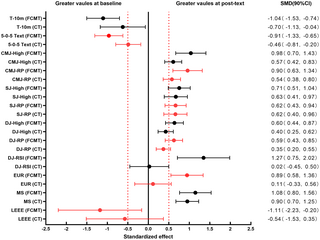
The results presented in Table 6 indicate that the FCMT group showed significantly greater gains in CMJ than the CT group (PCMJ-H = 0.02, ESCMJ-H = 1.06; PCMJ-RP = 0.04, ESCMJ-RP = 0.89), which suggests that the FCMT improved lower extremity explosive strength better than the CT. Similarly, in terms of reactive strength and agility, the FCMT group showed better gains than the CT group in both (PDJ-H = 0.03, ESDJ-H = 0.98; PDJ-RP = 0.02, ESDJ-RP = 1.06; PDJ-RSI < 0.01, ESDJ-RSI = 1.21; P5-0-5 < 0.01, ES5-0-5 = 1.26), which suggests that FCMT is more favorable to the reactive strength and agility abilities. In terms of SSC utilization capacity, the FCMT group was superior to the CT group (PEUR = 0.02, ESEUR = 1.06) and the CT group did not show significant improvement before and after the intervention (P = 0.70, ES = 0.11). In terms of explosive endurance, the FCMT group showed a better increase than the CT group (PLEEE = 0.03, RBCLEEE = 1); whereas the CT group did not show a significant change (P = 0.28), but showed a smaller medium effect (RBC = 0.42). This demonstrated that the FCMT significantly improved the athletes’ explosive endurance, while the CT group showed a smaller effect on the athletes’ explosive strength. However, in terms of maximal strength, both the FCMT and CT groups were effective in improving the athletes’ maximal strength, and the difference in the increase before and after the intervention was not significantly different between the two (P1RM Squat = 0.27, ES1RM Squat = 0.47). Similarly, in terms of speed power, both the FCMT and CT groups were effective in enhancing athletes’ speed power, both in longitudinal jumping (SJ) and horizontal acceleration (T-10m), but no significant differences were observed in the pre- and post-intervention differences in increases between the FCMT and CT groups (PSJ-H = 0.41, ESSJ-H = 0.34; PSJ-RP = 0.70, ESSJ-RP = 0.16; PT-10M = 0.07, EST-10M = 0.79).
Discussion
Explosive strength is influenced by multiple factors [49,50], so a single test to assess the effect of explosive strength enhancement has limitations, and the present study used a multidimensional explosive strength test to accurately analyze the mechanism of action of the two training methods. The results showed that the French contrast method training (FCMT) could significantly improve the lower limb explosive strength and explosive endurance of adolescent athletes, while Complex Training (CT) could significantly improve the lower limb explosive strength but not the explosive endurance. In the overall dimension, FCMT significantly outperformed CT in terms of explosive strength enhancement; in the local dimension, FCMT outperformed CT in terms of reactive strength, agility, and SSC utilization, while there was no significant difference between the two in terms of speed strength and maximal strength enhancement (Fig 4). Therefore, the explosive power improvement advantage of FCMT over CT mainly originated from the enhancement of reactive power, agility ability and SSC utilization ability.
The superior gains in reactive strength, agility, and stretch–shortening cycle (SSC) efficiency observed with French Contrast Method Training (FCMT) relative to Complex Training (CT) are plausibly attributable to differences in session organization and post-activation performance enhancement (PAPE) strategies. Whereas CT employs two independent contrast pairs, FCMT implements a sequential four-exercise progression that exposes the neuromuscular system to stepwise reductions in external load within each cycle. This configuration likely provides a broader stimulus across the force–velocity spectrum than paired contrasts. Conceptually, FCMT’s multi-load sequence also accords with the contemporary joint-by-joint paradigm, emphasizing inter-joint coordination and kinetic-chain force distribution—mechanisms relevant to movement efficiency and injury-risk management in multidirectional sports such as badminton [51]. From a risk–benefit standpoint, FCMT therefore appears theoretically well-suited for pre-competition programming. Additionally, the progressive load reduction in FCMT helps prevent fatigue accumulation from exceeding the enhancement effects of PAPE [52], thereby preserving neuromuscular recruitment capacity. This interpretation aligns with our fatigue monitoring, which showed lower post-session fatigue in FCMT compared with CT. With respect to high-load activation, FCMT’s use of isometric contractions is consistent with evidence that isometrics elicit robust PAPE responses [26–29], and may enhance the rate of force development (RFD)—a determinant associated with lower-limb explosive strength, reactive strength, and eccentric utilization rate [53–55]. Critically, we observed that the FCMT group demonstrated significantly greater improvements in these specific performance metrics compared to the CT group. Previous studies have demonstrated that isometric preactivation enhances subsequent peak force and explosive power output [56], providing additional supporting evidence despite being indirect. Finally, the present explosive-strength gains are congruent with reports of FCMT-related improvements in lower-body power among adult athletes across multiple sports [17–22]. These mechanistic interpretations are hypothesis-consistent rather than causal; studies incorporating neuromuscular measures (e.g., EMG timing, RFD profiling) are warranted to directly test these pathways.
In addition, differences in PAPE activation methods result in differences in the level of stimulation of the neuromuscular system within the entire training unit may be a plausible reason for the differences in SSC utilization gains between the two groups. It has been shown that lower extremity explosive strength gains are closely related to the utilization of elastic potential energy in the muscle and the activation of the muscle stretch reflex [49], and that the neuromuscular response varies with the level of fatigue [57]. Studies by C. Nichol et al. [58] have demonstrated that high-intensity anaerobic glycolytic exercise immediately attenuates the stretch reflex as a result of metabolic changes, thus decreasing sensitivity of the neural reflexes. In the high-load activation phase, CT employed the back squat exercise, while FCMT utilized the isometric back squat. The perceived exertion associated with the dynamic back squat in CT was reportedly greater than that produced by the isometric activation method in FCMT [59]. Relevant studies indicate that the onset of fatigue disrupts the functioning of the autonomic nervous system [60]. However, due to the accumulation of metabolites produced by fatigue caused an increase in the excitability of the Schwann cells, which in turn inhibited the vertebral alpha motoneurons from emitting nerve impulses, thereby reducing subsequent skeletal muscle power output [61]. In addition, the stabilizing muscles are subjected to greater moments of force during weighted squats with changes in joint angles (e.g., erector spinae), whereas the forces on the stabilizing muscles during isometric squats are constant and relatively small during exercise. Additionally, in the timing of training components, the FCMT maximizes the effects of PAP and PAPE by controlling decreasing loads to reduce fatigue buildup between cycles and achieve optimal exercise performance. Compared to CT, FCMT was likely more effective in activating the neuromuscular system and reducing fatigue buildup during training components such as the isometric back squat, back squat jump, and band-assisted jump. Coincidentally, the perceived exertion results of this study showed that the CT group consistently had higher levels of perceived exertion than the FCMT group, a finding that also indirectly confirms the above observations.
The results of the present study highlight the benefits of the FCMT in enhancing agility, and while this advantage may be attributed to enhanced explosive power or improved stretch-shortening cycle (SSC) capacity, another compelling reason may be due to the increased neuromuscular efficiency and coordination of the FCMT. Previous research has demonstrated that gains in athletes’ agility capabilities may be attributed to enhanced neuromuscular efficiency and more effective utilization of the stretch-shortening cycle [62]. This mechanism is consistent with that proposed in this study. In addition, prior research has shown that there is a synergy between the components of the FCMT that seamlessly transmits force to activities with similar biomechanical requirements, especially those that require the generation of powerful thrusts from the hips and thighs [20]. Additionally, the advantages of FCMT for neuromuscular efficiency and coordination enhancement provide a more economical energy environment for explosive endurance gains, which is consistent with Cal Dietz et al. who suggest that FCMT can maintain greater power output over a longer period than CT, and provides a greater stimulatory effect to the body, with long-term adaptations leading to gains in speed endurance more significant [11].
This study utilized an uncommon and innovative assessment method to evaluate changes in subjects’ explosive endurance. Subjects were assessed for the velocity dispersion, i.e., the standard deviation of the velocity of the 15-repetition weighted squat, at a weight of 30% 1RM (purpose: explosive power production is more favorable at this load [63]. This innovative assessment method was chosen considering that the weighted squat is consistent in its movement pattern with the movements of the two training components. The results of the present study demonstrated the advantage of the FCMT in terms of an increase in explosive endurance, a result that is consistent with the results of two previous studies. Noufal K V et al. [20] found that the FCMT significantly improved anaerobic strength capacity in field hockey players by performing the FCMT on 15 field hockey players over 12 weeks. Chang et al. [64] performed a randomized controlled trial on 24 college students, and explored the effects of 8 weeks of high-intensity strength training (similar to the training structure of FCMT) and resistance training on athletic performance, and one of the results showed that this high-intensity strength training produced better improvements in mean anaerobic power compared to traditional resistance training, which is consistent with the findings of the present study. It is also worth considering that the adaptation period for CT was approximately 3 weeks compared to 1 month for FCMT, so athletes may have adapted to CT earlier than to FCMT, and the training effect of CT seems to be more dependent on the accumulation of load intensity. However, premature adaptation to CT in the CT group during the 8-week training intervention may also have reduced the degree of stimulation in subsequent training, leading to differences in explosive endurance gains between the two groups.
While the FCMT demonstrated clear superiority in metrics involving the explosive power and its endurance, it is noteworthy that both training protocols were equally effective in enhancing maximum strength (1RM squat), speed-strength qualities as measured by the Squat Jump (SJ), and sprinting acceleration as measured by the 10-meter sprint (T-10m). The absence of statistically significant between-group differences in these outcomes (p > 0.05 for 1RM, SJ, and T-10m metrics, Table 6) indicates that the foundational capacities for generating high levels of concentric force and initial acceleration were developed to a similar extent by both CT and FCMT. This finding underscores that the high-load component inherent to both protocols, the back squat in CT and the isometric back squat in FCMT, provided a sufficient stimulus for eliciting comparable neuromuscular and structural adaptations related to maximal force production. Consequently, for coaches whose primary aim in a training cycle is to build a solid strength base, improve concentric power, or enhance short-distance sprint performance, both CT and FCMT appear to be viable and effective strategies. Taken together, FCMT’s distinct advantage does not lie in superior development of primary concentric strength or linear sprint velocity, but rather in enhancing EUR and reactive strength, thereby optimizing the transfer of strength to subsequent reactive, explosive and its endurance-oriented tasks. Notably, all participants were elite adolescents with ≥3 years of systematic resistance-training experience; such training age likely conferred sufficient neuromuscular adaptation and recovery capacity to manage fatigue within FCMT’s sequential four-exercise structure, reducing the risk that potentiation effects would be obscured by cumulative fatigue. By contrast, the more discrete paired structure of CT may be preferable for novices or athletes with limited training background.
Improvements in either agility, reactive strength, or SSC utilization are effective in enhancing badminton attacking efficiency and reducing joint injuries associated with multi-angle direction changes [5,65]. In addition, the improvement in explosive endurance was effective in enhancing the duration of athletic performance [13,66]. This study has several advantages, as the FCMT group showed significant improvement in lower limb explosive strength, reactive strength, agility, SSC utilization, and explosive endurance compared to the CT group, which suggests that FCMT is effective in enhancing the athletic performance of junior badminton players. The results of this study are consistent with previous research and extended to explore comparisons of explosive endurance, adding credibility and providing coaches with practical suggestions for incorporating FCMT into their training regimens. However, there are some limitations to this study: A) Due to the scarcity of the elite junior badminton athlete population, this study suffers from a small sample size and was conducted only among male athletes. B) The load intensity was not reset in the middle of the experiment considering the accuracy of fatigue monitoring and the purpose of exploring the training acclimatization period, and subsequent studies could further explore the actual effect after resetting the load in the middle of the experiment for the training acclimatization period. C) Considering the consistency between the training actions and the testing actions, an uncommon and innovative assessment method was used to assess explosive endurance changes, and although it has been cited in previous studies, the effectiveness of its assessment and its practical application value still need to be further verified through more research. D) The exercises within the interventions were different. As a result, it is unclear whether the differences observed are due to the different training structures, or simply the different exercises. E) Sleep patterns of participants were not monitored throughout the study. Given that sleep duration and quality significantly influence cognitive function, reaction time, and the ability to produce maximal efforts during both training and testing, especially in tasks requiring explosive power and sustained attention, the lack of sleep control represents a potential confounding variable [67]. Future research should incorporate sleep monitoring to better account for its role in training adaptation and performance outcomes. Despite these limitations, this study effectively demonstrated the value of the FCMT in improving athletic performance.
Based on the results of this study, it is recommended that French contrast method training (FCMT) be incorporated into a training program for adolescent male badminton players. An eight-week intervention program can be designed to adjust the loading intensity in four-week cycles, focusing on the improvement of explosive power, agility, and explosive endurance. Despite the limitations of the study, personalized training programs need to combine FCMT with badminton-specific training and monitoring to guarantee the improvement of athletic performance to meet the athletes’ stage-by-stage fitness needs, as well as to establish athlete profiles with the test data for personalized teaching. Coaches should pay more attention to the alternation of load intensity when arranging complex training, and pay more attention to the timing of training when arranging the French contrast method training. Combining the advantages and limitations of the two training methods, it is recommended that coaches use CT to develop the basic explosive power in the early stage of developing the explosive power quality of young athletes, and arrange FCMT in the strength training in the pre-competition training period to improve the athletes’ performance and competitive level. In addition, it is recommended to choose isometric back squat as a means of high-load activation for FCMT. In summary, this practical approach can lead to a sustained improvement in the competitive performance of badminton players, which is in line with the modern pace of the game.
Conclusion
The present study provides compelling evidence that the French Contrast Method Training (FCMT) is significantly more effective than Complex Training (CT) in enhancing lower limb explosive strength, reactive strength, agility, stretch-shortening cycle (SSC) utilization, and explosive endurance in adolescent male badminton athletes within a short-term training period. While both training modalities improved maximum strength and speed-related performance, FCMT produced superior outcomes across a broader range of neuromuscular adaptations. These advantages may be attributed to the FCMT’s organizational structure and maximizing PAPE activation methods. Additionally, fatigue monitoring revealed that although FCMT had a longer adaptation period than CT, it led to a greater overall performance improvement with a lower cumulative fatigue load. These findings support the integration of FCMT into pre-competition training phases, particularly for youth athletes requiring rapid and sustained explosive efforts, such as those in badminton. Coaches are encouraged to apply FCMT in a periodized manner alongside sport-specific drills to achieve individualized, performance-oriented outcomes.
Acknowledgments
The authors declare that the research was conducted in the absence of any commercial or financial relationships that no conflicts of interest.
References
- 1.
Zatsiorsky VM, Kraemer WJ, Fry AC. Science and practice of strength training. Human Kinetics; 2020. - 2.
Fatouros IG, Jamurtas AZ, Leontsini D, Taxildaris K, Aggelousis N, Kostopoulos N, et al. Evaluation of Plyometric Exercise Training, Weight Training, and Their Combination on Vertical Jumping Performance and Leg Strength. J Strength Cond Res. 2000;14(4):470–6. - 3.
Channell BT, Barfield JP. Effect of Olympic and traditional resistance training on vertical jump improvement in high school boys. J Strength Cond Res. 2008;22(5):1522–7. pmid:18714236 - 4.
Sturgess S, Newton RU. Design and Implementation of a Specific Strength Program for Badminton. Strength Cond J. 2008;30(3):33–41. - 5.
Ooi CH, Tan A, Ahmad A, Kwong KW, Sompong R, Ghazali KAM, et al. Physiological characteristics of elite and sub-elite badminton players. J Sports Sci. 2009;27(14):1591–9. pmid:19967588 - 6.
Tajik R, Dhahbi W, Fadaei H, Mimar R. Muscle synergy analysis during badminton forehand overhead smash: integrating electromyography and musculoskeletal modeling. Front Sports Act Living. 2025;7:1596670. pmid:40529409 - 7.
Blazevich AJ, Babault N. Post-activation Potentiation Versus Post-activation Performance Enhancement in Humans: Historical Perspective, Underlying Mechanisms, and Current Issues. Front Physiol. 2019;10:1359. pmid:31736781 - 8.
Cormier P, Freitas TT, Loturco I, Turner A, Virgile A, Haff GG, et al. Within Session Exercise Sequencing During Programming for Complex Training: Historical Perspectives, Terminology, and Training Considerations. Sports Med. 2022;52(10):2371–89. pmid:35816233 - 9.
Ebben WP. Complex training: a brief review. J Sports Sci Med. 2002;1(2):42–6. pmid:24688269 - 10.
Ebben WP, Watts PB. A Review of Combined Weight Training and Plyometric Training Modes: Complex Training. Strength Cond. 1998;20(5):18–27. - 11.
Dietz C, Peterson B. Triphasic training: A systematic approach to elite speed and explosive strength performance. 2012. - 12.
Li C. The design and implementation of physical training for the Chinese national badminton team in preparation for the 2012 London Olympics. J Beijing Univ Phys Educ. 2016;5(5):86–91. - 13.
Abián P, Castanedo A, Feng XQ, Sampedro J, Abian-Vicen J. Notational comparison of men’s singles badminton matches between Olympic Games in Beijing and London. Int J Perf Analysis Sport. 2014;14(1):42–53. - 14.
Miller MG, Herniman JJ, Ricard MD, Cheatham CC, Michael TJ. The effects of a 6-week plyometric training program on agility. J Sports Sci Med. 2006;5(3):459–65. pmid:24353464 - 15.
Luders JG, Garrett JM, Gleadhill S, Mathews LO, Bennett HJ. Comparative Effects of Complex Contrast Training and Traditional Training Methods on Physical Performance Within Female, Semiprofessional Australian Rules Football Players. J Strength Cond Res. 2024;38(11):1917–23. pmid:39178129 - 16.
Luders J, Gleadhill S, Garrett J, Bennett H. Enhancing athletic performance with complex contrast training: A Delphi study of elite strength and conditioning coaches. Int J Sport Sci Coach. 2024;19(6):2321–33. - 17.
Argus CK, Gill ND, Keogh JWL, McGuigan MR, Hopkins WG. Effects of two contrast training programs on jump performance in rugby union players during a competition phase. Int J Sports Physiol Perform. 2012;7(1):68–75. pmid:22461463 - 18.
Elbadry N, Hamza A, Pietraszewski P, Alexe DI, Lupu G. Effect of the French Contrast Method on Explosive Strength and Kinematic Parameters of the Triple Jump Among Female College Athletes. J Hum Kinet. 2019;69:225–30. pmid:31666904 - 19.
Hernández-Preciado JA, Baz E, Balsalobre-Fernández C, Marchante D, Santos-Concejero J. Potentiation Effects of the French Contrast Method on Vertical Jumping Ability. J Strength Cond Res. 2018;32(7):1909–14. pmid:29351162 - 20.
K V IN, Vasanthi G, Elayaraja M, Murugesan R, Govindasamy K, Gogoi H. Impact of french contrast training on field hockey players’ biomotor and physiological parameters: a pretest-posttest study. Retos. 2024;58:1097–105. - 21.
Liu Q. An experimental study on the effect of French Contrast Method Training method on the explosive power of the lower limbs of students majoring in long jump in physical education in general colleges and universities. Beijing Sports University; 2020. - 22.
Welch ML, Lopatofsky ET, Morris JR, Taber CB. Effects of the french contrast method on maximum strength and vertical jumping performance. 2019. - 23.
Tsoukos A, Bogdanis GC, Terzis G, Veligekas P. Acute Improvement of Vertical Jump Performance After Isometric Squats Depends on Knee Angle and Vertical Jumping Ability. J Strength Cond Res. 2016;30(8):2250–7. pmid:26808841 - 24.
Zhou Y, Liu J, Yang L, Zheng B. Can Maturation Level Influence Long-Term Physiological and Physical Adaptations in Youth Female Soccer Players Exposed to Combined Sided Games and HIIT? A Comparison Across Maturation Statuses. J Sports Sci Med. 2025;24(3):634–44. pmid:40933321 - 25.
Balyi I, Hamilton A. Long-term athlete development: trainability in childhood and adolescence. Olympic Coach. 2004;16(1):4–9. - 26.
Bogdanis GC, Tsoukos A, Veligekas P, Tsolakis C, Terzis G. Effects of muscle action type with equal impulse of conditioning activity on postactivation potentiation. J Strength Cond Res. 2014;28(9):2521–8. pmid:24584048 - 27.
Jarosz J, Gawel D, Grycmann P, Aschenbrenner P, Spieszny M, Wilk M, et al. How repeatable is PAPE effect: the impact of in-season isometric squat activation on countermovement jump performance enhancement in national level soccer players. BMC Sports Sci Med Rehabil. 2025;17(1):115. pmid:40325482 - 28.
Jarosz J, Szwarc A. Isometric Conditioning Activity and Jump Performance: Impact of Training Status in Male Participants. J Clin Med. 2025;14(17):6214. pmid:40943974 - 29.
Vargas-Molina S, Salgado-Ramírez U, Chulvi-Medrano I, Carbone L, Maroto-Izquierdo S, Benítez-Porres J. Comparison of post-activation performance enhancement (PAPE) after isometric and isotonic exercise on vertical jump performance. PLoS One. 2021;16(12):e0260866. pmid:34855891 - 30.
Markovic G, Dizdar D, Jukic I, Cardinale M. Reliability and factorial validity of squat and countermovement jump tests. J Strength Cond Res. 2004;18(3):551–5. pmid:15320660 - 31.
Young W. Laboratory strength assessment of athletes. New Stud Athlete. 1995;10:88. - 32.
McGuigan MR, Doyle TLA, Newton M, Edwards DJ, Nimphius S, Newton RU. Eccentric utilization ratio: effect of sport and phase of training. J Strength Cond Res. 2006;20(4):992–5. pmid:17194252 - 33.
Haff G, Ruben R, Molinari M, Painter K, Stone MH. The relationship between the eccentric utilization ratio, reactive strength, and pre-stretch augmentation and selected dynamic and isometric muscle actions. J Strength Cond Res. 2010;24:1. - 34.
Hetzler RK, Stickley CD, Lundquist KM, Kimura IF. Reliability and accuracy of handheld stopwatches compared with electronic timing in measuring sprint performance. J Strength Cond Res. 2008;22(6):1969–76. pmid:18978613 - 35.
Killip JSM. Reliability and validity of the 505 agility test. Evolution of the Athlete Coach Education Conference, 4th; Brisbane, Australia: University of the Sunshine Coast, Queensland, Australia; 2006. - 36.
Stewart PF, Turner AN, Miller SC. Reliability, factorial validity, and interrelationships of five commonly used change of direction speed tests. Scand J Med Sci Sports. 2014;24(3):500–6. pmid:23176602 - 37.
Young WB, Dawson B, Henry GJ. Agility and Change-of-Direction Speed are Independent Skills: Implications for Training for Agility in Invasion Sports. Int J Sport Sci Coach. 2015;10(1):159–69. - 38.
Hespanhol JE, Silva Neto LG, Arruda Md, Dini CA. Assessment of explosive strength-endurance in volleyball players through vertical jumping test. Revista Brasileira de Medicina do Esporte. 2007;13:181–4. - 39.
Stone MH, O’Bryant HS, McCoy L, Coglianese R, Lehmkuhl M, Schilling B. Power and maximum strength relationships during performance of dynamic and static weighted jumps. J Strength Cond Res. 2003;17(1):140–7. pmid:12580669 - 40.
Apanukul S, Suwannathada S, Intiraporn C. The Effects of Combined Weight and Pneumatic Training to Enhance Power Endurance in Tennis Players. J Exer Physiol Online. 2015;18(2). - 41.
Dhahbi W, Padulo J, Russo L, Racil G, Ltifi M-A, Picerno P, et al. 4-6 Repetition Maximum (RM) and 1-RM Prediction in Free-Weight Bench Press and Smith Machine Squat Based on Body Mass in Male Athletes. J Strength Cond Res. 2024;38(8):1366–71. pmid:38888595 - 42.
Hoffman J. NSCA’s Guide to Program Design (NSCA Science of Strength & Conditioning) (English Edition) 1st Edition, Kindle Edition. Human Kinetics; 2011. - 43.
Seo D-I, Kim E, Fahs CA, Rossow L, Young K, Ferguson SL, et al. Reliability of the one-repetition maximum test based on muscle group and gender. J Sports Sci Med. 2012;11(2):221–5. pmid:24149193 - 44.
Chen MJ, Fan X, Moe ST. Criterion-related validity of the Borg ratings of perceived exertion scale in healthy individuals: a meta-analysis. J Sports Sci. 2002;20(11):873–99. pmid:12430990 - 45.
Skinner JS, Hutsler R, Bergsteinová V, Buskirk ER. The validity and reliability of a rating scale of perceived exertion. Med Sci Sports. 1973;5(2):94–6. pmid:4721013 - 46.
Wang W, Chen Q, China Z. Application of Excel to complete the calculation and evaluation of intra-group correlation coefficient ICC. Health Stat China. 2008;25:314–5. - 47.
Hedges LV. A random effects model for effect sizes. Psychol Bullet. 1983;93(2):388–95. - 48.
Cureton EE. Rank-Biserial Correlation. Psychometrika. 1956;21(3):287–90. - 49.
Bosco C, Viitasalo JT, Komi PV, Luhtanen P. Combined effect of elastic energy and myoelectrical potentiation during stretch-shortening cycle exercise. Acta Physiol Scand. 1982;114(4):557–65. pmid:7136784 - 50.
Bosco C. The Effect of Prestretch on Skeletal Muscle Behavior. J Appl Biomech. 1997;13(4):426–9. - 51.
Dhahbi W, Materne O, Chamari K. Rethinking knee injury prevention strategies: joint-by-joint training approach paradigm versus traditional focused knee strengthening. Biol Sport. 2025;42(4):59–65. pmid:41048234 - 52.
Tillin NA, Bishop D. Factors modulating post-activation potentiation and its effect on performance of subsequent explosive activities. Sports Med. 2009;39(2):147–66. pmid:19203135 - 53.
Ball NB, Stock CG, Scurr JC. Bilateral contact ground reaction forces and contact times during plyometric drop jumping. J Strength Cond Res. 2010;24(10):2762–9. pmid:20613651 - 54.
Laffaye G, Wagner P. Eccentric rate of force development determines jumping performance. Comput Methods Biomech Biomed Engin. 2013;16(Suppl 1):82–3. pmid:23923859 - 55.
McLellan CP, Lovell DI, Gass GC. The role of rate of force development on vertical jump performance. J Strength Cond Res. 2011;25(2):379–85. pmid:20093963 - 56.
Xenofondos A, Bassa E, Vrabas IS, Kotzamanidis C, Patikas DA. Muscle Twitch Torque During Two Different in Volume Isometric Exercise Protocols: Fatigue Effects on Postactivation Potentiation. J Strength Cond Res. 2018;32(2):578–86. pmid:29084091 - 57.
Gollhofer A, Komi P, Miyashita M, Aura O. Fatigue during stretch-shortening cycle exercises: changes in mechanical performance of human skeletal muscle. Int J Sport Med. 1987;8(02):71–8. - 58.
Nicol C, Komi PJKP, Fepne O. Ciclo de alongamento-encurtamento e sua influência na produção de força e potência. UK: Blackwell Publishing Co.; 2006. p. 219–44. - 59.
Rixon KP, Lamont HS, Bemben MG. Influence of type of muscle contraction, gender, and lifting experience on postactivation potentiation performance. J Strength Cond Res. 2007;21(2):500–5. pmid:17530946 - 60.
Chen Y, Liu M, Zhou J, Bao D, Li B, Zhou J. Acute Effects of Fatigue on Cardiac Autonomic Nervous Activity. J Sports Sci Med. 2023;22(4):806–15. pmid:38045744 - 61.
Gandevia SC. Spinal and supraspinal factors in human muscle fatigue. Physiol Rev. 2001;81(4):1725–89. pmid:11581501 - 62.
Cherni Y, Mzita I, Oranchuk DJ, Dhahbi W, Hammami M, Ceylan HI, et al. Effects of loaded vs unloaded plyometric training combined with change-of-direction sprints on neuromuscular performance in elite U-18 female basketball players: a randomized controlled study. Sport Sci Health. 2025;21(4):2899–911. - 63.
Brady C, Comyns T, Harrison A, Warrington G. Focus of Attention for Diagnostic Testing of the Force-Velocity Curve. Strength Cond J. 2017;39(1):57–70. - 64.
Chang Y-H, Chou Y-C, Chang Y-C, Tan K-H, Wu M-H. The Effects of High-Intensity Power Training versus Traditional Resistance Training on Exercise Performance. Int J Environ Res Public Health. 2022;19(15):9400. pmid:35954756 - 65.
Kaldau NC, Kerr S, McCaig S, Hölmich P. Training and injuries among world elite junior badminton players – Identifying the problems. Asia Pac J Sports Med Arthrosc Rehabil Technol. 2021;26:21–6. pmid:34458102 - 66.
Zhu D, Song D, Huang Z. Comparing Individualized vs. Non-Individualized Locomotor Profiling on High-Intensity Interval Training Adaptations in Soccer Players: A Randomized Parallel Study. J Sport Sci Med. 2025;24(3):503–12. - 67.
Bouzouraa E, Dhahbi W, Ferchichi A, Geantă VA, Kunszabo MI, Chtourou H, et al. Single-Night Sleep Extension Enhances Morning Physical and Cognitive Performance Across Time of Day in Physically Active University Students: A Randomized Crossover Study. Life (Basel). 2025;15(8):1178. pmid:40868825

GNADENHUTTEN — With Athens’ Joe Burrow a rare exception, rural Ohio simply doesn’t produce Mr. Football winners.
Grady Kinsey has successfully cracked that code in 2025.
Kinsey, a record-breaking running back from Gnadenhutten Indian Valley, in southern Tuscarawas County, is the latest recipient of the award after a vote from the Ohio Prep Sports Media Association.
He became the first East District nominee to win since Zanesville’s Ronald “Buster” Howe became the inaugural Mr. Football winner in 1987.
Only Burrow, who won the Heisman Trophy at LSU and before becoming the Bengals’ No. 1 pick in the 2020 NFL Draft, had won the award from the East or Southeast Districts since Howe.
“It’s just such an honor,” Kinsey said. “If you go on and look at the people who have won this award before me, it’s like (Burrow), (NFL Hall of Famer) Charles Woodson (of Fremont Ross), Cade Stover (of Lexington). There are really some guys there.”
Joining rare company
Kinsey was chosen over Shelby senior quarterback Braden DeVito, who was second in the voting, and defending Mr. Football winner Matt Ponatoski, of Cincinnati Archbishop Moeller. Kinsey and DeVito, whose Whippets reached the Division IV state finals, are Air Force signees. Ponatoski was still committed to Kentucky as of Dec. 4.
Other nominees included Powell Olentangy Orange senior quarterback Levi Davis, Akron Archbishop Hoban junior linebacker Brayton Feister, Liberty Township Lakota East senior running back/defensive back Ryder Hooks, Cleveland Glenville senior linebacker Cincere Johnson and Pickerington Central senior quarterback Rocco Williams.
“A huge congrats to Grady,” DeVito told the Mansfield News Journal. “We are going to Air Force together and if someone else were to win it, I’d want it to be him. We have a good relationship and he is an awesome guy who has a great mind for the game and a great mentality. I am excited to be future teammates with him and I am super happy for him.”
Kinsey learned of winning the award through his coach, Matt Lancaster, and IV athletic director Zach Golec, who visited his home just outside of Tuscarawas to inform him of the news. Kinsey was under the impression they were visiting about his upcoming signing day.
They had far different intentions.
“I was still kind of bummed out because we lost (to Glenville),” Kinsey said. “I just wasn’t in a good mood. And Mr. Golec was like, ‘Grady, I completely lied to you.’ And I’m like, ‘what?’ Then he said, ‘Grady, you are the 2025 Mr. Football winner.’ I was like, ‘no way.’ It was a huge surprise. It was pretty funny, actually.”
A humble superstar
Kinsey, a renowned team-first persona, said the award reflects the work that his coaches and teammates put into winning. In his case, it was a rigorous dedication to weightlifting and offseason speed training at Plus 2 University, in New Philadelphia, that he felt helped him take a bigger step in his development.
“It’s one of those things where I wish I could split it up and give it to my whole team — the whole line, the coaches, everybody,” Kinsey said. “Because it’s one of those things where there are times where people feel like it’s not possible to win (Mr. Football) out of a Division IV school, and Indian Valley at that. I mean, it’s not too terribly known for (statewide) football success before.
“Sometimes you feel bad, because you feel like you’re taking the brunt of all the attention and congratulations,” Kinsey added. “But it’s a blessing for everybody. … We have a bunch of guys who, if they were somewhere else, would be featured running backs.”
It virtually echoed the message that his coach, Lancaster, emphasized. He admitted that he didn’t think it would be possible for a player from a rural school, in an Ohio pool with plenty of big-city blue bloods, to win an award that usually goes to players destined for Power 5 schools.
“And that’s a testament to him and how good he is, and his consistency with what he has done over the years, and then the state championship last year for a small public school that he brought to T County,” Lancaster said. “Then we get back to the Final Four this year. It’s just a testament to him. But the best thing about him, I’m telling you, is his humility. When you interview him, he’s going to say it’s not all about him.”
It’s that humility amidst the hoopla that has drawn him to teammates, coaches and a Braves community that reveres him. Kinsey, who grew up throwing hay on his family farm, is also involved in his church group, assists with Indian Valley youth sports and ranks third of 123 students in his senior class. He has a 4.25 GPA and is a member of the National Honor Society.
Despite his fame, especially at the local level, he never let it get to his head. Considering the modern climate of social media and more exposure than ever, it’s no small feat.
“If you talk to anybody who has ever met him before — whether it be a teacher, a freshman student, or an elementary school student, one of his teammates or someone he goes to church with, or opposing coaches — people love him because he’s that guy,” Lancaster said. “He’s so humble and down to Earth and lives his life with service to others. And that is hard to believe from a kid that has accomplished so much. … He epitomizes what we want to see in our student athletes.”
Fast and ferocious
It’s in stark contrast to his ferocious, powerful running style. At 5-8, 205 pounds with 4.4 speed in the 40-yard dash, one Tuscarawas County media type described him as “a rolling ball of razor blades.”
Consider this: He broke his own school single-game rushing record with 324 rushing yards in 2024 against Garaway, then did it again with 364 a week later at Ridgewood. Both won playoff games that season.
In 2025, he ran for 334 yards against Uniontown Green and tormented the Pirates again with a 388-yard effort in which he averaged 14.9 yards per carry. He added another 300-yard showing in the regional semifinals against Plain City Jonathan Alder.
But it was play at inside linebacker in his final campaign, for a much-improved Braves defense, that turned heads inside of his own locker room. He posted 120 tackles, including three sacks, and broke up eight passes.
He prevented multiple long runs in his team’s 34-0 win against 12-1 New Lexington in the regional finals that saved long runs when the game was still in doubt.
“That is where he made his biggest improvement from last year,” Lancaster said. “Last year he didn’t read his keys very well, got distracted in defense. This year he dedicated himself to be a better linebacker because he knew that is what the team needed. We needed to improve defensively. We were in a lot of shootouts last year and he committed to make himself better.”
‘Once-in-a-generation’
He ranks first in Ohio High School Athletic Association history with 133 career touchdowns, ranks second in total points (840), is third in career rushing yards (8,607) and third in single-season touchdowns (50). His 3,278 rushing yards in 2024 rank ninth.
Kinsey said the decision to work with Plus 2 in the offseason, with a direct focus on improving his speed, was the difference in becoming an elite runner. It came at the cost of a promising wrestling career, which he ended after his sophomore year, but the payoff made the choice worthwhile.
The reward was a state title, a Division I scholarship and the state’s most prestigious individual award.
“It’s the speed,” Kinsey said. “And I think that is kind of the consensus on football in general. The difference between a lot of D-II (college) guys and lot of D-I guys is just one can run. You can be the same guy, as far as making great cuts and being able to take on contact and just winning physical battles. If you can’t run, you just can’t run. In developing football players, your priority needs to be to get fast, quick.”
It’s that speed and discipline with his training he hopes leads to even more success at a regimented program like Air Force.
“It’s my next goal, my next venture,” Kinsey said. “My goal is to be ready to go play on a college football field and eventually take carries and be a productive running back in Colorado Springs.”
One thing is certain: His name won’t soon be forgotten in the Tusky-Port-Gnaden corridor anytime soon.
“He’s a one-of-a-kind and a once-in-a-generation player,” Lancaster said.
Dec. 5, 2025, 9:03 a.m. PT

The dorm room was silent and dim, shades pulled tight, door sealed shut.
In the center of it sat Jacki Gemelos, alone with her thoughts.
It was April 12, 2012 — WNBA Draft Day. Six years at USC and a storied run at St. Mary’s High School in Stockton had built toward this single moment.

She couldn’t, however, bear an audience. The fear of her name not being called felt heavier than she could share. If the silence from the draft stretched too long, she believed it might break her for good.
So, she hid from it.
The television wasn’t on the draft but on anything else she could find, her thumb moving restlessly as she flipped channel after channel, desperate to drown out the creeping sense of hopelessness and the thought that this might be the end.
Then her phone lit up — buzzing nonstop. Jacki froze. Instead of answering, she finally turned to the draft.
“With the 31st pick in the 2012 WNBA Draft, the Minnesota Lynx select Jacki Gemelos from the University of Southern California.”

The door flew open, and in rushed teammate Briana Gilbreath — who, moments later, would hear her own name called just four picks after Gemelos.
She wrapped Jacki in an embrace, bracing for tears, but found something else entirely: stunned disbelief.
“I didn’t think there was anyone crazy enough to draft me — someone who had five ACL tears,” Jacki said. “That was all I needed, just something to hold on to. That’s all I needed to keep going.”

Fast-forward through five ACL tears in college and a decade spent playing across the WNBA and overseas, and now Jacki is back in Stockton — not to stay, but to give back.
Partnering with Adam Gotelli, owner of The Barn and Gotelli Training, she’s set to host her third annual Jacki Gemelos Shooting Clinic on Dec. 11. The coed clinic, open to third- through eighth-graders, runs from 5:30 to 7:30 p.m. at 9189 N. Ashley Lane. Early registration is $90, and late registration is $105.
“We just want to make it so the kids have so much fun and learn so much that they leave wanting to play more basketball,” Gotelli said. “The hope is to spark a fire and a love for the game. We just want them to develop a passion — to see they can work hard, have fun and maybe make something of it one day, like Jacki did. And maybe it’s not basketball for some kids, but if they bring that same fire to something else, they can’t be stopped.”
Jacki added, “I’ll never forget the impact certain camps had on me and what they taught me at a young age. But I never had a former professional athlete in those camps who had played at the highest level. For me, I want to be a good example. I want to be a good role model for these young kids and share my experience with them, so they can actually see it and believe it too.
“I love Stockton, I love the community, and I love giving back to the youth. I just want to help kids believe that if I can make it from Stockton, they can too.”

‘Stockton is in my DNA’
Sixth grade marked the true beginning.
Jacki, already glued to a basketball since she was seven, walked into an AAU tryout alongside her older sister Johnna — a team run by none other than Stockton coaching legend Tom Gonsalves.
Johnna earned a spot right away. Jacki, meanwhile, required a little lobbying from her father, Steve, who played at Tracy High School and later at Weber State.
“I’m still shocked that my dad talked him into putting me on that team,” she said. “Back then, I really wasn’t that good.”
Years later, the connection came full circle.

Jacki starred for Gonsalves at St. Mary’s, finishing her high school career with a staggering 3,162 points. As a senior, she averaged 39.2 points, 8.9 assists, 6.5 rebounds and 2.7 steals per game.
And the accolades piled up: four-time Stockton Record Player of the Year, 2006 McDonald’s All-American, 2006 MaxPreps Player of the Year, USA Today First Team selection, Miss Basketball of California and a place on ESPN’s Second-Team All-Decade girls basketball list.
“I remember being really young and going to her games,” Gotelli said. “She was averaging 40 a night, and the wildest part is how unselfishly she did it. She could have scored even more if she wanted to. But let me remind you — she was one of the best in the country.
“There were only a couple players like her. When they showed up, I glued myself to them. I was a sponge — every bit of advice, every detail, I soaked it up, because talents like that didn’t come through Stockton often. So being able to show kids, ‘Here’s what you want to do, here’s what it takes, and yes, it can be done,’ is what makes this camp special.”

‘What I was about to face all over again’
At just 15 years old, Jacki originally committed to UConn before flipping her commitment to USC to stay closer to home. It felt like the next step toward everything she had ever wanted.
Instead, the years ahead unraveled in heartbreak.
Three full seasons lost. Four ACL tears. Nothing but setbacks.

So, when Feb. 4, 2010, rolled around, what should’ve been her senior year turned into her long-awaited debut. At Cal, in her first game action since 2005, she delivered eight points, five rebounds and five assists. She went on to appear in 11 games, averaging 7.6 points, 3.6 rebounds, 1.4 assists and 0.8 steals.
“I felt like basketball was what I was put on this earth to do,” Jacki said. “I wanted to be the best women’s basketball player to ever live. I knew I couldn’t reach that status without being in the league. I kept believing I’d get back to the most elite level.”
Fueled by equal parts stubbornness and passion, for the first time in her USC career, Jacki entered the 2010-11 season fully healthy. She went on to play in every game for the Trojans, earned All-Pac-10 honorable mention, led the conference in 3-point percentage at 42.4% and averaged 12.4 points per game.

With everything trending upward, Jacki entered her final season with sky-high expectations. She opened the year on the Naismith Award Early-Season Watch List — a distinction reserved for the best player in college basketball — and it felt like she was finally stepping into the player she was meant to become.
Dec. 19, 2011. A road game at Texas A&M. A showdown with future top-five pick Kelsey Bone. It was the perfect stage for Jacki to show who she truly was.
And suddenly gym fell silent in an instant. The only sound was Jacki’s screams echoing off the floor.
“I knew exactly what had happened the moment it happened,” she said. “And all I could think about was what I was about to face all over again.”

‘It kept me going’
What kept her going were the sacrifices she’d seen up close.
Her mom, Linda, working the snack bar and pulling weeds at St. Mary’s. Her dad grinding at Frito-Lay, Dreyer’s and any side job he could pick up.
Every bit of it was so Jacki and her sister could get to practice, pay for clinics and keep enough gas in the car to chase basketball from gym to gym.
“They scraped and clawed to give my sister and me everything they could,” she said. “So much of my why comes from that. Any time I felt like quitting, I thought about their sacrifices, and it kept me going.”

Drafted in 2013, Jacki spent two full years overseas before finally getting her moment. On June 19, 2015, against the Atlanta Dream, she stepped onto a WNBA court for the first time with the Chicago Sky. She played 17 games that season, averaging 1.1 points, 0.5 rebounds and 0.4 assists.
She spent the next five years overseas, with a brief stint with the Las Vegas Aces that ended when she was cut before final rosters were set.
Then came the 2020 bubble. She inked a deal with the Connecticut Sun, was waived after six games and landed with Washington. Across 18 games between the two teams, she averaged 2.7 points and had her best game on Sept. 2, 2020 — dropping 10 against former St. Mary’s and Seattle Storm guard Chelsea Gray.
One final trip overseas saw her officially retire in 2021.
“What makes Jacki so special is her pure fire and competitiveness,” Gotelli said. “Training others has shown me you need a different level of will to win. It’s rare for someone as nice as she is to have that same fire. It takes a special kind of person, because it’s not always easy to turn that off when you’re interacting with people off the floor. She’s got a gift in her ability to connect with people. So, when she asked me to help her, it was an easy yes.”

‘I am a hooper and…’
Through every trial, every setback and every stop along the way, she never questioned whether she could play.
But each challenge peeled back another layer, revealing something deeper — a purpose far bigger than basketball.

This year, she’s sharing that lesson in a new way. When each camper checks in and gets their shirt, they’ll have one thing to do before they pull it on.
Across the back reads, “I am a hooper and,” with a blank line waiting for them to write their own ending.
“I think a lot of times as athletes, we get put into a box, and that becomes the only thing we think about or focus on,” Jacki said. “What I want to tell these kids is to really lean into what else makes them happy, so they understand there’s always something outside of their sport.”
So if it were her shirt, what would Jacki write across the back?
“I am a hooper and a giver,” she said.

A giver, no doubt.
But why Stockton? After all her stops, all her miles, what is it about this place that keeps pulling her back?
“I just have a deep appreciation for Stockton because it’s where I started,” she said. “It really shaped my character, and without everything it taught me, I wouldn’t be where I am today. Being from Stockton isn’t just about where I’m from — it’s the fire in me. It’s the reason I walk into every room truly knowing that I belong.
“And I hope these kids see my story and embrace how special this place is.”
Her toughness was forged at the old 24 Hour Fitness on Benjamin Holt, stepping into all-men runs and busting their butt — and yes, she used a much spicier word.
Her resiliency came from watching her mom take on breast cancer and win.
Her fire sparked from years of chasing her sister.
Her game was shaped by Tom Gonsalves, Jason Hitt, Anthony Matthews, Mark Payne and a long list of Stockton locals.
All of it — her character, her identity, her “DNA,” as she calls it — was molded in Stockton. She carries it with her, literally, with “209” inked on her arm.

Stockton isn’t perfect. It’s not all sunshine and rainbows. It can be a mean and nasty place when it wants to be.
Yet that same realness, that authenticity, that family-like community found in the 209 — that’s what keeps pulling her home, and what keeps her wanting to give back.
“Stockton means community, it means love,” Jacki said. “These are the people who’ve supported me since day one, who helped shape every part of my journey. I’ll always want to give back to this place and these people. That’s what my heart tells me to do.
“If these kids walk away with something they’ll carry for life, the same way Stockton poured into me, that’s everything.”

Kevin Nizolek (right) poses with players of the Stamford Spartans Youth Football team during a game Nov. 1, 2025 in Boyle Stadium in Stamford, CT.

The two talked about professional sports, the highs and lows of Justin’s games and how to improve going forward. Kevin Nizolek said his son was a workaholic when it came to sports. That attitude paid off. His dad said Justin was frequently the victim of multiple intentional walks during baseball games, as pitchers were too scared to let him hit a ball.
Article continues below this ad
“He never got frustrated,” Kevin Nizolek said. “He just handled it as part of the game.”
Justin Nizolek played hockey and baseball in Stamford before he went to Indiana University, where he graduated with an economics degree. He then worked as an accountant for multiple firms in Stamford.
“Once Justin graduated Indiana University, Justin did struggle with substance and alcohol issues, and sadly, it led to his passing,” in January 2024, Kevin Nizolek said. Kevin said he wanted the details around his son’s death to remain private.
Article continues below this ad
Losing a child, Kevin Nizolek said, “changes you forever.” He said he goes through his life with a cloud over his head.
“But at the same time, I’m determined to forge forward because I truly believe that’s what Justin would want from me,” Nizolek said. “To find happiness and move ahead.”
So, Nizolek moved forward and created The Justin Nizolek Memorial Athletic Foundation and Scholarship in December 2024. The foundation makes financial and material donations to the youth sports league in Stamford “to ensure that financial barriers do not prevent talented athletes from pursuing their dreams,” according to the foundation’s website.
Article continues below this ad
“I’m doing something constructive in the name of my son,” Kevin Nizolek said.
He said his son, an “exceptional pitcher and hitter,” made a name for himself in Stamford sports, so much so that eventually Kevin was simply known as Justin Nizolek’s dad.
The two had a strong connection through Justin’s experience in sports.
“Justin’s life, and that includes mine as well, revolved around sports and we just overlapped one season to the next and it really bonded us,” Kevin Nizolek said.
He also said he can now keep Justin’s spirit alive by “opening doors for young athletes” and supporting local athletics programs.
Article continues below this ad
When he first created the fund, Kevin said he was overwhelmed with the donations the foundation received. He was getting donations between $20 and $1,000 from people in and outside of Stamford.
Though Kevin Nizolek declined to say how much the fund raised in its first year, he said the foundation has already contributed to local organizations, including five scholarships, a lineman chute and lineman blocking sled for the Stamford Spartans Youth Football program, a private 501(c)3.
“I want fathers and sons and daughters to have the same experience I had with my son,” Nizolek said.
That equipment allowed Nizolek to do that for Paul Smyth and his son. Smyth is the eighth grade football coach for the Spartans, which his son is a part of.
Article continues below this ad
Smyth, also the Head of Fundraising and Public Relations for the Spartans, said he reached out to Nizolek on a whim to talk about partnerships and the two immediately bonded as fathers.
“That was an immediate connection, putting everything to the side, even if there was no financial donation,” Smyth said.
The coach was only hoping to ask for one or two player scholarships at most. Kevin Nizolek proposed the five scholarships, alongside the lineman chute and blocking sled.
The Spartans have been unable to buy additional equipment because money that could be used for that is instead used for scholarships. More than 20% of the team’s kids are on full scholarships, Smyth said. The chute and sled, he said, will be used for years.
Article continues below this ad
The support allows Smyth to coach football, a sport he loves, which he said can also teach kids important life lessons and how to create support groups of people to support players during tough times.
Smyth said he recently saw a player he hadn’t seen in more than 10 years who hugged him and told him “you were always there for me.”
Kevin Nizolek, meanwhile, said he feels a sense of pride that he can give back to the community he grew up and lives in.
Article continues below this ad
“It keeps my son’s name and face alive,” Nizolek said. “That’s very important to me.”
Rec Sports5 minutes ago
Woman, ex-boyfriend sentenced for defrauding state unemployment office

Sports8 minutes ago
The top indoor track and field meets to watch in 2026

Sports9 minutes ago
Graduate Assistant Coach of Track & Field and Cross Country in Winchester, VA for Shenandoah University Athletics

Motorsports10 minutes ago
PRI Paddock Is Set To Debut at the 2025 PRI Show
Rec Sports12 minutes ago
Jordan Love surprised with Man of Year honor by wife, mom in video

Rec Sports21 minutes ago
Comparative effects of French Contrast Method vs. Complex Training on explosive power and its endurance in youth badminton athletes

Sports24 minutes ago
Colonels to Open Indoor Season in Boston & Louisville

Sports25 minutes ago
No. 16 Kansas Cruises to 3-0 Win over High Point in NCAA Tournament First Round

Motorsports26 minutes ago
Champion Irrigation Products and Jr Motorsports Join Forces for 2026 – Speedway Digest

Rec Sports29 minutes ago
East District gets first Mr. Football since 1987 | News, Sports, Jobs

Technology30 minutes ago
The Ultimate Guide to Tech, Blockchain & Gaming Events
NIL31 minutes ago
When it comes to college football recruiting, Black mothers might just determine the future of the sport

Sports2 hours ago
Women’s Volleyball Falls to #4 Seed USC in NCAA Tournament First Round

Motorsports2 hours ago
NASCAR O’Reilly Silly Season Shifts: Alfredo, Cope and Green

Sports2 hours ago
NCAA volleyball: BYU, Utah fall in 5-set tournament openers

Rec Sports2 weeks ago
First Tee Winter Registration is open

Rec Sports1 week ago
Fargo girl, 13, dies after collapsing during school basketball game – Grand Forks Herald

Motorsports1 week ago
CPG Brands Like Allegra Are Betting on F1 for the First Time

Sports2 weeks ago
Volleyball Recaps – November 18

Motorsports2 weeks ago
F1 Las Vegas: Verstappen win, Norris and Piastri DQ tighten 2025 title fight

Sports1 week ago
Two Pro Volleyball Leagues Serve Up Plans for Minnesota Teams

Sports1 week ago
Utah State Announces 2025-26 Indoor Track & Field Schedule

Sports1 week ago
Sycamores unveil 2026 track and field schedule

Sports1 week ago
Texas volleyball vs Kentucky game score: Live SEC tournament updates

NIL5 days ago
Bowl Projections: ESPN predicts 12-team College Football Playoff bracket, full bowl slate after Week 14

Motorsports1 week ago
Redemption Means First Pro Stock World Championship for Dallas Glenn

Motorsports7 days ago
Pohlman admits ‘there might be some spats’ as he pushes to get Kyle Busch winning again

NIL1 week ago
Indiana’s rapid ascent and its impact across college football

Rec Sports7 days ago
How this startup (and a KC sports icon) turned young players into card-carrying legends overnight

Rec Sports2 weeks ago
Troy Football Need to Know; Gameday at The Vet — Georgia State Game

 Why a rising mid-major power with an NCAA Tournament team opted out of revenue-sharing — and advertised it
 NBA Legend Michael Jordan to Join NBC Sports as Special Contributor
 Falcons mailbag
 Portal Update – Basketball and Gymnastics Take Hits
 has always dreamed in Mercurial. Now his initials are on the boots.
The new Kyl…
has always dreamed in Mercurial. Now his initials are on the boots.
The new Kyl…
-
 Rec Sports2 weeks ago
First Tee Winter Registration is open
-
 Rec Sports1 week ago
Fargo girl, 13, dies after collapsing during school basketball game – Grand Forks Herald
-
 Motorsports1 week ago
CPG Brands Like Allegra Are Betting on F1 for the First Time
-
 Sports2 weeks ago
Volleyball Recaps – November 18
-
 Motorsports2 weeks ago
F1 Las Vegas: Verstappen win, Norris and Piastri DQ tighten 2025 title fight
-
 Sports1 week ago
Two Pro Volleyball Leagues Serve Up Plans for Minnesota Teams
-
 Sports1 week ago
Utah State Announces 2025-26 Indoor Track & Field Schedule
-
 Sports1 week ago
Sycamores unveil 2026 track and field schedule
-
 Sports1 week ago
Texas volleyball vs Kentucky game score: Live SEC tournament updates
-
 NIL5 days ago
Bowl Projections: ESPN predicts 12-team College Football Playoff bracket, full bowl slate after Week 14