

LUBBOCK — The morning before his fight, as he waited in line for his 6 a.m. weigh-in, slurped an Orangesicle protein shake in a strip mall and later watched his younger sister practice her punch combinations with their father, Jayden Hernandez reminded himself what he knew about boxing.
Rec Sports
Disabled children excluded from sports

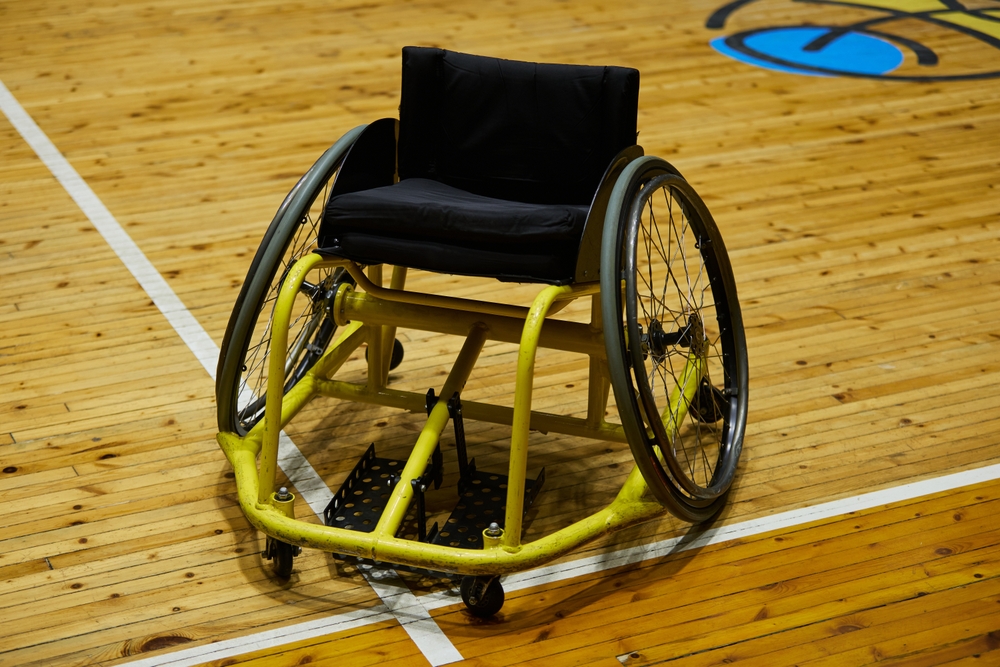
Just one in four disabled children can always join in school sports and PE
Just one in four (26%) young disabled people say they can take part in sport and activity at school all the time, compared to 38% of non-disabled young people, a new report has found. This is despite schools being the most common place for them to be active.
‘Play, Move, Belong: Active Futures for Young Disabled People’, published on World Children’s Day by Activity Alliance has revealed that young disabled people continue to face significant inequalities in sport and physical activity.
During a typical school week four in ten young disabled people are classified as ‘less active’, compared to three in ten of their non-disabled peers. Just 3% meet the Chief Medical Officers’ recommended 60 minutes of daily activity.
More than 1,000 children aged 5 to 16, their parents, supporters or caregivers took part in the survey. The findings highlight a strong desire from disabled children and young people to be more active, when the right opportunities and support are in place.
Adam Blaze, Chief Executive, Activity Alliance, said:
“Being active is one of the most effective ways to improve health and wellbeing, and that’s just as true for young disabled people as it is for anyone else.
“Positive early experiences of being active are crucial. They support young people to build the motivation, confidence and competence that form the foundations for lifelong participation. Young disabled people must have the same access to inclusive opportunities in schools and community settings as their non-disabled friends do.
“This report highlights the barriers faced, but also the overwhelming appetite that young disabled people have to be active. We all have a responsibility to ensure they feel they belong in sports and activities.”
The research highlights that attitudes, confidence, and access all play key roles in limiting participation. As children get older, the activity gap widens, particularly for disabled girls and those from lower socioeconomic backgrounds.
Disabled girls are three times more likely to lack confidence when being active (24% vs 8%) and just half of young disabled people find sport or activity easy compared to 76% of non-disabled peers.
Despite challenges, 85% of young disabled people say they like or love being active, driven by a desire to stay healthy, have fun, and build confidence. Young disabled and non-disabled people are equally as likely to say they want to be more active, and parents share this ambition. More than half of parents of disabled children wish their child could take part in more activity.
The wide-ranging study is supported by a consortium of partners including Activity Alliance, Sport England, Youth Sport Trust, Access Sport, ParalympicsGB and Loughborough University.
Latest national data shows that 12% of children in the UK are considered disabled under the Equality Act 2010, up from 7% a decade ago. Yet despite progress in policy and awareness, disabled children and young people remain less likely to be active than their non-disabled friends.
Ali Oliver MBE, CEO of Youth Sport Trust said:
“It’s incredibly concerning only one in four young disabled people feel they can always join in PE or school sports. At the Youth Sport Trust, we are resolute in our belief every child should be able to access the life-changing benefits of play and sport. As we move into a new era for PE and school sport, the insights from Activity Alliance are alarming and must reaffirm our collective commitment to embed equal play and equal access.
“Through programmes like Inclusion 2028, we are working to change that statistic and ensure that all children, regardless of ability, can enjoy and fully participate in physical activity.”
Latest posts by Hippocratic Post (see all)
Continue Reading
Rec Sports
Staten Island’s Finest AAU Travel Basketball Organization hosts 4th Annual Holiday Classic (90 action-packed photos)
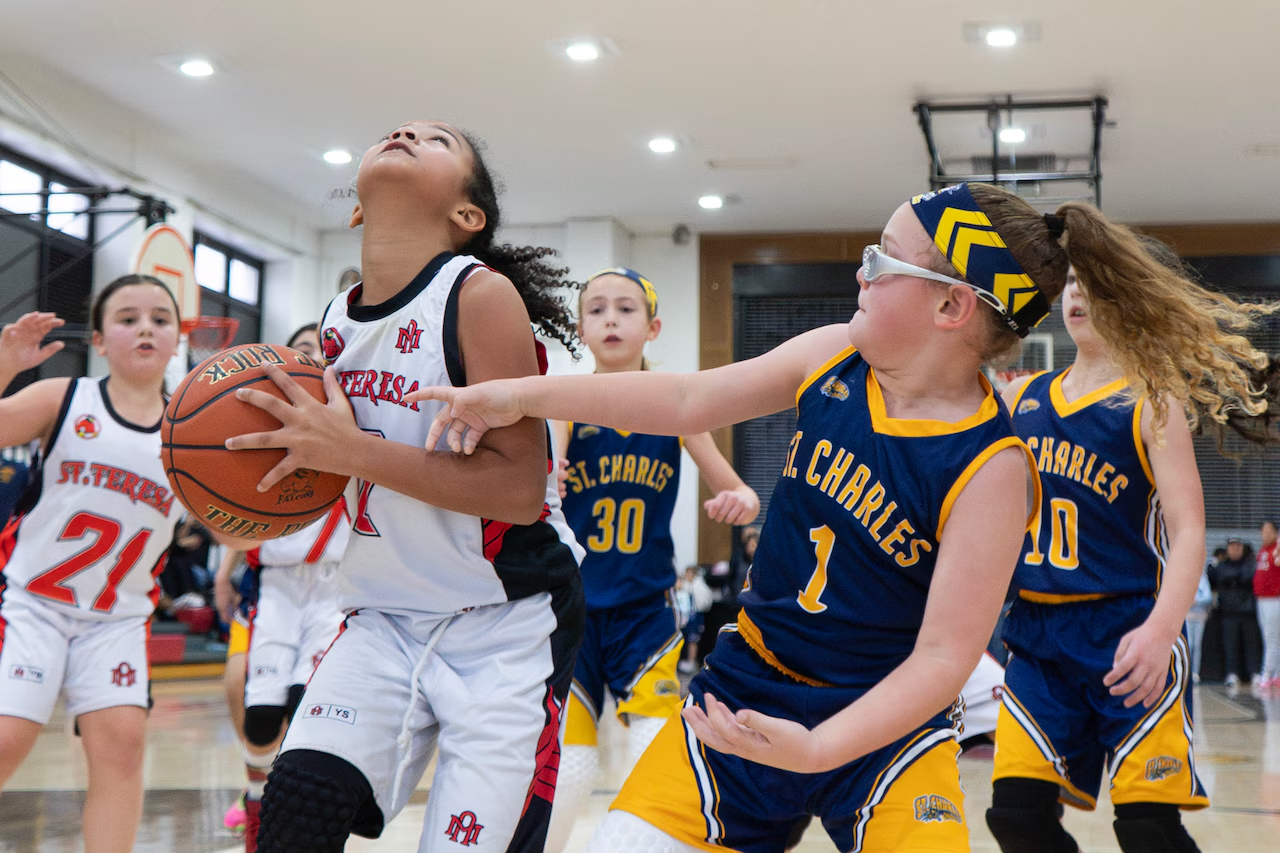
STATEN ISLAND, N.Y. — The snow couldn’t keep young ballers from competing in the 4th Annual Finest AAU Holiday Classic Saturday afternoon.
The annual tournament included 86 teams ages 2nd to 8th grade this year. A whopping 106 games are to be played between Dec. 26-31 at St. Teresas, St. Patrick’s and Moore Catholic High School.
New to the competition this year was the addition of six Brooklyn teams.
“We’re seeing more girls teams register this year, as well as several Brooklyn teams,” said league director James Fleschner. “It’s exciting to diversify the competition and really challenge the players to compete over the holiday break.”
Staten Island’s Finest AAU Travel Basketball Organization holds the competition annually to keep players active during the break.
Participants received a commemorative shirt in honor of the events.
The St. Teresa’s gymnasium was full of energy as players competed Saturday afternoon.
The girls 2nd/3rd St. Teresas team defeated St. Charles by a final score of 16-14 in an electric match. The girls 2nd/3rd Holy Child team fell to St. Joseph Hill Academy, 8-5.
Check out the gallery below for the best photos of the day.


1/90
4th Annual Finest AAU Holiday Classic at St. Teresas
SUBSCRIBER BENEFIT: SILive.com is offering a perk exclusively for subscribers: Log in, click on the photo gallery and choose GET PHOTO to download print-quality images free of charge. Note to SILive.com mobile app users: To download high-resolution photos, please access this report and gallery from a standard mobile or desktop/laptop web browser
The day’s bout — a third-round matchup in the 2025 USA Boxing National Championships that would pit him against the top seed in his bracket — would have to be won with discipline and specificity, not a tit-for-tat brawl, he repeated to himself and to his father that December morning. The 15-year-old from Kyle, who stands 5-foot-6 and weighs 105 pounds, would have to be perfect.
“One good hit, and this guy can knock you,” his father and coach, Fabian Hernandez, told him. Jayden, his face solemn beneath wispy brown hair, nodded.
Article continues below this ad
Jayden Hernandez trains at Let ‘Em Fly boxing, his father’s gym in Kyle.
Sara Diggins / Austin American-StatesmanJayden Hernandez trains at Let ‘Em Fly boxing, his father’s gym in Kyle.
Sara Diggins / Austin American-StatesmanBoxing no longer produces American heroes nor commands national attention like it did half a century ago. But like practitioners of other faiths, the Hernandezes aren’t especially interested in America’s waning devotion. They remain committed to the sport’s grueling sacraments in hope of its rewards. It’s why Fabian Hernandez first took his son to a ring almost a decade ago. It’s why his son, who is by nature calm, and already hardened by several second-place finishes at national tournaments, has kept dealing and taking blows.
American boxing’s future runs through Texas, which has the largest number of youth fighters in the country. One in five lives in the Lone Star State, according to the country’s governing body for amateurs, USA Boxing. Within Texas, the Austin area has emerged as one of its most fertile grounds for talent in recent years, producing six youth and adult national champions and surpassing, at least for now, historical powerhouses like San Antonio and the Rio Grande Valley.
Largely sustaining this culture are the boxing gyms of Austin’s periphery, clustered in southern and northern suburbs increasingly home to the region’s nonwhite population and working- and middle-class families.
Article continues below this ad

Lily Hernandez, 11, leads a group through footwork exercises during practice ahead of the annual holiday party at Let ‘Em Fly Boxing in Kyle, Texas, Dec. 19, 2025. Coach Fabian Hernandez, the founder of the gym and Lily’s father, is proud to see his kids taking on leadership roles in the gym, but also wants to make sure they have time and space to be kids.
Sara Diggins/Austin American-StatesmanBoxing in the United States survives in large part because of the continued attention and participation of American Latinos. Today, they’re three times as likely as white Americans to identify as boxing fans and, according to USA Boxing operations manager Mike Campbell, account for more than half of all youth boxers. In Austin-area gyms, that reality is even starker: Latinos make up nearly all youth participants.
Night after night, in the stuccoed garages or warehouse office parks of Buda, Kyle, Pflugerville and Round Rock, the smack rhythm of fists hitting weighted bags and the skirts of nylon shoes dancing across the ring hum a soft music. Youths like Jayden furrow their brows, purse their lips and briefly clap their gloves during sparring breaks, eyes fixed on their opponents.
In a sport known — or rejected — because of its physical cost and blunt objective, there is little space for error. Commitment becomes nearly total.
Article continues below this ad
Father and son, father and daughter
Jayden doesn’t remember playing alongside the gym during his father’s amateur boxing comeback attempt in the early 2010s. But he does remember playing with his father’s trophies, around the time Fabian Hernandez first took him to boxing lessons at age 7. After taking a year off to try soccer and baseball, Jayden returned to boxing five years ago — this time training in his family’s garage under his father’s direct tutelage.


Lily Hernandez trains at her father’s gym, Let ‘Em Fly boxing.
Sara Diggins / Austin American-StatesmanLily Hernandez trains at her father’s gym, Let ‘Em Fly boxing.
Sara Diggins / Austin American-StatesmanThose father-and-son sessions quickly grew to include Fabian Hernandez’s best friend’s son, Osiris Rangel, 12, then the boys’ younger sisters, and eventually dozens of other kids. Early this year, Fabian Hernandez moved the operation, which he named Let Em Fly Boxing Academy, into a warehouse. Participation has continued to grow.
Article continues below this ad
So, too, has the gym’s reputation, built on Jayden’s high placements at national tournaments and national title wins by Osiris and three female youth boxers — including the boys’ sisters Lily Hernandez, 11, and Emoni Rangel, 10.

Lily Hernandez, 11, helps Emoni Rangel, 10, with her head gear during a sparring night at Let ‘Em Fly Boxing in Kyle, Texas, Nov. 13, 2025. Both girls are national-caliber boxers, using the sparring session to get sharp before the USA Boxing National Championships.
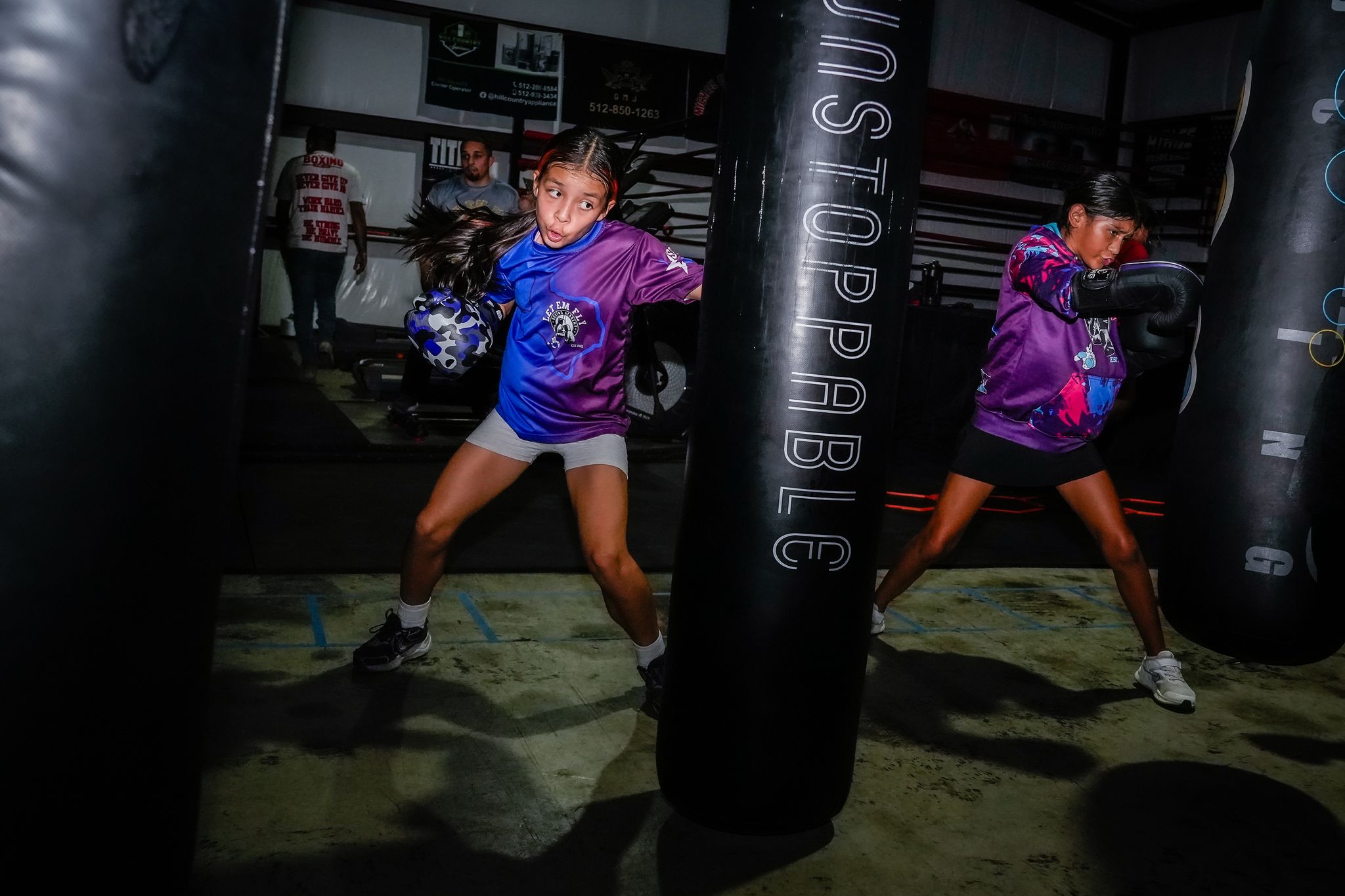
Sara Diggins/Austin American-StatesmanTraining is tough and ramps up in the weeks before a national tournament. There are distance runs and sprints, long circuits of sit-ups, tire throws, box jumps, ladders and bag work, followed by sparring several nights a week with kids whose parents drive them in from Killeen, San Antonio, Uvalde or Laredo. During peak periods, some train six days a week.
“At no time can you take a break from this sport. It’s a livelihood,” Fabian Hernandez is known to tell his athletes.
Article continues below this ad
Hernandez has his children write out where they want to be in five and 10 years. The most common answer among kids in his competitive team: They want to be champions. They want to go pro.
“I don’t just want to be good, or great,” Jayden said during one training session. “I don’t just want to go pro and be a stepping stone for someone else. I want to be a world champion. I want to be known.”


Coach Fabian Hernandez at his gym in Kyle.
Sara Diggins / Austin American-StatesmanCoach Fabian Hernandez, left, at his gym in Kyle.
Sara Diggins / Austin American-StatesmanThe boxer of today
Manuel Sepeda was 13 when he gave boxing a second chance in 1985. A troublemaker raised by his mom and aunt, he began to make the five-block daily walk from East Austin’s Santa Rita Courts public housing project to the Pan-American Recreation Center to train. Sepeda went in search of discipline and purpose: boxing’s mythic whisper. Other East Austin Chicanos, from the projects and nearby homes, went too. The gambit paid off for some, including Sepeda, who later carved out a modest professional career in his 20s.
Article continues below this ad
Twenty-five years ago, when Zach Martinez started coaching youths, that grit still defined the sport’s storyline. Many of the kids who showed up at Pan-Am or Montopolis recreation centers were often getting into trouble. Some were shot dead on days off from the gym. Poverty — the harsh backdrop boxing has long claimed — was ever-present.
Today, though that storyline is still told, it is less common in Austin, said Martinez, who currently trains youth boxers out of the Montopolis recreation center.
That doesn’t mean boxing has stopped being a blue-collar sport. Far from it. But, “there are a lot more fathers in corners,” said Sepeda, now 53, who served time in federal prison before becoming a car salesman and boxing trainer. “That’s a good thing.”

Athletes box during a sparring night at Let ‘Em Fly Boxing in Kyle, Texas, Nov. 13, 2025. The gym invites other gyms from around Central Texas to spar, letting the athletes get in practice bouts before real competitions.
Sara Diggins/Austin American-StatesmanFabian Hernandez, who grew up boxing while his own father sat behind bars, agrees. Boxing is a trade he is teaching his son. Being in his corner matters.
Article continues below this ad
The father in the corner has become more important in part because of the rising cost of participation. Spending has increased in youth sports, especially since the turn of the century, as private facilities and travel-based circuits have become increasingly prevalent, said Jon Solomon, community impact director of the Aspen Institute’s Sports and Society Program. (Montopolis and Pan-Am recreation centers now have much smaller programs than the private gyms in Austin suburbs.)
But boxing carries additional burdens: Limited participation by age and weight class makes national tournaments essential, and the sport lacks an offseason, pressing parents to travel out of state — and pay for it — several times a year.
Campbell, the USA Boxing operations manager, estimates the average fighter or family spent about $1,200 to participate in December’s national championships in Lubbock, covering transportation, lodging, food and registration. Hernandez estimates that he spent about $2,000 this year to take his two kids to tournaments in Lubbock, Las Vegas and Tulsa this year, but only because his gym’s aggressive fundraising covered roughly three times that amount.
Of course, the father in the corner is much more than a wallet. He wraps wrists, waves mitts and makes weight decisions. He raises his voice for the judges to hear, or to admonish after a loss. He lowers his voice to comfort.
Article continues below this ad

Coach Fabian Hernandez, founder of Let ‘Em Fly Boxing, watches his athletes hit the bag during practice ahead of the annual holiday party at Let ‘Em Fly Boxing in Kyle, Texas, Dec. 19, 2025. Hernandez founded the gym after training his own kids, both national-caliber youth boxers out of his garage.
Sara Diggins/Austin American-Statesman‘Among the best’
As Jayden skipped around the ring dressed in blue, his opponent edging toward him, the first round of his third-round matchup appeared to go to plan. The opponent, broader-shouldered and aggressive, rushed in. Jayden pivoted out. Some punches landed; others missed. Jayden countered with quick strikes to the head.
Fabian Hernandez swayed at ringside. When the counters landed, he smiled, proudly. “Beautiful,” he told his son between rounds.
Article continues below this ad
But the pace proved hard to sustain. In the second and third rounds, the opponent worked Jayden onto the ropes and kept him there. Jayden’s pivots slowed, and the fight became a brawl — blow traded for blow — as Jayden tried to escape one corner and then another, tripping at times and taking repeated punches to the face.
After the unanimous decision against him, Jayden walked away from the rings toward a covered corner of the auditorium, out of view of the mezzanine stands filled with fans. He stared at the wall, turning from his father, who listed frustrations about his son’s drop in form. After a few minutes, he stopped.
“You’ve proven you’re among the best,” he told Jayden.

Jayden Hernandez, 15, helps a younger athlete train on the mitts during practice ahead of the annual holiday party at Let ‘Em Fly Boxing in Kyle, Texas, Dec. 19, 2025. Jayden’s father, coach and gym founder Fabian Hernandez is proud of his son stepping up to help coach and lead the younger athletes, but still encourages him to put his own training and childhood first.
Sara Diggins/Austin American-StatesmanThe delicate sport
From the crowded stands of the Lubbock Civic Center, four rings come into view below. In a tangle of red and blue, fleeting contests are decided in 90-, 120- or 180-second rounds. Talent collides with chance, bravery with apprehension, expectation with delusion — meanings that settle only later, when the adrenaline has faded.
Article continues below this ad
Boxing may be the most delicate of games because of the unavoidable risk of grave injury. It is also delicate because triumph and defeat are decided by judges who can each see only a partial angle of the fight from their bench. In Lubbock, any loss ended a boxer’s tournament, leaving fighters with days’ worth of empty hotel reservations. The thin line between excellence and obscurity became unmistakable.


Let ‘Em Fly Boxing in Kyle, Texas.
Sara Diggins / Austin American-StatesmanLet ‘Em Fly Boxing in Kyle, Texas.
Sara Diggins / Austin American-StatesmanThe fragility is visible, until it isn’t. An older Chicano man, gaunt and bald, with a cryptic neck tattoo peeking from a black hoodie, shrieks when a referee issues an “eight count,” an eight-second stoppage intended to protect a fighter’s brain.
“That’s bullshit. He hit him with a jab,” the man yells, as he swallows bright yellow popcorn and the kids around him giggle. “He didn’t even fall. Got to let them fight.”
Article continues below this ad
Safety remains a roundabout conversation in youth boxing. USA Boxing enforces medical screenings and morning health checks designed to prevent fighters from entering the ring with existing head injuries — a proven way to reduce the risk of seizures or strokes, said ringside physician Leah Geodecke, a volunteer at nationals. But among coaches and fighters, risks are often framed as inevitable — concerns to be reckoned with only if they arrive. At the end of the day, Hernandez said, “It’s a combat sport.”
And though the rewards of the adherent come from sticking with the sport, boxing is hard to remain in. At the end of the road for many, Sepeda reflected, comes the day “you can’t get past a kid no matter what you do.”
“I don’t think people [who box] are quitters,” Sepeda said. “But boxing is a sacrificial sport, and it’s a very lonely sport.”

Aniyah Edwards, left, and Lily Hernandez, center brush the Emoni Rangel’s hair after her bout during a sparring night at Let ‘Em Fly Boxing in Kyle, Texas, Nov. 13, 2025. The three girls are preparing to compete at the USA Boxing National Championships in a few weeks.
Sara Diggins/Austin American-StatesmanWalking into the lobby after his loss, a red rash glowing on his right cheek, Jayden accepted hugs from his sister, teammates and fathers. He said he would replay his mistakes that night in bed, as he felt the soreness of his arms, legs and face. He would think about them over the next few days while sparring with other fighters who had been surprised with early exits, and over the coming weeks back at the gym in Kyle.
Article continues below this ad
Those details, or at least that feeling, will be there “forever,” he said. “It’ll be there when you want to quit.”
See more scenes from Let ‘Em Fly boxing:
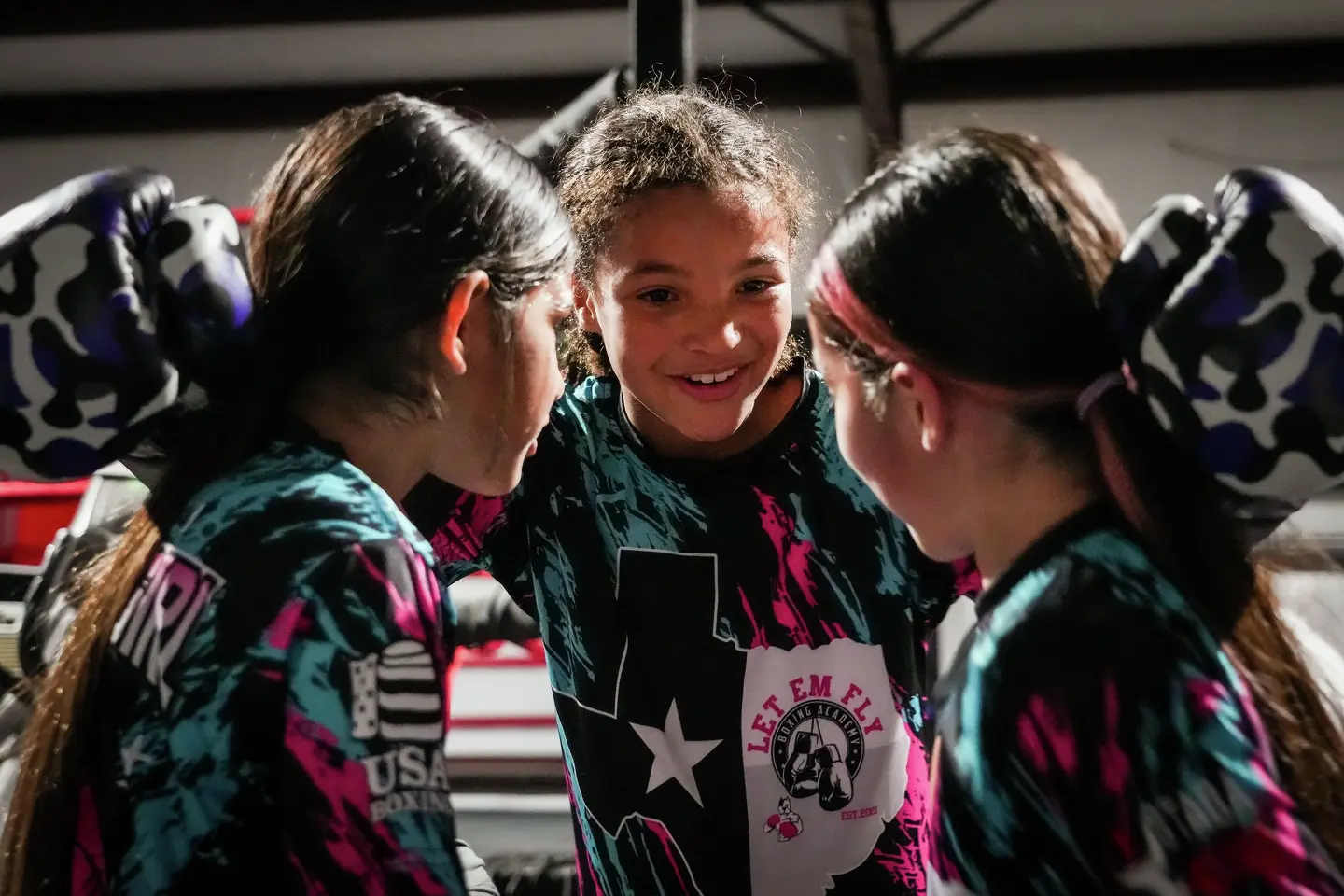
Aniyah Edwards, center, talks to her teammates, Lily Hernandez, left and Emoni Rangel as they huddle ahead of their bouts during a sparring night at Let ‘Em Fly Boxing in Kyle, Texas, Nov. 13, 2025. The three girls are preparing to compete at the USA Boxing National Championships in a few weeks.
Sara Diggins/Austin American-Statesman


Rec Sports
Troop 267 Celebrates Achievements, Leadership at December Court of Honor | News, Sports, Jobs
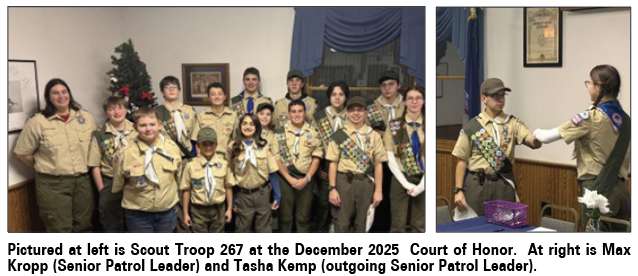
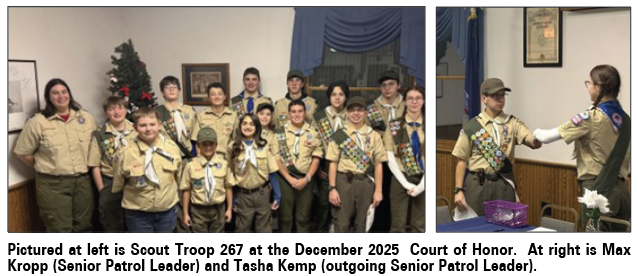
Scout Troop 267 Celebrates Achievements and Leadership at December Court of Honor Scout Troop 267 gathered on Dec. 15, to celebrate accomplishments, recognize leadership, and look ahead to a busy year during its year-end Court of Honor. The evening brought together Scouts, families, and leaders to honor advancement, merit badge achievements, and the service of outgoing youth officers.
Scoutmaster Mike O’Dell, and incoming Assistant Senior Patrol Leader Ben O’Dell assisted with the presentation of rank advancements, while Senior Patrol Leader Tasha Kemp served as Master of Ceremonies. Advancing Scouts included Rainn Szczerbacki (Tenderfoot), Kam Johnson (Star), Ben O’Dell (Life Scout), and Eli Williams (Life Scout).
A wide range of merit badges highlighted the diverse interests and skills of Troop 267 Scouts. Badges earned included Chemistry, Citizenship in the Community and Society, Health Care Professions, Robotics, Athletics, Crime Prevention, Geology, Music, First Aid, Family Life, Personal Fitness, Traffic Safety, Communication, Indian Lore, American Business, and Animation. Multiple Scouts earned several badges, reflecting dedication both in and beyond weekly meetings.
The troop also recognized special achievements, including participation in the AHC Monster Mash at Camp Merz by Scouts Gabriel Nagle, Sienna Nagle, Jax Ostler, Rainn Szczerbacki, and Eben Wille. Tyler Field was honored with the Scouts BSA National Outdoor Awards Emblem and the Camping Segment Achievement Award.
Leadership transitions were a key focus of the evening. Outgoing officers, led by Senior Patrol Leader Tasha Kemp, were recognized for their service in guiding the troop over the past term. New officers were then introduced, with Max Kropp installed as the incoming Senior Patrol Leader, supported by a full slate of youth leaders across patrol and troop positions.
Scout Troop 267 would like to thank the community for its generous support of the Annual Popcorn Sale Fundraiser, which sold just over $21,000 in four months, and the Applebee’s Pancake Breakfast Troop Fundraiser.Top popcorn sellers were recognized and awarded for their outstanding contributions. Most notably, Jethduan Cordova-Olmo sold $5,860 worth of popcorn. Record sales were also achieved by Tyler Field ($3,760), Kam Johnson ($3,190), Rainn Szczerbacki ($3,055), Ryan Cook ($1,041), and Aaron Cook ($1,021).
Troop 267 also announced several upcoming activities, including a free bowling celebration for Scouts at Lucky Lanes on December 22, rock climbing at Central Rock Gym on Jan. 19, and an Electronics Campout at Camp Gross from Feb. 27 to March 1.The Scouts return to their weekly meeting schedule beginning Monday, Jan. 5, at 7p.m.
Committee Chair Holly Field offered closing remarks, thanking the Scouts and their families for their continued commitment, and encouraging community members to consider supporting the troop as committee members or merit badge counselors. Family and community involvement is essential as the troop begins a new Scouting year in January. The troop is currently seeking volunteers for the following roles: Committee Chair (beginning in January), Assistant Activities Chair, Life to Eagle Coordinator, Training Chair, Scout-to-Cub Scout Liaison, Religious Emblem Coordinator, and Unit Public Relations Chair. Email 267fredonia@gmail.com to express interest and learn more!
Scout Troop 267 meets Mondays at 7 p.m. at American Legion Post 59, 156 East Main Street, in Fredonia, and is open to all boys and girls who have completed the fifth grade and are at least 10, but not yet 18 years old. For more information about the Troop and how to join, visit the Troop’s website at: https://www.fredoniatroop267.com.
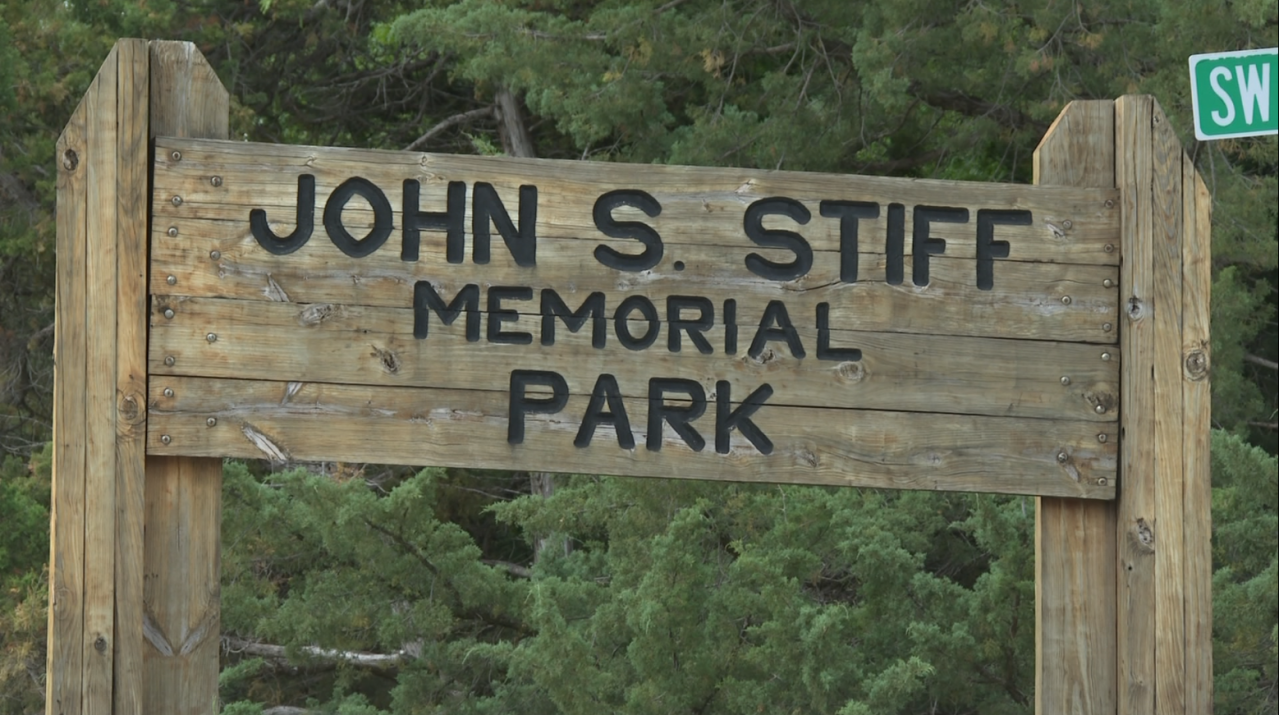
AMARILLO, Texas (KAMR/KCIT) — City officials are providing more details about a proposed development plan for John Stiff Memorial Park, addressing questions about the possible hotel and how the park would coexist with a youth sports facility currently under construction.
The plan was discussed by the Amarillo City Council earlier this month, outlining long-term options for part of the park and providing that future development could help fund park improvements.
Amarillo Parks and Recreation Director Michael Kashuba said a hotel is one of several potential uses being considered as part of a broader mix of development.
“One of those potential allowable uses is a boutique hotel. With no existing hotels in Southwest Amarillo, a small-scale hotel could fill a market gap while enhancing the destination appeal of the development,” said Kashuba. “A small, boutique hotel would accommodate the many visitors coming to Amarillo to attend recreational sports tournaments or to visit family members. A hotel would also support large community special events and generate additional economic development for the community.”
Kashuba said the hotel would be part of a wider set of amenities intended to support park users and visitors.
“The recommended commercial program features diverse dining and food options scaled to serve different community needs,” he said. “A thoughtfully diverse mix including food and beverage establishments, small-format retail, and experiential concepts creates synergistic benefits through shared foot traffic.”
Questions have also focused on youth sports usage at the park and whether the new Kids Inc. sports complex under construction could affect attendance.
“Youth sports is just one of many activities that occur in John Stiff Park,” Kashuba said. “The park is actively used daily by walkers, disc-golfers, skateboarders, tennis, pickleball, padel players, adult softball leagues and youth sports.”
Kashbua said large youth sports tournaments typically rely on multiple facilities across Amarillo.
“When the large youth sports tournaments come to town, it is common for all the fields in Amarillo to be used for the youth tournaments,” he said.
According to Kashuba, the Kids Inc. sports complex could create additional opportunities at John Stiff Park by shifting some activities elsewhere.
“When Kids Inc. moves its activities to its facility, it will allow the city to expand the adult softball leagues and tournaments and provide the fields to other user groups, which are actively looking for a place to call home,” Kashuba said.
City officials said the development plan is a long-term concept meant to guide future planning. Any proposed project would require additional financial review, public input and approval from the city council before moving forward.
For the latest Amarillo news and regional updates, check with MyHighPlains.com and tune in to KAMR Local 4 News at 5:00, 6:00, and 10:00 p.m. and Fox 14 News at 9:00 p.m. CST.

Lorena Llamas’ teenage son is obsessed with football. In Nevada, that means suffering through practices in direct sunlight and on scalding-hot turf.
“The heat is killer,” said Llamas, a mom of two in North Las Vegas. Her son, a high school senior, has seen teammates throw up during some practices. “He’ll always say, ‘Mom, my feet feel like they’re on fire.’”
Parents and experts told The Indy that heat is just one reason that Nevada consistently ranks last nationwide for participation in youth sports. High costs and complicated scheduling issues also play a big part.
Nevada has had the lowest or second-lowest rate of children on sports teams every year since 2017 except 2019, according to data collected through the National Survey of Children’s Health (NSCH), a project of the Census Bureau, and analyzed by researchers at Johns Hopkins University.
Although standalone data for 2024 is not yet available, new data shared with The Nevada Independent on the last two years combined again shows Nevada coming last in sports participation, even as its rate ticked up slightly.
Nationwide, in 2023-2024 nearly 57 percent of children between the ages of 6 and 17 were part of a sports team or club. In Nevada, it was just 46 percent.
“Nevada was always a state that was never thought of for sports,” said Llamas. She attributed the lack of a robust sports culture to Nevada’s heat and smaller number of higher education institutions or major sports teams. Llamas has noticed more young people getting excited about playing football since the Raiders came to Las Vegas in 2020.
“Our players do not get enough attention here,” she said. “There is so much talent in Nevada.”
Below, we dive into some of the factors that contribute to Nevada’s lagging sports participation and break down the data.
Increasing costs
Most states, including Nevada, have seen sports participation rise since the COVID-19 pandemic, when most schools canceled programming for at least a season.
But even before the pandemic, Nevada’s participation rate was consistently lower than the nation’s.
Data from the National Federation of State High School Associations shows the number of student-athletes in Nevada high schools has been relatively stable, going from approximately 45,200 student-athletes in 2015-2016 to approximately 44,800 in 2024-2025. During the same period, Nevada’s high schools added more than 16,000 students.
Richard Rosenkranz, a UNLV professor who studies interventions to boost nutrition and exercise, attributed Nevada’s low participation rates to high costs.
In 2022, his family moved from Kansas City to Las Vegas, where his son enrolled in a public school and joined the school’s cross-country team.
Rosenkranz said he and his wife were “shocked” by the team’s sticker price. They had to pay almost $500 for their son to run cross-country, a one-season sport. Sports were free at his son’s public school in Kansas.
“Immediately, a lot of Nevada families just cannot afford that,” he told The Nevada Independent.
Sports costs are rising fast nationwide. Project Play, an initiative of the Aspen Institute think tank, found American families spent an average of $1,000 on their child’s primary sport in 2024, a jump of 46 percent, or about $300, since 2019.

Llamas estimated her family spends about $500 each football season, mostly on required expenses for the team and for traveling to games.
She said her family was lucky they could afford these costs.
Statewide, there are wide income disparities in sports participation. According to the national survey’s data, from 2022 to 2023 nearly three times as many students from high-income families (at or above 400 percent of the federal poverty line) played sports than students from low-income families (at or below the poverty level).
Nevada does not waive sports fees for low-income students, as a handful of states do. California outright bans fees for all students.
Rosenkranz blames rising expenses on cultural shifts, which have transformed youth sports from a more casual form of fun into a high-pressure industry oriented toward college recruitment.
“We’ve essentially professionalized a lot of sports,” he said. To remain competitive, Rosenkranz said, academic and extracurricular sports programs need to hire full-time coaches, upgrade facilities and equipment, and travel to tournaments.
Programs pass some of those costs onto families, or families find themselves spending more in private lessons or new gear.
In its 2024 report, Project Play also blamed the post-pandemic shift to kids focusing on single sports, making competition even more intense and expensive.
Unique “burden” in Nevada
Experts say Nevada’s reliance on shift work and shorter-term labor further complicates access to sports.
“It poses more of a financial burden in a state where … so many parents have multiple jobs in the service industry, where kids have higher shares of parents who can’t afford it,” said Rosenkranz.
Many parents work in the state’s 24/7 hospitality industry, where work shifts are longer or later than other jobs and where families cycle in and out of the state more often. Census data also shows that Nevada has a higher share of households where every parent works, at 59 percent in 2024.
That makes it harder for parents to bring kids to practice, Rosenkranz said, especially in a state with limited public transportation.
“Obviously, Vegas is a very transient town where people work all kinds of jobs. It’s a 24 hour city,” said Scott Blackford, director of programs at Nevada Youth Sports (NYS), an organization that runs recreational and club sports in Southern Nevada and manages charter schools’ sports leagues.
To accommodate scheduling issues, “We try to offer different programs, whether recreational leagues or competitive leagues, or camps, clinics, all the different programs you can offer, to fit individual families,” he said.
Although NYS usually doesn’t work in traditional public schools, he said the group has run some pilot programs so that “a child can stay after for an hourlong practice, in case mom and dad couldn’t take them to practice that night.”
NYS also offers shorter-term programs where families commit to sports only for eight weeks. Programs such as these expand the group’s demographic reach, Blackford said, even as costs rise.
“We pride ourselves on trying to not raise prices,” Blackford explained. “But, you know, everything is going up across the world.”
Other factors
Nevada’s intense heat creates further problems.
Synthetic turf fields are increasingly popular for field-based sports due to their lower maintenance costs than grass. But research has shown such fields can be 50 degrees hotter than grass.
“The shade infrastructure is horrible; the weather is hot all summer. There’s an immediate lack of enjoyment,” said Rosenkranz.
But Blackford said Nevada’s temperatures could be a plus by enabling yearlong sports programming.
“Summer is going to be a little tough, but if you’re born and raised in Arizona or Nevada, you’re kind of used to it. … We’re fortunate to have four seasons of sports a year,” Blackford said, while admitting that finding air-conditioned facilities can be a struggle.
Rosenkranz said Nevada’s low sports participation reflects the state’s generally poor mental and physical health outcomes.
Earlier this year, a bill mandating daily recess in Nevada’s public and charter schools — which is required in only 13 states — failed in the Legislature.
“Are there places where they can play before school? Or in the classroom, at recess, at physical education — all of the activities that happen during the school day?” Rosenkranz asked. “Or are we just asking kids to sit quietly in a lunch room?”
In 2024, only 9.1 percent of Nevada’s 12-through-17-year-olds were physically active for an hour every day. The nationwide rate was 14.9 percent.
Nevada also reports higher rates of depression, suicide and substance use disorder among youth. It ranked last among states in the 2025 and 2024 surveys of youth mental health by the nonprofit Mental Health America.
Boosting sports participation could help address these issues, Rosenkranz said, adding that sports lower the risk of chronic disease and improve mental health by giving kids a chance to socialize, resolve disagreements and challenge themselves.
“Also, sports are fun,” he said. “And people should be having fun.”
Published: Dec 28, 2025 7:00 am
From repeat championship performances to individual success stories, 2025 had it all in the world of Newtown athletics. The Annual C.H. Booth Library Turkey Trot drew a record 1,700-plus participants. There were awards earned by coaches, an athletic director, and athletes. Here is a look at what unfolded in 2025:
*It was a trifecta for the Newtown High School cheerleading team, which won South-West Conference, State, and New England Championships.
*The NHS boys’ golf team made it a three-peat, winning its third straight SWC Championship in the fall.
*NHS boys’ golf set a new standard with a program-best score of 141 in a match against Stratford at Rock Ridge Country Club.
*Newtown High School’s dance team won a State Championship.
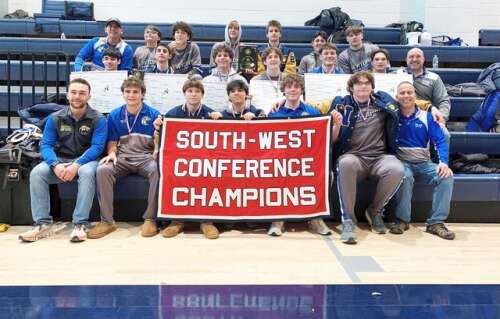
*NHS wrestling won the South-West Conference title with six individual champs, nine finalists, and 13 place-winners.
*Wrestler Marc Maurath became Newtown High School’s winningest grappler when he earned his 161st victory on the mats (he finished with 188). Maurath also reached an impressive milestone with his 100th career pinfall victory.
*NHS wrestler Kenna Gioffre (second all time with 171 wins) won a State Open Championship in his weight class.
*NHS Wrestling Coach Chris Bray earned his 100th dual meet victory. The wrestling milestones continued as Kenna Gioffre and Marc Maurath joined the 150-win club, Gioffre also earned his 100th pin, and Charlie Dunn, Antonio Arguello, and Jake Maddox all earned their 100th career victories on the mats.
*The NHS indoor girls’ track team made it back-to-back SWC Championships in the winter, then made it three consecutive spring outdoor track and field SWC Championships.
*Newtown’s boys’ runners got in on title success as the cross country team raced to the conference crown this fall.
*Grade 6 girls’ and grade 5 boys’ basketball teams claimed New England tourney titles.
*The U10 Hawks baseball team won its second straight state title and reached the Elite Eight at the Cal Ripken World Series.
*Newtown’s 11-year-old baseball team won a New England Regional Championship.
*Newtown Youth Basketball Association President and Coach Tom Martinez was named the Newtown Bee Sportsman of the Year.
*Newtown Youth Wrestling captured several champs and place-winners at the USA Wrestling Connecticut State Championships.
*The NHS Athletics Department received the Michael’s Jewelers Achievement Cup, as well as the Fred Balsamo Award For Sportsmanship.
*NHS Athletic Director Matt Memoli was selected as the Unified Sports Paul Mengold AD of the Year.
*Youth wrestler Camron Veneziano captured a National Wrestling Championship.
*Matthew Dos Santos signed a professional soccer contract with Red Bulls II.
*NHS track and field standouts Aashni Shetty (long jump) and Elias Brady (triple jump) won State titles. Shetty broke multiple school jumping records during her senior year.
*Tristan Rosenschein was named to the 15U National Lacrosse Team.
*Sandy Hook’s Mackie Samoskevich brought the Stanley Cup back to town after his Florida Panthers won the game’s biggest trophy.
*50 in 50: Bruce Goulart accomplished his goal of running a marathon in all 50 states.
*NHS Lacrosse Coach Maura Fletcher earned the SWC’s Outstanding Coach Award.
*Stephen Kopcik won the NAPA Sports Sizzler at Stafford Motor Speedway.
*NHS football player Travis Rekos earned the first Bob Zito Coach’s Award.
*Among the notable passes of the baton this past year was Debi Modzelewski retiring and Stacey Nasser taking over as assistant to the athletic director at NHS.
*On the coaching front, Tricia Harrity took over the NHS gymnastics team, and David Warren is the new head coach with NHS track.
There is sure to be much more excitement in store as we flip the calendar to 2026. See you at the games!
Sports Editor Andy Hutchison can be reached at andyh@thebee.com.
The NHS wrestling team won the SWC Championship. —photo courtesy Daryl Maurath
Aashni Shetty set multiple jumping records at NHS. —Bee file photo
Bruce Goulart completed his quest of running a marathon in every state with a 26.2 mile effort in Illinois on July 15. The road race enthusiast is far from done. He is approaching the finish line of Run 169 Towns Society, a group that completes a race in each of Connecticut’s towns/cities. —photo courtesy Jan Brown-Goulart
Newtown High’s boys golf team won its third straight SWC Championship, scoring 307 at Fairchild Wheeler Golf Course in Fairfield on October 14. Pictured are, from left: Coach Shawn Tierney, Will Lokey, Quinn Kull, Nate Pickard, Jack Wishneski, and Aidan Andreotta. —photo courtesy Shawn Tierney

NIL11 minutes ago
$2.4 million QB connected to major college football program in transfer portal

Sports28 minutes ago
South Carolina Gamecocks Defensive Back Plans to Enter the Transfer Portal

Rec Sports49 minutes ago
Staten Island’s Finest AAU Travel Basketball Organization hosts 4th Annual Holiday Classic (90 action-packed photos)

Rec Sports56 minutes ago
In Austin and across Texas, youth boxing thrives out of the spotlight

Motorsports1 hour ago
Kyle Larson nervous about dramatic entrance to deliver record prize – Motorsport – Sports
NIL1 hour ago
Damon Wilson seeks denial for arbitration in NIL dispute with Georgia

NIL2 hours ago
Kyle Whittingham reveals if he had any hesitation on Michigan with controversy, investigation around program
NIL3 hours ago
Kyle Whittingham introduced as Michigan football coach
Sports3 hours ago
Tennessee Tech Closes 2025 with Tennessee State at Eblen Center

Motorsports3 hours ago
Tom Cruise Once Got a Taste of IMSA’s “Demolition Derby” With NASCAR Owner Rick Hendrick

Sports3 hours ago
Top 25 Moments of 2025

Rec Sports4 hours ago
Troop 267 Celebrates Achievements, Leadership at December Court of Honor | News, Sports, Jobs

Sports4 hours ago
Shondell Inks Transfer Lameen Mambu – Purdue Boilermakers
Motorsports4 hours ago
No. 5: Doug Boles Adds INDYCAR Presidency to Top Job at IMS

NIL4 hours ago
The Clemson Insider

Motorsports3 weeks ago
SoundGear Named Entitlement Sponsor of Spears CARS Tour Southwest Opener

Motorsports3 weeks ago
Donny Schatz finds new home for 2026, inks full-time deal with CJB Motorsports – InForum

Rec Sports3 weeks ago
Black Bear Revises Recording Policies After Rulebook Language Surfaces via Lever

Motorsports4 weeks ago
Jo Shimoda Undergoes Back Surgery

NIL4 weeks ago
Bowl Projections: ESPN predicts 12-team College Football Playoff bracket, full bowl slate after Week 14

Rec Sports4 weeks ago
Robert “Bobby” Lewis Hardin, 56

Rec Sports4 weeks ago
How this startup (and a KC sports icon) turned young players into card-carrying legends overnight

Rec Sports3 weeks ago
David Blitzer, Harris Blitzer Sports & Entertainment

Rec Sports3 weeks ago
How Donald Trump became FIFA’s ‘soccer president’ long before World Cup draw

Sports4 weeks ago
Men’s and Women’s Track and Field Release 2026 Indoor Schedule with Opener Slated for December 6 at Home
Sports4 weeks ago
Wisconsin volleyball sweeps Minnesota with ease in ranked rivalry win

Motorsports4 weeks ago
Michael Jordan’s fight against NASCAR heads to court, could shake up motorsports

Motorsports4 weeks ago
Pohlman admits ‘there might be some spats’ as he pushes to get Kyle Busch winning again

Motorsports3 weeks ago
JR Motorsports Confirms Death Of NASCAR Veteran Michael Annett At Age 39

Motorsports4 weeks ago
Increased Purses, 19 Different Tracks Highlight 2026 Great Lakes Super Sprints Schedule – Speedway Digest





-
 Motorsports3 weeks ago
SoundGear Named Entitlement Sponsor of Spears CARS Tour Southwest Opener
-
 Motorsports3 weeks ago
Donny Schatz finds new home for 2026, inks full-time deal with CJB Motorsports – InForum
-

 NIL3 weeks ago
DeSantis Talks College Football, Calls for Reforms to NIL and Transfer Portal · The Floridian
-

 Motorsports3 weeks ago
Rick Ware Racing switching to Chevrolet for 2026
-
 Sports2 weeks ago
#11 Volleyball Practices, Then Meets Media Prior to #2 Kentucky Match
-

 Motorsports2 weeks ago
Sunoco to sponsor No. 8 Ganassi Honda IndyCar in multi-year deal
-

 Motorsports3 weeks ago
NASCAR owes $364.7M to teams in antitrust case
-
 Motorsports2 weeks ago
Nascar legal saga ends as 23XI, Front Row secure settlement
-

 Rec Sports3 weeks ago
Why the Texas Sport for Healing Fund Should Return – The Daily Texan
-
 Sports2 weeks ago
Maine wraps up Fall Semester with a win in Black Bear Invitational