Connect with us
https://yoursportsnation.com/wp-content/uploads/2025/07/call-to-1.png

NIL

Duke is a basketball school. So why is it paying a transfer QB top-tier money?

Published

on


Reports last December of Duke awarding a two-year, $8 million NIL deal to a transfer quarterback elicited two obvious reactions: 1) Duke has that kind of money? And 2) It’s giving it to … a football player?!

“We have aspirations to play at the highest level possible, and that’s counter, maybe, to what people have always thought of with Duke football,” said Greg Pritchard, a former Duke defensive lineman and co-founder of the football program’s NIL collective. “So it was very purposeful for us to go after the best quarterback that we could possibly get.”

Once Tulane’s Darian Mensah entered the transfer portal, Duke’s staff evaluated him and rated Mensah as “significantly higher than any other quarterback that was available,” said its chief football strategy officer, Binuk Kodituwakku.

So Pritchard quickly mobilized donors and got a deal done within days.

But landing the prized quarterback is one thing. As Kodituwakku said last week, “A big thing about Duke donors is they want to see a return on investment.”

Those donors likely had mixed reactions last weekend when Mensah, a third-year sophomore, faced his first big test, against No. 11 Illinois. He was an impressive 23-of-34 for 334 yards and two touchdowns, but he also had three turnovers. His team had five on the day. The Blue Devils hung in for three quarters before losing 45-19 at home.

“Darian played very well, but he’s a developing player that’s going to learn some lessons on ball security today,” head coach Manny Diaz said afterward. “He showed with our offense today, against a really, really good defense, that we’ve got some really dangerous weapons.”

Next up for Duke: A trip Saturday to Mensah’s former school, Tulane.

In the still-nascent name, image and likeness era, the players who receive the most highly publicized deals inevitably garner a higher level of scrutiny. See former Tennessee quarterback Nico Iamaleava, now at UCLA, who signed a four-year, $8 million contract in high school and garnered considerable backlash for leaving the Vols last spring after his representatives reportedly asked for more money. Or former Georgia quarterback Carson Beck, now at Miami, whose stolen Mercedes and Lamborghini became a national headline.

In this case, though, most college football fans had never heard of Mensah prior to him landing at Duke. And many still haven’t.

Just 13 months ago, the two-star recruit out of San Luis Obispo, Calif., was still a third-string backup for an AAC school. He ultimately won Tulane’s starting job in preseason camp and went on to lead the Green Wave to a conference championship game. He finished as the nation’s sixth-rated passer while averaging 9.5 yards per attempt, tied with No. 1 draft pick Cam Ward and Ohio State’s Will Howard for third nationally.

Two weeks into the 2024 season, he signed with an agent who set out to make him the highest-paid player in the country. Now, the 20-year-old has his own house, bought a Mercedes for himself and a Dodge Charger for his mom and started a foundation to help young athletes in his hometown.

“It all happened so fast,” he said, “I didn’t really get to sit back and realize how life-changing NIL could be.”

All he’s expected to do is elevate the profile of a traditionally mid-level Power 4 program long overshadowed by its basketball counterparts.


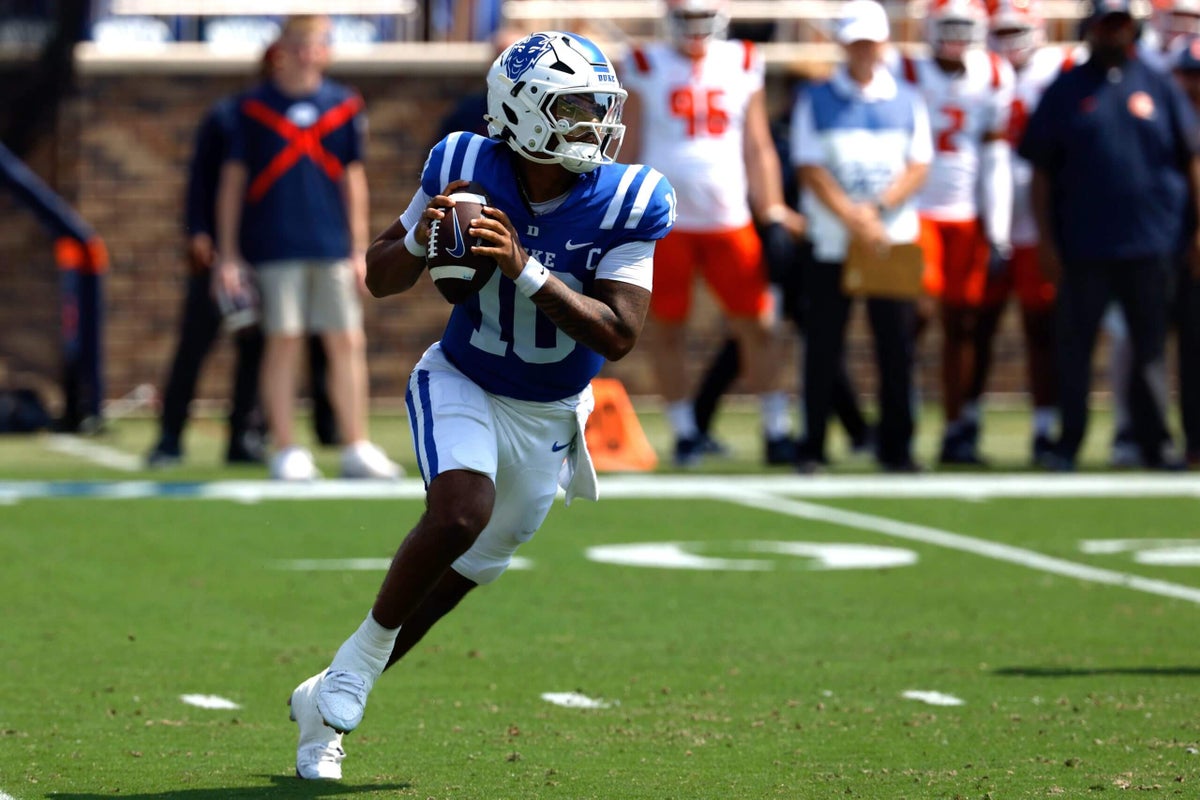
Darian Mensah (10) will square off against his former team this Saturday when Duke plays Tulane. (Kevin Jairaj / Imagn Images)

About that $8 million deal, first reported by CBS. Two people involved in the negotiations said that figure is accurate. Others involved in the negotiations said it is not. Kodituwakku, who manages Duke’s contract negotiations, did not offer specifics but said, “The number’s not as high as what’s been said, and it’s very incentive-laden.”

But even if Mensah earns closer to $3 million, it would put him in an exclusive club with Miami’s Beck, Michigan’s Bryce Underwood, Oklahoma’s John Mateer and Penn State’s Drew Allar. (Texas’ Arch Manning may be making more from endorsements.)

But unlike Mensah, those other quarterbacks all play for college football blue bloods.

Duke has at least been respectable for some time. Beginning in 2012, Duke reached six bowl games in seven seasons under longtime coach David Cutcliffe before a three-year down period led to his ouster. His replacement, Mike Elko, led Duke to a nine-win season in 2022 and 8-5 the next, before leaving for Texas A&M. In December 2023, athletic director Nina King hired Diaz, once head coach at Miami, who led the Blue Devils to their second nine-win season in three years and a trip to the Gator Bowl, its first January bowl game in 30 years.

Diaz’s first big catch in the transfer portal was Texas quarterback Maalik Murphy, for whom the collective paid around $1 million. It was more than 10 times what his predecessor, Riley Leonard, was making before leaving for a seven-figure deal at Notre Dame.

Murphy, now at Oregon State, had a respectable 2024 season, throwing for nearly 3,000 yards. But the staff felt his lack of mobility limited the offense. It quietly began scouting for an upgrade.

Kodituwakku, a native of Australia who previously managed the salary cap for an Australian Football League club, and John Garrett, general manager of player personnel, oversee Duke’s roster acquisition. Garrett handles scouting. Kodituwakku handles the numbers. He utilizes a database with advanced stats on thousands of college players to identify potential fits and assess their dollar value.

“We’re trying to put in systems and processes that will help us A) stretch our resources and B) minimize the chance of making poor decisions,” said Kodituwakku. “We’re always going to be a developmental program, so we’ve got to hit on our portal acquisitions at a higher rate than other schools.”

Mensah first began catching attention in the Green Wave’s second game of the season, when they nearly upset No. 17 Kansas State. He threw for 342 yards (and had two turnovers) and appeared to throw a touchdown that tied the score with 17 seconds left, which got wiped out by an offensive pass interference penalty on his receiver.

Noah Reisenfeld, an agent at Young Money APAA Sports, got an early tip on Mensah through a connection at Tulane and swooped in after the K-State game to sign him. Reisenfeld, 25, garnered backlash last January for claiming “pretty much every NIL agency charges (college athletes) 20 percent,” compared with 3-to-5 percent for pro contracts, due to the smaller value of most college deals.

He speaks with similar candor about his pursuit last year of a lucrative Power 4 deal for Mensah, who became the top-ranked player in the portal in The Athletic upon his Dec. 8 announcement. (His position would, like others’, move as more players entered the portal.)

Mensah committed to Duke three days later, suggesting the Blue Devils were his only suitor. Reisenfeld disputes that.

“As quiet as it was publicly, it was louder than a lot of people probably think,” he said. “The only schools that I did not speak to were Texas, Washington and Clemson,” all of whom had established quarterbacks returning. “I had conversations with everyone else under the sun.”

Two sources involved with Mensah’s recruitment said that Auburn had interest, before landing Oklahoma’s Jackson Arnold. One of those sources and another source with knowledge of Mensah’s recruitment said UCLA pursued him as well. But the options thinned once Reisenfeld made it known the ambitious price tag he was seeking for his client.

Duke was undeterred.

Diaz and Kodituwakku were told they’d be receiving the first of three visits by Mensah, and prepared a presentation highlighting both how he’d fit into their offense and their plan to surround him with new weapons. At Tulane, Mensah had led a run-oriented offense with a lot of play-action passing, whereas Diaz and Brewer’s scheme is heavier on run-pass options, progressions and vertical passing.

“The fact that they pushed the ball vertically down the field was a big one for me,” said Mensah. “And in this offense, the quarterback has all the control. That’s something that I really wanted.”

He promptly committed to Duke without taking other visits. (No other visits had yet been scheduled.)

Mensah picking Duke continued an NIL-era trend of high-profile recruits and transfers choosing less “obvious” programs. Diaz cites as an example last year’s top-two Heisman finishers. Travis Hunter, the No. 1 player in the Class of 2022, became the No. 2 NFL draft pick after playing for Jackson State and Colorado. Ashton Jeanty turned down lucrative offers from major programs to remain at Boise State for his last season and became the No. 6 pick.

Or college basketball, where Rutgers last year landed Dylan Harper and Ace Bailey, who both became top-five NBA draft picks, and where the top-ranked 2025 player, AJ Dybantsa, signed with BYU for a deal reported to be as much as $7 million.

“In the past, you had to go to a small handful of schools as a player to have a brand, and that’s not the case anymore,” said Diaz. “Kids don’t believe that they have to go to the blue blood schools to achieve what they want to achieve.”

The news on Dec. 11 that Duke had landed the touted quarterback came as a surprise to many. A couple of weeks later came reports of the two-year, $8 million figure that shocked the sport. Landing Mensah served notice that Duke is no longer content to be known as a basketball school.

And the program made good on its promise to upgrade his supporting cast. Receivers Cooper Barkate (Harvard) and Andrel Anthony (Oklahoma) already have a combined 17 catches for 314 yards through two games. Now, the Blue Devils have to go out and prove all that money was well spent.

“Obviously, (Duke football) is not as big as basketball,” Mensah said last week, “but I think I’m here to change it.”

The Athletic’s Sam Khan contributed reporting.

(Top photo: Lance King / Getty Images)



Link

Continue Reading
Click to comment

Leave a Reply

Your email address will not be published. Required fields are marked *

NIL

More than the game: How NIL is reshaping opportunity for Hawaiʻi athletes | Hawai’i Hustle

Published

on


HONOLULU (Island News) — When conversations turn to Name, Image and Likeness in college sports, the focus often lands on eye-popping numbers and national stars.

This year’s Heisman Trophy winner, Indiana quarterback Fernando Mendoza, reportedly earned more than two million dollars through NIL deals — a figure that has become shorthand for how dramatically the college athletics landscape has changed.

But far from the national spotlight, NIL is quietly reshaping opportunity in a very different way.

At the University of Hawaiʻi, athletes are discovering that NIL isn’t only about endorsements or social media reach. It’s about identity, adaptability, and learning how to navigate a world where athletic performance and personal story now intersect.

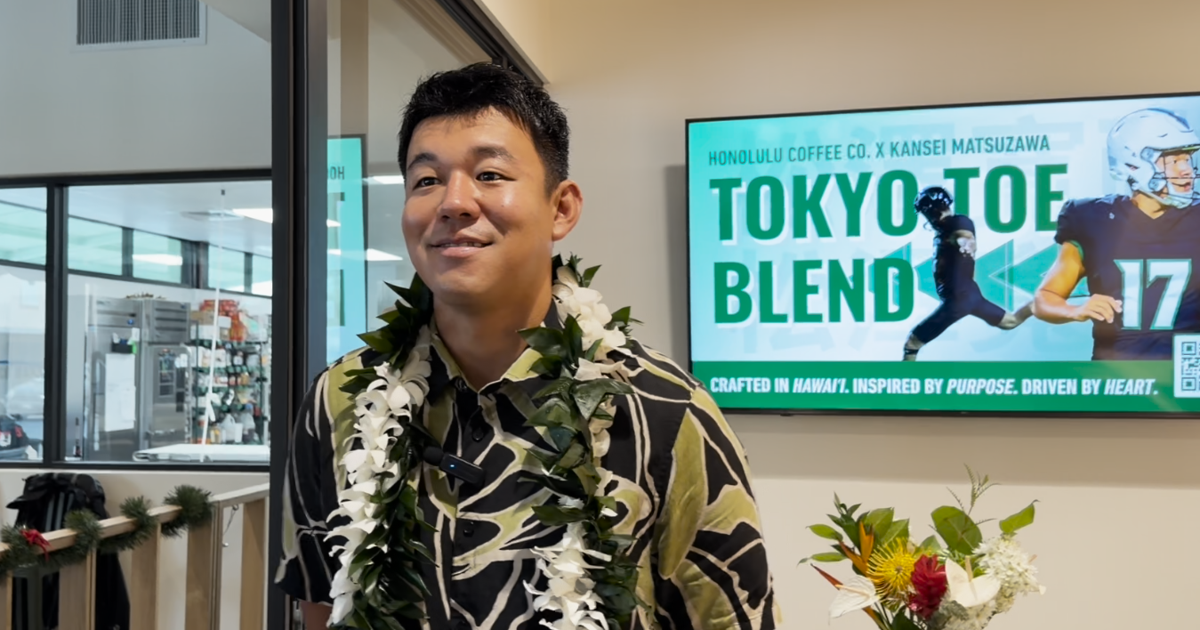
For kicker Kansei Matsuzawa, that intersection arrived unexpectedly.

Matsuzawa came to Hawaiʻi from Japan to play football, improve his English, and test himself at the highest level of college athletics. Branding and marketing were never part of the plan. Yet in today’s NIL era, those skills have become part of the education.

“As a business… I can apply to the business side,” Matsuzawa said, reflecting on what he’s learned through the process.

That lesson took shape through an NIL partnership with Honolulu Coffee Company, a collaboration rooted not in star power, but in storytelling. The result was the Tokyo Toe Blend, a coffee inspired by Matsuzawa’s journey from Japan to Hawaiʻi and the precision and discipline required of a kicker — details that mirror both his athletic and personal path.

For Honolulu Coffee, the partnership represented a shift in how businesses think about college athletes.

“As we really started to think about his story… and the University of Hawaiʻi athletics this year too,” said Erica Mounsey, the company’s chief operating officer. “We think this is just the beginning of many partnerships to come in the future.”

Rather than chasing national recognition, the company leaned into authenticity — choosing an athlete whose background aligned with its values and local customer base. In the evolving NIL marketplace, that approach is becoming increasingly important. Consumers respond not just to names, but to narratives that feel real and connected to place.

Those same changes are being felt inside athletic departments.

At UH, NIL has introduced a new layer of complexity to college sports — one that requires creativity, coordination, and a long-term view of athlete development beyond competition.

“We’re thinking about, okay, is there… we gotta be thinking about all at the same time,” said Matt Elliott, UH’s athletic director. “We’re putting together packages… a lot of creative problem solving.”

That problem solving reflects a broader reality: athletes are now brands, universities are strategic partners, and local businesses are part of the ecosystem. Success depends not on one viral moment, but on relationships built thoughtfully and sustainably.

For Mounsey, that mindset defines the future of NIL in Hawaiʻi.

“Anything’s possible… with a goal in mind,” she said.

As NIL continues to evolve nationwide, Hawaiʻi’s athletes are navigating it in a uniquely local way — balancing culture, community, and opportunity. For Matsuzawa, the experience has expanded his understanding of what it means to be a student-athlete.

The kicks still matter. So do the wins and losses. But increasingly, so does the knowledge gained off the field — lessons in storytelling, adaptability, and self-advocacy that will carry far beyond college football.

In Hawaiʻi, NIL isn’t just changing the game.

It’s changing what athletes take with them when the game ends.


Tradition drives Hawaiian Pie Company through its peak season


Link

Continue Reading

NIL

Grading the Sherrone Moore era at Michigan

Published

on


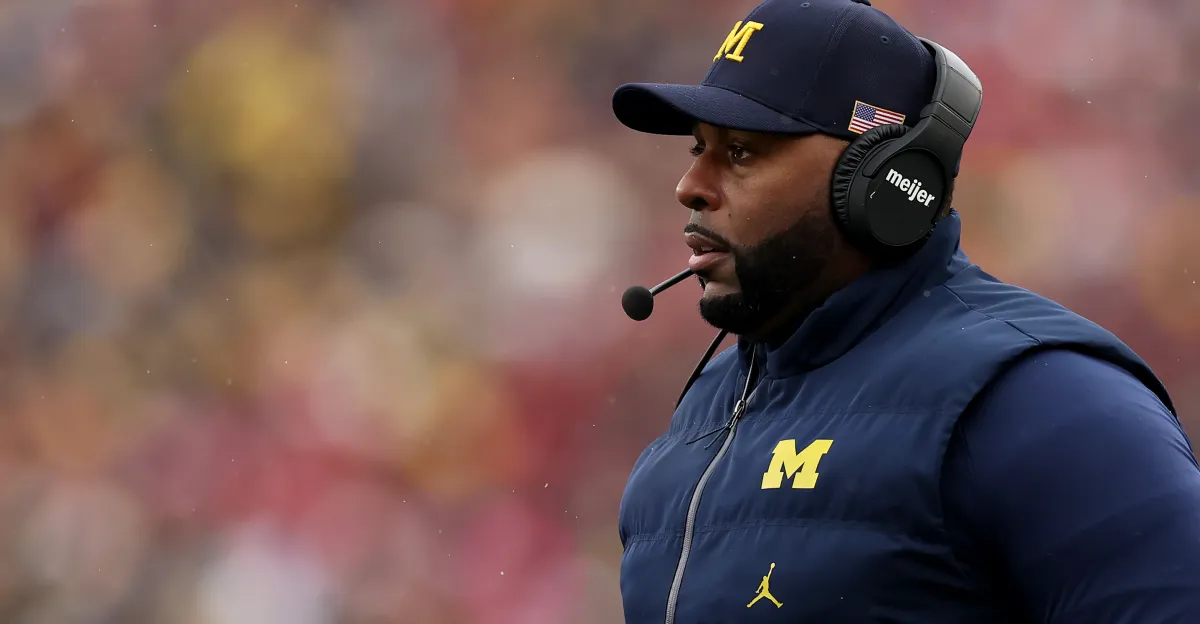
The Sherrone Moore era is over at Michigan after two short years, and for good reason. Now that he’s in the rearview mirror, we can begin to assess the overall job he did as Michigan’s head football coach.

Today, we broke down a few of the key qualities of a football coach and assessed how he performed as Michigan’s leading man.

Following Jim Harbaugh’s departure, Moore had to rapidly fill out a staff as Harbaugh took most of Michigan’s assistants with him to the NFL. Moore hired Kirk Campbell to be his offensive coordinator, Wink Martindale to be the defensive coordinator, and J.B. Brown to be the special teams coordinator. Swing and a miss. Campbell and Brown were abject disasters, with Campbell being let go after just one season while Brown made it two yeaes before being fired. Martindale was well on his way to needing to find a new job as well.

As for position coaches, Moore does get credit for bringing in defensive line coach Lou Esposito and running backs coach Tony Alford. However, the rest of the staff has been disappointing to various degrees. Alford and Esposito prevent this from being an F, but Moore was pretty close to flunking this department.

High School Recruitment: A-

Moore did well on the recruiting trail. The 2026 class was a borderline Top-10 class and included two five-stars in running back Savion Hiter and edge rusher Carter Meadows. But since his firing, two members of the class in four-star tight end Matt Ludwig and three-star offensive lineman Bear McWhorter have already left. However, it’s okay to give Moore some credit for putting together very good classes. Don’t forget the class of 2025 also included two five-stars in Bryce Underwood and Andrew Babalola.

Transfer Portal Management: B

In the transfer portal era, it’s unfair to define this category based on quantity as back-ups move around at their own pleasure now. However, we have to look at the quality of players in and out. Michigan lost a small handful of notable players in Keon Sabb, DJ Waller Jr. and Matthew Hibner after winning Harbaugh left and Moore was hired. However, Moore then brought in Jaishawn Barham, Josh Priebe and Dominic Zvada, to name a few, that same offseason. At worst, he broke even that season.

Before his second year, he was able to bring in Justice Haynes, Donaven McCulley, Damon Payne Jr. and Tre Williams, to name a few. The transfers out were plentiful, but very few made an impact at their respective new schools. It’s safe to say Moore brought in more talent than he lost in each of his two years. However, there were a few glaring holes each offseason that he did not address (quarterback in 2024, punter in 2025, etc.).

It’s hard to give Moore anything other than an A in this category, as he essentially got NIL off the ground at Michigan. Harbaugh’s famous “transformational, not transactional” model was destined to be dead-to-rights. Moore was able to retain players such as Mason Graham, Will Johnson, Kenneth Grant and Colston Loveland thanks to NIL deals, and he also played a role in Underwood signing with the Wolverines. Say what you will about Moore’s tenure at Michigan, but this was one of his legitimate strengths.

To me, this is the single most-damning category for Moore. He seemed to have no clue what he was doing when it came to clock-management and his use of timeouts. The 2024 Indiana game is the best example, as it quite literally cost the Wolverines a chance at winning. However, alternative examples are numerous and there were no signs of improvement. Under his watch, Michigan routinely challenged obviously correct calls, failed to challenge obviously incorrect calls, and played an all-around undisciplined brand of football. This category is easily an F.

When Moore was first promoted, his main mantas quickly became “SMASH” and “Team over Me.” At the time, most fans were optimistic about these, as Moore was the former offensive line coach and had developed three stellar offensive lines from 2021-23. But that quickly deteriorated, as the 2024 and 2025 offensive lines were average at best.

However, the main reason we are giving this an F is the events of the past few weeks. The fact players and staffers in the program were aware of the inappropriate relationship between Moore and the staffer but were seemingly too afraid to speak up tells you all you need to know. The culture appears to be significantly worse now than what it was when Moore took over, prompting an easy F in this field.


Link

Continue Reading

NIL

Missouri DE Damon Wilson II sues Georgia, setting up landmark player vs. school NIL legal battle

Published

on


Former Georgia defensive end Damon Wilson II has sued the school’s athletic association, escalating one of the messiest player-school disputes of the NIL and transfer portal era.

In a 42-page complaint filed Tuesday morning in Boone County, Mo., Wilson’s attorneys allege a civil conspiracy involving the Bulldogs and Georgia’s collective to try to “penalize Wilson for his decision to transfer.” The suit alleges that they interfered with his ability to enter the portal and lied about his NIL buyout. The former five-star recruit spent this season at Missouri.

The move is a counter to Georgia earlier seeking to go to arbitration to get $390,000 from Wilson, alleging damages after the player signed an agreement to return to Athens for his junior season before entering the transfer portal a month later.

It’s also believed to be the first time a player and school have taken each other to court over an NIL dispute. The resolution could hinge on Wilson’s argument that the NIL agreement with Georgia’s collective was a binding contract.

“Georgia appears intent on making an example of someone, they just picked the wrong person,” said Jeff Jensen, one of Wilson’s attorneys. “Damon never had a contract with them. I don’t see how Georgia thinks intimidation and litigation will help their recruitment efforts — maybe players could bring lawyers with them to practice.”

“As this matter involves pending litigation, we will have no additional comment at this time and refer you to our previous statement,” University of Georgia Athletic Association spokesman Steven Drummond said.

The backstory

Wilson appeared in 26 games at Georgia from 2023 to ‘24 and was expected to be a significant contributor this season when he signed an NIL agreement last December with Georgia’s Classic City Collective. The terms sheet called for him to receive $30,000 per month from December 2024 through January 2026.

A month after signing the deal, he transferred to Missouri, where he led the Tigers with nine sacks. Because the agreement was contingent upon his staying at Georgia, the collective ended the deal.

In October, the UGAAA filed an application to compel arbitration in Athens-Clarke County, Ga. It alleged Wilson owed $390,000 — the unpaid amount on the deal — in liquidated damages, as spelled out in the terms sheet.

What Wilson’s suit argues

The suit alleges Georgia staffers falsely told multiple unnamed Power 4 programs that Wilson would owe the Bulldogs $1.2 million if he left. That action was “an effort to prevent (other schools) from offering Wilson an NIL agreement, thereby impeding his ability to obtain an NIL agreement from a competing program that was the product of free and open competition for his athletic services and NIL licensing rights.”

It also contends the Bulldogs didn’t immediately put his name in the portal but instead launched an “all-out offensive” to try to keep him at Georgia. Those acts were part of what the suit called a “civil conspiracy” to interfere with Wilson’s business endeavors by the suit’s defendants: UGA’s athletic association, the collective and its two now-former CEOs, Matt Hibbs and Tanner Potts.

The suit also includes a count of interfering with Wilson’s business opportunities and accuses UGA’s athletic association of violating the confidentiality provision of the terms sheet by sharing its contents, including through a public court filing.

Much of the complaint addresses the NIL deal itself. The suit said Wilson and several other teammates were simply told by a Bulldogs employee to go upstairs at the football building to sign the agreement during preparations for the College Football Playoff. Wilson’s filing argues the deal is not enforceable because it says its terms would “be used to create a legally binding document.” That document was not created. The filing also notes that the terms sheet encouraged Wilson to “seek legal counsel” before finalizing a full agreement. If Wilson’s reading is correct, he would not owe the $390,000 the Bulldogs claim he does.

Finally, the suit includes a count of defamation over a line from a Bulldogs spokesperson about expecting athletes to honor commitments. The statement, the complaint said, implies that Wilson was dishonest, which hurts his reputation.

Wilson lost out on endorsement opportunities and NIL revenue and suffered emotional and mental distress caused by the Bulldogs’ false claims, his attorneys allege. He’s seeking a “fair and reasonable amount of damages” for the “financial and reputational harm he has suffered” along with legal fees.

Why this case is important

Georgia’s filing against Wilson this fall was the first known instance of a school taking a current/former player to court over an NIL buyout. And this complaint appears to be the first time a player has sued a school regarding an NIL deal.

The closest comparison is one-time Florida signee Jaden Rashada’s pending lawsuit over a $13.85 million dispute. But he filed that against three individuals involved (including now-former Florida coach Billy Napier) and a booster’s private company; the Gators have not been named as a party in the case.

As the player compensation space evolves in the first year of direct revenue sharing between schools and athletes, disputes will continue to arise. Whether contracts are binding is, to some degree, an open question and affects whether players can essentially act as free agents every year. This case is one of the first, best looks into how the issue might be resolved.


Link

Continue Reading

NIL

Former Tennessee QB Nico Iamaleava returning to UCLA for second season

Published

on


Updated Dec. 22, 2025, 10:57 p.m. ET


Link

Continue Reading

NIL

Four takeaways from the first weekend of the College Football Playoff

Published

on


Dec. 23, 2025, 5:35 a.m. ET

If you watched any part of Ole Miss’ 41-10 blowout of Tulane, the one common theme you felt was that the absence of former head coach Lane “Benedict” Kiffin was not acknowledged by the home fans; they even appeared to embrace it. It took a while for Rebel Nation to realize it but Kiffin simply was never “one of them” and, while he built the program, he did not measure up to the “Ole Miss family.” Most Rebel fans would probably tell you now they’d rather lose without him than win with him. Kiffin has now been fully exposed and St. Nick (Saban, now known as Mr. Hypocrite) and Pete Carroll, his self-proclaimed advisers, should be ashamed for their comments supporting the manner in which he tried to negotiate his way to both coaching one team and recruiting for another simultaneously. One is the GOAT who ran away from NIL and the transfer portal while the other is a recognized cheater by many. The best part is Kiffin’s LSU Tigers play at Mississippi next year. Good riddance!


Link

Continue Reading

NIL

The Year Schools Paid Their Players

Published

on


The Year Schools Paid Their Players


Link

Continue Reading

Most Viewed Posts

Trending