

One of the largest sports facilities in the Bay Area has a new operator pledging to invest at least $10 million for some sorely needed upgrades to the nearly 40-year-old complex.
Rec Sports
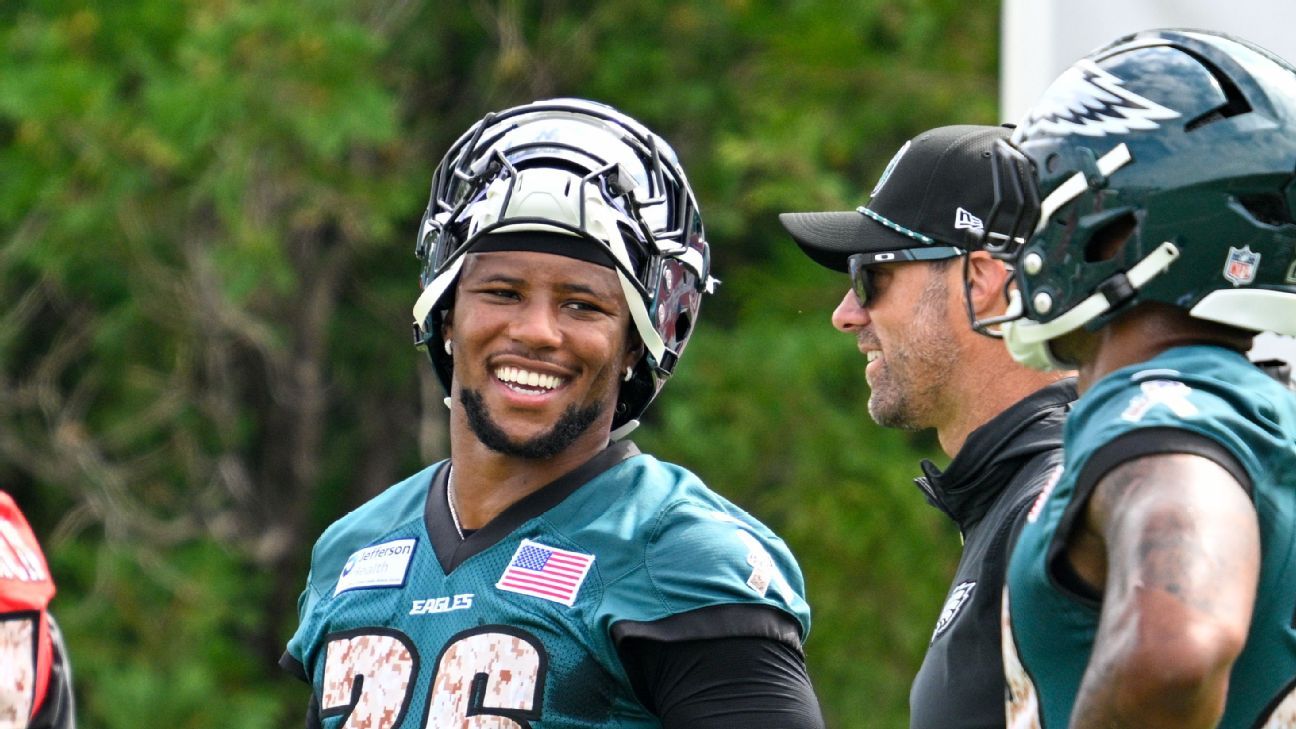
Eagles’ Saquon Barkley shocked by Trump sports council mention

-

Tim McManus
PHILADELPHIA — Eagles running back Saquon Barkley did not accept President Donald Trump’s invitation to serve on his council on sports, fitness and nutrition, he said Monday, adding that he was “shocked” his name was mentioned as being part of it.
“A couple months ago, it was brought to my team about the council. So I’m not really too familiar with it,” Barkley said after practice at the NovaCare facility. “I felt like I am going to be super busy, so me and my family thought it would probably be of best interest to not accept that. I was definitely a little shocked when my name was mentioned. I’m assuming it’s something great, so I appreciate it but was a little shocked when my name was mentioned.”
On July 31, Trump signed an executive order establishing the council, which is tasked with advising the president and recommending actions on a number of fronts, including challenges and school-based programs that reward excellence in physical education; fitness goals for American youth, with the aim of fostering a new generation of healthy, active citizens; and strategies for reestablishing the Presidential Fitness Test.
The council will have up to 30 members, per the executive order. During a news conference announcing the order, Trump named Barkley as a member of the council along with a group that includes NFL commissioner Roger Goodell; fellow football players including Nick Bosa, Tua Tagovailoa and Harrison Butker; Pro Football Hall of Famer Lawrence Taylor; retired legends Jack Nicklaus and Wayne Gretzky; and current LIV Tour golfer Bryson DeChambeau.
Prior to the Eagles’ White House visit in April to celebrate their Super Bowl LIX win over the Kansas City Chiefs, Barkley spent time with Trump at the National Golf Club Bedminster in New Jersey and flew with the president back to Washington on Marine One.
Barkley also played golf with former President Barack Obama at Merion Golf Club in October, which he noted in response to criticism he received online after spending time with Trump.
Continue Reading
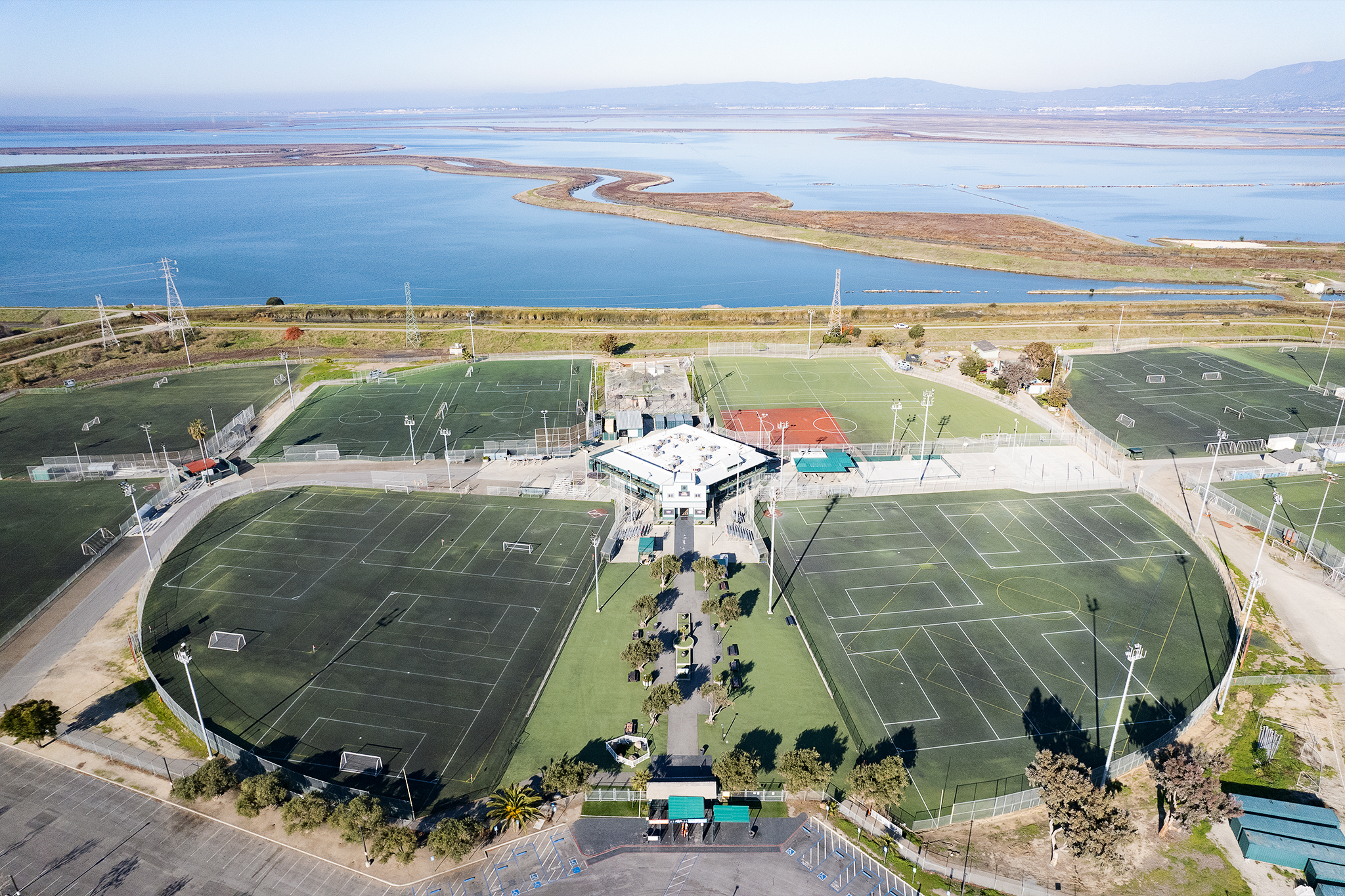

On Tuesday, Unrivaled Sports announced it had acquired Twin Creeks Sports Complex in Sunnyvale. The facility, nestled into the side of San Francisco Bay near the intersection of Highways 101 and 237, has 10 sports fields and a centralized clubhouse building with a restaurant and bar.
Unrivaled Sports was founded by private equity billionaires David Blitzer and Josh Harris in 2024 and has quickly moved to make big acquisitions in the youth sports world, with both venues and tournament operators, like Cooperstown All Star Village. Chief commercial officer Wade Martin told SFGATE that Unrivaled was interested in Twin Creeks specifically for its prime location between two main commuter thoroughfares. Unrivaled purchased the previous operating company and took on the lease with the county, Santa Clara County Parks and Recreation Department Director Todd Lofgren told SFGATE. Months after the Santa Clara County Board of Supervisors approved the transfer, Unrivaled Sports officially completed the purchase and is now the lessee through the end of 2033.
Article continues below this ad

Twin Creeks Sports Complex in Sunnyvale, Calif., Dec. 11, 2025.
“It’s a terrific location for a sports complex in one of the best markets you could be in in the country,” Martin said. “… It’s a real fixture of the community there, and those are the kind of sites that we’re looking for around the country.”
Twin Creeks opened back in 1986 and was built by prominent Santa Clara County developer Ray Collishaw. While Collishaw died in 2009, his son Dave kept the facility’s operation in the family until Unrivaled’s purchase.
As one of the few venues capable of hosting multiteam baseball and softball tournaments in one spot within the San Francisco Bay Area, Twin Creeks is a vital place for recreation sports and youth teams. For parents like Scott Johnson of Redwood City, whose three boys all played for the Peninsula Rays travel baseball team, it has become a home away from home.
Article continues below this ad
“Given all the events, not only that I’ve coached at but been there as a parent with three boys, it feels like [we’re there] every other weekend during the summer,” Johnson told SFGATE, adding that his experience is shared by many sports-inclined families on the Peninsula and in the South Bay. “It’s such a convenient location, and you get really good competition there every week, so there’s not a lot of incentive for us to go farther than Twin Creeks.”

The entrance to Twin Creeks Sports Complex in Sunnyvale, Calif., Dec. 11, 2025.
But there’s no doubt that the facility is in need of some work, even if frequent attendees have gotten used to its current state. Johnson said most of the fields no longer have an operational scoreboard, the playing surfaces have only patchwork repairs on them, and dugouts are in “pretty rough” shape.
“It’s a facility that needs some love and affection,” Martin agreed, adding that Twin Creeks is “showing its age.” Martin said Unrivaled plans to pour $10 million-$15 million into the facility in the next few years.
Article continues below this ad
Since its founding in March 2024, Unrivaled Sports has already acquired more than a dozen youth sports venues and ventures all across the U.S. The most prominent under its umbrella are Cooperstown All Star Village near the Baseball Hall of Fame; Ripken Baseball, founded by Baseball Hall of Famer Cal Ripken Jr. and his brother Billy; and two of the Big League Dreams sports complexes on the West Coast in Las Vegas and Manteca, California. Harris and Blitzer also co-founded a sports management company, Harris Blitzer Sports & Entertainment, which owns the NBA’s Philadelphia 76ers, the WNBA’s Philadelphia expansion team and the NHL’s New Jersey Devils. (Harris also is the primary owner of the NFL’s Washington Commanders; Blitzer is a limited partner.)

Twin Creeks Sports Complex in Sunnyvale, Calif., Dec. 11, 2025.

Twin Creeks Sports Complex in Sunnyvale, Calif., Dec. 11, 2025.
Lofgren, the Santa Clara parks director, told SFGATE that despite its cracks, Twin Creeks still hosts about 700,000 visitors annually. “It’s vitally important to the ecosystem of providing sports fields to adults and youth sports individuals and groups. We’re excited that we’re finding partners to co-invest in the facility.”
Article continues below this ad
Lofgren said Unrivaled Sports hasn’t filed any paperwork for its planned upgrades at this time, but Martin said the company is hoping to make some significant improvements to the experience “inside the lines” — as in, to things like the turf fields, dugouts and fencing — in 2026 in a staggered approach to keep the facility usable. Further upgrades to the restaurant and its offerings, as well as renovating the full facility, are also on the list, though those could take a few years.

Twin Creeks Sports Complex in Sunnyvale, Calif., Dec. 11, 2025.
“What Twin Creeks creates by being so close to such a large population base is that it’s both a local community asset that can be used every single day — and it is,” Martin said. “But we also think it can be a real national destination for tournaments and youth travel events. It’s one of the few locations that we think can play in both worlds.”
That was thrilling news to Johnson — though he did have one word of caution.
Article continues below this ad
“I hope $10 million is enough,” Johnson said. “Because it’s a very big facility and that’s a lot of acreage to cover and maintain and repair.”

The wave that reshaped college sports is now pressing on the doors of high school athletics, and the pressure is coming from several directions at once. Cultural energy, parental awareness, athlete empowerment, and brand interest have all played a role. But if you strip away the noise, the real driver behind the next phase of NIL adoption is something much simpler: legal reality.
Find out more about NOCAP Sports HERE
States are beginning to approve name, image, and likeness rights for high school athletes because the alternative is becoming legally indefensible. The recent situation in Ohio provides a clear example of how quickly momentum shifts once litigation enters the conversation.
Earlier this month, an Ohio athlete who had been offered an NIL deal filed a lawsuit against the state high school athletic association after being denied the ability to accept it. Within days, the association reversed course. The timing was not accidental. The rule was unlikely to withstand legal scrutiny because it restricted a fundamental economic right. Once the lawsuit exposed that vulnerability, the association understood that maintaining the ban would almost certainly lead to a loss in court.
Across the country, state high school associations operate independently from legislatures. They write their own eligibility rules and they vote on their own policy changes. This structure gives them a great deal of autonomy, but it also means they hold responsibility for ensuring those rules do not violate state or federal law. NIL restrictions have increasingly crossed that line.
At its core, NIL is not a competitive issue. It is an economic one. Preventing a teenager from monetizing their own name is not meaningfully different from preventing them from earning money through music, social media, or part-time work. The athlete in Ohio did not challenge a competitive imbalance. They challenged the idea that a governing body could unilaterally block a young person from participating in the broader economy. That is why lawsuits are becoming the most powerful forcing mechanism in the high school NIL debate.
Every state association is watching the same trend unfold. Courts have been overwhelmingly clear that athletes, whether college or high school aged, have enforceable publicity rights and economic rights. Associations can try to maintain legacy guardrails, but they cannot deny fundamental liberties indefinitely. The result is a slow but inevitable policy migration toward NIL permissiveness.
This shift is not driven by a desire to commercialize youth sports. In many states, the governing bodies know full well that approving NIL does not mean every high school athlete becomes a brand partner on day one. What it does mean is that associations recognize their own legal exposure. When you add cases like Ohio to the list of earlier developments in California, Illinois, Alaska, New York, and others, the picture becomes clearer. States are not acting because they want to innovate. They are acting because the cost of standing still is too high.
There is also a secondary factor accelerating change. Brands are increasingly cautious about entering environments where the rules are unclear. When a state approves NIL, it sends a signal of stability. It does not promise a gold rush, but it does establish a legitimate framework where athletes can participate safely and brands can operate with confidence. Associations may not be financially motivated to embrace NIL (more on taxation in later issues), but they are motivated to reduce uncertainty. Approving NIL rights eliminates ambiguity and protects the ecosystem.
Critics often argue that NIL at the high school level invites chaos. The fear is that wealthy schools, ambitious collectives, or recruiting-driven communities will leverage NIL to tilt competition. But in practice, that has not been the trend. Most high school NIL deals are modest, often tied to local businesses, community supporters, or digital content. States that have adopted NIL have not seen rapid erosion of competitive balance. They have simply acknowledged that economic participation exists, and that ignoring it does more harm than good.
The more meaningful question is not whether states will approve NIL. It is what the pace of adoption will look like. Some have moved preemptively, understanding the legal and cultural momentum. Others will hold their ground until a lawsuit forces their hand. But the destination is already clear. High school associations cannot justify denying athletes rights that every other teenager in their state enjoys.
The Ohio situation did not create a new standard. It revealed the one that already existed. When an athlete challenges a rule that restricts their ability to earn income from their identity, the courts will side with the athlete. Associations can wait for that ruling, or they can write policy that respects economic freedom and protects the integrity of their governance structures.
The smart states are choosing the latter. The rest will follow. The only remaining variable is time.
About Youth Sports Business Report
Youth Sports Business Report is the largest and most trusted source for youth sports industry news, insights, and analysis covering the $54 billion youth sports market. Trusted by over 50,000 followers including industry executives, investors, youth sports parents and sports business professionals, we are the premier destination for comprehensive youth sports business intelligence.
Our core mission: Make Youth Sports Better. As the leading authority in youth sports business reporting, we deliver unparalleled coverage of sports business trends, youth athletics, and emerging opportunities across the youth sports ecosystem.
Our expert editorial team provides authoritative, in-depth reporting on key youth sports industry verticals including:
- Sports sponsorship and institutional capital (Private Equity, Venture Capital)
- Youth Sports events and tournament management
- NIL (Name, Image, Likeness) developments and compliance
- Youth sports coaching and sports recruitment strategies
- Sports technology and data analytics innovation
- Youth sports facilities development and management
- Sports content creation and digital media monetization
Whether you’re a sports industry executive, institutional investor, youth sports parent, coach, or sports business enthusiast, Youth Sports Business Report is your most reliable source for the actionable sports business insights you need to stay ahead of youth athletics trends and make informed decisions in the rapidly evolving youth sports landscape.
Join our growing community of 50,000+ industry leaders who depend on our trusted youth sports business analysis to drive success in the youth sports industry.
Stay connected with the pulse of the youth sports business – where industry expertise meets actionable intelligence.
Sign up for the biggest newsletter in Youth Sports – Youth Sports HQ – The best youth sports newsletter in the industry
Follow us on LinkedIn
Follow Youth Sports Business Report Founder Cameron Korab on LinkedIn
Are you a brand looking to tap into the world’s most passionate fanbase… youth sports?
Introducing Play Up Partners, a leading youth sports marketing agency connecting brands with the power of youth sports. We specialize in youth sports sponsorships, partnerships, and activations that drive measurable results.
About Play Up Partners
Play Up Partners is a leading youth sports marketing agency connecting brands with the power of youth sports. We specialize in youth sports sponsorships, partnerships, and activations that drive measurable results.
Why Sponsor Youth Sports?
Youth sports represents one of the most engaged and passionate audiences in sports marketing. With over 70 million young athletes and their families participating annually, the youth sports industry offers brands unparalleled access to motivated communities with strong purchasing power and loyalty.
What Does Play Up Partners Do?
We’ve done the heavy lifting to untangle the complex youth sports landscape so our brand partners can engage with clarity, confidence, and impact. Our vetted network of accredited youth sports organizations (from local leagues to national tournaments and operators) allows us to create flexible, scalable programs that evolve with the market.
Our Approach
Every partnership we build is rooted in authenticity and value creation. We don’t just broker deals. We craft youth sports marketing strategies that:
- Deliver measurable ROI for brand partners
- Create meaningful experiences for athletes and families
- Elevate the youth sports ecosystem
Our Vision
We’re positioning youth sports as the most desirable and effective platform in sports marketing. Our mission is simple: MAKE YOUTH SPORTS BETTER for athletes, families, organizations, and brand partners.
Common Questions About Youth Sports Marketing
Where can I sponsor youth sports? How do I activate in youth sports? What is the ROI of youth sports marketing? How much does youth sports sponsorship cost?
We have answers. Reach out to info@playuppartners.com to learn how Play Up Partners can help your brand navigate the youth sports landscape.
Youth sports organizations: Interested in partnership opportunities? Reach out to learn about our accreditation process.


Almost 20 years after the birth of the idea, only the fourth edition of the African Youth Games are underway in Angola this month. With the 2022 edition cancelled due to scheduling issues, it took until this past summer in Algeria before the continent’s youth aged 14-17 were finally able to compete against each other again. The inaugural African School Games (ASG) were a success, and a reminder of how important these events are for young people.
The African Youth Games (December 10-20), with 14-17 year olds from across the continent are competing across 33 sports. The inclusion of two traditional board games, Kiela and Wela, are a nod to African heritage and allow for cultural learning.
“It’s a good idea to do sport development to host events to give opportunity to the youth,” Bella Bello Bitugu told DW.
“The question you ask yourself is, what happens from now? For example, this is the third one Ghana has participated in and we have the biggest contingent, 70 people are coming. So what happens after that? Where is the monitoring, where are the facilities, where are the programs at home?”
Bitugu is a senior lecturer at the Department of Physical Education and Sports Studies at the University of Ghana. He has studied in Ghana and Austria, and specializes in development through sport. He is also a former a technical advisor to Ghana’s minister of youth and sport.
A case of sportswashing?
Bitugu is also curious about the motives behind a country facing ongoing criticism over its human rights record investing so heavily in sports recently. This past summer, the men’s basketballers hosted and won Afrobasket. It was the 12th time they have won the continental basketball championship. In mid-November, Lionel Messi’s Argentinadrew a huge crowd for a friendly in Luanda as part of the country’s celebration of its 50th independence anniversary. Messi scored as Argentina won 2-0. The event drew a huge, enthusiastic crowd.
“I will say this [sportswashing] is something that maybe you can also attribute to Angola,” Bitugu said.
“Finally let us give them some good news about us, let us open up the system, let us do some gimmicks, let us do some demonstration of peace, of we having everything… Principally a great idea, but we want to question why Angola, why now?”
The country has also invested in infrastructure. Mitrelli, a Swiss-based international company focused on infrastructure projects across Africa, developed the Bengo Paralympic Sports Complex in Angola’s Bengo province. This state-of-the-art facility covers more than 20 Olympic and Paralympic disciplines, and can house 250 athletes. The complex opened in time for the Youth Games, and while clearly a step in the right direction in terms of development there, Bitugu wonders whether it will be sustainable.
“Are they going to turn into the white elephants?” he asked. “Because you know sporting facilities are very, very expensive and are in themselves not profitable. You need to combine it with non-sporting activities if you don’t get a constant flow of money from government. But you cannot always rely and depend on the government for money.”
Sports a universal language for youth in Africa
The sustainability of these events looms large, which feels especially relevant given this event also serving as a qualifier for the Youth Olympic Games in Senegal next year. Ultimately, the main purpose of these events is to provide the young people of Africa with the opportunity to gain their first taste of international competition and take the next step in their development.
“Active Africa, winning Africa, peaceful Africa, united Africa – all of these things are things sports provide,” Bitugu explained.
“These are the strengths of sports. Unfortunately in certain instances they are abused and misused but these are potential things when you bring the young people together, they understand each other, they have a collectivity.
“This is a fantastic opportunity for peace, unity, tolerance, fairness and understanding, especially at this time in our world where we look more at our differences, at money.”
Bitugu hopes that both these Games in Angola and the ones next year in Senegal can find a way to return to a more human-focused approach.
“There is too much monetization of sports, too much commercialization and the human element is losing such that people who go into sports don’t even think of anything other than winning and money.”
The hope is that the legacy of the Youth Games in Angola, and indeed the Youth Olympics in Dakar next year, is of sustainable investment in young people. Competition matters, but regular opportunities to develop the values that sports provide matter even more.
Edited by: Chuck Penfold

Staff photos / Brandon Cantwell
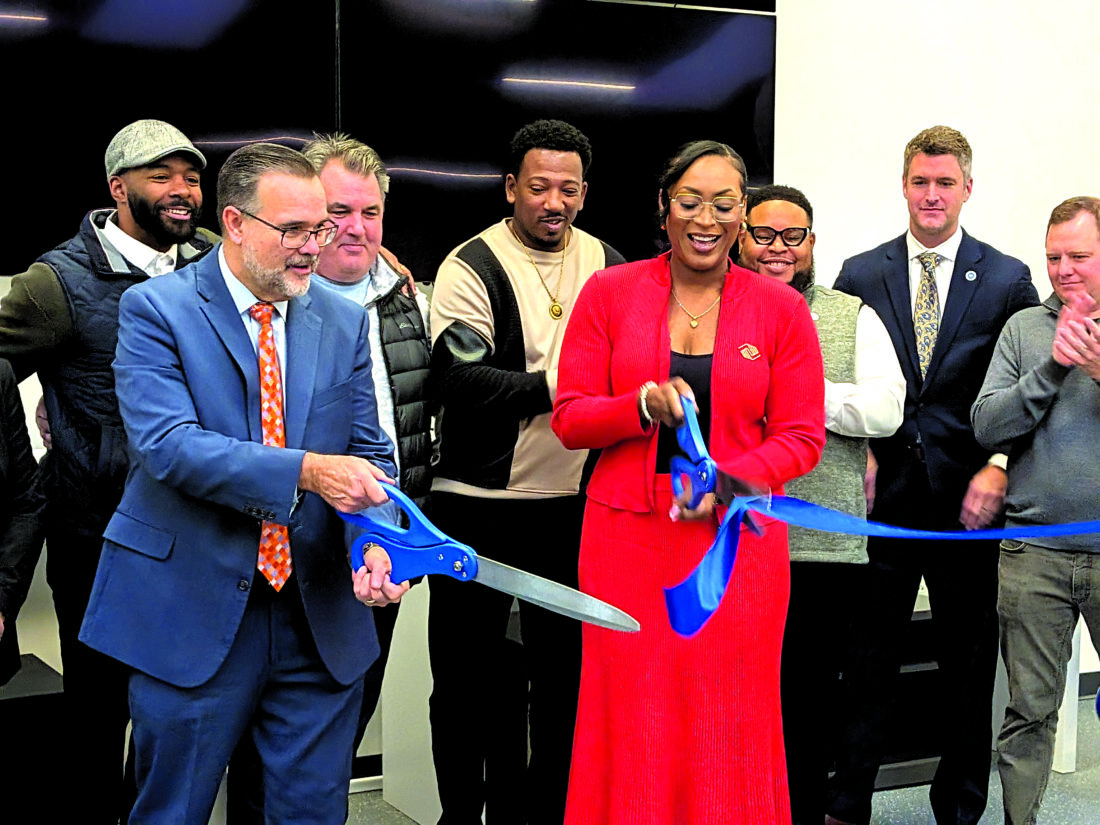
James Bird, executive director of the Boys and Girls Club of Youngstown, left, and Edna Edmonds, the organization’s chief operating officer, cut a ribbon commemorating the club’s grand reopening Thursday afternoon.
YOUNGSTOWN — For Andre Stewart, coming back to the Boys and Girls Club of Youngstown felt like a full circle, being in a place that was like a second home for him.
“This place is where I came after school or to get away, and you didn’t know how much you needed it when you were young,” said Stewart, a resident of Youngstown’s South Side.
“Also, as you get older, some of the people, good people in the city, people who might be in trouble — it kept you out of trouble as much as it could have got you in trouble, too.
“Kids that went other ways when you see them, they might leave you alone, because ‘Oh, I remember him from the Boys and Girls Club.”
Stewart was one of many community members, alumni and public officials at its Oak Hill Avenue building Thursday afternoon, as club officials celebrated its $1.5 million renovation.
The renovations, which were made possible through community support, include a new main entrance, program rooms designed for elementary, middle and high school members and a teen center.
There also are dedicated arts and graphics and STEM programs rooms, and the gymnasium and activity center have been renovated and restored.
James Bird, the club’s executive director, said the gym’s improvements will give way to a number of new activities, such as volleyball, pickleball and aerobics.
Bird said the completed renovations are only the first phase of what officials have planned for the club.
“We’re going to begin next year to build a community park, and it’ll be part of the Boys and Girls Club, become part of the community,” Bird said. “A part of Market Street, Oak Hill and the South Side.
“I really hope that this then becomes a renaissance of affordable housing because there are so many available lots that we could have affordable housing with a wonderful youth center, wonderful park.”
Samantha Turner, the 2025 chairperson for the club’s board of directors, called the renovation an “expansion of possibilities.”
“It is a commitment to ensure that every child who walks through those doors feels seen, supported and empowered,” Turner said. “Here, our youth will discover the strength to try new things, build relationships and receive the guidance that they need to survive.
“This club has been a cornerstone of Youngstown for decades, and today we stand together stronger, more unified and more determined than ever — ready to write a new chapter.”
Chief Operating Officer Edna Edmonds emphasized some of Turner’s points, noting that every child in Youngstown has potential — just not the means to reach it sometimes.
“Too many kids grow up without access to safe spaces — healthy meals, mentors and opportunities. But at the Boys and Girls Club of Youngstown, kids have what they deserve,” Edmonds said. “A safe space to learn and grow; caring mentors that show up and stick around and access to tools and experiences that open new doors.
“Youngstown needs club kids, and club kids need all of you.”
State Sen. Al Cutrona, R-Canfield, presented Turner and the club’s board of directors with a proclamation from the Ohio Senate, after it included money in the state’s capital budget to support the renovations.
“There’s nothing that makes me happier than when we have an opportunity to invest in our community and our children,” Cutrona said. “When we see projects like this succeed, it gives us all the more encouragement to see more dollars flow to communities like this.”

DURHAM, N.C. — There’s a youth movement at USA Basketball camp this weekend with young WNBA players Caitlin Clark, Paige Bueckers and Angel Reese making their debuts with the national team.
They’ve been competing against each other in college and the WNBA over the past few years and Bueckers was happy to have them as teammates again. Many of the young players had competed together for the U.S. on American youth teams. They’ll get their first taste of the senior national team in a camp at Duke this weekend.
“It’s great competing with them for a change instead of against them and I think we really bring out the best of each other,” Bueckers said. “I think that’s what USA Basketball does. Just so many amazing athletes and women coming together for one common goal. I think that’s always brought out the best of each other. It’s really fun to be able to share the court and be on the same side for a change.”
Bueckers gave the group the nickname “Young and Turnt” — a phrase used by youth players in the past to describe their high energy and excitement playing with USA Basketball.
The trio, along with other senior national newcomers Cameron Brink, Aliyah Boston and JuJu Watkins, are the future of USA Basketball with veterans Diana Taurasi and Sue Bird retired and other longtime fixtures in the lineup nearing the end of their careers. The U.S. has won eight straight Olympic gold medals and four consecutive world championships. Olympic veterans Kahleah Copper, Jackie Young and Kelsey Plum will also be at the three-day camp.
“Obviously there’s some vets and there’s the older class who have already came in and won gold medals, and they have that experience,” Bueckers said. “So as a younger group, you want to ask them questions, soak it up, be a sponge. Like, get their experience and then grow in our experience as well.”
The average age of the 17 players at the camp is just over 25. Bueckers said having so many young players who have been together brings a comfort level.
“There’s a familiarity of competing with and against each other,” she said. “We kind of know each other and it’s more comfortable that way, too. We’re all coming in and we’re having the same expectations of just wanting to go in there and compete and have fun and bring our vibes in and just be us.”
Bird, who is now the managing director for USA Basketball, said this camp will hopefully give the new players a look at international basketball at its highest level.
“Really have it be a tone setter,” said Bird, who helped the U.S. win five Olympic gold medals as a player. “What is it to wear USA on your chest? What is it to be on this team? Whether it’s a World Cup qualifier we’ll get to in March or hopefully the gold-medal game of a big competition, you have to set the tone on Day 1.”
Though many invites went out for the camp, Bird said past Olympians such as A’ja Wilson, Breanna Stewart, Sabrina Ionescu and Napheesa Collier had other commitments.
“There’s a lot of moving parts, that’s always how it is for USA Basketball,” Bird said. “For the young players, it’s a great opportunity to get their first feel and first taste.”

RALPH WILSON/For the Express
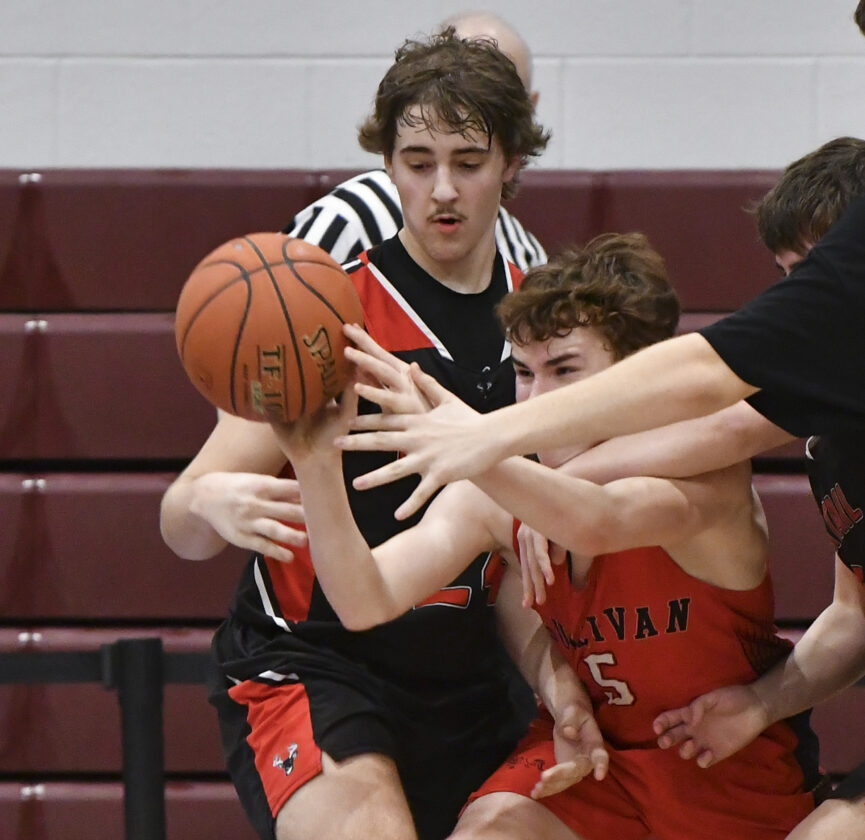
Bucktail’s Gavin Pick (24) looks to pass during a PIAA District 12, Class A boys playoff game against Sullivan County at Loyalsock Township on Wednesday, Feb. 26, 2025. Bucktail won 45-30.
To say Brody Pentz will be challenging to replace is an understatement. Throughout his four-year career with the Bucks, the phenom surpassed 1,300 points and 600 rebounds, frequented the Mid-Penn and all-state all-star teams and led the program amidst its most successful stint in quite some time.
It isn’t just a matter of replacing Pentz either. Of the squad that finished last season at states and third in District 4 Class A, many of its key contributors, like Gary Whipp, Talan Ditty and Ethan Charcalla, are gone, leaving their roster as new-look as ever.
However, as one era of Bucktail boys basketball is effectively wrapped up, optimism surrounds the program heading into the next. It may take some time, as youth fills out its new-look roster. But head coach Travis Fantaskey still expects the Bucks to carve out more success this season as they develop as a team.
“We lost a key part of our team, but I’ve got a lot of young kids that click. They’re all in,” said Fantaskey on his 2025-26 group. “I’m not saying we’re going to win states this year, but I’m feeling confident another .500 season would be a good thing for us. Anything above a .500 season would be a bonus.”
Juniors Gavin Pick and Aiden Ditty return, looking to lead after playing impactful, complementary roles through 2024-25. They’re the lone Bucks that head into the campaign sporting starting experience, with the rest of Fantaskey’s starters slated to be underclassmen.
Sophomore Teagan Stone and freshman Corbin Pentz will fill two other starting slots, each which could be expected to show flashes coming off progressive football stints. And the fifth slot will likely be interchangeable throughout the season, with Fantaskey looking to rotate freshmen and sophomores into that role to see what works best.
“I want them to play together,” said Fantaskey when discussing the group. “Other than Aiden and Pick, they haven’t really ever player together, so my job this year is to get them to click as a team.”
Like last season, offensive inconsistency is expected to be a weak point for Bucktail early in the season.
Through three games so far, the offense has prospered at times and struggled as well, with strong shooting leading it past Curwensville and offensive shortcomings holding it back against Claysburg-Kimmel and St. John Neumann. That’s expected with its two leading scorers – Brody Pentz and Gary Whipp – graduating, and whether someone can step up to fill those voids or not is a development worth keeping an eye on.
On the other side, Fantaskey likes what he’s seen on defense so far.
“On defense, all of them have (stood out). I’m more of a defensive coach; I love different defenses. And they all seem to know their rotations, whether we play zone, man, both, press or halfcourt,” said Fantaskey.
“They play well together as far as defense goes. Offense, we just have to be more consistent on shooting. Give me eight games there, and we usually pull together.”
Even with its success through the last two seasons, seasons which have produced two PIAA trips and one District 4 Class A title, Bucktail continues to rep the underdog label and rep it proudly.
It’s already gone into early matchups with that mentality, facing two Class AA schools in a tournament at Curwensville to open the season. In that tournament, it went 1-1 with a convincing 56-34 win over the tourney host Golden Tide, an opening win that gave Fantaskey confidence for what’s to come.
“The challenge we always have is that we’re always the underdog, no matter where we go,” said Fantaskey. “A Class A team going into a Class AA tournament and coming out 1-1, I’ll be satisfied with that all day long.”
As one of the smaller schools in the state, it faces more challenges than most. But that hasn’t stopped it from prospering, and just because it’s without multiple stars from those runs, doesn’t mean it expects its climb to come to a complete stop.

Motorsports2 minutes ago
What 23XI, Front Row and NASCAR’s other teams are getting in the settlement

NIL5 minutes ago
Oregon WR Dakorien Moore signs NIL deal with Red Bull

Rec Sports7 minutes ago
Private equity-backed group to pump $10M into Bay Area sports complex
Sports11 minutes ago
Purdue volleyball beats SMU to advance to Elite Eight

Rec Sports15 minutes ago
Why States Are Beginning to Approve NIL for High School Athletes from NOCAP Sports

Motorsports18 minutes ago
Roger Penske Statement, Response to Today’s Settlement – Speedway Digest

Motorsports20 minutes ago
Bass Pro Shops CEO Johnny Morris expresses outrage in letter to NASCAR, over Steve Phelps ‘shockingly offensive’ attacks on Richard Childress

Rec Sports22 minutes ago
African Youth Games important, but sustainability is key – DW – 12/12/2025

Sports28 minutes ago
Volleyball Announces Signing of Hunter, Johnson and Vanlandingham

Rec Sports30 minutes ago
$1.5 million makeover of youth club celebrated | News, Sports, Jobs

Motorsports34 minutes ago
Sam Corry Signs With Nitro Motorsports for 2026 TA2 Program

Motorsports35 minutes ago
5 takeaways from 23XI and FRM’s historic NASCAR settlement – Motorsport – Sports

Rec Sports38 minutes ago
Clark, Bueckers, Reese bring youth movement to USA Basketball camp | News, Sports, Jobs

Sports43 minutes ago
Kevin LaSure Joins Track & Field Program as Assistant Coach

Rec Sports46 minutes ago
Bucks bring youth into 2025-26 season after departures | News, Sports, Jobs

Rec Sports3 weeks ago
First Tee Winter Registration is open

Rec Sports2 weeks ago
Fargo girl, 13, dies after collapsing during school basketball game – Grand Forks Herald

Motorsports2 weeks ago
CPG Brands Like Allegra Are Betting on F1 for the First Time

Sports3 weeks ago
Volleyball Recaps – November 18

Motorsports3 weeks ago
F1 Las Vegas: Verstappen win, Norris and Piastri DQ tighten 2025 title fight

Sports2 weeks ago
Two Pro Volleyball Leagues Serve Up Plans for Minnesota Teams

Sports2 weeks ago
Utah State Announces 2025-26 Indoor Track & Field Schedule

Sports2 weeks ago
Sycamores unveil 2026 track and field schedule

Motorsports2 weeks ago
Redemption Means First Pro Stock World Championship for Dallas Glenn

Motorsports2 weeks ago
Jo Shimoda Undergoes Back Surgery

Sports2 weeks ago
Texas volleyball vs Kentucky game score: Live SEC tournament updates

NIL2 weeks ago
Bowl Projections: ESPN predicts 12-team College Football Playoff bracket, full bowl slate after Week 14

Rec Sports2 weeks ago
How this startup (and a KC sports icon) turned young players into card-carrying legends overnight

Rec Sports2 weeks ago
Robert “Bobby” Lewis Hardin, 56

NIL2 weeks ago
Indiana’s rapid ascent and its impact across college football

 NBA Legend Michael Jordan to Join NBC Sports as Special Contributor
 Why a rising mid-major power with an NCAA Tournament team opted out of revenue-sharing — and advertised it
 Falcons mailbag
 Portal Update – Basketball and Gymnastics Take Hits
 has always dreamed in Mercurial. Now his initials are on the boots.
The new Kyl…
has always dreamed in Mercurial. Now his initials are on the boots.
The new Kyl…
-
 Rec Sports3 weeks ago
First Tee Winter Registration is open
-
 Rec Sports2 weeks ago
Fargo girl, 13, dies after collapsing during school basketball game – Grand Forks Herald
-
 Motorsports2 weeks ago
CPG Brands Like Allegra Are Betting on F1 for the First Time
-
 Motorsports3 weeks ago
F1 Las Vegas: Verstappen win, Norris and Piastri DQ tighten 2025 title fight
-
 Sports2 weeks ago
Two Pro Volleyball Leagues Serve Up Plans for Minnesota Teams
-
 Sports2 weeks ago
Utah State Announces 2025-26 Indoor Track & Field Schedule
-
 Sports2 weeks ago
Sycamores unveil 2026 track and field schedule
-
 Motorsports2 weeks ago
Redemption Means First Pro Stock World Championship for Dallas Glenn
-
 Motorsports2 weeks ago
Jo Shimoda Undergoes Back Surgery
-
 Sports2 weeks ago
Texas volleyball vs Kentucky game score: Live SEC tournament updates