Tuesday mornings are a Dale Earnhardt Jr. cheat day.
It happens inside JR Motorsports. Earnhardt sits at a large rectangular wooden table to the right when you’re coming in the door. The room is outfitted with racing memorabilia and other trinkets. In addition to the table where Earnhardt takes up residence, there is another corner outfitted to look more informal, like a mini living room with different coloring, a side table between a lawn chair and a comfortable-looking armchair, a third corner with a smaller but taller wooden table and then a glassed-in engineering room.
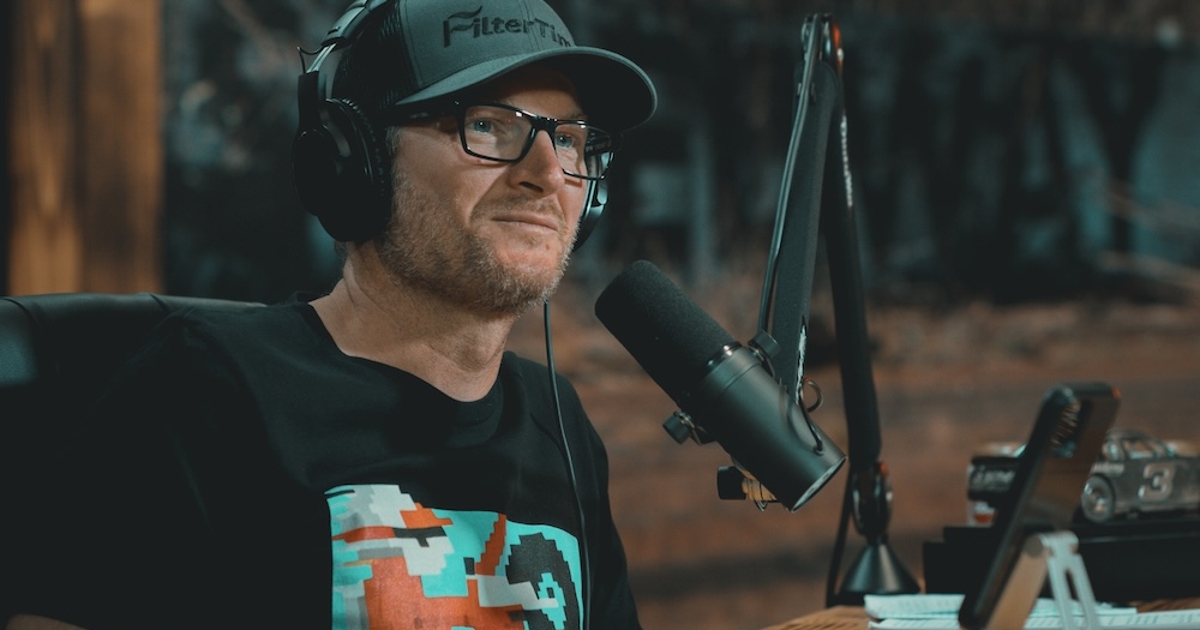
For those unfamiliar, it’s the Dirty Mo studio and Earnhardt, alongside co-host TJ Majors, are recording The Dale Jr. Download podcast. And, as he describes it, cheating while doing so.
“We’re not the first voice you could hear,” Earnhardt tells RACER. “There are a bunch of different people creating content and we know that. So, I like that we get a couple of days to hear what everybody’s opinions are. It’s a little bit like cheating, because we can come in and already have an idea of what the temperature of the fan base is, or the reaction to whatever happened Sunday.”
Earnhardt admits the recording schedule leaves his opinion open to being swayed. Or if not swayed, at least opened up to perspectives and additional information he had not considered. The Dale Jr. Download or The Download, is recorded and released Tuesday.
The show drops after the release of The Teardown, another Dirty Mo show, featuring reporters Jeff Gluck and Jordan Bianchi. There is also Door Bumper Clear, yes, of Dirty Mo that features spotter Freddie Kraft, Rick Ware Racing competitor director Tommy Baldwin, Earnhardt’s niece Karsyn Elledge and a guest. Denny Hamlin’s show, Actions Detrimental, usually comes out Monday, if not Sunday night, after a race. But in addition to the shows close to home, there is other NASCAR-related content dropping that Earnhardt might hear.
“We get an advantage going Tuesday and on the backside of a lot of stuff,” Earnhardt says.
The group tries not to take itself too seriously, as heard in the audio that makes it into an episode, where they rag on each other, with Earnhardt sometimes leading the way. On this day in late October, when RACER sat in as Earnhardt and Majors recorded the episode leading into championship weekend at Phoenix Raceway, that dynamic was on full display – including seeing what doesn’t make it into an episode.
The current version of The Download is arguably the strongest it has ever been, thanks to Earnhardt’s voice and presence. When the show started in the 2010s, back when Earnhardt was still a driver, he was nothing more than a voice memo used in an episode. Mike Davis, a longtime right-hand man of Earnhardt through various roles and now the president and executive producer of Dirty Mo Media, was the primary host alongside Taylor Zarzour, breaking down that weekend’s race from a Team Earnhardt perspective.
But the shift in Earnhardt taking more ownership of the show began when he retired and became an NBC Sports broadcaster. Earnhardt joined the show full-time alongside Davis and it expanded to a broader discussion on the sport, JR Motorsports, and weekend events. It’s now Earnhardt and Majors running things, as Davis has shifted to solely overseeing the company.
“I think it’s more important than we can even articulate that Dale Jr.’s opinions and voice are heard, even if Dale doesn’t think they are,” Davis tells RACER. “Is he comfortable? Has he embraced it? I’m not so sure he has. But to his immense credit, he has given that to us, and he brings it every single week.”
Earnhardt, of course, is one of the sport’s most prominent figures. People listen when he talks, and they want to know what he thinks as both a former driver and current team owner, and because of his history and passion for the sport.
There are times, though, when Earnhardt doesn’t feel the need to share his thoughts. The antitrust lawsuit is one example. Earnhardt battled his loyalty to the France family and what the sport has given him with trying to have sympathy toward Hamlin, Michael Jordan and Bob Jenkins. It created a few times when Earnhardt wanted to stay out of it.
“People were going on and on about either something I had said or the lawsuit or the show, and how I was in a bad (expletive) mood,” Earnhardt says. “Sometimes I’ve been in there, and I’ve said, ‘I don’t want to talk about this (expletive) today.’ So, I went on Reddit and said, ‘Y’all, sometimes I don’t want to do this.’ I don’t want always to go in there and sit down and go, ‘Here is what I think, everybody!’
“So, I don’t know that I’m comfortable, or have gotten more comfortable. I really don’t. Some days it’s easier to be there than others.”
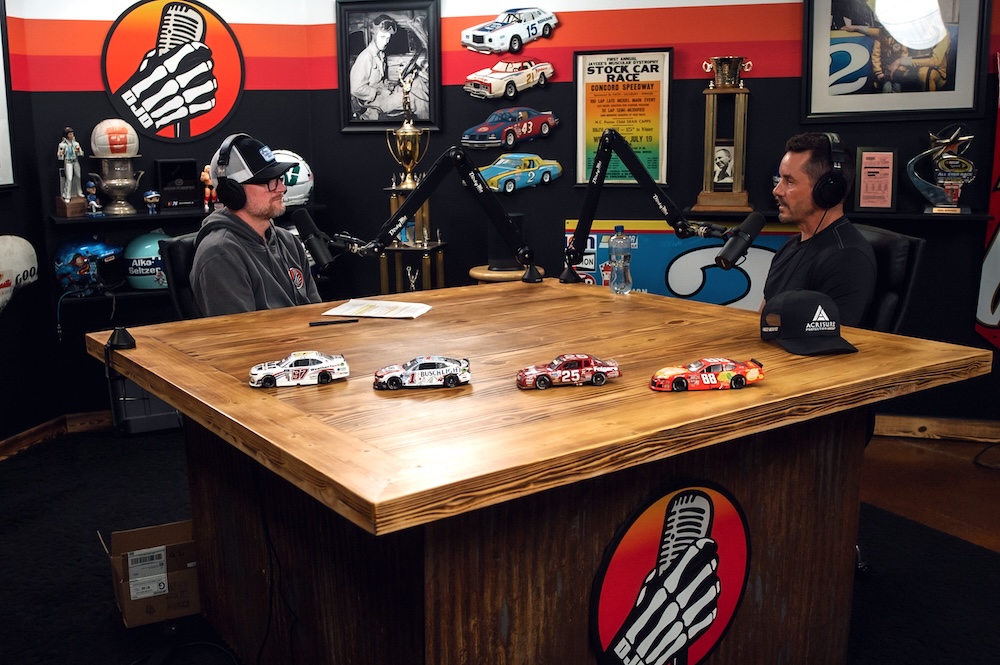
Earnhardt is not naturally attracted to the spotlight, but has learned to lean into his role as interviewer and pundit.
Earnhardt does agree that he has a responsibility to use his voice.
“I care enough about the sport that when I’m really adamant or very passionate about something or a direction or change, I’m going to absolutely give my opinion,” Earnhardt says. “I don’t ever want to be a problem, but sometimes you just don’t agree with stuff, or you don’t like the direction we’re headed in, and you think it could and should be better. The show lets me say that, and my delivery sometimes isn’t the best, but I think I’m getting better at it.
“And I think I’m in a good spot now with NASCAR, where they are comfortable with my show being part of the ecosystem, and they know I’m always going to tell my opinion and not shy away from maybe saying some things they don’t love. But they feel like I’m an asset, or I’m a value, for the most part.”
A well-received segment of The Download is the guests Earnhardt talks to. Those individuals have come from across the garage, both current and former – some with ties to the Earnhardt family. If one were to track from early episodes onward, the evolution of Earnhardt’s style as an interviewer and a listener is clear.
“It’s a borderline miracle, because you think about the introvert, the shy guy,” Davis says. “He’s never been comfortable in big public settings or expressing his opinion.”
Earnhardt will receive notes from their resident historian and depending on the guest, Earnhardt will either take those notes and dive in or, when he sits down, he starts a free-flowing conversation. He credits his experience with NBC Sports for lessons he learned as an interviewer, including through seminars. Dan Patrick, a longtime sports broadcasting great, is another person Earnhardt follows.
The fundamentals are essential to Earnhardt, and he tries to focus on them rather than on how nervous he gets when asking questions. Nerves would lead to not having the next question ready, and Earnhardt would be in own his head, and he felt that usually led to a stale or unemotional conversation.
“What I try to do is listen to everything they are saying and find the next question in their answer,” he says. “That tends to produce the best reaction from the fans when they listen and are like, ‘This is a great show.’ Those are the ones where I was listening to the person and going, ‘Oh, wow. Why’d you do it that way?’ Or I’m listening to the answer, it brings curiosity and I lean into it.”
Admittedly, there are still people who come into the room that make Earnhardt nervous or anxious. Those are mostly non-racing-related individuals.
The segment serves in two ways. While the fans get to hear more about the sport or those from its history, Earnhardt is also learning. Sometimes, even about his own family or his father’s career.
“I think that’s probably the reward for me is the discovery,” says Earnhardt. “It’s like music. I love music and I love discovering a new song. … Discovery in music is so fun and motivating and that’s the way the podcasts are. It’s like, I’m going to go in here today, and I don’t know what I’m going to learn, but it’s going to be fun. We’re going to ask all the questions and try to drill down and get some good stuff out of them. And I don’t know what it is about the table or the room, but people just feel so comfortable, and we get to talking, and they open up.”
And at the heart of the show, or what Earnhardt hopes the content coming out of Dirty Mo is accomplishing, is just being a part of the conversation.
“I love what a lot of people are doing out there and I watch it,” Earnhardt says. “I ebb and flow with what I’m creating based on what I’m seeing outside of our business. But I try to find competition in everything, and that is what will motivate me.
“How do we win? How can we be better? How do we keep taking over market share and being the best?”





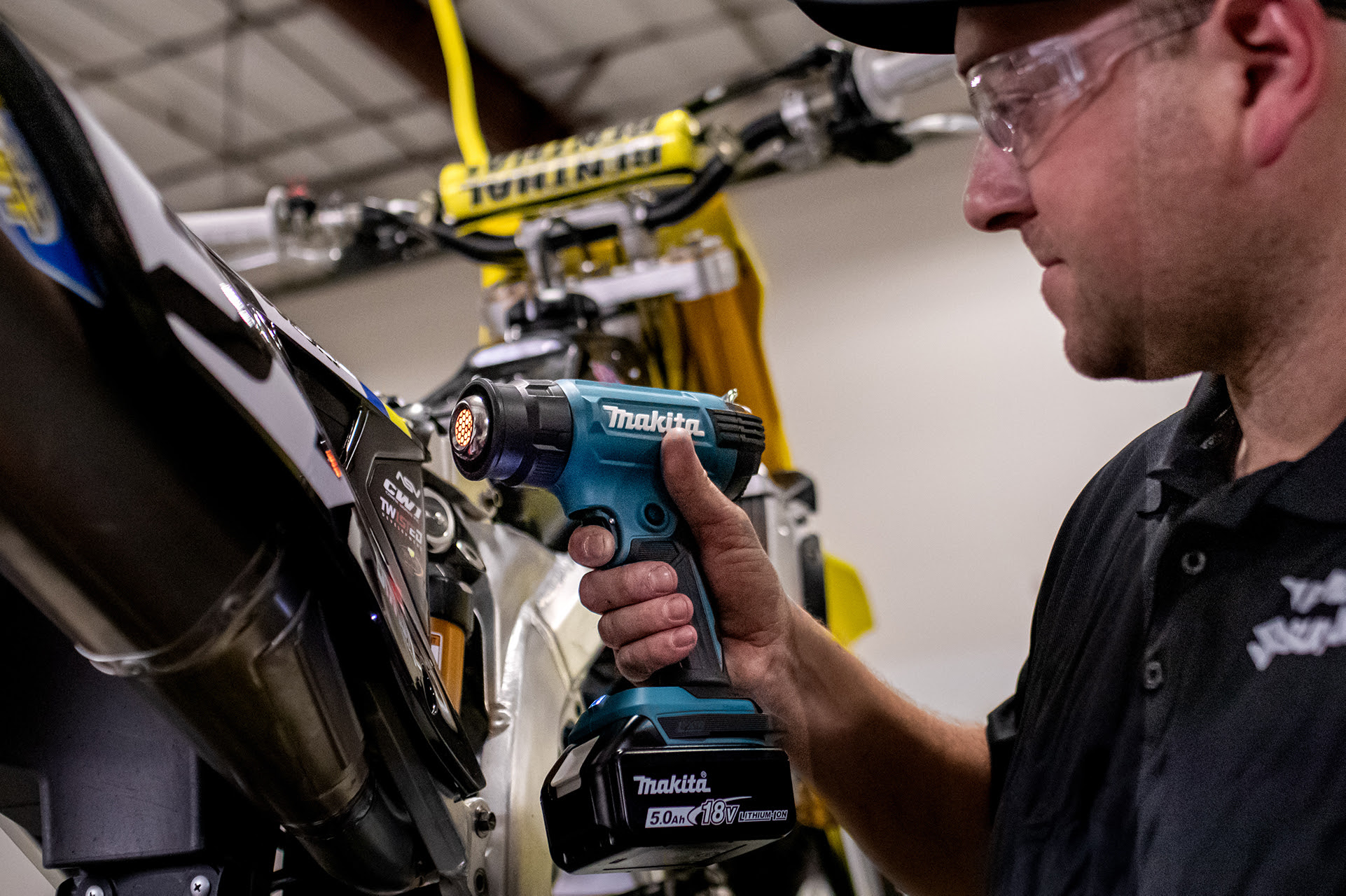


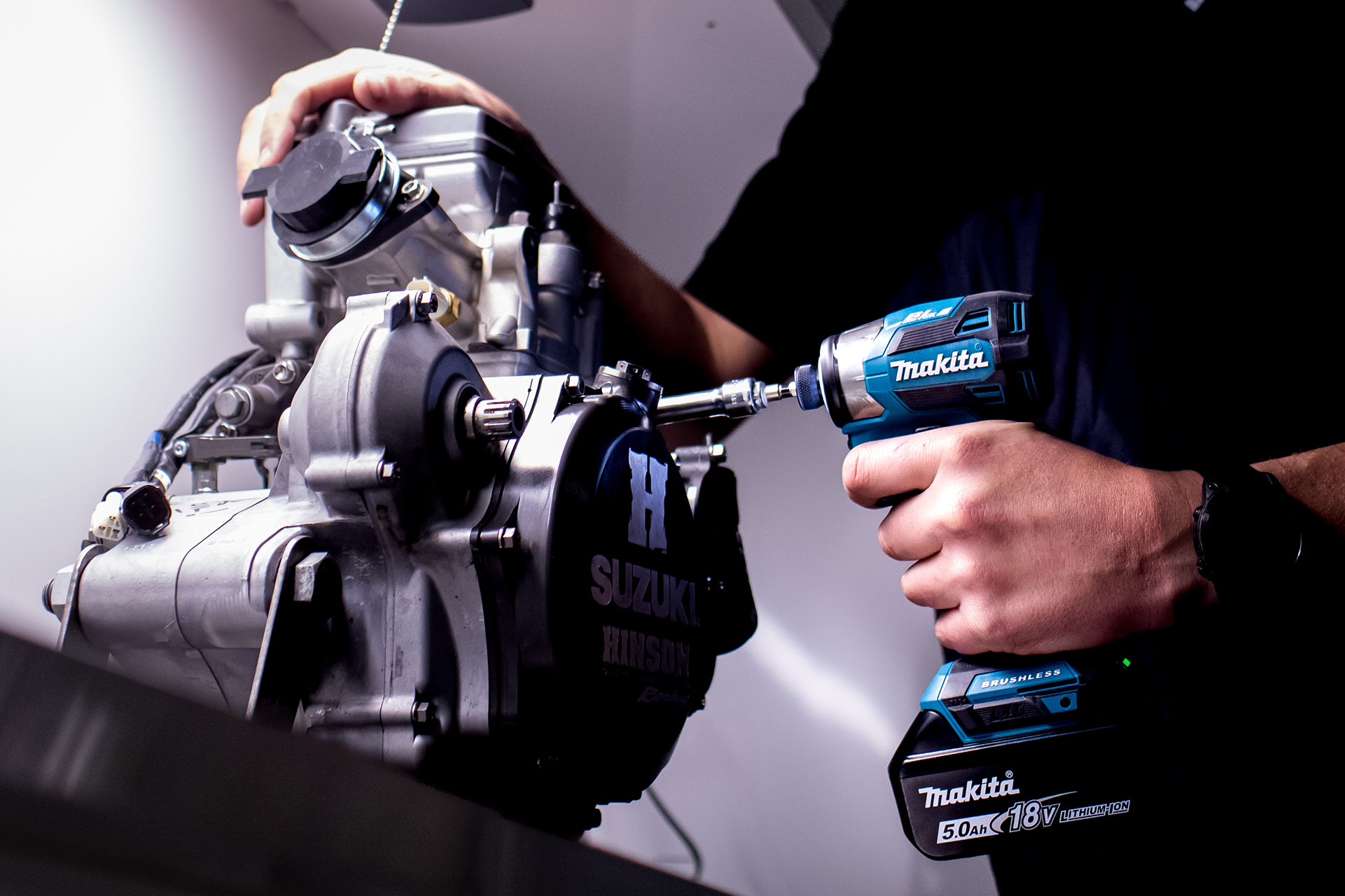
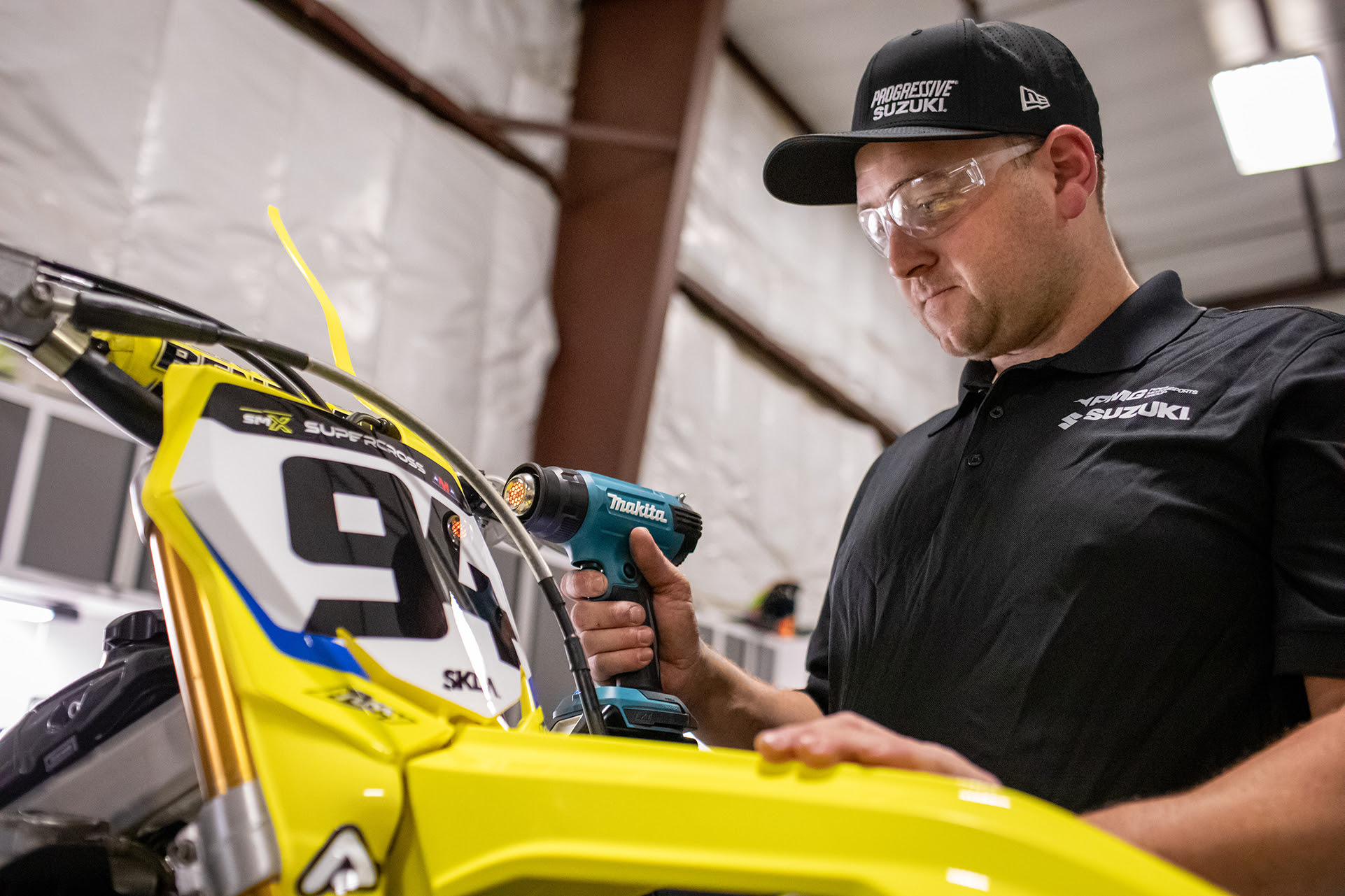 “Makita’s return to Suzuki racing is more than a reunion—it’s a statement about innovation and a continuation of a winning legacy. We first teamed up 21 years ago to capture championships, and today it feels like we never left. Partnering again was an easy choice with a team that shares our relentless drive. Together with PMG Suzuki, we’re blending decades of engineering excellence with cutting-edge technology to push the limits of performance.” -Brent Withey, Vice President, Marketing.