
Technology
Entrepreneur Alleges ESPN ‘Copycat’ Tech to Help Fans Find Games


ESPN in August of last year tried to prove its utility to all fans by unveiling a “Where to Watch” search feature in its mobile app and website that would do something every sports aficionado has craved since Amazon nabbed rights to stream portions of the NFL’s “Thursday Night Football” in 2017: help die-hards increasingly frustrated in their efforts to find their favorite teams as sports began to stream across new broadband giants, league-owned outlets and regional venues.
Lydia Murphy-Stephans believes she did this first — and thinks Disney couldn’t have done it without her.
In a suit filed Thursday in U.S. District Court in the Southern District of New York, Murphy-Stephans, an entrepreneur who was once a programming executive for ABC Sports and president of a now-shuttered TV network devoted to Pac-12 Conference schools, alleges ESPN and Disney spurred her to reveal the inner workings of a sports-search product she had created at her own company, SportsBubble, then launched its own version of the product. Murphy-Stephans is seeking a jury trial, as well as damages that could total more than $600 million.
In the suit, she alleges that in 2021, ESPN “feigned interest in a partnership with SportsBubble (and signed a nondisclosure agreement) to induce SportsBubble to share its confidential trade and business secrets with ESPN,” but instead “misappropriated SportsBubble’s confidential information to develop a copycat product after stringing SportsBubble along for months in fruitless ‘negotiations,’ sidelining it from other lucrative partnerships.”
ESPN declined to comment.
“When I introduced SportsBubble to Bob Iger and ESPN executives years ago, they claimed to be excited about working with us and partnering on our flagship product, WatchSports. But, while under NDA to evaluate WatchSports for a business partnership, they publicly announced a copycat product as if we magically didn’t exist,” says Murphy-Stephans. “We firmly believe the ‘Where To Watch’ programming guide on the ESPN platforms is the same product SportsBubble presented to ESPN, and that they copied it, and put their own name on it.”
The legal imbroglio spotlights the growing importance of tracking sports as rights deals become increasingly spread out among different venues. With sports standing as the only TV format that seems able to continue the large, simultaneous audiences that advertisers and distributors crave, the fees to keep them on air have gone from eye-popping to exorbitant. With prices so high, media companies are narrowing their packages, leaving some big leagues like the NBA spread across more networks and streamers. Add a shifting landscape for local rights into the mix and it’s little wonder sports fans are often stymied in their efforts to quickly find the right game at the right time.
Stephans-Murphy thought she had come up with just the solution. While watching an NBA Finals game in 2018, she left her living room to get the snacks ready in the kitchen – and set about a task that she felt should have been a lot simpler: trying to stream the match on her iPad. Instead, she spent precious minutes trying to navigate authenticating into Comcast and then getting back into ESPN.
She launched the WatchSports app in 2021, after working on it for four years. The service — a live sports guide for the streaming era — helped consumers find their game and navigate the various outlets required in order to see it. She got paid by referral fees paid when consumers took out a subscription to watch a match.
ESPN was interested, she alleged. By February of 2022, ESPN and SportsBubble had struck a deal in principle that would list approximately 40,000 sporting events from the ESPN+ streaming service in WatchSports, and allow the app’s users to connect directly to ESPN’s platforms. During these negotiations, Stephans-Murphy alleges, ESPN requested confidential technical information about how the WatchSports app actually functioned. SportsBubble said it would do so under a non-disclosure agreeement.
In 2023, ESPN announced its intent to launch its own search product. And the Disney sports giant informed SportsBubble it no longer had any interest in any strategic partnership, nor had it been interested in one since conversations commenced in 2021.
“ESPN not only stole SportsBubble’s business model and product, but it also stymied SportsBubble’s growth by stringing SportsBubble along for months with false promises of a partnership, resource-intensive talks, and manufactured delays in the consummation of that partnership,” the company alleges in its lawsuit. “While SportsBubble focused on its prospective partnership with ESPN, it put
partnership discussions with the other major sports networks and event stakeholders on hold,
losing valuable time it could have spent capturing more of the market through other
opportunities.”
ESPN’s search technology could go much further in weeks to come. The company is about to launch a new stand-alone streaming app that gives subscribers all the content from its many cable networks, and, soon, it could offer the feeds from NFL Network as well as the NFL’s RedZone highlights service. In October, ESPN intends to offer a bundled service with Fox One, a streaming service from Fox Corp. that offers all of that company’s content in a single venue.
During a recent call with investors, Disney CEO Bob Iger talked up a potential search service for sports fans as quite the game changer. “”As a devoted sports fan, I often have to work to try to find what platform sports are on,” he said. “If we can help consumers in that regard, we’re certainly going to try.”


Shanghai has unveiled a citywide plan to boost its gaming and esports industry, including a 50 million yuan ($7.1 million) annual support fund, as it seeks to help homegrown game developers expand overseas.
The plan was announced at the 2025 China Game Industry Annual Conference, held from Dec. 17 to 19, where city officials outlined 10 measures aimed at building a gaming and esports ecosystem with international reach.
The measures place particular emphasis on original games in driving industry growth, encouraging the development of games that promote traditional Chinese culture and Shanghai’s urban identity. It also invites gaming collaborations with education and healthcare entities, among others.
To support overseas expansion, city authorities said they would establish a service platform to help local game developers navigate copyright, payment settlements, and overseas advertisements.
The city also pledged to boost its esports sector by attracting major international esports competitions and offering incentives to successful Shanghai-based esports clubs. The city is home to 34 esports clubs — more than any other Chinese city.
The policy shift underscores a major regional push to tap China’s booming gaming sector, which grew nearly 10% from last year to a record revenue of 350.8 billion yuan in 2025. The total number of gamers also climbed to a record 683 million.
Chinese game studios are increasingly pushing overseas, buoyed by hits such as “Black Myth: Wukong” and “Where Winds Meet,” though piracy, unauthorized private servers and trademark disputes continue to complicate international expansion.
Beyond game development, gaming has also become a broader economic driver, with sales of game-related merchandise, known as guzi, reaching nearly 170 billion yuan last year.
Shanghai’s initiative aligns with a broader national push to position gaming as a pillar of economic and cultural growth. In April, the central government rolled out a plan to promote gaming as a new driver of technological innovation and cultural exports.
Several provinces have followed with their own policies. In May, the southern Guangdong province announced measures to support esports clubs and hotels, industrial parks, and streaming hubs. In June, the eastern Zhejiang province launched a similar initiative focused on helping Chinese games expand overseas.
Editor: Marianne Gunnarsson.
(Header image: A Chinese team competes during the 2025 Shanghai Esports Masters, Dec. 4, 2025. VCG)
Technology
Xpoint secures new growth funding to supercharge geolocation innovation for real money gaming

Our website uses cookies, as almost all websites do, to help provide you with the best experience we can.
Cookies are small text files that are placed on your computer or mobile phone when you browse websites.
Our cookies help us:
– Make our website work as you’d expect
– Remember your settings during and between visits
– Offer you free services/content (thanks to advertising)
– Improve the speed/security of the site
– Allow you to share pages with social networks like Facebook
– Continuously improve our website for you
– Make our marketing more efficient (ultimately helping us to offer the service we do at the price we do)
We do not use cookies to:
– Collect any personally identifiable information (without your express permission)
– Collect any sensitive information (without your express permission)
– Pass personally identifiable data to third parties
– Pay sales commissions
At CES 2026, visitors to the HDMI Licensing Administrator’s booth can witness prototypes of the Ultra96 HDMI Cable, which was “introduced in the recently released HDMI 2.2 Specification,” alongside the Ultra High Speed HDMI Cable and the Premium High Speed HDMI Cable. The organization will highlight the high-refresh performance rate of its products, as well as their compatibility with popular portable gaming consoles and retro-style gaming systems. Supportive features like variable refresh rate and auto low latency mode will be highlighted, as well.
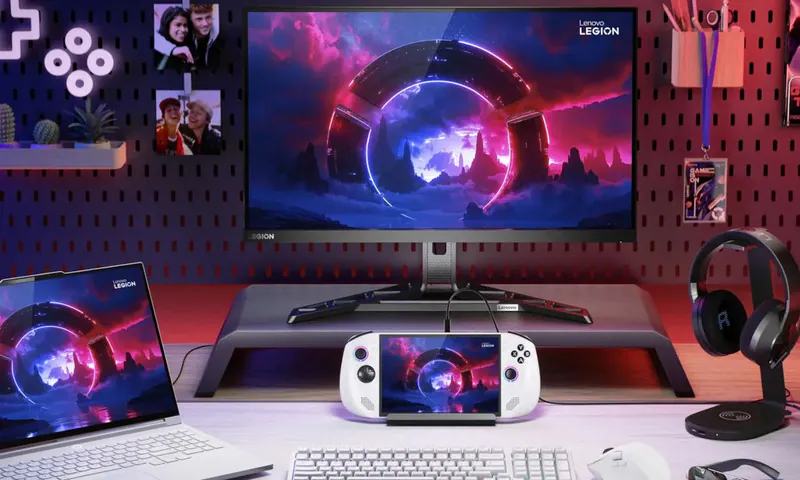
The Lenovo Legion Pro Rollable laptop will reportedly be based on the brand’s Legion Pro 7i platform with an Intel Core Ultra processor and NVIDIA GeForce RTX 5090 GPU. The additional tech specs for the laptop are yet to be announced.
Image Credit: Lenovo
Technology
Driving Digital Innovation: Sultan Almasoud on the Top Trends in Technology and Esports in Saudi Arabia | Morgan Lewis – Tech & Sourcing

Dr. Sultan Almasoud, managing partner of Morgan Lewis’s Riyadh office, has been closely involved in the Kingdom of Saudi Arabia’s rapid evolution into a global hub for innovation. His insights on the questions below shed light on the trends reshaping technology and esports—and the opportunities they unlock for investors and operators entering the market.
Q&A: SULTAN ALMASOUD
1. What are the most significant technology trends currently driving growth in Saudi Arabia?
Saudi Arabia is undergoing one of the most ambitious digital transformation journeys in the world. The most significant trend is the rapid adoption of AI across government, financial services, healthcare, and industrial sectors. Vision 2030 has accelerated investment in AI-ready infrastructure, digital identity, automation, and data platforms that support new digital services at scale.
We also are seeing strong momentum in cloud migration, driven by hyperscaler expansions, data localization policies, and new solutions that make it easier for public and private entities to adopt cloud-native technologies. In parallel, fintech innovation, digital payments, and open banking are creating a dynamic ecosystem of startups, investors, and regulators working together to modernize the financial landscape.
In addition, Saudi Arabia’s giga projects are acting as large-scale accelerators for advanced technologies, while strong regulatory frameworks around data, cloud, and cybersecurity are providing international investors with clarity and confidence. Combined with significant investment in digital talent and localization, this is enabling sustainable, long-term technology-driven growth across the Kingdom.
2. How is Saudi Arabia positioning itself as a global hub for esports?
Saudi Arabia has made esports a national priority, fundamentally reshaping the sector. The launch of the Saudi Esports Federation (SEF) and the Esports World Cup, supported by major public investment commitments, has placed the Kingdom at the center of global competitive gaming.
But the strategy extends beyond events. The country is developing training academies, production studios, esports arenas, and digital platforms that sustain year-round player and audience engagement. This ecosystem-driven approach is drawing global publishers, teams, and content creators who now view Saudi Arabia as a foundational market for long-term esports growth.
3. What opportunities do you see emerging for investors and companies entering the Saudi tech and esports market?
There is tremendous opportunity at the intersection of technology, entertainment, and digital infrastructure. For technology companies, opportunities are especially strong in AI solutions, cybersecurity, cloud services, digital identity, and smart city platforms.
In esports, the most compelling opportunities lie in content creation, talent development, gaming studios, tournament production, and technologies supporting broadcasting, analytics, and community engagement. Investors who understand the regulatory environment and align with the Kingdom’s long-term vision will find a market eager for strategic partnerships.
4. What challenges should companies keep in mind when operating in these fast-evolving sectors?
These sectors are evolving quickly, which makes regulatory navigation an important challenge. Companies need to stay aligned with requirements around licensing, content regulation, data protection, and foreign investment—areas that are developing alongside the industry itself.
Another key challenge is specialized talent. Whether it’s game design, AI engineering, or esports event management, building local capability is essential. Companies that invest early in training programs, knowledge transfer, and local partnerships will be best positioned for sustainable growth.
Ultimately, success requires a long-term commitment to the market, strong local relationships, and an understanding of national priorities as the Kingdom advances its digital transformation goals.
KEY TAKEAWAYS
Saudi Arabia is positioning itself at the forefront of global innovation, with technology and esports playing central roles in the nation’s economic transformation. As investment accelerates and new digital ecosystems emerge, companies that build strategic partnerships and engage deeply with local priorities will be poised to lead.

Mechanical keyboard 2026models integrate ultra-fast switches that achieve 0.1ms actuation with under 1mm travel, allowing competitive gamers to press keys 20% faster in FPS and MOBA titles. RGB keyboards now feature 16.8 million per-key zones, enabling dynamic lighting that reacts to game events, killstreaks, or ability cooldowns. Hall-effect magnetic switches dominate the premium segment, offering adjustable actuation points from 0.1mm to 4.0mm while lasting 100 million keypresses with no physical wear. Together, these innovations deliver both tactile precision and immersive customization, making mechanical keyboards a vital tool for high-level competitive play.
Mechanical keyboard 2026 designs also focus on durability, ergonomics, and modularity. Hot-swappable switches allow players to fine-tune the feel without soldering. Aluminum chassis and gasket-mounted plates reduce finger fatigue while maintaining solid stability for marathon gaming sessions. Modern firmware supports thousands of macros, rapid polling rates, and dual-PC setups, ensuring that esports players experience consistent input across multiple platforms.
Fast Switches and Key Feel
Fast switches like Gateron KS-20 reduce actuation force to 35g at just 0.2mm depth, while optical variants eliminate debounce delays, registering inputs at 8,000Hz natively. Mechanical keyboard 2026 boards include hot-swappable sockets, allowing players to swap magnetic, linear, or tactile stems without soldering. PBT double-shot keycaps resist shine after five years of heavy use, and gasket-mounted designs reduce bottom-out impact, lowering finger fatigue by up to 30% during marathon sessions. Combined, these features enhance responsiveness, durability, and ergonomic comfort for both competitive and casual gamers.
Other innovations include per-key actuation calibration via onboard OLED displays, letting players fine-tune each switch’s sensitivity individually. Fast switches allow remapping for advanced trigger modes, such as assigning jump or crouch to rapid keypresses, boosting movement efficiency in FPS titles. Firmware support like VIA and QMK provides up to 1,000 macro layers, ensuring fluid execution of complex combos. NKRO (N-Key Rollover) maintains accurate detection of 100 simultaneous inputs, preventing ghosting during intense gameplay.
RGB Keyboards and Lighting Customization
RGB Gaming keyboards in 2026 employ addressable LEDs beneath every key, responding instantly to in-game actions, music beats, or voice chat activity. Fast switches synchronize with lighting effects to create visual feedback for ability activation or kill confirmations. VIA and QMK support advanced lighting macros across 16.8 million colors, letting players design immersive themes and reactive effects. RGB keyboards also integrate USB passthrough hubs, enabling controller charging or peripheral connections without latency interruptions.
Premium gaming screens emphasize both aesthetic and functional benefits. Aluminum chassis with acoustic foam layers tune sound profiles from soft, creamy thocks to sharp, clicky clacks, complementing per-key lighting for sensory immersion. RGB keyboards combined with modular keycaps allow instant visual recognition of critical keys, enhancing reaction times in high-pressure matches. Firmware updates maintain compatibility with new software and games, ensuring that RGB functionality evolves alongside gaming trends.
Build Quality and Advanced Features
Mechanical keyboard 2026 models focus on robust materials and ergonomic design to support competitive play. Aluminum top plates weigh around 1.2kg, stabilizing 60% or full-size layouts, while foam and gasket mounting reduce vibration and noise. Fast switches with Hall-effect sensors allow precise calibration and onboard memory, storing personalized actuation and lighting settings.
Other features include multi-device support, 8,000Hz polling across dual-PC setups, and modular layouts for hybrid gaming and productivity. High-end models provide long-term durability, with switches rated for 100 million keypresses and chassis built to withstand sustained pressure. These designs ensure that both casual players and esports professionals can maintain peak performance over years of intense use.
Key Features:
- Aluminum top plates provide stability and long-lasting structural integrity.
- Foam and gasket-mounted designs reduce vibration, noise, and finger fatigue.
- Hall-effect fast switches allow precise per-key calibration and storage.
- Modular layouts and multi-device support enhance versatility for gaming and work.
- 8,000Hz polling ensures sub-ms latency across dual-PC or multi-system setups.
- Switches rated for 100 million keypresses guarantee long-term durability.
Conclusion
Mechanical keyboard 2026 models with fast switches and RGB keyboards redefine both competitive precision and immersive gameplay experiences. Adjustable actuation, ultra-fast response times, and reactive per-key lighting provide measurable advantages in esports, allowing players to execute rapid combos and maintain visual awareness under intense pressure. Durable materials, modular layouts, and advanced firmware ensure 10+ years of relevance, keeping performance consistent even as switch technology evolves. Combined, these innovations set a new benchmark for gaming keyboards, making them an indispensable tool for casual enthusiasts and professional gamers alike.
Frequently Asked Questions
1. What makes mechanical keyboard 2026 switches faster than older models?
Mechanical keyboard 2026 switches achieve 0.1ms actuation with minimal travel, reducing input delay. Optical switches eliminate debounce entirely. Hot-swappable designs allow users to optimize each switch type. Together, they improve reaction times in competitive gaming.
2. How do RGB keyboards enhance gaming performance?
RGB keyboards provide per-key lighting for instant visual cues on ability cooldowns, killstreaks, or critical keys. Reactive effects improve reaction speed in high-pressure scenarios. Custom macros allow lighting to indicate complex input sequences. This combination merges aesthetics with functional gameplay advantages.
3. Are fast switches durable enough for long-term use?
Yes, Hall-effect and magnetic switches are rated for 100 million keypresses. Gasket-mounted designs reduce mechanical wear and finger fatigue. PBT double-shot keycaps resist shine and degradation. Long-term durability ensures consistent performance for years.
4. Can mechanical keyboard 2026 models support multi-device setups?
Many models integrate USB passthrough hubs for peripherals and dual-PC support. 8,000Hz polling ensures sub-ms latency across connected devices. Firmware allows separate profiles per device. This setup guarantees smooth operation for both gaming and productivity tasks.
Wisconsin 2026 auto racing topics for fans to ponder over offseason

Nebraska finishes No. 3 in final AVCA Coaches Poll

Shanghai Rolls out New Policy to Boost Esports
Best Athens-area high school volleyball players for the 2025 season

‘Batter Up!’ Dos Pueblos Little League Calling for Youth Baseball Umpires | Sports
Vote now for the Freep Buffalo Wild Wings Boys Athlete of the Week

Joey McGuire sees NIL similarities between Oregon, Texas Tech

KSR Today: Volleyball Ends, Basketball Rolls On

South Dakota earns three Summit League Academic All-League selections

No. 1 college football transfer portal QB predicted to draw $3 million offer

Prattville Fire’s Battalion Chief Travis Rodie Retires After 26 Years Of Service

Gregory Dean Craig, 62, Otwell

Jack Ryan: Baseball fields are all gone, but the memories survive

Chicago ARF celebrates championship season for local Homenetmen and AYF youth

University of Alabama football player uses NIL money to spread Christmas cheer

First Tee Winter Registration is open

Fargo girl, 13, dies after collapsing during school basketball game – Grand Forks Herald

CPG Brands Like Allegra Are Betting on F1 for the First Time

F1 Las Vegas: Verstappen win, Norris and Piastri DQ tighten 2025 title fight

Sycamores unveil 2026 track and field schedule

Utah State Announces 2025-26 Indoor Track & Field Schedule

Two Pro Volleyball Leagues Serve Up Plans for Minnesota Teams

SoundGear Named Entitlement Sponsor of Spears CARS Tour Southwest Opener

Jo Shimoda Undergoes Back Surgery

Redemption Means First Pro Stock World Championship for Dallas Glenn

Bowl Projections: ESPN predicts 12-team College Football Playoff bracket, full bowl slate after Week 14

Texas volleyball vs Kentucky game score: Live SEC tournament updates

Black Bear Revises Recording Policies After Rulebook Language Surfaces via Lever

Robert “Bobby” Lewis Hardin, 56

How this startup (and a KC sports icon) turned young players into card-carrying legends overnight






-
 Motorsports2 weeks ago
SoundGear Named Entitlement Sponsor of Spears CARS Tour Southwest Opener
-
 Rec Sports3 weeks ago
Black Bear Revises Recording Policies After Rulebook Language Surfaces via Lever
-

 Motorsports2 weeks ago
Donny Schatz finds new home for 2026, inks full-time deal with CJB Motorsports – InForum
-

 Rec Sports3 weeks ago
How Donald Trump became FIFA’s ‘soccer president’ long before World Cup draw
-

 Rec Sports2 weeks ago
David Blitzer, Harris Blitzer Sports & Entertainment
-

 Motorsports2 weeks ago
JR Motorsports Confirms Death Of NASCAR Veteran Michael Annett At Age 39
-
Sports2 weeks ago
Elliot and Thuotte Highlight Men’s Indoor Track and Field Season Opener
-

 Motorsports2 weeks ago
Rick Ware Racing switching to Chevrolet for 2026
-
Sports2 weeks ago
West Fargo volleyball coach Kelsey Titus resigns after four seasons – InForum
-

 Sports1 week ago
#11 Volleyball Practices, Then Meets Media Prior to #2 Kentucky Match