





Since the onslaught of Name, Image, and Likeness (NIL) deals in college sports, Brigham Young University has made it clear that it is not just willing to play the game — it is willing to pay top dollar.
The recent contract our football coach signed is the latest example. As a BYU student, I am deeply disturbed by the attitude our university has taken toward athletics.
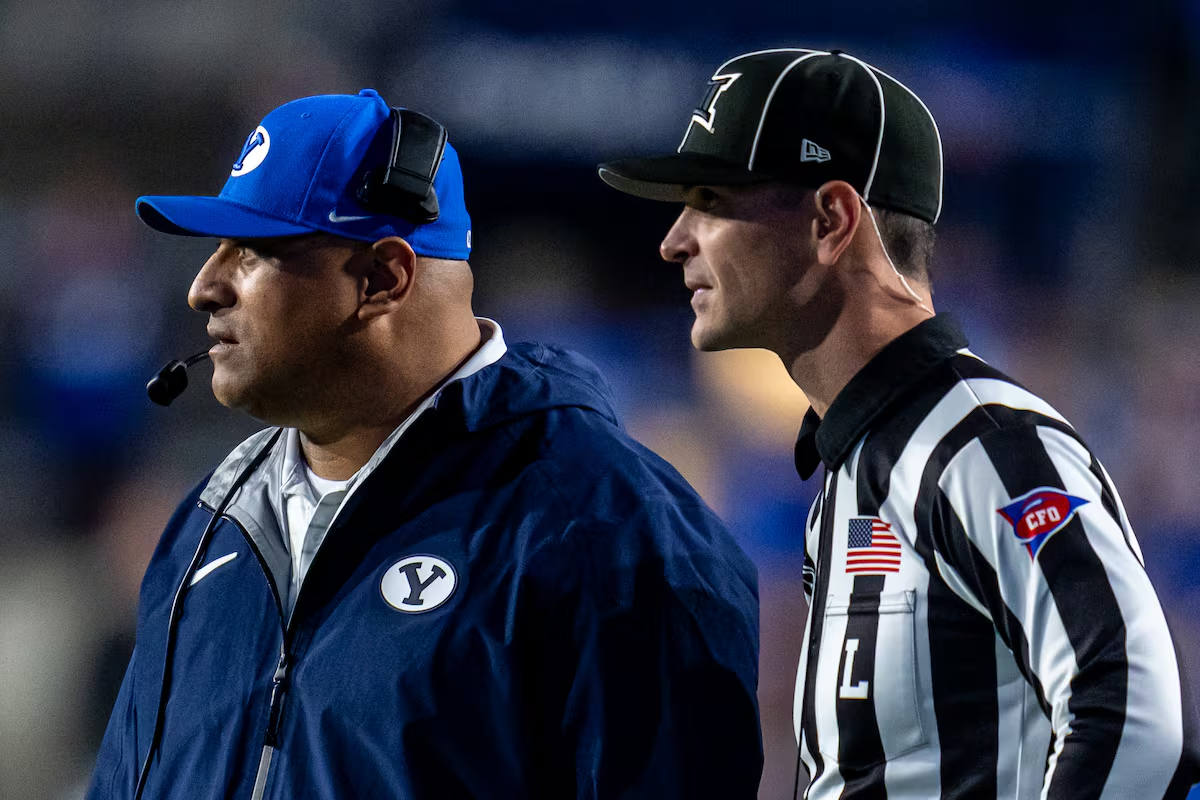
Although the numbers are not officially confirmed, Coach Kalani Sitake’s new annual salary is reportedly in the ballpark of $9 million. Those millions could provide clean drinking water and food to people around the world; it could fund thousands of full tuition scholarships at BYU each year. Yet that same money is tied up in a single athletic contract. What does this suggest about BYU’s priorities?
I am not against sports, nor do I begrudge athletes or coaches for earning compensation. But BYU’s approach raises difficult questions about our values. President Shane Reese is clearly a big proponent of BYU athletics, but the frequency with which he attends sporting events, speaks of athletic outcomes and invests his bully pulpit and limited time in sports, can feel to the rest of campus like our academic focus lags behind. BYU cannot control what donors do with their money, but it can choose what it does with donor money, and that’s what students, faculty and Cougar Nation are watching.
BYU’s mission emphasizes providing an education that is spiritually strengthening, intellectually enlarging and character-building, with a focus on service and the full realization of human potential. How then, do we justify advocating for self-reliance, helping the poor and the needy and promoting ethical values while simultaneously celebrating multimillion-dollar contracts in athletics?
NIL deals became legal in 2021, creating opportunities for college athletes to profit from endorsements and sponsorships. BYU has clearly embraced this reality, investing heavily to compete financially and attract top talent. While the university maintains that its mission remains intact, the optics are hard to ignore. Students who work campus jobs are still earning sometimes under $10 an hour, while they see athletes and coaches earning millions. Professors researching cures for cancer, promoting democratic ideals, championing global ecological stewardship and strengthening families earn less than our assistant coaches. What message does this send about fairness, value and the culture we are promoting on campus?
Some defenders of this system argue that the sports budget is separate from university funds, and, technically, that is true. But every time BYU’s name, logo or likeness is used in media coverage, sponsorships or promotions, the university’s reputation is leveraged for profit. The supposed separation of funds does little to address the ethical and practical implications for the rest of the student body. What we are celebrating now is a kind of hypocrisy — one that contradicts the core principles meant to guide the university community.
In our classes, we talk often about serving the collective good, creating inclusive environments and making ethical choices. Yet, the spectacle of multimillion-dollar contracts in athletics sends a conflicting message. Sports can inspire and unite communities, and I have no wish to diminish athletic achievement. But BYU has to ask: Are we actually serving our mission, or are we just keeping people entertained with bread and circus?
I don’t see BYU’s attitude toward sports changing anytime soon. But the next time a student faces a family member with cancer, a community is devastated by a natural disaster or any urgent need arises, I expect BYU administrators, mega-donors and alumni to respond just as quickly and generously as they did to retain a football coach.
(Elias Johnson) Elias Johnson is a senior at Brigham Young University.
Elias Johnson is a senior honors student studying biodiversity in conservation at Brigham Young University.
The Salt Lake Tribune is committed to creating a space where Utahns can share ideas, perspectives and solutions that move our state forward. We rely on your insight to do this. Find out how to share your opinion here, and email us at voices@sltrib.com.