
Motorsports
Exclusive: Ford “won’t run away” if Max Verstappen leaves Red Bull

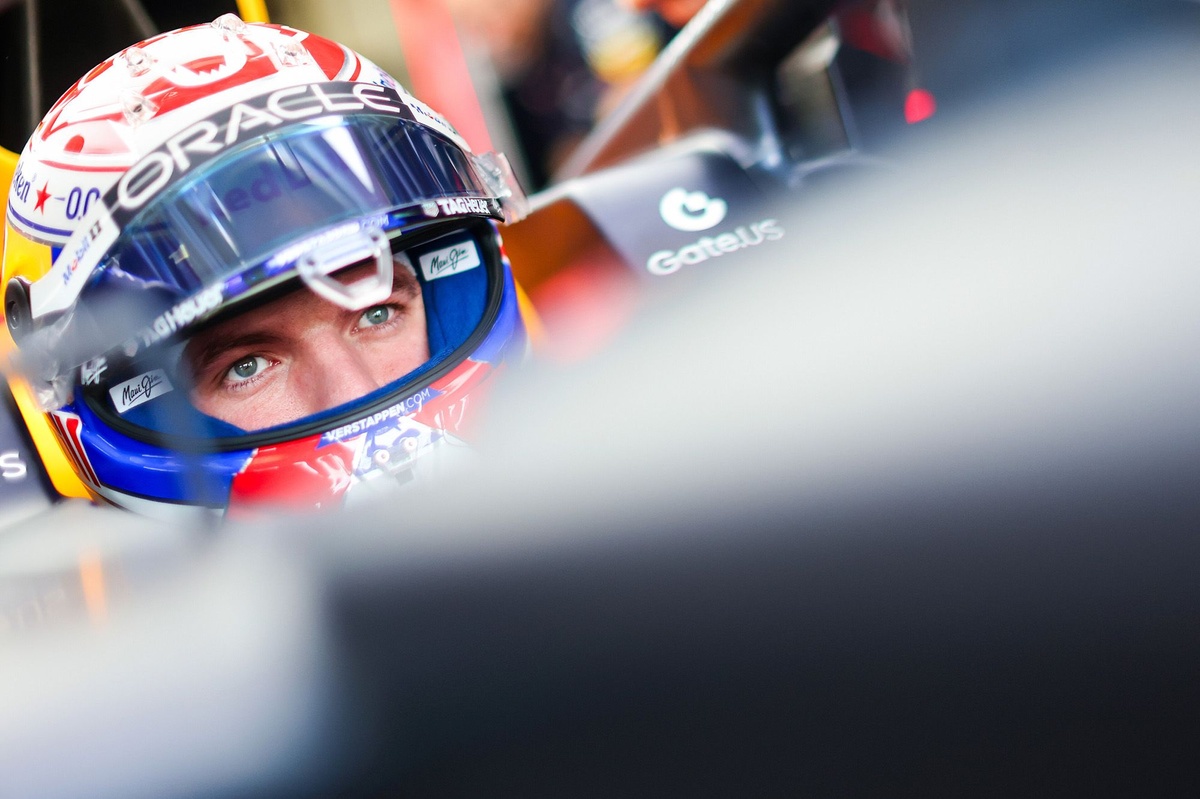
Behind the scenes, work is already in full swing at all engine manufacturers for 2026, with Red Bull Powertrains and Ford no exception. Mark Rushbrook, boss of Ford Motorsport and Ford Performance, already stated that most internal goals are being met, although he emphasised that it’s impossible to hit all milestones straightaway. Rushbrook also acknowledged that the competition is difficult to gauge, although he shares Christian Horner’s view that Mercedes seems confident.
An equally significant variable for next year, as much as the competition, is the future of Max Verstappen. Although the Dutchman has a contract with Red Bull that runs until the end of 2028, his future remains a major talking point. The four-time world champion has been linked to Mercedes on many occasions – with Toto Wolff admitting in Zandvoort that talks were held until last year’s summer break – and Verstappen has also been linked to Aston Martin, where Adrian Newey is designing the 2026 car and Honda will join as engine supplier.
Advertisement
Verstappen is an important figurehead for Red Bull, and therefore Ford, but Rushbrook makes it clear that Ford’s commitment to the project is not dependent on one individual.
“Everywhere we race we want to have the best team with the best drivers and the best people. But did we sign the deal for any one person in particular? No, because we know that it’s a long-term deal and that those people are going to change. We knew that about Christian Horner, about Adrian Newey, about the drivers and some of them have changed already before we even got on the racetrack,” Rushbrook refers to Newey and Sergio Perez.
“Do we want to see Max stay in the Red Bull-Ford for 2026 and beyond? Of course. He’s a champion. He’s a great person and he elevates the entire team with him, but are we going to run away if Max leaves the team? No. We are committed.”
Red Bull Ford Powertrains

Red Bull Ford PowertrainsRed Bull Content Pool
Red Bull Content Pool
Advertisement
When asked if he fears Verstappen could leave the team, Rushbrooks smiles: “You like to use the word fear, don’t you? Again, I wouldn’t call it a fear, but we want to take the right actions to make sure that the team with Red Bull Powertrains-Ford continues to win races. As I said, all the people in the programme are an important part of that. So do you take actions to keep a driver like Max in there? You’re already taking those actions anyway because you want to win, but do you also keep a pulse on the people? Of course, so I guess the answer is yes [that we’d like to keep him].”
This is naturally because Rushbrook understands how important Verstappen is for the current competitiveness of the team, in both the drivers’ and the constructors’ championship. “He’s a champion for a reason. Obviously his talent, but also that he wants every part of the team and the programme to be the best it can be.”
Is the current Red Bull form reason for concern?
The bigger picture is that Rushbrook said last year that Ford wants to work with the best teams in all championships it takes part in. At the start of last season, Red Bull was still the dominant force in F1, but this is no longer the case. Is that a concerning prospect for the Blue Oval brand?
Advertisement
Read Also:

The story behind the Red Bull and Ford deal in Formula 1
“We know that in all forms of motorsports, but especially in Formula 1, there are dynasties of teams that just win, win, and win. But then they go through spells where they don’t, so there’s always that ebb and flow. Do we want Red Bull to still be winning races at the end of last year and this year? Of course, but we know that the team still has great people who are capable of winning consistently.”
Having said that, the 2026 regulations will be the first major technical overhaul in Red Bull’s history that has to be taken on without Adrian Newey. It is another unknown, but Rushbrook makes clear that he has full confidence in the technical team that remains in place. “The feeling is still the same. A few weeks ago, we were in Milton Keynes and met with Pierre Wache and all the technical people. We still believe in the people, in the team that is there and in their ability to win races.”
To read more Motorsport.com articles visit our website.



Photo credit: Porsche
Porsche is bringing a piece of its racing past to the streets of Mexico City, where its two factory-run Porsche 99X Electric cars will wear a special livery at the second ABB FIA Formula E World Championship race of the season in the country’s capital. The design nods to the 550 Spyder driven by Hans Herrmann at the 1954 Carrera Panamericana, Mexico’s best-known road race.
Herrmann won the “Sport” category for cars up to 1,500 cc and finished third overall. Porsche says the widely acclaimed result helped underline its early international motorsport standing and, along with further successes in 1952 and 1953, contributed to the creation of the Porsche name “Carrera.”
‟Historically and still today, Mexico is a special place for us,” says Thomas Laudenbach, Vice President Porsche Motorsport. ‟Porsche’s story in electric motorsport is still young, but the circuit in Mexico City has played a defining part in it. Our factory team took its first Formula E pole position and first victory here, in 2020 and 2022 respectively. Nowhere else has Porsche been more successful in Formula E. The livery honours our motorsport heritage and the Mexican fans at the same time. It is also a thank-you to a country that welcomes us so warmly in Formula E every year.”

Photo credit: Porsche
The appearance also connects to a milestone ahead. In 2026, Porsche says it will celebrate 75 years of motorsport, a history it traces back to 1951 with the Porsche 356 SL and a class win at Le Mans. Laudenbach draws a parallel between eras, noting that the 550 Spyder was the first Porsche designed specifically for racing, while the 99X Electric is the first Porsche developed solely for all-electric motorsport. Laudenbach: ‟Our heritage in traditional motorsport is unique and is reflected in every Porsche. In the future, we want to be able to say the same in all-electric motorsport. That is why we are competing in Formula E. We want to write stories – and history.”
Porsche also points to how the 550 Spyder’s Panamericana effort reflected an evolving racing landscape. Its aluminium bodywork carried multiple brand logos from companies supporting the campaign, at a time when sponsorship was still a relatively new concept in motorsport. Porsche says that influence helped shape some of the most memorable liveries across 75 years of Porsche Motorsport, and the variety of colors that has become part of its racing identity.
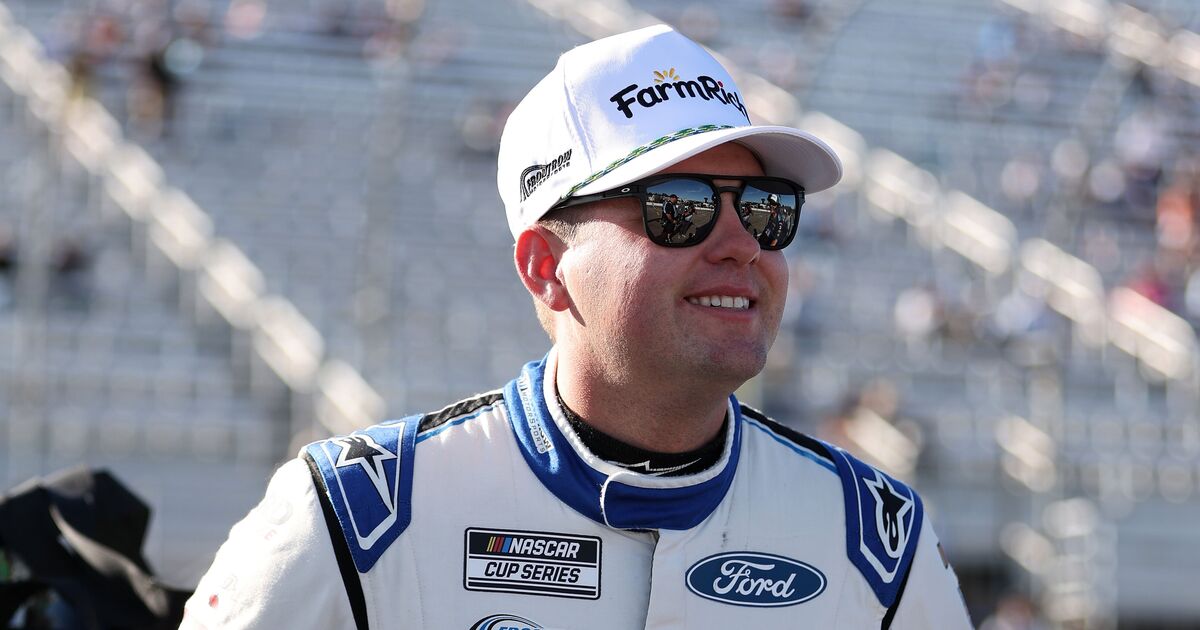
Following over a year of back-and-forth negotiations with NASCAR after joining forces with 23XI Racing and filing an antitrust lawsuit against the organization in October 2024, FRM is now back as a chartered team and making its final preparations for the upcoming season.
FRM and 23XI sued NASCAR after opting not to sign its new charter agreement in September 2024, alleging “monopolistic” practices. Despite settlement talks prior to the December court date, the suit ultimately went to court, where, after eight days in session, a settlement was reached.
The settlement granted chartered teams “evergreen” status and reinstated all six of 23XI and FRM’s full-time entries as chartered rides. A potentially major financial settlement was also involved, although the specifics of this were not made public.
Now that the ever-looming shadow cast by the lawsuit has finally cleared, FRM’s full attention has turned to the 2026 season, with Noah Gragson, Todd Gilliland, and Zane Smith all returning to the Cup Series, while Layne Riggs and Chandler Smith will also be back behind the wheel in the team’s two Craftsman Truck Series rides.
But while FRM’s driver lineup will be unchanged, Gragson will be working with a new crew chief after two seasons with Drew Blickensderfer. In an announcement made on Friday, FRM stated that Blickensderfer will be transitioning into the role of competition director, where he and technical director Seth Barbour “will continue to lead the organization’s technical direction and engineering efforts.”
Sign up to our NASCAR newsletter here.
Blickensderfer steps away from the pit box after 17 years in the role, during which he oversaw four wins, including both the 2009 and 2021 Daytona 500s with Matt Kenseth and Michael McDowell, respectively.
Assuming his place in the No. 4 pit box will be Grant Hutchens, who has previously served as a crew chief for Brad Keselowski, Austin Cindric, and Harrison Burton, although only for six total races.
Hutchens’ career has also seen him work as Kevin Harvick’s race engineer, a lead engineer for Ryan Blaney, and in 2025, as the crew chief for Team Penske’s test team.
Beyond a change in crew chief, FRM also announced the addition of former IndyCar Aero Car Chief and Hendrick Motorsports body production manager Jonathan DeHart to lead its aerodynamic operations.
“We are very fortunate, and I am extremely excited to add experienced, talented people like Grant and Jonathan to leadership roles in the organization,” FRM owner Bob Jenkins said.
“With the inclusion of our Truck Series teams, we operate (5) full-time teams and I’m equally as excited to have Drew turn his attention to providing direction and guidance to our crew chiefs and competition group as a whole.
“Having Drew in this new role for us and Seth being able to focus on the technical aspects within our team, it puts us in a better position to execute on the track and achieve our goals in 2026.”
FRM will kick off its 2026 season with the Cook Out Clash at Bowman Gray Stadium on February 1, before heading to Daytona for the first points-scoring events of the season two weeks later. There, it will be looking to secure its fifth-ever Cup Series win in 2026 and its first since 2023.
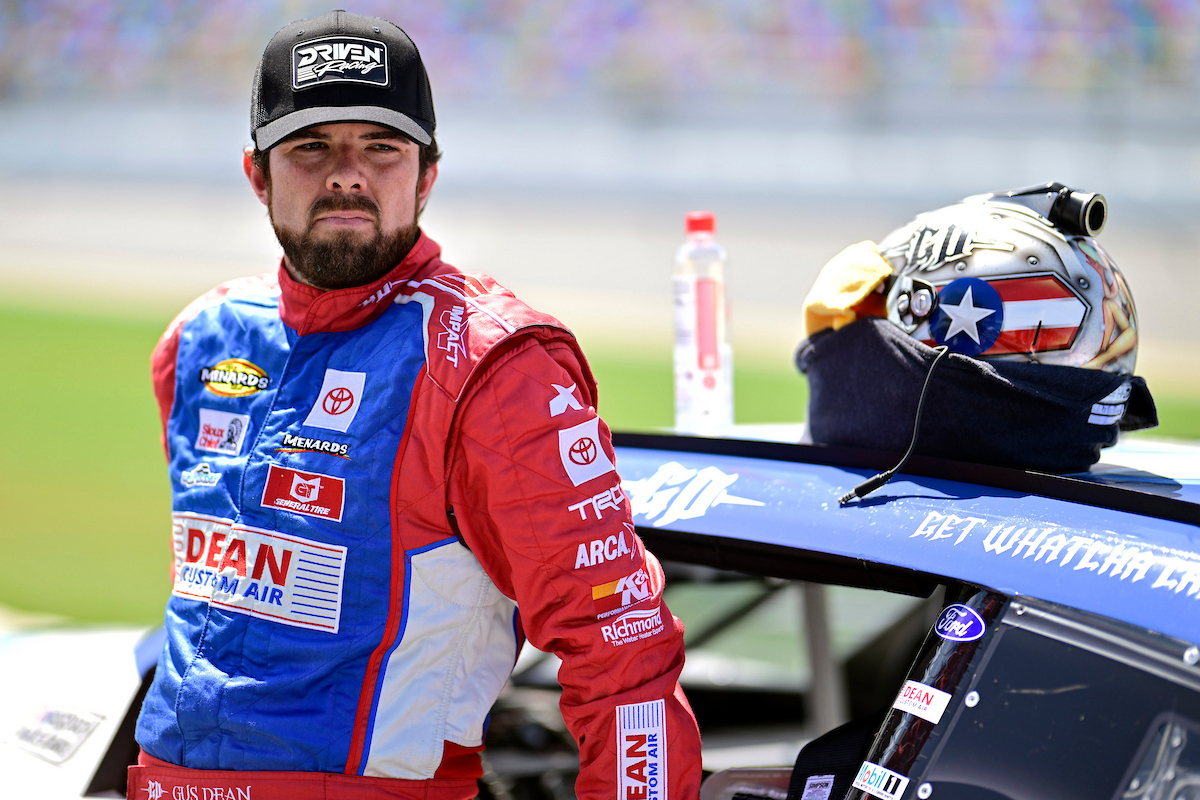
Daytona International Speedway roared back to life as pre-season practice for the ARCA Menards Series kicked off, and Nitro Motorsports made an emphatic statement. The team fielded six cars on Friday, and all six topped the leaderboard during the first day of the two-day session.
Leading the charge was Gus Dean in the No. 25 Nitro Motorsports Toyota, returning to the track for the first time since his victory in last year’s season opener. Dean’s strong performance set the tone for the organization, which showcased speed and depth across its lineup. Gavan Boschele followed in second with the No. 90B entry, while Jake Finch placed third in the No. 15 Phoenix Toyota. Thomas Annunziata, Isabella Robusto, and Jake Bollman rounded out the top six, giving Nitro Motorsports a clean sweep of the fastest positions.
Garrett Mitchell, better known to millions of fans as YouTube personality Cleetus McFarland, broke up the Nitro dominance by placing seventh in the No. 30 Kennetix Ford. Andy Jankowiak was eighth in the No. 71 KLAS Motorsports Chevrolet.
Amber Balcaen overcame early adversity after an incident in Turn 3 left her with significant nose damage. Following evaluation and release from the Infield Care Center, Balcaen returned in a backup car and posted the ninth-fastest time. Taylor Reimer completed the top ten in the No. 77 Spire Motorsports Chevrolet, marking three female drivers inside the top ten.
Further down the charts, Joe Gibbs Racing teammates Giovanni Ruggiero and Max Reaves finished 13th and 14th, separated by just 0.012 seconds. Reaves will chase the ARCA Menards Series East title in 2026, while Ruggiero will compete in the Daytona season opener alongside his full-time NASCAR Craftsman Truck Series campaign.
CARS Tour standout Timothy “Mini” Tyrell made his first laps at Daytona, ending the day 20th in the No. 17 Cook Racing Technologies Chevrolet. Incidents also sidelined Bob Martin and Alex Clubb, though both plan to return for Saturday’s session after repairs.
In total, 79 drivers and 49 cars are registered for the pre-race practice, with 65 drivers logging laps on Friday. The second day of testing will set the stage for the highly anticipated season opener next month.

Tibbetts Lumber Company is partnering with Spire Motorsports for the NASCAR Craftsman Truck Series season-opener at Daytona International Speedway.
The family-owned and Florida-based business will adorn the No. 7 Chevrolet Silverado RST for the February 13 event in Daytona Beach, Florida. 2021 DAYTONA 500 champion Michael McDowell will pilot the entry.
Wood you look at that.@TibbettsLumber will team up with @Mc_Driver in the NASCAR CRAFTSMAN Truck Series race at Daytona!
?: https://t.co/Qd3MwxDt4J pic.twitter.com/Tf4xGtkmhI
— Spire Motorsports (@SpireMotorsport) January 9, 2026
McDowell will be making his fifth career start in the NASCAR Truck Series, and with a trip to Victory Lane, would join an exclusive list of drivers who have won in each of NASCAR’s top-three divisions.
The Phoenix, Arizona-native competed in two NASCAR Craftsman Truck Series events last season — Daytona and Atlanta — and recorded a best finish of 12th-place.
“I have a great deal of respect for the Tibbetts Lumber team,” said McDowell, “They’ve helped me on my own property, and their team truly combines outstanding service with a high-quality product. It’s special to have them racing with us at Daytona, and earning a win in all three national series is something I’ve wanted to make happen for a long time. I think we’ll have a real opportunity to do that on Friday night in Daytona in our Tibbetts Lumber Chevy Silverado.”
Founded in 1949 by Linton N. Tibbetts, Tibbetts Lumber Company has grown into the largest independently-owned lumber and building materials supplier in Florida, while building its legacy as one of the largest roof and floor truss companies in the Southeast.
“Tibbetts Lumber Co. is thrilled to be the primary sponsor of the Spire Motorsports No. 7 Chevrolet Silverado driven by Michael McDowell,” said Russ Hallenbeck, CEO of Tibbetts Lumber Company. “Being that we are headquartered in Florida, Daytona International Speedway has become a very special place for us come springtime. We are honored to be teaming up with Spire Motorsports and Michael this February.”
This isn’t the first go-around for Tibbetts Lumber Company when it comes to sponsorship in the NASCAR Craftsman Truck Series, either. Over the last two seasons, the company has backed Spencer Boyd and Freedom Racing Enterprises a total of five times, which resulted in a single top-five result at Daytona in 2024.
With nearly 640 starts across NASCAR’s National Series, McDowell is one of the most seasoned veterans in the sport, right now. The Phoenix, Arizona-native has been to Victory Lane twice at NASCAR’s top-level, and once in NASCAR’s second-level NASCAR O’Reilly Auto Parts Series.
The 2026 NASCAR Craftsman Truck Series season-opener will take place on Friday, February 13 at 7:30 p.m. ET on FOX Sports 1, NASCAR Racing Network, and SiriusXM NASCAR Radio Channel 90.
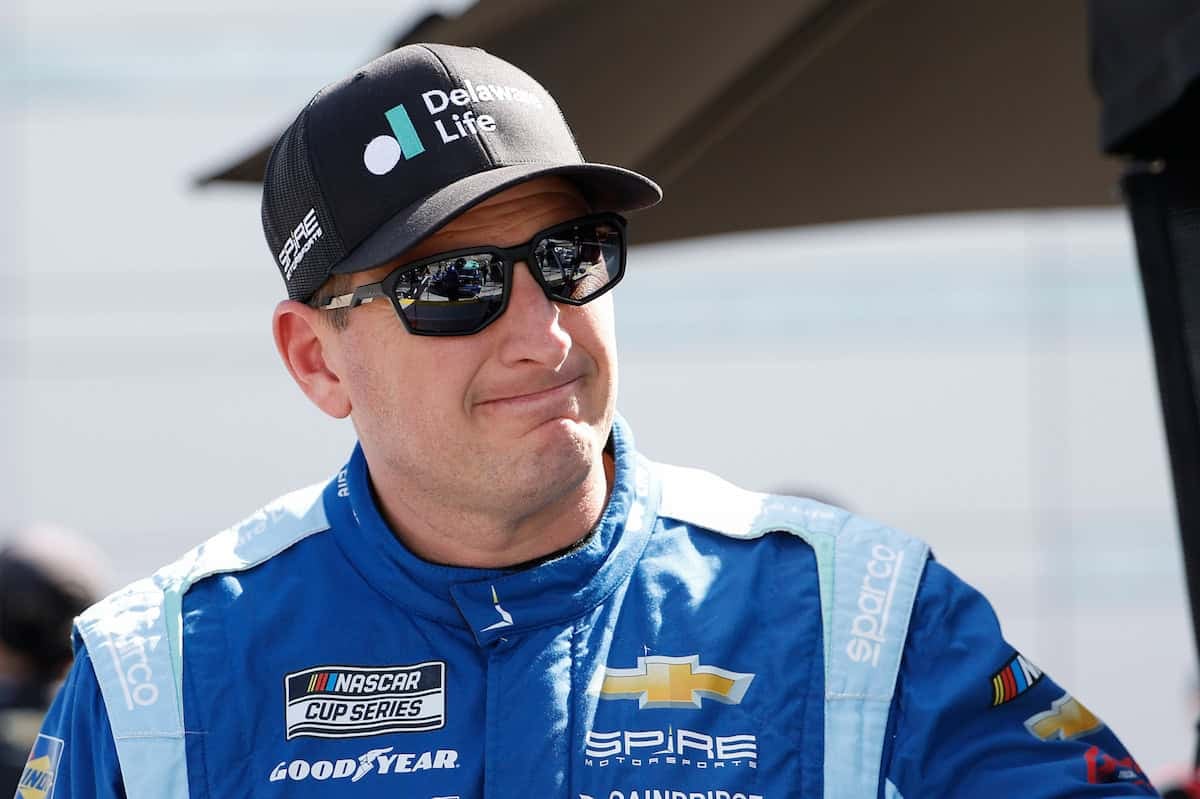
Michael McDowell will run the season-opening NASCAR Craftsman Truck Series race at Daytona International Speedway for Spire Motorsports, the team announced Jan. 9.
McDowell will pilot the No. 7 with sponsorship from Tibbetts Lumber Company.
“I have a great deal of respect for the Tibbetts Lumber team,” McDowell said in a team release. “They’ve helped me on my own property and their team truly combines outstanding service with a high-quality product. It’s special to have them racing with us at Daytona, and earning a win in all three national series is something I’ve wanted to make happen for a long time. I think we’ll have a real opportunity to do that on Friday night in Daytona in our Tibbetts Lumber Chevy Silverado.”

Spire Confirms Truck Return, Announces Promotions
McDowell also drove Daytona for Spire in 2025, steering the No. 07 to a 26th-place finish.
He’s the first driver announced to Spire’s Truck program for 2026. The team previously revealed it plans to field the Nos. 7 and 77 this year.

Executive Editor at Frontstretch
Kevin Rutherford is the executive editor of Frontstretch, a position he gained in 2025 after being the managing editor since 2015, and serving on the editing staff since 2013.
At his day job, he’s a journalist covering music and rock charts at Billboard. He lives in New York City, but his heart is in Ohio — you know, like that Hawthorne Heights song.

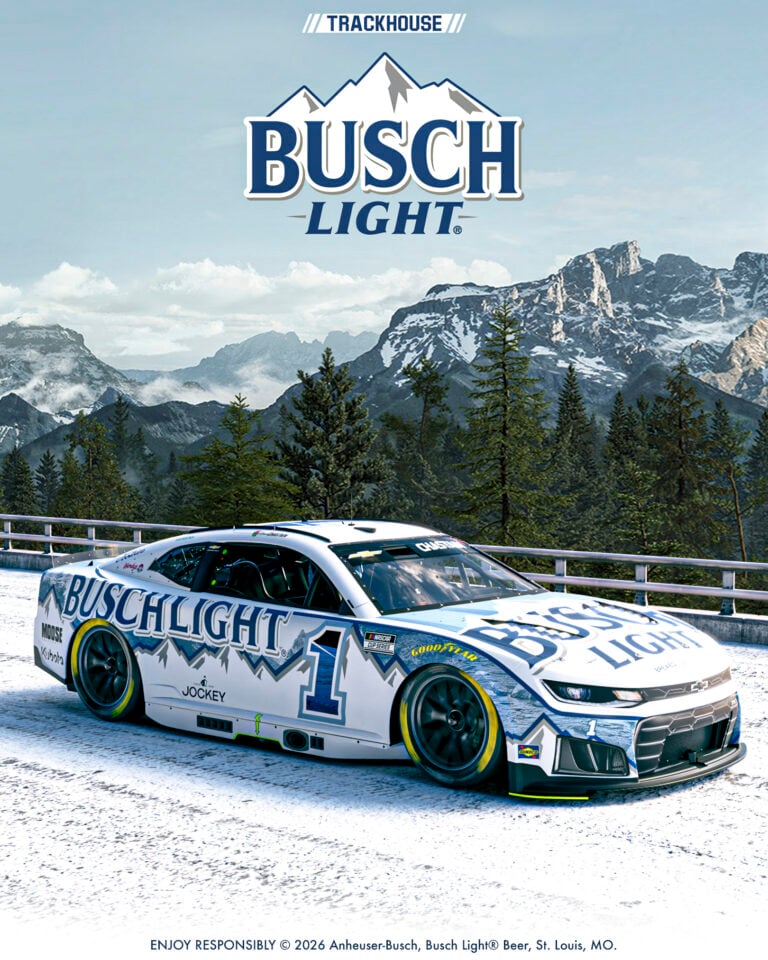
View the No. 1 Busch Light paint scheme for Trackhouse Racing
Ross Chastain drives the No. 1 car for Trackhouse Racing. The 2026 NASCAR Cup Series paint scheme was leaked several weeks ago.
View the Ross Chastain Busch Light paint scheme below.
Now, the paint scheme has officially been released. Trackhouse Racing posted the following image to social media on Friday.
Ross Chastain
2026 Busch Light Paint Scheme
Ross Chastain will have a new crew chief in 2026
Links
Ross Chastain | NASCAR

As college becomes game of musical chairs, BYU bucking the trend – Deseret News

CSUN Improves to 2-0 After Holding Off Harvard in Four Sets

2026 Season Opens in a Five-Set Thriller

NCAA Denies Ole Miss QB Trinidad Chambliss a 6th Year of Eligibility

Men’s Volleyball Sweeps St. Thomas Aquinas to Begin 2026 Campaign

Men’s Volleyball Falls In Season Opener At #3 Long Beach State

Men’s Volleyball Drops Rematch With Loyola Chicago In Four Sets

Oregon’s Kenyon Sadiq thrives during challenging journey from small-town Idaho to tight end stardom

Youth Athlete Protection Act aims to safeguard young athletes in Alabama

College enforcement group voices ‘serious concerns’ with spiraling transfer portal – Las Vegas Sun News

Portola girls basketball team aiming for another memorable CIF post-season run –

What are we teaching Maine’s young athletes?

From Clemson Clinics to Friday Night Lights

Hoosiers Close Day One From Rod McCravy
College enforcement group voices ‘serious concerns’ with spiraling transfer portal

#11 Volleyball Practices, Then Meets Media Prior to #2 Kentucky Match

Stempien to seek opening for Branch County Circuit Court Judge | WTVB | 1590 AM · 95.5 FM

Ross Brawn to receive Autosport Gold Medal Award at 2026 Autosport Awards, Honouring a Lifetime Shaping Modern F1

Maine wraps up Fall Semester with a win in Black Bear Invitational

Nascar legal saga ends as 23XI, Front Row secure settlement

Princeton Area Community Foundation awards more than $1.3 million to 40 local nonprofits ⋆ Princeton, NJ local news %

Downtown Athletic Club of Hawaiʻi gives $300K to Boost the ’Bows NIL fund

Sunoco to sponsor No. 8 Ganassi Honda IndyCar in multi-year deal
NASCAR, 23XI Racing, Front Row Motorsports announce settlement of US monopoly suit | MLex

WNBA’s Caitlin Clark, Angel Reese and Paige Bueckers in NC, making debut for national team at USA camp at Duke

Hope College Tops MIAA Commissioner’s Cup Fall Update

Badgers news: Wisconsin lands 2nd commitment from transfer portal

Nike Signs 10 LSU Athletes to NIL deals

Three Clarkson Volleyball Players Named to CSC Academic All-District List

Five Youth Sports Trends We’re Watching in 2026





-
 Sports3 weeks ago
Badgers news: Wisconsin lands 2nd commitment from transfer portal
-
 Rec Sports1 week ago
Five Youth Sports Trends We’re Watching in 2026
-

 Sports3 weeks ago
Is women’s volleyball the SEC’s next big sport? How Kentucky, Texas A&M broke through
-
 Sports2 weeks ago
Kentucky VB adds an All-American honorable mention, loses Brooke Bultema to portal
-

 Rec Sports3 weeks ago
NBA, Global Basketball Community Unite for World Basketball Day Celebration
-
 Motorsports3 weeks ago
Dr. Patrick Staropoli Lands Full-Time O’Reilly Ride with Big Machine Racing
-

 Motorsports3 weeks ago
BigRock Motorsports Retains Its Championship Title At ISRL Season 2 Grand Finale In Calicut
-
 Motorsports3 weeks ago
NASCAR, IndyCar, and F1 Share These Race Days in 2026
-
 Sports2 weeks ago
Colorado volleyball poised to repeat success
-
 Motorsports2 weeks ago
BangShift.com IHRA Acquires Historic Memphis Motorsports Park In Millington Tennessee. Big Race Weekend’s Planned For 2026!