
NIL
Fewer early entrants, more college stars staying put :: WRALSportsFan.com


Will Wade’s work building N.C. State into an immediate winner included the pursuit of an entrant in the NBA draft, just in case he returned to college.
It wasn’t a huge risk: With all the cash flowing in college, the number of early entrants to the NBA draft has continued to shrink. This year’s draft starts Wednesday night with its lowest total of those prospects in at least 10 years.
“Now you can play the long game a little bit more,” Wade told The Associated Press, referring to how college players can look at their futures. “Look, I can get paid the same I would get paid in the G League, the same I would get paid on a two-way (contract), some guys are getting first-round money.”
And more money is on the way.
It’s been four years since college athletes were permitted to profit off the use of their name, image and likeness (NIL), opening the door for athlete compensation that was once forbidden by NCAA rules. Next week, on July 1, marks the official start of revenue sharing where schools can begin directly paying athletes following the $2.8 billion House antitrust settlement.
For Wade, that led to signing Texas Tech’s Darrion Williams after 247sports’ fifth-ranked transfer withdrew from the draft.
“Basically now if you’re an early entry and you’re not a top-20, top-22 pick — where the money slots — you can pretty much make that in college,” the new Wolfpack coach said.
It’s all part of a seismic change that has rippled through college athletics since the pandemic, its impact touching the NBA. Players willing to “test the waters” in the draft before returning to school now have a lucrative option to consider against uncertain pro prospects.
And it shows in the numbers.
“With all the money that’s being thrown around in NIL, you’re having a lot less players put their names in,” Detroit Pistons president of basketball operations Trajan Langdon said. “You’re having pretty good players pulling their names out.”
This year’s drop is significant when compared to the years before anyone had heard of COVID-19. There was a spike of college players jumping into the draft in the pandemic’s aftermath, when they were granted a free eligibility year to temporarily make even a fourth-year senior an “early” entrant.
But those numbers had fallen as those five-year players cycled out of college basketball, and they’re now below pre-pandemic levels. That decline coincides with NIL’s July 2021 arrival, from athletes doing paid appearances or social-media endorsements to boosters forming collectives offering NIL packages amounting to de facto salaries.
As a result:
— Eighty-two players appeared on the NBA’s list of early entrants primarily from American colleges with a smattering of other teams, down 49% from 2024 (162) and nearly 47% compared to the four-year average from 2016-19 (153.5);
— Thirty-two remained after withdrawal deadlines, down from 62 last year and 72.0 from 2016-19;
— Adding international prospects, 109 players declared for the draft, down from 201 last year and 205.0 from 2016-19;
— And only 46 remained, down from 77 in 2024 and 83.8 from 2016-19.
Duke coach Jon Scheyer understands draft dynamics, both for no-doubt headliners and prospects facing less clarity. He sees college athlete compensation as a “legitimate gamechanger.”
“Hopefully it allows players to decide what’s truly best for their game,” Scheyer told the AP. “It allows them to analyze: ‘Am I actually ready for this or not?’ Where money doesn’t have to be the deciding factor. Because if money’s the deciding factor, that’s why you see kids not stick. The NBA’s cutthroat. It just is.”
The Blue Devils are expected to have three players selected in the first-round Wednesday, including presumptive No. 1 pick Cooper Flagg alongside top-10 prospects Kon Knueppel and Khaman Maluach. They also had players sorting through draft decisions.
Freshman Isaiah Evans — a slender wing with explosive scoring potential — withdrew instead of chasing first-round status through the draft process. Incoming transfer Cedric Coward from Washington State rapidly rose draft boards after the combine and remained in the draft.
“There’s no substituting the money you’re going to make if you’re a top-15, top-20 pick,” said Scheyer, entering Year 4 as successor to retired Hall of Famer Mike Krzyzewski. “But if you’re not solidified as a first-round pick, why risk it when you can have a solid year and a chance to go up or be in the same position the following season?”
Langdon, himself a former Duke first-rounder, sees that evolution, too.
His Pistons had their first playoff appearance since 2019, but lack a first-round selection and own a single pick in Thursday’s second round. Fewer candidates could make the already imperfect science of drafting even trickier in this new reality.
According to the NBA’s 2024-25 rookie scale, a player going midway through the first round would make roughly $3.5 million in first-year salary. That figure would drop to about $2.8 million at pick No. 20, $2.3 million at No. 25 and $2.1 million with the 30th and final first-round draftee.
A minimum first-year NBA salary? Roughly $1.2 million.
“These NIL packages are starting to get up to $3 to $4 to $5 to $6 million dollars,” Langdon said. “These guys are not going to put their name in to be the 25th pick, or even the 18th pick. They are going to go back to school in hopes of being a lottery pick next year. With that pool of players decreasing, it kind of decreases the odds of the level of player we get at No. 37, just the pure mathematics.”
Indiana Pacers big man Thomas Bryant and Oklahoma City Thunder counterpart Isaiah Hartenstein, who both played in the seven-game NBA Finals that ended Sunday, illustrate Langdon’s point.
They were back-to-back second-rounders in 2017 (Bryant at 42, Hartenstein at 43), pushed down a draft board featuring early-entry college players in 33 of the 41 picks before them.

Bryant played two college seasons at Indiana before stints with five NBA teams, including Denver’s 2023 championship squad. Would the ability to make college money have changed his journey?
“To be honest, I see it from both sides,” Bryant said. “If you’re not going to get drafted, you understand that a kid needs money to live in college and everything. So, I understand where they’re coming from on that end.
“But for me, I took the chance. I bet on myself, and I believed in myself, and I worked to the very end. And the thing about me is that if I went down, I was going down swinging. I hang my hat on that. For some, it might not be the same case.”
The American-born Hartenstein moved to Germany at 11 and played in Lithuania before being drafted. As he put it: “I think everyone’s journey is different.”
“I think you should have the right people around you to kind of guide you,” said Hartenstein, a newly minted NBA champion. “I mean, I was lucky that my dad, who was a professional before, kind of guided me. Depending on your circumstances, it’s hard to turn down guaranteed money. If there’s an opportunity to get in a good situation in the NBA, you do that. But it’s a hard decision.”
At N.C. State, Wade’s pitch to Williams included a leading role and a shot at boosting his draft stock.
The 6-foot-6 junior averaged 15.1 points with multiple big NCAA Tournament performances as the Red Raiders reached the Elite Eight, nearly beating eventual champion Florida.
“He was most likely going to be a second-round draft pick, and his package here is better than probably he would’ve gotten as a second-round pick,” Wade said, adding: “We certainly talked about that. We went over that. We went over the math of everything. We went over the plan on how to accomplish that.”
That’s not to say it’s easy at the college level in this new landscape. Roster management is tricky, including a balancing act of maintaining financial resources to potentially land one player while risking missing out on others.
“It’s the way life works, it’s the way it should work,” Wade said. “If there’s no risk, there’s no reward. The riskiest players, in terms of waiting on the money and waiting them out, are the best players. That’s why they’re in the draft process. We’re not going to be scared of that.”
Nor should he, not with the allure of campus life these days.
___
AP Basketball Writer Tim Reynolds and AP Sports Writer Larry Lage contributed to this report.
___
AP NBA: https://apnews.com/nba


Florida wide receiver Naeshaun Montgomery is planning to enter the NCAA Transfer Portal, On3 has learned. He caught three passes for 26 yards in 2025.
Montgomery played high school football at Miami Central (West Palm Beach, FL), where he was a four-star prospect. He was the No. 262 overall recruit in the 2025 cycle, according to the Rivals Industry Ranking, a weighted algorithm that complies all major recruiting media services.
He had a bunch of different premier programs interested in his services as a recruit. We’ll see who comes calling this time around for the wide receiver.
To keep up with the latest players on the move, check out On3’s Transfer Portal wire. The On3 Transfer Portal Instagram account and Twitter account are excellent resources to stay up to date with the latest moves.
More on Naeshaun Montgomery, NCAA Transfer Portal
Meanwhile, the NCAA Division I Administrative Committee passed dates for the one-time-only college football transfer portal back earlier in October. As it stands, the 2025-26 college football transfer portal will last 15 days. It’ll span Jan. 2 to Jan. 16, the NCAA announced.
Moving forward, the entire Division I football notification of transfer windows is slated for Jan 2-16. As has been the previous standard, athletes on College Football Playoff teams still playing would have 5 days beginning the day after their team’s final game to enter the transfer portal.
Additionally, players have 15 days to enter the portal, but they’re not under a deadline to commit when they enter. Traditionally, the deadline for committing is how late a school can enroll a player through admissions.
One caveat is that if a head coach is fired, the transfer portal will not open for players immediately. The NCAA revealed that moving forward, players will only have 15 days to enter the portal after a coaching change, instead of the former allocation of 30 days. Players will also have to wait five days after a new coach is hired or announced.
Finally, graduate transfers also cannot enter the transfer portal until Jan. 2 with the new one-time-only portal window. All these new guidelines are bound to shake things up, but the transfer portal will still remain as interesting and entertaining as ever.
Dec. 22, 2025, 5:00 a.m. ET
- Some Tennessee football players are expected to negotiate for higher NIL pay after strong performances in the 2025 season.
- Since July, schools can directly pay athletes through revenue sharing, in addition to third-party NIL deals.
- Players who have likely increased their value include DeSean Bishop, Braylon Staley, and several standout freshmen.
- NIL negotiations have become a regular part of the college football calendar, influencing player decisions on transfers and the NFL draft.
Some Tennessee football players will negotiate a raise in NIL pay after overperforming in the 2025 season.
Those discussions have become part of the college football calendar in this era of frequent player movement, and money is a driving force in big decisions.
Negotiations likely started long before No. 23 Tennessee (8-4) plays Illinois (8-4) in the Music City Bowl on Dec. 30 (5:30 p.m. ET, ESPN). And they’ll continue when the transfer portal opens on Jan. 2.
The top players with eligibility remaining consider declaring for the 2026 NFL Draft. Some players consider testing the transfer market by entering the portal. And overperforming players hope to cash in with a pay raise from their school.
Since July, schools have been allowed to pay athletes directly with revenue shares, essentially a royalty for use of their name, image and likeness. Players can earn additional money in third-party NIL pay from collectives, corporations and business owners.
Some players get raises. Other players get pay cuts.

Schools pay players directly under a salary cap of sorts. The payroll works out to about $13.5 million for each college football team, or approximately $170,000 per scholarship player. Those distributions and payroll strategies vary between teams.
And third-party NIL pay can double the earnings of the best players.
None of that payroll information is available to the public, which means it’s impossible to know whether a player is overpaid, underpaid or fairly paid. But it’s reasonable to believe their pay corresponds to their projected level of play.
And if they exceed those expectations, a raise is in order. With that being said, let’s take an educated guess at which players have increased their value.
DeSean Bishop
No Tennessee player has increased his value over the past year as much as running back DeSean Bishop. In January, the former Karns High standout was promoted from walk-on to scholarship player. That likely didn’t come with a big NIL payday because he wasn’t even a starter yet.
But Bishop earned that scholarship, and then some, in the 2025 season. He was named All-SEC second team after rushing for 983 yards and 14 TDs in the regular season. If Bishop wasn’t paid NIL this season, he certainly will next season. And if he was paid this season, it likely didn’t align with an all-conference season.
Braylon Staley
Braylon Staley showed promise heading into the 2025 season, but he was unproven. That quickly changed when he played well in UT’s biggest games and earned SEC Freshman of the Year with 64 receptions, 806 yards and six TDs.
UT may have already paid Staley a solid NIL amount. After all, he was a four-star recruit and top 100 player coming out of high school. But it’s doubtful that Staley was paid like one of the SEC’s top receivers, which he clearly now is.
Wendell Moe
This one is debatable, but leverage could come into play. Wendell Moe was a solid pick-up in the portal in 2025, but he turned into an AP All-SEC performer.
It’s difficult to predict how much UT paid Moe in the 2025 season without knowing the transfer market for his position. If he was coveted by multiple teams, Moe may have been paid well and simply played to that level.
But now Moe has proven to be a good SEC offensive lineman and potential NFL draft prospect. That could land him at least a moderate NIL raise to return in 2026.
Jesse Perry
In the 2024 class, offensive lineman Jesse Perry was rated fifth among five offensive linemen signed by Tennessee, according to 247Sports Composite. He was a three-star recruit.
NIL pay doesn’t always correspond to recruit ratings. But Perry’s moderate grades indicate that he had to prove his value on the field before earning a notable NIL check.
Perry did that in the 2025 season. He started 11 games, including seven at right tackle and four at right guard, and earned Freshman All-America honors.
Granted, his future NIL pay will depend on whether he’s a surefire starter or a versatile backup, but Perry is certainly in a stronger position than a year ago.
Ty Redmond
Like Perry, cornerback Ty Redmond probably entered the 2025 season with a low NIL value and had to prove himself. In the 2025 class, Redmond was rated fourth among five defensive backs signed by Tennessee, according to 247Sports Composite. He was a three-star recruit.

But Redmond, after some early growing pains, turned into a promising young cornerback. He was an All-SEC third-team selection and Freshman All-SEC performer. He tied for the SEC lead with 13 passes defended and led the Vols with three interceptions.
Regardless of what Redmond earned in 2025, he is in a stronger position after his freshman season.
Jordan Ross
This one is more speculative than the rest on this list. After all, edge rusher Jordan Ross was a five-star signee in the 2024 class, so he may already command high pay in NIL money based on his recruit rating.
That being said, Ross is on this list because of his play, his position and his perceived essential status in new defensive coordinator Jim Knowles’ defensive scheme. Knowles values edge rushers, and Ross is UT’s most dynamic.
Before being slowed by injuries, Ross showed flashes as a playmaker in the mold of former UT edge rushers Byron Young, James Pearce and Joshua Josephs. He had three tackles-for-loss, 1.5 sacks, six quarterback hurries, one fumble recovery and one forced fumble.
Adam Sparks is the Tennessee football beat reporter. Emailadam.sparks@knoxnews.com. X, formerly known as Twitter@AdamSparks. Support strong local journalism by subscribing at knoxnews.com/subscribe.
Get the latest news and insight on SEC football by subscribing to the SEC Unfiltered newsletter, delivered straight to your inbox.
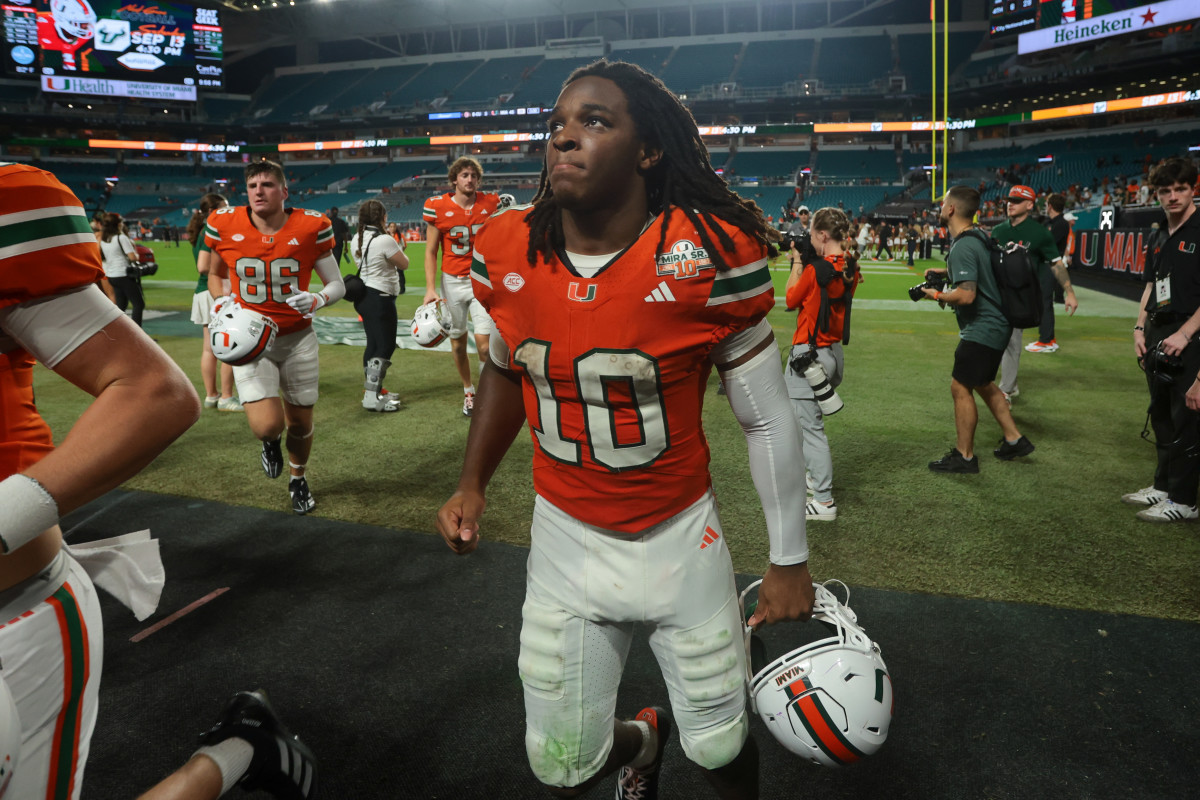
The No. 10 seed Miami Hurricanes defeated the No. 7 Texas A&M Aggies 10-3 in the first round of the College Football Playoff. It was a defensive battle, ultimately decided by a late fourth-quarter score and red-zone interception by Miami.
With the score tied at 3 and 1 minute, 44 seconds left in the game, Hurricanes wide receiver Malachi Toney scored on an 11-yard touchdown pass thrown by quarterback Carson Beck.
Advertisement
Up next for the Hurricanes is a Goodyear Cotton Bowl Classic matchup against the No. 2 Ohio State Buckeyes. It’s an uphill battle, as ESPN’s matchup predictor gives the Hurricanes a 29.5% chance of winning.

Miami Hurricanes wide receiver Malachi Toney (10).© Robert Myers-Imagn Images
Before his heroic performance, though, the wide receiver revealed an exciting Name, Image and Likeness (NIL) update. In a joint Instagram post, Toney revealed a new NIL partnership with Hellstar, a popular clothing brand that has a sports training component.
Advertisement
“We are so proud to announce our first Hellstar Sports College Athlete NIL signing – Malachi Toney🌟.,” the post caption read. “We had the privilege to coach @malitoney10 while he was apart of our high school 7 on 7 program, so now seeing him shine on the collegiate level we couldn’t be more proud.”
Toney’s On3 NIL valuation of $878,000 is the 12th-highest among college football wide receivers. Among players on Miami, it’s the fourth-highest, behind quarterback Carson Beck ($3.1 million), EDGE Rueben Bain Jr. ($1.2 million) and offensive tackle Francis Mauigoa ($1.1 million).
Advertisement
Through 14 games, Toney has been a major contributor to Miami’s success. He leads the team in receptions (89), yards (992) and touchdowns (eight).
With an exciting NIL opportunity under his belt, he and Miami look to stay hot against Ohio State. Kickoff is Dec. 31 at 7:30 p.m. ET at AT&T Stadium, airing on ESPN and streaming on the ESPN app.
Related: Texas Receives Clear Message From Nation’s No. 2 WR Amid Intense Recruiting Battle
This story was originally published by Athlon Sports on Dec 21, 2025, where it first appeared in the College Football section. Add Athlon Sports as a Preferred Source by clicking here.
In the growing landscape of college athletics, Name, Image, and Likeness (NIL) deals play a vital role in sports. Some programs are set up better than others based on a program’s valuation. Programs with higher valuations can help some of the top-performing teams stay successful.
CNBC released its valuation rankings for the country’s athletic departments, showing their growth from the 2024 fiscal year. The Colorado Buffaloes are ranked No. 47 in the nation, a rise from No. 55 in 2024.

Breaking Down Colorado Buffaloes’ Valuation Ranking
Colorado’s 2025 valuation is $574 million, with a year-over-year value change of 22 percent. The program’s 2024 revenue is set at $147 million, with a 16 percent year-over-year revenue change.
A program’s valuation determines its monetary worth, and it is important to look at the growth, which shows that Colorado is trending in the right direction. It is also important to note that the valuation rankings are based on all of the athletics, not just the football program.
Where Colorado Ranks In The Big 12

When focusing on the Big 12 conference, several of the programs are in the same vicinity with their valuation ranking.
- No. 39 Kansas: $620M
- No. 41 Oklahoma State: $600M
- No. 42 Baylor: $585M
- No. 46 Iowa State: $575M
- No. 47 Colorado: $574M
- No. 49 Texas Tech: $570M
- No. 50 TCU: $568M
- No. 55 Arizona: $529M
- No. 57 BYU: $500M
- No. 58 West Virginia: $481M
- No. 60 Utah: $451M
- No. 62 Kansas State: $435M
- No. 63 Arizona State: $430M
- No. 68 Cincinnati: $280M
- No. 70 UCF: $262M
- No. 73 Houston: $222M
MORE: Colorado Gets Hit With Biggest Transfer Portal Loss Yet
MORE: Michael Irvin Gets Real On Blame Surrounding Shedeur Sanders
MORE: Deion Sanders Faces Recruiting Problem After Omarion Miller Transfer News
SIGN UP FOR OUR NEWSLETTER HERE
While from the top valuation of Kansas to the bottom, which is Houston is a significant difference in the Big 12, the conference teams are still in a similar vicinity overall. With it having to do with all athletics, the programs that have consistently strong teams, such as Kansas’ basketball team, make sense to have a higher valuation.

Looking at the Big 12 as a whole shows that the Colorado Buffaloes are in the top five for their valuation and trending upward.
Calling Back To Deion Sanders’ Comments On Fairness
While valuation is not the same as revenue, seeing the difference in the conferences does call back to Colorado coach Deion Sanders’ comments on the fairness between programs. The schools in the top five for their valuation are either in the Big Ten or the SEC, and all are in the billions.
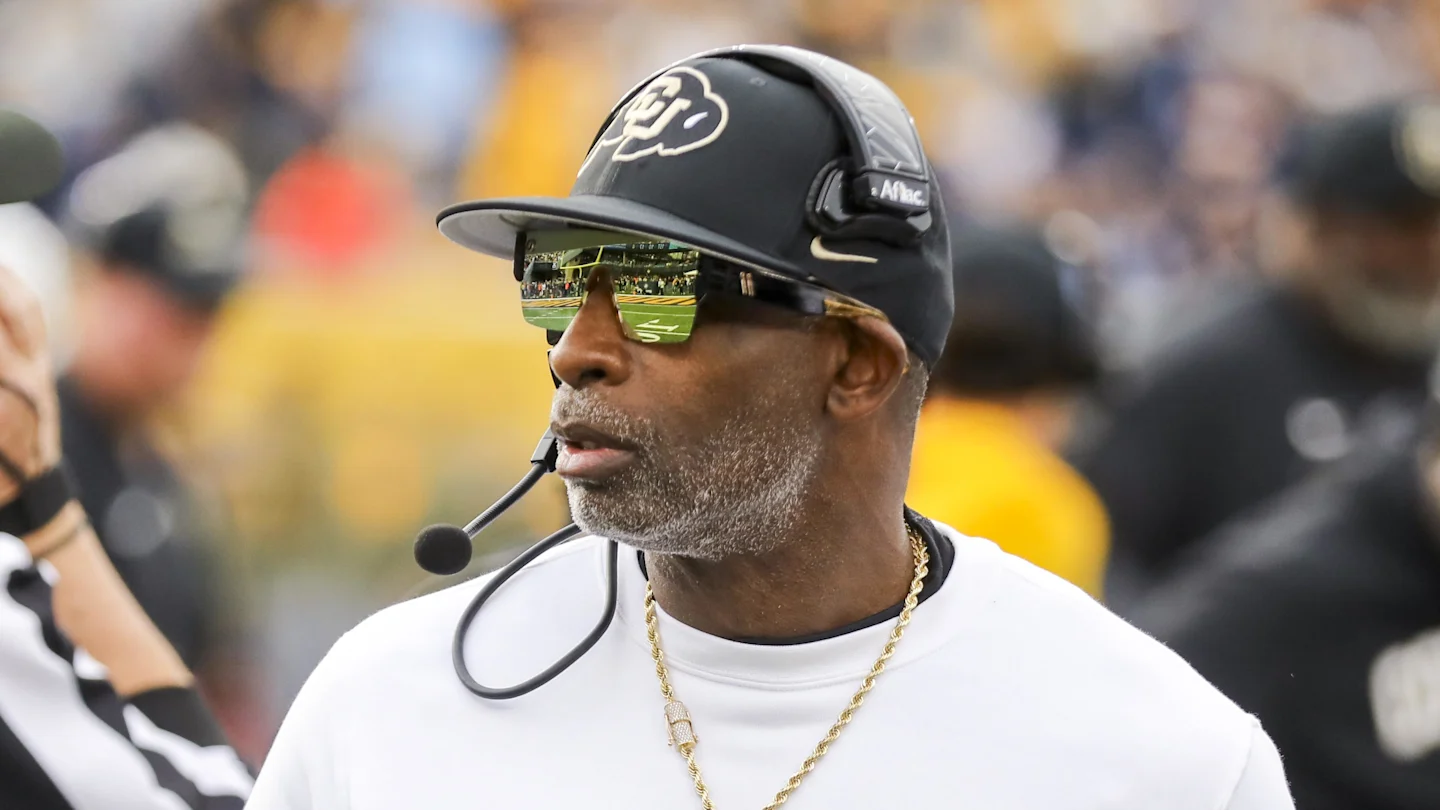
“You talk about equality,” Sanders said during the Big 12 media day. “All you have to do is look at the playoffs and see what those teams spent, and you understand darn near why they’re in the playoffs. It’s kind of hard to compete with somebody who’s giving $25, $30 million to a darn freshman class.”

Although the valuation is on the programs’ overall athletics, Sanders has been outspoken about money when it comes to building the football program. With the Buffaloes facing a mass exodus through the transfer portal, Sanders has highlighted that several players are leaving because of money.
The positive side is that the Buffaloes’ valuation is growing with a 22 percent increase. This shows that the school’s athletics overall are being valued higher, and will help lead to more money poured into the program. With more money, the Buffaloes can put more of an emphasis on NIL as they look to build their roster and compete in the Big 12.
RECOMMENDED ARTICLES
From a player retention standpoint, the first few weeks of the offseason haven’t been kind to the Colorado Buffaloes.
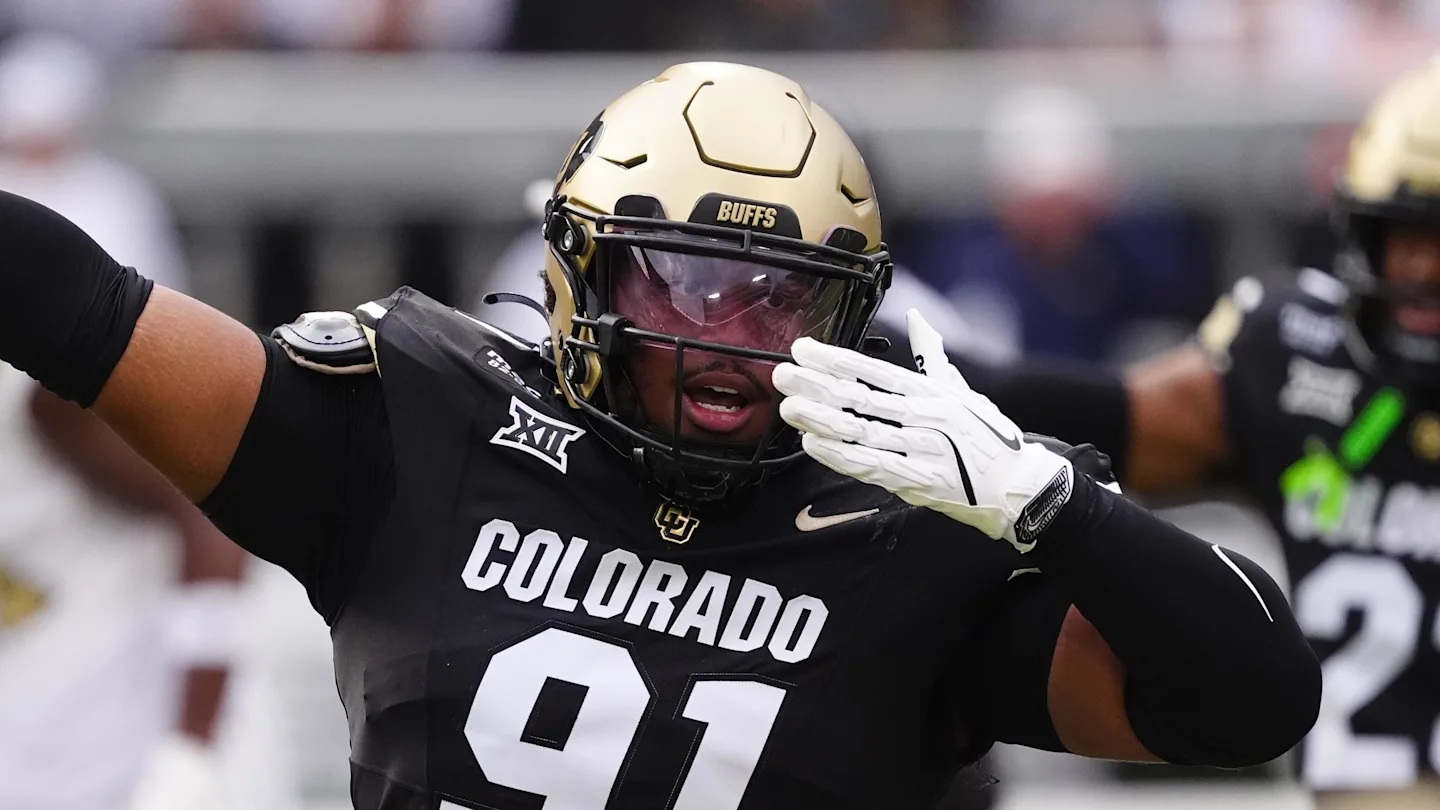
Several key Buffs have announced their intentions to enter the college football transfer portal when it opens next month, including wide receiver Omarion Miller, safety Tawfiq Byard and freshman defensive end Alexander McPherson. While every situation is unique, one Colorado insider believes money has been a common denominator among players’ reasons for leaving Boulder.

“The super majority of those people, I’m talking 95 percent, are going to be leaving for a bigger bag,” Thee Pregame Show’s Uncle Neely said on his YouTube channel. “This ain’t transferring in 1990. This ain’t transferring in the year 2000. This is 2025. This is business now. This isn’t, ‘Oh, I don’t like the coach. Oh, I don’t want to be treated the way they treat me.’
“This doesn’t mean something is wrong. These are business decisions now. But what we like to do is run with the narrative that woe is me, something must be wrong, something must be going on. How are all these people leaving?”

The NIL (name, image and likeness) era has rocked college football, and the depressing truth is that schools with more money will ultimately land the best players. In the Big 12, no school better exemplifies that trend than new conference champion Texas Tech.
Who’s Leaving Colorado?

As of Sunday, 16 Colorado players will enter the transfer portal next month. That group includes 12 defensive players, six members of the Buffs’ 2025 high school signing class and a few other Buffs who spent only one season in Boulder.
Below is an updated list of Colorado players who plan on entering the transfer portal:
- Safety TJ Branch
- Defensive lineman Jehiem Oatis
- Cornerback Noah King
- Cornerback Teon Parks
- Linebacker Mantrez Walker
- Safety Terrance Love
- Safety Tawfiq Byard
- Wide receiver Omarion Miller
- Defensive tackle Brandon Davis-Swain
- Offensive lineman Carde Smith
- Defensive end Alexander McPherson
- Offensive lineman Tyler Brown
- Defensive tackle Gavriel Lightfoot
- Defensive tackle Christian Hudson
- Defensive tackle Tawfiq Thomas
- Wide receiver Dre’lon Miller

Uncle Neely shared his take that Colorado’s losses should be replaceable via the transfer portal.
“Have you ever stopped to say, what am I actually losing by those people leaving?” Uncle Neely said. “Have you ever looked at the numbers production-wise of who has announced that they’re getting up out of here and what you’re actually losing by them leaving?… Is it replaceable via the portal? And in this business in college football, is it replaceable cheaper? I would wager to say the answer is yes in all regards.”
MORE: Colorado Gets Hit With Biggest Transfer Portal Loss Yet
MORE: Michael Irvin Gets Real On Blame Surrounding Shedeur Sanders
MORE: Deion Sanders Faces Recruiting Problem After Omarion Miller Transfer News
SIGN UP FOR OUR NEWSLETTER HERE

The college football transfer portal will open on Jan. 2 and close Jan. 16. Colorado coach Deion Sanders and his staff can begin adding players from the portal at the start of that period.
NIL
Report: LSU finalizes deal to hire Ole Miss’ Kevin Smith, puts him among highest paid RBs coaches
Lane Kiffin is bringing another Ole Miss assistant with him to LSU. According to Matt Zenitz of CBS Sports, the Tigers have finalized a deal to hire Rebels running backs coach Kevin Smith for the same role.
Smith is reported to have a salary of close to $1 million, which would make him one of the highest-paid running backs coaches in the country. He is the sixth Ole Miss assistant to follow Kiffin to Baton Rouge.
The other coaches joining Kiffin at LSU are offensive coordinator Charlie Weis Jr., tight ends coach Joe Cox, receivers coach Joe McDonald, inside receivers coach Sawyer Jordan and quarterbacks coach Dane Stevens. So far no defensive assistants from the Rebels have made the jump to Baton Rouge.
Smith worked with Kiffin as a running backs coach at Florida Atlantic form 2017-19 and joined his very first staff at Ole Miss in 2020. He stayed for the next two seasons in Oxford before leaving to take the running backs coach position at Miami in 2022.
Smith’s stint with the Hurricanes was a short-lived one as he returned to Ole Miss in 2023 and stayed through this season. Now he’ll look to continue the success he has enjoyed with Kiffin while building up the running backs room at LSU.
Smith helped to develop running backs such as Quinshon Judkins and Kewan Lacy during his time in Oxford. This past season, Ole Miss ranked fifth in the SEC with 185.6 rushing yards per game as Lacy led the conference with 21 rushing touchdowns and ranked second with 1,366 yards.
Ole Miss had its best season in program history this year to reach the College Football Playoff for the first time. However, Kiffin was not granted permission from the school to finish out the season with the Rebels after he accepted the LSU job.
Other assistants, including offensive coordinator Charlie Weis Jr., were allowed to complete the playoff run with Ole Miss. The Rebels defeated Tulane in the first round and will face No. 3 Georgia, which they lost to earlier this season, in the quarterfinals.
As of right now, it looks like most of the Ole Miss offensive staff will follow Kiffin to Baton Rouge. The defensive side keep defensive coordinator Blake Baker, who has been on staff at LSU since 2024.

Brian Hosfeld Named New Mexico Volleyball Head Coach – Mountain West Conference

Alex Bowman 2025 NASCAR Cup Series season in review: 48 team notched 16 top 10s and a playoff appearance

Florida wide receiver Naeshaun Montgomery plans to enter NCAA Transfer Portal

Volleyball Adds Transfer Štiglic – Northwestern Athletics

F1 Engine row erupts over ‘alleged’ 2026 compression loophole

As Forza Motorsport Winds Down, Gran Turismo Is Experiencing A ‘Phenomenon’ At PlayStation

Texas A&M wins NCAA volleyball title with sweep of Kentucky

Teams expected to hide true performance in pre-season testing

Bowling alley’s new owner aims to improve | News, Sports, Jobs

Texas A&M volleyball returns to Reed Arena after winning national title

Founding family fends off shakeup at UniFirst
6 Tennessee players who increased their NIL value, including DeSean Bishop
2025 Washington County high school volleyball all-stars

Logan Lednicky caps dream with volleyball title at Texas A&M

Rowing’s answer to snowcross, BMX and beach volleyball is coming to LA | Rowing

First Tee Winter Registration is open

Fargo girl, 13, dies after collapsing during school basketball game – Grand Forks Herald

CPG Brands Like Allegra Are Betting on F1 for the First Time

F1 Las Vegas: Verstappen win, Norris and Piastri DQ tighten 2025 title fight

Sycamores unveil 2026 track and field schedule

Two Pro Volleyball Leagues Serve Up Plans for Minnesota Teams

Utah State Announces 2025-26 Indoor Track & Field Schedule

SoundGear Named Entitlement Sponsor of Spears CARS Tour Southwest Opener

Jo Shimoda Undergoes Back Surgery

Redemption Means First Pro Stock World Championship for Dallas Glenn

Bowl Projections: ESPN predicts 12-team College Football Playoff bracket, full bowl slate after Week 14

Texas volleyball vs Kentucky game score: Live SEC tournament updates

Robert “Bobby” Lewis Hardin, 56

How this startup (and a KC sports icon) turned young players into card-carrying legends overnight

Indiana’s rapid ascent and its impact across college football





-
 Motorsports2 weeks ago
SoundGear Named Entitlement Sponsor of Spears CARS Tour Southwest Opener
-

 Rec Sports3 weeks ago
Black Bear Revises Recording Policies After Rulebook Language Surfaces via Lever
-

 Motorsports2 weeks ago
Donny Schatz finds new home for 2026, inks full-time deal with CJB Motorsports – InForum
-

 Rec Sports2 weeks ago
How Donald Trump became FIFA’s ‘soccer president’ long before World Cup draw
-
 Rec Sports2 weeks ago
David Blitzer, Harris Blitzer Sports & Entertainment
-

 Motorsports2 weeks ago
JR Motorsports Confirms Death Of NASCAR Veteran Michael Annett At Age 39
-
Sports2 weeks ago
Elliot and Thuotte Highlight Men’s Indoor Track and Field Season Opener
-
 Motorsports2 weeks ago
Rick Ware Racing switching to Chevrolet for 2026
-
Sports2 weeks ago
West Fargo volleyball coach Kelsey Titus resigns after four seasons – InForum
-
 NIL2 weeks ago
Colleges ponying up in support of football coaches, programs