
NIL
Five best fits for Warriors at pick No. 41 – NBC Sports Bay Area & California

More than a month has passed since the Warriors’ season ended in the second round of the NBA playoffs. A week later, they already began hosting players at Chase Center on their practice court for pre-draft workouts.
The Warriors mainly have studied older players with an abundance of college experience for their second-round pick at No. 41 overall. There’s always more to the year-long process behind closed doors. The way the draft has been affected by the changing landscape of college basketball with NIL, though, it would be a major surprise if a player younger than even 22 years old was drafted by the Warriors.
Trayce Jackson-Davis (No. 57 overall) was 23, and turning 24 in February, when the Warriors drafted him in the second round of the 2023 draft. Quinten Post (No. 52 overall) was even older at 24, and turning 25 in March, last year as the Warriors’ second-round pick.
Hearing a teenager have his name called when the Warriors are on the clock is highly, highly unlikely if they keep the pick and use it. A cheap player that can contribute as a rookie is of major value for a team like the Warriors.
“It does lend itself to the older guys generally can play sooner than later,” Warriors general manager Mike Dunleavy admitted Monday at Chase Center.
The chaos of the NBA offseason already knocked down the door and has made itself at home. Now that it’s time for the draft to be part of the headlines for two days, here are the five best fits for the Warriors with the 41st pick in the draft.
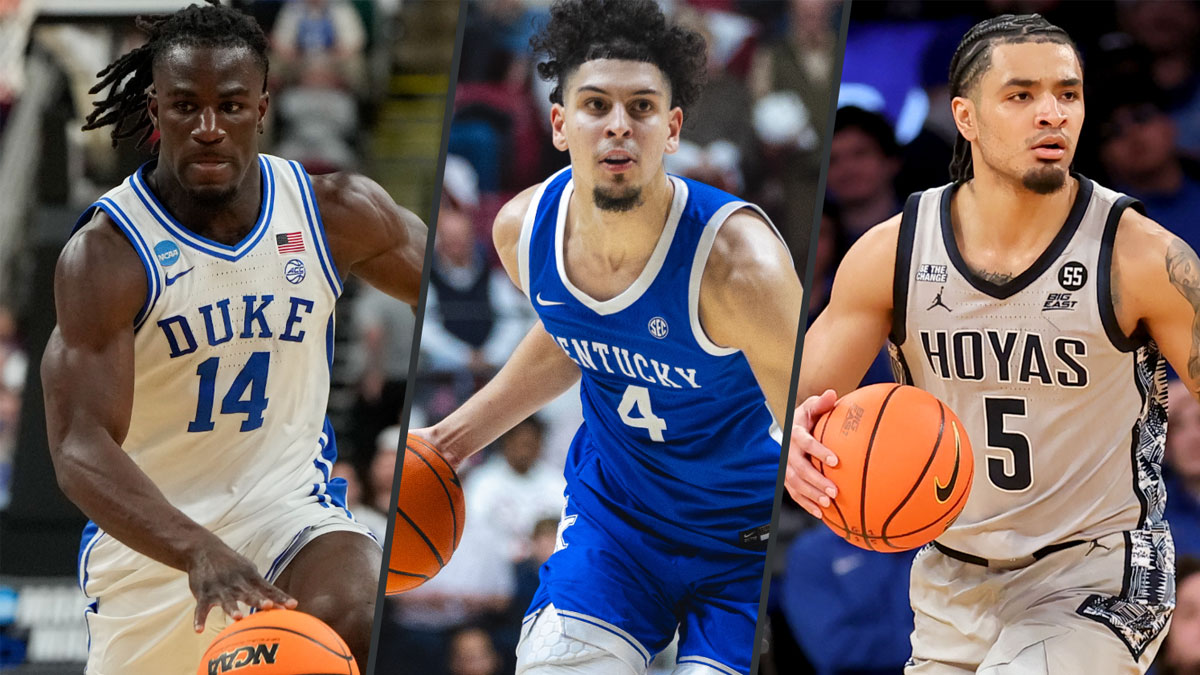
Sion James, Wing, Duke
He’s the one singular prospect that I wrote about as being the perfect fit for the Warriors, and it will take some serious convincing to change my mind.
James played four seasons at Tulane, then transferred to Duke as the exact player needed around their trio of freshmen players primed for the top 10 in the draft. Dunleavy laid out the formula Monday of needing defense – point of attack plus rim protectors – and players who can space the floor. James has the size and physicality to jump into an NBA game right now, and he’s only improved as a shooter every season in college.
An easy comparison is Lu Dort with a lot more college experience. They’re both built like football players who were handed a basketball as a joke just to laugh in everybody else’s face. Dort is listed at 6-foot-4 and 220 pounds, was named to the All-Defensive First Team and shot 41.2 percent from three for the champion Oklahoma City Thunder this season after shooting 23.7 percent as a rookie.
At 22 years old, 23 in December, James played 153 college games. He measured in at the combine at 6-foot-4 1/2 and 217 pounds, was voted to the ACC’s All-Defense Team this season, and after shooting 28 percent from three as a freshman, James was a 41.3 percent 3-point shooter in his one year at Duke.
Koby Brea, SG/Wing, Kentucky
Shooting and scoring dropped off a cliff to end the Warriors’ season with an injured Steph Curry. Adding perhaps the draft’s best pure shooter, outside of Kon Knueppel, could be a good start in fixing that problem.
Brea doesn’t project to be a two-way player like Klay Thompson was. His athleticism doesn’t jump out, even on highlights. But damn can he shoot it.
He also has ideal size on the wing as a shooting guard or small forward at 6-foot-7 and 215 pounds. Like James, Brea was a five-year player in college. Also like James, his age shouldn’t be a negative for someone who will be 23 in November. This is a smart player who will know how to play his role, and not step outside of it.
The marksman shot 43.4 percent on threes in his college career, including making 46.5 percent of his threes the past two seasons while putting up six a game.
Micah Peavy, Wing, Georgetown
Peavy is the type of player that would fit a long list of second-round picks that had lasting, solid, impactful careers in the NBA. He’s the glue guy every team wants.
That was obvious with Peavy’s performance in his first scrimmage at the combine. His team lost by three, yet Peavy was a game-high plus-20 in 23 minutes. Peavy, who turns 24 on July 16, is a versatile wing at 6-foot-7 and 215 pounds with the feel and skills to be part of a rotation. The big question is if his 3-point shot was a one-hit wonder.
After four years in college, one at Texas Tech and three at TCU, Peavy shot 26.7 percent from three. Year by year, he also became a more willing shooter from deep. Then in his fifth college season, Peavy transferred to Georgetown and averaged 17.2 points, put up over four threes a game and made 40 percent of them.
Chaz Lanier, G/Wing, Tennessee
The first three years of Lanier’s college career didn’t amount to numbers of someone who would be on any draft boards. Lanier averaged just 4.2 points per game in that span at Florida Atlantic, and then his breakout came in Year 4. Finally fully entrenched in the starting lineup, was All-A-Sun First Team in 2023-24, averaging 19.7 points while shooting 51 percent from the field, 44 percent from three and 88 percent at the free-throw line.
Lanier then joined Tennessee for his fifth and final college season, where that same offensive firepower followed him to the Vols. The 23-year-old who will turn 24 in December led Tennessee to the Elite Eight by averaging 18 points per game and shooting 39.5 percent beyond the arc. Lanier in his final two college seasons shot 41.5 percent from long distance while taking essentially eight threes per game.
There are some defensive questions when it comes to Lanier for a player listed at 6-foot-4. But he rarely came off the floor for one of the top defenses in college basketball, and his 6-foot-9 wingspan and 39-inch max vertical leap gives him the traits that can produce a competent defensive player.
Alijah Martin, G, Florida
Guards Kam Jones and Tamar Bates were both considerations here. In the end, it came down to two players: Martin, or Kentucky big man Amari Williams.
The Warriors worked out both players, who are 10 inches apart. Williams would be the second straight 7-footer Dunleavy picked in the second round. However, he’s a much different player than Post.
As seen throughout his rookie year, Post is a stretch-five but has work to do defensively and around the rim, and likely will never be a plus athlete. Williams is not a shooter. He’s a massive shot-blocker and strong rebounder. Most importantly for Steve Kerr, Williams is a really strong player out of the middle.
Center, as always, will be an incredibly interesting position to watch for the Warriors. They don’t want Draymond Green to start there, but he still will have minutes at center when necessary. They’re high on Post, and like a lot of what Jackson-Davis brings. Kevon Looney still could come back on a veteran minimum, and the Warriors will be active eyeing bigs through other avenues as well.
So instead, Martin is the pick. He’s only 6-foot-2, but plays way bigger with his 6-foot-8 wingspan. Jerry Stackhouse would be begging Kerr to unleash this Pitbull. Martin is a high-energy super-athlete who was a huge reason why Florida won it all this year.
After four years at Florida Atlantic where Martin twice was All-CUSA, as well as the 2023 CUSA Tournament MVP, he averaged 14.4 points, 4.5 rebounds, 2.2 assists and 1.5 steals per game as a fifth-year senior. Martin turns 24 in December, can be in the Gary Payton II role for the Warriors long term, and might offer more offense.
Download and follow the Dubs Talk Podcast


We are lucky to live in this state. Wyoming has space, community, and a shared identity that is rare in modern America.
Other than our world class-rodeo cowboys, we don’t have professional sports franchises competing for attention.
Instead, we have something better: a common bond in the University of Wyoming. Cowboy athletics — especially football — are not just a game. They are morale, identity, and more than most people realize, economic engines.
When the Cowboys are good and War Memorial Stadium is packed, the impact ripples far beyond Laramie. Ticket sales are only the beginning. Hotels fill from Cheyenne to Rawlins. Restaurants hum. Retailers sell brown-and-gold merchandise across the state.
A winning season doesn’t just lift spirits; it quietly generates millions of dollars in economic activity.
A decent bowl appearance adds direct revenue to the university itself, beyond the shared conference payouts. More importantly, competitive athletics help drive enrollment.
Yes, UW has strong academics and comparatively low tuition, and that matters.
But young people — like it or not — want to attend colleges where football and basketball are visible and successful. Athletics are the spotlight shining on the university. When the bulb is dull, it is hard for the university to shine.
Wyoming has done a lot of things exceptionally well. Through disciplined fundraising, generous private donations, and smart legislative matching, we have built world-class facilities in Laramie.
For decades, that was enough. Facilities, culture, coaching, and grit could overcome harsh climate and a small population college town. Sadly, that era is over.
Name, Image, and Likeness money has fundamentally changed the rules of college athletics.
This is not a moral judgment; it is an observation of fact. Programs willing to commit resources can be transformed almost overnight.
Texas Tech reportedly spent $28 million on NIL and made the College Football Playoff this year.
Indiana, through a coordinated effort involving boosters, the state, and private business, spent roughly $15 million and turned its program around in two years. They are the #1 seed and sitting at 13-0 for the season.
Meanwhile, the University of Wyoming’s NIL budget for all sports combined this year was approximately $1.2 million.
For a more regional perspective, BYU reportedly spent $7 million just to land the top-rated basketball player in the country. The CU Buffs are committed to spending $20.5 million in NIL money next year.
UW officials are candid and realistic about what is needed going forward.
Wyoming does not need to spend $20 million to be competitive in the Mountain West. But, we need to be closer to $10 million or more, to compete consistently.
Here’s the uncomfortable truth: if we don’t adapt, we won’t merely stay mediocre winning 4-5 games per year. We will slide backward. Conference realignment has already shown how quickly programs can be left behind.
A demotion to a lower division would mean loss of television revenue, reduced donor interest, declining recruiting, and — most damaging of all — loss of pride. Once that spiral begins, it is brutally hard to reverse.
And yet, Wyoming is uniquely positioned to meet this challenge.
Few states — if any — have a financial structure like ours. We have roughly $25 billion in permanent trust funds, generating about $1.86 billion in interest income annually.
We have a $1.9 billion rainy-day fund. This is energy wealth, carefully stewarded over generations.
We understand Wyoming’s conservative spending instincts. They are a virtue, not a flaw.
Even though we can easily afford it simply carving $10 million out of the general fund and handing it to an NIL pool, the expenditure would likely raise eyebrows.
But we already have a Wyoming solution successfully used in the past. A partnership between private donations and the State.
For decades, the Legislature has matched private donations for UW facilities, multiplying the impact of philanthropy while maintaining fiscal discipline. Why not apply that same model here?
A 2-1 match — two state dollars for every private dollar raised — would incentivize donors, limit state exposure, and quickly move Wyoming into a competitive NIL position without abandoning our values.
This is not about buying championships. It is about preserving relevance, protecting economic impact, and maintaining a shared institution that binds this state together. Cowboy athletics are not a luxury; they are a strategic asset.
The rules have changed. Standing still is no longer a viable strategy — it is reckless.
The question is not whether NIL money matters for Wyoming, it already does. The question is whether we respond with creativity and partnership, or whether we wait and watch something uniquely Wyoming quickly slip away.
In this state, we pride ourselves on being innovative when addressing problems in the state. Let’s follow that strategy now. Please contact your local legislators and ask them to promote and vote in favor of state partnership on the NIL issues for UW.
Tom Lubnau served in the Wyoming Legislature from 2004 – 2015 and is a former Speaker of the House. He can be reached at: YourInputAppreciated@gmail.com
Scott Ortiz is a Wyoming native and graduate of the university of Wyoming. He has practiced law in Casper since 1991. He can be reached at Sortiz@wpdn.net
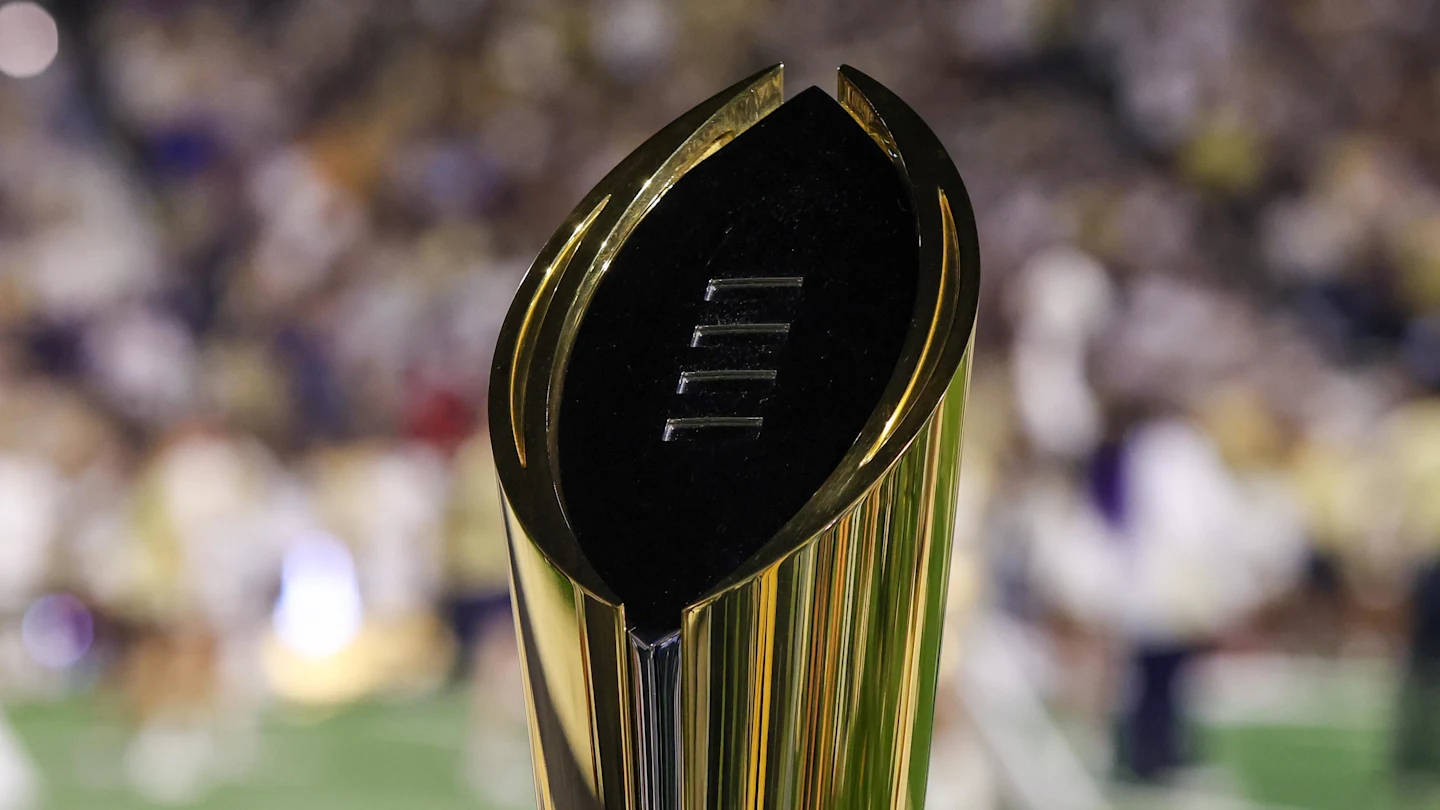
The College Football Playoff field is officially set with a bracket full of heavyweights. While the seeding placed the Big Ten champion at the very top, those within the sport see a different outcome on the horizon.
An anonymous poll conducted by The Athletic surveyed coaches from the Power 4 and Group of 5 conferences to gauge their expectations. The results showed that 50 percent of the coaches believe one program will hoist the trophy in Miami, edging out a season-long favorite that carried 42 percent of the vote.
This program received the majority vote despite spending most of the regular season outside the top five of the rankings. They finished ahead of the team that spent most of the season ranked No. 1 in the major polls.
The remaining ballots were split evenly between the No. 1 seed and another Big Ten team. Each of those programs received four percent of the total tally.
The confidence in the projected winner stems from a strong finish to the regular season. This team just avenged its only loss of the year with a dominant performance in the conference championship game.
Coaches cite roster maturity and championship pedigree as the decisive factors. The voting data suggest that individuals who scheme against these teams weekly value recent momentum over final seeding.
Coaches pick SEC powerhouse to win national title
The Georgia Bulldogs are the heavy favorite among the coaching fraternity. Georgia Bulldogs head coach Kirby Smart has his team positioned for a run at a third title in five years after decimating the Alabama Crimson Tide 28-7 to win the SEC. The poll reflects a belief that Georgia is peaking at the exact right moment.
One Group of 5 head coach noted that the current field lacks a truly dominant force compared to previous years. However, this coach highlighted the growth in Athens as the difference.
“Georgia’s O-line has matured, so that team has taken a jump,” the coach said. “The QB is a winner. Defensively, Georgia can play big and can match up. They are really good and they are battle-tested.”

That quarterback is Gunner Stockton. He has added a new dimension to the offense with his legs. Stockton has rushed for 442 yards this season. This is significantly more production on the ground than previous championship quarterbacks produced for the program. The offense also benefits from the late-season surge of running back Nate Frazier. He rushed for 181 yards against Mississippi State and has solidified the ground attack.
The defense has also returned to form under defensive coordinator Glenn Schumann. The unit recorded 12 sacks in the final five games of the season. An SEC defensive coordinator praised the team’s tactical efficiency.
“They look the cleanest,” the coordinator said. “They have been getting better as the season has gone on. They are going to stop the run and find your weaknesses. And they are good at using them against you.”

The primary challenger in the poll was the Ohio State Buckeyes. They spent most of the year at No. 1 before a loss to the Indiana Hoosiers. A Big Ten offensive assistant coach picked the Buckeyes because of their elite personnel on the outside.
“Ohio State. Georgia seems flawed,” the assistant said. “I know Indiana just beat them but I don’t think they can beat them twice. Ohio State was pretty banged up in that game. The wideouts will be healthier. On defense, Ohio State is really sound with great players.”
The Georgia Bulldogs will begin their pursuit of a third title in five years when they face the winner of the Ole Miss Rebels and Tulane Green Wave in the Sugar Bowl on Jan. 1.
Read more on College Football HQ

The College Football Playoff hasn’t quite started, but the transfer portal is heating up. The last week has seen some intriguing QB prospects make the portal dive. Here’s a rundown of the top five portal prospects (from On3.com’s rankings) and a quick thought on potential destinations for each.
Sam Leavitt, Arizona State QB
Leavitt remains On3’s top-ranked player in the portal. In 2024, he helped Arizona State reach the College Football Playoff by passing for 2,885 yards and 24 touchdowns and rushing for 443 yards and five more scores. His 2025 season was cut short by an injury in October, but in the portion of the year he could play, Leavitt passed for 1,628 yards and 10 scores in just seven games.
A week ago, we mentioned Indiana and LSU as possible destinations for Leavitt. Recent reports have confirmed both of those possibilities, with Oregon and Miami also mentioned. Of the four, it’s LSU that seems to have the dance card that’s filling up the quickest, with Trinidad Chambliss a potential nab for Lane Kiffin. Indiana and Oregon might now be the two most logical picks.
Dylan Raiola, Nebraska QB
Raiola was a five-star recruit for Matt Rhule, but after two up-and-down seasons, is looking to move on. He has passed for 4,819 yards and 31 touchdowns against 17 interceptions. Raiola showed improvement in 2025, throwing for 18 scores and six picks, but his season was shut down early due to injury.
Raiola has been tied to Louisville early in the process, as the Cardinals look to replace Miller Moss. Miami is another school frequently mentioned in conjunction with Raiola, as the Hurricanes look to replace Carson Beck, likely with a portal addition.
Brendan Sorsby, Cincinnati QB
Sorsby headed to Cincinnati from Indiana, leaving that program just before IU’s fortunes jumped. He has played well at Cincinnati, throwing for over 5,600 yards in the past two seasons with 45 touchdowns to 12 interceptions. Sorsby also rushed for over 1,000 yards and 18 scores over the past two seasons.
Early talk has linked Sorsby extensively with Texas Tech. No announcement has been made, but early indications are that he’s the likely successor to Behren Morton, and it’ll be a surprise if he ends up elsewhere.
DJ Lagway, Florida QB
A talented Florida passer, Lagway struggled with consistency in two up-and-down seasons as a Gator, ending up with over 4,100 yards and 28 touchdowns to 23 interceptions. His arm strength was legendary, but he often stacked bad decisions into some awful performances.
Lagway has been connected to Baylor early. His father played for the school, and it’s near his hometown. Another possibility is Clemson, where Lagway was recruited extensively and the Tigers could use a replacement for Cade Klubnik.
Drew Mestemaker, North Texas QB
Mestemaker exploded from out of nowhere. From being a high school backup to walking on at North Texas to becoming QB1 in 2025, he has always suprised. The redshirt freshman passed for 4,129 yards and 31 touchdowns this season.
Mestemaker might well follow his North Texas coach, Eric Morris, to Oklahoma State. A longer-shot possibility might be Tennessee, where Joey Aguilar will have to be replaced.

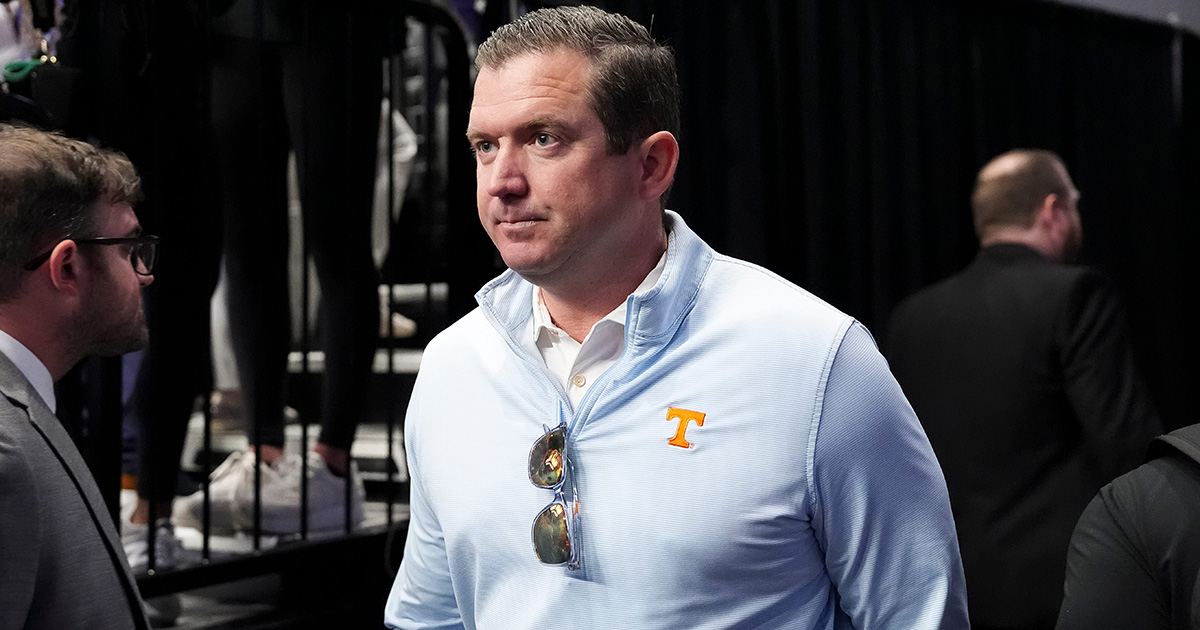
The Transfer Portal has yet to open, but there are already players announcing they’ll be entering. Oftentimes, that’s as coaches tamper with other rosters and offer improved NIL or revenue-sharing deals. Now, Tennessee Volunteers athletic director Danny White believes he has a solution.
White took to Twitter on Wednesday. There, he quoted a post from Dan Wolken of Yahoo Sports, saying, “Everyone in college sports knows the solution, they just don’t have the stomach (yet) to execute it.” Wolken himself was responding to a complaint from Missouri head coach Eli Drinkwitz regarding tampering. That solution, which White wanted to highlight, is collective bargaining with the players.
SUBSCRIBE to the On3 NIL and Sports Business Newsletter
This,” Danny White wrote. “There is a pathway to build a much healthier environment for college athletics within the current laws of our country – it’s called collective bargaining. It will be complicated, hard, and likely not perfect, but it’s far past time that we roll up our sleeves and do the work.”
Collective bargaining is relatively common in the United States and in professional sports. In essence, it’s when representatives, usually a union, negotiate on behalf of a group of employees with the employer. They do so to come up with legally binding agreements on contracts, wages, hours, working conditions, and other considerations.
This would be a seismic shift for college sports because of the reality that collective bargaining fundamentally involves employees. That’s a status that colleges and the NCAA have been very tentative to give to student-athletes.
There are a few benefits to collective bargaining. In particular, as the NCAA has lost court battles, forcing it to allow things like NIL and unlimited transfers, this would be a legal agreement that would set some rules in stone. For instance, the maximum that a program spends, how often players can transfer, and multi-year contracts could all be negotiated.
Danny White is far from the only one who has suggested that collective bargaining could help college sports and tampering, in particular. When the Transfer Portal was cut down to one window, former player Chase Daniel called it smart and called for collective bargaining. ESPN’s Rece Davis did the same, calling for collective bargaining to end tampering.
Separately, 23 different Power Four GMs backed collective bargaining in a closed-door Athletes.org meeting in August. That group, which didn’t have any names attached, “agreed in unison” that it would be the best path forward for college sports.
For his part, Danny White has been out in the open, pushing for major changes in college sports before. In the past, he’s shared a proposal to establish a national organization to employ and unionize athletes. Of course, those changes still appear to be a long way away.
NIL
Big 12’s Brett Yormark says college athletics needs legislation that’s stalled in Congress :: WRAL.com

ARLINGTON, Texas (AP) — Big 12 Commissioner Brett Yormark says legislation currently stalled in Congress is needed to regulate college athletics and put a stop to what he essentially calls uncapped spending for name, image and likeness in football.
“Let me be clear about this,” Yormark said Saturday before the Big 12 championship game between No. 5 Texas Tech and 11th-ranked BYU at the home of the Dallas Cowboys. “The House of Representatives must do what is right for over 500,000 student-athletes and pass the SCORE Act. We must protect their future, their well-being and their fair treatment. They deserve action and not excuses.”
An effort backed by the NCAA, the U.S. Olympic organization and the White House faltered in Congress this past week, with opponents raising concerns over the wide-reaching power it gives the governing body of college sports and its most powerful programs.
The NCAA and Division I conferences portray the legislation as codifying the rules created by the multibillion-dollar lawsuit settlement that allows college players to be paid, providing clarity that supporters say is long-needed.
House Republican leaders had planned to push the bill to a final vote this past week. But those plans were abruptly scrapped after a procedural vote to advance the bill nearly failed.
Yormark said he supports the revenue-sharing model that is part of the settlement and agrees with those who believe NIL spending on top of the $20.5 million could be destabilizing for college sports.
UCF coach Scott Frost said on national signing day this week he thinks college football is “broken” because of unregulated spending on players.
In 2017, Frost led the Golden Knights to a 13-0 record without a bid in the College Football Playoff, which included four teams at the time, before getting fired in the middle of a fifth unsuccessful season at Nebraska, his alma mater. UCF, which was in the American Conference for Frost’s first stint but has since joined the Big 12, went 5-7 in his return this year.
“I will be spending time with the commissioners next week on some of the challenges and issues that face collegiate athletics, and we’re working through them,” Yormark said. “But I want you to understand that nothing’s broken in this system. And I respect Scott. But nothing’s broken. It’s all about progress, not perfection. There is no perfection in any industry, but there is progress, and we’re making great progress.”
Yormark is ready for 16-team playoff
Yormark said he believes in the playoff model with five automatic bids, even if it might cost the Big 12 a second team this season. That scenario also fits his opinion that the CFP needs to be 16 teams — with 11 at-large bids — instead of the current 12.
“I believe that on a percentage basis, when there’s 136 FBS (bowl subdivision) schools, the number 12 is too low,” Yormark said. “We need more access for all the right reasons. And I’m very consistent about that.”
Yormark indicated he doesn’t think the playoff will expand for 2026, even with an extra eight weeks to try to reach an agreement. The new deadline is Jan. 23.
“I can tell you we’re working on it, but we can’t rush it,” Yormark said. “A lot goes into it. It’s not just about picking a number. You also have to look through a filter and say what are the unintended consequences of those decisions, which is what the commissioners and myself are working on. I’m not overly optimistic we’re going to be able to change anything for next year. But we’re in the lab.”
___
Get poll alerts and updates on the AP Top 25 throughout the season. Sign up here and here (AP News mobile app). AP college football: https://apnews.com/hub/ap-top-25-college-football-poll and https://apnews.com/hub/college-football
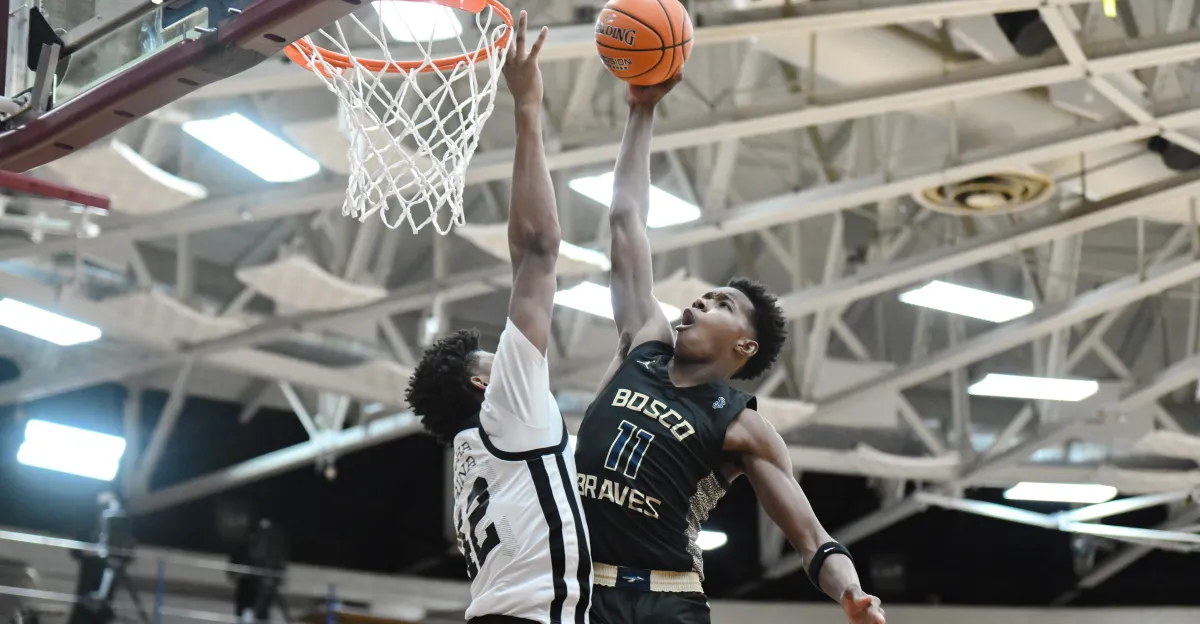
Collins, a 6-foot-8, 200-pound forward from Bellflower, California, is widely regarded as one of the premier frontcourt prospects in the country. His blend of athleticism, scoring ability, and defensive versatility made him a major priority for Kentucky head coach Mark Pope and his staff as they work to build future recruiting classes.
According to Jacob Polacheck of KSR, Collins’ recruitment is being heavily influenced by NIL structure and contract details, a growing trend at the top of the recruiting landscape. That reality was addressed publicly earlier this month by Kentucky athletic director Mitch Barnhart during Will Stein’s introductory press conference as the Wildcats’ new football head coach.
Barnhart pushed back strongly against the perception that Kentucky is at an NIL disadvantage, saying, “Enough about ‘have we got enough?’ We’ve got enough.” He also emphasized that Kentucky will not compromise its standards to land recruits. “We’ve got to do it the right way,” Barnhart said. “We’re not going to break the rules. That’s flat-out.”
While Kentucky no longer holds a crystal ball prediction for Collins, the Wildcats are not out of the race. However, his recruitment now appears far more fluid, underscoring the increasingly complex balance between elite talent, NIL expectations, and long-term program philosophy in modern college basketball.

Tom Lubnau, Scott Ortiz: Like It Or Not, NIL Money Is Critical To UW’s Future

Utah State Volleyball Quartet Named to CSC Academic All-District Team

Ptacek, Zelenovic Named AVCA All-Americans

Colorado Volleyball Pin Attacker Ana Burilovic Named AVCA All-American

Washington Nationals continue youth movement; set to hire Phillies’ Ani Kilambi, 31, as GM: Source

How Smart Technology Is Transforming Online Gaming

Half of coaches polled have college football powerhouse winning national championship

Cassidy Hartman earns AVCA All-American Honorable Mention staus

$2.3 Trillion Giant Makes Stunning NASCAR Power Play With Chase Elliott for 2026

Kentucky Volleyball Final Four Watch Party Set for Thursday at Drake’s Lansdowne – UK Athletics

Florida Volleyball Adds Three Transfers to 2026 Roster

Predicting landing spots for the Top 5 college football transfers (Dec. 17)

“I’m Lucky To Be At A Volleyball School”

Louisell Named AVCA All-American – James Madison University Athletics

No. 3 Volleyball Faces No. 1 Pittsburgh in Final Four – Texas A&M Athletics

First Tee Winter Registration is open

Fargo girl, 13, dies after collapsing during school basketball game – Grand Forks Herald

CPG Brands Like Allegra Are Betting on F1 for the First Time

F1 Las Vegas: Verstappen win, Norris and Piastri DQ tighten 2025 title fight

Volleyball Recaps – November 18

Sycamores unveil 2026 track and field schedule

Two Pro Volleyball Leagues Serve Up Plans for Minnesota Teams

Utah State Announces 2025-26 Indoor Track & Field Schedule

Redemption Means First Pro Stock World Championship for Dallas Glenn

Jo Shimoda Undergoes Back Surgery

Texas volleyball vs Kentucky game score: Live SEC tournament updates

SoundGear Named Entitlement Sponsor of Spears CARS Tour Southwest Opener

Bowl Projections: ESPN predicts 12-team College Football Playoff bracket, full bowl slate after Week 14

How this startup (and a KC sports icon) turned young players into card-carrying legends overnight

Robert “Bobby” Lewis Hardin, 56

 NBA Legend Michael Jordan to Join NBC Sports as Special Contributor
 Why a rising mid-major power with an NCAA Tournament team opted out of revenue-sharing — and advertised it
 Falcons mailbag
 Portal Update – Basketball and Gymnastics Take Hits
 has always dreamed in Mercurial. Now his initials are on the boots.
The new Kyl…
has always dreamed in Mercurial. Now his initials are on the boots.
The new Kyl…
-
 Motorsports3 weeks ago
Jo Shimoda Undergoes Back Surgery
-
 Motorsports1 week ago
SoundGear Named Entitlement Sponsor of Spears CARS Tour Southwest Opener
-
 NIL2 weeks ago
Bowl Projections: ESPN predicts 12-team College Football Playoff bracket, full bowl slate after Week 14
-
 Rec Sports3 weeks ago
How this startup (and a KC sports icon) turned young players into card-carrying legends overnight
-
 Rec Sports3 weeks ago
Robert “Bobby” Lewis Hardin, 56
-

 Motorsports3 weeks ago
Pohlman admits ‘there might be some spats’ as he pushes to get Kyle Busch winning again
-
Sports3 weeks ago
Wisconsin volleyball sweeps Minnesota with ease in ranked rivalry win
-

 Motorsports1 week ago
Donny Schatz finds new home for 2026, inks full-time deal with CJB Motorsports – InForum
-

 Motorsports3 weeks ago
Increased Purses, 19 Different Tracks Highlight 2026 Great Lakes Super Sprints Schedule – Speedway Digest
-

 Rec Sports2 weeks ago
How Donald Trump became FIFA’s ‘soccer president’ long before World Cup draw