
Rec Sports
Forfeits in high school sports are raising concerns for the future of athletics in Nebraska


The Cougars took their first and only win of the season — officially 1-0 in the record books.
Greg Mays, author of the Nebraska high school sports history newsletter Suiting Up Varsity, said he researched the factors determining success in activities.
“Schools with high free and reduced lunch kids — in other words, lots of poverty — were not going to have the kind of success as schools that didn’t have a lot of those kids,” Mays said.
About 86% of students in Walthill, which is located on the Omaha Reservation, qualify for free or reduced lunch. That’s well above the statewide average of 52%, according to Nebraska Department of Education data.
Walthill, a Class D2 program, forfeited four games this season and finished 0-8. Officials from the school district declined to comment.
One school administrator agreed that economic challenges make participation a challenge.
Earlier this month in Class C2, Tekamah-Herman forfeited its game with Archbishop Bergan because of low participation numbers and injuries.
Tekamah-Herman superintendent Brad Kjar said schools with more “demographic challenges” have more hurdles to success.
“I do think a variety of demographic factors come into play, in terms of participation rates,” Kjar said, “when you start looking at things like socio-economically challenged students, or English language learners, special education students.”
With a 35% free or reduced lunch rate, that’s unlikely the biggest hurdle at his school.
Tekamah-Herman officials have publicly considered a move down to Class D1.
“We have considered opting down to eight-man football with our roster size currently at 23,” Kjar said. “The average D1 roster size is 26, and so we’re actually beneath that average D1 roster.”
Overall, the participation rate for football “is probably below average” at Tekamah-Herman, Kjar said.
But still, Mays said economics of a school should be a factor in classification.
“If we considered those things, we’d have better classifications,” Mays said. “And in football, we need to do better classifications.”
Economic inequality in sports will likely continue with club sports in the U.S. expanding, he said.
“You see a lot of youth sports programs that are really just designed to get money from parents, for them to buy opportunities that their kids get and other kids don’t get,” Mays said.
Walthill and Tekamah-Herman are far from alone in the participation problem.
Each week, schools from eight-man to Class A cancel games, usually citing health and safety concerns stemming from a lack of available players.
As of Oct. 20, here are the number of forfeited games this season by class, according to the NSAA’s schedules:
- Class A: 3* (3 schools)
- Class B: 0
- Class C1: 0
- Class C2: 8 (2 schools)
- Class D1: 0
- Class D2: 8 (4 schools)
- Class D6 (six-man): 8 (3 schools)
*This number includes Millard South’s forfeit to a Nevada high school for using an ineligible player.
One prominent scheduling dissolution happened before the season even kicked off.
In August, Oakland-Craig Senior High, which won the 2019 Class C2 state championship, announced it would not field a varsity football team for the upcoming season. Heading into the school year, the Knights had appeared in the playoffs for 17 consecutive seasons, dating back to 2008.
Many people wondered why the storied program had to cancel, Mays said.
“Can’t they just do an emergency co-op with somebody nearby?” Mays said. “We don’t allow that anymore, because, honestly, I think we fear that people would do it for competitive reasons, instead of football survival reasons.”
Oakland-Craig officials declined an interview request for this story.
Schedules are set two years in advance, and the cooperative deadline is Nov. 1 for the next two-year scheduling period, Nebraska School Activities Association assistant director of football Nate Neuhaus said.
“We are on a scheduling timeline where we collect enrollment numbers, declarations, co-ops, so that we can post classifications and district assignments in December,” Neuhaus said.
By January, the NSAA will set the new schedules through 2027.
Predicting which class will suit a school that far in advance is difficult, especially for smaller schools, Mays said.
“They set those deadlines so far in advance that you’re guessing,” Mays said. “It’s hard to figure out what a sophomore is going to do, when you’re deciding (which class to join), when he’s only an eighth grader.”
Injuries and players transferring can make matters worse for the smallest 11-man schools, Mays said.
Football is the only sport where the NSAA sets the schedules, rather than school administrators, Neuhaus said. That decision, approved and celebrated by the schools several years ago, started when schools had a difficult time filling up schedules on their own, Mays said.
Another small school struggling to compete, despite a rich tradition, is David City Aquinas. The program is fifth in the state with eight state championships all-time.
As the head coach for 46 years, Ron Mimick has led the Monarchs to seven of those titles. One of the smallest 11-man schools, “we’ve lost basically about a third of our enrollment in 25 years,” Mimick said. And the football program has been affected, with a 0-8 record this season.
The rate of participation is steady at Aquinas, Mimick said, but fewer students are applying to the parochial school, compounded by population loss and increasing tuition. Schools in western Nebraska likely deal with even sharper enrollment declines, Mimick said, noting that David City is about 50 minutes from Omaha and Lincoln.
Now the perennial Class C2 powerhouse is likely going to drop down to eight-man football.
“I think when we go to eight-man, we’ll probably attract another two or three boys to come out,” Mimick said.
Creating fun youth programs, combined with strong parental support, will improve the participation across the state, the longtime coach said.
Participation numbers
With overall participation dropping for football, Neuhaus said, “kids have other opportunities. Participating in sports isn’t always the number one priority anymore.”
Several coaches and administrators agreed with Neuhaus, saying video games and social media distracts from school activities.
In a slightly different view, Mays said kids also have more school activities to choose from than ever before.
“We’re offering more and more activities in these schools,” Mays said, “and the fact that that spreads kids thinner is a good problem.”
As an English teacher at Hastings High School, Mays said students who participate in activities do better in school.
With more options for students inside and outside of school, mixed with increasing awareness of the long-term impact of concussions from football, fewer kids are giving the sport a try.
Though football cancellations are not tracked by the NSAA, the organization collected participation data for the last two decades.
The number of high schoolers playing eight-man football has remained level dating back to the early 2000s. But nearly 3,000 fewer kids are playing 11-man football at Nebraska high schools in the last 20 years.
Neuhaus said the trend is easy to explain.
“Many times in the state of Nebraska, you might see participation numbers in eight-man go up,” Neuhaus said. “Well, that’s because there’s not more kids going out for eight-man, but schools are changing from 11-(man) to eight-man.”
Many teams are dropping down a class, not just due to declining enrollment, but to sustain their programs.
A total of 13 teams elected to play down a class ahead of the previous scheduling period, including in six-man. That means those teams were not eligible for the postseason last year, and eight of those teams are still not eligible this year.
In some cases, schools are not deterred by postseason penalties.
Any program that has canceled a regular season game won’t be allowed to compete in the playoffs, Neuhaus said. Even though it was in playoff contention, Lincoln High School forfeited its contest with juggernaut Millard South earlier this month, citing health and safety concerns.
Millard South, which is ranked No. 1 in the state, has a 37% free or reduced lunch rate. The Links have a 66% rate.
Lincoln Public Schools officials declined an interview request about Lincoln High’s forfeit.
A postseason ban is not the only attempted roadblock to forfeits. The NSAA also requires an away team to pay the home school $1,000 for lost revenue, if the traveling team forfeits, Neuhaus said.
But, scheduling changes are in the works.
Under a new proposal recently approved by member schools, Class A will drop district assignments. Those previously determined who a school would primarily compete against in a two-year period.
“At the Class A level, the districts were determined based upon your previous two-year average wild card points,” Neuhaus said.
That created some uneven contests where the top team in the district might be a lot better than the last-place team, he added.
Class B will be adding a new, so-called “emerging district,” Neuhaus said. That’s where the bottom teams from the previous two-year cycle will compete for one playoff spot, in hopes of making the regular season more competitive.
No new proposals addressing scheduling, participation or cancellations are on the table at this time.
The NSAA doesn’t vote on rules and proposals. Those decisions are written and voted on by school administrators.
Creating a one-size-fits-all solution to fixing cancellations is impossible, Neuhaus said, because each community has unique challenges.
“There’s been forfeits for years upon years upon years. I can’t make anybody play. We can’t make anybody play, unfortunately. But we can certainly assist with the classification process and assist schools in making good decisions that they’re playing at the appropriate level for their participation numbers or their program level,” Neuhaus said. “But to think that we’re ever going to completely prevent forfeits, that’s a long shot.”
The state wrote the NSAA constitution nearly 100 years ago, Mays said, suggesting it could be time to update that guiding document.
Homecoming king without a chance to play
Coy Wickersham’s mom, Kerry, said her twin sons have played football since the third grade.
“Neither one of my boys will probably go to college and play football, so they know this is the end for them,” Kerry Wickersham said. “They love the sport, so every game day they’re pretty hyped up and excited to go play.”
Parents need to encourage their kids to compete, even when it’s difficult, she said.
“I hope all parents, whether it’s Verdigre-Niobrara or any town, understand that it’s important to support your kids, support the schools, support everything that they’re doing,” Kerry Wickersham said. “Even if you’re able to play with the second string, it’s still important to show up.”


3333520018
Mozilla/5.0 (Macintosh; Intel Mac OS X 10_15_7) AppleWebKit/537.36 (KHTML, like Gecko) Chrome/140.0.0.0 Safari/537.36
e83844fd1b776bc2db1cce187b30b944da202d60
1


Key Takeaways
- Little League retired its 30-year ASAP program to launch Little League SAFE and SAFE to Play on January 5, 2026
- SAFE Summary Builder replaces manual safety plan uploads with an automated, customizable reporting tool for leagues
- Leagues completing compliance requirements qualify for a 15% AIG insurance credit and access to Musco-funded facility grants
- Four safety pillars now formalize Little League’s approach: child protection, physical safety, mental well-being, and risk management
- District administrators can earn up to $800 in AIG-supported incentives for promoting safety program participation
Replacing Three Decades of Safety Infrastructure
Little League International retired its A Safety Awareness Program (ASAP) after nearly 30 years of operation, replacing it with a two-part system designed to centralize resources and measure compliance more systematically. The transition reflects a shift from awareness-based programming to measurable participation standards.
“Little League SAFE provides education, tools, and resources to help leagues build and maintain safer programs, while SAFE to Play establishes annual compliance requirements and a recognition structure that measures participation and rewards achievement,” said Joy Reynolds McCoy, Little League Senior Vice President and Chief Legal Officer.
The organization built the new framework around four core areas: child protection, physical safety, mental well-being, and local league risk management. Each area now has dedicated resources accessible through a central portal at LittleLeague.org/SAFE, including the Child Protection Policy, JDP background check information, and state-specific guidance.
New Digital Tools Streamline Safety Documentation
Little League introduced the SAFE Summary Builder as the primary change to league-level administration. The guided online tool generates a customized safety summary based on league input, eliminating the previous requirement for manual safety plan uploads. Leagues can share the resulting document with volunteers and parents.
The organization also launched two free training courses. The Safety Awareness Training covers core safety principles, risk management, and best practices for all volunteers. The First Aid Awareness Training focuses on injury prevention and first aid response protocols.
Little League redesigned its Annual Facility Survey to integrate directly with each league’s SAFE Summary. The updated version generates a summary report with practical feedback and recommended actions for improving field and facility safety. Leagues must complete both the SAFE Summary Builder and Annual Facility Survey to establish baseline participation in the SAFE to Play program.
Insurance Credits and Grant Funding Tied to Compliance
The SAFE to Play component functions as Little League’s annual compliance and recognition program. Leagues that complete the required SAFE Summary Builder and Annual Facility Survey through the Little League Data Center qualify for a 15% credit on accident insurance premiums purchased through the AIG Accident Insurance Program.
Leagues that meet baseline compliance requirements become eligible to apply for funding through the Musco-Funded SAFE to Play Grant Program. In 2026, grant funding covers facility improvements that enhance safety and playing conditions, plus purchases of automated external defibrillators for emergency preparedness.
The program prioritizes a range of leagues, including those demonstrating strong existing safety practices and those facing resource constraints. Completion of additional training courses such as Safety Awareness, First Aid Awareness, and Diamond Leader increases a league’s grant eligibility.
District-Level Incentives Support Program Adoption
Little League established District Incentives supported by AIG to encourage active communication and promotion of safety initiatives. District administrators who help local leagues complete safety requirements can earn up to $800 per district through three separate achievement levels.
The incentive structure aims to build oversight capacity at the district level and foster accountability throughout the program. District administrators serve as the primary communication channel between Little League International and local leagues, making their engagement critical to program adoption rates.
Formalizing Safety as Measurable Infrastructure
Little League’s shift from ASAP to SAFE represents a move toward quantifiable participation standards rather than purely educational programming. The organization now ties financial incentives, insurance benefits, and grant eligibility directly to completion of digital documentation tools and facility assessments.
The four-pillar framework standardizes expectations across all leagues while the SAFE Summary Builder creates a consistent reporting format. By centralizing resources at LittleLeague.org/SAFE and linking compliance to tangible benefits, Little League has positioned safety as both a cultural priority and an administrative requirement with measurable outcomes.
via: Little League
YSBR provides this content on an “as is” basis without any warranties, express or implied. We do not assume responsibility for the accuracy, completeness, legality, reliability, or use of the information, including any images, videos, or licenses associated with this article. For any concerns, including copyright issues or complaints, please contact YSBR directly.
About Youth Sports Business Report
Youth Sports Business Report is the largest and most trusted source for youth sports industry news, insights, and analysis covering the $54 billion youth sports market. Trusted by over 50,000 followers including industry executives, investors, youth sports parents and sports business professionals, we are the premier destination for comprehensive youth sports business intelligence.
Our core mission: Make Youth Sports Better. As the leading authority in youth sports business reporting, we deliver unparalleled coverage of sports business trends, youth athletics, and emerging opportunities across the youth sports ecosystem.
Our expert editorial team provides authoritative, in-depth reporting on key youth sports industry verticals including:
- Sports sponsorship and institutional capital (Private Equity, Venture Capital)
- Youth Sports events and tournament management
- NIL (Name, Image, Likeness) developments and compliance
- Youth sports coaching and sports recruitment strategies
- Sports technology and data analytics innovation
- Youth sports facilities development and management
- Sports content creation and digital media monetization
Whether you’re a sports industry executive, institutional investor, youth sports parent, coach, or sports business enthusiast, Youth Sports Business Report is your most reliable source for the actionable sports business insights you need to stay ahead of youth athletics trends and make informed decisions in the rapidly evolving youth sports landscape.
Join our growing community of 50,000+ industry leaders who depend on our trusted youth sports business analysis to drive success in the youth sports industry.
Stay connected with the pulse of the youth sports business – where industry expertise meets actionable intelligence.
Sign up for the biggest newsletter in Youth Sports – Youth Sports HQ – The best youth sports newsletter in the industry
Follow us on LinkedIn
Follow Youth Sports Business Report Founder Cameron Korab on LinkedIn
Are you a brand looking to tap into the world’s most passionate fanbase… youth sports?
Introducing Play Up Partners, a leading youth sports marketing agency connecting brands with the power of youth sports. We specialize in youth sports sponsorships, partnerships, and activations that drive measurable results.
About Play Up Partners
Play Up Partners is a leading youth sports marketing agency connecting brands with the power of youth sports. We specialize in youth sports sponsorships, partnerships, and activations that drive measurable results.
Why Sponsor Youth Sports?
Youth sports represents one of the most engaged and passionate audiences in sports marketing. With over 70 million young athletes and their families participating annually, the youth sports industry offers brands unparalleled access to motivated communities with strong purchasing power and loyalty.
What Does Play Up Partners Do?
We’ve done the heavy lifting to untangle the complex youth sports landscape so our brand partners can engage with clarity, confidence, and impact. Our vetted network of accredited youth sports organizations (from local leagues to national tournaments and operators) allows us to create flexible, scalable programs that evolve with the market.
Our Approach
Every partnership we build is rooted in authenticity and value creation. We don’t just broker deals. We craft youth sports marketing strategies that:
- Deliver measurable ROI for brand partners
- Create meaningful experiences for athletes and families
- Elevate the youth sports ecosystem
Our Vision
We’re positioning youth sports as the most desirable and effective platform in sports marketing. Our mission is simple: MAKE YOUTH SPORTS BETTER for athletes, families, organizations, and brand partners.
Common Questions About Youth Sports Marketing
Where can I sponsor youth sports? How do I activate in youth sports? What is the ROI of youth sports marketing? How much does youth sports sponsorship cost?
We have answers. Reach out to info@playuppartners.com to learn how Play Up Partners can help your brand navigate the youth sports landscape.
Youth sports organizations: Interested in partnership opportunities? Reach out to learn about our accreditation process.


The Reflector
Lawmakers from the 18th Legislative District are sponsoring legislation aimed at protecting children participating in youth sports programs from abuse and sexual predators.
House Bill 2180, sponsored by Rep. John Ley, R-Vancouver, and endorsed by Rep. Stephanie McClintock, R-Vancouver, would require background checks for all youth sports coaches and others who manage or supervise youth sports programs, according to a Washington State House Republicans news release.
The proposal would also direct the Department of Children, Youth and Families to develop mandatory training on reporting child abuse tailored to youth sports coaches. Youth sports organizations would be required to complete the training, and coaches would be designated as mandatory reporters.
“This legislation was prompted after concerned parents encountered a convicted sex offender who failed to disclose his conviction while seeking to coach their children,” Ley said in the release. “By requiring background checks — paid for by the individual or organization — we give parents and program administrators better tools to protect kids.”
The bill would require organizations to submit background checks through the Washington State Patrol and would prohibit the hiring of individuals convicted of crimes against children or other persons, the press release stated.
The bill will be reviewed during the 2026 legislative session, which begins Monday, Jan. 12.
Rec Sports
JASH Celebrates Astros’ Signing of Tatsuya Imai, a Milestone in U.S.–Japan Sports Exchange — Japan-America Society of Houston
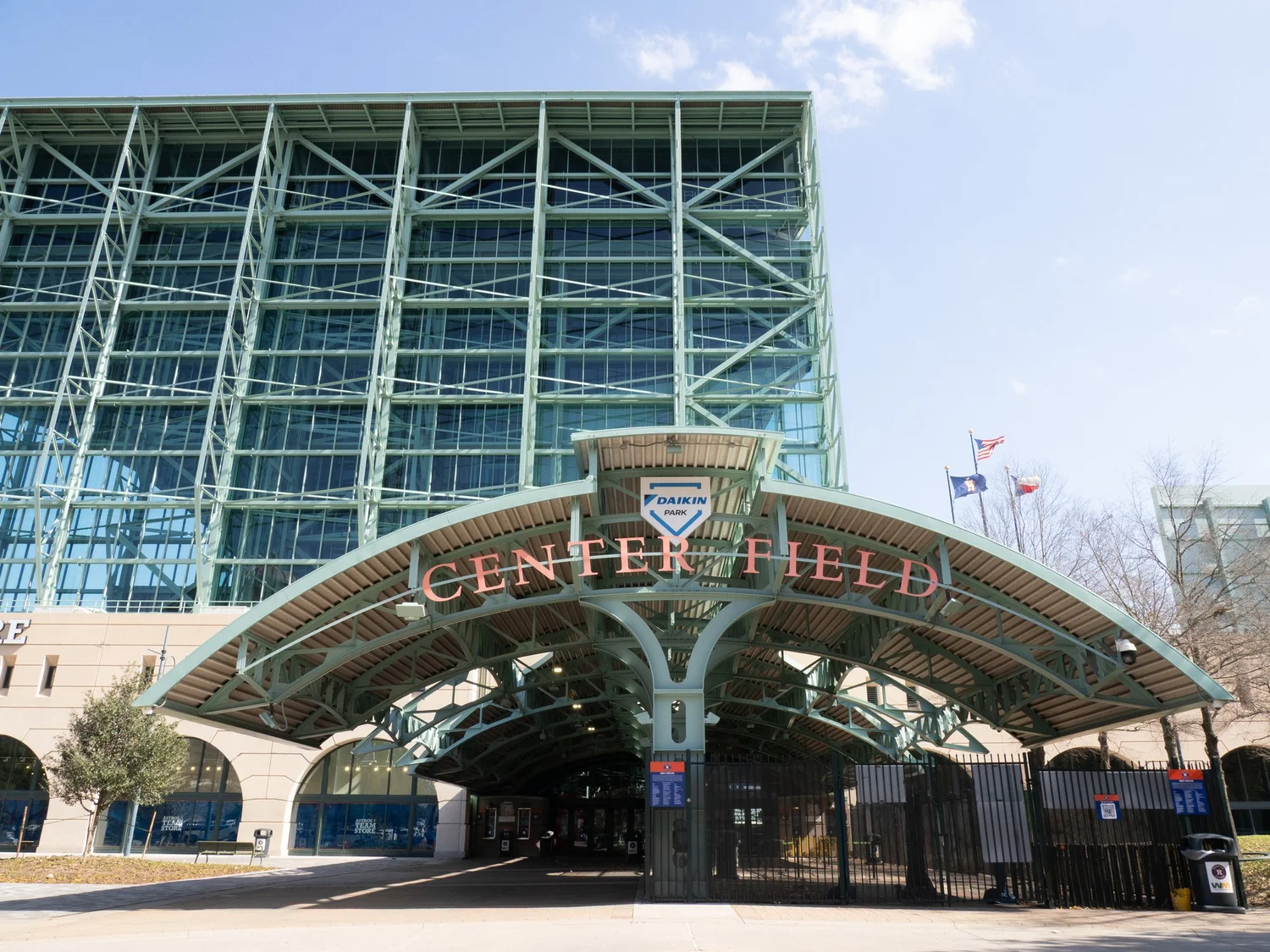
The Japan-America Society of Houston (JASH) warmly congratulates the Houston Astros on the signing of Japanese pitcher Tatsuya Imai, marking an exciting new chapter for both the Astros organization and the enduring relationship between Houston and Japan.
Imai-senshu’s arrival in Houston is more than a roster move—it is a powerful example of how sport continues to serve as a bridge between cultures. Baseball has long been a shared passion of the United States and Japan, fostering mutual respect, admiration, and people-to-people connections across generations.
The timing of this signing is especially meaningful. The year 2026 represents a historic milestone for both nations, with the United States commemorating its 250th anniversary and Japan marking the 100th anniversary of the Showa era. It was during the Showa period that baseball became deeply embedded in Japanese society, evolving into a national sport and a cultural touchstone. Imai-san’s journey from Japan to Major League Baseball reflects this rich legacy and the sport’s continuing role in strengthening bilateral ties.
Houston has long been a gateway for U.S.–Japan exchange, and the Astros’ global presence further amplifies the city’s role as a hub for international connection. Imai-san’s signing underscores the Astros’ commitment to excellence on the field while embracing the global nature of the game.
As an organization dedicated to advancing understanding and friendship between Japan and the United States, JASH celebrates this moment with pride. We look forward to welcoming Imai-san to Houston, cheering him on throughout the season, and continuing to support the many ways cultural exchange enriches our community—on and off the field.
Please join us in welcoming Tatsuya Imai to Houston and wishing him great success with the Astros.

The North Colonie community is mourning the loss of Erin Couture, wife of Shaker High School Dean Garrett Couture, who passed away unexpectedly.
Erin, a former employee at Shaker Middle and High Schools, was cherished by students and staff, the district said in an email to parents. She leaves behind her husband and two young sons, who are students in the district. Garrett Couture is an active figure in youth sports, coaching football and lacrosse, with Erin’s support always by his side.
The district will hold a half-day session on Thursday, Jan. 8, to allow staff to support the Couture family during services. Shaker High School will dismiss at 11:30 a.m., Shaker Middle School at 12:30 p.m., and elementary schools at 1:30 p.m.
You can read Couture’s obituary here.
A gofundme has been set up for the family. You can donate here
Jan. 5, 2026, 4:02 a.m. ET
One of the toughest transitions for basketball players can be from the youth level to high school varsity. Each season, however, a group of freshmen not only make the transition, but they impact their new team right away.
This winter, there have again been both boys and girls freshmen scoring for their varsity teams and earning starting spots throughout District 10.
Here is a list of 15 freshmen making an impact through the first half of the season.
Fans can vote for their choice as the District 10 Breakout Freshman of the Year at the midway point of the season through Thursday at noon.
Kris Blue, Farrell – Blue has emerged as a leader for the Steelers and is a big reason why Farrell could compete for a D-10 girls basketball title. She is averaging 11.2 points per game as a perfect complement to 1,000-point scorer Janiya Daniels.
Kenlyn Masters, Sharpsville – The Blue Devils had a strong girls basketball team back this winter and Masters is adding to the depth. She is scoring 10.8 points per game and is on her way to a big career at Sharpsville.
Kymani Vine, Eisenhower – The big story around the Knights was the consolidation with Youngsville, but Vine has been a story as well. He is averaging 16.5 points per game as a dominant forward for the Knights.
Alba Potter, McDowell – There was plenty of hype around Potter coming into the season after a big offseason on the AAU circuit. She is not only scoring 10.4 points per game for the Trojans but she is also a top 3-point shooter in D-10 with 22 makes on the season so far.
Madison Mallek, Greenville – The forward has added depth to the Trojans’ inside game this season. She is scoring 9.3 points per game and is a tough rebounder as well.
Nolan Golub, West Middlesex – The quick point guard is a staple for the Big Reds this season. He is scoring 12.9 points per game while running the offense as well.
Leah Nies, Cathedral Prep – Nies is another freshman that had a lot of hype surrounding her. The speedy guard has responded with 8.6 points per game and is a threat from the 3-point line as well.
Riley Coblentz, Iroquois – The youth movement is going on at Iroquois, and Coblentz is scoring 8.5 points per game and emerging as a leader for Iroquois.
Jhytarion Moffett, Meadville – Moffett is part of a youth movement for the Bulldogs. He is averaging 5 points per game and has played in every game this season to add depth for Meadville.
Mia Washburn, Cathedral Prep – It’s not common practice to have two athletes from the same team on the same poll, but Washburn is also having a big freshman season for the Ramblers. She is also averaging 8.6 points per game and is a threat from the 3-point line.
Abbigail Walmer, Cambridge Springs – The Blue Devils are rebuilding the program and Walmer is leading the way. She is averaging 7.6 points per game and has knocked down 20 3-pointers this season.
Kyjuan Campbell, Farrell – With a loaded team back this winter, Campbell has forced his way into playing time with solid contributions for the Steelers. He is scoring 5 points per game off the bench.
Ella Thompson, Harbor Creek – Thompson is in the next wave of impressive forwards in Erie County as she is a solid scorer and talented rebounder. She is averaging 7.6 points per game.
Talia Bianconi, Grove City – Bianconi has picked up the slack with the Eagles losing standout Maddie Osborn for the season to injury. Bianconi is scoring 7.4 points per game to give Grove City another scoring option.
Liam Hanson, Eisenhower – Hanson is another standout freshman for the Knights. He is scoring 11.5 points per game and is on his way to a big career for Eisenhower.
Contact Tom Reisenweber at treisenweber@timesnews.com. Follow him on X @ETNreisenweber.

Men’s Volleyball Sweeps Weekly Awards

Clarksville High senior volleyball player earns TSWA All-State honors

UK Government backs British Esports and EFL digital skills pilot

YSU Mid Major Invitational Presented by Southwoods Health Pre-Meet Information

Trinidad Chambliss addresses if he considered following Lane Kiffin, transferring to LSU

Zeigler Automotive renews sponsorship with NASCAR driver Carson Hocevar

Spartan Club Athletes of the Week for Jan. 5: Anand Dharmarajan & Mya Hartjes

Trinidad Chambliss strikes NIL deal with Ole Miss, awaiting NCAA decision

FSC Athletics Update – January 5

All 6 Wisconsin volleyball outgoing transfers have found new homes

Quinasia Abercrombie Named PBC Women’s Basketball Player of the Week

Trinidad Chambliss strikes NIL deal with Ole Miss, awaiting NCAA decision

Walton Named A-10 Player of the Week for Third Time

Tony Stewart named Chili Bowl grand marshall

Daren Lucas Named President of the Motorsports Hall of Fame of America

SoundGear Named Entitlement Sponsor of Spears CARS Tour Southwest Opener

Donny Schatz finds new home for 2026, inks full-time deal with CJB Motorsports – InForum

David Blitzer, Harris Blitzer Sports & Entertainment

DeSantis Talks College Football, Calls for Reforms to NIL and Transfer Portal · The Floridian
Elliot and Thuotte Highlight Men’s Indoor Track and Field Season Opener

#11 Volleyball Practices, Then Meets Media Prior to #2 Kentucky Match

Rick Ware Racing switching to Chevrolet for 2026

Colleges ponying up in support of football coaches, programs
West Fargo volleyball coach Kelsey Titus resigns after four seasons – InForum

Nascar legal saga ends as 23XI, Front Row secure settlement

Maine wraps up Fall Semester with a win in Black Bear Invitational

Ross Brawn to receive Autosport Gold Medal Award at 2026 Autosport Awards, Honouring a Lifetime Shaping Modern F1

Stempien to seek opening for Branch County Circuit Court Judge | WTVB | 1590 AM · 95.5 FM

Sunoco to sponsor No. 8 Ganassi Honda IndyCar in multi-year deal

Women’s track and field athletes win three events at Utica Holiday Classic





-
 Motorsports3 weeks ago
Ross Brawn to receive Autosport Gold Medal Award at 2026 Autosport Awards, Honouring a Lifetime Shaping Modern F1
-

 Rec Sports2 weeks ago
Princeton Area Community Foundation awards more than $1.3 million to 40 local nonprofits ⋆ Princeton, NJ local news %
-

 NIL3 weeks ago
Kentucky AD explains NIL, JMI partnership and cap rules
-

 Sports3 weeks ago
Beach Volleyball Unveils 2026 Spring Schedule – University of South Carolina Athletics
-

 Sports2 weeks ago
Badgers news: Wisconsin lands 2nd commitment from transfer portal
-

 Sports2 weeks ago
Is women’s volleyball the SEC’s next big sport? How Kentucky, Texas A&M broke through
-
 NIL3 weeks ago
College football program loses 25 players to transfer portal
-
 Sports3 weeks ago
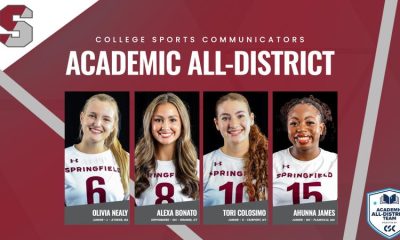
Four From Women’s Volleyball Named to College Sports Communicators Academic All-District Team
-

 Rec Sports3 days ago
Five Youth Sports Trends We’re Watching in 2026
-

 Rec Sports3 weeks ago
Refugee-Focused Youth Sport Initiatives : Moving for Change