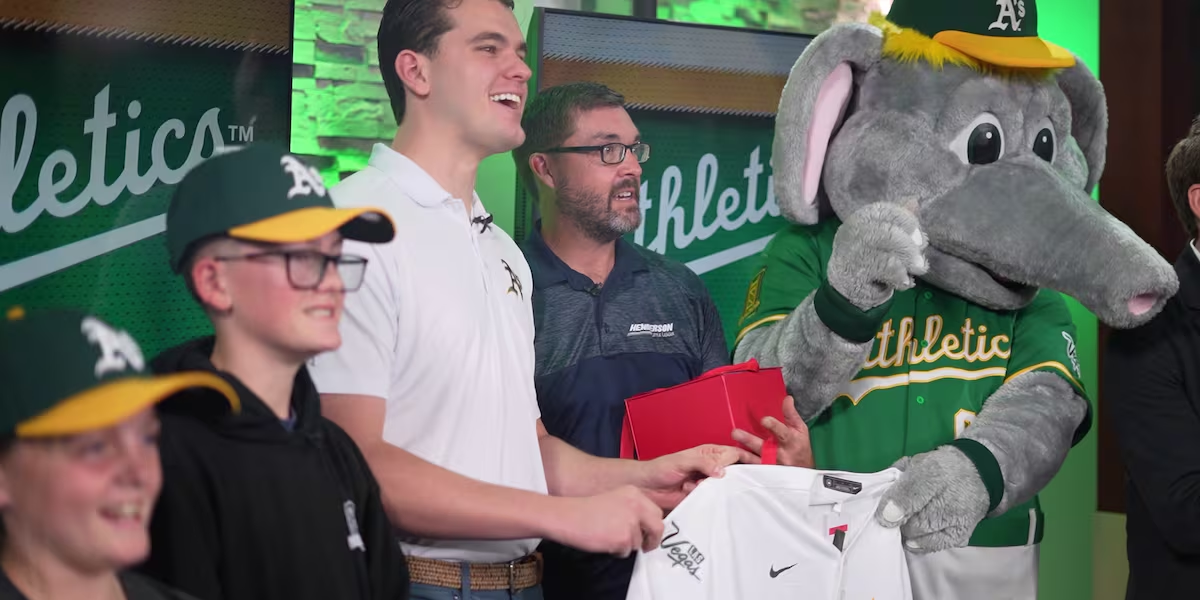
LAS VEGAS (FOX5) — FOX5’s Surprise Squad partnered with the Las Vegas Athletics for the first time to surprise a local Little League leader nominated by his 14-year-old son.
Jason Caldwell, president of Henderson Little League, was invited to FOX5 studios under the pretense of an interview about youth sports. Instead, he received recognition and financial assistance from FOX5 and the incoming Las Vegas Major League Baseball team.
Caldwell’s children wrote to the FOX5 Surprise Squad to nominate their father.
“He coaches baseball and everything. I thought it was a perfect fit for this,” said Landyn Caldwell.
“His hard work. He deserves… to get it,” said Delaney Caldwell.
Family baseball legacy continues
Caldwell represents the third generation of his family to lead Little League organizations. His grandfather and father both served as Little League presidents before him.
“We played Little League, so my dad was involved with Little League and he played Little League, so my grandfather was involved in it. And now, you know, I have kids playing here in Henderson,” Caldwell said.
Henderson Little League serves more than 600 children in the community.
“When they come out to the fields, they don’t have to worry about what goes on behind the scenes to make that happen. They have umpires, they have lights, and they have a field to play on,” Caldwell said.
Personal challenges and dedication
Caldwell said his father died 14 years ago and never saw the current state of the league.
“When my dad passed away, 14 years ago, he didn’t get to see any of this. You know, trying to do what he wanted to do when he was president, which was just make the league he was a part of better,” he said.
The surprise came during a difficult financial period for Caldwell’s family.
“It’s been a rough last few months, financially, we just got a car out of the repair shop. I’ve been job hunting, and, anytime you have money issues, it’s a stress,” he said.
Athletics involvement
Athletics play-by-play broadcaster Chris Carey and team mascot Stomper participated in the surprise presentation.
“You’ve been just such an incredible part of this community. And as you know, the A’s are bringing Major League Baseball to Las Vegas. But you’ve been such a big part in providing young players with the game,” Carey said.
Carey shared his own experience with Little League coaches who helped him when his father was frequently traveling for baseball work.
“So seeing what you do for all of those kids, you are the embodiment of those individuals that made an impact on me when I really needed it,” Carey said.
East Lansing — There Tom Izzo sat Wednesday night, with a white accordion in his hands, his players wearing Christmas hats and singing carols. It’s a tradition at his last radio show before the holiday, complete with a freshman song, a meet-and-greet with fans and, of course, a few stray chords from Mr. March turned Mr. Music. Jingle Bells, Deck the Halls, Up on the Housetop, even Silent Night.
With sadness in our hearts but with the sure hope of life eternal, we announce the passing of Daniel J. McGaffick of Lakewood, NY (formerly of Industry, PA) on Dec. 15, 2025.
Daniel (Dan) was born in July of 1978 to Keith and Marian Shakley McGaffick of Industry, where he was raised with an older sister and younger brother, enjoying neighborhood and church friends and family. He graduated from Western Beaver High School, where he was active in sports and music, and continued his education at Houghton College, earning a degree in Outdoor Recreation and Camp Administration. Dan then settled in Western New York.
Dan was encouraging and caring – he enjoyed people and always shared a positive outlook. His Christian faith set the tone for the way he lived his life. He consistently joined Sunday services on-line at both his church in NY, where his son also helps lead worship, and at his hometown church in Ohioville, PA. Dan also drew inspiration from the worship services of former youth group friends and college classmates who are now pastors and worship leaders.
Since youth, Dan loved the outdoors and enjoyed hiking, biking, rock climbing, camping, rafting, and skiing among other things. He ran the Pittsburgh Marathon; hiked parts of the Appalachian Trail; rappelled from the cliffs at Annapolis Rocks; skied New York’s best powder; and climbed up Colorado’s Buffalo Mountain at sunrise, just to be greeted by a grizzly old mountain goat at the top. A favorite childhood memory was an epic snowball fight on Andrew’s Glacier in the Rocky Mountains in the middle of July. Dan was affectionately known by his nickname Spidez, based on his penchant for scaling difficult climbing routes. He enjoyed exploring the nearby Allegheny National Forest trails and often was accompanied by his son Reese, with whom he shared many treasured times. Daniel also cherished outdoor adventures with his brother Steve and conversations with his sister Carrie and other family members over holidays and special events.
Dan and Reese also shared a love of movies, art, and cars, and Dan was creatively talented with drawing and sketching. (When Reese was still young, Dan taught him how to recognize and draw the front end (emblems) of cars, fostering a gift that grew into innovative and complex designs as Reese grew older). Dan enjoyed watching Reese’s sports competitions, academic endeavors, and musical talents and could not have been more proud a father.
Dan had a bent toward the theatrical, as well, and when in college, had fun with his friends putting together elaborate skits for talent show nights that became well-known across campus. He enjoyed his college friendships immensely and was blessed by their close connections over the years.
Dan’s early work experience included church youth pastoring, selling cars, serving as activities director at a nursing home, and working as camp staff. For the last 20 years, he worked at Chautauqua Machine Specialties as a machinist and quality manager. There, he was trained in the trade by owners Denny and Cindy, who took Dan under their wing and treated him as a son. We as a family are so grateful for the love and support the Furlows have shown Daniel over the years.
Dan was preceded in death by his mother, Marian Shakely McGaffick of Industry, PA, in 2019; maternal grandparents, Bruce and Martha Shakely of Brighton Township, PA; and paternal grandparents, Willard and Nita Jane McGaffick of Industry, PA. Dan is survived by his son, Reese, and Reese’s mother, Casey McGaffick of Ashville, NY, as well as father, Keith McGaffick of Industry, PA; sister, Carrie McGaffick of Ashburn, VA; brother, Stephen McGaffick, of Edwards, CO; and many cherished aunts, uncles, cousins, nieces, and nephews.
One could not be more blessed than we were to have Daniel as a son, father, and brother. He was deeply beloved. In Dan’s memory, we encourage friends to visit a National, State, or local park or plan a great outdoor adventure.
The funeral will be held at 6 pm Tuesday, Dec. 23, 2025, in Panama Methodist Church, where friends will be received from 3-6 pm Tuesday. The funeral will be livestreamed at panamamethodist.org.
A second funeral service will be held at 2 pm Saturday, Dec. 27, 2025, in Four Mile Church, Beaver, PA where friends will be received from noon to 2 pm Saturday. This service will be livestreamed at Fourmile.org.
Burial will be in Oak Grove Cemetery, Industry, PA.
In recognition of Dan’s love for Christian youth ministry, memorial contributions can be made in Dan’s memory to: Bemus Point Global Methodist Church (youth group); Panama Global Methodist Church; Four Mile Church; or The Center (Midland, PA).
You may leave words of condolence at lindfuneralhome.com.
Lively bands, the Grinch, Star Wars characters, and many youth organizations marched in downtown Chino last Saturday morning for the annual Chino Youth Christmas Parade.
This year’s theme was “Lights, Camera, Action, a Hollywood Christmas.”
Spectators lined Riverside Drive and Central Avenue for the nearly two-hour parade, which concluded with carnival rides and a holiday fair at the Chino Civic Center.
Courtney Garcia, a longtime Chino American Little League volunteer and this year’s Chino Youth Sports Legends Volunteer Award recipient, served as grand marshal.
(Bloomberg) — US Treasuries wrapped up the first weekly gain since the end of November after unexpectedly cool inflation numbers and a jump in the jobless rate cemented expectations that the Federal Reserve will cut rates at least twice next year.
While yields edged up on Friday, the 10-year Treasury rate declined four basis points in the week, while the policy-sensitive two-year yield fell by a similar amount as markets priced in a more dovish 2026 path.
Prediction Market powered by
Most Read from Bloomberg
Although markets had already been optimistic about further rate moves after last week’s Fed cut, the rally deepened after data showed the US unemployment rate hit a four-year high and core inflation came in at the slowest annual pace since early 2021.
“The direction of the surprises made sense,” Kelsey Berro, a fixed-income portfolio manager at JPMorgan Asset Management, told Bloomberg Television Friday. “Along the Treasury curve, we’ve been hanging out in the belly of the curve, the five- to 10-year point.”
Money markets now imply two full quarter-point cuts next year, with a 40% chance of a third. The move to price in more easing widened the gap between two-year yields and their 10-year peers to 67 basis points earlier this week, the most since January 2022 on a closing basis.
Still, comments Friday from Federal Reserve Bank of New York President John Williams, who said he sees no urgency to further adjust interest rates, weighed on Treasuries early in New York trading.
With the next major data releases not scheduled until January, investors are now taking a cautious approach heading into the new year. The ICE BofA MOVE Index, a gauge of expected bond-market volatility, is the lowest since 2021.
“The lack of clarity on the data will keep investors on their toes, but we see downside risks to rates as labor market worries persist,” US interest-rate strategists at TD Securities led by Gennadiy Goldberg wrote Friday. “Investors are likely to remain uncertain heading into year-end.”
–With assistance from Carter Johnson.
(Updates with latest prices, TD Securities commentary.)
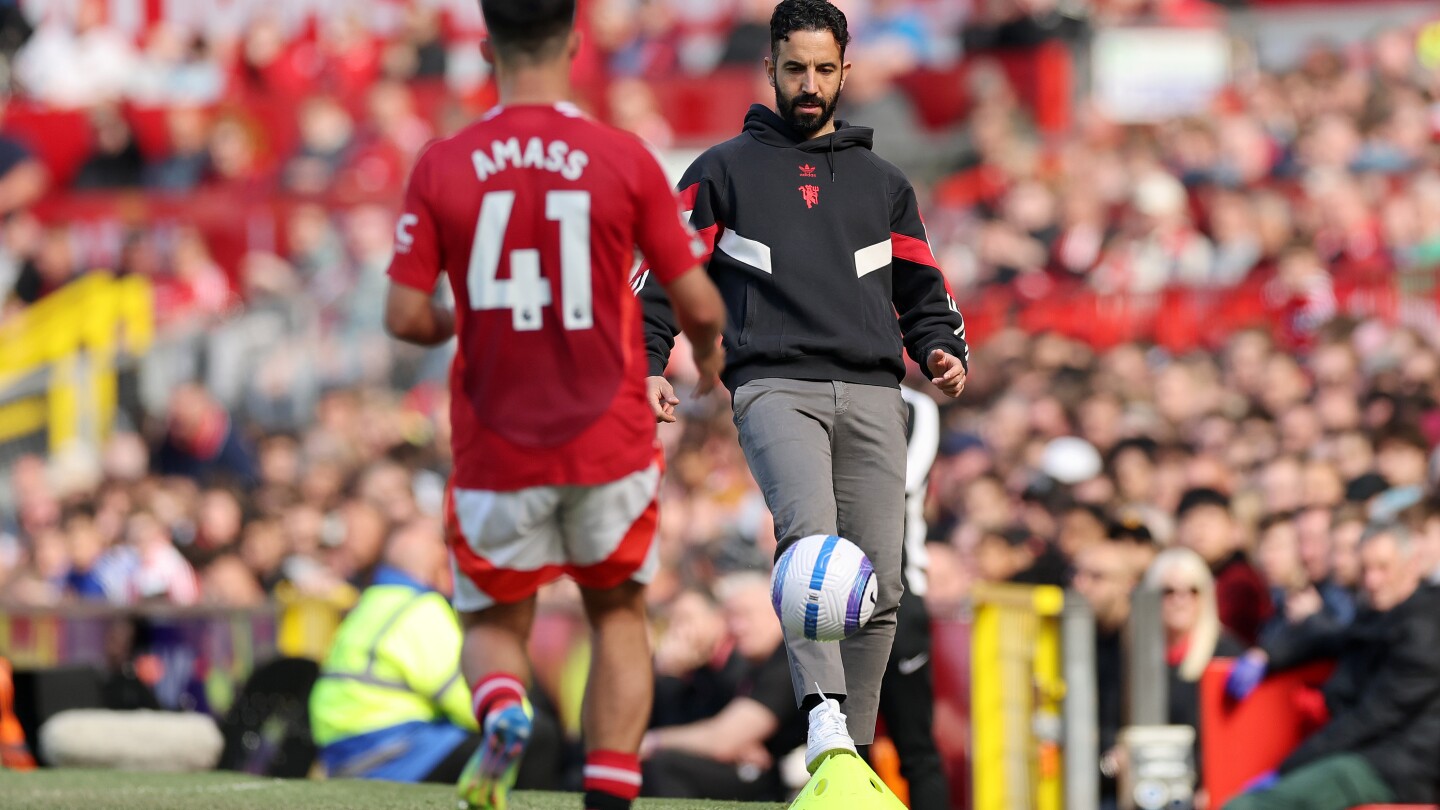
The greybeards — yes, including Roy Keane — will be nodding after Ruben Amorim explained what he called a problem of entitlement amongst players following a social scene caused by academy players Harry Amass and Chido Obi.
MORE — Villa vs Man Utd preview
Amorim made comments last week about the struggles of Amass and Obi of late and the players responded on social media by posting images showing good times away from United’s first team. — Amass posted a Player of the Month award won while on loan to Sheffield Wednesday while Obi used a shot of him scoring for United’s U21s.
MORE — Premier League festive fixtures list, storylines
Amorim was asked about the images on Friday and defended his initial comments, saying that players often don’t realize how special the club is until they aren’t involved in it and doubling down on the ‘E’ word.
“I think it is the feeling of entitlement that we have in our club,” he said. “Sometimes strong words is not bad words, sometimes difficult moments is not the bad things for the kids.”
Ruben Amorim on ‘entitlement’ of youth players
To be fair, Amorim was more critical of the players’ responses than their feelings.
The Manchester United boss says the players are welcome to speak with him after hearing his words last week, and implies the problem is with Internet bravery over personal conviction and confidence.
“I think it’s something in our club, and we talk about the players sometimes forget about what it means to play for Manchester United. We as a club sometimes forget who we are and that’s that’s the feeling that I have. I understand everything is the environment, is the moment of the players, the kids they feel entitled.
These are all fair thoughts. Sure they will stick in the craws of Amass and Obi as well as some teammates but they will also send a message to all of the expectations of better attitudes.
Given that Amorim spent most of last season lamenting mentality problems around United and then used the summer to flip his squad, it feels like an okay fight for him.
Amass, 18, has made seven first team appearances for United at his tender age and has gone 90 minutes for struggling Wednesday in all but two Championship matches since arriving on loan in early September.
Obi, who turned 18 last month, has five goals and two assists in 15 matches across all competitions for United’s reserves. The Danish forward made seven appearances for Amorim in the second half of last season but has yet to be selected for a Premier League 18 this season.
Linda Martindale wasn’t brave, at least she didn’t think she was after she had been hired as a varsity boys basketball coach.
“Once the game started, I was fine,” says Martindale, now in her sixth season leading Lincoln-Sudbury (MA), “but walking into the gym and people thinking I’m the scorekeeper or whatever, I had to sort of overcome this feeling of, ‘Do I belong in the gym?’ ”
She made the three words her mantra, and she convinced herself she was brave. You need to be as an athlete, or a coach, in today’s world of youth sports.
“I have fond memories of my athletic career, but I also know there was a lot of heartache and it was very difficult,” says Martindale, who played Division II basketball at Alaska-Anchorage and in the old Pac-10 at Arizona in the late 1980s and early 1990s. “But nowadays, it’s totally different. Your whole career is splashed all over social media.”
Martindale’s father devoted his life to coaching baseball and football, driving her and her three siblings to be punctual and polite. He was hard on them, she says, but led with love.
“If I had a bad game, the people in the stands knew and my parents knew, and that was it,” Martindale tells USA TODAY Sports. “You’d come home and your parents would say, ‘How did the game go?’ You could self-report that. Easy to deal with.
“My oldest son would literally get DMs from strangers that say horrible things if he missed a free throw in the clutch. The landscape is very different. And it obviously trickles down to youth.”
Martindale got certified as a mental fitness coach to help ease the pressure on her three sons and one daughter (all of them have played college sports) but also other young athletes.
She works with sports teams at Division I Holy Cross and D-III Curry College, as well as individual athletes. She says there’s a secret beyond the physical component to playing sports in college.
We offer 10 ways, through consultation with Martindale, for parents to help athletes get there.
YOUTH SPORTS SURVIVAL GUIDE: Pre-order Coach Steve’s upcoming book for young athletes and their parents
1. Develop the coach in your head: It’s the best one you’ll ever have
When Martindale walked into the gym feeling the male eyes on her, she felt she needed an inner coach.
Your coach on the court or field will tell you what to do but, Martindale says, the one in your head will kick you in the butt to help get you where you need to go.
Jenny Levy, who has won four national titles as North Carolina’s women’s lacrosse coach, believes so strongly in an inner coach she likes when her players form their own mantras.
“Confidence looks good on you,” she heard her players say to each other in 2013, the year they broke through.
“A lot of coaches will say, ‘This is our saying,’ ” Levy told Martindale on Martindale’s ‘Game Changers’ podcast. “And I think that’s fine – to each his own – but I actually let our team organically come up with their own little things. This is the team having a good time together.”
The inner voice tells you it doesn’t matter what anyone else thinks, only what you do.
Go for it.
This is my time.
This is where I belong.
To come up with your own mantra, Martindale says, ask yourself why you play a sport? Look for performance cues to grind that thought into you.
“It’s not fun to lose, but it’s still really fun to compete and to play,” Martindale says. “OK, good, let’s start with that. So at least you can say it’s not fun to lose, but it’s really fun to prepare for the game. We’ve now established that the majority of the time is fun. Now we can get through the parts that aren’t fun.”
Was that ‘fun’? How Coco Gauff’s tough US Open embodies what the word means
2. We can learn how to handle the hard
Kids respond to the truth. We don’t need to always sugarcoat it.
Instead of saying, “It’s not so hard,” acknowledge that something is.
Maybe you’re afraid that you might lose or you’re going to make a fool of yourself in front of everybody.
“I’m happy that you can articulate a fear,” Martindale might tell an athlete. “Now, let’s squash it. What are you really afraid of? Is it really embarrassing to lose, or is it embarrassing not to play at all?
“It would be embarrassing if you threw yourself on the floor and screamed and cried in the middle of the game. But nobody thinks it’s embarrassing that you sat on the bench, cheered on your team, and then fought another day to try to get some minutes.”
3. Teach your kid how to build resilience to meet challenges head on
A current role doesn’t mean an ultimate role. Martindale goes back to Tom Brady.
He was once buried deep on Michigan’s depth chart. But he focused on nailing reps he got in practice. He was at game speed when he found himself starting.
“As parents, we say, ‘I don’t think you should have to be the backup quarterback,’ ” Martindale says. “ ‘I think you should be the quarterback.’ This is not helping. What you need to do is crush being the backup. And then your time comes and you’re ready instead of spending so much time worrying that you don’t have the role that you want (and) you’re not ready for it.”
Another of her podcast guests, Luke Avdalovic, a former walk-on basketball player at Northern Arizona University, told her: “I had a teammate named JoJo Anderson and he told me, ‘If you want to find a role into this team, find one thing that you’re really good at. Make sure you’re head and shoulders better than every single other person on the team. Then they can’t take you off the floor.’ ”
Avdalovic became a top sharpshooter who rose to the NBA G-League.
4. ‘You can’t be a shooter if you can’t miss’
Avdalovic has shot so much over the years he feels he’s never really in a slump. Some days he shoots better than others, but that is just the law of averages.
“You can’t be a pitcher if you can’t pitch poorly,” Martindale says. “You can’t be a shooter if you can’t miss. It’s just not possible (to) be perfect. So what do you do when you’re imperfect?”
The next time your son or daughter has a bad game, ask them, “Did you compete hard?”
You don’t want them to lose or fail but they need to know how to do both. As parents, and as coaches, our best support can come out of struggles.
5. We can only get the ‘yips’ if we vocalize them
You know the term if you’re a baseball fan. Suddenly, Steve Sax or Chuck Knoblauch can’t make a routine throw from second to first base, or Rick Ankiel can’t throw a strike.
“Yips is not a real thing,” Martindale says.
Struggles come alive, she says, when we say them out loud. Instead, if you’re a parent or a coach, tell your athlete: “I really believe in you. Just keep throwing, you’ll get it back, you’ll find a rhythm.”
When kids feel deep-rooted support, they have more confidence in themselves.
6. We don’t have to be good at everything
Martindale says today’s world for young athletes is like taking the SATs while your score is being put on a scoreboard.
Sometimes, it seems, we expect our kids to be good at everything. Martindale asks the ones with whom she works, “What class are you good at?”
She doesn’t necessarily mean classes in which they have an “A,” but the ones they enjoy most.
Sometimes it takes looking at things through a less critical lens. We have an “A” in science, but we enjoy the challenge of English Lit, in which we have a B-, which energizes us to try and bring up the grade.
7. ‘It’s not your family’: Parents are the ultimate artery of support
Eugene Glisky, Martindale’s father, had his ashes buried on the field where he coached near Toronto. She suspects he changed the lives of many young men.
But she stops short of calling a team a family.
“When a coach says to a parent, ‘I’m gonna treat your son or daughter like my own,’ I want to say, ‘No, thank you. I don’t need you to treat my son like he’s your own,’ ” Martindale says. “He has a great father. What I really want you to do is treat him like a player and a human being.
“It’s a team, which is amazing and I love my kid being part of a team. But it’s not a family. Why? Because what happens when your family cuts you?”
There are times when we need to be Coach, and times when we need to be Mom or Dad. Martindale had to be Coach when Judson, her oldest who now plays basketball for Manchester Basketball Club in the United Kingdom, came out of a game when he was younger and looked at her like, “Why are you pulling me?
He threw his water bottle, and she turned and said: “You can take your sneakers off. You’re done.”
The same coach, though, drove him home from a different game, criticizing him for what he didn’t do while failing to realize he was sick.
“So many examples of total failure by me,” she says. “What kind of mother would be talking to their kid about some offensive set when clearly they needed a mother?”
8. ‘Your influence is not neutral, parents’; don’t disrupt a happy kid
Levy, North Carolina’s women’s lacrosse coach, does parent Zoom calls. Before the first one, she asked her players what they wanted her to tell them.
“They said, ‘We don’t want to talk about the game at the tailgate after,’ ” Levy told Martindale. “ ‘We don’t want any parent to have this sad conversation after the wins because their kid didn’t play. We want the parents to sit together. We want them to be positive on the sideline.’ ”
Levy says the players gave her a Letterman top 10 of parent no-no’s, which she shared on the Zoom.
“I think they were pretty shocked,” says Levy, who coaches her daughter, Kate, on the team. “Our kids were like, ‘Last year was not OK. This is what we want and this is what we need this year.’
“And then if we saw it, I had permission from our players to call the parent and say, ‘Hey, you’re at the tailgate and your behavior was below the line for our program.’
“What if I acted like that as a parent? What if I did that in the middle of a tailgate?”
Levy’s point: A kid could be completely happy but if the parent is unhappy with their role, then the kid’s unhappy. And if the parent isn’t feeling like their kid is getting a fair shake, or they’re being really negative toward coaches or teammates, the kid internalizes the feeling.
“Your influence is not neutral, parents,” Levy says.
9. We can use even a little bit of winning to fuel us
During a clip Martindale shared of her speaking to athletes, she says, “There has to be wins in there. Otherwise, you can’t go an entire season and be like, ‘If we don’t win a game, this whole season is a waste.’ ”
She is not necessarily talking about checks in the “W” column as much as what we perceive as personal wins. Maybe you tell a teammate you loved the way he blocked a punt or moved into position on defense. If we don’t have wins, even within losses, you don’t learn how to win.
Youth sports ‘crisis’: Congress addresses big business in youth sports. Can we fix it?
10. So what’s the secret sauce?
Martindale believes there are five pillars of mental fitness: 1. Staying in the moment; 2. Controlling the controllables; 3. Seeing mistakes as opportunities; 4. Not judging yourself (or others) too harshly and 5. Comparison (positively).
She says she was once a failure at all of them. Has she since learned a special ingredient we need to have to play college sports?
Martindale thinks Angela Duckworth, director of the Penn-Wharton Behavior Change for Good Initiative, said it best.
“It’s grit,” Martindale has said. “I’m obsessed with grit, because we know it’s a single defining characteristic of successful people.
“Can you get up after you get knocked down? The athletes who are successful at every level of college, I think, have this kind of dog mentality that is about grit. And of course, you have to be skilled and you have to be athletic but when we really look at who performs best when it counts, it’s people who have failed. Over and over and over. And then now they succeed.”
We can’t beat our kids up over mistakes. Let them hear the voice in their head that gives them the grace to move forward from them.
Then, as Martindale says: “Watch them fail and then watch what they do after they fail.”
Borelli, aka Coach Steve, has been an editor and writer with USA TODAY since 1999. He spent 10 years coaching his two sons’ baseball and basketball teams. He and his wife, Colleen, are now sports parents for two high schoolers. His Coach Steve column is posted weekly.For his past columns, click here.
Got a question for Coach Steve you want answered in a column? Email him at sborelli@usatoday.com