Less than a week before Imane Khelif was poised to return to competitive women’s boxing, the sport’s new global governing body set up a potential roadblock.
World Boxing announced last Friday that Khelif cannot participate in any future women’s events unless the Olympic champion takes a gender verification test to prove that Khelif is biologically female.
Advertisement
Advertisement
Advertisement
The International Olympic Committee ignited global outcry in Paris last summer when it allowed Khelif to march to a gold medal in the women’s welterweight division. Only a year earlier, Khelif was disqualified before the gold-medal bout of the International Boxing Association’s world championships. The IBA, then recognized as amateur boxing’s global governing body, claimed that a sex test showed the presence of Y chromosome and ruled Khelif ineligible to compete against women.
Three months later, the IOC stripped the IBA of its governing status for multiple reasons, after which IOC leaders chose to overlook Khelif’s alleged failed gender test because they had questions about the fairness of the IBA’s process. That turned the IOC into a piñata for critics at last summer’s Olympic Games as Khelif pummeled an overmatched Italian fighter into quitting in 46 seconds, then toyed with her remaining opponents while displaying superior reach and punching power.
In February, the IOC recognized World Boxing as its new governing body for the sport — and assessing how to be fair to Khelif and her potential female opponents instantly moved atop World Boxing’s to-do list. The solution that World Boxing chose was making sex testing mandatory for all boxers who compete in events it sanctions. The organization announced the policy change ahead of this week’s Eindhoven Box Cup to get ahead of the tournament Khelif was targeting for her potential return.
“This decision reflects concerns over the safety and well-being of all boxers, including Imane Khelif,” World Boxing said in last Friday’s statement. “It aims to protect the physical and mental health of all participants in light of some of the reactions that have been expressed in relation to the boxer’s potential participation at the Eindhoven Box Cup.”
Advertisement
Advertisement
Advertisement
The Khelif controversy exemplifies why dividing athletes into male and female categories for competition isn’t always straightforward. Gender policing has existed in women’s sports for nearly a century as administrators have grappled with deliberate cheating, transgender athletes and complex medical conditions resulting in ambiguous development of sex organs.
Sports governing bodies have used anything from invasive visual examinations, to testosterone tests, to chromosome analyses in their long-running attempts to distinguish men from women. The most common outcome has been humiliation for female athletes confronted for the first time with the possibility that their genitalia, internal anatomy, hormones or chromosomes developed differently than most of their peers.
That presents a conundrum for sporting governing bodies: How should they treat an athlete who was classified female at birth and identifies as a woman yet possesses a Y chromosome? How should they handle it when that athlete’s differences in sexual development offer a potential advantage in sporting performance over other female competitors?
Dr. Richard Holt, professor of endocrinology at the University of Southampton, describes that decision as a “minefield.”
Advertisement
Advertisement
Advertisement
Says Holt, “There is no easy solution — all have potential pitfalls.”
Helen Stephens smiles for the cameraman after setting a world record in the 100 meter finals at the 1936 Olympics in Berlin. (Getty Images)
(Bettmann via Getty Images)
‘The nude parade’
The desire to define who counts as a woman for the purpose of sports dates back to Hitler’s Olympics. On the night of Aug. 4, 1936, 18-year-old Helen Stephens of Fulton, Missouri, went to bed the newly crowned fastest woman in the world. The next morning, Stephens awoke to an international firestorm.
A Polish newspaper correspondent could not accept that Stephens had defeated famed Polish sprinter Stella Walsh to win Olympic gold in the 100-meter dash. He published a story discrediting Stephens’ world record performance by alleging that the tall, muscular American with an unusually deep voice was really a man masquerading as a woman.
Advertisement
Advertisement
Advertisement
Rather than dismissing the Polish sportswriter’s accusation as sour grapes, Olympic officials responded by revealing that they had anticipated such a controversy. They told reporters they had Stephens examined before the Olympics and cleared her to compete after confirming she was female.
At least one U.S. media outlet reached out to Stephens’ mother seeking her response to the speculation about her daughter’s gender.
“Helen is absolutely a girl,” Bertie May Stephens told the reporter by telephone from Missouri, adding that she better not say what she thinks of “anyone who would charge that she is anything else.”
The scandal reflected the growing unease at the time over the physical appearance of female athletes enjoying success in sports once deemed too strenuous for women. They were often perceived as suspiciously masculine because they didn’t conform to the era’s notion of femininity.
Advertisement
Advertisement
Advertisement
In early 1936, American Olympic Committee chairman Avery Brundage wrote to IOC colleagues expressing concern about “various female (?) athletes in several sports” who seemed to possess “apparent characteristics of the opposite sex.”
“Perhaps some action has already been taken on this subject,” Brundage added. “If not, it might be well to insist on a medical examination before participation in the Olympic Games.”
The first known gender verification rule in women’s sports took effect less than a week after Stephens’ gold medal win in Berlin. Track and field’s international governing body implemented a policy requiring female athletes to submit to physical examination should any protest be filed regarding their sex.
When the Olympics first became a stage for Cold War tensions in the 1950s, familiar concerns about female athletes deemed too man-like suddenly were seen through a geopolitical lens. Rumors flew that the brawniest female athletes from the Soviet Union and other Eastern-bloc nations were taking performance-enhancing drugs or were actually men in disguise.
Advertisement
Advertisement
Advertisement
Soviet track and field stars Irina and Tamara Press, sisters who combined to claim five Olympic gold medals and set 26 world records, aroused the most suspicion. Western media outlets derisively labeled Irina and Tamara “the Press brothers.” In 1964, a New York Times reporter wrote that Tamara “was big enough to play tackle for the Chicago Bears” and that “they could probably use her, too.”
In 1966, international track and field officials responded by enforcing a mandatory sex testing policy often referred to by athletes as “the nude parade.” Every female participant at that year’s Commonwealth Games had to undress on-site before the meet and display themselves to doctors for visual inspection.
Irina and Tamara Press hung up their track spikes and retired. Other athletes gritted their teeth and endured the humiliation. In an interview with NPR’s “Tested” podcast last year, Canadian discus thrower Carol Martin described being taken into a large room underneath the stands and having “to pull my pants down in front of this woman so she could see I had a vagina.”
“I remember thinking, ‘What the [expletive] is this?’” Martin told the podcast. “And I was a nice person. I never said that at the time, but I remember thinking, ‘Whoa, this seems a little invasive. This seems a little inappropriate. I mean, can’t you see I’m a girl?’”
Advertisement
Advertisement
Advertisement
Nude parades, unsurprisingly, proved deeply unpopular. Athletes successfully campaigned to abolish the practice after only two years.
Algeria’s Imane Khelif, right, defeated Italy’s Angela Carini in their women’s 66 kg preliminary boxing match at the 2024 Summer Olympics. Carini abandoned the fight after just 46 seconds. (AP Photo/John Locher, File)
(ASSOCIATED PRESS)
‘There’s definitely not an easy solution’
Modern methods of sex testing may only require a swab to the cheek or a few drops of blood, but critics contend they’re still traumatic.
Athletes rights advocate and Humans of Sport founder Payoshni Mitra has worked on behalf of numerous high-profile athletes revealed to have unusually high testosterone levels. Some battled through severe depression, Mitra said. One family even lost their daughter to suicide.
About a decade and a half ago, Caster Semenya became the unwilling face of a complex, emotionally charged debate over what to do with athletes who don’t fit neatly in the “male” or “female” category. The muscular South African middle-distance star blew away the women’s 800 meters field at the 2009 World Championships, but she couldn’t outrun the whispers and innuendo that followed.
Advertisement
Advertisement
Advertisement
“For me she is not a woman,” said one beaten fellow finalist, Italy’s Elisa Cusma Piccione.
Another overmatched rival, Russia’s Mariya Savinova, sneered, “Just look at her.”
At the request of track and field’s governing body, Semenya submitted to a gender verification test and found out along with the rest of the world that she was different. While Semenya was born with a vagina and assigned female at birth, her test results showed XY chromosomes, no uterus and unusually high testosterone levels.
Stunned and devastated, Semenya weighed her options. Either she had to quit track at age 18 on the heels of winning World Championship gold or consent to hormone treatment to lower her testosterone to a predetermined level.
Advertisement
Advertisement
Advertisement
The hormones felt like “poison,” Semenya wrote in her 2023 memoir “The Race To Be Myself,” but she fought through panic attacks, night sweats and nausea to keep flourishing. Second place finishes at the 2011 World Championships and the 2012 Olympics were later upgraded to gold medals when Savinova was found guilty of doping. Semenya also led a podium sweep by DSD runners at the 2016 Olympics after the Court of Arbitration for Sport temporarily forced World Athletics to suspend its testosterone regulations.
On the eve of the 2016 Olympic final in the women’s 800, Yahoo Sports asked American 800-meter runner Ajee’ Wilson how she felt about Semenya. Should Semenya be free to compete without being forced to take testosterone suppressants? Or should her basic rights be infringed on to avoid unfairly disadvantaging the other female competitors?
“There’s definitely not an easy solution,” Wilson conceded. “There’s a saying that says you shouldn’t really come hard at a problem unless you have a solution. I don’t have one at this point, so I have to go with the flow of things.”
While World Athletics now administers gender tests to all female athletes, from 1999 to 2024, track and field’s governing body tested only targets of suspicion. Human Rights Watch condemned that approach in 2020, pointing out that the athletes being ensnared by sex testing were “overwhelmingly women of color from the Global South.”
Advertisement
Advertisement
Advertisement
Among those is Annet Negesa, a promising Ugandan middle-distance runner targeted under sex testing regulations and found to have unusually high testosterone levels. Negesa agreed to undergo what she was told was minor surgery in late 2012 in hopes of altering her body and saving her career.
When she awoke in a hospital bed, she told Human Rights Watch in 2020 that she had scars on her belly and discharge papers mentioning an orchiectomy — a procedure to remove testicles. The recovery from the surgery was long and painful. Never again did Negesa regain her previous fitness levels. Her manager dropped her and her university yanked away her scholarship.
Today Negesa lives in Germany, where she was granted asylum in 1999. The athlete ambassador to Humans of Sport shares her story as often as possible in hopes that it can help others. She has been following Imane Khelif’s story from afar.
“I am extremely disappointed to see how another athlete from a different sport is being made to face such a public trial,” Negesa said this week in a statement to Yahoo Sports. “It is devastating for the athlete. Federations must act responsibly. They have played with our lives for too long.”
Both IOC president Thomas Bach (R) and IOC spokesman Mark Adams defended the IOC’s decision to allow Imane Khelif to participate in the Paris Olympics, calling tests that showed Khelif has a male karyotype not legitimate. (Fabrice Coffrini/AFP via Getty Images)
(FABRICE COFFRINI via Getty Images)
IOC has egg on its face
Thirty-six hours after World Boxing ruled that Khelif would need to pass a gender verification test to be eligible to fight against women again, the document at the heart of this entire saga may have surfaced.
Advertisement
Advertisement
Advertisement
American sportswriter Alan Abrahamson, formerly of the Los Angeles Times, published to his website 3wiresports.com what appears to be a leaked image of Khelif’s sex-test results from the 2023 IBA world championships in New Delhi.
The chromosome analysis says that Khelif has a “male karyotype” (an individual’s complete set of chromosomes). IBA officials had previously alleged without offering proof that Khelif was XY.
It’s unclear how Abrahamson attained the apparent leaked document or whether it is legitimate. Neither Khelif nor anyone with the Algerian Boxing Federation have publicly addressed the 3wiresports.com report or World Boxing’s mandatory sex testing policy.
The test results carry the letterhead of Dr. Lal Path Labs in New Delhi, accredited by the American College of Pathologists and certified by the Swiss-based International Organisation for Standardisation. That appears to fly in the face of claims made last August by IOC spokesman Mark Adams, who during a news conference at the Paris Olympics took the stance that any test administered by the IBA was essentially fruit from a poison tree.
Advertisement
Advertisement
Advertisement
“The tests themselves, the process of the tests, the ad hoc nature of the tests, are not legitimate,” Adams said.
Also left with egg on his face is IOC president Thomas Bach, who several times insinuated that the Khelif test results were part of a Russian disinformation campaign. The IBA is run by Umar Kremlev, a Russian businessman with close ties to the Kremlin.
“This was part of the many, many fake news campaigns we had to face from Russia before Paris and after Paris,” Bach told Reuters last March.
If the leaked test results put pressure on IOC officials to explain why they believe they’re illegitimate, they also increase the burden on Khelif to make a public comment.
Advertisement
Advertisement
Advertisement
When speaking to reporters in Paris after her gold-medal match victory last summer, Khelif brushed aside questions about her gender.
“I am a woman, like any other woman,” Khelif said. “I was born a woman. I have lived as a woman. I compete as a woman.”
Khelif has previously said she wants to win a second gold medal at the 2028 Los Angeles Games. For now, the notion of her receiving clearance to fight against women again at a future Olympics is becoming more difficult to envision.
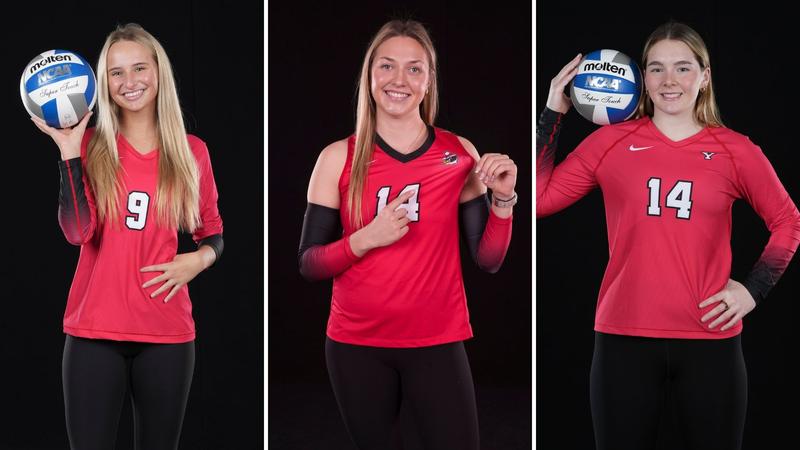
Youngstown, Ohio — Youngstown State volleyball head coach Riley Jarrett is excited to announce the addition of three Division I transfers to the program for the 2026 spring semester.
The trio includes defensive specialist Ashlee Gnau (Syracuse), outside hitter Kylie Surratt (UT Martin), and middle blocker/right-side hitter Wrigley Takats (Eastern Michigan). All three will be juniors during the 2026 fall season and will join a talented freshman class of Korina Barber, Natalie Carr, Journey Nicola and Hayden Rodriguez.
Position: Defensive Specialist
Hometown: Northville, Mich.
High School: Northville
Previous School: Syracuse
Club: Legacy Volleyball Club
Coach Jarrett on Gnau: I recruited Ashlee out of high school and always knew she had a ton of potential. She is a great addition to our back court defense and passing. We are excited to get her competitive drive in our gym and looking forward to seeing her compete in the Horizon League.
At Syracuse: Played in 34 matches and made seven starts over two years at Syracuse… As a sophomore, appeared in 10 matches and started against Wake Forest… Had season highs of three aces and five digs against UAlbany… Registered aces against Canisius, Wake Forest and Pitt… Played in 24 matches as a freshman while making six starts… Posted 109 digs, including a career-high 14 against Notre Dame.
High School: Finished her high school career with 888 digs and 113 aces, including senior-year totals of 325 digs and 36 aces… Was an all-conference and all-region honoree in 2023… Attended the same high school as former Penguins libero Nyia Setla.
Position: Outside Hitter
Hometown: Maryland Heights, Mo.
High School: Pattonville
Previous School: UT Martin
Club: Team Momentum
Coach Jarrett on Surratt: Kylie is a very mature player who aligned with our program’s values and goals on and off the court. She will be a strong addition for us as a six-rotation player, and we are looking forward to seeing her compete as a Penguin.
AT UT Martin: Played her first two collegiate seasons at UT-Martin, posting totals of 539 kills, 392 digs and 77 blocks… As a sophomore, averaged 2.47 kills, 2.01 digs and 0.47 blocks over 100 sets for the Skyhawks… Played in all 29 matches and started 25 of them… Reached double digits in kills 12 times, including a season-high of 20 against SIUE… As a freshman, was named to the All-Ohio Valley Conference second team while posting 292 kills, 80 more than any teammate… Ranked among the top 10 in the OVC in kills and points.
High School: At Pattonville High School, earned AVCA All-American accolades as a senior… Named conference player of the year three times while shattering school records for career kills, career matches played, match kills and match blocks.
Position: Middle Blocker
Hometown: Perrysburg, Ohio
High School: Perrysburg
Previous School: Eastern Michigan
Club: Toledo Volleyball Club
Coach Jarrett on Takats: Wrigley is a dynamic middle blocker who will have a lot of potential in our offensive and defensive systems. She has a high ceiling to continue to grow and we are happy to have her.
At Eastern Michigan: Played her first two seasons at Eastern Michigan, appearing in 67 sets over 22 matches… Recorded 60 kills and 58 blocks in 60 sets as a sophomore… Finished her sophomore season with the Eagles with 91.5 points… Played in 16 of the final 18 matches…
High School: Helped lead Perrysburg to three straight district titles… Earned All-Northern League accolades three times… Set the school record with 265 career blocks.
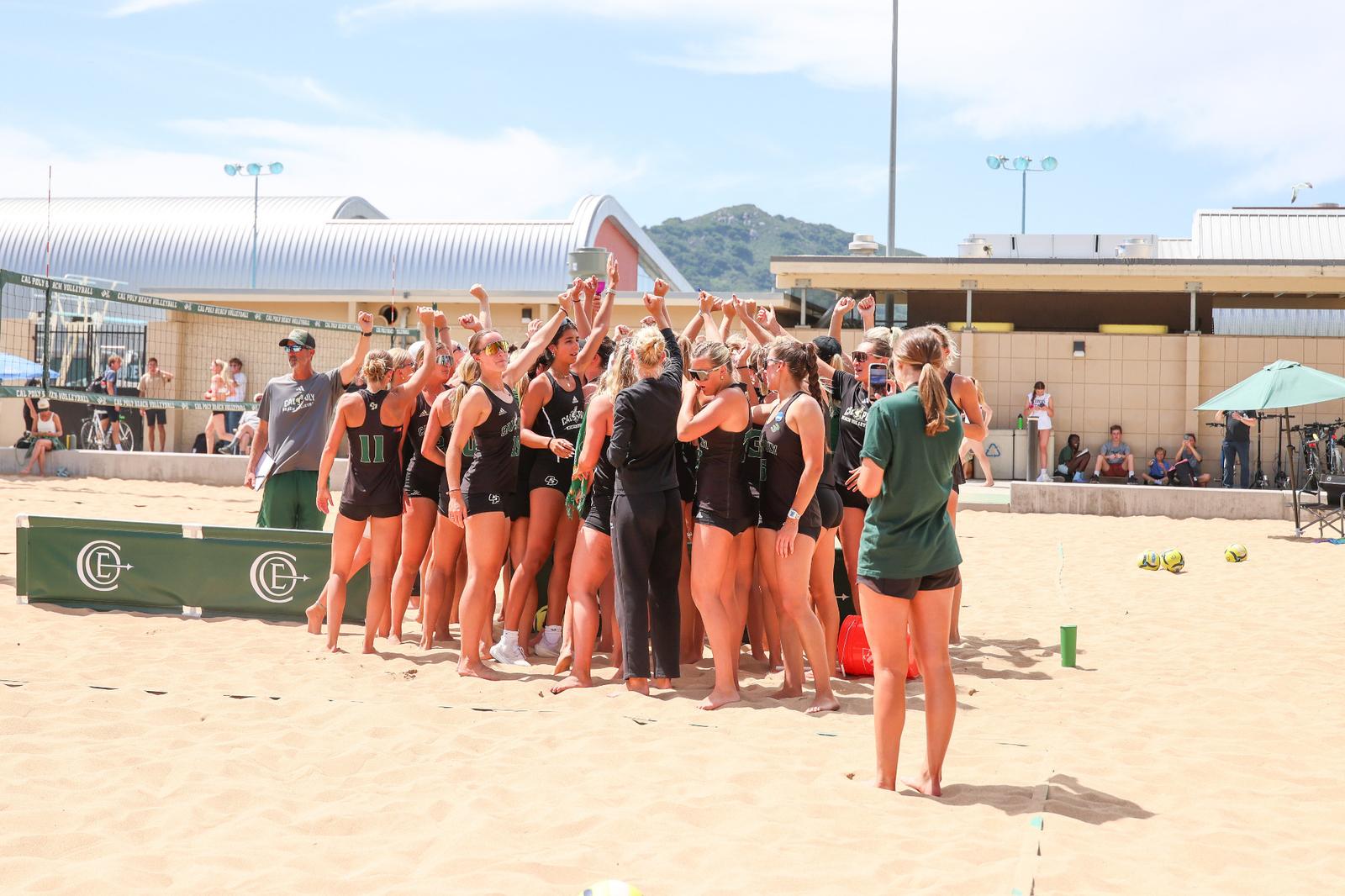
SAN LUIS OBISPO, Calif. — Cal Poly beach volleyball is coming to the big screen.
On Monday, Jan. 12, the documentary “Kicking Up Sand” will be premiering at the Fremont Theater in downtown San Luis Obispo. The documentary, produced by Cal Poly supporter Jon Hastings, is about the Mustangs’ 2025 season and follows the team from preseason through the NCAA Championships. It gives fans a behind the scenes look at everything that goes on with Cal Poly beach volleyball. It features interviews with the coaching staff and players during Cal Poly’s historic run last season to the NCAA Championship Semifinals.
The evening Monday is more than just a premiere. There will be a red carpet with players and coaches starting at 5 p.m. Then at 6:30 p.m. there will be a Q&A session with the coaches and players. That will be followed by the premiere of the 63 minute documentary at 7 p.m.
All fans are encouraged to attend and can purchase tickets at the Fremont or on their website, fremontslo.com.
Last season, the Mustangs finished with a 31-8 record, a run to the Final Four, and a final ranking of fourth in the country, and 14 wins over other ranked teams. The team also featured four All-Americans (Piper Ferch, Erin Inskeep, Izzy Martinez, Logan Walter) as well as 10 players who earned All-Big West honors.
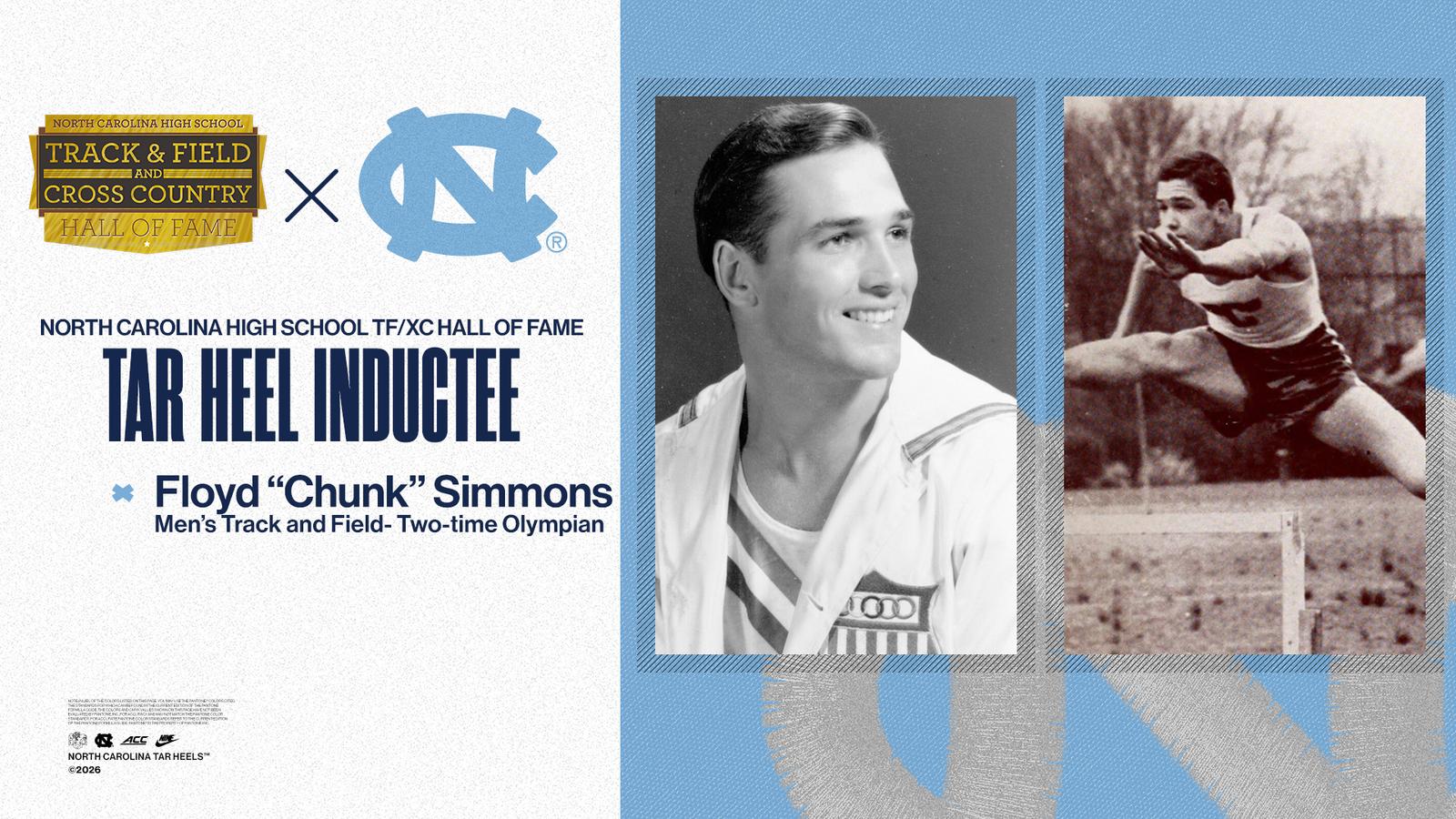
WINSTON-SALEM, N.C. – Two-time Olympic decathlon bronze medalist Floyd “Chunk” Simmons was inducted into the North Carolina High School Track & Field and Cross Country Hall of Fame on Tuesday, January 6.
He is the seventh University of North Carolina track star to be elected to the Hall of Fame after Jim Beatty (2020), Joan Nesbitt (2020), Karen Godlock (2020), DeAnne Davis (2020), Tony Waldrop (2022), and Earl V. Patterson (2023).
The Central High School graduate originally came to Carolina to play football as a tailback, but he switched to fullback as Tar Heel legend, Charlie “Choo Choo” Justice held down the tailback position.
Simmons won the bronze medal in the decathlon as the United States claimed the gold and bronze in the 1948 London Olympics. Simmons followed up his Bronze with another bronze medalist performance during the 1952 Olympics in Helsinki, as the US swept the competition for the “World’s Greatest Athlete.”
Simmons was also a World War II veteran and received both the Purple Heart and Battle Stars while serving in the 10th Mountain Division.
Simmons had a seven-year career in film and stunt work (1956-63), first with Universal and then with MGM. He played Commander Harbison, USN, in the 1958 musical “South Pacific,” which prompted him to move to Tahiti for a brief stint. He moved back to Charlotte, where he was a professional artist and photographer.
Simmons passed away in April of 2008 in Charlotte.
The induction ceremony will be Jan. 31 in Winston-Salem during the Mondo Elite High School Invitational at the JDL Fast Track. Each elected class has been honored at the meet.
The state champion volleyball player for Mount Carmel knew before she graduated in 2011 that she wanted to someday come back to her alma mater and coach her favorite sport.
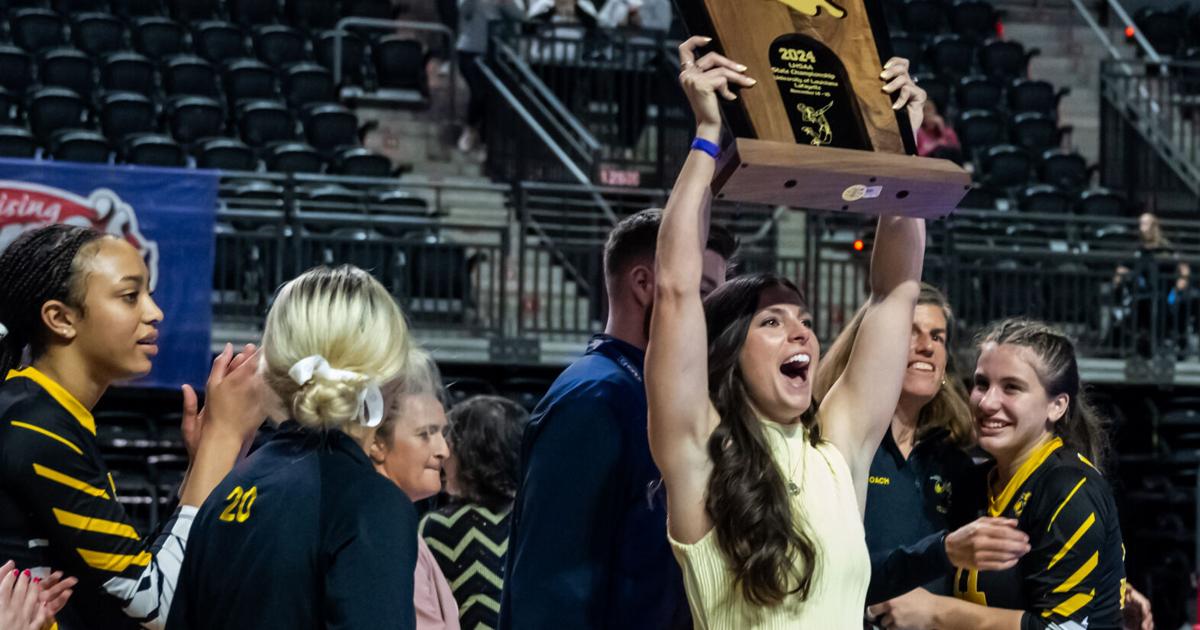
Her chance has arrived, as Mount Carmel on Wednesday announced Miller as the new volleyball coach after she coached the past seven seasons at Haynes Academy, where she guided the Yellow Jackets to their first state title in 2024.
“I’m really happy at Haynes,” Miller said. “Haynes is a great school. It’s tough to leave Haynes and the work family, and the players here and everything we have built here. But it always has been a dream of mine to come back to my alma mater and build a program there.”
At Mount Carmel, Miller will coach at the school where she starred as a setter and six-rotation standout, ultimately earning the LHSAA outstanding player award following a four-set victory over Dominican in the 2010 state final.
Miller, who will continue at Haynes as a P.E. teacher for the remainder of the school year, is replacing former coach Taylor Ricaud, who left after three seasons and is now the head coach at Pope John Paul II.
Mount Carmel has won 14 volleyball state championships, including six in a row from 2014 to 2019. The Cubs, who last reached the state finals in 2023, lost in the quarterfinals last season against Chapelle.
Mount Carmel athletic director April Hagadone coached eight championship teams at the school.
Miller said she “fell in love with volleyball” when she was a freshman, and she was a junior or senior when she told Hagadone at practice one day that she would like to come back to the school and replace her as coach.
“I knew I wanted to be a P.E. teacher and coach because both of my parents were P.E. teachers and coaches in multiple sports,” said Miller, who remembered thinking, “Man, this would be awesome, to come back here and run a program at a school that I love and be surrounded by an amazing community.”
At Haynes, Miller replaced her mother, Dollie Lala, as the head coach and lifted it to unprecedented heights, reaching the state semifinals for the first time in 2022, two years before the five-set triumph over Hannan in the Division III state final.
Miller comes from a family of coaches and teachers. Her father, Larry Lala, coached football at Bonnabel in the late 1990s and early 2000s, and later coached baseball and football while at Grace King.
Haynes has played the last three seasons at the former Grace King campus, following the closure of that school in 2023.
“We’ve never lost a game in this gym yet,” Miller said, adding that the teachers and students at Haynes “are very understanding, and everyone has been really kind to me about the move. They are happy for me, which helps a lot.”
MORGANTOWN, W.Va. – West Virginia University volleyball coach Jen Greeny has announced the addition of Lucie Šmardová, a libero from Brno, Czech Republic, to the 2026 spring roster.
“Lucie is a libero who will immediately give us solidity in the back row both in reception and defensively,” Greeny said. “She has played against high level competition in Europe, with experiences with the National Team, Champions league, not to mention the Czech league. We know from experience that Czech volleyball is quality and rising in the world of volleyball on the international stage.
Lucie is athletic, moves well, and is a great person, which is something we always look for. She chose us over one Top 25 team, two NCAA Tournament teams, and three B1G Ten teams. We are so excited Lucie believed in us and will be joining us this January.”
Šmardová competes for VK Královo Pole under coach Erik Nezhoda. The 5-foot-9 libero has represented the Czech Republic on the international stage as a member of the U21 National Team, competing in the CEV European Championships.
At the club level, Šmardová helped lead Královo Pole to a Czech Women’s Extraliga Championship, while also earning multiple podium finishes in the U18 and U20 Czech Extraliga, including a U20 national title. She has competed in both the CEV Champions League and the CEV Cup, gaining experience against some of the strongest professional teams in Europe.
Šmardová’s accomplishments include a Czech Women’s Cup championship and runner-up finishes in both league and cup play.
The daughter of Petr and Hana, Šmardová plans to major in sport management at West Virginia, with aspirations of pursuing a career in the business side of the sports industry, focusing on marketing and organizational development.
For more information on the Mountaineers, follow @WVUVolleyball on Twitter, Facebook and Instagram.
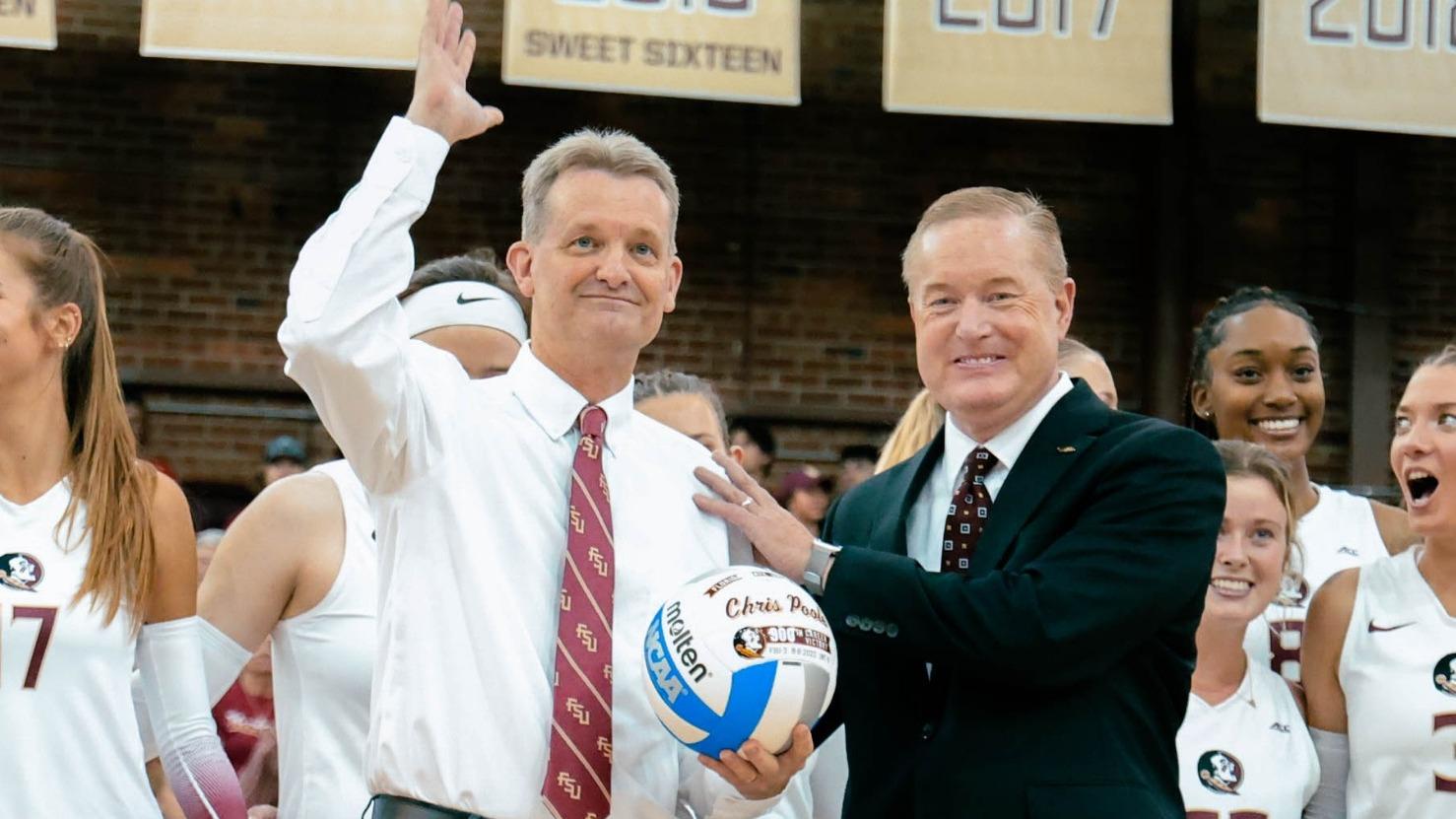
TALLAHASSEE– Florida State volleyball head coach Chris Poole is stepping down from his position, he announced Wednesday. Poole, who led FSU to 15 NCAA Tournament appearances in his 18 seasons, chose not to seek an extension of his contract following the 2025 season.
Poole leaves the sideline following a distinguished career marked by competitive success, program growth, and a lasting impact on student-athletes both on and off the court. In 18 seasons with the Seminoles, Poole tallied 405 wins and led the Garnet and Gold to four ACC championships. Poole led FSU to the Round of 16 in the NCAA Tournament five times and became the first ACC team to reach the National Semifinal in 2011. The four-time ACC Coach of the Year led the Seminoles to 12 20-win seasons and 36 victories over ranked opponents. Poole is the seventh-winningest coach in Division I history with his 955 career wins in 39 seasons as a head coach.
“This university, this department, and this program have meant everything to me,” Poole said. “After thoughtful consideration, I believe this is the right time for me to step aside. I am excited to pursue my next goal in life of working in athletics administration. I am incredibly proud of what we’ve built in Tallahassee and am fully confident in the future of Florida State volleyball.
Florida State Vice President and Director of Athletics Michael Alford praised Poole’s legacy and accomplishments.
“Chris Poole is one of the most respected coaches in Florida State’s entire athletics history,” Alford said. “His decision to step down allows the volleyball program to take its next step forward, but his legacy of consistent competitiveness will always be remembered. We are grateful for his leadership, his integrity, and the foundation he has built.”
Florida State will conduct a national search for its next head coach.